The Amrita Journal
Explore thoughtful stories, practical wellness guidance and inspiring ideas to support your movement, mindfulness and everyday wellbeing at Amrita.

Lose Weight With Pilates: 4 Week Beginner Plan to Shed 4–8 Pounds
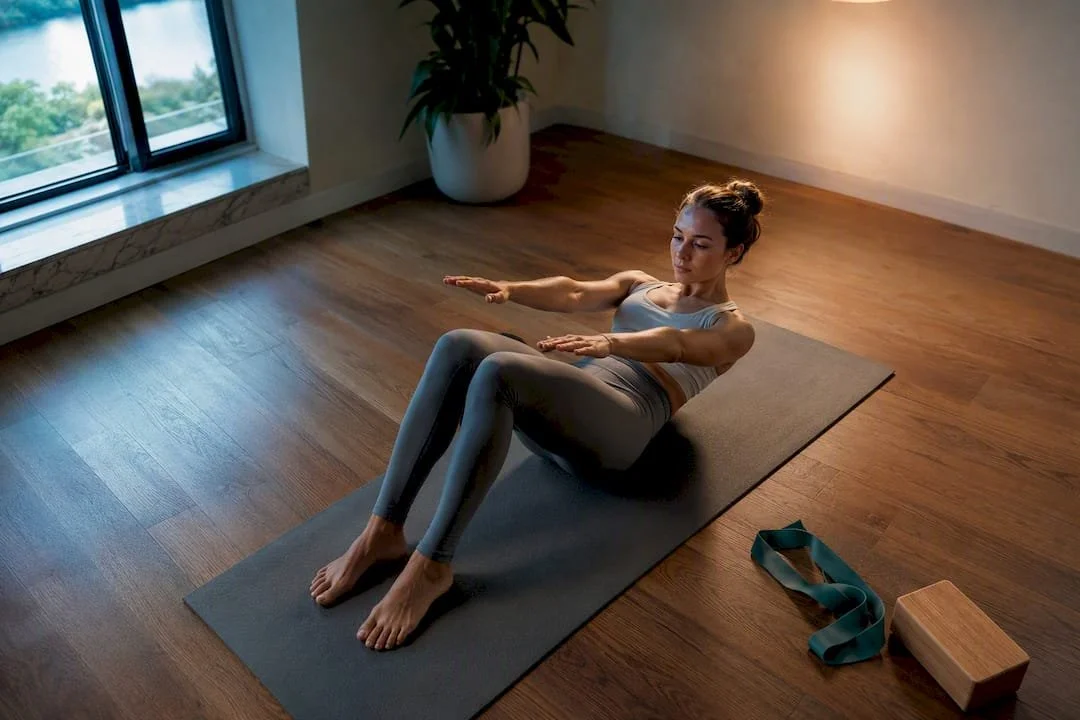
Yes, Pilates helps beginners lose weight, but only under specific conditions: consistent practice, a modest calorie deficit, and some added cardio or strength work on top of it. Aim for three to five sessions a week, 20 to 35 minutes each, and expect early changes in posture and strength before the scale moves much. The 4-week beginner plan below gets you started, and a studio like Amrita Yoga & Wellness can speed up safe progression with real feedback.
TL;DR:
Pilates can contribute to weight loss primarily when combined with a calorie deficit, consistent practice, and additional cardio or strength training.
Calorie burn varies by format, with mat Pilates around 165 to 255 calories per hour, and cardio-Pilates potentially exceeding 350 calories per hour.
A structured beginner schedule recommends gradually increasing sessions from 3 to 5 per week, focusing on form and consistency for sustainable progress.
Combining Pilates with strength training, adequate sleep, and proper nutrition enhances long-term weight loss and preserves lean muscle.
Table of Contents
What the Research Says About Pilates and Weight Loss
The strongest evidence comes from a 2021 meta-analysis of 11 randomized controlled trials covering 393 adults with overweight or obesity. Pilates reduced body weight by an average of 2.40 kilograms across all the studies pooled together. That number nearly jumped to 3.30 kilograms in programs lasting longer than 10 weeks, and the effect showed up more strongly in people who started with obesity rather than a lower body-fat baseline.
That's a real, measurable outcome, not a wellness-industry talking point. But it comes with fine print worth understanding before you set expectations.
Most of the trials in that meta-analysis were small, and researchers rated many of them low-to-moderate quality. Pilates is not a miracle for fat loss on its own, and the effect size depends heavily on who's doing it and for how long. Someone at a healthy weight looking to shed the last stubborn five pounds will see less dramatic change than someone starting from a higher body-fat percentage.
The mechanism isn't mysterious. Pilates builds lean muscle, which raises resting metabolic burn slightly over time. It also improves movement quality, so you move more efficiently and comfortably through daily life, which in turn makes you more likely to stay active in other ways. Cleveland Clinic's exercise-medicine team frames Pilates as excellent for posture and injury-tolerant conditioning, but notes it isn't the highest calorie-burning option by itself.
Calorie burn varies a lot depending on the format:
Mat Pilates: roughly 165 to 255 calories per hour for most adults, depending on body weight and pace.
Reformer or power Pilates: burns more than mat work because of continuous resistance loading.
Cardio-Pilates fusion classes: can exceed 350 calories per hour at higher intensity.
By the Numbers: A 50-minute mat Pilates session burns around 175 calories for a 150-pound person, which is meaningfully less than a brisk run but comparable to a steady-paced walk.
Pilates alone will not out-burn a bad diet. Paired with a modest calorie deficit and consistent scheduling, it becomes one of the more sustainable ways to lose weight precisely because people tend to stick with it.
A Beginner 4-Week Schedule You Can Start Today
Forget trying to do everything at once. A structured, low-impact ramp works better for adherence than an all-out first week that leaves you sore and skipping session two. Fitness planning resources recommend building 4 to 5 sessions per week over four weeks, gradually increasing duration and intensity, and pairing it with light cardio. Beginners following this kind of structure alongside a modest calorie deficit commonly report losing 4 to 8 pounds in the first month.
Here's how the progression breaks down:
Week 1, foundations. Three to four sessions, 20 minutes each. Focus entirely on breath coordination, neutral spine, and basic moves like The Hundred and pelvic curls. Don't rush this week; form here determines whether week 3 goes smoothly.
Week 2, build volume. Four sessions, 25 to 30 minutes. Add more repetitions per exercise and start walking 20 to 30 minutes on non-Pilates days.
Week 3, intensify safely. Four to five sessions, 30 minutes. Introduce a light resistance band or short cardio bursts (30 to 60 seconds of marching or step-ups between Pilates blocks).
Week 4, lock it in. Four to five sessions, 30 to 40 minutes, with one longer session. Check your progress against week 1.
| Week | Sessions | Duration | Focus |
|---|---|---|---|
| 1 | 3–4 | 20 min | Breath, alignment, basics |
| 2 | 4 | 25–30 min | Volume, add walking |
| 3 | 4–5 | 30 min | Resistance band, cardio bursts |
| 4 | 4–5 | 30–40 min | Longer session, progress check |
On non-Pilates days, a 20 to 30 minute walk keeps your weekly activity volume up without adding recovery burden. Two strength sessions per week, placed on separate days from your longest Pilates workouts, help preserve muscle while you're in a calorie deficit.
Track progress with something more useful than the bathroom scale. Time your plank hold at the start of week 1 and again at the end of week 4. Note how many controlled roll-ups you can do with good form. Most beginners see plank time roughly double and roll-ups become noticeably smoother by week 4, even before major visual changes show up.
Two Sample Beginner Workouts and the Moves That Matter
You need exactly two workouts to start: a quick 20-minute session for busy days and a longer 35 to 40 minute version for when you want a bigger calorie burn.
20-minute starter mat workout:
Warm-up (3 minutes): pelvic tilts, cat-cow, breathing drills.
Core block (8 minutes): The Hundred (8 to 10 breaths), Roll-Up (6 to 8 reps, slow tempo), Single-Leg Stretch (10 reps per side).
Lower body (5 minutes): Bridge (10 reps), side-lying leg lifts (12 reps per side).
Stability (2 minutes): Plank hold, 3 rounds of 20 to 30 seconds.
Cool-down (2 minutes): spinal twist, child's pose stretch.
35 to 40 minute fat-loss session follows the same structure but doubles the core and lower-body blocks, adds a side-lying series for hip and oblique work, and inserts two 60-second cardio bursts (marching in place or step-ups) between blocks to keep your heart rate elevated.
A few cues matter more than the exercise names:
The Hundred: exhale sharply as you pump your arms, keep your lower back pressed into the mat.
Roll-Up: move slowly on the way down; that eccentric control is where the core strength actually builds.
Bridge: press through your heels, not your toes, to engage the glutes properly.
Plank: keep hips level with shoulders; sagging hips are the most common beginner error.
Pro Tip: If a full roll-up feels impossible on day one, bend your knees and use a small towel under your lower back for support. Half the range with clean form beats the full range with a rounded, straining spine.
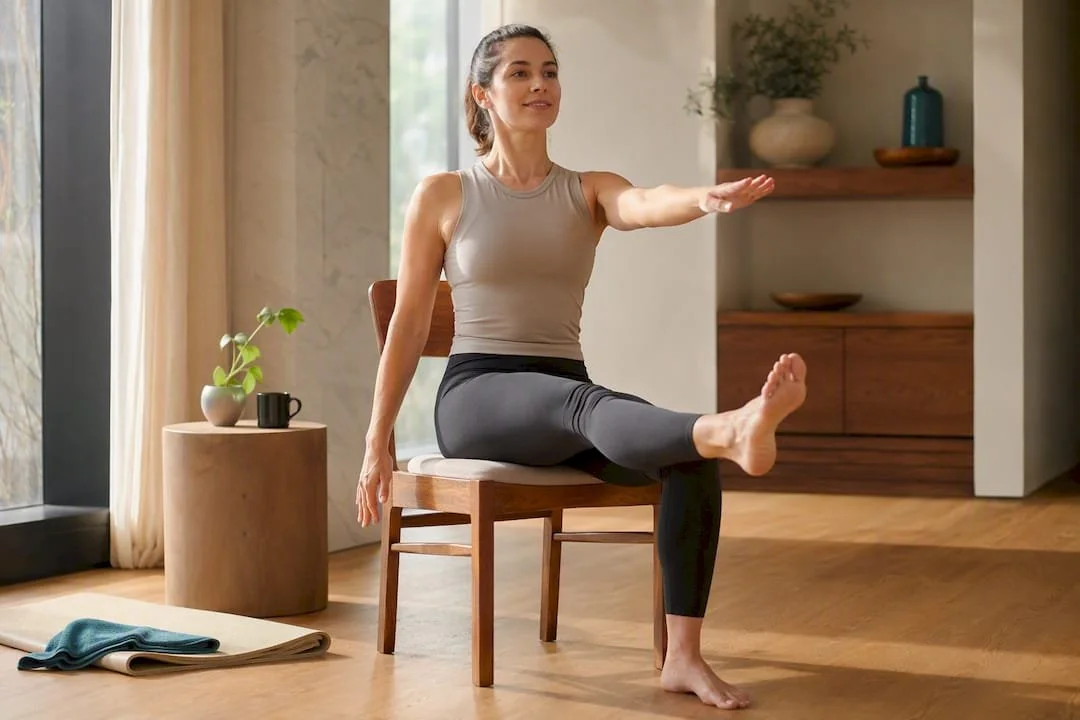
For anyone with knee or wrist sensitivity, seated versions of the leg and arm work on a sturdy chair deliver similar core engagement without joint loading.
Combining Pilates With Nutrition, Strength, and Cardio
Pilates alone rarely moves the needle fast on weight loss. The combination that works is modest calorie control plus cross-training, and the math here isn't complicated.
A deficit of 300 to 500 calories per day is enough to produce steady, sustainable loss without the muscle-wasting side effects of extreme restriction. Pair that with a daily protein target around 0.7 to 1 gram per pound of body weight, which protects the lean muscle you're building in your Pilates sessions.
A realistic weekly template looks like this:
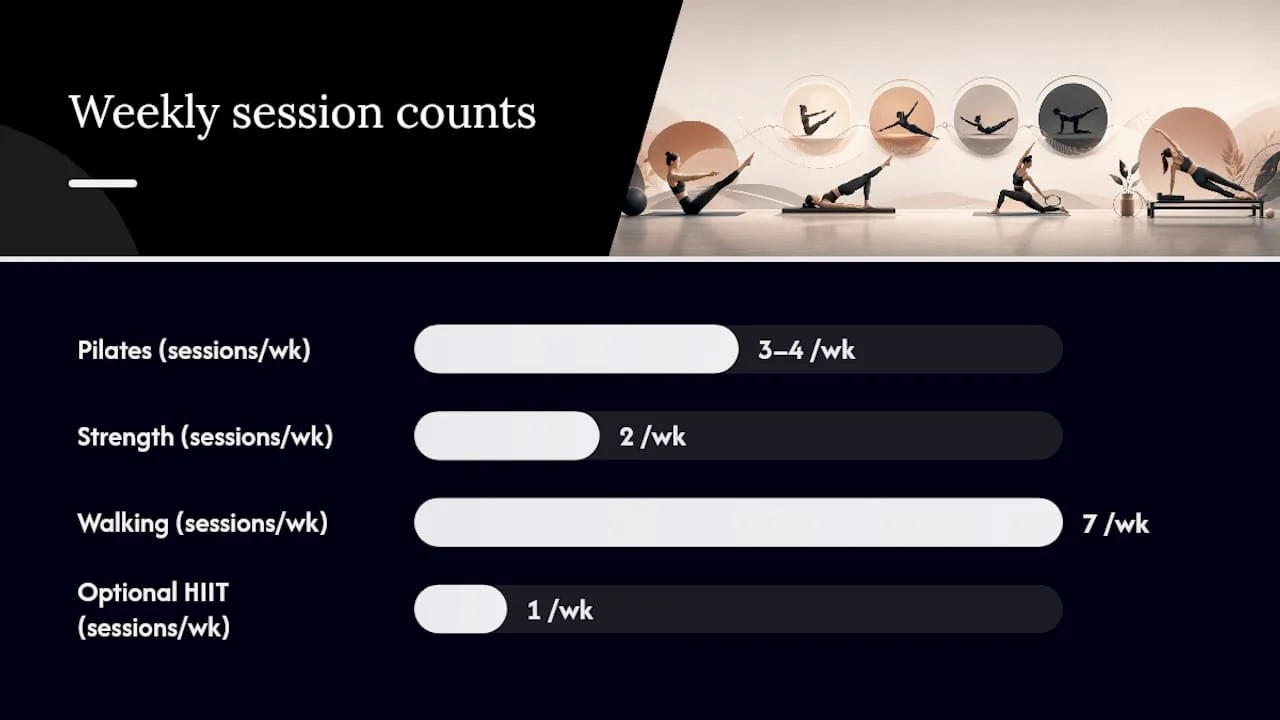
Pilates: 3 to 4 sessions.
Strength training: 2 sessions (can overlap with reformer or resistance-band Pilates days).
Walking: daily baseline, 20 to 30 minutes.
Optional HIIT or cardio: 1 session, depending on fitness level and joint tolerance.
Preserving lean muscle matters more than most beginners realize. Muscle is metabolically active tissue, and losing it alongside fat during a deficit slows your metabolism over time. That's why the DailyBurn's recommendation of pairing Pilates with two weekly strength sessions produces better long-term outcomes than doing Pilates in isolation.
Sleep and stress deserve more credit than they get. Poor sleep raises cortisol and appetite-regulating hormones, which undercuts even a well-designed workout schedule. If you're only going to fix one non-exercise habit this month, fix sleep before you fix your snack drawer.
Adherence is the real hidden variable. A studio setting with instructor-led mat Pilates classes tends to keep beginners consistent longer than solo home workouts, simply because a scheduled class creates accountability that a video on your phone doesn't.
Safety, Progression, and the Mistakes That Slow You Down
Form comes before intensity, always. Breath coordination, a neutral spine, and controlled range of motion matter more in week one than how many reps you can grind out.
The safest progression order looks like this: increase session minutes first, then repetitions, then add resistance, and only then change your tempo. Skipping steps, like jumping from beginner mat work straight into a loaded reformer class, is the fastest route to a strained lower back.
Watch for these red flags:
Sharp joint pain, especially in the lower back or knees, that doesn't ease with rest.
Dizziness or lightheadedness during or after a session.
Unusual chest pain or shortness of breath, which warrants stopping immediately and seeing a clinician.
Common beginner mistakes:
Holding your breath during core work instead of exhaling on exertion.
Overarching the lower back during bridges or leg lifts instead of keeping the spine neutral.
Adding resistance bands before mastering bodyweight form.
Skipping rest days entirely, assuming more is always better.
Beginners typically need one to two rest or active-recovery days per week, even on a program built around 4 to 5 Pilates sessions. Active recovery, meaning light walking or gentle stretching rather than a full off day, keeps blood flow moving without adding strain. The NHS's beginner-friendly Pilates guidance runs around 45 minutes and is built specifically for people returning to exercise or starting fresh, which makes it a solid reference point for pacing yourself realistically.
Progression Rule: Increase session duration before adding resistance, and increase load gradually rather than jumping levels. Overuse injuries in new Pilates practitioners almost always come from doing too much, too soon, not from the exercises themselves.
Why Instructor Feedback Changes the Learning Curve
Amrita Yoga & Wellness runs classes across yoga, pilates, barre, tai chi, and massage therapy out of its Philadelphia studio, and beginners consistently make faster, safer progress with real-time instructor correction than with a video alone. A cue like "drop your ribs" or "lengthen through the crown" lands differently when someone is watching your spine in the room.
Small-group formats also mean the instructor can adjust your Roll-Up or Bridge on the spot, catching the exact form errors covered above before they become habits. That kind of feedback loop is why practitioners often see Pilates as an adherence anchor for beginners: it's joint-tolerant, varied enough to stay interesting, and forgiving of imperfect starting fitness. The studio's ongoing blog coverage of Pilates for weight loss and beginner core work reflects that same beginner-first philosophy in written form.
— Juiced
Getting Started at Amrita Yoga & Wellness
Amrita Yoga & Wellness gives beginners something a solo home routine can't: a real instructor correcting your form before a habit turns into an injury. If you're just starting out, the mat Pilates classes and mixed beginner sessions are the right entry point, and a private session is worth considering if you want individual attention on those first few weeks of alignment work.
Bring a mat if you have one, wear something you can move in, and skip a heavy meal beforehand. Show up 10 minutes early for your first class so the instructor can flag any injuries or limitations before you start. Explore the studio's class offerings and popular Pilates styles to figure out whether mat or reformer work fits your goals better, then book your first beginner session directly through Amrita Yoga & Wellness to get on the schedule this week.
Sources
Recommended

Studio Taught Safety for Hot 26 Yoga in Philadelphia
Hot 26 (also called 26 & 2) is a fixed sequence of 26 postures and two breathing exercises practiced in a room heated to about 105°F with 40% humidity. Every class follows the exact same order, from the B.C. Ghosh lineage that Bikram Choudhury popularized. This guide covers the full sequence, the science behind the benefits, who should think twice before stepping on the mat, and how Amritayogawellness teaches it in Philadelphia.
TL;DR:
The heat in Hot 26 raises body temperature, increasing cardiovascular load and muscular flexibility while also elevating the risk for heat-related illnesses.
Proper hydration, breathing through the nose, and early cooling are essential, especially for those with heart conditions, pregnancy, or heat intolerance.
Small variations in room temperature, class length, and instructor cueing can significantly affect your experience and safety.
Practicing regularly in a consistent sequence helps monitor progress but requires gradual adaptation to the heat and poses.
Choosing studios that prioritize heat safety and instructor guidance can improve comfort, safety, and the benefits of the practice.
Table of Contents
What Makes Hot 26 Different From Regular Hot Yoga
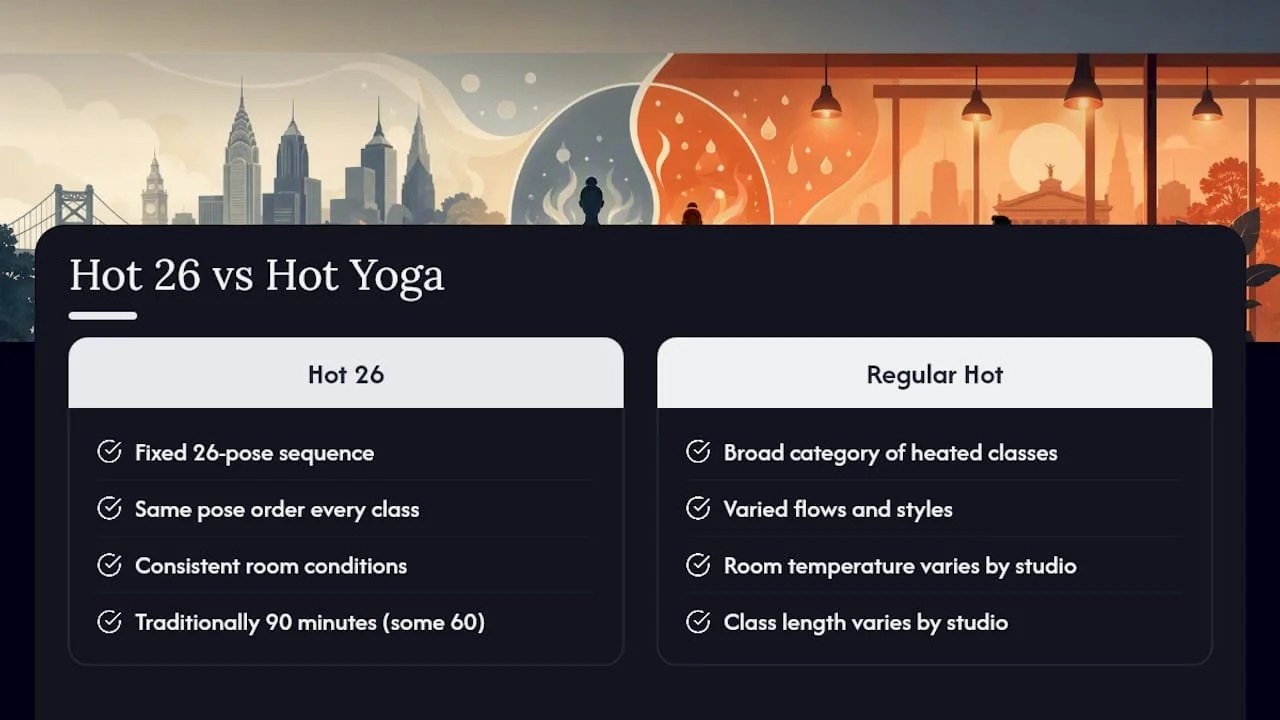
"Hot yoga" is a broad category covering any yoga practiced in a heated room, from vinyasa flows to power yoga to freestyle heated classes. Hot 26 is one specific format inside that category, and it does not improvise. The sequence, the pose order, and the room conditions are locked in place, class after class, studio after studio.
The traditional class runs 90 minutes, though many studios now offer 60-minute versions or slightly lower temperatures to make the format more accessible to newer students. If you see a studio advertise "Hot 26," "26 & 2," or "Original Hot Yoga," you're looking at the same sequence taught under a different name. The label tells you about the studio's lineage and branding choices, not about a different workout. Check a studio's own class description before booking, since room temperature and length can vary by a few degrees or minutes.
The 26 Postures and 2 Breathing Exercises, in Order
The canonical sequence splits into a standing series and a floor series, opening and closing with breathing work. Here's the order:
Pranayama (standing deep breathing): Opens the lungs and raises internal body heat.
Half Moon Pose with Hands to Feet Pose: Builds a side stretch and spinal flexibility.
Awkward Pose: Fires up the thighs and builds lower-body endurance.
Eagle Pose: Tests balance while compressing the joints for circulation.
Standing Head to Knee Pose: Combines balance with a hamstring and core challenge.
Standing Bow Pulling Pose: A deep backbend and balance pose done on one leg.
Balancing Stick Pose: Short, intense hold that raises heart rate quickly.
Standing Separate Leg Stretching Pose: Forward fold that lengthens the hamstrings.
Triangle Pose: Works the whole leg while opening the hips and chest.
Standing Separate Leg Head to Knee Pose: Combines balance and a deep forward fold.
Tree Pose: A grounding balance pose that closes out the standing series.
Toe Stand Pose: An advanced balance variation, often modified by beginners.
Dead Body Pose (Savasana): Brief rest between the standing and floor series.
Wind Removing Pose, Sit-Up, Cobra Pose, Locust Pose, Full Locust Pose, Bow Pose, Fixed Firm Pose, Half Tortoise Pose, Camel Pose, Rabbit Pose: The floor series, moving through backbends, core work, and forward folds.
Head to Knee Pose with Stretching Pose and Spine Twisting Pose: Seated stretches that wind down the spine.
Blowing in Firm Pose (Kapalabhati breathing): Closing breathing exercise that finishes the class.
Several standing poses, including Awkward Pose and Half Moon, are traditionally practiced in two rounds. Always confirm a studio's exact timing and room temperature before your first visit, since small variations are common.
Why Some Studios Say "Bikram" and Others Don't
The sequence traces back to the B.C. Ghosh lineage of hatha yoga, which Bikram Choudhury adapted and brought to the United States, building a global network of studios that all taught the identical 26-pose format. For decades, "Bikram Yoga" was the practice's name almost everywhere it appeared.
That changed after allegations against Choudhury became public, and many studios dropped his name in favor of neutral terms like Hot 26, 26 & 2, or Original Hot Yoga. The sequence itself didn't change. What changed was branding: studios wanted to separate the practice from its founder's controversy while keeping the format their students already knew and trusted. So when you compare hot yoga vs. Bikram at two different studios, you're often looking at the exact same 26 poses taught under different signage.
What the Heat and the Holds Actually Do for Your Body
Practitioners commonly report improved flexibility, and that tracks with what heat does physiologically: warmer muscle tissue stretches more easily, which lets students move deeper into forward folds and backbends than they could in a cold room. The sustained holds, some lasting 20 to 60 seconds, build muscular endurance you don't get from faster-paced vinyasa classes.
The standing series, in particular, builds:
Balance and proprioception, from one-legged poses like Standing Bow and Tree Pose
Core strength, from the numerous standing and seated compressions
Cardiovascular conditioning, since the heat forces your heart rate up even during static holds
Statistic Callout: Cardiovascular load in a heated room runs higher than the same sequence performed at room temperature, which is exactly why medical sources flag hot yoga's heat exposure as a real physiological stressor, not just a discomfort. Your body works harder to regulate temperature while also working through the poses, and that combination is where both the conditioning benefit and the safety risk come from. Results vary by fitness level, hydration, and heat tolerance, so treat these as general patterns rather than guarantees.
Who Should Practice Hot 26, and Who Should Check With a Doctor First
Hot 26 is demanding on the cardiovascular system in a way that a cool-room class simply isn't. Before booking your first class, get medical clearance if any of these apply to you:
You have diagnosed heart disease or a history of cardiac events.
You are pregnant, since heat exposure guidelines differ significantly during pregnancy.
You have a known heat intolerance or a history of heat-related illness.
You take medications that affect blood pressure, hydration, or your body's ability to regulate temperature.
Mayo Clinic Sports Medicine advises checking with a physician if any of this applies, given how much the heat raises your body's workload beyond the poses themselves.
Inside the room, a few habits make a real difference. Breathe through your nose rather than your mouth, which helps regulate your internal temperature. Drop into Child's Pose the moment you feel dizzy or overheated. Sit near a door or vent if you're new to the heat. And when your heart rate spikes, slow your breath down deliberately instead of trying to push through the pose.
Pro Tip: Ask the front desk about cooling stations, fan placement, and whether instructors actively cue modifications before you book. A studio that talks openly about heat safety is usually one that trains its teachers to watch for it.
For a deeper walkthrough of in-class modifications, our guide on hot yoga safety tips covers hydration timing and warning signs worth knowing before your first class.
Your First Hot 26 Class: What to Expect and How to Prepare
Start hydrating the day before, not twenty minutes before class. Wear moisture-wicking layers rather than cotton, which gets heavy and clings once you're sweating. Bring a grippy towel for your mat, since standing balance poses get slippery fast in a heated room. Skip the heavy meal beforehand and bring a water bottle you can sip between poses.
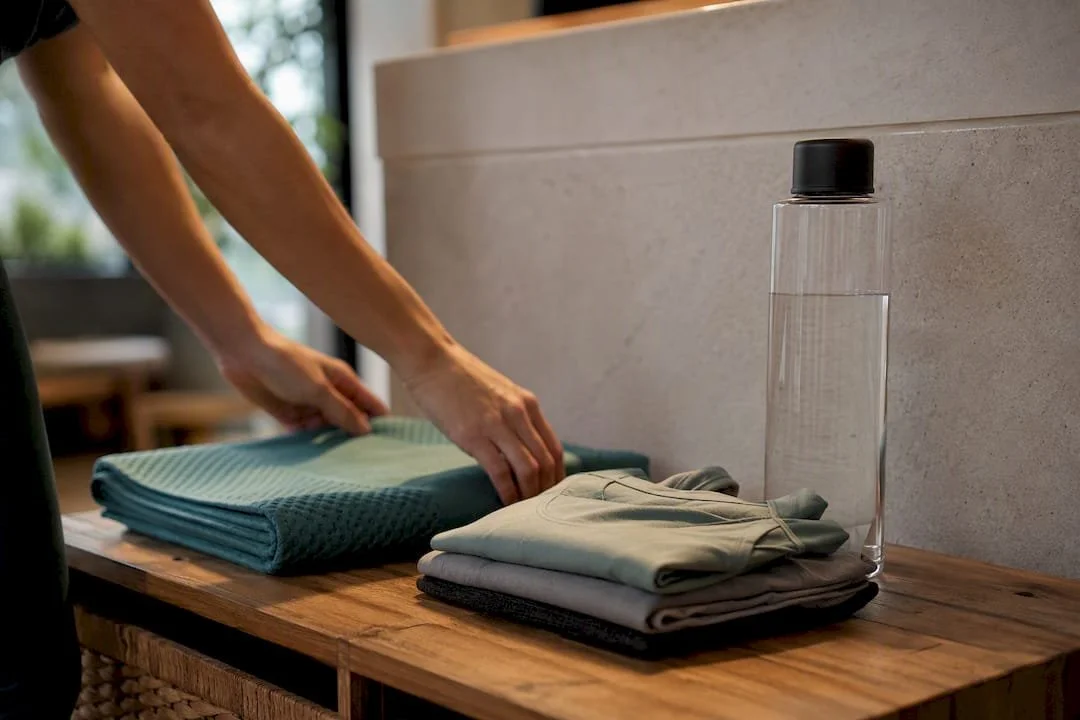
A typical class opens with a brief instructor introduction, moves into the standing pranayama, works through the standing series, transitions to the floor series, and closes with the final breathing exercise and a longer Savasana. Instructor style varies. Some run a tightly scripted class with the traditional dialogue; others adapt cueing to the room.
For your first three to five classes:
Expect a slower pace than you'd like and let it happen.
Position yourself near the back or an exit until you're acclimated.
Use breath control, not willpower, to manage the heat.
Accept that your range of motion will be more limited than it becomes after a few sessions.
Our step-by-step guide to hot yoga walks through progression expectations in more detail if you want to plan out your first month.
How Amritayogawellness Teaches the Fixed Sequence
Instructors at Amritayogawellness teach breath first, heat second. Before students worry about hitting a deeper Standing Bow or a cleaner Triangle Pose, they learn to regulate their breath so the room doesn't overwhelm them. That ordering matters more in a 105-degree room than almost anywhere else in a yoga practice.
There's something to be said for a sequence that never changes. Students track their own progress class over class, week over week, because the poses stay identical and only the body's response shifts. That repetition builds a kind of confidence you don't get from a class that reinvents itself every session. For more background on the format's roots, see our explainer on what Bikram hot yoga is and why it matters.
— Juiced
Ready to Try Hot 26 in Philadelphia?
Reading about Hot 26 only gets you so far. The heat, the pace, and the sequence itself are things you feel in your first class, not things you fully understand from a pose list. Amritayogawellness runs Hot 26 classes in Philadelphia with instructors trained to cue breath and heat management from your very first Awkward Pose, so the safety guidance above isn't an afterthought. It's built into how the class is taught.
Bring water, a grippy towel, and the hydration habits covered earlier, and check the class schedule to find a Hot 26 session that fits your week. If you're curious about rounding out your wellness routine beyond the mat, browse the studio's tarot reading sessions as well. Either way, the next step is simple: pick a time, show up hydrated, and let the sequence do what it's done for decades.
Sources
Recommended

Studio Backed Pilates Class: What to Expect in Your First 45–60 Minute Session
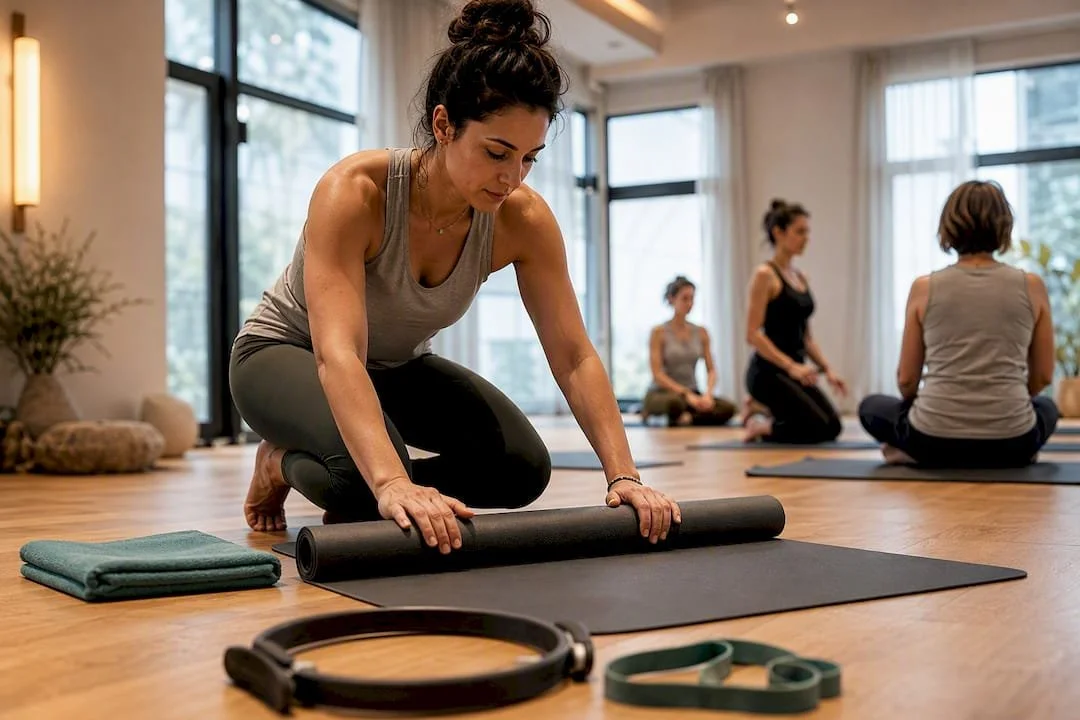
A Pilates class is a 45 to 60 minute, instructor-led workout built around controlled, low-impact movements that strengthen your core, sharpen posture, and improve flexibility. Most beginners start with a mat class or a small reformer session, using breathwork and precise form instead of speed or heavy weight. You don't need experience. You do need to ask for modifications and pick a beginner-friendly class or private session for your first time.
TL;DR:
Most beginners should start with mat classes or private reformer sessions to learn proper form and avoid developing bad habits.
Reformer classes offer more personalized correction and easier modifications but require an introductory session for first-timers nervous about equipment use.
A typical class emphasizes controlled, deliberate exercises focusing on core stability, with slower pacing and verbal cues rather than high intensity or speed.
People with certain health conditions should consult a doctor before starting Pilates and report any injuries or limitations to their instructor.
Proper attire includes fitted, stretchy clothing and grip socks, and arriving early helps ensure a smooth, informed first experience.
Table of Contents
What Is Pilates and How Does It Actually Work?
Joseph Pilates called his method "Contrology" for a reason. He built it around controlling the body, not just moving it. That distinction still shapes every class you'll take.
Pilates rests on a handful of core principles, and once you know them, the exercises make a lot more sense:
Breath: Coordinated inhales and exhales cue when to contract or release, and they keep you from holding your breath during hard moves.
Control: Every movement is deliberate. No momentum, no flailing.
Concentration: You're focused on the working muscle the entire time, which is part of why an hour of Pilates feels mentally different from an hour on a treadmill.
Center (the "powerhouse"): Your abdominals, lower back, hips, and glutes act as the stabilizing hub for nearly every exercise.
Precision: A small, correct movement beats a large, sloppy one.
Flow: Exercises link together with smooth transitions rather than stopping and starting.
These principles push instructors toward exercises that target stabilizer muscles rather than the high-rep, high-heart-rate work you'd get in a cardio class. That's why a Pilates session can leave your deep core muscles shaking while your heart rate barely climbs.
Mat, Reformer, or Something Else? Common Class Formats
Not every Pilates class looks the same, and the format you pick changes what your first session feels like.
Mat Pilates is the most accessible entry point. You use your own body weight plus small props like resistance bands or a Pilates ring, which makes it easy to practice at home once you know the moves. Most beginners start here.
Reformer and equipment-based classes use a sliding carriage attached to springs, which add resistance and support at the same time. The springs can make an exercise harder or make it easier, depending on how the instructor sets them up. These classes tend to run smaller than mat classes, sometimes as private sessions, because the equipment needs closer supervision.
Beyond the reformer, some studios offer chair work, the Cadillac (a raised table with bars and straps), and various props. Instructors typically choose formats based on your goals, whether that's rehab, general conditioning, or building toward more advanced work.
A few points to weigh before booking:
Mat classes are cheaper, easier to find, and translate well to home practice.
Reformer classes usually mean smaller groups and more individualized correction.
You can mix formats once you're comfortable with the fundamentals.
Pro Tip: If you're curious about the reformer but nervous about the machine, book a private or beginner-specific session first. Learning foot placement and strap setup with an instructor watching closely prevents the compensatory habits that trip up people who jump straight into a group class.
What Actually Happens During a Pilates Class
A typical class follows a predictable arc, which helps if you've never done one before.
Warm-up. You'll start with breathing exercises and gentle mobilization, like pelvic tilts or spine curls, to wake up the muscles you're about to use.
Core activation. Early exercises target the deep abdominals and pelvic floor, setting the "powerhouse" that supports everything else.
Supine and prone sequences. You'll move through exercises lying on your back and stomach, working through controlled leg circles, single-leg stretches, or swan-style extensions.
Standing and balance work. Later segments often add standing exercises that challenge balance and coordination using the same control principles.
Cooldown and stretching. The class winds down with static stretches and slower breathing to bring your heart rate and nervous system back to baseline.
Expect verbal cues throughout, things like "scoop your navel" or "lengthen through the crown of your head." In smaller classes, instructors may offer hands-on adjustments to correct your alignment, while larger mat classes rely more heavily on verbal instruction since there's less time to reach everyone individually. The pacing is slower and more deliberate than a cardio class, with pauses built in to check form before moving to the next exercise.
The Real Benefits of Practicing Pilates Regularly
The benefits people actually notice tend to show up in daily life before they show up on a scale. Better posture. Fewer aches after sitting at a desk all day. Easier time balancing on one foot while putting on socks.
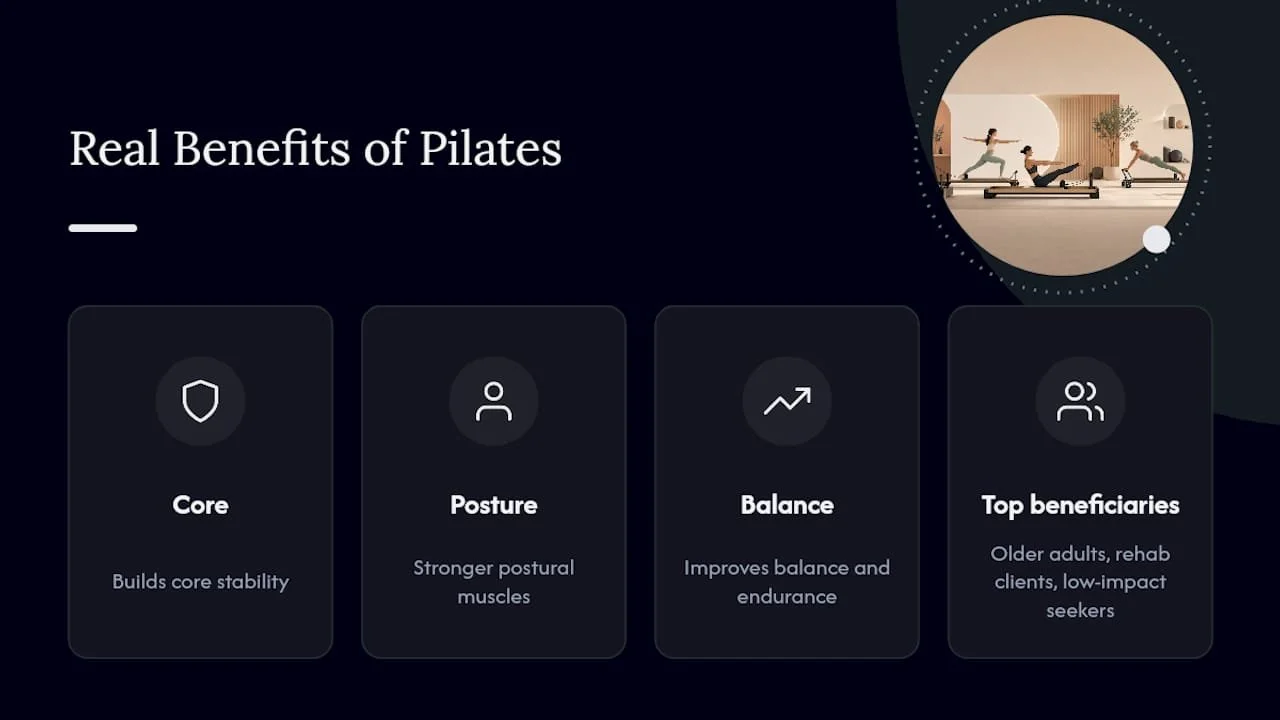
Regular practice builds core stability, strengthens postural muscles, improves flexibility, and sharpens balance and muscular endurance over time. Scientific literature on Pilates includes trials examining its effects on pain, function, and fitness markers, and Pilates is frequently used in injury prevention and rehab settings when a qualified instructor guides the progressions.
Certain groups tend to see the biggest payoff. Older adults benefit from the low-impact nature and balance work, rehab clients use it to rebuild strength safely after injury, and anyone chasing low-impact strength gains and better posture without pounding their joints tends to stick with it longer than higher-impact alternatives.
Is Pilates Safe for You? Modifications and When to Check With a Doctor
Pilates is one of the more adaptable workouts you can walk into, which is exactly why it works for such a wide range of bodies. But adaptable doesn't mean risk-free for everyone.
If you have a herniated disc, recent surgery, osteoporosis, or a cardiovascular condition, get medical clearance before starting. Health experts note that Pilates builds strength and tone without bulking, and that it adapts well for older adults, but any existing condition deserves a conversation with your doctor first.
Once you're cleared to practice, a few things make the experience safer:
Tell your instructor about any injuries or limitations before class starts, not halfway through.
Ask for modifications on exercises that stress a specific joint or area.
Book a private session if you have complex mobility issues that need one-on-one attention.
Stop and speak up if you feel sharp pain, dizziness, or numbness. Those are signals to modify or rest, not push through.
Getting Ready for Your First Class: What to Wear and Bring
Show up prepared and your first class feels a lot less intimidating.
Wear fitted, stretchy clothing. Loose shirts and baggy shorts tend to get in the way when an instructor needs to see your alignment or when you're moving through floor work. Grip socks aren't mandatory everywhere, but many reformer studios either require or strongly recommend them since bare feet can slip on the carriage.
Beyond clothing, a short checklist covers most of what you need:
Water bottle and a small towel, especially for warmer studio rooms.
Any medical clearance paperwork if your doctor recommended it.
Arrive 10 to 15 minutes early to fill out intake forms and meet your instructor.
Book a beginner-labeled class or a private session for your very first reformer experience.
Pro Tip: Mention any past injuries to your instructor before class, even minor ones. A five-second heads-up lets them adjust your setup before you start, instead of correcting form mid-exercise.
How Amrita Yoga & Wellness Supports First-Timers
Amritayogawellness runs both mat and reformer classes with programming built specifically for beginners, so you're never dropped into an advanced sequence on day one. The studio's Pilates exercises blog breaks down individual movements and alignment cues, and the beginner Pilates guide walks through what a first-timer should expect before ever stepping into the studio.
If you're weighing whether to start on the mat or try the reformer, the studio's guide on reformer basics for beginners covers foot placement, spring setup, and the small details that make that first machine session feel far less confusing.
What Beginners Get Wrong About Starting Pilates
Most beginners assume Pilates is either too gentle to matter or too advanced to try without months of prep. Neither is true, and that misconception keeps people out of a class that's specifically designed to meet them where they are.
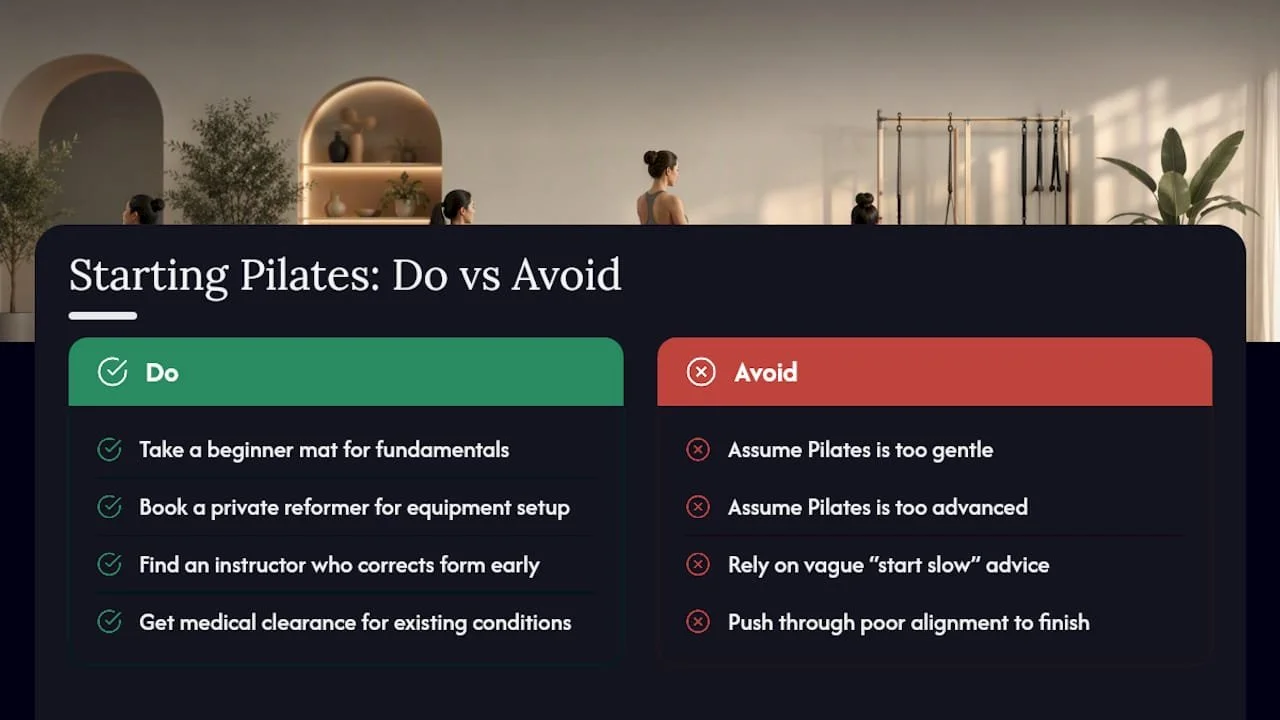
The conventional advice tells beginners to "start slow," which is vague enough to be useless. What actually helps is picking a specific entry point: a beginner mat class if you want to learn the fundamentals at your own pace, or a private reformer session if you're drawn to the equipment but don't want to guess at setup in a group. The research backs both benefits and limits here. Pilates builds real, measurable core stability and postural improvement, but it isn't a substitute for medical care when you have an existing condition that needs clearance first.
If there's one thing to prioritize, it's finding an instructor who corrects your form early rather than one who lets you push through bad alignment for the sake of finishing a set. That's the difference between a class that protects your joints and one that quietly wears them down.
— Juiced
Ready to Try Your First Pilates Class?
Amritayogawellness runs beginner-focused mat and reformer classes in Philadelphia, built for people who've never set foot on a reformer or rolled out a mat before. You get small class sizes for reformer work, so an instructor can actually watch your form and adjust it, plus mat sessions that ease you into the core principles without overwhelming your first hour.
If you're ready to feel what controlled, low-impact strength training actually does for your posture and core, book a beginner class and tell the instructor it's your first time. They'll set up modifications before you even ask. And if you want to round out your wellness routine beyond the studio floor, check out tarot readings as another way to slow down and reconnect with yourself between sessions.
Sources
Recommended

Skip the Fast and Sweaty Myth, Vinyasa for Beginners in Philadelphia
Vinyasa is a breath-linked, flowing style of yoga where each movement syncs to an inhale or exhale, and the term also names the practice's short reset sequence and the sequencing principle behind it. It suits people who want a movement-forward, moderately demanding practice that builds strength and mobility while training attention through breath. If you want something slower and more static, look elsewhere; if you want flow, this is your style.
TL;DR:
Vinyasa is a sequencing principle that arranges poses purposefully and a style centered on breath-movement coordination, not speed.
Typical classes follow a predictable structure from warm-up through sun salutations, peak effort, and cooldown, with pacing varying by instructor.
The core vinyasa sequence, often called a reset, involves controlled transitions from plank to Chaturanga, upward dog, and downward dog, with regressions available.
Vinyasa provides moderate aerobic, strength, and stress-reduction benefits, but should be paired with other training for cardiovascular or maximal strength goals.
Choosing slow flow for flexibility, power for strength, or heated vinyasa depends on individual goals, while beginners should focus on proper form and controlled breathing.
Table of Contents
What Is Vinyasa Style Yoga, Really?
The word "vinyasa" translates roughly to "arranging something in a special way," and that literal meaning is the key to untangling why the term gets used three different ways in the same studio conversation. Yoga Journal traces this etymology back to its Sanskrit roots, and understanding it clears up most of the confusion new students run into.
First, vinyasa is a sequencing principle: the deliberate arrangement of postures in a purposeful order rather than a random string of poses. Second, it's a style name, the broad category of "flow" classes that most studios advertise. Third, and this trips people up constantly, it's a specific mini-sequence: the Plank to Chaturanga to Upward-Facing Dog to Downward-Facing Dog reset that teachers cue between poses. When an instructor says "take a vinyasa," they usually mean that third thing, even though the word technically covers all three.
The modern practice traces its lineage to Tirumalai Krishnamacharya, whose teaching in the early 20th century shaped what became Ashtanga Yoga through his student Pattabhi Jois. Vinyasa as most people practice it today grew out of that Ashtanga foundation, but teachers loosened the fixed sequencing into something more improvisational. Ashtanga follows the same series every time. Vinyasa borrows its breath-driven architecture but lets instructors build a new sequence each class.
That distinction matters for anyone comparing vinyasa vs. Hatha yoga, too. Hatha classes tend to hold poses longer with less continuous movement between them, while vinyasa keeps you transitioning almost constantly. Neither is better. They're built for different nervous systems and different days.
A common misread is that vinyasa has to move fast. It doesn't — the defining feature is breath-to-movement coordination, not tempo. A slow flow class is still vinyasa if every motion tracks a breath.
What Happens During a 60-Minute Vinyasa Class?
Walk into a typical hour-long vinyasa class and you'll notice the same rough arc almost everywhere, even though no two teachers sequence identically. That predictable structure moves from warm-up through sun salutations into standing work, peak effort, and a cooldown, and knowing the shape ahead of time takes a lot of the guesswork out of your first class.
Here's roughly how the 60 minutes tends to break down:
Minutes 0 to 10: Seated or lying warm-up, breath work, gentle joint mobilization to wake up the spine and shoulders.
Minutes 10 to 20: Sun Salutations (Surya Namaskar), repeated several times to build heat and establish the breath rhythm you'll use all class.
Minutes 20 to 40: Standing flows, balance postures, and longer sequences that link multiple poses with vinyasa resets between them.
Minutes 40 to 50: Peak work, often a harder standing pose, arm balance, or backbend the whole class has been building toward.
Minutes 50 to 60: Cooldown, floor stretches, and Savasana (final resting pose).
Sun Salutations do double duty here. They're both a physical warm-up and a template for the breath-movement pairing that runs through the entire class, so once you've internalized the pattern in the first ten minutes, the rest of the hour reads a lot more clearly.
Pacing is where teachers differentiate themselves the most. Some instructors hold transitions for a full five-breath cycle before moving on; others keep things brisk with a single breath per shift. Ask about pace before you book if you're new. It changes the entire feel of the room, from meditative to genuinely athletic.
How Do You Coordinate Breath and Movement in Vinyasa?
Breath is not decoration in vinyasa. It's the mechanism. Every movement gets timed to either an inhale or an exhale, and that one rule is the single most useful thing a beginner can learn before their first class.
The general pattern: inhales accompany opening or lengthening movements (reaching up, arching back, lifting the chest), while exhales accompany folding or contracting movements (bending forward, twisting, stepping back). One movement gets one breath. Not two breaths, not half a breath. That ratio is what keeps the practice from turning into random calisthenics with a yoga soundtrack.
The most common transition you'll encounter is the vinyasa reset itself. Here's how it typically runs:
From plank position, lower with control to Chaturanga (a low push-up hold), exhaling as you lower.
Inhale into Upward-Facing Dog, pressing the chest forward and up while the tops of the feet root down.
Exhale into Downward-Facing Dog, lifting the hips up and back into an inverted V shape.
Hold, breathe, and either step forward into the next standing pose or repeat the cycle.
Beginners can regress every step of this. Drop to your knees before lowering into Chaturanga, or skip the pushup entirely and step back to Downward Dog instead. Nobody in a well-run class will think twice about it.
Pro Tip: Don't chase the pace of the person next to you. Match your breath to your own movement speed first, then let the room's rhythm catch up to you, not the other way around.
Does Vinyasa Actually Deliver Real Fitness Benefits?
Vinyasa earns its reputation as a whole-body practice, but the evidence supports specific, moderate claims rather than sweeping ones. It's a light-to-moderate aerobic workout, a legitimate strength builder for the upper body and core, and a documented stress-reduction tool. It is not a substitute for dedicated cardio or heavy resistance training if that's your primary goal.
What the research shows: peer-reviewed trials on yoga and flow-based practices link them to reduced short-term blood pressure and measurable stress-related improvements, giving the "vinyasa calms you down" claim actual clinical backing rather than just studio folklore. Multiple randomized and controlled studies back this connection.
On the strength side, repeated Chaturangas and plank holds across a single class add up to genuine upper-body and core loading, the kind you'd otherwise get from a dedicated bodyweight circuit. Consistent flow classes build real strength alongside mobility gains from the constant transitioning, since every lunge, twist, and standing balance asks joints to move through a fuller range than static holding would.
The cardiovascular effect is real but modest. Expect an elevated heart rate and a light sweat in a well-paced class, not the same caloric burn as a run or a spin session. If your primary goal is cardiovascular conditioning or maximal strength, treat vinyasa as a complement to that training, not a replacement for it. Where it genuinely outperforms most other exercise categories is the breath-focus component, which trains sustained attention in a way that lifting weights or running typically doesn't.
Slow Flow, Power, and Hot Vinyasa: What's the Difference?
Not all vinyasa classes feel the same, and the labels studios use actually mean something specific once you know what to look for. Choosing the wrong one for your goal is the most common reason first-timers walk out saying "that wasn't what I expected."
Slow flow: Longer holds, fewer transitions per minute, more room to focus on alignment and breath depth. Good for beginners or anyone recovering from a layoff.
Power vinyasa: Faster pacing, more repetitions, often incorporates strength-focused holds like extended plank work. Built for people who want an athletic, sweat-heavy session.
Hot vinyasa: Standard vinyasa sequencing performed in a heated room, usually 90 to 100 degrees. The heat increases sweat and perceived intensity but also raises injury risk if you push into deep stretches while overheated.
Ashtanga: Technically a specific, fixed series practiced in the same order every session, distinct from generic vinyasa's variable sequencing even though it shares the same breath-driven roots.
If flexibility is your goal, slow flow or a mobility-focused vinyasa class will serve you better than power vinyasa's brisker pace. If you want strength and sweat, power vinyasa or hot vinyasa fit that goal directly. If you want to learn a consistent sequence you can memorize and deepen over years, Ashtanga is the more disciplined path, though many vinyasa teachers borrow heavily from its structure anyway.
Who Should Try Vinyasa, and How Do You Pick a Class?
Vinyasa tends to suit people who get bored holding static poses, who like a workout that also asks something of their attention, and who want one practice that touches strength, mobility, and calm at once. If you strongly prefer stillness or have joint issues that make repeated weight-bearing transitions risky, a gentler style might serve you better as a starting point.
Before booking, run through a short checklist:
Class label: "Gentle vinyasa" or "Slow flow" for beginners; "Power" or unlabeled "Vinyasa" for more athletic sessions.
Teacher cueing: Does the description or trial class mention modifications and breath cues, or does it assume prior experience?
Pace and room layout: Crowded rooms with tight spacing make modifications harder to execute comfortably.
Available props: Blocks, straps, and blankets should be visible and offered, not just stacked in a corner.
Three questions worth asking at the front desk or before class starts: "Is this class appropriate for someone new to vinyasa?" "Will you offer modifications during the flow, or just at the start?" and "How heated is the room, if at all?" Those three answers tell you almost everything about whether a specific class matches your goals.
What Mistakes Should Beginners Avoid in Vinyasa?
Most vinyasa injuries come from a small handful of repeated errors, and nearly all of them have simple fixes. The most common mistake is dropping straight into full Chaturanga on every single vinyasa reset before the shoulders and core have the strength to control that lowering motion. Teachers commonly recommend regressing to knees-down Chaturanga or simply stepping back to Downward Dog instead, and there's no shame in taking that option for an entire class if you need it.
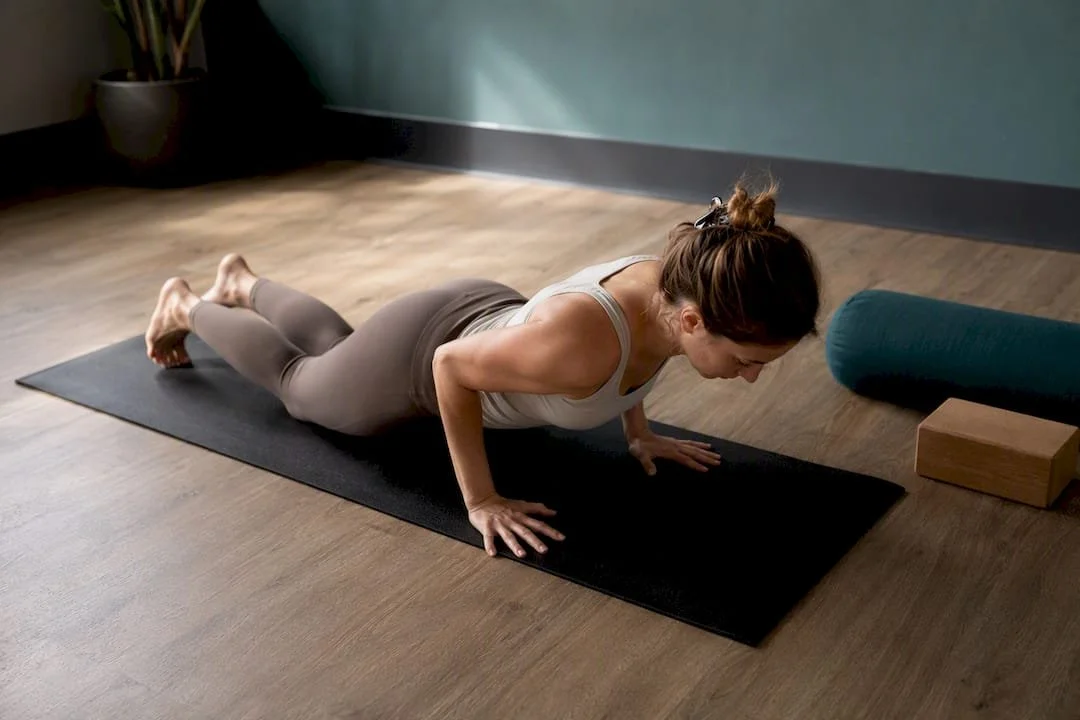
Other frequent errors: letting the hips sag in plank (loads the lower back), collapsing the shoulders forward in Upward-Facing Dog (compresses the wrists and neck), and racing the breath to keep pace with faster classmates instead of moving at your own rhythm.
Downward Dog is always available as a rest position mid-sequence. Skip a vinyasa reset entirely and hold there instead if your shoulders are fatigued or your energy is fading.
Pro Tip: If you have a shoulder injury, wrist pain, or a cardiovascular condition, talk to your doctor before starting vinyasa and mention it to your teacher before class begins so they can offer targeted modifications from the first Sun Salutation.
How Should You Start Practicing Vinyasa?
Getting started doesn't require months of preparation. It requires a reasonable plan and a willingness to modify early.
Start with two to three classes a week. That frequency is a commonly recommended sustainable starting point that lets your body adapt without accumulating overuse strain.
Choose beginner-labeled classes first. Look for "gentle vinyasa," "vinyasa fundamentals," or "slow flow" before trying power or hot variations.
Tell the teacher you're new before class starts. A thirty-second heads-up lets them cue modifications specifically for you.
Build a five-minute home routine. Three rounds of Sun Salutation A, paired consciously with breath, reinforces the core pattern between studio sessions.
Cross-train. Pair vinyasa with a dedicated strength or cardio activity if those are separate goals for you.
How Amrita Yoga & Wellness Supports New Vinyasa Students
Amritayogawellness runs its Philadelphia studio around exactly this kind of breath-first, beginner-conscious approach to vinyasa. Classes range from foundational flow sessions built for first-timers up through more athletic and heated formats for practitioners ready to push pace and intensity.
Beyond the mat, the studio's beginner-focused class content covers the same modifications and breath cues this article walks through, reinforced in person by instructors who adjust sequencing in real time. Workshops and community events round out the offering, giving newer students a low-pressure way to ask questions before committing to a regular schedule. The studio's own explainer on vinyasa fundamentals covers local class options for readers ready to move from reading to practicing.
Where Does Mindfulness Fit Into a Vinyasa Class?
Breath is the mechanism that makes vinyasa a mindfulness practice, not an accessory to it. Because every single movement gets tied to an inhale or exhale, your attention has nowhere else to go for the full 60 minutes except the present transition in front of you. That's a fundamentally different cognitive task than scrolling through a playlist while running on a treadmill.
This is where the "flow" framing earns its name beyond the physical sense. Athletes and psychologists use "flow state" to describe total absorption in a task, and vinyasa's constant breath-movement pairing nudges practitioners toward exactly that state almost by structural accident. You can't safely rush through a Chaturanga while thinking about tomorrow's meeting; the pose itself demands attention.
Teachers reinforce this deliberately. Cues like "notice where your breath catches" or "let the exhale finish before you move" aren't filler chatter, they're redirecting attention back to the only thing that actually controls your safety in the pose: your breath rhythm. Some instructors bookend class with a few minutes of seated meditation, but the meditative quality of vinyasa doesn't depend on that bookend. It's built into the movement itself.
If you've tried seated meditation and found stillness difficult, moving meditation through vinyasa is worth trying as an alternative entry point. The breath-focus is identical. The delivery mechanism is just different.
What Should You Wear and Bring to a Vinyasa Class?
Vinyasa's constant transitions and inverted positions (Downward Dog, forward folds) make clothing choice more functional than fashionable. Fitted, moisture-wicking layers work best. Loose tops tend to flip over your head during forward folds and inversions, which gets old fast around the fifth Sun Salutation.
A non-slip yoga mat is non-negotiable. Standard gym mats are usually too thin and too slick for the repeated plank-to-Chaturanga transitions vinyasa demands, especially once your palms start sweating twenty minutes in. Bring your own if you practice regularly; studio rental mats work fine for occasional visits.
Props matter more than most beginners expect. Blocks give you extra height in standing poses and forward folds when your hamstrings aren't there yet. A strap extends your reach in binds and seated stretches. Neither is a sign of weakness. Experienced practitioners use them constantly to fine-tune alignment rather than force a position.
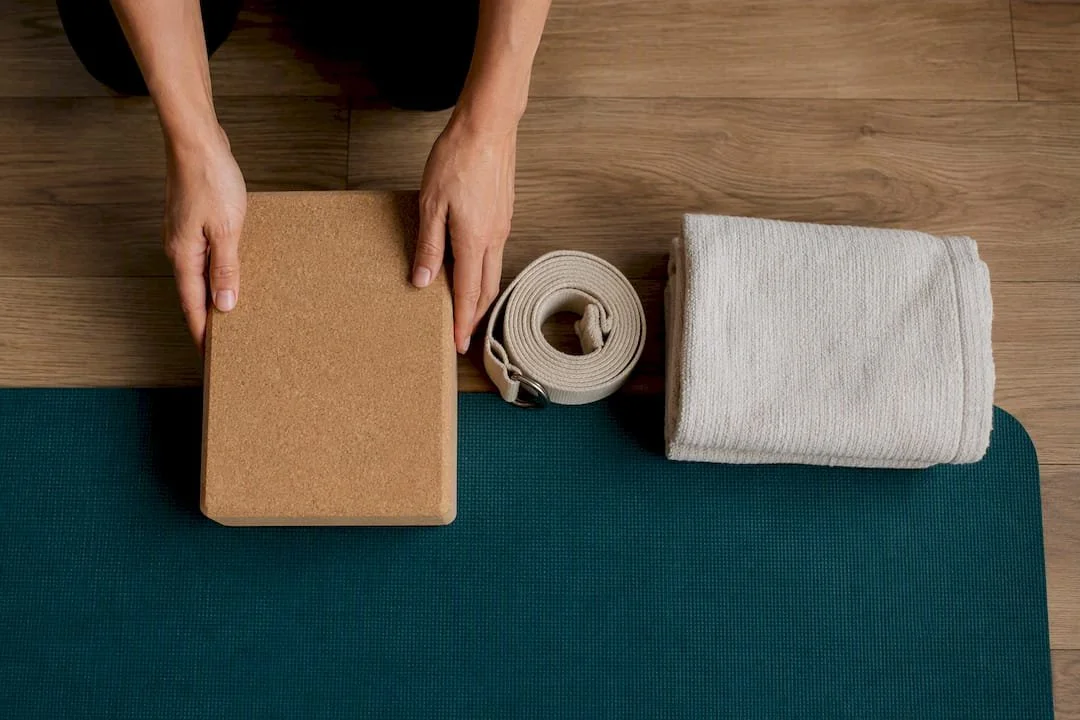
A small towel helps in heated or power classes where sweat accumulates on the mat surface and creates a genuine slip hazard during transitions. Water matters too, though most studios discourage drinking mid-flow since it interrupts the breath rhythm; sip during the brief pauses between sequences instead.
Skip heavy jewelry and check that your hair is secured. Anything dangling becomes a distraction, or a hazard, the moment you're inverted in Downward Dog.
How Does Vinyasa Compare to Restorative or Yin Yoga?
Vinyasa's constant transitioning puts it at the opposite end of the spectrum from Yin and Restorative yoga, and understanding that contrast helps clarify what vinyasa actually is by showing what it deliberately isn't.
Yin yoga holds passive, floor-based poses for several minutes at a stretch, targeting connective tissue rather than muscle, with almost no continuous movement between poses. Restorative yoga goes further still, using props like bolsters and blankets to fully support the body in poses held for extended periods with the explicit goal of deep relaxation rather than any strength or cardio component.
Vinyasa asks something different of you. It wants active engagement, continuous transitions, and a breath rhythm that keeps pace with movement rather than settling into stillness. Where Yin trains passive flexibility and nervous system downregulation, vinyasa trains active mobility, strength, and a moving form of mindfulness.
Neither approach beats the other on some universal scale. They solve different problems. Someone recovering from a demanding week might get more out of a Restorative class than another vinyasa session, while someone craving movement and challenge will find Yin frustratingly slow. Many experienced practitioners rotate between styles deliberately, using vinyasa for strength and energy days and Yin or Restorative for recovery days, which is a more useful mental model than picking one style as objectively "correct" and sticking to it forever.
Why the "Fast and Sweaty" Reputation Undersells Vinyasa
The biggest misconception holding people back from vinyasa isn't about difficulty. It's about tempo. Plenty of newcomers assume vinyasa means constant motion at a punishing pace, and that assumption alone talks a lot of genuinely well-suited beginners out of trying it.
The conventional advice tends to oversell the workout angle and undersell the breath mechanics that actually define the practice. Slow it down mentally before you slow it down physically: the single most useful thing a beginner can do is treat breath, not speed, as the metric they're optimizing for in every class. A vinyasa class where you match breath to movement at a careful pace is still vinyasa. A class where you rush through poses without tracking breath at all technically isn't, no matter how fast the room is moving.
Prioritize learning the plank to Chaturanga to Upward Dog to Downward Dog reset with control before you prioritize keeping pace with anyone else in the room. That sequence, done slowly and correctly, teaches you more about the practice than a dozen classes spent chasing tempo. Everything else, the strength, the mobility, the calm, builds on top of that foundation once it's solid.
— Juiced
Ready to Try a Beginner Vinyasa Class in Philadelphia?
If you've read this far, you already understand vinyasa better than most people walking into their first class cold. The next logical step is putting it into practice with actual guidance instead of trying to piece together the breath-movement pairing from a mat in your living room.
Amritayogawellness offers beginner-friendly vinyasa sessions at its Philadelphia studio, structured around exactly the pacing and modification guidance covered above. First-time students can call ahead or mention at the front desk that it's their first vinyasa class, and staff will point you toward a class level and teacher suited to that. The studio's vinyasa techniques and benefits guide is a useful preview of what a typical session covers before you book.
For readers curious about the studio's broader wellness offerings beyond the mat, Amritayogawellness also hosts Tarot Readings as a separate, adjacent workshop experience for anyone interested in exploring that side of the community calendar alongside their movement practice. Check current class times and reserve your spot directly through the studio to get started.
Sources
Recommended

11 Studies Back Prenatal Pilates With Studio Tweaks for Pregnant Women
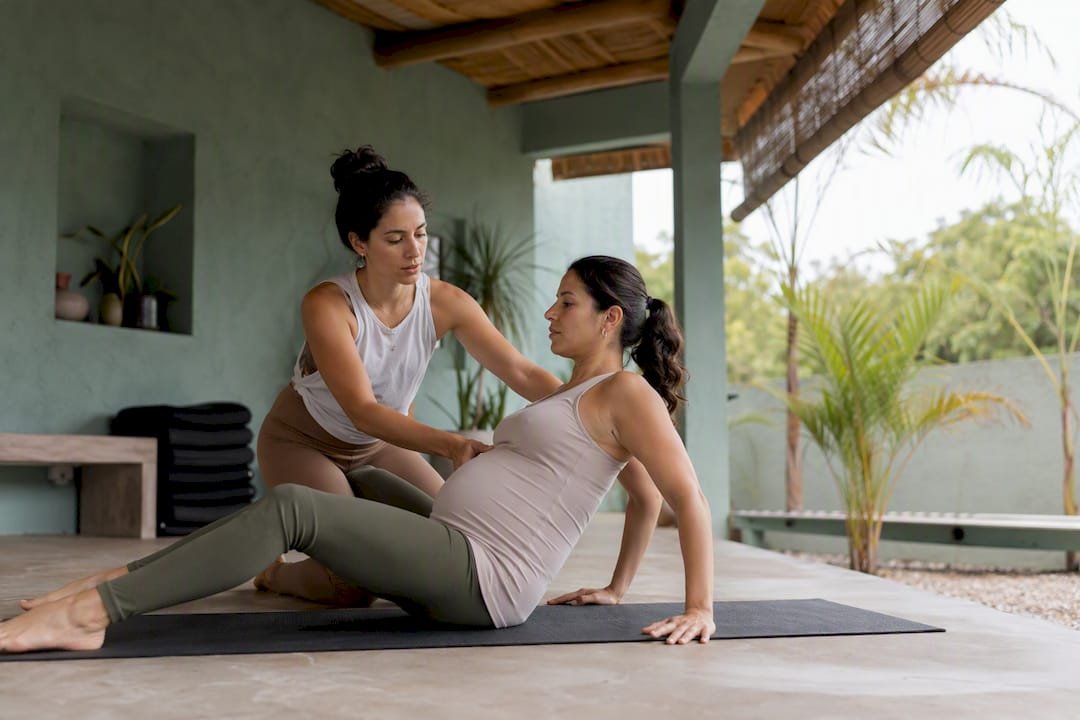
Prenatal Pilates strengthens the pelvic floor, cuts urinary incontinence, and is linked to shorter labor and better delivery outcomes in multiple trials. It also eases pelvic girdle pain, supports mood and sleep, and helps moderate pregnancy weight gain. Amrita Yoga & Wellness teaches it with prenatal-specific modifications. If your pregnancy is high-risk, talk to your clinician before starting.
TL;DR:
Prenatal Pilates is linked to shorter labor, improved APGAR scores, and reduced cesarean and labor durations, based on recent meta-analyses and trials.
It effectively strengthens the pelvic floor, reduces pelvic girdle pain, and helps moderate weight gain, with measurable benefits within eight weeks of consistent practice.
Studies show Pilates counters ligament laxity during pregnancy and lowers activity limitations caused by pelvic girdle pain, with effects larger than many brief exercise interventions.
Safety guidelines recommend avoiding lying flat past 16 weeks, skipping breath-holding, and customizing exercises based on individual risk factors and clinician approval.
Studio classes with prenatal-certified instructors and small groups ensure modifications are tailored in real time, enhancing safety and effectiveness over generic routines.
Table of Contents
What Do the Studies Actually Find (and Where Do They Fall Short)?
When Is Prenatal Pilates Safe, and Who Should Get Clearance First?
What Are the Benefits of Prenatal Pilates?
Pilates during pregnancy is not a gentler version of a regular workout. It is a targeted intervention that a growing body of clinical research ties to five specific outcomes.
Pelvic floor strength tops the list. Trial data shows women in structured Pilates programs report lower stress and urge urinary incontinence scores than control groups, both during pregnancy and in the early postpartum weeks, according to a dual-center randomized controlled trial. The same trial found reduced average pregnancy weight gain in the Pilates group.
Statistic callout: A 2025 meta-analysis pooling 11 studies and 538 participants found prenatal Pilates was linked to a significant reduction in labor duration (SMD -0.557, P = 0.002) and improved one-minute APGAR scores in several of the included studies.
Beyond labor, the benefits show up in daily comfort and mental health:
Pelvic girdle and low back pain: An eight-week program produced a large effect size (ηp² = 0.317) in reducing activity limitations from pelvic girdle pain.
Delivery outcomes: Pooled data across systematic reviews associates Pilates with higher vaginal delivery rates and lower cesarean rates.
Weight management: The same review found modest reductions in gestational weight gain among Pilates participants.
Mental health and sleep: Several studies report better sleep quality scores and lower depression/anxiety scores after structured Pilates programs.
None of this makes Pilates a substitute for prenatal care. It functions as a well-studied add-on that pulls its weight in several directions at once, which is unusual for a single low-impact exercise routine.
What Do the Studies Actually Find (and Where Do They Fall Short)?
The strongest evidence comes from a small cluster of recent randomized trials and two systematic reviews, and the numbers are more specific than most fitness articles let on.
The systematic review and meta-analysis covering obstetric and neonatal outcomes found Pilates exercise during pregnancy tied to shorter delivery times and a lower likelihood of cesarean birth across pooled trial data. Weight gain differences were modest but consistent enough to show up across multiple included studies.
The dual-center RCT on ligamentous laxity is worth singling out. Women in an eight-week structured Pilates program showed no progression in joint hypermobility, while the control group's laxity worsened over the same period. That matters because pregnancy hormones, particularly relaxin, loosen ligaments throughout the body, and Pilates appears to counteract that through better neuromuscular control rather than any change to the ligament tissue itself, according to research on joint stability mechanisms.
Statistic callout: The pelvic girdle pain RCT reported a large practical effect (ηp² = 0.317) after just eight weeks of twice-weekly sessions, a bigger shift than most short exercise interventions produce.
The honest caveat: these are still small-to-moderate trials.
Sample sizes across most studies run in the dozens to a moderate number, not thousands.
Protocols vary widely: some run four weeks, others sixteen, with different session lengths and instructor backgrounds.
Researchers behind the 2025 meta-analysis note the field still needs larger, multicenter trials with standardized protocols before recommendations can get more specific than "moderate exercise helps."
The direction of the evidence is consistent even where the magnitude isn't nailed down yet.
When Is Prenatal Pilates Safe, and Who Should Get Clearance First?
Pilates is broadly compatible with the moderate-exercise guidance the American College of Obstetricians and Gynecologists gives most pregnant people. But "most" isn't "everyone," and a few situations call for a conversation with your clinician first:
High-risk pregnancy diagnoses — placenta previa, preterm labor risk, severe anemia, or uncontrolled hypertension all warrant clearance before any new exercise program.
Multiples or a history of preterm birth — your provider may adjust intensity or timing recommendations.
Any new bleeding, dizziness, or reduced fetal movement — stop class immediately and call your provider; these are not "push through it" symptoms.
Once cleared, a few modifications matter more than general fitness advice suggests. Avoid lying flat on your back for extended periods after roughly 16 weeks, since it can compress the vena cava and reduce blood flow. Skip breath-holding (the Valsalva maneuver) during core work. And favor stabilization exercises over deep stretching, since relaxin already loosens your joints without extra encouragement.
Instructor training is not a formality here. A prenatal-certified instructor knows how to cue around a shifting center of gravity and when to swap a pose entirely.
Pro Tip: Tell your instructor you're pregnant even in week one, before it's visible. Small swaps, like a pillow under your torso or moving to hands and knees, protect you long before your bump does.
How Do You Start a Prenatal Pilates Routine Safely?
Most clinical programs run on a simple structure: eight weeks, two sessions a week, with each session built around 45 minutes of movement plus breathing work. That's a realistic template if you're starting from scratch.
A typical class follows this order:
Gentle warm-up to raise circulation without overheating.
Pelvic-floor-integrated core work, layering breath with movement instead of isolated crunches.
Posture and stability drills that address the forward-shifting center of gravity.
Breathing practice, sometimes paired with childbirth-preparation cues.
Cool-down and gentle stretching, avoiding extreme ranges of motion.
Common modifications you should expect and ask for if your instructor doesn't offer them:
Hands-and-knees positions instead of full plank once balance shifts.
Elevated chest support (a wedge or stack of pillows) for any exercise that would otherwise put you flat.
Seated or side-lying variations for core work in the third trimester.
Pelvic floor cues that pair a gentle lift-and-release with your exhale, never a hard clench-and-hold.
If you already practice Pilates for beginners, most of the transition is about pacing and props, not relearning the exercises from zero.
Pro Tip: If you feel any doming or bulging along your midline during core work, that's a diastasis recti cue to back off intensity and mention it to your instructor. It's common, and modified, not eliminated, exercise is usually the right response.
Does Prenatal Pilates Keep Paying Off After Birth?
The postpartum period is where a lot of the prenatal work quietly cashes out. Women who built pelvic floor coordination during pregnancy generally have an easier foundation for postpartum recovery, since the same lift-and-release pattern used in pregnancy directly supports healing after vaginal delivery or cesarean section.
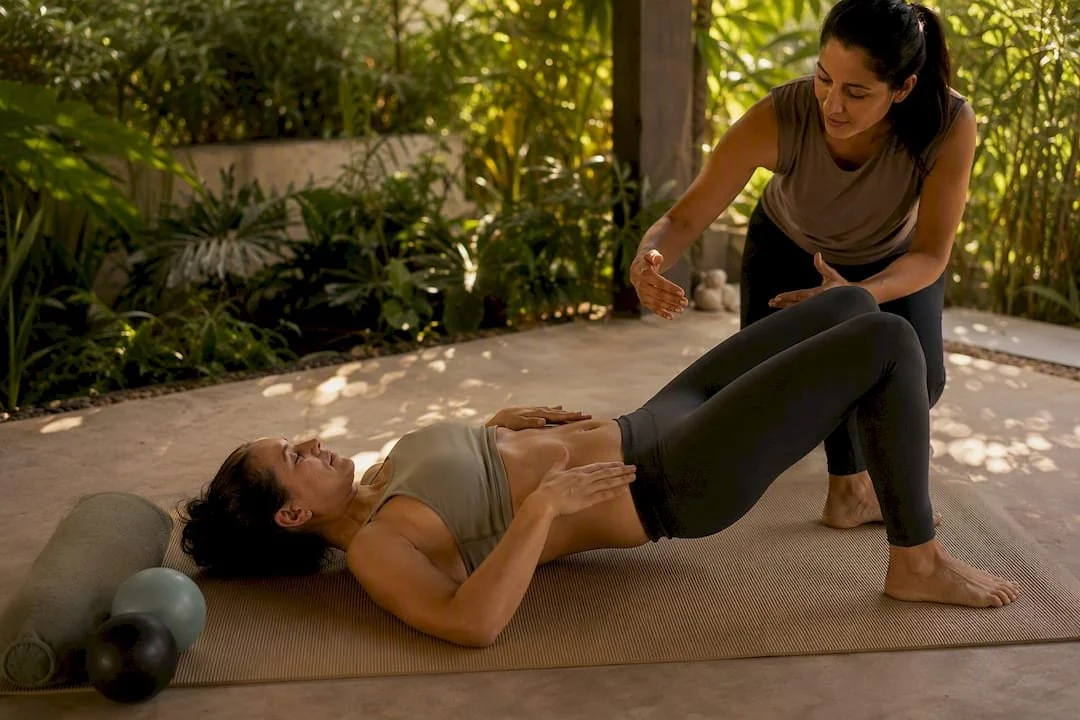
Core stability built through prenatal sessions also carries forward into the early weeks of lifting, carrying, and feeding a newborn, all of which put real load on an already-stretched core. Instructors who taught you modified movements during pregnancy can typically guide a faster, safer return to fuller exercise once you're cleared, usually starting with the same core strength principles you already practiced.
There's a mental health thread here too. The sleep and mood improvements linked to prenatal Pilates don't reset to zero the day you give birth. Establishing the habit before delivery makes it far easier to return to a supportive movement routine during a period when starting something brand new from scratch feels close to impossible.
Postpartum diastasis recti and pelvic organ prolapse risk are both areas where prenatal-informed core work gives you a head start, since you're not learning pelvic floor coordination for the first time while also sleep-deprived and recovering.
Why Studio-Led Prenatal Pilates Beats Generic Advice
Generic "safe pregnancy exercises" lists miss the part that actually matters: execution. Amrita Yoga & Wellness builds its prenatal-adapted Pilates mat and reformer classes around the same principles behind the research above, pairing pelvic floor coordination with instructor cueing that adjusts week by week as your body changes.
Every instructor is trained to ask about pregnancy status, adjust for trimester, and swap positions before discomfort sets in, not after. Class sizes stay small enough that an instructor actually notices when someone needs a modification. That's the difference between a video routine and a room where someone is watching your form in real time.
If you're curious about the broader research behind the practice, our pilates benefits content breaks down what applies beyond pregnancy too. The next step is simple: try a class, tell the instructor you're expecting, and let them build the modifications around you.
— Juiced
Try a Prenatal-Modified Class With Amrita Yoga & Wellness
You don't have to guess which exercises are safe this week versus last week. Amrita Yoga & Wellness pairs prenatal-trained instructors with small class sizes, so modifications happen in real time instead of after you've already strained something.
Every class factors in trimester, energy level, and any pain points you flag before you start moving. If you're newer to mind-body practices generally, our tarot readings sessions and workshops are also part of the broader studio community many prenatal clients use to manage stress alongside movement. Reach out to the studio to ask about current prenatal-friendly class times and instructor availability, and come find out what a properly modified session actually feels like.
This article is general information, not a substitute for advice from a qualified doctor. Consult a qualified healthcare professional about your own circumstances before acting on anything here.
Sources
Prenatal Pilates 8-week RCT—pelvic girdle pain and ligamentous outcomes (2025)
Physical activity and exercise during pregnancy and the postpartum period — ACOG (2020)
Recommended

Studio Backed: What Beginners Should Wear to Yoga, Do the Squat Test
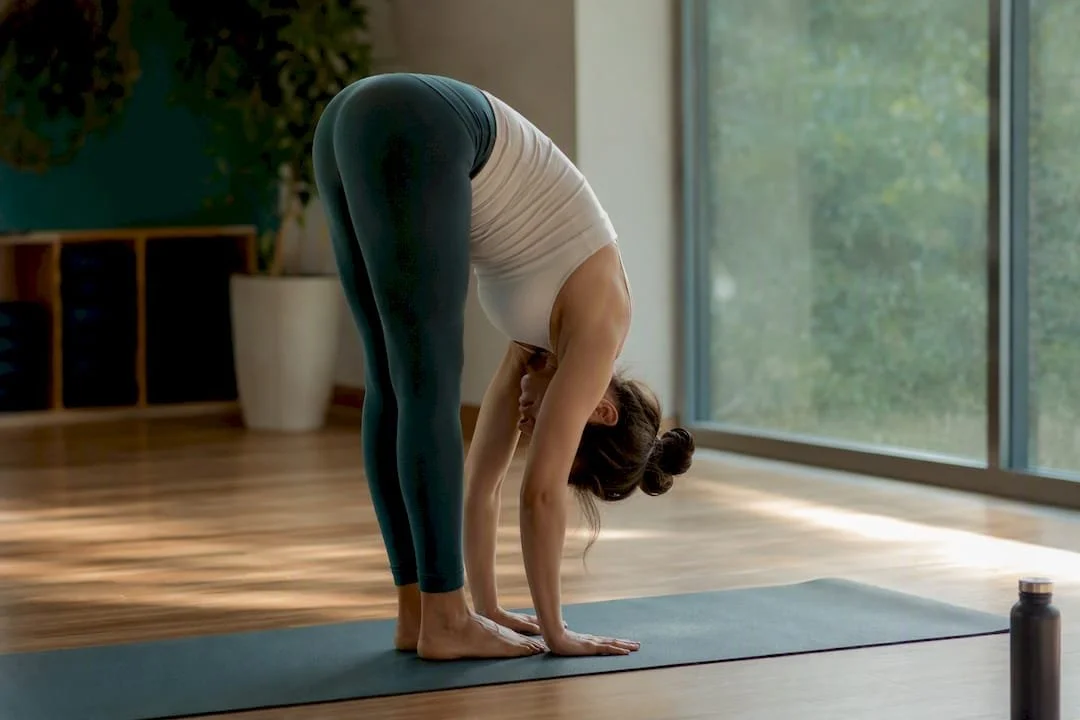
For most beginners, the safest bet is a fitted, moisture-wicking top or sports bra, high-waist leggings or fitted shorts, hair tied back, and a water bottle within reach. That combination works for nearly every class type taught at a studio like Amrita Yoga & Wellness, from a gentle beginner flow to a heated room. Run your leggings through a quick mirror squat test before you leave home, and skip the checklist anxiety entirely.
TL;DR:
Wearing fitted, moisture-wicking tops and snug high-waist bottoms helps prevent distractions during poses and keeps clothing in place.
Running a squat or stretch test at home ensures leggings and tops won't become see-through or shift during practice.
Support levels in sports bras should match the class intensity, with lighter support for slow classes and medium support for dynamic or hot yoga.
Breathable, quick-dry fabrics are essential for hot yoga, with additional hydration and a sweat-absorbing towel recommended.
Avoid loose-fitting clothes, heavy cotton, and accessories that can distract or interfere with movements, especially during fast-paced or inverted sequences.
Table of Contents
Bottoms: Leggings, Shorts, and Joggers: Fit, Coverage, and the Squat Test
Sports Bra and Support: Pick the Right Level for Class Intensity
Hot Yoga and Heated Classes: Minimal Gear, Big Hydration Needs
Layering and Accessories: Hair, Jewelry, Socks, and Small Props
Quick Beginner Checklist: What to Wear and What to Bring
You don't need a new wardrobe for your first class. You need a short list, checked once, and you're done.
A fitted top or sports bra that won't ride up during forward folds
High-waist leggings or fitted shorts with a snug, non-slip waistband
A hair tie, even if your hair barely reaches your shoulders
A water bottle, and a small towel if you run warm
A mat, if you own one, though most studios rent them for a few dollars
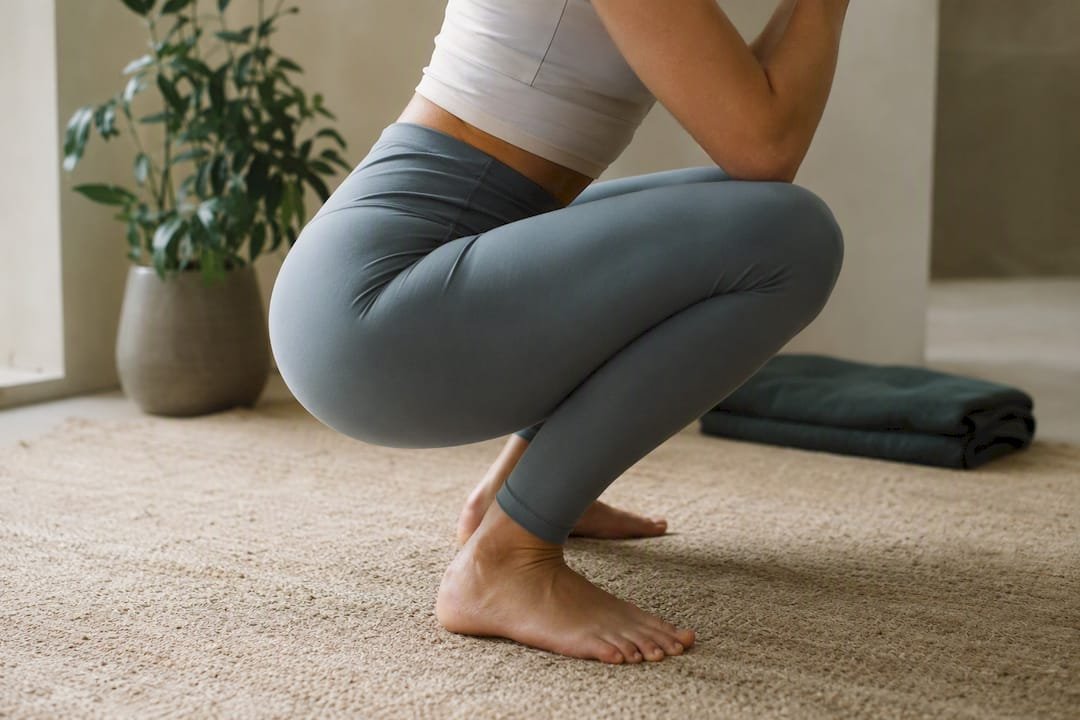
Before you walk out the door, do the mirror squat test: squat low in front of a mirror and check your leggings at the hip, crotch, and thigh for see-through spots. Call ahead if you need to rent a mat, and skip heavy perfume, cologne, or jewelry that jingles every time you move.
Tops: Choosing Tanks, Tees, and Layers That Stay Put
A top that stays close to your body is not about vanity. It's about not flashing the class every time you fold forward or drop into downward dog. A simple test works every time: bend forward like you're touching your toes and see whether the shirt stays put or slides toward your chin. If it slides, it stays home.
Fabric matters as much as fit. Skip heavy cotton, which soaks up sweat and gets clingy in an uncomfortable way. Look for nylon, polyester, or spandex blends, which wick moisture and move with you instead of against you. If your studio runs cool, bring a lightweight crewneck or a zip-up layer rather than a bulky hoodie. Hoodies bunch up under your arms during poses like plank or cat cow, and you'll spend more time adjusting them than actually practicing.
Bottoms: Leggings, Shorts, and Joggers: Fit, Coverage, and the Squat Test
Loose waistbands are the enemy of a good practice. Every time you hinge, twist, or invert, low-riding pants tug downward, and you end up hiking them back up between poses instead of breathing through them. High-waist leggings or fitted shorts with a snug waistband solve this before it starts.
Run the squat test at home: squat deep in front of a bright mirror and check the fabric at your hips and thighs. If light shows through or the fabric goes sheer, those leggings belong in the gym, not the studio. Also check the inseam for thick seams that dig in during cross-legged seated poses.
Loose pants and joggers work fine in slower styles like yin or restorative, where you're mostly seated or lying down. In vinyasa or power classes, where you're moving fast and inverting often, stick with fitted bottoms so nothing shifts mid flow.
Sports Bra and Support: Pick the Right Level for Class Intensity
Match your support level to the pace of the class, not the other way around. A gentle restorative or yin class rarely demands more than light support, since most poses are floor-based and slow. Vinyasa, power, or hot yoga call for medium support, since you'll be jumping, inverting, and moving through sun salutations at a faster clip.
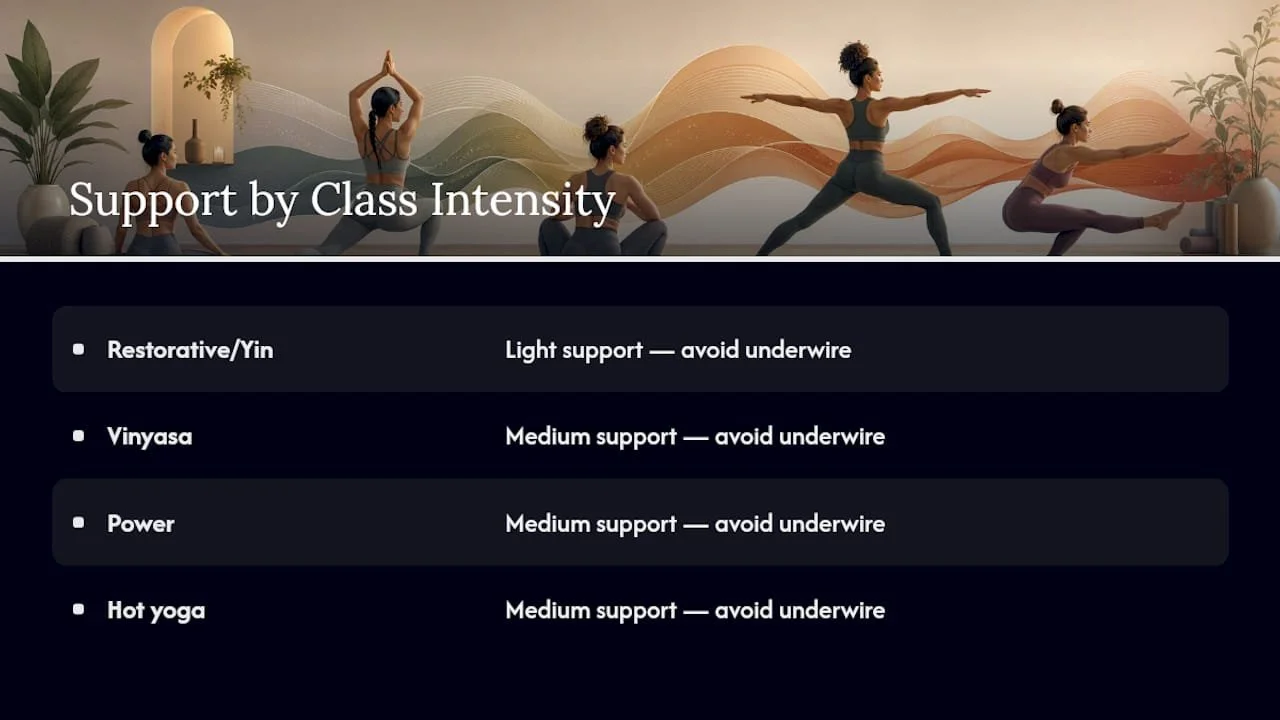
Skip underwire entirely. It digs in during backbends and twists, and there's no version of a chaturanga that plays nicely with metal hardware. If forward folds and downward-facing poses make you self-conscious, a high-neck or fuller-coverage bra solves that without adding bulk. Built-in shelf bras in tank tops are a solid shortcut if you'd rather not layer two pieces.
Notes for Men and Gender-Neutral Tips
Fitted training shorts or slim joggers work better than baggy basketball shorts, which tend to gape open during inversions like downward dog or legs-up-the-wall. A compression liner underneath solves the coverage problem without changing how the shorts feel on the mat.
For tops, the same forward-fold test applies: bend over and check whether your shirt rides up toward your chin. If it does, size down or tuck it in. Anyone who prefers more coverage can layer a fitted long-sleeve underneath without adding bulk.
Hot Yoga and Heated Classes: Minimal Gear, Big Hydration Needs
Heated rooms run anywhere from roughly 90 to 105 degrees Fahrenheit, and heavy or loose fabric becomes a burden fast. Minimal, quick-dry clothing wins here: fitted shorts, a sports bra, or a snug tank that won't stick to your skin in sheets by minute twenty.
Bring a full-size towel, more water than you think you need, and consider a dedicated yoga towel that lays over your mat for extra grip once sweat starts pooling. Textured, quick-dry fabric actually helps you grip your own skin during arm balances, which slick cotton cannot do. Check out our hot yoga essentials guide before your first heated session.
Layering and Accessories: Hair, Jewelry, Socks, and Small Props
Tie your hair back before you step onto the mat. Loose hair falling into your face during a forward fold is one of the most common first-class annoyances, and it's a two-second fix. Take off watches, bracelets, and dangly earrings, since they catch on mats and props and can scratch you during floor work. Keep deodorant and perfume light. Shared studio rooms get warm, and strong scents carry.
Bare feet are the standard in most classes, since bare skin grips the mat better than fabric. If you want socks for warmth, choose grippy, rubber-tread styles rather than ordinary ones, which slide during standing balances like tree pose.
What Not to Wear: Mistakes That Distract From Practice
Jeans are the number one mistake first-timers make, and it's an easy one to avoid. The fabric doesn't stretch, the seams dig into your hips during squats, and the waistband cuts you in half every time you fold forward.
Loose, oversized shirts that fall over your head during downward dog or handstand prep are the second most common issue. Thin or see-through leggings round out the list. If you skipped the squat test at home, do it before class in the studio bathroom rather than finding out mid-pose.
The fix for nearly all of this is simple: fitted or tucked tops, high-waist bottoms, and a compression liner if you're wearing shorts.
Studio Etiquette and What to Bring for Your First Class
Call ahead if you need a rental mat, since some studios keep a limited supply. Arrive ten to fifteen minutes early to sign in, silence your phone, and find a spot on the floor without rushing. Shoes stay in the lobby or a cubby, not on the studio floor.
Pack water and a towel if you're heading into a heated room, and return any blocks, straps, or bolsters to their spot when class ends. Shared space means shared air, so keep scents light out of respect for the people breathing next to you.
Why Amrita Yoga & Wellness Trusts These Recommendations
We built these recommendations around what actually plays out in a studio, not a fashion catalog. Amrita Yoga & Wellness runs beginner-friendly classes alongside hot yoga, and the same fit and fabric questions come up every week from people walking in for the first time.
Our practical add: bring a lightweight crewneck for savasana, since your body cools down fast once you stop moving, and pack a hair tie and towel for anything heated. If you'd rather see it in person before buying anything new, our free beginner class page walks through what to expect on day one.
A Final Word Before Your First Class
Most people already own something that works. A gym tank, a decent pair of leggings, an old crewneck for after class. The outfit is the smallest part of this. Try a free beginner class and let the practice, not the wardrobe, hold your attention.
— Juiced
Sources
Recommended

Hot Yoga and Weight Loss: What the Research Actually Shows
Hot yoga can help you lose body fat, but only if you show up consistently and pay attention to what you eat. A six-month study of Bikram yoga practitioners found an average 6.17% reduction in body fat among women who attended three 90-minute classes a week. That's tied to this specific dosing regimen. Most trials show that sweating hard in a heated room does not automatically translate into fat loss unless attendance is high and diet stays in check.
TL;DR:
Consistent attendance of at least three hot yoga classes per week for three to six months is necessary to see meaningful body-fat reduction.
Higher practice volume correlates with better results, while sporadic attendance, such as once weekly, likely yields no fat-loss benefits.
The calorie-burning demand during hot yoga is similar to brisk walking, so fat loss likely results from behavioral changes and adherence rather than heat-induced calorie expenditure.
Stress reduction, improved sleep, and mindful eating patterns from regular practice contribute significantly to long-term fat loss.
Adequate hydration with electrolytes and medical clearance for at-risk individuals are essential for safe, sustainable hot yoga practice.
Table of Contents
How to Structure a Hot Yoga Routine That Actually Supports Fat Loss
How Amrita Yoga & Wellness Builds Safety Into Every Hot Class
Hot Yoga vs. Regular Yoga: What's Actually Different
Hot yoga is an umbrella term for any yoga class taught in a heated room, typically somewhere between 90 and 105 degrees Fahrenheit with humidity often pushed up to intensify sweating. Bikram yoga is the most rigid version of this, a copyrighted 26-posture sequence performed in a room heated to about 105°F with 40% humidity, always in the same order, always for 90 minutes. Other heated formats, sometimes called "power yoga" or "hot vinyasa," borrow the heat but drop the fixed sequence, letting instructors mix flows and intensity.
The heat itself does something measurable to your body almost immediately.
Heart rate climbs faster than it would during the same poses at room temperature, since your cardiovascular system works harder to move blood toward your skin for cooling.
Core temperature rises, which is part of why a 90-minute hot class feels far more demanding than a 90-minute unheated class covering identical postures.
Sweat output increases dramatically, sometimes to the point where a mat becomes genuinely difficult to grip without a towel.
None of that heat response is fat loss. It's water. Step on a scale right after a hot class and you'll likely see a lower number, but that's fluid you'll replace the moment you drink a glass of water. The actual physiological question, and the one the trials try to answer, is whether repeated exposure to that heat stress, combined with the physical demand of the postures, produces changes that stick around after rehydration. That's a different and much harder thing to measure than a post-class scale reading, and it's where the real evidence gets interesting.
Bikram Yoga for Weight Loss: What Trials and Reviews Found
The strongest single data point on hot yoga and body fat comes from a longitudinal study tracking women aged 20 to 65 through six months of consistent Bikram practice.
The 45-day signal: Researchers tracking three 90-minute Bikram sessions per week found measurable body-fat reductions appearing in as little as 45 days, with the effect growing to an average 6.17% drop in body-fat percentage by six months, according to the 2026 longitudinal study.
Women aged 20 to 35 saw the largest average drop, women 51 to 65 saw the smallest. Age didn't erase the benefit, but it did shrink it.
A separate 16-week randomized controlled trial complicates the picture in a useful way. But when they ran regression analysis on individual attendance, a different story emerged: people who attended more classes saw significant reductions in diastolic blood pressure, body fat percentage, fat mass, and BMI. The catch is that average attendance in that trial was only 27 classes, about 56% of the 48-class minimum the study protocol had prescribed. The people who followed the plan got results. The people who didn't, on average, didn't. That gap is the whole story of hot yoga research in miniature.
A broader systematic review pulling together 43 studies and 942 participants backs up that dose-dependent pattern. Body-composition results, by contrast, were mixed unless training volume and adherence were high enough to sustain a real physiological demand, according to the systematic review of hot yoga's physiological and functional effects.
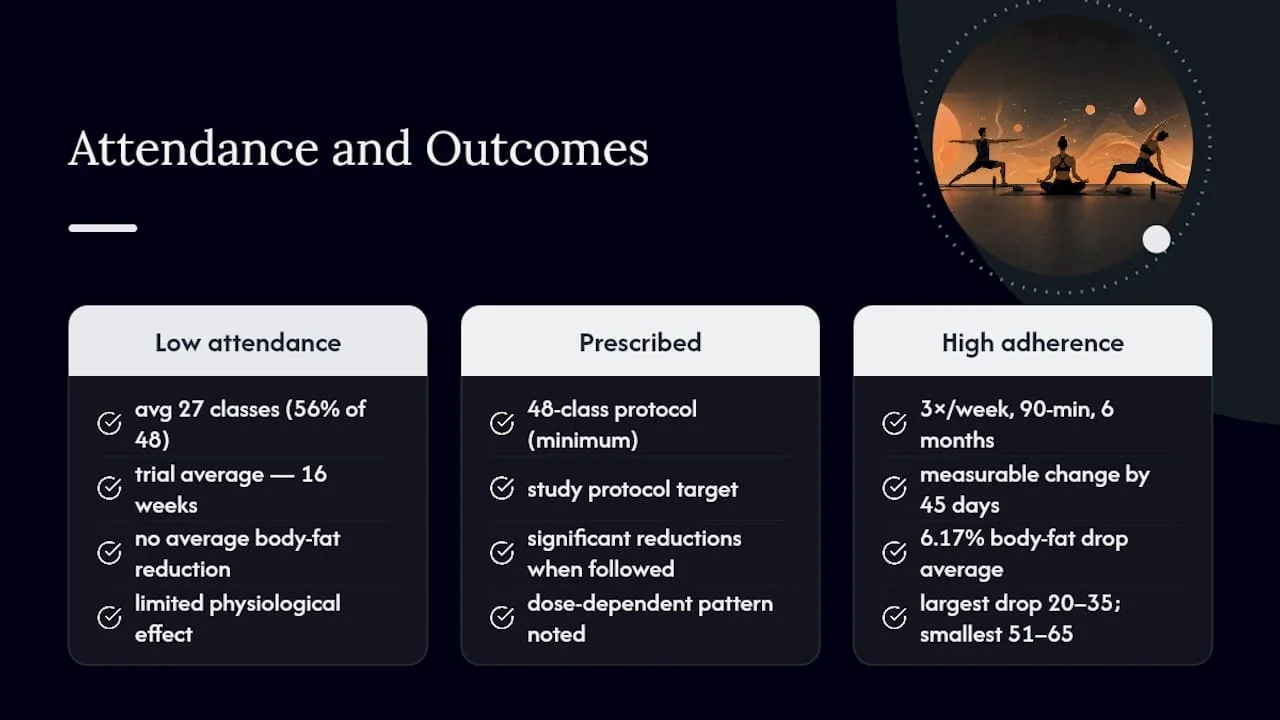
That review comes with real caveats. Sample sizes across the 43 studies were often small, protocols varied widely in weekly frequency (anywhere from two to six sessions) and session length (20 to 90 minutes), and few trials controlled for what participants were eating outside of class. None of this invalidates the attendance signal. It does mean nobody should read "hot yoga reduces body fat" as a settled, universal fact rather than a pattern that shows up reliably only above a certain attendance threshold.
Why Hot Yoga Might Help Beyond Just Burning Calories
If heat alone drove the results in these trials, you'd expect hot yoga to torch dramatically more calories per session than the same sequence done at room temperature. It largely doesn't. Comparative research on energy expenditure shows that heated and non-heated yoga sessions often produce similar caloric demands, with single-session intensity for experienced practitioners landing somewhere near a brisk walk. The sweat feels like more work. The math doesn't back that feeling up as strongly as most people assume.
So what's actually driving the body-fat changes in the studies that do find them? A few plausible mechanisms, none of them mutually exclusive:
Behavioral spillover. People who commit to three classes a week tend to become more attentive to what they eat and how they sleep, and that mindfulness shift may matter more than the class itself.
Adherence as a filter. People who stick with a demanding 90-minute, 105°F practice for months are self-selecting into a higher overall activity and discipline level than casual exercisers.
Modest lean-mass gains. Some studies report small improvements in lean mass and metabolic markers with sustained practice, which nudges resting energy expenditure upward over time.
Sleep and stress effects. An eight-week uncontrolled study found faster time-to-fall-asleep and a trend toward improved blood pressure among Bikram participants, even though that same small cohort saw no change in body composition. Better sleep and lower stress hormones are both linked to easier fat-loss maintenance elsewhere in the literature.
Experts who study behavior change point to that last mechanism as underrated: stress reduction and mindfulness from a regular yoga habit often improve dietary choices and consistency more than the workout burns calories directly, according to Mayo Clinic's guidance on hot yoga. That's a less flashy explanation than "sweating melts fat," but it's the one the data actually supports. It also explains why the same postural sequence, done cold, can sometimes produce a comparable training effect for someone whose main issue isn't intensity, but showing up at all.
Pro Tip: Track how you eat on class days versus rest days for two weeks. Most people notice they naturally choose better meals after a hot class, not because of willpower, but because the mindfulness carries over. That pattern, more than the heat, is often what moves the needle.

How to Structure a Hot Yoga Routine That Actually Supports Fat Loss
The trials point to a fairly specific target, not a vague "practice regularly" suggestion.
Aim for three sessions a week, minimum, sustained for at least three to six months. The longitudinal Bikram study used exactly this frequency and duration to reach its 6.17% body-fat reduction, with initial changes visible around the 45-day mark.
Treat the first two to three weeks as acclimation, not performance. Your cardiovascular system needs time to adapt to sustained heat exposure. Pushing hard in week one, before you've built heat tolerance, is the fastest route to dizziness, nausea, or a skipped week two out of soreness and dread.
Build toward the class count the research actually used before judging results. The 16-week RCT prescribed 48 classes as its minimum effective dose. Participants who averaged only 27 didn't see the group-level benefits; the ones closer to the target did, on an individual basis. If you're attending once a week and wondering why nothing's changing, that's likely why.
Layer in strength training two to three times a week once you've built a heat-tolerance base. Hot yoga develops flexibility and balance impressively, per the systematic review's 16% to 33% flexibility gains, but it isn't a dedicated resistance-training stimulus. Pairing it with weights addresses the lean-mass side of the equation that yoga alone moves only modestly.
Add lower-intensity cardio on non-yoga days if your goal is faster fat loss. A brisk 30 minute walk or a bike ride creates additional energy deficit without competing with hot yoga's heat-adaptation demands, and it won't interfere with recovery the way another intense heated session might.
Reassess at 8 and 16 weeks, not weekly. Body-fat changes in the research trials showed up on a timeline of 45 days to six months. Weighing yourself daily during a hot-yoga routine measures water fluctuation far more than fat.
Hydration, Safety, and Who Should Talk to a Doctor First
Heat is the entire mechanism and the entire risk in this practice, and the two aren't separable. Before you build a three-times-a-week habit, it's worth understanding what can go wrong and how to head it off.
Heat-related illness has a recognizable progression, and catching it early matters more than any workout goal.
Early signs include lightheadedness, unusual fatigue mid-pose, or a racing heartbeat that feels out of proportion to the effort.
If you notice these, the correct response is to stop, sit or lie down, and leave the heated room if symptoms don't ease within a minute or two.
Nausea, confusion, or stopped sweating during a hot class are more serious red flags and warrant leaving the room immediately and seeking care if they don't resolve quickly.
Water alone often isn't enough for someone attending hot classes multiple times a week. Because you're losing sodium and other electrolytes through heavy, sustained sweating, clinicians recommend electrolyte replacement, not just plain water, for frequent hot-yoga attendees, according to Mayo Clinic's clinical guidance. A practical approach: drink 16 to 20 ounces of water in the two hours before class, sip electrolyte-enhanced water during longer sessions, and rehydrate with both water and electrolytes afterward rather than reaching only for plain water.
Certain people should get medical clearance before starting a heated practice. Anyone with cardiovascular disease, a history of heat-related illness, or who is pregnant should talk to a physician first, since heat stress adds cardiovascular strain that not every body handles the same way. The same goes for anyone on medications that affect sweating, blood pressure, or thermoregulation. None of this means hot yoga is off-limits for these groups. It means the modification (shorter first sessions, a spot near the door, permission to skip the most demanding postures) needs to be discussed before, not discovered mid-class.
First Time in a Heated Class? Do This
Walking into a 105-degree room for the first time is a genuinely different experience than any yoga class you've taken before, and a little preparation prevents most of the rookie mistakes.
Bring a large towel for your mat, a separate hand towel, and more water than you think you'll need. Most studios sell mats and towels, but bringing your own the first time removes one variable.
Eat a light meal one and a half to two hours before class, not immediately before. A heavy meal on a full stomach in a hot room is a fast route to nausea.
Arrive 10 to 15 minutes early to let your body start acclimating to the room temperature before the class demands anything of you.
Skip or modify any pose that produces sharp discomfort, not just intensity. Heat makes muscles feel more flexible than they are, which makes overstretching easier to do without noticing in the moment.
Book your next three classes before you leave the studio. Adherence research consistently shows that pre-scheduled sessions get attended far more reliably than "I'll go when I feel like it" plans.
Pro Tip: Bring a friend for your first month. A buddy who's also new tends to keep both of you showing up on weeks when motivation dips, and that consistency is exactly what the attendance data says matters most.
How Amrita Yoga & Wellness Builds Safety Into Every Hot Class
Amritayogawellness runs its hot yoga program with the attendance-and-safety relationship built into how classes are structured, not bolted on as an afterthought. At the Philadelphia studio, hot yoga sits alongside pilates, barre, tai chi, and massage therapy as part of a broader approach to helping students build a sustainable practice rather than chase a single intense session.
The studio's published guidance on hot yoga safety covers the same territory the clinical research flags: hydration timing, recognizing early heat-stress signs, and knowing when to modify a pose instead of pushing through it. That content exists because instructors see, week after week, which habits keep students coming back for the three-month stretch the research says actually moves body composition, and which habits burn people out by week three.
Beyond the mat, Amritayogawellness's studio model leans into the community side of adherence: workshops, retreats, and a retail counter for yoga gear all feed into the same goal of giving Philadelphia students enough reasons to keep their scheduled classes on the calendar. That's not incidental to the fat-loss conversation. It's the mechanism the trials kept pointing back to.
Our Take: Attendance Beats Intensity, Every Time
The research on hot yoga and weight loss keeps circling back to one uncomfortable truth: showing up matters more than sweating hard. It requires a more consistent one. That's a boring answer compared to the marketing around "detox sweat sessions," but it's the answer the data supports.
Where conventional advice on this topic goes wrong is treating the heat as the active ingredient. It isn't, or at least not primarily. The heat makes the class harder to skip once you've committed and harder to coast through once you're in it, but the actual physiological payoff comes from repetition over months, not degrees on a thermostat. If you take one thing from the evidence, prioritize a schedule you can actually keep over a studio with the most extreme heat setting. Adherence is the lever. Everything else is secondary.
— Juiced
Start a Safer, Smarter Hot Yoga Routine in Philadelphia
The research is clear that a sustainable hot yoga habit beats an occasional brutal session, and that's exactly what Amritayogawellness is built around. Rather than a single-format studio pushing one intense class style, Amrita Yoga & Wellness offers beginner-friendly hot yoga alongside pilates, barre, and tai chi, so you can build the attendance consistency the trials say actually drives results, with modifications and pacing suited to where you're starting from.
Every hot class follows the hydration and heat-safety practices covered in this guide, with instructors trained to cue rest and spot early signs of overheating before they become a problem. If you're ready to build the kind of three-times-a-week habit that showed measurable body-fat change in the research, check class schedules and beginner packages at Amrita Yoga & Wellness and book your first session this week.
Sources
The body-fat findings referenced throughout this guide come from a longitudinal Bikram yoga study tracking six months of consistent practice, a 16-week randomized controlled trial examining attendance and cardiovascular risk factors, and a systematic review covering 43 studies on hot yoga's physiological and functional effects. Comparative data on caloric demands come from research on heated versus non-heated yoga energy expenditure. For clinical context on hydration and medical clearance, Mayo Clinic's guidance on hot yoga remains a reliable starting point before beginning a heated practice.
Longitudinal study: Bikram yoga and body-fat reduction (2026)
Hot yoga systematic review: physiological, functional and psychological responses
Recommended

Which Type of Pilates Should You Actually Try?
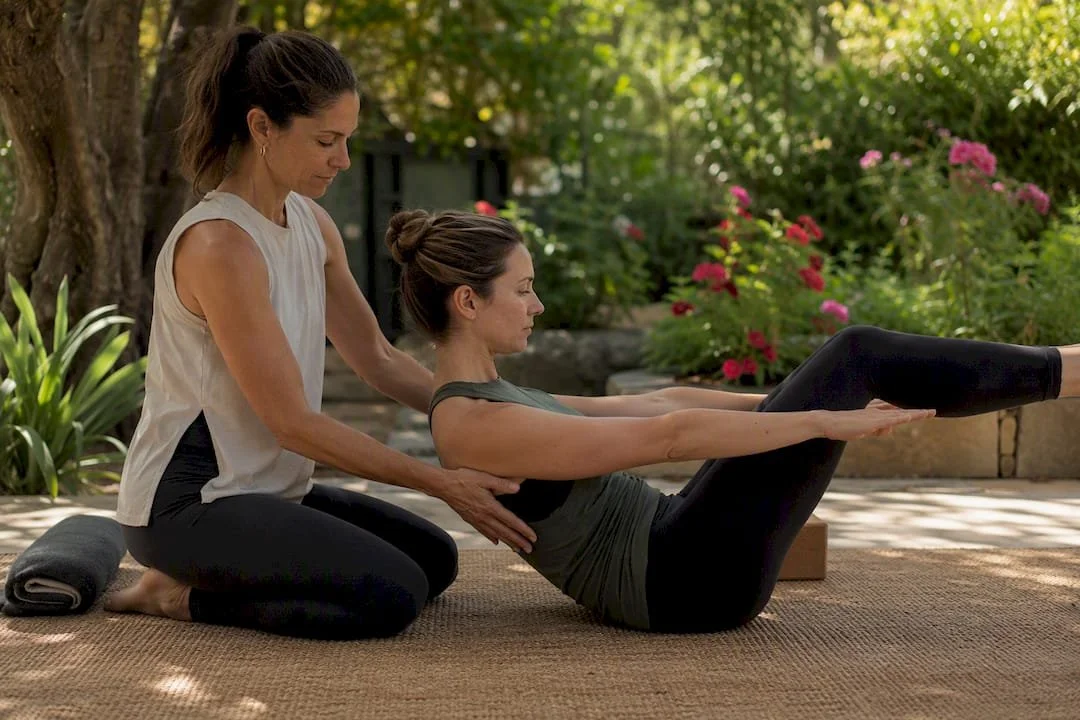
If you're trying to pick between the different types of Pilates, here's the short version: Mat Pilates is best for accessibility and building core strength on a budget. Reformer Pilates is best for progressive resistance training and full-body toning. Classical Pilates is best for purists who want Joseph Pilates' original sequences taught in order. Contemporary Pilates is best for anyone who needs modifications for an existing injury or body quirk. Clinical Pilates is best for structured rehab under professional supervision.
Joseph Pilates developed his method in the 1920s as a rehabilitation system for injured dancers and soldiers, and nearly every style practiced today branches from that root. Beyond the five core categories, you'll also run into named variants like Stott, Winsor, and various HIIT hybrids, and the instructor teaching any of them usually matters more than the label on the studio schedule. Amrita Yoga & Wellness in Philadelphia runs Mat, group Reformer, and clinically informed sessions side by side, which is a useful real-world reference point as you read through the breakdowns below.
Mat Pilates: low cost, minimal gear, best for beginners building core control
Reformer Pilates: spring resistance, best for strength progression and toning
Classical Pilates: original sequences, best for traditionalists and disciplined learners
Contemporary Pilates: biomechanics-informed, best for modifications and mixed-ability classes
Clinical Pilates: physio-led, best for injury recovery and chronic pain management
TL;DR:
Reformer Pilates is more suitable for those seeking progressive strength training due to its adjustable resistance, unlike Mat Pilates, which is slower but cost-effective.
Classical Pilates follows Joseph Pilates' original sequence strictly, making it ideal for disciplined learners, while contemporary styles incorporate modern biomechanics and modifications for injury management.
Clinical Pilates offers personalized, slow-paced rehab programs led by physiotherapists, making it the safest choice for injury recovery and chronic pain.
Instructor expertise and screening for injuries are more important than the class label or style, so ask about credentials and modification policies before booking.
Intensity levels vary widely, with Winsor and HIIT styles being most demanding; clinical and mat Pilates tend to be slower and more controlled, suited for different fitness and health needs.
Table of Contents
What Is Mat Pilates and Who Should Start There?
Mat Pilates is Pilates in its simplest form: a floor, your body weight, and sometimes a magic circle, resistance band, or small ball to add feedback. Classes run through exercises like the Hundred, the Roll-Up, and Leg Circles, all built to fire the deep core muscles that support your spine.
It's the cheapest entry point into any Pilates practice. No machine rental, no equipment purchase, and plenty of it can be practiced at home once you know the sequence.
Builds core strength and spinal mobility without equipment costs
Works well for home practice between studio sessions
Rewards patience. It's slower to show visible results than reformer work
If you're brand new, watch how the instructor cues alignment. Someone who only counts reps and never mentions your pelvis or spine position isn't teaching Pilates the way Joseph Pilates intended it.
Pro Tip: In your first mat class, ask the instructor to check your neutral spine position before you start the Hundred. Getting that baseline right changes how every other exercise feels.
What Makes Reformer Pilates Different From Mat Work?
The reformer is a sliding carriage attached to a set of springs, with straps for your hands and feet and a bar you push against. Adjusting spring tension changes resistance instantly, so the same exercise can feel gentle one day and brutal the next.
That adjustability is the whole point. A reformer class scales from rehab-level gentle to genuinely demanding strength work inside a single session, which is why it appeals to people who've plateaued on the mat.
Full-body resistance training with instant load adjustments
Sharper feedback on alignment than most mat exercises allow
Available as private sessions, small-group classes, or larger studio formats
Group reformer Pilates classes are the most common entry point, and most studios will run beginners through a slower orientation session before dropping them into a regular class.
Pro Tip: Ask whether your first reformer class is a dedicated beginner session. The machine has a learning curve, and a mixed-level class moves too fast to teach you the straps and footwork properly.
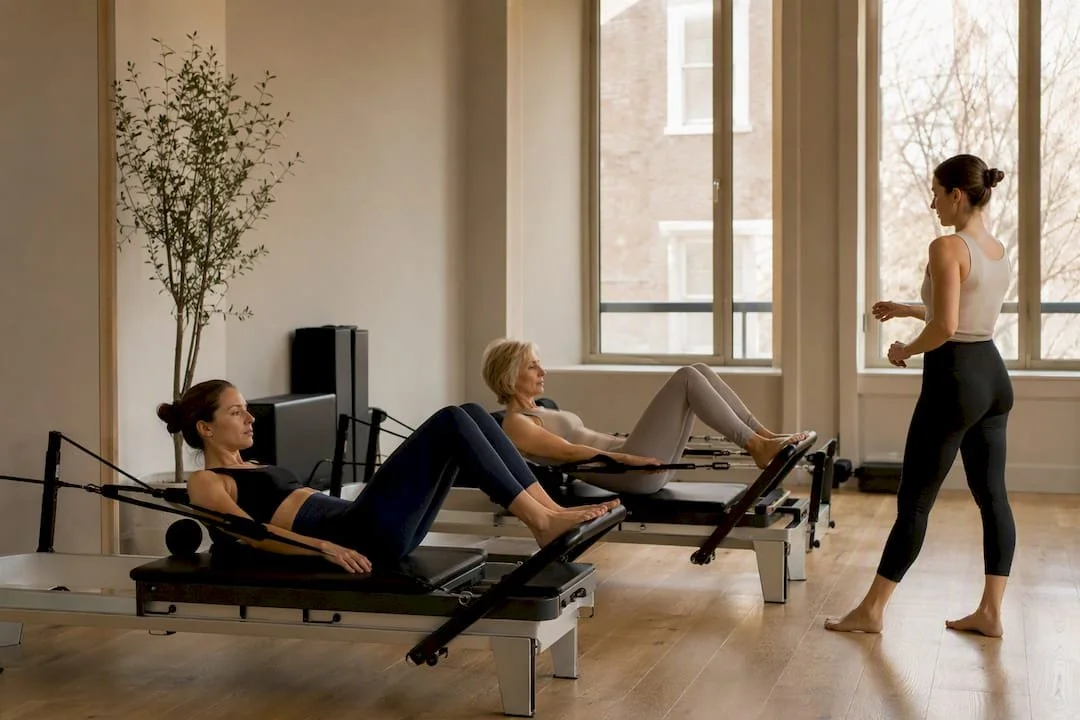
Is Classical Pilates the Same as the Original Method?
Classical Pilates sticks closely to Joseph Pilates' original order of exercises, taught on his original apparatus designs with minimal deviation. Instructors trained in this lineage treat the sequence itself as sacred. You don't skip around based on what feels good that day.
This suits people who like structure and repetition, and who want to trace their training back to a documented source rather than a studio's in-house blend. It tends to appeal less to people managing an injury, since the sequence doesn't bend easily around individual limitations.
Follows a fixed sequence rather than an improvised or goal-based class plan
Best for disciplined learners who want traceable technique lineage
Progression is expected to follow the traditional order, not personal preference
Check who trained the instructor and where. Classical lineage claims vary a lot between studios, and a legitimate classical teacher can usually name their training background without hesitation.
How Does Contemporary Pilates Adapt the Classical Method?
Contemporary Pilates takes Joseph Pilates' original framework and rebuilds it around modern biomechanics and anatomy research, and studios use it to tailor exercises to the person in front of them rather than a fixed script. A physiotherapist quoted by Stylist frames contemporary and clinical approaches as the ones worth prioritizing when injury history or unusual biomechanics are part of the picture.
This is the style you'll find in most modern studios, often blended with props, cross-training elements, or faster-paced formats.
Modifications are built into the class rather than treated as an afterthought
Suits mixed-ability groups better than rigid sequence-based formats
Frequently shows up in fusion classes that borrow from strength training or cardio
If your body doesn't fit neatly into a textbook sequence, whether from a old injury, tight hips, or a hypermobile spine, contemporary is usually the more forgiving choice.
Who Benefits Most From Clinical Pilates?
Clinical Pilates is the medically oriented end of the spectrum. Classes are typically led by a physiotherapist, or by an instructor with specific rehab training, and they start with an actual assessment rather than a generic warmup.
The instructor or physio assesses your injury, posture, or movement limitation
A program gets built around measurable rehab goals, not a standard class template
Progress gets tracked and adjusted over multiple sessions, often in coordination with your physical therapist or doctor
Clinical Pilates commonly uses this assessment-first model, and it's the format most consistently recommended for injury recovery, post-surgical conditioning, and chronic pain management. Clinical Pilates sessions are generally slower-paced than reformer or mat classes. The goal here is precision, not calorie burn.
Pro Tip: Bring your physical therapy notes or surgeon's clearance to your first clinical session. A good instructor will actually read them before building your program.
What Are Stott, Winsor, and Other Named Pilates Styles?
Once you get past the five core categories, you'll run into branded systems and hybrid formats. Stott Pilates emphasizes spinal alignment and rehabilitation principles, closer in spirit to clinical work. Winsor Pilates leans toward toning and cardio, and it runs at a noticeably higher intensity. HIIT and Pop Pilates formats push the pace further still, blending Pilates movements with interval training for calorie burn over precision.
Stott Pilates: alignment-focused, close to a clinical or contemporary approach
Winsor Pilates: toning and cardio-forward, higher intensity than classical formats
HIIT/Pop Pilates: interval-based, built for calorie burn and variety over rehab
Barre-Pilates hybrids: isometric holds borrowed from ballet conditioning, mixed with core work
Marie Claire's breakdown of named systems is useful context here: these brands describe a marketing focus more than a wholly separate discipline. A "Winsor-style" class at one studio might look completely different from another. Read the actual class description, not just the label, before assuming it will meet a rehab or strength goal the format wasn't built for.
How Do You Choose the Right Pilates Class for You?
Start with your goal, not the style name. Someone recovering from a disc injury and someone training for a half marathon should not end up in the same class just because both are labeled "Pilates."
Name your goal first. Rehab, general strength, flexibility, or just wanting to move more consistently each week.
Match the goal to a cluster. Rehab points to Clinical; strength and progression point to Reformer; tradition and structure point to Classical; adaptability points to Contemporary; budget and convenience point to Mat.
Check the instructor's credentials. Ask directly where they trained and whether they hold a rehab-specific certification if you have an injury.
Ask about class ratio and screening. A studio that never asks about injuries before your first session is skipping a step that matters.
Before booking, ask these questions: Does the instructor screen for injuries before class starts? What happens if an exercise hurts, is there a modification ready, or do you just sit it out? How many people are in a typical class, and how much individual attention can you realistically expect?
Watch for red flags. A studio promising dramatic results in a set number of sessions, with no mention of individual assessment or modification, is selling a marketing pitch, not a program. As The Pilates Circuit points out, the instructor and how well the program adapts to you usually matter more than the style label itself.
Pro Tip: Most studios offer a discounted or free intro class. Use it to test the instructor's attention to detail, not just whether you liked the workout.
What Do Breath, Control, and Precision Mean in Practice?
Every legitimate Pilates style, regardless of equipment or intensity, is built on a small set of shared principles. Breath ties movement to exhale and inhale patterns, which stabilizes your core automatically. Centering means initiating movement from your deep abdominal muscles, not your limbs. Control and precision mean quality over reps, five clean repetitions beat fifteen sloppy ones.
Breath: coordinated inhale/exhale that stabilizes the spine during movement
Centering: initiating from the core rather than the arms or legs
Control and precision: fewer, cleaner reps rather than rushed volume
Flow: smooth transitions between exercises rather than stop-start movement
Most practitioners notice improved posture and core awareness within a handful of consistent sessions, though visible physical change typically takes longer and depends heavily on frequency.
What Should You Look for in a Studio's Class Offerings?
The clearest way to judge whether a studio actually delivers on a given style is to read how they describe their own classes. Amrita Yoga & Wellness lists Mat, group Reformer, and clinically informed formats separately rather than bundling everything under one generic "Pilates" heading, which tells you the difference between formats is treated as real, not cosmetic.
Confirm the instructor's certification body and any physical therapy background
Ask whether they collaborate with outside physical therapists or doctors for clinical clients
Watch your first session for individualized cueing, not just a group count
Notice whether modifications get offered before you ask, or only after you struggle
A studio that separates its Mat, Reformer, and clinically informed offerings by name, rather than folding them into one undifferentiated "Pilates class," is signaling that it actually understands the differences between them.
If a studio can't clearly explain what makes their clinical or reformer sessions different from their mat classes, that's worth noting before you book a package.
Where Did the Different Types of Pilates Come From?
Joseph Pilates built the original system in the 1920s while working with injured dancers and, earlier, with soldiers recovering during his internment in England during World War I. He called it "Contrology," and it centered on his own custom apparatus, precursors to today's reformer, Cadillac, and Wunda Chair, built using bed springs and mechanical parts he had on hand.
After Pilates moved his studio to New York, a small group of students trained directly under him. Those students, sometimes called the "Pilates Elders," went on to teach the method largely unchanged for decades. That unbroken line is the direct ancestor of what's now marketed as Classical Pilates.
The method fractured after Pilates' death in 1967, when his trademark on the name "Pilates" was successfully challenged in court, opening the term up for anyone to use commercially. That legal shift is a big part of why so many named variants exist today. Some instructors kept the classical sequence intact. Others, trained in physical therapy or sports science, began adjusting exercises based on modern anatomy research, which is the branch that became Contemporary Pilates. Clinical Pilates grew out of physiotherapy clinics adopting the equipment and exercises specifically for rehab work. Commercial brands like Stott and Winsor emerged later still, each built around a specific marketing angle rather than a documented lineage back to Joseph Pilates himself.
What Equipment Is Used Beyond the Reformer?
The reformer gets most of the attention, but Joseph Pilates designed several other machines that show up regularly in classical and clinical studios. The Cadillac, sometimes called the Trapeze Table, is a raised table frame with bars, straps, and springs suspended overhead. It allows for both assisted stretching and resisted strength work, and it's commonly used in rehab settings because a therapist can support a limb through a full range of motion.
The Wunda Chair is a compact box with a spring-loaded pedal, originally designed small enough to fit in an apartment. It's deceptively difficult. Balance and control matter more than raw strength, which makes it a favorite for testing stability in later-stage rehab or advanced classical training.
Smaller props round out most contemporary and mat-based classes:
Magic circle: a flexible ring used for resistance during arm, leg, and inner-thigh work
Resistance bands: added to mat sequences for extra load without a full machine
Small stability balls: used for core activation drills and balance challenges
Foam rollers: used for myofascial release and balance-focused exercises
Larger studios sometimes also stock the Spine Corrector, a curved barrel-shaped prop for supporting extension exercises, and the Ladder Barrel, which combines a padded arch with a small attached ladder for stretching and core work. None of these show up in every studio. Availability depends heavily on whether the space specializes in classical training, clinical rehab, or a general contemporary mix.
Are There Contraindications for Different Pilates Styles?
Every style shares core benefits: improved core strength, better posture, and increased body awareness. Where they diverge is in who should approach them cautiously.
Mat Pilates carries the fewest restrictions since it's low-impact and self-paced, though certain floor exercises that involve spinal flexion, like the Roll-Up, aren't ideal for people with osteoporosis or acute disc injuries without modification. Reformer Pilates' resistance can aggravate an unhealed injury if the springs are set too aggressively too soon, which is why a proper intake matters before your first session. Classical Pilates' fixed sequence is the least flexible option for anyone managing a current injury, since the format isn't built to skip or heavily modify exercises. Contemporary Pilates is generally the safest choice for people navigating an injury history, precisely because modification is built into how the class is taught rather than treated as an exception.
Clinical Pilates carries the most built-in safety net, given the physiotherapy oversight, but it also comes with the clearest caveat: anyone recovering from surgery or managing a chronic condition should get clearance from their surgeon or doctor before starting, regardless of how gentle the class looks on paper. That same caution applies to Reformer or HIIT-style Pilates for anyone with cardiovascular concerns. The intensity can spike faster than it appears from the sidelines. If you're pregnant, recovering from a recent surgery, or managing a diagnosed spinal condition, clinical or contemporary formats with an instructor trained to screen for those conditions are the more sensible starting point than jumping into a general mat or reformer class.
Which Pilates Style Is the Most Intense?
Intensity varies more between named variants than between the five core categories themselves. Business Insider's firsthand comparison of seven Pilates styles ranked Winsor and HIIT-style formats as the most demanding for calorie burn and cardiovascular effort, while Clinical Pilates ran distinctly slower and more controlled by design, not by limitation.
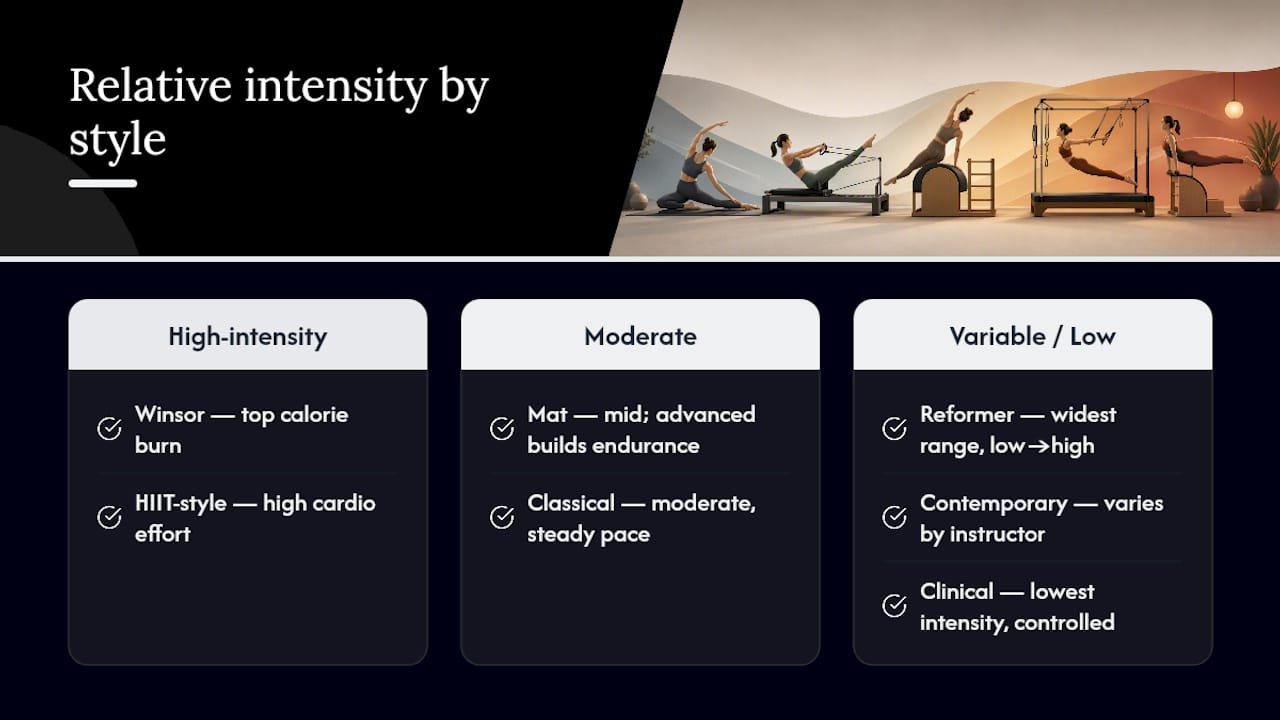
Mat Pilates sits in the middle. A beginner mat class can feel gentle, but an advanced mat sequence with continuous flow between exercises builds serious muscular endurance. Reformer Pilates has the widest intensity range of any format, since spring tension and pace are adjustable within a single session. A beginner reformer class run at low resistance can feel similar to mat work, while an advanced small-group class pushing heavy springs at speed rivals a strength training session.
Classical Pilates tends to run at a moderate, steady pace regardless of your fitness level, since the sequence itself doesn't change to match your conditioning. Contemporary Pilates varies by studio and instructor, since the entire point of the format is adjusting difficulty to the person in the room. Clinical Pilates is intentionally the least intense of the group. Speed and load take a back seat to controlled, precise movement, and that's a feature of the format, not a shortcoming.
If you're choosing based on how hard you want to work, ask about pace and format before assuming the style name tells you everything.
How Long Does a Typical Pilates Class Run?
Most Pilates formats land in a fairly narrow window, but what happens inside that window differs a lot by style. Mat classes typically run 45 to 60 minutes, often structured around a warmup, a flowing sequence of core and mobility exercises, and a cooldown stretch. Group Reformer sessions usually run similarly, 45 to 55 minutes, though the setup and adjustment time at the start eats into the actual working time more than a mat class does.
Classical Pilates sessions can run slightly longer, sometimes up to 60 or 90 minutes for advanced practitioners, since the full traditional sequence covers mat work, reformer work, and additional apparatus in one session. Contemporary studio classes generally mirror standard mat or reformer timing, 45 to 60 minutes, with the specific structure depending heavily on the instructor's programming that day.
Clinical Pilates sessions tend to run shorter for one-on-one work, often 30 to 45 minutes, since the format prioritizes focused, assessed movement over volume. A clinical session usually opens with a brief check-in about pain or progress since the last visit, moves into a small number of targeted exercises, and closes with a review of what to work on before the next appointment. That structure looks nothing like a group mat class, and that's intentional. The goal is measurable progress on a specific issue, not general conditioning.
Where Is Each Pilates Style Most Widely Available?
Mat Pilates is by far the most globally available format, since it requires no machines and can be taught almost anywhere, from community centers to home workout videos. It's the entry point for most people encountering the different types of Pilates classes for the first time.
Reformer Pilates has expanded dramatically in urban fitness markets over the past decade, with dedicated reformer-only studios now common in most major cities. Availability drops off in smaller towns and rural areas, where the machine cost makes it harder for independent studios to offer.
Classical Pilates is the hardest style to find in its strict, traditionally taught form. It survives mostly through studios with a direct instructor lineage back to one of Joseph Pilates' original students, which limits it to a smaller number of specialized locations rather than general fitness chains.
Contemporary Pilates has effectively become the default at most general fitness studios and gyms worldwide, since it's flexible enough to fit almost any class format or clientele. Clinical Pilates availability tracks closely with access to physiotherapy services, so it's most common in areas with established rehab and sports medicine infrastructure, and less common as a standalone offering in general fitness markets. Named variants like Stott and Winsor show up unevenly. Some regions have dedicated studios built around one brand, while others use the names loosely inside a broader class schedule.
Key Takeaways
The right Pilates style depends on matching your specific goal, rehab, strength, tradition, or adaptability, to the format built for that goal, not on picking whichever class is most popular.
| Point | Details |
|---|---|
| Match style to goal | Choose Mat for accessibility, Reformer for strength progression, Clinical for rehab, Classical for tradition. |
| Instructor matters more than label | A credentialed, attentive instructor beats a trendy class name every time. |
| Ask before booking | Confirm screening practices, modification policies, and class size before your first session. |
| Intensity varies widely | Winsor and HIIT formats run hardest; Clinical Pilates is deliberately the slowest and most controlled. |
| Amrita Yoga & Wellness offers a range | The Philadelphia studio runs Mat, group Reformer, and clinically informed classes as distinct formats. |
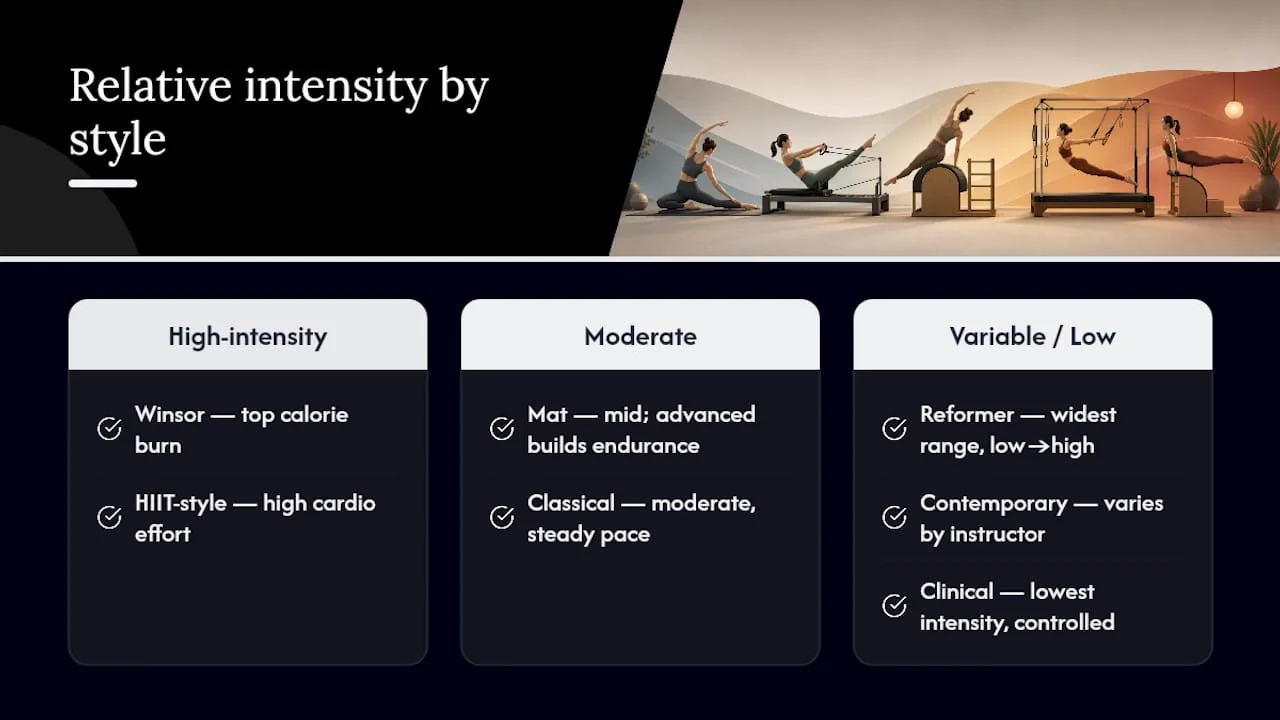
What Actually Matters When Picking a Pilates Style
Most guides to Pilates styles treat the topic like a taxonomy problem, sort every variant into a neat box and call it done. That's backwards. The style label tells you almost nothing about whether a specific class will actually help you. Two "Contemporary Pilates" classes at two different studios can look completely unalike depending on who's teaching them.
The conventional advice to "just pick reformer, it's trendy" ignores that reformer's biggest advantage, adjustable resistance, is wasted on an instructor who doesn't actually adjust anything for you. Meanwhile Clinical Pilates gets dismissed as boring or slow by people comparing it to a HIIT class, when slow and controlled is the entire point for anyone managing an actual injury.
If you take one thing from this guide, prioritize the instructor's screening process over the style name on the schedule. A studio that asks about your injuries and adapts on the spot will serve you better than a perfectly labeled "Classical" class taught by someone checking a clock. Start with a goal, ask direct questions before booking, and treat the first class as a test of the teacher, not just the workout.
— Juiced
Ready to Try It in Person?
Reading about the different types of Pilates only gets you so far. The real test is how a class feels once you're on the mat or strapped into the reformer, and that's where Amritayogawellness fits in. As a Philadelphia studio offering Mat, group Reformer, and clinically informed sessions side by side, alongside yoga, barre, and massage therapy, you get to compare formats in one place instead of guessing from a website description.
If you're managing tight hips or post-workout soreness, pairing Pilates with massage therapy speeds up recovery between sessions, and Amritayogawellness offers that alongside its movement classes. Beyond the studio floor, workshops like the tarot readings round out a wellness visit for anyone treating the trip as a full reset, not just a workout. Check the current class schedule and book your first Mat or Reformer session directly through the studio's site to see which format actually fits your body.
Sources
All the different types of pilates and what they're good for — Stylist
Types Of Pilates: A Definitive List, Plus Which Is Best | Marie Claire UK
I Tried 7 Different Types of Pilates; Here Are My Favorite — Business Insider
The 7 Different Types Of Pilates Explained — The Pilates Circuit
Recommended

What Are the Real Effects of Hot Yoga on Your Body and Mind?
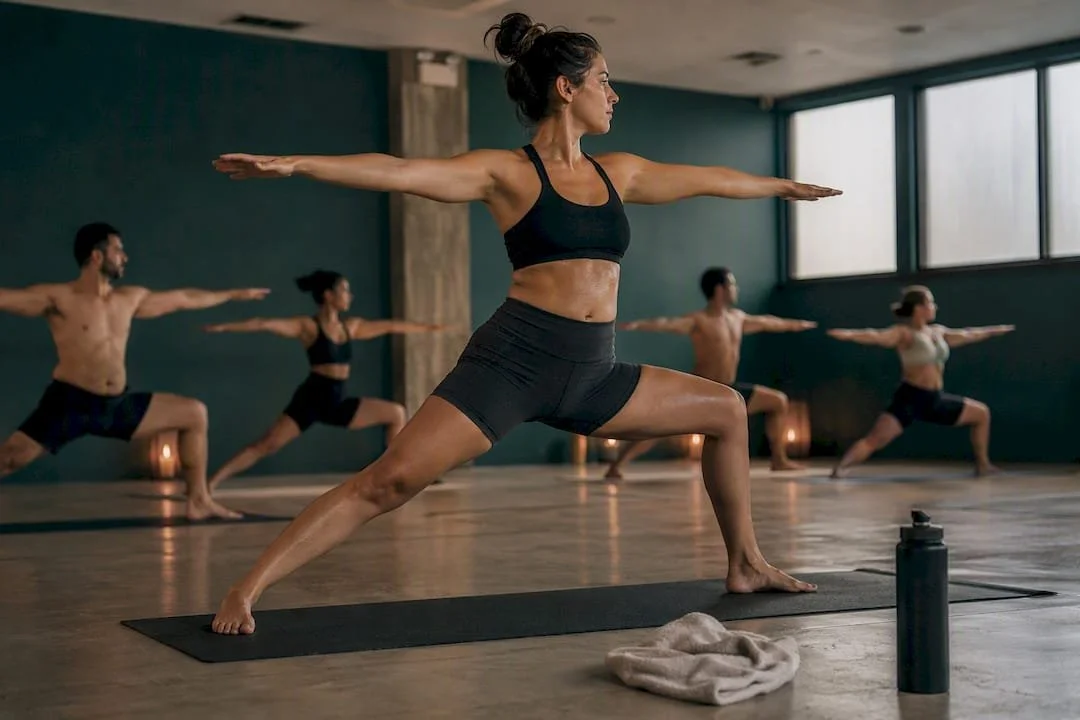
A single hot yoga session raises your core temperature and heart rate the way a brisk jog might, and practiced consistently, it can improve flexibility, balance, and certain cardiometabolic markers. A 2025 systematic review of 43 studies covering 942 participants confirms the acute physiological load is real, and one trial found the heat itself triggers cellular changes, including a rise in HSP70, a protein linked to heat tolerance, alongside gains in VO2max.
Here's the catch: many of these benefits show up in non-heated yoga too. Heat seems to amplify certain effects rather than create them from nothing, and how often you show up matters more than the temperature of the room.
Acute effects: elevated core temperature, faster heart rate, heavy sweating
Chronic effects (with consistent practice): better flexibility, balance, and some blood pressure and body-fat improvements
Biomarker signals: HSP70 and VO2max changes reported in controlled trials
Pregnant people, anyone with cardiovascular disease, and those on medications affecting heat regulation should get medical clearance before trying a heated class. Hydration and pacing aren't optional extras. They're the difference between a productive sweat and a trip to urgent care.
Key Takeaways
Hot yoga produces measurable acute cardiovascular and cellular effects, and its lasting benefits depend far more on consistent attendance than on room temperature alone.
| Point | Details |
|---|---|
| Heat raises acute strain | Core temperature and heart rate climb during class, similar to moderate cardio exercise. |
| Attendance drives results | Higher class attendance correlates with better blood pressure and body-fat outcomes in trials. |
| Body-fat changes take months | A six-month, three-times-weekly Bikram program showed a significant body-fat reduction by month six. |
| Mental benefits aren't heat-specific | BDNF increases appear tied to yoga practice broadly, not the added heat. |
| Amritayogawellness applies staged exposure | The studio screens new students and controls heat gradually rather than starting beginners at full intensity. |
Table of Contents
Understanding the Effects of Hot Yoga: Styles, Heat, and Format
"Hot yoga" isn't one single practice. It's an umbrella term for yoga performed in artificially heated rooms, typically 30 to 52 degrees Celsius (86 to 126 degrees Fahrenheit), according to the range reported across studies in the 2025 systematic review. Humidity levels often run high alongside the heat, which is part of why sweat output feels so dramatic compared to a regular studio class.
Bikram yoga is the most studied style, built around a fixed sequence of 26 postures performed in a room heated to roughly 105°F with 40% humidity. Hot vinyasa and heated Hatha classes are looser variations, often the same flow sequences you'd find in an unheated room, just cranked up thermally.
Research interventions have varied widely in dose:
Session length: 20 to 90 minutes
Frequency: 2 to 6 sessions per week
Total intervention length: 1 to 16 weeks in most trials, though longer studies exist
That range matters. A single 90-minute Bikram class three times a week is a very different exposure than a 20-minute heated flow twice weekly, and the research reflects that inconsistency.
What Happens to Your Body During a Single Hot Yoga Class?
Your core temperature climbs almost as soon as you step onto the mat, and your heart works harder even though you're not sprinting or lifting weights. Heat forces your cardiovascular system to redirect blood flow toward your skin to cool you down, which raises heart rate independent of how intense the poses actually are.
That's a key nuance: one systematic review notes the heat can increase cardiovascular strain without necessarily raising your total energy expenditure compared to the same sequence done at room temperature. You're working your heart harder, but you're not necessarily burning more calories.
Sweating is the most obvious acute response, and it comes with real fluid and electrolyte loss. This is why practitioners report:
Lightheadedness or dizziness if hydration is inadequate
Transient drops in blood pressure upon standing
A sense of deeper stretch, driven by warmed connective tissue rather than actual flexibility gains
One RCT found that a 4-week hot yoga intervention performed three times weekly raised both VO2max and intracellular HSP70 levels, a heat-shock protein associated with cellular stress resilience. That's a meaningfully different physiological signature than you'd get from an unheated flow, even a vigorous one.
Does Regular Hot Yoga Practice Produce Lasting Changes?
Consistency is where hot yoga starts to show its more durable effects, though the picture is far from uniform across studies. Flexibility and balance improvements show up repeatedly, and some trials report modest bone mineral density benefits, a finding that dovetails with broader research on how weight-bearing exercise supports bone health over time.
Body composition results are where things get interesting. A six-month Bikram yoga study of adult women found progressive body-fat reductions: −3.71% at roughly 45 days, deepening to −6.07% by the six-month mark. That's a real, measurable change, but it required three 90-minute sessions weekly for half a year. Shorter interventions in other trials didn't come close to matching it.
A separate 16-week Bikram RCT illustrates why dose matters so much. But when they broke down results by attendance, participants who showed up more often saw real reductions in diastolic blood pressure, body fat percentage, fat mass, and BMI. The people who skipped classes got nothing. The people who committed got measurable results.
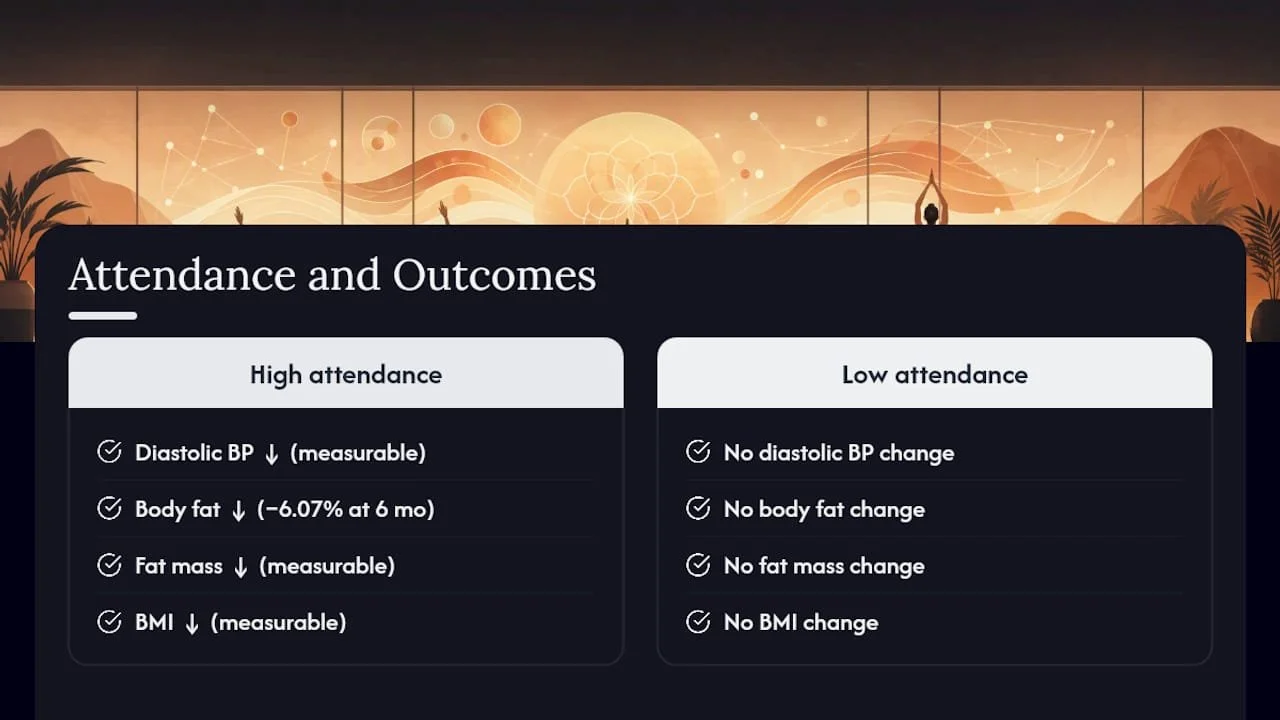
VO2max, a standard marker of cardiorespiratory fitness, increased in at least one controlled trial, though not universally across the literature. Some studies found non-heated yoga produced comparable or even greater vascular improvements, suggesting the postures and breathing, not the heat, drive a good share of the benefit.
The honest takeaway: hot yoga can produce real chronic adaptations, but attendance is the variable doing most of the work.
Can Hot Yoga Improve Your Mood and Mental Health?
People who practice hot yoga regularly often report lower perceived stress and improved wellbeing, and there's a biological thread that may explain part of it. Yoga, heated or not, has been associated with increases in BDNF (brain-derived neurotrophic factor), a protein tied to mood regulation and neural growth.
Here's where the evidence gets murkier: heat doesn't consistently add anything extra to that BDNF response. Several studies found comparable increases in non-heated yoga groups, which suggests the mental health benefits may come primarily from the mindfulness, breathwork, and movement, not the temperature.
Reduced perceived stress is a common finding, but measurement tools vary widely study to study
BDNF increases appear tied to yoga practice broadly, not heat specifically
Sample sizes in psychological outcome studies tend to be small, which limits how confidently anyone can generalize
None of this means the mental benefits aren't real. It means the heat probably isn't the active ingredient people assume it is.
What Are the Risks of Hot Yoga, and Who Should Be Cautious?
Heat changes the risk profile of yoga in ways a regular studio class doesn't. Case reports referenced in the 2025 systematic review document isolated instances of heat-related illness, which is why screening and pacing deserve real attention, not an afterthought.
Dehydration and electrolyte imbalance from heavy sweating, especially in classes lasting 60 to 90 minutes.
Dizziness or fainting, often tied to standing up too fast from floor postures in a heated room.
Overstretch injuries, since heat increases tissue laxity and can trick you into pushing past your joint's actual capacity.
Heat exhaustion, rare but documented, particularly in poorly ventilated rooms or among first-time practitioners.
Anyone who is pregnant, has cardiovascular disease, uncontrolled hypertension, severe respiratory conditions, or takes medications that affect heat regulation (some diuretics and blood pressure drugs, for instance) should talk to a doctor before booking a heated class.
Pro Tip: Don't use how deep a stretch looks as your gauge in a heated room. Heat loosens connective tissue temporarily, so lean on internal sensation and controlled, progressive loading instead of chasing a deeper shape than your body is actually ready for.
How to Start Hot Yoga Safely and Get the Most Out of It
Getting the benefits without the setbacks comes down to preparation and pacing, not toughing it out.
Before class: hydrate well in the hours beforehand, eat something light 1 to 2 hours prior, and skip alcohol or diuretics that day. If you're in an at-risk group, get medical clearance first.
During class: breathe steadily through your nose when possible, modify or skip any pose that feels wrong, and sit down if you feel dizzy. A good instructor will cue students to listen to their bodies rather than match the person next to them.
Building consistency: if you're new to heat, start with a shorter or less-heated class, then work up. Track your attendance, since the research consistently shows that people who attend more often see meaningfully better results than occasional visitors.
Pro Tip: If you're transitioning from a regular yoga practice, try two heated classes a week for a month before committing to a higher-frequency schedule. Your body adapts to heat tolerance gradually, and rushing that timeline is how injuries happen.
How Strong Is the Research on Hot Yoga, Really?
The 2025 systematic review pooling 43 studies and 942 participants is the most comprehensive look at hot yoga's effects to date, and it's honest about its limits. Session temperatures across included studies ranged from 30 to 52°C, and intervention lengths ranged from just 6 sessions up to 36 sessions spread over 1 to 16 weeks. That's a lot of variation to average together.
Short interventions and low attendance are recurring culprits behind null results. The 16-week Bikram trial illustrates this well. Looking only at intention-to-treat data hides real benefits that show up once you isolate the people who actually attended consistently.
Gaps that remain:
Few trials directly compare hot yoga against matched-intensity non-heated yoga
Sample sizes in most individual studies are small
Long-term follow-up beyond six months is rare
Study populations skew toward younger, generally healthy adults, limiting how well findings generalize
Treat hot yoga's benefits as plausible and partially proven, not settled science.
How Amrita Yoga & Wellness Puts the Research Into Practice
We built our hot yoga offerings around what the evidence actually supports: staged heat exposure, not a baptism-by-fire approach for newcomers.
Instructors screen new students for at-risk conditions before their first heated class
Room temperatures are controlled and monitored, not left to guesswork
New practitioners get guidance on hydration, pacing, and modification before they ever step on the mat
Our hot yoga safety guidance and step-by-step practice resources walk through exactly what to expect.
A Studio's Honest Take on Heat and Consistency
The research keeps pointing to the same thing: showing up matters more than the thermostat. If you're new to heat, start slow, hydrate seriously, and treat a supervised beginner class as your safest entry point.
— Juiced
Try Hot Yoga With Guidance That Matches the Science
If the research says attendance and pacing matter more than raw heat, the smartest way into hot yoga is a studio that builds both into the experience from day one. Amritayogawellness designs beginner-friendly hot classes around staged heat exposure and instructor screening, so you're not guessing your way through your first 105-degree session alone.
Our instructors watch for signs of overstretching and dehydration in real time, something no solo home practice or unsupervised video series can offer. If you're curious about the mental and spiritual side of wellness beyond the mat, our tarot readings sessions are worth exploring too. Ready to see how a properly paced hot class feels? Check current class times and book your first session on our studio schedule.
Sources
The physiological and safety claims throughout this article draw on a small set of peer-reviewed sources, each supporting a specific type of finding.
This article is general information, not a substitute for advice from a qualified doctor. Consult a qualified healthcare professional about your own circumstances before acting on anything here.
Recommended

Reformer Pilates: What to Wear for Your First Class
Wear fitted leggings or capris, a close-fitting top or sports bra, and grip socks (or check your studio's exact sock policy before you go). That combination gives instructors a clear view of your alignment and keeps you safe on equipment full of springs, straps, and moving carriages. Amrita Yoga & Wellness and most studio guides agree on the same core rule: skinny, stretchy, hardware-free clothing beats anything baggy or metal-trimmed, every time.
Must-haves: fitted leggings, a snug top, grip socks, and a light zip-free layer for before and after class.
Quick check: call or check the studio's website for its sock policy. Some require grip socks, others sell them at the front desk, and a few allow bare feet for advanced students.
Key Takeaways
Fitted, hardware-free clothing paired with grip socks protects reformer equipment and lets instructors correct alignment accurately in real time.
| Point | Details |
|---|---|
| Choose fitted, stretchy layers | Leggings, capris, and fitted tops let instructors see and correct your alignment. |
| Confirm sock policy first | Most studios require or sell grip socks; call ahead before assuming bare feet are fine. |
| Skip all hardware | Zippers, snaps, and buttons scratch upholstery and dig into you while lying down. |
| Pack the small essentials | Water bottle, towel, spare hair tie, and a light zip-free layer round out your bag. |
| Prioritize fit over price | A well-fitting inexpensive legging beats an expensive pair that slips or gaps. |
Table of Contents
Feet: Grip Socks, Bare Feet, And Why Regular Socks Don't Cut It
What To Avoid: Protecting Equipment And Respecting The Studio
Fabric, Fit, And Care: The Technical Side Of Getting Dressed
What To Wear For Reformer Pilates: The Two-Minute Checklist
Run through this before you walk out the door. It takes less time than finding a parking spot.
Put on fitted leggings or capris with a high waistband.
Add a fitted top, tank, or sports bra suited to the workout's intensity.
Grab grip socks (confirm the studio requires or sells them).
Tie back hair with a secure elastic.
Toss in your bag: a water bottle, a small hand towel, a spare hair tie, and slip-on shoes for after.
Layer up with a light, zip-free sweater or pullover for the walk in and out.
Wear your outfit on the way to the studio; pack the extras separately so you're not fumbling at the front desk.
Pro Tip: Text or call ahead if it's your first visit. Some studios include grip socks in the class price, so you might not need to buy your own before session one.
Tops: Sports Bras, Tanks, And Fitted Tees That Work
Loose shirts ride up the moment you roll onto your shoulders, and instructors lose their ability to spot a misaligned spine or hip through fabric that's bunched around your ribs. Fitted, stretchy clothing lets teachers see your actual body position and correct it in real time, which is the entire point of a reformer class over a solo workout video.
Sports bra support doesn't need to be heavy-duty. Reformer Pilates is low-to-medium impact, so a light or medium support bra usually does the job better than a high-impact running bra, which can feel restrictive during deep stretches and overhead arm work. Prioritize breathability and freedom of movement over structure.
A few fit details matter more than people expect:
Skip tops with back zippers, clasps, or thick decorative hardware that presses into the carriage when you lie down.
Choose flatlock seams over raised or bulky stitching to avoid rubbing during rollovers and bridges.
Long sleeves are fine, but make sure the cuffs are snug so they don't catch on springs during arm work.
Before you leave the house, test your top the way you'll actually use it. Lie down, roll your shoulders back, and reach your arms straight overhead. If your shirt creeps up or gaps at the stomach, it'll do the same thing mid class.
Bottoms: Leggings, Capris, And When Shorts Actually Work
Full-length leggings or capris with a high, wide waistband are the safest bet for reformer work. You'll spend a lot of the class on your back, in bridge position, or inverted with your hips off the carriage, and a low-rise waistband has nowhere to go but down. A high waist stays put through those transitions instead of sliding and forcing you to adjust mid-exercise.
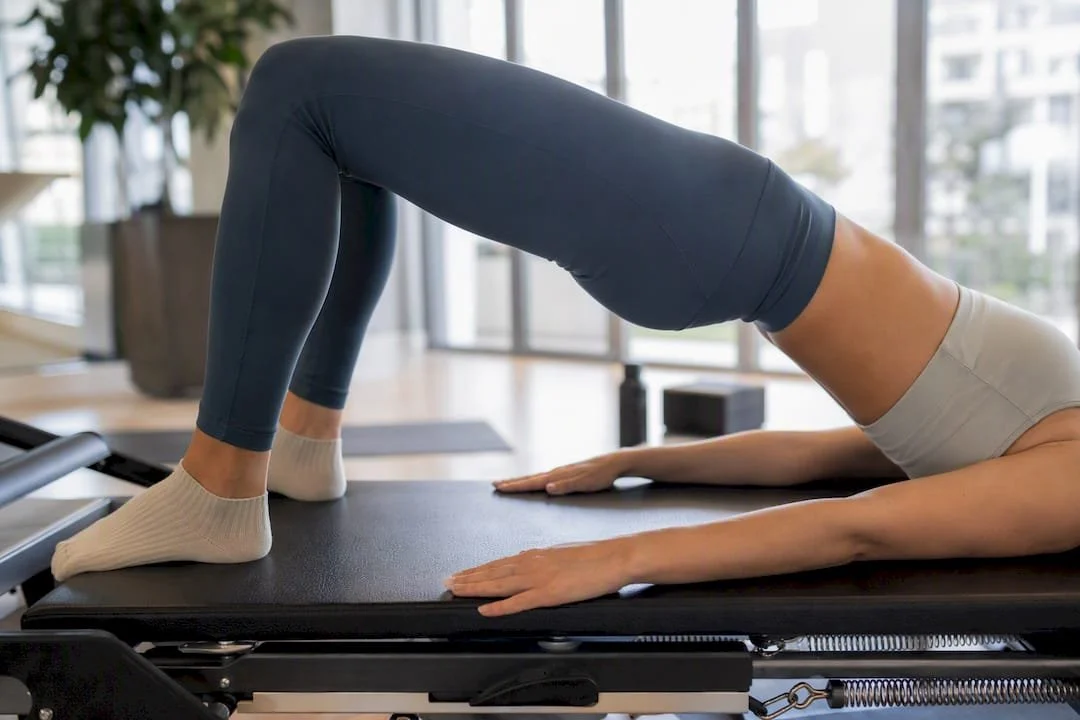
Shorts aren't off the table, but the bar is higher than for a regular gym session. Go for fitted bike shorts that hit mid-thigh, not running shorts with a loose leg opening. Anything with a wide leg can catch on the foot straps or bunch up under your knees during footwork series.
What to skip entirely:
Bottoms with zippers, snaps, buttons, or grommets that can scratch the upholstery.
Loose sweatpants or joggers that obscure your leg and hip alignment from the instructor's view.
Anything with thick outer seams that dig in when you're lying flat.
Do a squat test and a lie-down test before committing to a new pair: squat low to check for see-through fabric, then lie flat and pull your knees to your chest to confirm nothing gaps or slides.
Feet: Grip Socks, Bare Feet, And Why Regular Socks Don't Cut It
Most reformer studios require or strongly recommend grip socks, and the reasoning is part safety, part hygiene. The carriage and footbar get slick with sweat over a full day of back-to-back classes, and rubber-gripped soles keep your feet from sliding when you're pressing against the footbar at odd angles. Bare skin on shared equipment is also simply less sanitary for a studio running six or eight classes a day.
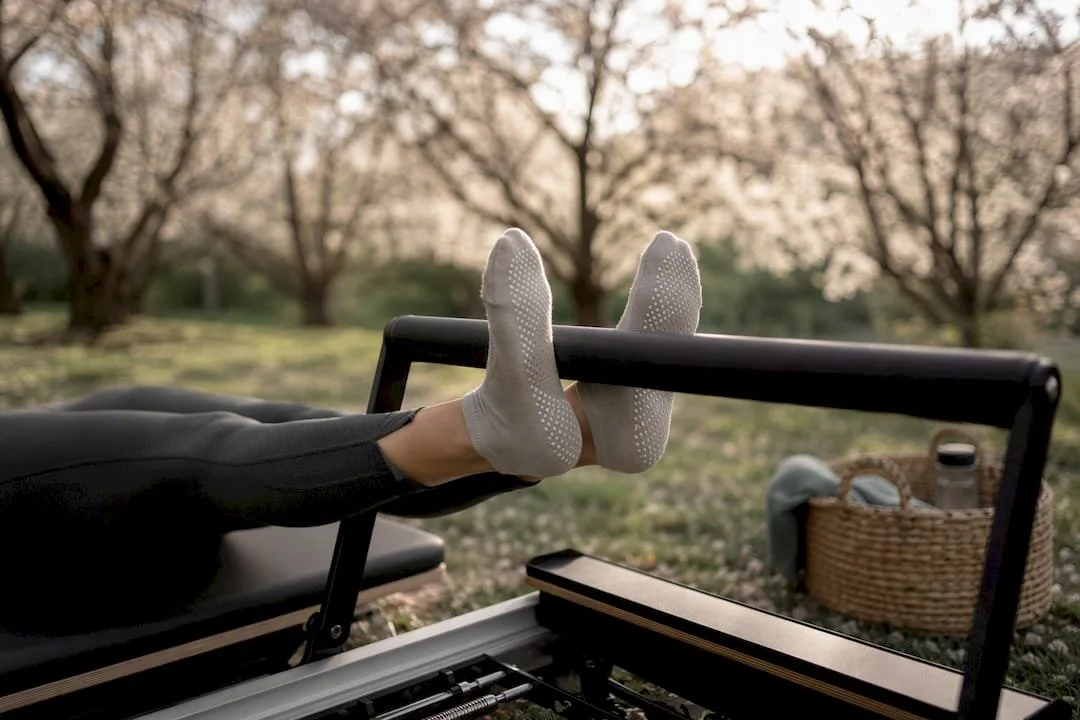
Barefoot practice has its place. Advanced students sometimes prefer it for the extra proprioceptive feedback, since you can feel exactly how your foot is contacting the bar or strap. Even so, many studios still ask everyone to wear socks regardless of experience level, so don't assume bare feet are automatically fine just because you've taken a hundred classes elsewhere.
When shopping for grip socks, look for:
Full-sole rubber grip patterns, not just a few dots on the heel and ball.
A snug, non-slouching fit that won't twist around your foot mid-exercise.
Toe coverage for hygiene and comfort against the footbar.
Regular ankle socks or sneakers have zero place on a reformer. Cotton socks slide on the metal carriage, and shoes damage the padded surface entirely.
Layers, Towels, And The Small Stuff Worth Packing
A light, zip-free layer, like a pullover hoodie or a soft cardigan, is the easiest thing to throw on before class and shed once you warm up. Anything with a zipper or snap ends up pressed into the carriage the moment you lie down, so stick to pullover styles you can peel off in five seconds and toss on the floor beside your mat.
A small hand towel and a water bottle round out the basics. Keep both near the head of the reformer rather than on the carriage itself, where they'll get knocked around during footwork.
Don't forget:
A spare hair tie or two. One always breaks at the worst moment.
Slip-on shoes for the walk to your car afterward.
Deodorant or a small toiletry bag if you're heading straight to work.
Long hair needs to be tied back securely, not just pulled into a loose bun. You'll spend real time with your head resting on the carriage's headrest, and loose strands can catch in the springs.
What To Avoid: Protecting Equipment And Respecting The Studio
Zippers, buttons, metal snaps, and bulky decorative hardware are the single biggest offender in reformer studios. They scratch upholstery and dig into the carriage padding every time you lie down, which is why so many studios post a no-hardware rule right on their intake forms. It's not a style preference. It's equipment maintenance.
A few etiquette basics round things out:
Leave dangly necklaces, bracelets, and long earrings at home. They swing into straps and springs.
Skip heavy lotion or oil right before class since it makes hands and feet slip on the bar and straps.
Arrive a few minutes early, follow the studio's sock and towel rules, and keep bags and shoes off the equipment itself.
Go light on perfume or strong scents. Reformer rooms are small, and everyone's breathing hard a few feet from each other.
Fabric, Fit, And Care: The Technical Side Of Getting Dressed
Four-way stretch, moisture-wicking fabric is worth paying attention to on the label, because it moves with the carriage and pulls sweat away instead of trapping it against your skin. Cotton blends tend to get heavy and cling once you're a few exercises in.
Flatlock seams matter more than most people realize until they've spent forty-five minutes lying on a raised seam that digs into a hip bone. Smooth waistbands and flat inner seams reduce those pressure points considerably over a full class.
Run a quick opacity check before wearing anything new to class: bend and squat in front of a mirror to catch see-through spots you'd never notice standing still.
Pro Tip: Skip fabric softener when washing performance leggings. It coats the fibers and breaks down the stretch and moisture-wicking finish over time, which is why a two-year-old pair of leggings sometimes feels stiffer than the day you bought them.
Wash in cold water and skip the dryer's high heat setting to preserve elastic fibers.
Air dry when possible; it extends the life of stretch fabric noticeably.
How Amrita Yoga & Wellness Instructors See Clothing Choices
Instructors read your body through your clothes before you say a word. Fitted fabric lets a teacher spot a hip that's dropping during a hundred series or a shoulder creeping toward your ear during footwork, corrections that are much harder to make when leggings are baggy or a shirt has bunched around your midsection.
Equipment protection is the other half of the equation. Amrita Yoga & Wellness asks students to skip hardware and heavy zippers specifically because a single class of eight students lying on the same carriage adds up fast in wear and tear.
Minimal, fitted clothing without metal or bulky trim protects shared equipment and gives instructors a clear line of sight to correct alignment in real time.
Before your first visit, confirm a few things directly with the front desk:
Whether grip socks are required, included, or sold on-site.
Where to store shoes, bags, and towels during class.
Any specific policy on jewelry or loose layers near the equipment.
Where To Learn More Before Your Next Class
A few more resources round out what to expect once you're on the carriage. If you're brand new to the equipment itself, Amrita Yoga & Wellness's beginner's guide to reformer classes walks through what a typical session looks like. For more on why the equipment builds strength and flexibility, the core strength and flexibility breakdown is worth a read, and the studio's full tag archive collects more reformer-specific posts. On the fitness side, this pre-workout activation guide offers useful context on warming up before a session.
The Studio Perspective Nobody Talks About Enough
Most articles on this topic read like a shopping list dressed up as advice: buy this brand, that legging, this exact sports bra. That framing misses the point entirely. The actual research consensus, echoed across studio guidance from Amrita Yoga & Wellness and independent Pilates outlets alike, has nothing to do with brand and everything to do with two things: can your instructor see your alignment, and will your clothing damage shared equipment.
That's a narrower, more useful question than "what's trendy." A ten-dollar pair of fitted leggings that stays put through an inversion beats a sixty-dollar pair that gapes at the waist. Grip socks matter less for fashion and more because a studio running back-to-back classes needs traction and hygiene it can count on.
If you take one thing from all of this, prioritize fit and hardware over everything else. Everything downstream, comfort, safety, even how much correction you get from your instructor, follows from those two decisions.
— Juiced
Sources
Recommended

10 Basic Yoga Poses Every Beginner Should Learn First
Ten poses cover almost everything a new practitioner needs: standing strength, gentle backbends, balance, and rest. Learn Mountain, Downward-Facing Dog, Plank, Cobra, Warrior I, Warrior II, Tree, Cat-Cow, Child's Pose, Seated Forward Fold, Bridge, and Savasana, and you have a full toolkit for a home practice.
Mountain Pose (Tadasana)
Downward-Facing Dog (Adho Mukha Svanasana)
Plank (Phalakasana)
Cobra (Bhujangasana)
Warrior I (Virabhadrasana I)
Warrior II (Virabhadrasana II)
Tree Pose (Vrksasana)
Cat-Cow (Marjaryasana/Bitilasana)
Child's Pose (Balasana)
Seated Forward Fold (Paschimottanasana)
Bridge Pose (Setu Bandha Sarvangasana)
Corpse Pose (Savasana)
Ten to twenty minutes a day of these basic yoga poses builds flexibility, calms the nervous system, and improves balance faster than one long weekly session. Cleveland Clinic notes that short, consistent practice is what actually sticks for beginners. Start with a 5 to 10 minute routine and grow from there.
Key Takeaways
Learning ten to twelve foundational poses and practicing them for 10 to 20 minutes daily builds strength, balance, and calm faster than occasional long sessions.
| Point | Details |
|---|---|
| Learn the core poses | Mountain, Downward Dog, Plank, Cobra, Warriors I and II, Tree, Cat-Cow, Child's Pose, Forward Fold, Bridge, and Savasana cover a full beginner practice. |
| Practice short and often | Ten to twenty minutes daily builds a sustainable habit faster than one long weekly class. |
| Use props without hesitation | Blocks, straps, and blankets help you find safe alignment, not shortcuts around effort. |
| Hold poses by breath count | Aim for three to five breaths per pose and always close with a few minutes of Savasana. |
| Get in-person guidance | Amrita Yoga & Wellness offers beginner classes with props provided and instructors trained to cue modifications live. |
Table of Contents
How Do You Do the Basic Yoga Poses for Beginners?
Every pose below, or "asana" (the Sanskrit term for a physical posture), follows a simple sequence: set your base, engage your core, breathe, and hold. You don't need flexibility to start. You need a willingness to move slowly and pay attention to how your body feels.
1. Mountain Pose (Tadasana). Stand with feet hip-width apart, weight even across both feet. Engage your thighs, lengthen your spine, and let your arms rest at your sides or reach overhead. Hold for five breaths. This resets your posture and teaches the standing alignment every other pose builds on.
2. Downward-Facing Dog. From hands and knees, tuck your toes and lift your hips up and back, forming an inverted V. Keep a slight bend in the knees if your hamstrings feel tight. Press hands firmly into the mat and let your head hang. If your wrists ache, try a forearm variation. This pose stretches the whole back body and builds shoulder strength.
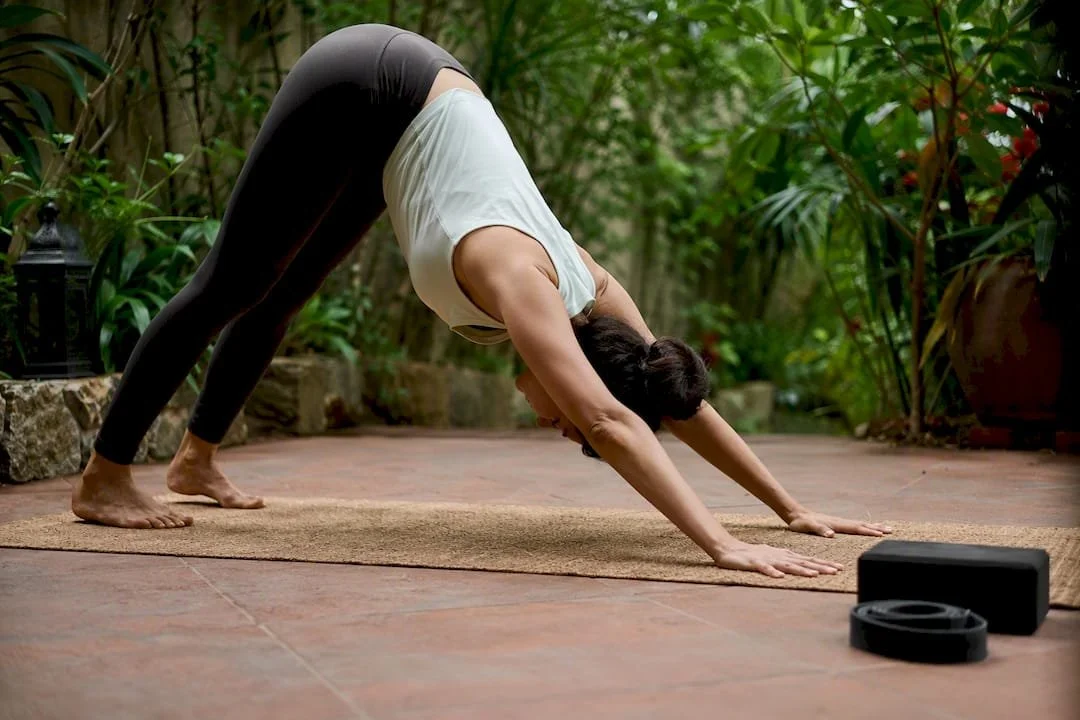
3. Plank Pose. Stretch back from a tabletop position until your body forms a straight line from head to heels. Keep hips level, not sagging or piking. Beginners can drop to the knees for a modified plank. It's a core and shoulder strengthener that also improves posture off the mat.
4. Cobra Pose. Lie on your belly, hands under your shoulders, and press up just enough to lift your chest while keeping your pelvis on the floor. Keep elbows slightly bent rather than locked. This gently opens the chest and strengthens the low back without the strain of a full backbend.
5. Warrior I. Step one foot back, bend the front knee over the ankle, and square your hips toward the front of the mat. Raise your arms overhead. Use a wide stance if balance feels shaky. This builds leg strength and hip mobility at once.
6. Warrior II. From Warrior I, open your hips and shoulders to the side, extending your arms parallel to the floor. Gaze past your front fingertips. It strengthens the legs while teaching you to stay grounded through your hips.
7. Tree Pose. Shift weight onto one foot and place the other sole against your ankle, calf, or inner thigh. Hands can rest at your heart or reach overhead. A wall or the back of a chair works as support while your balance develops. Tree pose sharpens balance and the mind-body awareness yoga calls proprioception.
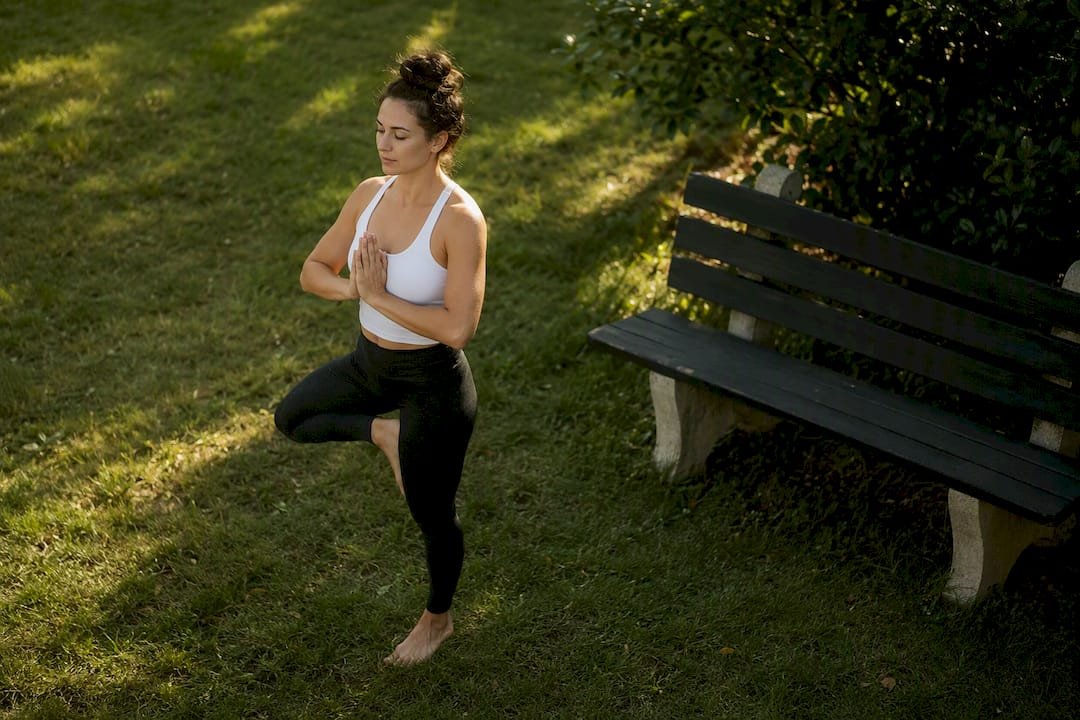
8. Cat-Cow. On hands and knees, inhale as you drop your belly and lift your gaze for Cow, then exhale as you round your spine toward the ceiling for Cat. Move slowly, syncing each shift with your breath. This warms up the entire spine and is often used to open a practice.
9. Child's Pose. Kneel with big toes touching, knees wide or together, and fold forward with arms extended or resting alongside the body. A folded blanket under the knees or hips adds comfort. Cleveland Clinic recommends it as a rest position anytime during practice, not just at the end.
10. Seated Forward Fold. Sit with legs extended, inhale to lengthen your spine, then hinge forward from the hips. Bend your knees generously and loop a strap around your feet if you can't reach them. Overreaching for straight legs here is a common cause of lower back strain, so let the bend stay soft.
11. Bridge Pose. Lie on your back, feet flat near your hips, and press up through your feet to lift your hips toward the ceiling. Clasp your hands beneath you or keep them flat on the mat. This strengthens the glutes and counters hours of sitting.
12. Savasana (Corpse Pose). Lie flat, arms relaxed at your sides, palms up, and let your whole body go heavy. Stay for at least two to three minutes. It's the pose that lets your nervous system absorb the work you just did.
Pro Tip: If a pose asks for a "straight" leg or arm, aim for "long" instead. A soft bend in the knee or elbow protects the joint and rarely changes what the pose is training.
What's a Good 5 to 10 Minute Beginner Yoga Sequence?
Short sequences work because they're repeatable, and Yoga Journal points to breath-synced flows as one of the most practical entry points for new practitioners.
5-minute mini flow:
Mountain Pose, five slow breaths.
Cat-Cow, five rounds, inhaling for Cow and exhaling for Cat.
Downward-Facing Dog, hold five breaths.
Child's Pose, hold one minute.
Seated Forward Fold, hold five breaths, then rest on your back for one minute.
10 to 20 minute routine:
Mountain Pose, five breaths.
Cat-Cow, six rounds.
Downward-Facing Dog into Plank, three cycles, holding each for three breaths.
Cobra, three rounds, holding three breaths each.
Warrior I and Warrior II on each side, holding four breaths per pose.
Tree Pose on each side, holding five breaths.
Bridge Pose, three rounds, holding four breaths.
Seated Forward Fold, hold six breaths.
Savasana, three to five minutes.
Add one new pose or an extra round every week or two once the sequence feels manageable. Before you start, spend a minute just breathing to settle in. Afterward, always close with Savasana rather than jumping straight back into your day.
Pro Tip: Count your holds in breaths, not seconds. It keeps you present and stops you from rushing the pose to "get it over with."
What Safety Rules and Props Should Beginners Know?
Blocks, straps, blankets, and even a sturdy chair aren't training wheels you'll eventually outgrow. Cleveland Clinic frames them as accessibility tools that let you find correct alignment regardless of your current flexibility or strength.
Use a block under your hand in Warrior poses or forward folds if the floor feels too far away.
Loop a strap around your feet in a seated fold instead of straining to reach your toes.
Place a folded blanket under your knees in Cat-Cow or Child's Pose for joint comfort.
Hold a chair back during Tree Pose until your balance feels reliable without it.
Common mistakes include locking the knees or elbows, gripping the toes so hard the shoulders tense up, and holding the breath through a hard pose. Fix each by softening the joint, loosening the grip, and audibly exhaling. Hold most poses for three to five breaths, and aim for 10 to 20 minutes of practice daily. Yoga's popularity keeps climbing, with millions of U.S. adults practicing regularly, so you're picking up a habit with real staying power. Stop immediately and check with a physical therapist or doctor if you feel sharp pain, numbness, or dizziness.
Why Trust Amrita Yoga & Wellness for Beginner Guidance?
Amritayogawellness built its beginner programming around exactly the poses covered here, taught in-studio by certified instructors who specialize in helping first-timers find safe alignment. Classes include props at every mat, so nobody is left guessing how to modify a pose on the fly.
Drop-in beginner classes with hands-on cueing and modification options.
Workshops that slow down foundational poses for deeper practice.
Props (blocks, straps, bolsters) provided at every session.
Further reading on the studio's beginner pose guides and asana breakdowns for readers who want more detail before their first class.
What Should Beginners Actually Focus On?
Chasing a "perfect" pose is the wrong goal. Your joints, your breath rate, and how your body feels in the moment matter more than whether your triangle looks like the photo. Instructors call this a work-in rather than a workout, and it changes how you approach every pose.
Props aren't a sign you're doing it wrong. A block under your hand or a wall behind your foot in Tree Pose is what lets you build real strength safely. And consistency beats intensity every time: five honest minutes daily will outpace one grueling hour on a Sunday.
How Do You Start Practicing at Amrita Yoga & Wellness?
If you'd rather learn these basic yoga poses with a real instructor watching your alignment than from a screen, Amritayogawellness runs beginner-friendly classes across styles, from grounded Hatha-paced sessions to warmer, more dynamic hot yoga, with props stocked at every mat so no one has to muscle through a fold they're not ready for.
You won't be the only new face in the room. Classes are built to mix first-timers with regulars, and instructors cue modifications out loud so nobody has to ask. Beyond the mat, the studio also offers pilates, barre, tai chi, and massage therapy for anyone building a broader wellness routine. Check the current beginner class schedule and book your first session directly through Amrita Yoga & Wellness.
Frequently Asked Questions
What are the easiest yoga poses for beginners to start with? Mountain Pose, Child's Pose, and Cat-Cow are the gentlest entry points. They ask for no flexibility or balance and teach breath awareness right away.
How long should a beginner hold each yoga pose? Three to five breaths per pose is standard for most basic yoga poses. Restorative poses like Child's Pose or Savasana can be held for a minute or longer.
What does "vinyasa" mean in yoga? Vinyasa refers to linking breath with movement as you transition from one pose to the next, rather than holding poses in isolation.
Do I need yoga props as a beginner? Yes. Blocks, straps, and blankets help you reach safe alignment in poses like forward folds or Warrior poses, and most studios, including Amritayogawellness, provide them at every mat.
How often should beginners practice yoga? Ten to twenty minutes daily works better for building a habit than one long session per week, according to Cleveland Clinic.
When should a beginner stop a pose or seek professional advice? Stop immediately if you feel sharp pain, numbness, or dizziness, and check with a physical therapist or doctor before continuing, especially with prior joint or back injuries.
Sources
Recommended

Health Benefits of Hot Yoga: What the Evidence Shows
Hot yoga delivers measurable gains in flexibility, balance, and several cardiometabolic markers when you practice it consistently, alongside reported drops in perceived stress. That is the honest, evidence-backed verdict. The catch: research quality varies from study to study, and heat itself carries real risks for some people. The main benefits researchers keep documenting include:
Greater flexibility and joint range of motion
Improved single-leg balance and lower-body strength
Possible improvements in body fat, BMI, and blood pressure with regular attendance
Lower perceived stress and better self-reported sleep
People with heart disease, heat intolerance, or a history of heat illness should talk to a doctor before stepping into a heated room, and pregnant practitioners need medical clearance first.
Key Takeaways
Regular hot yoga practice is linked to real gains in flexibility, balance, and select cardiometabolic markers, but heat's specific contribution beyond consistent practice remains unproven.
| Point | Details |
|---|---|
| Flexibility and balance lead the evidence | RCTs show the most consistent gains in these two areas across pooled studies. |
| Attendance drives cardiometabolic results | A 16-week Bikram trial linked higher attendance to lower diastolic BP, body fat, and BMI. |
| Evidence has real gaps | The 2025 review of 43 studies flags small, female-skewed samples and inconsistent protocols. |
| Heat carries genuine risk for some | People with heart disease, heat intolerance, or pregnancy should get medical clearance first. |
| Amritayogawellness builds safety into class structure | The studio trains instructors to pace beginners and manage heat exposure gradually. |
Table of Contents
Health Benefits of Hot Yoga: Defining the Practice
"Hot yoga" is an umbrella term, not one fixed workout. Bikram yoga follows a rigid 26-posture sequence at a set temperature, while hot vinyasa and other generalized "heated" classes let instructors vary the flow and heat level. Studios commonly run rooms between 86°F and 125°F (roughly 30 to 52°C) with humidity anywhere from 20% to 60%, and classes typically last 20 to 90 minutes.
Instructors add heat for a few practical reasons:
Warmer muscles and tendons resist injury and allow a deeper stretch
Heat raises heart rate, giving the workout a cardio component absent from room-temperature yoga
Sweating feels cleansing, though clinical sources note it does little for detoxification beyond what your liver and kidneys already handle
The temperature swing between studios is wide enough that "hot yoga" at one location can feel dramatically different from the same class name two miles away.
Physical Benefits Backed by Research
Flexibility shows up as the most consistent finding across hot yoga trials. Multiple randomized controlled trials report meaningful gains in range of motion after weeks of regular practice, particularly in the hips, spine, and shoulders.
Balance and lower-body strength follow close behind. RCT data show real improvements in single-leg balance testing and isometric strength measures, the kind of functional gains that matter most as people age and that connect directly to fall prevention research in older adults.
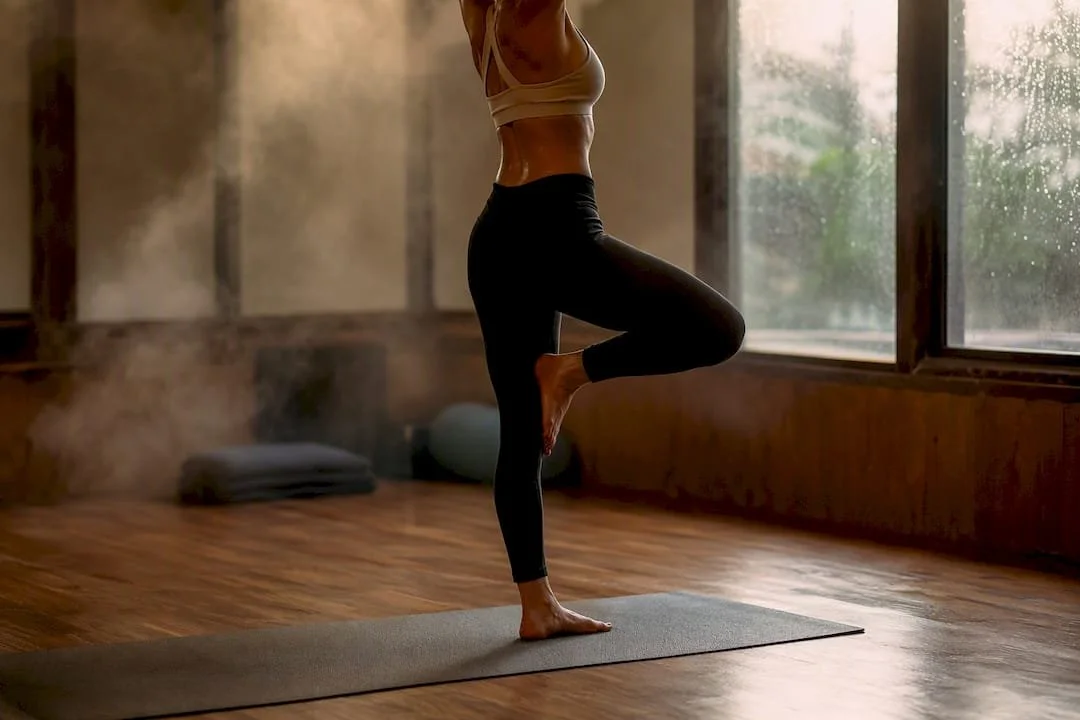
Bone health is the newest thread in the evidence. Longer interventions have started to show favorable changes in bone mineral density, though this line of research is thinner than the flexibility and balance data and needs more replication before anyone calls it settled.
Cardiometabolic markers tell a dose-dependent story. A 16-week Bikram yoga trial found that sedentary adults who attended more classes saw significantly greater reductions in diastolic blood pressure, body fat percentage, and BMI than infrequent attendees. Attendance, not just enrollment, drove the result.
Not every outcome improves, though. Resting heart rate variability and VO2max, a standard marker of cardiovascular fitness, show mixed or null results across many trials. Heat raises your heart rate acutely and makes a session feel harder, but it does not reliably translate into superior aerobic conditioning compared to yoga practiced at room temperature.
Mental and Psychological Effects
Stress reduction is the benefit most practitioners report first, and the research generally backs it up. Trials and surveys tied to regular hot yoga practice show reductions in perceived stress, some evidence of blunted cortisol reactivity, and better self-reported sleep quality after consistent sessions.
A few mechanisms likely explain this. The breathwork built into most sequences activates the parasympathetic nervous system. The heat itself may trigger a mild physiological stress response that, paradoxically, builds resilience over repeated exposure. And the social rhythm of a regular class, showing up at the same time each week with familiar faces, plays its own role in mood.
The limitations matter here too. Most of these studies rely on small samples, use inconsistent stress and mood measures from one trial to the next, and rarely compare hot yoga against an active control like non-heated yoga at matched intensity. That gap means the mental health case for hot yoga specifically, versus yoga in general, remains an open question.
Pro Tip: Track your stress levels on a simple 1 to 10 scale before and after class for a month. Most practitioners notice the pattern faster than any study will confirm it for them.
How Strong Is the Research on Hot Yoga?
The best current summary comes from a 2025 systematic review pooling 43 studies and 942 participants, most of them female. It found chronic hot yoga practice associated with improvements in flexibility, balance, bone mineral density, and select cardiometabolic markers, while flagging real gaps in study design.
| Evidence Source | Key Finding | Main Limitation |
|---|---|---|
| 2025 systematic review (43 studies, 942 participants) | Improved flexibility, balance, bone density, some cardiometabolic markers | Protocols varied widely in temperature, duration, and frequency |
| 16-week Bikram RCT | Higher attendance linked to lower diastolic BP, body fat, BMI | Sedentary adult sample only; no non-heated comparison group |
| Acute physiology research | Heat raises core temperature and heart rate without consistently raising energy expenditure | Short-term measures may not predict long-term adaptation |
The recurring problem across this body of work is the missing control group. Almost no trial compares hot yoga against yoga performed at the same intensity without heat, which means researchers cannot yet isolate what the heat itself contributes versus what consistent practice would deliver on its own. Regular practice looks genuinely beneficial. Whether the thermostat deserves the credit is still an open question.
Who Should Avoid Hot Yoga?
Heat stress is the core risk, and it shows up as dehydration, fainting, or heat illness in susceptible people. Watch for dizziness, nausea, or confusion as your signal to stop immediately.
Heart disease. Elevated heart rate combined with heat stress can strain a compromised cardiovascular system.
Heat intolerance or a prior heat illness. A previous heat stroke or exhaustion episode raises your risk of recurrence.
Uncontrolled hypertension or certain respiratory conditions. These need medical clearance before a heated class.
Pregnancy. Elevated core body temperature during pregnancy carries documented risks, so check with a physician first.
Any active dehydration issue. Hot yoga compounds fluid loss you have not yet recovered from.
If dizziness or breathing trouble hits mid class, step out, sit down, and cool off. Persistent symptoms warrant medical attention, not a tougher mindset.
How to Practice Hot Yoga Safely
Preparation starts well before you unroll your mat. Build heat tolerance gradually over your first several classes rather than diving into the longest, hottest session on the schedule. Hydrate throughout the day, skip the heavy meal and the alcohol beforehand, and flag any medications that affect temperature regulation or blood pressure with your instructor.
Inside the room, pace yourself. Take modifications when offered, use props instead of forcing a pose, and treat "rest in child's pose" as a legitimate option, not a failure.
Rehydrate afterward with electrolytes, not just plain water
Cool down gradually instead of rushing straight into a hot shower
Choose studios with certified instructors and visible temperature and humidity management
Amritayogawellness's own safety guide for heated classes walks through a fuller pre-class checklist, and the preparation guide covers acclimation timelines for first-timers.
What Years of Teaching Hot Yoga Actually Reveal
Instructors who run heated classes week after week notice something the research hints at but rarely measures directly: the students who show up consistently, twice a week for a couple of months, report the clearest changes, better sleep, looser hips, steadier balance. That tracks with the attendance-linked findings in the Bikram RCT data. Training instructors to read heat distress early, cue modifications without singling anyone out, and build in acclimation weeks for new students isn't optional polish. It's the difference between a studio that helps people and one that just runs hot rooms. Anyone starting out should treat the first few heated sessions as a trial run, not a test of willpower.
Ready to Try a Heated Class Safely?
Amritayogawellness runs heated classes with instructors trained specifically to watch for heat distress and pace beginners through their first few sessions, not just hand you a mat and crank the thermostat.
That safety-first structure, paced acclimation, visible temperature control, and modification cues built into every class, is the actual difference between a studio that helps you build the benefits this article covers and one that just makes you sweat. If you want to explore the wellness side of the studio beyond the mat, the tarot readings sessions are a low-pressure way to get familiar with the space and community before booking a heated class. Either way, the next step is simple: check the schedule and book your first session.
Frequently Asked Questions
What are the main health benefits of hot yoga? The strongest evidence points to improved flexibility, better balance, and, with consistent attendance, reductions in body fat, BMI, and diastolic blood pressure. Stress reduction and better sleep are commonly reported as well.
Are bikram yoga health benefits different from other hot yoga styles? Bikram follows a fixed 26-pose sequence at a set temperature, while other hot yoga styles vary the flow and heat. Most research covers Bikram specifically, so its benefits are the best documented, though generalized hot vinyasa likely produces similar effects.
Is hot yoga better than regular yoga for weight loss or fitness? Not conclusively. Acute heat exposure raises heart rate but doesn't consistently increase calorie burn compared to non-heated yoga, and VO2max results are mixed across studies. The benefits people see likely come from consistent practice as much as the heat itself.
How often should I practice hot yoga to see results? Studies showing the clearest cardiometabolic improvements involved two to six sessions per week over 16 weeks or longer, with higher attendance tied to bigger gains.
Who should avoid hot yoga entirely? People with heart disease, heat intolerance, a history of heat illness, uncontrolled hypertension, or certain respiratory conditions should consult a doctor first. Pregnant individuals need medical clearance before attending a heated class.
This article is general information, not a substitute for advice from a qualified doctor. Consult a qualified healthcare professional about your own circumstances before acting on anything here.
Sources
Recommended

What Vinyasa Yoga Is: A Beginner's Guide
Vinyasa yoga is a breath-led, flowing style of modern yoga where one movement matches one breath, creating a continuous sequence often called "flow." The link between breath and movement is what separates it from styles built around long, static holds.
Here's what that means once you're on the mat:
What to expect: near-constant motion, frequent Sun Salutations, and transitions that connect one pose to the next without much pause.
Main benefits: strength and flexibility gains from repeated postures, plus stress regulation from the breath-focused pacing.
Heart rate: practice typically sits in a light-to-moderate aerobic zone, somewhere between a slow-paced style and a run.
Beginner signal: look for classes labeled "slow flow" or "vinyasa basics" rather than open-level or power classes.
At Amrita Yoga & Wellness, new students often ask what makes Vinyasa different from the yoga they tried years ago in a gym basement. The short answer: it moves, and it moves with your breath, threading poses like Chaturanga Dandasana into a continuous sequence rather than isolating them.
Key Takeaways
Vinyasa yoga links one breath to one movement, creating a flowing sequence that builds strength, mobility, and light-to-moderate aerobic conditioning while training focus through moving meditation.
| Point | Details |
|---|---|
| Core definition | Vinyasa pairs one movement with one inhale or exhale, unlike hold-based styles like Hatha. |
| Historical roots | Krishnamacharya developed breath-linked sequencing; Pattabhi Jois built Ashtanga from it in the 1930s. |
| Class shape | A standard 60-minute class moves through warm-up, Sun Salutations, standing flow, peak work, and savasana. |
| Safety first | Modify Chaturanga with knees down and skip vinyasas when tired to protect wrists, shoulders, and the low back. |
| Where to start | Amrita Yoga & Wellness offers slow flow and beginner-labeled Vinyasa classes in Philadelphia with drop-in options. |
Table of Contents
What Makes Vinyasa Style Yoga Different
The defining feature of vinyasa style yoga is breath-to-movement coupling. Teachers cue one movement per inhale or one movement per exhale, so your breath becomes the metronome for the entire practice, not an afterthought layered on top of the poses. That pairing does double duty: it paces the body and it gives the mind something steady to track, which is why so many practitioners describe Vinyasa as a moving form of meditation rather than a workout with breathing exercises attached.
Compare that to Hatha-style classes, where you settle into a pose and hold it for several breaths before moving on. Hatha rewards patience and stillness. Vinyasa rewards rhythm. Neither approach is better across the board, but if you get bored holding Warrior II for a minute and find your mind wandering, the constant motion of Vinyasa gives you less room to drift.
Within Vinyasa itself, intensity varies a lot depending on how a teacher builds the sequence. A slow flow might spend ten breaths easing into a standing pose. A power flow might chain three or four postures together before you catch your breath. Both get called "Vinyasa" on a studio schedule, which is exactly why reading the class description matters more than the label.
One term you'll hear constantly is "a vinyasa," used as a noun rather than a style name. It refers to a specific transition: Plank to Chaturanga Dandasana, then Urdhva Mukha Svanasana (Upward-Facing Dog), then Adho Mukha Svanasana (Downward-Facing Dog). Teachers will say "take a vinyasa" between poses, meaning run through that four-part sequence before moving to whatever comes next.
Breath and movement stay locked together, one action per inhale or exhale.
Hatha holds poses longer; Vinyasa keeps transitioning.
Pace ranges from slow and meditative to fast and demanding, even within the same style name.
"A vinyasa" is shorthand for the Plank, Chaturanga, Up Dog, Down Dog transition.
Pro Tip: If your shoulders or wrists start burning halfway through class, skip the vinyasa transitions entirely and rest in child's pose, or drop to your knees for Chaturanga. No teacher worth their training will think less of you for it, and your joints will thank you tomorrow.
Where Did Vinyasa Yoga Come From?
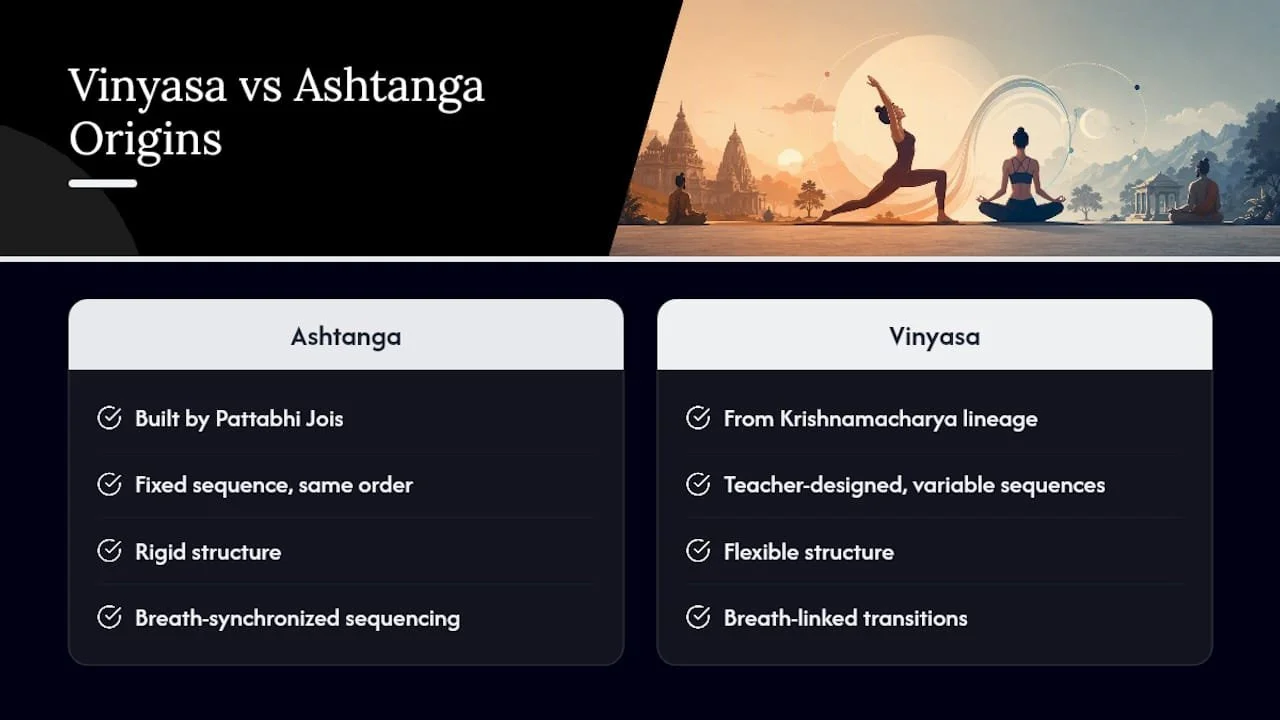
Vinyasa's roots trace back to Tirumalai Krishnamacharya, who developed breath-synchronized sequencing in southern India in the 1930s. One of his students, Pattabhi Jois, built on that foundation to create Ashtanga yoga, a system of fixed sequences performed in the same order every time. Modern Vinyasa grew out of that lineage but cut the cord to Ashtanga's rigid structure, letting teachers design their own sequences while keeping the breath-linked transitions at the core.
That branching explains a lot about why Vinyasa classes feel so different from studio to studio. Ashtanga gives you consistency: the same sequence, session after session. Vinyasa gives you variety, because the historical term itself carries two related meanings: one referring to the deliberate placement or sequencing of postures, and another describing the stages within a single asana as you move into and out of it.
Vinyasa, in its original Sanskrit sense, describes a sequence that is placed or arranged with intention. The word points to structure and stages, not to one fixed pose or one fixed class.
Krishnamacharya's influence didn't stop with Jois. Several other prominent yoga lineages, including styles developed decades later, cite him as a foundational figure, which is part of why his name still comes up in teacher trainings worldwide.
What Are the Main Styles of Vinyasa Yoga?
Once you start browsing class schedules, you'll run into half a dozen names that all fall under the Vinyasa umbrella but emphasize different things. Knowing the differences saves you from walking into a heated, hour-long power class when what you actually wanted was a gentle alignment-focused flow.
Vinyasa Flow: the general, teacher-designed version. Sequencing changes week to week, pace is moderate, and this is the most common entry point for beginners.
Ashtanga: the original fixed-sequence system from Pattabhi Jois. Same postures, same order, every class. Demanding and repetitive in the best way if you like structure.
Power Yoga: a fitness-driven descendant of Ashtanga, built for strength and cardio rather than tradition. Expect faster pacing and less alignment cueing.
Baptiste Yoga: developed by Baron Baptiste, a heated, athletic style that borrows Power Yoga's intensity but adds its own sequencing philosophy and personal-development framing.
Hot Vinyasa: any Vinyasa class taught in a heated room, usually 90 to 105 degrees Fahrenheit, which increases sweat and perceived intensity without necessarily changing the sequence itself.
Jivamukti Yoga: blends Vinyasa-style movement with chanting, scripture study, and ethical teachings; more spiritually oriented than a typical gym-adjacent flow class.
Prana Flow: a globally influenced style developed by Shiva Rea, known for musicality and fluid, dance-like transitions between poses.
PointDetailsVinyasa FlowBest general entry point, sequencing varies by teacher and class.AshtangaFixed sequence practiced in the same order every session.Power Yoga / BaptisteFaster, strength and cardio focused, often heated.Jivamukti / Prana FlowAdds spiritual or musical elements to the same breath-led structure.
If your goal is strength, look for Power or Baptiste. If you want alignment cues and a gentler pace, Vinyasa Flow or a slow flow class fits better. If meditation and philosophy interest you as much as the physical practice, Jivamukti is worth trying at least once.
What Does a Typical Vinyasa Class Look Like?
A standard 60-minute Vinyasa class follows a fairly predictable arc, even though the specific poses change from teacher to teacher. Here's the general shape you can expect:
0 to 10 minutes: Centering and warm-up. Seated breathing, gentle spinal movement, easing into the body.
10 to 20 minutes: Sun Salutations. Several rounds of Surya Namaskar build heat and rehearse the breath-to-movement pattern you'll use all class.
20 to 40 minutes: Standing flows. Balancing poses, lunges, and warrior variations, usually the longest and most varied segment.
40 to 50 minutes: Peak work. This is where the class builds toward its most challenging pose or sequence, often floor-based strength or backbend work.
50 to 60 minutes: Cooldown and savasana. Gentle stretching followed by several minutes lying still.
Teachers pace the room with cueing like "inhale to rise" or "exhale to fold," and breath counts help everyone move together even in a packed studio. You'll also hear "take a vinyasa" at transition points, your cue to run through the Plank, Chaturanga, Up Dog, Down Dog sequence or skip it if you need rest.
Before you show up, a few practical basics help:
Wear fitted, stretchy clothing; loose shirts flip over your head during inversions and forward folds.
Bring a water bottle and a towel, especially for hot Vinyasa.
Arrive 10 minutes early if it's your first class so you can grab a mat near the back and ask the teacher about modifications.
Common Vinyasa Poses and a Sequence to Try
A handful of poses show up in nearly every Vinyasa class, and learning them ahead of time makes your first session far less disorienting. Surya Namaskar (Sun Salutation) is the foundational sequence teachers return to again and again. Within it, you'll repeatedly hit Chaturanga Dandasana (a low push-up hold), Urdhva Mukha Svanasana (Upward-Facing Dog, a backbend with straight arms), and Adho Mukha Svanasana (Downward-Facing Dog, an inverted V shape that doubles as a resting pose).
Here's a simple, breath-linked sequence you can try at home to get a feel for the pattern before your first class:
Inhale, reach arms overhead from standing.
Exhale, fold forward, hands toward the floor.
Inhale, lift halfway, flat back, hands on shins.
Exhale, step or lower back to Plank.
Exhale, lower to the floor (skip Chaturanga entirely, or drop your knees down first).
Inhale, press up into Upward-Facing Dog, or a gentle Cobra with elbows bent if your back isn't ready for a full backbend.
Exhale, push back into Downward-Facing Dog and hold for five breaths.
Inhale, step forward, exhale fold, inhale rise back to standing.
Pro Tip: Skip Chaturanga altogether for your first few weeks. Lower all the way to the floor on your belly instead, then press up to Cobra. Your shoulders build the strength for a full Chaturanga faster when you're not forcing it before you're ready.
Move within a pain-free range throughout, and treat any sharp or pinching sensation as a stop sign rather than something to push through.
What Are the Real Benefits of Vinyasa Yoga?
The physical case for Vinyasa is straightforward: repeated Chaturangas and planks build upper-body and core strength over time, while the constant stretching and range-of-motion work in standing flows improves flexibility in the hips, hamstrings, and shoulders. Because the pace is more continuous than static styles, Vinyasa also pushes your heart rate into a light-to-moderate aerobic zone, somewhere between a slow walk and a jog. It builds real strength and mobility, though it's not a substitute for dedicated endurance training if your main goal is cardiovascular fitness.
The mental side gets less attention but matters just as much. Linking breath to movement produces what's often described as a moving meditation, an effect that helps many practitioners sustain focus and lower stress during practice. Academic reviews of yoga research back this up in broad strokes, showing short-term improvements in mood and stress markers, though study quality and outcomes vary enough that the evidence should be read as suggestive rather than definitive.
Builds strength through repeated bodyweight work like planks and Chaturanga.
Improves flexibility and joint range of motion across the hips, spine, and shoulders.
Raises heart rate into a light-to-moderate aerobic zone, more demanding than restorative styles.
Supports stress regulation through breath-paced, meditative movement.
None of this means Vinyasa replaces strength training or cardio work entirely. Think of it as a strong complement: a practice that builds functional strength, mobility, and a calmer nervous system, without needing a gym membership on top of it.
Who Should Be Careful With Vinyasa Yoga?
The most common injury sites in Vinyasa are wrists, shoulders, and the low back, usually from repeated Chaturanga with poor form, over-arching in backbends, or bearing weight incorrectly in Plank. None of these are reasons to avoid the practice; they're reasons to modify early rather than after something starts hurting.
Practical fixes go a long way: drop your knees for Chaturanga, skip vinyasas altogether when you're tired, choose a slow flow class over an open-level one while you're still learning alignment, and ask your teacher directly for cues if a pose feels off. Readers managing joint issues or looking into other low-impact modalities may also find it useful to check guidance on exercise contraindications before adding new equipment-based routines alongside their yoga practice.
If you're recovering from recent surgery, managing uncontrolled high blood pressure, or pregnant, talk to a clinician before starting and consider a gentler style until you get clearance for more dynamic movement.
Modifications aren't a downgrade. They're what let you build strength safely instead of powering through pain and losing weeks of practice to an avoidable injury.
How Should Beginners Start Practicing Vinyasa Yoga?
Start by searching class schedules for the words "slow flow," "vinyasa basics," or "level 1." Skip open-level or power classes for your first month; they move fast and assume you already know the pose names and transitions.
Book your first class as a slow flow or beginner-labeled session, not an open-level flow.
Aim for two to three classes a week for your first month to build familiarity without overtraining.
Arrive early and tell the teacher it's your first Vinyasa class, so they know to watch your form.
Use modifications freely for the first several sessions rather than chasing full expression of every pose.
Reassess after four weeks and consider a faster-paced class once the sequences feel familiar.
A realistic starter plan over two weeks looks like this: three slow flow classes in week one, focusing purely on learning the Sun Salutation pattern and breath cues, then three classes in week two, adding one moderate-paced flow if the first week felt manageable. It's completely normal for the first three or four sessions to feel confusing, like everyone else in the room got a memo you missed. They didn't. They just showed up a few more times than you have so far.
Don't compare your pace to the person next to you; sequencing familiarity comes with repetition, not talent.
Ask the teacher to demo a pose if a verbal cue doesn't click. Most will happily pause for a second.
Bring a notebook mentally: notice which cues confused you so you can ask about them after class.
Vinyasa Terms and Breath Cues You'll Hear in Class
Walking into your first class with a working vocabulary makes the whole experience less intimidating. Here's a quick glossary:
Vinyasa: breath-linked movement, both the general class style and the specific Plank to Chaturanga to Up Dog to Down Dog transition.
Flow: another word for a Vinyasa-style sequence, often used interchangeably with "vinyasa class."
Surya Namaskar (Sun Salutation): the repeated foundational sequence used to build heat early in class.
Chaturanga Dandasana: the low plank hold, often modified with knees down.
Urdhva Mukha Svanasana: Upward-Facing Dog, a backbend with straight arms and lifted thighs.
Adho Mukha Svanasana: Downward-Facing Dog, an inverted V used as both a pose and a resting position.
"Take a vinyasa": the teacher's cue to run the transition sequence between postures.
For breath cues, the basic rule holds throughout class: inhale to lift or lengthen, exhale to fold or lower. Teachers often count breaths aloud ("inhale, one, two, exhale, one, two") to help a full room stay synchronized. If you lose the count, don't panic; breathe at your own pace and rejoin the group rhythm whenever you catch up. Working with breath and attention training outside of class can also make these cues feel more familiar before you ever step on a mat.
What I Wish Every New Student Knew
Most beginners spend their first few classes trying to make their pose look like the person's on the next mat. That's backward. The breath is the actual practice; the shape of the pose is secondary and will improve on its own with repetition. Watch students who've been coming for a year, and the thing that stands out isn't how deep their backbend is, it's how unbothered they look moving through a tricky transition. That calm comes from breath control, not flexibility.
If you take one thing from your first month of Vinyasa, let it be this: match your breath to the cue, even if that means your Down Dog looks nothing like the demonstration. The rest sorts itself out with time on the mat.
Try Your First Vinyasa Class at Amrita Yoga & Wellness
Amrita Yoga & Wellness runs beginner-friendly Vinyasa classes in Philadelphia designed for exactly the questions this article just answered, so you walk in already knowing what "take a vinyasa" means instead of guessing.
An intro class typically runs for roughly an hour and follows the warm-up-to-savasana sequence outlined above, with modifications offered for wrists, shoulders, and lower backs. Here's what to know before booking:
Bring a mat if you have one, or use a studio mat for your first visit.
Wear fitted, stretchy clothing you can move in comfortably.
Drop-in options are available if you're not ready to commit to a membership yet.
Beginner and slow flow labels appear directly on the class schedule so you know what you're signing up for.
If a moving meditation with a spiritual edge sounds interesting alongside your physical practice, the studio also hosts tarot reading sessions worth exploring once you've settled into a regular yoga rhythm. Check the current class times and book your first slow flow session directly through the studio's schedule.
Frequently Asked Questions
What is vinyasa yoga exactly? Vinyasa yoga is a flowing, breath-linked style of modern yoga where one movement matches one inhale or exhale, creating continuous sequences rather than long, static holds.
What is a vinyasa flow class like for a total beginner? Expect nonstop movement, several rounds of Sun Salutations early on, and cues like "take a vinyasa" between poses. Slow flow and vinyasa basics classes pace this more gently than open-level ones.
Vinyasa vs Hatha yoga: what's the real difference? Hatha holds poses for several breaths at a time, emphasizing stillness. Vinyasa links poses into continuous motion paced by breath, making it generally more physically demanding.
How do I do vinyasa yoga safely as a beginner? Choose slow flow or level 1 classes, modify Chaturanga with knees down, skip vinyasa transitions when tired, and ask your teacher for alignment cues rather than guessing.
What are the main benefits of vinyasa yoga? Strength from repeated planks and Chaturangas, improved flexibility, a light-to-moderate aerobic workout, and stress reduction through breath-paced, meditative movement.
Sources
Recommended

15 Pilates Examples From Beginner Moves to Advanced Work
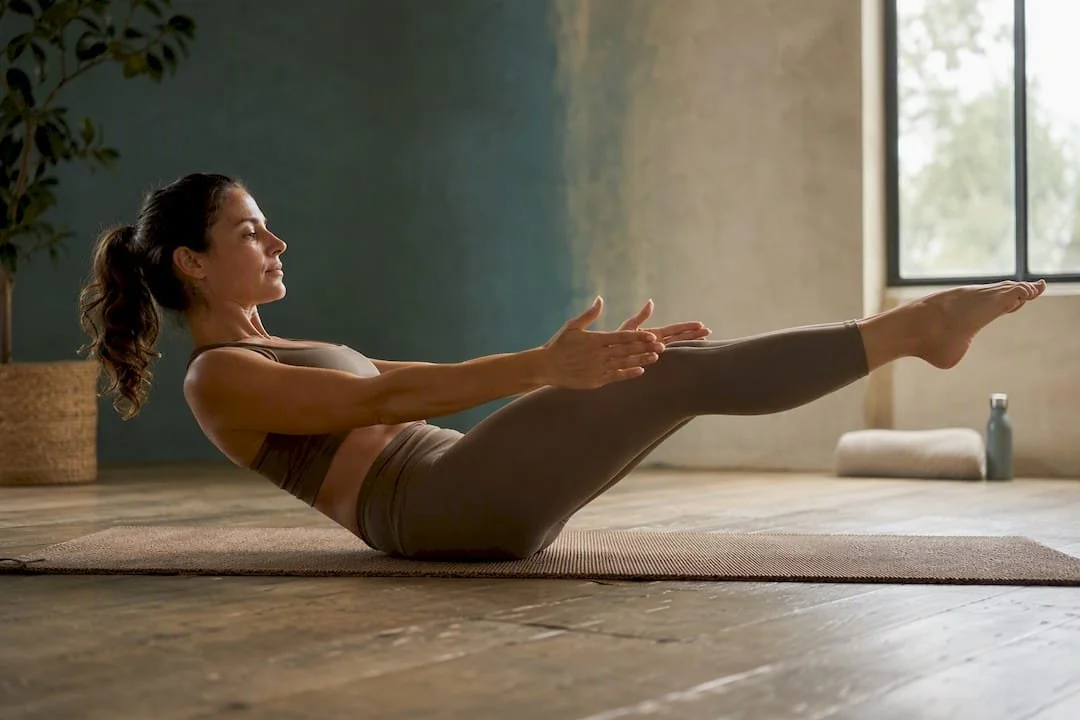
The best starting set is a 15-move, core-focused Pilates routine that blends breathing work, spinal mobility, and full-body strength, and works whether you're brand new to a mat or years into reformer classes. Joseph Pilates built this system around what he called the "powerhouse," the deep core and back muscles that stabilize everything else you do, and modern systematic reviews indexed at NCBI back up what he saw in practice: real gains in core strength, balance, and function.
If you only have ten minutes, start with these six: the Hundred, Shoulder Bridge, Single-Leg Stretch, Plank, Roll Down, and Toe Taps. Each one shows up in the most-cited beginner Pilates lists for a reason: they teach breath, alignment, and core control before anything harder. At Amrita Yoga & Wellness in Philadelphia, our mat classes build from exactly this sequence before students move to group reformer work.
Key Takeaways
Fifteen core-focused Pilates moves, practiced with exhale-driven breath and pelvic neutral alignment, build strength and flexibility for beginners through advanced practitioners.
| Point | Details |
|---|---|
| Start with six moves | The Hundred, Shoulder Bridge, Single-Leg Stretch, Plank, Roll Down, and Toe Taps cover the basics fastest. |
| Breath drives the exercise | Exhale fully during the hardest phase of each move to activate deep core muscles. |
| Match reps to level | Beginners use 6 to 8 reps or 30-second holds; advanced practitioners push to 12 to 15 reps or 60-second holds. |
| Progress over four to six weeks | Move from Breathing and the Hundred toward Teaser and the Side Kick Series in stages. |
| Get hands-on correction | Amrita Yoga & Wellness offers mat, reformer, and private Pilates sessions in Philadelphia to fix form early. |
Table of Contents
Pilates Examples: A Quick 15-Move Reference
Here's the full set, ordered easiest to hardest, so you can scan it and decide where to start.
Breathing (lateral rib breath) — teaches the exhale that drives every other move.
The Hundred — breath and core endurance, the classic warm-up.
Shoulder Bridge — glutes, hamstrings, and lower-back activation.
Toe Taps — gentle core control for total beginners.
Single-Leg Stretch — deep abdominal work with hip flexor coordination.
Roll Down — spinal articulation and hamstring flexibility.
Plank — full-body isometric strength.
Leg Lifts (side-lying) — hip and outer thigh strength.
Crisscross — obliques and rotational core control.
Swimming — posterior chain endurance and coordination.
Spine Stretch Forward — flexibility through the back and hamstrings.
Saw — rotation plus a deeper hamstring stretch.
Double-Leg Stretch — advanced core and limb coordination.
Teaser — advanced full-body balance and abdominal strength.
Side Kick Series — hip stability, often progressed on a reformer or with a magic circle.
A magic circle or light resistance band shows up most often in the Leg Lifts, Side Kick Series, and Double-Leg Stretch, once you're ready to add resistance instead of just body weight.
Core Pilates Fundamentals Before You Start
Every one of these exercises depends on two things: breath and pelvic position. Get those wrong and you're just doing crunches with better branding.
Breath comes first. Pilates uses lateral rib breathing: inhale to expand the ribs sideways, then exhale fully while drawing the navel toward the spine. That exhale is what actually switches on your deep core, according to instructor-taught cueing methods used across most mat programs. Most beginners breathe backward at first, holding the belly stiff on the inhale instead of the exhale. Fix that before you worry about reps.
Pelvic neutral means your lower back keeps its natural, slight curve, not flattened into the mat and not arched off it. Check it by placing a hand under your low back before you start; you should feel a small gap, not a flat plank of spine.
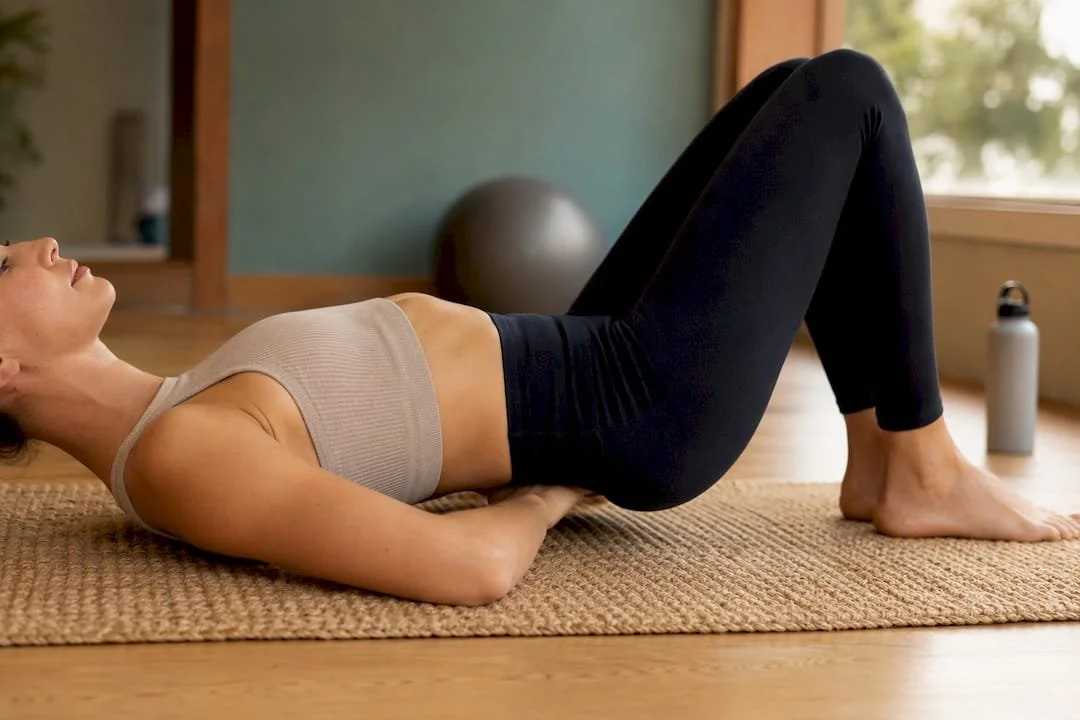
Pro Tip: Lock your exhale to the hardest part of any move. On the Hundred, exhale as your arms pump; on the Plank, exhale as you hold. The breath IS the exercise, not a soundtrack to it.
Session structure scales with experience:
| Level | Reps/Hold Time | Session Length |
|---|---|---|
| Beginner | 6–8 reps or 30-second holds | 15–20 minutes, 3×/week |
| Intermediate | 10–12 reps or 45-second holds | 30 minutes, 3–4×/week |
| Advanced | 12–15 reps or 60-second holds | 45 minutes, 4–5×/week |
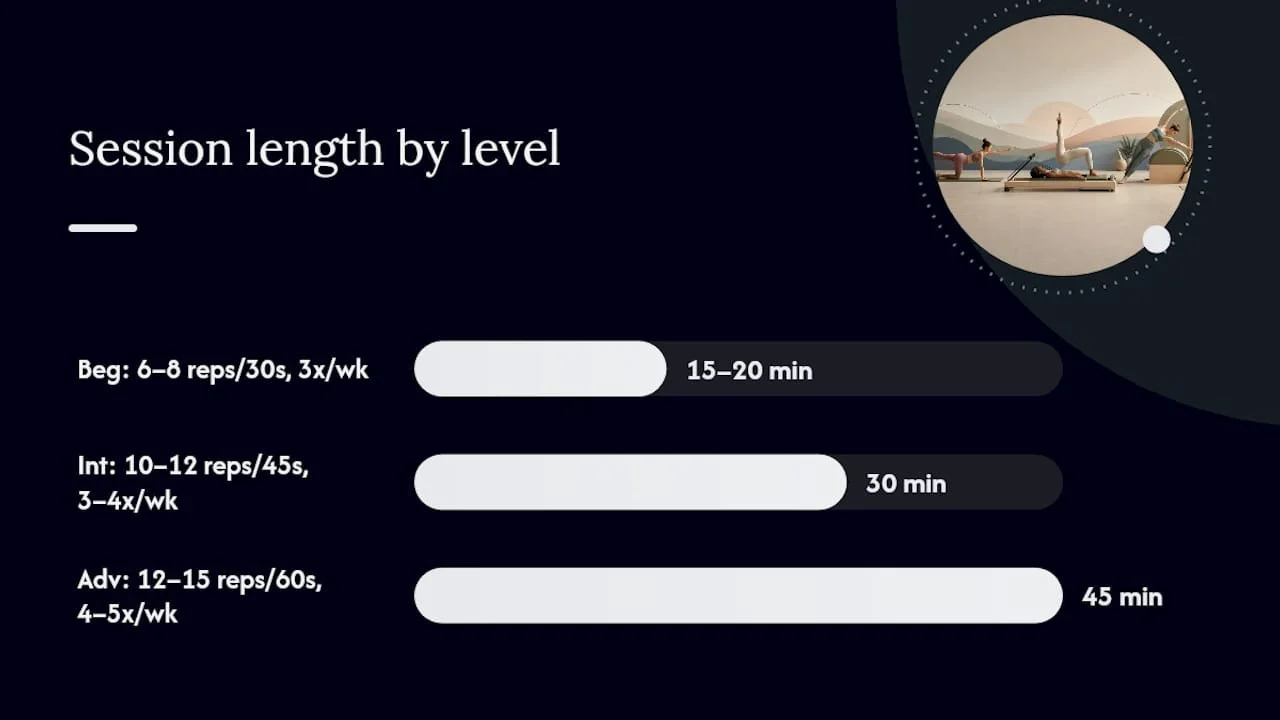
Mat work builds the control; a reformer adds adjustable resistance and spring-loaded support once your form is solid. Warm up with two minutes of the Breathing drill plus gentle Roll Downs, and cool down with the Spine Stretch Forward and a static hamstring stretch.
Step-by-Step Pilates Exercise Examples
1. Lateral Rib Breathing
Lie on your back, knees bent, hands on your ribcage. Inhale through the nose, feeling your ribs expand sideways into your hands. Exhale through the mouth, drawing ribs down and navel toward the spine. Repeat for 8 to 10 breaths.
Beginner: Do this seated in a chair if lying down feels awkward.
Advanced: Add the breath pattern to a standing squat hold.
Common mistake: Breathing into the belly instead of the ribs. Cue: "Ribs like an umbrella opening and closing."
2. The Hundred
Lie on your back, legs in tabletop or extended to 45 degrees, head and shoulders lifted, arms pumping six inches up and down. Inhale for five pumps, exhale for five, repeat for 100 total pumps (10 full breath cycles).
Beginner: Keep your head down and knees bent at 90 degrees.
Advanced: Extend legs fully toward the ceiling or lower toward the mat.
Common mistake: Straining the neck. Cue: "Lift from the chest, not the chin."
3. Shoulder Bridge
Lie on your back, knees bent, feet flat and hip-width apart. Press through your heels, lift your hips into a straight line from knees to shoulders, hold for 20 to 30 seconds, then lower one vertebra at a time.
Beginner: Hold for 10 seconds and rest between reps.
Advanced: March one knee toward your chest while holding the bridge.
Common mistake: Overarching the lower back. Cue: "Squeeze the glutes before you lift."
4. Toe Taps
Lie on your back with knees bent in tabletop position, shins parallel to the ceiling. Lower one foot to tap the mat, exhale to return to tabletop, alternate sides for 10 to 12 reps per side.
Beginner: Keep the movement small and controlled.
Advanced: Lower both feet at once without letting the low back lift.
Common mistake: Letting the ribs pop up. Cue: "Zip the ribs down as the foot lowers."
5. Single-Leg Stretch
From the Hundred setup, hug one knee to your chest while the opposite leg extends at a 45-degree angle. Switch legs with an exhale on each switch, for 10 reps per side, per SELF's beginner core sequence.
Beginner: Keep the extended leg higher, closer to 60 degrees.
Advanced: Lower the extended leg closer to the mat.
Common mistake: Losing the head lift. Cue: "Nose to knee, not chin to chest."
6. Roll Down
Stand tall, then exhale as you round forward one vertebra at a time, reaching toward the floor. Inhale at the bottom, then roll back up to standing, stacking the spine.
Beginner: Bend the knees generously and use it purely as a warm-up.
Advanced: Keep the legs straight and pause halfway for control.
Common mistake: Rushing the roll. Cue: "Peel the spine off the wall like tape."
7. Plank
From hands or forearms, extend the legs behind you, body in one straight line from head to heels, core braced, glutes engaged. Hold 20 to 60 seconds depending on level.
Beginner: Drop to knees, keeping hips in line with shoulders.
Advanced: Add a shoulder tap or a slow leg lift.
Common mistake: Sagging hips. Cue: "Pull your belly button toward your spine."
8. Side-Lying Leg Lifts
Lie on your side, legs stacked and slightly forward of your hips, head resting on your arm. Lift the top leg to hip height and lower with control, 10 to 12 reps per side.
Beginner: Bend the bottom knee for stability.
Advanced: Add a resistance band around the ankles or a magic circle between the legs.
Common mistake: Swinging the leg using momentum. Cue: "Lift like you're pouring water off your heel, slow and even."
9. Crisscross
From the Hundred position, twist your upper body to bring one elbow toward the opposite knee while the other leg extends. Alternate sides for 10 reps per side.
Beginner: Keep the extended leg higher and the twist smaller.
Advanced: Slow the tempo to three seconds per side for more oblique burn.
Common mistake: Pulling on the neck with the hands. Cue: "Hands are a hammock, not a crane."
10. Swimming
Lie face down, arms extended forward, legs extended back. Lift opposite arm and leg simultaneously, alternating in a swimming motion for 20 to 30 seconds.
Beginner: Lift just the arms first, then just the legs, before combining.
Advanced: Increase speed while keeping the lower back stable.
Common mistake: Hyperextending the neck. Cue: "Eyes down at the mat, not forward."
11. Spine Stretch Forward
Sit tall, legs extended slightly wider than hip-width, arms reaching forward. Exhale as you round forward over your legs, reaching toward your toes, then stack back up to sitting tall.
Beginner: Bend the knees slightly if hamstrings are tight.
Advanced: Flex the feet and reach further with straight legs.
Common mistake: Collapsing through the chest. Cue: "Round like you're curling over a beach ball."
12. Saw
Sit tall with legs wide, arms out to the sides. Rotate your torso, then reach one hand past the opposite foot, exhaling fully at the stretch, as if sawing off your little toe. Alternate sides.
Beginner: Keep knees slightly bent and the reach modest.
Advanced: Hold each rotation for three extra breaths.
Common mistake: Rotating the hips instead of the spine. Cue: "Hips stay square, ribs do the twisting."
13. Double-Leg Stretch
From tabletop with head lifted, extend both arms and both legs away from your body at once, then circle the arms back to hug the knees. Repeat for 8 to 10 reps.
Beginner: Keep legs bent at a higher angle and arms shorter.
Advanced: Extend legs closer to the mat and arms fully overhead.
Common mistake: Letting the back arch off the mat. Cue: "Press your low back into the floor before you reach."
14. Teaser
Lie flat, legs extended, arms overhead. Exhale and roll up simultaneously, lifting the torso and legs into a V shape, balancing on the sit bones, then roll back down with control.
Beginner: Practice with knees bent and feet on the floor for support.
Advanced: Hold the full V for 5 to 10 seconds before rolling down.
Common mistake: Using momentum to fling up. Cue: "Roll up like a coin stacking, not a catapult."
15. Side Kick Series
Lie on your side in a long line, head supported, top leg lifted to hip height. Swing the leg forward and back in controlled kicks, 10 reps, then switch sides.
Beginner: Keep kicks small and slow.
Advanced: Add a magic circle between the ankles for resistance, or move this drill to a reformer for added spring tension.
Common mistake: Rocking the pelvis with each kick. Cue: "Hips stacked like plates, they don't move."
Pro Tip: If you can't feel a muscle working after three attempts at a move, you're likely rushing the exhale. Slow the breath down before you add reps.
Safety, Progression, and When to Get an Instructor's Eyes on You
A sensible progression runs four to six weeks. Weeks one and two: master Breathing, the Hundred, Shoulder Bridge, and Toe Taps at beginner reps. Weeks three and four: add Single-Leg Stretch, Plank, and Crisscross, still at moderate holds. Weeks five and six: layer in Teaser, Double-Leg Stretch, and the Side Kick Series, pushing toward advanced rep ranges.
Watch for these signs that a move needs modifying or pausing entirely:
Sharp, localized joint pain (different from normal muscle fatigue).
Numbness, tingling, or shooting pain down an arm or leg.
Lower back pain that increases rather than eases as you warm up.
Dizziness or shortness of breath during breathing drills.
Clinical reviews on Pilates for pain and physical function support its use in rehab settings, but that same research consistently notes supervised instruction improves outcomes and lowers injury risk, especially for anyone managing a prior injury or a bone health condition. If you're managing osteoporosis or low bone density, some spinal flexion moves like the Roll Down or Saw may need adjusting; guidelines on safe exercise choices for that population are worth a look before you start.
Instructors at Amrita Yoga & Wellness see the same pattern in almost every new mat student: the exercises they think are "too easy" are the ones where their form quietly falls apart first. A hands-on correction in the first few classes fixes habits that would otherwise take months to notice alone.
Pro Tip: Book one private session before your first group mat class if you're recovering from any injury. A single hour of one-on-one cueing on breath and pelvic neutral saves weeks of practicing the wrong pattern.
What Instructors Wish Beginners Knew Sooner
Most new students obsess over rep count when the real skill is patience with the exhale. Consistency beats intensity here. Three imperfect 20-minute sessions a week build more real core strength than one exhausting hour that leaves your form falling apart by rep eight.
If you want that hands-on correction early, Amrita Yoga & Wellness's mat and reformer classes are built exactly for that first stretch of learning.
Practice These Moves in a Philadelphia Studio Class
Reading step-by-step cues gets you most of the way there, but Pilates rewards a trained eye watching your pelvis, ribs, and breath in real time. Amrita Yoga & Wellness runs mat Pilates classes for exactly the 15 moves above, plus group reformer sessions once you're ready to add spring resistance to moves like the Side Kick Series or Double-Leg Stretch.
Private sessions are worth the investment if you're modifying for an injury, tight hips, or a bone health concern, since a one-on-one hour lets an instructor correct your pelvic neutral and breath pattern before those habits harden. Between classes, students often round out their practice with a tarot reading or one of the studio's other wellness workshops, a nice way to slow down between physical sessions. Ready to put a face to the cues? Book a tarot reading or explore other Amrita Yoga & Wellness offerings to see the full studio schedule and reserve your spot in an upcoming class.
Further Pilates Reading and Studio Resources
Pilates for Beginners: A Complete Guide for equipment basics and starting points.
15 Pilates Exercises to Strengthen Your Core for the source list behind this routine.
Pilates Core Exercises for rep-range guidance.
NCBI reviews on Pilates and physical function for the clinical evidence base.
For studio-specific classes and reformer breakdowns, browse Amrita Yoga & Wellness's Pilates blog posts.
Frequently Asked Questions
What are some good pilates examples for absolute beginners? The Hundred, Shoulder Bridge, Toe Taps, and Roll Down are the four most commonly recommended starting moves, since they teach breath and pelvic control before adding rotation or balance demands.
How many reps should a beginner do per Pilates exercise? Most beginner routines use 6 to 8 reps or 30-second holds per move, per SELF's beginner sequencing, progressing to 10 to 12 reps as control improves.
Do I need a reformer to practice these Pilates examples? No. All 15 moves work on a mat with no equipment. A reformer adds adjustable resistance once your form is solid, but it's an addition, not a requirement.
Is Pilates safe if I have a back injury or osteoporosis? Many moves adapt well, but some spinal flexion exercises need modification. Check safe exercise guidance for bone health and consider a private session so an instructor can adjust the routine to your specific condition.
How often should I practice Pilates examples each week? Three sessions a week of 15 to 35 minutes builds noticeable core strength within four to six weeks, based on the progression pattern most mat programs follow.
Sources
Recommended

Yoga Mat Set for Home Practice: Studio Recommendation
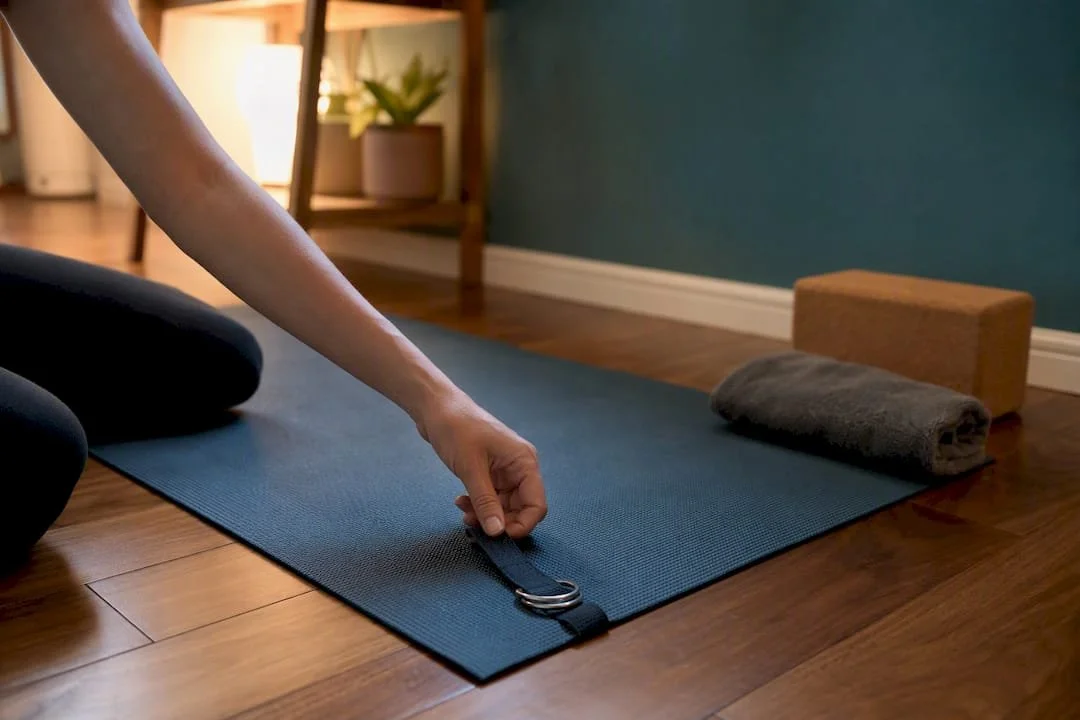
For most buyers who want one ready-to-use bundle instead of piecing together gear from four different stores, the Amrita Yoga & Wellness Complete Yoga Mat Set is the strongest balance of grip, cushioning, and useful accessories. It's what our teachers hand new students in Philadelphia classes, and it holds up the same way at home.
Grip and cushioning: tested in our own hot and flow classes, not just a warehouse spec sheet.
Real accessories, not filler: blocks, strap, and towel that actually get used, not shrink-wrapped extras that end up in a closet.
If you only travel with a mat and never touch blocks or straps, a slim rollable travel mat alone will serve you better than a full set. Tight budget with no accessory needs? Skip the bundle and buy a single quality mat instead.
Key Takeaways
A complete yoga mat set works best when the mat's material matches your practice heat and sweat level, and the included accessories are built to survive daily use, not just look good in photos.
| Point | Details |
|---|---|
| Match material to heat | Cork and open-cell rubber grip better wet; PVC and TPE suit dry, moderate practice. |
| Thickness balances comfort and stability | Stick to 4 to 6 mm unless you're doing pure restorative or travel-only practice. |
| Check accessory build quality | Metal D-ring straps and cork or EVA blocks outlast plastic buckles and foam. |
| Care routine extends lifespan | Air-dry fully, avoid folding rubber mats, and skip harsh soap on natural rubber. |
| Studio-tested bundle | The Amrita Yoga & Wellness Complete Yoga Mat Set pairs studio-vetted grip and cushioning with accessories built to outlast a semester of regular use. |
Table of Contents
What Comes in a Complete Yoga Mat Set?
A worthwhile bundle isn't just a mat with stuff taped to it. The standard components, and why each one earns its place:
The mat — your primary surface, judged on grip, cushioning, and material.
Two blocks — bring the floor closer for tight hamstrings, prop up hands in standing poses, and support restorative holds.
A strap — extends your reach for hamstring and shoulder stretches you can't yet do hands-free.
A towel — critical for hot or sweaty practice, where a mat alone gets slick fast.
A carry bag or strap — turns a floppy mat into something you can sling over a shoulder and take to a studio.
Some sets add a cleaning spray or an alignment guide printed on the mat surface.
Alignment markings genuinely help beginners place hands and feet without guesswork, though experienced practitioners often ignore them entirely.
Pro Tip: Check the strap buckle before anything else. A metal D-ring buckle outlasts a plastic cinch clip by years, and it's the first accessory to break in a cheap bundle. Cork blocks also outlast foam, and a fast-dry microfiber towel beats cotton for hot classes.
How Do You Choose the Right Yoga Mat Set?
Specs only matter if you translate them into what happens under your hands and feet. Here's the framework we use with new students.
Material first. Natural rubber grips well and lasts, but it's heavier and carries a rubber smell at first. TPE is lighter and odor-free but wears faster. PVC is the most durable and budget-friendly option, though it's the least eco-friendly. Cork gets grippier as you sweat, which makes it a smart pick for hot classes without relying on a towel.
Thickness by practice type. A mat between 4 and 6 millimeters balances knee comfort with the ground feel you need for standing balance poses. Go thinner for travel, thicker only for restorative work, since very cushioned mats reduce the stability feedback your feet need in poses like tree or warrior three.
Grip under sweat. For hot or fast-moving practice, look for open-cell or micro-wicking surfaces that improve grip as moisture builds, the same behavior OutdoorGearLab's testing flags in its top picks. A dry-grip textured mat that feels great in a cool room can turn slippery fast once you sweat.
Size and weight. Taller practitioners need a longer mat (most standard mats run short at 68 inches), and if you're commuting with it daily, weight matters more than you'd think.
Price band. Starter bundles typically run budget to mid-range and use PVC or TPE. Premium sets lean on natural rubber or cork and cost more, but Wirecutter's testing notes that mid-tier and premium materials tend to hold up and travel better over time than the cheapest options.
Warranty and returns. Check the return window and whether the mat itself carries a defect warranty before you buy, not after it arrives smelling like a tire shop.
Quick comparison checklist while you're scanning product pages:
Material and how it performs wet vs. dry
Thickness in millimeters, matched to your practice style
What accessories are actually included, and their build quality
Warranty length and return policy
Total weight and portability for your commute
Our own tips for choosing good yoga mats walk through these same trade-offs in more depth if you want to go deeper before buying.
Which Yoga Mat Set Fits Your Practice?
Not every buyer needs the same bundle. A hot yoga regular and a once-a-week beginner are shopping for different things, even if they land on the same product page.
If you fall between two rows, weigh grip and thickness first. Accessories are easy to swap later; the mat itself is the piece you live with.
How Do You Care for a Yoga Mat Set?
A good mat dies early from neglect more often than from actual wear. Wipe it down after every sweaty session, and let it air-dry fully before rolling it back up. Deep clean natural rubber with a diluted vinegar solution rather than harsh soap, which breaks down the surface over time. TPE and PVC tolerate mild soap and water fine, but skip anything alcohol-based on either.
Do: air-dry flat or hung, store away from direct heat, wipe blocks and straps periodically too.
Don't: machine wash a rubber mat, fold it (creases become permanent), or leave it balled up in a hot car trunk.
Natural rubber and dense closed-cell mats hold up well across years of regular use, while thinner open-cell or budget mats tend to show wear sooner under heavy rotation. Watch for flaking edges, permanent creases, or a surface that's gone slick even when dry. That's your sign to replace it.
Why Amrita Yoga & Wellness Recommends This Set
We didn't build this bundle around a spec sheet. We built it around what actually holds up in our own studio, class after class.
Grip stayed consistent through 90-minute hot classes, where cheaper synthetic mats we've tried get slick by the second sun salutation.
Cushioning held firm under kneeling poses without going soft after a few months of daily use.
The strap's metal buckle and the block density outlasted the foam-and-plastic accessories we've seen fall apart in a single semester of teacher training.
Teachers who've handed this set to dozens of new students report the same thing: it's the accessories, not just the mat, that get used week after week, and that use adds up over a season of classes.
The bundle spec sheet, if you're comparing it to anything else on the shelf: a grippy mat built for both dry and sweaty conditions, two supportive blocks, a strap with a metal buckle, a fast-dry towel, and a carry bag sized for a studio commute. Our blog post on top mat picks for Philadelphia yogis goes deeper into how we landed on this exact combination.
A Studio Note on Who This Set Helps Most
We built this recommendation from what we watch happen on our own studio floor, not a lab. It fits best for someone starting a home practice, commuting to weekly classes, or restarting after time off and wanting one bundle that just works from day one.
Where to Buy the Complete Yoga Mat Set
There are other ways to piece together a mat and accessories. You can buy a mat here, blocks there, and hope the strap buckle holds. Amrita Yoga & Wellness skips that scavenger hunt: the Complete Yoga Mat Set puts studio-tested gear in one order, so you're not gambling on whether a $12 strap survives your first month of hamstring stretches.
You can pick up the set in-studio if you're already in Philadelphia for a class, or order online for shipping. Bundle pricing beats buying each accessory separately, and returns follow our standard studio policy, so check the product page for current shipping windows before you order. If you're curious about our broader class offerings while you're there, our tarot readings page is one of several ways to explore what else the studio offers beyond the mat itself. Order the set now and have it ready before your next class.
Where to Read More
OutdoorGearLab's yoga mat testing for grip and durability data across mat types.
Wirecutter's yoga mat reviews for long-term material trade-offs.
Our own studio picks for Philadelphia yogis and Unikiff's equipment guide for further accessory reading.
Sources
Recommended

Hot Yoga What to Wear: Comfortable, Non-Slip Outfits
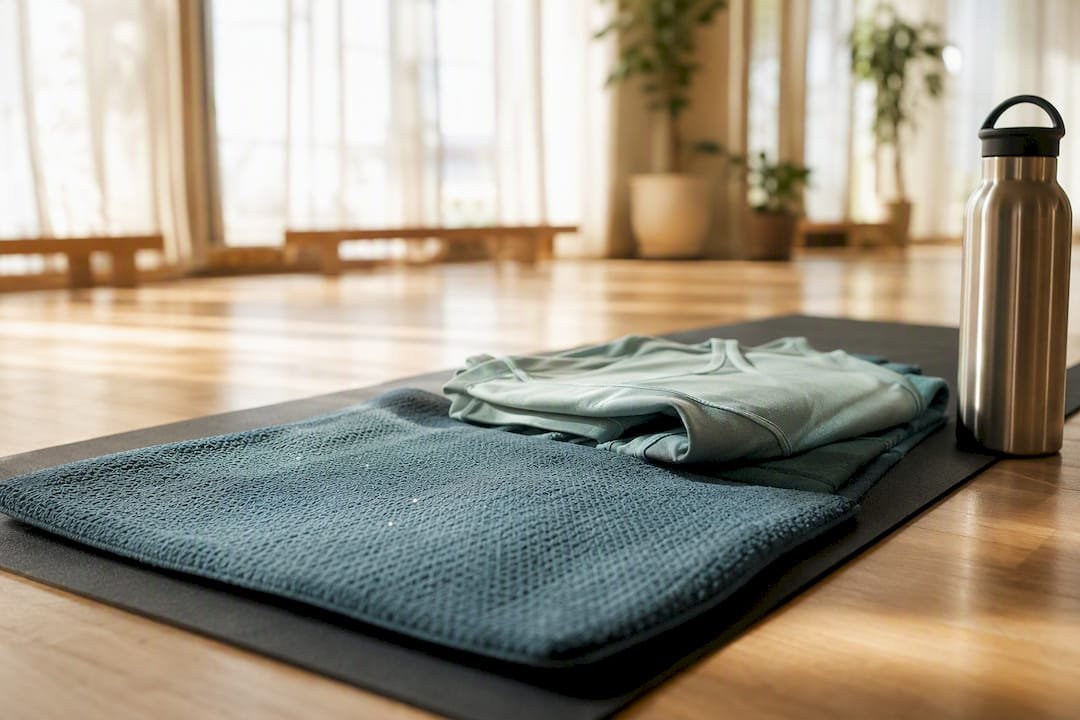
Wear fitted, moisture-wicking layers, as little as you're comfortable in, and skip anything cotton. Bring a full-length mat towel and a large water bottle, since both matter as much as the outfit itself.
Choose synthetic, sweat-wicking fabric over cotton
Keep everything fitted, not baggy
Pack a mat towel for grip once sweat starts pooling
Bring more water than you think you'll need
Key Takeaways
The right hot-yoga outfit is fitted, moisture-wicking, and minimal, paired with a mat towel and enough water to last the full class.
| Point | Details |
|---|---|
| Skip cotton entirely | Cotton absorbs sweat, gets heavy, and chafes; choose polyester or nylon blends with spandex instead. |
| Fit beats coverage | High waistbands and flat seams stay put through folds and inversions better than loose or low-rise cuts. |
| Bring a mat towel | A full-length towel restores grip once a standard mat gets slippery with sweat. |
| Pace and hydrate | Pre-hydrate all day, bring at least 24 ounces of water, and modify poses when needed. |
| Amrita supports comfort | Amrita Yoga & Wellness requires a mat towel and keeps heated rooms in a consistent temperature range for first-time comfort. |
Table of Contents
Why Fabric Choice and Fit Change Everything in a Heated Room
In a room running 90 to 105 degrees Fahrenheit, sweat doesn't just make you damp. It soaks straight through fabric within the first fifteen minutes, and what happens next depends entirely on what you're wearing. Cotton absorbs that moisture and holds onto it, getting heavier by the minute and clinging to your skin in a way that turns every forward fold into a wrestling match with your own shirt.
Fitted synthetic clothing behaves differently. It stays close to the body through inversions and binds, so nothing shifts or gapes when you're upside down or twisted into a bind. Loose fabric flops, bunches, and drags against your skin during transitions, which creates friction burns you won't notice until the shower stings.
Fast-drying material also keeps your grip intact. A soaked cotton sleeve sliding across your own knee mid pose is how balance gets lost fast.
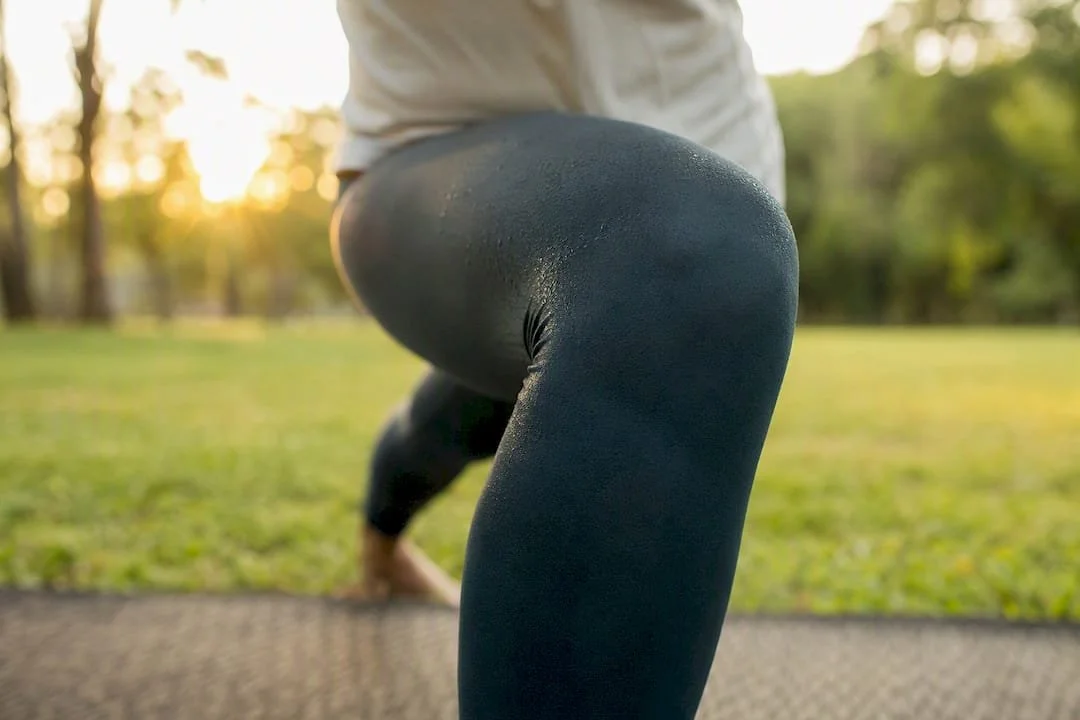
Pro Tip: Before your first class, wet the garment in the sink and do a few squats and forward folds while damp. If it clings, sags, or turns see-through, leave it home.
How to Choose Bottoms: Shorts, Capris, or Leggings
Bottoms make or break a hot class, and the right choice depends on your heat tolerance more than fashion. Shorts dump heat fastest since more skin stays exposed to circulating air. Full-length leggings trap more heat but give your calves and thighs something to grip against when limbs press together in poses like eagle or bound triangle, a tradeoff Adidas highlights as largely a matter of personal preference. Capris sit in the middle, offering a bit of grip at the knee without the full heat load.
Fit details matter more than fabric here. A high waistband stays put through folds and inversions, while low-rise cuts tend to slide and demand constant readjusting, a point Dragonfly's Bikram guide makes repeatedly for beginners. Flat seams at the inseam prevent chafing on longer holds, and anything with visible stitching along the inner thigh is worth trying on before buying.
| Bottom Style | Best For | Watch Out For |
|---|---|---|
| Shorts | Beginners, high heat tolerance, faster cooling | Fabric riding up during binds |
| Capris | Balanced grip and airflow | Bunching at the knee if loose |
| Full leggings | Grip-heavy poses, cooler personal preference | Overheating in advanced heated formats |
- Test any bottom by squatting and folding forward before buying
- Choose darker colors if you're worried about see-through fabric when wet
Tops and Support: Sports Bras, Tanks, and Men's Options
For women, a well-fitted sports bra alone is common in serious hot yoga rooms, and it's worth choosing one built for sweat rather than gym-general use. Heavy padding traps heat against the chest and takes forever to dry, so a thin, compressive style usually wins over a padded one. If you want more coverage, a fitted crop top or racerback tank layered over the bra works fine as long as it stays snug through inversions.
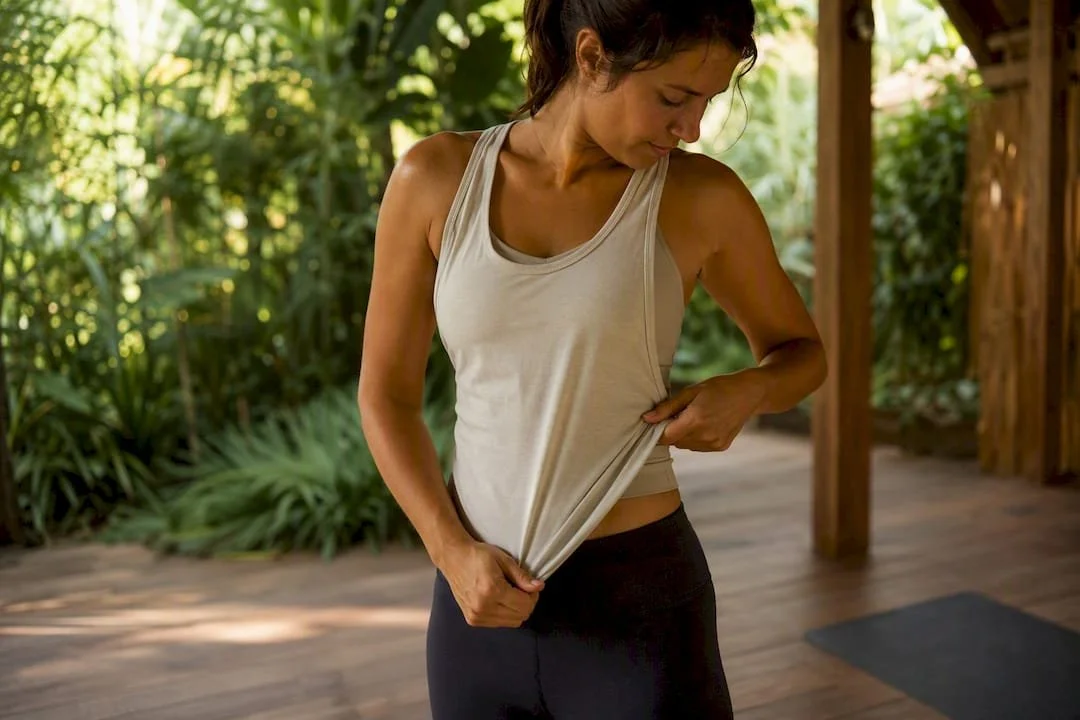
Men generally go shirtless or wear a fitted, lightweight wicking tee. Loose tank tops flap and stick unevenly once they're soaked, which becomes distracting fast in a packed room. Nike's hot-yoga guidance points toward relaxed drawstring shorts paired with minimal, close-fitting tops for exactly this reason.
If modesty matters more than minimal coverage, layer a fitted long-sleeve rash guard style top instead of a loose t-shirt. It stays put and doesn't add the bulk that traps heat.
Pro Tip: If you're new and unsure what's appropriate, arrive in a fitted tank over your sports bra. You can always peel it off mid-class once you see what everyone else is wearing.
Skip anything with thick foam padding
A racerback style prevents strap slippage during arm balances
Rash guard fabric works well for modest coverage without added heat
Technical Fabrics and Features to Prioritize
Look for polyester or nylon blends with a percentage of spandex worked in. That spandex is what makes fabric snap back into shape instead of sagging once it's wet, and it's the difference between leggings that stay opaque during a deep squat and ones that suddenly go see-through. Some brands market dedicated "wicking" lines built specifically for sweat-heavy workouts. A lightweight merino wool top is a niche option some practitioners use in cooler heated rooms, though it's far less common than synthetics.
Flat-lock seams matter more than most shoppers realize. Raised seams rub raw over an hour-long class, especially at the inner thigh and underarm. Compression fits, built-in bra liners, and squat-proof opacity testing (some brands publish this explicitly) are worth checking before you buy anything for regular hot-class use.
On the tag, trust language like "moisture-wicking," "quick-dry," or "performance fabric." Avoid anything listing 100% cotton or heavy cotton-poly blends as the dominant material, since experts consistently flag cotton as the top thing to skip for hot yoga specifically.
Prioritize polyester/nylon with spandex over cotton blends
Check for flat-lock seams on anything you'll wear for a full class
Look for "squat-proof" or opacity-tested claims on leggings
What Not to Wear to Hot Yoga
A few items consistently derail a hot class. Cotton tops that up soaking through in minutes and staying heavy the rest of class. Baggy shorts or tanks that shift, gape, or drag against sweaty skin during transitions. Heavy padded bras that trap heat right where you're already overheating.
Jewelry, especially rings and long necklaces, gets slippery and can catch during poses or slide off entirely. Phones left in pockets are a hazard once fabric goes damp and pockets sag. Brand-new, untested clothing is its own risk since you won't know how it behaves wet until you're mid-class and it's too late to change.
One exception worth flagging: aerial yoga generally calls for more coverage than standard hot yoga, since fabric interacts directly with the silk hammock. Don't assume the same minimal outfit works for every style.
Skip cotton, jewelry, loose gear, and anything you haven't test-worn
Leave phones and keys in a locker, not a pocket
Accessories and Class Essentials
Clothing is half the equation. The other half is gear that keeps you from sliding across your own mat once sweat starts pooling.
A full-length mat towel is close to essential once you're regularly sweating through class, since a standard mat turns dangerously slick without one covering the whole surface. A small hand or face towel handles the sweat dripping into your eyes between poses.
For water, bring an insulated bottle that holds at least 24 ounces, more if your class runs past an hour. Add an electrolyte packet for longer sessions since plain water alone doesn't replace what you're losing.
Mat towel or grippy hot-yoga specific mat surface
Insulated water bottle, minimum 24 ounces
Small face or hand towel
Hair tie or headband
Plastic wet bag for soaked clothes after class
Flip-flops if your studio has a shower
Grip aids matter more than expensive mats; a good towel beats a mediocre mat every time
New students should pack items 1 through 4 at minimum before worrying about extras
Fit Checks, Modesty Hacks, and On-the-Mat Tips
Try this before you ever step into the heated room: fold forward, twist side to side, and reach overhead in whatever you're planning to wear. Anything that gapes, rides up, or feels tight enough to restrict a deep breath will only get worse once it's wet.
For modesty, a high waistband paired with built-in liners handles most concerns without adding bulk. Darker colors hide sweat patterns and reduce see-through risk far better than pastels or white. If you're arriving straight from work, throw a lightweight zip-up over your outfit for the walk in. Just remove it before you're on the mat.
Pro Tip: Instructors often notice that students who stop fidgeting with their waistband by class three usually made one small change: they switched to a high-rise bottom instead of buying a different top.
Do the fold-twist-reach test at home before wearing anything new to class
Choose dark, high-waisted bottoms if modesty is a concern
How to Wash and Care for Hot-Yoga Clothes and Towels
Wash wicking fabric and mat towels in cold water, and skip fabric softener entirely, since it coats synthetic fibers and kills the wicking ability that made them worth buying. Air-dry when possible or use low heat, since high dryer heat breaks down spandex over repeated cycles.
The moment class ends matters too. Rinse sweaty gear in the sink if you can before it sits, or at least toss it straight into a sealed wet bag rather than a closed gym bag, where trapped moisture breeds odor within hours.
Retire leggings once they've gone visibly thin or lost opacity in a squat test, held up to light after a wash. Sports bras lose elasticity faster than leggings do, so check support every few months rather than waiting for visible wear.
Cold wash, no fabric softener, air-dry or low heat only
Rinse or bag sweaty gear immediately, never leave it sealed in a closed bag overnight
Hydration, Pacing, and Safety Reminders
Pre-hydrate throughout the day rather than chugging water right before class. A room in the 90 to 105 degree range pulls fluid out of your body fast, and showing up already dehydrated makes that worse from minute one.
Bring water and consider electrolytes for longer classes. Pace yourself: modifying a pose or dropping to child's pose is normal, not a failure, and telling your teacher you're feeling lightheaded takes five seconds and prevents a much bigger problem.
If you have a heart condition, are pregnant, or manage any condition affected by heat, check with a healthcare provider before your first hot class. Room temperatures that push toward the higher end of that 90 to 105 degree range aren't a small variable for some bodies.
Hydrate all day, not just right before class
Modify or rest anytime; tell your instructor if you feel dizzy
Quick Pack Checklist Before You Go
Copy this before your next class:
Mat
Full-length mat towel
Water bottle, filled and cold
Face or hand towel
Hair tie
Change of dry clothes
Wet bag for soaked gear
Optional grip socks
Pack the wet bag at the top of your gym bag so soaked items never touch your dry change of clothes on the way home.
Studio-Tested In-Class Tips From Amrita Yoga & Wellness
Amrita Yoga & Wellness runs its heated classes with the same fundamentals covered above: a full-length mat towel is required once your mat starts to get slippery, and the room stays within a controlled, consistent heat range so your body isn't guessing what to expect each visit. Instructors regularly tell first-timers the same thing: wear less than you think you need and see how the first fifteen minutes feel.
New students consistently ask the same two questions before their first hot class at the studio:
"Do I need to bring my own towel?" Yes, and a full-length one covers more of the mat surface than a small gym towel.
"Is it too hot if I feel lightheaded early?" That's a cue to sit down, not push through, and teachers actively watch for it.
"What if my clothes feel wrong mid-class?" Most students adjust their outfit choices by their second or third visit once they know how their own body handles the heat.
Check the studio's hot yoga preparation resources for more on what a first visit actually feels like.
Your Outfit Choice Is Personal, and It Changes
Everyone tweaks this over their first few classes. What felt fine at class one might feel too warm by class five as your body adjusts to the heat, and it's common to end up wearing less over time rather than more. Try the checklist above, notice what actually works for your own sweat patterns, and adjust from there. There's no single correct outfit, only the one that lets you stay focused on the poses instead of your waistband.
Ready to Try a Hot Class at Amrita?
Amrita Yoga & Wellness runs heated classes in a controlled temperature range with a straightforward towel policy: bring a full-length mat towel, and the studio handles the rest of the room conditions so you're not guessing what to expect walking in. That predictability is the real advantage over trying to piece together hot-yoga habits solo from online guides.
For your first visit, bring the essentials covered above, a mat towel, water, and a change of clothes, and arrive a few minutes early so a teacher can point you to a spot near the door if you're new to the heat. Browse class times and book your first hot yoga session directly through the studio's schedule, or explore tarot readings if you're curious about Amrita's broader wellness offerings while you're there.
Sources
Recommended

How Do I Start Doing Yoga at Home? A Beginner's 4-Week Plan
Roll out a mat, spend 5 to 10 minutes on breathing plus three simple poses, and repeat that three or four times this week. That's the whole starting move. You don't need a class, a subscription, or a closet full of gear to begin — you need a small patch of floor and a willingness to feel a little awkward for the first few sessions.
Here's what actually gets you moving today:
A mat, thick towel, or even carpeted floor
A clear space about 6 feet by 3 feet
Your phone, for a short guided video if you want one
Pro Tip: Lean on guided videos for your first month or two. They handle pacing and sequencing so you can focus on just showing up, not on remembering what comes next.
Key Takeaways
Starting a home yoga practice works best when short, consistent sessions replace the pressure of a perfect long practice.
| Point | Details |
|---|---|
| Start with 5 to 10 minutes | Short sessions several times a week beat one long, occasional session for building habit. |
| Use household substitutes | Books, belts, and folded towels replace blocks, straps, and bolsters while you get started. |
| Breathe before you move | Two to three minutes of slow breathing and warm-ups lower injury risk and sharpen focus. |
| Follow a 4-week progression | Add time and poses gradually, alternating guided videos with self-led sessions each week. |
| Book a class when ready | Amrita Yoga & Wellness offers beginner-friendly, in-person classes for hands-on alignment feedback. |
Table of Contents
How to Begin Yoga Practice at Home Without Overcommitting
Most beginners quit not because yoga is hard, but because they set the bar too high on day one. A 45-minute session sounds ambitious until you're three days behind and the mat feels like a chore. Five to fifteen minutes works better for a new practice because it's short enough to survive a busy morning and long enough to feel like something happened.
Try one of these templates depending on your day:
5-minute quick session: breath work plus two or three standing poses
10 to 15-minute starter session: breath, warm-up, four to six poses, brief rest
20 to 25-minute goal session: the full sequence once you're a few weeks in
Set an intention before you start, even something as simple as "I want to feel less stiff" or "I want ten quiet minutes." Keep the mat unrolled and visible somewhere in your space; a mat you have to dig out of a closet is a mat that stays in the closet.
Pro Tip: Pair your practice with something you already do daily, like right after brushing your teeth or right before your morning coffee. That anchor does more for consistency than motivation ever will.
What Do I Need for a Safe Home Yoga Space?
You need less than most fitness marketing suggests. A firm floor, a clear 6 by 3 foot patch, and a wall or sturdy chair nearby for balance work covers the basics. Hardwood and tile can get slippery under bare feet, so a mat or a folded towel underneath solves that fast.
A checklist for setting up:
Clear the floor of cords, toys, rugs that bunch up, and low furniture
Keep a wall or chair within reach for balance poses
Set your phone flat on the floor rather than propped, so it can't tip
Check that pets or kids won't wander through mid pose
For props, you likely already own substitutes. Thick hardcover books work as blocks, a robe tie or belt stands in for a strap, and a folded blanket does the job of a bolster.
You don't need specialized studio gear to start. Household items like sturdy books, belts, and folded blankets can substitute for yoga blocks, straps, and bolsters just fine while you figure out whether this practice is for you.
Should I Do Breathing Exercises Before Yoga Poses?
Every serious sequencing guide starts the same way: quiet before movement. Skipping straight to poses is one of the most common beginner habits, and it's also why people rush and hold their breath through positions that should feel calm.
Sit or lie comfortably and take three to five slow breaths through the nose, letting the belly rise and fall.
If box breathing helps, try inhaling for four counts, holding four, exhaling four, holding four, for two or three rounds.
Move into cat-cow for six to eight rounds, syncing spine movement with breath.
Add shoulder rolls and gentle hip circles, ten each direction, to wake up the joints you'll load next.
Breathing first isn't a formality. It shifts your nervous system out of rush mode, which is exactly the state that leads to forcing a stretch too far or losing balance in a pose you'd normally hold fine.
Pro Tip: If your mind won't settle, count your exhales instead of trying to think about nothing. Counting gives the mental chatter somewhere to go.
A 10-Minute Beginner Sequence You Can Follow Today
This sequence runs roughly 10 minutes and follows the order YogaJournal recommends for home practice: start quiet, move through the body in a logical order, and never skip the final rest.
Seated breathing (1 minute): sit cross-legged, spine tall, five slow breaths.
Cat-cow (1 minute): on hands and knees, arch and round the spine with each breath, 8 rounds.
Downward dog (30 seconds): hips high, knees bent as much as needed, heels don't need to touch the floor.
Forward fold to standing (30 seconds): roll up slowly, one vertebra at a time.
Mountain pose to raised arms (30 seconds): three breaths, arms overhead, shoulders relaxed away from ears.
Warrior II, both sides (1 minute total): front knee tracks over the ankle, back leg straight but not locked.
Tree pose, both sides (1 minute total): hand on a wall or chair back if balance feels shaky, foot pressed to calf or ankle, never directly on the knee.
Seated forward fold (1 minute): bend the knees generously; a strap or belt around the feet closes the gap if hands can't reach.
Supine twist, both sides (1 minute total): knees drop gently to one side, arms out in a T shape.
Savasana (2 minutes): flat on your back, arms loose, eyes closed, letting the breath return to normal.
A few modification notes worth keeping in your back pocket:
Stack two books under a hand in forward folds if your hamstrings are tight.
Bend the standing leg's knee in Warrior II if the hips feel locked.
Sit in a chair for the balance poses if standing on one leg feels unsafe.
Cut the hold time in half in your first week and build up from there.
Alignment Basics and Mistakes That Trip Up Beginners
Three rules cover most of what you need for safe alignment: keep the spine long rather than collapsed, stack knees over ankles rather than letting them wander past the toes, and avoid locking any joint straight, especially knees and elbows. A soft bend protects the joint far better than a hyperextended lock.
The mistakes that show up again and again in new practitioners:
Holding the breath during effort, which spikes tension instead of releasing it
Forcing a deeper stretch than the body is ready for, especially in forward folds
Skipping Savasana because it looks like "doing nothing," when it's actually where the nervous system resets
Some discomfort is normal when you're building new strength and flexibility, but sharp joint pain, dizziness, or numbness is your body telling you to stop immediately, not push through. Those signals mean modify, rest, or talk to a professional, not grit your teeth and continue.
Cleveland Clinic's guidance on home yoga suggests using a mirror early on to check your alignment, then weaning off it once you can feel correct positioning without watching yourself. Relying on a mirror forever just delays learning to trust your own body.
How Long Does It Take to Build a Yoga Habit at Home?
Four weeks is a realistic window for turning a few tries into an actual habit, based on the kind of gradual progression beginner routines tend to recommend.
Week 1: three short sessions, 5 to 10 minutes each, focused purely on showing up.
Week 2: four sessions, 10 to 15 minutes, adding one or two new poses to the sequence.
Week 3: four to five sessions, 15 to 20 minutes, alternating a guided video with a self-led session.
Week 4: five sessions, 20 to 25 minutes, holding poses longer and adding a balance-focused day.
A few principles make this progression stick:
Consistency beats intensity; four 10-minute sessions build more habit than one exhausting hour
Alternate guided and self-led practice so you learn new sequences while also developing a feel for your own body
Track sessions on a calendar or habit app, and set micro-goals like "hold tree pose for five breaths" instead of vague ones like "get better at yoga"
Small, visible progress keeps you coming back more reliably than any wellness cliché ever could. Our own tips for building a daily yoga practice go deeper into habit stacking if week one goes better than expected.
Do I Need a Live Class to Start, or Are Videos Enough?
Guided videos are the better starting point for most beginners because they carry the sequencing and pacing decisions for you. A good beginner video moves at a normal, unhurried pace, gives alignment cues out loud rather than assuming you already know them, and runs 10 to 20 minutes rather than an hour.
Live classes earn their place a bit later, or sooner if you're working around an injury or a specific limitation. Hands-on feedback from an instructor catches alignment errors a video simply can't see, especially in more complex poses like arm balances or deep twists.
Safe formats to look for as you search:
Short guided videos, 10 to 20 minutes, aimed specifically at beginners
Gentle Hatha classes, which move slower and hold poses longer
Restorative sessions, useful on days when energy is low but you still want to move
Pro Tip: If a video's pacing feels rushed or the instructor skips explaining alignment, close it. A beginner video should never leave you guessing what a pose is supposed to feel like.
What Does the Research Say About Starting Yoga at Home?
The NCCIH outlines both the physical and mental benefits of yoga alongside basic safety considerations, and its guidance lines up with everything in this plan: start gently, respect pain signals, and build gradually. Harvard Health points to stress reduction and improved balance as two of the more consistent benefits beginners notice early, which is part of why this plan leans so heavily on breathwork before movement.
Peer-reviewed research collected on PMC associates regular yoga practice with gains in flexibility, balance, and some mental health measures across varied study groups, supporting the case for short, frequent sessions over occasional long ones.
Regular practice, even in short bursts, is consistently linked to measurable improvements in balance and mood across the research, not just in people who practice for an hour at a time.
Pro Tip: Short daily sessions tend to beat sporadic long ones for sticking with any new habit, yoga included. Ten minutes today does more for your practice than a planned hour that never happens.
Why the short, guided approach works for real beginners
Most people who quit early quit because they tried to do too much, too fast, without any feedback on whether they were doing it right. A short, guided approach removes both problems: the time commitment stays realistic, and the sequencing decisions get made for you while you build confidence. That's not a shortcut, it's just how habits actually form. Amrita Yoga & Wellness has watched this pattern play out with beginners for years, which is part of why our own beginner resources default to short, structured sessions over ambitious ones.
Ready for Feedback? Amrita Yoga & Wellness Is Here When You Are
Home practice is genuinely enough to start, and everything in this plan works without ever stepping into a studio. But there's a ceiling to what a video can catch. Once you hit a pose that feels off, or you're ready for corrections nobody watching a screen can give you, that's exactly when an in-person class earns its cost.
Amrita Yoga & Wellness in Philadelphia runs classes across styles and levels, from gentle beginner sessions to more advanced formats like hot yoga, so you can walk in exactly where your home practice has taken you rather than starting over. If your curiosity extends past the mat, our tarot readings and other workshops give you a low-pressure way to explore the studio's community without committing to a full class schedule first. Check our class calendar and book a session whenever you're ready for a set of eyes on your alignment.
Where to Learn More About Safe Home Sequencing
Pick one or two of these rather than trying to absorb everything before you start your first session. The NCCIH overview covers safety basics well, Harvard Health is strong on the mental health angle, and YogaJournal's home practice guide offers the clearest sequencing logic for a solo session.
NCCIH: benefits and safety considerations from a federal health research agency
Harvard Health: realistic expectations and stress-related benefits
PMC research overview: peer-reviewed evidence on flexibility and balance outcomes
YogaJournal: practical sequencing advice built specifically for home practice
Amrita Yoga & Wellness blog: our beginner confidence tips and free beginner classes build directly on everything covered here
If you're adapting this plan around mobility limitations or an older body, Aging Solo's practical wellness routines covers age-sensitive modifications worth a look.
Frequently Asked Questions
How do I start doing yoga at home with no experience at all? Start with five to ten minutes of breathing plus two or three simple poses like cat-cow and mountain pose. Follow a beginner guided video for your first few sessions so you're not guessing at sequencing or alignment.
How much space do I actually need to do yoga at home? A clear area roughly 6 feet by 3 feet is enough for a full sequence. Clear cords, rugs that bunch, and low furniture, and keep a wall or chair nearby for balance poses.
Do I need to buy yoga blocks and straps before I begin? No. Thick hardcover books work as blocks, a robe tie or belt substitutes for a strap, and a folded blanket replaces a bolster. Buy actual props later if the practice sticks.
How often should a beginner practice yoga at home? Three to four short sessions a week is a realistic starting frequency. Consistency in short bursts builds a habit faster than one long session followed by a week off.
Is it normal to feel sore or shaky when I start practicing yoga? Mild fatigue or muscle soreness is normal as your body adapts. Sharp joint pain, dizziness, or numbness are not, and they mean you should stop and modify the pose or check in with a professional.
Sources
Recommended

The Best Type of Yoga for Beginners? Start With Hatha
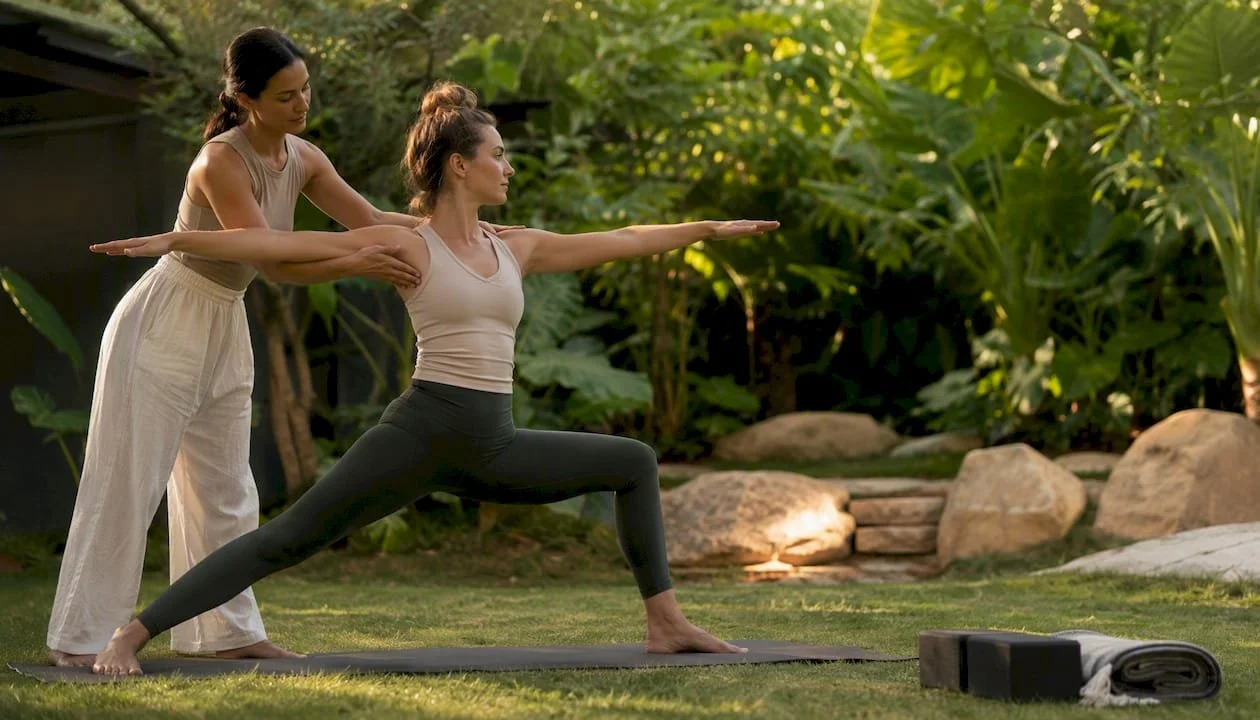
For most new students, Hatha is the best type of yoga for beginners. It moves slowly, holds each pose long enough to learn it correctly, and pairs every movement with breath, which is exactly what a body that has never done a downward dog needs. If your goal is stress relief or recovery rather than a workout, gentle Vinyasa or Restorative yoga make excellent starting points too.
The reason boils down to pace and teacher attention. A slow class gives an instructor time to actually watch you and correct your alignment, instead of shouting cues over a room already mid-transition. Faster, sequence-driven styles ask your body to know things it hasn't learned yet.
Your next move is simple: find a class labeled "Beginner," "Basics," or "Level 1" at a local studio, watch or join one session, and see how your body responds. If you have a joint issue, cardiovascular condition, or you're pregnant, check with a healthcare provider before your first class, not after.
Table of Contents
Hatha Yoga: The Foundational Style Most Teachers Recommend First
Restorative Yoga: The Gentlest Path to Recovery and Stress Relief
Iyengar Yoga: Precision Instruction for Learning Correct Form
Ashtanga and Power Yoga: Save These for After You've Built a Base
What Makes a Yoga Class Right for Beginners
Not every class advertised as "all levels" is actually beginner-friendly. Studios use labels loosely, and the difference between a manageable first class and an overwhelming one usually comes down to a few concrete details you can spot before you ever step on a mat.
Here's what to look for when you're scanning a class schedule:
Clear labeling. Look for "Basics," "Level 1," "Gentle," or "Beginner" in the class name, which typically signals a slower pace and simpler poses.
Prop availability. Blocks, straps, and bolsters stacked near the door mean the studio expects and supports modifications.
Alignment-first teaching. A teacher who explains why your knee should track over your ankle, not just that it should, is teaching for beginners.
Slow pacing with holds. Poses held for several breaths, rather than one breath per movement, give you time to actually find the shape.
Modifications offered out loud. A good instructor mentions options for tight hamstrings or sensitive wrists without you having to ask.
Arrive 10 to 15 minutes early on your first visit. Tell the teacher about any injuries or limitations before class starts, not during a pose. And remember that class labels vary by studio: one gym's "gentle flow" might move faster than another's "intermediate" class. The teacher's cues matter more than the name on the schedule.
Hatha Yoga: The Foundational Style Most Teachers Recommend First
Hatha is the umbrella term for the physical practice of yoga. In practice, when a studio schedules a "Hatha" class, it usually means a slower session where poses are held for several breaths, alignment gets real attention, and the pace rarely spikes. Cleveland Clinic points to Hatha as a strong starting point precisely because it teaches foundational poses and breath awareness at a pace beginners can actually absorb.
That slowness is the whole point. You're not skipping cardio benefits so much as trading them, temporarily, for something more valuable when you're new: time to learn what a proper Warrior II actually feels like in your hips and shoulders. Cleveland Clinic's guide to beginner postures walks through poses like Mountain, Child's Pose, and Cat-Cow that show up constantly in Hatha classes for exactly this reason.
Expect a typical beginner Hatha class to include a short seated breathing warm-up, a handful of standing poses held for five to eight breaths each, some floor work, and a final relaxation pose called Savasana. Teachers will often walk the room during holds, adjusting a hip here or a hand placement there. If you have a recent injury or a chronic joint condition, mention it before class so the instructor can offer a modification rather than have you guess mid-pose.
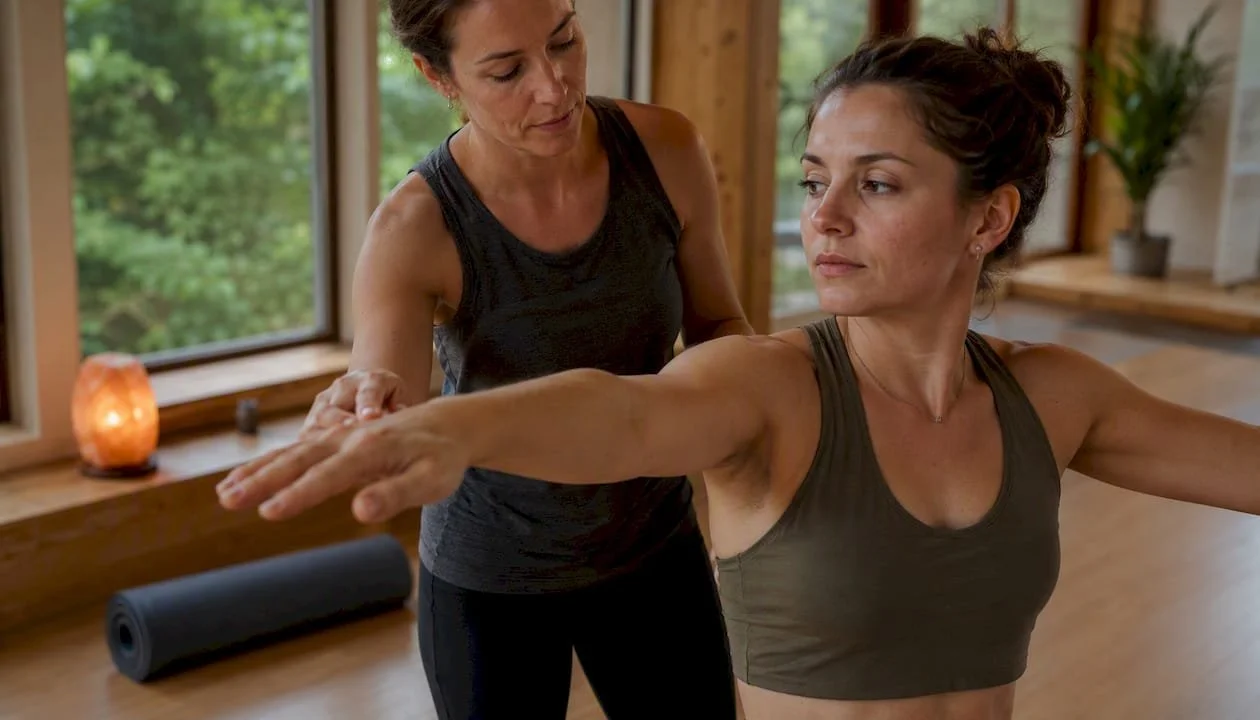
Pro Tip: Book a Hatha class specifically labeled "Level 1" for your first three or four sessions before trying anything faster. Your nervous system needs repetition, not variety, to actually learn a pose.
Vinyasa and Flow Yoga: A Good Second Step When It's Slow
Vinyasa links breath to movement in a continuous sequence, which is a very different experience from Hatha's held poses. Classic Vinyasa can move fast, with one breath per transition, and that pace is where beginners run into trouble. Rushed alignment in a fast flow is how people strain wrists and lower backs.
The fix is not to avoid Vinyasa. It's to find the slow version. A well-taught slow-flow class gives you cardio and strength benefits without demanding speed you haven't earned yet.
Before joining a Vinyasa class, ask the studio these questions:
"Is this labeled as slow-flow, or is it a faster all-levels class?"
"How does the teacher cue alignment during transitions?"
"Will there be options for someone who's never done Vinyasa before?"
If the answers are vague, look elsewhere. A studio's Vinyasa-focused class content can also give you a sense of how a given teacher or program approaches pacing before you commit to a schedule.
Restorative Yoga: The Gentlest Path to Recovery and Stress Relief
Restorative yoga barely resembles a workout, and that's the appeal. Classes rely heavily on bolsters, blankets, and blocks to fully support your body in a handful of poses, each held for five to twenty minutes. You're not stretching so much as letting gravity and props do the work while your nervous system downshifts.
This makes Restorative the right first choice if your goal is recovery from illness or injury, or if anxiety and chronic stress are what brought you to yoga in the first place. Yoga by Maya notes that Restorative and Yin classes are especially effective for stress reduction, often producing noticeable calm within weeks of steady practice.
A typical Restorative class might include only four or five poses total across sixty minutes, most of them lying down. There's little standing work and almost no strength demand, which makes it accessible for pregnant students, people recovering from surgery, or anyone dealing with a flare-up of a chronic condition. If you're drawn to this style for anxiety specifically, a studio's stress relief content can help you understand what to expect before your first session.
Yin Yoga: Long, Quiet Holds That Test Your Patience
Yin targets connective tissue rather than muscle, using passive stretches held for two to five minutes at a time. Unlike Restorative, which fully supports the body, Yin asks you to sit at the edge of a stretch and simply stay there while gravity and time do the work.
That stillness is harder than it sounds. Beginners used to constant movement often find the first Yin class mentally uncomfortable before they find it physically calming.
Who tends to benefit most:
People chasing long-term flexibility gains, especially in hips and shoulders.
Anyone using yoga primarily for stress and anxiety management.
Students recovering from a more intense workout routine who need a genuine off-day.
Who should be cautious: anyone with hypermobility or joint instability, since the long holds can invite overstretching in joints that already move too freely.
Pro Tip: In Yin, sensation is fine but pain is a stop sign. If a hold sharpens instead of easing after the first thirty seconds, back out of the pose rather than pushing through it.
Iyengar Yoga: Precision Instruction for Learning Correct Form
Iyengar is Hatha's more exacting cousin. Classes move slowly and use props constantly, but the real difference is depth of instruction: an Iyengar teacher will spend several minutes on a single pose, breaking down exactly where your weight should sit and how your spine should stack.
This makes it a strong fit for detail-oriented beginners, and for anyone rebuilding strength or range of motion after an injury. Expect blocks, straps, chairs, and sometimes ropes mounted to a wall, all used systematically rather than as an occasional aid. The pace can feel slow compared to other styles, but that's exactly what makes Iyengar useful. You leave class actually understanding why a pose is shaped the way it is, which carries over into every other style you try later.
Ashtanga and Power Yoga: Save These for After You've Built a Base
Ashtanga follows a fixed sequence of poses performed in the same order every time, moving briskly between them. Power yoga borrows Ashtanga's intensity without the fixed sequence, often built around building heat and strength fast. Both are demanding, and both usually work better once a foundation exists than as someone's very first class.
The issue isn't that these styles are bad. It's that they assume knowledge you probably don't have yet: how to hold plank without collapsing your shoulders, how to transition through a sun salutation without losing your breath, how to modify a pose on the fly when your hamstrings are having a bad day. Walking into Ashtanga cold usually means faking your way through poses you don't understand, which is how injuries happen.
A safer path looks like this: spend six to eight weeks in Hatha or slow-flow Vinyasa building core strength and pose familiarity, then look for a studio's skill-building programming designed specifically to bridge beginners into stronger practices. Once you can hold a plank for thirty seconds without your hips sagging, Ashtanga and Power classes stop being intimidating and start being genuinely fun.
Hot Yoga and Bikram: Why Beginners Should Wait
Heat changes everything about a yoga class. Rooms typically run between 90 and 105 degrees Fahrenheit, and that temperature increases cardiovascular strain, speeds up fatigue, and can create a false sense of flexibility that leads people to overstretch without realizing it.
Heat-based classes require real precautions: hydrate heavily beforehand, skip the class entirely if you're pregnant or managing a cardiovascular or blood pressure condition, and acclimate gradually rather than diving into a full 90 minute session on day one.
For an absolute beginner, hot yoga adds a second learning curve, thermal regulation, on top of the one you're already tackling: the poses themselves. It's smarter to build comfort with the postures in a room-temperature class first, then introduce heat once your body already knows what it's doing.
How to Choose Your First Class: A Simple Decision Guide
Picking a first class gets easier once you break it into a short checklist instead of trying to evaluate every style at once.
Define your primary goal. Stress relief points toward Restorative or Yin. General fitness and flexibility points toward Hatha. Wanting a workout eventually points toward Vinyasa, then later Ashtanga or Power.
Be honest about current fitness and injuries. A recent back injury or limited joint mobility argues for Iyengar or gentle Hatha, where alignment gets real attention.
Scan class labels before booking. Seek "Beginner," "Level 1," "Gentle," or "Basics." Skip "Power," "Sculpt," or "Advanced" for now.
Call or message the studio with two questions. Ask about pace and about how the teacher handles modifications. Vague answers are a red flag.
Watch for in-class warning signs. If a teacher never offers modifications or brushes off a mentioned injury, that's not the right room for you.
The table below breaks down how the major styles compare on the factors that actually matter to someone starting out.
| Style | Pace / intensity | Primary focus | Beginner friendliness | Typical class format | Common precautions |
|---|---|---|---|---|---|
| Hatha | Slow | Alignment, breath | Highly recommended starting point | Held poses, props, breath work | Minimal; mention injuries to teacher |
| Slow Vinyasa | Moderate | Strength, flow | Good second step | Linked breath and movement sequences | Avoid fast "all-levels" versions early on |
| Restorative | Very slow | Relaxation, recovery | Excellent for beginners | Long supported holds with props | Generally safe; check with a provider after surgery |
| Yin | Slow | Connective tissue, flexibility | Good, requires patience | Passive holds of two to five minutes | Caution with joint hypermobility |
| Iyengar | Slow, detailed | Alignment, technique | Excellent for detail-oriented beginners | Prop-heavy, precise instruction | Minimal; good for injury rebuilding |
| Ashtanga / Power | Fast, intense | Strength, discipline | Better after a foundation | Fixed or fast sequences, minimal pauses | Build core strength first; not ideal as first class |
| Hot / Bikram | Fast, high heat | Heat-driven flexibility, sweat | Not usually a first choice | Standard sequence in a heated room | Hydrate heavily; avoid if pregnant or cardiovascular concerns exist |
A reasonable progression for most people looks like Hatha or Restorative for the first month, slow Vinyasa once poses feel familiar, then Iyengar or Yin depending on whether you're chasing precision or flexibility.
Safety Checks, Modifications, and Practical Starter Tips
Yoga is low-impact compared to most exercise, but it isn't risk-free, especially for beginners eager to push into a deeper stretch than their body is ready for. UCLA Health recommends checking with a provider before starting any new practice if you have a herniated disc, uncontrolled high blood pressure, glaucoma, or you're in your first trimester of pregnancy. Sharp pain, dizziness, or numbness during a pose are signals to stop immediately and get it checked out, not signals to modify and continue.
Most common limitations don't require avoiding yoga altogether. They require a small adjustment:
| Common limitation | Simple modification |
|---|---|
| Tight hamstrings during forward fold | Place a block under your hands, bend your knees |
| Wrist pain in plank pose | Drop to knees for a modified plank, or use fists instead of flat palms |
| Lower back sensitivity in backbends | Reduce range of motion, keep knees soft |
| Balance difficulty in standing poses | Practice near a wall or use a chair for support |
| Neck strain in shoulder stand variations | Skip inversions, substitute legs-up-the-wall pose |
Regular stretching supports flexibility and injury prevention, which is one reason gentle, prop-supported classes work so well for beginners easing into movement.
For your first sessions, wear fitted, breathable clothing that won't ride up during forward folds or inversions. Most studios provide mats, but bringing your own is worth it once you're practicing regularly, along with a small towel if you tend to sweat. Aim for 20 to 30 minutes if you're practicing at home between studio visits, and don't feel pressure to attend a full 60 minute class every time you show up.
What Experts Recommend for a Beginner's First Two Months
Clinical and teacher-backed sources point in the same direction: start slow, prioritize breath, and treat your body with patience rather than ambition. That consensus isn't accidental.
Find a class that promotes kindness to yourself, prioritizes breath, and feels safe. Observe a class before joining if you can, and check with a healthcare provider for any specific physical concerns before starting.
That guidance, echoed by yoga teacher Dr. Johanna Goldfarb in a MasterClass discussion of beginner considerations, captures why so many clinical resources point beginners toward the same starting styles rather than toward whatever's trending at the gym that month.
A workable eight to twelve week starter progression looks like this: weeks one through four, Hatha or Restorative three times a week for 20 to 30 minutes, focusing entirely on breath and basic poses. Weeks five through eight, add one slow Vinyasa session per week while keeping two Hatha sessions. Weeks nine through twelve, introduce Yin or Iyengar depending on whether flexibility or precision is your bigger goal. Consistent practice at this frequency has been linked to measurable reductions in anxiety symptoms within about eight weeks, which is a faster payoff than most new students expect.
Pro Tip: If a teacher offers three variations of a pose without you asking, that's a good sign you've found an instructor who teaches to the room, not just to the advanced students in front.
A Note From Amrita Yoga & Wellness on Starting Out
Every regular on our mats started exactly where you are now, unsure which class to book and a little nervous about looking out of place. That's normal, and it's exactly why we built our beginner programming the way we did.
Our beginner-labeled classes run at a pace built for first-timers, with props on hand and instructors who walk the room during holds rather than lecturing from the front. Whether you're drawn to a slower Hatha session or curious about how breathwork fits into the practice, there's a class sized to where you're starting, not where you'll eventually end up.
If you're not ready to commit, that's fine too. Come watch a class from the side of the room, ask the teacher a question afterward, and decide from there. No pressure, just an open mat whenever you're ready for it.
Ready to Book Your First Beginner Class?
Amrita Yoga & Wellness runs beginner-labeled Hatha, gentle Vinyasa, and Restorative classes right here in Philadelphia, with props available for every student and instructors who build modifications into the class instead of treating them as an afterthought. That's the real advantage of starting with a studio built for this exact moment: you're not guessing which class is safe, you're walking into one designed for it.
Beyond the mat, our studio also hosts wellness workshops like tarot readings for students who want to round out their practice with something reflective, alongside private sessions if you'd rather start one-on-one before joining a group class. If you're carrying a specific injury or health concern, a private session lets an instructor build the entire hour around your body instead of the room's average.
Your next step is simple: check our current class schedule, pick a beginner-labeled Hatha or Restorative session, and show up ten minutes early to say hello. That first class is the only hard part.
Key Takeaways
Hatha yoga works best for most beginners because its slow pace and held poses let a new body learn correct alignment before speed or intensity get added.
| Point | Details |
|---|---|
| Start with Hatha | Choose a Hatha or gentle Vinyasa class first; it teaches foundational poses at a pace beginners can absorb. |
| Look for beginner labels | Book classes marked "Basics," "Level 1," or "Gentle," and skip "Power" or "Advanced" until you have a foundation. |
| Build consistency over intensity | Practice yoga regularly for short sessions multiple times per week, focusing on consistency rather than intensity. |
| Modify rather than avoid | Use blocks, bent knees, or wall support for common limitations instead of skipping poses entirely. |
| Amrita Yoga & Wellness offers a real starting point | The studio's beginner-labeled Hatha, Vinyasa, and Restorative classes in Philadelphia include props and modification-focused instruction for new students. |
Sources
The guidance in this article draws on clinical health resources and established yoga teaching sources, each covering a different piece of the beginner puzzle.
MasterClass article referencing teacher advice on Hatha and beginner considerations
Yoga for Beginners: Complete Starting Guide 2026 | Yoga by Maya
This article offers general wellness information and isn't a substitute for personalized medical advice. If you have a specific health condition or injury, talk with a healthcare provider before starting a new yoga practice.
Recommended

Best Hot Yoga Studios in Puyallup, WA: 2026 Guide
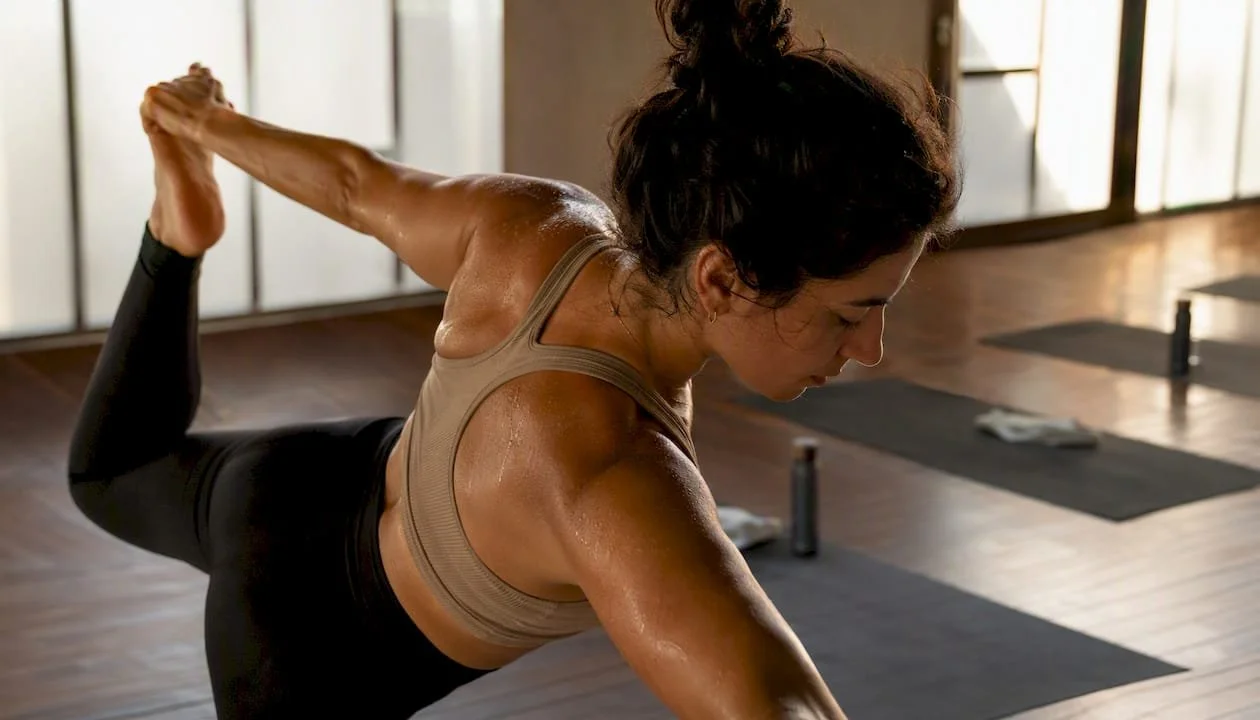
For hot yoga in Puyallup, WA, your strongest local options are Prana Hot Yoga & Body Sculpt, Omni Yoga LLC, and HOTWORX Puyallup (South Hill), each serving a different schedule and style preference. Amrita Yoga & Wellness rounds out the shortlist with wellness-integrated programming and detailed safety resources for newcomers. Start by checking each studio's current schedule online or through Mindbody, then book a trial class.
Quick studio links and class types:
Amrita Yoga & Wellness — Hot yoga alongside pilates, barre, and wellness workshops; strong beginner resources and safety guidance
Prana Hot Yoga & Body Sculpt — Dedicated hot-yoga rooms, cycling, and body-sculpt classes; locally owned; book via Mindbody
HOTWORX Puyallup (South Hill) — Infrared-heated 30-minute sessions, 24/7 access, virtually instructed
Omni Yoga LLC — Hot and cool yoga plus aerial and specialty formats
Elev8 Hot Yoga — Energetic hot flow classes with introductory trial deals
Pro Tip: Before committing to a membership, use a studio's intro trial pass for your first two or three classes. Heat tolerance varies widely, and a week of sampling costs far less than a month you won't use.
Key Takeaways
Prana Hot Yoga & Body Sculpt and Omni Yoga LLC are the most established local options in Puyallup, while Amrita Yoga & Wellness provides the strongest wellness-integrated programming and beginner resources.
| Point | Details |
|---|---|
| Start with a trial pass | Use an intro offer at 1–2 studios before committing to a monthly membership. |
| Match class type to your goal | Hot Vinyasa suits flexibility; hot sculpt and infrared sessions target cardio conditioning. |
| Hydrate before you arrive | Drink 16–20 oz of water in the two hours before class to reduce heat stress risk. |
| Research backs the benefits | A 2025 systematic review of 43 studies found chronic hot yoga produces cardiometabolic and functional adaptations. |
| Amritayogawellness for preparation | Amrita Yoga & Wellness offers structured beginner guides, safety resources, and community wellness programming. |
Consult a physician before starting hot yoga if you have cardiovascular conditions, are pregnant, or take medications that affect heat tolerance.
Table of Contents
Which hot yoga studios in Puyallup, WA are worth your time?
| Studio | Best for | Location/proximity | Pricing/passes | Amenities | Booking |
|---|---|---|---|---|---|
| Amrita Yoga & Wellness | Wellness-focused hot yoga with community classes and safety resources | Philadelphia-based; serves students seeking online/hybrid wellness programming | Tiered class options; check site for current rates | Hot yoga, pilates, barre, massage, workshops | Website / member login |
| Prana Hot Yoga & Body Sculpt | Separate hot and non-heated rooms; varied schedule | 615 E Pioneer, Puyallup, WA 98372 | Drop-in, class packs, unlimited passes | Dedicated hot room, cycling studio | Mindbody |
| HOTWORX Puyallup (South Hill) | Time-flexible infrared short sessions | Meridian Ave E, South Hill/Puyallup area | Membership-based; 24/7 access | Infrared pods, virtual instruction | HOTWORX app / website |
| Omni Yoga LLC | Wide format variety including aerial | Puyallup area | Not publicly listed | Hot and cool rooms, aerial equipment | Studio site |
| Elev8 Hot Yoga | Energetic hot flow; newcomer deals | Puyallup area | Intro trial offers available | Hot flow studio | Studio site |
A few practical notes:
- Prana Hot Yoga & Body Sculpt lists its address at 615 E Pioneer and is bookable through Mindbody, which is the clearest operational signal for schedule reliability.
- HOTWORX runs on an infrared model rather than traditional steam or forced-air heat, so the experience differs from a conventional Bikram or hot Vinyasa class.
- Street parking is available near Prana's Pioneer location; confirm current lot access directly with the studio before your first visit.
- Omni Yoga and Elev8 do not publicly list full pricing, so call or email ahead to avoid surprises.
How do you choose the right heated yoga studio in Puyallup?
Match the studio to your actual goal, not just the nearest address. Here is a practical checklist:
Identify your primary goal. Flexibility and stress relief pull toward traditional hot Vinyasa or Bikram-style classes. Cardio conditioning pairs well with hot sculpt or HOTWORX infrared sessions. Variety seekers should look at Omni Yoga's aerial and specialty mix.
Check the schedule before anything else. A great studio at the wrong time is useless. Look for at least three class slots per week that fit your calendar, including one early-morning or evening option.
Ask about instructor credentials. A registered yoga teacher (RYT-200 or RYT-500 through Yoga Alliance) has completed structured training. Ask the studio directly if credentials are not listed on the site.
Confirm booking ease. Studios on Mindbody or a comparable platform let you reserve, cancel, and track attendance without calling. That friction reduction matters when life gets busy.
Compare amenities against your commute. Showers and mat rentals matter most if you plan to go before or after work. A studio without showers is fine for a weekend class, less so on a Tuesday morning.
Understand the price structure. Drop-in rates reward occasional visits; unlimited monthly passes reward consistency. Class packs (typically 5 or 10 sessions) sit in between and suit most beginners.
Three questions worth asking any studio before you sign up:
What is your late-arrival and cancellation policy?
Do you offer a beginner orientation or a slower-paced intro class?
Are mats and towels included, or is there a rental fee?
Pro Tip: Most Puyallup studios offer a first-week or first-month intro rate. Use it to attend classes on different days and with different instructors before choosing a pass type. Your favorite instructor matters more than the price per class.
What should you expect in a hot yoga class, and is it safe?
A standard hot yoga class runs 45–90 minutes in a room heated to roughly 30–52 °C (86–126 °F), depending on the format. A 2025 systematic review of 43 studies covering 942 participants found that chronic hot-yoga practice can produce cardiometabolic and functional adaptations, though evidence quality across studies varies. That is worth knowing: the benefits are real but not guaranteed by heat alone.
What the research actually shows:
A controlled 4-week trial found that 12 hot-yoga sessions improved maximal aerobic fitness and increased cellular heat-shock protein (HSP70) expression compared with room-temperature yoga.
Healthline's review of hot yoga benefits notes that regular practice can reduce cortisol and relieve symptoms of stress and depression, with measurable stress reduction observed after a program over several weeks in inactive adults.
Heat increases perceived intensity and the sensation of stretch, but Verywell Health notes it does not necessarily raise caloric expenditure above room-temperature yoga. The physiological adaptations are real; the "burn more calories because it's hot" claim is not well supported.
Safety guidance for beginners:
Drink 16–20 oz of water in the two hours before class. Bring a full water bottle and sip throughout.
Tell the instructor before class if you have cardiovascular conditions, are pregnant, or take medications that affect heat tolerance.
Sit or lie down the moment you feel dizzy. Leaving the room briefly is always acceptable and never embarrassing.
Wear light, moisture-wicking clothing. A full-size towel over your mat prevents slipping.
Pro Tip: Read through hot yoga safety tips before your first class. Knowing what "normal discomfort" looks like versus a warning sign makes the first session far less stressful.
Heart rate climbs noticeably in a heated room, which is normal. What you want to avoid is pushing through nausea or a throbbing headache, both of which signal heat stress rather than a productive workout.
Schedules, pricing, and how to book a class
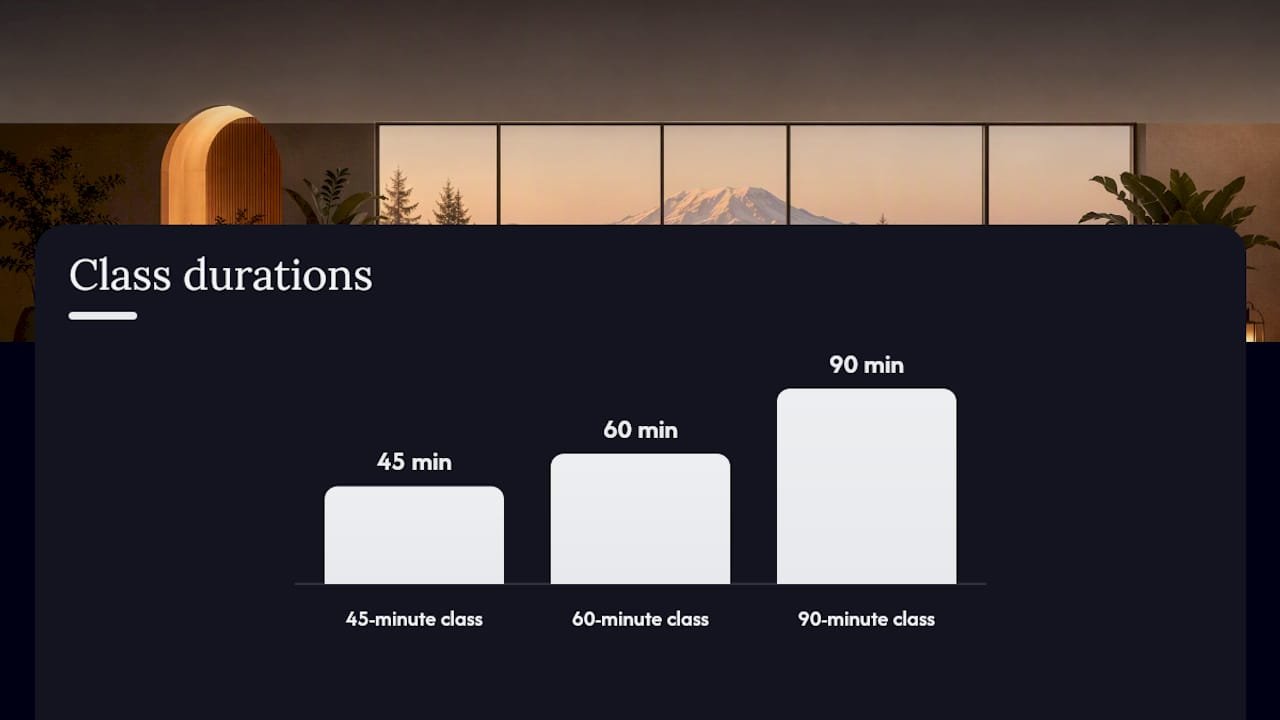
Finding a schedule takes about two minutes if you know where to look. Check the studio's own website first, then search Mindbody for the studio name to confirm live availability. Google Maps listings often show hours but rarely show real-time class slots.
What to look for on a schedule page:
Class label (hot Vinyasa, Bikram, hot sculpt, infrared) and level (all levels, beginner, advanced)
Duration (45, 60, or 90 minutes)
Whether the slot is drop-in eligible or requires a pass
Common pricing formats in Puyallup studios:
Drop-in: One class, no commitment. Highest per-class cost, best for testing a studio once.
Class pack: 5 or 10 sessions at a reduced per-class rate. Good for the first month.
Unlimited trial: One or two weeks of unlimited classes at a flat fee. The fastest way to find your preferred time slot and instructor.
Monthly unlimited: Best value for consistent attendees (three or more classes per week).
Cancellation policies vary. Most studios require 4–12 hours' notice to avoid a late-cancel fee. Some charge a no-show fee equal to the drop-in rate. Check the policy before you book, not after.
Booking checklist:
Create an account on the studio's platform (Mindbody, the studio's own app, or website)
Complete any required liability waiver before your first class
Arrive 10–15 minutes early; most studios lock the door at start time
Confirm mat and towel availability if you do not own them
For hot yoga preparation tips on what to bring and how to set up your space in the room, Amrita's blog covers the practical details most studio sites skip.
Why this shortlist was built the way it was
The studios above were selected based on schedule coverage, class format variety, booking platform presence, and the quality of beginner-facing information each one publishes. Prana Hot Yoga & Body Sculpt earned its position because it has a verifiable local address, a Mindbody listing, and clearly described class types. HOTWORX made the list because its 24/7 infrared model genuinely serves a different schedule need. Omni Yoga and Elev8 appear because they show up consistently in local search results with distinct format offerings.
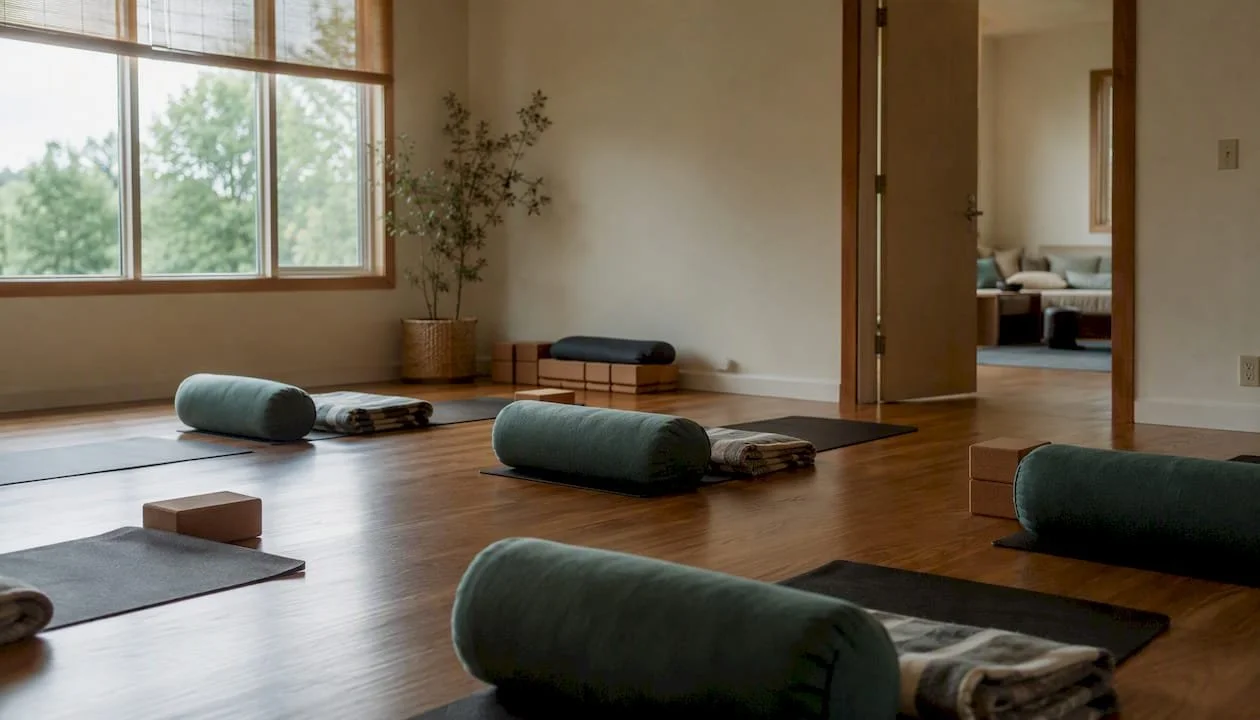
Amrita Yoga & Wellness stands apart from the purely local brick-and-mortar options. Its published beginner hot yoga guides, safety resources, and community workshops make it the strongest choice for students who want structured preparation and ongoing wellness education alongside their physical practice. The community aspect, including workshops and specialty programming, was a deciding factor in including it at the top of this list.
Amritayogawellness: a wellness-first alternative worth knowing
If the local studios above feel like a lot to navigate on your own, Amrita Yoga & Wellness offers something the Puyallup brick-and-mortar options generally do not offer: a structured, wellness-integrated approach to hot yoga with detailed preparation resources, community workshops, and programming that extends well beyond a single class format. You get step-by-step hot yoga guidance, safety-focused content, and a broader wellness community built around inclusivity and personal growth. Visit Amritayogawellness to browse current class offerings and find the right starting point for your practice.
Sources
The safety and benefits claims in this article draw on peer-reviewed and consumer health sources selected for evidence quality and practical relevance:
Recommended

Hatha Flow Yoga: What It Is and How It Feels
atha Flow yoga is a middle-ground practice that sits between traditional Hatha and Vinyasa: you hold poses long enough to feel them (roughly 3–6 breaths each), then link them with breath-guided transitions rather than staying frozen or rushing through one movement per inhale. At Amrita Yoga & Wellness, classes in this style typically run 45–90 minutes and follow a clear arc from breathwork to Savasana.
A few things to know before you walk in:
Pace is moderate and intentional, not aerobic
Breath cues guide every transition, but you get more time than in Vinyasa
Alignment corrections are woven in throughout, not skipped for speed
Most classes welcome beginners who already know a few basic poses
Key Takeaways
Hatha Flow yoga is the most accessible dynamic yoga style for practitioners who want mindful movement, alignment feedback, and a calming breath anchor without the intensity of Vinyasa.
| Point | Details |
|---|---|
| Middle-ground style | Hatha Flow holds poses 3–6 breaths and links them with breath-guided transitions. |
| Class structure | Classes run 45–90 minutes: pranayama, standing sequence, peak pose, cool-down, Savasana. |
| Best student fit | Beginners with basic pose knowledge and returning practitioners benefit most. |
| Key benefit | Breath-synchronized movement builds alignment awareness and supports nervous-system calm. |
| First step | Try a beginner Hatha Flow class at Amrita Yoga & Wellness or a short at-home sequence. |
Explore flow yoga classes and resources at Amrita Yoga & Wellness to find a session that fits your schedule and experience level.
Table of Contents
What is Hatha Flow yoga, exactly?
The name combines two ideas. Hatha refers to the foundational branch of yoga that underpins most Western studio styles, built on pranayama (breath control), physical postures (asanas), and a closing rest. Flow signals that poses are linked into short sequences rather than practiced in isolation. Put them together and you get a class that keeps Hatha's careful attention to alignment while adding enough movement to feel dynamic.
That combination matters because it changes how the practice feels on the mat. Traditional Hatha might have you hold Warrior II for 60 seconds while the teacher walks around adjusting everyone. Vinyasa moves so fast that alignment cues are easy to miss. Hatha Flow lands in between: you settle into Warrior II, hear two or three alignment cues, breathe through the hold, then move to the next shape on an exhale.
Pace, breath linkage, and alignment
Three features define how a Hatha Flow class actually runs:
Pace: Slower than Vinyasa, more continuous than classic Hatha. You are rarely standing still for long, but you are also never scrambling to keep up.
Breath linkage: Transitions happen on a specific inhale or exhale, but the teacher typically gives you a full breath cycle (or two) to settle before cueing the next move.
Alignment focus: Because poses are held for several breaths, teachers have time to offer specific cues: "stack your front knee over your ankle," "draw your lower ribs in," "soften the grip in your hands."
One important caveat: teacher-to-teacher variability is real. "Hatha Flow" is a studio-level label, not a globally standardized curriculum. One instructor may lean closer to a slow Vinyasa; another may hold poses for several breaths. Reading the class description and asking the teacher about pacing before your first session is the most reliable way to know what you are getting.
What does a typical Hatha Flow class look like?
Most classes follow a recognizable structure, even when teachers vary the content. Standard studio Hatha classes run 45–90 minutes and move through breathwork, asanas, and Savasana. Hatha Flow keeps that spine and adds linked mini-sequences in the middle.
A short sample sequence from the standing segment might look like this: Mountain Pose (2 breaths, grounding) → Warrior I (3–4 breaths, alignment cues) → Warrior II (3–4 breaths, open the hips) → Triangle Pose (3–4 breaths, lengthen the side body) → back to Mountain on an exhale. That mini-sequence is the "flow" part: each pose connects to the next through breath, and the teacher cues the transition rather than calling a long hold and then a reset.
How does Hatha Flow compare to traditional Hatha and Vinyasa?
Hatha is widely recommended as a starting point for beginners because its slower pace and longer holds give students time to learn poses without pressure. Vinyasa is faster, more physically demanding, and typically links every movement to a single breath. Hatha Flow sits between them on every axis that matters.
| Traditional Hatha | Hatha Flow | Vinyasa | |
|---|---|---|---|
| Pace | Slow, deliberate | Moderate, intentional | Brisk, continuous |
| Average hold | 3–6 breaths | 3–6 breaths | 1–2 breaths |
| Primary focus | Alignment, stillness | Alignment + fluid transitions | Flow, heat, endurance |
| Sweat / intensity | Low | Low to moderate | Moderate to high |
| Best for | Complete beginners, injury recovery | Beginners with basic pose knowledge, returning practitioners | Experienced students seeking cardio |
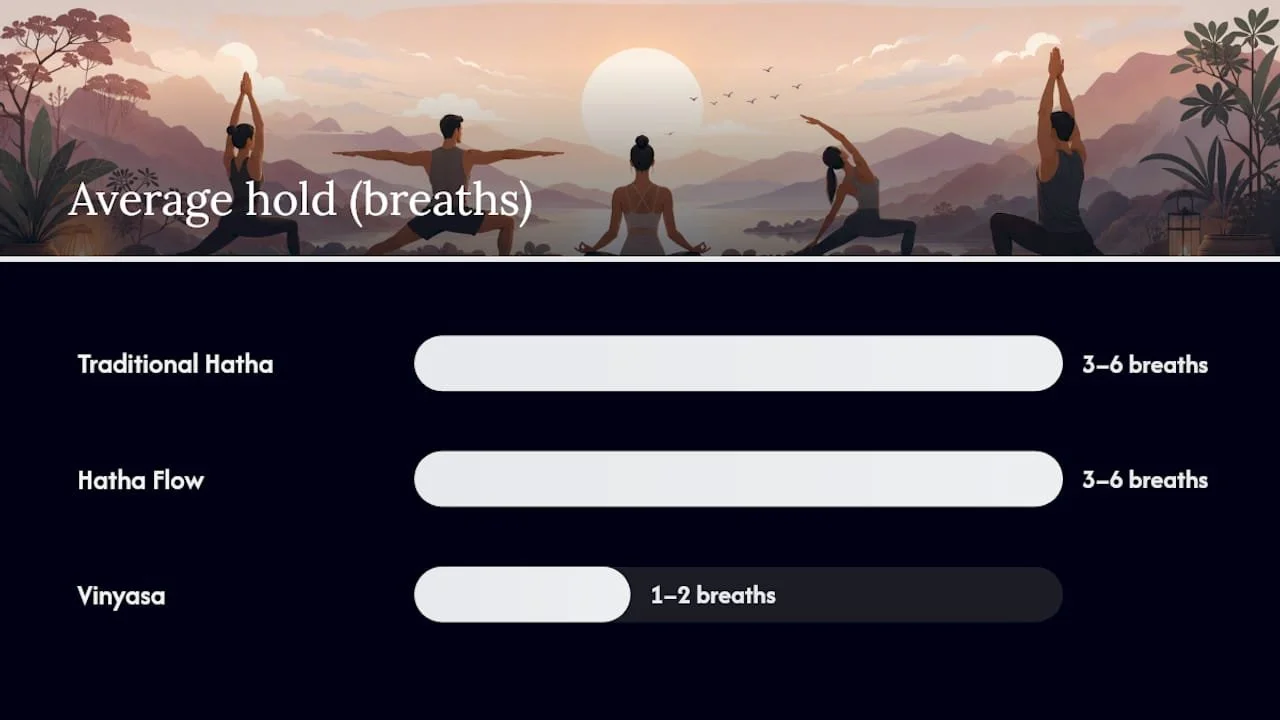
If your goal is to learn poses from scratch, traditional Hatha gives you the most time to do that. If you want a workout with real intensity, Vinyasa delivers it. Hatha Flow is the right call when you want to feel the poses and feel like you moved.
Who benefits most from Hatha Flow?
The style fits a specific kind of student well: someone past the absolute beginner stage who knows what Downward Dog and Warrior I look like, but who is not ready (or interested) in chasing a Vinyasa pace. Returning practitioners after a break, people managing mild stress or tension, and anyone who finds pure Hatha too static will likely feel at home here.
The physical benefits are real but measured. You build functional strength through held standing poses, improve joint mobility through linked transitions, and develop body awareness through repeated alignment cues. The mental side is where Hatha Flow often surprises people: because breath cues every transition, the mind has a consistent anchor. Breath-synchronized movement can support nervous-system regulation, which is part of why a 60-minute class often leaves you feeling calmer than when you arrived. For more on how yoga benefits extend beyond the physical, the studio's resource library is worth a look.
One honest limitation: if you have never practiced yoga before, you may find transitions confusing when you are still learning what the poses feel like. A single traditional Hatha class first is a reasonable warm-up to the format.
Pro Tip: Tell your teacher about any injuries or limitations before class starts. A good Hatha Flow instructor will offer specific modifications, not just a generic "listen to your body" reminder.
What to wear and bring to your first class
Clothing is simple: close-fitting, breathable activewear that moves with you. Verywell Fit notes that close-fitting athletic wear is the standard recommendation for Hatha-style classes, and the reason is practical: loose fabric can bunch or slip during transitions, which is distracting and occasionally unsafe.
What to bring:
Your own yoga mat (studio mats are usually available but personal mats are more hygienic)
Water bottle
Small towel
One yoga block if you own one (studios almost always have extras)
A yoga strap for seated stretches (optional but useful)
Arrive 10–15 minutes early. Use that time to introduce yourself to the teacher, mention any injuries, and set up your mat in a spot where you can see the instructor clearly. Eat lightly 1–2 hours before class; a full stomach and inversions are a poor combination.
Safety, alignment cues, and what teachers want you to know
Alignment matters more in Hatha Flow than in faster styles because you actually have time to get it right. A few cues worth knowing before you step on the mat:
Warrior II: Front knee tracks over the second toe, not caving inward. Back foot is flat, heel pressing down. Hips open to the side wall, not squared forward.
Downward Dog: Hands shoulder-width apart, index fingers parallel. Bend the knees generously if your hamstrings are tight. The priority is a long spine, not straight legs.
Plank: Shoulders directly over wrists, hips level (not sagging or piked). Engage the belly to protect the lower back.
During transitions, move on the breath the teacher names. Rushing a transition to "keep up" is how lower-back and shoulder strain happens. If you miss a cue, pause in a neutral position (Child's Pose works anywhere in a sequence) and rejoin on the next breath.
Pro Tip: If your wrists, knees, or lower back are sensitive, tell the teacher before class. Most Hatha Flow sequences have built-in alternatives: fists instead of flat palms for wrists, a folded blanket under the knees, or a supported Bridge instead of a full backbend.
Breath-synchronized movement also has a calming effect that goes beyond the physical. Research on polyvagal theory suggests that rhythmic, controlled breathing can activate the parasympathetic nervous system, which is part of why a well-paced Hatha Flow class feels genuinely restorative rather than just tiring.
A note from the mat
What I emphasize most in a Hatha Flow class is the breath, not the shape. A student who breathes well through an imperfect Warrior II is doing more for their practice than someone holding a picture-perfect pose while holding their breath. If you are nervous about keeping up, you will not fall behind. The transitions are cued, the pace is forgiving, and asking for a modification is always the right call.