11 Studies Back Prenatal Pilates With Studio Tweaks for Pregnant Women
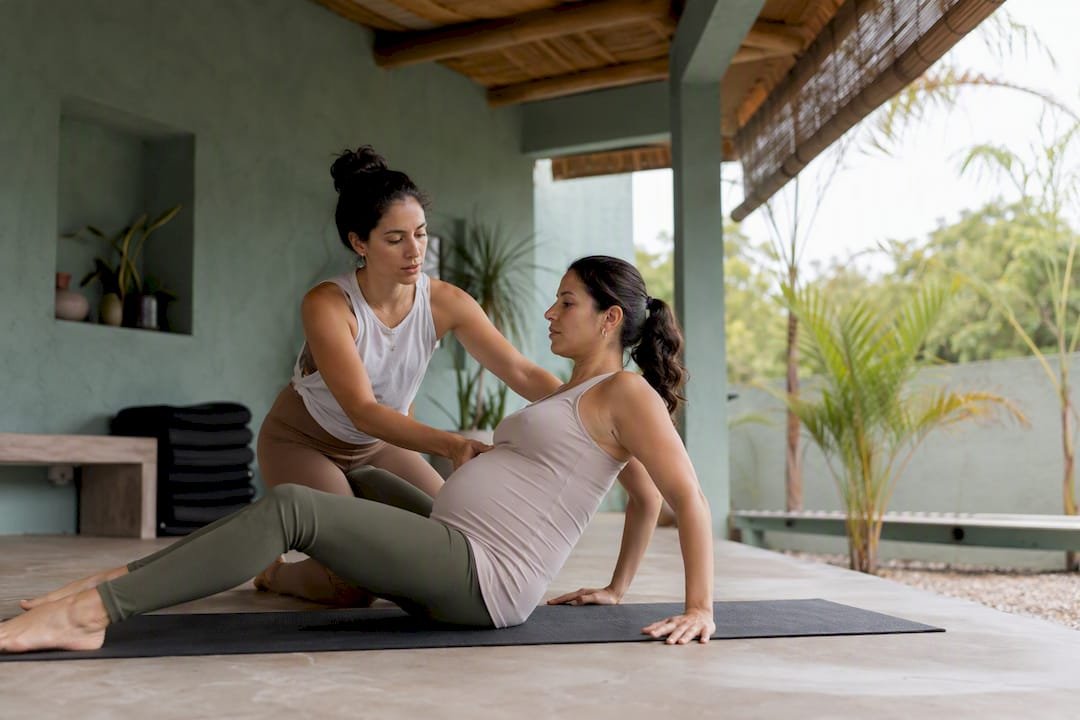
Prenatal Pilates strengthens the pelvic floor, cuts urinary incontinence, and is linked to shorter labor and better delivery outcomes in multiple trials. It also eases pelvic girdle pain, supports mood and sleep, and helps moderate pregnancy weight gain. Amrita Yoga & Wellness teaches it with prenatal-specific modifications. If your pregnancy is high-risk, talk to your clinician before starting.
TL;DR:
Prenatal Pilates is linked to shorter labor, improved APGAR scores, and reduced cesarean and labor durations, based on recent meta-analyses and trials.
It effectively strengthens the pelvic floor, reduces pelvic girdle pain, and helps moderate weight gain, with measurable benefits within eight weeks of consistent practice.
Studies show Pilates counters ligament laxity during pregnancy and lowers activity limitations caused by pelvic girdle pain, with effects larger than many brief exercise interventions.
Safety guidelines recommend avoiding lying flat past 16 weeks, skipping breath-holding, and customizing exercises based on individual risk factors and clinician approval.
Studio classes with prenatal-certified instructors and small groups ensure modifications are tailored in real time, enhancing safety and effectiveness over generic routines.
Table of Contents
What Do the Studies Actually Find (and Where Do They Fall Short)?
When Is Prenatal Pilates Safe, and Who Should Get Clearance First?
What Are the Benefits of Prenatal Pilates?
Pilates during pregnancy is not a gentler version of a regular workout. It is a targeted intervention that a growing body of clinical research ties to five specific outcomes.
Pelvic floor strength tops the list. Trial data shows women in structured Pilates programs report lower stress and urge urinary incontinence scores than control groups, both during pregnancy and in the early postpartum weeks, according to a dual-center randomized controlled trial. The same trial found reduced average pregnancy weight gain in the Pilates group.
Statistic callout: A 2025 meta-analysis pooling 11 studies and 538 participants found prenatal Pilates was linked to a significant reduction in labor duration (SMD -0.557, P = 0.002) and improved one-minute APGAR scores in several of the included studies.
Beyond labor, the benefits show up in daily comfort and mental health:
Pelvic girdle and low back pain: An eight-week program produced a large effect size (ηp² = 0.317) in reducing activity limitations from pelvic girdle pain.
Delivery outcomes: Pooled data across systematic reviews associates Pilates with higher vaginal delivery rates and lower cesarean rates.
Weight management: The same review found modest reductions in gestational weight gain among Pilates participants.
Mental health and sleep: Several studies report better sleep quality scores and lower depression/anxiety scores after structured Pilates programs.
None of this makes Pilates a substitute for prenatal care. It functions as a well-studied add-on that pulls its weight in several directions at once, which is unusual for a single low-impact exercise routine.
What Do the Studies Actually Find (and Where Do They Fall Short)?
The strongest evidence comes from a small cluster of recent randomized trials and two systematic reviews, and the numbers are more specific than most fitness articles let on.
The systematic review and meta-analysis covering obstetric and neonatal outcomes found Pilates exercise during pregnancy tied to shorter delivery times and a lower likelihood of cesarean birth across pooled trial data. Weight gain differences were modest but consistent enough to show up across multiple included studies.
The dual-center RCT on ligamentous laxity is worth singling out. Women in an eight-week structured Pilates program showed no progression in joint hypermobility, while the control group's laxity worsened over the same period. That matters because pregnancy hormones, particularly relaxin, loosen ligaments throughout the body, and Pilates appears to counteract that through better neuromuscular control rather than any change to the ligament tissue itself, according to research on joint stability mechanisms.
Statistic callout: The pelvic girdle pain RCT reported a large practical effect (ηp² = 0.317) after just eight weeks of twice-weekly sessions, a bigger shift than most short exercise interventions produce.
The honest caveat: these are still small-to-moderate trials.
Sample sizes across most studies run in the dozens to a moderate number, not thousands.
Protocols vary widely: some run four weeks, others sixteen, with different session lengths and instructor backgrounds.
Researchers behind the 2025 meta-analysis note the field still needs larger, multicenter trials with standardized protocols before recommendations can get more specific than "moderate exercise helps."
The direction of the evidence is consistent even where the magnitude isn't nailed down yet.
When Is Prenatal Pilates Safe, and Who Should Get Clearance First?
Pilates is broadly compatible with the moderate-exercise guidance the American College of Obstetricians and Gynecologists gives most pregnant people. But "most" isn't "everyone," and a few situations call for a conversation with your clinician first:
High-risk pregnancy diagnoses — placenta previa, preterm labor risk, severe anemia, or uncontrolled hypertension all warrant clearance before any new exercise program.
Multiples or a history of preterm birth — your provider may adjust intensity or timing recommendations.
Any new bleeding, dizziness, or reduced fetal movement — stop class immediately and call your provider; these are not "push through it" symptoms.
Once cleared, a few modifications matter more than general fitness advice suggests. Avoid lying flat on your back for extended periods after roughly 16 weeks, since it can compress the vena cava and reduce blood flow. Skip breath-holding (the Valsalva maneuver) during core work. And favor stabilization exercises over deep stretching, since relaxin already loosens your joints without extra encouragement.
Instructor training is not a formality here. A prenatal-certified instructor knows how to cue around a shifting center of gravity and when to swap a pose entirely.
Pro Tip: Tell your instructor you're pregnant even in week one, before it's visible. Small swaps, like a pillow under your torso or moving to hands and knees, protect you long before your bump does.
How Do You Start a Prenatal Pilates Routine Safely?
Most clinical programs run on a simple structure: eight weeks, two sessions a week, with each session built around 45 minutes of movement plus breathing work. That's a realistic template if you're starting from scratch.
A typical class follows this order:
Gentle warm-up to raise circulation without overheating.
Pelvic-floor-integrated core work, layering breath with movement instead of isolated crunches.
Posture and stability drills that address the forward-shifting center of gravity.
Breathing practice, sometimes paired with childbirth-preparation cues.
Cool-down and gentle stretching, avoiding extreme ranges of motion.
Common modifications you should expect and ask for if your instructor doesn't offer them:
Hands-and-knees positions instead of full plank once balance shifts.
Elevated chest support (a wedge or stack of pillows) for any exercise that would otherwise put you flat.
Seated or side-lying variations for core work in the third trimester.
Pelvic floor cues that pair a gentle lift-and-release with your exhale, never a hard clench-and-hold.
If you already practice Pilates for beginners, most of the transition is about pacing and props, not relearning the exercises from zero.
Pro Tip: If you feel any doming or bulging along your midline during core work, that's a diastasis recti cue to back off intensity and mention it to your instructor. It's common, and modified, not eliminated, exercise is usually the right response.
Does Prenatal Pilates Keep Paying Off After Birth?
The postpartum period is where a lot of the prenatal work quietly cashes out. Women who built pelvic floor coordination during pregnancy generally have an easier foundation for postpartum recovery, since the same lift-and-release pattern used in pregnancy directly supports healing after vaginal delivery or cesarean section.
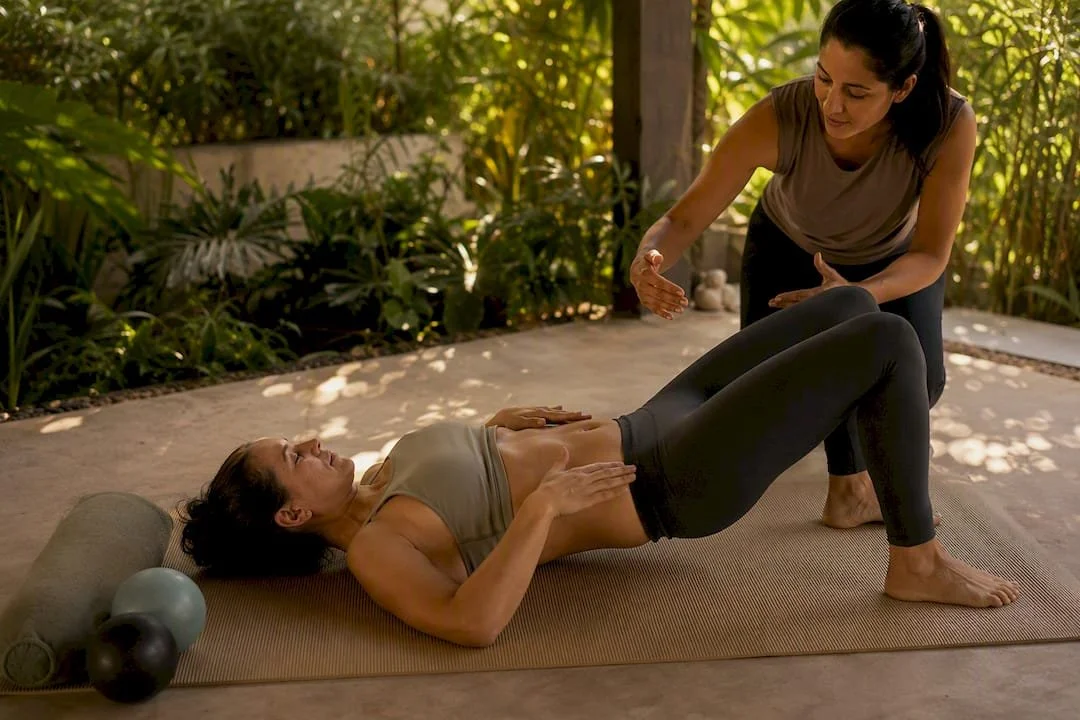
Core stability built through prenatal sessions also carries forward into the early weeks of lifting, carrying, and feeding a newborn, all of which put real load on an already-stretched core. Instructors who taught you modified movements during pregnancy can typically guide a faster, safer return to fuller exercise once you're cleared, usually starting with the same core strength principles you already practiced.
There's a mental health thread here too. The sleep and mood improvements linked to prenatal Pilates don't reset to zero the day you give birth. Establishing the habit before delivery makes it far easier to return to a supportive movement routine during a period when starting something brand new from scratch feels close to impossible.
Postpartum diastasis recti and pelvic organ prolapse risk are both areas where prenatal-informed core work gives you a head start, since you're not learning pelvic floor coordination for the first time while also sleep-deprived and recovering.
Why Studio-Led Prenatal Pilates Beats Generic Advice
Generic "safe pregnancy exercises" lists miss the part that actually matters: execution. Amrita Yoga & Wellness builds its prenatal-adapted Pilates mat and reformer classes around the same principles behind the research above, pairing pelvic floor coordination with instructor cueing that adjusts week by week as your body changes.
Every instructor is trained to ask about pregnancy status, adjust for trimester, and swap positions before discomfort sets in, not after. Class sizes stay small enough that an instructor actually notices when someone needs a modification. That's the difference between a video routine and a room where someone is watching your form in real time.
If you're curious about the broader research behind the practice, our pilates benefits content breaks down what applies beyond pregnancy too. The next step is simple: try a class, tell the instructor you're expecting, and let them build the modifications around you.
— Juiced
Try a Prenatal-Modified Class With Amrita Yoga & Wellness
You don't have to guess which exercises are safe this week versus last week. Amrita Yoga & Wellness pairs prenatal-trained instructors with small class sizes, so modifications happen in real time instead of after you've already strained something.
Every class factors in trimester, energy level, and any pain points you flag before you start moving. If you're newer to mind-body practices generally, our tarot readings sessions and workshops are also part of the broader studio community many prenatal clients use to manage stress alongside movement. Reach out to the studio to ask about current prenatal-friendly class times and instructor availability, and come find out what a properly modified session actually feels like.
This article is general information, not a substitute for advice from a qualified doctor. Consult a qualified healthcare professional about your own circumstances before acting on anything here.
Sources
Prenatal Pilates 8-week RCT—pelvic girdle pain and ligamentous outcomes (2025)
Physical activity and exercise during pregnancy and the postpartum period — ACOG (2020)