
Hot Yoga Studios – Transforming Wellness in 2026

Long days at work in Philadelphia can leave your mind racing and your body craving a reset. For young professionals seeking more than a standard yoga class, hot yoga studios offer a specialized wellness environment where elevated heat and community support work together to nurture both physical health and mental clarity. With flexible schedules and holistic wellness options, these studios create space for deep personal growth, connection, and stress relief in the heart of the city.
Table of Contents
Key Takeaways
| Point | Details |
|---|---|
| Hot Yoga Studios Require Specialized Environments | Hot yoga studios must maintain specific temperature and humidity levels to enhance the practice safely and effectively. |
| Diverse Hot Yoga Styles Offer Unique Benefits | Different styles of hot yoga, such as Bikram and Hot Vinyasa, target various fitness goals and intensity levels, catering to a wide range of practitioners. |
| Physical and Mental Health Improvements | Consistent hot yoga practice can lead to enhanced flexibility, improved cardiovascular health, and better mental clarity, contributing to holistic wellness. |
| Safety and Individual Considerations are Crucial | Practitioners should assess their health conditions and consult with professionals to ensure hot yoga is a suitable choice for their fitness journey. |
What Defines a Hot Yoga Studio
Hot yoga studios represent specialized wellness environments designed to transform physical and mental health through intentionally controlled thermal conditions. Precise environmental design creates an immersive experience that goes far beyond traditional yoga practices.
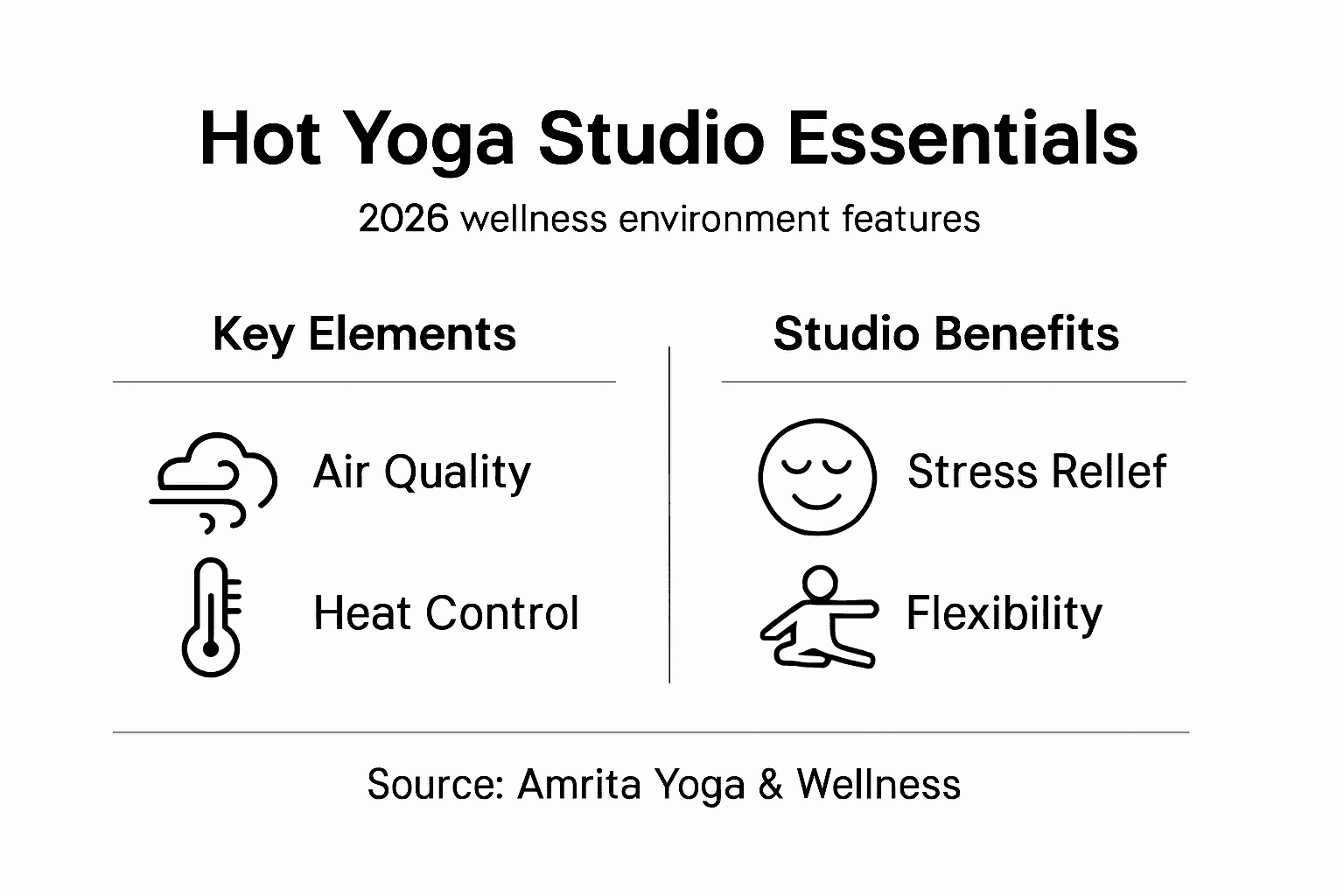
The core characteristics of a hot yoga studio include:
Temperature Control: Maintaining consistent heat between 30-52°C (86-125°F)
Humidity Regulation: Carefully managing humidity levels between 20-60%
Specialized Flooring: Mold-resistant, non-slip surfaces designed for heated practice
Air Quality Management: Contaminant-free ventilation systems
Acoustic Design: Minimal external noise to support meditative practice
The physiological benefits of these carefully curated environments are substantial. Advanced thermal yoga research demonstrates that controlled heat elevates heart rate, increases metabolic activity, and enhances overall cardiovascular performance during yoga sessions.
Professional hot yoga studios distinguish themselves through meticulous attention to environmental details. Unlike standard yoga spaces, these studios invest heavily in specialized heating systems, humidity controls, and air purification technologies to create a consistent, safe, and transformative wellness experience.
Pro tip: When selecting a hot yoga studio, request a facility tour to assess their temperature and air quality management systems, which are critical for a safe and effective practice.
Hot Yoga Styles and Heated Environments
Hot yoga encompasses a diverse range of practices characterized by intentionally heated environments designed to enhance physical performance and mental well-being. Comprehensive hot yoga research reveals multiple distinctive styles that transform traditional yoga experiences.
The primary hot yoga styles include:
Bikram Yoga: Fixed 26-pose sequence performed at 105°F with 40% humidity
Hot Vinyasa: Dynamic flow-based practice with variable sequences
Hot Hatha: Slower-paced practice emphasizing alignment and breath work
Power Hot Yoga: Intense, strength-focused heated practice
Hot Flow: Fluid movements linking breath and postures in heated environment
Temperature and humidity play critical roles in defining these practices. Hot yoga environmental conditions typically range from 90°F to 108°F, with humidity levels between 40-60%, creating a challenging yet transformative workout environment.
Here is a summary of how hot yoga styles differ by heat, difficulty, and focus:
| Style | Typical Temperature | Intensity Level | Core Focus |
|---|---|---|---|
| Bikram Yoga | 105°F (40°C) | High | Fixed sequence, alignment |
| Hot Vinyasa | 95–98°F (35–37°C) | Moderate to High | Fluid movement, strength |
| Hot Hatha | 95°F (35°C) | Moderate | Breath, alignment |
| Power Yoga | 96–99°F (36–37°C) | High | Strength, endurance |
| Hot Flow | 90–95°F (32–35°C) | Moderate | Flow, flexibility |
Each hot yoga style offers unique physiological benefits. The controlled heat increases core body temperature, enhances flexibility, accelerates metabolic processes, and provides a more intense cardiovascular experience compared to traditional yoga practices. Professional practitioners carefully design these heated environments to maximize physical and mental engagement.

Pro tip: Always hydrate thoroughly before and after hot yoga classes, and bring a towel and extra water to manage the intense heated environment.
Physical and Mental Health Benefits
Hot yoga represents a powerful approach to holistic wellness, offering profound transformations for both physical and mental well-being. Comprehensive cardiometabolic research reveals multiple evidence-based benefits that extend far beyond traditional exercise practices.
The key physical health benefits include:
Improved Body Composition: Enhanced metabolism and muscle definition
Cardiovascular Health: Better lipid profiles and vascular function
Increased Flexibility: Greater range of motion and joint mobility
Bone Density Support: Strengthening skeletal structure through weight-bearing movements
Enhanced Balance: Improved proprioception and core stability
Mental health outcomes are equally compelling. Regular hot yoga practice can potentially help manage stress, reduce symptoms of anxiety, and promote cognitive clarity. The combination of controlled breathing, challenging physical movements, and meditative focus creates a unique environment for psychological reset and emotional regulation.
Psychological benefits extend beyond immediate stress relief. Practitioners often report increased self-awareness, improved emotional regulation, and a greater sense of overall mental resilience. The heated environment challenges practitioners both physically and mentally, fostering a powerful mind-body connection that transcends typical workout experiences.
Pro tip: Start with shorter hot yoga sessions and gradually increase duration to allow your body and mind to adapt to the intense physical and mental challenges.
Common Myths and Safety Essentials
Hot yoga has accumulated numerous misconceptions that can potentially compromise practitioner safety and understanding. Hot yoga safety research reveals critical insights about managing risks and separating fact from fiction.
Common myths about hot yoga include:
Detoxification Myth: Sweating does not uniquely remove toxins from the body
Weight Loss Guarantee: Hot yoga alone cannot ensure significant weight reduction
Universal Fitness: Not suitable for all individuals, especially those with certain health conditions
Injury-Free Practice: Increased heat does not prevent potential physical strain
Absolute Performance: Individual results vary significantly based on personal fitness levels
Safety essentials are paramount in hot yoga practice. Practitioners must understand their personal health limitations, stay thoroughly hydrated, and listen carefully to their body's signals. People with heart disease, heat intolerance, or pregnant women should consult medical professionals before starting hot yoga.
Risk management involves more than physical preparation. Mental readiness, understanding personal boundaries, and maintaining consistent hydration are equally important. Proper breathing techniques, wearing appropriate moisture-wicking clothing, and taking breaks when needed can significantly reduce potential heat-related complications.
Pro tip: Conduct a personal health assessment and consult your healthcare provider before beginning hot yoga to ensure your individual safety and readiness.
Requirements, Costs, and What to Expect
Navigating the world of hot yoga requires understanding the specific requirements, financial investment, and realistic expectations for your wellness journey. Hot yoga studio insights reveal critical considerations for potential practitioners.
Typical financial considerations include:
Membership Options:
Drop-in rates: $15-$25 per class
Monthly unlimited memberships: $100-$200
Package deals: 5-10 class bundles with discounted rates
Equipment Costs:
Specialized yoga mat: $50-$100
Moisture-wicking clothing: $30-$80
Towel and water bottle: $20-$40
Practitioners should anticipate a comprehensive wellness experience that goes beyond traditional exercise. Each hot yoga session typically involves a structured environment maintained at temperatures between 90°F to 105°F, designed to challenge physical and mental boundaries while promoting holistic health.
Instructor qualifications play a crucial role in the hot yoga experience. Yoga studio requirements emphasize the importance of certified professionals who understand the nuanced demands of heated yoga practices. These instructors are trained to guide students safely through intense physical and thermal challenges.
Pro tip: Request a studio trial class or introductory package to experience the hot yoga environment without a significant financial commitment.
Is Hot Yoga Right for You? Alternatives Compared
Selecting the ideal yoga practice requires careful consideration of personal health, fitness goals, and individual physiological responses. Yoga practice recommendations highlight critical factors for making an informed decision about hot yoga suitability.
Alternative yoga styles for different fitness levels include:
Hatha Yoga:
Low-intensity, gentle movements
Ideal for beginners
Focus on basic postures and breathing
Iyengar Yoga:
Emphasizes precise alignment
Uses props for support
Great for injury rehabilitation
Vinyasa Flow:
Moderate intensity
Continuous movement
Suitable for intermediate practitioners
Restorative Yoga:
Minimal physical exertion
Uses props for complete relaxation
Best for stress reduction
Hot yoga presents unique challenges that may not suit everyone. Individuals with heart conditions, heat sensitivity, or chronic health issues should consult healthcare professionals before attempting heated practices. The intense thermal environment requires exceptional physical resilience and hydration management.
Below is a quick comparison of hot yoga and non-heated styles for different wellness needs:
| Yoga Type | Best For | Key Challenge | Environment |
|---|---|---|---|
| Hot Yoga | Flexibility, detox, sweat | Heat/humidity | Heated, humid |
| Hatha Yoga | Beginners, gentle movement | Slow progression | Room temperature |
| Iyengar Yoga | Injury recovery, precision | Alignment, props use | Room temperature |
| Vinyasa Flow | Stamina, coordination | Pace, transitions | Room temperature |
| Restorative | Stress relief, relaxation | Stillness | Room temperature |
The choice between hot yoga and alternative styles depends on personal wellness goals, current fitness level, and individual health considerations. Some practitioners might find the heat transformative, while others may prefer gentler, non-heated approaches that offer similar flexibility and strength benefits.
Pro tip: Consider trying multiple yoga styles through introductory classes to discover the practice that best aligns with your physical capabilities and wellness objectives.
Experience the True Benefits of Hot Yoga with Amrita Yoga & Wellness
The challenge of finding a hot yoga studio that prioritizes safe temperature control, expert instruction, and effective hydration management is real. If you want to enjoy all the physical and mental health benefits such as increased flexibility, cardiovascular improvement, and stress relief, it is essential to practice in a space designed for these needs. At Amrita Yoga & Wellness, we understand the importance of a properly heated and humidified environment along with qualified instructors who support your personal wellness journey.

Join our welcoming community in Philadelphia and discover diverse hot yoga classes tailored for all levels. Whether you are new to heated yoga or aiming to deepen your practice, our classes, workshops, and retreats provide the perfect opportunity to transform your wellness safely and effectively. Start today by exploring our class offerings and schedule at Amrita Yoga & Wellness. Take the next step toward a healthier body and a calmer mind with expert guidance in a supportive environment. Don’t wait your body and mind deserve the best experience in hot yoga now.
Frequently Asked Questions
What is a hot yoga studio?
A hot yoga studio is a specialized wellness environment designed to enhance yoga practice through controlled temperatures and humidity. These studios maintain temperatures between 30-52°C (86-125°F) and focus on air quality, flooring, and acoustics to create an immersive experience.
What are the main benefits of practicing hot yoga?
Hot yoga offers numerous benefits, including improved body composition, enhanced cardiovascular health, increased flexibility, better bone density, and benefits for mental health such as stress reduction and improved emotional regulation.
Are there different styles of hot yoga, and how do they differ?
Yes, there are various styles of hot yoga, including Bikram, Hot Vinyasa, Hot Hatha, Power Hot Yoga, and Hot Flow. Each style varies in temperature, intensity, and focus, catering to different preferences and fitness levels.
What should I consider before starting hot yoga?
Before starting hot yoga, consider your personal health limitations, hydration needs, and fitness goals. It is advisable to consult a healthcare provider if you have specific health concerns, particularly related to heat sensitivity or cardiovascular conditions.
Recommended
Why Choose Hot Yoga: Complete Benefits Breakdown — Amrita Yoga & Wellness
Understanding the Advantage of Hot Yoga for Wellness — Amrita Yoga & Wellness
Understanding the Hot Yoga Studio Experience — Amrita Yoga & Wellness
Online Training Benefits for Canadian Restaurants and Schools 2025 - Probe IT
Holistic Hair Care in 2025: Grow Stronger, Healthier Hair | MyHair