Reformer Pilates: What to Wear for Your First Class
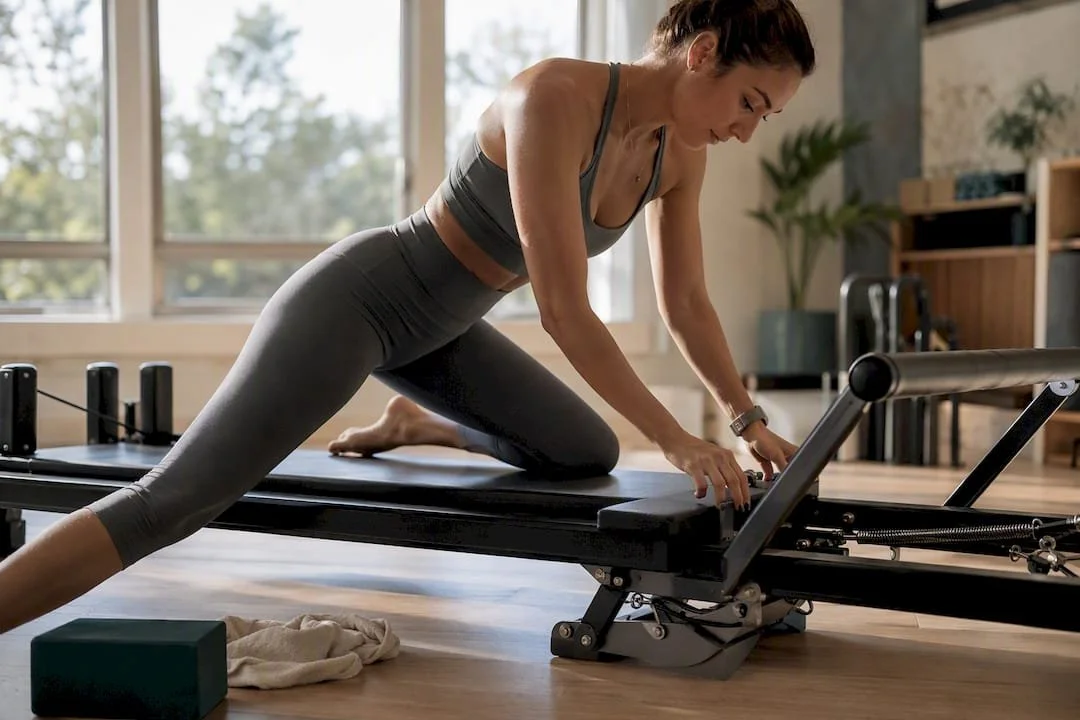
Wear fitted leggings or capris, a close-fitting top or sports bra, and grip socks (or check your studio's exact sock policy before you go). That combination gives instructors a clear view of your alignment and keeps you safe on equipment full of springs, straps, and moving carriages. Amrita Yoga & Wellness and most studio guides agree on the same core rule: skinny, stretchy, hardware-free clothing beats anything baggy or metal-trimmed, every time.
Must-haves: fitted leggings, a snug top, grip socks, and a light zip-free layer for before and after class.
Quick check: call or check the studio's website for its sock policy. Some require grip socks, others sell them at the front desk, and a few allow bare feet for advanced students.
Key Takeaways
Fitted, hardware-free clothing paired with grip socks protects reformer equipment and lets instructors correct alignment accurately in real time.
| Point | Details |
|---|---|
| Choose fitted, stretchy layers | Leggings, capris, and fitted tops let instructors see and correct your alignment. |
| Confirm sock policy first | Most studios require or sell grip socks; call ahead before assuming bare feet are fine. |
| Skip all hardware | Zippers, snaps, and buttons scratch upholstery and dig into you while lying down. |
| Pack the small essentials | Water bottle, towel, spare hair tie, and a light zip-free layer round out your bag. |
| Prioritize fit over price | A well-fitting inexpensive legging beats an expensive pair that slips or gaps. |
Table of Contents
Feet: Grip Socks, Bare Feet, And Why Regular Socks Don't Cut It
What To Avoid: Protecting Equipment And Respecting The Studio
Fabric, Fit, And Care: The Technical Side Of Getting Dressed
What To Wear For Reformer Pilates: The Two-Minute Checklist
Run through this before you walk out the door. It takes less time than finding a parking spot.
Put on fitted leggings or capris with a high waistband.
Add a fitted top, tank, or sports bra suited to the workout's intensity.
Grab grip socks (confirm the studio requires or sells them).
Tie back hair with a secure elastic.
Toss in your bag: a water bottle, a small hand towel, a spare hair tie, and slip-on shoes for after.
Layer up with a light, zip-free sweater or pullover for the walk in and out.
Wear your outfit on the way to the studio; pack the extras separately so you're not fumbling at the front desk.
Pro Tip: Text or call ahead if it's your first visit. Some studios include grip socks in the class price, so you might not need to buy your own before session one.
Tops: Sports Bras, Tanks, And Fitted Tees That Work
Loose shirts ride up the moment you roll onto your shoulders, and instructors lose their ability to spot a misaligned spine or hip through fabric that's bunched around your ribs. Fitted, stretchy clothing lets teachers see your actual body position and correct it in real time, which is the entire point of a reformer class over a solo workout video.
Sports bra support doesn't need to be heavy-duty. Reformer Pilates is low-to-medium impact, so a light or medium support bra usually does the job better than a high-impact running bra, which can feel restrictive during deep stretches and overhead arm work. Prioritize breathability and freedom of movement over structure.
A few fit details matter more than people expect:
Skip tops with back zippers, clasps, or thick decorative hardware that presses into the carriage when you lie down.
Choose flatlock seams over raised or bulky stitching to avoid rubbing during rollovers and bridges.
Long sleeves are fine, but make sure the cuffs are snug so they don't catch on springs during arm work.
Before you leave the house, test your top the way you'll actually use it. Lie down, roll your shoulders back, and reach your arms straight overhead. If your shirt creeps up or gaps at the stomach, it'll do the same thing mid class.
Bottoms: Leggings, Capris, And When Shorts Actually Work
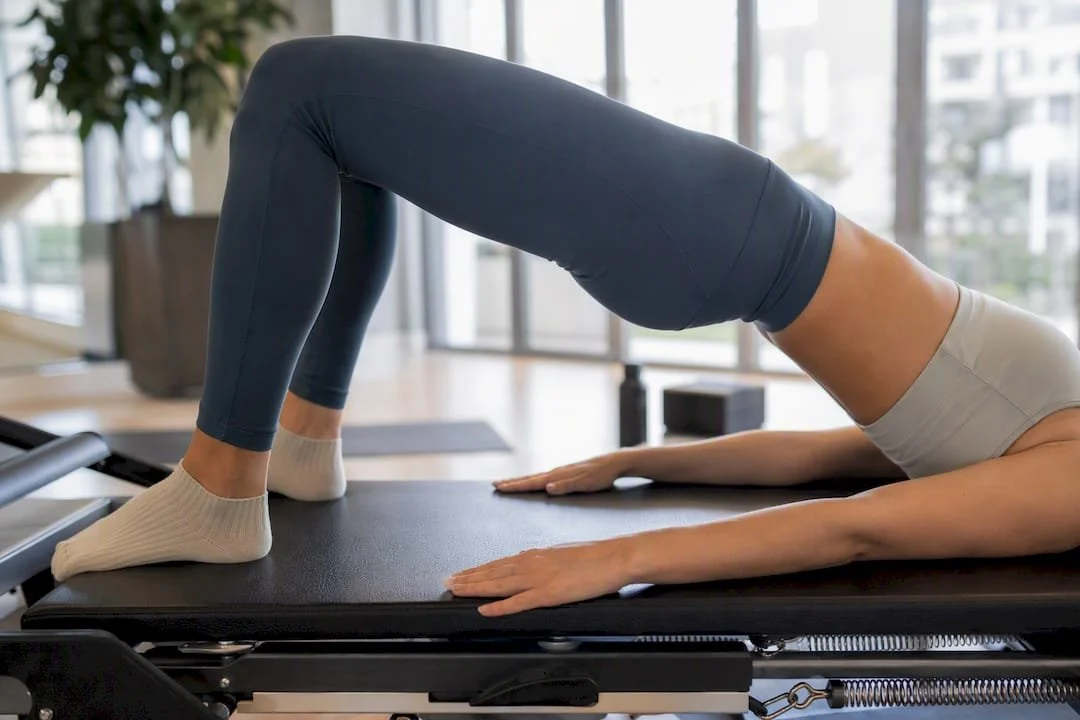
Full-length leggings or capris with a high, wide waistband are the safest bet for reformer work. You'll spend a lot of the class on your back, in bridge position, or inverted with your hips off the carriage, and a low-rise waistband has nowhere to go but down. A high waist stays put through those transitions instead of sliding and forcing you to adjust mid-exercise.
Shorts aren't off the table, but the bar is higher than for a regular gym session. Go for fitted bike shorts that hit mid-thigh, not running shorts with a loose leg opening. Anything with a wide leg can catch on the foot straps or bunch up under your knees during footwork series.
What to skip entirely:
Bottoms with zippers, snaps, buttons, or grommets that can scratch the upholstery.
Loose sweatpants or joggers that obscure your leg and hip alignment from the instructor's view.
Anything with thick outer seams that dig in when you're lying flat.
Do a squat test and a lie-down test before committing to a new pair: squat low to check for see-through fabric, then lie flat and pull your knees to your chest to confirm nothing gaps or slides.
Feet: Grip Socks, Bare Feet, And Why Regular Socks Don't Cut It
Most reformer studios require or strongly recommend grip socks, and the reasoning is part safety, part hygiene. The carriage and footbar get slick with sweat over a full day of back-to-back classes, and rubber-gripped soles keep your feet from sliding when you're pressing against the footbar at odd angles. Bare skin on shared equipment is also simply less sanitary for a studio running six or eight classes a day.
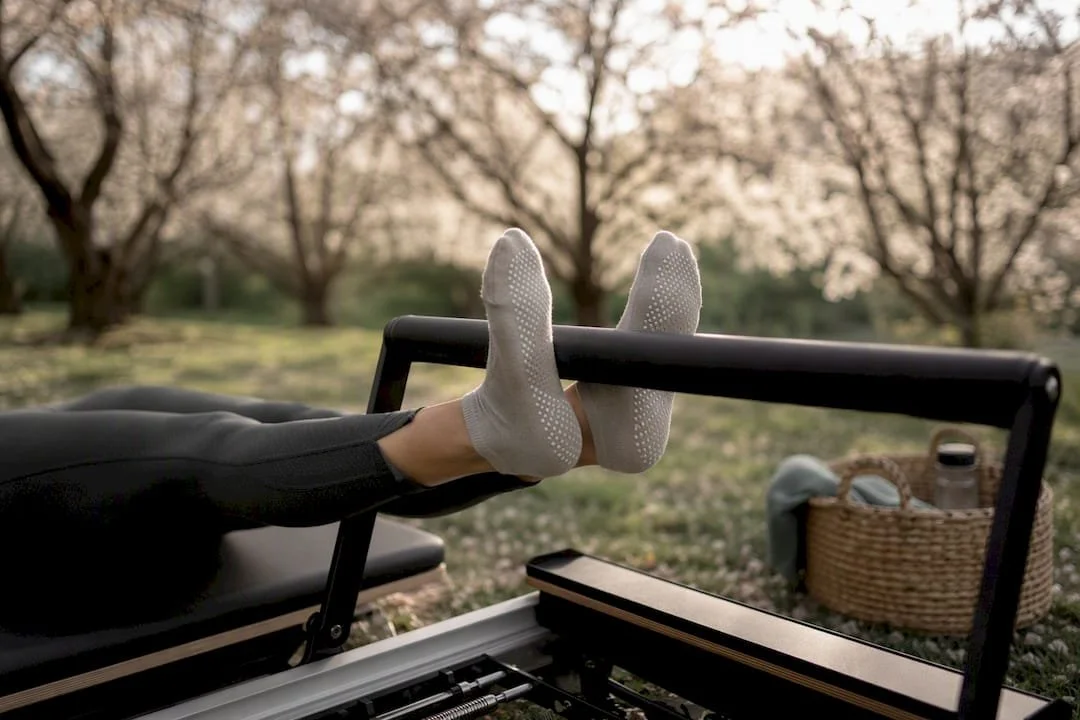
Barefoot practice has its place. Advanced students sometimes prefer it for the extra proprioceptive feedback, since you can feel exactly how your foot is contacting the bar or strap. Even so, many studios still ask everyone to wear socks regardless of experience level, so don't assume bare feet are automatically fine just because you've taken a hundred classes elsewhere.
When shopping for grip socks, look for:
Full-sole rubber grip patterns, not just a few dots on the heel and ball.
A snug, non-slouching fit that won't twist around your foot mid-exercise.
Toe coverage for hygiene and comfort against the footbar.
Regular ankle socks or sneakers have zero place on a reformer. Cotton socks slide on the metal carriage, and shoes damage the padded surface entirely.
Layers, Towels, And The Small Stuff Worth Packing
A light, zip-free layer, like a pullover hoodie or a soft cardigan, is the easiest thing to throw on before class and shed once you warm up. Anything with a zipper or snap ends up pressed into the carriage the moment you lie down, so stick to pullover styles you can peel off in five seconds and toss on the floor beside your mat.
A small hand towel and a water bottle round out the basics. Keep both near the head of the reformer rather than on the carriage itself, where they'll get knocked around during footwork.
Don't forget:
A spare hair tie or two. One always breaks at the worst moment.
Slip-on shoes for the walk to your car afterward.
Deodorant or a small toiletry bag if you're heading straight to work.
Long hair needs to be tied back securely, not just pulled into a loose bun. You'll spend real time with your head resting on the carriage's headrest, and loose strands can catch in the springs.
What To Avoid: Protecting Equipment And Respecting The Studio
Zippers, buttons, metal snaps, and bulky decorative hardware are the single biggest offender in reformer studios. They scratch upholstery and dig into the carriage padding every time you lie down, which is why so many studios post a no-hardware rule right on their intake forms. It's not a style preference. It's equipment maintenance.
A few etiquette basics round things out:
Leave dangly necklaces, bracelets, and long earrings at home. They swing into straps and springs.
Skip heavy lotion or oil right before class since it makes hands and feet slip on the bar and straps.
Arrive a few minutes early, follow the studio's sock and towel rules, and keep bags and shoes off the equipment itself.
Go light on perfume or strong scents. Reformer rooms are small, and everyone's breathing hard a few feet from each other.
Fabric, Fit, And Care: The Technical Side Of Getting Dressed
Four-way stretch, moisture-wicking fabric is worth paying attention to on the label, because it moves with the carriage and pulls sweat away instead of trapping it against your skin. Cotton blends tend to get heavy and cling once you're a few exercises in.
Flatlock seams matter more than most people realize until they've spent forty-five minutes lying on a raised seam that digs into a hip bone. Smooth waistbands and flat inner seams reduce those pressure points considerably over a full class.
Run a quick opacity check before wearing anything new to class: bend and squat in front of a mirror to catch see-through spots you'd never notice standing still.
Pro Tip: Skip fabric softener when washing performance leggings. It coats the fibers and breaks down the stretch and moisture-wicking finish over time, which is why a two-year-old pair of leggings sometimes feels stiffer than the day you bought them.
Wash in cold water and skip the dryer's high heat setting to preserve elastic fibers.
Air dry when possible; it extends the life of stretch fabric noticeably.
How Amrita Yoga & Wellness Instructors See Clothing Choices
Instructors read your body through your clothes before you say a word. Fitted fabric lets a teacher spot a hip that's dropping during a hundred series or a shoulder creeping toward your ear during footwork, corrections that are much harder to make when leggings are baggy or a shirt has bunched around your midsection.
Equipment protection is the other half of the equation. Amrita Yoga & Wellness asks students to skip hardware and heavy zippers specifically because a single class of eight students lying on the same carriage adds up fast in wear and tear.
Minimal, fitted clothing without metal or bulky trim protects shared equipment and gives instructors a clear line of sight to correct alignment in real time.
Before your first visit, confirm a few things directly with the front desk:
Whether grip socks are required, included, or sold on-site.
Where to store shoes, bags, and towels during class.
Any specific policy on jewelry or loose layers near the equipment.
Where To Learn More Before Your Next Class
A few more resources round out what to expect once you're on the carriage. If you're brand new to the equipment itself, Amrita Yoga & Wellness's beginner's guide to reformer classes walks through what a typical session looks like. For more on why the equipment builds strength and flexibility, the core strength and flexibility breakdown is worth a read, and the studio's full tag archive collects more reformer-specific posts. On the fitness side, this pre-workout activation guide offers useful context on warming up before a session.
The Studio Perspective Nobody Talks About Enough
Most articles on this topic read like a shopping list dressed up as advice: buy this brand, that legging, this exact sports bra. That framing misses the point entirely. The actual research consensus, echoed across studio guidance from Amrita Yoga & Wellness and independent Pilates outlets alike, has nothing to do with brand and everything to do with two things: can your instructor see your alignment, and will your clothing damage shared equipment.
That's a narrower, more useful question than "what's trendy." A ten-dollar pair of fitted leggings that stays put through an inversion beats a sixty-dollar pair that gapes at the waist. Grip socks matter less for fashion and more because a studio running back-to-back classes needs traction and hygiene it can count on.
If you take one thing from all of this, prioritize fit and hardware over everything else. Everything downstream, comfort, safety, even how much correction you get from your instructor, follows from those two decisions.
— Juiced