Hot Yoga What to Wear: Comfortable, Non-Slip Outfits
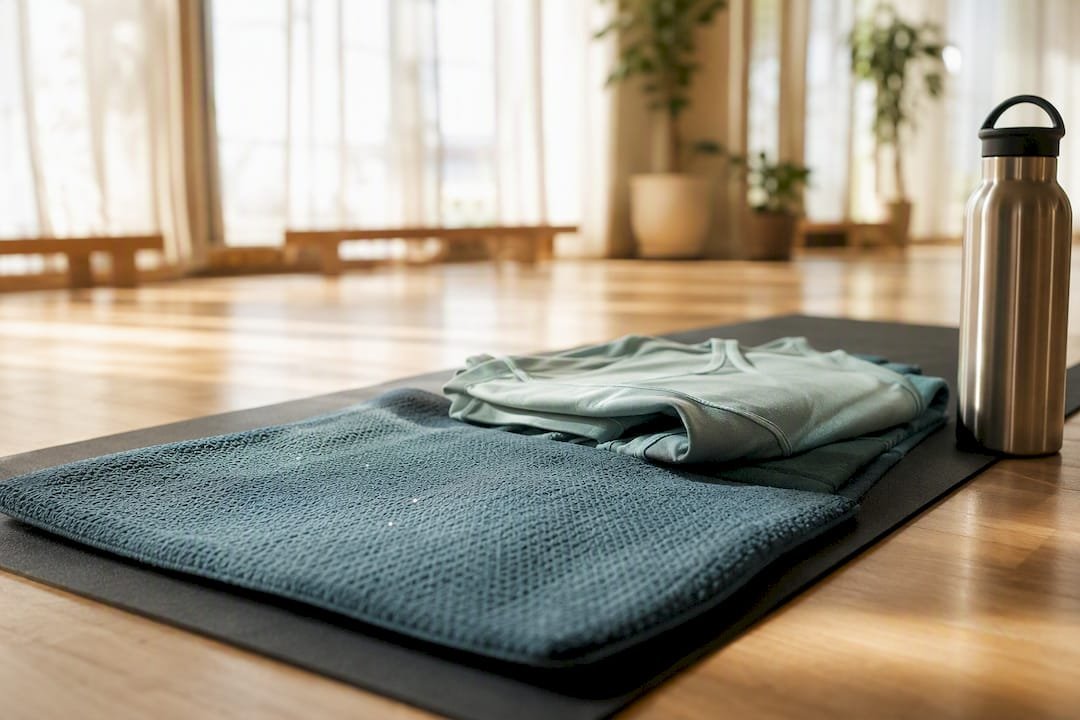
Wear fitted, moisture-wicking layers, as little as you're comfortable in, and skip anything cotton. Bring a full-length mat towel and a large water bottle, since both matter as much as the outfit itself.
Choose synthetic, sweat-wicking fabric over cotton
Keep everything fitted, not baggy
Pack a mat towel for grip once sweat starts pooling
Bring more water than you think you'll need
Key Takeaways
The right hot-yoga outfit is fitted, moisture-wicking, and minimal, paired with a mat towel and enough water to last the full class.
| Point | Details |
|---|---|
| Skip cotton entirely | Cotton absorbs sweat, gets heavy, and chafes; choose polyester or nylon blends with spandex instead. |
| Fit beats coverage | High waistbands and flat seams stay put through folds and inversions better than loose or low-rise cuts. |
| Bring a mat towel | A full-length towel restores grip once a standard mat gets slippery with sweat. |
| Pace and hydrate | Pre-hydrate all day, bring at least 24 ounces of water, and modify poses when needed. |
| Amrita supports comfort | Amrita Yoga & Wellness requires a mat towel and keeps heated rooms in a consistent temperature range for first-time comfort. |
Table of Contents
Why Fabric Choice and Fit Change Everything in a Heated Room
In a room running 90 to 105 degrees Fahrenheit, sweat doesn't just make you damp. It soaks straight through fabric within the first fifteen minutes, and what happens next depends entirely on what you're wearing. Cotton absorbs that moisture and holds onto it, getting heavier by the minute and clinging to your skin in a way that turns every forward fold into a wrestling match with your own shirt.
Fitted synthetic clothing behaves differently. It stays close to the body through inversions and binds, so nothing shifts or gapes when you're upside down or twisted into a bind. Loose fabric flops, bunches, and drags against your skin during transitions, which creates friction burns you won't notice until the shower stings.
Fast-drying material also keeps your grip intact. A soaked cotton sleeve sliding across your own knee mid pose is how balance gets lost fast.
Pro Tip: Before your first class, wet the garment in the sink and do a few squats and forward folds while damp. If it clings, sags, or turns see-through, leave it home.
How to Choose Bottoms: Shorts, Capris, or Leggings
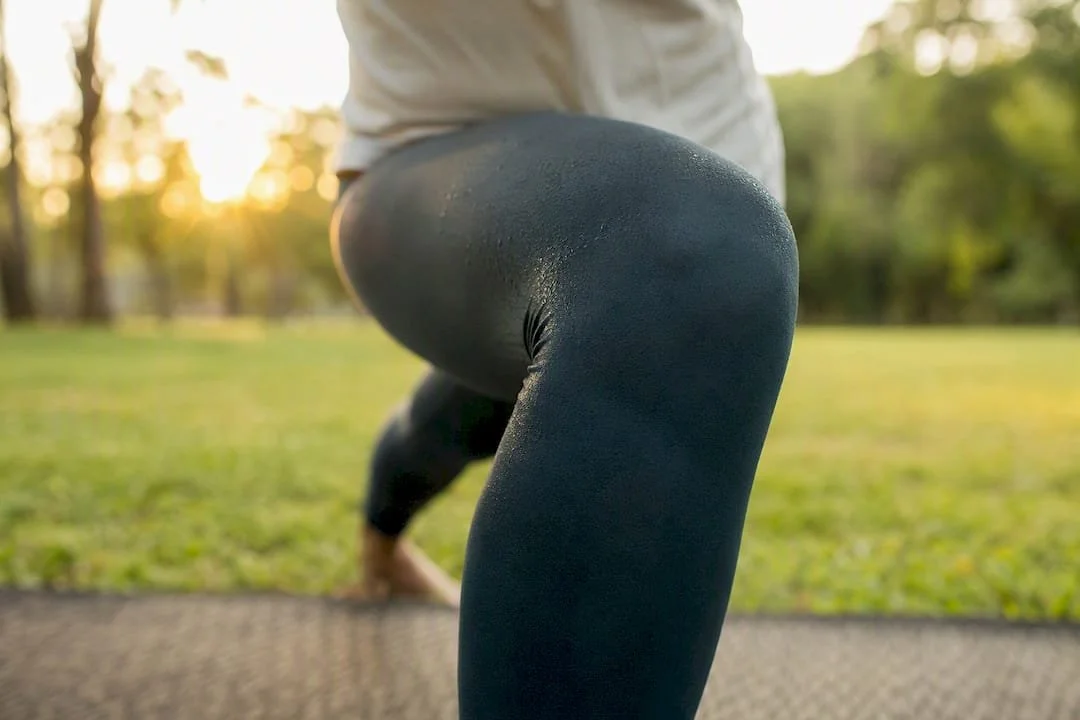
Bottoms make or break a hot class, and the right choice depends on your heat tolerance more than fashion. Shorts dump heat fastest since more skin stays exposed to circulating air. Full-length leggings trap more heat but give your calves and thighs something to grip against when limbs press together in poses like eagle or bound triangle, a tradeoff Adidas highlights as largely a matter of personal preference. Capris sit in the middle, offering a bit of grip at the knee without the full heat load.
Fit details matter more than fabric here. A high waistband stays put through folds and inversions, while low-rise cuts tend to slide and demand constant readjusting, a point Dragonfly's Bikram guide makes repeatedly for beginners. Flat seams at the inseam prevent chafing on longer holds, and anything with visible stitching along the inner thigh is worth trying on before buying.
| Bottom Style | Best For | Watch Out For |
|---|---|---|
| Shorts | Beginners, high heat tolerance, faster cooling | Fabric riding up during binds |
| Capris | Balanced grip and airflow | Bunching at the knee if loose |
| Full leggings | Grip-heavy poses, cooler personal preference | Overheating in advanced heated formats |
- Test any bottom by squatting and folding forward before buying
- Choose darker colors if you're worried about see-through fabric when wet
Tops and Support: Sports Bras, Tanks, and Men's Options
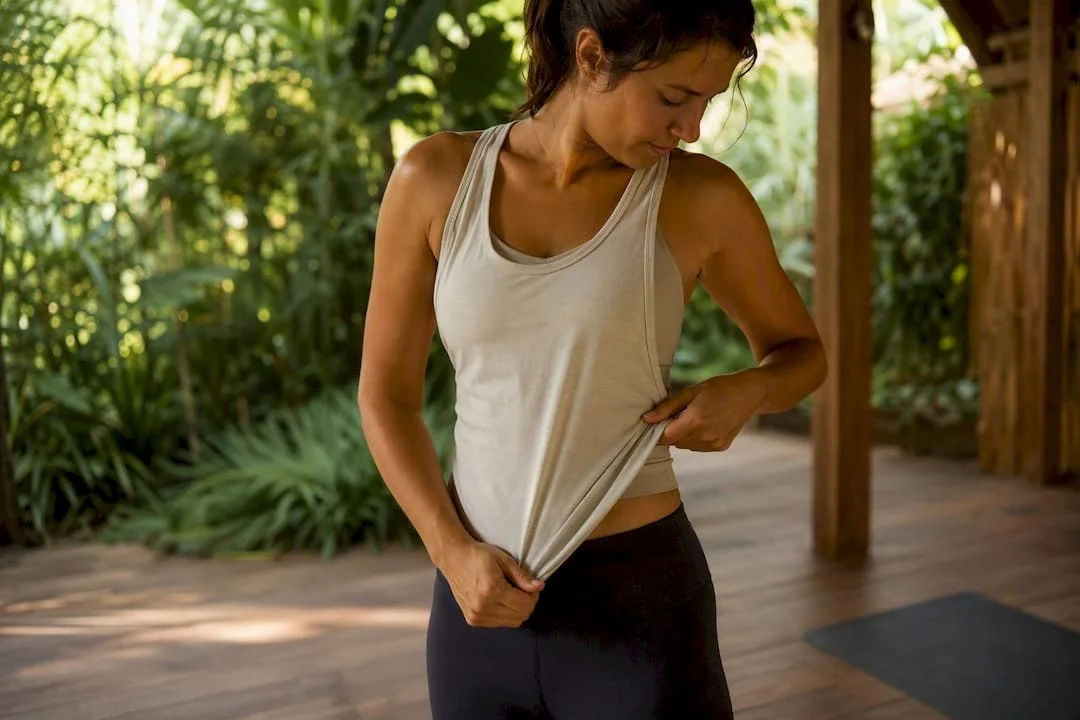
For women, a well-fitted sports bra alone is common in serious hot yoga rooms, and it's worth choosing one built for sweat rather than gym-general use. Heavy padding traps heat against the chest and takes forever to dry, so a thin, compressive style usually wins over a padded one. If you want more coverage, a fitted crop top or racerback tank layered over the bra works fine as long as it stays snug through inversions.
Men generally go shirtless or wear a fitted, lightweight wicking tee. Loose tank tops flap and stick unevenly once they're soaked, which becomes distracting fast in a packed room. Nike's hot-yoga guidance points toward relaxed drawstring shorts paired with minimal, close-fitting tops for exactly this reason.
If modesty matters more than minimal coverage, layer a fitted long-sleeve rash guard style top instead of a loose t-shirt. It stays put and doesn't add the bulk that traps heat.
Pro Tip: If you're new and unsure what's appropriate, arrive in a fitted tank over your sports bra. You can always peel it off mid-class once you see what everyone else is wearing.
Skip anything with thick foam padding
A racerback style prevents strap slippage during arm balances
Rash guard fabric works well for modest coverage without added heat
Technical Fabrics and Features to Prioritize
Look for polyester or nylon blends with a percentage of spandex worked in. That spandex is what makes fabric snap back into shape instead of sagging once it's wet, and it's the difference between leggings that stay opaque during a deep squat and ones that suddenly go see-through. Some brands market dedicated "wicking" lines built specifically for sweat-heavy workouts. A lightweight merino wool top is a niche option some practitioners use in cooler heated rooms, though it's far less common than synthetics.
Flat-lock seams matter more than most shoppers realize. Raised seams rub raw over an hour-long class, especially at the inner thigh and underarm. Compression fits, built-in bra liners, and squat-proof opacity testing (some brands publish this explicitly) are worth checking before you buy anything for regular hot-class use.
On the tag, trust language like "moisture-wicking," "quick-dry," or "performance fabric." Avoid anything listing 100% cotton or heavy cotton-poly blends as the dominant material, since experts consistently flag cotton as the top thing to skip for hot yoga specifically.
Prioritize polyester/nylon with spandex over cotton blends
Check for flat-lock seams on anything you'll wear for a full class
Look for "squat-proof" or opacity-tested claims on leggings
What Not to Wear to Hot Yoga
A few items consistently derail a hot class. Cotton tops that up soaking through in minutes and staying heavy the rest of class. Baggy shorts or tanks that shift, gape, or drag against sweaty skin during transitions. Heavy padded bras that trap heat right where you're already overheating.
Jewelry, especially rings and long necklaces, gets slippery and can catch during poses or slide off entirely. Phones left in pockets are a hazard once fabric goes damp and pockets sag. Brand-new, untested clothing is its own risk since you won't know how it behaves wet until you're mid-class and it's too late to change.
One exception worth flagging: aerial yoga generally calls for more coverage than standard hot yoga, since fabric interacts directly with the silk hammock. Don't assume the same minimal outfit works for every style.
Skip cotton, jewelry, loose gear, and anything you haven't test-worn
Leave phones and keys in a locker, not a pocket
Accessories and Class Essentials
Clothing is half the equation. The other half is gear that keeps you from sliding across your own mat once sweat starts pooling.
A full-length mat towel is close to essential once you're regularly sweating through class, since a standard mat turns dangerously slick without one covering the whole surface. A small hand or face towel handles the sweat dripping into your eyes between poses.
For water, bring an insulated bottle that holds at least 24 ounces, more if your class runs past an hour. Add an electrolyte packet for longer sessions since plain water alone doesn't replace what you're losing.
Mat towel or grippy hot-yoga specific mat surface
Insulated water bottle, minimum 24 ounces
Small face or hand towel
Hair tie or headband
Plastic wet bag for soaked clothes after class
Flip-flops if your studio has a shower
Grip aids matter more than expensive mats; a good towel beats a mediocre mat every time
New students should pack items 1 through 4 at minimum before worrying about extras
Fit Checks, Modesty Hacks, and On-the-Mat Tips
Try this before you ever step into the heated room: fold forward, twist side to side, and reach overhead in whatever you're planning to wear. Anything that gapes, rides up, or feels tight enough to restrict a deep breath will only get worse once it's wet.
For modesty, a high waistband paired with built-in liners handles most concerns without adding bulk. Darker colors hide sweat patterns and reduce see-through risk far better than pastels or white. If you're arriving straight from work, throw a lightweight zip-up over your outfit for the walk in. Just remove it before you're on the mat.
Pro Tip: Instructors often notice that students who stop fidgeting with their waistband by class three usually made one small change: they switched to a high-rise bottom instead of buying a different top.
Do the fold-twist-reach test at home before wearing anything new to class
Choose dark, high-waisted bottoms if modesty is a concern
How to Wash and Care for Hot-Yoga Clothes and Towels
Wash wicking fabric and mat towels in cold water, and skip fabric softener entirely, since it coats synthetic fibers and kills the wicking ability that made them worth buying. Air-dry when possible or use low heat, since high dryer heat breaks down spandex over repeated cycles.
The moment class ends matters too. Rinse sweaty gear in the sink if you can before it sits, or at least toss it straight into a sealed wet bag rather than a closed gym bag, where trapped moisture breeds odor within hours.
Retire leggings once they've gone visibly thin or lost opacity in a squat test, held up to light after a wash. Sports bras lose elasticity faster than leggings do, so check support every few months rather than waiting for visible wear.
Cold wash, no fabric softener, air-dry or low heat only
Rinse or bag sweaty gear immediately, never leave it sealed in a closed bag overnight
Hydration, Pacing, and Safety Reminders
Pre-hydrate throughout the day rather than chugging water right before class. A room in the 90 to 105 degree range pulls fluid out of your body fast, and showing up already dehydrated makes that worse from minute one.
Bring water and consider electrolytes for longer classes. Pace yourself: modifying a pose or dropping to child's pose is normal, not a failure, and telling your teacher you're feeling lightheaded takes five seconds and prevents a much bigger problem.
If you have a heart condition, are pregnant, or manage any condition affected by heat, check with a healthcare provider before your first hot class. Room temperatures that push toward the higher end of that 90 to 105 degree range aren't a small variable for some bodies.
Hydrate all day, not just right before class
Modify or rest anytime; tell your instructor if you feel dizzy
Quick Pack Checklist Before You Go
Copy this before your next class:
Mat
Full-length mat towel
Water bottle, filled and cold
Face or hand towel
Hair tie
Change of dry clothes
Wet bag for soaked gear
Optional grip socks
Pack the wet bag at the top of your gym bag so soaked items never touch your dry change of clothes on the way home.
Studio-Tested In-Class Tips From Amrita Yoga & Wellness
Amrita Yoga & Wellness runs its heated classes with the same fundamentals covered above: a full-length mat towel is required once your mat starts to get slippery, and the room stays within a controlled, consistent heat range so your body isn't guessing what to expect each visit. Instructors regularly tell first-timers the same thing: wear less than you think you need and see how the first fifteen minutes feel.
New students consistently ask the same two questions before their first hot class at the studio:
"Do I need to bring my own towel?" Yes, and a full-length one covers more of the mat surface than a small gym towel.
"Is it too hot if I feel lightheaded early?" That's a cue to sit down, not push through, and teachers actively watch for it.
"What if my clothes feel wrong mid-class?" Most students adjust their outfit choices by their second or third visit once they know how their own body handles the heat.
Check the studio's hot yoga preparation resources for more on what a first visit actually feels like.
Your Outfit Choice Is Personal, and It Changes
Everyone tweaks this over their first few classes. What felt fine at class one might feel too warm by class five as your body adjusts to the heat, and it's common to end up wearing less over time rather than more. Try the checklist above, notice what actually works for your own sweat patterns, and adjust from there. There's no single correct outfit, only the one that lets you stay focused on the poses instead of your waistband.
Ready to Try a Hot Class at Amrita?
Amrita Yoga & Wellness runs heated classes in a controlled temperature range with a straightforward towel policy: bring a full-length mat towel, and the studio handles the rest of the room conditions so you're not guessing what to expect walking in. That predictability is the real advantage over trying to piece together hot-yoga habits solo from online guides.
For your first visit, bring the essentials covered above, a mat towel, water, and a change of clothes, and arrive a few minutes early so a teacher can point you to a spot near the door if you're new to the heat. Browse class times and book your first hot yoga session directly through the studio's schedule, or explore tarot readings if you're curious about Amrita's broader wellness offerings while you're there.