Studio Backed Pilates Class: What to Expect in Your First 45–60 Minute Session
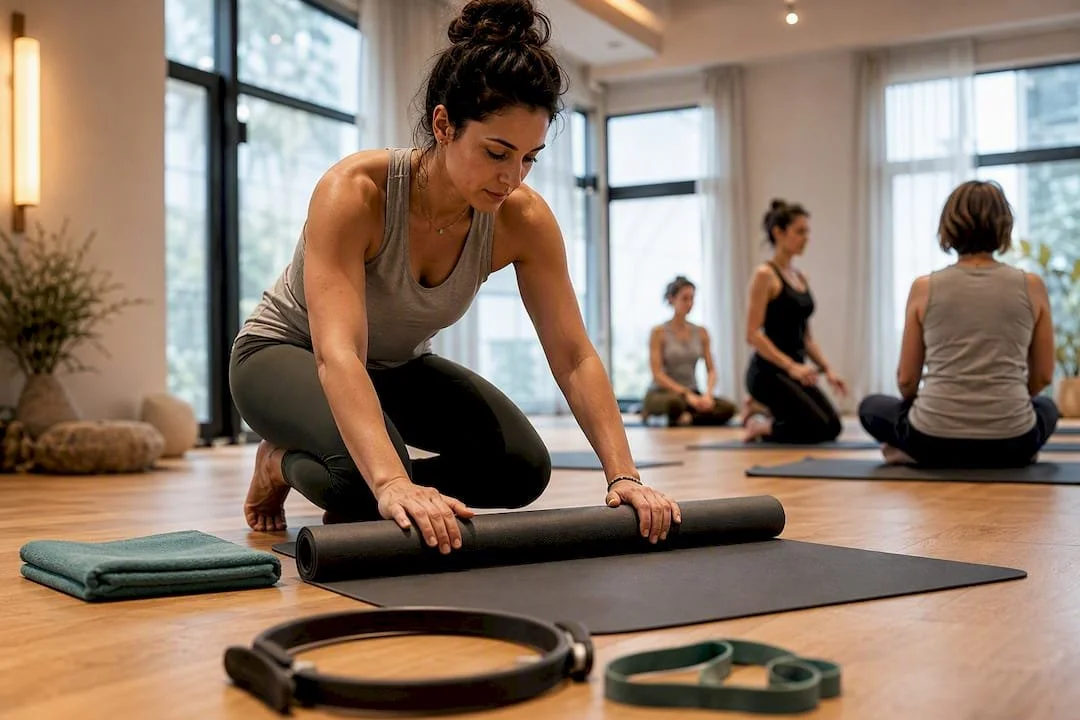
A Pilates class is a 45 to 60 minute, instructor-led workout built around controlled, low-impact movements that strengthen your core, sharpen posture, and improve flexibility. Most beginners start with a mat class or a small reformer session, using breathwork and precise form instead of speed or heavy weight. You don't need experience. You do need to ask for modifications and pick a beginner-friendly class or private session for your first time.
TL;DR:
Most beginners should start with mat classes or private reformer sessions to learn proper form and avoid developing bad habits.
Reformer classes offer more personalized correction and easier modifications but require an introductory session for first-timers nervous about equipment use.
A typical class emphasizes controlled, deliberate exercises focusing on core stability, with slower pacing and verbal cues rather than high intensity or speed.
People with certain health conditions should consult a doctor before starting Pilates and report any injuries or limitations to their instructor.
Proper attire includes fitted, stretchy clothing and grip socks, and arriving early helps ensure a smooth, informed first experience.
Table of Contents
What Is Pilates and How Does It Actually Work?
Joseph Pilates called his method "Contrology" for a reason. He built it around controlling the body, not just moving it. That distinction still shapes every class you'll take.
Pilates rests on a handful of core principles, and once you know them, the exercises make a lot more sense:
Breath: Coordinated inhales and exhales cue when to contract or release, and they keep you from holding your breath during hard moves.
Control: Every movement is deliberate. No momentum, no flailing.
Concentration: You're focused on the working muscle the entire time, which is part of why an hour of Pilates feels mentally different from an hour on a treadmill.
Center (the "powerhouse"): Your abdominals, lower back, hips, and glutes act as the stabilizing hub for nearly every exercise.
Precision: A small, correct movement beats a large, sloppy one.
Flow: Exercises link together with smooth transitions rather than stopping and starting.
These principles push instructors toward exercises that target stabilizer muscles rather than the high-rep, high-heart-rate work you'd get in a cardio class. That's why a Pilates session can leave your deep core muscles shaking while your heart rate barely climbs.
Mat, Reformer, or Something Else? Common Class Formats
Not every Pilates class looks the same, and the format you pick changes what your first session feels like.
Mat Pilates is the most accessible entry point. You use your own body weight plus small props like resistance bands or a Pilates ring, which makes it easy to practice at home once you know the moves. Most beginners start here.
Reformer and equipment-based classes use a sliding carriage attached to springs, which add resistance and support at the same time. The springs can make an exercise harder or make it easier, depending on how the instructor sets them up. These classes tend to run smaller than mat classes, sometimes as private sessions, because the equipment needs closer supervision.
Beyond the reformer, some studios offer chair work, the Cadillac (a raised table with bars and straps), and various props. Instructors typically choose formats based on your goals, whether that's rehab, general conditioning, or building toward more advanced work.
A few points to weigh before booking:
Mat classes are cheaper, easier to find, and translate well to home practice.
Reformer classes usually mean smaller groups and more individualized correction.
You can mix formats once you're comfortable with the fundamentals.
Pro Tip: If you're curious about the reformer but nervous about the machine, book a private or beginner-specific session first. Learning foot placement and strap setup with an instructor watching closely prevents the compensatory habits that trip up people who jump straight into a group class.
What Actually Happens During a Pilates Class
A typical class follows a predictable arc, which helps if you've never done one before.
Warm-up. You'll start with breathing exercises and gentle mobilization, like pelvic tilts or spine curls, to wake up the muscles you're about to use.
Core activation. Early exercises target the deep abdominals and pelvic floor, setting the "powerhouse" that supports everything else.
Supine and prone sequences. You'll move through exercises lying on your back and stomach, working through controlled leg circles, single-leg stretches, or swan-style extensions.
Standing and balance work. Later segments often add standing exercises that challenge balance and coordination using the same control principles.
Cooldown and stretching. The class winds down with static stretches and slower breathing to bring your heart rate and nervous system back to baseline.
Expect verbal cues throughout, things like "scoop your navel" or "lengthen through the crown of your head." In smaller classes, instructors may offer hands-on adjustments to correct your alignment, while larger mat classes rely more heavily on verbal instruction since there's less time to reach everyone individually. The pacing is slower and more deliberate than a cardio class, with pauses built in to check form before moving to the next exercise.
The Real Benefits of Practicing Pilates Regularly
The benefits people actually notice tend to show up in daily life before they show up on a scale. Better posture. Fewer aches after sitting at a desk all day. Easier time balancing on one foot while putting on socks.
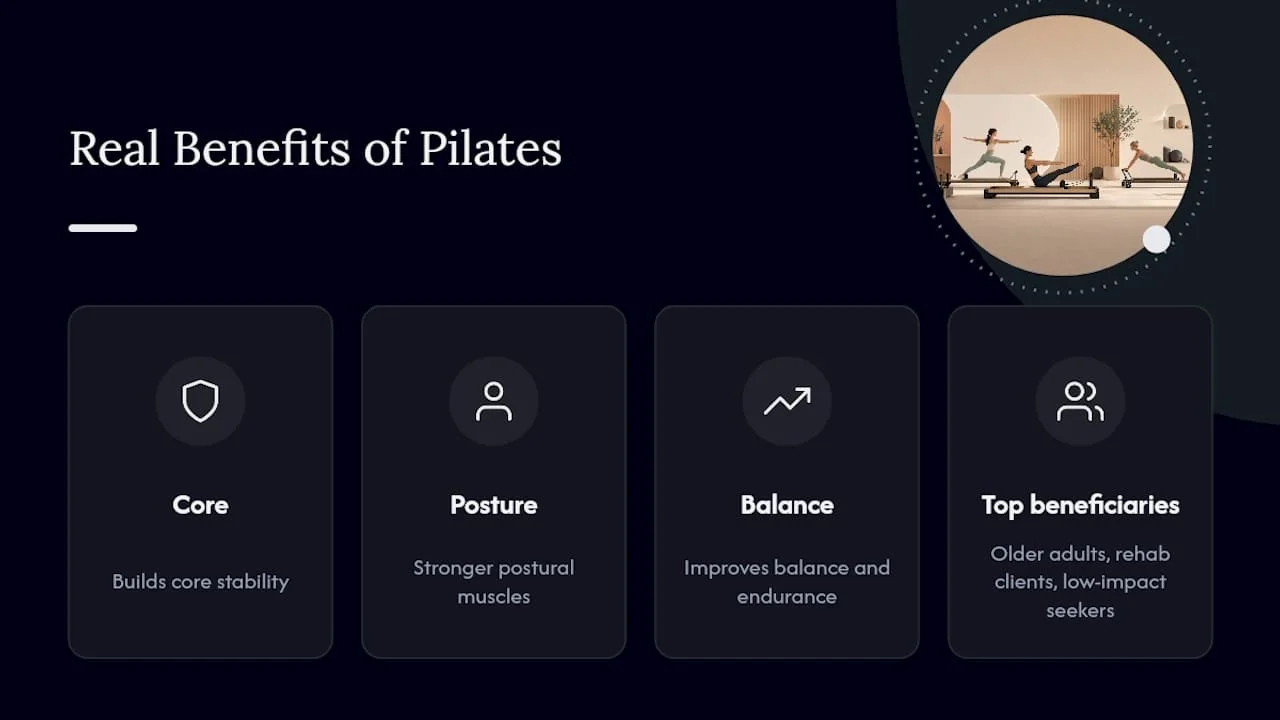
Regular practice builds core stability, strengthens postural muscles, improves flexibility, and sharpens balance and muscular endurance over time. Scientific literature on Pilates includes trials examining its effects on pain, function, and fitness markers, and Pilates is frequently used in injury prevention and rehab settings when a qualified instructor guides the progressions.
Certain groups tend to see the biggest payoff. Older adults benefit from the low-impact nature and balance work, rehab clients use it to rebuild strength safely after injury, and anyone chasing low-impact strength gains and better posture without pounding their joints tends to stick with it longer than higher-impact alternatives.
Is Pilates Safe for You? Modifications and When to Check With a Doctor
Pilates is one of the more adaptable workouts you can walk into, which is exactly why it works for such a wide range of bodies. But adaptable doesn't mean risk-free for everyone.
If you have a herniated disc, recent surgery, osteoporosis, or a cardiovascular condition, get medical clearance before starting. Health experts note that Pilates builds strength and tone without bulking, and that it adapts well for older adults, but any existing condition deserves a conversation with your doctor first.
Once you're cleared to practice, a few things make the experience safer:
Tell your instructor about any injuries or limitations before class starts, not halfway through.
Ask for modifications on exercises that stress a specific joint or area.
Book a private session if you have complex mobility issues that need one-on-one attention.
Stop and speak up if you feel sharp pain, dizziness, or numbness. Those are signals to modify or rest, not push through.
Getting Ready for Your First Class: What to Wear and Bring
Show up prepared and your first class feels a lot less intimidating.
Wear fitted, stretchy clothing. Loose shirts and baggy shorts tend to get in the way when an instructor needs to see your alignment or when you're moving through floor work. Grip socks aren't mandatory everywhere, but many reformer studios either require or strongly recommend them since bare feet can slip on the carriage.
Beyond clothing, a short checklist covers most of what you need:
Water bottle and a small towel, especially for warmer studio rooms.
Any medical clearance paperwork if your doctor recommended it.
Arrive 10 to 15 minutes early to fill out intake forms and meet your instructor.
Book a beginner-labeled class or a private session for your very first reformer experience.
Pro Tip: Mention any past injuries to your instructor before class, even minor ones. A five-second heads-up lets them adjust your setup before you start, instead of correcting form mid-exercise.
How Amrita Yoga & Wellness Supports First-Timers
Amritayogawellness runs both mat and reformer classes with programming built specifically for beginners, so you're never dropped into an advanced sequence on day one. The studio's Pilates exercises blog breaks down individual movements and alignment cues, and the beginner Pilates guide walks through what a first-timer should expect before ever stepping into the studio.
If you're weighing whether to start on the mat or try the reformer, the studio's guide on reformer basics for beginners covers foot placement, spring setup, and the small details that make that first machine session feel far less confusing.
What Beginners Get Wrong About Starting Pilates
Most beginners assume Pilates is either too gentle to matter or too advanced to try without months of prep. Neither is true, and that misconception keeps people out of a class that's specifically designed to meet them where they are.
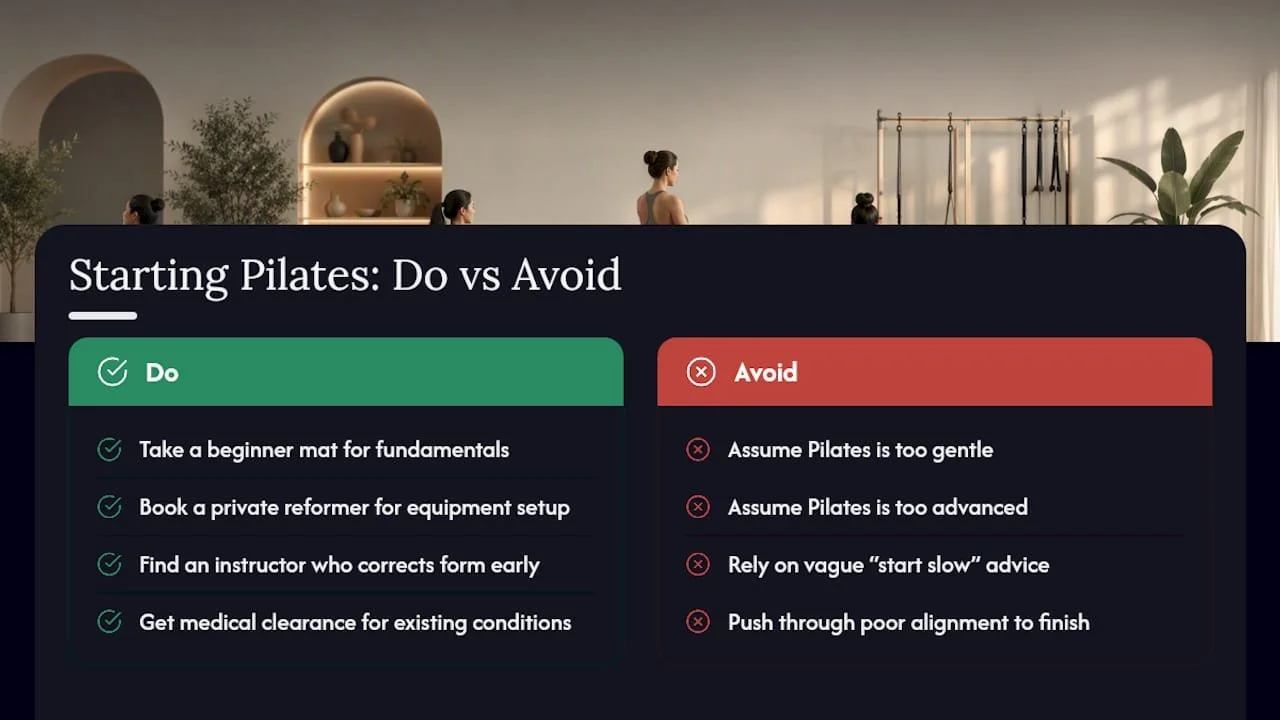
The conventional advice tells beginners to "start slow," which is vague enough to be useless. What actually helps is picking a specific entry point: a beginner mat class if you want to learn the fundamentals at your own pace, or a private reformer session if you're drawn to the equipment but don't want to guess at setup in a group. The research backs both benefits and limits here. Pilates builds real, measurable core stability and postural improvement, but it isn't a substitute for medical care when you have an existing condition that needs clearance first.
If there's one thing to prioritize, it's finding an instructor who corrects your form early rather than one who lets you push through bad alignment for the sake of finishing a set. That's the difference between a class that protects your joints and one that quietly wears them down.
— Juiced
Ready to Try Your First Pilates Class?
Amritayogawellness runs beginner-focused mat and reformer classes in Philadelphia, built for people who've never set foot on a reformer or rolled out a mat before. You get small class sizes for reformer work, so an instructor can actually watch your form and adjust it, plus mat sessions that ease you into the core principles without overwhelming your first hour.
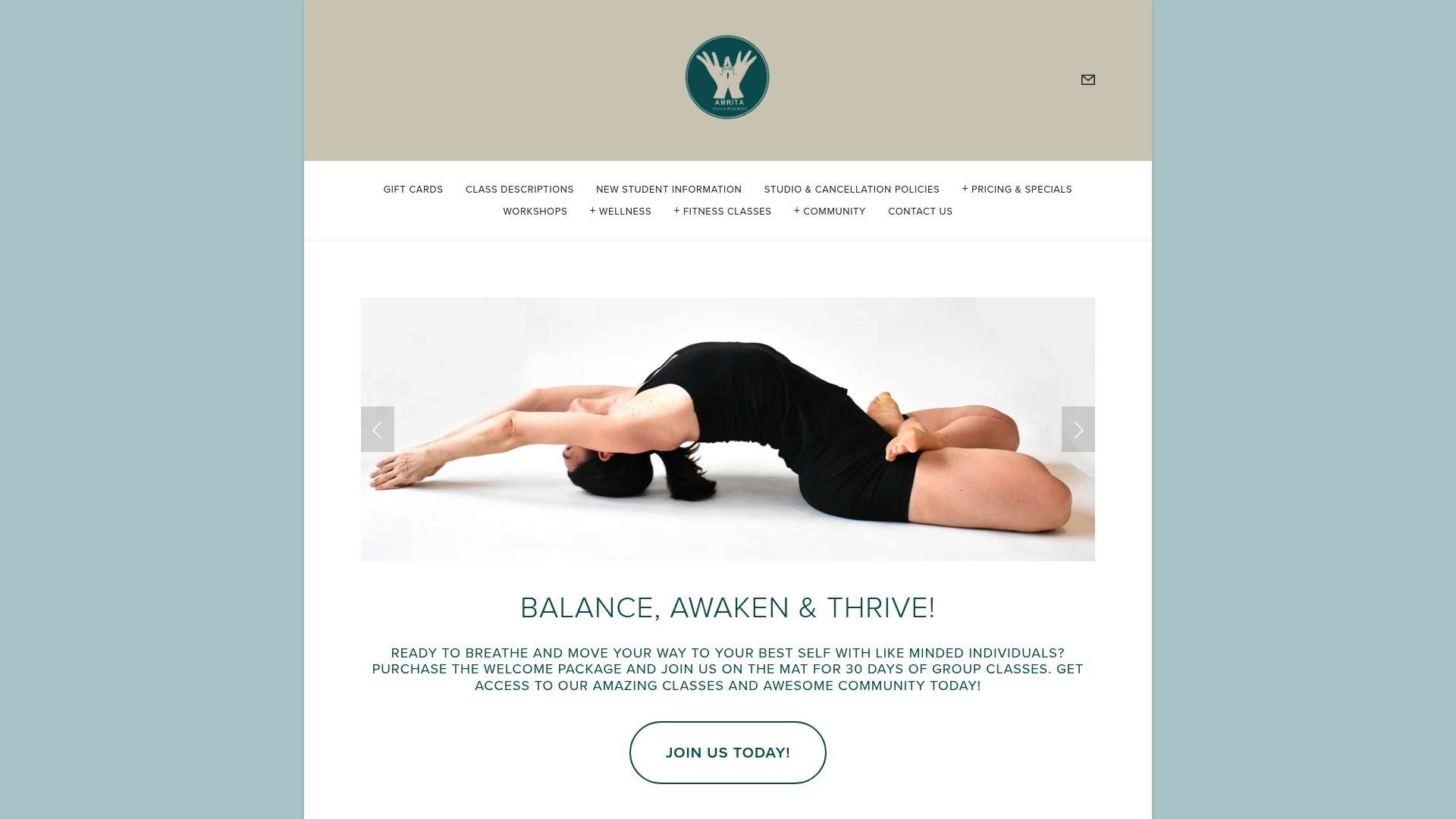
If you're ready to feel what controlled, low-impact strength training actually does for your posture and core, book a beginner class and tell the instructor it's your first time. They'll set up modifications before you even ask. And if you want to round out your wellness routine beyond the studio floor, check out tarot readings as another way to slow down and reconnect with yourself between sessions.