Hatha Flow Yoga: What It Is and How It Feels
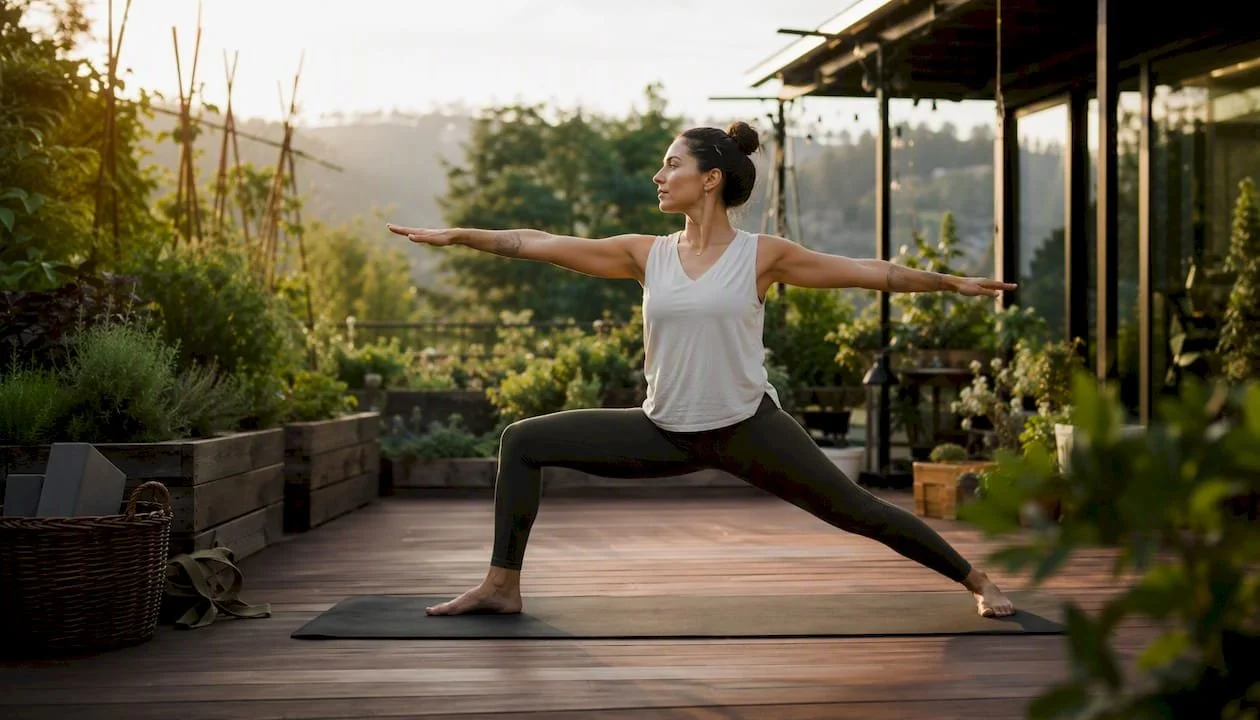
atha Flow yoga is a middle-ground practice that sits between traditional Hatha and Vinyasa: you hold poses long enough to feel them (roughly 3–6 breaths each), then link them with breath-guided transitions rather than staying frozen or rushing through one movement per inhale. At Amrita Yoga & Wellness, classes in this style typically run 45–90 minutes and follow a clear arc from breathwork to Savasana.
A few things to know before you walk in:
Pace is moderate and intentional, not aerobic
Breath cues guide every transition, but you get more time than in Vinyasa
Alignment corrections are woven in throughout, not skipped for speed
Most classes welcome beginners who already know a few basic poses
Key Takeaways
Hatha Flow yoga is the most accessible dynamic yoga style for practitioners who want mindful movement, alignment feedback, and a calming breath anchor without the intensity of Vinyasa.
| Point | Details |
|---|---|
| Middle-ground style | Hatha Flow holds poses 3–6 breaths and links them with breath-guided transitions. |
| Class structure | Classes run 45–90 minutes: pranayama, standing sequence, peak pose, cool-down, Savasana. |
| Best student fit | Beginners with basic pose knowledge and returning practitioners benefit most. |
| Key benefit | Breath-synchronized movement builds alignment awareness and supports nervous-system calm. |
| First step | Try a beginner Hatha Flow class at Amrita Yoga & Wellness or a short at-home sequence. |
Explore flow yoga classes and resources at Amrita Yoga & Wellness to find a session that fits your schedule and experience level.
Table of Contents
What is Hatha Flow yoga, exactly?
The name combines two ideas. Hatha refers to the foundational branch of yoga that underpins most Western studio styles, built on pranayama (breath control), physical postures (asanas), and a closing rest. Flow signals that poses are linked into short sequences rather than practiced in isolation. Put them together and you get a class that keeps Hatha's careful attention to alignment while adding enough movement to feel dynamic.
That combination matters because it changes how the practice feels on the mat. Traditional Hatha might have you hold Warrior II for 60 seconds while the teacher walks around adjusting everyone. Vinyasa moves so fast that alignment cues are easy to miss. Hatha Flow lands in between: you settle into Warrior II, hear two or three alignment cues, breathe through the hold, then move to the next shape on an exhale.
Pace, breath linkage, and alignment
Three features define how a Hatha Flow class actually runs:
Pace: Slower than Vinyasa, more continuous than classic Hatha. You are rarely standing still for long, but you are also never scrambling to keep up.
Breath linkage: Transitions happen on a specific inhale or exhale, but the teacher typically gives you a full breath cycle (or two) to settle before cueing the next move.
Alignment focus: Because poses are held for several breaths, teachers have time to offer specific cues: "stack your front knee over your ankle," "draw your lower ribs in," "soften the grip in your hands."
One important caveat: teacher-to-teacher variability is real. "Hatha Flow" is a studio-level label, not a globally standardized curriculum. One instructor may lean closer to a slow Vinyasa; another may hold poses for several breaths. Reading the class description and asking the teacher about pacing before your first session is the most reliable way to know what you are getting.
What does a typical Hatha Flow class look like?
Most classes follow a recognizable structure, even when teachers vary the content. Standard studio Hatha classes run 45–90 minutes and move through breathwork, asanas, and Savasana. Hatha Flow keeps that spine and adds linked mini-sequences in the middle.
A short sample sequence from the standing segment might look like this: Mountain Pose (2 breaths, grounding) → Warrior I (3–4 breaths, alignment cues) → Warrior II (3–4 breaths, open the hips) → Triangle Pose (3–4 breaths, lengthen the side body) → back to Mountain on an exhale. That mini-sequence is the "flow" part: each pose connects to the next through breath, and the teacher cues the transition rather than calling a long hold and then a reset.
How does Hatha Flow compare to traditional Hatha and Vinyasa?
Hatha is widely recommended as a starting point for beginners because its slower pace and longer holds give students time to learn poses without pressure. Vinyasa is faster, more physically demanding, and typically links every movement to a single breath. Hatha Flow sits between them on every axis that matters.
| Traditional Hatha | Hatha Flow | Vinyasa | |
|---|---|---|---|
| Pace | Slow, deliberate | Moderate, intentional | Brisk, continuous |
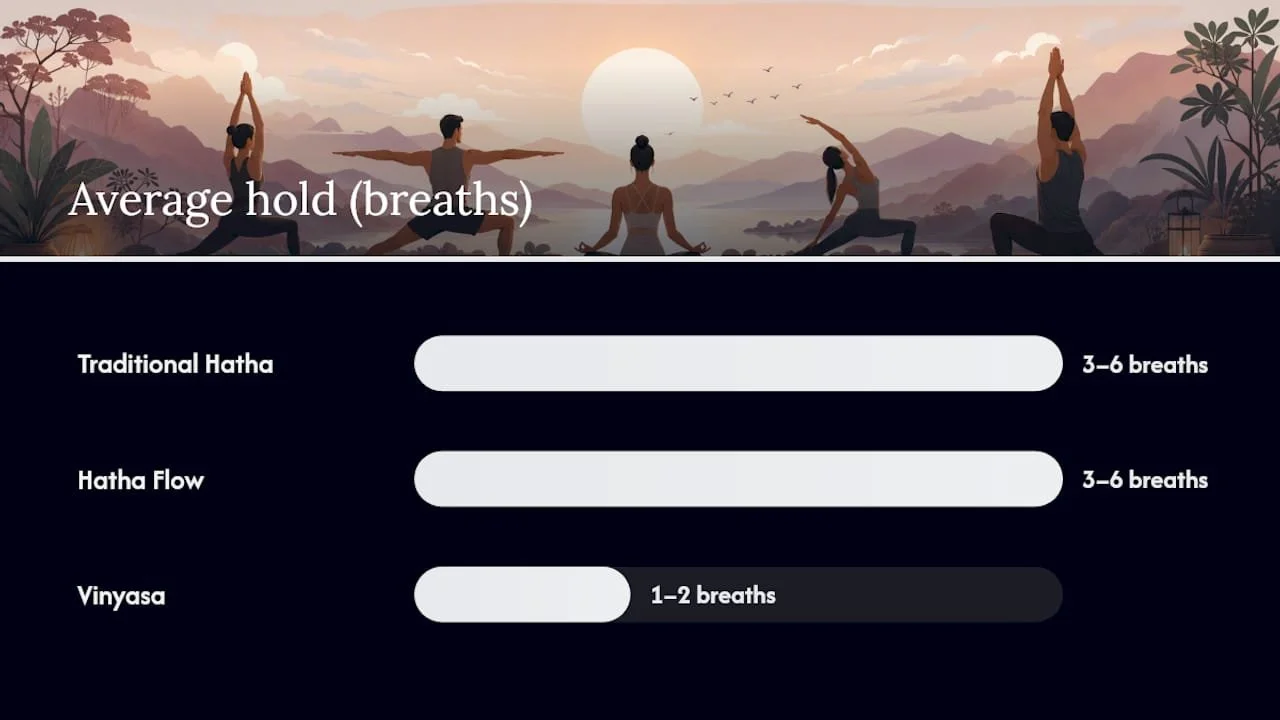
| Average hold | 3–6 breaths | 3–6 breaths | 1–2 breaths |
| Primary focus | Alignment, stillness | Alignment + fluid transitions | Flow, heat, endurance |
| Sweat / intensity | Low | Low to moderate | Moderate to high |
| Best for | Complete beginners, injury recovery | Beginners with basic pose knowledge, returning practitioners | Experienced students seeking cardio |
If your goal is to learn poses from scratch, traditional Hatha gives you the most time to do that. If you want a workout with real intensity, Vinyasa delivers it. Hatha Flow is the right call when you want to feel the poses and feel like you moved.
Who benefits most from Hatha Flow?
The style fits a specific kind of student well: someone past the absolute beginner stage who knows what Downward Dog and Warrior I look like, but who is not ready (or interested) in chasing a Vinyasa pace. Returning practitioners after a break, people managing mild stress or tension, and anyone who finds pure Hatha too static will likely feel at home here.
The physical benefits are real but measured. You build functional strength through held standing poses, improve joint mobility through linked transitions, and develop body awareness through repeated alignment cues. The mental side is where Hatha Flow often surprises people: because breath cues every transition, the mind has a consistent anchor. Breath-synchronized movement can support nervous-system regulation, which is part of why a 60-minute class often leaves you feeling calmer than when you arrived. For more on how yoga benefits extend beyond the physical, the studio's resource library is worth a look.
One honest limitation: if you have never practiced yoga before, you may find transitions confusing when you are still learning what the poses feel like. A single traditional Hatha class first is a reasonable warm-up to the format.
Pro Tip: Tell your teacher about any injuries or limitations before class starts. A good Hatha Flow instructor will offer specific modifications, not just a generic "listen to your body" reminder.
What to wear and bring to your first class
Clothing is simple: close-fitting, breathable activewear that moves with you. Verywell Fit notes that close-fitting athletic wear is the standard recommendation for Hatha-style classes, and the reason is practical: loose fabric can bunch or slip during transitions, which is distracting and occasionally unsafe.
What to bring:
Your own yoga mat (studio mats are usually available but personal mats are more hygienic)
Water bottle
Small towel
One yoga block if you own one (studios almost always have extras)
A yoga strap for seated stretches (optional but useful)
Arrive 10–15 minutes early. Use that time to introduce yourself to the teacher, mention any injuries, and set up your mat in a spot where you can see the instructor clearly. Eat lightly 1–2 hours before class; a full stomach and inversions are a poor combination.
Safety, alignment cues, and what teachers want you to know
Alignment matters more in Hatha Flow than in faster styles because you actually have time to get it right. A few cues worth knowing before you step on the mat:
Warrior II: Front knee tracks over the second toe, not caving inward. Back foot is flat, heel pressing down. Hips open to the side wall, not squared forward.
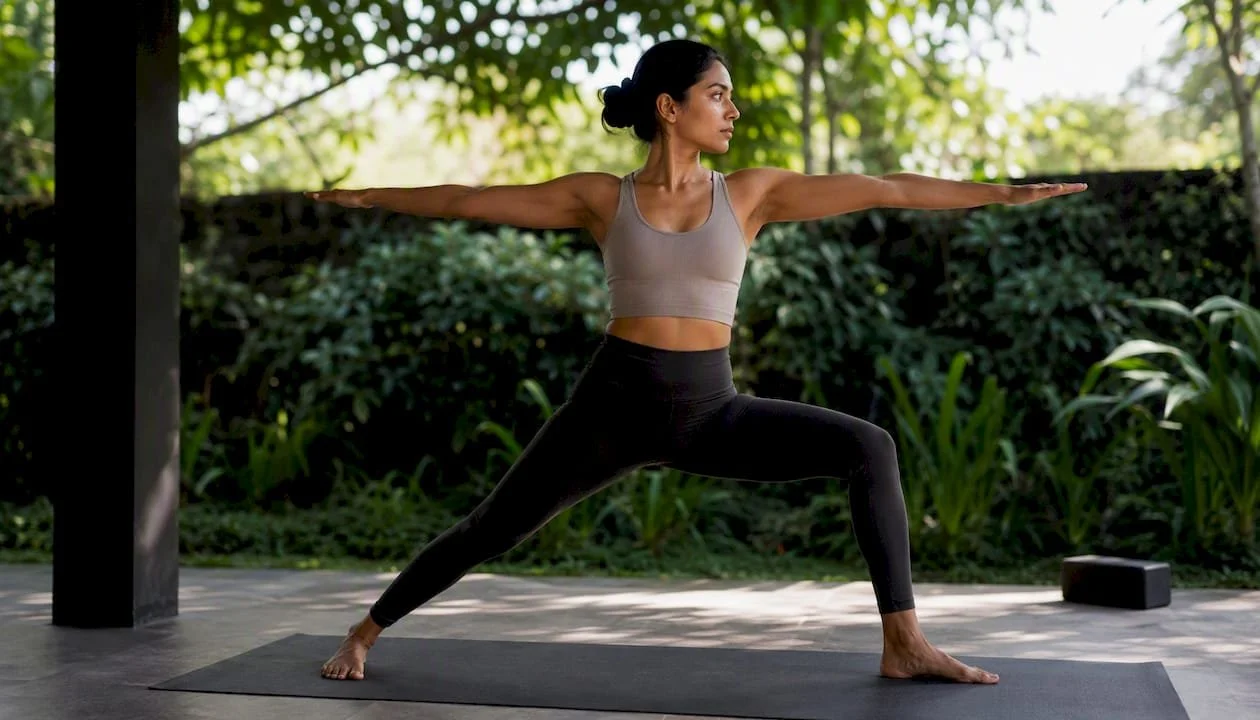
Downward Dog: Hands shoulder-width apart, index fingers parallel. Bend the knees generously if your hamstrings are tight. The priority is a long spine, not straight legs.
Plank: Shoulders directly over wrists, hips level (not sagging or piked). Engage the belly to protect the lower back.
During transitions, move on the breath the teacher names. Rushing a transition to "keep up" is how lower-back and shoulder strain happens. If you miss a cue, pause in a neutral position (Child's Pose works anywhere in a sequence) and rejoin on the next breath.
Pro Tip: If your wrists, knees, or lower back are sensitive, tell the teacher before class. Most Hatha Flow sequences have built-in alternatives: fists instead of flat palms for wrists, a folded blanket under the knees, or a supported Bridge instead of a full backbend.
Breath-synchronized movement also has a calming effect that goes beyond the physical. Research on polyvagal theory suggests that rhythmic, controlled breathing can activate the parasympathetic nervous system, which is part of why a well-paced Hatha Flow class feels genuinely restorative rather than just tiring.
A note from the mat
What I emphasize most in a Hatha Flow class is the breath, not the shape. A student who breathes well through an imperfect Warrior II is doing more for their practice than someone holding a picture-perfect pose while holding their breath. If you are nervous about keeping up, you will not fall behind. The transitions are cued, the pace is forgiving, and asking for a modification is always the right call.