Skip the Fast and Sweaty Myth, Vinyasa for Beginners in Philadelphia
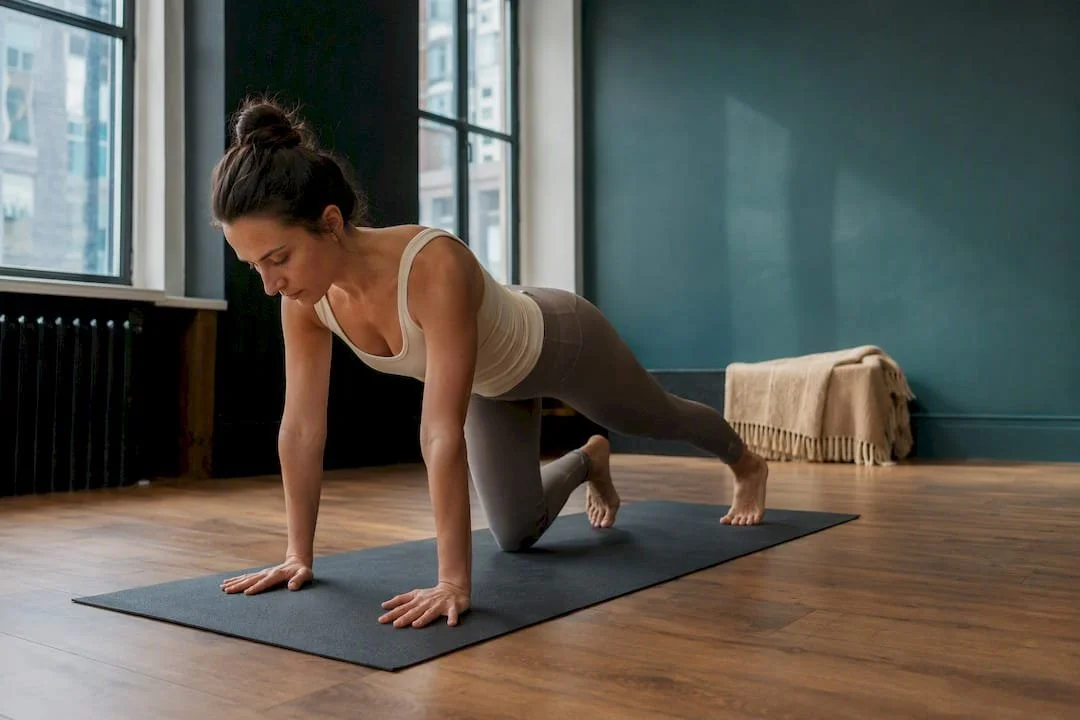
Vinyasa is a breath-linked, flowing style of yoga where each movement syncs to an inhale or exhale, and the term also names the practice's short reset sequence and the sequencing principle behind it. It suits people who want a movement-forward, moderately demanding practice that builds strength and mobility while training attention through breath. If you want something slower and more static, look elsewhere; if you want flow, this is your style.
TL;DR:
Vinyasa is a sequencing principle that arranges poses purposefully and a style centered on breath-movement coordination, not speed.
Typical classes follow a predictable structure from warm-up through sun salutations, peak effort, and cooldown, with pacing varying by instructor.
The core vinyasa sequence, often called a reset, involves controlled transitions from plank to Chaturanga, upward dog, and downward dog, with regressions available.
Vinyasa provides moderate aerobic, strength, and stress-reduction benefits, but should be paired with other training for cardiovascular or maximal strength goals.
Choosing slow flow for flexibility, power for strength, or heated vinyasa depends on individual goals, while beginners should focus on proper form and controlled breathing.
Table of Contents
What Is Vinyasa Style Yoga, Really?
The word "vinyasa" translates roughly to "arranging something in a special way," and that literal meaning is the key to untangling why the term gets used three different ways in the same studio conversation. Yoga Journal traces this etymology back to its Sanskrit roots, and understanding it clears up most of the confusion new students run into.
First, vinyasa is a sequencing principle: the deliberate arrangement of postures in a purposeful order rather than a random string of poses. Second, it's a style name, the broad category of "flow" classes that most studios advertise. Third, and this trips people up constantly, it's a specific mini-sequence: the Plank to Chaturanga to Upward-Facing Dog to Downward-Facing Dog reset that teachers cue between poses. When an instructor says "take a vinyasa," they usually mean that third thing, even though the word technically covers all three.
The modern practice traces its lineage to Tirumalai Krishnamacharya, whose teaching in the early 20th century shaped what became Ashtanga Yoga through his student Pattabhi Jois. Vinyasa as most people practice it today grew out of that Ashtanga foundation, but teachers loosened the fixed sequencing into something more improvisational. Ashtanga follows the same series every time. Vinyasa borrows its breath-driven architecture but lets instructors build a new sequence each class.
That distinction matters for anyone comparing vinyasa vs. Hatha yoga, too. Hatha classes tend to hold poses longer with less continuous movement between them, while vinyasa keeps you transitioning almost constantly. Neither is better. They're built for different nervous systems and different days.
A common misread is that vinyasa has to move fast. It doesn't — the defining feature is breath-to-movement coordination, not tempo. A slow flow class is still vinyasa if every motion tracks a breath.
What Happens During a 60-Minute Vinyasa Class?
Walk into a typical hour-long vinyasa class and you'll notice the same rough arc almost everywhere, even though no two teachers sequence identically. That predictable structure moves from warm-up through sun salutations into standing work, peak effort, and a cooldown, and knowing the shape ahead of time takes a lot of the guesswork out of your first class.
Here's roughly how the 60 minutes tends to break down:
Minutes 0 to 10: Seated or lying warm-up, breath work, gentle joint mobilization to wake up the spine and shoulders.
Minutes 10 to 20: Sun Salutations (Surya Namaskar), repeated several times to build heat and establish the breath rhythm you'll use all class.
Minutes 20 to 40: Standing flows, balance postures, and longer sequences that link multiple poses with vinyasa resets between them.
Minutes 40 to 50: Peak work, often a harder standing pose, arm balance, or backbend the whole class has been building toward.
Minutes 50 to 60: Cooldown, floor stretches, and Savasana (final resting pose).
Sun Salutations do double duty here. They're both a physical warm-up and a template for the breath-movement pairing that runs through the entire class, so once you've internalized the pattern in the first ten minutes, the rest of the hour reads a lot more clearly.
Pacing is where teachers differentiate themselves the most. Some instructors hold transitions for a full five-breath cycle before moving on; others keep things brisk with a single breath per shift. Ask about pace before you book if you're new. It changes the entire feel of the room, from meditative to genuinely athletic.
How Do You Coordinate Breath and Movement in Vinyasa?
Breath is not decoration in vinyasa. It's the mechanism. Every movement gets timed to either an inhale or an exhale, and that one rule is the single most useful thing a beginner can learn before their first class.
The general pattern: inhales accompany opening or lengthening movements (reaching up, arching back, lifting the chest), while exhales accompany folding or contracting movements (bending forward, twisting, stepping back). One movement gets one breath. Not two breaths, not half a breath. That ratio is what keeps the practice from turning into random calisthenics with a yoga soundtrack.
The most common transition you'll encounter is the vinyasa reset itself. Here's how it typically runs:
From plank position, lower with control to Chaturanga (a low push-up hold), exhaling as you lower.
Inhale into Upward-Facing Dog, pressing the chest forward and up while the tops of the feet root down.
Exhale into Downward-Facing Dog, lifting the hips up and back into an inverted V shape.
Hold, breathe, and either step forward into the next standing pose or repeat the cycle.
Beginners can regress every step of this. Drop to your knees before lowering into Chaturanga, or skip the pushup entirely and step back to Downward Dog instead. Nobody in a well-run class will think twice about it.
Pro Tip: Don't chase the pace of the person next to you. Match your breath to your own movement speed first, then let the room's rhythm catch up to you, not the other way around.
Does Vinyasa Actually Deliver Real Fitness Benefits?
Vinyasa earns its reputation as a whole-body practice, but the evidence supports specific, moderate claims rather than sweeping ones. It's a light-to-moderate aerobic workout, a legitimate strength builder for the upper body and core, and a documented stress-reduction tool. It is not a substitute for dedicated cardio or heavy resistance training if that's your primary goal.
What the research shows: peer-reviewed trials on yoga and flow-based practices link them to reduced short-term blood pressure and measurable stress-related improvements, giving the "vinyasa calms you down" claim actual clinical backing rather than just studio folklore. Multiple randomized and controlled studies back this connection.
On the strength side, repeated Chaturangas and plank holds across a single class add up to genuine upper-body and core loading, the kind you'd otherwise get from a dedicated bodyweight circuit. Consistent flow classes build real strength alongside mobility gains from the constant transitioning, since every lunge, twist, and standing balance asks joints to move through a fuller range than static holding would.
The cardiovascular effect is real but modest. Expect an elevated heart rate and a light sweat in a well-paced class, not the same caloric burn as a run or a spin session. If your primary goal is cardiovascular conditioning or maximal strength, treat vinyasa as a complement to that training, not a replacement for it. Where it genuinely outperforms most other exercise categories is the breath-focus component, which trains sustained attention in a way that lifting weights or running typically doesn't.
Slow Flow, Power, and Hot Vinyasa: What's the Difference?
Not all vinyasa classes feel the same, and the labels studios use actually mean something specific once you know what to look for. Choosing the wrong one for your goal is the most common reason first-timers walk out saying "that wasn't what I expected."
Slow flow: Longer holds, fewer transitions per minute, more room to focus on alignment and breath depth. Good for beginners or anyone recovering from a layoff.
Power vinyasa: Faster pacing, more repetitions, often incorporates strength-focused holds like extended plank work. Built for people who want an athletic, sweat-heavy session.
Hot vinyasa: Standard vinyasa sequencing performed in a heated room, usually 90 to 100 degrees. The heat increases sweat and perceived intensity but also raises injury risk if you push into deep stretches while overheated.
Ashtanga: Technically a specific, fixed series practiced in the same order every session, distinct from generic vinyasa's variable sequencing even though it shares the same breath-driven roots.
If flexibility is your goal, slow flow or a mobility-focused vinyasa class will serve you better than power vinyasa's brisker pace. If you want strength and sweat, power vinyasa or hot vinyasa fit that goal directly. If you want to learn a consistent sequence you can memorize and deepen over years, Ashtanga is the more disciplined path, though many vinyasa teachers borrow heavily from its structure anyway.
Who Should Try Vinyasa, and How Do You Pick a Class?
Vinyasa tends to suit people who get bored holding static poses, who like a workout that also asks something of their attention, and who want one practice that touches strength, mobility, and calm at once. If you strongly prefer stillness or have joint issues that make repeated weight-bearing transitions risky, a gentler style might serve you better as a starting point.
Before booking, run through a short checklist:
Class label: "Gentle vinyasa" or "Slow flow" for beginners; "Power" or unlabeled "Vinyasa" for more athletic sessions.
Teacher cueing: Does the description or trial class mention modifications and breath cues, or does it assume prior experience?
Pace and room layout: Crowded rooms with tight spacing make modifications harder to execute comfortably.
Available props: Blocks, straps, and blankets should be visible and offered, not just stacked in a corner.
Three questions worth asking at the front desk or before class starts: "Is this class appropriate for someone new to vinyasa?" "Will you offer modifications during the flow, or just at the start?" and "How heated is the room, if at all?" Those three answers tell you almost everything about whether a specific class matches your goals.
What Mistakes Should Beginners Avoid in Vinyasa?
Most vinyasa injuries come from a small handful of repeated errors, and nearly all of them have simple fixes. The most common mistake is dropping straight into full Chaturanga on every single vinyasa reset before the shoulders and core have the strength to control that lowering motion. Teachers commonly recommend regressing to knees-down Chaturanga or simply stepping back to Downward Dog instead, and there's no shame in taking that option for an entire class if you need it.
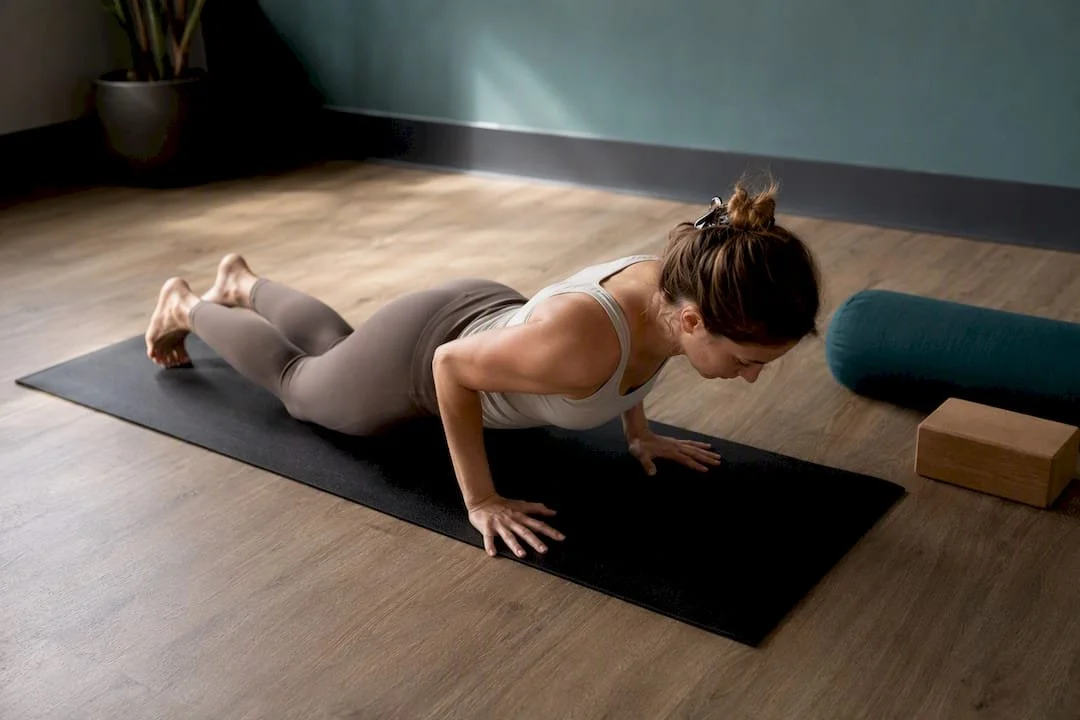
Other frequent errors: letting the hips sag in plank (loads the lower back), collapsing the shoulders forward in Upward-Facing Dog (compresses the wrists and neck), and racing the breath to keep pace with faster classmates instead of moving at your own rhythm.
Downward Dog is always available as a rest position mid-sequence. Skip a vinyasa reset entirely and hold there instead if your shoulders are fatigued or your energy is fading.
Pro Tip: If you have a shoulder injury, wrist pain, or a cardiovascular condition, talk to your doctor before starting vinyasa and mention it to your teacher before class begins so they can offer targeted modifications from the first Sun Salutation.
How Should You Start Practicing Vinyasa?
Getting started doesn't require months of preparation. It requires a reasonable plan and a willingness to modify early.
Start with two to three classes a week. That frequency is a commonly recommended sustainable starting point that lets your body adapt without accumulating overuse strain.
Choose beginner-labeled classes first. Look for "gentle vinyasa," "vinyasa fundamentals," or "slow flow" before trying power or hot variations.
Tell the teacher you're new before class starts. A thirty-second heads-up lets them cue modifications specifically for you.
Build a five-minute home routine. Three rounds of Sun Salutation A, paired consciously with breath, reinforces the core pattern between studio sessions.
Cross-train. Pair vinyasa with a dedicated strength or cardio activity if those are separate goals for you.
How Amrita Yoga & Wellness Supports New Vinyasa Students
Amritayogawellness runs its Philadelphia studio around exactly this kind of breath-first, beginner-conscious approach to vinyasa. Classes range from foundational flow sessions built for first-timers up through more athletic and heated formats for practitioners ready to push pace and intensity.
Beyond the mat, the studio's beginner-focused class content covers the same modifications and breath cues this article walks through, reinforced in person by instructors who adjust sequencing in real time. Workshops and community events round out the offering, giving newer students a low-pressure way to ask questions before committing to a regular schedule. The studio's own explainer on vinyasa fundamentals covers local class options for readers ready to move from reading to practicing.
Where Does Mindfulness Fit Into a Vinyasa Class?
Breath is the mechanism that makes vinyasa a mindfulness practice, not an accessory to it. Because every single movement gets tied to an inhale or exhale, your attention has nowhere else to go for the full 60 minutes except the present transition in front of you. That's a fundamentally different cognitive task than scrolling through a playlist while running on a treadmill.
This is where the "flow" framing earns its name beyond the physical sense. Athletes and psychologists use "flow state" to describe total absorption in a task, and vinyasa's constant breath-movement pairing nudges practitioners toward exactly that state almost by structural accident. You can't safely rush through a Chaturanga while thinking about tomorrow's meeting; the pose itself demands attention.
Teachers reinforce this deliberately. Cues like "notice where your breath catches" or "let the exhale finish before you move" aren't filler chatter, they're redirecting attention back to the only thing that actually controls your safety in the pose: your breath rhythm. Some instructors bookend class with a few minutes of seated meditation, but the meditative quality of vinyasa doesn't depend on that bookend. It's built into the movement itself.
If you've tried seated meditation and found stillness difficult, moving meditation through vinyasa is worth trying as an alternative entry point. The breath-focus is identical. The delivery mechanism is just different.
What Should You Wear and Bring to a Vinyasa Class?
Vinyasa's constant transitions and inverted positions (Downward Dog, forward folds) make clothing choice more functional than fashionable. Fitted, moisture-wicking layers work best. Loose tops tend to flip over your head during forward folds and inversions, which gets old fast around the fifth Sun Salutation.
A non-slip yoga mat is non-negotiable. Standard gym mats are usually too thin and too slick for the repeated plank-to-Chaturanga transitions vinyasa demands, especially once your palms start sweating twenty minutes in. Bring your own if you practice regularly; studio rental mats work fine for occasional visits.
Props matter more than most beginners expect. Blocks give you extra height in standing poses and forward folds when your hamstrings aren't there yet. A strap extends your reach in binds and seated stretches. Neither is a sign of weakness. Experienced practitioners use them constantly to fine-tune alignment rather than force a position.
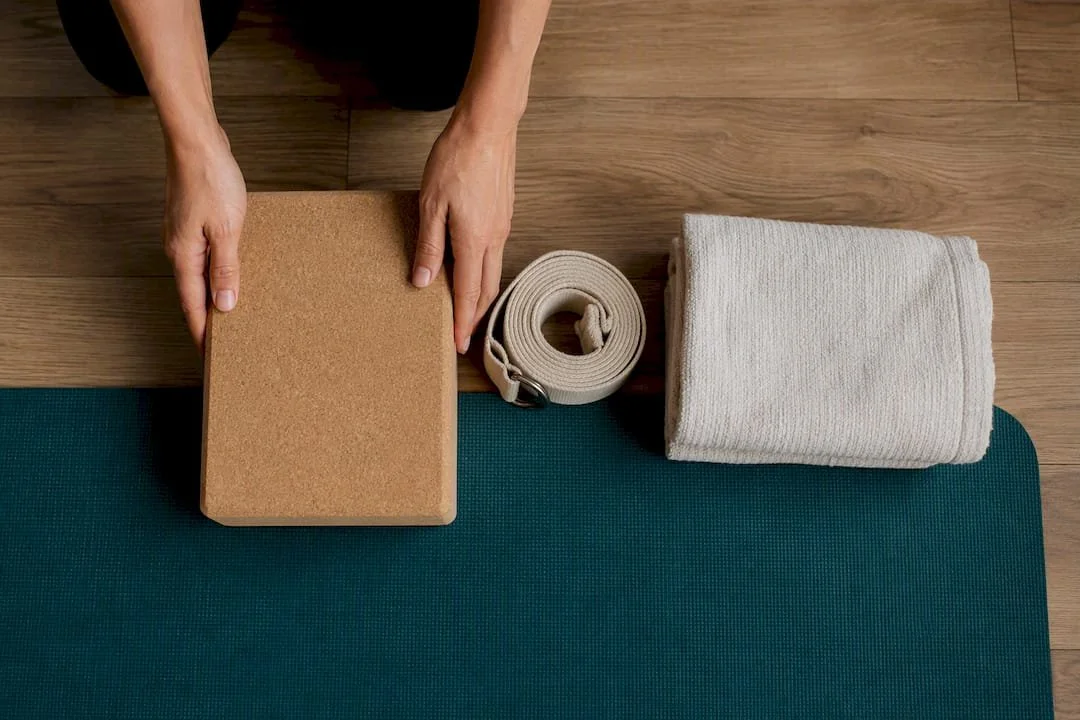
A small towel helps in heated or power classes where sweat accumulates on the mat surface and creates a genuine slip hazard during transitions. Water matters too, though most studios discourage drinking mid-flow since it interrupts the breath rhythm; sip during the brief pauses between sequences instead.
Skip heavy jewelry and check that your hair is secured. Anything dangling becomes a distraction, or a hazard, the moment you're inverted in Downward Dog.
How Does Vinyasa Compare to Restorative or Yin Yoga?
Vinyasa's constant transitioning puts it at the opposite end of the spectrum from Yin and Restorative yoga, and understanding that contrast helps clarify what vinyasa actually is by showing what it deliberately isn't.
Yin yoga holds passive, floor-based poses for several minutes at a stretch, targeting connective tissue rather than muscle, with almost no continuous movement between poses. Restorative yoga goes further still, using props like bolsters and blankets to fully support the body in poses held for extended periods with the explicit goal of deep relaxation rather than any strength or cardio component.
Vinyasa asks something different of you. It wants active engagement, continuous transitions, and a breath rhythm that keeps pace with movement rather than settling into stillness. Where Yin trains passive flexibility and nervous system downregulation, vinyasa trains active mobility, strength, and a moving form of mindfulness.
Neither approach beats the other on some universal scale. They solve different problems. Someone recovering from a demanding week might get more out of a Restorative class than another vinyasa session, while someone craving movement and challenge will find Yin frustratingly slow. Many experienced practitioners rotate between styles deliberately, using vinyasa for strength and energy days and Yin or Restorative for recovery days, which is a more useful mental model than picking one style as objectively "correct" and sticking to it forever.
Why the "Fast and Sweaty" Reputation Undersells Vinyasa
The biggest misconception holding people back from vinyasa isn't about difficulty. It's about tempo. Plenty of newcomers assume vinyasa means constant motion at a punishing pace, and that assumption alone talks a lot of genuinely well-suited beginners out of trying it.
The conventional advice tends to oversell the workout angle and undersell the breath mechanics that actually define the practice. Slow it down mentally before you slow it down physically: the single most useful thing a beginner can do is treat breath, not speed, as the metric they're optimizing for in every class. A vinyasa class where you match breath to movement at a careful pace is still vinyasa. A class where you rush through poses without tracking breath at all technically isn't, no matter how fast the room is moving.
Prioritize learning the plank to Chaturanga to Upward Dog to Downward Dog reset with control before you prioritize keeping pace with anyone else in the room. That sequence, done slowly and correctly, teaches you more about the practice than a dozen classes spent chasing tempo. Everything else, the strength, the mobility, the calm, builds on top of that foundation once it's solid.
— Juiced
Ready to Try a Beginner Vinyasa Class in Philadelphia?
If you've read this far, you already understand vinyasa better than most people walking into their first class cold. The next logical step is putting it into practice with actual guidance instead of trying to piece together the breath-movement pairing from a mat in your living room.
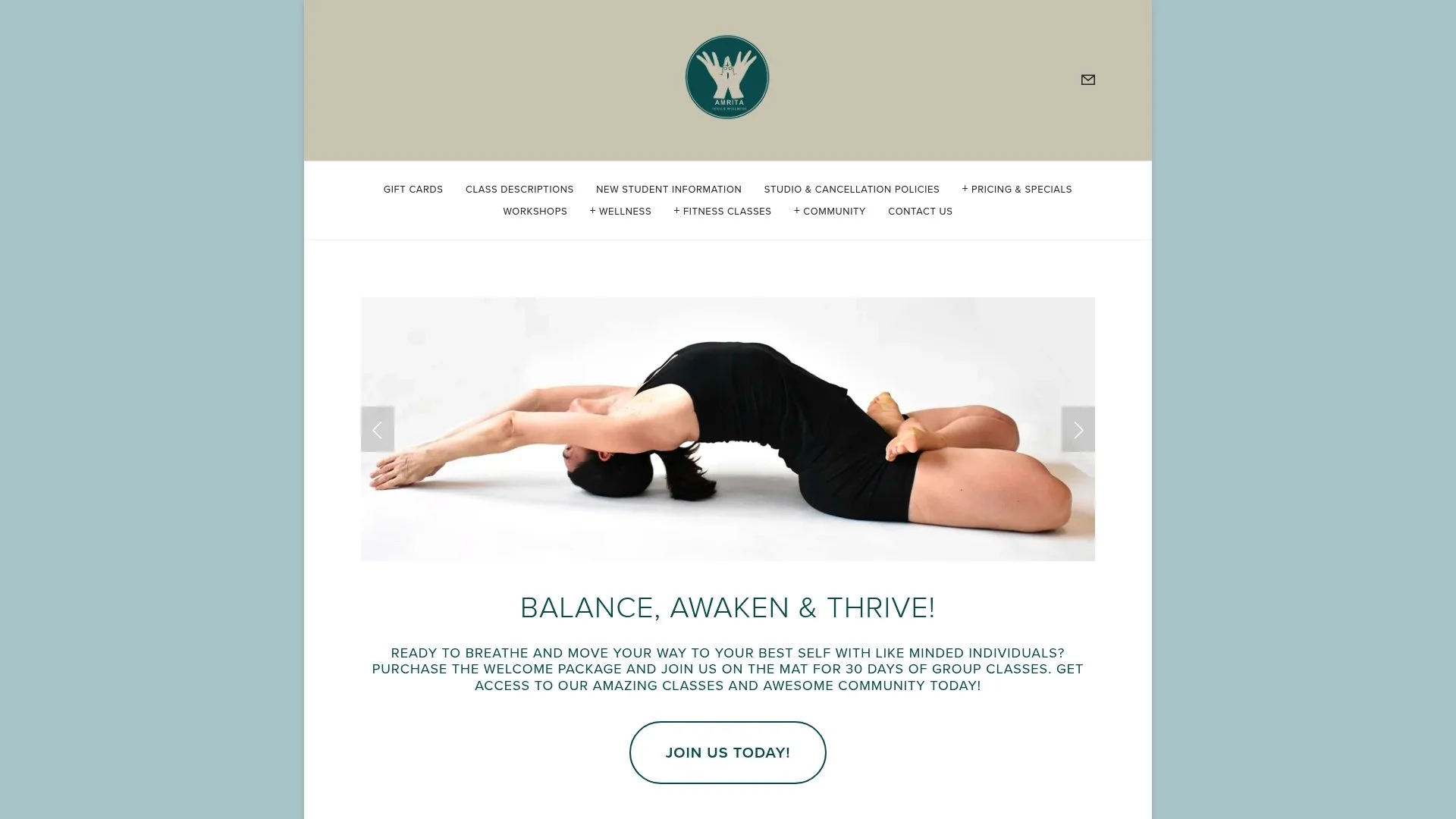
Amritayogawellness offers beginner-friendly vinyasa sessions at its Philadelphia studio, structured around exactly the pacing and modification guidance covered above. First-time students can call ahead or mention at the front desk that it's their first vinyasa class, and staff will point you toward a class level and teacher suited to that. The studio's vinyasa techniques and benefits guide is a useful preview of what a typical session covers before you book.
For readers curious about the studio's broader wellness offerings beyond the mat, Amritayogawellness also hosts Tarot Readings as a separate, adjacent workshop experience for anyone interested in exploring that side of the community calendar alongside their movement practice. Check current class times and reserve your spot directly through the studio to get started.