
Hot yoga center benefits in Philadelphia 2026

You've heard hot yoga transforms your practice far more than regular yoga, but research tells a different story. While hot room yoga enhances flexibility due to elevated temperatures, many touted benefits mirror traditional yoga's outcomes. Philadelphia's welcoming hot yoga centers offer accessible options for every skill level, helping you explore this heated practice safely. This guide clarifies what hot yoga truly delivers, its real benefits versus myths, safety considerations, and how to choose the right Philadelphia center for your wellness journey.
Table of Contents
Key takeaways
| Point | Details |
|---|---|
| Temperature matters | Hot yoga rooms range 90-105°F, increasing muscle elasticity and flexibility during practice. |
| Evidence-based benefits | Hot yoga may reduce stress and encourage fat metabolism, but aerobic benefits match traditional yoga. |
| Safety first | Generally safe for healthy adults, but requires proper hydration and awareness of personal limits. |
| Inclusive environment | Philadelphia centers like Hot Yoga Sutra offer classes for all levels with expert instruction guidance. |
| Smart selection | Choose studios based on instructor expertise, class variety, schedule flexibility, and community atmosphere. |
Understanding hot yoga: What sets a hot yoga center apart?
Hot yoga refers to yoga practiced in heated rooms, typically maintained between 90-105°F. This elevated temperature environment distinguishes hot yoga centers from traditional studios. The warmth increases muscle elasticity, potentially allowing deeper stretches and improved flexibility during your practice.
Philadelphia's hot yoga studios commonly offer heated versions of popular disciplines. Bikram yoga follows a specific 26-posture sequence in 105°F heat with 40% humidity. Hot Vinyasa adapts flowing sequences to heated rooms, offering more variety than Bikram's fixed routine. Some centers experiment with temperatures between 90-95°F for gentler heated experiences.
The hot yoga experience involves significantly more sweating than room temperature classes. You'll need to bring water, towels, and wear moisture-wicking clothing. First-timers often feel challenged by the heat, so acclimation takes several sessions. Your body adapts over time, making subsequent classes more comfortable.
Traditional yoga studios maintain normal room temperatures, focusing purely on poses, breathing, and meditation without heat as a variable. Hot yoga centers add temperature as an intentional element to enhance certain physical benefits. Both approaches offer valid paths to wellness, with hot yoga appealing to those seeking intense physical challenge and enhanced flexibility work.
Key differences include:
Temperature control as a core feature (90-105°F versus ambient)
Increased cardiovascular demand from heat exposure
Greater emphasis on hydration before, during, and after class
Modified clothing choices for comfort in heated environments
Potentially shorter class durations due to heat intensity
The real benefits and limitations of hot yoga
Research reveals hot yoga's true advantages while dispelling exaggerated claims. Studies confirm that practicing in heated environments does increase flexibility gains compared to room temperature yoga. The warmth allows muscles to stretch further with less resistance, potentially accelerating flexibility development.
Hot yoga may reduce stress, particularly benefiting individuals experiencing significant daily stress. Small studies show participants reported improved mood and reduced anxiety after consistent hot yoga practice. The combination of physical challenge, heat exposure, and mindful movement creates a powerful stress-relief experience.
Another evidence-backed benefit: hot yoga may encourage greater fat metabolism compared to traditional yoga. The elevated temperature increases your body's metabolic demands during practice. However, this doesn't make hot yoga a cardio replacement or primary weight loss tool.

Here’s where limitations matter. Research shows hot yoga does not significantly increase health benefits compared to room temperature yoga. The aerobic workload remains similar between heated and non-heated practices. Claims that hot yoga provides dramatically superior cardiovascular conditioning lack scientific support.
| Benefit | Evidence Level | Notes |
|---|---|---|
| Increased flexibility | Strong | Heat enhances muscle elasticity |
| Stress reduction | Moderate | Small studies show positive effects |
| Enhanced fat metabolism | Moderate | Greater than traditional yoga but modest overall |
| Cardiovascular fitness | Low | Similar to room temperature yoga |
| Toxin elimination through sweat | Unsubstantiated | Body eliminates toxins primarily through liver and kidneys |
Safety considerations matter significantly. Hot yoga is generally safe for those with no known contraindications. Healthy adults tolerate heated practice well when following proper precautions. However, individuals with heart conditions, heat sensitivity, pregnancy, or certain medications should consult healthcare providers first.
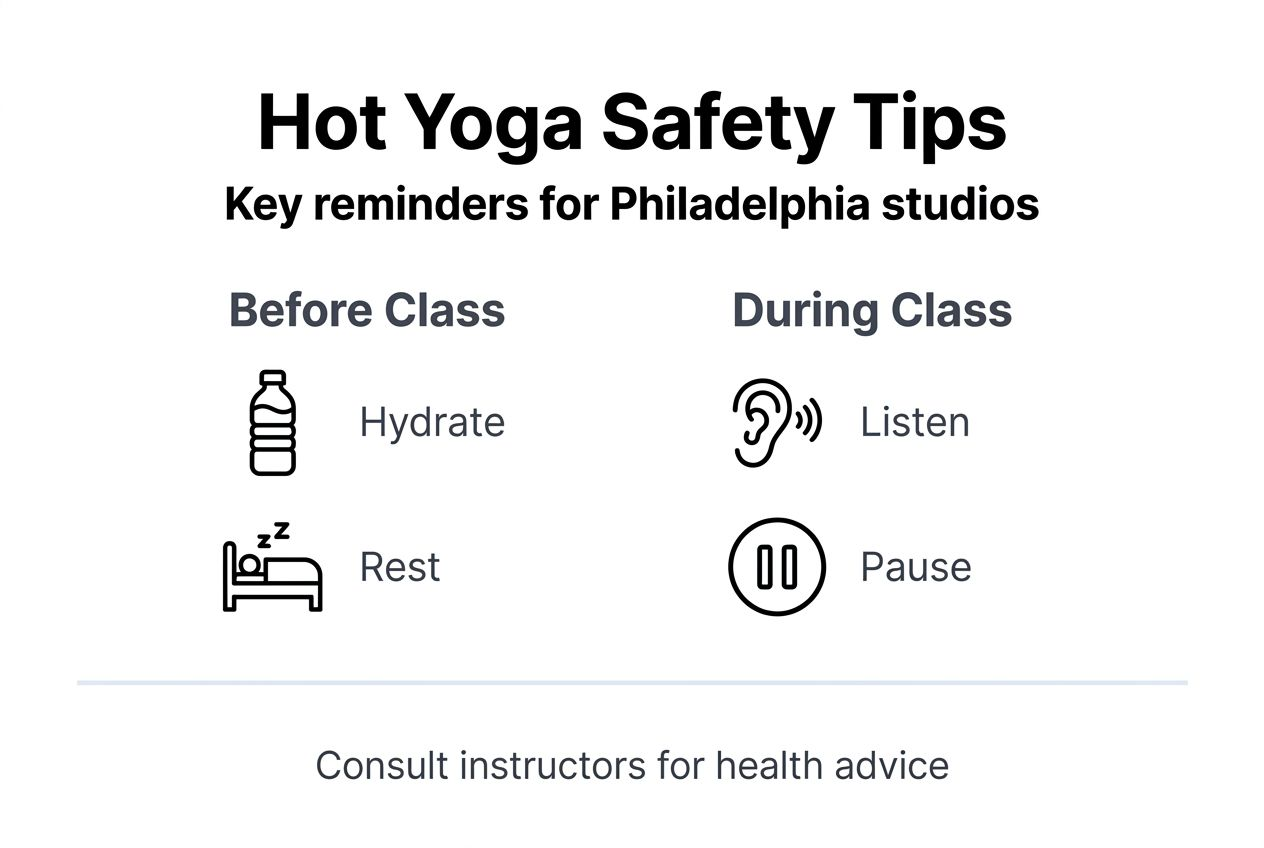
Pro Tip: Drink 16-20 ounces of water two hours before class and sip throughout your session. Listen carefully to your body's signals. Dizziness, nausea, or excessive fatigue mean you should rest in child's pose or leave the heated room. Check out hot yoga safety tips for comprehensive guidance on practicing safely.
Choosing the right hot yoga center in Philadelphia
Selecting the ideal hot yoga center requires evaluating several key factors beyond just location convenience. Hot Yoga Sutra Philadelphia provides a welcoming environment for all levels, with knowledgeable and encouraging instructors who guide students through proper form and modifications. This inclusive approach helps beginners feel comfortable while challenging experienced practitioners.
Instructor expertise makes or breaks your hot yoga experience. Look for teachers with comprehensive training in heated yoga disciplines, anatomy knowledge, and strong communication skills. Great instructors offer pose modifications for different skill levels, watch for proper alignment, and create supportive classroom atmospheres. They recognize when students need encouragement versus when to suggest rest.
Class variety matters for long-term engagement. The studio offers a range of heated yoga disciplines, including Hot Bikram for those wanting traditional 26-posture sequences and Hot Vinyasa for flowing, creative practices. Some centers add Hot Yin or heated restorative classes for gentler options. Variety prevents boredom and addresses different wellness goals.
Schedule flexibility accommodates busy Philadelphia lifestyles. Quality centers offer early morning classes for pre-work practice, lunchtime sessions for midday breaks, and evening options for after-work relaxation. Weekend availability lets you maintain consistency when weekday schedules get hectic.
Community atmosphere transforms hot yoga from exercise into meaningful practice. Studios fostering genuine connection, mutual support, and personal transformation create environments where you actually want to return. Look for welcoming front desk staff, clean facilities, and positive energy when you visit.
Evaluate these factors when choosing your center:
Proximity to home or work for consistent attendance
Instructor credentials and teaching style compatibility
Variety of hot yoga classes matching your goals
Schedule options fitting your lifestyle
Trial class or new student specials for risk-free testing
Facility cleanliness and amenities (showers, mats, props)
Community vibe and inclusivity for all body types and abilities
Clear communication about hot yoga safety protocols
Pro Tip: Visit multiple studios for trial classes before committing to memberships. Pay attention to how you feel during and after class, how instructors interact with students, and whether the community matches your personality. The right fit makes consistency easier.
Practical tips for a safe and effective hot yoga practice
Maximizing hot yoga benefits while minimizing risks requires thoughtful preparation and awareness. Hot yoga is safe for those with no known contraindications, but consulting your doctor before starting makes sense if you have cardiovascular conditions, heat sensitivity, or take medications affecting body temperature regulation.
Follow these preparation steps for optimal hot yoga sessions:
Hydrate thoroughly starting 24 hours before class, not just immediately beforehand
Eat light meals 2-3 hours pre-class to avoid nausea in the heat
Wear minimal, moisture-wicking clothing (shorts and sports bra or fitted tank)
Arrive early to acclimate to the room temperature gradually
Place your mat near the door or cooler spots for your first few classes
Bring a large towel for your mat and small towel for wiping sweat
Start with shorter classes (60 minutes versus 90) until your body adapts
Take breaks in child's pose whenever needed without judgment
Focus on breathing steadily rather than pushing into your deepest stretches immediately
Cool down properly after class and continue hydrating for hours post-practice
Your body sends clear signals when heat becomes excessive. Dizziness, tunnel vision, nausea, confusion, or cessation of sweating indicate potential heat exhaustion. Leave the room immediately if you experience these symptoms. Seasoned practitioners know that stepping out shows wisdom, not weakness.
Common beginner risks include dehydration, overexertion, and pushing beyond safe limits in the heat-enhanced flexibility. Your muscles stretch further in warmth, but connective tissues need time to adapt. Moving too deeply too quickly can cause strains despite feeling flexible in the moment.
Contraindications requiring medical consultation include pregnancy, heart disease, high or low blood pressure, heat intolerance, and medications like diuretics or beta-blockers. Age alone isn't a contraindication, but older adults should start conservatively and progress gradually.
Pro Tip: Incorporate a 5-10 minute cool-down routine after leaving the heated room. Gentle stretching in normal temperatures and drinking electrolyte-enhanced water supports recovery. Following hot yoga safety tips for injury-free practice ensures you build a sustainable, beneficial practice long-term.
Explore hot yoga options at Amrita Yoga & Wellness
Ready to experience hot yoga's benefits in a supportive Philadelphia environment? Amrita Yoga & Wellness welcomes practitioners of all levels with expert instructors who prioritize safety and personal growth. Our hot yoga classes combine proper heating with attentive guidance, helping you build flexibility and reduce stress effectively.
We offer diverse heated class options fitting varied schedules and preferences, similar to respected centers like Hot Yoga Sutra Philadelphia. Whether you're drawn to structured Bikram sequences or flowing Vinyasa styles, our instructors create inclusive experiences where beginners feel supported and experienced yogis find challenge. Convenient operating hours accommodate busy Philadelphia lifestyles.
Our new student specials provide an affordable way to explore hot yoga without long-term commitment. Try multiple class styles to discover what resonates with your wellness goals. We maintain clear studio and cancellation policies so you always know what to expect.
Beyond hot yoga, Amrita offers complementary wellness services like acupuncture for holistic health support. This integrated approach addresses physical and mental well-being from multiple angles, creating comprehensive care for your transformation journey.
FAQ
Is hot yoga suitable for beginners?
Yes, many hot yoga centers design classes specifically for all skill levels with modifications and instructor guidance. Beginners should follow hot yoga safety tips, start with shorter classes, and progress gradually as their bodies acclimate to the heat. Proper hydration and listening to your body's limits make hot yoga accessible for newcomers.
How often should I practice hot yoga for best results?
Practicing hot yoga 2-3 times per week balances benefits with adequate recovery for most adults. This frequency allows your body to adapt to heat stress while building flexibility and strength progressively. Listen to your energy levels and adjust frequency as needed, ensuring you don't experience chronic fatigue or dehydration.
Are there health risks associated with hot yoga?
Hot yoga is generally safe for healthy adults without contraindications like heart conditions or heat sensitivity. Primary risks include dehydration and heat exhaustion if you ignore warning signs or skip proper hydration. Consult healthcare professionals before starting if you have cardiovascular issues, take medications affecting body temperature, or are pregnant. Review hot yoga safety guidelines to minimize risks.
What should I bring to my first hot yoga class?
Bring a large towel for your mat, small towel for wiping sweat, water bottle (20-32 ounces), and wear minimal moisture-wicking clothing. Many studios provide mats, but you may prefer your own for hygiene. Avoid eating heavy meals 2-3 hours before class and arrive 10-15 minutes early to acclimate and ask instructors any questions.
Can hot yoga help with weight loss?
Hot yoga burns calories and may enhance fat metabolism compared to traditional yoga, but it shouldn't replace cardiovascular exercise for weight loss goals. The practice supports weight management as part of a comprehensive fitness routine including varied cardio, strength training, and healthy nutrition. Focus on hot yoga primarily for flexibility, stress reduction, and mindful movement rather than as a primary weight loss tool.
Recommended
7 Types of Hot Yoga: Find Your Perfect Fit — Amrita Yoga & Wellness
Top Yoga Studios Philadelphia – Expert Comparison 2025 — Amrita Yoga & Wellness
Bikram Yoga Burns 330 Calories: Top Benefits and Guide — Amrita Yoga & Wellness
Hot Yoga Beginners Philadelphia: 35% Fewer Injuries — Amrita Yoga & Wellness