Lose Weight With Pilates: 4 Week Beginner Plan to Shed 4–8 Pounds
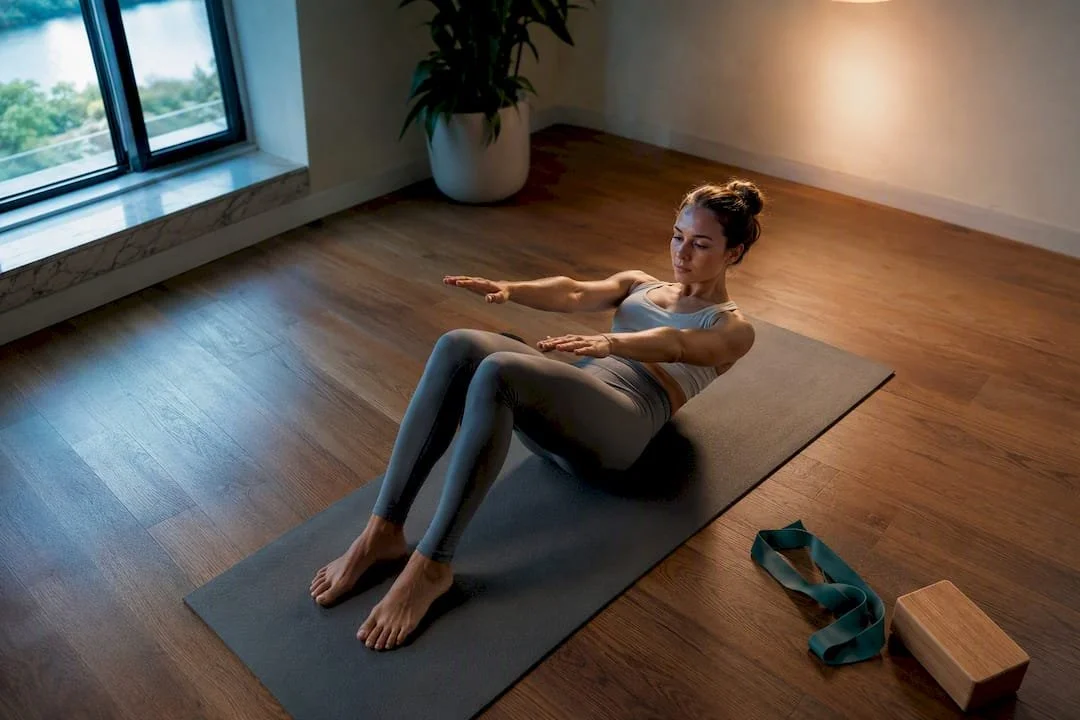
Yes, Pilates helps beginners lose weight, but only under specific conditions: consistent practice, a modest calorie deficit, and some added cardio or strength work on top of it. Aim for three to five sessions a week, 20 to 35 minutes each, and expect early changes in posture and strength before the scale moves much. The 4-week beginner plan below gets you started, and a studio like Amrita Yoga & Wellness can speed up safe progression with real feedback.
TL;DR:
Pilates can contribute to weight loss primarily when combined with a calorie deficit, consistent practice, and additional cardio or strength training.
Calorie burn varies by format, with mat Pilates around 165 to 255 calories per hour, and cardio-Pilates potentially exceeding 350 calories per hour.
A structured beginner schedule recommends gradually increasing sessions from 3 to 5 per week, focusing on form and consistency for sustainable progress.
Combining Pilates with strength training, adequate sleep, and proper nutrition enhances long-term weight loss and preserves lean muscle.
Table of Contents
What the Research Says About Pilates and Weight Loss
The strongest evidence comes from a 2021 meta-analysis of 11 randomized controlled trials covering 393 adults with overweight or obesity. Pilates reduced body weight by an average of 2.40 kilograms across all the studies pooled together. That number nearly jumped to 3.30 kilograms in programs lasting longer than 10 weeks, and the effect showed up more strongly in people who started with obesity rather than a lower body-fat baseline.
That's a real, measurable outcome, not a wellness-industry talking point. But it comes with fine print worth understanding before you set expectations.
Most of the trials in that meta-analysis were small, and researchers rated many of them low-to-moderate quality. Pilates is not a miracle for fat loss on its own, and the effect size depends heavily on who's doing it and for how long. Someone at a healthy weight looking to shed the last stubborn five pounds will see less dramatic change than someone starting from a higher body-fat percentage.
The mechanism isn't mysterious. Pilates builds lean muscle, which raises resting metabolic burn slightly over time. It also improves movement quality, so you move more efficiently and comfortably through daily life, which in turn makes you more likely to stay active in other ways. Cleveland Clinic's exercise-medicine team frames Pilates as excellent for posture and injury-tolerant conditioning, but notes it isn't the highest calorie-burning option by itself.
Calorie burn varies a lot depending on the format:
Mat Pilates: roughly 165 to 255 calories per hour for most adults, depending on body weight and pace.
Reformer or power Pilates: burns more than mat work because of continuous resistance loading.
Cardio-Pilates fusion classes: can exceed 350 calories per hour at higher intensity.
By the Numbers: A 50-minute mat Pilates session burns around 175 calories for a 150-pound person, which is meaningfully less than a brisk run but comparable to a steady-paced walk.
Pilates alone will not out-burn a bad diet. Paired with a modest calorie deficit and consistent scheduling, it becomes one of the more sustainable ways to lose weight precisely because people tend to stick with it.
A Beginner 4-Week Schedule You Can Start Today
Forget trying to do everything at once. A structured, low-impact ramp works better for adherence than an all-out first week that leaves you sore and skipping session two. Fitness planning resources recommend building 4 to 5 sessions per week over four weeks, gradually increasing duration and intensity, and pairing it with light cardio. Beginners following this kind of structure alongside a modest calorie deficit commonly report losing 4 to 8 pounds in the first month.
Here's how the progression breaks down:
Week 1, foundations. Three to four sessions, 20 minutes each. Focus entirely on breath coordination, neutral spine, and basic moves like The Hundred and pelvic curls. Don't rush this week; form here determines whether week 3 goes smoothly.
Week 2, build volume. Four sessions, 25 to 30 minutes. Add more repetitions per exercise and start walking 20 to 30 minutes on non-Pilates days.
Week 3, intensify safely. Four to five sessions, 30 minutes. Introduce a light resistance band or short cardio bursts (30 to 60 seconds of marching or step-ups between Pilates blocks).
Week 4, lock it in. Four to five sessions, 30 to 40 minutes, with one longer session. Check your progress against week 1.
| Week | Sessions | Duration | Focus |
|---|---|---|---|
| 1 | 3–4 | 20 min | Breath, alignment, basics |
| 2 | 4 | 25–30 min | Volume, add walking |
| 3 | 4–5 | 30 min | Resistance band, cardio bursts |
| 4 | 4–5 | 30–40 min | Longer session, progress check |
On non-Pilates days, a 20 to 30 minute walk keeps your weekly activity volume up without adding recovery burden. Two strength sessions per week, placed on separate days from your longest Pilates workouts, help preserve muscle while you're in a calorie deficit.
Track progress with something more useful than the bathroom scale. Time your plank hold at the start of week 1 and again at the end of week 4. Note how many controlled roll-ups you can do with good form. Most beginners see plank time roughly double and roll-ups become noticeably smoother by week 4, even before major visual changes show up.
Two Sample Beginner Workouts and the Moves That Matter
You need exactly two workouts to start: a quick 20-minute session for busy days and a longer 35 to 40 minute version for when you want a bigger calorie burn.
20-minute starter mat workout:
Warm-up (3 minutes): pelvic tilts, cat-cow, breathing drills.
Core block (8 minutes): The Hundred (8 to 10 breaths), Roll-Up (6 to 8 reps, slow tempo), Single-Leg Stretch (10 reps per side).
Lower body (5 minutes): Bridge (10 reps), side-lying leg lifts (12 reps per side).
Stability (2 minutes): Plank hold, 3 rounds of 20 to 30 seconds.
Cool-down (2 minutes): spinal twist, child's pose stretch.
35 to 40 minute fat-loss session follows the same structure but doubles the core and lower-body blocks, adds a side-lying series for hip and oblique work, and inserts two 60-second cardio bursts (marching in place or step-ups) between blocks to keep your heart rate elevated.
A few cues matter more than the exercise names:
The Hundred: exhale sharply as you pump your arms, keep your lower back pressed into the mat.
Roll-Up: move slowly on the way down; that eccentric control is where the core strength actually builds.
Bridge: press through your heels, not your toes, to engage the glutes properly.
Plank: keep hips level with shoulders; sagging hips are the most common beginner error.
Pro Tip: If a full roll-up feels impossible on day one, bend your knees and use a small towel under your lower back for support. Half the range with clean form beats the full range with a rounded, straining spine.
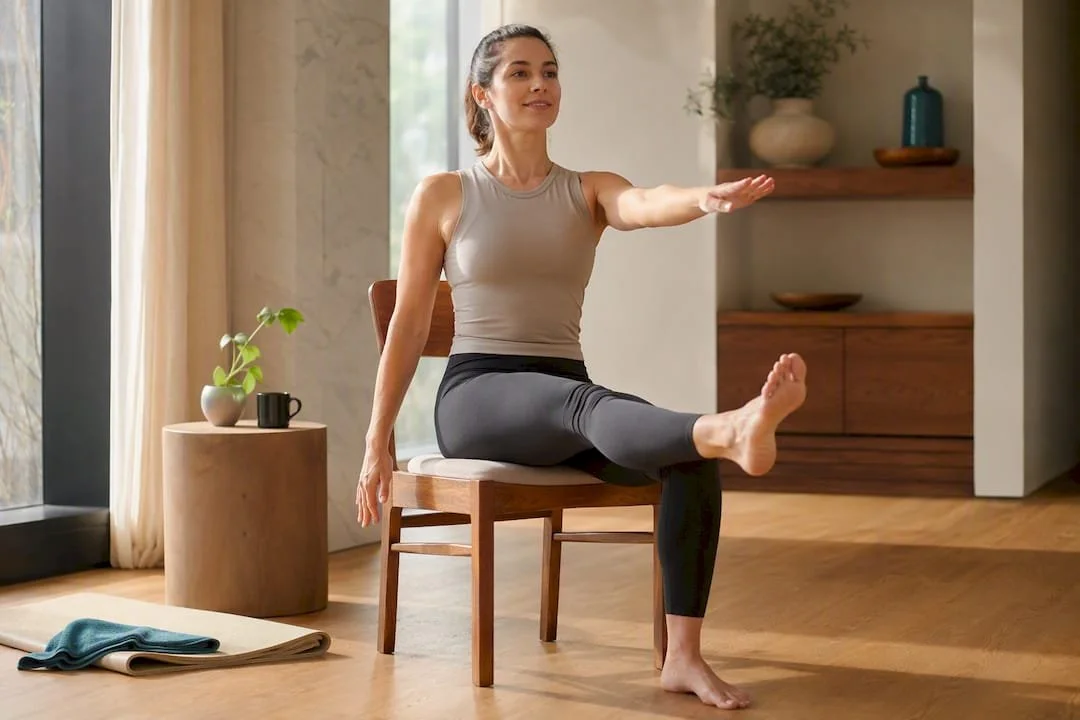
For anyone with knee or wrist sensitivity, seated versions of the leg and arm work on a sturdy chair deliver similar core engagement without joint loading.
Combining Pilates With Nutrition, Strength, and Cardio
Pilates alone rarely moves the needle fast on weight loss. The combination that works is modest calorie control plus cross-training, and the math here isn't complicated.
A deficit of 300 to 500 calories per day is enough to produce steady, sustainable loss without the muscle-wasting side effects of extreme restriction. Pair that with a daily protein target around 0.7 to 1 gram per pound of body weight, which protects the lean muscle you're building in your Pilates sessions.
A realistic weekly template looks like this:
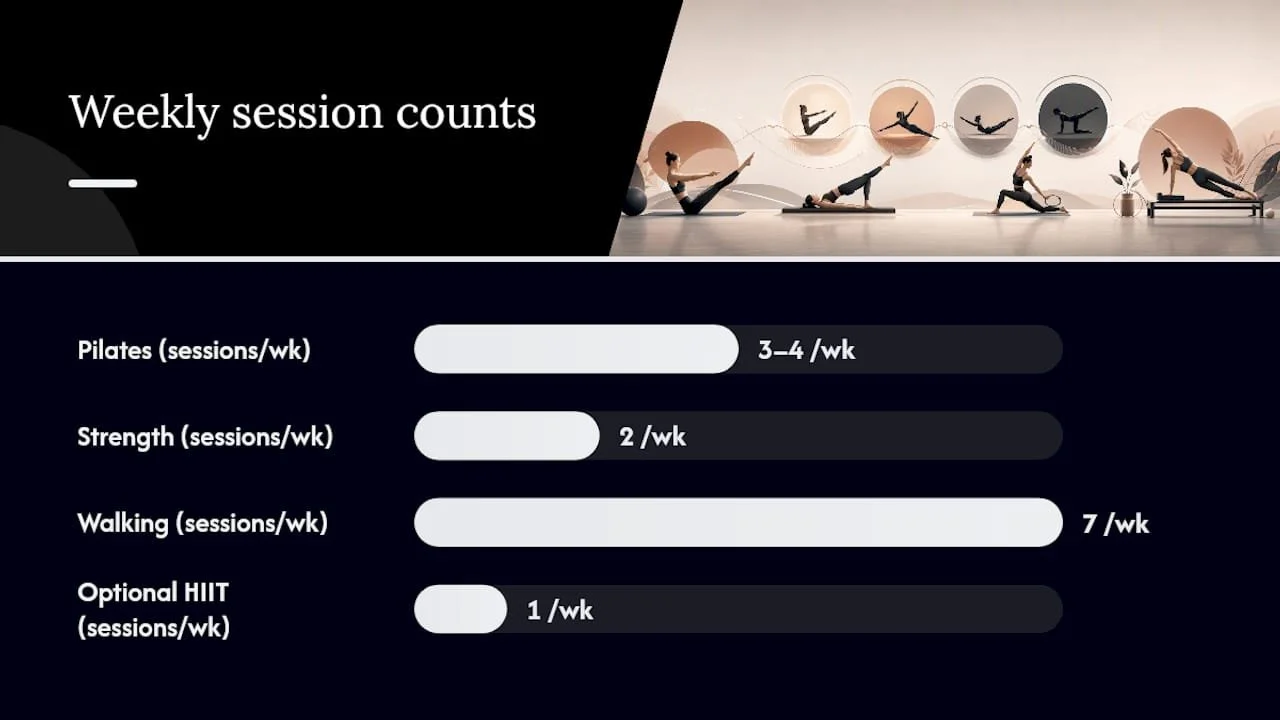
Pilates: 3 to 4 sessions.
Strength training: 2 sessions (can overlap with reformer or resistance-band Pilates days).
Walking: daily baseline, 20 to 30 minutes.
Optional HIIT or cardio: 1 session, depending on fitness level and joint tolerance.
Preserving lean muscle matters more than most beginners realize. Muscle is metabolically active tissue, and losing it alongside fat during a deficit slows your metabolism over time. That's why the DailyBurn's recommendation of pairing Pilates with two weekly strength sessions produces better long-term outcomes than doing Pilates in isolation.
Sleep and stress deserve more credit than they get. Poor sleep raises cortisol and appetite-regulating hormones, which undercuts even a well-designed workout schedule. If you're only going to fix one non-exercise habit this month, fix sleep before you fix your snack drawer.
Adherence is the real hidden variable. A studio setting with instructor-led mat Pilates classes tends to keep beginners consistent longer than solo home workouts, simply because a scheduled class creates accountability that a video on your phone doesn't.
Safety, Progression, and the Mistakes That Slow You Down
Form comes before intensity, always. Breath coordination, a neutral spine, and controlled range of motion matter more in week one than how many reps you can grind out.
The safest progression order looks like this: increase session minutes first, then repetitions, then add resistance, and only then change your tempo. Skipping steps, like jumping from beginner mat work straight into a loaded reformer class, is the fastest route to a strained lower back.
Watch for these red flags:
Sharp joint pain, especially in the lower back or knees, that doesn't ease with rest.
Dizziness or lightheadedness during or after a session.
Unusual chest pain or shortness of breath, which warrants stopping immediately and seeing a clinician.
Common beginner mistakes:
Holding your breath during core work instead of exhaling on exertion.
Overarching the lower back during bridges or leg lifts instead of keeping the spine neutral.
Adding resistance bands before mastering bodyweight form.
Skipping rest days entirely, assuming more is always better.
Beginners typically need one to two rest or active-recovery days per week, even on a program built around 4 to 5 Pilates sessions. Active recovery, meaning light walking or gentle stretching rather than a full off day, keeps blood flow moving without adding strain. The NHS's beginner-friendly Pilates guidance runs around 45 minutes and is built specifically for people returning to exercise or starting fresh, which makes it a solid reference point for pacing yourself realistically.
Progression Rule: Increase session duration before adding resistance, and increase load gradually rather than jumping levels. Overuse injuries in new Pilates practitioners almost always come from doing too much, too soon, not from the exercises themselves.
Why Instructor Feedback Changes the Learning Curve
Amrita Yoga & Wellness runs classes across yoga, pilates, barre, tai chi, and massage therapy out of its Philadelphia studio, and beginners consistently make faster, safer progress with real-time instructor correction than with a video alone. A cue like "drop your ribs" or "lengthen through the crown" lands differently when someone is watching your spine in the room.
Small-group formats also mean the instructor can adjust your Roll-Up or Bridge on the spot, catching the exact form errors covered above before they become habits. That kind of feedback loop is why practitioners often see Pilates as an adherence anchor for beginners: it's joint-tolerant, varied enough to stay interesting, and forgiving of imperfect starting fitness. The studio's ongoing blog coverage of Pilates for weight loss and beginner core work reflects that same beginner-first philosophy in written form.
— Juiced
Getting Started at Amrita Yoga & Wellness
Amrita Yoga & Wellness gives beginners something a solo home routine can't: a real instructor correcting your form before a habit turns into an injury. If you're just starting out, the mat Pilates classes and mixed beginner sessions are the right entry point, and a private session is worth considering if you want individual attention on those first few weeks of alignment work.
Bring a mat if you have one, wear something you can move in, and skip a heavy meal beforehand. Show up 10 minutes early for your first class so the instructor can flag any injuries or limitations before you start. Explore the studio's class offerings and popular Pilates styles to figure out whether mat or reformer work fits your goals better, then book your first beginner session directly through Amrita Yoga & Wellness to get on the schedule this week.