Studio Taught Safety for Hot 26 Yoga in Philadelphia
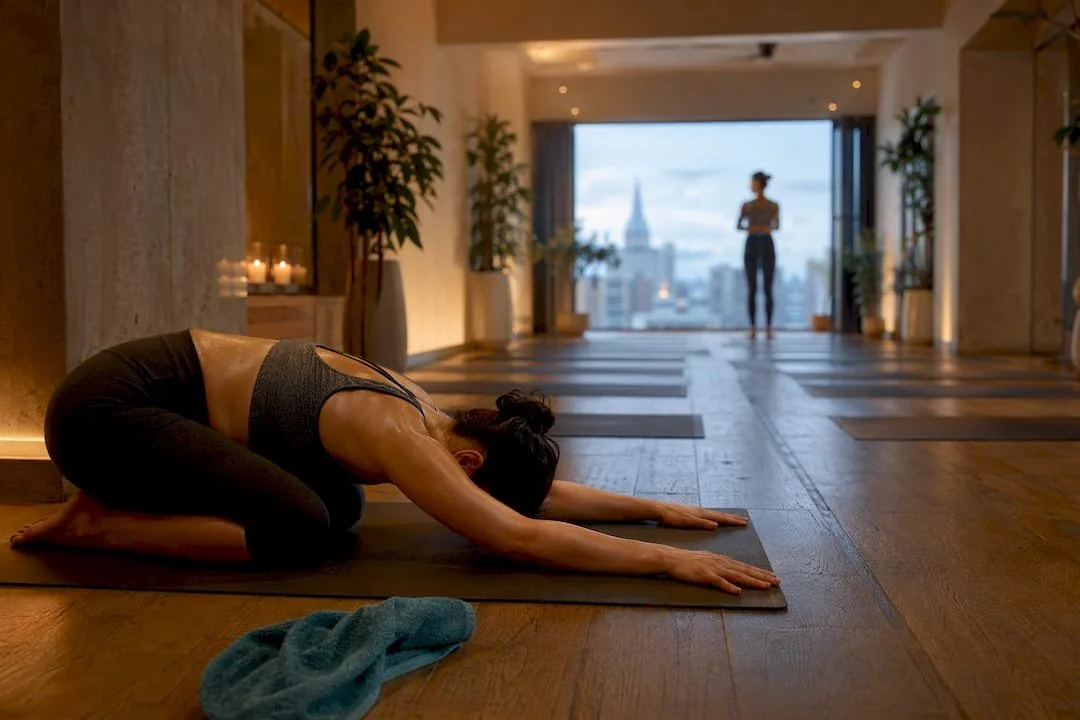
Hot 26 (also called 26 & 2) is a fixed sequence of 26 postures and two breathing exercises practiced in a room heated to about 105°F with 40% humidity. Every class follows the exact same order, from the B.C. Ghosh lineage that Bikram Choudhury popularized. This guide covers the full sequence, the science behind the benefits, who should think twice before stepping on the mat, and how Amritayogawellness teaches it in Philadelphia.
TL;DR:
The heat in Hot 26 raises body temperature, increasing cardiovascular load and muscular flexibility while also elevating the risk for heat-related illnesses.
Proper hydration, breathing through the nose, and early cooling are essential, especially for those with heart conditions, pregnancy, or heat intolerance.
Small variations in room temperature, class length, and instructor cueing can significantly affect your experience and safety.
Practicing regularly in a consistent sequence helps monitor progress but requires gradual adaptation to the heat and poses.
Choosing studios that prioritize heat safety and instructor guidance can improve comfort, safety, and the benefits of the practice.
Table of Contents
What Makes Hot 26 Different From Regular Hot Yoga
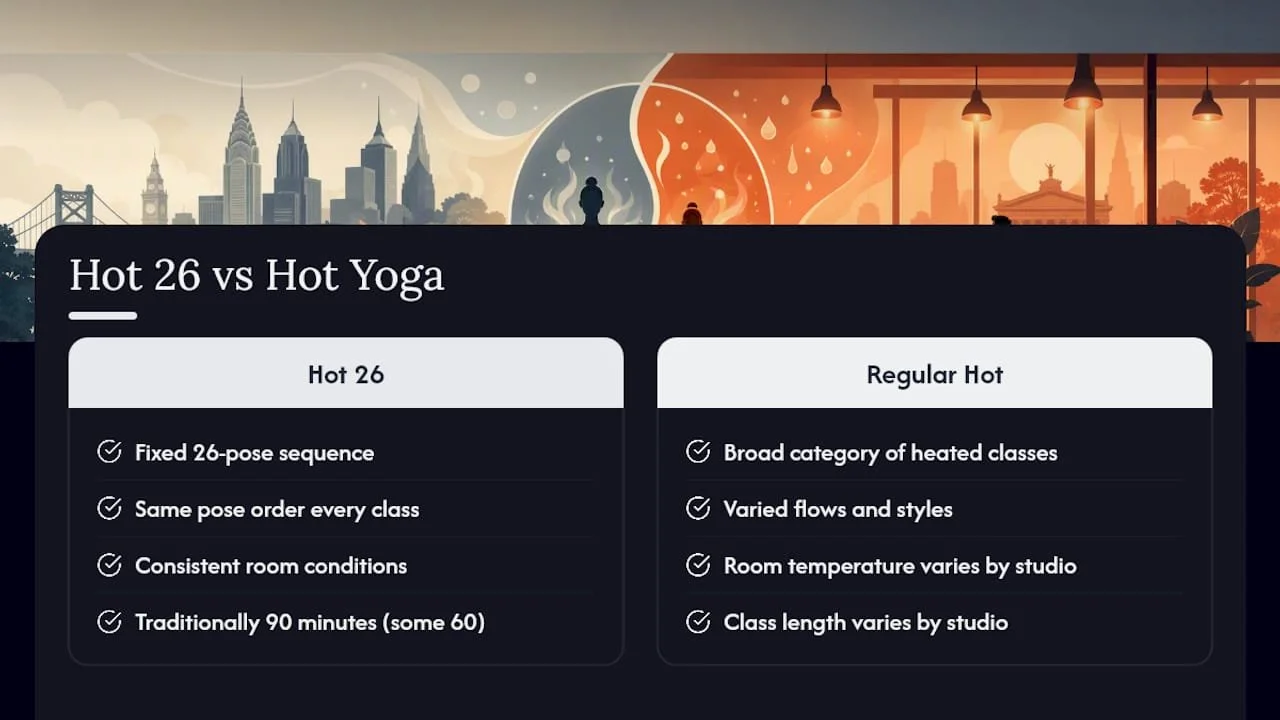
"Hot yoga" is a broad category covering any yoga practiced in a heated room, from vinyasa flows to power yoga to freestyle heated classes. Hot 26 is one specific format inside that category, and it does not improvise. The sequence, the pose order, and the room conditions are locked in place, class after class, studio after studio.
The traditional class runs 90 minutes, though many studios now offer 60-minute versions or slightly lower temperatures to make the format more accessible to newer students. If you see a studio advertise "Hot 26," "26 & 2," or "Original Hot Yoga," you're looking at the same sequence taught under a different name. The label tells you about the studio's lineage and branding choices, not about a different workout. Check a studio's own class description before booking, since room temperature and length can vary by a few degrees or minutes.
The 26 Postures and 2 Breathing Exercises, in Order
The canonical sequence splits into a standing series and a floor series, opening and closing with breathing work. Here's the order:
Pranayama (standing deep breathing): Opens the lungs and raises internal body heat.
Half Moon Pose with Hands to Feet Pose: Builds a side stretch and spinal flexibility.
Awkward Pose: Fires up the thighs and builds lower-body endurance.
Eagle Pose: Tests balance while compressing the joints for circulation.
Standing Head to Knee Pose: Combines balance with a hamstring and core challenge.
Standing Bow Pulling Pose: A deep backbend and balance pose done on one leg.
Balancing Stick Pose: Short, intense hold that raises heart rate quickly.
Standing Separate Leg Stretching Pose: Forward fold that lengthens the hamstrings.
Triangle Pose: Works the whole leg while opening the hips and chest.
Standing Separate Leg Head to Knee Pose: Combines balance and a deep forward fold.
Tree Pose: A grounding balance pose that closes out the standing series.
Toe Stand Pose: An advanced balance variation, often modified by beginners.
Dead Body Pose (Savasana): Brief rest between the standing and floor series.
Wind Removing Pose, Sit-Up, Cobra Pose, Locust Pose, Full Locust Pose, Bow Pose, Fixed Firm Pose, Half Tortoise Pose, Camel Pose, Rabbit Pose: The floor series, moving through backbends, core work, and forward folds.
Head to Knee Pose with Stretching Pose and Spine Twisting Pose: Seated stretches that wind down the spine.
Blowing in Firm Pose (Kapalabhati breathing): Closing breathing exercise that finishes the class.
Several standing poses, including Awkward Pose and Half Moon, are traditionally practiced in two rounds. Always confirm a studio's exact timing and room temperature before your first visit, since small variations are common.
Why Some Studios Say "Bikram" and Others Don't
The sequence traces back to the B.C. Ghosh lineage of hatha yoga, which Bikram Choudhury adapted and brought to the United States, building a global network of studios that all taught the identical 26-pose format. For decades, "Bikram Yoga" was the practice's name almost everywhere it appeared.
That changed after allegations against Choudhury became public, and many studios dropped his name in favor of neutral terms like Hot 26, 26 & 2, or Original Hot Yoga. The sequence itself didn't change. What changed was branding: studios wanted to separate the practice from its founder's controversy while keeping the format their students already knew and trusted. So when you compare hot yoga vs. Bikram at two different studios, you're often looking at the exact same 26 poses taught under different signage.
What the Heat and the Holds Actually Do for Your Body
Practitioners commonly report improved flexibility, and that tracks with what heat does physiologically: warmer muscle tissue stretches more easily, which lets students move deeper into forward folds and backbends than they could in a cold room. The sustained holds, some lasting 20 to 60 seconds, build muscular endurance you don't get from faster-paced vinyasa classes.
The standing series, in particular, builds:
Balance and proprioception, from one-legged poses like Standing Bow and Tree Pose
Core strength, from the numerous standing and seated compressions
Cardiovascular conditioning, since the heat forces your heart rate up even during static holds
Statistic Callout: Cardiovascular load in a heated room runs higher than the same sequence performed at room temperature, which is exactly why medical sources flag hot yoga's heat exposure as a real physiological stressor, not just a discomfort. Your body works harder to regulate temperature while also working through the poses, and that combination is where both the conditioning benefit and the safety risk come from. Results vary by fitness level, hydration, and heat tolerance, so treat these as general patterns rather than guarantees.
Who Should Practice Hot 26, and Who Should Check With a Doctor First
Hot 26 is demanding on the cardiovascular system in a way that a cool-room class simply isn't. Before booking your first class, get medical clearance if any of these apply to you:
You have diagnosed heart disease or a history of cardiac events.
You are pregnant, since heat exposure guidelines differ significantly during pregnancy.
You have a known heat intolerance or a history of heat-related illness.
You take medications that affect blood pressure, hydration, or your body's ability to regulate temperature.
Mayo Clinic Sports Medicine advises checking with a physician if any of this applies, given how much the heat raises your body's workload beyond the poses themselves.
Inside the room, a few habits make a real difference. Breathe through your nose rather than your mouth, which helps regulate your internal temperature. Drop into Child's Pose the moment you feel dizzy or overheated. Sit near a door or vent if you're new to the heat. And when your heart rate spikes, slow your breath down deliberately instead of trying to push through the pose.
Pro Tip: Ask the front desk about cooling stations, fan placement, and whether instructors actively cue modifications before you book. A studio that talks openly about heat safety is usually one that trains its teachers to watch for it.
For a deeper walkthrough of in-class modifications, our guide on hot yoga safety tips covers hydration timing and warning signs worth knowing before your first class.
Your First Hot 26 Class: What to Expect and How to Prepare
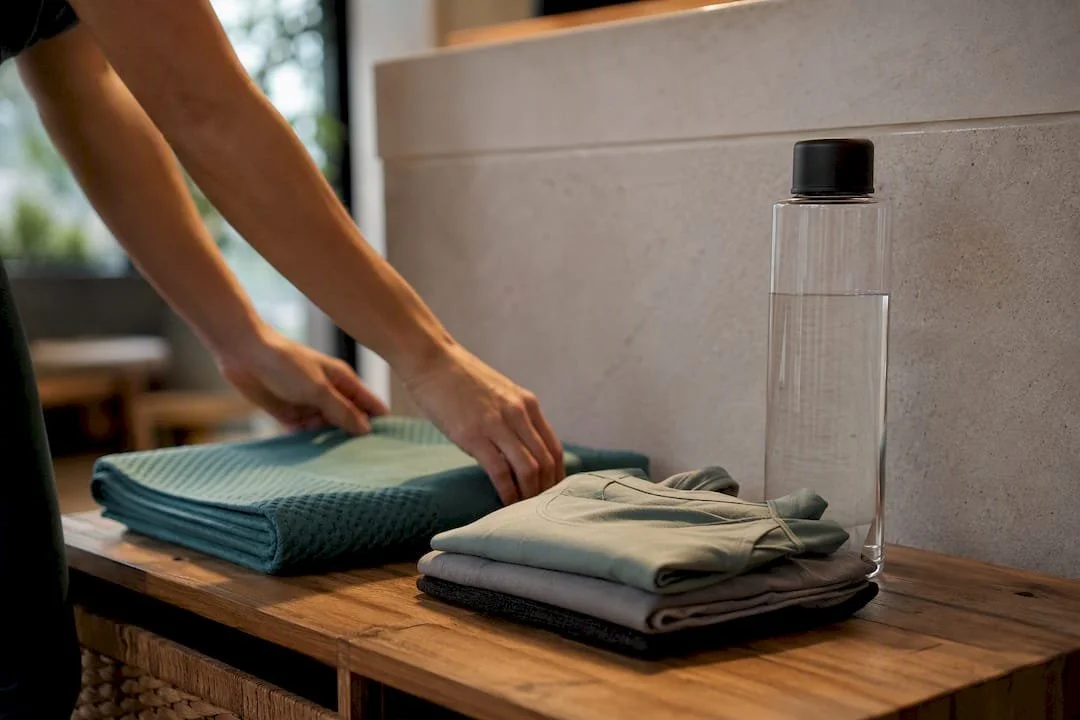
Start hydrating the day before, not twenty minutes before class. Wear moisture-wicking layers rather than cotton, which gets heavy and clings once you're sweating. Bring a grippy towel for your mat, since standing balance poses get slippery fast in a heated room. Skip the heavy meal beforehand and bring a water bottle you can sip between poses.
A typical class opens with a brief instructor introduction, moves into the standing pranayama, works through the standing series, transitions to the floor series, and closes with the final breathing exercise and a longer Savasana. Instructor style varies. Some run a tightly scripted class with the traditional dialogue; others adapt cueing to the room.
For your first three to five classes:
Expect a slower pace than you'd like and let it happen.
Position yourself near the back or an exit until you're acclimated.
Use breath control, not willpower, to manage the heat.
Accept that your range of motion will be more limited than it becomes after a few sessions.
Our step-by-step guide to hot yoga walks through progression expectations in more detail if you want to plan out your first month.
How Amritayogawellness Teaches the Fixed Sequence
Instructors at Amritayogawellness teach breath first, heat second. Before students worry about hitting a deeper Standing Bow or a cleaner Triangle Pose, they learn to regulate their breath so the room doesn't overwhelm them. That ordering matters more in a 105-degree room than almost anywhere else in a yoga practice.
There's something to be said for a sequence that never changes. Students track their own progress class over class, week over week, because the poses stay identical and only the body's response shifts. That repetition builds a kind of confidence you don't get from a class that reinvents itself every session. For more background on the format's roots, see our explainer on what Bikram hot yoga is and why it matters.
— Juiced
Ready to Try Hot 26 in Philadelphia?
Reading about Hot 26 only gets you so far. The heat, the pace, and the sequence itself are things you feel in your first class, not things you fully understand from a pose list. Amritayogawellness runs Hot 26 classes in Philadelphia with instructors trained to cue breath and heat management from your very first Awkward Pose, so the safety guidance above isn't an afterthought. It's built into how the class is taught.
Bring water, a grippy towel, and the hydration habits covered earlier, and check the class schedule to find a Hot 26 session that fits your week. If you're curious about rounding out your wellness routine beyond the mat, browse the studio's tarot reading sessions as well. Either way, the next step is simple: pick a time, show up hydrated, and let the sequence do what it's done for decades.