The Best Type of Yoga for Beginners? Start With Hatha
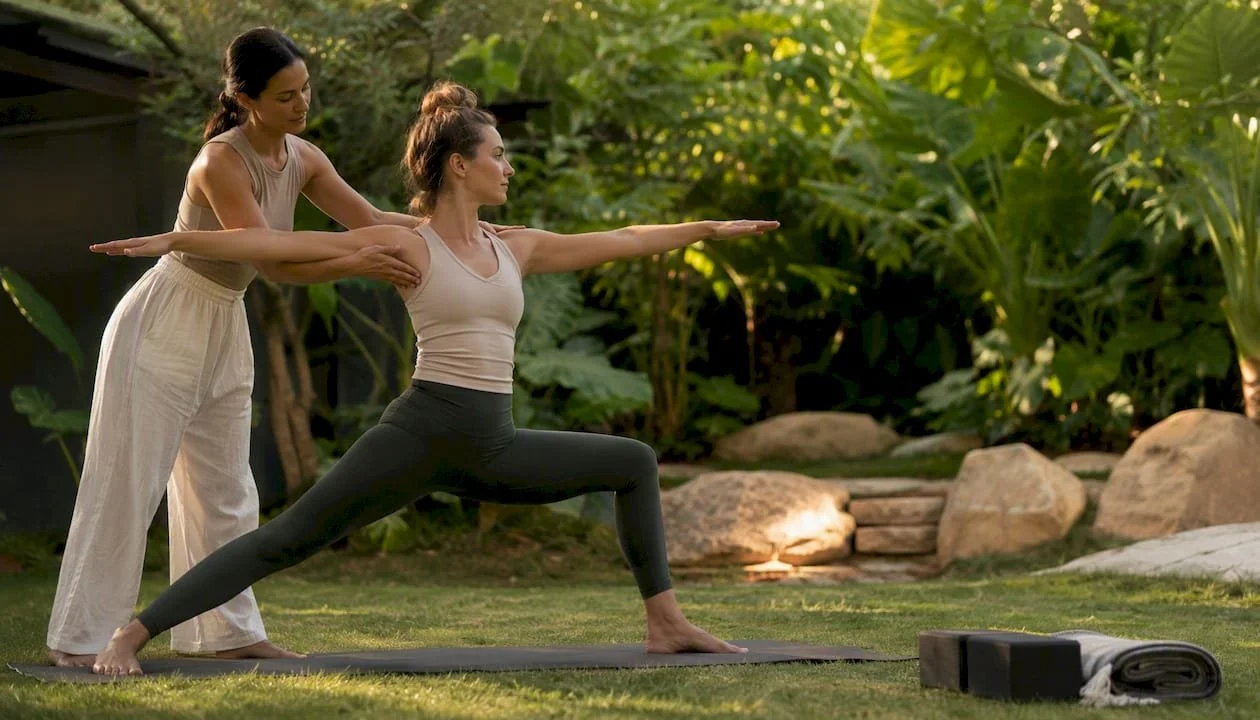
For most new students, Hatha is the best type of yoga for beginners. It moves slowly, holds each pose long enough to learn it correctly, and pairs every movement with breath, which is exactly what a body that has never done a downward dog needs. If your goal is stress relief or recovery rather than a workout, gentle Vinyasa or Restorative yoga make excellent starting points too.
The reason boils down to pace and teacher attention. A slow class gives an instructor time to actually watch you and correct your alignment, instead of shouting cues over a room already mid-transition. Faster, sequence-driven styles ask your body to know things it hasn't learned yet.
Your next move is simple: find a class labeled "Beginner," "Basics," or "Level 1" at a local studio, watch or join one session, and see how your body responds. If you have a joint issue, cardiovascular condition, or you're pregnant, check with a healthcare provider before your first class, not after.
Table of Contents
Hatha Yoga: The Foundational Style Most Teachers Recommend First
Restorative Yoga: The Gentlest Path to Recovery and Stress Relief
Iyengar Yoga: Precision Instruction for Learning Correct Form
Ashtanga and Power Yoga: Save These for After You've Built a Base
What Makes a Yoga Class Right for Beginners
Not every class advertised as "all levels" is actually beginner-friendly. Studios use labels loosely, and the difference between a manageable first class and an overwhelming one usually comes down to a few concrete details you can spot before you ever step on a mat.
Here's what to look for when you're scanning a class schedule:
Clear labeling. Look for "Basics," "Level 1," "Gentle," or "Beginner" in the class name, which typically signals a slower pace and simpler poses.
Prop availability. Blocks, straps, and bolsters stacked near the door mean the studio expects and supports modifications.
Alignment-first teaching. A teacher who explains why your knee should track over your ankle, not just that it should, is teaching for beginners.
Slow pacing with holds. Poses held for several breaths, rather than one breath per movement, give you time to actually find the shape.
Modifications offered out loud. A good instructor mentions options for tight hamstrings or sensitive wrists without you having to ask.
Arrive 10 to 15 minutes early on your first visit. Tell the teacher about any injuries or limitations before class starts, not during a pose. And remember that class labels vary by studio: one gym's "gentle flow" might move faster than another's "intermediate" class. The teacher's cues matter more than the name on the schedule.
Hatha Yoga: The Foundational Style Most Teachers Recommend First
Hatha is the umbrella term for the physical practice of yoga. In practice, when a studio schedules a "Hatha" class, it usually means a slower session where poses are held for several breaths, alignment gets real attention, and the pace rarely spikes. Cleveland Clinic points to Hatha as a strong starting point precisely because it teaches foundational poses and breath awareness at a pace beginners can actually absorb.
That slowness is the whole point. You're not skipping cardio benefits so much as trading them, temporarily, for something more valuable when you're new: time to learn what a proper Warrior II actually feels like in your hips and shoulders. Cleveland Clinic's guide to beginner postures walks through poses like Mountain, Child's Pose, and Cat-Cow that show up constantly in Hatha classes for exactly this reason.
Expect a typical beginner Hatha class to include a short seated breathing warm-up, a handful of standing poses held for five to eight breaths each, some floor work, and a final relaxation pose called Savasana. Teachers will often walk the room during holds, adjusting a hip here or a hand placement there. If you have a recent injury or a chronic joint condition, mention it before class so the instructor can offer a modification rather than have you guess mid-pose.
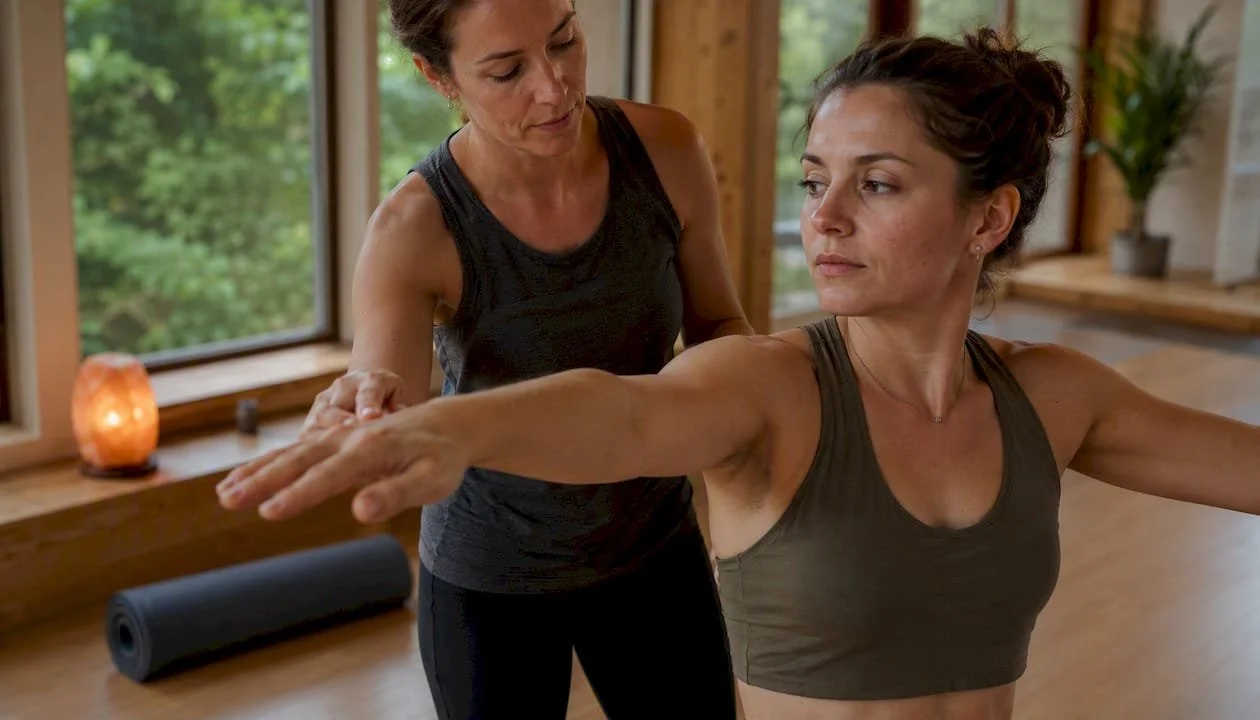
Pro Tip: Book a Hatha class specifically labeled "Level 1" for your first three or four sessions before trying anything faster. Your nervous system needs repetition, not variety, to actually learn a pose.
Vinyasa and Flow Yoga: A Good Second Step When It's Slow
Vinyasa links breath to movement in a continuous sequence, which is a very different experience from Hatha's held poses. Classic Vinyasa can move fast, with one breath per transition, and that pace is where beginners run into trouble. Rushed alignment in a fast flow is how people strain wrists and lower backs.
The fix is not to avoid Vinyasa. It's to find the slow version. A well-taught slow-flow class gives you cardio and strength benefits without demanding speed you haven't earned yet.
Before joining a Vinyasa class, ask the studio these questions:
"Is this labeled as slow-flow, or is it a faster all-levels class?"
"How does the teacher cue alignment during transitions?"
"Will there be options for someone who's never done Vinyasa before?"
If the answers are vague, look elsewhere. A studio's Vinyasa-focused class content can also give you a sense of how a given teacher or program approaches pacing before you commit to a schedule.
Restorative Yoga: The Gentlest Path to Recovery and Stress Relief
Restorative yoga barely resembles a workout, and that's the appeal. Classes rely heavily on bolsters, blankets, and blocks to fully support your body in a handful of poses, each held for five to twenty minutes. You're not stretching so much as letting gravity and props do the work while your nervous system downshifts.
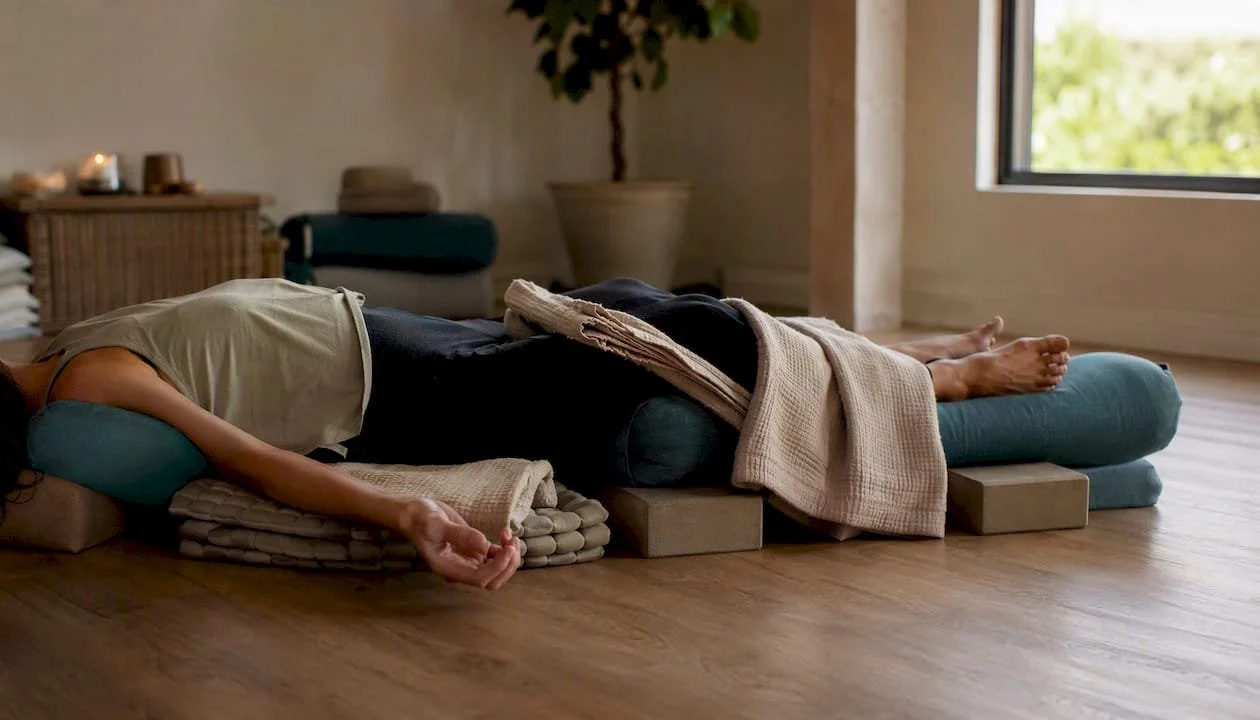
This makes Restorative the right first choice if your goal is recovery from illness or injury, or if anxiety and chronic stress are what brought you to yoga in the first place. Yoga by Maya notes that Restorative and Yin classes are especially effective for stress reduction, often producing noticeable calm within weeks of steady practice.
A typical Restorative class might include only four or five poses total across sixty minutes, most of them lying down. There's little standing work and almost no strength demand, which makes it accessible for pregnant students, people recovering from surgery, or anyone dealing with a flare-up of a chronic condition. If you're drawn to this style for anxiety specifically, a studio's stress relief content can help you understand what to expect before your first session.
Yin Yoga: Long, Quiet Holds That Test Your Patience
Yin targets connective tissue rather than muscle, using passive stretches held for two to five minutes at a time. Unlike Restorative, which fully supports the body, Yin asks you to sit at the edge of a stretch and simply stay there while gravity and time do the work.
That stillness is harder than it sounds. Beginners used to constant movement often find the first Yin class mentally uncomfortable before they find it physically calming.
Who tends to benefit most:
People chasing long-term flexibility gains, especially in hips and shoulders.
Anyone using yoga primarily for stress and anxiety management.
Students recovering from a more intense workout routine who need a genuine off-day.
Who should be cautious: anyone with hypermobility or joint instability, since the long holds can invite overstretching in joints that already move too freely.
Pro Tip: In Yin, sensation is fine but pain is a stop sign. If a hold sharpens instead of easing after the first thirty seconds, back out of the pose rather than pushing through it.
Iyengar Yoga: Precision Instruction for Learning Correct Form
Iyengar is Hatha's more exacting cousin. Classes move slowly and use props constantly, but the real difference is depth of instruction: an Iyengar teacher will spend several minutes on a single pose, breaking down exactly where your weight should sit and how your spine should stack.
This makes it a strong fit for detail-oriented beginners, and for anyone rebuilding strength or range of motion after an injury. Expect blocks, straps, chairs, and sometimes ropes mounted to a wall, all used systematically rather than as an occasional aid. The pace can feel slow compared to other styles, but that's exactly what makes Iyengar useful. You leave class actually understanding why a pose is shaped the way it is, which carries over into every other style you try later.
Ashtanga and Power Yoga: Save These for After You've Built a Base
Ashtanga follows a fixed sequence of poses performed in the same order every time, moving briskly between them. Power yoga borrows Ashtanga's intensity without the fixed sequence, often built around building heat and strength fast. Both are demanding, and both usually work better once a foundation exists than as someone's very first class.
The issue isn't that these styles are bad. It's that they assume knowledge you probably don't have yet: how to hold plank without collapsing your shoulders, how to transition through a sun salutation without losing your breath, how to modify a pose on the fly when your hamstrings are having a bad day. Walking into Ashtanga cold usually means faking your way through poses you don't understand, which is how injuries happen.
A safer path looks like this: spend six to eight weeks in Hatha or slow-flow Vinyasa building core strength and pose familiarity, then look for a studio's skill-building programming designed specifically to bridge beginners into stronger practices. Once you can hold a plank for thirty seconds without your hips sagging, Ashtanga and Power classes stop being intimidating and start being genuinely fun.
Hot Yoga and Bikram: Why Beginners Should Wait
Heat changes everything about a yoga class. Rooms typically run between 90 and 105 degrees Fahrenheit, and that temperature increases cardiovascular strain, speeds up fatigue, and can create a false sense of flexibility that leads people to overstretch without realizing it.
Heat-based classes require real precautions: hydrate heavily beforehand, skip the class entirely if you're pregnant or managing a cardiovascular or blood pressure condition, and acclimate gradually rather than diving into a full 90 minute session on day one.
For an absolute beginner, hot yoga adds a second learning curve, thermal regulation, on top of the one you're already tackling: the poses themselves. It's smarter to build comfort with the postures in a room-temperature class first, then introduce heat once your body already knows what it's doing.
How to Choose Your First Class: A Simple Decision Guide
Picking a first class gets easier once you break it into a short checklist instead of trying to evaluate every style at once.
Define your primary goal. Stress relief points toward Restorative or Yin. General fitness and flexibility points toward Hatha. Wanting a workout eventually points toward Vinyasa, then later Ashtanga or Power.
Be honest about current fitness and injuries. A recent back injury or limited joint mobility argues for Iyengar or gentle Hatha, where alignment gets real attention.
Scan class labels before booking. Seek "Beginner," "Level 1," "Gentle," or "Basics." Skip "Power," "Sculpt," or "Advanced" for now.
Call or message the studio with two questions. Ask about pace and about how the teacher handles modifications. Vague answers are a red flag.
Watch for in-class warning signs. If a teacher never offers modifications or brushes off a mentioned injury, that's not the right room for you.
The table below breaks down how the major styles compare on the factors that actually matter to someone starting out.
| Style | Pace / intensity | Primary focus | Beginner friendliness | Typical class format | Common precautions |
|---|---|---|---|---|---|
| Hatha | Slow | Alignment, breath | Highly recommended starting point | Held poses, props, breath work | Minimal; mention injuries to teacher |
| Slow Vinyasa | Moderate | Strength, flow | Good second step | Linked breath and movement sequences | Avoid fast "all-levels" versions early on |
| Restorative | Very slow | Relaxation, recovery | Excellent for beginners | Long supported holds with props | Generally safe; check with a provider after surgery |
| Yin | Slow | Connective tissue, flexibility | Good, requires patience | Passive holds of two to five minutes | Caution with joint hypermobility |
| Iyengar | Slow, detailed | Alignment, technique | Excellent for detail-oriented beginners | Prop-heavy, precise instruction | Minimal; good for injury rebuilding |
| Ashtanga / Power | Fast, intense | Strength, discipline | Better after a foundation | Fixed or fast sequences, minimal pauses | Build core strength first; not ideal as first class |
| Hot / Bikram | Fast, high heat | Heat-driven flexibility, sweat | Not usually a first choice | Standard sequence in a heated room | Hydrate heavily; avoid if pregnant or cardiovascular concerns exist |
A reasonable progression for most people looks like Hatha or Restorative for the first month, slow Vinyasa once poses feel familiar, then Iyengar or Yin depending on whether you're chasing precision or flexibility.
Safety Checks, Modifications, and Practical Starter Tips
Yoga is low-impact compared to most exercise, but it isn't risk-free, especially for beginners eager to push into a deeper stretch than their body is ready for. UCLA Health recommends checking with a provider before starting any new practice if you have a herniated disc, uncontrolled high blood pressure, glaucoma, or you're in your first trimester of pregnancy. Sharp pain, dizziness, or numbness during a pose are signals to stop immediately and get it checked out, not signals to modify and continue.
Most common limitations don't require avoiding yoga altogether. They require a small adjustment:
| Common limitation | Simple modification |
|---|---|
| Tight hamstrings during forward fold | Place a block under your hands, bend your knees |
| Wrist pain in plank pose | Drop to knees for a modified plank, or use fists instead of flat palms |
| Lower back sensitivity in backbends | Reduce range of motion, keep knees soft |
| Balance difficulty in standing poses | Practice near a wall or use a chair for support |
| Neck strain in shoulder stand variations | Skip inversions, substitute legs-up-the-wall pose |
Regular stretching supports flexibility and injury prevention, which is one reason gentle, prop-supported classes work so well for beginners easing into movement.
For your first sessions, wear fitted, breathable clothing that won't ride up during forward folds or inversions. Most studios provide mats, but bringing your own is worth it once you're practicing regularly, along with a small towel if you tend to sweat. Aim for 20 to 30 minutes if you're practicing at home between studio visits, and don't feel pressure to attend a full 60 minute class every time you show up.
What Experts Recommend for a Beginner's First Two Months
Clinical and teacher-backed sources point in the same direction: start slow, prioritize breath, and treat your body with patience rather than ambition. That consensus isn't accidental.
Find a class that promotes kindness to yourself, prioritizes breath, and feels safe. Observe a class before joining if you can, and check with a healthcare provider for any specific physical concerns before starting.
That guidance, echoed by yoga teacher Dr. Johanna Goldfarb in a MasterClass discussion of beginner considerations, captures why so many clinical resources point beginners toward the same starting styles rather than toward whatever's trending at the gym that month.
A workable eight to twelve week starter progression looks like this: weeks one through four, Hatha or Restorative three times a week for 20 to 30 minutes, focusing entirely on breath and basic poses. Weeks five through eight, add one slow Vinyasa session per week while keeping two Hatha sessions. Weeks nine through twelve, introduce Yin or Iyengar depending on whether flexibility or precision is your bigger goal. Consistent practice at this frequency has been linked to measurable reductions in anxiety symptoms within about eight weeks, which is a faster payoff than most new students expect.
Pro Tip: If a teacher offers three variations of a pose without you asking, that's a good sign you've found an instructor who teaches to the room, not just to the advanced students in front.
A Note From Amrita Yoga & Wellness on Starting Out
Every regular on our mats started exactly where you are now, unsure which class to book and a little nervous about looking out of place. That's normal, and it's exactly why we built our beginner programming the way we did.
Our beginner-labeled classes run at a pace built for first-timers, with props on hand and instructors who walk the room during holds rather than lecturing from the front. Whether you're drawn to a slower Hatha session or curious about how breathwork fits into the practice, there's a class sized to where you're starting, not where you'll eventually end up.
If you're not ready to commit, that's fine too. Come watch a class from the side of the room, ask the teacher a question afterward, and decide from there. No pressure, just an open mat whenever you're ready for it.
Ready to Book Your First Beginner Class?
Amrita Yoga & Wellness runs beginner-labeled Hatha, gentle Vinyasa, and Restorative classes right here in Philadelphia, with props available for every student and instructors who build modifications into the class instead of treating them as an afterthought. That's the real advantage of starting with a studio built for this exact moment: you're not guessing which class is safe, you're walking into one designed for it.
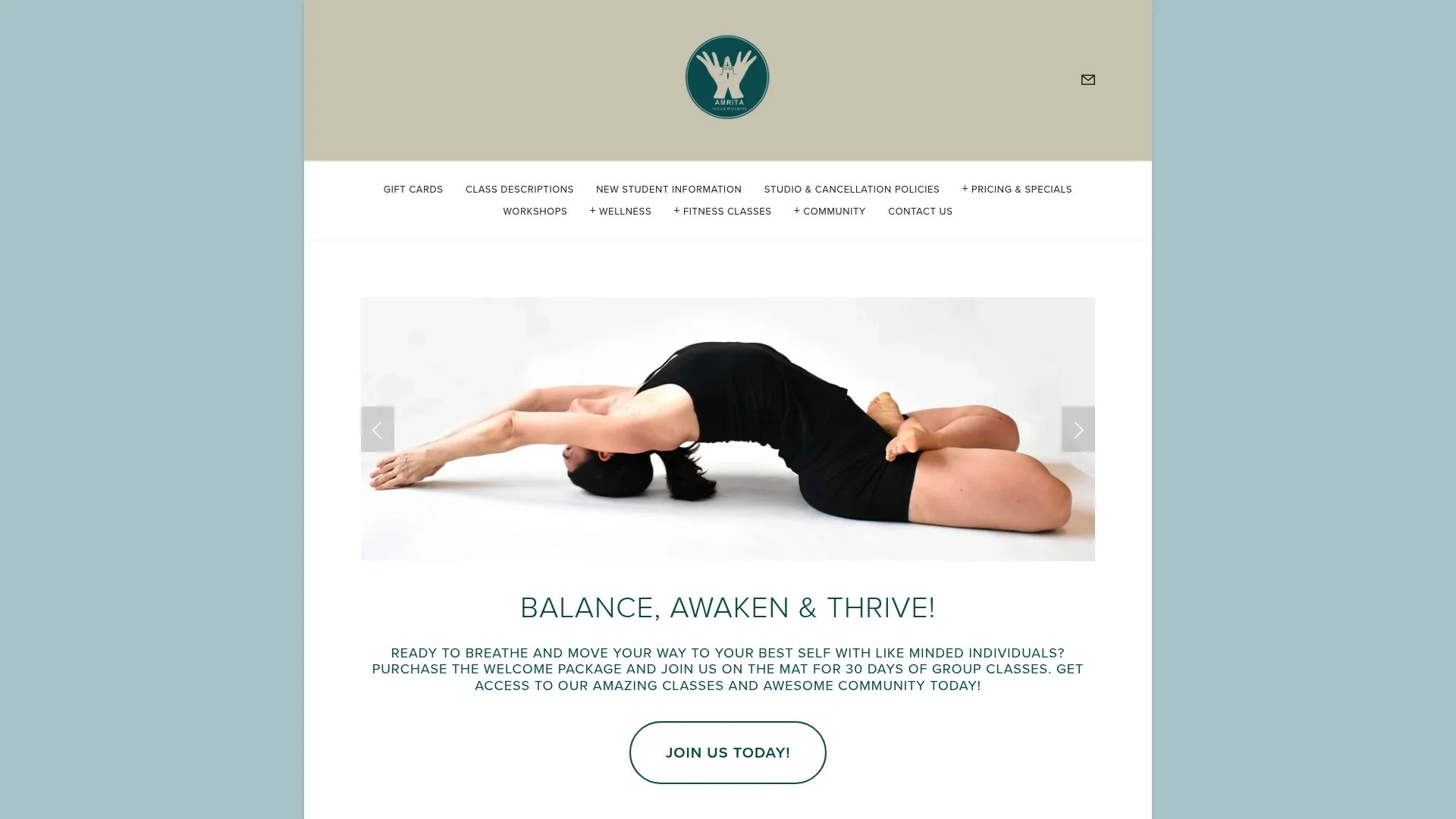
Beyond the mat, our studio also hosts wellness workshops like tarot readings for students who want to round out their practice with something reflective, alongside private sessions if you'd rather start one-on-one before joining a group class. If you're carrying a specific injury or health concern, a private session lets an instructor build the entire hour around your body instead of the room's average.
Your next step is simple: check our current class schedule, pick a beginner-labeled Hatha or Restorative session, and show up ten minutes early to say hello. That first class is the only hard part.
Key Takeaways
Hatha yoga works best for most beginners because its slow pace and held poses let a new body learn correct alignment before speed or intensity get added.
| Point | Details |
|---|---|
| Start with Hatha | Choose a Hatha or gentle Vinyasa class first; it teaches foundational poses at a pace beginners can absorb. |
| Look for beginner labels | Book classes marked "Basics," "Level 1," or "Gentle," and skip "Power" or "Advanced" until you have a foundation. |
| Build consistency over intensity | Practice yoga regularly for short sessions multiple times per week, focusing on consistency rather than intensity. |
| Modify rather than avoid | Use blocks, bent knees, or wall support for common limitations instead of skipping poses entirely. |
| Amrita Yoga & Wellness offers a real starting point | The studio's beginner-labeled Hatha, Vinyasa, and Restorative classes in Philadelphia include props and modification-focused instruction for new students. |
Sources
The guidance in this article draws on clinical health resources and established yoga teaching sources, each covering a different piece of the beginner puzzle.
MasterClass article referencing teacher advice on Hatha and beginner considerations
Yoga for Beginners: Complete Starting Guide 2026 | Yoga by Maya
This article offers general wellness information and isn't a substitute for personalized medical advice. If you have a specific health condition or injury, talk with a healthcare provider before starting a new yoga practice.