How Do I Start Doing Yoga at Home? A Beginner's 4-Week Plan
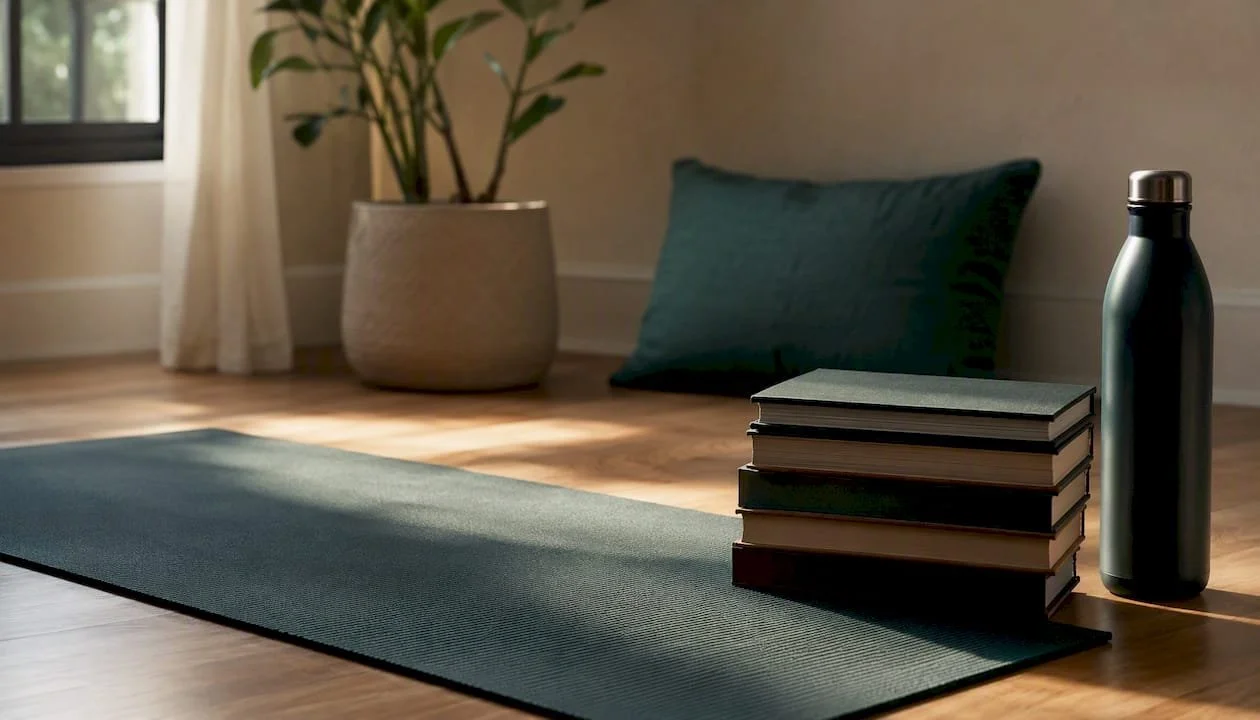
Roll out a mat, spend 5 to 10 minutes on breathing plus three simple poses, and repeat that three or four times this week. That's the whole starting move. You don't need a class, a subscription, or a closet full of gear to begin — you need a small patch of floor and a willingness to feel a little awkward for the first few sessions.
Here's what actually gets you moving today:
A mat, thick towel, or even carpeted floor
A clear space about 6 feet by 3 feet
Your phone, for a short guided video if you want one
Pro Tip: Lean on guided videos for your first month or two. They handle pacing and sequencing so you can focus on just showing up, not on remembering what comes next.
Key Takeaways
Starting a home yoga practice works best when short, consistent sessions replace the pressure of a perfect long practice.
| Point | Details |
|---|---|
| Start with 5 to 10 minutes | Short sessions several times a week beat one long, occasional session for building habit. |
| Use household substitutes | Books, belts, and folded towels replace blocks, straps, and bolsters while you get started. |
| Breathe before you move | Two to three minutes of slow breathing and warm-ups lower injury risk and sharpen focus. |
| Follow a 4-week progression | Add time and poses gradually, alternating guided videos with self-led sessions each week. |
| Book a class when ready | Amrita Yoga & Wellness offers beginner-friendly, in-person classes for hands-on alignment feedback. |
Table of Contents
How to Begin Yoga Practice at Home Without Overcommitting
Most beginners quit not because yoga is hard, but because they set the bar too high on day one. A 45-minute session sounds ambitious until you're three days behind and the mat feels like a chore. Five to fifteen minutes works better for a new practice because it's short enough to survive a busy morning and long enough to feel like something happened.
Try one of these templates depending on your day:
5-minute quick session: breath work plus two or three standing poses
10 to 15-minute starter session: breath, warm-up, four to six poses, brief rest
20 to 25-minute goal session: the full sequence once you're a few weeks in
Set an intention before you start, even something as simple as "I want to feel less stiff" or "I want ten quiet minutes." Keep the mat unrolled and visible somewhere in your space; a mat you have to dig out of a closet is a mat that stays in the closet.
Pro Tip: Pair your practice with something you already do daily, like right after brushing your teeth or right before your morning coffee. That anchor does more for consistency than motivation ever will.
What Do I Need for a Safe Home Yoga Space?
You need less than most fitness marketing suggests. A firm floor, a clear 6 by 3 foot patch, and a wall or sturdy chair nearby for balance work covers the basics. Hardwood and tile can get slippery under bare feet, so a mat or a folded towel underneath solves that fast.
A checklist for setting up:
Clear the floor of cords, toys, rugs that bunch up, and low furniture
Keep a wall or chair within reach for balance poses
Set your phone flat on the floor rather than propped, so it can't tip
Check that pets or kids won't wander through mid pose
For props, you likely already own substitutes. Thick hardcover books work as blocks, a robe tie or belt stands in for a strap, and a folded blanket does the job of a bolster.
You don't need specialized studio gear to start. Household items like sturdy books, belts, and folded blankets can substitute for yoga blocks, straps, and bolsters just fine while you figure out whether this practice is for you.
Should I Do Breathing Exercises Before Yoga Poses?
Every serious sequencing guide starts the same way: quiet before movement. Skipping straight to poses is one of the most common beginner habits, and it's also why people rush and hold their breath through positions that should feel calm.
Sit or lie comfortably and take three to five slow breaths through the nose, letting the belly rise and fall.
If box breathing helps, try inhaling for four counts, holding four, exhaling four, holding four, for two or three rounds.
Move into cat-cow for six to eight rounds, syncing spine movement with breath.
Add shoulder rolls and gentle hip circles, ten each direction, to wake up the joints you'll load next.
Breathing first isn't a formality. It shifts your nervous system out of rush mode, which is exactly the state that leads to forcing a stretch too far or losing balance in a pose you'd normally hold fine.
Pro Tip: If your mind won't settle, count your exhales instead of trying to think about nothing. Counting gives the mental chatter somewhere to go.
A 10-Minute Beginner Sequence You Can Follow Today
This sequence runs roughly 10 minutes and follows the order YogaJournal recommends for home practice: start quiet, move through the body in a logical order, and never skip the final rest.
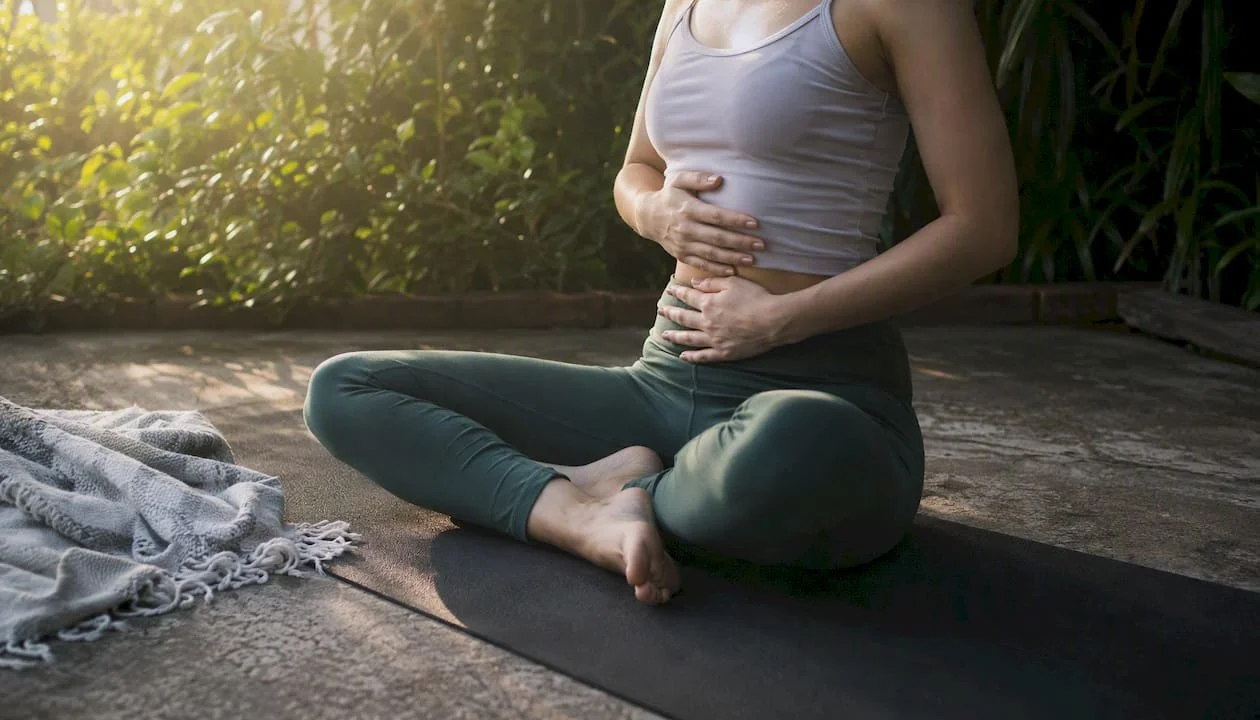
Seated breathing (1 minute): sit cross-legged, spine tall, five slow breaths.
Cat-cow (1 minute): on hands and knees, arch and round the spine with each breath, 8 rounds.
Downward dog (30 seconds): hips high, knees bent as much as needed, heels don't need to touch the floor.
Forward fold to standing (30 seconds): roll up slowly, one vertebra at a time.
Mountain pose to raised arms (30 seconds): three breaths, arms overhead, shoulders relaxed away from ears.
Warrior II, both sides (1 minute total): front knee tracks over the ankle, back leg straight but not locked.
Tree pose, both sides (1 minute total): hand on a wall or chair back if balance feels shaky, foot pressed to calf or ankle, never directly on the knee.
Seated forward fold (1 minute): bend the knees generously; a strap or belt around the feet closes the gap if hands can't reach.
Supine twist, both sides (1 minute total): knees drop gently to one side, arms out in a T shape.
Savasana (2 minutes): flat on your back, arms loose, eyes closed, letting the breath return to normal.
A few modification notes worth keeping in your back pocket:
Stack two books under a hand in forward folds if your hamstrings are tight.
Bend the standing leg's knee in Warrior II if the hips feel locked.
Sit in a chair for the balance poses if standing on one leg feels unsafe.
Cut the hold time in half in your first week and build up from there.
Alignment Basics and Mistakes That Trip Up Beginners
Three rules cover most of what you need for safe alignment: keep the spine long rather than collapsed, stack knees over ankles rather than letting them wander past the toes, and avoid locking any joint straight, especially knees and elbows. A soft bend protects the joint far better than a hyperextended lock.
The mistakes that show up again and again in new practitioners:
Holding the breath during effort, which spikes tension instead of releasing it
Forcing a deeper stretch than the body is ready for, especially in forward folds
Skipping Savasana because it looks like "doing nothing," when it's actually where the nervous system resets
Some discomfort is normal when you're building new strength and flexibility, but sharp joint pain, dizziness, or numbness is your body telling you to stop immediately, not push through. Those signals mean modify, rest, or talk to a professional, not grit your teeth and continue.
Cleveland Clinic's guidance on home yoga suggests using a mirror early on to check your alignment, then weaning off it once you can feel correct positioning without watching yourself. Relying on a mirror forever just delays learning to trust your own body.
How Long Does It Take to Build a Yoga Habit at Home?
Four weeks is a realistic window for turning a few tries into an actual habit, based on the kind of gradual progression beginner routines tend to recommend.
Week 1: three short sessions, 5 to 10 minutes each, focused purely on showing up.
Week 2: four sessions, 10 to 15 minutes, adding one or two new poses to the sequence.
Week 3: four to five sessions, 15 to 20 minutes, alternating a guided video with a self-led session.
Week 4: five sessions, 20 to 25 minutes, holding poses longer and adding a balance-focused day.
A few principles make this progression stick:
Consistency beats intensity; four 10-minute sessions build more habit than one exhausting hour
Alternate guided and self-led practice so you learn new sequences while also developing a feel for your own body
Track sessions on a calendar or habit app, and set micro-goals like "hold tree pose for five breaths" instead of vague ones like "get better at yoga"
Small, visible progress keeps you coming back more reliably than any wellness cliché ever could. Our own tips for building a daily yoga practice go deeper into habit stacking if week one goes better than expected.
Do I Need a Live Class to Start, or Are Videos Enough?
Guided videos are the better starting point for most beginners because they carry the sequencing and pacing decisions for you. A good beginner video moves at a normal, unhurried pace, gives alignment cues out loud rather than assuming you already know them, and runs 10 to 20 minutes rather than an hour.
Live classes earn their place a bit later, or sooner if you're working around an injury or a specific limitation. Hands-on feedback from an instructor catches alignment errors a video simply can't see, especially in more complex poses like arm balances or deep twists.
Safe formats to look for as you search:
Short guided videos, 10 to 20 minutes, aimed specifically at beginners
Gentle Hatha classes, which move slower and hold poses longer
Restorative sessions, useful on days when energy is low but you still want to move
Pro Tip: If a video's pacing feels rushed or the instructor skips explaining alignment, close it. A beginner video should never leave you guessing what a pose is supposed to feel like.
What Does the Research Say About Starting Yoga at Home?
The NCCIH outlines both the physical and mental benefits of yoga alongside basic safety considerations, and its guidance lines up with everything in this plan: start gently, respect pain signals, and build gradually. Harvard Health points to stress reduction and improved balance as two of the more consistent benefits beginners notice early, which is part of why this plan leans so heavily on breathwork before movement.
Peer-reviewed research collected on PMC associates regular yoga practice with gains in flexibility, balance, and some mental health measures across varied study groups, supporting the case for short, frequent sessions over occasional long ones.
Regular practice, even in short bursts, is consistently linked to measurable improvements in balance and mood across the research, not just in people who practice for an hour at a time.
Pro Tip: Short daily sessions tend to beat sporadic long ones for sticking with any new habit, yoga included. Ten minutes today does more for your practice than a planned hour that never happens.
Why the short, guided approach works for real beginners
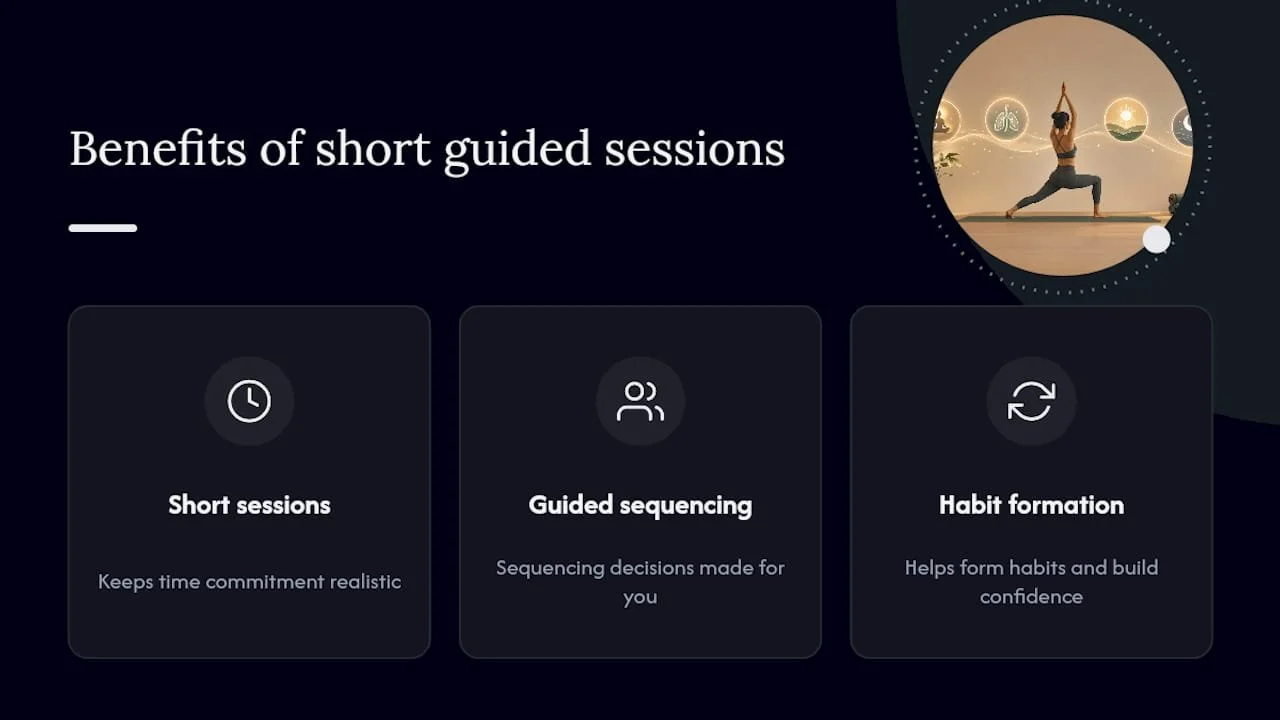
Most people who quit early quit because they tried to do too much, too fast, without any feedback on whether they were doing it right. A short, guided approach removes both problems: the time commitment stays realistic, and the sequencing decisions get made for you while you build confidence. That's not a shortcut, it's just how habits actually form. Amrita Yoga & Wellness has watched this pattern play out with beginners for years, which is part of why our own beginner resources default to short, structured sessions over ambitious ones.
Ready for Feedback? Amrita Yoga & Wellness Is Here When You Are
Home practice is genuinely enough to start, and everything in this plan works without ever stepping into a studio. But there's a ceiling to what a video can catch. Once you hit a pose that feels off, or you're ready for corrections nobody watching a screen can give you, that's exactly when an in-person class earns its cost.
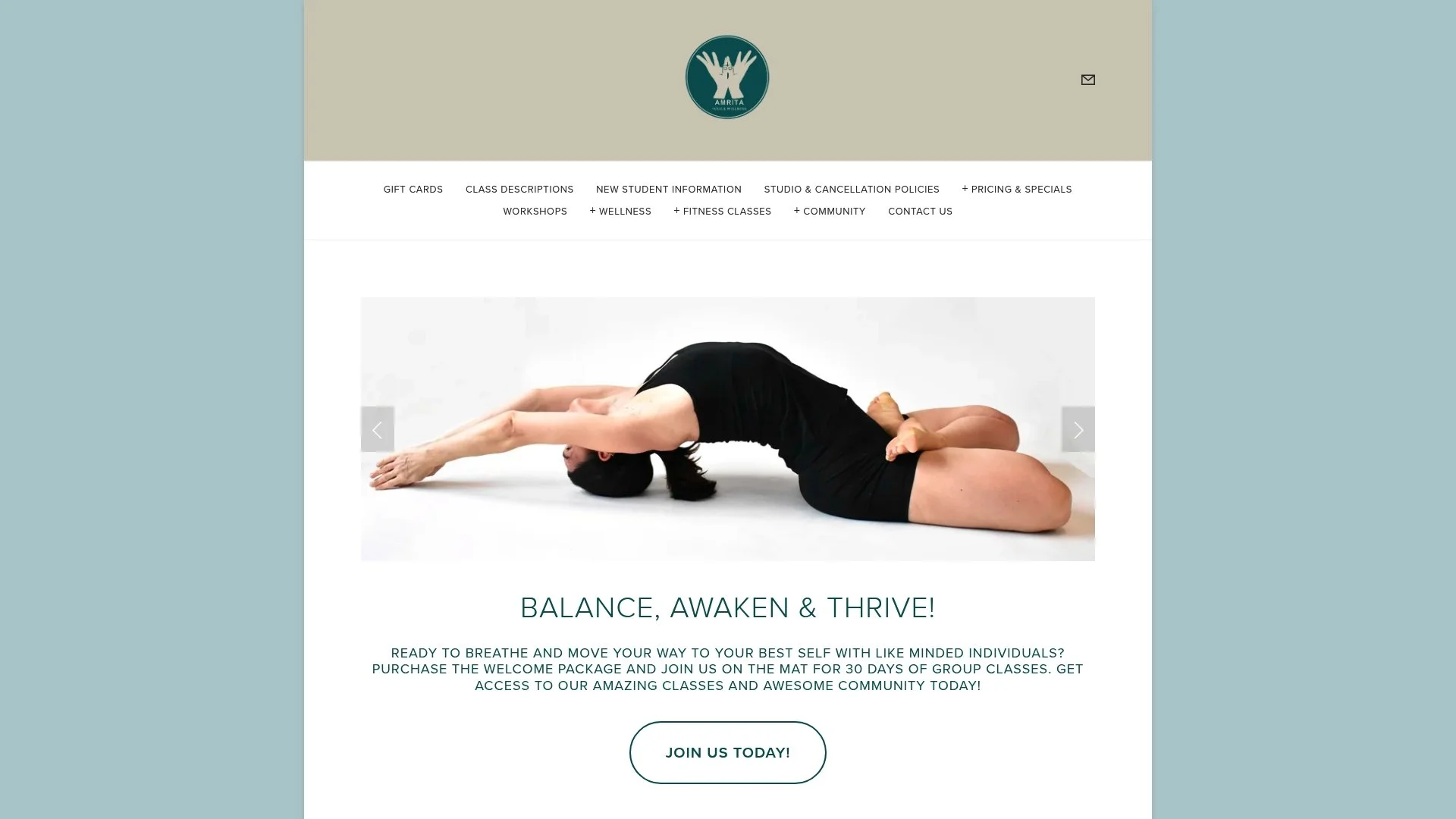
Amrita Yoga & Wellness in Philadelphia runs classes across styles and levels, from gentle beginner sessions to more advanced formats like hot yoga, so you can walk in exactly where your home practice has taken you rather than starting over. If your curiosity extends past the mat, our tarot readings and other workshops give you a low-pressure way to explore the studio's community without committing to a full class schedule first. Check our class calendar and book a session whenever you're ready for a set of eyes on your alignment.
Where to Learn More About Safe Home Sequencing
Pick one or two of these rather than trying to absorb everything before you start your first session. The NCCIH overview covers safety basics well, Harvard Health is strong on the mental health angle, and YogaJournal's home practice guide offers the clearest sequencing logic for a solo session.
NCCIH: benefits and safety considerations from a federal health research agency
Harvard Health: realistic expectations and stress-related benefits
PMC research overview: peer-reviewed evidence on flexibility and balance outcomes
YogaJournal: practical sequencing advice built specifically for home practice
Amrita Yoga & Wellness blog: our beginner confidence tips and free beginner classes build directly on everything covered here
If you're adapting this plan around mobility limitations or an older body, Aging Solo's practical wellness routines covers age-sensitive modifications worth a look.
Frequently Asked Questions
How do I start doing yoga at home with no experience at all? Start with five to ten minutes of breathing plus two or three simple poses like cat-cow and mountain pose. Follow a beginner guided video for your first few sessions so you're not guessing at sequencing or alignment.
How much space do I actually need to do yoga at home? A clear area roughly 6 feet by 3 feet is enough for a full sequence. Clear cords, rugs that bunch, and low furniture, and keep a wall or chair nearby for balance poses.
Do I need to buy yoga blocks and straps before I begin? No. Thick hardcover books work as blocks, a robe tie or belt substitutes for a strap, and a folded blanket replaces a bolster. Buy actual props later if the practice sticks.
How often should a beginner practice yoga at home? Three to four short sessions a week is a realistic starting frequency. Consistency in short bursts builds a habit faster than one long session followed by a week off.
Is it normal to feel sore or shaky when I start practicing yoga? Mild fatigue or muscle soreness is normal as your body adapts. Sharp joint pain, dizziness, or numbness are not, and they mean you should stop and modify the pose or check in with a professional.