Studio Backed: What Beginners Should Wear to Yoga, Do the Squat Test
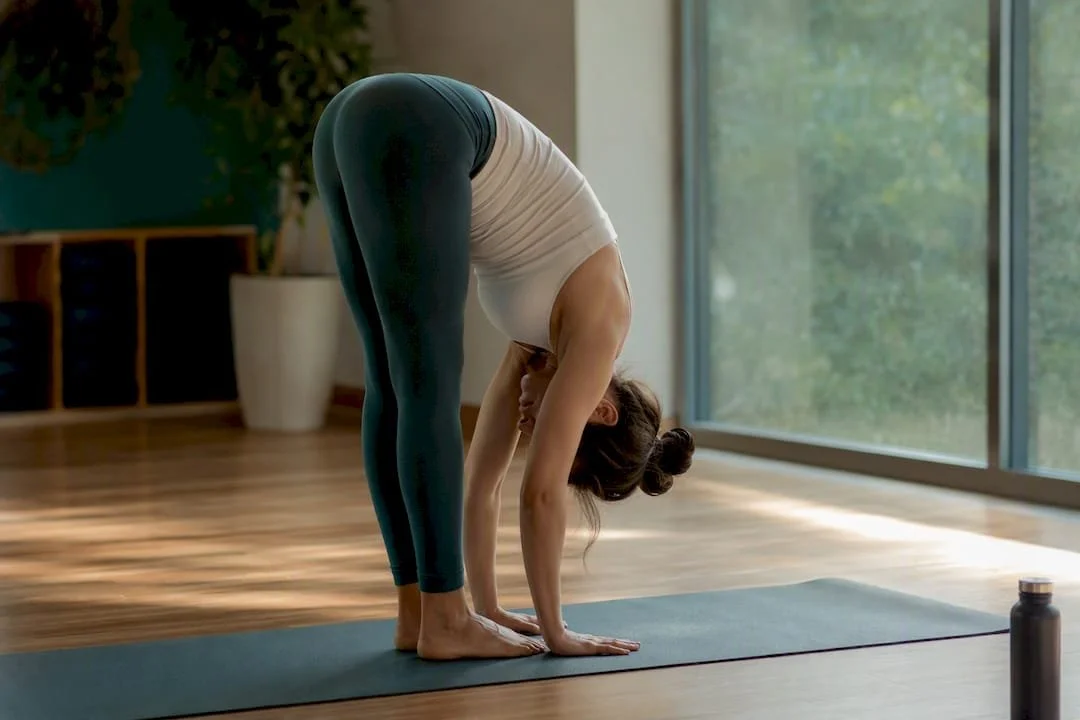
For most beginners, the safest bet is a fitted, moisture-wicking top or sports bra, high-waist leggings or fitted shorts, hair tied back, and a water bottle within reach. That combination works for nearly every class type taught at a studio like Amrita Yoga & Wellness, from a gentle beginner flow to a heated room. Run your leggings through a quick mirror squat test before you leave home, and skip the checklist anxiety entirely.
TL;DR:
Wearing fitted, moisture-wicking tops and snug high-waist bottoms helps prevent distractions during poses and keeps clothing in place.
Running a squat or stretch test at home ensures leggings and tops won't become see-through or shift during practice.
Support levels in sports bras should match the class intensity, with lighter support for slow classes and medium support for dynamic or hot yoga.
Breathable, quick-dry fabrics are essential for hot yoga, with additional hydration and a sweat-absorbing towel recommended.
Avoid loose-fitting clothes, heavy cotton, and accessories that can distract or interfere with movements, especially during fast-paced or inverted sequences.
Table of Contents
Bottoms: Leggings, Shorts, and Joggers: Fit, Coverage, and the Squat Test
Sports Bra and Support: Pick the Right Level for Class Intensity
Hot Yoga and Heated Classes: Minimal Gear, Big Hydration Needs
Layering and Accessories: Hair, Jewelry, Socks, and Small Props
Quick Beginner Checklist: What to Wear and What to Bring
You don't need a new wardrobe for your first class. You need a short list, checked once, and you're done.
A fitted top or sports bra that won't ride up during forward folds
High-waist leggings or fitted shorts with a snug, non-slip waistband
A hair tie, even if your hair barely reaches your shoulders
A water bottle, and a small towel if you run warm
A mat, if you own one, though most studios rent them for a few dollars
Before you walk out the door, do the mirror squat test: squat low in front of a mirror and check your leggings at the hip, crotch, and thigh for see-through spots. Call ahead if you need to rent a mat, and skip heavy perfume, cologne, or jewelry that jingles every time you move.
Tops: Choosing Tanks, Tees, and Layers That Stay Put
A top that stays close to your body is not about vanity. It's about not flashing the class every time you fold forward or drop into downward dog. A simple test works every time: bend forward like you're touching your toes and see whether the shirt stays put or slides toward your chin. If it slides, it stays home.
Fabric matters as much as fit. Skip heavy cotton, which soaks up sweat and gets clingy in an uncomfortable way. Look for nylon, polyester, or spandex blends, which wick moisture and move with you instead of against you. If your studio runs cool, bring a lightweight crewneck or a zip-up layer rather than a bulky hoodie. Hoodies bunch up under your arms during poses like plank or cat cow, and you'll spend more time adjusting them than actually practicing.
Bottoms: Leggings, Shorts, and Joggers: Fit, Coverage, and the Squat Test
Loose waistbands are the enemy of a good practice. Every time you hinge, twist, or invert, low-riding pants tug downward, and you end up hiking them back up between poses instead of breathing through them. High-waist leggings or fitted shorts with a snug waistband solve this before it starts.
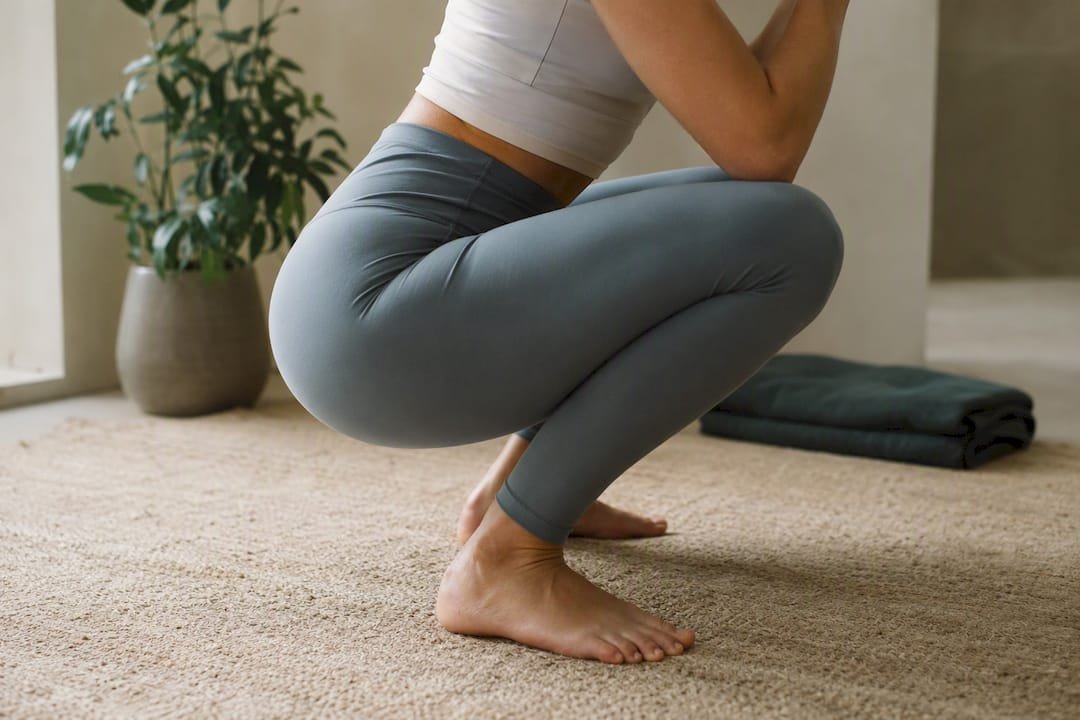
Run the squat test at home: squat deep in front of a bright mirror and check the fabric at your hips and thighs. If light shows through or the fabric goes sheer, those leggings belong in the gym, not the studio. Also check the inseam for thick seams that dig in during cross-legged seated poses.
Loose pants and joggers work fine in slower styles like yin or restorative, where you're mostly seated or lying down. In vinyasa or power classes, where you're moving fast and inverting often, stick with fitted bottoms so nothing shifts mid flow.
Sports Bra and Support: Pick the Right Level for Class Intensity
Match your support level to the pace of the class, not the other way around. A gentle restorative or yin class rarely demands more than light support, since most poses are floor-based and slow. Vinyasa, power, or hot yoga call for medium support, since you'll be jumping, inverting, and moving through sun salutations at a faster clip.
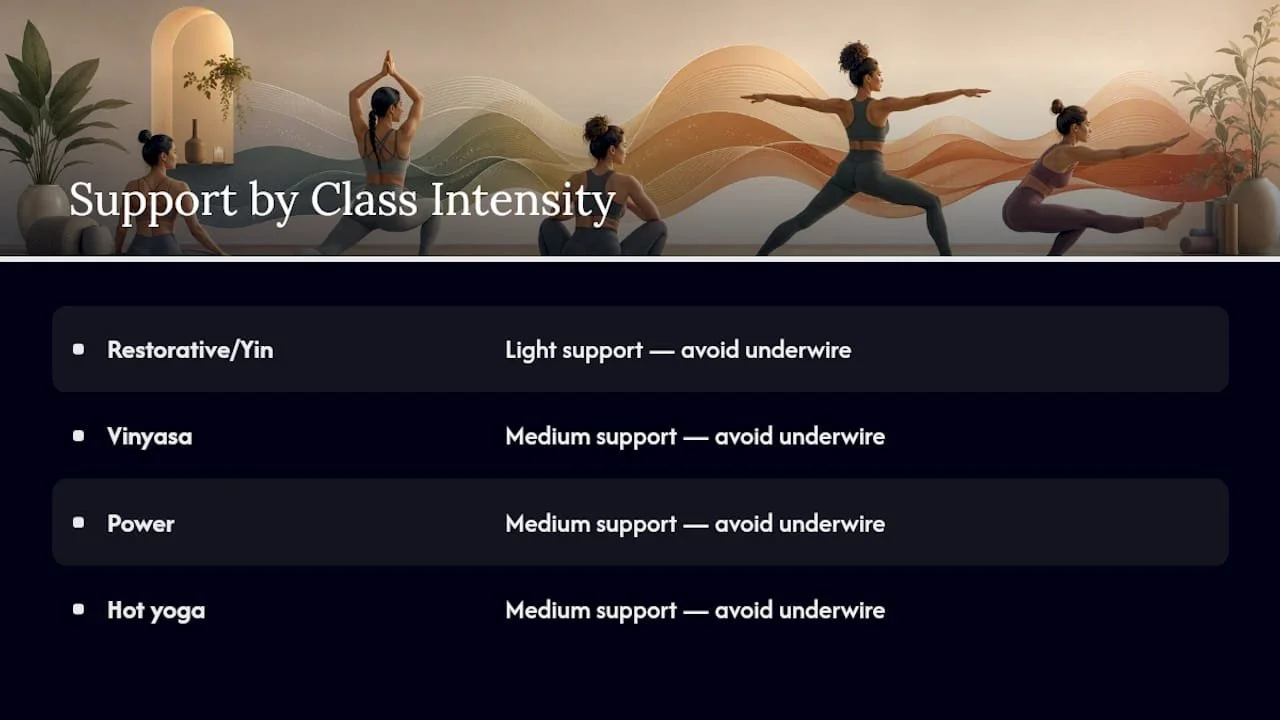
Skip underwire entirely. It digs in during backbends and twists, and there's no version of a chaturanga that plays nicely with metal hardware. If forward folds and downward-facing poses make you self-conscious, a high-neck or fuller-coverage bra solves that without adding bulk. Built-in shelf bras in tank tops are a solid shortcut if you'd rather not layer two pieces.
Notes for Men and Gender-Neutral Tips
Fitted training shorts or slim joggers work better than baggy basketball shorts, which tend to gape open during inversions like downward dog or legs-up-the-wall. A compression liner underneath solves the coverage problem without changing how the shorts feel on the mat.
For tops, the same forward-fold test applies: bend over and check whether your shirt rides up toward your chin. If it does, size down or tuck it in. Anyone who prefers more coverage can layer a fitted long-sleeve underneath without adding bulk.
Hot Yoga and Heated Classes: Minimal Gear, Big Hydration Needs
Heated rooms run anywhere from roughly 90 to 105 degrees Fahrenheit, and heavy or loose fabric becomes a burden fast. Minimal, quick-dry clothing wins here: fitted shorts, a sports bra, or a snug tank that won't stick to your skin in sheets by minute twenty.
Bring a full-size towel, more water than you think you need, and consider a dedicated yoga towel that lays over your mat for extra grip once sweat starts pooling. Textured, quick-dry fabric actually helps you grip your own skin during arm balances, which slick cotton cannot do. Check out our hot yoga essentials guide before your first heated session.
Layering and Accessories: Hair, Jewelry, Socks, and Small Props
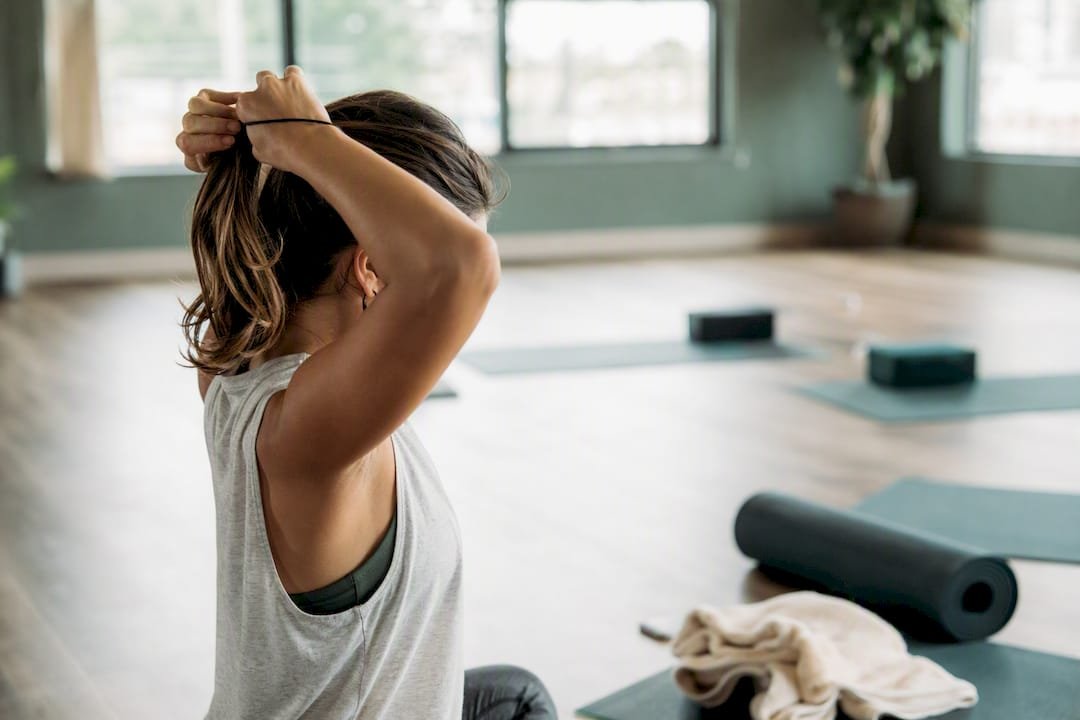
Tie your hair back before you step onto the mat. Loose hair falling into your face during a forward fold is one of the most common first-class annoyances, and it's a two-second fix. Take off watches, bracelets, and dangly earrings, since they catch on mats and props and can scratch you during floor work. Keep deodorant and perfume light. Shared studio rooms get warm, and strong scents carry.
Bare feet are the standard in most classes, since bare skin grips the mat better than fabric. If you want socks for warmth, choose grippy, rubber-tread styles rather than ordinary ones, which slide during standing balances like tree pose.
What Not to Wear: Mistakes That Distract From Practice
Jeans are the number one mistake first-timers make, and it's an easy one to avoid. The fabric doesn't stretch, the seams dig into your hips during squats, and the waistband cuts you in half every time you fold forward.
Loose, oversized shirts that fall over your head during downward dog or handstand prep are the second most common issue. Thin or see-through leggings round out the list. If you skipped the squat test at home, do it before class in the studio bathroom rather than finding out mid-pose.
The fix for nearly all of this is simple: fitted or tucked tops, high-waist bottoms, and a compression liner if you're wearing shorts.
Studio Etiquette and What to Bring for Your First Class
Call ahead if you need a rental mat, since some studios keep a limited supply. Arrive ten to fifteen minutes early to sign in, silence your phone, and find a spot on the floor without rushing. Shoes stay in the lobby or a cubby, not on the studio floor.
Pack water and a towel if you're heading into a heated room, and return any blocks, straps, or bolsters to their spot when class ends. Shared space means shared air, so keep scents light out of respect for the people breathing next to you.
Why Amrita Yoga & Wellness Trusts These Recommendations
We built these recommendations around what actually plays out in a studio, not a fashion catalog. Amrita Yoga & Wellness runs beginner-friendly classes alongside hot yoga, and the same fit and fabric questions come up every week from people walking in for the first time.
Our practical add: bring a lightweight crewneck for savasana, since your body cools down fast once you stop moving, and pack a hair tie and towel for anything heated. If you'd rather see it in person before buying anything new, our free beginner class page walks through what to expect on day one.
A Final Word Before Your First Class
Most people already own something that works. A gym tank, a decent pair of leggings, an old crewneck for after class. The outfit is the smallest part of this. Try a free beginner class and let the practice, not the wardrobe, hold your attention.
— Juiced