The Amrita Journal
Explore thoughtful stories, practical wellness guidance and inspiring ideas to support your movement, mindfulness and everyday wellbeing at Amrita.
Hot Power Yoga Benefits: What Adults Need to Know
Hot power yoga reliably improves flexibility, balance, and stress resilience while delivering a real cardiovascular stimulus — when practiced safely and consistently. A 16-week randomized controlled trial found significant reductions in perceived stress and improvements in energy and self-efficacy in sedentary adults, and a 2025 systematic review across 43 studies confirmed gains in flexibility, balance, and some cardiometabolic markers. Amritayogawellness offers hot power yoga classes in Philadelphia for adults at every starting point.
Core benefits at a glance:
Measurably improved flexibility and lower-body range of motion
Better balance and coordination, even in early weeks
Strength gains, particularly in the lower body and core
Elevated heart rate during sessions, supporting cardiovascular conditioning
Reduced perceived stress and improved mood
Skin circulation and thermoregulatory adaptation from repeated heat exposure
Key Takeaways
Hot power yoga produces measurable improvements in flexibility, balance, and stress resilience within four to six weeks of consistent practice, with cardiovascular and strength adaptations building over eight to twelve weeks.
| Point | Details |
|---|---|
| Flexibility and balance | Lower-body range of motion and balance improve consistently across trials, including a 33% sit-and-reach gain in one 8-week RCT. |
| Stress reduction | A 16-week RCT found significant reductions in perceived stress (p=0.003) and energy/fatigue improvements in sedentary adults. |
| Calorie burn context | Heat raises heart rate acutely but does not reliably increase total energy expenditure versus non-heated yoga, per Mayo Clinic. |
| Safety first | People with heart disease, pregnancy, or heat intolerance should get medical clearance before attending any hot yoga class. |
| Amritayogawellness | Amrita Yoga & Wellness in Philadelphia offers beginner-friendly hot power yoga classes with instructor-led modifications and safety guidance. |
Table of Contents
What exactly is hot power yoga, and how does it differ from other formats?
How does hot power yoga compare to other yoga styles and fitness activities?
Hot power yoga works best for adults who want more than one thing from their fitness practice
Try hot power yoga at Amrita Yoga & Wellness in Philadelphia
What are the main benefits of hot power yoga?
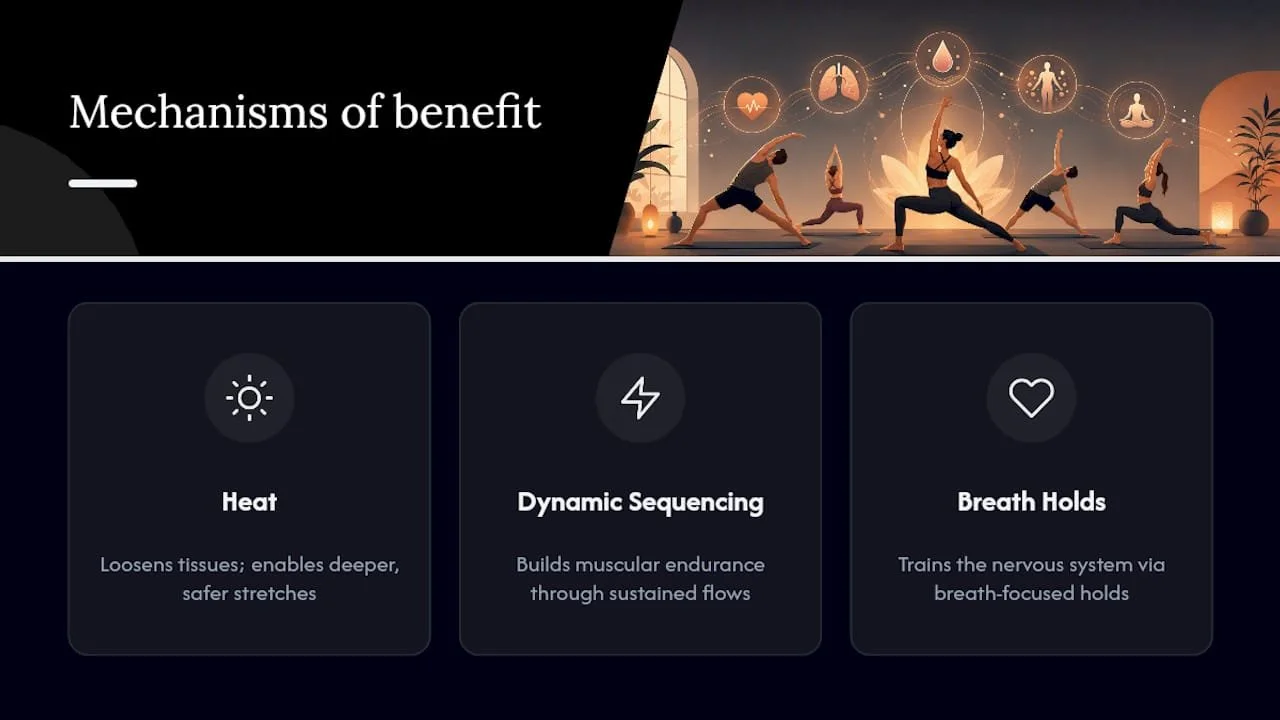
Each benefit below has a distinct mechanism. Heat loosens connective tissue, making stretches more accessible. Dynamic sequencing builds muscular endurance. Breath-focused holds train the nervous system. Together, they produce outcomes that neither a standard gym session nor a room-temperature yoga class replicates in quite the same combination.
Flexibility and range of motion
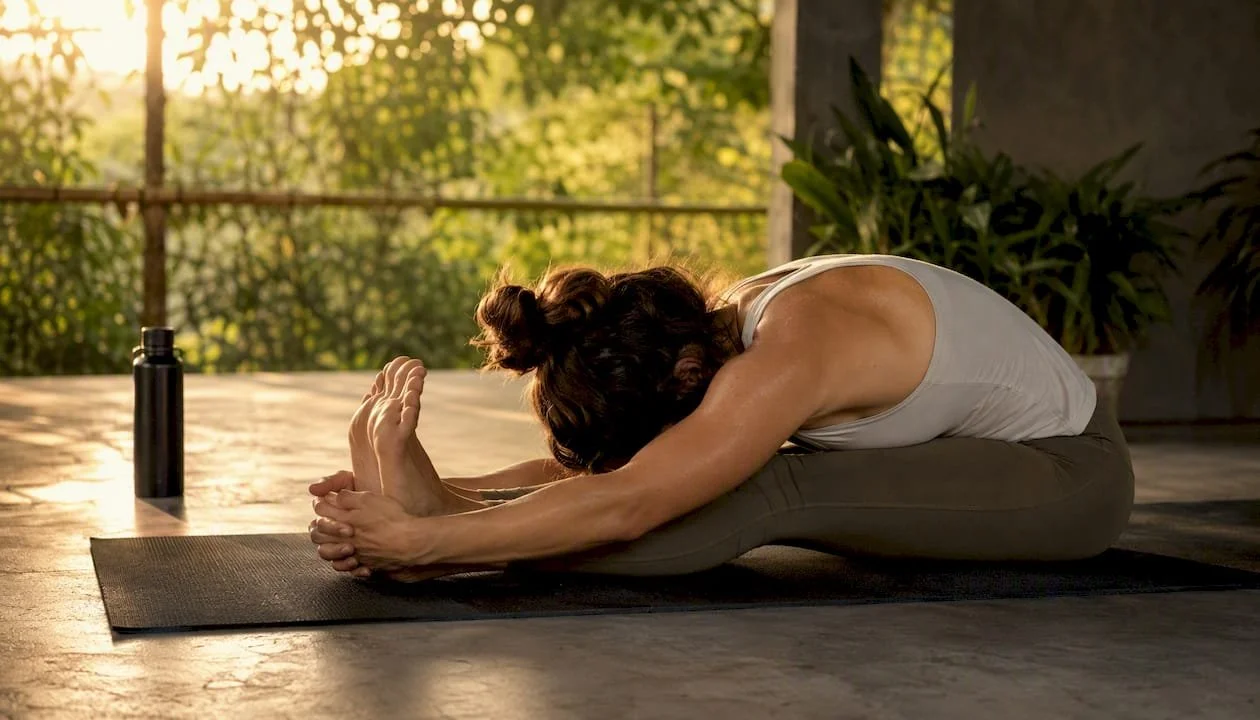
The heat in a hot power class raises muscle and connective tissue temperature, which reduces stiffness and allows deeper, safer stretching. An 8-week Bikram intervention reported a sit-and-reach improvement of roughly 33% in the yoga group versus a 1% decline in controls. That gap is striking. Most adults notice meaningful changes in hamstring and hip flexibility within four to six weeks of consistent practice.
Balance and coordination
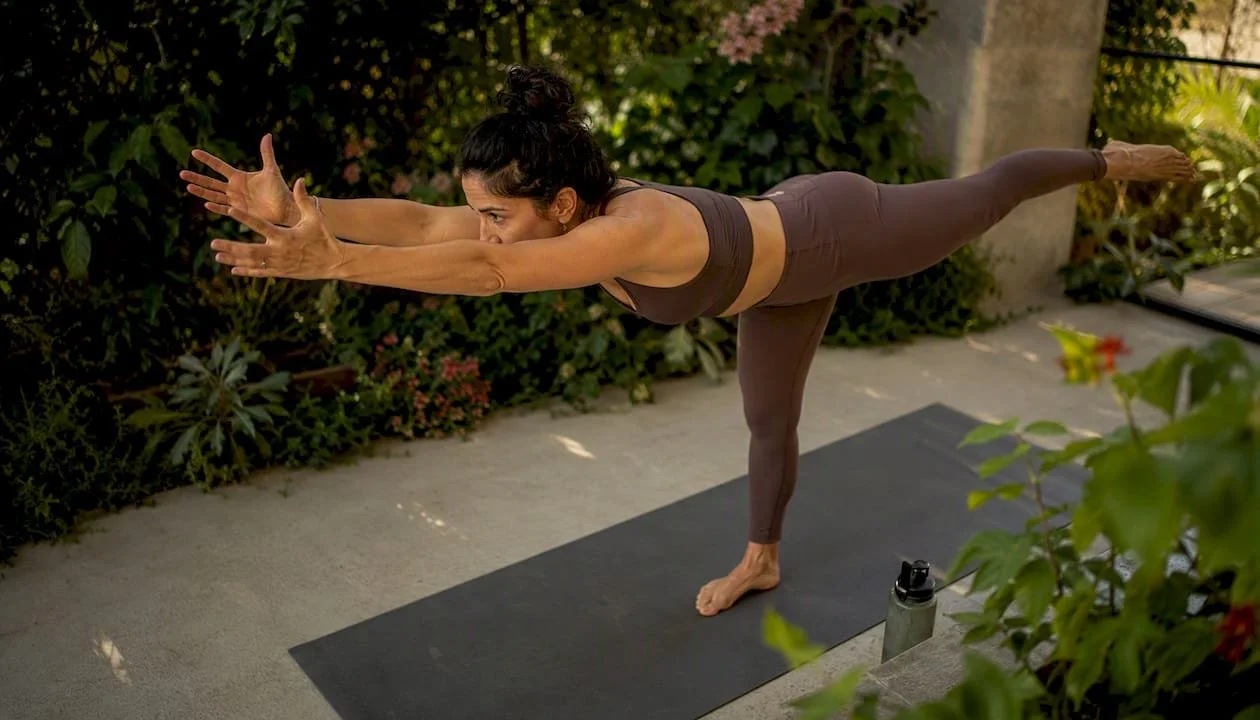
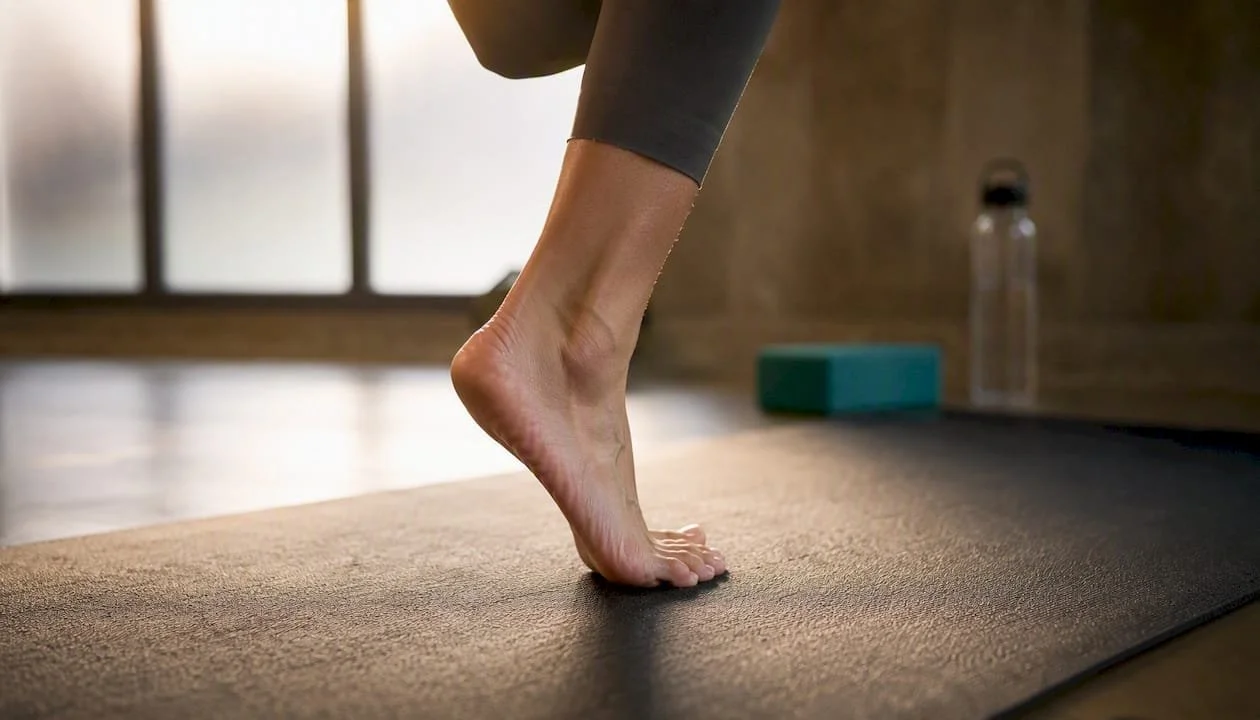
Single-leg poses held in a warm room demand constant micro-adjustments from the stabilizing muscles around the ankle, knee, and hip. The 2025 systematic review identified balance as one of the more consistently improved outcomes across hot-yoga studies, which aligns with what instructors observe in class. Students who struggle to hold Warrior III in week one are often steady by week six.
Strength and musculoskeletal benefits
Hot power yoga is not weightlifting, but sustained isometric holds in poses like Chair, Warrior II, and Boat build real muscular endurance in the quads, glutes, and core. Colorado State University research notes that the combination of heat and exercise likely drives these adaptations, not heat alone. Upper-body and cardiorespiratory strength findings are more mixed across trials, so treat those as secondary gains rather than primary outcomes.
Cardiovascular stimulus and metabolic hints
A 12-session study comparing hot and normal-temperature yoga found increased maximal aerobic fitness in the hot-yoga group alongside higher HSP70 expression, a cellular heat-shock protein linked to cardiovascular adaptation.
Heart rate during a hot power class can reach levels comparable to moderate aerobic exercise. That said, Mayo Clinic sports medicine notes that acute heart rate elevation from heat does not necessarily translate to higher total energy expenditure compared to non-heated yoga. For weight management, this matters: the calorie burn may feel higher, but the actual difference versus a room-temperature class is smaller than most people expect. The cardiovascular adaptation over repeated sessions is the real prize, not the per-session calorie count.
Mental health and stress reduction
A six-week hot-yoga study reported improved well-being in participants, and Harvard Health's yoga and mental health summary confirms that yoga broadly reduces stress and supports mood. The heat adds a layer: finishing a challenging class in a 95°F room builds a specific kind of psychological resilience that carries into daily life. The 16-week RCT found stress reductions were dose-dependent, meaning more attendance correlated with greater improvement.
Respiratory and lung capacity notes
Controlled breathing under thermal load trains the diaphragm and intercostal muscles more deliberately than most gym workouts. Evidence here is limited and mostly observational, but practitioners consistently report improved breath awareness and capacity over time.
Skin and thermoregulatory effects
Repeated heat exposure improves the body's ability to regulate core temperature, a process called heat acclimatization. Sweating increases skin circulation, and many practitioners report clearer skin as a secondary effect. These are real physiological changes, though they are not the primary reason most adults choose the practice.
What exactly is hot power yoga, and how does it differ from other formats?
Hot power yoga is fitness-focused vinyasa or power-style sequencing taught in a heated room, typically between 85°F and 100°F. Classes emphasize strength, flow, and breath-linked movement rather than a fixed sequence. Length varies, usually 45–75 minutes.
The differences between hot-yoga formats matter practically:
Bikram yoga: A standardized 26-posture series practiced at approximately 105°F with 40% humidity, always 90 minutes. The fixed sequence makes it highly consistent and well-studied, but there is no variation between classes. Read more about the Bikram format and its evidence base on the Amritayogawellness blog.
Hot power yoga: Variable sequencing at lower temperatures (85–100°F), shorter or longer class lengths, and a stronger emphasis on muscular strength and dynamic flow. Better suited to adults who want fitness gains alongside flexibility.
Hot Vinyasa: More continuous movement, fewer prolonged isometric holds, and a similar temperature range to hot power. Less strength-focused than hot power, more aerobic in feel.
For adults who want a combined strength-and-flexibility outcome with stress-reduction benefits, hot power yoga sits in the most useful middle ground. Bikram suits those who prefer structure and repetition; hot Vinyasa suits those who prioritize flow over holds.
What does the science actually show?
The evidence base is real but imperfect. Most studies use Bikram-style protocols, so findings must be applied cautiously to hot power formats. The 2025 systematic review noted that participants across studies were predominantly female, which limits generalizability to broader populations.
| Study | Sample | Length | Primary outcomes | Confidence |
|---|---|---|---|---|
| well-being study | Adults | four to six weeks | Well-being, stress | Limited; pilot level |
What the evidence supports with reasonable confidence:
Flexibility and lower-body range of motion improve in most trials
Balance improves consistently across study types
Perceived stress and some quality-of-life domains improve in RCT conditions
Acute cardiovascular and thermoregulatory responses are well-documented
Where the evidence is weaker:
Superiority over non-heated yoga has not been proven for most outcomes
Upper-body strength and cardiorespiratory fitness findings are inconsistent
Long-term data beyond 16 weeks is sparse
Hot power yoga specifically is underrepresented; most data comes from Bikram protocols
Who should be cautious, and how do you stay safe?
Heat adds genuine physiological stress to an already demanding practice. That is part of what makes it effective, and also what makes it risky for some people.
Consult a clinician before starting if you have:
Known heart disease, arrhythmia, or uncontrolled hypertension
Pregnancy (hot yoga is generally not recommended without explicit medical clearance)
Heat intolerance or a history of heat illness
Medications that impair sweating or thermoregulation (certain antihistamines, diuretics, beta-blockers)
Diabetes with autonomic neuropathy
Recent illness, fever, or dehydration
Practical risk reduction:
Arrive well-hydrated: drink 16–20 oz of water in the two hours before class
Acclimate gradually: spend your first two or three sessions simply staying in the room and breathing before attempting full sequences
Wear minimal, breathable clothing and bring a full-size towel for your mat
Take child's pose or sit down whenever you feel lightheaded, and tell your teacher before class about any health concerns
Cool down actively after class: cold water on the wrists and neck, and sit before standing quickly
Stop immediately and seek help if you experience:
Dizziness, nausea, or confusion during class
Fainting or near-fainting
Chest pain or heart palpitations
Skin that stops sweating despite the heat (a warning sign of heat exhaustion)
Pro Tip: For sessions lasting 60–90 minutes, plain water is often not enough. Electrolyte replacement, specifically sodium and potassium, helps prevent lightheadedness and syncope. A small electrolyte drink or tablet before and after longer sessions makes a measurable difference. See the Amritayogawellness hot yoga safety guide for detailed protocols.
How to get started with hot power yoga
What to bring to your first class:
A large water bottle (at least 24 oz, ideally more)
A full-size yoga towel to cover your mat
Your own mat if possible (studios provide them, but a personal mat improves grip)
Minimal, moisture-wicking clothing
An electrolyte option for sessions over 60 minutes
An open conversation with the teacher about any health issues before class begins
A four-week starter plan:
Week 1: Attend one class. Focus entirely on staying in the room, breathing steadily, and taking rest in child's pose whenever needed. Do not push pose depth.
Week 2: Attend one or two classes. Begin attempting full sequences but exit poses early if your heart rate feels unmanageable. Notice which poses challenge your balance most.
Week 3: Aim for two classes. Start holding poses for their full duration. Track your flexibility in one or two benchmark poses (seated forward fold, standing balance).
Week 4: Two to three classes. You should notice improved heat tolerance, steadier balance, and reduced effort in poses that felt impossible in week one.
Most beginners feel the heat most intensely in weeks one and two. By week three, the thermoregulatory adaptation kicks in and the room feels more manageable. For beginner-specific yoga guidance, the Amritayogawellness blog has resources tailored to new practitioners.
Choose a class labeled "beginner," "level 1," or "all levels" for your first month. A 60-minute format is more forgiving than a 90-minute class while your body acclimates.
Studio tips from Amrita Yoga & Wellness instructors
Experienced teachers at Amritayogawellness have observed consistent patterns in how adults adapt to hot power yoga, and a few practical adjustments make a significant difference in early sessions.
What instructors recommend for acclimation:
Treat the first session as a heat-exposure session, not a yoga session. Lying in savasana for 60 minutes in a hot room is a legitimate first class.
Progressive exposure works better than pushing through discomfort. Add one more challenging pose each session rather than attempting the full sequence from day one.
In standing balance poses, fix your gaze on a single unmoving point (a technique called drishti). The heat makes proprioception less reliable, and a stable gaze compensates.
Common modifications teachers offer:
Low back discomfort: Shorten the stance in Warrior poses and avoid deep backbends until the lumbar muscles are warmer and stronger.
Dizziness: Drop to hands and knees immediately, breathe slowly, and skip the next standing sequence. This is not failure; it is smart pacing.
Poor balance: Use the wall or a block without hesitation. Balance improves faster when you practice the correct alignment than when you wobble through a pose unsupported.
Pro Tip: In your first month, prioritize breath over depth. A shallow pose with steady breathing produces better adaptation than a deep pose with held breath. Instructors consistently see students who breathe well outperform students who push hard but brace through sequences.
For more studio-specific guidance, the hot power yoga content hub on the Amritayogawellness site covers class descriptions, sequencing tips, and community updates.
Why people stick with hot power yoga long-term
The dropout rate for most fitness programs is high. Hot power yoga has a retention advantage that is worth understanding: the practice changes in a way that keeps it interesting. As flexibility improves, poses that were physically inaccessible become available. As heat tolerance builds, the mental challenge shifts from survival to refinement. That progression keeps practitioners engaged in a way that a fixed-resistance gym routine often does not.
There is also a community dimension. Hot yoga studios tend to develop tight-knit groups because the shared experience of a challenging heated class creates a specific kind of social bond. Research on exercise adherence consistently shows that social accountability is one of the strongest predictors of long-term consistency, and studio yoga delivers that naturally.
For stress management specifically, the yoga for relaxation resources at Amritayogawellness show how practitioners integrate breathwork and mindfulness into daily life beyond the mat, which compounds the mental health benefits over time.
Practically, hot power yoga fits into a broader fitness life without conflict. It complements strength training by improving mobility and recovery. It complements running by building hip and core stability. Adults who add two hot power sessions per week to an existing routine typically report improved performance in their other activities within six to eight weeks.
How does hot power yoga compare to other yoga styles and fitness activities?
Against room-temperature yoga, hot power yoga adds two things: a thermoregulatory challenge that drives cellular adaptations (HSP70, improved heat tolerance, possible aerobic gains) and a deeper stretch stimulus from elevated tissue temperature. The 2025 systematic review found that superiority over non-heated yoga has not been definitively proven for most outcomes, but the acute physiological difference is real and likely produces different long-term adaptations in some practitioners.
Against standard gym training, hot power yoga offers flexibility, balance, and stress-reduction benefits that resistance machines do not. It is not a substitute for heavy compound lifting if maximal strength is the goal, but for adults who want functional fitness, it covers more dimensions simultaneously than most single-modality gym workouts.
Against running or cycling, hot power yoga is lower-impact, which matters for adults with joint concerns. The cardiovascular stimulus is real but generally lower in intensity than sustained aerobic exercise, so it is better positioned as a complement to cardio than a replacement.
Against Bikram specifically, hot power yoga offers more variety, lower temperatures, and shorter class lengths, which tends to improve adherence for adults with busy schedules. The trade-off is less research backing, since most studies use the Bikram protocol.
Hot power yoga works best for adults who want more than one thing from their fitness practice
The adults who get the most from hot power yoga are not chasing a single outcome. They want flexibility and strength. They want a cardiovascular challenge and a stress outlet. They want something that changes as they improve. Hot power yoga delivers all of that in a single 60-minute class, which is genuinely rare.
That said, it is not the right choice for every goal. If maximal aerobic capacity is the priority, dedicated cardio training will outperform it. If maximal strength is the goal, progressive resistance training is more efficient. And if heat is a genuine medical concern, room-temperature yoga delivers most of the same flexibility and mental-health benefits without the thermoregulatory risk.
The realistic timeline for noticeable change: flexibility and balance shift within four to six weeks of two-to-three sessions per week. Stress reduction can appear faster, sometimes within the first two weeks, because the parasympathetic activation from breath-focused movement is immediate. Strength and cardiovascular adaptations take longer, typically eight to twelve weeks of consistent practice.
Measure progress concretely: track your sit-and-reach distance, time a single-leg balance hold, and rate your perceived stress on a simple 1–10 scale weekly. Those three metrics will tell you more than how the class feels on any given day.
Try hot power yoga at Amrita Yoga & Wellness in Philadelphia
Amrita Yoga & Wellness offers hot power yoga classes designed for adults at every starting point, from complete beginners to experienced practitioners looking to deepen their practice. The studio's heated classes run at temperatures appropriate for safe acclimation, with instructors trained to offer modifications for common concerns like low back sensitivity and balance challenges.
First-time students get a beginner-friendly entry point: smaller class sizes, clear teacher cues, and a welcoming environment where taking child's pose is encouraged, not stigmatized. If you are ready to experience the benefits covered in this guide, visit Amritayogawellness to check the current schedule and book your first class. Bring water, wear something light, and tell the teacher one thing about your body before you start.
Sources
Effect of a 16-week Bikram yoga program on perceived stress, self-efficacy and health-related quality of life in stressed and sedentary adults: A randomised controlled trial
Hot Yoga: A Systematic Review of the Physiological, Functional and Psychological Responses and Adaptations | Sports Medicine - Open
An examination of the effectiveness of an 8-week Bikram Yoga program on mindfulness, perceived stress, and physical fitness
What is hot yoga? - Mayo Clinic Orthopedics & Sports Medicine
Cardiovascular, cellular and neural adaptations to hot versus normal-temperature yoga
Yoga for better mental health - Harvard Health
Researcher: Hot yoga yields fitness benefits - Colorado State University
This article provides general health information and is not a substitute for professional medical advice. Consult a qualified clinician before starting hot yoga if you have any cardiovascular, metabolic, or heat-related health concerns.
Recommended
Hot Power Yoga: What It Is, Benefits, and How It Works

Hot power yoga is a flowing, breath-synchronized yoga practice performed in a heated room with moderately high temperature and humidity levels. Unlike gentler heated formats, it layers athletic, dynamic sequences on top of that heat stress, targeting muscular strength, cardiovascular endurance, flexibility, and mental focus simultaneously. Classes run for about an hour or longer and follow instructor-designed sequences rather than a fixed script, which means every session can look different.
Here's what defines it at a glance:
Heated studio environment: 95–105°F, 40–60% humidity
Dynamic, breath-linked movement sequences inspired by power yoga
Non-fixed sequences designed by the instructor each class
Dual focus on strength and cardiovascular endurance
Adaptable to various fitness levels, though physically demanding
Table of Contents
What is hot power yoga made of? Two styles, one practice
Hot power yoga draws from two distinct traditions that each bring something the other lacks.
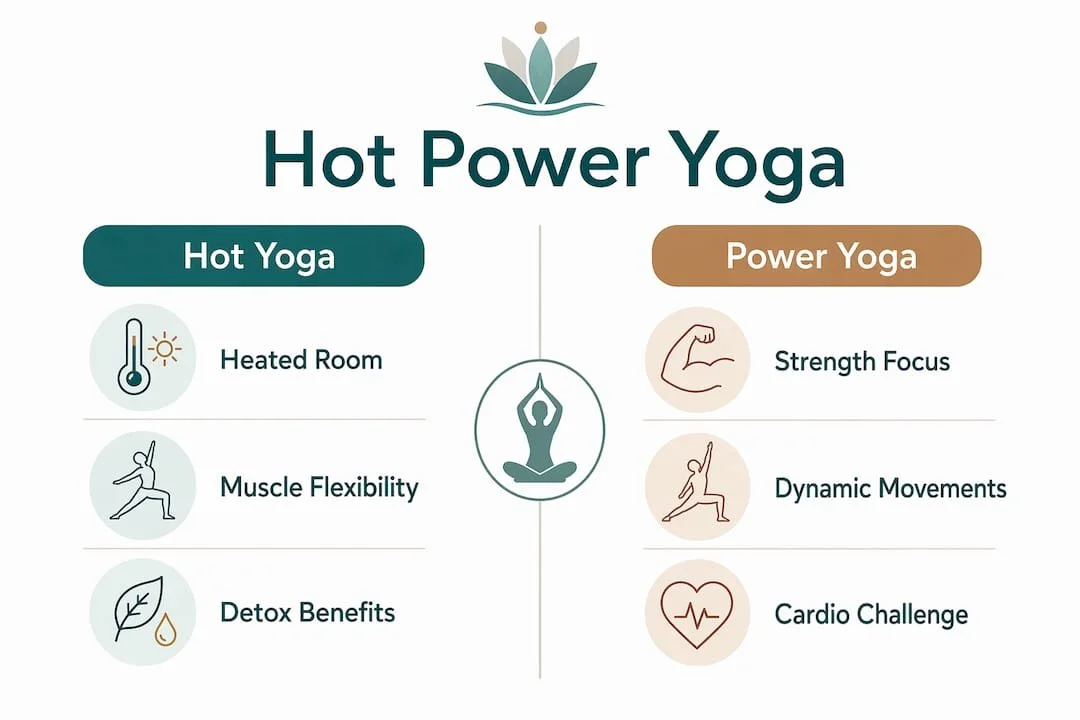
Hot yoga is the umbrella term for any yoga practiced in warm to hot ambient conditions (typically at or above about 25°C). The most recognized version is Bikram yoga, a longer class built around fixed postures and breathing exercises, conducted in a heated room with elevated humidity. Contemporary hot yoga formats tend to vary in length and allow more pose flexibility, but the defining feature stays the same: the room is hot, and that heat is the point.
Power yoga is a different animal. It evolved from Ashtanga yoga in the late 20th century as a more athletic, Western-influenced take on vinyasa flow. The emphasis is on building strength and stamina through challenging transitions, held poses, and sometimes repetitions. There's no fixed sequence, which gives instructors room to design classes around specific muscle groups or energy demands.
Hot power yoga merges these two. You get the cardiovascular and physiological challenge of heat exposure alongside the strength-building, dynamic movement of power yoga. The result is more physically demanding than either style practiced alone, and the non-fixed sequence format means the experience varies with the instructor.
What the practice environment actually feels like
Walking into a hot power yoga studio is immediately different from a standard class, where thoughtful yoga room decor can inspire calm and enhance your practice environment. The room is heated with elevated humidity, creating a distinctive climate that you feel within the first minute. Classes typically last around an hour or more, and that combination of sustained heat and continuous movement puts real demands on the body.

Physiologically, the heat increases blood flow to working muscles and improves muscle pliability, which allows deeper stretching and a greater range of motion. At the same time, it challenges the cardiovascular system and the autonomic nervous system, requiring your body to regulate heart rate and core temperature while you're also moving through demanding sequences.
What to bring and wear:
A non-slip yoga towel to cover your mat (sweat makes standard mats slippery fast)
A separate sweat towel for your face and hands
Electrolyte-enhanced water, not plain water alone
Minimal, moisture-wicking clothing — shorts and a fitted top work well for most practitioners
A full water bottle you'll actually use throughout class
Safety matters here. Heat illness is a real risk, particularly for newcomers. Gradual adaptation to the heated environment over multiple sessions is the standard recommendation from health professionals, not diving into the hardest class on day one.
Pro Tip: Drink 16–20 oz of water with electrolytes in the two hours before class, not just immediately before. Arriving already hydrated gives your thermoregulatory system a head start.
The benefits of hot power yoga go beyond sweating
The physical benefits are real and well-documented. Regular practice builds muscular strength, improves cardiovascular endurance, increases flexibility, and develops core stability. The heat facilitates muscle ease and joint mobility, allowing practitioners to access ranges of motion that would take longer to reach in a room-temperature class.
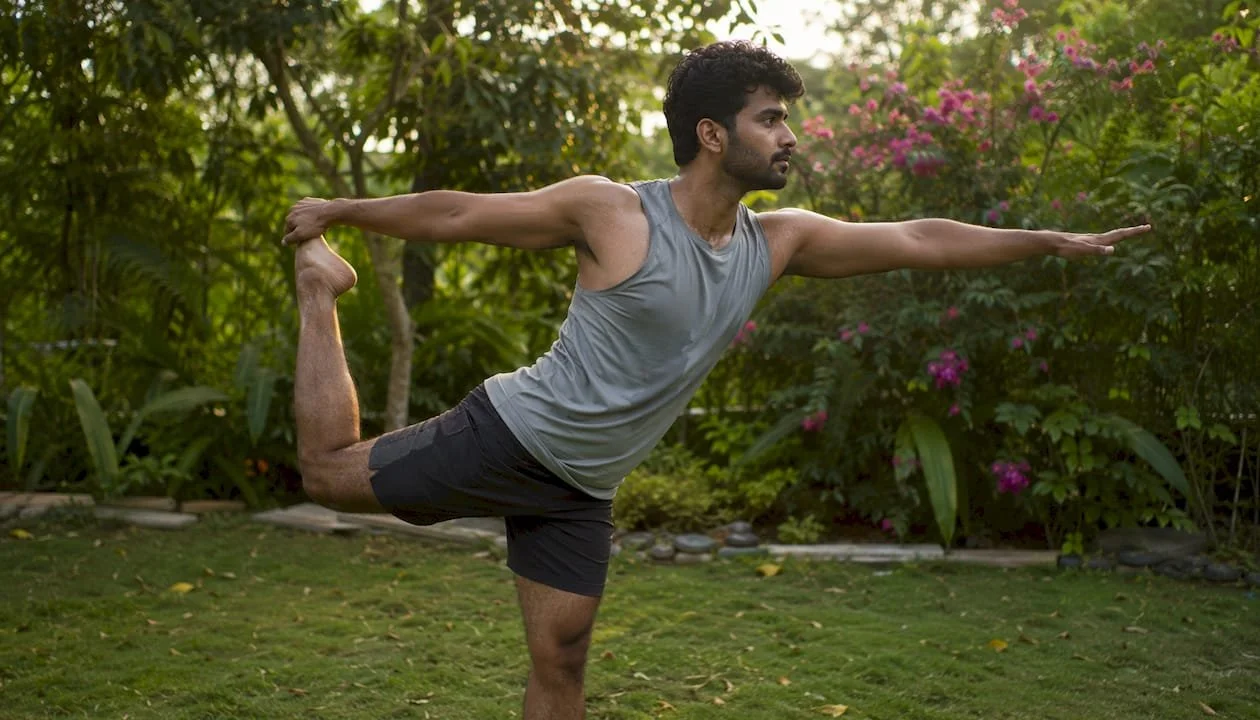
Mental benefits are equally significant. Sustaining focus through 60–90 minutes of challenging movement in intense heat trains concentration and stress tolerance in ways that carry over outside the studio. Many practitioners report improved mood and reduced anxiety as consistent effects of regular practice.
One finding worth knowing: systematic reviews show that hot yoga raises core temperature and heart rate but may not increase caloric expenditure beyond what non-heated yoga produces. The heat's primary value is physiological adaptation, not simply burning more calories. That distinction matters for setting realistic expectations.
Hot power yoga also differs from traditional hot yoga formats in a key way: the dynamic, strength-focused sequences mean you're building real muscular capacity, not just stretching in a warm room. You get the flexibility benefits of heat and the strength benefits of power yoga in the same session.
Expert tips for practicing safely and effectively
Getting the most from hot power yoga means respecting what the heat actually does to your body.
Acclimate gradually. Your first few sessions should be about surviving the heat comfortably, not pushing your physical limits. Gradual adaptation over multiple sessions before starting full intensity practice is recommended.
Hydrate with electrolytes. Plain water isn't enough when you're sweating heavily for 90 minutes. Sodium, potassium, and magnesium help your body retain fluid and maintain muscle function.
Use breath regulation actively. Slow, controlled breathing helps manage heart rate and reduces the perception of heat stress. When the room feels overwhelming, the breath is your first tool.
Take child's pose without hesitation. Newcomers to hot yoga should treat rest poses as a legitimate part of the practice, not a sign of weakness. Dropping to child's pose when your heart rate spikes is smart, not soft.
Work with experienced instructors. A qualified instructor will offer modifications, watch for signs of heat distress, and pace the class appropriately. This matters more in a heated environment than in a standard class.
Leave if something feels wrong. Dizziness, nausea, or a sudden feeling of cold despite the heat are warning signs. Step out, cool down, and don't push through them.
What the research says about heat and your body
Research on hot yoga's physiological effectsconfirms that heat elevates core temperature and heart rate during practice. The cardiovascular demand is real. What the evidence also shows is that the primary mechanism driving adaptation isn't calorie burn — it's the thermoregulatory challenge itself, which trains the autonomic nervous system and improves the body's efficiency at managing heat stress over time.
Heat improves muscle pliability and blood flow to working tissues, which directly supports enhanced range of motion. This is why practitioners often feel more flexible in a hot class than in a cool one, even at the same skill level.
The autonomic nervous system demand is often underestimated. Managing heart rate and cardiovascular regulation under heat stress is frequently a greater barrier for new practitioners than flexibility or strength. That's why gradual heat adaptation is the consistent recommendation across research and expert guidance alike.
How hot power yoga compares to other yoga styles
| Style | Temperature | Sequence | Primary Focus |
|---|---|---|---|
| Hot power yoga | Heated room with elevated temperature | Non-fixed, instructor-designed | Strength, endurance, flexibility |
| Bikram yoga | Heated room with high temperature | — | Flexibility, detox, heat adaptation |
| Standard vinyasa | Room temperature | Non-fixed | Flow, flexibility, breath |
| Hot pod yoga | Heated room or pod at moderate temperatures | Non-fixed, flowing | Flexibility, mindfulness, immersion |
| Ashtanga yoga | Room temperature | Fixed series | Strength, discipline, flexibility |
Hot pod yoga deserves a specific note since it often comes up alongside hot power yoga. What is hot pod yoga? It’s a format practiced inside heated, enclosed inflatable pods rather than open studios, typically at lower temperatures (around 86–99°F) using infrared heating. The environment is more immersive and private, with dim lighting and curated scent. It originated in the United Kingdom and prioritizes mindfulness and flexibility over the athletic intensity that defines hot power yoga.
Common poses you'll find in a hot power yoga class
Hot power yoga sequences vary by instructor, but certain poses appear consistently because they build the strength and endurance the format demands.
Sun Salutations: The backbone of most classes, linking breath to movement across multiple poses in a continuous flow.
Warrior I, II, and III: Build leg strength, hip stability, and balance while demanding sustained focus.
Chair pose (Utkatasana): A quad and glute burner that also challenges core stability and breath control.
Plank and Chaturanga: Upper body and core strength staples that appear repeatedly in vinyasa transitions.
Boat pose (Navasana): Core-intensive and often held longer than comfortable to build endurance.
Pigeon pose: A deep hip opener that benefits from the heat-enhanced muscle pliability.
Crow pose (Bakasana): An arm balance that tests upper body strength and concentration.
Camel pose (Ustrasana): A backbend that opens the chest and hip flexors, often used as a peak pose.
Sequences typically open with standing poses and sun salutations, move through strength-focused standing and balancing poses, then wind down with floor work and a final savasana. Music and active instructor cuing are common, which distinguishes the format from the silent, scripted structure of Bikram classes.
Amritayogawellness: where hot power yoga meets expert guidance in Philadelphia
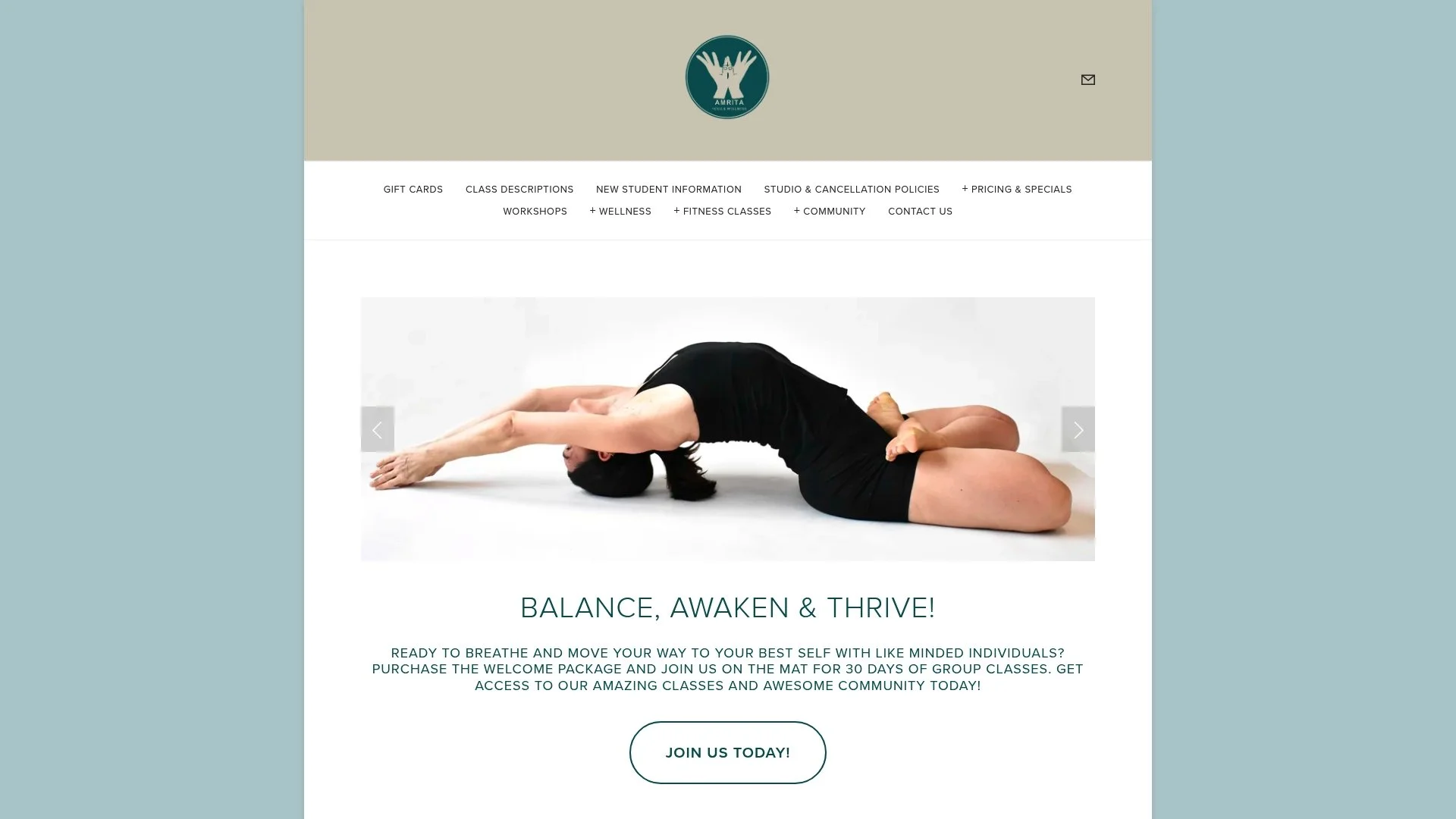
Amritayogawellness, based in Philadelphia, offers hot power yoga alongside a full range of wellness practices, including pilates, barre, tai chi, and massage therapy. What sets it apart from a generic studio is the emphasis on expert instruction and holistic care — practitioners at every level get guidance that accounts for both the physical demands of the heated format and the broader wellness picture.
For someone coming from this article, the practical value is straightforward: you get experienced instructors who understand heat adaptation, proper sequencing, and safe progression, all within a community-focused environment that doesn't treat beginners as an afterthought. The studio's wellness offerings extend beyond yoga, making it a genuine hub for health-conscious practitioners rather than a single-format gym.
Check the class schedule at amritayogawellness.com and book your first session.
Key Takeaways
Hot power yoga is most effective when you treat heat adaptation as a skill to develop gradually, not a condition to simply endure.
| Point | Details |
|---|---|
| Practice environment | Rooms run 95–105°F with 40–60% humidity; classes last 60–90 minutes. |
| Heat’s real benefit | Research shows heat primarily drives physiological adaptation, not higher calorie burn. |
| Safety priority | Electrolyte hydration and gradual acclimation reduce heat illness risk significantly. |
| Vs. other styles | More strength-focused than Bikram; more physically demanding than standard vinyasa or hot pod yoga. |
| Amritayogawellness | Philadelphia studio offering expert-led hot power yoga with holistic wellness support for all levels. |