Contact Us

Want to send us a quick message? Use the form on the right to contact us and we'll be in touch within 2 business days!

Please contact Audrey at info@amritayogawellness.com for general inquiries, software issues, in-studio and out-of-studio events and workshops, marketing, and community outreach and donations.

Please contact Heather at heather@amritayogawellness.com for private events, private yoga/pilates requests, and trainings.

1204 Frankford Avenue
North Philadelphia, PA, 19125
United States

(267) 928 3176

Amrita Yoga & Wellness offers a variety of Yoga traditions, Pilates Mat, Pilates Group Reformer, Tai Chi, and Massage services in a beautiful space. Our studio is located in Philadelphia, Pennsylvania.

Blog

Restorative Yoga: Deep Relaxation for Modern Stress

Heather Rice
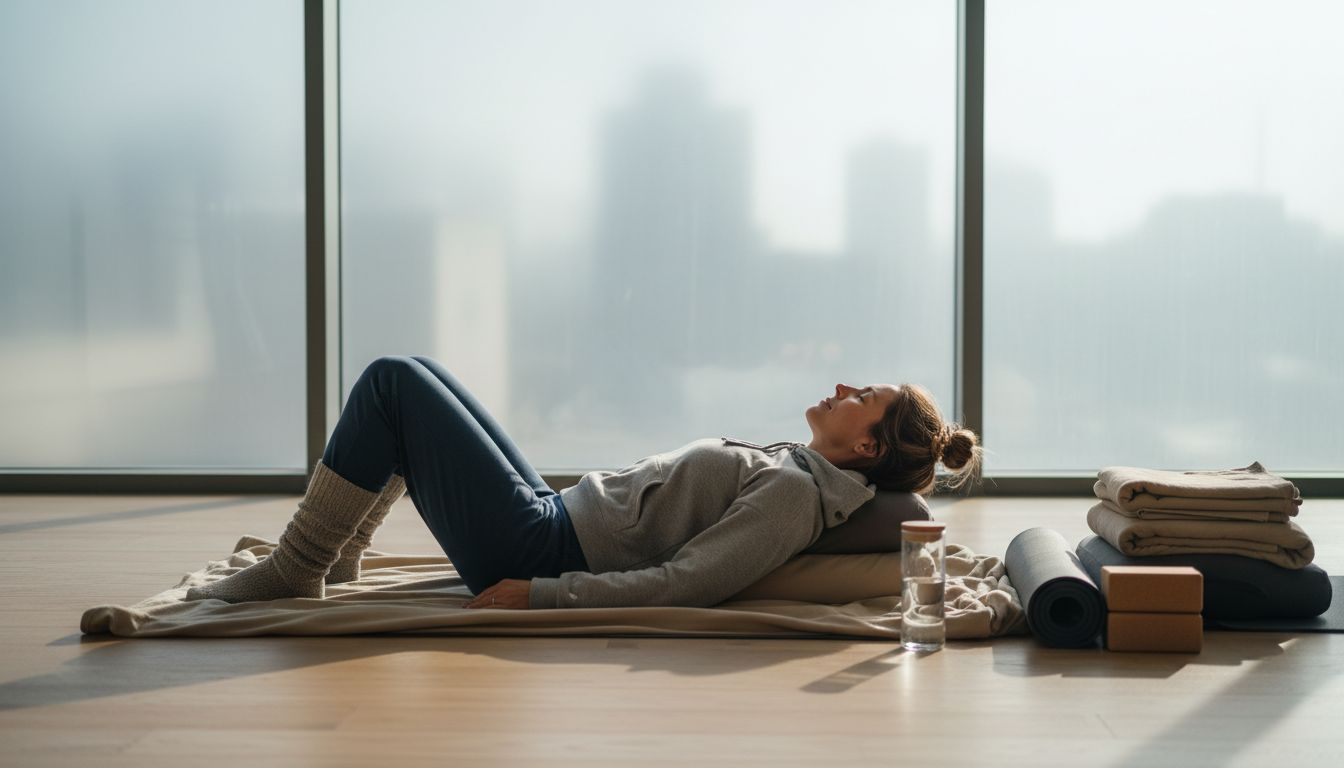
More than 70 percent of American adults report high stress levels affecting their mental and physical health. For those living in Philadelphia and searching for gentler ways to manage stress, restorative yoga offers a calm alternative. This practice challenges common myths by providing deep relaxation and real healing beyond a typical workout. If you want real stress relief and a quieter mind, discover how restorative yoga might become your next wellness habit.

Table of Contents

Key Takeaways

Point Details
Restorative Yoga Focus Restorative yoga emphasizes deep relaxation and healing through gentle, supported poses without muscular effort.
Health Benefits Regular practice can significantly reduce stress, anxiety, and depression while improving flexibility and body awareness.
Accessibility This practice is ideal for individuals managing stress, chronic pain, or recovering from injuries, regardless of fitness level.
Essential Props Utilizing props like bolsters and blankets is crucial for creating comfort and support during restorative sessions.

Restorative Yoga Defined and Common Myths

Restorative yoga represents a profound approach to wellness that goes far beyond simple stretching or relaxation. Developed by pioneers like Judith Lasater, this practice emphasizes mindful stillness and deep physiological healing through carefully supported physical postures. Unlike more dynamic yoga styles, restorative yoga invites practitioners to hold poses for extended periods using props like bolsters, blankets, and blocks.

The core philosophy of restorative yoga centers on allowing the body to enter a state of complete relaxation without muscular effort. Research from the National Center for Complementary and Integrative Health confirms that yoga practices can significantly reduce stress and promote overall wellness. This approach challenges common misconceptions about yoga being exclusively a physical workout. Instead, restorative yoga creates a meditative environment where practitioners can release tension and cultivate inner calm.

Several persistent myths often discourage people from exploring restorative yoga. Many believe it is simply glorified napping or that it provides no real physical benefits. In reality, this practice offers profound physiological and psychological advantages. By supporting the body in gentle postures and encouraging deep, intentional breathing, restorative yoga activates the parasympathetic nervous system, which helps counteract the harmful effects of chronic stress. The deliberate, slow-paced nature of the practice allows for deep muscular release and mental restoration.

Pro tip: Start your restorative yoga journey by dedicating just 15 minutes per session and using plenty of supportive props to help your body feel completely comfortable and supported.

How Restorative Yoga Works in Practice

Restorative yoga is a deeply intentional practice that transforms relaxation into a therapeutic experience. Carefully designed sessions involve holding gentle poses for extended periods, typically 5 to 10 minutes, using comprehensive body support. This approach allows practitioners to release muscular tension without active engagement, creating a profound state of physical and mental surrender.

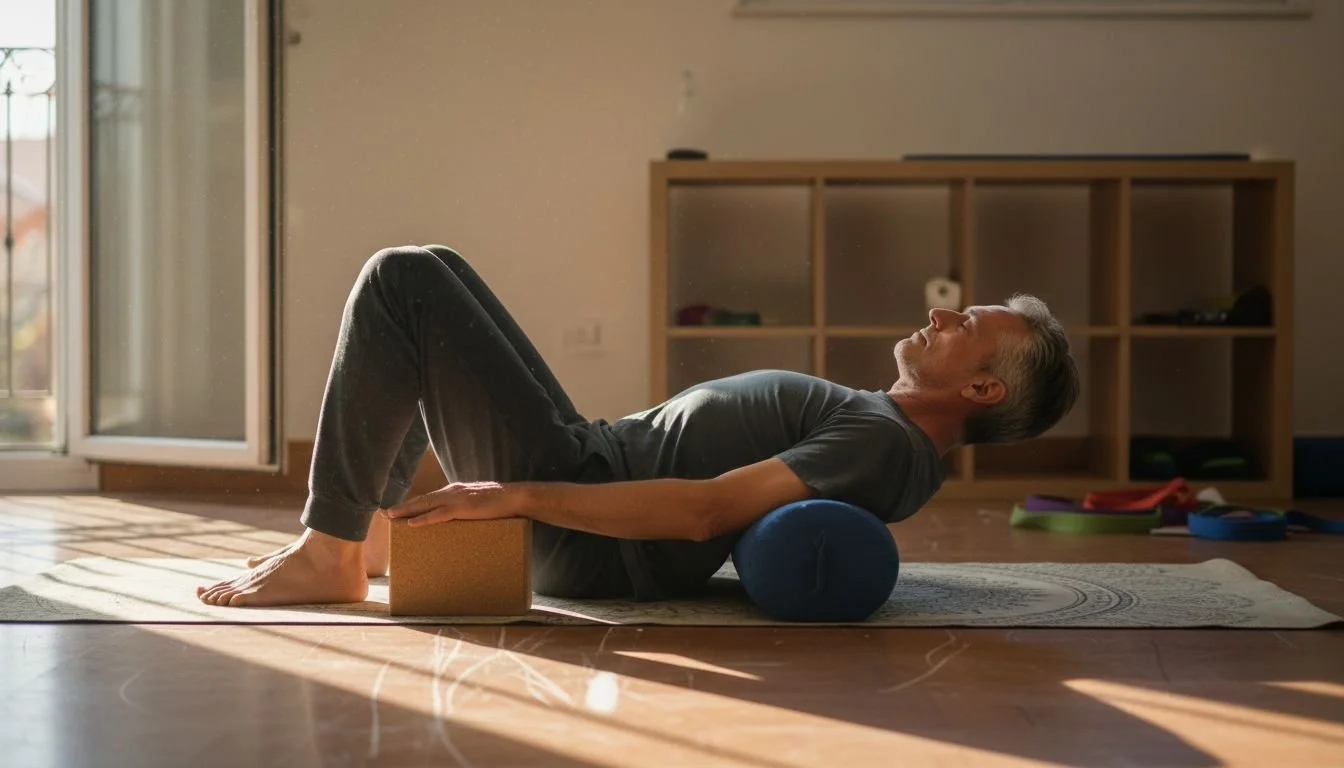
The technical mechanics of restorative yoga revolve around strategic prop usage and environmental design. Practitioners utilize bolsters, blankets, blocks, and sometimes eye coverings to create a nurturing space that encourages complete relaxation. For individuals managing chronic pain or seeking healing, these extended pose holds can help calm the nervous system and improve overall energy levels. By minimizing muscular effort and maximizing supportive positioning, the practice allows the body to enter a deep recuperative state.

Unlike more dynamic yoga styles, restorative yoga emphasizes passive stretching and mindful breathing. The practice creates a meditative environment where practitioners can explore internal sensations without judgment. Instructors often incorporate soft lighting, gentle music, and carefully curated sequences that guide participants toward a state of profound stillness. This approach helps counteract the constant stimulation of modern life, offering a sanctuary of calm and introspection.

Pro tip: Create a dedicated restorative yoga space at home with soft lighting, comfortable props, and minimal distractions to enhance your practice's therapeutic potential.

Major Benefits for Mind and Body

Restorative yoga delivers a comprehensive wellness approach that simultaneously nurtures mental and physical health. Scientific studies demonstrate yoga's profound capacity to reduce perceived stress and dramatically improve overall quality of life. By activating the parasympathetic nervous system, this gentle practice helps practitioners transition from fight-or-flight responses to a state of deep relaxation and healing.

The mental health benefits are particularly remarkable. Regular restorative yoga practice can significantly lower anxiety and depression symptoms, providing a natural approach to emotional regulation. Clinical research reveals that consistent practitioners experience improved mindfulness, enhanced self-awareness, and better sleep patterns. The practice creates a meditative space where individuals can observe their internal landscape without judgment, developing greater emotional resilience and psychological flexibility.
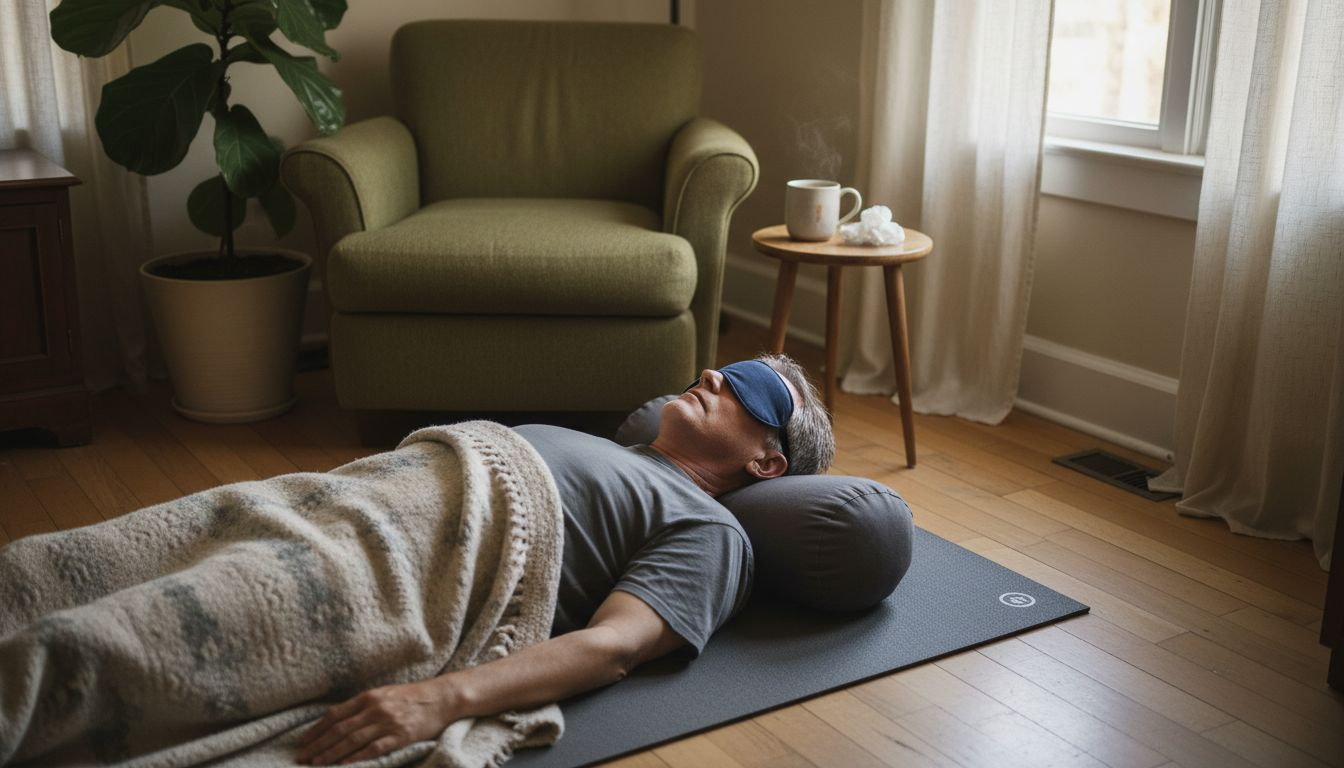
Physically, restorative yoga offers transformative benefits beyond traditional exercise. The carefully supported poses improve flexibility, strengthen core muscles, and support pain management. Unlike high-intensity workouts, this practice allows the body to heal and realign without strain. Practitioners often report increased body awareness, improved posture, and a deeper connection between physical sensations and emotional states. The combination of gentle stretching, deliberate breathing, and complete muscular relaxation creates a holistic healing experience that addresses both physiological and psychological wellness.

Here's a clear summary of restorative yoga's major mental and physical benefits:

Benefit Type Impact on Mind Impact on Body
Stress Reduction Encourages deep relaxation Lowers chronic muscle tension
Mental Clarity Promotes mindfulness and focus Enhances body awareness
Emotional Health Reduces anxiety and depression Supports gentle pain management
Sleep Quality Improves sleep patterns Aids recovery and realignment

Pro tip: Begin your restorative yoga journey by dedicating just 15-20 minutes per week, gradually increasing duration as you become more comfortable with the practice.

Tools and Poses Used in Restorative Yoga

Restorative yoga relies on specialized props and carefully selected poses to create a deeply supportive practice. The primary goal is to provide complete physical support, allowing practitioners to release tension without muscular effort. Essential props include bolsters, blankets, blocks, straps, and pillows, each strategically positioned to minimize strain and maximize relaxation.

The most transformative restorative yoga poses are designed to promote deep rest and gentle opening. Key poses include Supta Baddha Konasana (Reclining Bound Angle), which opens the hips and lower back, and Legs up the Wall, a powerful position for reducing lower body tension. Supported Child's Pose offers gentle spine and shoulder release, while Shavasana with carefully placed props creates a cocoon of total relaxation. Each pose is typically held for 5 to 10 minutes, allowing the nervous system to shift from active stress response to a state of profound calm.
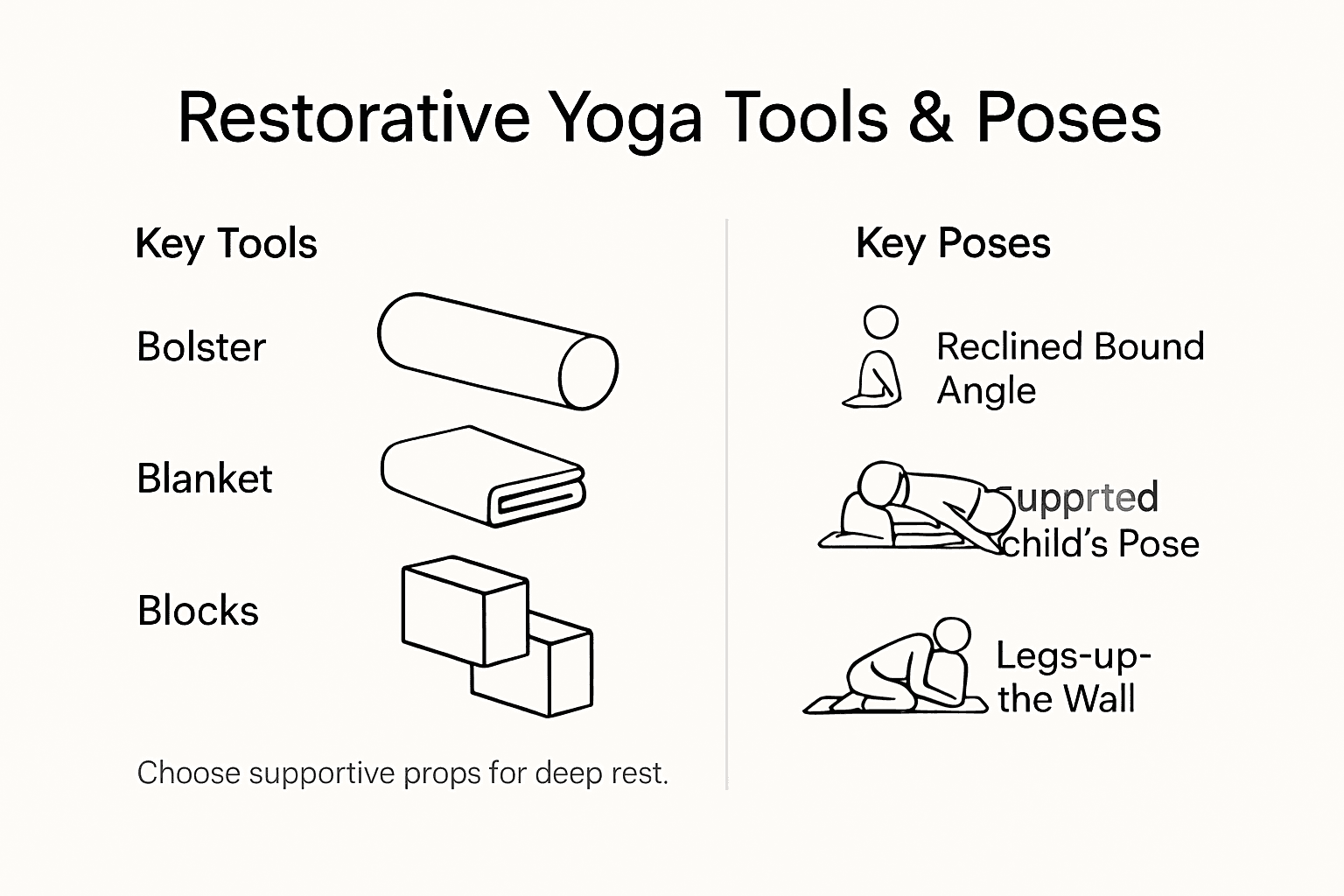
Prop selection is an art form in restorative yoga. Bolsters provide primary support for the spine and joints, while folded blankets offer cushioning and warmth. Blocks help modify poses for different body types, and straps assist in gentle stretching without overextension. The key is creating a personalized support system that meets individual physical needs, making the practice accessible to people of all flexibility levels and physical conditions.

Pro tip: Invest in versatile, firm props like a high-quality bolster and multiple yoga blankets to create a comprehensive home restorative yoga setup.

Key Differences From Yin and Other Styles

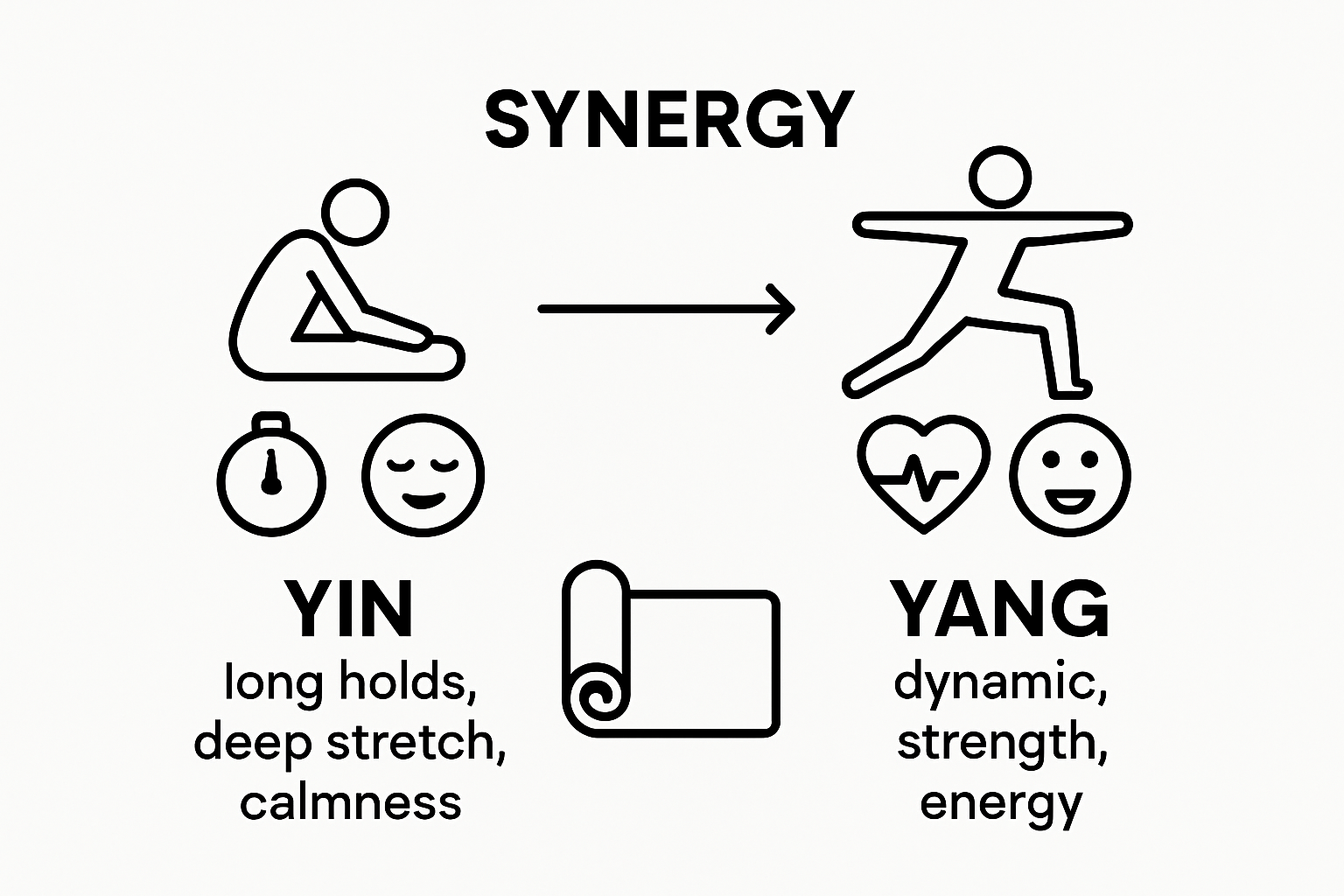
Restorative yoga stands distinctly apart from other yoga styles, particularly Yin yoga, with fundamental differences in philosophy and practice approach. While both practices involve long-held poses and prop usage, their intentions diverge significantly. Yin yoga targets connective tissues through moderate stretching, aiming to increase joint mobility, whereas restorative yoga prioritizes complete nervous system relaxation and healing.

The primary distinctions emerge in pose duration, intention, and muscular engagement. Yin yoga typically holds poses for 3-5 minutes with a subtle sensation of stretch, encouraging practitioners to approach a mild edge of discomfort. Restorative yoga, by contrast, emphasizes total physical support and comfort, with poses held for 5-15 minutes to activate the parasympathetic nervous system. The goal shifts from physical manipulation to creating a deeply nurturing environment that allows total mental and physical surrender.

Other yoga styles like Vinyasa or Power Yoga focus on dynamic movement, muscular strength, and cardiovascular engagement. Restorative yoga deliberately rejects this approach, creating a meditative practice that minimizes physical effort. The practice uniquely concentrates on nervous system regulation, using props to create a completely supported experience that allows practitioners to release tension without active stretching. This makes restorative yoga particularly beneficial for individuals recovering from injury, experiencing high stress, or seeking profound relaxation.

This side-by-side comparison shows key differences between restorative yoga, Yin yoga, and dynamic styles:

Aspect Restorative Yoga Yin Yoga Dynamic Yoga Styles
Main Goal Deep relaxation, healing Stretching connective tissue Build strength, endurance
Pose Duration 5–15 minutes 3–5 minutes Few seconds to 1 minute
Muscular Effort None, fully supported Mild engagement, moderate edge Active movement required
Target Audience Stress/pain recovery Mobility/flexibility seekers Fitness-focused

Pro tip: When transitioning between different yoga styles, approach restorative yoga with an open mind and release expectations of physical intensity or achievement.

Who Should Practice and What to Avoid

Restorative yoga offers remarkable accessibility for diverse populations, making it an ideal practice for individuals managing stress, chronic pain, or seeking gentle physical restoration. Particularly beneficial for those recovering from injuries, experiencing high stress levels, or managing chronic health conditions, this practice provides a compassionate approach to wellness that does not demand physical intensity or complex movements.

Certain populations should approach restorative yoga with specific considerations. Older adults, individuals with chronic diseases, and those managing physical limitations can find significant benefits from this gentle practice. Practitioners with underlying health conditions must consult healthcare providers before beginning, ensuring the practice aligns with their individual medical needs. It is crucial to avoid any poses that produce pain or excessive discomfort, prioritizing personal comfort and safety above strict adherence to traditional pose structures.

Some critical considerations include avoiding restorative yoga during acute injury phases, immediately following surgical procedures, or when experiencing severe inflammatory conditions. Practitioners should steer clear of more physically demanding yoga styles like Ashtanga, Bikram, or Power Yoga when seeking the healing benefits of restorative practice. Always communicate openly with instructors about physical limitations, recent medical histories, and current health status to receive appropriate modifications and support.

Pro tip: Begin your restorative yoga journey by attending classes with certified instructors who specialize in adaptive and therapeutic yoga practices.

Experience True Deep Relaxation with Restorative Yoga at Amrita Yoga & Wellness

If you are seeking relief from modern stress and longing for profound relaxation, restorative yoga can transform your well-being. This practice gently activates your parasympathetic nervous system to ease tension and promote healing without muscular effort. At Amrita Yoga & Wellness, we understand the challenges of chronic stress and physical discomfort and offer tailored classes that use supportive props and calming environments to help you unwind completely.
Discover how our expert-led sessions at Amrita Yoga & Wellness can guide you into states of deep mental clarity and physical restoration. Start your journey today by exploring our restorative yoga classes and workshops designed for all levels. Prioritize your healing now by visiting our class schedule and reserve your spot to embrace calm and renewal.

Frequently Asked Questions

What is restorative yoga?

Restorative yoga is a gentle practice that focuses on relaxation and healing through supported poses held for extended periods, typically using props like bolsters and blankets. It aims to activate the parasympathetic nervous system and promote deep relaxation without muscular effort.

How does restorative yoga differ from other yoga styles?

Restorative yoga emphasizes total relaxation and healing, contrasting with styles like Yin yoga that focus on stretching connective tissues or dynamic styles that promote strength and cardiovascular fitness. In restorative yoga, poses are held longer with complete physical support, creating a meditative environment.

What are the benefits of practicing restorative yoga?

Practicing restorative yoga can lead to significant reductions in stress, anxiety, and depression. It also enhances sleep quality, increases body awareness, and supports gentle pain management, making it beneficial for overall mental and physical health.

Who should consider practicing restorative yoga?

Restorative yoga is ideal for individuals managing stress, chronic pain, injuries, or those seeking a gentler, therapeutic approach to wellness. However, it's recommended that individuals with specific health concerns consult their healthcare providers before beginning the practice.
Recommended

Aerial Yoga Self-Care Tips for Mindful Practice

Heather Rice

Most American aerial yoga enthusiasts are surprised to learn that the hammock used in classes can support up to 300 kilograms, proving that safety is well within reach for every body type. As adults in Philadelphia build on their intermediate skills, understanding how mind-body practices dispel common myths becomes crucial. This practical guidance uncovers how thoughtful gear choices and mindful self-care rituals help you get the most from each session and nurture sustainable mental wellness.

Table of Contents

Key Takeaways

Point Details
Accessibility Aerial yoga is suitable for all fitness levels, not just advanced practitioners. It uses a hammock to support challenging poses safely.
Safety Considerations Proper equipment and professional guidance greatly reduce the risk of injury, making aerial yoga a safe option for many individuals.
Mental Wellness The practice promotes mental well-being through intentional movement, helping to alleviate stress and enhance emotional regulation.
Mindful Practice Listening to your body and respecting personal limits are essential for a sustainable aerial yoga practice, helping to prevent injuries.

Defining aerial yoga and common myths

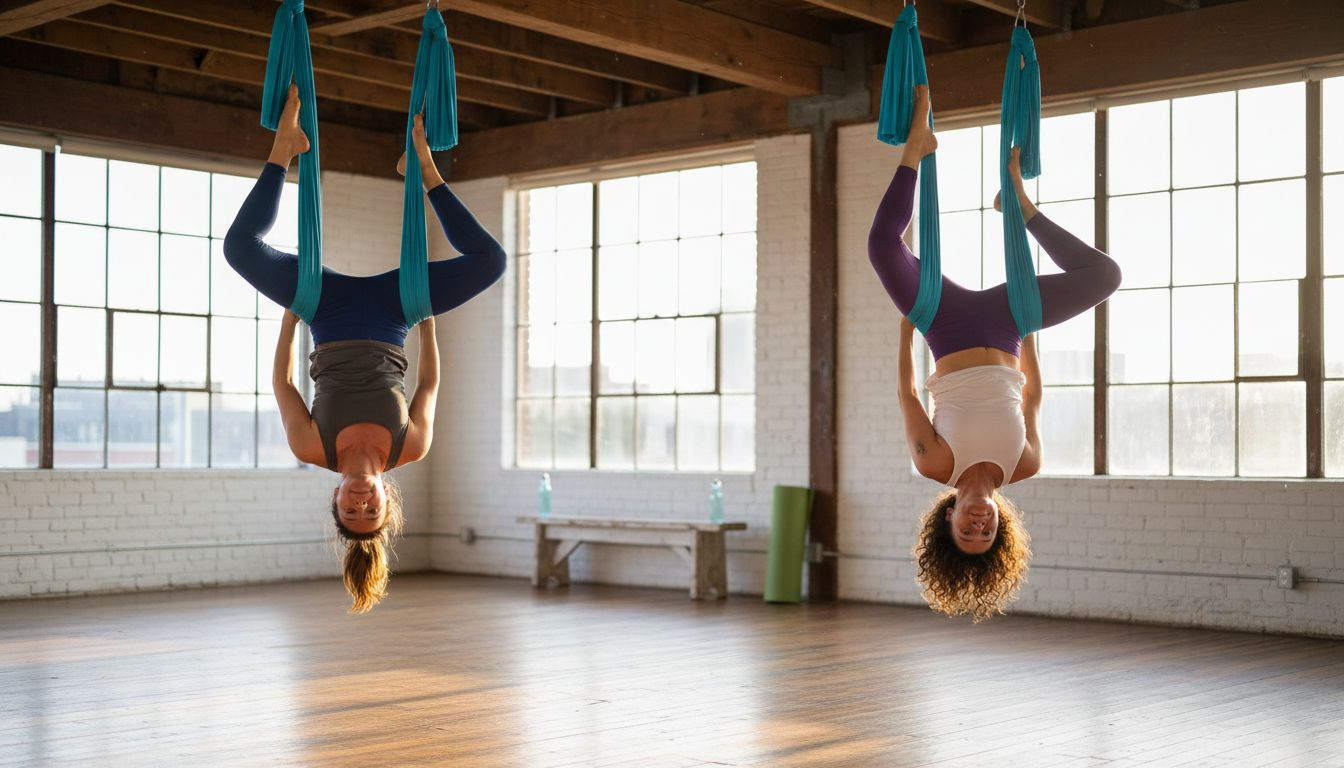
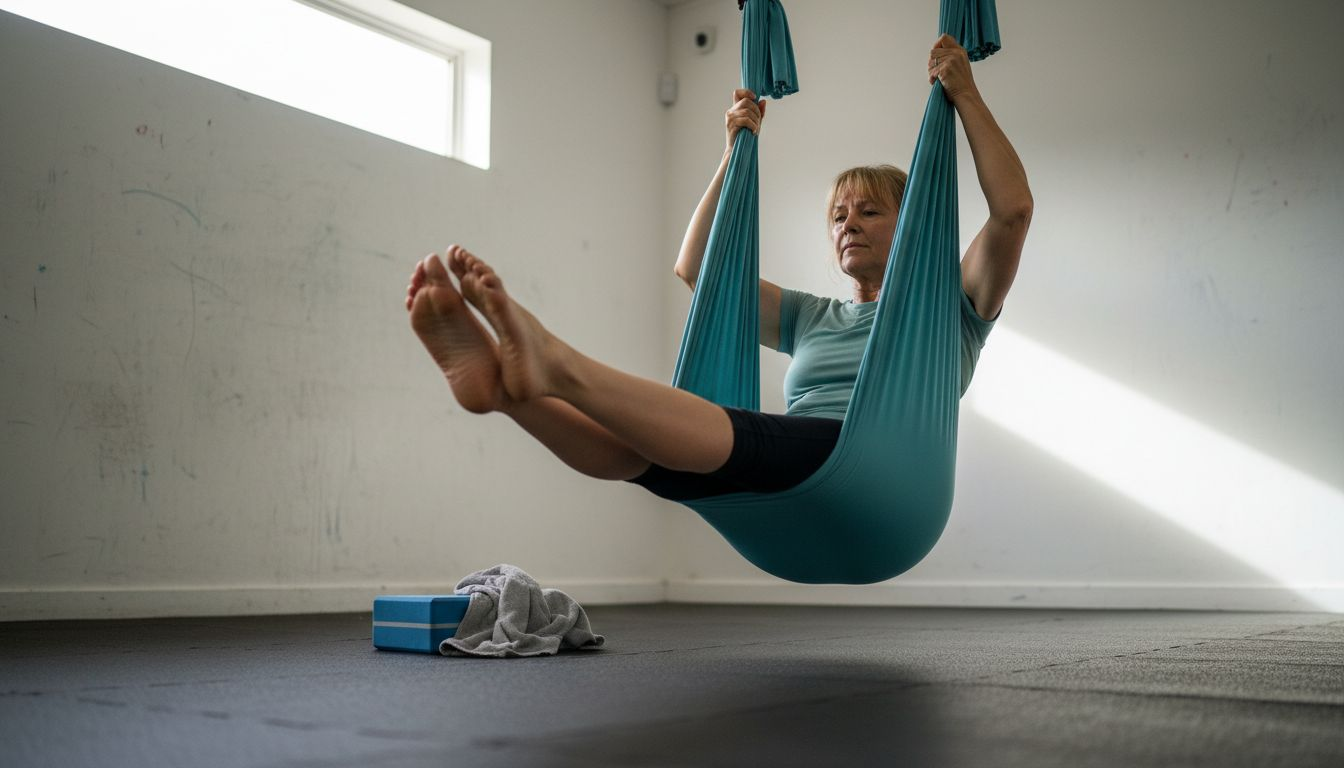
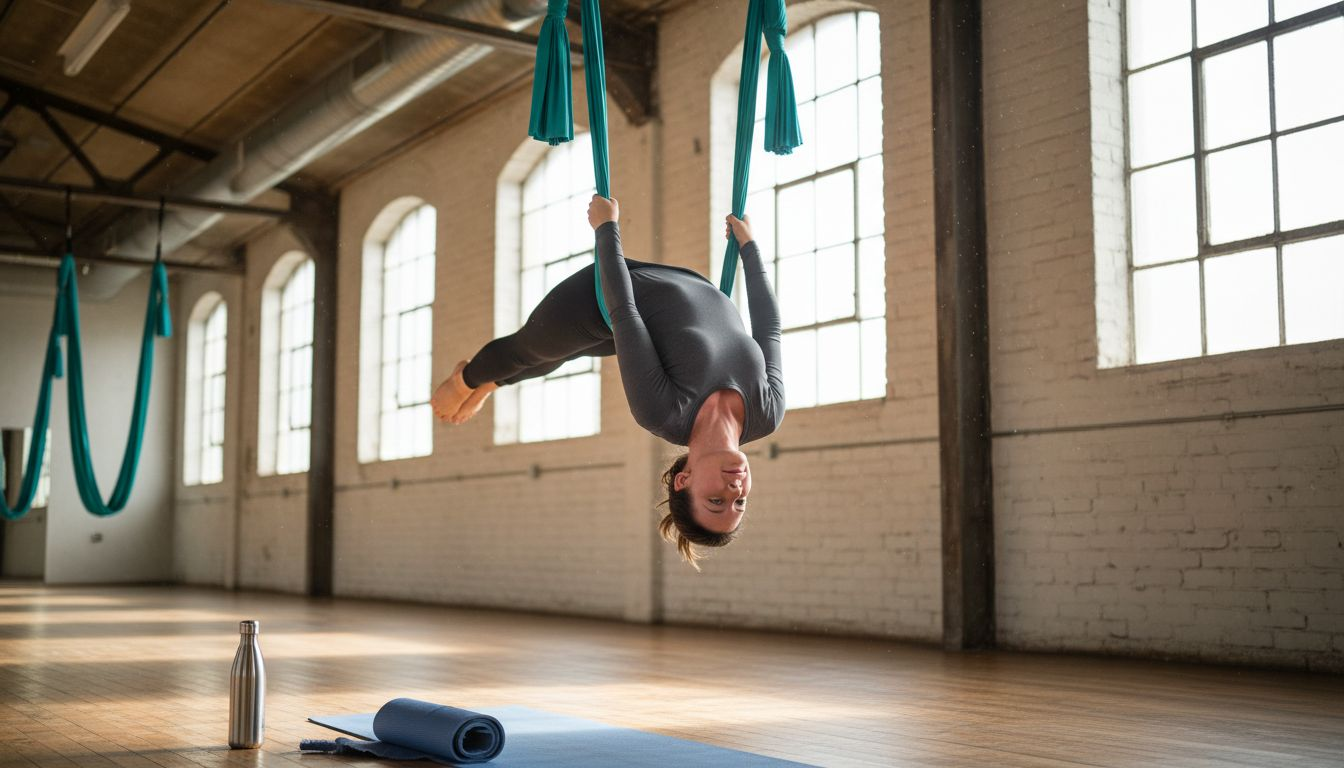
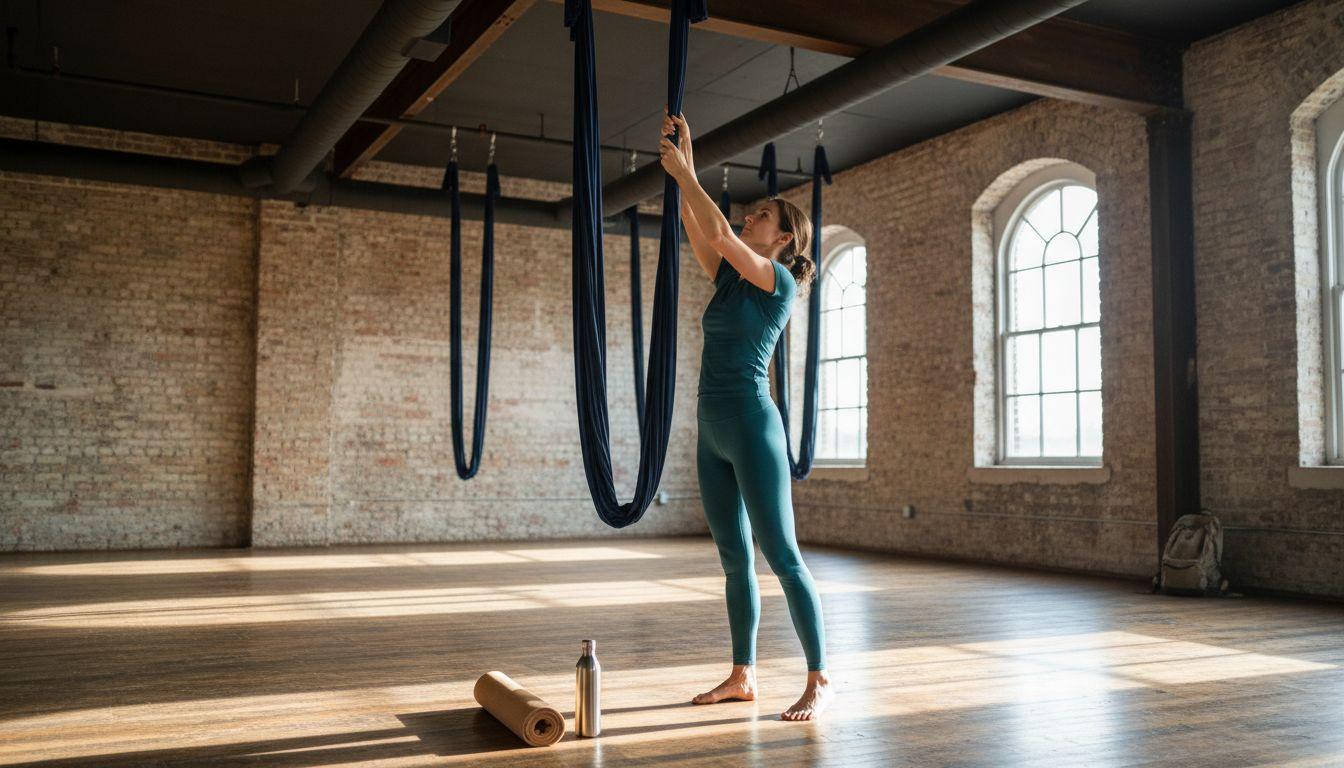
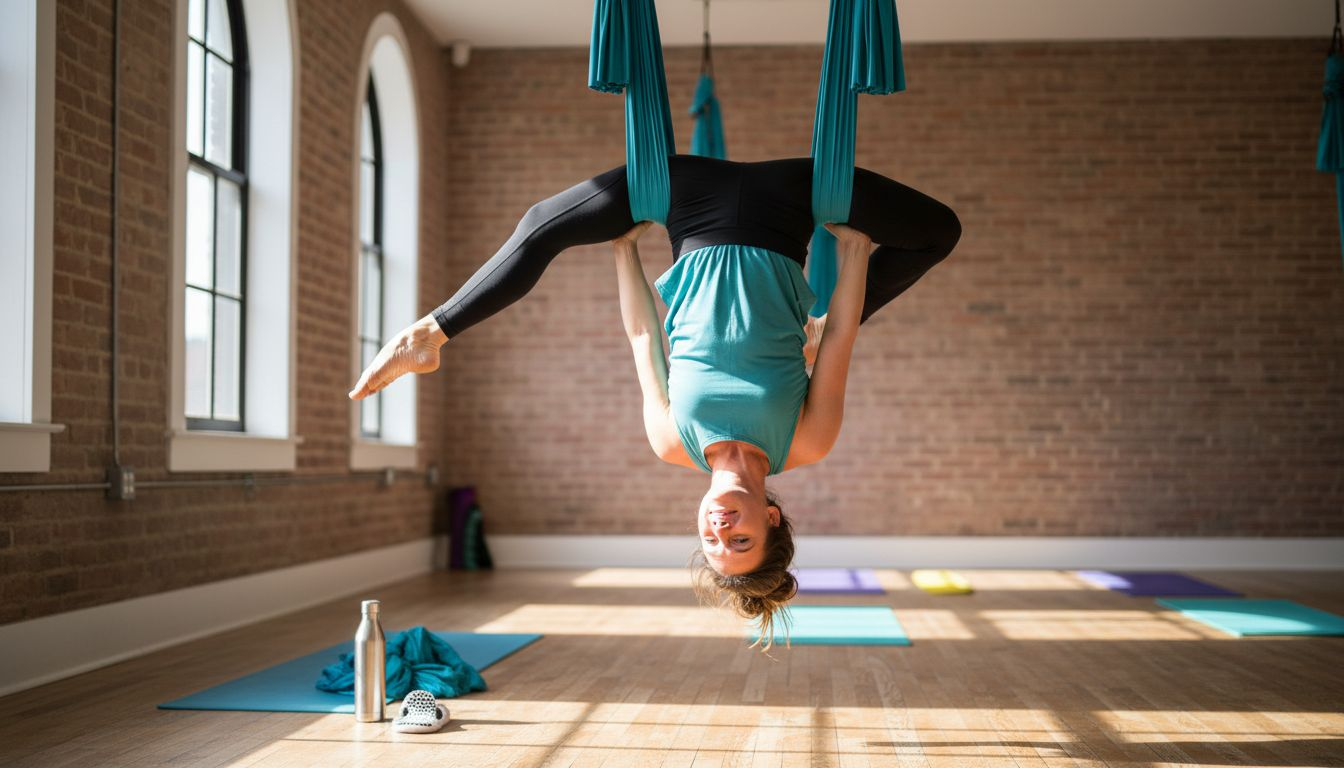
Aerial yoga represents a dynamic fusion of traditional yoga practices with innovative aerial techniques, transforming how practitioners experience movement and physical wellness. Developed by Michelle Dortignac in 2006, this practice integrates elements from yoga, pilates, dance, and acrobatics using a specialized suspended hammock that supports participants safely.

Contrary to popular misconceptions, aerial yoga is not exclusively for advanced athletes or flexible practitioners. The hammock provides support that actually makes complex yoga poses more accessible, allowing individuals of varying fitness levels to explore challenging postures with reduced strain. The suspended fabric acts as both a support system and a tool for deepening stretches, enabling practitioners to experience enhanced spinal decompression and joint strengthening.

Common myths about aerial yoga often revolve around safety and difficulty. However, when practiced with proper equipment and professional instruction, this form of yoga offers significant therapeutic benefits. The hammock can support up to 300 kilograms, ensuring stability for practitioners of different body types and skill levels. By using controlled suspension, participants can achieve deeper stretches, improve balance, and reduce gravitational pressure on joints.

Here's a comparison of common myths versus the realities of aerial yoga:

Misconception Reality Impact on Practice
Only for elite athletes Welcomes beginners and all fitness levels Wider public participation
Increases injury risk Proper gear and instruction ensure safety Fewer injuries with guidance
Requires extreme flexibility Hammock support makes difficult poses accessible Promotes confidence and growth

Pro tip: Always attend your first aerial yoga classes with a certified instructor who can guide you through proper hammock techniques and safety protocols.

Essential gear and safe hammock setup

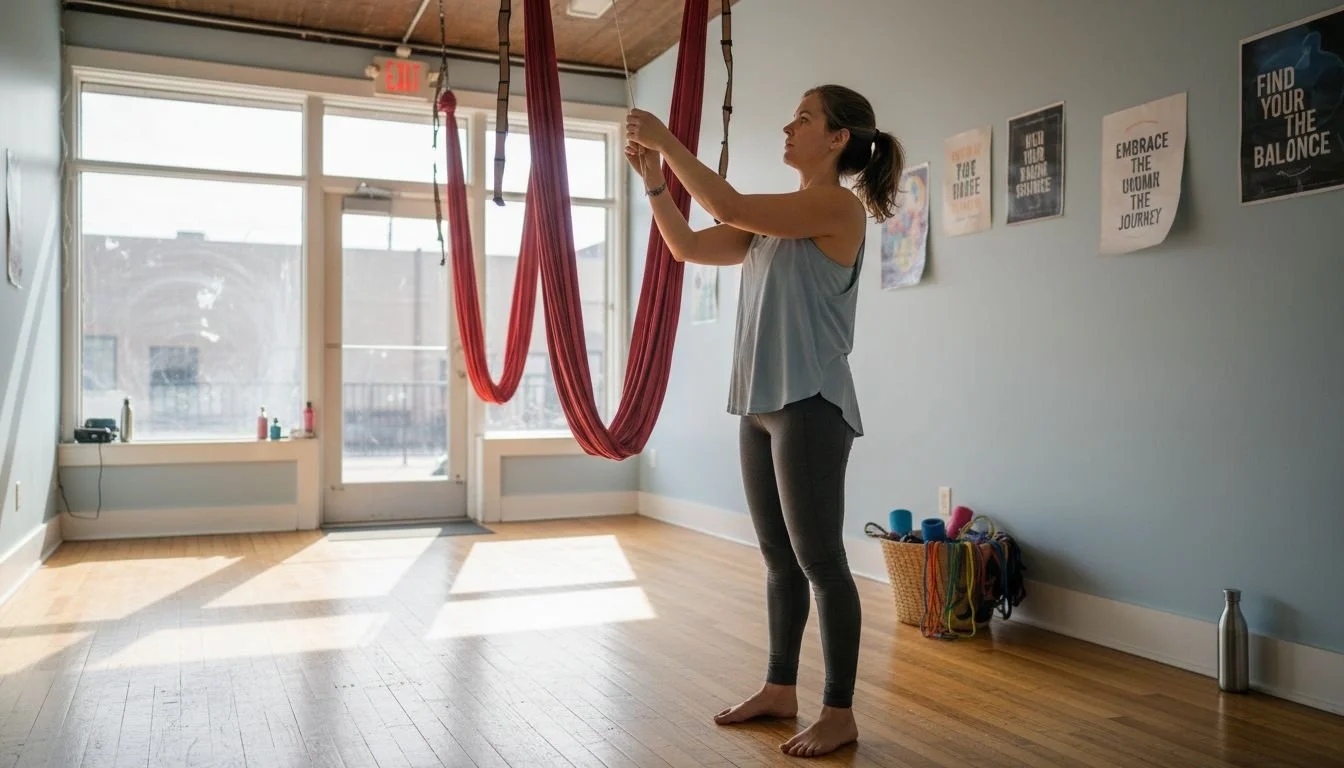
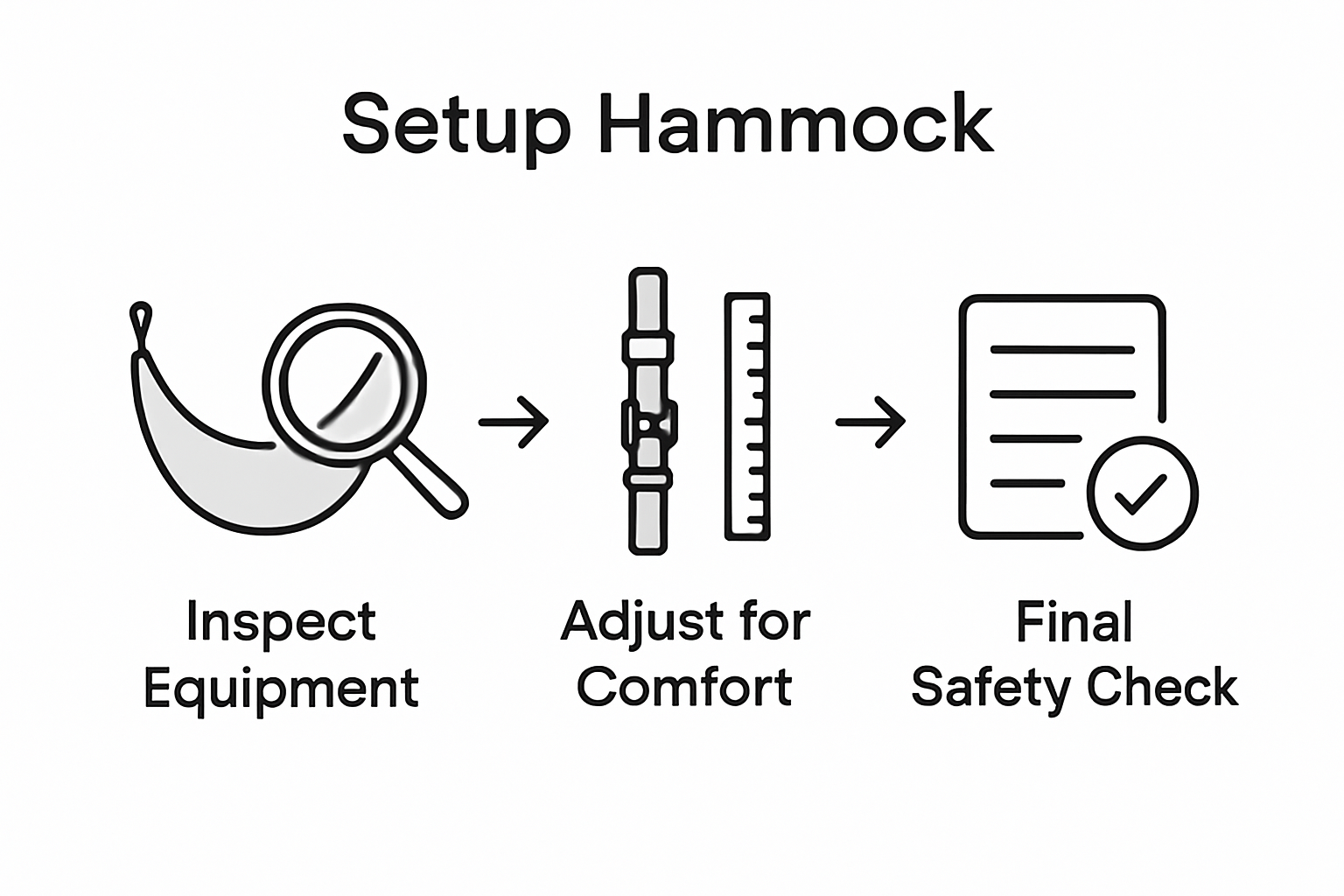
Aerial yoga hammocks represent specialized equipment designed to support practitioners during suspended yoga practices. The AIReal Yoga Rigging Guide emphasizes precise measurement and structural assessment for safe installation, highlighting the critical importance of proper gear selection and setup.

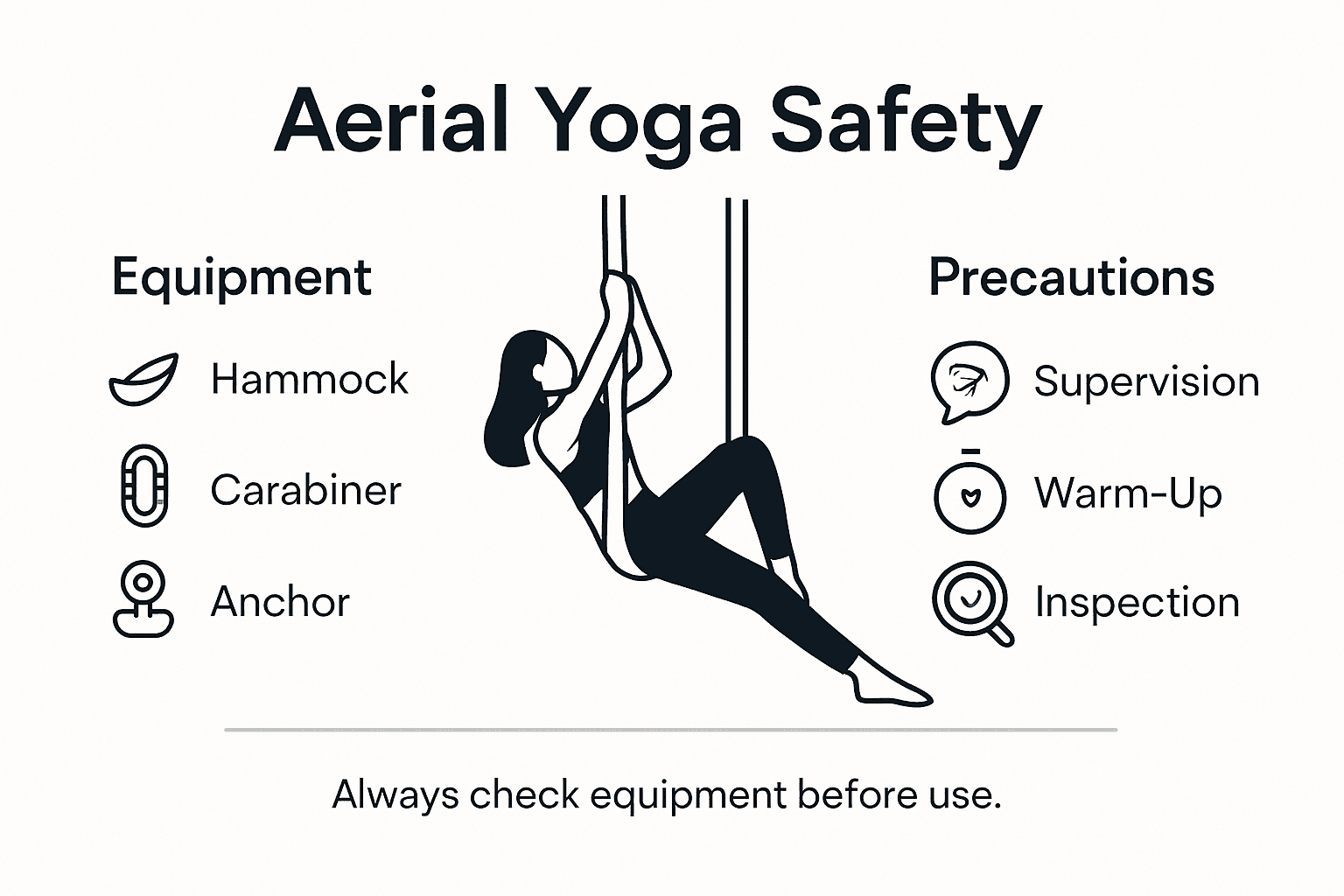
When preparing for aerial yoga, practitioners need several key pieces of equipment. The primary components include a high-quality aerial hammock constructed from durable, breathable fabric, robust carabiners capable of supporting significant weight, and secure mounting hardware. Professional rigging recommendations suggest each connection point must support loads of 1000 pounds or more, underscoring the necessity of using industrial-grade equipment.

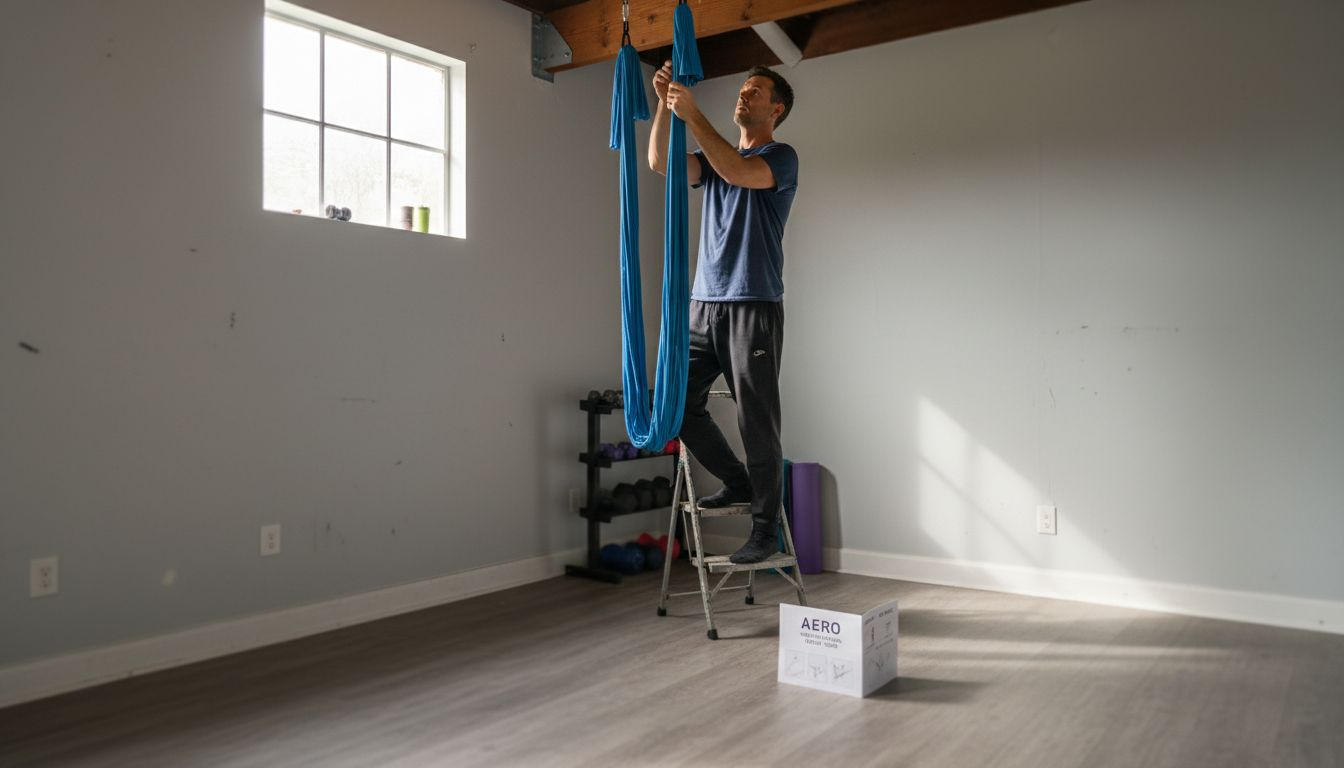
Installation requires meticulous attention to detail. Potential mounting locations must be carefully evaluated for structural integrity, with professionals recommending specific height configurations and anchor point strategies. Options include single or double anchor point setups, each requiring precise measurements and specialized hardware like swivel attachments to ensure maximum safety and flexibility during practice.

Pro tip: Consult a professional aerial yoga rigging expert before installing any home hammock setup to guarantee proper installation and prevent potential safety risks.

This table summarizes essential aerial yoga gear and its specific function:

Equipment Primary Function Safety Feature
Hammock Supports suspended poses Made of durable, strong fabric
Carabiners Connects hammock to anchor points Rated for heavy loads
Mounting hardware Secures anchors in ceiling/walls Industrial-grade materials

Best practices for self-care during aerial yoga

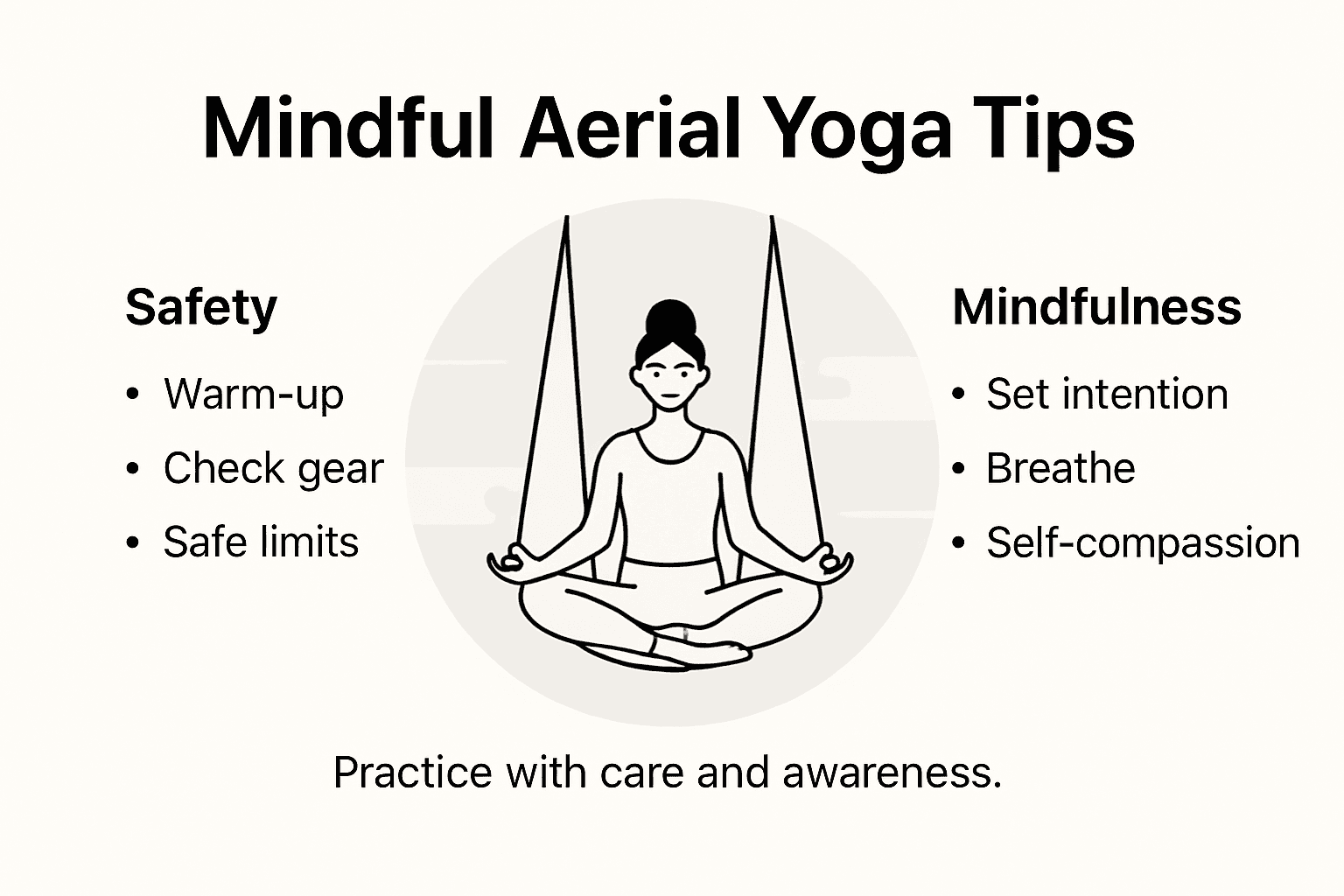
Aerial yoga is more than just a physical practice it's a holistic approach to wellness that demands mindful self-awareness and intentional care. In wellness-focused classes, practitioners learn to prioritize their body's needs and mental well-being through movement and reflection, transforming the practice into a sustainable self-care strategy.

Listening to your body represents the cornerstone of safe aerial yoga practice. This means recognizing your personal limits, avoiding competitive mindsets, and understanding that each session is unique. Practitioners are encouraged to take breaks as needed and use the hammock for supportive modifications, ensuring physical comfort and preventing potential strain or injury.

Mental self-care during aerial yoga involves creating a non-judgmental environment where personal growth takes precedence over performance. Techniques like mindful breathing, gentle introspection, and embracing vulnerability can help practitioners connect more deeply with their physical and emotional experiences. By approaching the practice as a journey of self-discovery rather than a competitive workout, individuals can cultivate a more nurturing and compassionate relationship with themselves.

Pro tip: Start each aerial yoga session by setting a personal intention that focuses on self-compassion and gentle exploration, rather than achieving perfect poses.

Promoting mental wellness through movement

Aerial yoga transcends traditional physical exercise by offering a unique pathway to mental wellness through intentional movement and mindful practice. The combination of traditional yoga and aerial arts creates a powerful approach to reducing stress and alleviating depression, providing practitioners with a holistic method of emotional regulation and personal transformation.

The suspended hammock environment stimulates the nervous system in ways that promote deep relaxation and emotional balance, allowing individuals to experience a sense of detachment from daily stressors. By incorporating gentle inversions and supportive poses, practitioners can unlock a profound sense of tranquility that extends beyond the physical practice, helping to mitigate anxiety and enhance overall mental clarity.

Mindful movement in aerial yoga involves more than physical positioning it requires a deliberate connection between breath, body awareness, and present-moment experience. The unique sensations of suspension create opportunities for practitioners to develop heightened concentration and emotional resilience. Through consistent practice, individuals learn to cultivate inner stillness, transform negative thought patterns, and develop a more compassionate relationship with themselves.

Pro tip: Integrate a brief meditation or intentional breathing practice at the beginning and end of your aerial yoga session to maximize mental wellness benefits.

Avoiding injuries and common mistakes

Aerial yoga demands a mindful approach to prevent potential injuries and setbacks. Common mistakes often stem from overconfidence, inadequate preparation, and rushing into advanced poses without proper foundational skills, which can compromise both physical safety and overall practice quality.

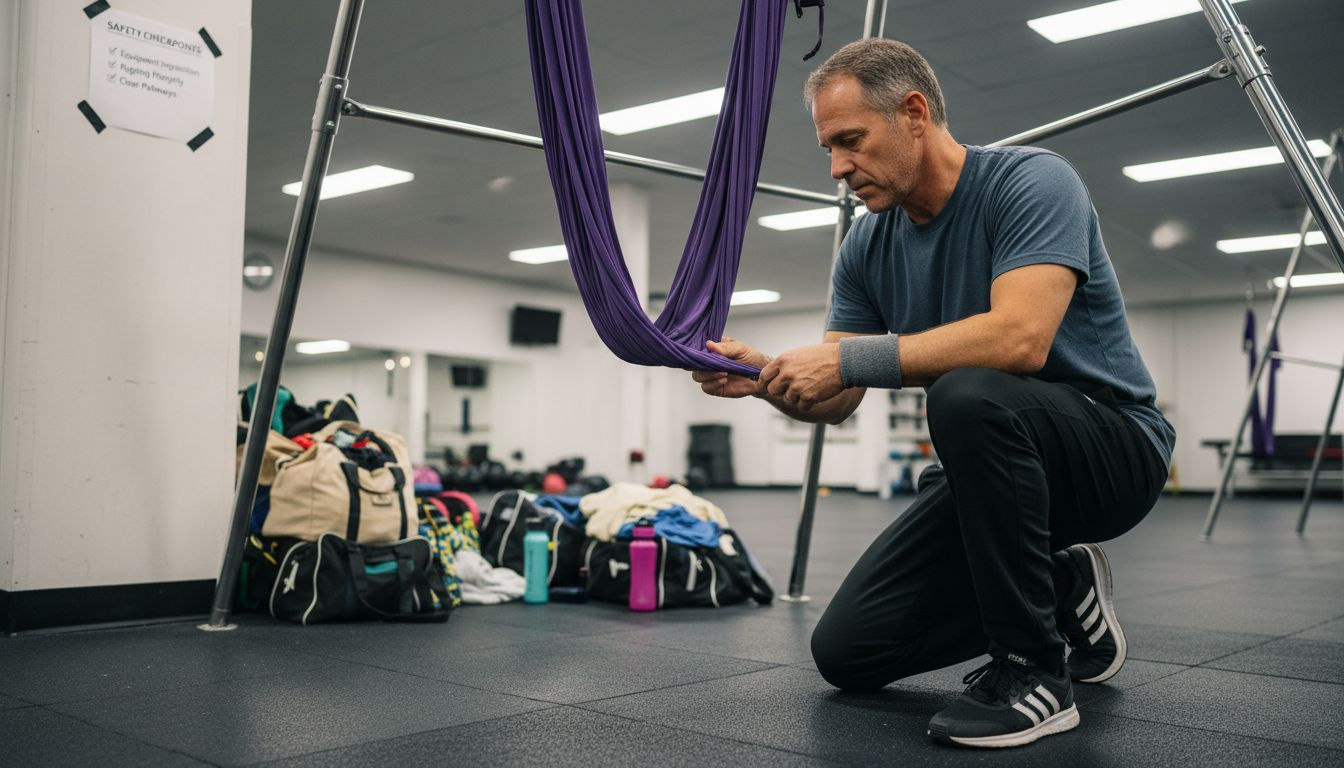
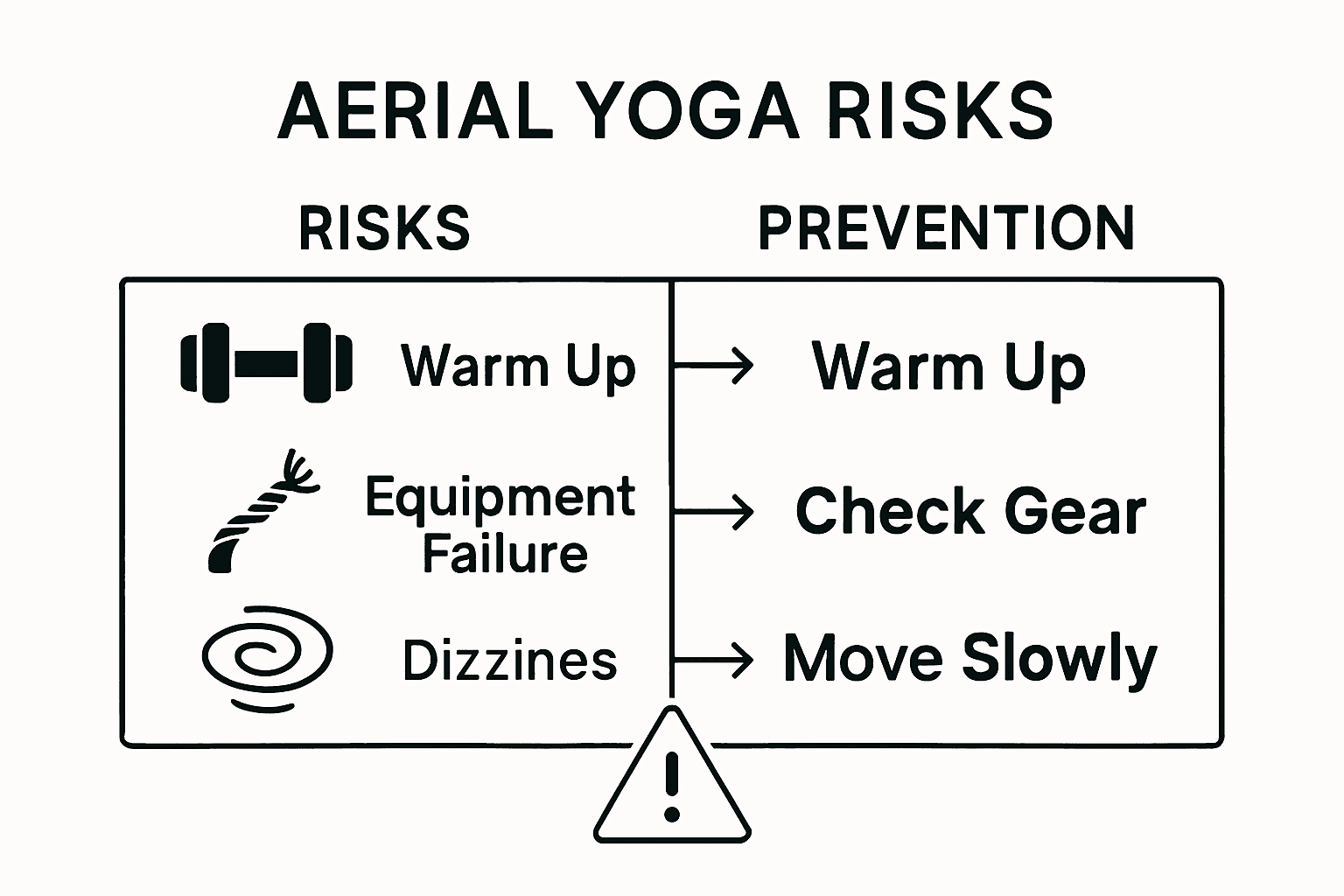
Prior to any aerial yoga session, practitioners must prioritize comprehensive warm-up routines and meticulous equipment checks. Neglecting proper alignment, ignoring body signals of discomfort, and using faulty or poorly installed equipment represent significant risks that can lead to falls or unexpected strains. Developing body awareness and maintaining a patient, gradual progression approach are critical strategies for preventing potential injuries.

Mindful movement requires practitioners to distinguish between challenging themselves and pushing beyond safe limits. This involves cultivating an intuitive understanding of personal physical boundaries, wearing appropriate attire that supports free movement, and consistently seeking professional guidance. By approaching aerial yoga with respect for individual capabilities and a commitment to gradual skill development, practitioners can create a sustainable and injury-free practice.

Pro tip: Always perform a thorough equipment inspection and listen to your body's signals before attempting any new aerial yoga pose.

Elevate Your Aerial Yoga Self-Care with Expert Guidance and Community Support

Embracing aerial yoga as a mindful self-care practice means acknowledging your personal limits, focusing on safe techniques, and nurturing mental wellness through intentional movement. Many practitioners face challenges like knowing how to set intentions, avoiding injury, and aligning with their body’s signals during suspended poses. At Amrita Yoga & Wellness, we understand these pain points and are here to help you deepen your practice with confidence and care.

Discover classes and workshops tailored to support your aerial yoga journey where safety, self-compassion, and growth come first. Whether you are a beginner or looking to advance mindfully, our Philadelphia studio offers expert instruction, accessible programs, and a welcoming community. Visit Amrita Yoga & Wellness today to explore schedules, book your spot, or connect with instructors who can guide you safely through every pose. Commit now to transform your self-care routine with mindful aerial yoga and enjoy the full mental and physical benefits highlighted in the article. Take the next step by browsing our offerings here and start your path to balanced wellness today.

Frequently Asked Questions

What is aerial yoga?

Aerial yoga is a practice that combines traditional yoga with the use of a suspended hammock, allowing practitioners to experience movement and wellness with enhanced support.

Is aerial yoga safe for beginners?

Yes, aerial yoga is safe for beginners as the hammock provides support that makes complex poses more accessible. It's important to attend classes with a certified instructor for guidance.

How can I prevent injuries during aerial yoga?

To prevent injuries, prioritize thorough warm-up routines, check your equipment, and listen to your body's signals. Progress gradually and seek professional guidance when trying new poses.

What should I focus on during an aerial yoga practice?

Focus on self-care by listening to your body, setting personal intentions, and creating a non-judgmental environment. Mindful movement and intentional breathing can enhance your overall experience.

Recommended

How to Start Yoga Naturally for Stress Relief and Wellness

Heather Rice

Nearly 80 percent of American adults experience ongoing stress that impacts their health and wellbeing. For busy people in Philadelphia, finding time and space to relax can feel impossible. Creating a simple yoga routine at home offers a practical way to ease tension and support your body, helping you reclaim moments of calm in a hectic week. This guide walks you through every step, from setting up your space to choosing beginner poses, so you can build a soothing practice even in the middle of city life.

Table of Contents

Quick Summary

Key Insight Explanation
1. Create a dedicated yoga space Select a quiet, clutter-free area with natural light to enhance relaxation and mindfulness during practice.
2. Start with beginner-friendly styles Hatha Yoga is recommended for new practitioners; it focuses on basic postures and proper alignment.
3. Invest in essential yoga equipment A high-quality yoga mat, blocks, and straps will support comfort, stability, and alignment during practice.
4. Develop a simple initial routine Focus on a few gentle poses, practicing 10–15 minutes daily to build consistency and body awareness.
5. Track your progress regularly Maintain a yoga journal to document your physical and emotional growth, adjusting your practice as needed.

Step 1: Prepare your space for comfortable yoga practice

Creating a calming and inviting yoga space is crucial for developing a consistent and enjoyable practice. Your environment sets the tone for relaxation and mindfulness, transforming an ordinary area into a personal sanctuary where stress melts away. By thoughtfully arranging your space, you signal to your body and mind that this is a dedicated time for self care and wellness.

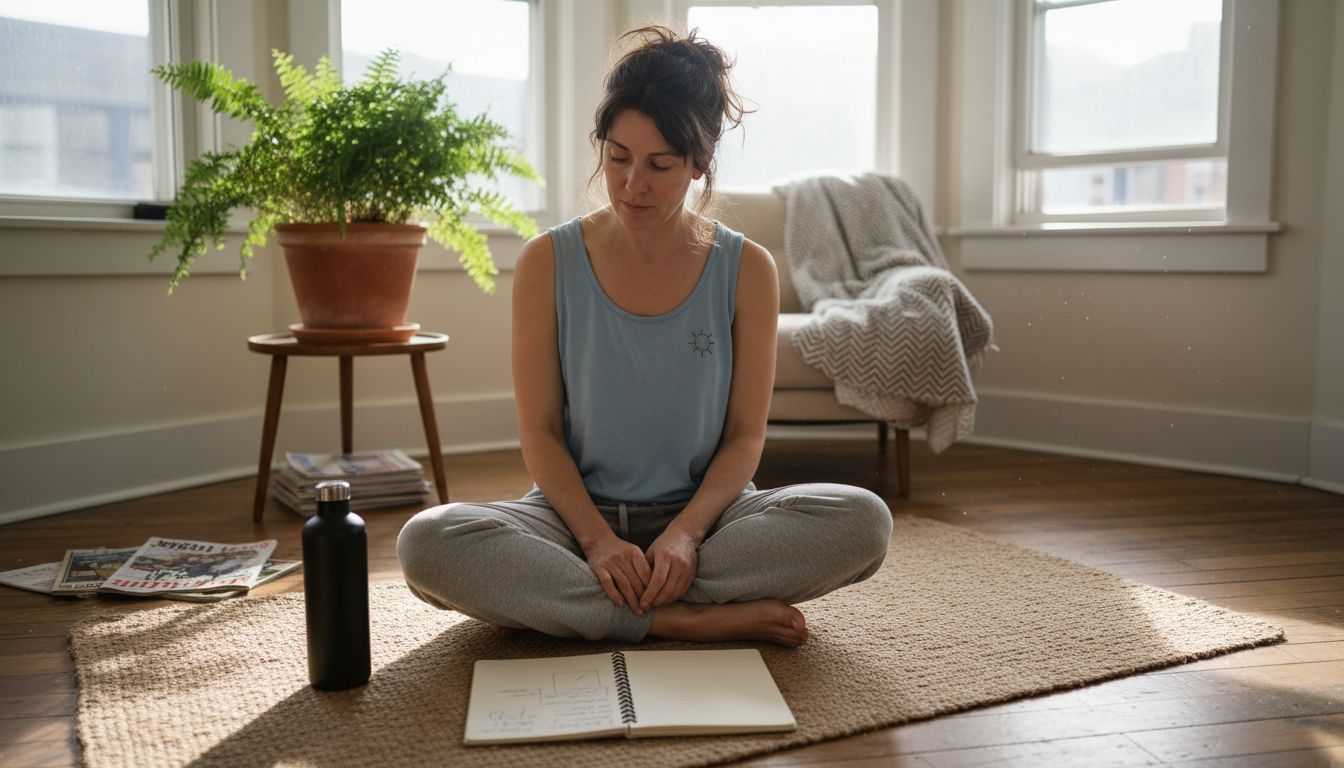
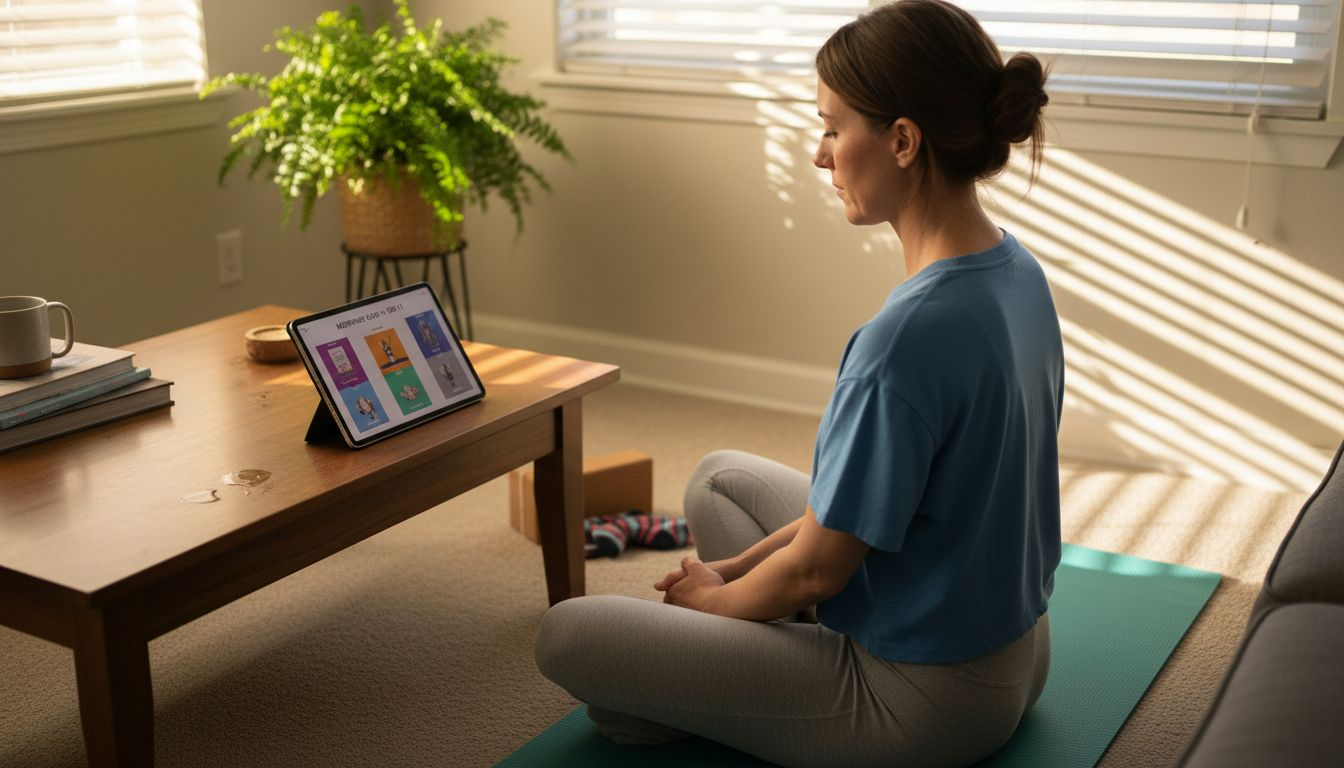
Start by selecting a quiet area in your home with minimal distractions. Ideally, choose a space with natural light and enough room to fully extend your yoga mat without bumping into furniture. Clear away clutter and unnecessary items that might disrupt your mental focus. If possible, select a spot near a window where soft natural light can create a serene atmosphere. Beginner yoga practices often emphasize the importance of creating a peaceful environment that supports your mental and physical journey.

Consider adding soft elements that enhance relaxation such as a clean yoga mat, comfortable temperature, and minimal noise. Use neutral colored linens or blankets, place a few plants for natural energy, and ensure the room temperature is slightly warm but not hot. Soft background music or nature sounds can also help create a meditative ambiance that supports your practice.

Pro tip: Keep your yoga space consistent and dedicated, treating it as a sacred area for personal growth and wellness transformation.

Step 2: Select beginner-friendly yoga styles and classes

Navigating the world of yoga styles can be overwhelming for newcomers, but choosing the right class is essential for building confidence and establishing a sustainable practice. Your goal is to find a style that matches your fitness level, physical capabilities, and personal wellness objectives.

Beginner yoga classes in Philadelphiatypically recommend Hatha Yoga as the ideal starting point for new practitioners. Hatha Yoga is specifically designed for beginners, focusing on holding positions for several breaths and allowing you to master basic postures comfortably. This style provides a solid foundation by teaching proper alignment, breathing techniques, and helping you develop body awareness without overwhelming intensity.

When exploring yoga styles, consider your personal fitness level and any physical limitations. While more dynamic styles like Vinyasa and hot yoga can be appealing, they require a stronger baseline of strength and flexibility. For absolute beginners, gentler practices such as Yin Yoga or restorative classes offer slower paced environments where you can learn fundamental poses and breathing techniques. Many local studios offer introductory workshops or beginner series that provide structured learning environments with expert guidance.

Pro tip: Always communicate with your yoga instructor about your experience level and any physical concerns before starting a new class.

Here is a comparison of beginner-friendly yoga styles to help you select the best fit for your needs:

Yoga Style Pace and Intensity Key Benefits Suitability
Hatha Yoga Slow, gentle Builds foundation, improves focus Best for absolute beginners
Vinyasa Yoga Moderate to fast Boosts stamina, dynamic movement Good for active beginners
Yin Yoga Very slow, relaxing Enhances flexibility, deep rest Ideal for stress reduction
Restorative Yoga Minimal movement Promotes healing, calms mind Suited to relaxation seekers

Step 3: Gather essential supportive yoga equipment

Starting your yoga journey requires some basic equipment that supports comfort, stability, and proper alignment during your practice. Investing in a few key items will help you feel more confident and prepared as you begin exploring yoga techniques and poses.

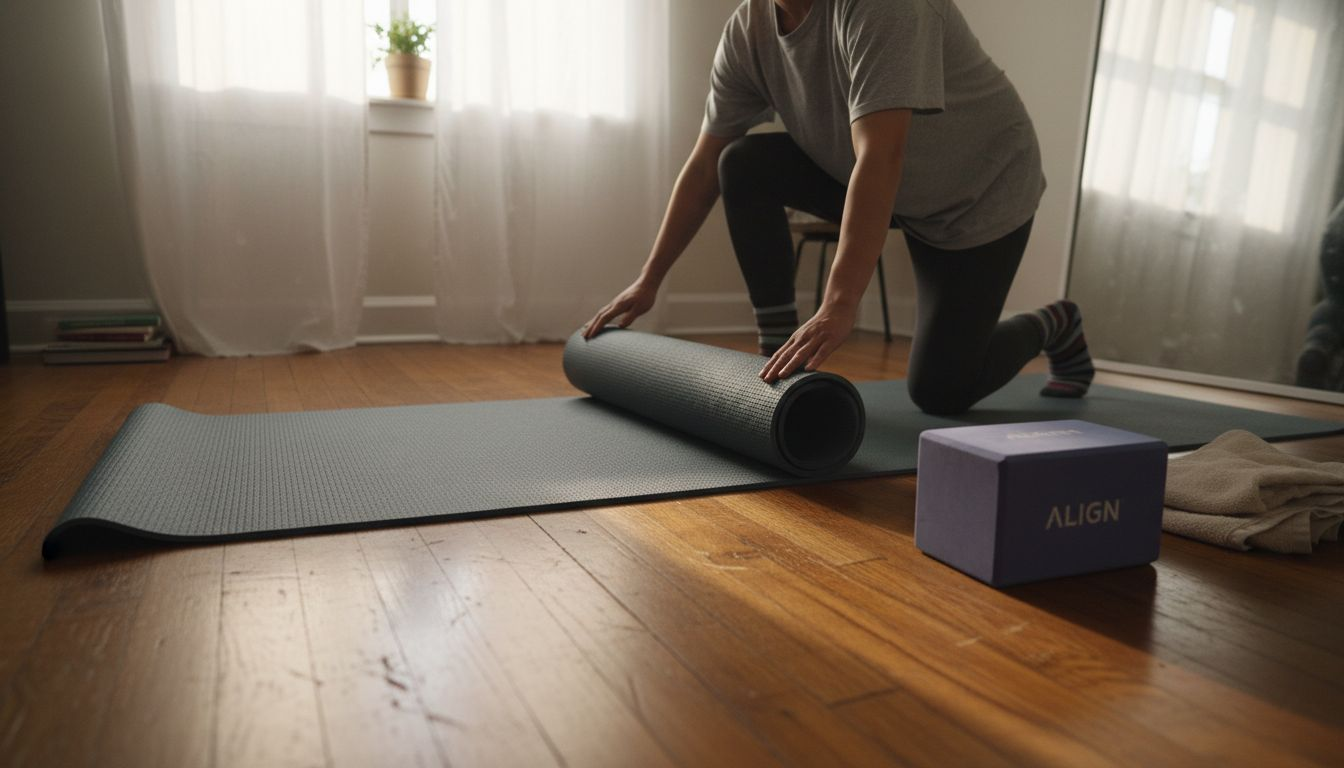
The most critical piece of equipment is a high quality yoga mat that provides adequate cushioning and grip. Aerial yoga safety recommendations emphasize choosing a mat with good traction to prevent slipping during various poses. Look for a mat that is approximately 1/4 inch thick with a textured surface suitable for beginners. Beyond the mat, consider purchasing supportive accessories like yoga blocks, which help modify poses and provide additional support when flexibility is limited, and a comfortable yoga strap to assist with stretching and alignment.

While building your yoga equipment collection, remember that you do not need to purchase expensive or elaborate gear. Start with basic, functional items that support your practice and allow you to move comfortably. Many studios offer equipment rentals, which can be a great way to experiment with different types of props and materials before making a personal investment.

Pro tip: Choose multipurpose yoga equipment that can adapt to different styles and skill levels to maximize your initial investment.

Here is a summary of essential yoga equipment and its role in supporting your practice:

Equipment Purpose Beginner Benefit
Yoga Mat Cushioning and stability Prevents slips, adds comfort
Yoga Blocks Support and pose modification Aids limited flexibility
Yoga Strap Assists stretches Improves reach and alignment
Blanket Warmth and comfort Enhances relaxation in poses

Step 4: Develop your initial routine with simple poses

Building a foundational yoga practice requires starting with accessible, gentle poses that help you develop body awareness, flexibility, and confidence. Your initial routine will focus on creating a sustainable approach to movement that feels comfortable and supportive.

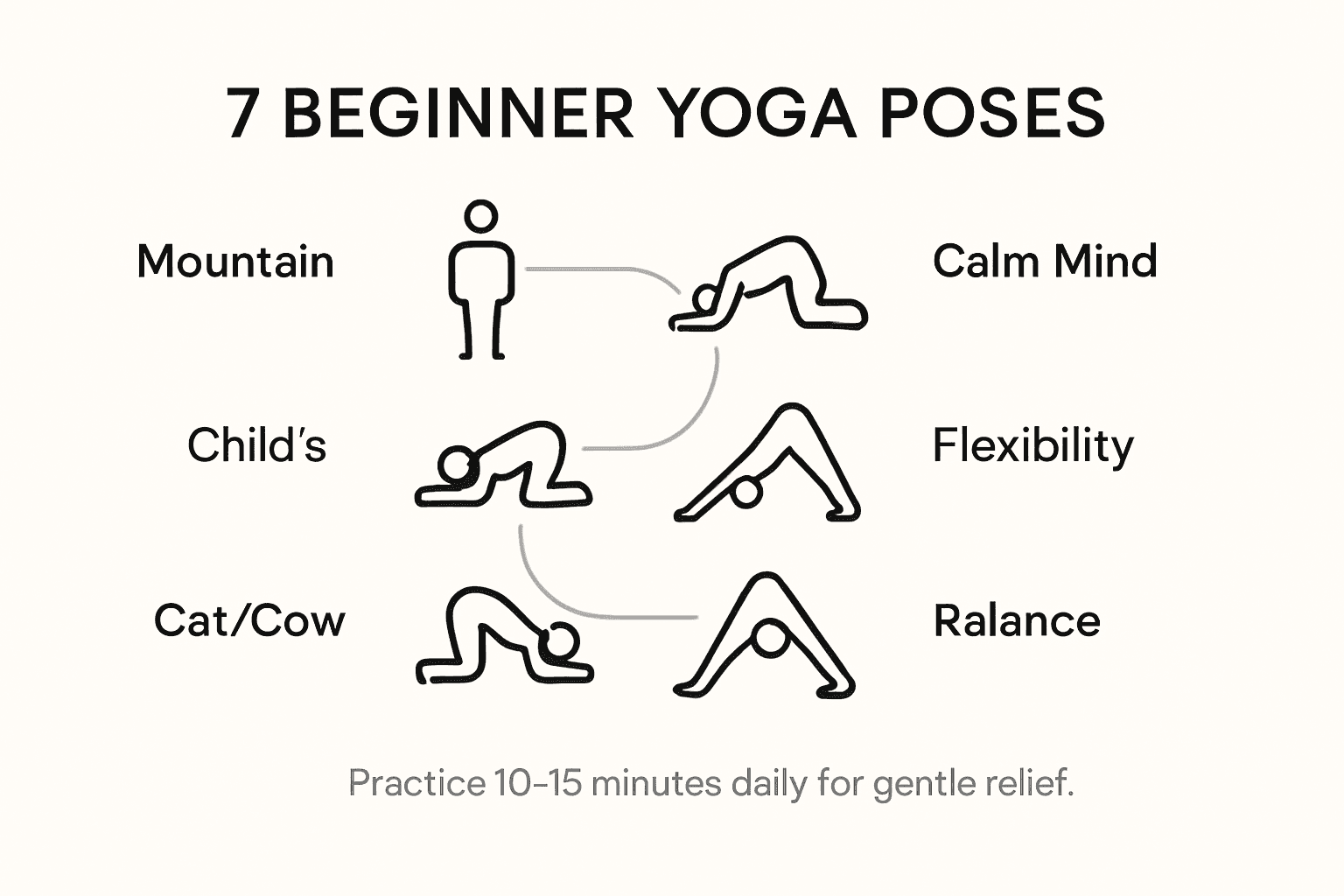
7 Essential yoga poses for beginnerstypically include fundamental movements like Mountain Pose, Child's Pose, Cat Cow Stretch, and Downward Facing Dog. These poses help you build strength, improve balance, and learn proper breathing techniques without overwhelming your body. Start by holding each pose for 3 to 5 breaths, paying careful attention to your body's alignment and sensations. Remember that yoga is not about perfection but about exploring your body's capabilities with patience and self compassion.

As you develop your routine, focus on consistency rather than complexity. Begin with a short 10 to 15 minute practice, gradually increasing duration as you become more comfortable. Listen to your body and modify poses using yoga blocks or straps if needed. The goal is to create a sustainable practice that feels nurturing and reduces stress, not to achieve advanced postures immediately.

Pro tip: Practice your routine at the same time each day to help establish a consistent and grounding yoga habit.

Step 5: Evaluate your progress and adjust your yoga journey

Tracking your yoga journey is about understanding your physical and mental growth, not achieving perfection. Your practice will naturally evolve as you become more aware of your body's capabilities and limitations, creating opportunities for meaningful personal development.

How to schedule yoga classes for seamless wellnesssuggests maintaining a practice journal to document your experiences and progress. Record details like how you feel before and after each session, which poses challenge you, and any improvements in flexibility, strength, or stress levels. Pay attention to both physical changes and emotional shifts, recognizing that progress in yoga extends beyond physical performance.

Be patient and kind to yourself as you develop your practice. Some weeks you might feel more flexible or strong, while others might feel more challenging. Adjust your routine based on your energy levels, listening to your body and modifying poses as needed. Consider taking occasional classes with experienced instructors who can provide personalized feedback and help you refine your technique. Remember that consistency matters more than intensity, and your yoga journey is a personal path of continuous learning and self discovery.

Pro tip: Review your practice journal every month to identify patterns, celebrate small victories, and mindfully adjust your yoga approach.

Embrace Your Yoga Journey for Lasting Stress Relief and Wellness

Starting yoga can feel overwhelming when trying to create the perfect space and selecting the right practice for your needs. This article highlights common challenges like finding beginner-friendly yoga styles and assembling comfortable equipment that supports your growth. If you are looking to naturally reduce stress while improving flexibility and mental clarity, you are not alone. Many seek a nurturing, consistent yoga routine that fosters personal wellness without adding pressure or complexity.

Discover how Amrita Yoga & Wellness in Philadelphia offers supportive classes tailored to beginners that guide you through foundational poses and mindful breathing techniques. Our welcoming community and expert instructors help you ease into yoga styles such as Hatha and restorative yoga, perfect for cultivating calm and self-awareness.

Take the next step toward a balanced life by exploring beginner-friendly sessions and workshops designed for your wellness goals. Experience firsthand how a dedicated practice space and the right guidance can transform your mental and physical health. Visit this page today to find the perfect class and start your path to lasting stress relief and holistic wellness.

Frequently Asked Questions

How can I create a calming yoga space for stress relief?

Creating a calming yoga space starts by selecting a quiet area in your home where you can practice without distractions. Clear clutter and use calming colors and natural light to set the mood. Consider dedicating this space solely to your yoga practice to help reinforce your commitment to wellness.

What beginner-friendly yoga styles should I try for stress relief?

For stress relief, consider starting with Hatha Yoga, as it’s gentle and perfect for beginners. This style focuses on holding poses and mastering breathing techniques, which can enhance relaxation. Look for classes that cater to new practitioners to ensure a supportive learning environment.

What essential equipment do I need to start yoga?

To start yoga, you will need a good quality yoga mat for cushioning and grip. Additionally, consider acquiring yoga blocks and a strap, which can help you modify poses and enhance your practice. Begin with these basics, and gradually add more equipment as your skills develop.

How can I develop a routine with simple yoga poses?

Start by selecting a few simple poses like Mountain Pose and Child’s Pose, holding each for 3 to 5 breaths. Aim for a routine that lasts 10 to 15 minutes daily, gradually increasing duration as you gain confidence. Consistency is key—practice at the same time each day to establish a grounding habit.

What should I include in my yoga journal to track my progress?

In your yoga journal, record your feelings before and after each session, along with details on which poses challenge you. Note improvements in flexibility and strength, as well as any emotional shifts you experience. Reviewing your entries monthly can help identify patterns and celebrate small victories in your yoga journey.

How do I adjust my yoga practice if I feel challenged?

Listen to your body and adjust your poses if you encounter challenges. Consider using props like blocks or straps for support, and be patient with your progress. Modify your routine based on your energy levels, ensuring it remains a nurturing experience rather than feeling overwhelming.

Recommended

Barre vs Pilates Explained: Choosing Your Best Fit

Heather Rice

Most American professionals know their packed schedules can make fitness feel like a luxury, not a routine. For those in Philadelphia juggling meetings and commutes, finding a workout that builds strength without harsh impact is key. Barre and Pilates are two popular choices reshaping how busy adults target core strength and flexibility. Learn how each option supports your goals and why more American adults are choosing low-impact routines that fit a demanding lifestyle.

Table of Contents

Key Takeaways

Point Details
Barre and Pilates Offer Unique Benefits Both practices focus on low-impact fitness but cater to different goals, with barre emphasizing dynamic movements and Pilates focusing on controlled, precise movements.
Class Atmospheres Vary Significantly Barre classes are energetic and social, while Pilates classes promote a calm and introspective environment.
Consider Personal Goals When Choosing Assess your fitness objectives to determine whether barre or Pilates aligns better with your individual needs.
Combining Both Disciplines Can Be Beneficial Integrating elements of both barre and Pilates can create a well-rounded fitness routine that enhances strength and flexibility.

Barre and Pilates Defined for Beginners

For busy professionals seeking low-impact fitness options, barre and Pilates represent two transformative workout approaches that blend strength training, flexibility, and mindful movement. While they might seem similar at first glance, each discipline offers unique characteristics designed to enhance body awareness and physical conditioning.

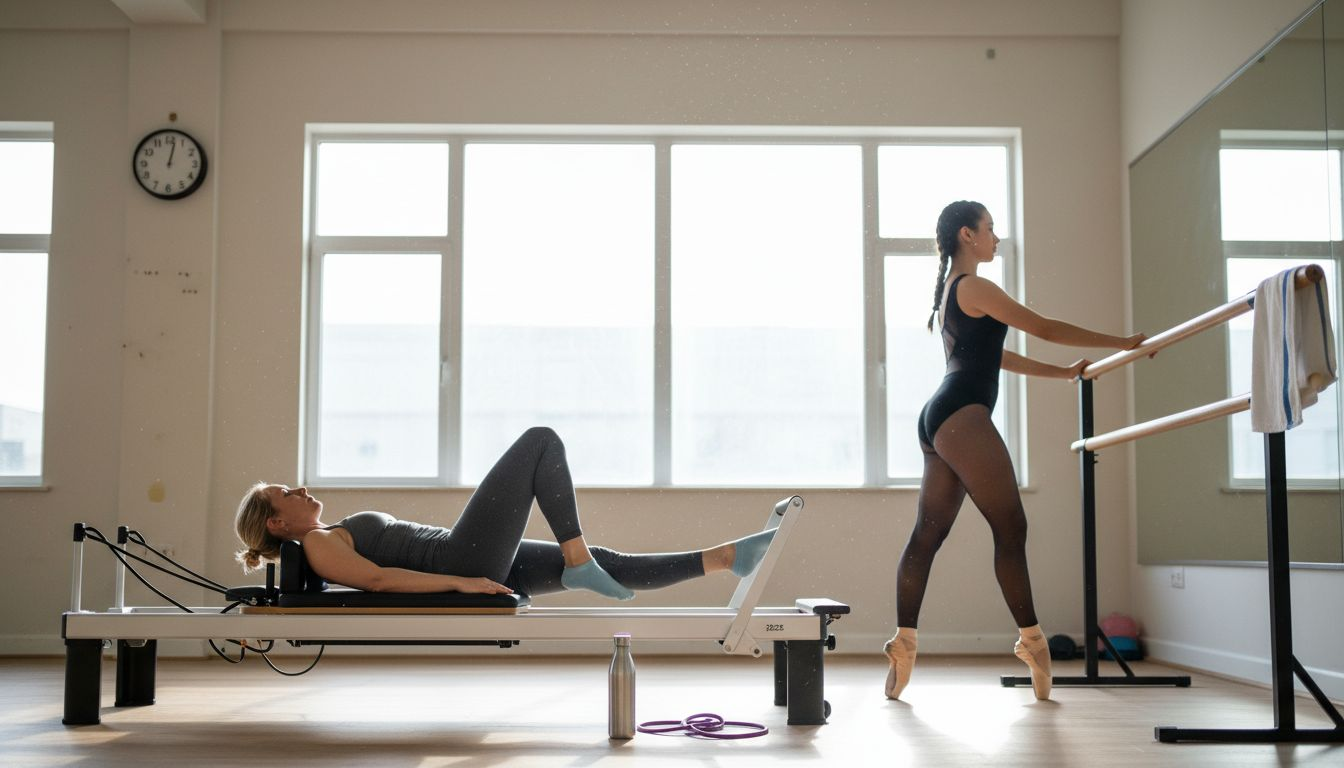
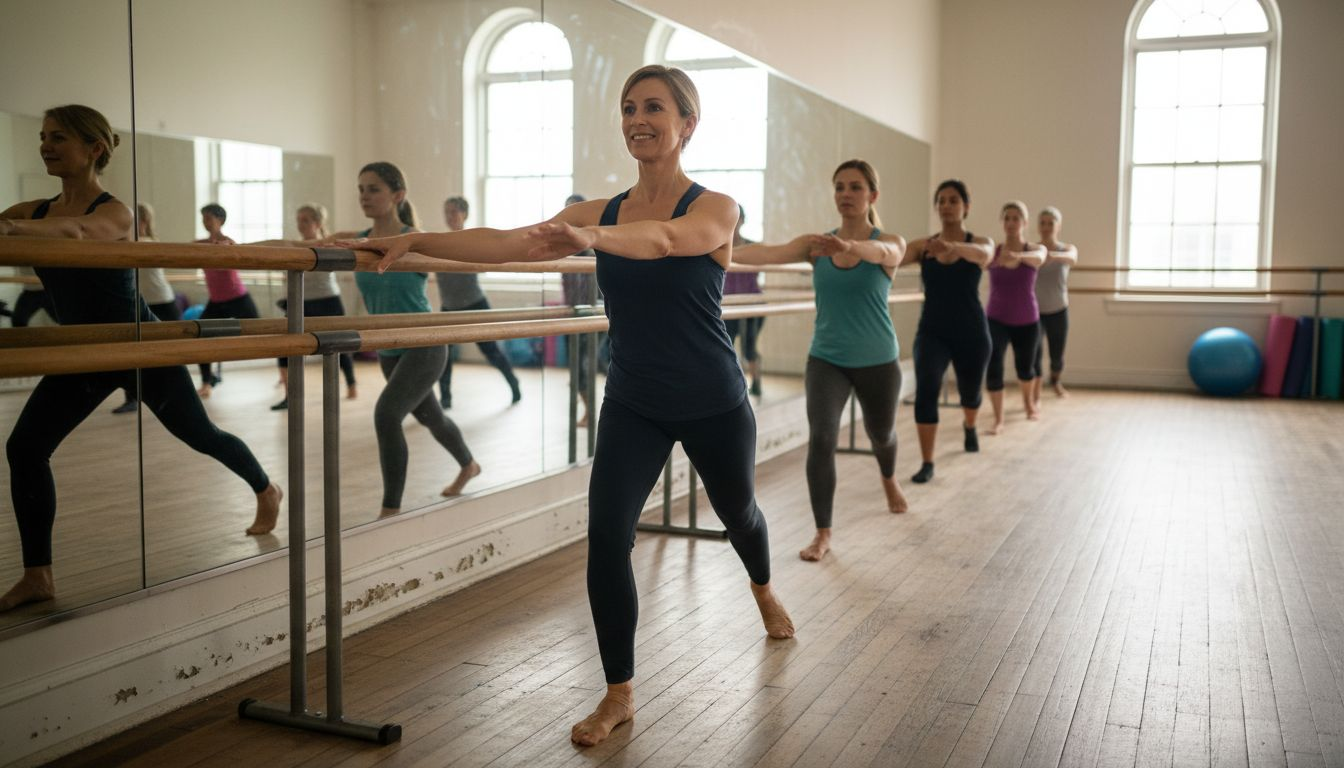
Barre workouts draw inspiration from ballet techniques, combining elements of dance, Pilates, and strength training into a dynamic fitness experience. These ballet-inspired movements typically involve small, precise muscle movements performed at a ballet barre, targeting core strength, posture, and muscle endurance. Participants use their body weight, light hand weights, and ballet bar support to create lean, sculpted muscles through high-repetition, low-impact exercises.

Pilates, in contrast, focuses more comprehensively on core strength, spinal alignment, and controlled breathing. Developed by Joseph Pilates in the early 20th century, this practice emphasizes precision, proper form, and mind body connection. Whether performed on a mat or specialized equipment like the reformer, Pilates challenges practitioners to engage deep stabilizing muscles while maintaining fluid, intentional movements.

Pro Tip: If you are new to either practice, start with a beginner class and communicate any physical limitations to your instructor to ensure a safe, personalized workout experience.

Fundamental Differences in Movement Styles

While barre and Pilates share a foundation of mindful movement, they diverge significantly in their approach to physical conditioning. The nuanced differences in movement styles reveal unique strategies for building strength, flexibility, and body awareness that cater to different fitness preferences and goals.

Barre workouts are characterized by rapid, high-repetition movements that blend ballet techniques with strength training. Participants engage in small, precise isometric holds and pulsing motions, typically using a ballet bar for support. These movements create muscular endurance through constant tension, targeting smaller muscle groups with light weights and bodyweight exercises. The rhythm is dynamic and energetic, mimicking a dance-inspired fitness class that keeps participants moving continuously.

Pilates, by contrast, emphasizes slow, deliberate movements with an intense focus on core engagement and proper alignment. Each movement in Pilates is performed with meticulous attention to breath, precision, and quality of motion rather than speed or repetition count. Practitioners might use specialized equipment like reformers or simply work on a mat, but the core principle remains consistent: controlled, intentional movements that build deep muscle strength and improve overall body mechanics.

A key distinction emerges in the fundamental philosophy of movement. Barre tends to be more performance-oriented, creating a high-energy workout that feels like a dance class, while Pilates approaches fitness as a meditative, technically precise practice of body awareness and muscular control.

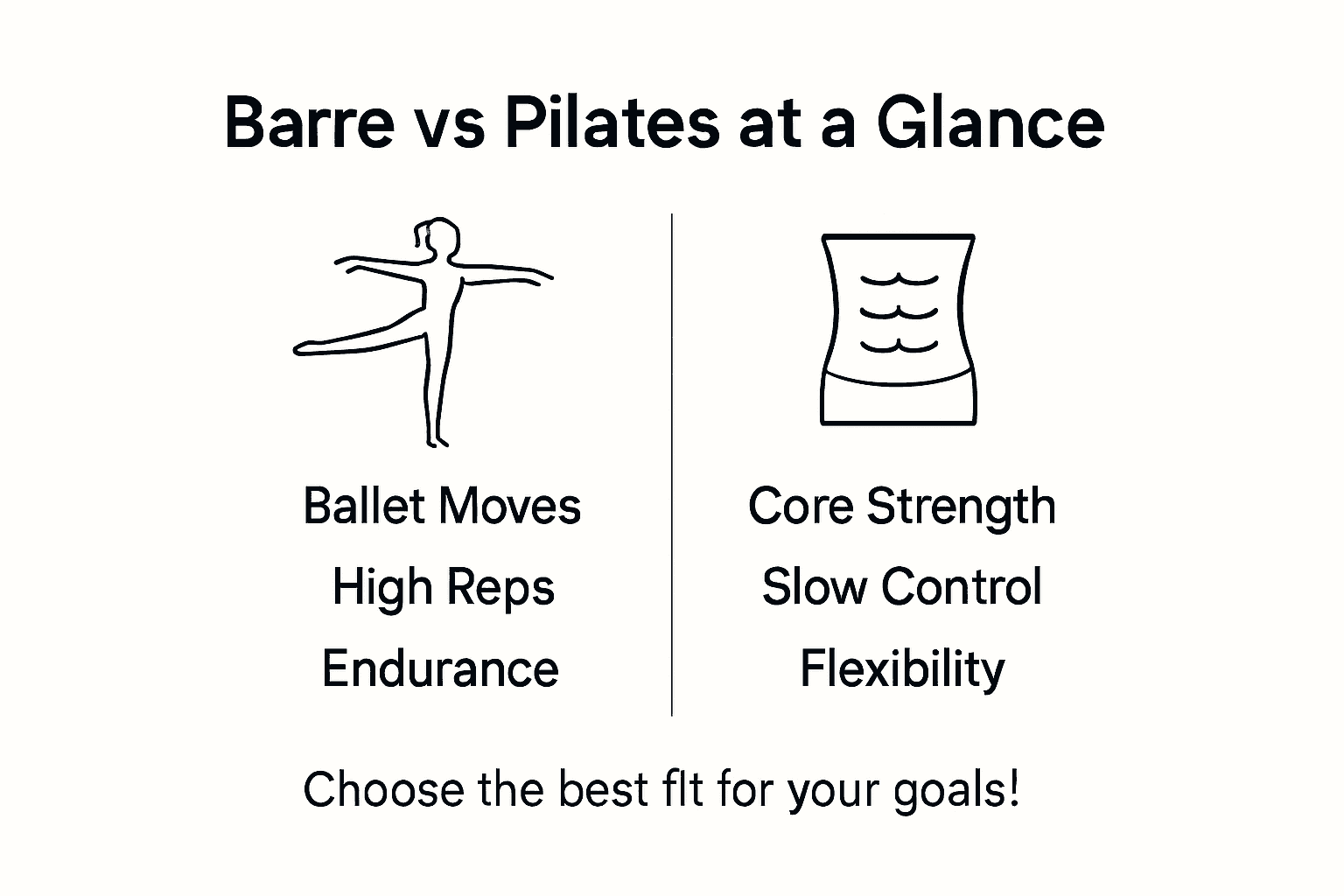
Here's a side-by-side overview of key distinctions between barre and Pilates:

Aspect Barre Pilates
Movement Style High-repetition, ballet-inspired Slow, controlled, precise
Energy Level Energetic, dynamic Calm, meditative
Focus Area Sculpting and endurance Deep core strength
Equipment Ballet bar, light weights Mat, reformer, accessories
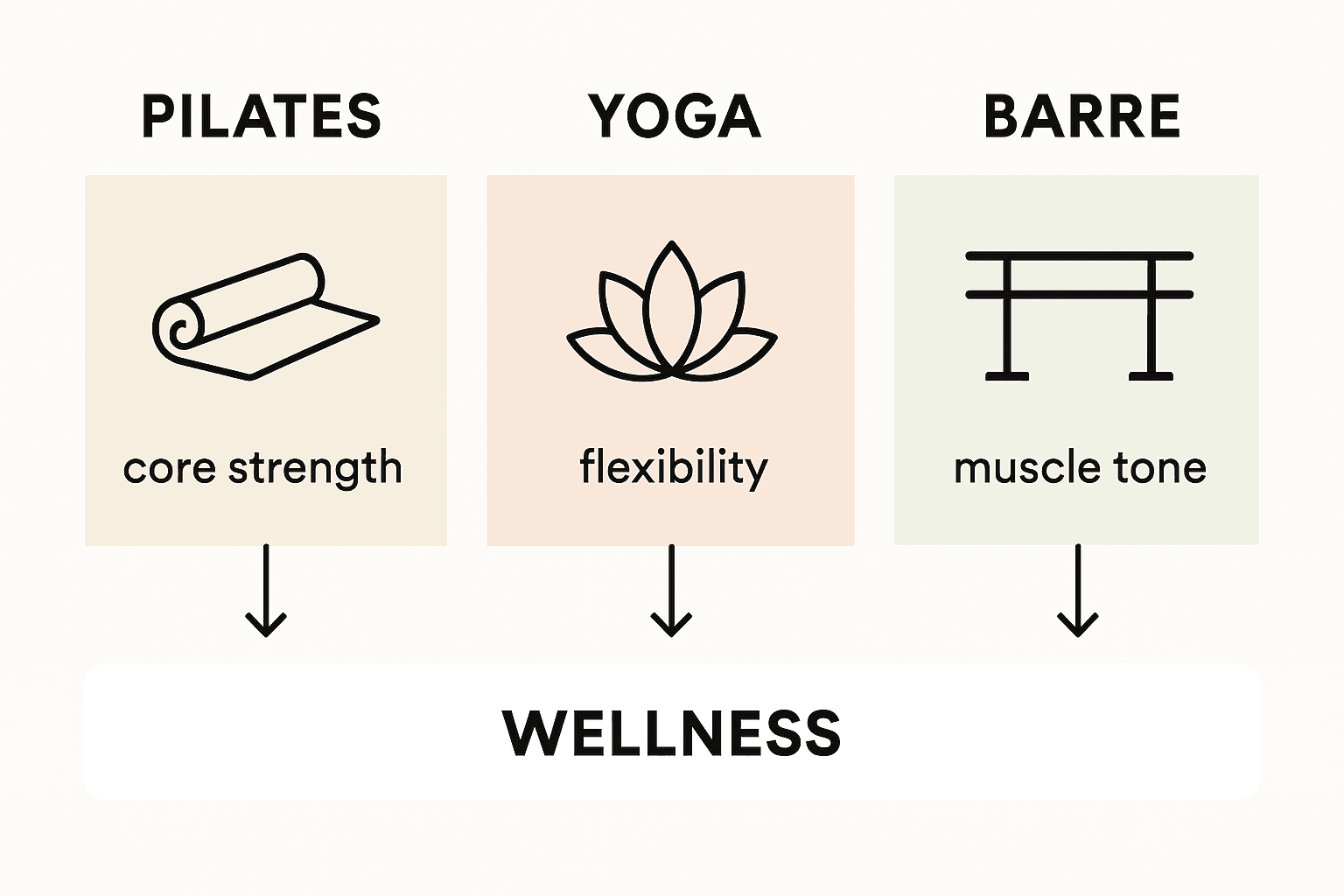
Main Benefits Enhances tone and posture Improves alignment and flexibility
Class Atmosphere Social, upbeat, musical Quiet, focused, introspective

Pro Tip: When choosing between barre and Pilates, observe a class beforehand to understand which movement style resonates more with your personal fitness rhythm and goals.

Primary Benefits for Core Strength and Flexibility

Both barre and Pilates offer remarkable advantages for developing core strength, flexibility, and overall body conditioning, making them exceptional choices for professionals seeking targeted, low-impact fitness solutions. The transformative core benefits of these practices extend far beyond traditional strength training, providing nuanced approaches to muscular development and body awareness.

Barre workouts excel at building muscular endurance through precise, high-repetition movements that target core muscles from multiple angles. By incorporating isometric holds and small, dynamic motions, barre creates constant muscle tension that develops long, lean muscle groups while simultaneously improving posture and stability. The focus on lower body and core muscle groups means participants can expect enhanced muscle tone, increased flexibility, and improved overall body alignment.

Pilates takes a more meditative approach to core strengthening, emphasizing controlled movements that engage deep stabilizing muscles. Practitioners develop comprehensive core strength through intentional, slow movements that require exceptional body awareness and precise muscle engagement. Unlike traditional strength training, Pilates builds strength through quality of movement rather than quantity, promoting balanced muscle development, improved spinal alignment, and enhanced overall functional fitness.

While both practices offer significant core benefits, they differ in their methodological approach. Barre provides a more dynamic, dance-inspired workout with rapid muscle engagement, whereas Pilates offers a methodical, breath-centered practice that prioritizes muscle quality and mindful movement.

Pro Tip: Combine elements from both barre and Pilates to create a well-rounded core strengthening routine that addresses multiple aspects of physical fitness.

What to Expect in Barre vs Pilates Classes

The class experience in barre and Pilates offers distinctly different atmospheres and approaches to fitness, catering to professionals seeking varied workout styles. Both typically last between 30 to 45 minutes, but the energy, structure, and focus differ significantly, providing unique pathways to physical conditioning.

Barre classes create a high-energy, dance-inspired environment that combines elements of ballet, strength training, and cardio. Muscle engagement happens continuously through small, precise movements performed at a ballet bar, with participants using light weights, resistance bands, and bodyweight exercises. The pace is rhythmic and dynamic, often accompanied by upbeat music that keeps participants motivated and moving. Expect rapid, repetitive motions that target specific muscle groups, creating an intense workout that feels more like a choreographed dance performance than traditional strength training.

Pilates classes, in contrast, offer a more meditative and controlled workout experience. The class focuses intensely on core activation and precise movement, emphasizing breath coordination and mindful muscle engagement. Practitioners might work on a mat or use specialized equipment like reformers, with each movement performed slowly and intentionally. The atmosphere is calm and focused, encouraging participants to connect deeply with their body's alignment, breathing patterns, and subtle muscle movements. Unlike barre's high-energy approach, Pilates prioritizes quality of movement over quantity, creating a more introspective fitness experience.

The equipment and setup also differ dramatically between these practices. Barre classes typically use a ballet bar, small weights, and sometimes resistance bands, while Pilates might incorporate complex equipment like reformers, stability balls, and specialized machines that provide varying levels of resistance and support.

Pro Tip: Arrive 10-15 minutes early to your first class to familiarize yourself with the equipment and inform the instructor about any physical limitations or concerns.

Choosing the Best Option for Your Lifestyle

Selecting the right fitness practice requires a nuanced understanding of your personal health goals, physical condition, and lifestyle preferences. Each discipline offers unique benefits that can align differently with individual fitness objectives, making the choice more about personal resonance than universal superiority.

Barre is an excellent choice for professionals seeking a high-energy, full-body workout that combines strength training with cardiovascular elements. Workout intensity in barre classes makes it ideal for those wanting to improve muscle tone, enhance posture, and enjoy a more social, dynamic exercise environment. The rhythmic, dance-inspired movements provide an engaging workout that feels less like traditional exercise and more like an energetic performance. Individuals who thrive on quick-paced, motivating group settings and want to target specific muscle groups like arms, legs, and glutes will find barre particularly appealing.

Pilates, conversely, serves those prioritizing mindful movement, core strength, and holistic body awareness. The practice offers a more introspective fitness experience that appeals to professionals dealing with chronic pain, recovering from injuries, or seeking deep muscular engagement. Its slower, more deliberate approach emphasizes breath coordination, precise movements, and comprehensive body alignment. Pilates is particularly beneficial for individuals wanting to improve flexibility, rehabilitation potential, and overall body control without high-impact stress.

Ultimately, the decision between barre and Pilates depends on your specific fitness goals, physical limitations, and personal preferences. Some practitioners even combine both disciplines to create a well-rounded fitness routine that addresses multiple aspects of physical conditioning.

Selecting the best fit often depends on personal goals—here's a practical comparison to help guide your decision:

Goal or Preference Best Choice Reason
Boosting energy and motivation Barre Upbeat group classes with music
Building deep core stability Pilates Emphasis on precise, slow movement
Social, group atmosphere Barre Team energy and dynamic setting
Mind-body awareness Pilates Controlled motions and breathwork
Rehabilitating injuries Pilates Low-impact, supportive environment
Improving muscle tone quickly Barre Fast-paced, repetitive training

Pro Tip: Consider trying a single introductory class in both disciplines to personally experience their unique approaches and determine which resonates more with your fitness style and goals.

Discover Your Perfect Fitness Match at Amrita Yoga & Wellness

Choosing between barre and Pilates can feel overwhelming when each promises unique benefits like enhanced core strength, improved flexibility, and mindful movement. If you are seeking a low-impact workout that fits your busy lifestyle and aligns with your personal wellness goals, understanding these subtle differences is the first step. Whether you resonate more with barre's energetic, dance-inspired approach or Pilates' calm, precise focus on body alignment, finding the right fit can transform your fitness journey.

Explore a variety of classes tailored to help you build strength, flexibility, and body awareness at Amrita Yoga & Wellness. Our studio in Philadelphia offers expert-led barre and Pilates classes designed to accommodate all levels including beginners. Visit our detailed class descriptions and schedule your introductory session today to experience the benefits firsthand. Take control of your wellbeing and join a supportive community dedicated to holistic growth. Start your path to a stronger core and balanced body now by signing up for classes at Amrita Yoga & Wellness.

Frequently Asked Questions

What are the main differences between barre and Pilates?

Barre focuses on high-repetition, dance-inspired movements that enhance muscle tone and endurance, while Pilates emphasizes slow, controlled movements that build deep core strength and improve body alignment.

Which workout is better for building core strength, barre or Pilates?

Pilates is generally better for building deep core strength, as it emphasizes precise movements and breath coordination, engaging stabilizing muscles. Barre also strengthens the core but with a focus on muscular endurance through dynamic, high-rep movements.

Can I perform barre and Pilates workouts if I have physical limitations or injuries?

Yes, both barre and Pilates can be adapted for individuals with physical limitations or injuries. It's essential to communicate your limitations to the instructor, who can provide modifications to ensure a safe and effective workout.

How long do barre and Pilates classes typically last?

Both barre and Pilates classes typically last between 30 to 45 minutes, although class duration may vary depending on the specific studio or program.

Recommended

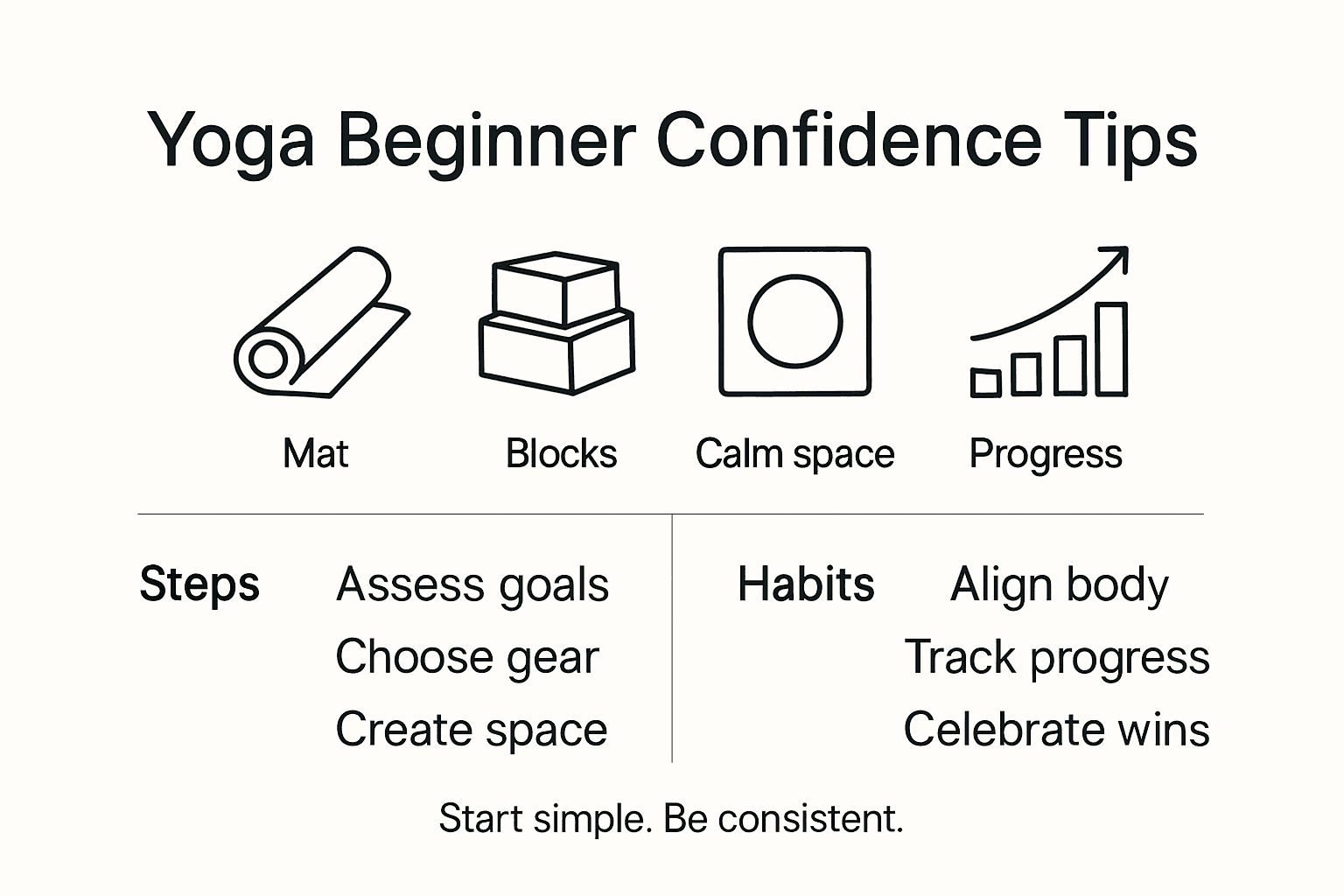
Essential Tips for Yoga Beginners to Build Confidence

Heather Rice

Most American adults in Philadelphia underestimate how much simple yoga routines can transform their physical and mental health. If you want to feel stronger, lower stress, and connect with a caring community, starting with basic yoga steps can be both accessible and effective. This guide breaks down practical beginner tips that suit busy lifestyles, deliver real wellness benefits, and help you build a holistic foundation for lasting self care.

Table of Contents

Quick Summary

Essential Insight Explanation
1. Assess Your Wellness Goals Establish a clear understanding of your current health status to personalize your yoga practice effectively.
2. Select Appropriate Yoga Gear Choose high-quality gear that enhances comfort and support, aligning with your practice style and intensity.
3. Create a Dedicated Practice Space Designate a tranquil area for yoga to enhance focus and consistency in your practice.
4. Focus on Mindful Alignment Begin with beginner-friendly routines that emphasize proper body positioning to prevent injury and improve technique.
5. Track Progress and Celebrate Milestones Keep a detailed record of improvements over time, celebrating small achievements to maintain motivation.

Step 1: Assess your personal fitness and wellness goals

Understanding your current health status and setting targeted wellness objectives is crucial for creating an effective yoga practice. By conducting a comprehensive wellness assessment, you can develop a personalized approach that aligns with your unique physical and mental needs.

Start by evaluating key fitness metrics that provide a holistic view of your current condition. The American Heart Association recommends recording fundamental measurements such as resting pulse rate, walking endurance, flexibility range, and body composition. These baseline metrics will help you track progress and set realistic goals. Consider factors like your current activity level, any existing health conditions, and the specific wellness outcomes you want to achieve through yoga practice.

Break down your assessment into multiple dimensions beyond just physical fitness. Examine your emotional resilience, stress management capabilities, energy levels, and overall lifestyle balance. This comprehensive approach ensures that your yoga journey supports total wellness rather than focusing narrowly on physical exercise.

Pro tip: Create a simple wellness tracking journal where you record your initial assessments and regularly update your progress to stay motivated and aware of your holistic health transformation.

Step 2: Choose suitable yoga gear and supportive accessories

Selecting the right yoga gear is essential for creating a comfortable and effective practice that supports your physical and mental wellness journey. When building your yoga toolkit, focus on finding items that enhance your comfort, provide proper support, and align with your personal practice style.

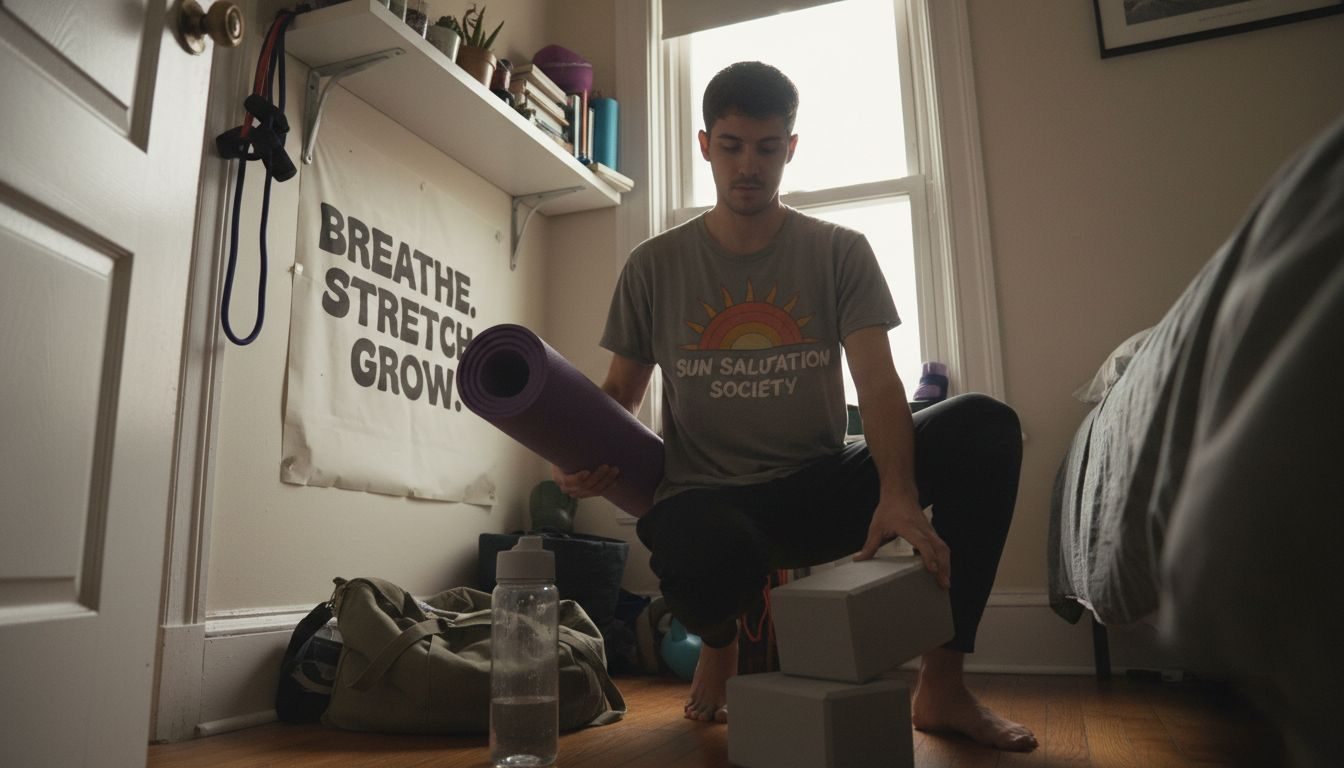
Your primary considerations should include a high-quality yoga mat that offers adequate cushioning and grip. Look for mats with appropriate thickness for your body and practice intensity. For beginners, a standard mat around 1/4 inch thick provides a good balance between comfort and stability. Consider yoga accessories that match your specific practice needs, whether youre interested in hot yoga, restorative styles, or more dynamic flow sequences. Beyond the mat, invest in supportive gear like moisture-wicking clothing that allows unrestricted movement, a reliable water bottle, and potentially props such as blocks, straps, or bolsters that can modify poses and provide additional support.

When purchasing yoga gear, prioritize quality over trend. Choose items that feel comfortable and inspire confidence in your practice. Remember that your accessories should adapt to your body and skill level, not create additional challenges. Pay attention to materials that provide breathability, durability, and ease of cleaning.

Here's a summary of essential yoga accessories and their benefits:

Accessory Key Benefit Ideal For Material Tips
Yoga Mat Cushion and grip All practitioners Look for eco-friendly
Yoga Blocks Support, alignment Beginners, flexibility work Lightweight foam or cork
Yoga Straps Aid in stretching Flexibility improvement Durable cotton blend
Water Bottle Hydration Any session BPA-free, easy to clean
Moisture-wicking Clothing Comfort and movement All practice styles Seek breathable fabrics
Bolster Restorative poses Relaxation, meditation Washable covers

Pro tip: Try on yoga clothing and test equipment in person whenever possible to ensure the best fit and comfort for your unique body and practice style.

Step 3: Establish a comfortable space for regular practice

Creating a dedicated yoga space at home is crucial for maintaining a consistent and meaningful practice. Your environment can significantly impact your motivation and ability to stay committed to your wellness journey. Look for a space that offers tranquility, minimal distractions, and enough room to move freely during your beginner yoga routine.

When designing your practice area, consider factors beyond just physical space. Choose a location with good natural lighting if possible, and ensure the temperature is comfortable for movement. Remove clutter and potential obstacles that might interrupt your flow. Invest in a few key elements that make the space inviting such as a clean yoga mat, perhaps a small side table for water and props, and optional items like a soft blanket or cushion for meditation and relaxation portions of your practice.

Remember that your yoga space does not need to be large or perfectly equipped. Even a small corner of a room can become a sanctuary for your practice. The most important aspects are creating a sense of calm, having enough room to move safely, and establishing a consistent area that signals to your mind and body that this is a time for focused wellness and self care.

Pro tip: Keep your yoga gear visible and easily accessible to create a psychological trigger that encourages regular practice and reduces barriers to starting your routine.

Step 4: Follow beginner-friendly routines with mindful alignment

Mastering yoga starts with understanding how to move your body safely and intentionally. When beginning your practice, focus on yoga styles that emphasize slow movements and proper alignment, such as Hatha yoga, which provides a solid foundation for learning fundamental poses and breathing techniques.

Start by learning basic poses with careful attention to body positioning and breath control. Each movement should be deliberate and controlled, prioritizing precision over complexity. Pay close attention to how your body feels during each pose, making modifications as needed to prevent strain or injury. Practice in front of a mirror or record yourself to observe your alignment, or consider taking introductory classes where an experienced instructor can provide direct guidance on proper form.

Remember that mindful alignment is not about achieving a perfect pose, but about understanding your body's unique capabilities and limitations. Listen to your physical sensations, breathe steadily, and move with intention. Gradually build your practice by holding poses for shorter durations and progressively increasing the time as your strength and flexibility improve.

Pro tip: Use props like blocks and straps to support your alignment and help you maintain proper form while building confidence in your practice.

Step 5: Track your improvements and celebrate milestones

Successful wellness journeys thrive on consistent monitoring and recognition of personal growth. Recording fitness scores and tracking changes over time helps maintain motivation and provides tangible evidence of your progress in yoga practice.

Establish a simple tracking system that captures multiple dimensions of your wellness journey. Consider creating a dedicated journal or digital spreadsheet where you log details such as pose duration, flexibility improvements, breath control, and how you feel after each practice. Take periodic measurements like how long you can hold a challenging pose, your range of motion, or the complexity of sequences you can now complete. These quantifiable markers will help you see incremental improvements that might otherwise go unnoticed.

Remember that progress is not linear and each small achievement matters. Celebrate moments like maintaining a pose for 10 seconds longer than before, feeling more balanced, or experiencing reduced muscle tension. By acknowledging these milestones, you reinforce positive behaviors and build the confidence needed to continue your yoga practice.

Pro tip: Take monthly progress photos or short video clips to create a visual record of your yoga journey, allowing you to see physical and postural changes that might be subtle but significant.

This table highlights key wellness progress indicators to track during your yoga journey:

Indicator How to Measure When to Record Why It Matters
Pose Duration Seconds held Weekly or monthly Tracks strength progress
Flexibility Range Distance in inches Monthly Shows increased mobility
Breath Control Number of breaths Each session Reflects relaxation level
Emotional Resilience Self-rating (1–10) After each session Monitors mental wellness
Balance Time standing Weekly Indicates body stability

Build Confidence in Your Yoga Practice with Amrita Yoga & Wellness

Starting yoga can feel overwhelming as you navigate proper alignment, select the right gear, and create a dedicated space to practice. This article highlights how beginners often struggle with mindful movement, maintaining motivation, and tracking progress — challenges that can hold you back from reaching your wellness goals. You deserve a supportive community and expert guidance that helps you overcome these hurdles and feel confident on your yoga journey.

Discover a welcoming environment with diverse options like hot yoga and restorative classes designed to meet you where you are. At Amrita Yoga & Wellness, you will find experienced instructors, workshops, and quality yoga accessories tailored to support your practice. Whether you want to build strength, improve flexibility, or find peaceful balance, our offerings empower you every step of the way.

Take the next step toward a stronger, more confident you. Explore our class schedules, sign up for beginner-friendly sessions, and browse our carefully selected yoga gear to enhance your experience. Visit Amrita Yoga & Wellness today and start transforming your wellness routine with support you can trust.

Frequently Asked Questions

How can I assess my current fitness level before starting yoga?

To gauge your fitness level, evaluate key metrics such as resting pulse rate, flexibility range, and walking endurance. Track these measurements to establish a baseline and set realistic goals for your yoga practice, aiming to record them every few weeks.

What yoga gear do I need as a beginner?

As a beginner, focus on essential gear like a high-quality yoga mat, supportive clothing, and possibly props like blocks or straps. Invest in items that offer comfort and stability, so you can practice confidently and avoid distractions during your sessions.

How do I create a comfortable space for my yoga practice at home?

Choose a quiet area with natural light and enough room for movement to set up your yoga practice space. Ensure it’s free of clutter to minimize distractions, and keep your yoga gear easily accessible, so you can encourage regular practice.

What are some beginner-friendly yoga routines I can follow?

Start with yoga styles like Hatha or gentle flow that emphasize slow movements and proper alignment. Try beginner routines that focus on basic poses and breathing techniques to build confidence and awareness in your practice.

How can I track my improvements in yoga over time?

Establish a tracking system, such as a journal or digital log, to note details like pose duration and breath control after each session. Review your entries weekly or monthly to celebrate small achievements, which will reinforce your motivation to continue practicing.

What should I do if I feel uncomfortable or struggle with poses?

It’s normal to feel discomfort when starting out. Focus on proper alignment and listen to your body; consider using props for support and modifications to make poses more comfortable. Allow yourself time to grow and gradually increase your pose duration as you become more confident.

Recommended

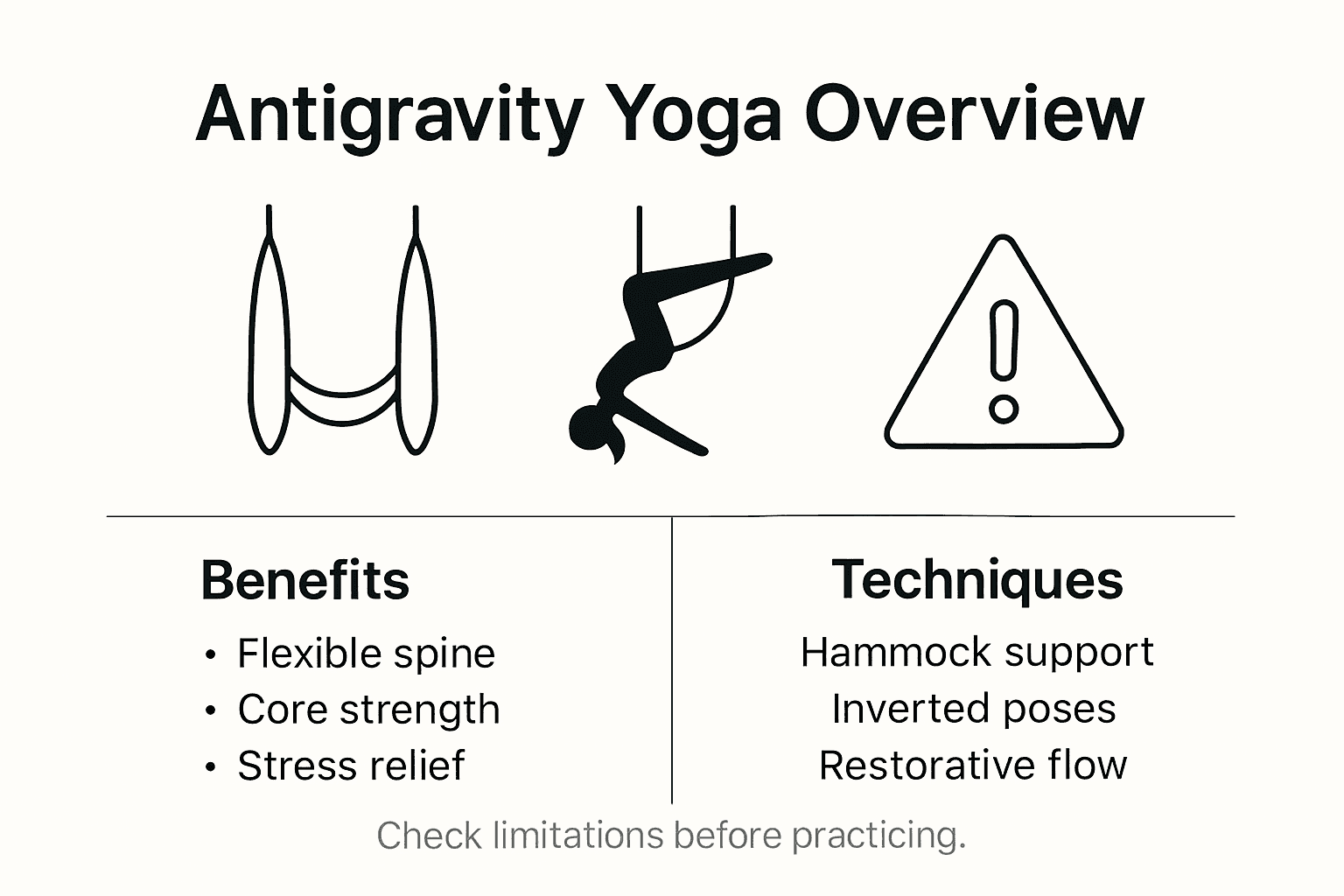
Antigravity Yoga Explained: Benefits, Techniques, Risks

Heather Rice

Most American adults experience ongoing stress that affects both body and mind, yet finding relief often feels out of reach in busy cities like Philadelphia. Antigravity yoga offers a fresh path for health-conscious residents seeking to blend gentle movement, flexibility, and emotional release. With its supportive hammock, this practice brings people together and transforms what beginners expect from wellness routines, introducing a relaxing and playful way to connect and recharge.

Table of Contents

Key Takeaways

Point Details
Innovative Approach Antigravity yoga incorporates aerial techniques using a supportive hammock to enhance strength, flexibility, and body awareness.
Diverse Styles There are various types of antigravity yoga, including Classic AntiGravity, Restorative Aerial Yoga, Aerial Pilates, and Aerial Dance Yoga, each catering to different fitness goals and experience levels.
Holistic Benefits The practice offers physical benefits like improved flexibility and mental advantages such as stress reduction and mindfulness enhancement.
Safety Considerations Proper technique, gradual progression, and communication with instructors are essential to minimize risks and ensure a safe practice.

Antigravity yoga definition and core concepts

Antigravity yoga represents an innovative fitness practice that transforms traditional yoga by incorporating aerial suspension techniques. First developed by Christopher Harrison in New York, this unique exercise method utilizes a specialized hammock that allows practitioners to perform yoga poses and movements while suspended above the ground.

The core concept of antigravity yoga centers on using a supportive fabric hammock as a primary training apparatus. This hammock enables practitioners to explore movements with reduced gravitational pressure, creating opportunities for deeper stretches, enhanced flexibility, and unique body positioning not possible on a standard yoga mat. By suspending participants slightly off the ground, the practice provides a combination of strength training, flexibility work, and aerial arts that challenges traditional workout paradigms.

At its fundamental level, antigravity yoga integrates elements from multiple disciplines, including traditional yoga, Pilates, dance, and acrobatics. Participants use the hammock to perform inverted poses, spinal decompressions, and dynamic movements that engage multiple muscle groups simultaneously. The suspended environment allows for reduced joint compression, increased range of motion, and a playful approach to fitness that makes challenging physical practices more accessible and enjoyable.

Pro tip: Begin your antigravity yoga journey by attending an introductory class with a certified instructor who can guide you through proper hammock techniques and safety protocols.

Types of antigravity yoga and their differences

Antigravity yoga encompasses a diverse range of styles, each offering unique approaches to aerial fitness and wellness. Practitioners can explore multiple variants that adapt the core hammock technique to different fitness goals and experience levels.

The primary types of antigravity yoga include classic AntiGravity Fitness, the original trademarked format that emphasizes fitness and spinal decompression. Restorative aerial yoga focuses on gentle stretching and relaxation, using the hammock to support deeper, more comfortable poses with minimal physical strain. Aerial Pilates integrates core strengthening techniques with the hammock, creating a dynamic workout that challenges balance and stability while providing joint support.

More advanced practitioners might gravitate toward aerial dance yoga, which incorporates acrobatic movements and choreographed sequences. Different styles of aerial yoga vary significantly in their pace, therapeutic focus, and movement complexity, ranging from slow, meditative practices to high-energy, dance-inspired workouts. Some variations prioritize therapeutic stretching, while others emphasize dynamic movement and athletic performance.

A comprehensive approach to antigravity yoga involves understanding these different styles and selecting a practice that aligns with individual fitness levels, physical goals, and personal preferences. Many studios offer introductory classes that allow practitioners to explore various approaches and find the style that resonates most with their wellness journey.

Here's a summary of popular types of antigravity yoga and their primary focuses:

Style Main Focus Typical Participants
Classic AntiGravity Spinal decompression, fitness Beginners to intermediates
Restorative Aerial Yoga Deep stretching, relaxation All levels, injury recovery
Aerial Pilates Core strength, joint support Fitness seekers
Aerial Dance Yoga Choreographed movements, acrobatics Advanced practitioners

Pro tip: Consult with a certified aerial yoga instructor to determine which style of antigravity yoga best matches your current fitness level and personal wellness objectives.

How antigravity yoga works in practice

In a typical antigravity yoga class, practitioners use a specially designed hammock that transforms traditional exercise routines. The suspended fabric support enables participants to explore movements with reduced gravitational pressure, creating unique opportunities for physical engagement and body awareness.

Classes typically begin with gentle warm-up exercises that help participants become familiar with the hammock's dynamics. Instructors guide students through a progressive sequence that includes floor-based and suspended poses, carefully adjusting the hammock height and pose complexity to match individual skill levels. The practice systematically builds strength, flexibility, and confidence by introducing increasingly challenging movements while maintaining a supportive environment.

The hammock serves multiple functional purposes during the practice. It reduces compressive forces on joints, enables deeper stretches, and provides additional support for balance and stability. Practical sessions blend breathwork, mobility exercises, and mindful movement, creating a holistic approach that balances physical exertion with mental relaxation. Participants might transition from gentle inversions to more dynamic aerial maneuvers, always under careful instructor guidance.
Each class typically concludes with restorative poses and meditation, allowing practitioners to experience complete physical and mental release while suspended in the hammock. This unique approach makes deep relaxation accessible, even for beginners who might find traditional meditation challenging.

Pro tip: Wear form-fitting, comfortable clothing without zippers or loose accessories that could snag the hammock fabric during your practice.

Health benefits and wellness impacts

Antigravity yoga delivers a comprehensive range of physical and mental health benefits that extend far beyond traditional exercise methods. The unique suspended practice provides practitioners with opportunities for holistic wellness improvement, targeting both physiological and psychological dimensions of health.

Physically, the practice offers significant advantages in flexibility, strength, and joint health. The hammock's support enables practitioners to perform movements with reduced gravitational pressure, which helps decompress the spine and minimize joint strain. Core strength develops naturally through the balance and stability required to maintain poses, while the suspended environment allows for deeper muscle engagement and more expansive stretching than traditional ground-based yoga practices.

The psychological benefits of antigravity yoga are equally compelling, with practitioners reporting enhanced mental well-being and stress reduction. The playful and novel approach to exercise promotes mindfulness, increases focus, and provides a sense of accomplishment. By combining physical challenge with meditative elements, the practice creates a unique environment for mental reset and emotional processing.

Particularly notable is antigravity yoga's accessibility for diverse populations. Individuals recovering from injuries, those with limited mobility, and practitioners across different fitness levels can modify the practice to suit their needs. The low-impact nature combined with the supportive hammock environment makes it an inclusive form of exercise that promotes healing, strength building, and overall wellness.

Pro tip: Start with beginner classes and communicate any physical limitations to your instructor to ensure a safe and personalized antigravity yoga experience.

Safety risks and common mistakes to avoid

Antigravity yoga presents unique safety considerations that practitioners must carefully navigate to prevent potential injuries and complications. Understanding these risks is crucial for maintaining a safe and enjoyable practice that promotes wellness without compromising physical health.

The most prevalent safety risks are related to improper technique, equipment misuse, and overexertion. Muscle strains, sprains, and potential exacerbation of pre-existing musculoskeletal conditions can occur when practitioners attempt advanced movements without proper progression or professional guidance. Systematic reviews of yoga injury epidemiology highlight that most adverse events involve the back, neck, and shoulder regions, often resulting from incorrect alignment or pushing beyond individual physical limitations.

Key mistakes to avoid include rushing into advanced poses, neglecting equipment inspection, and failing to communicate physical constraints with instructors. The hammock requires precise setup and understanding, and practitioners should never ignore pain signals or attempt movements beyond their current skill level. Gradual skill progression, seeking qualified instruction, and maintaining awareness of one's body are essential strategies for minimizing potential risks.

Pre-existing medical conditions, recent injuries, or physical limitations demand extra caution. Individuals with cardiovascular issues, balance disorders, or orthopedic concerns should consult healthcare professionals before beginning an antigravity yoga practice. Proper warm-up, consistent technique refinement, and a patient approach to learning can transform potential risks into opportunities for safe, transformative physical development.

Consider these key safety tips and potential risks to enhance your antigravity yoga practice:

Safety Aspect Why It Matters Recommended Action
Equipment inspection Prevents accidents Check hammock and rigging before use
Gradual progression Reduces injury risk Learn poses step-by-step
Communicate health Personalizes practice Inform instructor about conditions
Professional guidance Ensures proper technique Attend classes with certified staff

Pro tip: Always perform a thorough equipment check before each session and communicate any physical concerns to your instructor.

Elevate Your Wellness Journey with Antigravity Yoga at Amrita Yoga & Wellness

If you are ready to explore the unique benefits of antigravity yoga while avoiding common risks and mistakes, Amrita Yoga & Wellness in Philadelphia offers expert guidance and supportive classes that help you start safely. Whether you want to improve spinal decompression, build core strength, or simply enjoy a gentle restorative practice, our experienced instructors tailor sessions to your personal goals and fitness level. By integrating mindful movement, breathwork, and suspension techniques, you will discover new ways to enhance flexibility and mental clarity.

Take the next step toward a transformative fitness experience with our diverse yoga classes. Join a welcoming community that supports your physical and mental well-being. Visit Amrita Yoga & Wellness today to sign up for introductory sessions and unlock the full potential of aerial fitness. Begin your path to strength, balance, and tranquility now.

Frequently Asked Questions

What is antigravity yoga?

Antigravity yoga is a unique fitness practice that incorporates aerial suspension techniques, using a specialized hammock to perform yoga poses and movements while suspended above the ground, enhancing flexibility and strength.

What are the benefits of practicing antigravity yoga?

Antigravity yoga offers numerous benefits, including improved flexibility, strength, spinal decompression, stress reduction, and enhanced mental well-being, along with being accessible for individuals of varying fitness levels.

How does a typical antigravity yoga class work?

In a typical class, participants use a hammock for support as instructors guide them through warm-ups, floor-based poses, and suspended movements, gradually increasing complexity while ensuring safety and proper technique.

What are the safety risks associated with antigravity yoga?

Common safety risks include improper technique, equipment misuse, and overexertion. It is essential to communicate any physical limitations, avoid rushing into advanced poses, and seek guidance from certified instructors.

Recommended

7 Basic Yoga Poses for Beginners to Start Your Practice

Heather Rice

More than 36 million American adults practice yoga, yet many beginners feel unsure about where to start. For those in Philadelphia craving a simple way to boost both physical and mental well-being, accessible poses in a supportive community setting can make all the difference. This guide spotlights foundational movements taught at Amrita Yoga & Wellness, designed to help new practitioners build confidence, balance, and a deeper sense of calm.

Table of Contents

Quick Summary

Takeaway Explanation
1. Master Mountain Pose for Alignment This foundational pose enhances body awareness, balance, and posture through thoughtful weight distribution and relaxation.
2. Utilize Downward Facing Dog for Strength This powerful pose stretches and strengthens multiple muscle groups while relieving spinal tension and improving circulation.
3. Incorporate Cat-Cow for Spinal Flexibility This dynamic sequence promotes spinal mobility and prepares your body for deeper yoga stretches through rhythmic movement.
4. Use Child’s Pose for Restoration A restorative posture that calms the nervous system, encourages introspection, and provides a moment of stillness in your practice.
5. Practice Tree Pose to Enhance Focus This balancing pose improves body awareness and mental concentration, helping you stay centered and calm during challenges.

1. Mountain Pose: Building Strong Posture

Mountain Pose, known in yoga as Tadasana, is the foundational standing posture that serves as a blueprint for all other yoga positions. This seemingly simple stance is your gateway to understanding body alignment, balance, and inner strength.

At its core, Mountain Pose is about creating a strong, stable foundation that connects you with the ground beneath your feet. By practicing this pose, you learn to distribute your weight evenly and develop body awareness that translates into better overall posture. Mountain pose helps improve balance and stability, particularly beneficial for individuals seeking to enhance their physical resilience.

To practice Mountain Pose, stand with your feet together or hip width apart, ground down through all four corners of your feet, and engage your leg muscles. Imagine a line of energy running from the center of your feet up through your spine, lifting your chest and drawing your shoulders back. The key is to remain relaxed yet alert, creating a sense of strength without tension.

This pose offers multiple benefits beyond physical alignment. It teaches mindfulness, helps reduce stress, and provides a moment of centering in your practice. By focusing on your breath and body position, you create a moving meditation that connects mind and body.

Pro tip: Practice Mountain Pose near a mirror to check your alignment and imagine a gentle string pulling you upward from the crown of your head, helping you stand tall and confident.

2. Downward Facing Dog: Stretch and Strengthen

Downward Facing Dog is a powerhouse yoga pose that transforms how your body moves and feels. Known in Sanskrit as Adho Mukha Svanasana, this iconic pose is more than just a stretch it is a full body reset that strengthens, lengthens, and energizes.

In this inverted V shape, you create a powerful alignment that stretches multiple muscle groups simultaneously. Your arms and shoulders bear weight, building upper body strength, while your hamstrings and calves receive a deep, therapeutic stretch. The pose naturally decompresses the spine, offering relief from daily tension and promoting better posture.

To practice Downward Facing Dog, start on your hands and knees. Spread your fingers wide, tuck your toes, and lift your hips toward the ceiling. Imagine creating an inverted V shape with your body. Press your hands firmly into the ground, engage your core, and focus on creating length through your spine and legs. The goal is not perfect execution but mindful movement.

This versatile pose offers remarkable benefits beyond physical stretching. It increases blood flow to the brain, helping to calm the mind and reduce stress. By inverting your body, you shift perspective both literally and metaphorically, creating space for mental clarity and renewed energy.

Pro tip: If your hamstrings are tight, slightly bend your knees to maintain proper spine alignment and prevent overstraining.

3. Cat-Cow Pose: Warming Up the Spine

Cat-Cow is a dynamic and fluid yoga sequence that acts like a gentle massage for your entire spine. This gentle movement combines two complementary poses designed to increase flexibility, release tension, and prepare your body for deeper practice.

Marjaryasana-Bitilasana helps improve spinal mobilitythrough a rhythmic dance between arching and rounding your back. As you move between these positions, you create a wave-like motion that lubricates the joints, awakens the core muscles, and promotes better body awareness. The pose encourages you to sync breath with movement, turning a simple stretch into a meditative experience.

To practice Cat-Cow, start on your hands and knees with your wrists directly under your shoulders and knees under your hips. As you inhale, drop your belly toward the mat, lift your chin and chest, and gaze upward creating the Cow position. On the exhale, round your spine toward the ceiling, tuck your chin to your chest, and draw your belly in creating the Cat position.

This pose offers multiple benefits beyond physical stretching. It helps reduce back stiffness, stimulates the kidneys and adrenal glands, and can provide relief from menstrual discomfort. By promoting spinal flexibility, Cat-Cow prepares your body for more advanced yoga poses and helps counteract the effects of prolonged sitting.

Pro tip: Move slowly and breathe deeply, allowing each movement to feel like a gentle wave flowing through your spine.

4. Child's Pose: Restoring Calm and Focus

Child's Pose, known in Sanskrit as Balasana, is the sanctuary of yoga poses where rest meets gentle healing. Think of it as your personal reset button a moment of surrender where your body can completely let go and breathe.

Child's Pose triggers the parasympathetic nervous system, helping to reduce stress and calm your entire nervous system. By folding forward with your forehead resting on the mat, you create a physical posture that symbolizes emotional release and inner peace. This simple yet profound pose invites you to turn inward, disconnect from external stimuli, and reconnect with your breath.

To practice Child's Pose, kneel on your mat with your big toes touching and knees spread wide. Sit back toward your heels and extend your arms forward or alongside your body. Allow your forehead to rest on the mat and breathe deeply. The position gently stretches your lower back, hips, and shoulders while providing a sense of safety and comfort.

This restorative pose is more than just a physical stretch. It teaches patience, acceptance, and the power of stillness. In our fast-paced world, Child's Pose reminds us that sometimes the most powerful action is to pause and simply breathe. Whether used as a resting position between more challenging poses or as a standalone moment of calm, Balasana offers a profound opportunity for mental and physical restoration.

Pro tip: If your forehead doesn't comfortably reach the mat, use a yoga block or folded blanket for support, allowing you to fully relax into the pose.

5. Warrior I Pose: Boosting Confidence and Strength

Warrior I Pose is more than just a physical position it is a powerful statement of inner strength and resilience. Named after the mythical warrior Virabhadra, this pose transforms your yoga practice into a journey of personal empowerment.

Warrior I cultivates full body strength and mental focus, engaging multiple muscle groups while challenging your balance and concentration. By stepping one foot forward into a deep lunge, squaring your hips, and lifting your arms overhead, you create a posture that embodies courage and determination. The pose works your quadriceps, stretches your hip flexors, and opens your chest, allowing energy to flow through your entire body.

To practice Warrior I, start in a standing position and step one foot back, turning it slightly outward. Bend your front knee directly over your ankle, keeping your back leg straight and grounded. Raise your arms overhead, palms facing each other, and gaze up toward your hands. The key is to maintain a strong, steady breath while holding the pose, allowing your inner warrior to emerge.

Beyond physical benefits, Warrior I teaches valuable life lessons about standing your ground, building confidence, and maintaining balance during challenging moments. It reminds you that strength is not just about muscular power, but about mental resilience and the ability to remain centered under pressure.

Pro tip: If you struggle with balance, practice near a wall or use a chair for support, gradually building strength and stability in the pose.

6. Tree Pose: Improving Balance and Focus

Tree Pose, or Vrikshasana, is the yogic equivalent of finding your center in a world of constant motion. This elegant balancing posture teaches you how to stand strong, steady, and serene even when life tries to knock you off balance.

Tree Pose enhances body awareness and mindfulnessby challenging your physical and mental equilibrium. As you root one foot into the ground and lift the other, you engage multiple muscle groups while training your mind to maintain focus. The pose requires you to find a steady gaze point, known as a drishti, which helps calm your mind and improve concentration.

To practice Tree Pose, start by standing tall with your feet together. Slowly shift your weight onto one leg, then gently place the sole of your other foot either on your inner ankle, calf, or upper thigh depending on your balance level. Avoid pressing directly on the knee joint. Bring your hands together at your heart center or raise them overhead like branches reaching toward the sky.

Beyond physical benefits, Tree Pose is a powerful metaphor for personal growth. Just as a tree remains rooted during strong winds, you learn to stay centered and calm amid life's challenges. The pose teaches patience, builds confidence, and reminds you that balance is not about perfection but about continuous adjustment and mindful presence.

Pro tip: If balance feels challenging, practice near a wall or chair for support, and remember that wobbling is part of the learning process.

7. Seated Forward Bend: Increasing Flexibility

Seated Forward Bend, known in Sanskrit as Paschimottanasana, is the ultimate yoga pose for releasing tension and discovering your body's hidden flexibility. It is a transformative posture that invites you to literally fold into yourself, creating space and calm.

This pose deeply stretches the entire back of the bodywhile promoting profound mental and physical relaxation. As you extend forward, you engage your hamstrings, lower back, and spine, creating a gentle yet powerful stretch that encourages both physical and emotional surrender. The pose is less about touching your toes and more about the journey of letting go.

To practice Seated Forward Bend, sit on the floor with your legs extended straight in front of you. Inhale and lengthen your spine, then exhale and hinge forward from your hips, reaching toward your feet. If you cannot reach your toes, simply rest your hands wherever they naturally fall on your legs. The key is maintaining a long spine and breathing deeply into the stretch.

Beyond physical benefits, this pose offers a moment of introspection and stillness. It teaches patience, helps calm the mind, and can improve digestion by gently massaging internal organs. Regular practice gradually increases flexibility while providing a sanctuary of quiet reflection.

Pro tip: Use a yoga strap or towel around your feet if you cannot reach them directly, allowing you to maintain proper alignment without straining.

Below is a comprehensive table summarizing the key points about various yoga poses as discussed in the article.

Yoga Pose Primary Benefits Practice Guidelines
Mountain Pose (Tadasana) Enhances posture, balance, and mindfulness. Stand evenly on both feet, engage your muscles, and visualize being lifted upward for steady alignment.
Downward Facing Dog (Adho Mukha Svanasana) Strengthens the entire body while providing a deep stretch to muscles. Create an inverted V shape with your body, pressing into your hands and stretching your back and legs.
Cat-Cow Pose (Marjaryasana–Bitilasana) Improves spinal flexibility and loosens tension, supports stress relief. Alternate between arching and rounding the spine while synchronized with slow, deep breaths.
Child’s Pose (Balasana) Promotes relaxation, stress reduction, and gentle spine and hip stretching. Sit back on your heels, extend your arms, and rest your forehead on the mat to facilitate deep relaxation.
Warrior I Pose (Virabhadrasana I) Builds physical strength and enhances concentration and confidence. Step into a lunge position, raise your arms upward, and ensure a stable stance while maintaining balance.
Tree Pose (Vrikshasana) Develops balance, focus, and a sense of grounding. Balance on one leg, with the other foot resting on the inner leg (not the knee), and stretch your arms upwards.
Seated Forward Bend (Paschimottanasana) Improves flexibility in the spine and hamstrings, fosters relaxation and introspection. Sit with straight legs, hinge forward from your hips while keeping your back straight, and breathe deeply.

This table encapsulates the descriptions, benefits, and practice steps for seven distinct yoga poses detailed in the article.

Start Your Yoga Journey with Confidence and Support

The article "7 Basic Yoga Poses for Beginners to Start Your Practice" highlights the importance of mastering foundational poses like Mountain Pose, Downward Facing Dog, and Warrior I to build strength, balance, and mindfulness. Many beginners face challenges such as maintaining proper alignment, improving flexibility, and developing mental focus. These pain points can make starting yoga feel overwhelming or discouraging without the right guidance.

At Amrita Yoga & Wellness, we understand these hurdles and offer beginner-friendly classes designed to help you overcome them with personalized support. Whether you want to deepen your practice through guided sessions or explore complementary wellness activities like barre, tai chi, or massage therapy, our community welcomes you to grow at your own pace.

Experience the power of consistent practice supported by expert instructors who focus on alignment, breathing, and mindfulness.

Discover how our offerings can transform your journey from tentative first steps to confident flow. Visit Amrita Yoga & Wellness today, explore class descriptions, and sign up for workshops and sessions that match your goals. Start building strength, flexibility, and inner peace now with a supportive community committed to your holistic well-being.

Frequently Asked Questions

What are the benefits of practicing Mountain Pose?

Mountain Pose helps improve balance and stability while enhancing body awareness. To experience these benefits, practice this pose regularly and focus on distributing your weight evenly for at least a few minutes daily.

How can I safely transition into Downward Facing Dog?

To safely transition into Downward Facing Dog, start on your hands and knees, then tuck your toes and lift your hips. Focus on creating an inverted V shape with your body and engage your core for at least 5–10 breaths to build strength and stability.

What should I do if I can't do Cat-Cow Pose perfectly?

If you can't perform Cat-Cow Pose perfectly, focus on moving gently between arching and rounding your back at your own pace. Aim to synchronize your breath with each movement, even if it means starting with a simpler version of the pose for better spinal mobility.

How can Child's Pose help reduce stress?

Child's Pose triggers the body's relaxation response by calming the nervous system. To harness its stress-reducing effects, enter the pose and focus on your breath for 3–5 minutes to promote a sense of calm and inner peace.

What tips can improve my practice of Warrior I Pose?

To improve your practice of Warrior I Pose, ensure your front knee is directly over your ankle and maintain a steady breath throughout. For extra stability, practice near a wall to help build your strength and confidence in this empowering pose.

How often should I practice Tree Pose to see improvements in balance?

Practice Tree Pose regularly, aiming for approximately 3–4 times per week to increase your balance and focus. Spend at least 30 seconds in the pose, gradually increasing your time as you feel more stable and centered.

Recommended

7 Simple Yoga Poses for Seniors to Boost Mobility

Heather Rice

More than 60 percent of American seniors experience reduced mobility as they age. For older adults in Philadelphia, finding gentle exercises that support healthy movement can make a real difference in everyday life. Low-impact yoga offers an inviting way to improve flexibility, posture, and confidence without the strain of more intense routines. You will discover practical techniques to boost your strength and body awareness, even if you are new to yoga or American wellness practices.

Table of Contents

Quick Summary

Takeaway Explanation
Practice Gentle Yoga Techniques Incorporating gentle yoga can enhance posture, body awareness, and spinal alignment for seniors.
Perform Neck and Shoulder Rolls Regular neck and shoulder rolls can effectively reduce tension and improve flexibility in seniors.
Utilize Supported Poses for Balance Using props in yoga poses helps strengthen balance and core stability, reducing fall risk.
Engage in Deep Breathing Exercises Daily deep breathing practices can significantly reduce stress and enhance emotional well-being.
Include Relaxation Poses in Routine Restorative poses like the Reclined Butterfly promote relaxation and improve flexibility in hips and lower back.

1. Gentle Seated Mountain Pose for Posture Support

The Seated Mountain Pose serves as a foundational yoga position specifically designed to help seniors improve posture, body awareness, and spinal alignment. This simple yet powerful pose provides an accessible way to build strength and stability while seated, making it perfect for individuals with limited mobility.

While performing the Seated Mountain Pose, you engage multiple muscle groups that support your spine and core, creating a strong foundation for overall body alignment. By practicing gentle yoga techniques, seniors can counteract the natural postural changes that occur with aging, such as rounded shoulders and forward head positioning.

To practice this pose, sit comfortably in a chair with your feet flat on the floor, hip-width apart. Keep your spine elongated, shoulders relaxed, and chin parallel to the ground. Imagine a string pulling the crown of your head toward the ceiling, creating a sense of length and openness through your entire spine. Breathe deeply and maintain this position for 30 seconds to 1 minute, focusing on maintaining proper alignment.

Key Benefits:

  • Improves spinal posture

  • Increases body awareness

  • Strengthens core muscles

  • Enhances breathing capacity

  • Reduces risk of falls by improving balance

Pro tip: Practice this pose near a mirror initially to visually check and adjust your alignment, helping you develop muscle memory for proper posture.

2. Easy Neck and Shoulder Rolls to Relieve Tension

Neck and shoulder tension is a common challenge for seniors, often resulting from years of poor posture, stress, and reduced mobility. Gentle yoga practices offer an effective way to address these muscular discomforts through simple, controlled movements that promote flexibility and relaxation.

These neck and shoulder rolls work by gently stretching muscle groups that tend to become tight and restricted with age. The slow, deliberate movements help increase blood circulation, reduce stiffness, and release built-up muscular tension without putting excessive strain on your joints.

To perform neck and shoulder rolls, sit comfortably in a chair with your spine straight and feet planted firmly on the floor. Begin by taking a deep breath and slowly drop your right ear toward your right shoulder, creating a gentle stretch along the left side of your neck. Hold briefly, then slowly roll your chin down to your chest, and continue the circular motion by bringing your left ear toward your left shoulder.

Important Technique Points:

  • Move slowly and smoothly

  • Stop if you feel any sharp pain

  • Keep movements small and controlled

  • Breathe deeply throughout the exercise

  • Repeat 3-5 times in each direction

Potential Benefits:

  • Reduces neck and shoulder tension

  • Improves range of motion

  • Helps prevent stiffness

  • Promotes better posture

  • Decreases risk of muscle strain

Pro tip: Practice these rolls while listening to calm music or during your morning routine to make them a consistent part of your wellness practice.

3. Seated Cat-Cow Stretch for Spine Flexibility

The Seated Cat-Cow Stretch is a transformative yoga movement that helps seniors maintain spinal flexibility and counteract the natural stiffening of back muscles that occurs with aging. By mimicking the fluid motions of a traditional Cat-Cow pose while seated, you can safely improve your spine's range of motion and reduce discomfort.

This gentle stretch engages the entire spine, targeting the vertebrae, surrounding muscles, and connective tissues. Essential yoga poses for beginners often include variations of this movement because of its remarkable ability to increase flexibility and reduce tension.

To perform the Seated Cat-Cow Stretch, sit upright in a chair with your feet flat on the floor. Place your hands on your knees or thighs. As you inhale, arch your back and lift your chest, creating a gentle backward curve. As you exhale, round your spine forward, tucking your chin toward your chest and pulling your belly button inward.

Key Movement Technique:

  • Move slowly and with control

  • Synchronize movement with breath

  • Keep movements small and comfortable

  • Focus on spinal articulation

  • Listen to your body

Benefits:

  • Increases spinal flexibility

  • Reduces back stiffness

  • Improves posture

  • Enhances body awareness

  • Promotes better breathing

Pro tip: Practice this stretch near a mirror initially to ensure proper alignment and gradually increase your range of motion as you become more comfortable.

4. Standing Chair-Assisted Forward Fold for Leg Stretch

The Standing Chair-Assisted Forward Fold offers seniors a safe and supportive method to stretch hamstrings, improve lower body flexibility, and enhance overall mobility. By using a chair for balance and support, this modified yoga pose allows individuals to experience a deep stretch without risking strain or loss of stability.

Aerial yoga flexibility techniquesemphasize the importance of using props for safe stretching, and this chair-assisted forward fold perfectly embodies that principle. The pose helps counteract the muscle tightness that naturally develops with age and sedentary lifestyles.

To perform the stretch, stand behind a sturdy chair with your feet hip-width apart. Place your hands on the chair back for support. Slowly hinge forward from your hips, keeping your back straight and your knees soft. Allow your upper body to fold forward, feeling a gentle stretch along the back of your legs.

Key Stretch Components:

  • Maintain a straight spine

  • Keep knees slightly bent

  • Move slowly and mindfully

  • Breathe deeply throughout the stretch

  • Stop if you feel any sharp pain

Potential Benefits:

  • Increases hamstring flexibility

  • Improves lower back mobility

  • Reduces muscle tension

  • Enhances overall leg circulation

  • Supports better posture

Pro tip: Use a mirror to check your alignment and ensure you are folding from your hips rather than rounding your back.

5. Supported Tree Pose for Better Balance

The Supported Tree Pose is a gentle yet powerful yoga technique designed to help seniors improve balance, strengthen core muscles, and build confidence in their physical stability. By utilizing a chair or wall for support, this modified pose allows individuals to safely practice one of yoga's most iconic balance challenges.

Essential yoga poses for beginners often incorporate balance work as a fundamental skill, and the Supported Tree Pose perfectly addresses this need for seniors seeking to maintain and enhance their physical coordination.

To perform the pose, stand next to a sturdy chair or wall with your feet hip-width apart. Gently shift your weight onto one leg, and slowly lift the opposite foot slightly off the ground. If needed, rest your hand on the chair or wall for additional support. Focus on maintaining a straight spine and keeping your gaze fixed on a steady point in front of you.

Key Balance Techniques:

  • Use support when necessary

  • Move slowly and mindfully

  • Keep your core engaged

  • Breathe steadily

  • Start with brief hold times

Potential Benefits:

  • Improves overall balance

  • Strengthens leg muscles

  • Enhances body awareness

  • Builds confidence

  • Reduces fall risk

Pro tip: Practice near a mirror initially to check your alignment and gradually reduce your reliance on support as your balance improves.

6. Reclined Butterfly Pose for Hip Relaxation

The Reclined Butterfly Pose offers seniors a gentle and supportive method to release tension in the hips, lower back, and inner thighs while promoting deep relaxation and improved flexibility. This restorative pose provides a low impact way to open tight muscles that often become restricted with age and reduced movement.

Yin yoga techniques for deep releaseemphasize the importance of gentle stretching and sustained postures that allow muscles to slowly soften and lengthen. The Reclined Butterfly Pose perfectly embodies this principle, making it an ideal practice for seniors seeking mindful movement.

To perform the pose, lie on your back on a comfortable mat or carpet. Bend your knees and bring the soles of your feet together, allowing your knees to fall open to the sides. Place your arms comfortably at your sides with palms facing up. If needed, support your knees with pillows or rolled towels to reduce strain.

Key Relaxation Components:

  • Move slowly and mindfully

  • Use props for additional support

  • Focus on deep breathing

  • Allow gravity to help open hips

  • Stop if you feel any sharp pain

Potential Benefits:

  • Releases hip tension

  • Improves lower back flexibility

  • Promotes deep relaxation

  • Reduces muscle stiffness

  • Enhances overall mobility

Pro tip: Practice this pose before bedtime to help calm your nervous system and prepare your body for restful sleep.

7. Guided Relaxation and Deep Breathing for Calm

Guided relaxation and deep breathing represent powerful tools for seniors seeking to reduce stress, improve mental clarity, and enhance overall well-being. These mindful practices offer a holistic approach to managing both physical tension and emotional challenges that often accompany aging.

Essential yoga and meditation techniqueshighlight the profound connection between breath, mental state, and physical health. By learning to control and deepen your breathing, you can activate your body's natural relaxation response and reduce symptoms of anxiety and stress.

To practice guided relaxation, find a comfortable seated or reclined position. Close your eyes and focus on your natural breathing rhythm. Gradually begin to lengthen your inhales and exhales, imagining tension leaving your body with each breath. Picture a calm, peaceful scene like a quiet beach or serene forest to help anchor your attention.

Key Relaxation Components:

  • Focus on slow, deep breaths

  • Use visual imagery

  • Release muscle tension

  • Practice without judgment

  • Stay present in the moment

Potential Benefits:

  • Reduces stress and anxiety

  • Lowers blood pressure

  • Improves sleep quality

  • Enhances mental clarity

  • Supports emotional balance

Pro tip: Practice this technique for just 5 minutes daily to experience significant improvements in your overall sense of calm and well being.

Below is a comprehensive table summarizing various gentle yoga poses and their benefits discussed in the article.

Pose / Practice Steps / Description Benefits
Gentle Seated Mountain Pose Sit upright with feet flat, spine elongated, and shoulders relaxed, holding this posture for up to 1 minute. Improves posture, enhances body alignment, strengthens the core, and boosts breathing capacity.
Easy Neck and Shoulder Rolls Perform slow and smooth circular movements with the neck, pausing if any sharp pain occurs. Reduces tension, increases flexibility, and prevents stiffness.
Seated Cat-Cow Stretch Alternate between arching your back and rounding it forward while syncing with your breath. Increases spinal flexibility, alleviates stiffness, and improves posture.
Standing Chair-Assisted Forward Fold With hands on a chair for support, gently hinge forward from your hips to stretch the hamstrings. Enhances leg flexibility, reduces muscle tension, and supports good posture.
Supported Tree Pose Using a chair or wall, balance on one leg with a straight spine, gradually developing stability. Improves balance, strengthens muscles, and builds physical confidence.
Reclined Butterfly Pose Lie on your back with feet together, knees open, and arms relaxed at your sides. Releases hip tension, promotes relaxation, and enhances flexibility.
Guided Relaxation and Deep Breathing Practice extended breathing while focusing on positive imagery, staying present and relaxed. Reduces stress, improves mental clarity, and supports emotional balance.

Enhance Your Mobility with Expert Guidance at Amrita Yoga & Wellness

The challenges of maintaining flexibility, balance, and posture become more common as we age. This article highlights gentle yoga poses like the Supported Tree Pose and Seated Cat-Cow Stretch that address these concerns by improving spinal alignment, muscle strength, and balance—key goals for seniors seeking safer, more confident movement. If you are motivated to deepen your practice and enjoy tailored support in a welcoming community, Amrita Yoga & Wellness in Philadelphia offers accessible classes and workshops designed specifically to boost mobility and overall well-being.

Discover how our yoga classes can help you overcome stiffness and tension while enhancing your physical and mental health. Take the next step toward improved balance and relaxation by exploring our wellness studio offerings and joining others who value inclusive, mindful movement. Visit Amrita Yoga & Wellness today and start your journey towards greater mobility with expert support and community connection.

Frequently Asked Questions

What are some benefits of yoga for seniors?

Yoga can significantly improve flexibility, balance, and posture in seniors. Regular practice can also help reduce stress and enhance overall well-being. Aim to incorporate yoga sessions into your routine at least 2-3 times a week for noticeable improvements within a few weeks.

How can I safely start practicing these yoga poses?

To start practicing these yoga poses safely, choose a stable chair or wall for support as needed. Begin with gentle movements and listen to your body, making adjustments to avoid discomfort. Gradually increase your range of motion over time to build confidence and mobility.

How long should I hold each yoga pose?

For most yoga poses, holding each position for 30 seconds to 1 minute is recommended. Focus on your breathing and maintaining proper form during this time. This duration allows your muscles to engage and adapt, which can improve your flexibility and strength over time.

Can yoga help with joint pain or stiffness in seniors?

Yes, gentle yoga poses can alleviate joint pain and stiffness by increasing circulation and promoting muscle relaxation. Incorporate specific poses targeting affected areas regularly, and expect to experience reduced discomfort within a few sessions.

How often should seniors practice yoga for optimal results?

Practicing yoga 2-3 times a week is ideal for seniors looking to increase mobility and overall well-being. Consistency is key, so establish a routine and gradually add sessions as you become more comfortable with the poses. Regular practice will lead to improvements in strength and flexibility over time.

Recommended

Aerial Yoga Safety Tips for Confident Practice

Heather Rice

More than 30 percent of American adults now incorporate alternative wellness practices into their routines, with aerial yoga rising in popularity across Philadelphia studios. Stepping into an aerial yoga hammock for the first time brings excitement, but beginners often wonder how to blend challenge with safety for lasting physical wellness. This guide uncovers practical strategies for building a safe aerial yoga foundation, from understanding equipment setups to embracing smart injury prevention and expert instructor support.

Table of Contents

Key Takeaways

Point Details
Aerial Yoga Principles Aerial yoga enhances flexibility, builds strength, and offers a low-impact workout, allowing greater movement exploration and support through hammocks.
Equipment and Setups Various setups (ceiling-mounted, free-standing, and doorway rigs) cater to different skill levels and environments, each requiring specific equipment for safe practice.
Injury Prevention Focus on alignment, technique, and gradual skill progression is essential to prevent injuries, emphasizing core strength and body awareness.
Importance of Supervision Professional instructor guidance is crucial for safety, ensuring proper technique, personalized adaptations, and addressing psychological aspects of practice.

Defining Aerial Yoga and Core Principles

Aerial yoga represents an innovative fitness practice that transforms traditional yoga techniques by incorporating suspended hammocks. This dynamic approach blends elements of traditional yoga, Pilates, dance, and aerial arts into a unique workout that challenges both body and mind. Practitioners use a specialized hammock or silk fabric suspended from the ceiling, which acts as both a support system and a tool for deepening stretches and exploring movement.

The core principles of aerial yoga center on creating a practice that enhances flexibility, builds strength, and provides a low-impact workout that can be adapted for multiple fitness levels. Unlike traditional mat yoga, aerial yoga allows practitioners to explore movements with increased range of motion and reduced gravitational pressure on joints. Participants can perform traditional yoga poses suspended in the air, use the hammock for support during challenging positions, or engage in more acrobatic sequences that integrate aerial performance techniques.

Most aerial yoga sessions focus on developing core stability, improving body awareness, and challenging traditional movement patterns. By working with gravity and suspension, practitioners can experience deeper stretches, increased spinal decompression, and enhanced muscular engagement. The hammock provides multiple points of support that enable individuals to safely explore inverted positions, back bends, and complex movements that might be challenging on a traditional yoga mat.

Pro Tip: Start with Beginner Class: Always begin your aerial yoga journey by enrolling in a structured beginner class with a certified instructor who can provide personalized guidance and ensure proper technique and safety.

Types of Aerial Yoga Setups and Equipment

Aerial yoga equipment varies significantly, with multiple setup options designed to accommodate different practice environments and skill levels. The primary setup configurations include free-standing rigs, ceiling-mounted systems, and portable frame structures, each offering unique advantages for practitioners. Hammocks form the core equipment, typically constructed from specialized fabrics like parachute material or silk that provide strength, flexibility, and comfort during suspended movements.

Key equipment components essential for aerial yoga practice include hammocks, sturdy suspension systems, carabiners, and weight-rated mounting hardware. Studio setups often feature professional-grade rigging with ceiling mounts capable of supporting multiple practitioners simultaneously, while home practitioners might utilize free-standing frames or doorway-mounted systems. Weight capacity, fabric durability, and installation safety represent critical considerations when selecting aerial yoga equipment.

Different aerial yoga styles demand specific equipment configurations. Restorative aerial yoga typically uses softer, more flexible hammocks with greater give, whereas more athletic styles like aerial fitness require more rigid, supportive fabric constructions. Practitioners should carefully evaluate their specific needs, considering factors like personal weight, intended movement complexity, and available space when selecting an appropriate aerial yoga setup.

Here's a summary comparing aerial yoga setups:

Setup Type Best For Installation Complexity Portability
Ceiling-Mounted Professional studios Requires structural changes Not portable
Free-Standing Frame Home and outdoor use Minimal; easy assembly Portable
Doorway Rig Small spaces / home Quick hookup and removal Highly portable

Pro Tip: Equipment Inspection: Always thoroughly inspect all rigging, carabiners, and hammock fabric before each practice session, checking for any signs of wear, fraying, or structural compromise that could potentially impact safety.

Common Risks and Injury Prevention Strategies

Aerial yoga presents unique physical challenges that require careful attention to safety, as comprehensive research indicates specific injury risks associated with suspended practice techniques. Alignment and technique emerge as critical factors in preventing potential injuries, with practitioners needing to develop body awareness and precise movement control while suspended. Common risks include muscle strains, joint overextension, and potential falls, making proper preparation and gradual skill progression essential for safe practice.

Preventative strategies for aerial yoga safety encompass multiple dimensions. Physical preparation involves developing core strength, flexibility, and understanding individual body limitations before attempting complex aerial movements. Practitioners should focus on building foundational strength through ground-based exercises, gradually introducing aerial techniques under professional supervision. Critical prevention approaches include maintaining consistent communication with instructors, using proper equipment, and avoiding overambitious movements beyond current skill levels.

Mental preparation plays an equally important role in injury prevention. Practitioners must cultivate a mindset of patience and self-awareness, recognizing personal physical boundaries and avoiding competitive or ego-driven approaches to aerial yoga. Understanding that progression is individual and not linear helps minimize the risk of pushing beyond safe physical limits. Proper warm-up routines, consistent equipment checks, and maintaining open communication with instructors about physical conditions or limitations are fundamental to creating a safe aerial yoga experience.

Pro Tip: Incremental Progression: Always start with basic aerial yoga techniques, master fundamental movements, and advance slowly, allowing your body to adapt and build necessary strength and confidence before attempting more complex aerial sequences.

Essential Safety Precautions for Beginners

Beginners entering aerial yoga must prioritize safety through careful preparation and awareness, as critical safety guidelines emphasize the importance of selecting appropriate classes and understanding personal physical limitations. Class Selection represents the first fundamental safety strategy, with novice practitioners needing to enroll in beginner-specific sessions that provide comprehensive instruction on basic techniques, equipment usage, and proper body mechanics. Understanding individual fitness levels and communicating any pre-existing physical conditions to instructors helps create a tailored, safe learning experience.

Physical preparation extends beyond class selection, requiring dedicated attention to body conditioning and awareness. Beginners should focus on developing core strength, upper body stability, and flexibility through complementary ground-based exercises before attempting complex aerial movements. Key preparatory strategies include practicing basic yoga poses, building grip strength, and understanding fundamental suspension techniques. Wearing appropriate clothing that allows freedom of movement while preventing potential fabric entanglement becomes crucial, with form-fitting but comfortable workout attire recommended.

Equipment awareness and proper technique form the cornerstone of aerial yoga safety for newcomers. Practitioners must learn to conduct thorough equipment inspections, understanding how to assess hammock integrity, suspension points, and weight-bearing capacities. Mental preparation involves cultivating patience, listening to one's body, and avoiding competitive impulses that might push practitioners beyond their current skill levels. Learning to modify poses, communicate openly with instructors, and progressively build skills helps mitigate potential injury risks associated with suspended movement practices.

Here's a quick reference for beginner safety priorities in aerial yoga:

Safety Priority Why It Matters Action for Beginners
Qualified Instruction Ensures safe learning Choose certified instructors
Equipment Check Prevents accidents Inspect hammock and rigging each time
Physical Readiness Reduces injury risk Start with strength and flexibility work
Clear Communication Avoids misunderstandings Inform instructor of limitations

Pro Tip: Safety First Assessment: Before your first aerial yoga class, schedule a brief consultation with the instructor to discuss your fitness level, any physical limitations, and receive personalized guidance on safely approaching aerial yoga techniques.

Role of Supervision and Instructor Guidance

The effectiveness of aerial yoga practice hinges critically on professional supervision, as comprehensive instructor job frameworks emphasize the pivotal role of expert guidance in maintaining student safety. Instructor Expertise represents the primary mechanism for preventing potential injuries and ensuring proper technique development. Qualified aerial yoga instructors serve multiple essential functions, including real-time movement assessment, personalized technique correction, equipment safety verification, and creating adaptive learning environments that accommodate individual physical capabilities and limitations.

Supervision extends far beyond basic movement observation, encompassing a comprehensive approach to student development and risk management. Instructors must possess advanced skills in biomechanics, body alignment, and progressive skill introduction, carefully monitoring each practitioner's physical responses and technical execution. This involves conducting thorough initial assessments, understanding individual fitness levels, and implementing tailored modifications that prevent overexertion or inappropriate movement patterns. Communication becomes a critical safety tool, with instructors constantly engaging students about their comfort levels, physical sensations, and potential discomfort during aerial practice.

Mental and psychological supervision represents an equally important dimension of instructor guidance. Experienced aerial yoga instructors create supportive learning environments that balance challenge with safety, helping practitioners overcome fear, build confidence, and develop body awareness. They must skillfully navigate individual psychological barriers, teaching students to recognize their physical limits while encouraging gradual skill progression. This approach involves breaking complex movements into manageable steps, providing clear verbal instructions, demonstrating techniques, and offering hands-on assistance when appropriate to ensure student confidence and technical precision.

Pro Tip: Instructor Qualification Check: Always verify an aerial yoga instructor's certifications, professional training background, and specific experience in teaching beginners before committing to classes or workshops.

Elevate Your Safety and Confidence in Aerial Yoga Practice

Aerial yoga offers incredible benefits but also demands careful attention to technique, equipment safety, and progression to reduce injury risks. If you are ready to build the core strength and body awareness needed for a safe aerial practice paired with expert guidance, our community at Amrita Yoga & Wellness is here to support you every step of the way. Benefit from classes and workshops designed to develop your confidence while following proven safety tips like gradual skill building and proper hammock use.

Unlock your full aerial yoga potential today by exploring our welcoming classes and personalized instruction at Amrita Yoga & Wellness. Whether you are starting with beginner sessions or advancing your practice, our expert instructors prioritize safety and body mindfulness to help you enjoy every session worry free. Take the next step toward empowered, injury-free aerial yoga practice by signing up now.

Frequently Asked Questions

What is aerial yoga?

Aerial yoga is a fitness practice that combines traditional yoga techniques with suspended hammocks, enhancing flexibility, core strength, and body awareness.

What safety precautions should beginners take before starting aerial yoga?

Beginners should enroll in beginner classes, develop core strength and flexibility, properly inspect equipment, wear appropriate clothing, and communicate any physical limitations to instructors.

How can I prevent injuries while practicing aerial yoga?

Injuries can be prevented by focusing on proper alignment and technique, progressively building strength, conducting regular equipment checks, and practicing under the supervision of qualified instructors.

Why is instructor guidance important in aerial yoga?

Instructor guidance is essential for ensuring safety, providing personalized technique corrections, monitoring students' physical responses, and fostering a supportive learning environment for skill progression.

Recommended

7 Simple Yoga Tips for Beginners to Boost Wellness Fast

Heather Rice

Over half of American adults say they struggle to find time for self care, especially in busy cities like Philadelphia. Stress and tight schedules can quickly take a toll on both body and mind, making it harder to feel your best each day. If you are looking for gentle ways to support your well-being, accessible yoga practices offer simple options that fit easily into daily life and help you feel more balanced, flexible, and relaxed.

Table of Contents

Quick Summary

Key Message Explanation
1. Start with Gentle Warm-Ups Gentle stretches like Happy Baby pose prepare your body, increasing flexibility and helping prevent injury.
2. Learn Basic Poses Master foundational poses such as Mountain Pose and Forward Fold to build strength and body awareness.
3. Focus on Breathing Techniques Use diaphragmatic breathing to enhance relaxation and improve movement synchronization during yoga.
4. Create a Comfortable Space Set up a serene, clutter-free environment with supportive props to promote relaxation during practice.
5. Stay Motivated with Community Engage in local classes or online groups to connect with others, finding support and inspiration.

1. Start with Gentle Warm-Up Stretches

Beginning your yoga journey requires a thoughtful approach, especially when it comes to preparing your body for movement. Gentle warm-up stretches are the foundation of a safe and effective yoga practice that helps prevent injury and gradually increases flexibility.

When exploring gentle warm-up techniques, understanding how to properly engage your muscles becomes crucial. These initial movements help transition your body from a stationary state to an active practice, reducing the risk of strain or discomfort.

One particularly beneficial stretch for beginners is the Happy Baby pose. This pose not only helps loosen tight muscles but also promotes relaxation and releases tension in the lower back and hip area. By gently rocking side to side while holding your feet, you can create a soothing stretch that prepares your body for more advanced yoga positions.

For those new to yoga, start with slow, deliberate movements that allow you to tune into your body's signals. Focus on breathing deeply and moving with intention, allowing each stretch to feel like a gentle exploration of your physical capabilities.

Pro tip: Move slowly and listen to your body. If a stretch feels uncomfortable or painful, back off and modify the movement to suit your current flexibility level.

2. Learn Basic Yoga Poses for Everyday Practice

Building a consistent yoga practice starts with mastering a few foundational poses that can transform your daily wellness routine. Understanding and integrating basic yoga poses allows you to create a flexible, accessible approach to movement and mindfulness.

The fundamental yoga poses for beginners offer an excellent starting point for developing strength, flexibility, and body awareness. Two key poses every beginner should learn are Mountain Pose and Forward Fold, which provide a solid foundation for more advanced yoga movements.

Mountain Pose helps improve posture and body alignment by teaching you to stand with intentional awareness. By standing tall with feet together, engaging your core, and distributing weight evenly, you develop a sense of groundedness and balance. Forward Fold complements this by stretching the entire back of your body, releasing tension in the hamstrings and lower back.

Incorporating these poses into your daily routine can be as simple as taking five minutes each morning to move through them mindfully. Focus on your breath, move slowly, and pay attention to how your body feels during each position.

Pro tip: Start with just two or three basic poses and practice them consistently. Consistency matters more than complexity when you are building a sustainable yoga practice.

3. Focus on Easy Breathing Techniques

Breathing is the cornerstone of any successful yoga practice, transforming simple movements into profound moments of mindfulness and connection. Understanding how to control and utilize your breath can dramatically improve both physical and mental wellness.

The integration of mindful breathing with yoga stretches allows practitioners to reduce tension and enhance overall relaxation. By synchronizing breath with movement, you create a powerful tool for managing stress and increasing body awareness.

One fundamental technique is diaphragmatic breathing, where you focus on filling your lower belly with air rather than shallow chest breathing. This approach helps activate the parasympathetic nervous system, signaling your body to relax and release tension. When practicing yoga poses like the Happy Baby pose, concentrating on deep, rhythmic breathing can significantly improve flexibility and promote a sense of inner calm.

Beginners can start by practicing a simple breath counting method. Inhale for four counts, hold for two, then exhale for four counts. This structured approach helps train your mind to stay present and your body to move with intentional, controlled breathing.

Pro tip: Practice breathing techniques for five minutes daily, even when not doing yoga. Consistent practice helps build muscle memory and makes breathing naturally during yoga poses much easier.

4. Practice Mindfulness and Relaxation

Mindfulness transforms yoga from a physical exercise into a powerful practice of self awareness and inner peace. By intentionally connecting your mind and body, you create a sanctuary of calm amidst life's daily chaos.

Mindfulness techniques during yoga can dramatically reduce stress by focusing your attention on the present moment and your body's sensations. This approach helps release accumulated mental tension and promotes a deeper sense of relaxation.

One accessible method for practicing mindfulness is body scanning. Start by sitting comfortably and systematically bringing attention to each part of your body from your toes to your head. Notice any sensations without judgment. During poses like the Happy Baby pose, you can use this technique to increase body awareness and release emotional tension.

Beginners can start with short five minute mindfulness sessions. Choose a quiet space, sit comfortably, and focus on your breath. When your mind wanders, gently redirect your attention back to your breathing. This simple practice trains your brain to stay present and reduces anxiety.

Pro tip: Set a daily reminder on your phone for a two minute mindfulness break. Consistency matters more than duration when developing a mindful practice.

5. Set Up a Safe and Comfortable Yoga Space

Creating the right environment for your yoga practice can transform a simple exercise routine into a powerful wellness experience. Your personal yoga space should be a sanctuary that supports both physical movement and mental relaxation.

Setting up a conducive yoga environment involves more than just clearing floor space. You want to design an area that minimizes distractions and promotes a sense of calm and focus.

Begin by selecting a quiet area in your home with enough room to move freely. Ideally, choose a space with natural light and minimal noise. Use a dedicated yoga mat or soft surface that provides cushioning and grip. Consider adding elements like a small plant, calming artwork, or soft lighting to create a soothing atmosphere.

Props can significantly enhance your comfort and safety during practice. Keep a few essential items nearby such as blocks, a bolster, or a folded blanket. These tools help modify poses like the Happy Baby pose, making them more accessible and supportive for beginners. They also help prevent strain and allow you to explore poses with greater confidence.

Pro tip: Treat your yoga space as a sacred area. Keep it clean, clutter-free, and use it exclusively for your practice to help your mind associate this space with relaxation and mindfulness.

6. Build a Consistent Yoga Routine

Consistency is the secret ingredient that transforms yoga from an occasional activity into a powerful wellness practice. Developing a reliable routine helps you unlock the full potential of yoga for physical and mental transformation.

Building a sustainable yoga practice requires strategic planning and realistic goal setting. Start by committing to short, manageable sessions that fit naturally into your daily schedule, rather than attempting marathon practices that feel overwhelming.

Begin with a realistic commitment of three to four 15-minute sessions per week. This approach allows you to build muscle memory, improve flexibility, and develop a sustainable habit without causing burnout. Choose specific times that align with your energy levels whether that is early morning, lunch break, or evening wind down.

Track your progress using a simple journal or smartphone app. Document how you feel after each session, noting improvements in flexibility, stress levels, and overall well being. This approach helps maintain motivation and provides tangible evidence of your yoga journey.

Pro tip: Pair your yoga routine with another daily habit like morning coffee or evening meditation to help anchor the practice into your existing lifestyle.

7. Stay Motivated with Community Support

Connecting with like minded individuals can transform your yoga journey from a solitary practice into an inspiring and supportive experience. Community engagement provides the accountability, motivation, and encouragement needed to sustain your wellness goals.

Yoga community participation offers more than just social interaction it creates a powerful network of shared learning and mutual inspiration. By surrounding yourself with individuals who are passionate about wellness, you create an environment that naturally propels your personal growth.

Start by exploring local yoga classes, online forums, or group workshops where you can meet practitioners at similar skill levels. These spaces provide opportunities to share experiences, learn from others, and feel part of a supportive wellness ecosystem. Many studios offer beginner friendly group sessions that welcome newcomers and create a judgment free learning environment.

Digital platforms like social media groups, wellness apps, and virtual classes have made community connection more accessible than ever. You can participate in live sessions, join discussion forums, or follow inspiring yoga practitioners who share techniques and motivational content.

Pro tip: Choose a community that aligns with your personal wellness goals and makes you feel comfortable and inspired. The right support network can make your yoga journey enjoyable and sustainable.

Below is a comprehensive table summarizing the main strategies and steps for beginning a successful yoga practice as discussed throughout the article.

Main Step Key Points & Actions Benefits/Outcomes
Gentle Warm-Up Stretches Engage muscles with slow, deliberate movements; try poses like Happy Baby. Prevents injury, releases tension, prepares for advanced poses.
Basic Yoga Poses Learn Mountain Pose and Forward Fold; practice daily. Improves posture, flexibility, body awareness.
Breathing Techniques Use diaphragmatic breathing; practice breath counting. Reduces stress, enhances relaxation, improves flexibility.
Mindfulness and Relaxation Practice body scanning; focus on breath awareness. Reduces anxiety, promotes inner peace.
Setting Up Yoga Space Select a quiet, distraction-free area with props. Provides a sanctuary for mental and physical relaxation.
Consistent Yoga Routine Commit to 3–4 sessions per week; track progress. Builds muscle memory, improves wellness.
Community Support Join local or online yoga groups and forums. Provides motivation, accountability, and shared learning.

Elevate Your Wellness Journey with Guided Yoga and Community Support

Starting yoga can feel overwhelming when trying to navigate gentle warm-ups, basic poses, and mindful breathing on your own. This article highlights common challenges like building a consistent routine, finding a calm space, and staying motivated. If you want to overcome those hurdles and embrace a sustainable wellness practice, finding the right guidance and community is key.

Discover how Amrita Yoga & Wellness in Philadelphia can help you transform your yoga experience from uncertainty to confidence. With thoughtfully designed classes for beginners, including hot yoga, tai chi, and pilates, you can safely progress through foundational poses, breathing techniques, and mindfulness practices. Take advantage of workshops, supportive group settings, and expert instructors to build a consistent, nurturing routine that fits your lifestyle. Visit Amrita Yoga & Wellness to explore class schedules, sign up for beginner-friendly sessions, and join a welcoming community dedicated to your physical and mental well-being today.

Frequently Asked Questions

What are some gentle warm-up stretches for beginners in yoga?

Starting with gentle warm-up stretches helps prepare your body for movement and prevents injury. Try the Happy Baby pose, which loosens tight muscles and promotes relaxation. Incorporate this stretch before more advanced poses to enhance your flexibility and comfort.

How do I learn the basic yoga poses effectively?

Mastering a few foundational yoga poses is key for building a consistent practice. Focus on Mountain Pose and Forward Fold, which improve posture and stretch your back. Integrate these poses into your daily routine for just five minutes to enhance your overall wellness.

What breathing techniques should beginners practice in yoga?

Breathing techniques are essential for enhancing your yoga experience. Practice diaphragmatic breathing by filling your lower belly with air instead of shallow chest breathing. Start with a simple method: inhale for four counts, hold for two, and exhale for four, practicing for five minutes each day.

How can I create a comfortable yoga space at home?

To set up a safe and comfortable yoga space, choose a quiet area with enough room for movement and natural light. Use a dedicated yoga mat and consider adding calming elements like plants or soft lighting to create a serene atmosphere for your practice.

How often should I practice yoga to see results?

Building a consistent yoga routine is crucial for reaping its benefits. Start with three to four 15-minute sessions per week, gradually increasing duration as you become more comfortable. Track your progress to stay motivated and notice improvements within a few weeks.

How can I find support in my yoga journey?

Connecting with a community can significantly enhance your yoga experience. Look for local classes, online forums, or group workshops where you can share experiences and learn from others. Engaging with supportive individuals helps maintain motivation and enriches your practice.

Recommended

Aerial Yoga Safety: Best Practices for Every Level

Heather Rice

Over half of American fitness enthusiasts are searching for fresh ways to elevate their wellness routines. With so many traditional workouts feeling repetitive, aerial yoga stands out as a dynamic option that sparks curiosity and delivers full-body benefits. This inclusive practice, which blends classic yoga with suspended movement, gives people of all ages and fitness levels the chance to experience greater flexibility, strength, and core balance in an entirely new way.

Table of Contents

Key Takeaways

Point Details
Aerial Yoga Benefits Aerial yoga enhances core strength, balance, and spinal decompression while providing a low-impact workout suitable for all fitness levels.
Safety Equipment Standards Use professional-grade hammocks and ensure proper installation with certified rigging to prevent accidents.
Instructor Qualifications Verify that instructors have extensive training in biomechanics and safety protocols specific to aerial yoga practices.
Mindful Participation Approach each session with body awareness, prioritize proper form, and communicate any physical concerns with instructors.

What Is Aerial Yoga and Who Can Practice

Aerial yoga represents a unique fitness practice that transforms traditional yoga by incorporating a suspended silk hammock as a primary training tool. Developed in 2006 by Michelle Dortignac, this innovative approach combines classic yoga poses, Pilates movements, and dance techniques to create a dynamic and engaging workout experience. The suspended hammock allows practitioners to explore gravity-defying positions while providing supportive resistance and enhanced flexibility training.

This practice is remarkably inclusive, welcoming individuals across various fitness levels and physical capabilities. AntiGravity Fitness techniques demonstrate how aerial yoga can accommodate diverse participants, from complete beginners to advanced athletes. The hammock serves multiple functions: acting as a stabilizing support for those new to the practice, providing gentle assistance during challenging poses, and offering advanced practitioners opportunities for deeper stretches and more complex movements.

Participants can expect aerial yoga to deliver unique physical benefits beyond traditional mat-based practices. The suspended environment challenges core strength, improves balance, increases spinal decompression, and provides low-impact cardiovascular exercise. Modifications are readily available, meaning individuals with different body types, flexibility levels, and fitness backgrounds can customize their experience. Whether you're seeking rehabilitation, stress relief, or an exciting new fitness challenge, aerial yoga offers something for everyone.

Pro Tip: Start Slowly: Begin with beginner classes and allow your body to gradually adapt to the aerial yoga environment, focusing on proper technique and listening to your body's signals.

Here's a summary comparing aerial yoga to traditional yoga:

Aspect Aerial Yoga Traditional Yoga
Primary Equipment Suspended silk hammock Yoga mat
Physical Challenge Emphasizes core strength and balance Focuses on flexibility and breath control
Accessibility Adaptable to all abilities Suits most fitness levels
Unique Benefits Spinal decompression, low-impact cardio Stress relief, general mobility
Learning Curve Requires instruction on hammock safety Straightforward for most beginners

Essential Equipment and Safety Standards

Aerial yoga equipment is the cornerstone of a safe and effective practice, with the silk hammock being the most critical component. Professional-grade aerial hammocks are typically constructed from high-tensile strength parachute-grade fabric capable of supporting significant body weight, usually rated to withstand 1,000 to 2,000 pounds. When selecting a hammock, practitioners should prioritize several key characteristics: material durability, weight capacity, and professional certifications that guarantee safety standards.

Installation and rigging represent critical safety considerations that cannot be overlooked. Proper mounting requires specialized hardware including sturdy ceiling mounts, professional-grade carabiners, and suspension points that can reliably support dynamic movement. Aerial yoga practitioners should never attempt self-installation without consulting a certified rigging professional who can assess structural integrity, appropriate anchor points, and recommended weight distributions. Understanding aerial yoga equipment requirements becomes essential for preventing potential accidents.

Beyond physical equipment, safety standards encompass comprehensive personal preparation and studio protocols. Practitioners should wear form-fitting, seamless clothing without zippers or buttons that might snag the fabric. Removing jewelry, maintaining clean and trimmed fingernails, and avoiding lotions or oils that could compromise grip are additional precautions. Most reputable aerial yoga studios mandate beginner orientation sessions, requiring participants to demonstrate basic strength, understand emergency dismount techniques, and learn fundamental hammock interactions before participating in full classes.

Pro Tip: Equipment Check: Always personally inspect your aerial yoga hammock before each session, checking for any signs of wear, fraying, or structural weakness, and never hesitate to request a replacement if something seems compromised.

Proper Instructor Training and Class Structure

Qualified aerial yoga instruction requires extensive specialized training that goes far beyond traditional yoga certifications. Understanding aerial yoga techniques demands comprehensive knowledge of biomechanics, suspension principles, and individual body mechanics. Professional instructors typically complete rigorous certification programs that include multiple components: anatomy studies, safety protocols, suspension technique mastery, and specialized risk management training specific to aerial environments.

Class structure in aerial yoga follows a carefully designed progression that prioritizes student safety and skill development. Most reputable programs begin with foundational classes that introduce students to hammock interactions, basic suspension techniques, and fundamental body positioning. These initial sessions focus on building confidence, understanding equipment interactions, and developing core strength necessary for more advanced movements. Instructors carefully assess individual student capabilities, providing personalized modifications and ensuring each participant feels supported throughout their aerial yoga journey.

Risk management represents a critical aspect of aerial yoga instruction. Certified instructors must demonstrate expertise in emergency protocols, including immediate response techniques for potential equipment failures or student difficulties. This includes understanding precise spotting techniques, recognizing potential physical limitations, and creating a supportive environment that allows students to explore movement safely. Professional instructors continuously evaluate class dynamics, making real-time adjustments to ensure participant comfort and minimize potential injury risks.

Pro Tip: Instructor Credentials: Always verify an aerial yoga instructor's specific certifications, looking for comprehensive training that includes suspension techniques, safety protocols, and anatomy-focused education before attending their classes.

Common Risks and Preventing Injuries

Aerial yoga, while transformative and engaging, presents unique physical challenges that require careful attention and proactive risk management. Comprehensive training programs emphasize understanding potential contraindications and injury prevention strategies, highlighting the importance of informed practice. Common risks include muscle strains, joint overextension, dizziness from inverted positions, and potential falls, making it crucial for practitioners to approach the discipline with mindfulness and strategic preparation.

Specific physical conditions demand extra caution in aerial yoga practice. Individuals with pre-existing conditions such as glaucoma, recent surgeries, pregnancy, severe heart conditions, or chronic vertigo should consult medical professionals before participating. Potential risks extend beyond medical contraindications to include improper technique, which can lead to shoulder impingement, lower back strain, and nerve compression. Practitioners must develop body awareness, understanding their personal physical limitations and communicating openly with instructors about any discomfort or physical concerns.

Prevention strategies are fundamental to safe aerial yoga practice. This includes proper warm-up techniques, gradual progression of difficulty, consistent equipment inspection, and maintaining core strength and flexibility. Practitioners should focus on developing proprioception - the body's ability to sense movement and spatial positioning - which is crucial in suspended environments. Implementing a systematic approach to learning, starting with foundational techniques and progressively building complexity, allows practitioners to minimize injury risks while maximizing the transformative potential of aerial yoga.

Pro Tip: Body Awareness: Always listen to your body, move slowly and deliberately, and never push through pain or discomfort during aerial yoga practice, prioritizing safe exploration over performance.

For quick reference, here are common aerial yoga risks and ways to prevent them:

Risk Typical Cause Prevention Strategy
Muscle Strain Overexertion in unfamiliar positions Warm up thoroughly, build strength gradually
Dizziness Prolonged inversion or dehydration Limit inversion time, stay hydrated
Falls Improper hammock setup or technique Ensure professional rigging, get instructor guidance
Joint Overextension Forcing flexibility Respect limits, modify poses as needed

Best Practices for Safe Aerial Yoga Sessions

Aerial yoga safety demands a comprehensive approach that integrates physical preparation, mental awareness, and strategic practice techniques. Navigating aerial yoga requires a systematic understanding of studio workflow and personal boundaries, ensuring practitioners can explore this dynamic practice with confidence and minimal risk. Successful sessions begin before entering the studio, with careful physical and mental preparation that sets the foundation for a safe, transformative experience.

Pre-class preparation involves multiple critical steps. Practitioners should arrive hydrated, wearing form-fitting clothing without zippers or loose accessories that could entangle in the hammock. Eating a light meal 1-2 hours before class prevents discomfort during inverted positions, while avoiding heavy foods that might cause digestive issues. Communication with the instructor becomes paramount - sharing any recent injuries, physical limitations, or medical conditions allows for personalized modifications and ensures individual safety throughout the session.

During the aerial yoga session, practitioners must maintain constant body awareness and engage core muscles for stability. Gradual progression remains key, with participants starting at lower hammock heights and simpler poses before advancing to more complex movements. Breathing techniques play a crucial role in maintaining composure and reducing anxiety, especially when exploring unfamiliar suspended positions. Instructors typically provide verbal cues and hands-on spotting to help students develop confidence and proper technique, creating a supportive environment that prioritizes individual comfort and safety.

Pro Tip: Mindful Movement: Always prioritize proper form and controlled breathing over achieving complex poses, remembering that aerial yoga is a journey of personal exploration and gradual skill development.

Elevate Your Aerial Yoga Practice with Confidence and Safety

Aerial yoga offers powerful benefits but also demands careful attention to safety best practices like proper equipment checks, instructor training, and body awareness. If you want to move beyond uncertainty and master these essential skills while enjoying a supportive community, take the next step with expert guidance. At Amrita Yoga & Wellness, we understand how critical proper technique and safety protocols are for every level—from beginners exploring foundational hammock interactions to advanced practitioners deepening their practice.

Join our welcoming classes and workshops designed to focus on safe aerial yoga progression. Our certified instructors incorporate safety education with personalized modifications so you can build strength, flexibility, and balance with peace of mind. Discover tailored programs and wellness services that honor your individual journey. Explore how to practice aerial yoga safely and effectively by visiting Amrita Yoga & Wellness. Secure your spot now and start elevating your practice with confidence.

Frequently Asked Questions

What are the essential safety practices for aerial yoga?

Practitioners should arrive hydrated, wear form-fitting clothing without zippers, communicate any injuries to instructors, and maintain body awareness during the session. Gradual progression in difficulty and constant core engagement are crucial for safety.

How can I prevent injuries during aerial yoga?

Injury prevention strategies include warming up adequately, developing body awareness, gradually increasing the complexity of poses, and consistently inspecting equipment for wear and tear. Always listen to your body and avoid pushing through pain.

What should I wear to an aerial yoga class?

Wear form-fitting clothing that does not have zippers or loose accessories as these can get caught in the hammock. It's best to opt for seamless clothing to ensure a safe and comfortable practice.

Are there specific precautions for beginners in aerial yoga?

Yes, beginners should start with foundational classes, focus on mastering basic techniques, and avoid advanced poses until they feel confident. It's also important to listen to instructors for modifications that ensure safety based on individual capabilities.

Recommended

How to Prepare for Aerial Yoga: Step-by-Step Success Guide

Heather Rice

Every year, more American adults are discovering aerial yoga as a fun way to build strength and flexibility. With group fitness booming, over 30 percent of American studios now offer aerial classes for beginners. Choosing the right class and instructor can shape your entire experience, from confidence on your very first try to staying free from injury. This guide clears up what newcomers really need to know for a smooth, safe start in American aerial yoga.

Table of Contents

Quick Summary

Essential Insight Clear Explanation
1. Choose the Right Class Select an aerial yoga class that aligns with your skill level and fitness goals to enhance enjoyment and safety.
2. Wear Proper Attire Opt for form-fitting, breathable clothing to ensure comfort and prevent safety hazards during practice.
3. Stay Hydrated and Nourished Consume a light snack 60–90 minutes before class and hydrate properly to maintain energy and comfort.
4. Set Your Intentions Arrive early to mentally prepare and set personal goals for your aerial yoga practice to enhance your experience.
5. Verify Equipment Safety Conduct a thorough check of the aerial rigging and safety mats to ensure readiness and prevent injuries.

Step 1: Choose the Right Aerial Yoga Class and Instructor

Selecting the perfect aerial yoga class is your gateway to an exhilarating and transformative practice. Your choice of class and instructor can dramatically impact your learning curve, safety, and overall enjoyment of this unique fitness experience.

When exploring aerial yoga options, begin by carefully reviewing class descriptions and understanding the specific apparatus and skill requirements. Different classes target various skill levels and fitness goals, so matching your current abilities with the right program is crucial. Look for detailed descriptions that outline the class structure, equipment used, and any prerequisite skills needed.

Instructor credentials matter significantly in aerial yoga. Verify that your potential instructor holds certification from recognized organizations and has substantial experience teaching beginners. An excellent instructor will not only demonstrate technical proficiency but also prioritize student safety, provide clear modifications, and create a supportive learning environment. Ask about their training background, years of experience, and approach to teaching aerial yoga techniques.

Pro tip: Schedule a brief consultation or observe a class before committing to ensure the instructor's teaching style aligns with your personal learning preferences and fitness goals.

Step 2: Select Proper Attire and Accessories for Comfort

Crafting the right aerial yoga outfit is more than a fashion statement its about ensuring your safety, comfort, and optimal performance during your practice. The clothing you choose can significantly impact your ability to move freely and confidently in the aerial hammock.

Selecting the right attire involves carefully choosing form fitting clothing that supports movement and prevents potential hazards. Your ideal aerial yoga outfit should include leggings that fully cover the backs of your knees to prevent fabric bunching and potential friction burns. Opt for tight fitting tops that completely cover your midriff and armpits, eliminating any risk of fabric getting caught in the hammock rigging. Importantly, avoid clothing with hard seams, zippers, or embellishments that could snag or damage the aerial equipment.

When preparing for your aerial yoga session, remove all jewelry and accessories that might pose a safety risk. This includes rings, bracelets, necklaces, and even watches that could potentially scratch or get tangled in the hammock fabric. Your clothing should be stretchy, breathable, and provide enough coverage to protect your skin while allowing maximum range of motion.

Pro tip: Keep a dedicated set of aerial yoga clothes that are free from any metal elements, ensuring you can transition smoothly into your practice without last minute outfit adjustments.

Here's a quick comparison of attire choices for aerial yoga to help optimize comfort and safety:

Clothing Type Recommended Features Common Mistakes to Avoid
Leggings Full knee coverage, tight fit Loose fit, exposed skin
Tops Covers armpits and midriff, snug Crop tops, open sides
Accessories None, free of metal elements Wearing jewelry or zippers
Fabric Selection Stretchy, breathable, seamless Embellishments or hard seams

Step 3: Hydrate and Nourish Your Body Before Practice

Preparing your body for aerial yoga requires strategic nutrition and hydration to ensure optimal performance and comfort during your practice. Understanding how to fuel yourself correctly can make a significant difference in your overall experience and physical readiness.

Before your aerial yoga session, focus on consuming light meals that provide sustained energy without causing digestive discomfort. Aim to eat a small balanced snack approximately 60 to 90 minutes before class, combining complex carbohydrates and lean proteins. This approach helps stabilize blood sugar levels and provides necessary nutrients without weighing you down. Avoid heavy meals that might cause sluggishness or potential nausea during inverted positions.

Hydration is crucial in preparing for aerial yoga, but timing and quantity matter significantly. Drink water consistently throughout the day leading up to your class, but avoid consuming large quantities immediately before practice. A good rule of thumb is to drink approximately 16 to 20 ounces of water in the two hours preceding your session, allowing enough time for proper absorption and minimizing potential discomfort during inversions.

Pro tip: Keep a small juice or electrolyte drink in your gym bag as a quick energy boost in case you feel your blood sugar dropping before or after your aerial yoga practice.

Step 4: Set Up Your Mindset and Intentions for Success

Mental preparation is just as crucial as physical readiness when approaching aerial yoga. Your mindset can dramatically influence your experience, performance, and ability to fully engage with the practice, transforming a simple workout into a profound personal journey.

Begin by cultivating a sense of openness and curiosity. Aerial yoga challenges traditional movement patterns, so approach your practice without judgment or predetermined expectations. Set a clear intention before entering the studio a personal goal that goes beyond physical achievement. This could be exploring your bodys capabilities, finding inner calm, or simply experiencing joy in movement. Create a practice environment that supports mindful preparation by arriving at least 10 minutes early, allowing yourself time to transition mentally and physically. Use these moments to breathe deeply, center yourself, and disconnect from external distractions.

Recognize that aerial yoga is a practice of both strength and surrender. Your mental approach should balance determination with gentleness, understanding that progress happens through consistent practice and compassionate self observation. Listen to your body, respect its current limitations, and view each session as an opportunity for growth rather than a performance to be critiqued.

Pro tip: Create a personal pre practice ritual such as three deep breaths or a brief mental visualization to signal to your mind and body that you are entering a space of intentional movement and self discovery.

Step 5: Confirm Safety and Equipment Readiness

Prioritizing safety is the cornerstone of a successful and enjoyable aerial yoga practice. Before you begin suspending yourself in a hammock, understanding and verifying equipment integrity becomes paramount to preventing potential injuries and ensuring a confident experience.

Conduct a thorough visual inspection of the aerial yoga rigging points, carefully examining how they are attached to structural supports like wood or metal beams. Pay close attention to the mounting hardware, looking for any signs of wear, rust, or structural compromise. Check that fabric hammocks appear clean, without fraying, tears, or excessive stretching that could compromise their strength. Gently test the equipment by applying slight pressure and observing how it responds, ensuring stable and predictable movement.

Verify that the practice area includes additional safety elements such as crash mats positioned strategically beneath your hanging apparatus. These protective floor coverings provide crucial cushioning in case of unexpected falls or during complex inversion practices. Communicate with your instructor about the maximum weight capacity of the equipment and confirm that your personal specifications align with the recommended safety guidelines. Always trust your instincts if something feels unstable or uncomfortable.

Pro tip: Before each class, quietly request a brief demonstration of equipment setup from your instructor, showing you precisely how the hammock is secured and checking its current condition.

To support your preparation, here is a summary of effective habits before an aerial yoga class:

Preparation Aspect Best Approach Benefit for Your Practice
Meal Timing Snack 60–90 minutes pre-class Sustained energy, easy digestion
Pre-Class Hydration 16–20 oz. water, 2 hours before Prevents dehydration, comfort
Mindset Set intention, arrive early Reduces stress, enhances focus
Equipment Check Inspect rigging and mat placement Increased safety and confidence

Elevate Your Aerial Yoga Journey with Expert Guidance and Support

Preparing for aerial yoga can feel overwhelming with all the details around safety checks, proper attire, mindset setting, and hydration. If you want to build confidence while mastering this empowering practice, finding the right community and knowledgeable instructors is essential. At Amrita Yoga & Wellness, we understand the importance of safety and intentional preparation in your aerial yoga success. Our welcoming studio in Philadelphia offers diverse classes that cater to all experience levels, ensuring you receive personal attention to help you develop strength and grace in the air.

Unlock your full potential by joining a supportive environment where expert instructors guide you through every step, from rigging readiness to mental focus. Visit Amrita Yoga & Wellness to explore our detailed class descriptions, schedule your first aerial yoga session, and start experiencing the transformative benefits today. Take the leap now and turn your aerial yoga preparation into practiced excellence with a community committed to your growth and well-being.

Frequently Asked Questions

How do I choose the right aerial yoga class for beginners?

Selecting the right aerial yoga class starts with reviewing class descriptions and understanding the specific apparatus and skill requirements. Look for classes designed for beginners, and ensure the instructor has the necessary certifications and experience.

What should I wear for aerial yoga?

Wear form-fitting clothing that fully covers your arms and legs, such as leggings and snug tops without zippers or embellishments. This will help prevent fabric from getting caught in the hammock and reduce the risk of injury during practice.

How should I prepare my body before an aerial yoga session?

Prepare your body by consuming a light, balanced snack about 60 to 90 minutes before class and staying hydrated. Aim for snacks that combine complex carbohydrates and lean proteins to maintain energy levels without causing discomfort.

What mindset should I have going into an aerial yoga class?

Approach your aerial yoga practice with openness and curiosity, setting a personal intention that focuses on self-discovery rather than performance. Arrive early to create a mental transition into your practice, allowing yourself time to breathe and center before class begins.

How can I ensure the safety of the aerial yoga equipment?

Before beginning a class, conduct a thorough visual inspection of the aerial rigging and equipment for any signs of wear or damage. Communicate with your instructor about the safety measures in place, including the placement of crash mats and the maximum weight capacity of the equipment.

Recommended

Why Choose Pilates: Unlocking Total Body Wellness

Heather Rice

Most American fitness enthusiasts search for a method that transforms more than just their bodies. With over 10 million Americans practicing Pilates each year, this holistic approach stands apart from traditional workouts. Whether you want better strength, flexibility, or injury prevention, understanding the core concepts and unique principles of Pilates could change your perspective on physical wellness and mindful movement.

Table of Contents

Key Takeaways

Point Details
Holistic Fitness Approach Pilates integrates mental focus with physical strength through intentional movement practices.
Practices for All Levels Pilates is adaptable, welcoming beginners to advanced practitioners with scalable techniques.
Core Strength and Flexibility The method emphasizes core stability and flexibility, contributing to injury prevention and optimal body mechanics.
Complementary Fitness Methods Pilates, yoga, and barre each offer distinct benefits, enhancing overall wellness when practiced together.

Pilates Defined: Principles And Core Concepts

Pilates is a holistic fitness method that transforms physical movement through precise, intentional techniques. More than just an exercise routine, it represents a comprehensive approach to body conditioning that integrates mental focus with physical strength. Fundamental Pilates principles emphasize the intricate connection between mind and muscle, creating a unique workout experience that goes beyond traditional fitness practices.

At its core, Pilates centers on six primary principles that distinguish it from other exercise systems: concentration, control, center, flow, precision, and breathing. Concentration demands complete mental engagement during each movement, transforming exercise from a mechanical action into a mindful practice. Control ensures that every motion is deliberate and executed with optimal technique, preventing momentum-driven movements and reducing injury risk. The concept of centering focuses on strengthening the body’s powerhouse - the deep abdominal muscles, lower back, hips, and glutes - which serve as the foundation for all Pilates movements.

Breath work represents another critical element of Pilates methodology. Unlike many fitness approaches that treat breathing as secondary, Pilates integrates breathing techniques as a fundamental component of movement. Practitioners learn to synchronize breath with specific muscular actions, creating a rhythmic flow that enhances oxygen delivery, increases body awareness, and supports muscular engagement. The precise breathing patterns help activate core muscles, improve lung capacity, and promote a meditative state during practice.

Pro Tip: Start Your Practice Mindfully: Begin each Pilates session by taking three deep, intentional breaths, focusing on connecting your breath to your core muscles and establishing a clear mental connection with your body before initiating movement.

Key Takeaway: Pilates is not just an exercise routine but a comprehensive mind-body discipline that transforms how you move, breathe, and understand your physical potential.

Mat Pilates vs. Reformer Classes Explained

Pilates offers two primary practice methods that deliver transformative fitness experiences: mat Pilates and reformer Pilates. While both share fundamental principles of core strength and mindful movement, they differ significantly in equipment, resistance, and workout intensity. Reformer Pilates classes provide a unique approach that introduces specialized equipment to enhance traditional Pilates techniques.

Mat Pilates represents the foundational practice, utilizing body weight and minimal equipment to build core strength, improve flexibility, and develop muscular control. Practitioners use their own body as resistance, performing exercises directly on a padded mat. This method focuses on precise movements, emphasizing proper alignment, breath control, and deep muscle engagement. Mat Pilates is particularly accessible for beginners, requiring no specialized equipment and allowing practitioners to develop fundamental movement patterns and core stability.

Reformer Pilates, by contrast, incorporates a sliding carriage, springs, and adjustable resistance mechanisms that create a dynamic and challenging workout environment. The reformer machine allows for a wider range of motion, more resistance options, and the ability to target muscle groups from multiple angles. Advanced practitioners appreciate how reformer classes can provide intense, low-impact strength training that simultaneously improves flexibility and body alignment. The machine’s design enables both standing and lying exercises, making it versatile for rehabilitation, athletic training, and general fitness development.

To clarify the main distinctions, here is a side-by-side comparison of mat and reformer Pilates:

Aspect Mat Pilates Reformer Pilates
Equipment Padded mat only Special reformer machine
Resistance Bodyweight Springs and adjustable resistance
Accessibility Ideal for beginners Suitable for all, best after basics
Range of Motion Primary body movements on mat Greater movement variety and angles
Intensity Moderate, self-paced Can achieve higher, adjustable levels
Common Use Cases Learning fundamentals, home practice Rehab, advanced strength, flexibility

Pro Tip: Equipment Selection Strategy: Start with mat Pilates to build foundational skills, then gradually transition to reformer classes once you’ve developed core strength and understand basic Pilates movement principles.

Key Takeaway: Mat and reformer Pilates offer complementary approaches to fitness, each providing unique benefits that can be tailored to individual fitness goals and physical capabilities.

Core Strength, Flexibility, And Injury Prevention

Pilates stands as a revolutionary approach to fitness that uniquely addresses three critical aspects of physical wellness: core strength, flexibility, and injury prevention. Essential fitness techniques demonstrate how a targeted, mindful movement practice can transform body mechanics and reduce potential health risks. Core strength represents the foundational element of this holistic approach, focusing on developing deep muscular support systems that stabilize the spine and improve overall body alignment.

The deep core muscles - including the transverse abdominis, multifidus, diaphragm, and pelvic floor - play a crucial role in preventing injuries and maintaining optimal physical function. Unlike traditional strength training that often emphasizes superficial muscle groups, Pilates systematically engages these deep stabilizing muscles through precise, controlled movements. This approach creates a strong, integrated core that supports every physical activity, from athletic performance to everyday movements like lifting, bending, and walking. Practitioners develop enhanced body awareness, learning to move with greater efficiency and reduced strain on joints and connective tissues.

Flexibility in Pilates goes beyond simple stretching, representing a comprehensive approach to muscle elasticity, joint mobility, and movement quality. The practice incorporates dynamic and static stretching techniques that gradually increase range of motion while simultaneously building strength. By emphasizing controlled, mindful movements, Pilates helps practitioners develop a more balanced muscular system, reducing the risk of strains, sprains, and chronic pain conditions. The method’s focus on proper alignment and muscle balance means that flexibility is developed in a way that supports long-term physical health and injury prevention.

Pro Tip: Progressive Flexibility Strategy: Start each Pilates session with gentle mobility exercises, gradually increasing intensity and complexity to prepare your body safely and effectively.

Key Takeaway: Pilates offers a comprehensive approach to physical wellness, simultaneously building core strength, improving flexibility, and creating a robust injury prevention system through mindful, integrated movement practices.

Pilates For All Levels And Community Connection

Pilates represents an inclusive fitness practice that welcomes practitioners across all skill levels, ages, and physical conditions. Essential Pilates exercises demonstrate the remarkable adaptability of this holistic movement system, ensuring that everyone from complete beginners to advanced athletes can find meaningful engagement. Scalability stands as a cornerstone of the Pilates approach, with instructors expertly modifying movements to accommodate individual physical capabilities, limitations, and fitness goals.

For beginners, Pilates offers a gentle yet transformative entry point into fitness. Introductory classes focus on fundamental movement patterns, proper breathing techniques, and basic core engagement. Instructors provide detailed guidance, helping new practitioners understand body alignment, muscle activation, and movement precision. Advanced practitioners, by contrast, can explore more complex sequences, increased resistance, and nuanced techniques that challenge even the most experienced athletes. This progressive approach ensures that Pilates remains challenging and engaging throughout a practitioner’s fitness journey.

Beyond individual practice, Pilates creates powerful community connections that extend far beyond traditional workout experiences. Group classes foster a sense of collective support, where participants share similar wellness goals and motivational energy. The practice encourages collaborative learning, with practitioners observing and supporting each other’s progress. Many Pilates studios cultivate a holistic wellness environment that goes beyond physical exercise, creating spaces for social interaction, personal growth, and shared health commitments. This community-oriented approach transforms Pilates from a mere exercise routine into a comprehensive lifestyle practice.

Pro Tip: Level Progression Strategy: Start with beginner classes, focus on mastering fundamental techniques, and gradually explore more advanced variations as your strength and confidence build.

Key Takeaway: Pilates offers a uniquely adaptable fitness experience that connects individuals through shared wellness goals, providing personalized growth opportunities for every practitioner regardless of their starting fitness level.

Comparing Pilates With Yoga And Barre Workouts

Pilates, yoga, and barre represent three distinct yet complementary approaches to holistic fitness, each offering unique benefits that cater to different physical and mental wellness goals. Comprehensive comparison of fitness techniques reveals the nuanced characteristics that distinguish these popular movement practices. Pilates stands out for its precision-based approach, emphasizing core strength, muscular balance, and controlled movements that improve overall body mechanics.

Yoga primarily focuses on flexibility, mindfulness, and spiritual connection, utilizing a range of postures and breathing techniques to promote mental and physical integration. Its practice ranges from gentle, meditative styles like Hatha to more physically demanding practices like Vinyasa. Barre, in contrast, combines elements of ballet, Pilates, and strength training, creating a high-energy workout that targets muscle endurance and body sculpting. While yoga emphasizes holding poses and developing mental awareness, Pilates concentrates on precise, controlled movements that build core strength and improve overall body alignment.

This table summarizes how Pilates, yoga, and barre differ in their primary focus and benefits:

Practice Main Emphasis Core Benefits Key Techniques
Pilates Core strength, control Injury prevention, balance Precision movement, breathing
Yoga Flexibility, mindfulness Stress relief, relaxation Poses, breathwork, meditation
Barre Muscle endurance, toning Sculpted muscles, cardio boost Ballet-inspired, small pulses

Each practice offers distinct advantages for practitioners. Pilates excels in rehabilitation and injury prevention, providing low-impact, targeted exercises that enhance muscular balance and body awareness. Yoga offers profound stress reduction and mental clarity, with practices that promote flexibility and spiritual growth. Barre workouts deliver an intense, full-body conditioning experience that combines cardio elements with muscle-sculpting techniques. These differences make them complementary rather than competing practices, allowing individuals to integrate multiple approaches into a comprehensive wellness strategy.

Pro Tip: Holistic Fitness Approach: Consider incorporating elements from all three practices to create a well-rounded fitness routine that addresses strength, flexibility, mindfulness, and overall body conditioning.

Key Takeaway: Pilates, yoga, and barre each offer unique pathways to fitness, with Pilates distinguishing itself through precise, core-focused movements that provide unparalleled body mechanics and strength development.

Discover Total Body Wellness Through Pilates at Amrita Yoga & Wellness

Unlocking your full physical potential means embracing the core principles of Pilates that focus on mindful movement, core strength, flexibility, and injury prevention. If you are searching for a fitness practice that goes beyond routine exercise to enhance body mechanics and mental focus, Pilates offers exactly that mindful connection. Whether you are a beginner eager to build foundational skills or an advanced practitioner seeking to deepen your practice, Pilates adapts to your individual needs and goals.

Start your transformative wellness journey today by exploring the diverse Pilates classes and holistic offerings at Amrita Yoga & Wellness. Experience the difference with expert instruction, supportive community engagement, and tailored guidance that empower you to move with precision and confidence. Visit Amrita Yoga & Wellness now and take the first step to unlock your total body wellness with Pilates.

Frequently Asked Questions

What are the primary principles of Pilates?

The core principles of Pilates include concentration, control, center, flow, precision, and breathing. These principles work together to enhance physical strength and create a mindful movement practice.

How does Pilates improve core strength and prevent injuries?

Pilates focuses on developing deep core muscles that stabilize the spine and improve overall body alignment. This systematic engagement reduces the risk of injuries and enhances physical function during everyday activities and sports.

What is the difference between mat Pilates and reformer Pilates?

Mat Pilates relies on body weight exercises performed on a padded mat, making it accessible for beginners. Reformer Pilates utilizes a specialized machine with adjustable resistance, offering a wider range of motion and varying workout intensity.

Can beginners effectively practice Pilates?

Yes, Pilates is inclusive and suitable for all skill levels, including beginners. Introductory classes focus on fundamental techniques, helping new practitioners understand body alignment, breathing, and core engagement.

Recommended

Role of Group Classes: Boosting Wellness and Community

Heather Rice

Over 60 percent of American adults report greater motivation when participating in group wellness classes. These structured sessions are more than just a workout routine. They offer a chance to connect, learn, and grow alongside others with similar goals. If you are curious about why group classes have become such a cornerstone in the wellness journey for so many people, discover how shared learning environments can boost both your results and your sense of community.

Table of Contents

Key Takeaways

Point Details
Group Classes Enhance Wellness Group classes offer a collaborative learning environment that supports physical, mental, and emotional health through shared experiences.
Diverse Offerings Cater to All Wellness studios provide a variety of class types, ensuring that individuals can find programs matching their skill levels and wellness goals.
Motivation Thrives in Community Participants benefit from social accountability and shared energy, transforming workouts into enjoyable, engaging experiences.
Open Mindsets Optimize Growth Approaching group classes with curiosity and flexibility can enhance personal development and community engagement in wellness.

What Are Group Classes in Wellness?

Group classes in wellness represent structured, collaborative learning experiences designed to support physical, mental, and emotional health through shared participation. Active wellness programs combine education, reflection, and practical techniques that help individuals develop skills while connecting with a supportive community.

These classes typically involve participants engaging in guided activities led by professional instructors across various wellness domains such as yoga, fitness, meditation, nutrition, and holistic health practices. Unlike individual training sessions, group classes create an environment of collective motivation, accountability, and social interaction. Participants benefit from observing others, receiving real-time feedback, and experiencing a sense of belonging that enhances personal growth and commitment to wellness goals.

The core structure of group wellness classes often integrates multiple components: structured learning, interactive practice, peer support, and expert guidance. Participants learn not just through instruction, but through shared experience, mutual encouragement, and the collective energy of working toward similar objectives. These classes provide a multidimensional approach to wellness that addresses physical movement, mental resilience, emotional understanding, and social connection.

Pro Tip: Choose group classes that align with your personal wellness goals and challenge your comfort zone, but also ensure they feel enjoyable and sustainable for your individual fitness level.

The social dynamics of group classes offer unique advantages beyond traditional solo fitness routines. By creating spaces where individuals can learn, grow, and support each other, these programs transform wellness from a solitary pursuit into a collaborative, empowering journey.

Types of Group Classes at Studios

Wellness studios offer a diverse range of group classes designed to cater to different fitness levels, interests, and wellness goals. Comprehensive fitness programs encompass multiple disciplines that support overall physical and mental health, providing participants with structured opportunities for holistic development.

Typical group class offerings include various movement and wellness modalities such as:

  • Yoga Classes: Ranging from gentle Hatha to dynamic Vinyasa and challenging Power Yoga

  • Pilates Sessions: Focusing on core strength, flexibility, and precise body alignment

  • Strength Training: Circuit classes and weight-based workouts targeting muscle development

  • Cardio Fitness: High-intensity interval training (HIIT), dance fitness, and aerobic workouts

  • Mind-Body Practices: Meditation, breathwork, and mindfulness workshops

  • Specialized Workshops: Nutrition guidance, wellness seminars, and holistic health education

These classes are strategically designed to provide comprehensive wellness experiences that go beyond traditional exercise. Participants benefit from expert instruction, structured programming, and the motivational dynamics of group participation. Each class type offers unique advantages, allowing individuals to explore different approaches to physical fitness, mental resilience, and personal growth.

Pro Tip: Explore multiple class types to discover what resonates with your personal wellness journey and keeps you consistently motivated and engaged.

The diversity of group class offerings ensures that individuals can find programs matching their fitness level, learning style, and personal wellness objectives, transforming studio spaces into dynamic environments of collective health and transformation.

Here's a concise overview of common group wellness class types and their primary benefits:

Class Type Focus Area Key Benefit
Yoga Flexibility & Mindfulness Reduces stress, increases mobility
Pilates Core Strength Improves posture and stability
Strength Training Muscle Development Enhances metabolism, builds muscle
Cardio Fitness Heart Health Boosts endurance, burns calories
Mind-Body Mental Resilience Promotes relaxation, clarity
Nutrition Workshop Balanced Diet Supports healthy eating habits

How Group Classes Support Motivation

Motivation is a complex psychological process that thrives on social connection and shared experiences. Group fitness environments create powerful motivational ecosystems that transform individual exercise challenges into collective achievements, leveraging the fundamental human need for community and mutual support.

The motivational dynamics of group classes emerge through several key psychological mechanisms:

  • Social Accountability: Participants feel a sense of commitment to show up and perform when surrounded by peers

  • Positive Competitive Energy: Observing others' efforts naturally inspires individuals to push their personal boundaries

  • Emotional Contagion: The enthusiasm and energy of group participants can uplift individual motivation

  • Shared Goal Setting: Collective experiences create a sense of unified purpose and progress

  • Reduced Perceived Effort: Social interaction can make challenging workouts feel more enjoyable and manageable

Beyond immediate workout experiences, group classes provide sustained motivation by creating consistent social connections. Participants develop relationships, share wellness journeys, and create support networks that extend beyond the studio environment. This social infrastructure transforms exercise from a solitary obligation into an engaging, interactive experience that people genuinely look forward to participating in.

Pro Tip: Choose group classes with instructors and participants whose energy and approach resonate with your personal motivation style to maximize your engagement and consistency.

Ultimately, group classes represent more than just fitness sessions. They are dynamic social experiences that tap into our fundamental human desires for connection, growth, and collective achievement, making wellness journeys not just effective, but genuinely enjoyable.

Consider how group classes differ from solo workouts across key motivational factors:

Motivation Factor Group Classes Setting Solo Workouts Setting
Accountability Encouraged by peers Rely on self-discipline
Social Interaction Collaborative environment Often solitary
Energy & Momentum Boosted by group dynamics Dependent on personal mood
Instructor Feedback Immediate, shared guidance Personalized, less frequent

Building Community Through Group Practice

Group practice transcends individual wellness by creating powerful social connections that transform personal growth into a collective experience. Community yoga practices represent a profound approach to building meaningful relationships through shared physical and mental exploration.

The process of building community through group practice involves multiple interconnected dimensions:

  • Shared Intention: Participants align around common wellness goals

  • Mutual Support: Creating environments of encouragement and empowerment

  • Collective Learning: Exchanging insights, experiences, and personal discoveries

  • Emotional Resonance: Developing deeper understanding through synchronized movement and breathing

  • Inclusive Spaces: Welcoming diverse individuals with varying backgrounds and skill levels

Beyond physical movements, group practices create microsocieties where individuals learn to communicate, support, and grow together. These spaces become transformative environments where personal limitations dissolve, replaced by collaborative energy that amplifies individual potential. Participants discover that wellness is not a solitary journey, but a collective adventure of mutual understanding and shared transformation.

Pro Tip: Approach group practices with curiosity and openness, allowing yourself to be both a learner and a contributor to the community's collective experience.

Ultimately, group practices serve as microcosms of ideal social interactions—spaces where empathy, respect, and genuine connection flourish, demonstrating how collective engagement can create powerful pathways for personal and communal growth.

Common Misconceptions and Success Tips

Many individuals approach group fitness classes with preconceived notions that can limit their potential for growth and enjoyment. Small group training approaches challenge traditional assumptions by offering personalized experiences that adapt to individual needs and skill levels.

Common misconceptions about group fitness classes include:

  • One-Size-Fits-All Myth: Believing all participants must perform identically

  • Intimidation Factor: Thinking classes are only for advanced fitness enthusiasts

  • Lack of Personal Attention: Assuming group settings prevent individualized guidance

  • Limited Progression: Perceiving group classes as static and non-adaptive

  • Fitness Level Barriers: Believing classes are exclusively for specific skill levels

Structured fitness environmentsactually provide significant advantages by removing exercise planning complexities and offering professional guidance. Successful participation requires an open mindset, willingness to modify exercises, and understanding that personal progress is the ultimate goal. Instructors are trained to offer modifications, ensuring that every participant can engage at their comfortable intensity while gradually challenging themselves.

Pro Tip: Communicate openly with instructors about your fitness goals, physical limitations, and comfort levels to maximize your group class experience.

Ultimately, group fitness is a journey of personal discovery, community connection, and continuous improvement. By approaching classes with curiosity, flexibility, and self-compassion, participants can transform potential barriers into opportunities for growth and wellness.

Discover the Power of Group Wellness at Amrita Yoga & Wellness

Group classes are not just exercise sessions. They transform wellness into a connected, motivating, and supportive journey. If you find it challenging to stay motivated, feel intimidated by solo workouts, or want to build deeper community connections, embracing group classes can change everything. These classes fuel your progress with social accountability, positive energy, and expert guidance—just as highlighted in the article's exploration of motivation and community building.

Take the next step toward your holistic well-being by joining Amrita Yoga & Wellness. Whether you are looking for yoga, pilates, tai chi, or unique workshops like tarot readings, our studio fosters an inclusive space that welcomes all levels and growth paths. Explore detailed class options and schedule with ease on our website. Experience how group practice at Amrita supports your physical, mental, and spiritual growth while building lasting community connections. Don’t wait to become part of a vibrant wellness community designed to empower and inspire your journey.

Frequently Asked Questions

What are the benefits of group classes in wellness?

Group classes in wellness promote social interaction, accountability, and motivation, enhancing both physical and mental health through shared experiences and community support.

How do group classes support motivation?

Group classes create a motivational environment through social accountability, emotional contagion, and shared goal setting, making workouts more enjoyable and less daunting compared to solo workouts.

What types of group classes are commonly offered at wellness studios?

Common types of group classes include yoga, Pilates, strength training, cardio fitness, mind-body practices, and nutrition workshops, each focusing on different aspects of wellness.

How can I choose the right group class for my wellness goals?

Select group classes that align with your personal wellness objectives, challenge your comfort zone, and ensure they are enjoyable and sustainable based on your fitness level.

Recommended

Pilates for Beginners: Building Strength and Flexibility

Heather Rice

Over 60 percent of American adults report seeking ways to enhance both strength and flexibility without high-impact workouts. The search for effective, holistic routines is driving Pilates into the mainstream. With its focus on mindful movement and proven results, Pilates offers Americans an adaptable path to a stronger body and calmer mind, promising practical benefits that go beyond typical exercise trends.

Table of Contents

Key Takeaways

Point Details
Holistic Mind-Body Approach Pilates integrates physical conditioning with mental focus, promoting both physical strength and mental clarity.
Mat vs. Reformer Mat Pilates is accessible and requires minimal equipment, while reformer Pilates provides varied resistance but needs specialized machines.
Focus on Proper Form Beginners should prioritize learning correct techniques and listening to their bodies to prevent injuries and maximize benefits.
Explore Class Options Experimenting with different Pilates classes can help you find the style that best matches your fitness goals and preferences.

What Pilates Is and How It Works

Pilates is a comprehensive mind-body exercise system developed by Joseph Pilates in the early 20th century, focusing on creating balanced, functional strength throughout the body. Originally designed to improve core stability and muscle control, this practice emphasizes precise, intentional movements that engage multiple muscle groups simultaneously.

At its core, Pilates is about creating harmony between body and mind through carefully controlled exercises that enhance flexibility, posture, and overall physical performance. Unlike high-impact workouts, Pilates concentrates on quality of movement over quantity, with practitioners performing approximately 50 fundamental exercises designed to build strength without creating bulk. The practice incorporates key principles like concentration, precision, breath, and flow - making it a holistic approach to physical fitness.

Pilates exercises can be performed on a mat or using specialized equipment like the reformer, providing adaptable workout options for practitioners of all fitness levels. The method targets deep muscle groups, particularly the core, which helps improve stability, alignment, and body awareness. By focusing on controlled, deliberate movements, Pilates helps develop long, lean muscle tone while simultaneously improving joint mobility and reducing injury risk.

Pro Tip: Start Slow: Begin your Pilates journey with beginner-level mat classes or private instruction to learn proper form and understand fundamental movement principles before advancing to more complex routines or equipment-based exercises.

Mat vs. Reformer Pilates: Key Differences

Pilates offers practitioners two primary training approaches: mat and reformer workouts, each with unique characteristics and benefits. Mat Pilates uses body weight for resistance, focusing on controlled movements performed directly on the floor, while reformer Pilates utilizes a specialized machine that adds complexity and versatility to the exercise routine.

The fundamental difference between mat and reformer Pilates lies in their equipment and resistance mechanisms. Mat Pilates relies entirely on body weight and gravity to create resistance, challenging practitioners to maintain precise muscle engagement and core stability. Reformer Pilates, by contrast, incorporates a sliding carriage with adjustable spring tensions, allowing for more dynamic and varied resistance levels that can be customized to individual fitness capabilities.

Both mat and reformer Pilates share core principles of controlled movement, breath work, and muscle precision. However, reformer sessions typically offer more exercise variations and can provide greater muscle isolation due to the machine’s design. Mat Pilates tends to be more accessible for beginners, requiring minimal equipment and space, while reformer workouts often demand more technical instruction and specialized equipment.

Here’s a quick comparison of Mat vs. Reformer Pilates to help you choose the best fit:

Aspect Mat Pilates Reformer Pilates
Equipment Needed Floor mat only Reformer machine and accessories
Accessibility Suitable for home or studio Requires a Pilates studio
Resistance Mechanism Body weight and gravity Adjustable springs and pulleys
Variation Fewer exercise variations Wide range of movement options
Cost Generally low or free Typically higher per session

Pro Tip: Equipment Selection: Choose mat Pilates if you’re just starting out or prefer a minimalist approach, and consider reformer classes when you want more varied resistance and are comfortable with guided instruction from a certified professional.

Core Benefits for Mind and Body Wellness

Pilates offers a holistic approach to wellness that transforms both physical and mental health, providing a comprehensive exercise method that goes far beyond traditional fitness routines. By integrating mindful movement with targeted muscle conditioning, Pilates creates a powerful platform for total body transformation that addresses strength, flexibility, and mental well-being simultaneously.

The physical benefits of Pilates are extensive and scientifically documented. Regular practice enhances core strength, improves posture, and increases overall muscle tone and joint mobility, helping practitioners develop a more balanced and resilient physical structure. Unlike high-intensity workouts that can strain the body, Pilates focuses on controlled, precise movements that build strength without causing unnecessary stress or potential injury.

Mental wellness is equally important in the Pilates practice, with the method emphasizing mindful breathing, concentration, and intentional movement. Through its unique approach, Pilates helps reduce stress, improve mental clarity, and cultivate a deeper connection between mind and body. Practitioners often report increased body awareness, improved emotional regulation, and a sense of inner calm that extends far beyond the workout session.

The table below highlights key physical and mental benefits of regular Pilates practice:

Benefit Area Description Lasting Impact
Core Strength Builds deep abdominal and back muscles Enhanced posture and stability
Flexibility Increases joint and muscle mobility Reduced risk of strains and injury
Body Awareness Improves movement precision Better daily coordination
Mental Clarity Promotes focus and stress reduction Greater emotional resilience

Pro Tip: Mindful Integration: Begin each Pilates session by setting a personal intention and focusing on your breath, transforming your practice from a mere physical exercise into a holistic mind-body wellness experience.

How to Choose the Right Pilates Class

Selecting the ideal Pilates class requires thoughtful consideration of your personal fitness goals, physical condition, and available resources. The Pilates landscape offers multiple approaches, from mat-based workouts to reformer-focused sessions, each designed to meet different fitness levels and objectives. Understanding the nuances of each class type can help you make an informed decision that aligns with your wellness journey.

Beginners should typically start with mat Pilates, which provides a foundational understanding of core movements and techniques. When assessing class options, consider factors like cost, accessibility, and the intensity of workout that matches your current fitness level. Mat classes are generally more budget-friendly and require minimal equipment, making them an excellent entry point for those new to Pilates or working within financial constraints.

As you progress, you might explore reformer Pilates, which offers more resistance and complex movement patterns. Advanced practitioners often appreciate reformer classes for their ability to provide targeted muscle conditioning and increased workout variety. However, these classes typically require specialized equipment and professional instruction, which means higher costs and potentially less accessibility compared to mat-based sessions.

Pro Tip: Trial and Exploration: Attend introductory classes across different Pilates styles to discover which approach resonates most with your body and fitness objectives, allowing you to make a more informed long-term commitment.

Safety Tips and Common Beginner Mistakes

Understanding the fundamentals of safe Pilates practice is crucial for preventing injuries and maximizing your fitness journey. Beginners often approach Pilates with enthusiasm that can sometimes overshadow the importance of proper technique and body awareness, leading to potential strain or incorrect movement patterns that could compromise their overall progress.

One of the most critical aspects of Pilates safety involves developing proper form and alignment. Consulting with a qualified instructor helps beginners learn correct breathing techniques and body positioning, which are essential for preventing common mistakes. Typical errors include pushing too hard, neglecting core engagement, and failing to maintain consistent breathing patterns. These mistakes can not only reduce the effectiveness of your workout but also increase the risk of muscle strain or joint stress.

Progressively building strength and flexibility is key to a safe Pilates practice. Beginners should start with foundational movements, focusing on understanding each exercise’s precise mechanics before advancing to more complex sequences. Avoid comparing yourself to more experienced practitioners, and listen to your body’s signals. Modifications are always available and should be embraced as a smart approach to building strength safely and sustainably.

Pro Tip: Mindful Progression: Begin each Pilates session by checking in with your body, acknowledging your current energy and limitations, and committing to performing exercises with controlled, deliberate movements rather than rushing or competing with others in the class.

Start Your Pilates Journey with Confidence and Support

Struggling to build strength and flexibility safely as a Pilates beginner is common. This article highlights challenges like mastering core engagement, understanding precise breathing, and choosing between mat or reformer Pilates. At Amrita Yoga & Wellness, we understand these hurdles and provide expert guidance tailored to your fitness level. Whether you want to grow confidence in your form or explore Pilates in a welcoming community, our classes help you embrace mindful progression and lasting wellness.

Begin your transformation today by joining beginner-friendly Pilates sessions designed to develop strength, improve flexibility, and sharpen body awareness. Visit Amrita Yoga & Wellness to discover class options, find your perfect Pilates style, and start experiencing the mental and physical benefits of mindful movement. Don’t wait to empower your mind and body with expert-led instruction that supports your wellness goals. Learn more and sign up now at https://amritayogawellness.com.

Frequently Asked Questions

What is Pilates and how does it work?

Pilates is a mind-body exercise system focusing on creating balanced, functional strength throughout the body. It emphasizes controlled movements that engage multiple muscle groups, enhancing flexibility, posture, and overall performance.

What’s the difference between mat Pilates and reformer Pilates?

Mat Pilates uses body weight for resistance and is performed on the floor, while reformer Pilates incorporates a specialized machine that provides adjustable resistance and a greater variety of exercises.

What are the key benefits of practicing Pilates?

Pilates enhances core strength, flexibility, body awareness, and mental clarity. Regular practice can lead to improved posture and reduced stress, contributing to overall wellness for both body and mind.

How can beginners safely start their Pilates journey?

Beginners should start with mat Pilates classes to learn fundamental movements and proper form. It’s essential to listen to your body, focus on controlled movements, and gradually progress to more challenging exercises.

Recommended

7 Essential Tips for Choosing Yoga Studios Downtown

Heather Rice

Over seventy percent of American yoga enthusiasts say class variety is their top priority when choosing a studio. The sheer range of yoga styles means your experience can be completely different depending on the studio you pick. From instructor expertise to unique amenities and a welcoming community, understanding what to look for helps you make a confident choice and ensures your practice fits your life and goals.

Table of Contents

1. Consider Class Variety And Specializations

2. Evaluate The Instructors’ Expertise

3. Check For Community And Inclusivity

4. Assess Studio Amenities And Accessibility

5. Explore Workshops And Wellness Services

6. Review Membership And Pricing Options

7. Read Reviews And Visit The Studio

Quick Summary

Takeaway Explanation
1. Explore Class Variety Look for studios offering different yoga styles to match your fitness and relaxation goals.
2. Assess Instructor Qualifications Ensure instructors have reputable certifications and ongoing training to provide quality guidance.
3. Prioritize Community and Inclusivity Choose a studio with a supportive environment that welcomes diverse practitioners for a fulfilling experience.
4. Evaluate Studio Amenities Consider studio location, cleanliness, and available amenities to enhance your overall yoga practice.
5. Review Membership Options Compare pricing structures and hidden fees to find a financially sustainable membership that fits your needs.

1. Consider Class Variety and Specializations

Choosing the right yoga studio starts with understanding the incredible diversity of yoga practices available. Not all yoga classes are created equal, and finding a studio that offers a range of styles can significantly enhance your wellness journey.

When exploring yoga studios, look for spaces that provide multiple class types to match your fitness goals and personal preferences. Some yoga teachers specialize in diverse styles ranging from fast-paced Vinyasa to slow, alignment-based Hatha sessions, which means you can find a practice that truly resonates with your individual needs.

Consider what you want to achieve through yoga. Are you seeking intense physical fitness, stress relief, flexibility improvement, or spiritual exploration? Different yoga styles deliver unique benefits. Vinyasa might appeal to those wanting a more athletic workout, while Yin or Restorative classes could be perfect for individuals prioritizing relaxation and deep stretching.

A great yoga studio will offer multiple class levels to accommodate beginners, intermediate, and advanced practitioners. This allows you to progress in your practice without feeling limited or overwhelmed. Look for studios that provide clear class descriptions, highlighting the intensity, focus, and potential prerequisites for each offering.

Some key specializations to explore include Hot Yoga, Aerial Yoga, Restorative Yoga, Power Yoga, and Meditation-focused classes. Each style brings something unique to your wellness routine, helping you discover what truly connects with your body and mind.

Pro tip: Before committing to a membership, attend trial classes in different styles to understand which yoga practice feels most natural and enjoyable for your personal fitness journey.

2. Evaluate the Instructors’ Expertise

The quality of your yoga experience hinges dramatically on the expertise of your instructors. Finding skilled teachers who understand both the physical and philosophical dimensions of yoga can transform your practice from routine exercise to a profound personal journey.

A qualified yoga instructor should possess professional certifications like Yoga Alliance RYT 200 or 500, which indicate a comprehensive understanding of yoga’s intricate physical and philosophical aspects. These credentials demonstrate rigorous training that goes well beyond basic movement instruction.

When evaluating instructors, look for key indicators of expertise. Professional certifications are just the beginning. Consider additional specialized training in areas such as prenatal yoga, meditation, injury rehabilitation, or specific yoga styles. Instructors who invest in continuous education show a commitment to deepening their understanding and providing high quality guidance.

Observe how instructors interact with students during classes. Expert teachers demonstrate adaptability and attentiveness, offering modifications for different skill levels and body types. They should provide clear, precise instructions and demonstrate genuine care for students’ safety and personal growth.

Don’t hesitate to ask about an instructor’s background, training history, and teaching philosophy. Reputable yoga professionals will be transparent about their qualifications and passionate about sharing their knowledge. Some studios even offer brief instructor bios or introductory sessions that allow you to assess their teaching approach.

Pro tip: Schedule a brief conversation with potential instructors before committing to classes, allowing you to gauge their expertise, communication style, and alignment with your personal wellness goals.

3. Check for Community and Inclusivity

A yoga studio is more than just a place to practice physical postures. The vibe and ambiance of a yoga studio significantly influence your overall experience, making community and inclusivity critical factors in selecting the right space.

When searching for a yoga studio, pay close attention to the social atmosphere and the studio’s commitment to creating a welcoming environment. An inclusive studio goes beyond offering diverse classes it actively cultivates a supportive community that makes every practitioner feel valued and comfortable.

Look for studios that demonstrate inclusivity through tangible actions. This might include offering classes for various skill levels, providing modifications for different body types, and ensuring accessibility for practitioners with physical limitations. A truly inclusive studio recognizes that yoga is a personal journey and supports each individual’s unique path.

Observe how the studio communicates and interacts with its members. Welcoming spaces often feature community bulletin boards, host social events, offer workshops that bring practitioners together, and create opportunities for connection beyond regular classes. These elements transform a simple workout space into a meaningful wellness community.

Consider the diversity represented in the studio’s instructors, staff, and student base. A genuinely inclusive environment reflects a range of ages, body types, fitness levels, and backgrounds. This diversity not only enriches the collective experience but also makes practitioners feel represented and respected.

Pro tip: Attend a few introductory classes or community events to get a genuine feel for the studio’s social dynamics and inclusive culture before committing to a long term membership.

4. Assess Studio Amenities and Accessibility

Choosing a yoga studio involves more than just great classes it means finding a convenient and comfortable space that supports your wellness journey. Location and accessibility play critical roles in determining whether you will consistently attend and enjoy your yoga practice.

Location Convenience matters significantly when selecting a yoga studio. Consider proximity to your home or workplace, available public transportation routes, and parking options. A studio that requires significant travel time or complicated commuting might discourage regular attendance, ultimately undermining your fitness goals.

Evaluate the studio’s physical amenities carefully. Look for clean, well maintained changing rooms, secure storage for personal items, and shower facilities if you plan to practice before or after work. Some studios offer additional perks like complimentary water, rental mats, towel services, or yoga accessories that can enhance your overall experience.

Accessibility extends beyond physical location. Check if the studio provides online class booking, flexible scheduling options, and digital platforms for tracking your progress. Studios with user friendly technology make it easier to integrate yoga into your busy lifestyle.

Pay attention to the studio’s wheelchair accessibility, entry points, and accommodations for practitioners with mobility challenges. An inclusive studio ensures that everyone can participate regardless of physical limitations.

Pro tip: Visit the studio during different times of day to assess actual commute times, parking availability, and overall convenience before committing to a membership.

5. Explore Workshops and Wellness Services

Yoga studios are no longer just places for regular classes they are holistic wellness centers offering transformative experiences. Understanding how different workshops can enhance your personal practice helps you select a studio that meets your comprehensive wellness goals.

Wellness workshops provide unique opportunities to dive deeper into specific aspects of yoga and mindfulness. Look for studios that offer diverse experiences such as meditation retreats, breathwork sessions, nutrition seminars, and specialized yoga practices like Aerial or Restorative techniques.

Yoga workshops can dramatically expand your understanding of holistic wellness, offering more than just physical movement. These specialized sessions often include elements of spiritual growth, mental health strategies, stress management techniques, and personal development.

Consider the range of wellness services beyond traditional yoga classes. The most comprehensive studios provide complementary offerings like massage therapy, nutrition counseling, sound healing sessions, and wellness coaching. These integrated services can support your overall health and create a more holistic approach to personal wellness.

When evaluating workshops, pay attention to instructor credentials, workshop duration, specific focus areas, and potential personal transformation opportunities. Some studios offer series of workshops that build upon each other, allowing for progressive learning and skill development.

Pro tip: Attend introductory or single session workshops before committing to longer programs, allowing you to experience the studio’s teaching style and workshop quality firsthand.

6. Review Membership and Pricing Options

Choosing the right yoga studio involves more than finding great classes it means finding a financially sustainable option that fits your wellness budget. A conveniently located studio with reasonable pricing options can significantly enhance your commitment and consistent attendance.

Membership flexibility is key when evaluating yoga studio options. Look for studios offering diverse pricing structures such as monthly memberships, class packages, drop in rates, and potentially student or professional discounts. Some studios provide introductory offers that allow you to test their services without a long term commitment.

Carefully analyze the value proposition behind different membership tiers. A more expensive membership might include additional perks like free workshops, equipment rentals, or wellness consultations. Compare the total value against the price to determine which option provides the most comprehensive experience for your investment.

Consider your personal practice frequency and financial constraints. If you plan to attend classes multiple times per week, a monthly unlimited membership could offer significant savings compared to purchasing individual classes. Conversely, occasional practitioners might benefit more from flexible drop in rates or smaller class packages.

Pay attention to potential hidden costs or additional fees. Some studios charge extra for mat rentals, towel services, or specialized workshop access. Understanding the complete pricing structure helps you make a more informed decision about your wellness investment.

Pro tip: Request a trial membership or ask about introductory rates that allow you to experience the studio’s offerings before making a long term financial commitment.

7. Read Reviews and Visit the Studio

Making an informed decision about a yoga studio requires more than online research it demands firsthand experience and comprehensive insights. Understanding practical considerations like location, schedule, and cost is crucial for finding a studio that supports a consistent and fulfilling practice.

Reading online reviews provides valuable preliminary information about a studio’s reputation and student experiences. Look beyond star ratings and read detailed comments about instructor quality, class atmosphere, facility cleanliness, and overall community vibe. Local yoga studio comparisons can offer additional context and insights.

Personal studio visits are invaluable in assessing the true character of a yoga space. During your visit, observe the reception area, check the cleanliness of practice rooms, evaluate equipment quality, and notice how staff interact with current students. A welcoming environment often speaks volumes about the studio’s overall philosophy.

During your visit, request a brief tour and consider attending a complimentary or introductory class. This allows you to experience the teaching style, understand the studio’s energy, and determine whether the practice feels comfortable and aligned with your wellness goals.

Pay attention to subtle details like lighting, room temperature, noise levels, and overall ambiance. These factors significantly impact your yoga experience and can determine whether you will enjoy and commit to regular practice.

Pro tip: Prepare a short list of questions about class schedules, instructor backgrounds, and membership options to ask during your studio visit, ensuring you gather comprehensive information.

Below is a comprehensive table summarizing the key factors for choosing the right yoga studio, as discussed in the article.

Topic Description Key Considerations
Class Variety and Specializations Choose studios that offer a range of yoga styles, catering to various fitness goals and preferences, from Vinyasa to Restorative. Look for class levels for different skills and clear descriptions. Consider styles like Hot Yoga and Meditation classes.
Instructors’ Expertise Qualified instructors transform practice into a profound journey with certifications like RYT 200 or 500. Check additional training areas like prenatal and injury rehab; observe teacher–student interaction.
Community and Inclusivity The atmosphere and inclusive nature of a studio enhance the experience, creating a supportive environment. Ensure classes for all levels, modifications for different bodies, and diverse representation among staff and students.
Studio Amenities and Accessibility Location convenience and amenities like showers and storage are important for consistent attendance. Evaluate location, booking systems, and accessibility for all practitioners.
Workshops and Wellness Services Studios offer workshops and services that enhance holistic wellness, covering meditation, nutrition, and more. Review instructor credentials and workshop focus; try single sessions before committing.
Membership and Pricing Options Understand pricing structures and value propositions behind memberships and offers. Look for flexible options like class packages or drop-in rates; watch for additional fees.
Reviews and Studio Visits Gather firsthand experience and insights; reviews and visits reveal the studio’s true atmosphere. Visit studios, assess ambiance, and ask questions about schedules and memberships.

Find Your Perfect Yoga Studio Downtown with Amrita Yoga & Wellness

Choosing the right yoga studio downtown can feel overwhelming when facing so many options and factors like class variety, instructor expertise, and community feel. If you want a space that matches your fitness goals and personal wellness journey while embracing inclusivity and convenience, Amrita Yoga & Wellness in Philadelphia offers exactly that. Our diverse classes including Hot Yoga, Pilates, Tai Chi, and Massage Therapy are designed to support all levels from beginners to advanced practitioners.

Frequently Asked Questions

How do I choose the right yoga studio downtown for my needs?

Start by considering the variety of classes offered, such as Vinyasa or Restorative, to ensure they align with your wellness goals. Attend trial classes to discover which style best resonates with you.

What should I look for in a yoga instructor?

Seek instructors with recognized certifications and specialized training. Observe their teaching methods during classes to ensure they offer the necessary modifications and attention to students’ individual needs.

Why is community and inclusivity important when selecting a yoga studio?

A supportive community fosters a welcoming environment for all practitioners. Look for studios that host social events and provide classes for various skill levels, ensuring everyone feels valued.

What amenities should I consider when visiting a yoga studio?

Check for clean changing rooms, secure storage for personal items, and convenient location to enhance your overall experience. Assessing how easily you can access the studio can help you commit to regular practice.

How can I determine if a yoga studio provides valuable workshops and wellness services?

Inquire about the range of workshops offered, focusing on their topics, instructor credentials, and potential personal growth opportunities. Attending an introductory workshop can give you insight into the quality and relevance of their programs.

What pricing options should I expect when looking for a yoga studio downtown?

Look for studios that offer flexible membership plans, such as monthly memberships or class packages. Consider not only the cost but also what additional benefits each tier provides, ensuring it fits your fitness budget.

Recommended

Building Aerial Yoga Strength for Lasting Flexibility

Heather Rice

Every year, thousands of American yoga enthusiasts discover that aerial yoga is about more than just strength and flexibility—it starts with creating a safe environment. Accidents in home fitness settings remain a surprisingly common concern, highlighting why careful preparation matters for anyone stepping into an aerial hammock. You will find practical steps here that help any American safely prepare their aerial yoga space and build confidence from the first practice.

Table of Contents

Quick Summary

Key Point Explanation
1. Ensure Proper Space Preparation Identify a safe area with adequate ceiling height and check load-bearing capacity. Consult professionals for proper installation.
2. Incorporate Dynamic Mobility Exercises Warm up with targeted movements to activate muscles, enhance flexibility, and reduce injury risk. Focus on full-body engagement.
3. Build Strength with Foundational Holds Develop core and grip stability through exercises like the Superman Hold. Progressively increase hold time as strength improves.
4. Progress to Dynamic Aerial Movements Gradually introduce controlled swings and complex sequences, maintaining proper body alignment and building strength.
5. Track and Adjust Your Practice Monitor progress using indicators like hold duration and transition success. Regularly assess and adapt your training plan.

Step 1: Prepare your aerial yoga space safely

Creating a safe aerial yoga environment starts with strategic planning and professional guidance. Your preparation will directly impact the safety and effectiveness of your aerial yoga practice. Professional consultation is critical for rigging installations, ensuring that every element of your setup meets rigorous safety standards.

Begin by identifying a dedicated space with sufficient ceiling height and structural integrity. Ideal locations include rooms with solid ceiling joists that can support significant weight typically 300 to 500 pounds. Consider consulting a professional structural engineer or experienced aerial yoga rigging specialist who can assess your specific space and recommend precise mounting points. Key considerations include evaluating load-bearing capacity, identifying appropriate anchor points, and selecting hardware that matches your specific aerial silk or hammock requirements.

Preparing your aerial yoga space demands meticulous attention to detail. Measure your available space carefully, ensuring a minimum clearance of 10 feet overhead and at least 5 feet of clear space surrounding your hanging apparatus. Remove any potential obstacles like furniture, sharp edges, or fragile objects that might interfere with your movement. Install appropriate floor padding or gymnastics mats to create a safe landing zone in case of unexpected drops or transitions.

Pro Tip: Always perform a thorough equipment inspection before each practice session. Check rigging points, silk or hammock material, carabiners, and suspension hardware for any signs of wear, fraying, or structural compromise.

Here’s a summary of key safety considerations for setting up an aerial yoga space:

Safety & Space Considerations

Factor Why It Matters Professional Guidance Needed?
Ceiling Height Ensures full range of motion Yes (for structural checks)
Load-Bearing Capacity Prevents risk of equipment failure Yes (get engineer approval)
Floor Padding Minimizes injury from falls Recommended for placement
Obstacle Clearance Prevents accidents during practice Self-assess and verify

Step 2: Warm up with targeted mobility exercises

Preparing your body for aerial yoga requires strategic mobility exercises that activate key muscle groups and enhance overall flexibility. Your warm up should focus on creating suppleness and range of motion across multiple body zones to prevent potential injuries and optimize performance. Incorporating dynamic stretching techniques will help improve yoga practice effectiveness while gradually increasing your body temperature.

Start by targeting major muscle groups through controlled movements that mimic aerial yoga motions. Begin with gentle neck rotations and shoulder rolls to release upper body tension. Progress to standing spinal waves that create fluidity through your core and enhance lower back mobility. Include dynamic leg swings forward and sideways to activate hip flexors and prepare your lower body for suspension movements. Incorporate arm circles and torso twists to increase shoulder and spinal flexibility which are crucial for aerial yoga transitions and inversions.

Your mobility routine should transition smoothly between different movement patterns creating a comprehensive warmup that addresses full body preparation. Spend approximately 10 to 15 minutes moving through these exercises with intentional breath work synchronizing your movements. Pay close attention to any areas of existing tension or previous injury ensuring you modify movements to suit your individual body mechanics.

Pro Tip: Always perform mobility exercises within your personal comfort range and never push into pain. Listen to your body and allow gentle progression rather than forcing extreme ranges of motion.

Step 3: Activate core and grip with foundational holds

Developing core strength and grip stability is fundamental to mastering aerial yoga techniques. Your goal in this stage is to build muscular endurance and control that will support complex aerial movements. Practicing foundational holds like the Superman Pose can build necessary stability and control for advanced aerial yoga practice.

Begin with the Superman Hold which will engage your posterior chain and core muscles simultaneously. Position yourself in the silk hammock with your torso supported and legs extended. Slowly lift your arms and legs off the ground maintaining a straight body line while keeping your core engaged. Focus on creating tension through your entire posterior muscle group including your lower back gluteal muscles and hamstrings. Progressively increase your hold time from 15 to 45 seconds as your strength improves.

Additional foundational holds will help you develop comprehensive aerial yoga strength. The Plank Pose inside the silk hammock challenges your grip and core stability by requiring you to maintain balance while supporting your entire body weight. Practice variations like single arm support and alternating leg lifts to increase difficulty. Pay close attention to your hand placement and grip technique ensuring you distribute weight evenly across your palms and maintain a firm but relaxed hold.

Pro Tip: Always engage your core muscles during foundational holds by drawing your navel toward your spine and maintaining a neutral spine position to maximize muscle activation and prevent potential strain.

Step 4: Progress strength with dynamic aerial movements

Transitioning from foundational holds to dynamic aerial movements requires strategic progression and mindful technique. Your objective is to build comprehensive strength while expanding your movement capabilities in the aerial yoga practice. Advancing in aerial yoga involves incorporating dynamic movements like aerial splits which build strength and flexibility through progressive mobility training.

Begin with controlled swing movements that challenge your core stability and grip strength. Start by performing gentle side to side oscillations in your silk hammock maintaining a strong center and engaged core muscles. As you become comfortable gradually increase the range of motion and speed of your swings. Focus on creating smooth transitions between suspended positions experimenting with controlled momentum that allows you to shift your body weight efficiently. Practice movements like pendulum swings and controlled rotational exercises that develop multidirectional strength and proprioceptive awareness.

Progress to more complex dynamic sequences that integrate multiple muscle groups simultaneously. Introduce movements like aerial lunges suspended splits and rotational inversions that require complete body coordination. Start with slower controlled repetitions and gradually increase speed and complexity as your strength and confidence improve. Pay careful attention to your body alignment ensuring you maintain proper form to prevent potential strain or injury. Concentrate on creating fluid powerful movements that demonstrate both strength and grace.

Pro Tip: Always listen to your body and progress gradually. Use a spotter or experienced instructor when attempting new dynamic aerial movements to ensure safe and effective skill development.

Step 5: Check form alignment for safe advancement

Mastering aerial yoga requires meticulous attention to body positioning and precise form to prevent potential injuries and maximize performance effectiveness. Your primary focus in this stage is developing keen body awareness and understanding how proper alignment translates into safer more efficient aerial yoga movements. Understanding posture and alignment is essential to avoid injury and improve overall technique in aerial yoga practice.

Begin by performing a comprehensive body scan during each suspended position. Start from your head and progressively move downward checking key alignment points. Ensure your neck remains neutral with your chin slightly tucked your shoulders relaxed away from your ears and your spine maintaining a neutral curvature. Focus on distributing your body weight evenly across the silk hammock avoiding excessive pressure on any single joint or muscle group. Use mirrors or video recordings to help you visualize your positioning and identify potential misalignments that could lead to strain or incorrect muscle engagement.

Develop a systematic approach to checking your form during different aerial movements. Practice each pose slowly and deliberately paying close attention to your skeletal structure and muscle engagement. Notice how minor adjustments in hand placement foot positioning or torso rotation can dramatically impact your overall stability and strength. Learn to distinguish between productive muscular engagement and potentially harmful tension. Communicate regularly with experienced instructors who can provide personalized feedback on your alignment and help you make precise technical corrections.

Pro Tip: Create a mental checklist of key alignment points and systematically review them during each aerial yoga session to build muscle memory and enhance your proprioceptive awareness.

Step 6: Track results and adjust your routine

Progressively improving your aerial yoga practice requires systematic observation and intentional adaptation of your training approach. Your objective is to develop a strategic method for monitoring your physical development and skill progression. Regularly assessing flexibility progress and adjusting stretching routines can lead to continuous improvement in aerial yoga performance.

Cultivating mindfulness and body awareness during your flexibility journey allows for tracking progress and making necessary adjustments to your aerial yoga routine. Start by establishing a comprehensive baseline assessment documenting your current flexibility range strength metrics and specific aerial yoga movement capabilities. Create a detailed journal that tracks key performance indicators such as hold duration range of motion number of successful transitions and subjective feelings of muscle engagement and control. Photograph or video record yourself performing specific aerial yoga sequences at regular intervals to visually document your physical transformation and technical skill development.

Implement a quarterly review process where you systematically evaluate your progress and identify areas requiring focused improvement. Compare your current performance against your initial baseline measurements analyzing both quantitative metrics and qualitative sensations. Pay attention to improvements in core strength grip endurance flexibility and overall movement quality. Be prepared to modify your training intensity technique or focus based on your observed results. Consider working with an experienced aerial yoga instructor who can provide professional insights and help you design targeted improvement strategies that align with your specific goals and physical capabilities.

Pro Tip: Use a digital tracking app or spreadsheet to consistently log your aerial yoga performance metrics creating a visual representation of your ongoing progress and skill development.

Track your aerial yoga progress effectively by monitoring these key performance indicators:

Progress Tracking Indicators

Indicator How to Measure Benefit to Practice
Hold Duration Time each position Tracks strength gains
Flexibility Range Measure reach/splits Shows improvement in mobility
Transition Success Rate Count clean transitions Reflects skill development
Comfort Level Record personal notes Informs when to progress

Elevate Your Aerial Yoga Practice with Expert Guidance and Community Support

Building lasting strength and flexibility in aerial yoga requires intentional progression and precise form. If you are navigating challenges like strengthening core holds, improving grip stability, or mastering dynamic suspended movements this is your opportunity to deepen your practice safely and effectively. The article highlights common goals such as activating foundational holds like the Superman Pose and maintaining alignment for injury prevention. It also addresses the need to track progress and adjust routines which can feel overwhelming without the right resources.

Discover how joining a supportive community at Amrita Yoga & Wellness can transform your aerial yoga journey. Our Philadelphia-based studio offers expert-led classes and workshops designed to enhance flexibility, build strength, and improve body awareness in a safe environment. Whether you are a beginner or looking to advance your skills our inclusive programs guide you every step of the way.

Take the next step toward mastering aerial yoga strength and flexibility by exploring our wide range of wellness offerings. From targeted yoga classes that complement aerial training to personalized guidance in alignment and mobility your goals are within reach. Visit Amrita Yoga & Wellness today to sign up for classes and workshops that empower your growth. Your journey to greater strength and fluidity starts now.

Frequently Asked Questions

How do I create a safe aerial yoga space?

To create a safe aerial yoga environment, first identify a space with sufficient ceiling height and structural integrity that can support 300 to 500 pounds. Consult a professional to assess mounting points and load-bearing capacity, ensuring you have at least 10 feet overhead and clear space around your equipment.

What types of mobility exercises should I include in my warm-up?

In your warm-up, focus on mobility exercises that target major muscle groups. Incorporate dynamic movements such as neck rotations, spinal waves, and leg swings to improve flexibility and prepare your body for aerial yoga practice, ideally spending 10 to 15 minutes on these routines.

How can I improve my core strength for aerial yoga?

To enhance your core strength, practice foundational holds like the Superman Pose and Plank Pose in your silk hammock. Start with holds of 15 seconds and gradually increase the duration to 45 seconds as your strength builds, ensuring proper form to engage your core effectively.

What should I do if I experience tension or discomfort during aerial yoga?

If you experience tension or discomfort, listen to your body and avoid pushing into pain. Modify movements to suit your individual comfort level and gradually progress your practice to prevent strain or injury.

How do I track my progress in aerial yoga?

Tracking your progress involves documenting key performance indicators like hold duration, flexibility range, and successful transitions. Create a journal or use a digital tracking method to log your developments regularly, reviewing them quarterly to identify areas for improvement.

Recommended

Aerial Yoga Class Checklist for a Confident Studio Start

Heather Rice

Over 40 million Americans practice some form of yoga, yet trying aerial yoga for the first time can leave even seasoned practitioners with questions. Understanding class prerequisites and preparing physically are crucial steps for American beginners who want a safe and positive introduction to aerial yoga. By taking the right steps before your first session, you will walk into the studio feeling informed and ready to soar above the mat.

Table of Contents

Quick Summary

Key Point Explanation
1. Assess your physical readiness Evaluate your fitness level and any existing health conditions before attending an aerial yoga class.
2. Follow studio requirements Ensure you meet age, weight, and clothing guidelines specified by the studio to ensure safety and comfort.
3. Prepare appropriate gear and attire Wear form-fitting, moisture-wicking clothing and bring essential items such as a water bottle for your session.
4. Arrive early for logistics Arrive 15–20 minutes early to familiarize yourself with the studio, complete paperwork, and set up your hammock.
5. Communicate with your instructor Inform your instructor about any discomfort or concerns during class to ensure a safe and enjoyable experience.

Step 1: Assess readiness and review class requirements

Preparing for your first aerial yoga class requires understanding your physical readiness and the specific requirements for participation. This section will help you confidently evaluate whether you are prepared and what you need to know before stepping into the studio.

Start by assessing your general physical health and fitness level. Aerial yoga involves suspended movements that require basic core strength and flexibility. If you have any pre-existing injuries or medical conditions like back problems, recent surgeries, or balance disorders, consult your healthcare provider first. Some physical considerations include being able to support your body weight, having reasonable mobility, and feeling comfortable with potential inversions and hanging positions.

Next, review the specific class requirements. Most aerial yoga studios have standard prerequisites such as minimum age restrictions (typically 16 or older), weight limits for hammock safety (usually between 250-350 pounds), and clothing recommendations. You will want to wear form-fitting athletic clothing without zippers or sharp accessories that could damage the aerial silk. Avoid loose pants or shirts that might get tangled in the equipment. Bring a water bottle, wear form-fitting clothing, and remove jewelry that could snag on the fabric.

Pro tip: Call the studio in advance to discuss any personal physical concerns and verify their specific class readiness guidelines. A quick conversation can help ensure you are fully prepared and comfortable before your first aerial yoga experience.

Here is a quick summary of common aerial yoga studio requirements:

Requirement Type Typical Standard Reason
Minimum Age 16 years or older Ensures safe participation
Weight Limit 250–350 pounds Protects hammock integrity
Clothing Form-fitting, no zippers Prevents fabric damage
Jewelry Removed before class Reduces risk of snags

Step 2: Prepare essential aerial yoga gear and attire

Gearing up for an aerial yoga class requires thoughtful preparation to ensure comfort, safety, and optimal performance. This section will guide you through selecting the right clothing and equipment to set yourself up for a successful aerial yoga experience.

Start by choosing the appropriate attire. Your clothing should be form-fitting and flexible, allowing unrestricted movement while preventing potential fabric entanglement in the aerial hammock. Opt for moisture-wicking, stretchy athletic wear like fitted yoga pants, leggings, and a snug top that covers your armpits. Avoid loose clothing, zippers, or anything with decorative elements that could catch on the silk. For aerial yoga safety, wear items that provide coverage and protect your skin from potential friction against the hammock fabric.

Beyond clothing, gather a few essential accessories. Bring a water bottle to stay hydrated, a small towel for wiping away sweat, and grip socks or gloves if you prefer extra traction. Some studios recommend bringing a light jacket or layer for cooldown periods. Check with your specific studio about any additional recommended items like a personal yoga mat for pre or post hammock stretching. Arrive at least 15 minutes early to set up and familiarize yourself with the equipment.

Pro tip: Invest in a pair of form-fitting, seamless leggings or shorts that provide both coverage and flexibility. Avoid clothing with rough seams or embellishments that might snag on the aerial silk during your practice.

Below is a reference table for essential gear versus optional additions for your first aerial yoga class:

Item Type Example Purpose
Essential Fitted leggings Prevents entanglement
Essential Water bottle Maintains hydration
Optional Grip socks Adds foot traction
Optional Light jacket Keeps warm during cooldown

Step 3: Check studio location, schedule, and registration

Preparing for your first aerial yoga class involves more than just physical readiness it requires strategic planning around logistics and scheduling. This section will walk you through navigating the crucial steps of finding the right class time, understanding studio location, and completing your registration smoothly.

Begin by exploring the studio’s aerial yoga guide for beginners to understand their specific class offerings and schedules. Most studios have online booking systems that allow you to view available time slots, instructor details, and class levels. Pay close attention to beginner or introductory classes specifically designed for first-time aerial yoga participants. These classes typically provide more detailed instruction and slower pacing to help you feel comfortable with the unique equipment and techniques.

Next, verify the studio’s exact physical location and parking options. Some yoga studios are located in complex buildings or have specific entrance requirements. Call ahead or check their website for precise directions, parking instructions, and any access codes or special entry procedures. Consider doing a practice run to the location before your first class to familiarize yourself with the route and reduce potential morning stress. Most studios recommend arriving 15-20 minutes early for your first session to complete any necessary paperwork, meet the instructor, and get oriented with the space.

Pro tip: Screenshot or save the studio’s class confirmation and location details on your phone. Having this information easily accessible will help you stay organized and reduce last minute confusion about your aerial yoga class details.

Step 4: Set up your aerial hammock and workspace

Successfully setting up your aerial hammock is critical to ensuring a safe and enjoyable aerial yoga experience. This section will guide you through the essential steps of preparing your workspace and positioning your hammock with precision and care.

First, understand the fundamental requirements for proper aerial hammock setup. Your workspace needs to be clear of obstacles with sufficient overhead clearance typically 8 to 10 feet high. The hammock should be securely attached to a professionally installed rigging point capable of supporting your full body weight. Inspect the mounting hardware carefully ensure it can handle dynamic movements and potential weight shifts during your practice. Check that the fabric is made from high quality breathable material specifically designed for aerial yoga supports.

When positioning your hammock, create a buffer zone around the equipment of at least three feet on all sides. This provides safe space for swinging movements and prevents potential collisions with furniture or walls. Adjust the hammock height so it sits approximately at your hip level when you are standing. Most studios use adjustable suspension systems that allow fine tuning to individual practitioner heights. If you are practicing at home ensure you have consulted a professional rigger to verify the safety and load capacity of your installation point.

Pro tip: Always do a gentle test bounce and weight check before fully committing to the hammock. Start with light movements to confirm the stability and security of your setup before attempting more complex aerial yoga poses.

Step 5: Verify equipment safety and comfort before starting

Before launching into your aerial yoga practice, performing a comprehensive safety and comfort check is absolutely essential. This critical step ensures you can confidently engage in your aerial yoga experience without unnecessary risks or unexpected discomfort.

Begin by thoroughly inspecting your aerial hammock for any signs of wear or damage. Check the fabric for fraying, small tears, or weak spots that could compromise structural integrity. Run your hands along the entire length of the hammock, feeling for any rough areas or potential snag points. Aerial yoga safety guidelines recommend testing the hammock’s suspension points and ensuring all carabiners and attachment mechanisms are securely fastened. Gently apply your body weight incrementally test the hammock’s responsiveness and stability before fully committing to any poses.

Next, assess your personal comfort and physical readiness. Adjust the hammock height to match your body proportions typically positioning it at hip level when standing. Perform a few gentle test movements to understand how the fabric moves and responds to your weight. Check that the fabric feels smooth against your skin and that you have sufficient clearance around you to move freely. Pay attention to any pressure points or areas of potential discomfort particularly around your hips, lower back, and shoulders where the hammock will support your body weight.

Pro tip: Always keep a pair of safety scissors within reach during your practice. In the unlikely event that you need to quickly exit the hammock, having a cutting tool nearby can provide an additional layer of personal safety.

Step 6: Follow class guidelines for a safe, rewarding experience

Navigating your first aerial yoga class successfully requires understanding and adhering to specific studio guidelines that ensure both your safety and an enjoyable experience. This section will help you confidently integrate into the class environment and maximize your aerial yoga practice.

Pay close attention to the instructor’s initial instructions and class workflow recommendations. Most aerial yoga classes begin with a brief orientation where the instructor explains fundamental safety protocols and movement techniques. Listen carefully to guidance about proper hammock positioning, weight distribution, and basic entry and exit strategies. Respect personal space boundaries and maintain awareness of other practitioners around you. Follow the instructor’s lead during warm up sequences and modifications, understanding that each movement should be performed with controlled and deliberate motions.

Maintain open communication with your instructor throughout the class. If you feel uncomfortable, experience pain, or have difficulty executing a pose, signal the instructor immediately. Do not push yourself beyond your comfort level or attempt advanced movements without proper guidance. Stay hydrated, move slowly and mindfully, and focus on your individual progress rather than comparing yourself to other participants. Remember that aerial yoga is a progressive practice where you gradually build strength, flexibility, and confidence.

Pro tip: Always arrive at least 10 minutes early to your first few classes. This extra time allows you to acclimate to the studio environment, ask the instructor any preparatory questions, and settle into a calm mental state before beginning your practice.

Start Your Aerial Yoga Journey with Confidence and Support

Preparing for your first aerial yoga class can feel overwhelming with all the safety checks, gear choices, and studio logistics involved. This article highlights key challenges like assessing your physical readiness, mastering proper hammock setup, and following essential safety guidelines. At Amrita Yoga & Wellness, we understand that starting something new requires guidance, encouragement, and a welcoming community that helps you grow step by step.

Ready to transform your confidence into practice? Explore beginner-friendly classes tailored to ease you into aerial yoga safely. Our experienced instructors will guide you through every pose and help you personalize your practice to fit your unique needs. Visit Amrita Yoga & Wellness to discover available classes and schedule your first session today. Take advantage of a supportive environment focused on your wellness and success. Don’t wait to make your wellness goals a reality—start now with our Aerial Yoga Guide for Beginners and check out helpful resources like our Aerial Yoga Safety Explained to prepare yourself fully.

Embrace the confidence that comes from knowing you are supported. Take the first step toward a stronger, more flexible, and joyful you at Amrita Yoga & Wellness. Your aerial yoga journey awaits.

Frequently Asked Questions

What should I assess before attending my first aerial yoga class?

Before attending your first aerial yoga class, assess your physical readiness, including your core strength and flexibility. Ensure you feel comfortable with potential inversions and any pre-existing conditions by consulting with a healthcare provider if necessary.

What clothing is recommended for an aerial yoga class?

Wear form-fitting athletic clothing without zippers or sharp accessories to prevent damage to the aerial hammock. Choose moisture-wicking fabrics that allow unrestricted movement and provide coverage during your practice.

How early should I arrive at the studio for my first class?

Aim to arrive 15-20 minutes early for your first aerial yoga class to complete any paperwork and familiarize yourself with the studio environment. This extra time will help you relax and settle into your practice before it starts.

How can I ensure my aerial hammock is set up safely before class?

Inspect your aerial hammock for any signs of damage and ensure it’s securely attached to a suitable rigging point. Perform a gentle test bounce to verify stability and comfort before starting your practice.

What should I communicate to the instructor during class?

Maintain open communication with the instructor about your comfort level throughout the class. If you experience discomfort or have difficulty with any poses, signal to the instructor immediately for assistance or modifications.

What essential items should I bring to my aerial yoga class?

Bring a water bottle, a small towel, and consider grip socks for extra traction. Ensure you’re also wearing the appropriate attire to enhance your comfort and safety during the session.

Recommended

Why Practice Yin Yoga: Deep Release and Balance

Heather Rice

Most American yoga enthusiasts are surprised to learn that Yin Yoga challenges the body and mind in profound ways, despite its calm appearance. While active yoga styles stay popular, more people are discovering that holding stillness in Yin Yoga requires both endurance and resilience. This unique practice targets deep connective tissues, busting the myth that it is simply restful stretching. Discover how Yin Yoga delivers powerful benefits far beyond what many expect.

Table of Contents

Key Takeaways

Point Details
Core Concept of Yin Yoga Yin Yoga emphasizes passive postures held for extended periods, targeting deep connective tissues and promoting holistic healing.
Misconceptions Common myths suggest Yin Yoga is only for flexible individuals or lacks physical benefits; in reality, it enhances mobility and is accessible for all flexibility levels.
Mindfulness and Emotional Benefits The practice fosters mindfulness, emotional regulation, and stress reduction, helping practitioners cultivate deeper self-awareness.
Integration into Routine Yin Yoga complements active lifestyles by promoting recovery and relaxation; aim for one to two sessions weekly, especially on rest days.

What Yin Yoga Involves and Common Myths

Yin Yoga represents a profoundly transformative style of yoga that differs dramatically from more active practices. Unlike dynamic yoga styles, Yin Yoga emphasizes holding gentle postures for extended periods, typically three to five minutes, targeting deep connective tissues like ligaments, joints, and fascia. Exploring the traditional principles reveals this practice’s roots in traditional Chinese medicine and its holistic approach to physical and energetic healing.

The primary misconception about Yin Yoga is that it’s an easy or passive practice. Practitioners quickly discover that maintaining stillness requires significant mental discipline and physical endurance. While poses might appear simple, the extended hold times challenge practitioners to remain present, breathe deeply, and observe internal sensations without judgment. This meditative aspect distinguishes Yin Yoga from more muscular yoga styles, making it an introspective journey of body and mind awareness.

Some common myths about Yin Yoga include beliefs that it’s only for flexible people or provides minimal physical benefits. In reality, this practice offers profound advantages for practitioners of all flexibility levels. The sustained stretches gradually increase range of motion, improve joint mobility, and release deeply stored tension. By targeting the body’s connective tissues, Yin Yoga supports healing, reduces stiffness, and promotes long-term structural resilience. Whether you’re an athlete seeking recovery, a desk worker managing chronic tension, or someone exploring mindful movement, Yin Yoga offers a powerful pathway to holistic well-being.

Core Benefits for Body and Mind

Yin Yoga offers a profound approach to wellness that transcends traditional physical exercise, delivering comprehensive benefits for both body and mind. Exploring holistic wellness practices reveals how this gentle yet powerful practice systematically addresses physical tension and mental stress through intentional, sustained movements.

Physically, Yin Yoga provides remarkable advantages for practitioners seeking improved mobility and structural resilience. The prolonged, passive stretches target deep connective tissues, ligaments, and fascia, which are often overlooked in more dynamic movement practices. By holding poses for extended periods, practitioners gradually increase joint flexibility, enhance circulation, and release deeply stored muscular tension. Athletes, desk workers, and individuals managing chronic stiffness can particularly benefit from these targeted, therapeutic movements.

Mentally, Yin Yoga serves as a transformative practice for emotional regulation and mindfulness. The meditative nature of sustained postures encourages practitioners to cultivate present-moment awareness, observe internal sensations without judgment, and develop profound mental stillness. This introspective approach helps reduce stress, manage anxiety, and create a sense of internal calm that extends far beyond the yoga mat. Regular practitioners often report improved emotional intelligence, enhanced self-awareness, and a more balanced approach to handling life’s challenges. Whether you’re seeking physical restoration or mental rejuvenation, Yin Yoga offers a holistic pathway to comprehensive personal wellness.

How Yin Yoga Differs from Other Styles

Yin Yoga represents a distinctive approach to movement that stands in stark contrast to more traditional, dynamic yoga practices. Exploring yoga’s unique methodologies reveals that while styles like Vinyasa or Power Yoga emphasize muscular engagement and continuous flow, Yin Yoga takes a dramatically different path. The fundamental difference lies in the practice’s intentional stillness, where practitioners hold passive poses for extended periods, typically three to five minutes, creating a meditative and deeply introspective experience.

Unlike the muscular, strength-based approaches of Yang-style yoga practices, Yin Yoga targets the body’s deeper connective tissues, including ligaments, joints, and fascia. Where other yoga styles focus on building muscle strength and cardiovascular endurance, Yin Yoga prioritizes gentle, sustained stress on connective tissues to improve flexibility and joint mobility. This approach requires practitioners to surrender to the pose, releasing muscular effort and allowing gravity to create gentle, prolonged stretch, which differs significantly from the active, dynamic movements of styles like Ashtanga or Bikram Yoga.

The philosophical and energetic distinctions are equally profound. While most yoga styles emphasize external movement and physical performance, Yin Yoga invites practitioners into a contemplative inner landscape. The practice draws inspiration from traditional Chinese medicine’s concept of energy meridians, focusing on releasing blockages and promoting balanced energy flow. This makes Yin Yoga less about athletic performance and more about creating space, cultivating mindfulness, and developing a deeper understanding of one’s internal landscape. For practitioners seeking a transformative approach that goes beyond physical exercise, Yin Yoga offers a unique pathway to holistic well-being, challenging conventional notions of what yoga can be.

Practical Tips for Safe Yin Practice

Practicing Yin Yoga safely requires a nuanced approach that prioritizes body awareness and mindful progression. Developing a mindful home practice begins with creating a comfortable environment that supports deep relaxation and introspective movement. This means selecting a quiet space, using supportive props like blocks, bolsters, and blankets, and wearing loose, comfortable clothing that allows unrestricted movement and helps you stay present during extended pose holds.

Body awareness becomes crucial in Yin Yoga, where the primary goal is not achieving a perfect pose but understanding your individual physical limits. Unlike more dynamic yoga styles, Yin practitioners must learn to distinguish between beneficial sensation and potential injury. This means avoiding sharp or intense pain, respecting your body’s natural edge, and using props to modify poses. Practitioners should approach each pose with curiosity, not competition, allowing gravity and time to gently stretch connective tissues while maintaining a sense of softness and surrender.

Practical safety strategies include starting with shorter hold times and gradually increasing duration, typically beginning with one to two minutes and progressively working toward three to five minutes as your body adapts. Always warm up gently before practice, stay hydrated, and listen closely to your body’s signals. For individuals with existing injuries or health conditions, consulting a qualified yoga instructor or healthcare professional before beginning a Yin Yoga practice is essential. Remember that each body is unique, and what works for one practitioner might not work identically for another. The most important aspect of a safe Yin Yoga practice is maintaining a compassionate, non-judgmental approach to your own physical and emotional experience.

Integrating Yin Yoga Into Your Routine

Effectively incorporating Yin Yoga into your existing wellness routine requires thoughtful planning and a strategic approach that respects your current lifestyle and fitness goals. Unlocking transformative wellness practices begins with understanding how this gentle yet powerful practice can complement your existing physical activities. For individuals with active lifestyles involving high-intensity workouts or strength training, Yin Yoga serves as an ideal counterbalance, providing deep muscular recovery, enhanced flexibility, and mental restoration.

Practical integration strategies involve scheduling Yin Yoga sessions strategically throughout your week. Many practitioners find success by dedicating one to two sessions weekly, typically on recovery days or after intense physical training. These sessions can range from 45 to 90 minutes and work best when performed in a quiet, comfortable space with minimal distractions. Props like bolsters, blocks, and blankets can help create a supportive environment that encourages deep relaxation and sustained pose holds.

The key to successful integration lies in approaching Yin Yoga as a complementary practice rather than a replacement for other forms of exercise. Athletes, runners, weightlifters, and professionals with sedentary jobs can all benefit from this practice’s unique approach to physical and mental wellness. Start with shorter sessions, perhaps 30 minutes, and gradually increase duration as you become more comfortable with the practice. Listen to your body, remain patient with your progress, and view Yin Yoga as a holistic tool for physical recovery, stress reduction, and mental clarity. By maintaining a consistent, mindful approach, you’ll discover how this practice can profoundly enhance your overall well-being and provide a necessary counterpoint to life’s constant motion and demands.
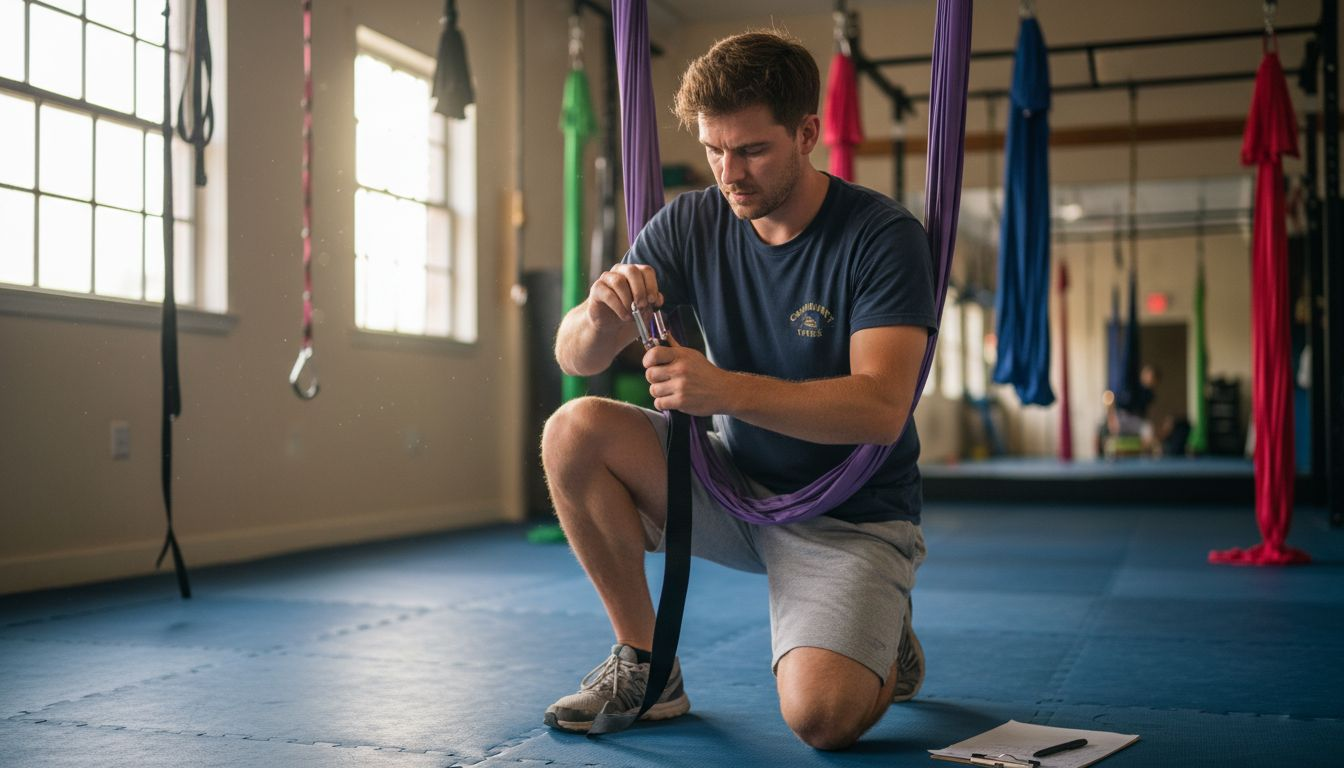
Find Deep Release and Balance with Yin Yoga at Amrita Yoga & Wellness

If you are seeking profound physical relief from tension or a mindful way to cultivate emotional calm the transformative practice of Yin Yoga offers exactly what you need. This style focuses on long holds in gentle postures targeting connective tissues to improve flexibility and joint mobility while inviting mental stillness and emotional balance. Many struggle to find this mindful moment in busy lives but at Amrita Yoga & Wellness you can explore Yin Yoga in a supportive, inclusive setting designed to encourage gradual progression and safe practice.
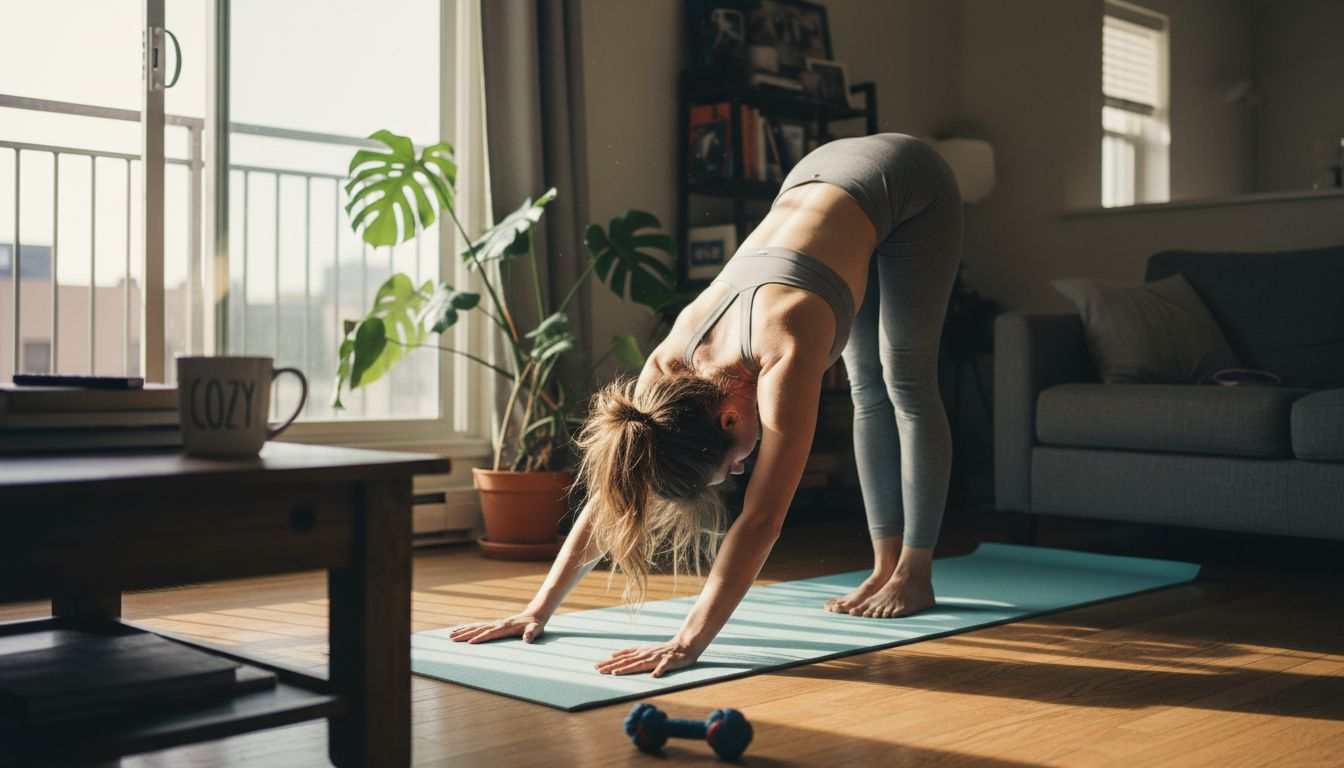
Experience the unique benefits described in “Why Practice Yin Yoga: Deep Release and Balance” by joining one of our expert-led Yin Yoga classes or workshops. Start your journey toward reduced stiffness, enhanced recovery, and profound mental clarity. Visit Amrita Yoga & Wellness to browse our full schedule and sign up today. Take that first mindful step and bring harmony to your body and mind now with our accessible yoga offerings and personalized guidance.

Frequently Asked Questions

What is Yin Yoga?

Yin Yoga is a slow, meditative style of yoga that involves holding gentle postures for an extended period, typically three to five minutes. It focuses on stretching and targeting deep connective tissues like ligaments, joints, and fascia.

How does Yin Yoga differ from other types of yoga?

Unlike dynamic styles like Vinyasa or Power Yoga that emphasize muscular engagement and flow, Yin Yoga prioritizes stillness and gentle stress on connective tissues to improve flexibility and joint mobility, offering a more introspective and meditative experience.

What are the benefits of practicing Yin Yoga?

Yin Yoga delivers several benefits, including improved joint flexibility, enhanced circulation, and the release of deeply stored tension. It also supports emotional regulation and mindfulness, helping to reduce stress and promote a sense of internal calm.

How can I incorporate Yin Yoga into my fitness routine?

To integrate Yin Yoga, schedule one to two sessions per week, ideally on recovery days. Start with sessions lasting 30 to 90 minutes, using props for support, and view it as a complementary practice to other forms of exercise for optimal balance and recovery.

Recommended

Why Use Silks in Yoga: Benefits and Impact

Heather Rice

More American yoga studios are adding silk hammocks to their classes than ever before, offering a striking shift from traditional mat routines. This surge reflects a growing demand for practices that challenge balance and flexibility in creative new ways. With silk-based yoga, practitioners discover unique support for difficult poses and experience benefits that traditional styles rarely deliver. Whether you are curious about spinal decompression or simply want a playful addition to your fitness routine, exploring silk yoga opens up opportunities to move and feel better.

Table of Contents

Key Takeaways

Point Details
Introduction of Aerial Yoga Aerial yoga utilizes suspended silk hammocks, enhancing traditional yoga with unique movements and body awareness.
Varieties of Aerial Yoga Different styles like Fly Yoga, AeroYoga, and AIRreal Yoga cater to diverse fitness levels and therapeutic needs.
Physical and Mental Benefits Silky yoga promotes improved flexibility, core strength, and mental resilience, leading to a more playful approach to movement.
Safety Precautions Practicing with certified instructors and adhering to safety guidelines is essential for a safe aerial yoga experience.

What Are Silks in Yoga Practice?

Silks in yoga represent a transformative approach to traditional practice, introducing suspended fabric apparatuses that radically reimagine movement and body awareness. Aerial yoga combines traditional asana with aerial arts, utilizing soft silk fabrics suspended from overhead supports to create a dynamic and supportive environment for practitioners.

These specialized silk hammocks are meticulously designed to support practitioners' body weight while enabling unique movements impossible on a standard yoga mat. Unlike traditional ground-based practices, aerial yoga silks allow practitioners to explore positions that decompress the spine, challenge balance, and provide unprecedented support during challenging poses. The hammock acts like a swing supporting the hips during forward bends and backbends, making complex yoga postures more accessible and engaging.

The key components of yoga silks include:

  • Durable fabric construction

  • Adjustable suspension points

  • Weight-bearing capacity designed for human support

  • Soft, flexible material allowing full range of motion

By integrating silk apparatuses, yoga practitioners can experience enhanced flexibility, reduced joint pressure, and a playful approach to traditional yoga practices. The silk allows practitioners to explore inverted positions, deep stretches, and therapeutic movements with increased confidence and reduced physical strain.

Types of Aerial Yoga and Their Differences

Aerial yoga encompasses several distinct styles, each with unique approaches and philosophical foundations. Developed initially by Michelle Dortignac in 2006, the practice has since evolved into multiple specialized variations that cater to different fitness levels and therapeutic needs.

Key variations of aerial yoga include:

  • Fly Yoga: Developed in France by Florie Ravinet, this style emphasizes collaboration with physical therapists and focuses on health-professional-approved techniques

  • AeroYoga: Created by Rafael Martinez, offering a dynamic approach to suspended yoga practices

  • AIReal Yoga: Founded by Carmen Curtis, providing a structured methodology for aerial movement

Aerial yoga practices enhance traditional yoga by using hammocks for support, alignment, and deeper stretching. These variations share common goals of improving flexibility, promoting deep relaxation, and preventing potential injuries. Practitioners can modify classic poses like downward dog, warrior positions, and seated stretches using the supportive hammock apparatus.

Each aerial yoga style brings unique therapeutic benefits, allowing practitioners to experience gentle inversions, spinal decompression, and innovative movement patterns that traditional mat-based yoga cannot provide. The diversity of approaches ensures that individuals can find an aerial yoga style matching their fitness level, physical condition, and personal wellness objectives.

Physical and Mental Benefits of Silk Yoga

Silk yoga offers a transformative approach to physical and mental wellness, providing practitioners with unique therapeutic advantages. A 2019 study revealed that aerial athletes demonstrate exceptional flexibility, stability, and strength, highlighting the profound physiological impact of this innovative practice.
Key physical benefits include:

  • Joint Decompression: Inverting in silk hammocks helps relieve gravitational pressure on joints

  • Core Strength Development: Requires intense muscle engagement for balance and control

  • Spine Alignment: Supports natural spinal positioning and reduces compression

  • Cardiovascular Health: Research indicates potential reduction in heart disease risk factors

Aerial yoga creates healing opportunities through supported inversions, awakening practitioners' inner sense of playfulness and exploration. The silk hammock allows practitioners to experience poses from entirely new perspectives, challenging both physical capabilities and mental resilience. By suspending the body and eliminating traditional ground-based limitations, silk yoga encourages practitioners to push beyond perceived physical and psychological boundaries.

Beyond physical transformation, silk yoga delivers profound mental wellness benefits. The practice demands complete present-moment awareness, creating a meditative state where concentration and balance intersect. Practitioners often report reduced stress, increased emotional flexibility, and a renewed sense of childlike wonder as they literally and metaphorically rise above their typical movement patterns.

Essential Safety Guidelines and Precautions

Silk yoga requires careful attention to safety protocols to ensure a positive and injury-free experience. Practitioners must prioritize working with certified instructors in properly equipped practice spaces, understanding that professional guidance is crucial for safe aerial exploration.

Key safety considerations include:

  • Physical Assessment: Consult healthcare professionals before beginning practice, especially for individuals with:

    • Prior back or neck injuries

    • Recent surgical procedures

    • Cardiovascular conditions

    • Pregnancy

    • Balance or vertigo disorders

  • Equipment Inspection: Verify silk hammock integrity before each session

  • Weight Limitations: Confirm maximum weight capacity of aerial equipment

  • Proper Clothing: Wear form-fitting, non-slippery attire without zippers or loose elements

Beginners should start with foundational classes that emphasize proper technique and gradual skill development. Instructors recommend starting close to the ground, using spotters when attempting challenging poses, and listening carefully to body signals. Maintaining consistent communication with your instructor about physical limitations or discomfort is essential for preventing potential injuries.

Mental preparation is equally important in silk yoga safety. Practitioners should approach the practice with patience, understanding that mastery requires time and consistent practice. Developing a mindset of curiosity rather than competition helps prevent reckless movements and promotes a holistic, mindful approach to aerial exploration.
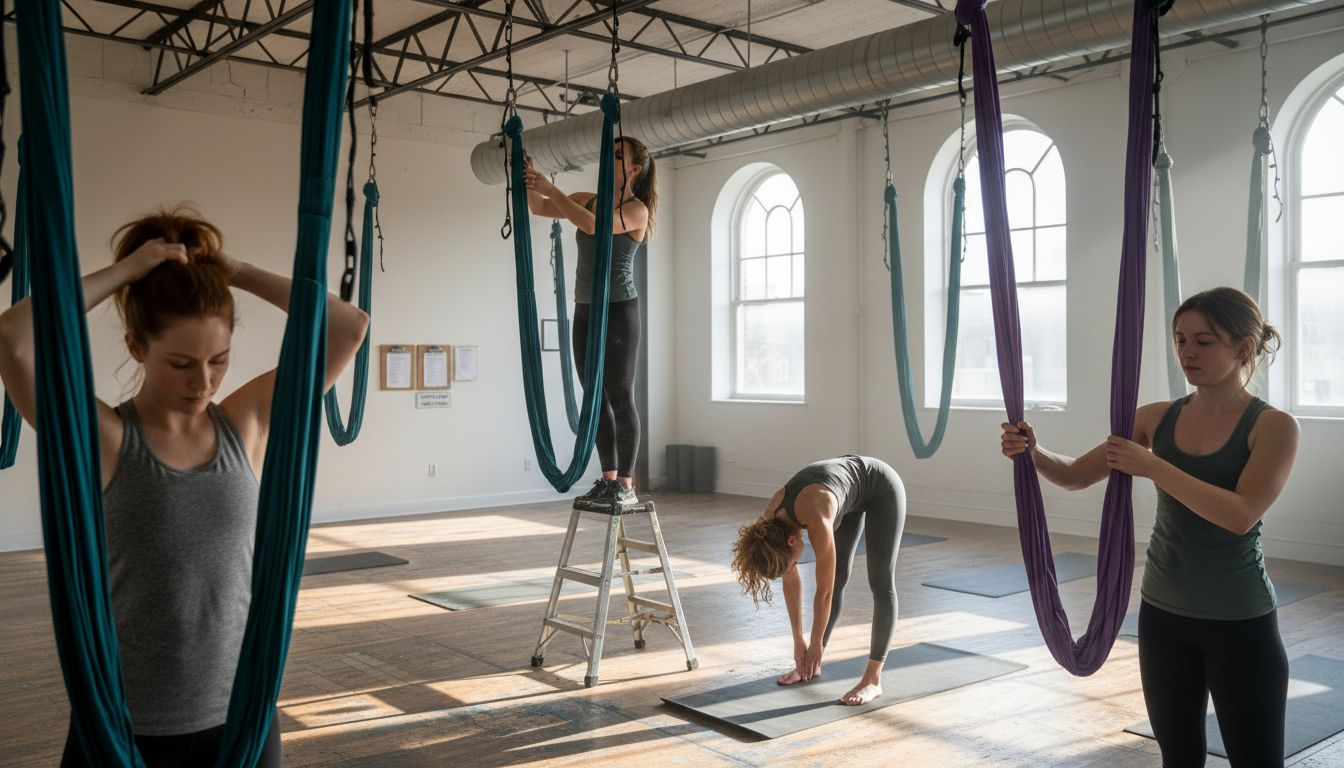
Comparing Silk Yoga to Traditional Yoga

Silk yoga represents a revolutionary approach to traditional yoga practices, introducing dynamic movement and support that fundamentally transforms physical engagement. The silk apparatus allows practitioners to modify classic poses by providing unique support and alignment opportunities, creating an entirely new dimension of bodily exploration.

Key differences between silk and traditional yoga include:

  • Movement Mechanics:

    • Traditional Yoga: Ground-based, gravity-dependent movements

    • Silk Yoga: Suspended, gravity-defying positions

  • Physical Support:

    • Traditional Yoga: Self-supported body weight

    • Silk Yoga: Hammock-assisted postures

  • Intensity Levels:

    • Traditional Yoga: Consistent ground contact

    • Silk Yoga: Variable resistance and challenge

Aerial yoga enhances traditional practices by offering deeper stretching, improved flexibility, and therapeutic benefits, allowing practitioners to experience poses from completely new perspectives. Familiar movements like downward dog, warrior poses, and seated stretches transform when performed with silk support, providing gentler joint interactions and increased range of motion.

While traditional yoga emphasizes grounded, earth-connected movements, silk yoga introduces an element of playful exploration. The suspended practice challenges practitioners' balance, core strength, and mental adaptability, creating a more dynamic and engaging workout that maintains the philosophical and meditative essence of traditional yoga practices.

Experience the Transformative Power of Silk Yoga at Amrita Yoga & Wellness

Discover how silk yoga can revolutionize your practice by enhancing flexibility, supporting spinal alignment, and unlocking new levels of strength and balance. If you are seeking a way to deepen your yoga journey while enjoying the mental wellness benefits of mindful aerial movement, our studio offers expert guidance in a safe, welcoming environment. Embrace the challenge of suspending your body and mind into a fresh practice that relieves joint pressure and fosters emotional flexibility.

Take the next step toward holistic well-being by exploring silk yoga and other dynamic classes at Amrita Yoga & Wellness. Whether you are a beginner or aiming to advance your practice, our diverse workshops and supportive community will help you harness these profound benefits. Visit our class schedule today to reserve your spot and transform the way you move and feel.

Frequently Asked Questions

What are the benefits of using silks in yoga?

Using silks in yoga offers benefits such as enhanced flexibility, reduced joint pressure, and the ability to explore inverted positions and deep stretches. The supportive nature of the silk hammocks allows for unique movements that decompress the spine and challenge balance.
How is silk yoga different from traditional yoga?

Silk yoga differs from traditional yoga in that it incorporates suspended, gravity-defying positions supported by silk hammocks. This allows for greater assistance in poses, deeper stretching, and a playful exploration of movement that traditional ground-based yoga may not provide.
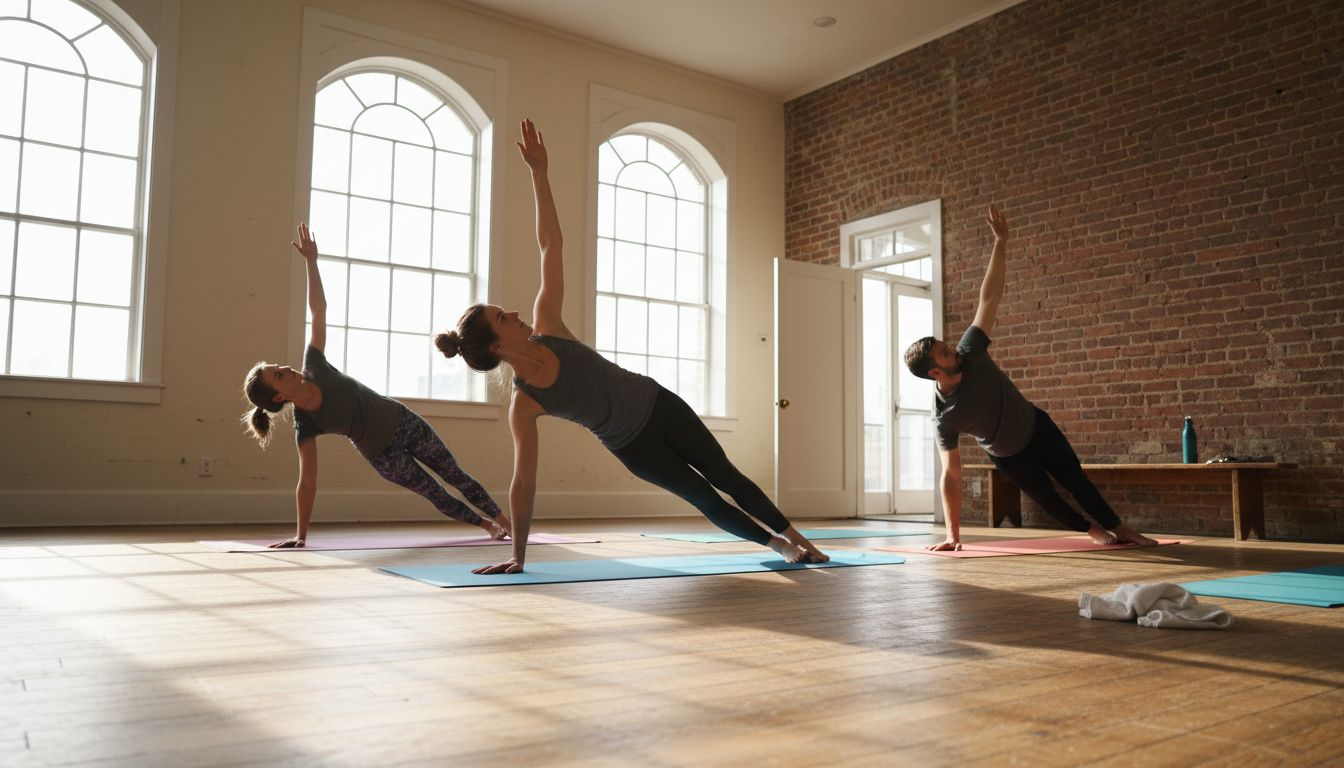
Are there any safety precautions to consider when practicing silk yoga?

Yes, safety precautions include consulting with healthcare professionals if there are pre-existing conditions, checking the integrity of the silk hammock before use, adhering to weight limits, and wearing appropriate clothing. It's also important to communicate any discomfort with the instructor and to start with foundational classes.

What types of aerial yoga styles utilize silks?

Several types of aerial yoga styles utilize silks, including Fly Yoga, AeroYoga, and AIReal Yoga. Each style offers unique approaches and therapeutic benefits, allowing individuals to find a practice that suits their fitness level and wellness goals.

Recommended