The Amrita Journal
Explore thoughtful stories, practical wellness guidance and inspiring ideas to support your movement, mindfulness and everyday wellbeing at Amrita.
7 Essential Yoga Asanas for Beginners to Start Today
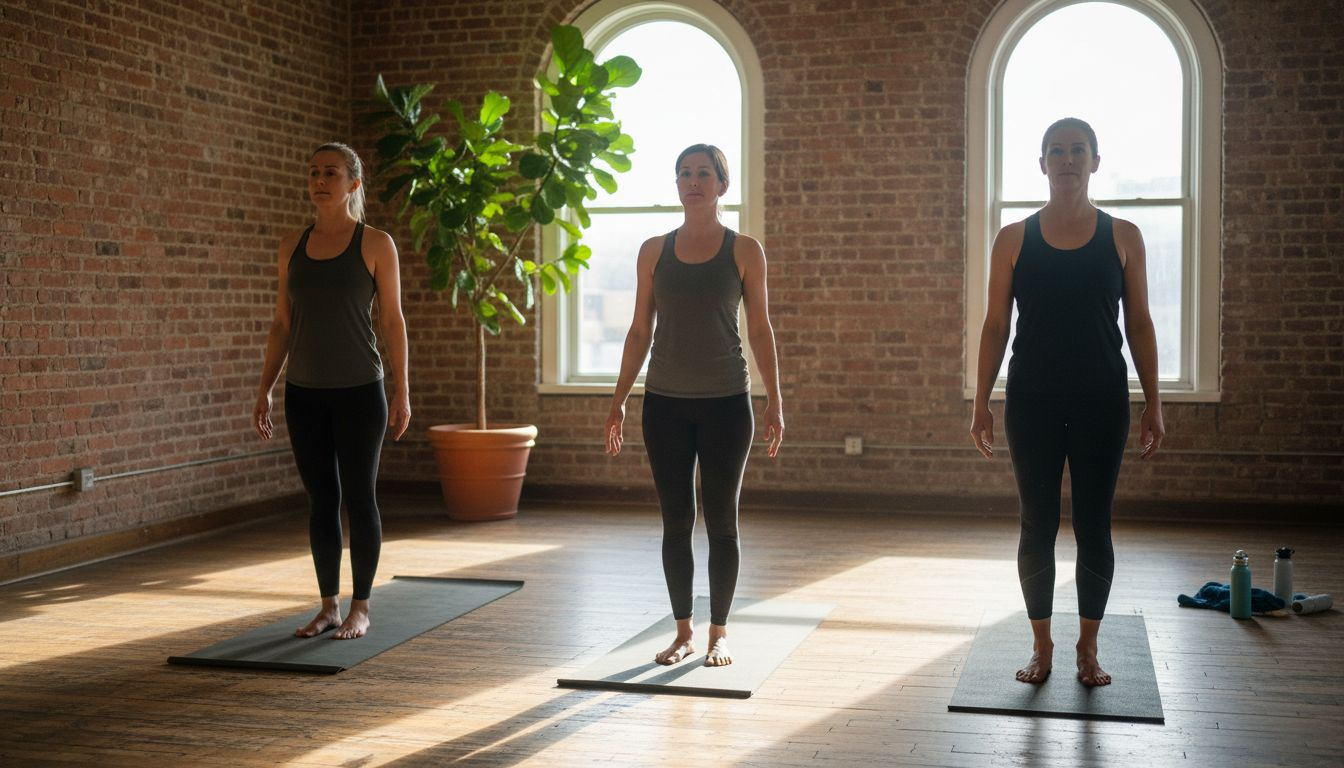
Finding time for self-care can feel impossible in a busy American city like Philadelphia, but a supportive yoga community offers a practical solution. Studies show that over 36 million Americans now practice yoga to help manage stress, build strength, and improve focus. If you want to develop a healthier body and calmer mind, starting with foundational asanas in a welcoming group can make your wellness journey both accessible and rewarding.
Table of Contents
Quick Summary
| Takeaway | Explanation |
|---|---|
| 1. Master Mountain Pose for stability | Practicing Mountain Pose improves balance and core stability, forming the basis for all standing yoga. |
| 2. Use Downward Dog for full-body strength | Downward Dog enhances upper body strength, flexibility, and spinal decompression, beneficial for physical function. |
| 3. Incorporate Cobra Pose for spinal health | Regularly performing Cobra Pose helps alleviate tension in the back and improves posture by strengthening spinal muscles. |
| 4. Practice Child’s Pose for relaxation | Child’s Pose offers a restorative break, reducing stress while gently stretching the back and hips during practice. |
| 5. Enhance focus with Tree Pose | Tree Pose develops balance, stability, and mindfulness, encouraging a deeper connection between body and mind. |
1. Mountain Pose for Balance and Stability
Mountain Pose (Tadasana) is the fundamental standing posture that teaches precise body alignment and serves as the foundation for all standing yoga practices. This seemingly simple pose is actually a powerful technique for developing full body awareness and core stability.
Standing tall with feet together, Mountain Pose might look easy, but it requires significant muscular engagement and mental focus. When practiced correctly, this pose helps improve balance and stability through strategic muscle training. By activating leg muscles, engaging core stabilizers, and aligning your spine, you create a strong foundation that translates into better overall movement patterns.
To perform Mountain Pose, stand with feet hip width apart, distribute your weight evenly, and imagine a straight line running from the crown of your head through your spine to your feet. Keep your shoulders relaxed, arms at your sides, and breathe deeply. Focus on grounding through your feet while simultaneously lifting your chest and lengthening your spine.
Regular practice of Mountain Pose can significantly enhance postural awareness, reduce injury risk, and improve overall body coordination. Research indicates that balance exercises like this are crucial for preventing falls and maintaining muscular strength, particularly as we age.
Pro tip: Practice Mountain Pose near a wall initially to help maintain balance and check your alignment using the wall as a gentle reference point.
2. Downward Dog to Stretch and Strengthen
Downward Dog is a fundamental yoga pose that transforms your body through powerful stretching and strength building. This classic posture works simultaneously as an active rest position and an intense full body workout.
Also known as Adho Mukha Svanasana, Downward Dog uniquely engages multiple muscle groups simultaneously, creating an extraordinary stretch and strengthening experience. By positioning your body in an inverted V shape, you activate your shoulders, arms, core, and legs while decompressing your spine.
To perform the pose, start on your hands and knees, spread your fingers wide, then lift your hips toward the ceiling. Press your hands firmly into the ground, straighten your arms and legs, and create an inverted V shape with your body. Focus on distributing weight evenly and maintaining a long, straight spine.
Regular practice of Downward Dog offers significant benefits. It helps improve upper body strength, increases hamstring and shoulder flexibility, and provides gentle spinal decompression. Research indicates that consistent yoga practice with poses like Downward Dog can help manage chronic pain and enhance overall physical function.
Pro tip: If you have tight hamstrings, bend your knees slightly to maintain proper spine alignment and prevent lower back strain.
3. Cobra Pose for Spine Flexibility
Cobra Pose, known as Bhujangasana in Sanskrit, represents a powerful yoga posture designed to open and strengthen your spine through gentle backbending. This foundational pose offers remarkable benefits for improving overall spinal health and mobility.
As a gentle backbend, Cobra Pose works by engaging the posterior chain of muscles along your back, creating significant improvements in spinal flexibility and muscle strength. By lifting your chest while keeping your lower body grounded, you activate deep back muscles and create space between vertebrae, which can help alleviate tension and reduce stiffness.
To perform Cobra Pose, lie face down with palms placed beside your shoulders. Press your hands into the ground, engage your core, and slowly lift your chest while keeping your pelvis and legs connected to the floor. Focus on creating a smooth, controlled arch in your spine without straining or overextending.
Regular practice of Cobra Pose can help counteract the negative effects of prolonged sitting, improve posture, and increase overall back strength. By gently stretching and strengthening spinal muscles, you can develop greater flexibility and reduce the risk of back pain.
Pro tip: Start with a low lift in Cobra Pose and gradually increase your range of motion as your back muscles become stronger and more flexible.
4. Child's Pose for Relaxation and Recovery
Child's Pose, known as Balasana in Sanskrit, offers a powerful sanctuary of calm and restoration during your yoga practice. This gentle resting posture serves as a physical and mental reset button, allowing your body to release tension and your mind to find stillness.
Considered a restorative pose, Child's Pose provides remarkable benefits by supporting nervous system recovery. When you fold forward with your forehead resting on the mat, you create a protective cocoon that signals your body to transition from stress response to relaxation mode.
To practice Child's Pose, kneel on your mat with big toes touching and knees spread wide. Sit back on your heels and extend your arms forward or alongside your body. Allow your forehead to rest on the ground, creating a sense of surrender and letting go of external pressures.
This pose is particularly powerful for managing stress, reducing anxiety, and providing a gentle stretch to your back, hips, and shoulders. It serves as a safe space during yoga practice where you can pause, breathe deeply, and reconnect with your inner calm whenever feeling overwhelmed.
Pro tip: Use a folded blanket or yoga block under your forehead if you have difficulty reaching the ground comfortably, ensuring you can fully relax into the pose.
5. Warrior I to Build Strength and Confidence
Warrior I, known as Virabhadrasana I in Sanskrit, stands as a powerful yoga pose that transforms both physical strength and mental resilience. This dynamic posture embodies the warrior spirit of inner strength, balance, and focused determination.
As a fundamental standing pose, Warrior I supports functional fitness and muscle development. By creating a strong lunge position with your body, you engage multiple muscle groups simultaneously, building leg strength, core stability, and overall body awareness.
To practice Warrior I, start in a standing position and step one foot back, turning it slightly outward. Bend your front knee to create a 90-degree angle while keeping your back leg straight. Raise your arms overhead, palms facing each other, and gaze forward. Focus on creating a long, powerful line from your back heel through your fingertips.
This pose offers remarkable benefits beyond physical strength. By holding the challenging stance, you develop mental endurance, improve balance, and cultivate a sense of inner confidence. The deliberate breath and focused gaze help calm the mind while building physical stamina.
Pro tip: If balance is challenging, practice near a wall or use a chair for support, gradually building strength and stability as you become more comfortable with the pose.
6. Tree Pose for Improved Focus and Balance
Tree Pose (Vrksasana) represents a beautiful meditation in motion, challenging your body to find stillness and strength while balancing on a single leg. This elegant pose transforms physical balance into a powerful metaphor for mental concentration.
By requiring you to root down through one leg while maintaining an upright posture, Tree Pose develops critical balance and stability skills. The pose demands complete mental presence, training your nervous system to create harmony between physical alignment and inner calm.
To practice Tree Pose, begin by standing with your weight evenly distributed. Slowly shift your weight onto one leg, then gently place the sole of your opposite foot either on your inner ankle, calf, or upper thigh (avoiding the knee joint). Bring your hands together at your heart center or raise them overhead like branches reaching toward the sky.
What makes Tree Pose truly remarkable is its dual impact on physical and mental wellness. As you balance, you strengthen stabilizing muscles, improve proprioception, and cultivate a sense of inner quiet. The concentrated effort required helps quiet mental chatter and enhance overall mindfulness.
Pro tip: If you struggle with balance, practice near a wall or chair for support, and remember that wobbling is part of the learning process.
7. Seated Forward Bend to Increase Flexibility
Seated Forward Bend (Paschimottanasana) is a transformative yoga posture that gently opens your entire posterior chain, creating space and releasing tension throughout your back, hamstrings, and spine. This powerful stretch offers a moment of introspection and physical release.
The pose works by systematically elongating muscle groups through controlled, mindful movement. As you fold forward, you create a deep stretch that improves overall flexibility, reduces muscle stiffness, and promotes better body awareness.
To practice Seated Forward Bend, sit on the floor with legs extended straight in front of you. Inhale and lengthen your spine, then exhale and hinge forward from your hips. Reach toward your feet, holding onto your shins, ankles, or toes depending on your flexibility. Remember that the goal is not to touch your toes, but to create a comfortable stretch.
Regular practice of this pose can significantly improve hamstring flexibility, reduce lower back tension, and calm the nervous system. The combination of physical stretch and deep breathing helps release both muscular and mental stress, creating a sense of overall relaxation and well-being.
Pro tip: If you have tight hamstrings, sit on a folded blanket to elevate your hips and make the forward bend more accessible.
Below is a comprehensive table summarizing the primary yoga poses discussed in the article and their benefits, approaches, and notable tips for effective practice.
| Yoga Pose | Description | Key Benefits | Pro Tip |
|---|---|---|---|
| Mountain Pose | A fundamental standing pose focused on body alignment and stability. | Improves balance, promotes postural awareness, and enhances core engagement. | Practice near a wall to aid initial balance and alignment. |
| Downward Dog | An inverted V-shaped posture that strengthens and stretches various muscle groups. | Builds upper body strength, stretches hamstrings and shoulders, and decompresses the spine. | Bend knees slightly if hamstrings are tight to ensure spine alignment. |
| Cobra Pose | A gentle backbend designed to enhance spinal flexibility and strength. | Supports posture, alleviates stiffness, and increases spinal mobility. | Begin with a low lift to build strength and avoid overstretching. |
| Child’s Pose | A restorative pose focusing on relaxation and recovery. | Reduces stress, stretches back and shoulders, and calms the nervous system. | Use a yoga block or blanket under the forehead for added comfort when stretching. |
| Warrior I | A strong standing pose that builds physical and mental resilience. | Enhances leg strength, balance, and self-confidence. | Utilize a wall or chair as support when starting out to maintain stability. |
| Tree Pose | A balancing pose enhancing focus and stability. | Strengthens stabilizing muscles and promotes mindfulness. | Practice near support surfaces like walls or chairs until balance improves. |
| Seated Forward Bend | A stretch targeting the posterior chain for flexibility and tension release. | Improves flexibility of hamstrings and spine, and fosters a calming effect on the nervous system. | Elevate the hips with a folded blanket when hamstrings are tight for improved posture. |
Begin Your Yoga Journey with Confidence and Support
Starting yoga can feel overwhelming when facing challenges like balance, flexibility and mental focus as the article highlights with poses such as Mountain Pose for stability and Tree Pose for focus. These common beginner goals show the need for guided practice to build strength, reduce risk of injury and improve body awareness in a nurturing environment.
At Amrita Yoga & Wellness, we understand these very pain points. Our inclusive classes and workshops are designed specifically to help beginners master fundamental asanas like Downward Dog and Warrior I while cultivating mental calmness and confidence. Whether you want to enhance flexibility through restorative poses like Child's Pose or improve balance and core strength with standing postures, you will find expert instruction tailored to your unique needs.
Take the next step toward lasting holistic wellness by exploring our schedule and offerings at Amrita Yoga & Wellness.
Experience firsthand how guided yoga classes can transform your routine from intimidating to empowering. Start building your practice today with supportive community and personalized attention at Amrita Yoga & Wellness. Visit our landing page to reserve your spot and step into a healthier, balanced life now.
Frequently Asked Questions
What are the benefits of practicing Mountain Pose as a beginner?
Mountain Pose helps develop full body awareness and core stability, which are essential for all other yoga postures. Start by practicing for 5–10 minutes each day to improve posture and balance.
How can I ensure proper alignment in Downward Dog?
To ensure proper alignment in Downward Dog, focus on spreading your fingers wide and pressing your hands firmly into the ground while lifting your hips. Practice this pose for a few minutes daily to enhance upper body strength and flexibility.
How often should I practice Cobra Pose to see improvements in flexibility?
You should practice Cobra Pose several times a week to experience improvements in spinal flexibility and muscle strength. Aim for 3–5 times a week, holding the pose for 30 seconds each time.
Can Child's Pose help with stress relief?
Yes, Child's Pose is an excellent restorative posture that promotes relaxation and helps reduce stress and anxiety. Incorporate it into your practice whenever you feel overwhelmed, holding the position for 1–5 minutes to calm your mind.
What should I focus on when practicing Tree Pose?
When practicing Tree Pose, focus on grounding through your standing foot and maintaining an upright posture. Spend 3–5 minutes each session working on balance and concentration, gradually increasing your hold time as you improve.
How can Seated Forward Bend help me with flexibility?
Seated Forward Bend effectively stretches your back and hamstrings, which can significantly increase your overall flexibility. Practice this pose 2–3 times a week, aiming to hold the stretch for at least 30 seconds each time.
Recommended
Types of Yoga Styles: Choosing Your Best Fit
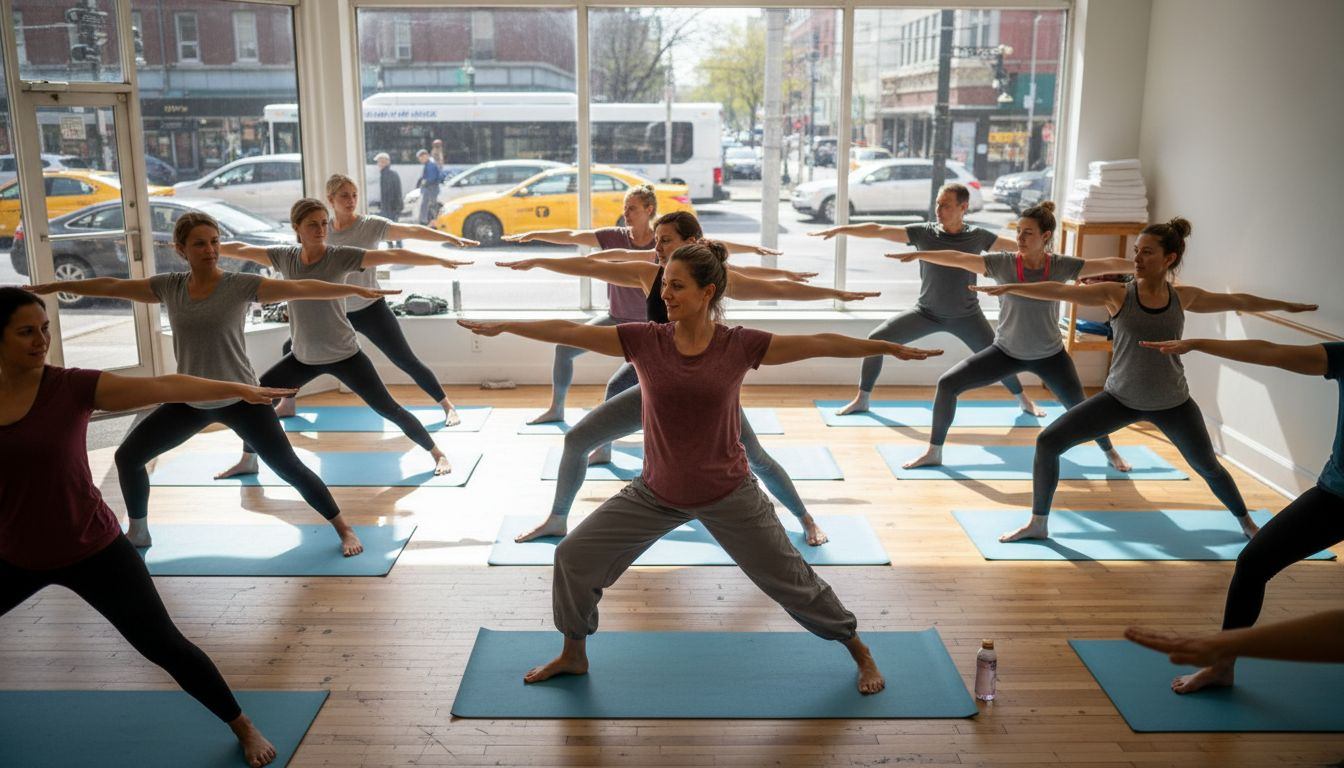
More than 36 million American adults now practice yoga, yet myths about its true purpose continue to shape how people approach this ancient discipline. In Philadelphia’s vibrant yoga community, both beginners and seasoned enthusiasts are discovering that authentic yoga means far more than stretching on a mat. This guide explores the rich history, evolving styles, and common misconceptions so you can confidently choose a path that supports personal growth and genuine community connection.
Table of Contents
Key Takeaways
| Point | Details |
|---|---|
| Understanding Yoga’s Depth | Yoga is an ancient practice integrating mental, physical, and spiritual growth, extending beyond mere exercise. |
| Exploring Various Styles | Different yoga styles, such as Hatha, Vinyasa, and Kundalini, cater to specific wellness goals and personal growth. |
| Choosing the Right Practice | Assessing your physical and mental needs is crucial in selecting a yoga style that aligns with your wellness journey. |
| Avoiding Common Mistakes | Don’t choose a yoga style based solely on trends; focus on what supports your holistic development and personal exploration. |
Yoga Styles Defined And Common Myths
Yoga represents far more than a fitness trend or series of physical postures. At its core, yoga is an ancient practice with deep philosophical roots originating in India, focused on achieving harmony between mind, body, and spirit. Traditional yoga practices explore complex spiritual disciplines beyond mere physical exercise, challenging many contemporary misconceptions about this transformative practice.
Common myths about yoga often reduce it to a simple workout routine or trendy wellness activity. In reality, traditional yoga encompasses a comprehensive system of mental, physical, and spiritual development. Western interpretations frequently emphasize physical fitness and flexibility, which represents only a fraction of yoga's authentic purpose. Authentic yoga aims to control mental fluctuations, promote self-awareness, and ultimately pursue spiritual liberation through disciplined practice.
Understanding yoga's multidimensional nature requires recognizing its philosophical foundations. Different yoga styles emerged to address various spiritual and personal development goals. Hatha Yoga focuses on physical postures and breathing techniques, Kundalini Yoga emphasizes spiritual energy awakening, while Jnana Yoga prioritizes intellectual and philosophical understanding. Each style offers unique approaches to personal transformation, demonstrating yoga's remarkable depth and adaptability.
Pro tip: Before selecting a yoga style, research its specific philosophy and practice to ensure alignment with your personal wellness goals and spiritual interests.
Traditional Yoga Styles And Their Features
Traditional yoga styles represent profound spiritual systems that extend far beyond physical exercise, embodying complex philosophical practices rooted in Indian spiritual traditions. Yoga's classical systems incorporate intricate frameworks addressing mental, physical, and spiritual development through carefully structured practices that aim to achieve holistic personal transformation.
The core traditional yoga styles each offer unique approaches to spiritual growth and self-understanding. Hatha Yoga concentrates on physical postures and breath control, creating balance between body and mind. Vinyasa Yoga emphasizes fluid movement synchronized with breathing, promoting cardiovascular fitness and mental clarity. Yin Yoga utilizes slow, meditative poses targeting deep connective tissues, encouraging profound physical and emotional release. Raja Yoga, often called the "royal path," focuses on mental discipline through meditation and contemplative practices, seeking to calm mental fluctuations and attain higher consciousness.
Each traditional yoga style integrates specific techniques designed to support personal evolution. Breath control and meditation techniques play crucial roles across different styles, with pranayama (breathing exercises) and dhyana (meditation) serving as fundamental practices. These techniques help practitioners develop self-awareness, emotional regulation, and spiritual insight. Some styles like Kundalini Yoga emphasize energy awakening, while Karma Yoga prioritizes selfless service as a path to spiritual growth.
Pro tip: Explore multiple yoga styles through introductory classes to discover which philosophical approach and physical practice most resonates with your personal wellness journey and spiritual goals.
Contemporary Yoga Styles Growing In Popularity
Contemporary yoga styles represent dynamic adaptations that blend traditional spiritual practices with modern fitness approaches, reflecting the evolving landscape of wellness and personal development. These innovative styles have emerged to meet diverse individual needs, transforming yoga from a traditional spiritual practice into a versatile approach to physical and mental well-being.
Modern yoga styles showcase remarkable diversity and creativity. Power Yoga offers an intense, strength-building workout that appeals to fitness enthusiasts, while Aerial Yoga introduces playful suspension techniques using hammocks to challenge balance and flexibility. Bikram Yoga, practiced in heated rooms, provides cardiovascular challenges and deep muscle conditioning. Fusion Yoga styles like Hip Hop Yoga and Acro Yoga combine traditional techniques with contemporary elements, attracting younger practitioners seeking dynamic and engaging experiences.
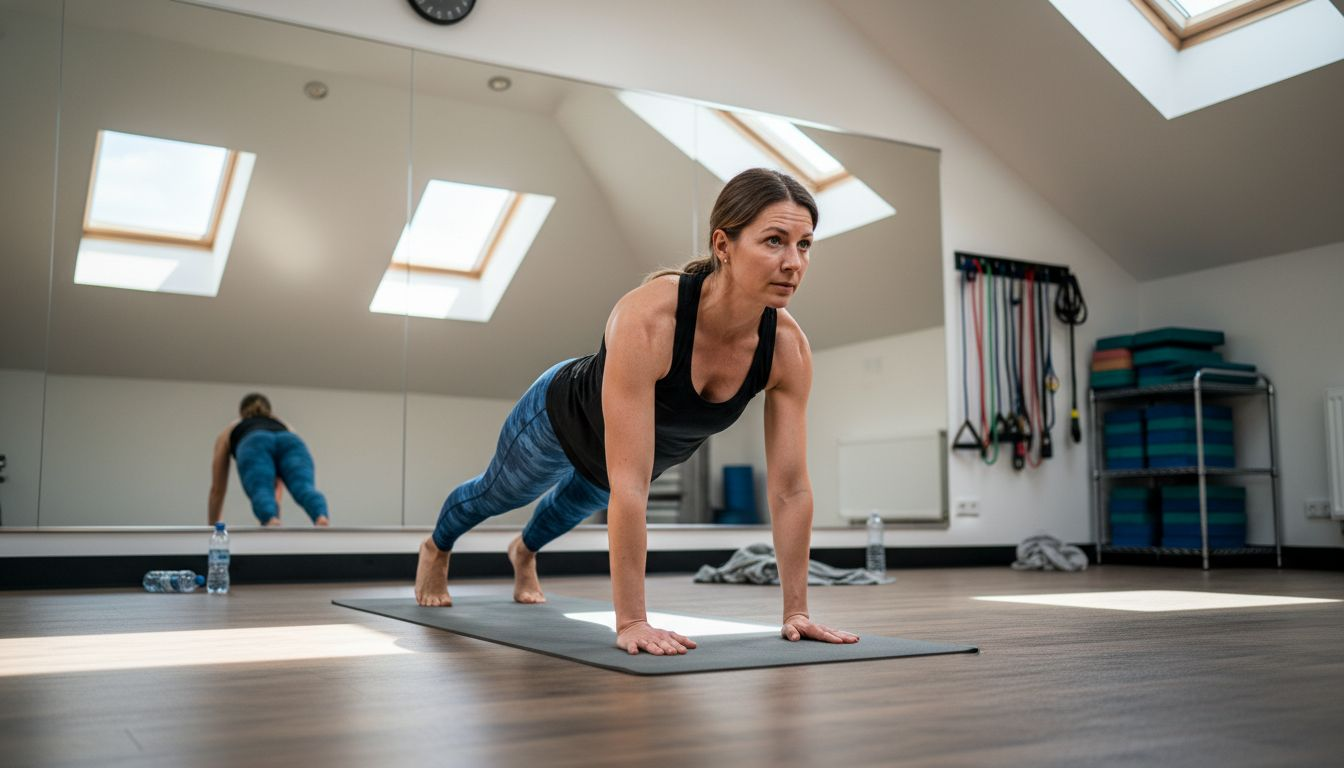
The popularity of these contemporary styles stems from their adaptability and accessibility. Yoga as exercise continues transforming global wellness practices, with online platforms and digital technologies expanding opportunities for practitioners worldwide. Many contemporary styles incorporate props, modify traditional sequences, and customize practices for specific populations like athletes, seniors, and individuals with physical limitations. This evolution demonstrates yoga's remarkable capacity to remain relevant while honoring its philosophical roots.
Pro tip: Experiment with multiple contemporary yoga styles to discover which approach best matches your fitness level, personal interests, and wellness goals.
Here's a concise comparison of traditional and contemporary yoga styles:
| Aspect | Traditional Yoga Styles | Contemporary Yoga Styles |
|---|---|---|
| Main Focus | Spiritual growth, mind-body harmony | Fitness, innovation, accessibility |
| Typical Techniques | Meditation, breathwork, postures | Props, fusion methods, technology |
| Philosophical Depth | Deeply rooted, ancient texts | Mixed depth, varied philosophies |
| Popularity Factors | Authenticity, personal evolution | Trendiness, adaptability, variety |
Physical And Mental Benefits Of Each Style
Yoga's comprehensive health benefitsextend far beyond simple physical exercise, offering profound impacts on both mental and physiological well-being. Different yoga styles provide targeted approaches to wellness, addressing individual needs through specialized techniques that promote holistic healing and personal transformation.
Each yoga style delivers unique physical advantages. Hatha Yoga enhances overall body strength and flexibility, promoting improved posture and muscular balance. Vinyasa Yoga offers cardiovascular conditioning, increasing endurance and coordination through continuous flowing movements. Yin Yoga targets deep connective tissues, improving joint mobility and releasing long-held muscular tension. Power Yoga builds significant muscle strength and supports weight management through intense, dynamic sequences.
Mental health benefits are equally remarkable across various yoga practices. Gentle styles like Restorative Yoga activate the parasympathetic nervous system, reducing stress and promoting deep relaxation. Breath-centered yoga practices help practitioners develop emotional regulation, mindfulness, and improved mental clarity. More meditative styles such as Kundalini Yoga focus on energy work, supporting psychological resilience and spiritual awareness. For individuals managing chronic conditions, specialized approaches like Chair Yoga provide accessible methods to improve physical function and mental well-being.
Pro tip: Consult with experienced yoga instructors to identify the most appropriate yoga style that aligns with your specific physical capabilities and mental health goals.
How To Choose The Best Yoga Style For You
Selecting the right yoga stylerequires understanding your unique physical, mental, and emotional needs. Each yoga practice offers distinct approaches to wellness, making personal assessment crucial in finding a practice that resonates with your individual goals and capabilities.
Beginners should consider their current fitness level, physical limitations, and primary wellness objectives. Gentle Yoga works best for those recovering from injury or seeking low-impact exercise. Vinyasa Yoga appeals to individuals desiring dynamic, cardiovascular-focused workouts. Restorative Yoga serves people managing high stress levels or seeking deep relaxation. Power Yoga attracts fitness enthusiasts looking for intense strength training and muscular conditioning. Your current health status, energy levels, and personal preferences will guide your ideal yoga style selection.
Taking a systematic approach helps identify the most suitable yoga practice. Comprehensive yoga style assessment involves experimenting with multiple styles, consulting experienced instructors, and listening to your body's responses. Attend introductory classes, observe different teaching approaches, and pay attention to how each style makes you feel physically and emotionally. Consider factors like class intensity, philosophical alignment, instructor teaching style, and personal comfort level when making your decision.
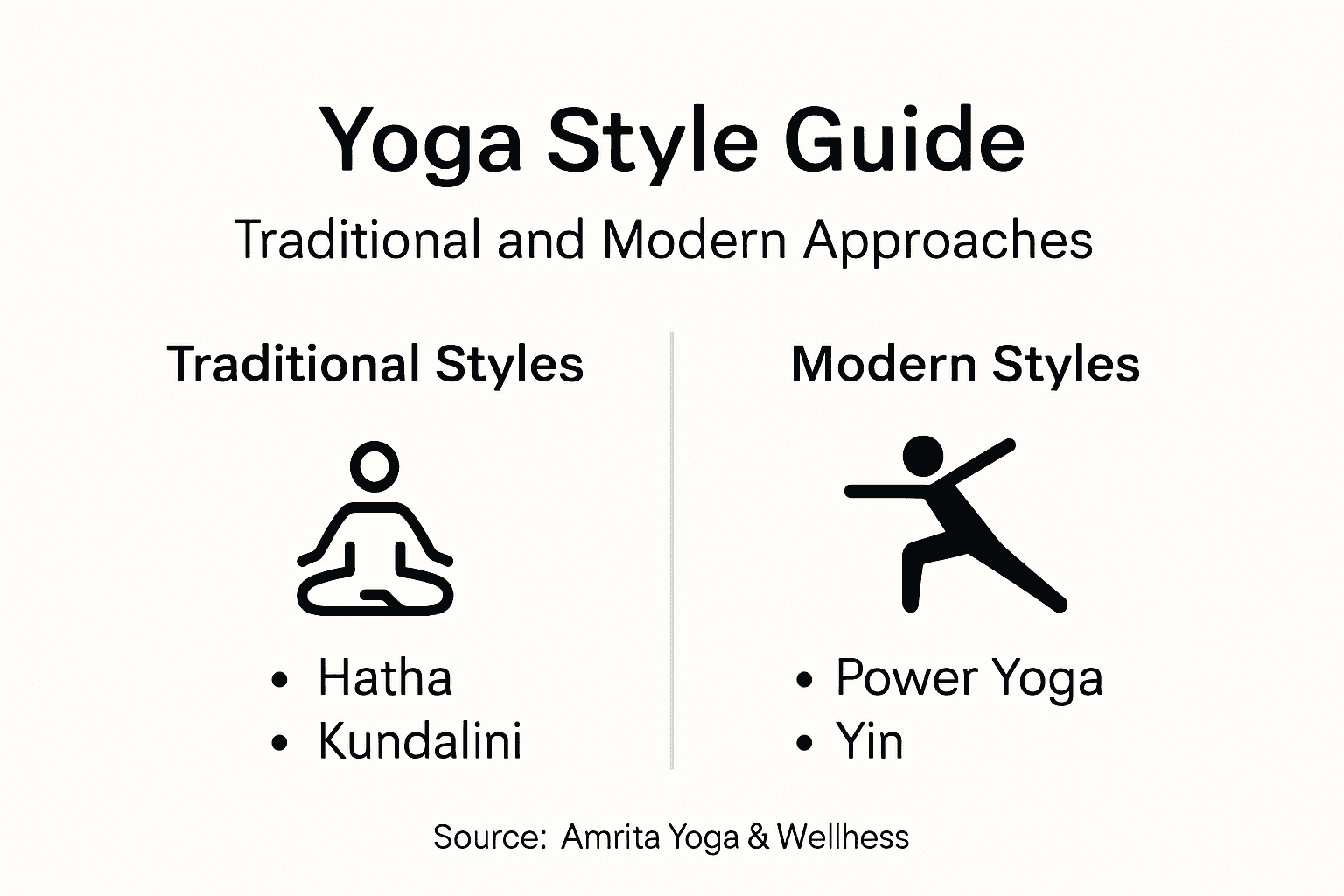
Pro tip: Start with beginner-friendly yoga classes that offer modifications and attend workshops to explore different styles before committing to a specific practice.
Use this guide to match popular yoga styles with wellness goals:
| Yoga Style | Best For | Typical Pace |
|---|---|---|
| Hatha | Beginners, flexibility | Steady and moderate |
| Vinyasa | Cardio, coordination | Fast-flowing |
| Yin | Stress relief, deep stretch | Slow and meditative |
| Power | Building strength, endurance | Intense and dynamic |
| Restorative | Relaxation, recovery | Very gentle, calming |
Common Mistakes When Selecting A Yoga Style
Yoga style selection mistakes can significantly impact your wellness journey, potentially leading to frustration, injury, or missed opportunities for holistic growth. Understanding these pitfalls helps practitioners make more informed and intentional choices about their yoga practice.
One common error involves selecting a yoga style based solely on physical intensity or trendy appearances. Beginners frequently choose advanced styles like Power Yoga or Ashtanga without considering their current fitness level, which can lead to potential injury or burnout. Another critical mistake is neglecting the mind-body connection by focusing exclusively on physical postures. True yoga encompasses more than just exercise—it integrates breathwork, meditation, and spiritual awareness that extend beyond mere physical movement.
People often make the mistake of rigidly adhering to a single style without exploring alternative approaches. Yoga practice requires personal exploration and adaptability. Some practitioners become discouraged when their first chosen style does not meet their expectations, instead of recognizing that different styles serve different purposes. Physical limitations, emotional needs, and personal wellness goals evolve, and your yoga practice should remain flexible enough to accommodate these changes.
Pro tip: Approach yoga with an open mind, prioritize professional instruction, and be willing to experiment with multiple styles to discover your most resonant practice.
Discover Your Perfect Yoga Style with Amrita Yoga & Wellness
Choosing the best yoga style can feel overwhelming when faced with so many options and personal goals. Whether you want to build strength with Power Yoga, find deep relaxation through Yin Yoga, or explore spiritual growth in a traditional practice, the key is finding the right fit that matches your body, mind, and wellness needs. This article highlights how understanding different yoga styles helps avoid common mistakes and supports a balanced, fulfilling practice.
At Amrita Yoga & Wellness, we bring a welcoming community to Philadelphia where you can explore diverse yoga styles including hot yoga, restorative sessions, and mindful breathing techniques. Benefit from expert-led classes, workshops, and retreats designed to guide you through your unique wellness journey. Start today and experience the emotional balance, physical strength, and mental clarity you seek. Visit our site, discover class schedules and sign up now to embrace a yoga practice that truly resonates with you.
Explore more on selecting your ideal yoga path with our resources at Amrita Yoga & Wellness and unlock your full potential.
Frequently Asked Questions
What are the main types of yoga styles?
The main types of yoga styles include Hatha Yoga, Vinyasa Yoga, Yin Yoga, Power Yoga, and Restorative Yoga, each offering unique approaches to physical and mental wellness.
How do I choose the right yoga style for my needs?
To choose the right yoga style, assess your fitness level, personal wellness goals, and any physical limitations. Experiment with different classes and consult experienced instructors for guidance.
What are the physical benefits of practicing yoga?
Practicing yoga can enhance strength, flexibility, balance, and joint mobility. Different styles target specific physical needs, such as cardiovascular fitness in Vinyasa Yoga or muscle conditioning in Power Yoga.
How does yoga contribute to mental health?
Yoga contributes to mental health by promoting relaxation, reducing stress, and enhancing emotional regulation and mindfulness. Styles focusing on meditation and breathwork offer particularly significant mental health benefits.
Recommended
How to Start Yoga Naturally for Stress Relief and Wellness
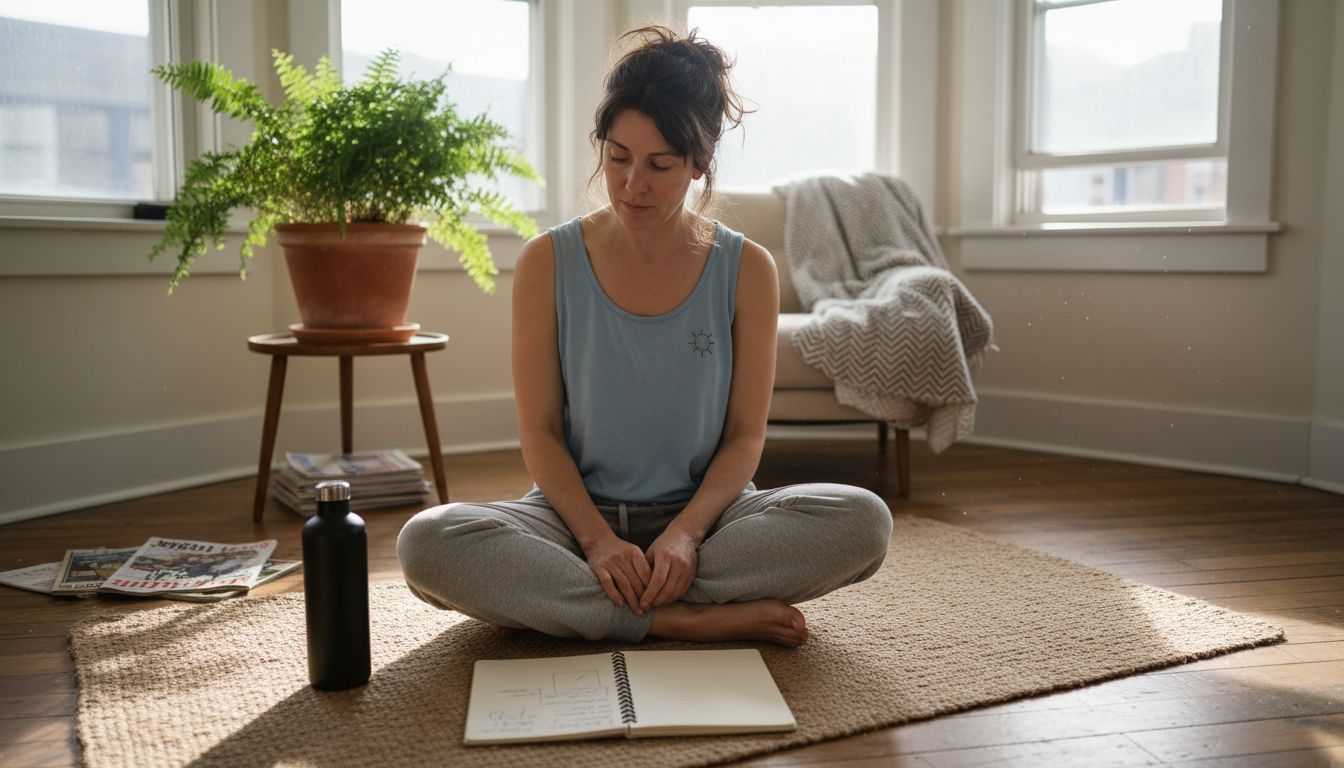
Nearly 80 percent of American adults experience ongoing stress that impacts their health and wellbeing. For busy people in Philadelphia, finding time and space to relax can feel impossible. Creating a simple yoga routine at home offers a practical way to ease tension and support your body, helping you reclaim moments of calm in a hectic week. This guide walks you through every step, from setting up your space to choosing beginner poses, so you can build a soothing practice even in the middle of city life.
Table of Contents
Quick Summary
| Key Insight | Explanation |
|---|---|
| 1. Create a dedicated yoga space | Select a quiet, clutter-free area with natural light to enhance relaxation and mindfulness during practice. |
| 2. Start with beginner-friendly styles | Hatha Yoga is recommended for new practitioners; it focuses on basic postures and proper alignment. |
| 3. Invest in essential yoga equipment | A high-quality yoga mat, blocks, and straps will support comfort, stability, and alignment during practice. |
| 4. Develop a simple initial routine | Focus on a few gentle poses, practicing 10–15 minutes daily to build consistency and body awareness. |
| 5. Track your progress regularly | Maintain a yoga journal to document your physical and emotional growth, adjusting your practice as needed. |
Step 1: Prepare your space for comfortable yoga practice
Creating a calming and inviting yoga space is crucial for developing a consistent and enjoyable practice. Your environment sets the tone for relaxation and mindfulness, transforming an ordinary area into a personal sanctuary where stress melts away. By thoughtfully arranging your space, you signal to your body and mind that this is a dedicated time for self care and wellness.
Start by selecting a quiet area in your home with minimal distractions. Ideally, choose a space with natural light and enough room to fully extend your yoga mat without bumping into furniture. Clear away clutter and unnecessary items that might disrupt your mental focus. If possible, select a spot near a window where soft natural light can create a serene atmosphere. Beginner yoga practices often emphasize the importance of creating a peaceful environment that supports your mental and physical journey.
Consider adding soft elements that enhance relaxation such as a clean yoga mat, comfortable temperature, and minimal noise. Use neutral colored linens or blankets, place a few plants for natural energy, and ensure the room temperature is slightly warm but not hot. Soft background music or nature sounds can also help create a meditative ambiance that supports your practice.
Pro tip: Keep your yoga space consistent and dedicated, treating it as a sacred area for personal growth and wellness transformation.
Step 2: Select beginner-friendly yoga styles and classes
Navigating the world of yoga styles can be overwhelming for newcomers, but choosing the right class is essential for building confidence and establishing a sustainable practice. Your goal is to find a style that matches your fitness level, physical capabilities, and personal wellness objectives.
Beginner yoga classes in Philadelphiatypically recommend Hatha Yoga as the ideal starting point for new practitioners. Hatha Yoga is specifically designed for beginners, focusing on holding positions for several breaths and allowing you to master basic postures comfortably. This style provides a solid foundation by teaching proper alignment, breathing techniques, and helping you develop body awareness without overwhelming intensity.
When exploring yoga styles, consider your personal fitness level and any physical limitations. While more dynamic styles like Vinyasa and hot yoga can be appealing, they require a stronger baseline of strength and flexibility. For absolute beginners, gentler practices such as Yin Yoga or restorative classes offer slower paced environments where you can learn fundamental poses and breathing techniques. Many local studios offer introductory workshops or beginner series that provide structured learning environments with expert guidance.
Pro tip: Always communicate with your yoga instructor about your experience level and any physical concerns before starting a new class.
Here is a comparison of beginner-friendly yoga styles to help you select the best fit for your needs:
| Yoga Style | Pace and Intensity | Key Benefits | Suitability |
|---|---|---|---|
| Hatha Yoga | Slow, gentle | Builds foundation, improves focus | Best for absolute beginners |
| Vinyasa Yoga | Moderate to fast | Boosts stamina, dynamic movement | Good for active beginners |
| Yin Yoga | Very slow, relaxing | Enhances flexibility, deep rest | Ideal for stress reduction |
| Restorative Yoga | Minimal movement | Promotes healing, calms mind | Suited to relaxation seekers |
Step 3: Gather essential supportive yoga equipment
Starting your yoga journey requires some basic equipment that supports comfort, stability, and proper alignment during your practice. Investing in a few key items will help you feel more confident and prepared as you begin exploring yoga techniques and poses.
The most critical piece of equipment is a high quality yoga mat that provides adequate cushioning and grip. Aerial yoga safety recommendations emphasize choosing a mat with good traction to prevent slipping during various poses. Look for a mat that is approximately 1/4 inch thick with a textured surface suitable for beginners. Beyond the mat, consider purchasing supportive accessories like yoga blocks, which help modify poses and provide additional support when flexibility is limited, and a comfortable yoga strap to assist with stretching and alignment.
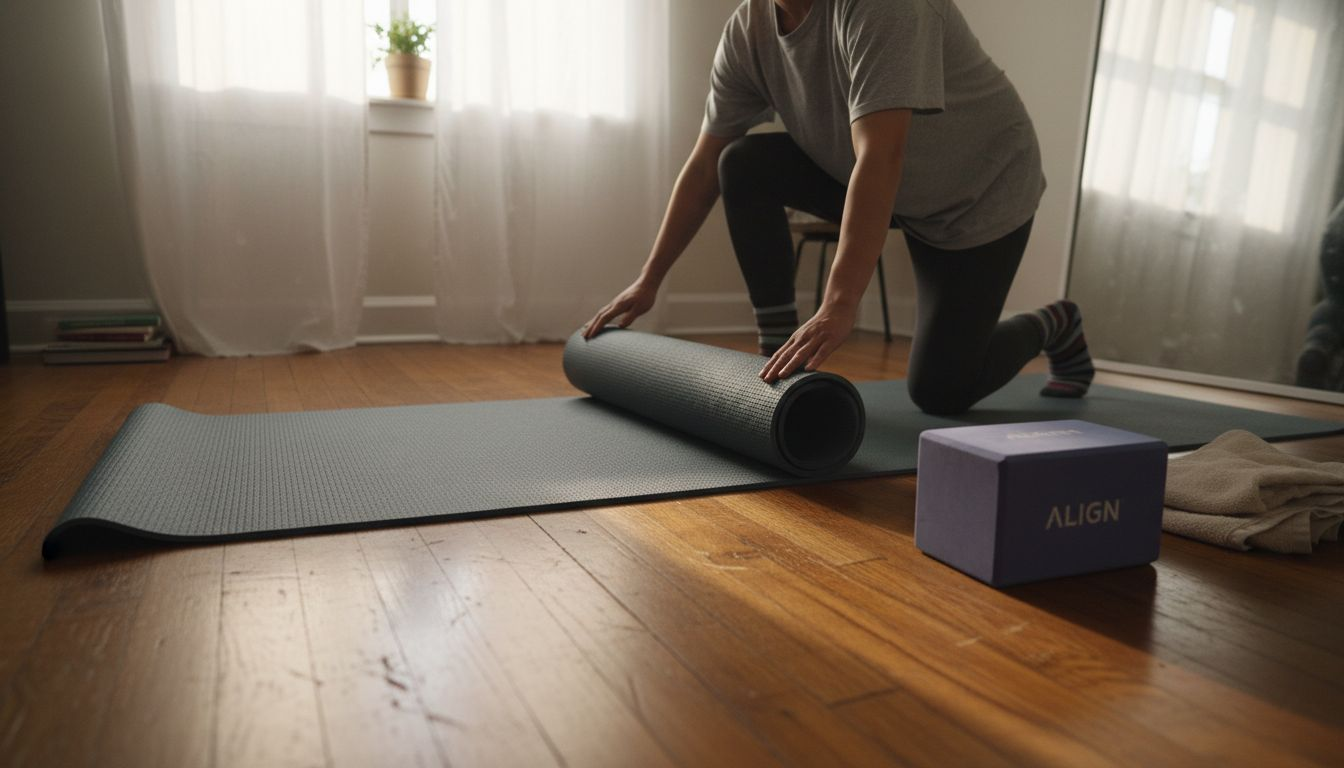
While building your yoga equipment collection, remember that you do not need to purchase expensive or elaborate gear. Start with basic, functional items that support your practice and allow you to move comfortably. Many studios offer equipment rentals, which can be a great way to experiment with different types of props and materials before making a personal investment.
Pro tip: Choose multipurpose yoga equipment that can adapt to different styles and skill levels to maximize your initial investment.
Here is a summary of essential yoga equipment and its role in supporting your practice:
| Equipment | Purpose | Beginner Benefit |
|---|---|---|
| Yoga Mat | Cushioning and stability | Prevents slips, adds comfort |
| Yoga Blocks | Support and pose modification | Aids limited flexibility |
| Yoga Strap | Assists stretches | Improves reach and alignment |
| Blanket | Warmth and comfort | Enhances relaxation in poses |
Step 4: Develop your initial routine with simple poses
Building a foundational yoga practice requires starting with accessible, gentle poses that help you develop body awareness, flexibility, and confidence. Your initial routine will focus on creating a sustainable approach to movement that feels comfortable and supportive.
7 Essential yoga poses for beginnerstypically include fundamental movements like Mountain Pose, Child's Pose, Cat Cow Stretch, and Downward Facing Dog. These poses help you build strength, improve balance, and learn proper breathing techniques without overwhelming your body. Start by holding each pose for 3 to 5 breaths, paying careful attention to your body's alignment and sensations. Remember that yoga is not about perfection but about exploring your body's capabilities with patience and self compassion.
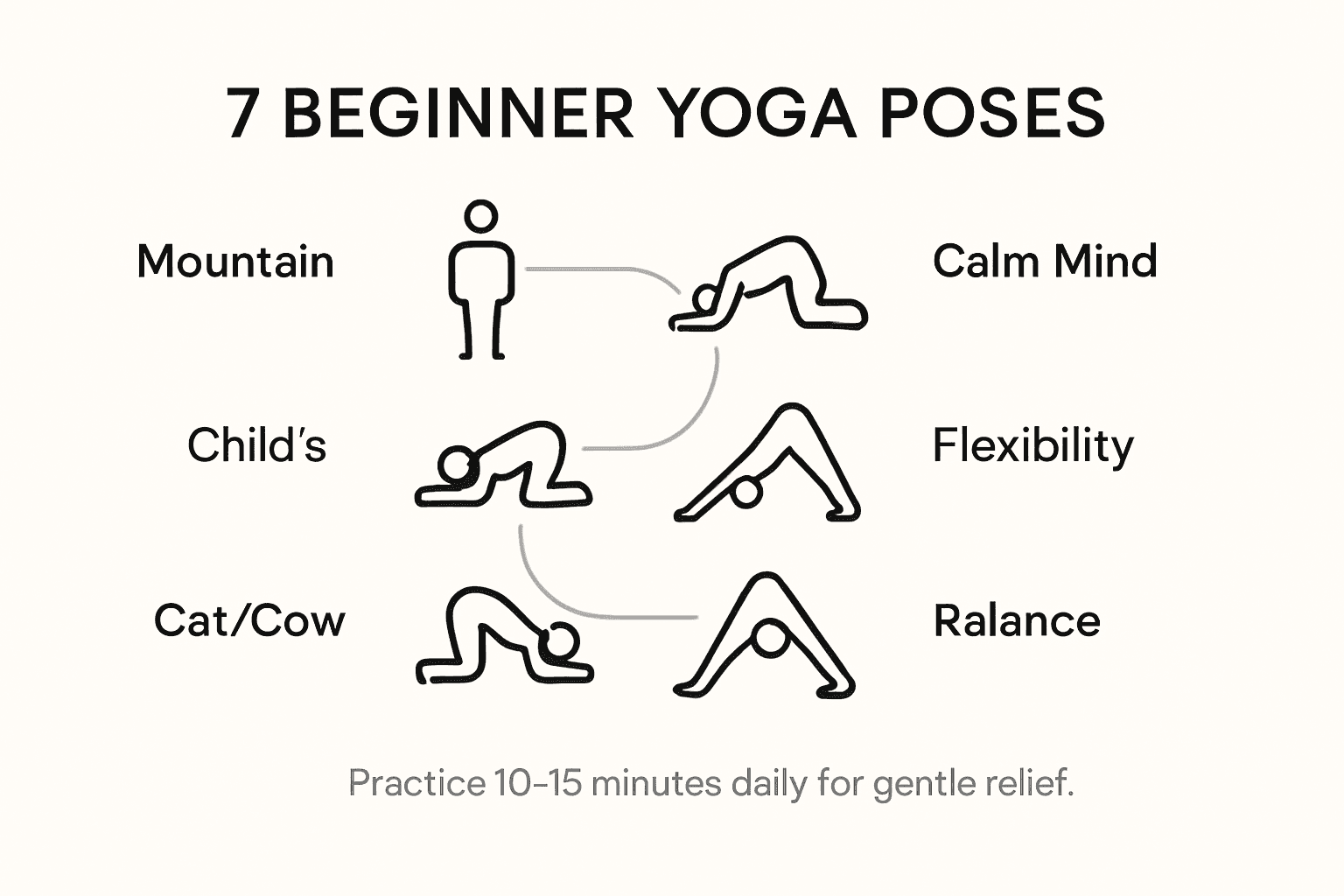
As you develop your routine, focus on consistency rather than complexity. Begin with a short 10 to 15 minute practice, gradually increasing duration as you become more comfortable. Listen to your body and modify poses using yoga blocks or straps if needed. The goal is to create a sustainable practice that feels nurturing and reduces stress, not to achieve advanced postures immediately.
Pro tip: Practice your routine at the same time each day to help establish a consistent and grounding yoga habit.
Step 5: Evaluate your progress and adjust your yoga journey
Tracking your yoga journey is about understanding your physical and mental growth, not achieving perfection. Your practice will naturally evolve as you become more aware of your body's capabilities and limitations, creating opportunities for meaningful personal development.
How to schedule yoga classes for seamless wellnesssuggests maintaining a practice journal to document your experiences and progress. Record details like how you feel before and after each session, which poses challenge you, and any improvements in flexibility, strength, or stress levels. Pay attention to both physical changes and emotional shifts, recognizing that progress in yoga extends beyond physical performance.
Be patient and kind to yourself as you develop your practice. Some weeks you might feel more flexible or strong, while others might feel more challenging. Adjust your routine based on your energy levels, listening to your body and modifying poses as needed. Consider taking occasional classes with experienced instructors who can provide personalized feedback and help you refine your technique. Remember that consistency matters more than intensity, and your yoga journey is a personal path of continuous learning and self discovery.
Pro tip: Review your practice journal every month to identify patterns, celebrate small victories, and mindfully adjust your yoga approach.
Embrace Your Yoga Journey for Lasting Stress Relief and Wellness
Starting yoga can feel overwhelming when trying to create the perfect space and selecting the right practice for your needs. This article highlights common challenges like finding beginner-friendly yoga styles and assembling comfortable equipment that supports your growth. If you are looking to naturally reduce stress while improving flexibility and mental clarity, you are not alone. Many seek a nurturing, consistent yoga routine that fosters personal wellness without adding pressure or complexity.
Discover how Amrita Yoga & Wellness in Philadelphia offers supportive classes tailored to beginners that guide you through foundational poses and mindful breathing techniques. Our welcoming community and expert instructors help you ease into yoga styles such as Hatha and restorative yoga, perfect for cultivating calm and self-awareness.
Take the next step toward a balanced life by exploring beginner-friendly sessions and workshops designed for your wellness goals. Experience firsthand how a dedicated practice space and the right guidance can transform your mental and physical health. Visit this page today to find the perfect class and start your path to lasting stress relief and holistic wellness.
Frequently Asked Questions
How can I create a calming yoga space for stress relief?
Creating a calming yoga space starts by selecting a quiet area in your home where you can practice without distractions. Clear clutter and use calming colors and natural light to set the mood. Consider dedicating this space solely to your yoga practice to help reinforce your commitment to wellness.
What beginner-friendly yoga styles should I try for stress relief?
For stress relief, consider starting with Hatha Yoga, as it’s gentle and perfect for beginners. This style focuses on holding poses and mastering breathing techniques, which can enhance relaxation. Look for classes that cater to new practitioners to ensure a supportive learning environment.
What essential equipment do I need to start yoga?
To start yoga, you will need a good quality yoga mat for cushioning and grip. Additionally, consider acquiring yoga blocks and a strap, which can help you modify poses and enhance your practice. Begin with these basics, and gradually add more equipment as your skills develop.
How can I develop a routine with simple yoga poses?
Start by selecting a few simple poses like Mountain Pose and Child’s Pose, holding each for 3 to 5 breaths. Aim for a routine that lasts 10 to 15 minutes daily, gradually increasing duration as you gain confidence. Consistency is key—practice at the same time each day to establish a grounding habit.
What should I include in my yoga journal to track my progress?
In your yoga journal, record your feelings before and after each session, along with details on which poses challenge you. Note improvements in flexibility and strength, as well as any emotional shifts you experience. Reviewing your entries monthly can help identify patterns and celebrate small victories in your yoga journey.
How do I adjust my yoga practice if I feel challenged?
Listen to your body and adjust your poses if you encounter challenges. Consider using props like blocks or straps for support, and be patient with your progress. Modify your routine based on your energy levels, ensuring it remains a nurturing experience rather than feeling overwhelming.
Recommended
Essential Tips for Yoga Beginners to Build Confidence
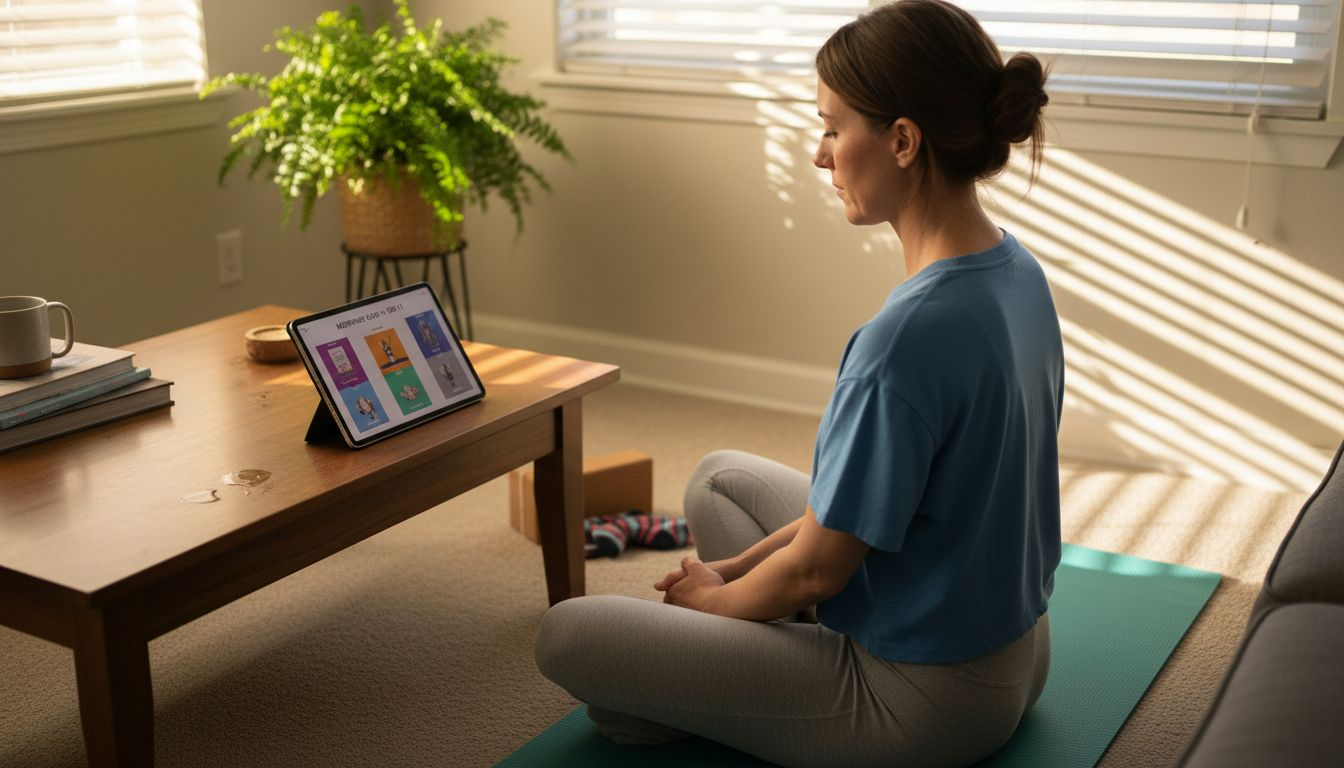
Most American adults in Philadelphia underestimate how much simple yoga routines can transform their physical and mental health. If you want to feel stronger, lower stress, and connect with a caring community, starting with basic yoga steps can be both accessible and effective. This guide breaks down practical beginner tips that suit busy lifestyles, deliver real wellness benefits, and help you build a holistic foundation for lasting self care.
Table of Contents
Quick Summary
| Essential Insight | Explanation |
|---|---|
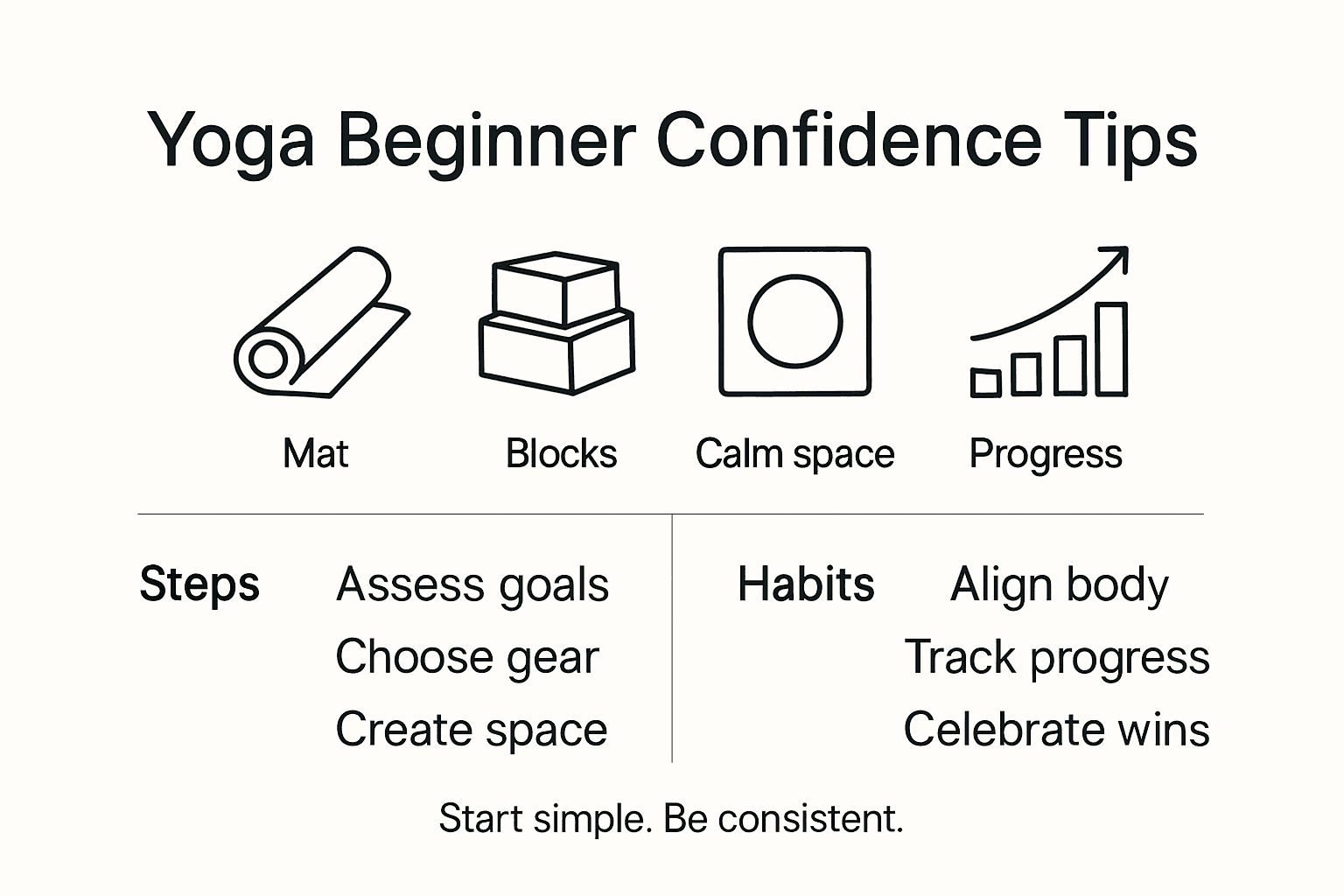
| 1. Assess Your Wellness Goals | Establish a clear understanding of your current health status to personalize your yoga practice effectively. |
| 2. Select Appropriate Yoga Gear | Choose high-quality gear that enhances comfort and support, aligning with your practice style and intensity. |
| 3. Create a Dedicated Practice Space | Designate a tranquil area for yoga to enhance focus and consistency in your practice. |
| 4. Focus on Mindful Alignment | Begin with beginner-friendly routines that emphasize proper body positioning to prevent injury and improve technique. |
| 5. Track Progress and Celebrate Milestones | Keep a detailed record of improvements over time, celebrating small achievements to maintain motivation. |
Step 1: Assess your personal fitness and wellness goals
Understanding your current health status and setting targeted wellness objectives is crucial for creating an effective yoga practice. By conducting a comprehensive wellness assessment, you can develop a personalized approach that aligns with your unique physical and mental needs.
Start by evaluating key fitness metrics that provide a holistic view of your current condition. The American Heart Association recommends recording fundamental measurements such as resting pulse rate, walking endurance, flexibility range, and body composition. These baseline metrics will help you track progress and set realistic goals. Consider factors like your current activity level, any existing health conditions, and the specific wellness outcomes you want to achieve through yoga practice.
Break down your assessment into multiple dimensions beyond just physical fitness. Examine your emotional resilience, stress management capabilities, energy levels, and overall lifestyle balance. This comprehensive approach ensures that your yoga journey supports total wellness rather than focusing narrowly on physical exercise.
Pro tip: Create a simple wellness tracking journal where you record your initial assessments and regularly update your progress to stay motivated and aware of your holistic health transformation.
Step 2: Choose suitable yoga gear and supportive accessories
Selecting the right yoga gear is essential for creating a comfortable and effective practice that supports your physical and mental wellness journey. When building your yoga toolkit, focus on finding items that enhance your comfort, provide proper support, and align with your personal practice style.
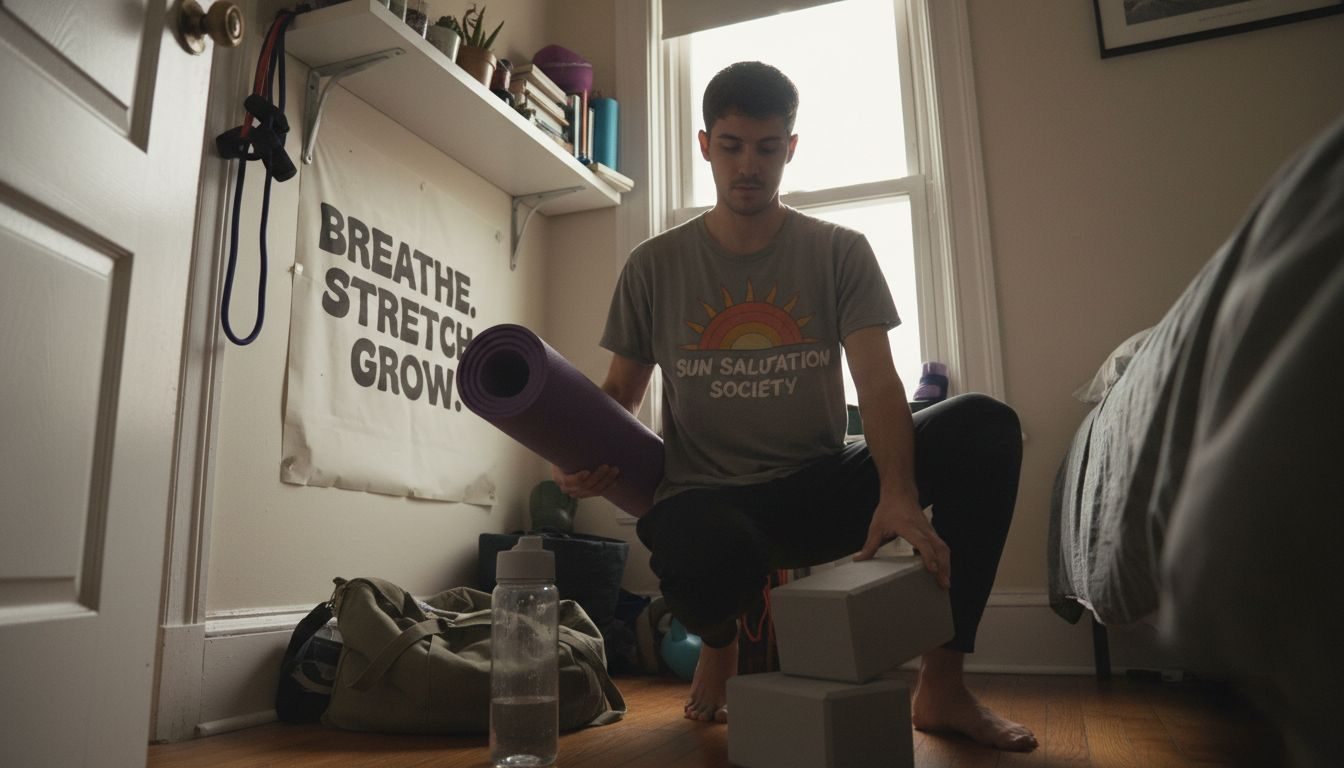
Your primary considerations should include a high-quality yoga mat that offers adequate cushioning and grip. Look for mats with appropriate thickness for your body and practice intensity. For beginners, a standard mat around 1/4 inch thick provides a good balance between comfort and stability. Consider yoga accessories that match your specific practice needs, whether youre interested in hot yoga, restorative styles, or more dynamic flow sequences. Beyond the mat, invest in supportive gear like moisture-wicking clothing that allows unrestricted movement, a reliable water bottle, and potentially props such as blocks, straps, or bolsters that can modify poses and provide additional support.
When purchasing yoga gear, prioritize quality over trend. Choose items that feel comfortable and inspire confidence in your practice. Remember that your accessories should adapt to your body and skill level, not create additional challenges. Pay attention to materials that provide breathability, durability, and ease of cleaning.
Here's a summary of essential yoga accessories and their benefits:
| Accessory | Key Benefit | Ideal For | Material Tips |
|---|---|---|---|
| Yoga Mat | Cushion and grip | All practitioners | Look for eco-friendly |
| Yoga Blocks | Support, alignment | Beginners, flexibility work | Lightweight foam or cork |
| Yoga Straps | Aid in stretching | Flexibility improvement | Durable cotton blend |
| Water Bottle | Hydration | Any session | BPA-free, easy to clean |
| Moisture-wicking Clothing | Comfort and movement | All practice styles | Seek breathable fabrics |
| Bolster | Restorative poses | Relaxation, meditation | Washable covers |
Pro tip: Try on yoga clothing and test equipment in person whenever possible to ensure the best fit and comfort for your unique body and practice style.
Step 3: Establish a comfortable space for regular practice
Creating a dedicated yoga space at home is crucial for maintaining a consistent and meaningful practice. Your environment can significantly impact your motivation and ability to stay committed to your wellness journey. Look for a space that offers tranquility, minimal distractions, and enough room to move freely during your beginner yoga routine.
When designing your practice area, consider factors beyond just physical space. Choose a location with good natural lighting if possible, and ensure the temperature is comfortable for movement. Remove clutter and potential obstacles that might interrupt your flow. Invest in a few key elements that make the space inviting such as a clean yoga mat, perhaps a small side table for water and props, and optional items like a soft blanket or cushion for meditation and relaxation portions of your practice.
Remember that your yoga space does not need to be large or perfectly equipped. Even a small corner of a room can become a sanctuary for your practice. The most important aspects are creating a sense of calm, having enough room to move safely, and establishing a consistent area that signals to your mind and body that this is a time for focused wellness and self care.
Pro tip: Keep your yoga gear visible and easily accessible to create a psychological trigger that encourages regular practice and reduces barriers to starting your routine.
Step 4: Follow beginner-friendly routines with mindful alignment
Mastering yoga starts with understanding how to move your body safely and intentionally. When beginning your practice, focus on yoga styles that emphasize slow movements and proper alignment, such as Hatha yoga, which provides a solid foundation for learning fundamental poses and breathing techniques.
Start by learning basic poses with careful attention to body positioning and breath control. Each movement should be deliberate and controlled, prioritizing precision over complexity. Pay close attention to how your body feels during each pose, making modifications as needed to prevent strain or injury. Practice in front of a mirror or record yourself to observe your alignment, or consider taking introductory classes where an experienced instructor can provide direct guidance on proper form.
Remember that mindful alignment is not about achieving a perfect pose, but about understanding your body's unique capabilities and limitations. Listen to your physical sensations, breathe steadily, and move with intention. Gradually build your practice by holding poses for shorter durations and progressively increasing the time as your strength and flexibility improve.
Pro tip: Use props like blocks and straps to support your alignment and help you maintain proper form while building confidence in your practice.
Step 5: Track your improvements and celebrate milestones
Successful wellness journeys thrive on consistent monitoring and recognition of personal growth. Recording fitness scores and tracking changes over time helps maintain motivation and provides tangible evidence of your progress in yoga practice.
Establish a simple tracking system that captures multiple dimensions of your wellness journey. Consider creating a dedicated journal or digital spreadsheet where you log details such as pose duration, flexibility improvements, breath control, and how you feel after each practice. Take periodic measurements like how long you can hold a challenging pose, your range of motion, or the complexity of sequences you can now complete. These quantifiable markers will help you see incremental improvements that might otherwise go unnoticed.
Remember that progress is not linear and each small achievement matters. Celebrate moments like maintaining a pose for 10 seconds longer than before, feeling more balanced, or experiencing reduced muscle tension. By acknowledging these milestones, you reinforce positive behaviors and build the confidence needed to continue your yoga practice.
Pro tip: Take monthly progress photos or short video clips to create a visual record of your yoga journey, allowing you to see physical and postural changes that might be subtle but significant.
This table highlights key wellness progress indicators to track during your yoga journey:
| Indicator | How to Measure | When to Record | Why It Matters |
|---|---|---|---|
| Pose Duration | Seconds held | Weekly or monthly | Tracks strength progress |
| Flexibility Range | Distance in inches | Monthly | Shows increased mobility |
| Breath Control | Number of breaths | Each session | Reflects relaxation level |
| Emotional Resilience | Self-rating (1–10) | After each session | Monitors mental wellness |
| Balance | Time standing | Weekly | Indicates body stability |
Build Confidence in Your Yoga Practice with Amrita Yoga & Wellness
Starting yoga can feel overwhelming as you navigate proper alignment, select the right gear, and create a dedicated space to practice. This article highlights how beginners often struggle with mindful movement, maintaining motivation, and tracking progress — challenges that can hold you back from reaching your wellness goals. You deserve a supportive community and expert guidance that helps you overcome these hurdles and feel confident on your yoga journey.
Discover a welcoming environment with diverse options like hot yoga and restorative classes designed to meet you where you are. At Amrita Yoga & Wellness, you will find experienced instructors, workshops, and quality yoga accessories tailored to support your practice. Whether you want to build strength, improve flexibility, or find peaceful balance, our offerings empower you every step of the way.
Take the next step toward a stronger, more confident you. Explore our class schedules, sign up for beginner-friendly sessions, and browse our carefully selected yoga gear to enhance your experience. Visit Amrita Yoga & Wellness today and start transforming your wellness routine with support you can trust.
Frequently Asked Questions
How can I assess my current fitness level before starting yoga?
To gauge your fitness level, evaluate key metrics such as resting pulse rate, flexibility range, and walking endurance. Track these measurements to establish a baseline and set realistic goals for your yoga practice, aiming to record them every few weeks.
What yoga gear do I need as a beginner?
As a beginner, focus on essential gear like a high-quality yoga mat, supportive clothing, and possibly props like blocks or straps. Invest in items that offer comfort and stability, so you can practice confidently and avoid distractions during your sessions.
How do I create a comfortable space for my yoga practice at home?
Choose a quiet area with natural light and enough room for movement to set up your yoga practice space. Ensure it’s free of clutter to minimize distractions, and keep your yoga gear easily accessible, so you can encourage regular practice.
What are some beginner-friendly yoga routines I can follow?
Start with yoga styles like Hatha or gentle flow that emphasize slow movements and proper alignment. Try beginner routines that focus on basic poses and breathing techniques to build confidence and awareness in your practice.
How can I track my improvements in yoga over time?
Establish a tracking system, such as a journal or digital log, to note details like pose duration and breath control after each session. Review your entries weekly or monthly to celebrate small achievements, which will reinforce your motivation to continue practicing.
What should I do if I feel uncomfortable or struggle with poses?
It’s normal to feel discomfort when starting out. Focus on proper alignment and listen to your body; consider using props for support and modifications to make poses more comfortable. Allow yourself time to grow and gradually increase your pose duration as you become more confident.