The Amrita Journal
Explore thoughtful stories, practical wellness guidance and inspiring ideas to support your movement, mindfulness and everyday wellbeing at Amrita.
Building Aerial Yoga Strength for Lasting Flexibility
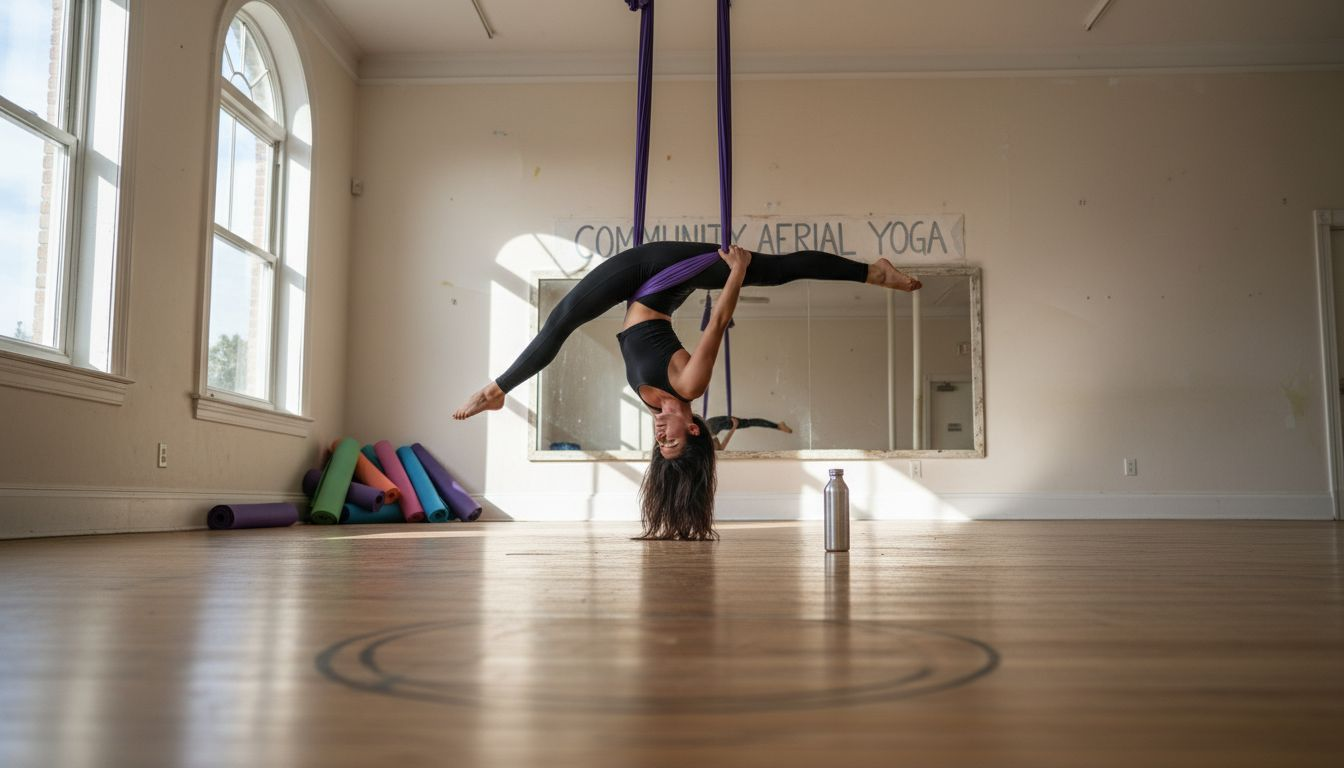
Every year, thousands of American yoga enthusiasts discover that aerial yoga is about more than just strength and flexibility—it starts with creating a safe environment. Accidents in home fitness settings remain a surprisingly common concern, highlighting why careful preparation matters for anyone stepping into an aerial hammock. You will find practical steps here that help any American safely prepare their aerial yoga space and build confidence from the first practice.
Table of Contents
Quick Summary
| Key Point | Explanation |
|---|---|
| 1. Ensure Proper Space Preparation | Identify a safe area with adequate ceiling height and check load-bearing capacity. Consult professionals for proper installation. |
| 2. Incorporate Dynamic Mobility Exercises | Warm up with targeted movements to activate muscles, enhance flexibility, and reduce injury risk. Focus on full-body engagement. |
| 3. Build Strength with Foundational Holds | Develop core and grip stability through exercises like the Superman Hold. Progressively increase hold time as strength improves. |
| 4. Progress to Dynamic Aerial Movements | Gradually introduce controlled swings and complex sequences, maintaining proper body alignment and building strength. |
| 5. Track and Adjust Your Practice | Monitor progress using indicators like hold duration and transition success. Regularly assess and adapt your training plan. |
Step 1: Prepare your aerial yoga space safely
Creating a safe aerial yoga environment starts with strategic planning and professional guidance. Your preparation will directly impact the safety and effectiveness of your aerial yoga practice. Professional consultation is critical for rigging installations, ensuring that every element of your setup meets rigorous safety standards.
Begin by identifying a dedicated space with sufficient ceiling height and structural integrity. Ideal locations include rooms with solid ceiling joists that can support significant weight typically 300 to 500 pounds. Consider consulting a professional structural engineer or experienced aerial yoga rigging specialist who can assess your specific space and recommend precise mounting points. Key considerations include evaluating load-bearing capacity, identifying appropriate anchor points, and selecting hardware that matches your specific aerial silk or hammock requirements.
Preparing your aerial yoga space demands meticulous attention to detail. Measure your available space carefully, ensuring a minimum clearance of 10 feet overhead and at least 5 feet of clear space surrounding your hanging apparatus. Remove any potential obstacles like furniture, sharp edges, or fragile objects that might interfere with your movement. Install appropriate floor padding or gymnastics mats to create a safe landing zone in case of unexpected drops or transitions.
Pro Tip: Always perform a thorough equipment inspection before each practice session. Check rigging points, silk or hammock material, carabiners, and suspension hardware for any signs of wear, fraying, or structural compromise.
Here’s a summary of key safety considerations for setting up an aerial yoga space:
Safety & Space Considerations
| Factor | Why It Matters | Professional Guidance Needed? |
|---|---|---|
| Ceiling Height | Ensures full range of motion | Yes (for structural checks) |
| Load-Bearing Capacity | Prevents risk of equipment failure | Yes (get engineer approval) |
| Floor Padding | Minimizes injury from falls | Recommended for placement |
| Obstacle Clearance | Prevents accidents during practice | Self-assess and verify |
Step 2: Warm up with targeted mobility exercises
Preparing your body for aerial yoga requires strategic mobility exercises that activate key muscle groups and enhance overall flexibility. Your warm up should focus on creating suppleness and range of motion across multiple body zones to prevent potential injuries and optimize performance. Incorporating dynamic stretching techniques will help improve yoga practice effectiveness while gradually increasing your body temperature.
Start by targeting major muscle groups through controlled movements that mimic aerial yoga motions. Begin with gentle neck rotations and shoulder rolls to release upper body tension. Progress to standing spinal waves that create fluidity through your core and enhance lower back mobility. Include dynamic leg swings forward and sideways to activate hip flexors and prepare your lower body for suspension movements. Incorporate arm circles and torso twists to increase shoulder and spinal flexibility which are crucial for aerial yoga transitions and inversions.
Your mobility routine should transition smoothly between different movement patterns creating a comprehensive warmup that addresses full body preparation. Spend approximately 10 to 15 minutes moving through these exercises with intentional breath work synchronizing your movements. Pay close attention to any areas of existing tension or previous injury ensuring you modify movements to suit your individual body mechanics.
Pro Tip: Always perform mobility exercises within your personal comfort range and never push into pain. Listen to your body and allow gentle progression rather than forcing extreme ranges of motion.
Step 3: Activate core and grip with foundational holds
Developing core strength and grip stability is fundamental to mastering aerial yoga techniques. Your goal in this stage is to build muscular endurance and control that will support complex aerial movements. Practicing foundational holds like the Superman Pose can build necessary stability and control for advanced aerial yoga practice.
Begin with the Superman Hold which will engage your posterior chain and core muscles simultaneously. Position yourself in the silk hammock with your torso supported and legs extended. Slowly lift your arms and legs off the ground maintaining a straight body line while keeping your core engaged. Focus on creating tension through your entire posterior muscle group including your lower back gluteal muscles and hamstrings. Progressively increase your hold time from 15 to 45 seconds as your strength improves.
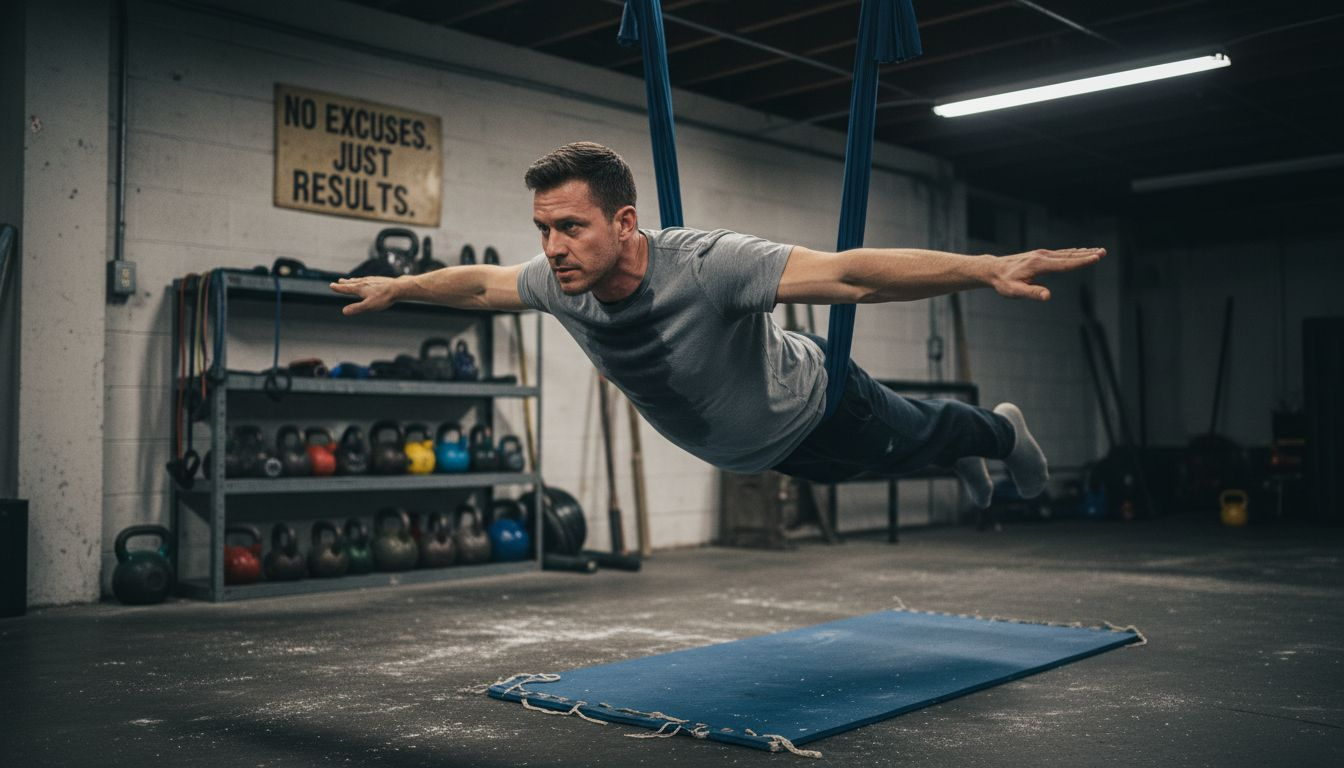
Additional foundational holds will help you develop comprehensive aerial yoga strength. The Plank Pose inside the silk hammock challenges your grip and core stability by requiring you to maintain balance while supporting your entire body weight. Practice variations like single arm support and alternating leg lifts to increase difficulty. Pay close attention to your hand placement and grip technique ensuring you distribute weight evenly across your palms and maintain a firm but relaxed hold.
Pro Tip: Always engage your core muscles during foundational holds by drawing your navel toward your spine and maintaining a neutral spine position to maximize muscle activation and prevent potential strain.
Step 4: Progress strength with dynamic aerial movements
Transitioning from foundational holds to dynamic aerial movements requires strategic progression and mindful technique. Your objective is to build comprehensive strength while expanding your movement capabilities in the aerial yoga practice. Advancing in aerial yoga involves incorporating dynamic movements like aerial splits which build strength and flexibility through progressive mobility training.
Begin with controlled swing movements that challenge your core stability and grip strength. Start by performing gentle side to side oscillations in your silk hammock maintaining a strong center and engaged core muscles. As you become comfortable gradually increase the range of motion and speed of your swings. Focus on creating smooth transitions between suspended positions experimenting with controlled momentum that allows you to shift your body weight efficiently. Practice movements like pendulum swings and controlled rotational exercises that develop multidirectional strength and proprioceptive awareness.
Progress to more complex dynamic sequences that integrate multiple muscle groups simultaneously. Introduce movements like aerial lunges suspended splits and rotational inversions that require complete body coordination. Start with slower controlled repetitions and gradually increase speed and complexity as your strength and confidence improve. Pay careful attention to your body alignment ensuring you maintain proper form to prevent potential strain or injury. Concentrate on creating fluid powerful movements that demonstrate both strength and grace.
Pro Tip: Always listen to your body and progress gradually. Use a spotter or experienced instructor when attempting new dynamic aerial movements to ensure safe and effective skill development.
Step 5: Check form alignment for safe advancement
Mastering aerial yoga requires meticulous attention to body positioning and precise form to prevent potential injuries and maximize performance effectiveness. Your primary focus in this stage is developing keen body awareness and understanding how proper alignment translates into safer more efficient aerial yoga movements. Understanding posture and alignment is essential to avoid injury and improve overall technique in aerial yoga practice.
Begin by performing a comprehensive body scan during each suspended position. Start from your head and progressively move downward checking key alignment points. Ensure your neck remains neutral with your chin slightly tucked your shoulders relaxed away from your ears and your spine maintaining a neutral curvature. Focus on distributing your body weight evenly across the silk hammock avoiding excessive pressure on any single joint or muscle group. Use mirrors or video recordings to help you visualize your positioning and identify potential misalignments that could lead to strain or incorrect muscle engagement.
Develop a systematic approach to checking your form during different aerial movements. Practice each pose slowly and deliberately paying close attention to your skeletal structure and muscle engagement. Notice how minor adjustments in hand placement foot positioning or torso rotation can dramatically impact your overall stability and strength. Learn to distinguish between productive muscular engagement and potentially harmful tension. Communicate regularly with experienced instructors who can provide personalized feedback on your alignment and help you make precise technical corrections.
Pro Tip: Create a mental checklist of key alignment points and systematically review them during each aerial yoga session to build muscle memory and enhance your proprioceptive awareness.
Step 6: Track results and adjust your routine
Progressively improving your aerial yoga practice requires systematic observation and intentional adaptation of your training approach. Your objective is to develop a strategic method for monitoring your physical development and skill progression. Regularly assessing flexibility progress and adjusting stretching routines can lead to continuous improvement in aerial yoga performance.
Cultivating mindfulness and body awareness during your flexibility journey allows for tracking progress and making necessary adjustments to your aerial yoga routine. Start by establishing a comprehensive baseline assessment documenting your current flexibility range strength metrics and specific aerial yoga movement capabilities. Create a detailed journal that tracks key performance indicators such as hold duration range of motion number of successful transitions and subjective feelings of muscle engagement and control. Photograph or video record yourself performing specific aerial yoga sequences at regular intervals to visually document your physical transformation and technical skill development.
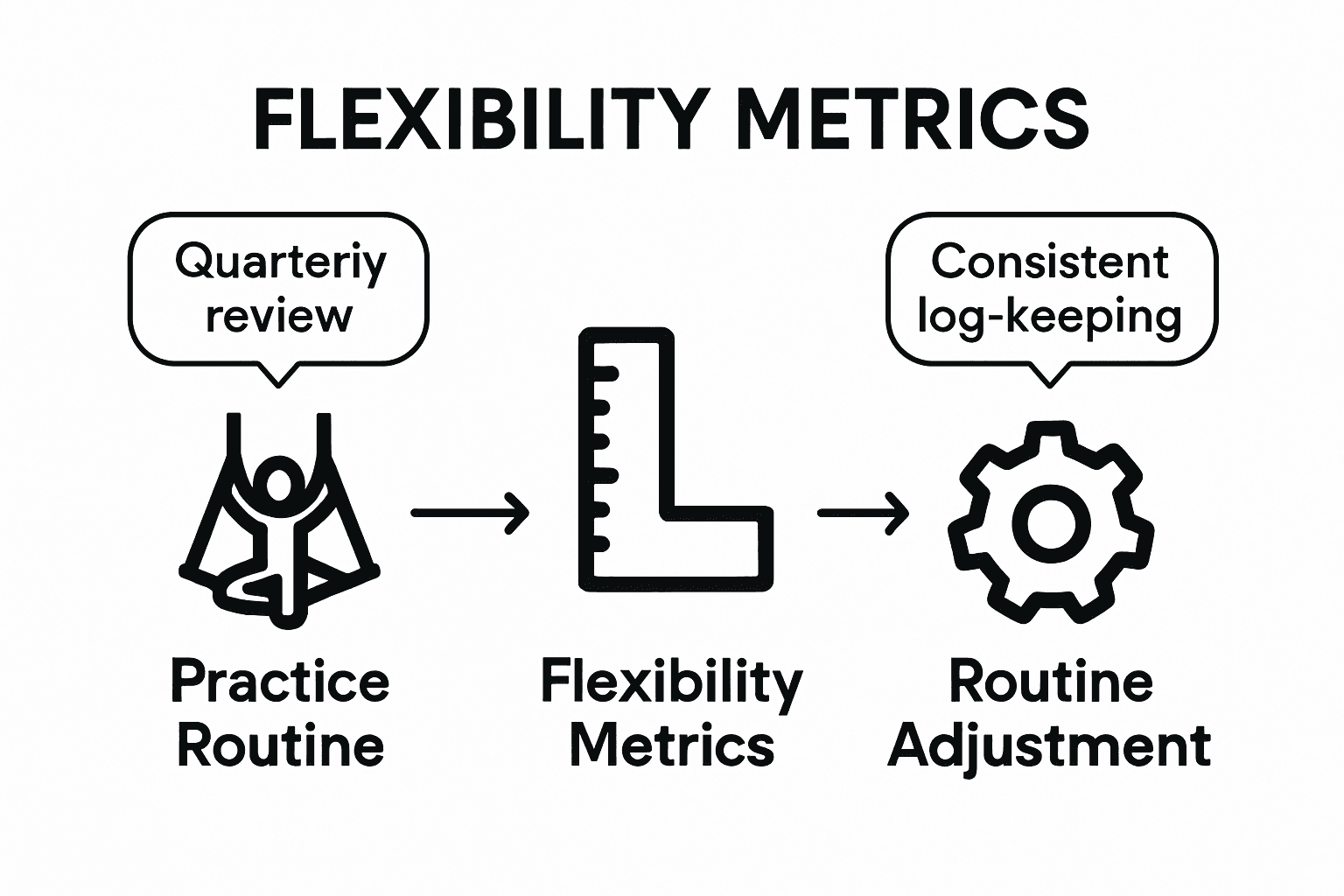
Implement a quarterly review process where you systematically evaluate your progress and identify areas requiring focused improvement. Compare your current performance against your initial baseline measurements analyzing both quantitative metrics and qualitative sensations. Pay attention to improvements in core strength grip endurance flexibility and overall movement quality. Be prepared to modify your training intensity technique or focus based on your observed results. Consider working with an experienced aerial yoga instructor who can provide professional insights and help you design targeted improvement strategies that align with your specific goals and physical capabilities.
Pro Tip: Use a digital tracking app or spreadsheet to consistently log your aerial yoga performance metrics creating a visual representation of your ongoing progress and skill development.
Track your aerial yoga progress effectively by monitoring these key performance indicators:
Progress Tracking Indicators
| Indicator | How to Measure | Benefit to Practice |
|---|---|---|
| Hold Duration | Time each position | Tracks strength gains |
| Flexibility Range | Measure reach/splits | Shows improvement in mobility |
| Transition Success Rate | Count clean transitions | Reflects skill development |
| Comfort Level | Record personal notes | Informs when to progress |
Elevate Your Aerial Yoga Practice with Expert Guidance and Community Support
Building lasting strength and flexibility in aerial yoga requires intentional progression and precise form. If you are navigating challenges like strengthening core holds, improving grip stability, or mastering dynamic suspended movements this is your opportunity to deepen your practice safely and effectively. The article highlights common goals such as activating foundational holds like the Superman Pose and maintaining alignment for injury prevention. It also addresses the need to track progress and adjust routines which can feel overwhelming without the right resources.
Discover how joining a supportive community at Amrita Yoga & Wellness can transform your aerial yoga journey. Our Philadelphia-based studio offers expert-led classes and workshops designed to enhance flexibility, build strength, and improve body awareness in a safe environment. Whether you are a beginner or looking to advance your skills our inclusive programs guide you every step of the way.
Take the next step toward mastering aerial yoga strength and flexibility by exploring our wide range of wellness offerings. From targeted yoga classes that complement aerial training to personalized guidance in alignment and mobility your goals are within reach. Visit Amrita Yoga & Wellness today to sign up for classes and workshops that empower your growth. Your journey to greater strength and fluidity starts now.
Frequently Asked Questions
How do I create a safe aerial yoga space?
To create a safe aerial yoga environment, first identify a space with sufficient ceiling height and structural integrity that can support 300 to 500 pounds. Consult a professional to assess mounting points and load-bearing capacity, ensuring you have at least 10 feet overhead and clear space around your equipment.
What types of mobility exercises should I include in my warm-up?
In your warm-up, focus on mobility exercises that target major muscle groups. Incorporate dynamic movements such as neck rotations, spinal waves, and leg swings to improve flexibility and prepare your body for aerial yoga practice, ideally spending 10 to 15 minutes on these routines.
How can I improve my core strength for aerial yoga?
To enhance your core strength, practice foundational holds like the Superman Pose and Plank Pose in your silk hammock. Start with holds of 15 seconds and gradually increase the duration to 45 seconds as your strength builds, ensuring proper form to engage your core effectively.
What should I do if I experience tension or discomfort during aerial yoga?
If you experience tension or discomfort, listen to your body and avoid pushing into pain. Modify movements to suit your individual comfort level and gradually progress your practice to prevent strain or injury.
How do I track my progress in aerial yoga?
Tracking your progress involves documenting key performance indicators like hold duration, flexibility range, and successful transitions. Create a journal or use a digital tracking method to log your developments regularly, reviewing them quarterly to identify areas for improvement.
Recommended
Improving Aerial Yoga Flexibility Naturally: A Step-by-Step Guide — Amrita Yoga & Wellness
Master Aerial Yoga Flexibility Exercises for Mobility — Amrita Yoga & Wellness
Aerial Yoga Strengthening Moves for Total Body Power — Amrita Yoga & Wellness
Aerial Yoga Guide for Beginners: Step-by-Step Practice Success — Amrita Yoga & Wellness