
The Amrita Journal
Explore thoughtful stories, practical wellness guidance and inspiring ideas to support your movement, mindfulness and everyday wellbeing at Amrita.
Hot yoga center benefits in Philadelphia 2026

You've heard hot yoga transforms your practice far more than regular yoga, but research tells a different story. While hot room yoga enhances flexibility due to elevated temperatures, many touted benefits mirror traditional yoga's outcomes. Philadelphia's welcoming hot yoga centers offer accessible options for every skill level, helping you explore this heated practice safely. This guide clarifies what hot yoga truly delivers, its real benefits versus myths, safety considerations, and how to choose the right Philadelphia center for your wellness journey.
Table of Contents
Key takeaways
| Point | Details |
|---|---|
| Temperature matters | Hot yoga rooms range 90-105°F, increasing muscle elasticity and flexibility during practice. |
| Evidence-based benefits | Hot yoga may reduce stress and encourage fat metabolism, but aerobic benefits match traditional yoga. |
| Safety first | Generally safe for healthy adults, but requires proper hydration and awareness of personal limits. |
| Inclusive environment | Philadelphia centers like Hot Yoga Sutra offer classes for all levels with expert instruction guidance. |
| Smart selection | Choose studios based on instructor expertise, class variety, schedule flexibility, and community atmosphere. |
Understanding hot yoga: What sets a hot yoga center apart?
Hot yoga refers to yoga practiced in heated rooms, typically maintained between 90-105°F. This elevated temperature environment distinguishes hot yoga centers from traditional studios. The warmth increases muscle elasticity, potentially allowing deeper stretches and improved flexibility during your practice.
Philadelphia's hot yoga studios commonly offer heated versions of popular disciplines. Bikram yoga follows a specific 26-posture sequence in 105°F heat with 40% humidity. Hot Vinyasa adapts flowing sequences to heated rooms, offering more variety than Bikram's fixed routine. Some centers experiment with temperatures between 90-95°F for gentler heated experiences.
The hot yoga experience involves significantly more sweating than room temperature classes. You'll need to bring water, towels, and wear moisture-wicking clothing. First-timers often feel challenged by the heat, so acclimation takes several sessions. Your body adapts over time, making subsequent classes more comfortable.
Traditional yoga studios maintain normal room temperatures, focusing purely on poses, breathing, and meditation without heat as a variable. Hot yoga centers add temperature as an intentional element to enhance certain physical benefits. Both approaches offer valid paths to wellness, with hot yoga appealing to those seeking intense physical challenge and enhanced flexibility work.
Key differences include:
Temperature control as a core feature (90-105°F versus ambient)
Increased cardiovascular demand from heat exposure
Greater emphasis on hydration before, during, and after class
Modified clothing choices for comfort in heated environments
Potentially shorter class durations due to heat intensity
The real benefits and limitations of hot yoga
Research reveals hot yoga's true advantages while dispelling exaggerated claims. Studies confirm that practicing in heated environments does increase flexibility gains compared to room temperature yoga. The warmth allows muscles to stretch further with less resistance, potentially accelerating flexibility development.
Hot yoga may reduce stress, particularly benefiting individuals experiencing significant daily stress. Small studies show participants reported improved mood and reduced anxiety after consistent hot yoga practice. The combination of physical challenge, heat exposure, and mindful movement creates a powerful stress-relief experience.
Another evidence-backed benefit: hot yoga may encourage greater fat metabolism compared to traditional yoga. The elevated temperature increases your body's metabolic demands during practice. However, this doesn't make hot yoga a cardio replacement or primary weight loss tool.

Here’s where limitations matter. Research shows hot yoga does not significantly increase health benefits compared to room temperature yoga. The aerobic workload remains similar between heated and non-heated practices. Claims that hot yoga provides dramatically superior cardiovascular conditioning lack scientific support.
| Benefit | Evidence Level | Notes |
|---|---|---|
| Increased flexibility | Strong | Heat enhances muscle elasticity |
| Stress reduction | Moderate | Small studies show positive effects |
| Enhanced fat metabolism | Moderate | Greater than traditional yoga but modest overall |
| Cardiovascular fitness | Low | Similar to room temperature yoga |
| Toxin elimination through sweat | Unsubstantiated | Body eliminates toxins primarily through liver and kidneys |
Safety considerations matter significantly. Hot yoga is generally safe for those with no known contraindications. Healthy adults tolerate heated practice well when following proper precautions. However, individuals with heart conditions, heat sensitivity, pregnancy, or certain medications should consult healthcare providers first.
Pro Tip: Drink 16-20 ounces of water two hours before class and sip throughout your session. Listen carefully to your body's signals. Dizziness, nausea, or excessive fatigue mean you should rest in child's pose or leave the heated room. Check out hot yoga safety tips for comprehensive guidance on practicing safely.
Choosing the right hot yoga center in Philadelphia
Selecting the ideal hot yoga center requires evaluating several key factors beyond just location convenience. Hot Yoga Sutra Philadelphia provides a welcoming environment for all levels, with knowledgeable and encouraging instructors who guide students through proper form and modifications. This inclusive approach helps beginners feel comfortable while challenging experienced practitioners.
Instructor expertise makes or breaks your hot yoga experience. Look for teachers with comprehensive training in heated yoga disciplines, anatomy knowledge, and strong communication skills. Great instructors offer pose modifications for different skill levels, watch for proper alignment, and create supportive classroom atmospheres. They recognize when students need encouragement versus when to suggest rest.
Class variety matters for long-term engagement. The studio offers a range of heated yoga disciplines, including Hot Bikram for those wanting traditional 26-posture sequences and Hot Vinyasa for flowing, creative practices. Some centers add Hot Yin or heated restorative classes for gentler options. Variety prevents boredom and addresses different wellness goals.
Schedule flexibility accommodates busy Philadelphia lifestyles. Quality centers offer early morning classes for pre-work practice, lunchtime sessions for midday breaks, and evening options for after-work relaxation. Weekend availability lets you maintain consistency when weekday schedules get hectic.
Community atmosphere transforms hot yoga from exercise into meaningful practice. Studios fostering genuine connection, mutual support, and personal transformation create environments where you actually want to return. Look for welcoming front desk staff, clean facilities, and positive energy when you visit.
Evaluate these factors when choosing your center:
Proximity to home or work for consistent attendance
Instructor credentials and teaching style compatibility
Variety of hot yoga classes matching your goals
Schedule options fitting your lifestyle
Trial class or new student specials for risk-free testing
Facility cleanliness and amenities (showers, mats, props)
Community vibe and inclusivity for all body types and abilities
Clear communication about hot yoga safety protocols
Pro Tip: Visit multiple studios for trial classes before committing to memberships. Pay attention to how you feel during and after class, how instructors interact with students, and whether the community matches your personality. The right fit makes consistency easier.
Practical tips for a safe and effective hot yoga practice
Maximizing hot yoga benefits while minimizing risks requires thoughtful preparation and awareness. Hot yoga is safe for those with no known contraindications, but consulting your doctor before starting makes sense if you have cardiovascular conditions, heat sensitivity, or take medications affecting body temperature regulation.
Follow these preparation steps for optimal hot yoga sessions:
Hydrate thoroughly starting 24 hours before class, not just immediately beforehand
Eat light meals 2-3 hours pre-class to avoid nausea in the heat
Wear minimal, moisture-wicking clothing (shorts and sports bra or fitted tank)
Arrive early to acclimate to the room temperature gradually
Place your mat near the door or cooler spots for your first few classes
Bring a large towel for your mat and small towel for wiping sweat
Start with shorter classes (60 minutes versus 90) until your body adapts
Take breaks in child's pose whenever needed without judgment
Focus on breathing steadily rather than pushing into your deepest stretches immediately
Cool down properly after class and continue hydrating for hours post-practice
Your body sends clear signals when heat becomes excessive. Dizziness, tunnel vision, nausea, confusion, or cessation of sweating indicate potential heat exhaustion. Leave the room immediately if you experience these symptoms. Seasoned practitioners know that stepping out shows wisdom, not weakness.
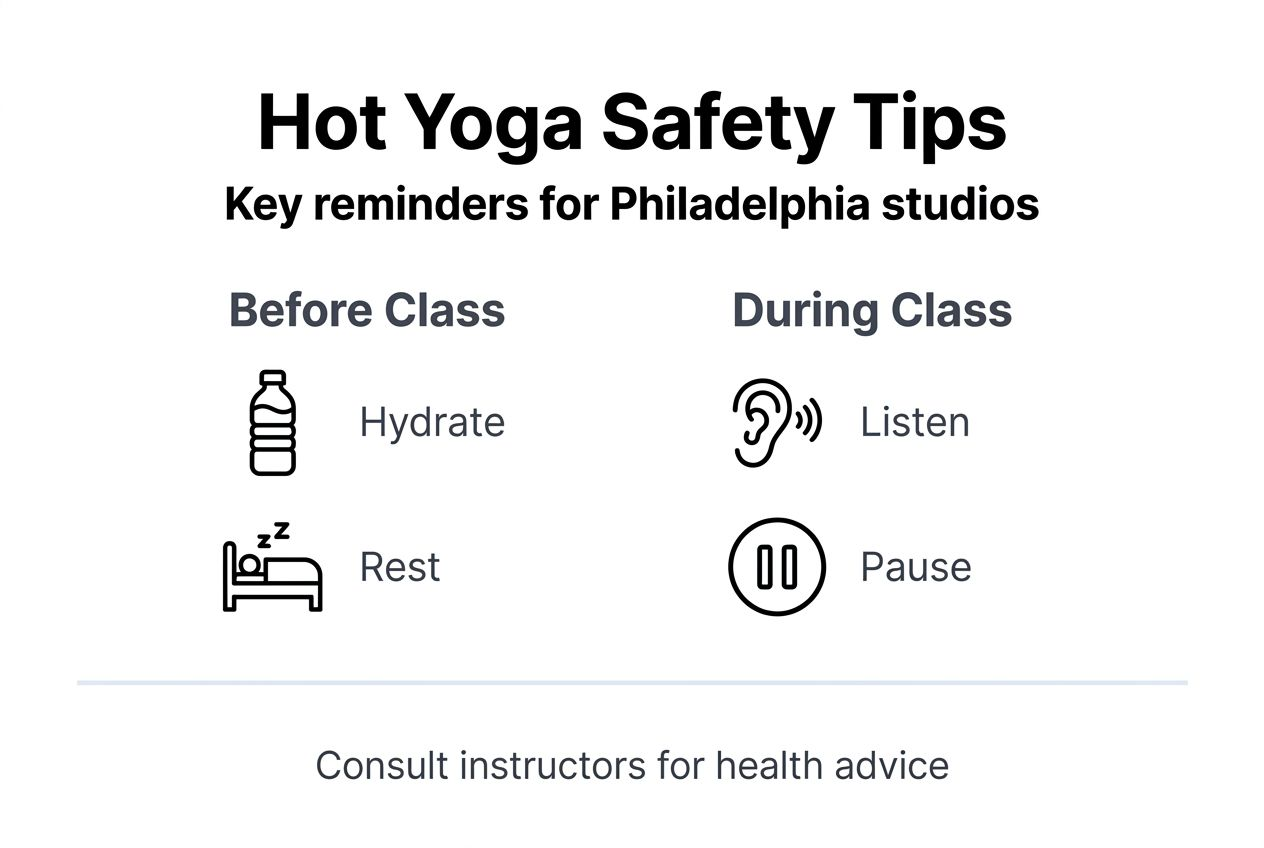
Common beginner risks include dehydration, overexertion, and pushing beyond safe limits in the heat-enhanced flexibility. Your muscles stretch further in warmth, but connective tissues need time to adapt. Moving too deeply too quickly can cause strains despite feeling flexible in the moment.
Contraindications requiring medical consultation include pregnancy, heart disease, high or low blood pressure, heat intolerance, and medications like diuretics or beta-blockers. Age alone isn't a contraindication, but older adults should start conservatively and progress gradually.
Pro Tip: Incorporate a 5-10 minute cool-down routine after leaving the heated room. Gentle stretching in normal temperatures and drinking electrolyte-enhanced water supports recovery. Following hot yoga safety tips for injury-free practice ensures you build a sustainable, beneficial practice long-term.
Explore hot yoga options at Amrita Yoga & Wellness
Ready to experience hot yoga's benefits in a supportive Philadelphia environment? Amrita Yoga & Wellness welcomes practitioners of all levels with expert instructors who prioritize safety and personal growth. Our hot yoga classes combine proper heating with attentive guidance, helping you build flexibility and reduce stress effectively.

We offer diverse heated class options fitting varied schedules and preferences, similar to respected centers like Hot Yoga Sutra Philadelphia. Whether you're drawn to structured Bikram sequences or flowing Vinyasa styles, our instructors create inclusive experiences where beginners feel supported and experienced yogis find challenge. Convenient operating hours accommodate busy Philadelphia lifestyles.
Our new student specials provide an affordable way to explore hot yoga without long-term commitment. Try multiple class styles to discover what resonates with your wellness goals. We maintain clear studio and cancellation policies so you always know what to expect.
Beyond hot yoga, Amrita offers complementary wellness services like acupuncture for holistic health support. This integrated approach addresses physical and mental well-being from multiple angles, creating comprehensive care for your transformation journey.
FAQ
Is hot yoga suitable for beginners?
Yes, many hot yoga centers design classes specifically for all skill levels with modifications and instructor guidance. Beginners should follow hot yoga safety tips, start with shorter classes, and progress gradually as their bodies acclimate to the heat. Proper hydration and listening to your body's limits make hot yoga accessible for newcomers.
How often should I practice hot yoga for best results?
Practicing hot yoga 2-3 times per week balances benefits with adequate recovery for most adults. This frequency allows your body to adapt to heat stress while building flexibility and strength progressively. Listen to your energy levels and adjust frequency as needed, ensuring you don't experience chronic fatigue or dehydration.
Are there health risks associated with hot yoga?
Hot yoga is generally safe for healthy adults without contraindications like heart conditions or heat sensitivity. Primary risks include dehydration and heat exhaustion if you ignore warning signs or skip proper hydration. Consult healthcare professionals before starting if you have cardiovascular issues, take medications affecting body temperature, or are pregnant. Review hot yoga safety guidelines to minimize risks.
What should I bring to my first hot yoga class?
Bring a large towel for your mat, small towel for wiping sweat, water bottle (20-32 ounces), and wear minimal moisture-wicking clothing. Many studios provide mats, but you may prefer your own for hygiene. Avoid eating heavy meals 2-3 hours before class and arrive 10-15 minutes early to acclimate and ask instructors any questions.
Can hot yoga help with weight loss?
Hot yoga burns calories and may enhance fat metabolism compared to traditional yoga, but it shouldn't replace cardiovascular exercise for weight loss goals. The practice supports weight management as part of a comprehensive fitness routine including varied cardio, strength training, and healthy nutrition. Focus on hot yoga primarily for flexibility, stress reduction, and mindful movement rather than as a primary weight loss tool.
Recommended
7 Types of Hot Yoga: Find Your Perfect Fit — Amrita Yoga & Wellness
Top Yoga Studios Philadelphia – Expert Comparison 2025 — Amrita Yoga & Wellness
Bikram Yoga Burns 330 Calories: Top Benefits and Guide — Amrita Yoga & Wellness
Hot Yoga Beginners Philadelphia: 35% Fewer Injuries — Amrita Yoga & Wellness
Hot Yoga Beginners Philadelphia: 35% Fewer Injuries
Starting hot yoga can feel overwhelming. The intense heat, physical demands, and fear of dehydration or injury stop many beginners before they even step into a studio. Research shows that 35 to 40% of beginners experience issues like dehydration or burnout due to poor preparation. This comprehensive guide explains what hot yoga involves, how to prepare safely, step-by-step practice tips, and where to find beginner-friendly studios in Philadelphia.
Table of Contents
Key Takeaways
| Point | Details |
|---|---|
| Hydration is critical | Drink water before class and bring a bottle to sip during practice to prevent heat exhaustion. |
| Wear minimal clothing | Choose breathable fabrics and bring two towels for sweat management in the heated room. |
| Classes run 50-75 minutes | Beginner sessions balance exertion with rest breaks to build endurance gradually. |
| Benefits appear in 6-8 weeks | Regular attendance 2-3 times weekly yields noticeable flexibility and stress reduction. |
| Choose inclusive studios | Beginner-focused Philadelphia studios offer modifications and supportive communities. |
What is Hot Yoga and Its Unique Environment?
Hot yoga takes place in studios heated between 90 and 105°F with 40 to 50% humidity, creating an environment that challenges your body differently than traditional yoga. The elevated temperature increases muscle flexibility and boosts metabolic rate, making stretches deeper and calorie burn higher. You'll sweat profusely, which helps release toxins but requires constant hydration.
Beginners often feel intimidated by the heat initially. Your heart rate rises faster, and breathing may feel labored at first. However, the heated environment strengthens the mind-body connection as you learn to control breath and movement under physical stress. Understanding these physiological responses reduces anxiety about your first class.
Key environmental factors include:
Studio temperatures typically range from 90°F for gentler classes to 105°F for intense sessions
Humidity levels between 40 and 50% enhance sweating and heat perception
Infrared heating systems provide gentler warmth compared to traditional forced air
Proper ventilation ensures air quality while maintaining temperature
Breathwork becomes essential in hot yoga basics because controlled breathing helps regulate body temperature and calm your nervous system. Most instructors emphasize ujjayi breathing, a technique that creates audible breath sounds to anchor focus. Acclimation happens gradually, with most students feeling comfortable within three to five classes as their bodies adapt to the heat.
Exploring various hot yoga routines helps you find styles matching your fitness level. Some classes move slowly through poses, while others flow dynamically. The Hot Yoga Philly FAQ answers common questions about temperature variations and class formats available throughout Philadelphia.
Prerequisites Before Starting Hot Yoga
Proper preparation dramatically reduces discomfort and injury risk. Hydration should begin hours before class, not just minutes before. Drink at least 16 ounces of water two hours prior, then sip another 8 ounces in the 30 minutes leading up to your session. Bring a water bottle to class and take small sips between poses.
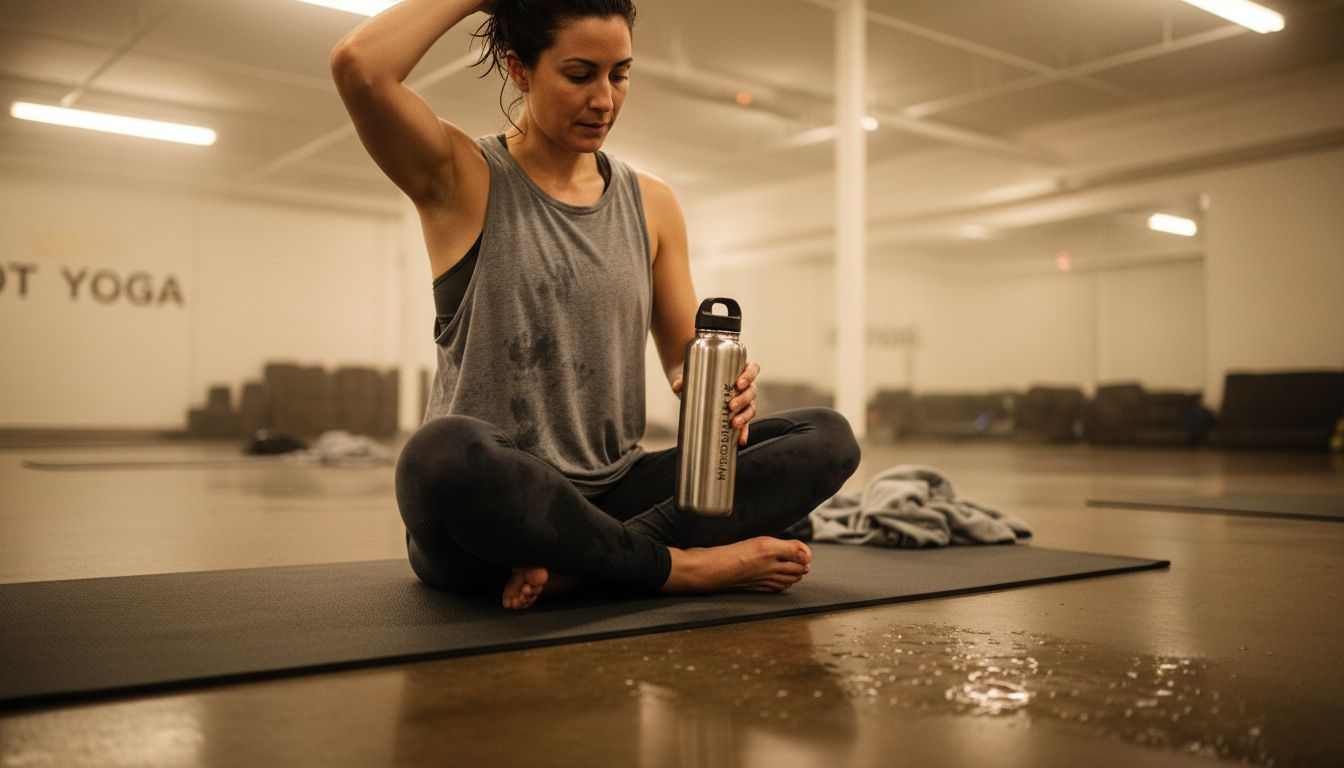
Clothing choices matter significantly in the heated room. Wear form-fitting, moisture-wicking fabrics that won't become heavy when soaked with sweat. Women typically choose sports bras and fitted shorts or leggings, while men opt for athletic shorts and fitted or no shirts. Avoid cotton, which absorbs moisture and stays wet.
Essential items to pack:
Two towels: one for your mat and one for wiping sweat during class
Large water bottle holding at least 24 ounces
Yoga mat with good grip when wet, or rent one at the studio
Hair ties to keep hair off your neck and face
Pro Tip: Place your mat near the back of the room for your first few classes. This position is typically cooler and lets you observe experienced students without feeling self-conscious.
Mental preparation involves accepting that you'll struggle initially. The heat challenges everyone differently, and taking breaks doesn't signal weakness. Familiarize yourself with basic breathwork by practicing slow, deep breathing through your nose for five minutes daily before your first class. This builds the foundation for managing heat stress.
Consult your doctor before starting if you have cardiovascular conditions, pregnancy, or heat sensitivity issues. While hot yoga benefits most people, certain medical conditions require modifications or alternative practices. Review hot yoga safety tips and understand beginner yoga requirements to ensure you're physically ready. Additional hydration and attire guidance helps you prepare thoroughly for a safe first experience.
Step-by-Step Guide to Your First Hot Yoga Class
Arriving 10 to 15 minutes early allows you to acclimate to the heated space gradually. This time also lets you introduce yourself to the instructor, who can offer modifications and keep an eye on you during class. Set up your mat with your towel spread on top, water bottle within reach.
Typical beginner hot yoga classes last 50 to 75 minutes, structured to balance physical exertion with breathwork and rest. Understanding the flow helps you pace yourself appropriately:
Warm-up breathing exercises establish rhythm and prepare your body for heat exposure.
Standing poses build strength and balance while your muscles warm thoroughly.
Floor sequences target flexibility as your body reaches peak temperature.
Final relaxation allows heart rate to decrease and body temperature to normalize.
Closing breathwork and meditation end the practice with mental clarity.
Listening to your body becomes non-negotiable in the heated environment. Dizziness, nausea, or extreme fatigue signal you need to rest immediately. Sit or lie down on your mat, focus on breathing, and rejoin when you feel ready. Instructors expect beginners to take breaks and won't judge you for prioritizing safety.
Breath control directly impacts your heat tolerance. When you feel overwhelmed, return to slow, steady breathing through your nose. This activates your parasympathetic nervous system, reducing stress and helping regulate body temperature. Count four seconds on the inhale, four on the exhale.
Pro Tip: Child's pose serves as your home base throughout class. Drop into this resting position whenever you need a break, keeping your forehead on the mat and arms extended or by your sides.
Modifications make poses accessible regardless of flexibility level. Can't touch your toes? Bend your knees. Balance poses feel impossible? Use the wall or keep one hand on your mat. Every instructor teaching hot yoga routines for beginners demonstrates alternatives, so don't hesitate to use them.
Post-class recovery matters as much as the practice itself. Continue hydrating, consuming at least 16 ounces of water immediately after class. Eat a light snack containing protein and electrolytes within 30 minutes. Review these safety tips for hot yoga regularly and explore various Philadelphia hot yoga classes to find the right fit for your schedule and preferences.
Common Mistakes and How to Fix Them
Poor hydration ranks as the number one mistake. Inadequate water intake, combined with overexertion and neglected breath control, causes problems for 35 to 40% of beginners. These issues are entirely preventable with proper preparation. Start hydrating the day before your class, not just an hour prior.
Pushing through pain creates injury risk that can sideline your practice for weeks. Hot muscles feel more flexible, tempting you to stretch beyond your actual range of motion. This leads to strains and tears that only become apparent after you cool down. Respect your body's signals.
Frequent beginner errors to avoid:
Comparing yourself to experienced students and attempting advanced variations
Holding your breath during challenging poses instead of maintaining steady breathing
Skipping the cool-down period because you feel overheated or rushed
Eating a heavy meal within two hours before class, causing nausea
Wearing jewelry or accessories that become uncomfortably hot
Breath neglect compounds physical and mental stress. When poses feel difficult, beginners often hold their breath or breathe shallowly. This reduces oxygen delivery to muscles and triggers anxiety responses. Focus on maintaining audible, rhythmic breathing throughout the entire practice.
"The biggest mistake I made was not listening when my body screamed for rest. I pushed through dizziness thinking it showed commitment, but I ended up leaving mid-class feeling worse. Now I take breaks without guilt, and my practice has improved dramatically."
Instructor guidance provides your safety net. When teachers offer modifications, use them without hesitation. They're not suggesting easier options because you're weak; they're preventing injury and building proper form. Following instructor cues about avoiding hot yoga mistakes accelerates your progress safely.
Ego-driven practice creates problems quickly. You might feel pressure to keep up with the person next to you or hold poses longer than comfortable. Remember that everyone started as a beginner, and the student resting in child's pose shows more wisdom than the one forcing through pain. Reviewing common hot yoga beginner mistakes helps you recognize and correct these patterns before they become habits.
Expected Benefits and Progress Timeline
Regular hot yoga practice delivers measurable improvements across physical and mental health markers. Attending two to three classes weekly creates consistency that allows your body to adapt and strengthen progressively. Benefits accumulate gradually, with different improvements appearing at various stages.
Physical changes become noticeable within six to eight weeks of consistent practice. Your muscles adapt to the heat, making the environment feel less overwhelming. Flexibility increases as you safely stretch warmed muscles, and you'll notice improved range of motion in daily activities. Muscle tone develops, particularly in your core, legs, and arms.
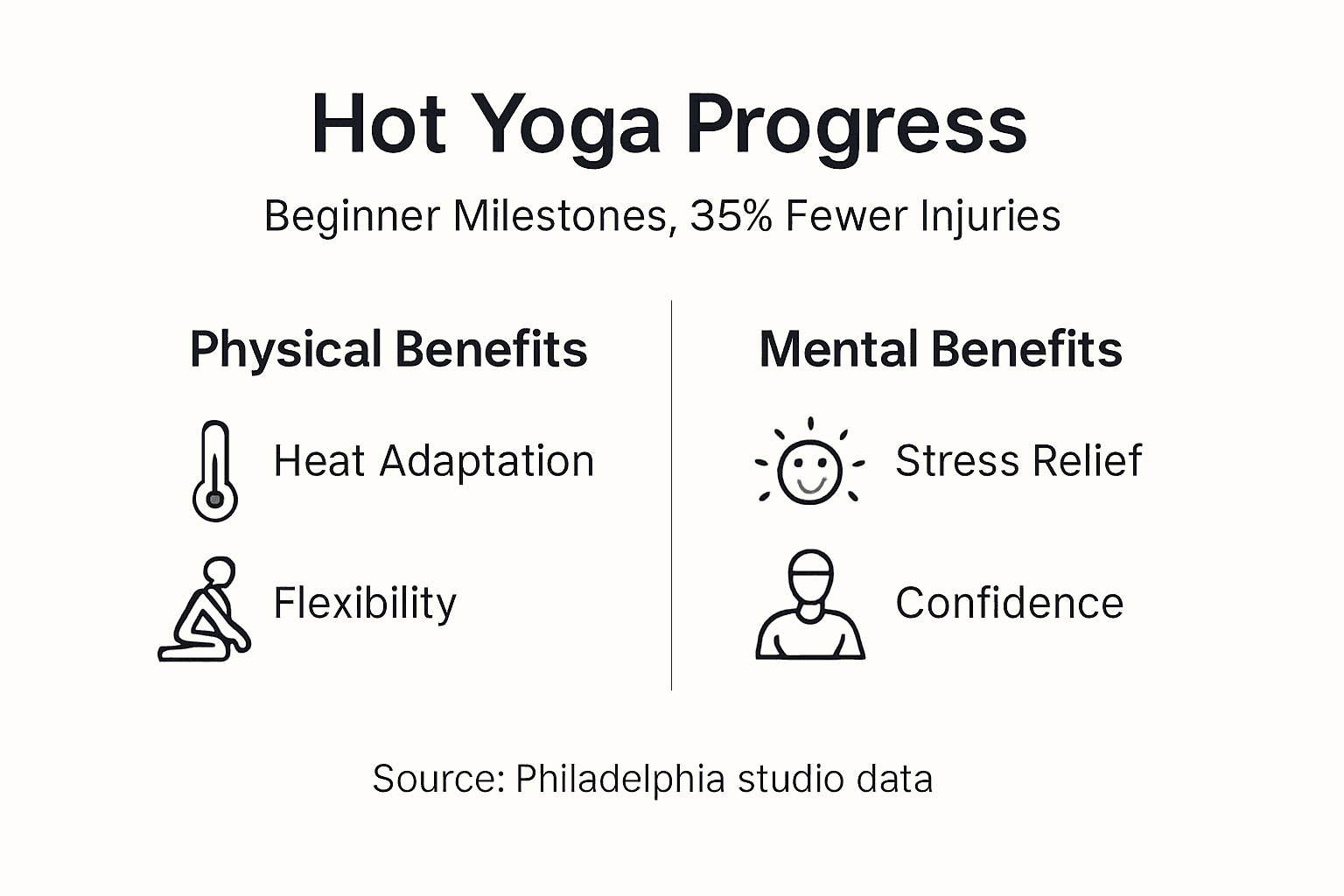
Mental benefits often appear faster than physical ones. Within three to four weeks, many practitioners report reduced stress levels and improved sleep quality. The meditative aspect of holding poses while managing heat builds mental resilience that transfers to other life challenges. Focus and concentration sharpen as you practice directing attention to breath and body.
| Timeline | Physical Benefits | Mental Benefits |
|---|---|---|
| Week 1-2 | Heat acclimation begins, reduced dizziness | Increased body awareness, stress relief |
| Week 3-4 | Improved stamina, less fatigue during class | Better focus, emotional regulation |
| Week 6-8 | Noticeable flexibility gains, muscle tone | Reduced anxiety, improved sleep patterns |
| Week 10+ | Advanced poses accessible, cardiovascular fitness | Enhanced mindfulness, confidence boost |
Heat acclimation represents a significant milestone. Initially, the temperature feels oppressive and breathing seems labored. After four to six classes, your body adjusts its cooling mechanisms, making the heat manageable rather than overwhelming. You'll sweat more efficiently and recover faster between poses.
Consistency matters more than intensity for beginners. Attending three shorter classes weekly yields better results than one long, exhausting session. Your body needs recovery time between practices to adapt and strengthen. Track your progress by noting how poses feel rather than how they look, celebrating internal improvements over external achievements.
Exploring hot yoga benefits for beginners reveals additional advantages like improved cardiovascular health, detoxification through sweating, and enhanced immune function. Most practitioners report feeling more connected to their bodies and more capable of managing stress after establishing a regular practice.
Choosing the Right Hot Yoga Studio in Philadelphia
Studio selection significantly impacts your success and enjoyment as a beginner. Philadelphia offers numerous hot yoga options, but not all cater equally to newcomers. Prioritize studios explicitly advertising beginner classes with detailed descriptions of what to expect and modifications offered.
Instructor expertise matters enormously. Look for teachers with extensive training in hot yoga methodologies and experience working with beginners. Approachable instructors who circulate during class to offer adjustments create safer, more supportive environments. Many studios let you observe a class before joining, which helps assess teaching style.
| Studio Feature | Why It Matters | What to Look For |
|---|---|---|
| Beginner Classes | Slower pace, detailed instruction | Classes labeled "Fundamentals" or "Intro" |
| Temperature Options | Gradual heat acclimation | Studios offering 90°F, 95°F, and 105°F rooms |
| Community Focus | Ongoing motivation and support | Social events, beginner workshops |
| Modification Emphasis | Injury prevention | Instructors demonstrating multiple variations |
Community atmosphere influences long-term commitment. Studios fostering inclusivity and celebrating individual progress rather than competition help beginners feel comfortable. Look for welcoming front desk staff, clean facilities, and students of varying ages and body types. These signals indicate an environment valuing personal growth over performance.
Infrared heating systems provide gentler heat exposure compared to traditional forced-air systems. Studios like Amrita use infrared technology that warms your body directly rather than heating the air, creating a more comfortable experience for heat-sensitive beginners. This allows gradual acclimation without the oppressive feeling of extremely hot air.
Key factors when evaluating studios:
Class schedule flexibility fitting your availability and energy levels
Trial offers or intro packages letting you test multiple classes affordably
Clear safety protocols and instructor certifications displayed publicly
Locker rooms and showers for post-class comfort
Retail options for mats, towels, and water bottles if you forget supplies
Temperature and humidity control demonstrate studio professionalism. Well-managed studios maintain consistent conditions that match their advertised ranges. Wildly fluctuating temperatures or excessive humidity beyond 50% create discomfort and potential health risks. Ask about heating systems and ventilation during your tour.
Reviewing hot yoga safety tips from your chosen studio helps you understand their specific protocols and expectations. Many Philadelphia studios also offer beginner yoga classes in non-heated rooms, allowing you to build foundational strength before adding heat challenges.
Discover Beginner-Friendly Hot Yoga Classes at Amrita Yoga & Wellness
Amrita Yoga & Wellness creates a welcoming space specifically designed for beginners exploring hot yoga in Philadelphia. Their instructors emphasize safety through detailed posture explanations and readily available modifications for every fitness level. The infrared heating system provides gentler warmth that eases newcomers into the practice without overwhelming intensity.

The studio's community-focused approach means you'll find supportive fellow practitioners rather than competitive atmospheres. Regular workshops and beginner-specific classes ensure you receive proper guidance throughout your hot yoga journey. Their blog offers extensive resources on beginner hot yoga classes, helping you prepare mentally and physically.
Joining the supportive yoga community at Amrita connects you with others starting similar wellness journeys. The studio prioritizes hot yoga safety tips, ensuring every class balances challenge with care. Explore their schedule and start your practice with experienced instructors who understand beginner concerns.
Frequently Asked Questions
Is hot yoga safe for absolute beginners?
Yes, hot yoga is safe for beginners who hydrate properly, control their breathing, and use posture modifications. Studios offering beginner-specific classes design sessions to ease new participants into the heated environment gradually, with instructors monitoring closely for signs of distress.
What should I wear and bring to my first hot yoga class?
Wear minimal, breathable, moisture-wicking clothing that fits close to your body without restricting movement. Bring at least two towels for your mat and body, plus a large water bottle holding 24 ounces or more to maintain hydration throughout the practice.
How often should beginners attend hot yoga classes to see benefits?
Attending two to three classes per week typically produces measurable benefits within six to eight weeks of consistent practice. This frequency allows your body to acclimate to heat while providing adequate recovery time, improving both physical flexibility and mental focus progressively.
Can I eat before hot yoga class?
Avoid eating heavy meals within two hours of class to prevent nausea and discomfort. If you need energy, consume a light snack like a banana or handful of nuts 60 to 90 minutes before practice, ensuring your stomach isn't full when you begin.
What if I feel dizzy or nauseous during class?
Immediately sit or lie down on your mat, focus on slow breathing, and sip water if available. Instructors expect beginners to rest when needed and will check on you. Never push through severe dizziness, as this signals your body needs recovery time before continuing.
Recommended
Hot Room Yoga: Benefits and Practice Essentials

Stepping into a heated yoga studio in Philadelphia, you immediately notice the vibrant energy and collective focus that sets hot room yoga apart. For adults who value flexibility, stress relief, and meaningful connection, this powerful practice does more than just work up a sweat. By performing yoga postures in temperatures that reach between 90 to 105°F, participants experience intensified stretching and a deep sense of renewed well-being. Discover how this dynamic environment helps create both physical transformation and a sense of shared community.
Table of Contents
Key Takeaways
| Point | Details |
|---|---|
| Hot Room Yoga Defined | It involves practicing yoga in a heated environment (90-105°F) to enhance physical and mental benefits. |
| Styles of Hot Room Yoga | Prominent styles include Bikram, Vinyasa Hot, and Power Hot Yoga, each offering varied sequences and focuses. |
| Health Benefits and Risks | Benefits include increased flexibility and stress reduction, while risks like dehydration should be carefully managed. |
| Comparing Yoga Practices | Hot room yoga demands higher intensity and focus compared to traditional yoga, making it a more performance-oriented approach. |
What Is Hot Room Yoga? Core Concepts Explained
Hot room yoga represents a dynamic and intense variation of traditional yoga practice, characterized by performing physical postures in a deliberately heated environment. Yoga practices originating in ancient India have long emphasized physical and mental integration, and hot room yoga takes these principles to an elevated, temperature-enhanced experience.
In a typical hot room yoga session, practitioners engage in familiar yoga poses within a carefully controlled environment typically heated between 90 to 105°F. This intentional temperature elevation serves multiple physiological purposes:
Increases overall body flexibility
Promotes deeper muscle stretching
Encourages substantial perspiration and potential detoxification
Challenges cardiovascular endurance
Enhances mental focus and breath control
The practice fundamentally differs from traditional yoga by leveraging heat as a transformative element. Thermal intensity creates a more demanding physical experience, pushing practitioners beyond conventional workout boundaries. Hot yoga techniques challenge participants to maintain precise postures while managing increased physical stress and body temperature.
Understanding hot room yoga requires recognizing it as more than just a workout - it's a holistic practice integrating physical challenge, mental resilience, and intentional bodily awareness. The heated environment acts as a catalyst, amplifying yoga's traditional goals of strength, flexibility, and inner calm.
Pro tip: Start your hot room yoga journey gradually, prioritizing hydration and listening closely to your body's signals during initial sessions.
Popular Hot Room Yoga Styles and Differences
Hot room yoga encompasses multiple distinctive styles, each offering unique approaches to practice and physical engagement. Hot yoga techniques vary significantly in their structure, temperature, and philosophical foundations, providing practitioners with diverse options to match their fitness goals and personal preferences.
The most prominent hot room yoga styles include:
Bikram Yoga: A highly structured practice featuring
Exactly 26 specific postures
Consistent room temperature of 105°F
40% humidity level
Identical sequence in every class
Vinyasa Hot Yoga: A more fluid and dynamic approach
Varying pose sequences
Breath-synchronized movements
Temperatures ranging from 90-100°F
Power Hot Yoga: An intense, strength-focused variation
More athletic and challenging poses
Faster transitions between postures
Emphasis on building muscular endurance
Hot yoga variations demonstrate remarkable diversity in their approach to heated practice. While Bikram remains the most rigidly defined style, other approaches like Baptiste and Power Hot Yoga offer more flexibility in sequence and intensity, allowing practitioners to find a method that best suits their individual fitness levels and objectives.

Here’s a side-by-side look at major hot room yoga styles to aid your selection:
| Yoga Style | Session Structure | Typical Room Temp | Unique Focus |
|---|---|---|---|
| Bikram Yoga | Fixed 26-posture sequence | 105°F | Consistency and discipline |
| Vinyasa Hot Yoga | Flowing, varying sequences | 90–100°F | Creative movement, coordination |
| Power Hot Yoga | Rapid, athletic transitions | 95–100°F | Strength and endurance |
Understanding these differences helps practitioners select a hot room yoga style that aligns with their physical capabilities, fitness goals, and personal wellness journey. Each style offers unique benefits, from detoxification and increased flexibility to cardiovascular conditioning and mental resilience.
Pro tip: Experiment with multiple hot yoga styles to discover the approach that most effectively challenges and supports your personal fitness goals.
Health Benefits and Potential Risks to Know
Physical activity benefitsextend significantly through hot room yoga, offering a comprehensive approach to wellness that challenges both body and mind. This practice provides an intense, multifaceted approach to fitness that goes beyond traditional exercise methods.
Key health benefits of hot room yoga include:
Physical Advantages
Enhanced muscle flexibility
Improved cardiovascular endurance
Increased calorie burning
Better muscle strength and tone
Mental Health Benefits
Stress reduction
Improved mental focus
Enhanced mindfulness
Potential anxiety management
Metabolic Improvements
Boosted metabolism
Potential weight management support
Increased overall energy levels
Hot yoga techniques also present potential risks that practitioners must carefully consider. Individuals with pre-existing cardiovascular conditions, respiratory issues, or heat sensitivity should consult healthcare professionals before beginning a hot yoga practice.
Potential risks to be aware of include:
Dehydration risks
Heat exhaustion possibilities
Potential overexertion
Increased stress on cardiovascular system
Risk of heat-related illnesses
Pro tip: Always listen to your body, stay hydrated, and stop immediately if you experience dizziness, excessive fatigue, or unusual discomfort during hot room yoga sessions.
Essential Tips for a Safe and Effective Practice
Yoga safety practices demand careful attention, especially in the intense environment of hot room yoga. Understanding and implementing key safety strategies can transform your practice from potentially risky to profoundly beneficial.
Pre-Class Preparation Essentials:
Hydration Strategies
Drink water 2-3 hours before class
Consume electrolyte-rich fluids
Avoid heavy meals 2 hours prior
Physical Readiness
Wear lightweight, moisture-wicking clothing
Bring extra towel and water bottle
Use non-slip yoga mat
Health Considerations
Consult healthcare provider if needed
Inform instructor of any medical conditions
Know your personal physical limits
Hot yoga techniques require mindful execution. During class, practitioners should focus on maintaining proper breathing, listening to their body's signals, and modifying poses as necessary. The heated environment amplifies physical stress, making self-awareness crucial.
During class, implement these critical safety practices:
Move slowly and deliberately
Take breaks when feeling overwhelmed
Maintain steady, controlled breathing
Stop if experiencing dizziness or extreme discomfort
Stay near room's cooler areas if feeling challenged
Pro tip: Arrive at least 15 minutes early to acclimate to the room's temperature and prepare mentally for your hot yoga session.
Hot Room Yoga Versus Traditional Yoga Classes
Yoga practice comparisons reveal significant differences between hot room and traditional yoga approaches, each offering unique benefits and challenges to practitioners. While both styles share core principles of mindfulness and physical engagement, their methodological distinctions create dramatically different experiences.
Key Comparative Elements:
Environmental Factors
Hot Yoga: Heated room (90-105°F)
Traditional Yoga: Room temperature setting
Hot Yoga: Increased perspiration
Traditional Yoga: Standard body temperature
Physical Intensity
Hot Yoga: Higher cardiovascular demand
Traditional Yoga: Moderate physical challenge
Hot Yoga: Enhanced muscle flexibility
Traditional Yoga: Gradual flexibility development
Mental Engagement
Hot Yoga: Intense focus required
Traditional Yoga: Meditative, steady approach
Hot Yoga: Stress resilience training
Traditional Yoga: Mindful introspection
Comparative yoga studiesindicate that while both practices offer substantial health benefits, hot room yoga demands greater physiological adaptation. The elevated temperature creates an additional layer of challenge, requiring practitioners to develop enhanced body awareness and mental discipline.
The primary distinctions extend beyond physical parameters, touching psychological and physiological domains. Hot room yoga represents a more intense, performance-oriented approach, whereas traditional yoga emphasizes holistic, gradual development of mind-body connection.
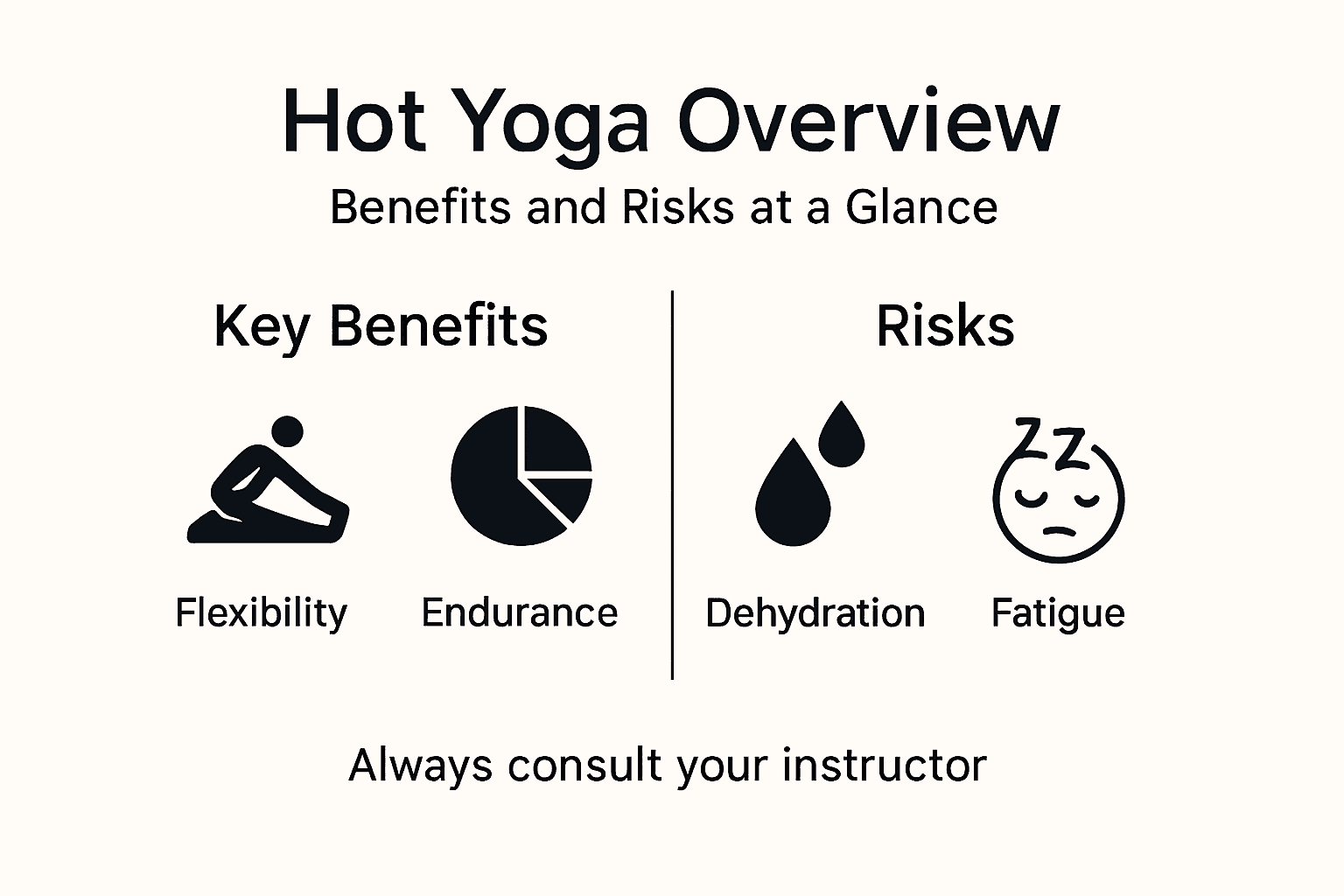
For quick reference, here’s how hot room and traditional yoga compare on key dimensions:
| Aspect | Hot Room Yoga | Traditional Yoga |
|---|---|---|
| Temperature | 90–105°F, heated | Room temperature |
| Sweat & Hydration | Heavy sweating, extra fluid | Moderate sweating, standard intake |
| Fitness Challenge | High intensity, fast gains | Moderate pace, gradual gains |
| Mental Training | Stress resilience | Relaxation, introspection |
Pro tip: Begin with traditional yoga classes to establish foundational skills before transitioning to hot room yoga’s more demanding environment.
Experience the Power and Benefits of Hot Room Yoga at Amrita Yoga & Wellness
If you are ready to embrace the challenges and rewards of hot room yoga, including increased flexibility, mental focus, and cardiovascular endurance, Amrita Yoga & Wellness in Philadelphia offers expert-guided classes designed to support your journey safely and effectively. Whether you want to try structured Bikram Yoga or explore dynamic styles like Power Hot Yoga, our welcoming community helps you build strength and resilience while staying hydrated and mindful.

Take the next step toward transforming your wellness routine with personalized attention and a variety of hot yoga sessions at Amrita Yoga & Wellness. Visit us today to explore class schedules, join workshops, and become part of a supportive environment committed to your physical and mental growth. There is no better time than now to start your hot yoga practice with guidance that prioritizes your well-being and goals.
Frequently Asked Questions
What is hot room yoga?
Hot room yoga is a variation of traditional yoga where practitioners perform poses in a heated environment, typically between 90 to 105°F. This elevated temperature helps improve flexibility, promote muscle stretching, and enhance cardiovascular endurance.
What are the benefits of hot room yoga?
The main benefits of hot room yoga include increased muscle flexibility, improved cardiovascular endurance, enhanced muscle strength, stress reduction, mental focus, and potential weight management support through calorie burning and boosted metabolism.
How does hot room yoga differ from traditional yoga?
Hot room yoga is conducted in a heated environment, which increases physical intensity and demands greater cardiovascular challenge, while traditional yoga is practiced at standard room temperature with a more gradual pace and intensity. Hot room yoga emphasizes sweat and resilience, while traditional yoga focuses on holistic engagement and relaxation.
What should I do to prepare for a hot room yoga session?
To prepare for a hot room yoga session, it is essential to stay hydrated by drinking water before class, wear lightweight moisture-wicking clothing, bring a towel and a water bottle, and listen to your body during practice to avoid overexertion.
Recommended
Why Choose Hot Yoga: Complete Benefits Breakdown

Sweating through a yoga class at over 100 degrees sounds intense, but more americans are turning to hot yoga for its unique mental and physical rewards. With studies showing that heat exposure during yoga can boost flexibility and aid detoxification, the appeal goes beyond simple stretching. Understanding how hot yoga transforms traditional practice will help you decide if this demanding wellness trend matches your fitness journey and goals.
Table of Contents
Quick Summary
| Point | Details |
|---|---|
| Hot Yoga Definition | Hot yoga involves practicing various yoga styles in heated and humid environments to enhance flexibility and strengthen focus. |
| Types of Hot Yoga | Key styles include Bikram, Moksha, Ashtanga, Baptiste, and Power Hot Yoga, each offering distinct methods and benefits. |
| Physical and Mental Benefits | Hot yoga improves strength, cardiovascular health, flexibility, and reduces stress, contributing to overall wellness. |
| Safety Guidelines | Practitioners should stay hydrated, know their limits, and start gradually to reduce health risks associated with heat exposure. |
Defining Hot Yoga and Its Core Principles
Hot yoga represents a dynamic and transformative approach to traditional yoga practice, characterized by conducting yoga sessions in a deliberately heated environment. According to hsrd, hot yoga can be defined as “any yoga practice performed under hot and humid conditions,” which goes beyond a single specific style to encompass multiple yoga approaches utilizing heat as a core component.
The fundamental principle behind hot yoga centers on leveraging environmental temperature to enhance physical performance and flexibility. Heat exposure during yoga practice creates a unique physiological response, causing muscles to become more pliable and increasing overall range of motion. iayt emphasizes that the heated environment promotes “flexibility and detoxification” while simultaneously challenging practitioners to maintain focus and control during increasingly intense physical sequences.
Key characteristics of hot yoga include:
Temperatures typically ranging between 95-105 degrees Fahrenheit
Humidity levels around 40-60 percent
Extended pose holding times to maximize muscular engagement
Emphasis on controlled breathing techniques
Significant cardiovascular and strength-building components
While originating from traditional yoga practices, hot yoga introduces a deliberate environmental challenge that transforms the standard yoga experience. The heated setting demands heightened mental discipline, encourages deeper physical engagement, and provides practitioners with an opportunity to explore their personal physical and psychological boundaries in a structured, intentional environment.

For those interested in learning more about specific hot yoga techniques, our comprehensive guide on hot yoga offers additional insights and detailed practice recommendations.
Types of Hot Yoga Practices Explained
Hot yoga encompasses a diverse range of practices, each offering unique approaches to integrating heat and movement into traditional yoga principles. nhpcanada highlights two prominent styles that exemplify the hot yoga landscape: Bikram Yoga and Moksha Yoga. Bikram yoga follows a precise structure, involving 26 specific postures performed twice in a heated room maintained at 40°C with 40% humidity, creating an intense and controlled practice environment.
Additional hot yoga styles bring their own distinctive characteristics to the practice. eomega describes Ashtanga Yoga as a muscle-toning aerobic workout rooted in flowing variations of Surya Namaskar, often practiced in heated conditions. Similarly, Baptiste Yoga emerges as a vigorous vinyasa-style practice designed to build strength and personal empowerment through dynamic movement and heat-enhanced flexibility.
Key hot yoga styles include:
Bikram Yoga: 26 postures, strict 40°C environment
Moksha/Modo Yoga: Heated room with flexible sequencing
Ashtanga-Inspired Hot Yoga: Muscle-toning flow sequences
Baptiste Power Yoga: Strength-building vinyasa practice
Power Hot Yoga: High-intensity cardiovascular variations
For practitioners seeking to explore the nuanced world of hot yoga styles, our comprehensive guide to hot yoga types offers an in-depth exploration of each unique approach, helping individuals discover the practice that best aligns with their fitness goals and personal preferences.
Physical and Mental Benefits of Hot Yoga
Hot yoga offers a comprehensive approach to wellness that simultaneously addresses physical and mental health needs. yogahelp reveals that this practice promotes increased flexibility, enables deeper stretching, and supports detoxification through intense perspiration. The heated environment creates a unique physiological response that challenges practitioners while delivering remarkable health benefits.
yogagroup highlights that hot yoga significantly improves cardiovascular fitness, strength development, and metabolic performance. The elevated temperatures contribute to enhanced calorie burning, making it an exceptional workout for individuals seeking weight management and comprehensive physical conditioning. Moreover, the practice’s mental components engage practitioners in a profound mind-body connection, reducing stress and promoting psychological resilience.
Key benefits of hot yoga include:
Improved muscular strength and endurance
Enhanced cardiovascular performance
Accelerated metabolic rate
Increased flexibility and range of motion
Stress reduction and mental clarity
Improved respiratory function
Potential weight loss support
For individuals interested in understanding how hot yoga can transform their wellness journey, our comprehensive guide to hot yoga benefits provides deeper insights into the holistic advantages of this transformative practice.
Safety Guidelines and Common Misconceptions
iayt emphasizes that proper hydration is the cornerstone of safe hot yoga practice. The intense heated environment demands careful physiological management, with practitioners needing to understand critical safety protocols before engaging in this challenging workout. Gradual acclimatization over 10-14 days can significantly improve an individual’s heat tolerance and reduce potential health risks associated with high-temperature exercise.
yogahelp recommends that individuals consult their healthcare provider before beginning hot yoga, particularly those with pre-existing health conditions. Common misconceptions about hot yoga often revolve around its perceived extreme nature, leading many to believe it’s only suitable for advanced fitness enthusiasts. In reality, hot yoga can be adapted for various fitness levels when approached mindfully and with proper guidance.
Key safety guidelines for hot yoga include:
Hydrate extensively before, during, and after practice
Listen to your body and know your personal limits
Start with shorter sessions and gradually increase intensity
Wear lightweight, moisture-wicking clothing
Bring a towel and water bottle to every class
Stop immediately if experiencing dizziness or extreme discomfort
Eat light meals at least 2 hours before practice
our comprehensive guide to hot yoga safety offers additional insights for practitioners seeking to understand the nuanced approach to this transformative practice, helping individuals make informed decisions about their wellness journey.
Comparing Hot Yoga to Other Wellness Classes
nhpcanada reveals the nuanced differences between wellness practices, highlighting that hot yoga stands out as a unique approach to holistic fitness. While traditional yoga styles focus primarily on spiritual connection, hot yoga integrates intense physical conditioning with mindful practice. Bikram yoga, for instance, represents a physically demanding style that emphasizes exercise and bodily transformation, distinguishing itself from more meditative wellness approaches.
eomega demonstrates that different wellness practices offer distinct benefits. Ashtanga Yoga shares similarities with hot yoga through its strength-focused approach, often performed in heated environments, while Baptiste Yoga introduces a more personalized empowerment methodology. These variations underscore the importance of choosing a practice that aligns with individual fitness goals and personal wellness philosophies.
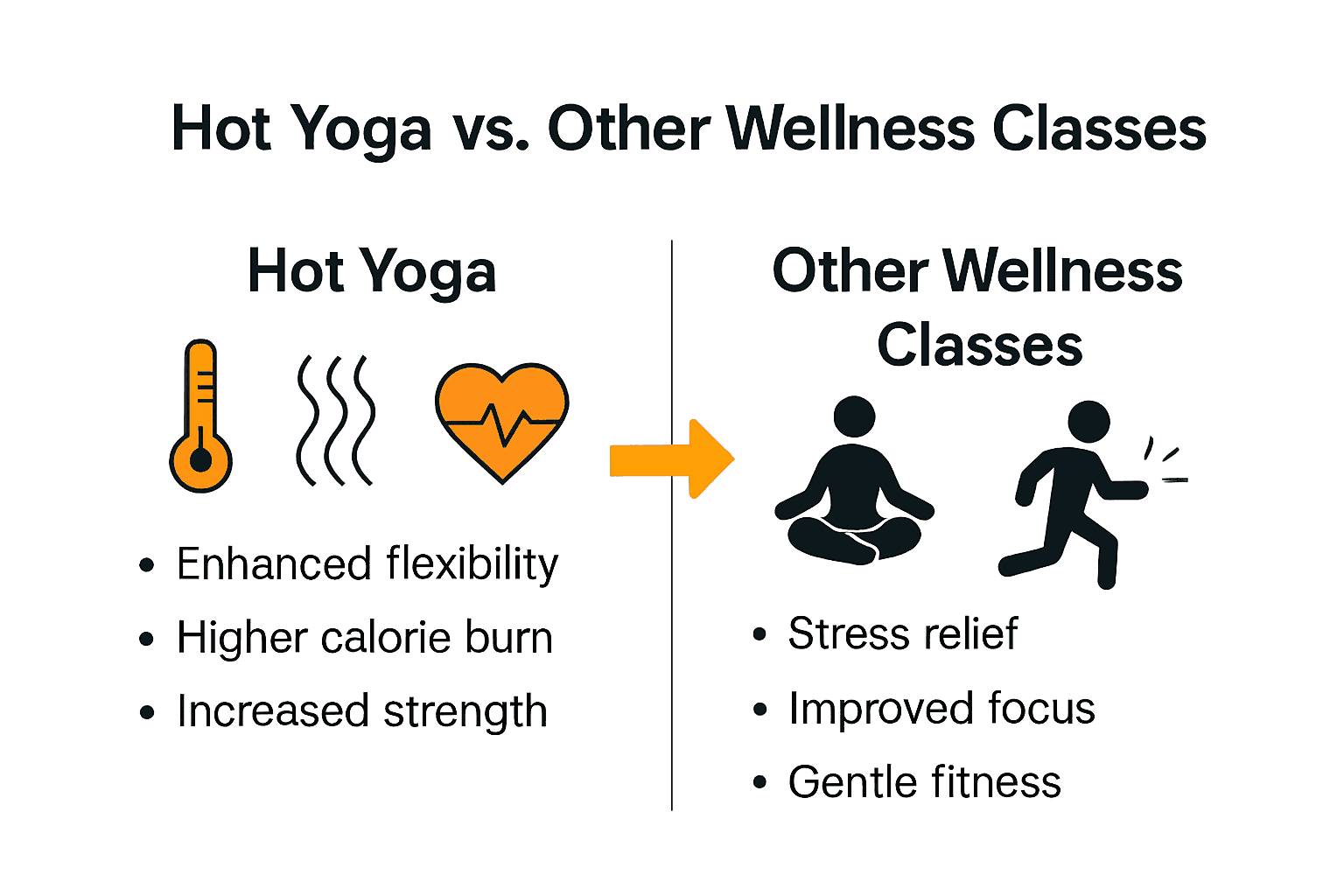
Key distinctions between hot yoga and other wellness classes include:
Higher calorie burn compared to traditional yoga
More intense cardiovascular engagement
Greater emphasis on physical strength and endurance
Enhanced flexibility through heated environment
More dynamic and challenging physical sequences
Faster metabolic response
Deeper muscular engagement
our comprehensive wellness class comparison guide offers deeper insights into navigating the diverse landscape of fitness practices, helping practitioners make informed decisions about their personal wellness journey.
Unlock Your Full Potential with Hot Yoga at Amrita Yoga & Wellness
If you are searching for a powerful way to increase your flexibility, detoxify your body, and build strength in a supportive and welcoming environment hot yoga might be the perfect solution. Our studio focuses on helping you safely embrace the challenge of heated yoga practice with expert guidance on hydration safety and gradual adaptation. Whether you want to reduce stress increase cardiovascular fitness or deepen your mind-body connection Amrita Yoga & Wellness provides the tools and community support to help you reach those goals.

Experience the transformative benefits of hot yoga for yourself and discover personalized classes designed to match every fitness level. Visit Amrita Yoga & Wellness and explore our detailed class descriptions for hot yoga and other wellness practices. Take the next step in your wellness journey by signing up today and enjoy the encouragement and expertise that makes our studio Philadelphia’s trusted destination for holistic health.
Frequently Asked Questions
What is hot yoga?
Hot yoga is a form of yoga practiced in a heated environment, typically between 95-105 degrees Fahrenheit, which enhances physical performance, flexibility, and provides a unique physiological response.
What are the benefits of hot yoga?
Hot yoga promotes increased flexibility, improved cardiovascular performance, enhanced strength, detoxification through sweating, stress reduction, and deeper mental clarity.
How does hot yoga differ from traditional yoga?
Hot yoga emphasizes intense physical conditioning and calorie burning in a heated environment, while traditional yoga focuses more on spiritual connection and mindful practice without intense physical exertion.
Are there safety guidelines I should follow when practicing hot yoga?
Yes, it is essential to stay hydrated, listen to your body, gradually increase session intensity, wear lightweight clothing, and consult a healthcare provider if you have pre-existing conditions.