Contact Us

Want to send us a quick message? Use the form on the right to contact us and we'll be in touch within 2 business days!

Please contact Audrey at info@amritayogawellness.com for general inquiries, software issues, in-studio and out-of-studio events and workshops, marketing, and community outreach and donations.

Please contact Heather at heather@amritayogawellness.com for private events, private yoga/pilates requests, and trainings.

1204 Frankford Avenue
North Philadelphia, PA, 19125
United States

(267) 928 3176

Amrita Yoga & Wellness offers a variety of Yoga traditions, Pilates Mat, Pilates Group Reformer, Tai Chi, and Massage services in a beautiful space. Our studio is located in Philadelphia, Pennsylvania.

Blog

Filtering by Tag: inclusive yoga

Inclusive Yoga Explained: Benefits for Every Body
Heather Rice

Stepping into a yoga studio can feel intimidating when typical classes emphasize perfect poses and uniform bodies. Many people in Philadelphia discover that traditional yoga often overlooks individual differences and accessibility needs. Inclusive yoga practices center on personalized movement and compassionate self-exploration, so every ability and body type is accepted. Whether you are new to yoga or looking for holistic support, discover how community-oriented studios in Philadelphia welcome diversity and nurture true well-being.

Table of Contents

Key Takeaways

Point Details
Inclusive Yoga Focuses on Individual Needs This practice prioritizes accessibility and personal wellness, recognizing the unique abilities of each participant.
Diverse Class Types Are Available Various classes, such as Chair Yoga and Therapeutic Yoga, cater to different physical abilities and health conditions.
Communication is Key Open dialogue with instructors about specific needs enhances the yoga experience and promotes a supportive environment.
Community Benefits Are Significant Inclusive yoga fosters emotional resilience and social connections, creating a shared journey of healing and personal growth.

What Is Inclusive Yoga Practice

Inclusive yoga represents a profound reimagining of traditional yoga practice that centers on accessibility, respect, and personalized wellness. Unlike conventional approaches that demand rigid physical conformity, this philosophy recognizes that every body possesses unique capabilities, limitations, and healing potential. Yoga practices rooted in inclusivity transform mat experiences from competitive performance to compassionate self-exploration.

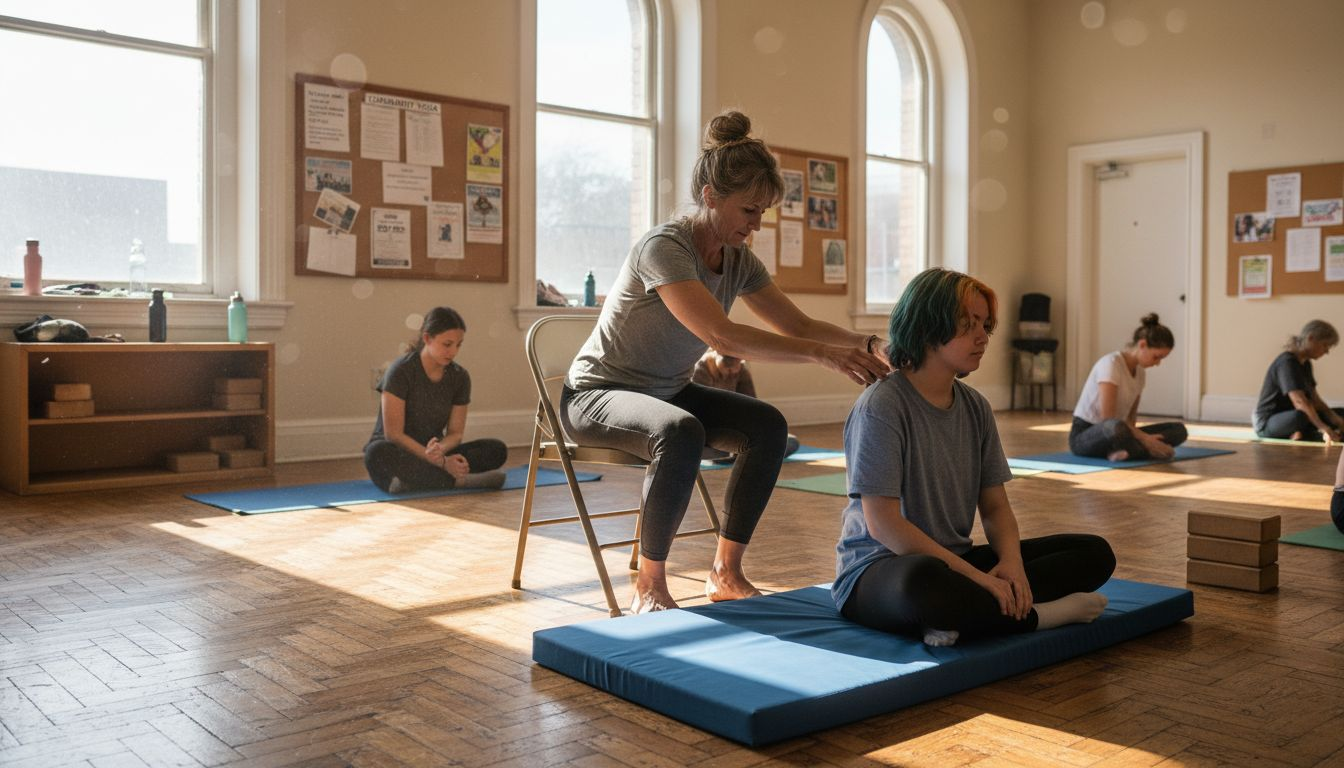
At its core, inclusive yoga dismantles barriers by offering adaptive techniques that welcome practitioners across diverse physical abilities, age ranges, body types, and mobility levels. This approach might involve modifying standard poses, using supportive props like blocks or chairs, providing alternative movement options, or creating environments where participants feel genuinely respected. Instructors trained in inclusive methodologies understand that yoga is not about achieving perfect postures but about creating meaningful connections between breath, movement, and individual experience.

The fundamental principles of inclusive yoga extend beyond physical adaptations to embrace emotional and spiritual dimensions. By removing judgment and emphasizing personal growth, these practices create spaces where individuals can explore their physical potential without shame or comparison. Whether someone is managing chronic pain, recovering from injury, navigating neurodiversity, or simply seeking gentle movement, inclusive yoga offers a pathway to holistic wellness that honors individual journeys.

Pro Tip: When exploring inclusive yoga, communicate openly with instructors about your specific needs and comfort levels to ensure a supportive and personalized practice.

Types of Inclusive Yoga Classes

Inclusive yoga offers a diverse range of class types designed to accommodate practitioners with varying physical abilities, health conditions, and personal wellness goals. Adaptive yoga techniques have revolutionized traditional practice by creating multiple entry points for participation across different fitness levels and mobility ranges.

Some primary types of inclusive yoga classes include:

  • Chair Yoga: Perfect for individuals with limited mobility, using a chair for support and modifications

  • Gentle Yoga: Slow-paced classes focusing on minimal physical strain and maximum mindfulness

  • Restorative Yoga: Emphasizing relaxation and healing through extended pose holds and supportive props

  • Therapeutic Yoga: Specifically designed for managing chronic conditions, injury recovery, and specialized health needs

  • Accessible Hatha: Traditional yoga principles adapted with extensive modifications and individualized support

Yoga Alliance-recognized instructorsare trained to create welcoming environments that prioritize individual comfort and personal growth. These professionals understand that inclusivity means more than physical adaptations—it involves creating emotionally safe spaces where every participant feels valued and empowered to explore their practice at their own pace.

The goal of these diverse class types is not about achieving perfect poses, but about providing meaningful movement experiences that respect individual limitations and celebrate unique body capabilities. By offering multiple entry points and personalized approaches, inclusive yoga transforms traditional practice into a truly universal wellness journey.

Pro Tip: Before attending a new inclusive yoga class, contact the instructor to discuss your specific needs and confirm the class's adaptation strategies.

Here's a comparison of key inclusive yoga class types and their primary benefits:

Yoga Class Types
Class Type Designed For Core Focus
Chair Yoga Limited mobility practitioners Stability and gentle movement
Gentle Yoga Beginners or sensitive bodies Stress relief and mindfulness
Restorative Yoga Stress or pain management Deep relaxation and healing
Therapeutic Yoga Chronic conditions or injury Personalized wellness plans
Accessible Hatha All body types Traditional practice with adaptations

Accessibility Features and Adaptations

Accessibility in yoga goes far beyond simple physical modifications, representing a comprehensive approach to creating welcoming spaces that honor individual needs and experiences. Inclusive design principles transform yoga practice into a flexible, personalized journey that empowers practitioners to customize their experience.

Key accessibility features in inclusive yoga classes typically include:

  • Adaptive Props: Blocks, straps, chairs, bolsters, and wall supports

  • Environmental Modifications: Adjustable lighting, temperature controls, and noise management

  • Communication Strategies: Visual demonstrations, verbal descriptions, and hands-off guidance

  • Space Considerations: Wide pathways, accessible entrances, and comfortable floor surfaces

  • Sensory Accommodations: Options for reducing visual/auditory stimulation

Practitioners with diverse needs benefit from these thoughtful adaptations, which transform yoga from a potentially intimidating practice to a welcoming, individualized experience. Whether managing chronic pain, navigating mobility challenges, or addressing sensory sensitivities, inclusive yoga creates multiple pathways for participation.

The ultimate goal of these accessibility features is to remove barriers and create an environment where every individual feels empowered to explore movement, breathwork, and mindfulness on their own terms. By prioritizing personal agency and respecting individual differences, inclusive yoga redefines wellness as a deeply personal and adaptable journey.

Pro Tip: Always communicate your specific needs and comfort levels with your yoga instructor before class to ensure the most supportive and personalized experience.

Community Benefits and Personal Growth

Inclusive yoga transcends individual practice, emerging as a powerful vehicle for community wellness and personal transformation. By creating supportive environments that welcome diverse experiences, yoga practice becomes a profound journey of connection, healing, and mutual understanding.

The community benefits of inclusive yoga extend far beyond physical movement, offering critical psychological and social advantages:

  • Emotional Resilience: Developing shared coping strategies

  • Social Connection: Breaking isolation through collective experience

  • Mutual Support: Creating spaces of non-judgmental acceptance

  • Skill Sharing: Exchanging adaptive techniques and personal insights

  • Empowerment: Celebrating individual strengths and unique abilities

Neurodiverse populations particularly benefitfrom these inclusive environments, which provide structured yet flexible spaces for exploration and growth. Such classes offer more than exercise—they represent microcosms of understanding, where differences are not just tolerated but genuinely celebrated.

Ultimately, inclusive yoga community practices remind us that personal growth is not a solitary journey, but a collective experience of mutual support, learning, and transformation. By honoring each individual's path while simultaneously weaving connections between practitioners, these spaces become powerful catalysts for holistic wellness.

Pro Tip: Approach your yoga community with curiosity and openness, recognizing that every person's journey contributes to the collective healing experience.

Common Mistakes and How to Avoid Them

Inclusive teaching strategiesreveal that most mistakes in yoga practice stem from a lack of understanding about individual diversity and adaptive learning. Recognizing these pitfalls is the first step toward creating truly welcoming and supportive yoga experiences.

Common mistakes practitioners and instructors often encounter include:

  • Forcing Uniform Postures: Assuming all bodies move identically

  • Ignoring Individual Limitations: Pushing students beyond comfortable boundaries

  • Inadequate Communication: Failing to provide clear, alternative instructions

  • Lack of Prop Awareness: Not offering or demonstrating adaptive equipment

  • Judgment-Based Environment: Creating spaces that feel competitive or exclusionary

Inclusive pedagogy approachesemphasize that avoiding these mistakes requires intentional, compassionate instruction. This means developing keen observation skills, remaining flexible in teaching methods, and continuously learning about diverse student needs. Successful inclusive yoga instructors view modifications not as compromises, but as creative opportunities for personalized movement.

Ultimately, transforming potential mistakes into learning opportunities demands ongoing education, self-reflection, and a genuine commitment to creating spaces where every individual feels respected, supported, and empowered to explore their unique wellness journey.

Pro Tip: Always approach your yoga practice with curiosity and self-compassion, remembering that adaptation is a strength, not a weakness.

This summary shows how common inclusive yoga mistakes can be addressed for more effective teaching and practice:

Common Mistakes and Alternatives
Common Mistake Positive Alternative Impact on Students
Forcing uniform postures Encourage pose variation Increases confidence and safety
Ignoring limitations Invite open feedback Builds trust and participation
Inadequate communication Use multi-sensory instruction Enhances clarity and comfort
Lack of prop awareness Demonstrate adaptive equipment Supports diverse body needs
Judgment-based environment Foster non-competitive mindset Promotes inclusivity and growth

Embrace Yoga That Welcomes Every Body at Amrita Yoga & Wellness

Experiencing the challenges of traditional yoga that expects uniform postures or overlooks individual needs can make wellness feel out of reach. This article highlights how inclusive yoga transforms practice by honoring unique abilities, adapting poses, and fostering compassionate self-exploration. If you seek a supportive environment that prioritizes your comfort and respects your personal journey toward physical, emotional, and spiritual growth, you are not alone.

Discover how Amrita Yoga & Wellness in Philadelphia offers an extensive range of classes designed with inclusivity at the core. From gentle and restorative practices to adaptive techniques that welcome all mobility levels, our studio nurtures a non-judgmental space where you can build confidence safely. Feel empowered to explore yoga on your terms by joining a community that celebrates diversity and personal progress. Take your next step today by visiting Our Classes and Workshops and reserving your spot. Begin your inclusive wellness journey now at https://amritayogawellness.com.

Frequently Asked Questions

What is inclusive yoga?

Inclusive yoga is a practice that emphasizes accessibility and personalized wellness, recognizing that each individual has unique capabilities and limitations. It focuses on creating a supportive environment where everyone can explore their physical potential without judgment or comparison.

What types of classes are available in inclusive yoga?

Inclusive yoga offers various classes, including Chair Yoga for limited mobility, Gentle Yoga for beginners, Restorative Yoga for relaxation, Therapeutic Yoga for chronic conditions, and Accessible Hatha, which adapts traditional poses to meet individual needs.

How do accessibility features improve the inclusive yoga experience?

Accessibility features in inclusive yoga classes, such as adaptive props, environmental modifications, and clear communication strategies, create a welcoming atmosphere that empowers individuals. These adaptations help remove barriers, encouraging all participants to engage comfortably in their practice.

What are the community benefits of practicing inclusive yoga?

Inclusive yoga fosters emotional resilience, social connection, and mutual support among practitioners. It creates a space for shared experiences that celebrate individual strengths and unique abilities, enhancing overall community wellness and personal growth.

Recommended