
Why Choose Hot Yoga: Complete Benefits Breakdown

Sweating through a yoga class at over 100 degrees sounds intense, but more americans are turning to hot yoga for its unique mental and physical rewards. With studies showing that heat exposure during yoga can boost flexibility and aid detoxification, the appeal goes beyond simple stretching. Understanding how hot yoga transforms traditional practice will help you decide if this demanding wellness trend matches your fitness journey and goals.
Table of Contents
Quick Summary
| Point | Details |
|---|---|
| Hot Yoga Definition | Hot yoga involves practicing various yoga styles in heated and humid environments to enhance flexibility and strengthen focus. |
| Types of Hot Yoga | Key styles include Bikram, Moksha, Ashtanga, Baptiste, and Power Hot Yoga, each offering distinct methods and benefits. |
| Physical and Mental Benefits | Hot yoga improves strength, cardiovascular health, flexibility, and reduces stress, contributing to overall wellness. |
| Safety Guidelines | Practitioners should stay hydrated, know their limits, and start gradually to reduce health risks associated with heat exposure. |
Defining Hot Yoga and Its Core Principles
Hot yoga represents a dynamic and transformative approach to traditional yoga practice, characterized by conducting yoga sessions in a deliberately heated environment. According to hsrd, hot yoga can be defined as “any yoga practice performed under hot and humid conditions,” which goes beyond a single specific style to encompass multiple yoga approaches utilizing heat as a core component.
The fundamental principle behind hot yoga centers on leveraging environmental temperature to enhance physical performance and flexibility. Heat exposure during yoga practice creates a unique physiological response, causing muscles to become more pliable and increasing overall range of motion. iayt emphasizes that the heated environment promotes “flexibility and detoxification” while simultaneously challenging practitioners to maintain focus and control during increasingly intense physical sequences.
Key characteristics of hot yoga include:
Temperatures typically ranging between 95-105 degrees Fahrenheit
Humidity levels around 40-60 percent
Extended pose holding times to maximize muscular engagement
Emphasis on controlled breathing techniques
Significant cardiovascular and strength-building components
While originating from traditional yoga practices, hot yoga introduces a deliberate environmental challenge that transforms the standard yoga experience. The heated setting demands heightened mental discipline, encourages deeper physical engagement, and provides practitioners with an opportunity to explore their personal physical and psychological boundaries in a structured, intentional environment.

For those interested in learning more about specific hot yoga techniques, our comprehensive guide on hot yoga offers additional insights and detailed practice recommendations.
Types of Hot Yoga Practices Explained
Hot yoga encompasses a diverse range of practices, each offering unique approaches to integrating heat and movement into traditional yoga principles. nhpcanada highlights two prominent styles that exemplify the hot yoga landscape: Bikram Yoga and Moksha Yoga. Bikram yoga follows a precise structure, involving 26 specific postures performed twice in a heated room maintained at 40°C with 40% humidity, creating an intense and controlled practice environment.
Additional hot yoga styles bring their own distinctive characteristics to the practice. eomega describes Ashtanga Yoga as a muscle-toning aerobic workout rooted in flowing variations of Surya Namaskar, often practiced in heated conditions. Similarly, Baptiste Yoga emerges as a vigorous vinyasa-style practice designed to build strength and personal empowerment through dynamic movement and heat-enhanced flexibility.
Key hot yoga styles include:
Bikram Yoga: 26 postures, strict 40°C environment
Moksha/Modo Yoga: Heated room with flexible sequencing
Ashtanga-Inspired Hot Yoga: Muscle-toning flow sequences
Baptiste Power Yoga: Strength-building vinyasa practice
Power Hot Yoga: High-intensity cardiovascular variations
For practitioners seeking to explore the nuanced world of hot yoga styles, our comprehensive guide to hot yoga types offers an in-depth exploration of each unique approach, helping individuals discover the practice that best aligns with their fitness goals and personal preferences.
Physical and Mental Benefits of Hot Yoga
Hot yoga offers a comprehensive approach to wellness that simultaneously addresses physical and mental health needs. yogahelp reveals that this practice promotes increased flexibility, enables deeper stretching, and supports detoxification through intense perspiration. The heated environment creates a unique physiological response that challenges practitioners while delivering remarkable health benefits.
yogagroup highlights that hot yoga significantly improves cardiovascular fitness, strength development, and metabolic performance. The elevated temperatures contribute to enhanced calorie burning, making it an exceptional workout for individuals seeking weight management and comprehensive physical conditioning. Moreover, the practice’s mental components engage practitioners in a profound mind-body connection, reducing stress and promoting psychological resilience.
Key benefits of hot yoga include:
Improved muscular strength and endurance
Enhanced cardiovascular performance
Accelerated metabolic rate
Increased flexibility and range of motion
Stress reduction and mental clarity
Improved respiratory function
Potential weight loss support
For individuals interested in understanding how hot yoga can transform their wellness journey, our comprehensive guide to hot yoga benefits provides deeper insights into the holistic advantages of this transformative practice.
Safety Guidelines and Common Misconceptions
iayt emphasizes that proper hydration is the cornerstone of safe hot yoga practice. The intense heated environment demands careful physiological management, with practitioners needing to understand critical safety protocols before engaging in this challenging workout. Gradual acclimatization over 10-14 days can significantly improve an individual’s heat tolerance and reduce potential health risks associated with high-temperature exercise.
yogahelp recommends that individuals consult their healthcare provider before beginning hot yoga, particularly those with pre-existing health conditions. Common misconceptions about hot yoga often revolve around its perceived extreme nature, leading many to believe it’s only suitable for advanced fitness enthusiasts. In reality, hot yoga can be adapted for various fitness levels when approached mindfully and with proper guidance.
Key safety guidelines for hot yoga include:
Hydrate extensively before, during, and after practice
Listen to your body and know your personal limits
Start with shorter sessions and gradually increase intensity
Wear lightweight, moisture-wicking clothing
Bring a towel and water bottle to every class
Stop immediately if experiencing dizziness or extreme discomfort
Eat light meals at least 2 hours before practice
our comprehensive guide to hot yoga safety offers additional insights for practitioners seeking to understand the nuanced approach to this transformative practice, helping individuals make informed decisions about their wellness journey.
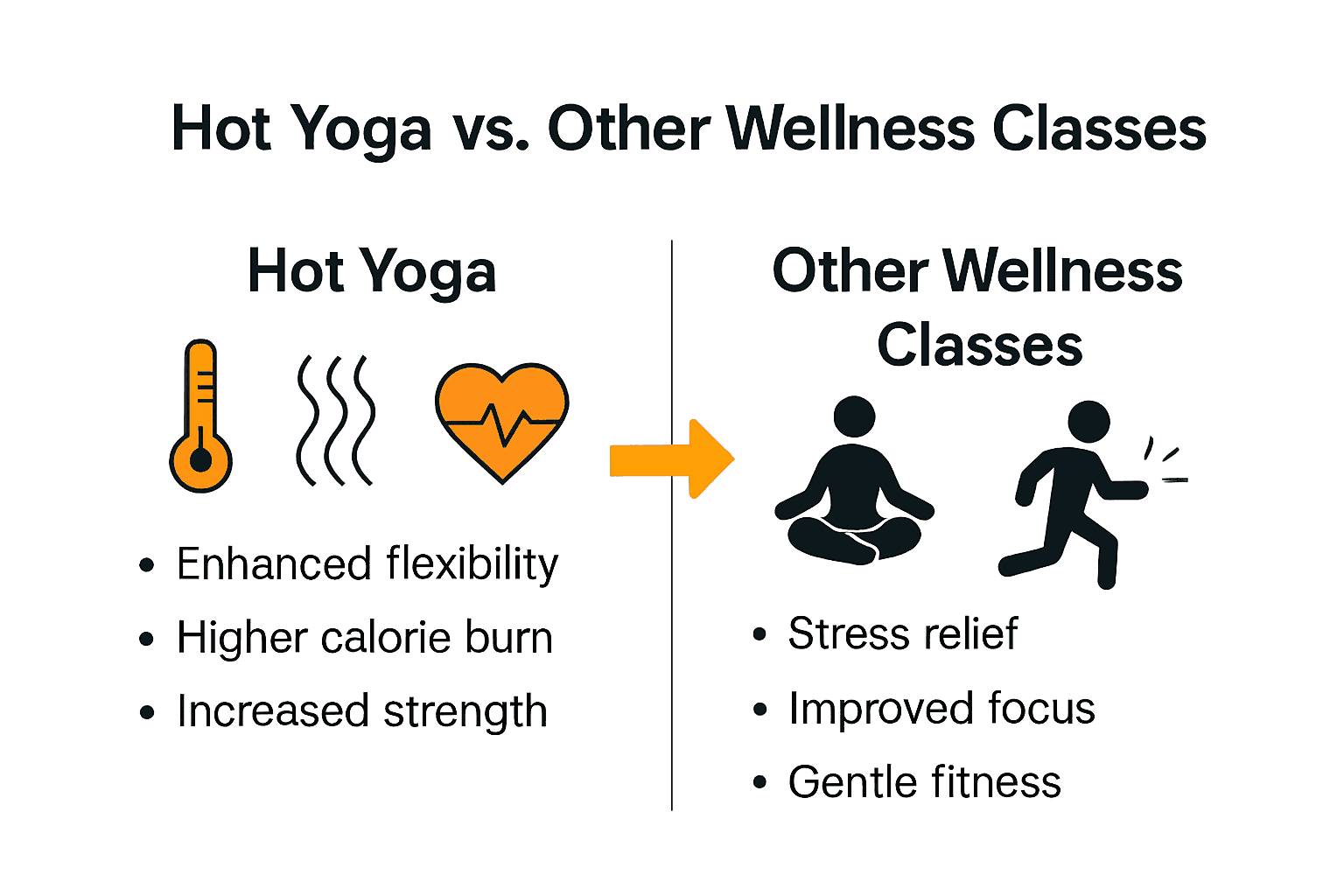
Comparing Hot Yoga to Other Wellness Classes
nhpcanada reveals the nuanced differences between wellness practices, highlighting that hot yoga stands out as a unique approach to holistic fitness. While traditional yoga styles focus primarily on spiritual connection, hot yoga integrates intense physical conditioning with mindful practice. Bikram yoga, for instance, represents a physically demanding style that emphasizes exercise and bodily transformation, distinguishing itself from more meditative wellness approaches.
eomega demonstrates that different wellness practices offer distinct benefits. Ashtanga Yoga shares similarities with hot yoga through its strength-focused approach, often performed in heated environments, while Baptiste Yoga introduces a more personalized empowerment methodology. These variations underscore the importance of choosing a practice that aligns with individual fitness goals and personal wellness philosophies.

Key distinctions between hot yoga and other wellness classes include:
Higher calorie burn compared to traditional yoga
More intense cardiovascular engagement
Greater emphasis on physical strength and endurance
Enhanced flexibility through heated environment
More dynamic and challenging physical sequences
Faster metabolic response
Deeper muscular engagement
our comprehensive wellness class comparison guide offers deeper insights into navigating the diverse landscape of fitness practices, helping practitioners make informed decisions about their personal wellness journey.
Unlock Your Full Potential with Hot Yoga at Amrita Yoga & Wellness
If you are searching for a powerful way to increase your flexibility, detoxify your body, and build strength in a supportive and welcoming environment hot yoga might be the perfect solution. Our studio focuses on helping you safely embrace the challenge of heated yoga practice with expert guidance on hydration safety and gradual adaptation. Whether you want to reduce stress increase cardiovascular fitness or deepen your mind-body connection Amrita Yoga & Wellness provides the tools and community support to help you reach those goals.

Experience the transformative benefits of hot yoga for yourself and discover personalized classes designed to match every fitness level. Visit Amrita Yoga & Wellness and explore our detailed class descriptions for hot yoga and other wellness practices. Take the next step in your wellness journey by signing up today and enjoy the encouragement and expertise that makes our studio Philadelphia’s trusted destination for holistic health.
Frequently Asked Questions
What is hot yoga?
Hot yoga is a form of yoga practiced in a heated environment, typically between 95-105 degrees Fahrenheit, which enhances physical performance, flexibility, and provides a unique physiological response.
What are the benefits of hot yoga?
Hot yoga promotes increased flexibility, improved cardiovascular performance, enhanced strength, detoxification through sweating, stress reduction, and deeper mental clarity.
How does hot yoga differ from traditional yoga?
Hot yoga emphasizes intense physical conditioning and calorie burning in a heated environment, while traditional yoga focuses more on spiritual connection and mindful practice without intense physical exertion.
Are there safety guidelines I should follow when practicing hot yoga?
Yes, it is essential to stay hydrated, listen to your body, gradually increase session intensity, wear lightweight clothing, and consult a healthcare provider if you have pre-existing conditions.