The Amrita Journal
Explore thoughtful stories, practical wellness guidance and inspiring ideas to support your movement, mindfulness and everyday wellbeing at Amrita.
Hot Hatha Yoga: Physical Benefits and Realities
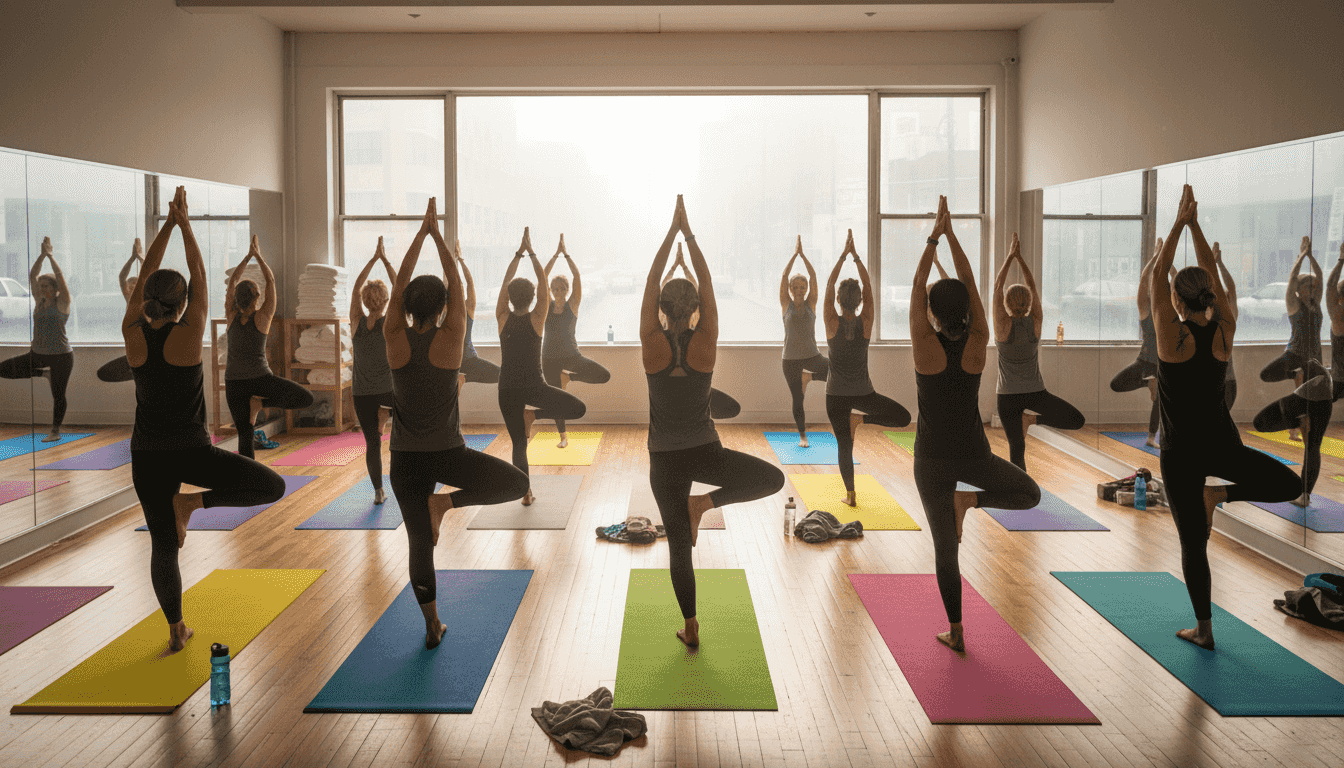
Feeling stuck in your usual fitness routine can make it hard to stay motivated, especially when you crave both physical progress and real stress relief. Hot Hatha Yoga offers a dynamic solution for Philadelphia adults who value movement, mindfulness, and community connection. By practicing traditional postures and breathwork in a heated studio, you experience both deeper stretches and enhanced mental clarity, all while respecting your body’s unique limits and needs. Hatha Yoga represents balance and union rather than force or intimidation, inviting everyone—regardless of experience—to benefit from holistic self-care.
Table of Contents
Key Takeaways
| Point | Details |
|---|---|
| Misconceptions Clarified | Hot hatha yoga is accessible for all levels and focuses on mindfulness, not forced exertion. |
| Environmental Impact | The heated environment enhances flexibility and strength, but safety and hydration are crucial. |
| Practice Intentions | Approach hot hatha yoga with realistic expectations for physical and mental benefits. |
| Choosing a Studio | Select a studio that aligns with your goals and values community engagement for a fulfilling practice. |
Hot Hatha Yoga Defined and Misconceptions
Hot hatha yoga combines traditional yoga postures and breathing techniques with a heated environment (typically 25°C or warmer) to intensify physical and mental benefits. Unlike some misconceptions, this style doesn't mean forced or aggressive movement—it's a mindful practice accessible to all experience levels.
Many people misunderstand what hatha yoga actually means. The term doesn't relate to forceful practice or harsh exertion, despite common interpretations. Instead, hatha yoga represents balance and union of energies within your body through dedicated, mindful practice.
Common Misconceptions Explained
Several myths about hot hatha yoga circulate in fitness communities:
It's only for beginners: False. Hot hatha yoga ranges from foundational to advanced, challenging practitioners at every level.
It requires a specific body type: Completely inaccurate. This practice adapts to your individual needs and abilities.
It's purely forceful exertion: The opposite is true. It emphasizes balance between breath, movement, and mindfulness.
The heat does all the work: Heat enhances benefits but doesn't replace proper technique and intention.
These misunderstandings often stem from historical secrecy around hatha yoga teachings and modern misinterpretations that oversimplify the practice.
What Makes Hot Hatha Yoga Different
Hot yoga performed in warm environments(≥25°C) combines traditional postures with temperature to create specific physiological responses. Your body responds to heat through increased flexibility, enhanced circulation, and deeper muscle engagement than unheated practice.
The heated setting doesn't change the fundamental principles of hatha yoga—balance between opposing forces, synchronization of breath with movement, and mind-body integration. What changes is the intensity and depth of these benefits.
For Philadelphia's health-conscious adults balancing demanding schedules, hot hatha yoga offers an efficient way to build strength and flexibility while managing stress. The heat accelerates cardiovascular engagement, meaning you gain cardiovascular benefits alongside traditional yoga's mental clarity benefits.
True hot hatha yoga respects both tradition and modern science, combining ancient practice methods with contemporary understanding of how heat affects human physiology.
Understanding these distinctions helps you approach hot hatha yoga with realistic expectations and appropriate respect for the practice itself.
To better understand the unique aspects of hot hatha yoga, here is a side-by-side comparison to traditional hatha yoga:
| Aspect | Traditional Hatha Yoga | Hot Hatha Yoga |
|---|---|---|
| Environment | Room temperature | 80°F–105°F, heated |
| Flexibility Gains | Gradual over time | Accelerated by warmth |
| Sweating Level | Mild to moderate | Significant, due to heat |
| Cardiovascular Demand | Moderate | Elevated from heat exposure |
| Stress Relief | Prominent | Enhanced by meditative heat effect |
| Accessibility | All ages and abilities | All levels, hydration required |
Pro tip: Start with a beginner-friendly hot hatha class to establish proper form before progressing to intermediate or advanced levels—heat can mask alignment issues if you move too quickly through progressions.
What to Expect in Heated Yoga Classes
Walking into your first heated yoga class can feel intimidating if you don't know what awaits. The combination of heat, humidity, and focused movement creates a unique experience that differs significantly from traditional yoga studios.
Temperature and humidity levels set the stage for your practice. Most heated yoga classes maintain temperatures between 80°F and 105°F, with moderate to high humidity that enhances your body's natural cooling response. You'll notice immediate physical sensations—warmth on your skin, increased perspiration, and a deeper sense of muscle engagement compared to unheated practice.
Physical Sensations You'll Experience
Your body responds quickly to the heated environment:
Increased heart rate: Heat elevates your cardiovascular activity from the moment you enter the studio.
Deeper muscle flexibility: Warmth increases elasticity, allowing you to access greater ranges of motion safely.
Profuse perspiration: Your body works harder to cool itself, resulting in visible sweat within minutes.
Heightened proprioception: The heat creates intense sensory feedback that sharpens your body awareness.
These responses aren't uncomfortable—they're your body adapting and strengthening.
The Mental and Respiratory Experience
Heated yoga classes boost flexibility and stress reliefthrough synchronized breathing and intentional movement in the warm environment. Your breathing becomes more deliberate as the heat initially challenges your respiratory patterns, then your lungs and cardiovascular system adapt and strengthen.
Mentally, the heat creates a meditative state where external distractions fade. You focus inward on breath and sensation, quieting the mental chatter that often dominates your day. For Philadelphia's busy professionals, this mental clarity becomes one of the most valuable benefits.
Class Structure and Pacing
Most heated hatha yoga classes follow this progression:
Opening centering (5-10 minutes) where you acclimate to the temperature
Warm-up movements increasing heart rate and circulation
Standing postures building strength and balance
Forward folds and deeper stretches releasing tension
Cool-down and final relaxation in the warmth
Classes typically last 60-90 minutes. Instructors pace movements slower than you might expect, allowing time for proper alignment even as your body feels energized.
The heat doesn't rush your practice—it deepens it. You'll find yourself moving with more intention and awareness than in room-temperature yoga.
Pro tip: Arrive 10-15 minutes early to acclimate to the heat and claim a spot near a wall or corner, which helps you feel grounded while your body adjusts to the elevated temperature.
Core Techniques and Physical Benefits
Hot hatha yoga combines specific physical postures and breathing patterns performed in a heated environment to produce measurable improvements in strength, flexibility, and overall fitness. The heat acts as a catalyst, allowing your body to adapt more efficiently than in traditional yoga practice.
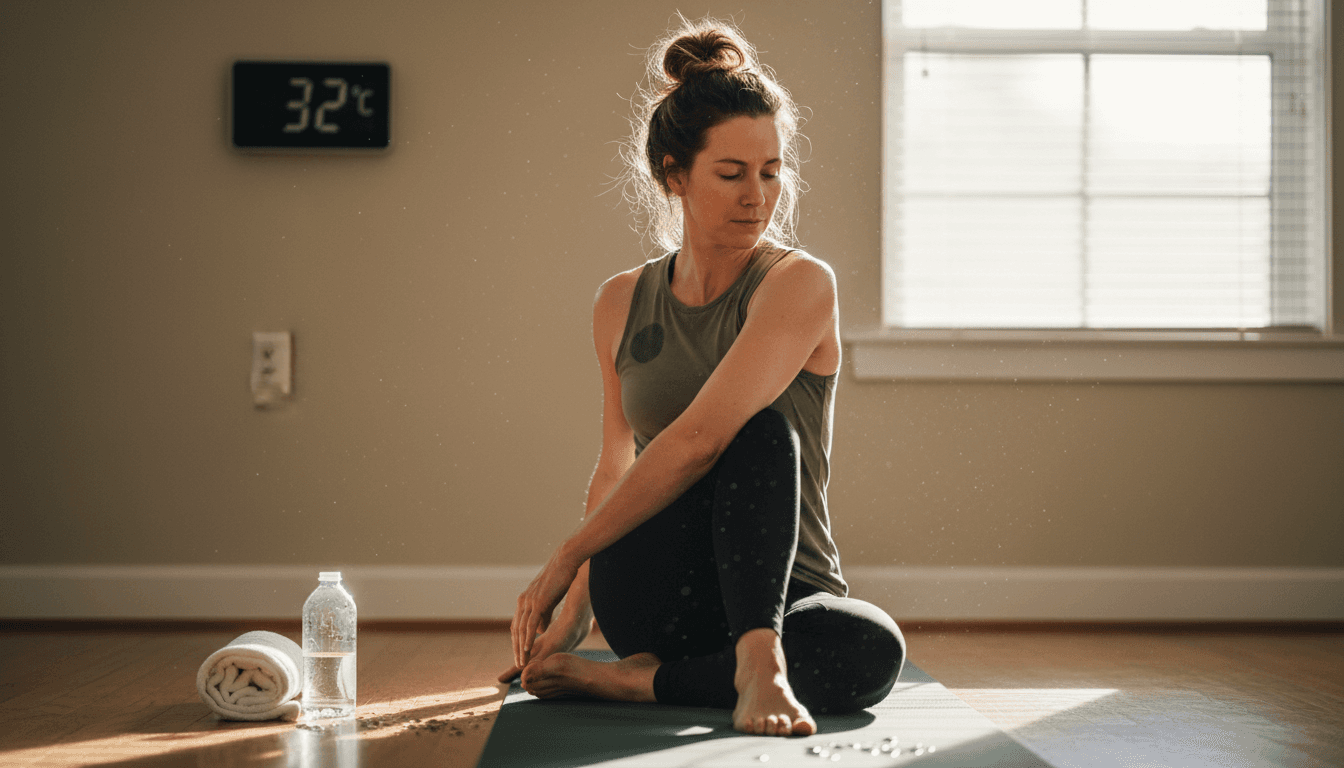
The foundation of hot hatha yoga rests on two core elements: asanas (physical postures) and pranayama (breath control). Together, these techniques create systematic physiological changes that accumulate with consistent practice over weeks and months.
Key Physical Techniques
Your hot hatha practice relies on several foundational techniques:
Sustained postures: Holding poses for 5-10 breaths builds muscular endurance and stability.
Mindful alignment: Precise body positioning activates stabilizer muscles and protects joints.
Breath regulation: Synchronizing inhales and exhales with movement enhances oxygen delivery and nervous system balance.
Progressive intensity: Gradually deepening poses over time prevents injury while building strength.
These elements work together, not separately, creating compound benefits.
Physical Adaptations from Consistent Practice
Hot yoga produces physiological adaptations including improved flexibility and strength alongside enhanced cardiovascular function. Your body responds to regular heat exposure by improving how it regulates temperature and manages cardiovascular stress.
Chronic practice—typically 2-3 classes weekly over 8-12 weeks—creates measurable changes. Your joints become more mobile, muscles develop lean tone, and your cardiovascular system becomes more efficient at submaximal exercise intensities.
Specific Physical Benefits
Regular hot hatha yoga practice generates concrete results:
Increased bone mineral density: Weight-bearing postures stimulate bone adaptation and strength.
Enhanced balance and proprioception: Your nervous system learns to coordinate movement more precisely.
Improved cardiometabolic markers: Heart rate recovery improves, and metabolic efficiency increases.
Greater muscle elasticity: Heat allows deeper stretches that improve range of motion without strain.
Better respiratory function: Pranayama techniques expand lung capacity and breathing efficiency.
These benefits extend beyond the yoga mat into your daily life—climbing stairs becomes easier, posture improves naturally, and energy levels stabilize.
The heat doesn't create the benefits; it accelerates them. Your consistent effort and mindful practice do the real work.
Pro tip: Track one measurable metric—like how far you can fold forward or how many push-ups you can perform—every 4 weeks to objectively monitor your physical progress and stay motivated through your practice.
Safety Considerations and Common Risks
Hot hatha yoga delivers powerful results, but the combination of heat and physical intensity creates real safety considerations you need to understand before starting. Being informed helps you practice confidently while minimizing injury risk.
The primary concern is your body's response to sustained heat exposure. Unlike cooler environments, the heat increases muscle elasticity rapidly, which feels wonderful but can mask overstretching. Your nervous system may lag behind your body's actual physical capacity, leading to injuries that don't manifest until hours or days later.
Heat-Related Risks
Heat exposure in hot yoga creates dehydration and electrolyte imbalance risks, especially if you're new to heated practice or have underlying health conditions. Your body works harder to cool itself, increasing fluid loss through perspiration.
Warning signs require immediate attention:
Dizziness or lightheadedness: Stop practice immediately and move to a cooler area.
Excessive fatigue: Beyond normal workout tiredness, indicating potential heat exhaustion.
Nausea or headache: Your body signaling it cannot regulate temperature effectively.
Rapid or irregular heartbeat: Seek medical attention before returning to practice.
These symptoms don't always appear gradually—they can intensify quickly.
Here's a summary of signs of heat-related issues and recommended immediate steps:
| Symptom | Possible Cause | What to Do Immediately |
|---|---|---|
| Dizziness | Dehydration, overheating | Stop, leave room, hydrate |
| Headache | Electrolyte loss, heat | Rest, sip water, cool down |
| Nausea | Overexertion, heat stress | Lie down, hydrate, seek help if severe |
| Irregular Heartbeat | Heat intolerance | Stop all activity, alert staff |
Musculoskeletal Injury Prevention
The increased elasticity from heat creates a false sense of capacity. You can move deeper into poses than your connective tissues actually support safely. Overstretching in heated conditions stresses joints and ligaments beyond their limits.
Prevent injuries by following these practices:
Move with intention: Never bounce into stretches or force deeper positions.
Use props strategically: Blocks, straps, and bolsters keep you safe while building strength.
Progress gradually: Increase intensity every 2-3 weeks, not every class.
Listen to discomfort: Sharp pain means stop; gentle sensation means continue.
Muscular soreness differs from pain. Soreness appears 24-48 hours after practice; sharp pain happens during or immediately after.
Environmental and Pre-Existing Factors
Some people face elevated risks in hot environments. Consult a healthcare provider before beginning hot yoga if you have cardiovascular conditions, uncontrolled blood pressure, diabetes, or pregnancy complications. The studio's ventilation system also matters—proper airflow prevents air quality degradation that compounds heat stress.
Safety doesn't limit your practice—it extends it. Protected now means practicing for decades, not weeks.
Pro tip: Arrive fully hydrated before class, drink water steadily during practice, and continue hydrating for 2-3 hours afterward; dehydration can develop gradually, so don't wait until you feel thirsty to drink.
Tips for Choosing the Right Hot Yoga Studio
Selecting the right studio shapes your entire hot yoga experience. A quality studio supports consistent practice, minimizes injury risk, and builds community—while a poor fit leads to frustration and abandoned goals. The decision matters more than you might think.
Start by clarifying your personal goals. Are you seeking stress relief, physical fitness, flexibility improvement, or spiritual growth? Different studios emphasize different aspects, and matching your goals to their focus ensures you get what you actually want.
Evaluating Studio Quality
Researching studio reputations through reviews helps gauge quality and instructor credentialsbefore committing your time and money. Look beyond star ratings—read specific comments about cleanliness, instructor expertise, and community atmosphere.
Key factors to investigate:
Instructor certifications: Look for 200+ hour yoga teacher training minimum, ideally with hot yoga specialization.
Studio cleanliness: Visit in person to assess bathroom facilities, floor conditions, and air quality.
Class schedule flexibility: Can you attend consistently? Inconsistent schedules derail practice.
Community vibe: Do students stay after class? Does the instructor remember names? Community transforms isolated workouts into meaningful practice.
Practical Visit Checklist
Never sign up without visiting first. Spend 15-30 minutes observing:
Air circulation: Does the studio feel stuffy or adequately ventilated?
Temperature consistency: Does the heat feel even throughout the space?
Equipment quality: Are props in good condition? Is the studio organized?
Instructor presence: Do they adjust students? Offer modifications?
Class pacing: Does the class feel rushed or do poses get adequate time?
Your gut feeling matters. If something feels off, trust that instinct.
Cost and Commitment
Compare pricing structures carefully. Monthly memberships typically cost $80-150 in Philadelphia, but class packages offer flexibility. Trial classes (usually $10-20) let you test multiple studios before committing.
Avoid long-term contracts until you've attended at least 4 classes. Your preferences evolve as you progress.
The right studio isn't the fanciest or closest—it's the one where you'll actually show up consistently.
Pro tip: Attend a class before signing up to observe instructor communication and community dynamics; most studios offer first classes free or discounted, and this one visit prevents costly mistakes.
Unlock the True Benefits of Hot Hatha Yoga with Amrita Yoga & Wellness
Struggling to balance the intensity and safety of hot hatha yoga while seeking real physical and mental transformation? This article highlights how mindful practice in a heated environment can accelerate flexibility, strength, and stress relief but also warns against common pitfalls like dehydration and overstretching. At Amrita Yoga & Wellness, we understand these challenges and offer expert-led classes designed to guide you safely through the powerful practice of hot hatha yoga. Whether you are new or advancing your practice, our skilled instructors emphasize proper alignment and intentional pacing so you earn lasting benefits without compromise.
Experience Philadelphia’s premier hot hatha yoga classes that honor tradition while incorporating modern safety and wellness insights. Visit Amrita Yoga & Wellness today to explore our complete class schedule, register for beginner-friendly sessions or advanced workshops, and join a supportive community that fosters your personal growth. Don’t wait to build strength, clarity, and balance — start your transformative yoga journey now by checking out our class descriptions and booking your first session.
Frequently Asked Questions
What are the physical benefits of hot hatha yoga?
Hot hatha yoga offers increased flexibility, improved strength, enhanced cardiovascular function, and better respiratory efficiency. The heat aids in deeper stretches and accelerates recovery, while the mindful practice strengthens the body and mind.
How does hot hatha yoga differ from traditional hatha yoga?
Hot hatha yoga is practiced in a heated environment, typically between 80°F and 105°F, which enhances flexibility and cardiovascular benefits. Traditional hatha yoga, on the other hand, is conducted in a room temperature setting and may not provide the same intense physiological responses.
Is hot hatha yoga suitable for all fitness levels?
Yes, hot hatha yoga is accessible for all experience levels, from beginners to advanced practitioners. The practice adapts to individual needs, and starting with beginner-friendly classes is recommended to establish proper form and technique.
What should I do to prepare for a hot hatha yoga class?
To prepare for a hot hatha yoga class, arrive fully hydrated, wear lightweight clothing, and consider bringing a water bottle and towel. Arriving 10-15 minutes early will help you acclimate to the heat before the class begins.
Recommended
6 Pure Barre Types of Classes for Core Strength and Wellness
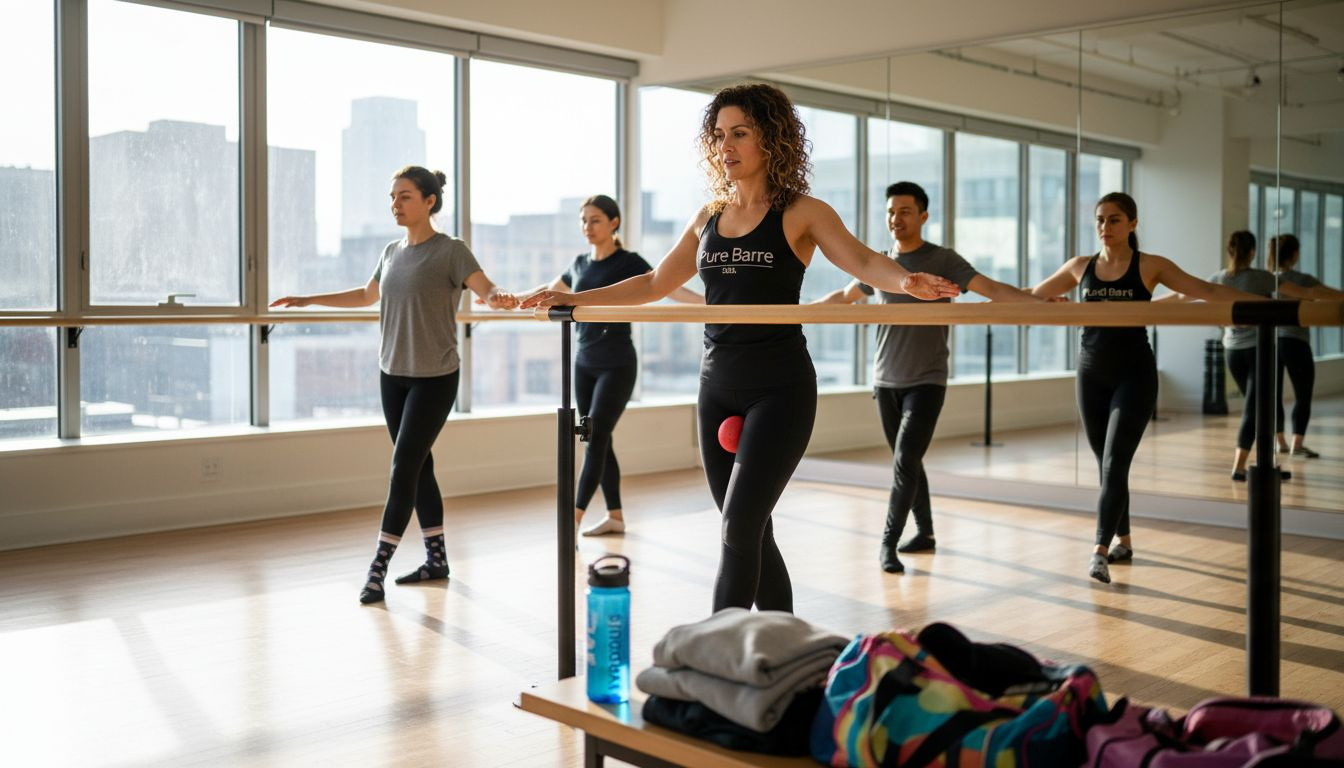
Choosing the right barre class in Philadelphia can feel confusing when there are so many options and each one promises something different for your health and fitness. Whether you want stronger muscles, better flexibility, improved heart health, or just a way to start working out safely, knowing which class fits your goals makes all the difference. The research shows barre-fitness can improve core strength, flexibility, and cardiovascular endurance in young adults, but each format brings its own unique benefits. In this guide, you’ll discover how different types of barre classes help you build real-world strength, protect your joints, and boost your confidence. Get ready to find out which class fits your life and unlock actionable tips for getting more out of every session.
Table of Contents
Quick Summary
| Takeaway | Explanation |
|---|---|
| 1. Empower Barre combines cardio with core conditioning | This class boosts heart rate while building core strength, making it efficient for busy professionals. |
| 2. Reform Barre enhances flexibility through resistance | It integrates resistance training with stretching, improving mobility and preventing injuries effectively. |
| 3. Foundations Barre is essential for beginners | This class focuses on the fundamentals, building confidence and proper form for safe progression. |
| 4. Align Barre improves posture and balance | It targets postural issues common in desk jobs, enhancing movement quality and reducing tension. |
| 5. Intensive Barre offers advanced muscle sculpting | High repetitions of precise movements effectively tone muscles without adding bulk, ideal for visible results. |
2. 2. Empower Barre: Cardio Meets Core Conditioning
Empower Barre transforms traditional barre into a cardio-intensive fusion by blending strength training with high-intensity interval training elements. If you've been looking for a workout that delivers both heart-pumping cardio and serious core conditioning, this is it.
Unlike Classic Barre's deliberate, controlled movements, Empower Barre keeps you moving continuously. The class incorporates dynamic cardio circuits that raise your heart rate while you're simultaneously engaging your core and major muscle groups. This means you're building cardiovascular endurance and muscular strength at the same time.
Empower Barre delivers a robust cardio-core conditioning experience without sacrificing the low-impact principles that make barre accessible to everyone.
How Empower Barre Works
The 45-minute format uses several tools to maximize intensity and results:
Ankle weights that add resistance to leg movements and boost metabolic demand
A plyometric platform for dynamic exercises like mountain climbers and explosive lunges
Continuous movement patterns that maintain elevated heart rate throughout class
Traditional barre techniques applied at a faster, more rhythmic pace
Why This Matters for Your Fitness Goals
Cardiovascular health benefitsmake Empower Barre ideal for professionals in Philadelphia who want efficiency in their workouts. You're conditioning your heart, burning calories, and strengthening your core in one class. The low-impact approach means your joints stay protected while your intensity stays high.
This class appeals to people who've mastered Classic Barre and crave a challenge. You'll maintain barre's focus on posture, alignment, and controlled movement while pushing your cardiovascular system harder.
What to Expect in Class
You'll experience sequences that blend barre's signature small, isometric movements with larger, more dynamic cardio elements. Expect moments of breathlessness alongside moments of precision. Your legs will burn from sustained positions, and your heart will race from the pace.
This intensity makes Empower Barre effective for boosting metabolic rate and improving overall fitness capacity. A single class challenges multiple energy systems in your body.
Best For
Professionals seeking time-efficient, high-impact workouts
Fitness enthusiasts ready to progress beyond foundational barre
Anyone wanting cardio benefits without traditional running or jumping impact
People who enjoy rhythm-based fitness classes
Pro tip: Arrive 10 minutes early to learn proper ankle weight placement and platform positioning, since incorrect form can reduce effectiveness and increase injury risk.
3. 3. Reform Barre: Resistance Training for Flexibility
Reform Barre breaks the myth that flexibility only comes from stretching. This class uses resistance training through full range of motion to simultaneously build strength and increase flexibility, giving you functional mobility that actually lasts.
Many professionals think you need to choose between getting stronger or getting more flexible. Reform Barre proves that's not true. By moving against resistance while stretching, you're training your muscles to be strong at every angle, not just in shortened positions.
Resistance-based barre training improves both hip and lower back flexibility and strength at the same time, supporting functional health and injury prevention.
The Science Behind Resistance and Flexibility
Traditional static stretching holds you in place. Reform Barre is different. You work through full ranges of motion with light resistance, which trains your muscles to be strong while lengthened. This approach delivers greater flexibility gains than stretching alone.
Resistance training combined with stretchingcreates adaptations that static stretching cannot achieve. Your body learns to maintain strength and control even at the ends of your range of motion.
What Makes Reform Barre Unique
This class format differs from Classic Barre in its deliberate integration of resistance with lengthening:
Light ankle or wrist weights add resistance during extended leg and arm movements
Positions are held while moving through larger ranges of motion
Emphasis on deep stretches combined with isometric strengthening
Movements target hip flexibility, hamstring length, and spinal mobility
Progressive overload that challenges muscles at extended positions
Real-World Benefits for Busy Professionals
Reform Barre delivers results in areas that matter for desk-heavy work lives. Tight hips from sitting all day improve. Lower back flexibility increases. Your body becomes more resilient to everyday movements and injuries.
You'll notice improved posture, reduced stiffness, and better mobility in daily activities. Reaching for items, bending over, and moving freely become easier. This is functional fitness that translates beyond the studio.
Who Benefits Most
Professionals with tight hips and hamstrings from prolonged sitting
Anyone seeking injury prevention and mobility improvement
People wanting flexibility gains without high-impact methods
Fitness enthusiasts building well-rounded strength and range
Pro tip: Focus on breathing deeply during resistance-based stretches, since oxygen helps muscles relax into longer positions while maintaining engagement.
4. 4. Foundations Barre: Perfect for Beginners
Foundations Barre is specifically designed as your entry point into the world of barre. This beginner-friendly class teaches you the fundamentals before progressing to more advanced variations, making it the ideal starting place for anyone new to barre fitness.
If you're intimidated by fitness classes or haven't exercised in years, Foundations removes that barrier. The class moves at a pace that allows you to learn proper form, understand muscle engagement, and build confidence without feeling overwhelmed.
Foundations creates a supportive environment where you learn barre fundamentals and gradually build fitness while reducing injury risk.
What You'll Learn in Foundations
This class focuses on the core components that make barre effective. You won't be thrown into complicated combinations or extreme movements. Instead, you'll master the basics that form the foundation of all barre work.
The fundamentals include:
Small, controlled movements that engage deep stabilizer muscles
Proper alignment and posture awareness for injury prevention
Conscious breathing patterns that enhance muscle activation
Understanding how to engage your core during every movement
Building mind-muscle connection through deliberate practice
Why Starting With Foundations Matters
Jumping into advanced classes without understanding barre fundamentals leads to poor form and potential injury. Foundations prevents this by giving you the knowledge and physical preparation needed before tackling more demanding classes.
Learning barre fundamentalscreates a strong foundation for progressing to Classic Barre, Empower, and other formats. You'll understand your body's capabilities and limitations, making every subsequent class more effective.
What to Expect in Your First Class
The atmosphere is welcoming and non-competitive. Instructors provide modifications for different fitness levels, so everyone works at their own pace. You'll use the barre for balance and support while learning to engage muscles you didn't know you had.
Expect to feel muscles working in new ways. Don't be surprised if you're sore the next day, even though movements look small and controlled. This soreness indicates your body is adapting to new stimulus.
Perfect For
Complete beginners to fitness classes
Anyone returning to exercise after a long break
People with previous injuries wanting safe progression
Professionals seeking low-impact fitness
Anyone curious about barre but unsure where to start
Pro tip: Arrive 15 minutes early for your first class to meet the instructor, ask questions about modifications, and become comfortable with the studio environment.
5. 5. Align Barre: Enhancing Posture and Balance
Align Barre targets the often-overlooked connection between posture, balance, and core strength. This class specializes in alignment work that corrects postural imbalances common in professionals who spend hours at desks, creating a foundation for better movement quality throughout your life.
Poor posture isn't just about appearance. It affects your breathing, shoulder tension, lower back pain, and overall movement efficiency. Align Barre addresses the root cause by training your body to maintain neutral alignment while building the strength to support it.
Proper alignment and postural awareness create the foundation for injury prevention and functional movement quality in all activities.
How Alignment Work Transforms Your Body
Align Barre uses targeted exercises to activate postural muscles that typically stay inactive. You'll learn to recognize and correct misalignments in your spine, shoulders, and pelvis. This awareness carries beyond the studio into your daily life.
The class focuses on establishing neutral spine position and maintaining it through movement. You'll understand how small adjustments in stance dramatically improve your ability to engage core muscles and maintain balance.
Key alignment components include:
Shoulder blade positioning and engagement
Proper pelvic alignment and stability
Neutral spine awareness during all movements
Hip joint positioning for optimal movement patterns
Head and neck alignment to reduce tension
Real-World Benefits for Your Daily Life
Philadelphia professionals often experience neck tension, rounded shoulders, and lower back strain from office work. Align Barre directly addresses these issues. You'll notice improved posture when sitting at your desk, reduced tension headaches, and better breathing capacity.
Posture improvements from barrecreate cascading benefits throughout your body. Better alignment means less compensatory pain, improved confidence, and more efficient movement patterns. Your body becomes more resilient to the demands of daily professional life.
Balance Training Benefits
Align Barre strengthens the small stabilizer muscles responsible for balance. This work becomes increasingly valuable as you age, improving your ability to navigate uneven surfaces and preventing falls. Better balance also translates to improved athletic performance in other activities.
Who Benefits Most
Professionals with desk-related postural issues
Anyone experiencing chronic neck or shoulder tension
People seeking improved balance and stability
Those wanting to prevent injuries before they occur
Anyone interested in movement quality over speed
Pro tip: Record a video of your posture from the side before starting Align Barre, then compare after four weeks to see visible alignment improvements.
6. 6. Intensive Barre: Targeted Muscle Sculpting
Intensive Barre is the advanced option for serious muscle sculpting. This class uses high repetition of small, precise movements to isolate and fatigue specific muscle groups, creating lean muscle definition without the bulk of traditional strength training.
If you want visible muscle tone and a sculpted physique, Intensive Barre delivers results. The class targets individual muscles with relentless precision, fatiguing slow-twitch muscle fibers that respond to endurance-style contractions rather than heavy loads.
Intensive barre uses sustained isometric holds and controlled movements to build lean muscle, definition, and muscular endurance without excessive joint strain.
How Intensive Barre Sculpts Your Body
Intensive Barre differs from other formats by extending time under tension for specific muscles. You'll hold positions longer and perform more repetitions of smaller movements. This approach stimulates muscle fibers responsible for toning and definition.
Targeted isometric contractionscreate cumulative fatigue that shapes muscles precisely. You're not moving quickly or explosively; instead, you're burning muscles through sustained effort and high repetition.
The philosophy emphasizes:
Extended time under tension for specific muscle groups
High repetition patterns that fatigue slow-twitch fibers
Micro-movements that isolate individual muscles
Progressive intensity that challenges your muscular endurance
Precision alignment throughout every repetition
Why Intensive Barre Works for Sculpting
Traditional weight training builds muscle mass through heavy loads. Intensive Barre builds lean muscle through repetition and duration. This distinction matters because you develop muscle tone and definition without increased bulk.
The sustained contractions activate stabilizer muscles that other workouts miss. Your entire musculoskeletal system becomes stronger and more resilient. You'll see visible changes in muscle definition, especially in legs, glutes, arms, and core.
What to Expect
Intensive classes feel challenging from the first movement. Your muscles burn quickly because they're working against resistance for extended periods. The pace is controlled but relentless. You'll finish exhausted but energized.
Expect soreness the next day, even after weeks of classes. Intensive Barre constantly challenges your muscles in new ways, preventing adaptation and plateaus.
Best For
Fitness enthusiasts seeking visible muscle definition
People wanting strength gains without bulk
Professionals ready for advanced barre classes
Anyone seeking to maximize results in minimal time
Those seeking long-term body composition changes
Pro tip: Increase protein intake on Intensive Barre days to support muscle recovery and maximize the sculpting benefits of intense muscular contractions.
Below is a comprehensive table summarizing the key insights and offerings described in the article about various Barre class formats and their respective benefits.
| Class Type | Description | Key Benefits | Ideal For |
|---|---|---|---|
| Empower Barre | Combines cardio and core conditioning through continuous movements and high-intensity elements, maintaining low-impact accessibility. | Enhances cardiovascular health, burns calories, strengthens core and major muscles. | Individuals desiring dynamic, time-efficient workouts. |
| Reform Barre | Integrates resistance training and stretching for improved strength and flexibility across ranges of motion. | Improves functional flexibility, decreases injury risk, enhances joint and muscle strength. | People with flexibility goals and those with desk-based jobs. |
| Foundations Barre | Introductory class teaching fundamental barre principles, providing a safe environment for beginners to start their fitness journey. | Builds confidence, teaches proper form, and develops a foundation for advanced barre classes. | Complete beginners or those returning to fitness. |
| Align Barre | Focuses on posture and balance by targeting postural muscles and improving alignment awareness through stability exercises. | Reduces postural misalignment, relieves professional tension, and prevents injuries. | Professionals with desk-related posture issues. |
| Intensive Barre | Aimed at advanced fitness levels, this class employs high repetition and small movements to sculpt precise muscle areas without adding bulk. | Enhances muscle definition, increases muscular endurance, and supports body sculpting. | Experienced individuals seeking intensive muscle toning. |
Unlock Your Full Potential With Barre and Wellness at Amrita Yoga
If you are striving to build core strength, improve posture, and enhance overall wellness as highlighted in the "6 Pure Barre Types of Classes for Core Strength and Wellness," Amrita Yoga & Wellness in Philadelphia is your perfect next step. Our studio understands the challenges professionals face like tight hips, postural imbalances, and the need for low-impact yet effective workouts such as Empower Barre or Reform Barre. We focus on helping you achieve functional fitness, better balance, and muscle sculpting through accessible and inclusive classes.
Experience the transformative benefits of barre combined with complementary practices such as yoga and pilates by joining our diverse class offerings today. Don’t wait to begin your journey toward improved core conditioning and injury prevention. Visit Amrita Yoga & Wellness to explore class schedules, sign up for beginner-friendly Foundations Barre, or deepen your practice with Intensive Barre. Take control of your health and wellness now by making class reservations and becoming part of a supportive community focused on your personal growth.
Frequently Asked Questions
What is Empower Barre and how does it differ from Classic Barre?
Empower Barre is a cardio-intensive fusion workout that combines strength training with high-intensity interval training elements. Unlike Classic Barre, which focuses on controlled movements, Empower Barre keeps you moving continuously, enhancing both cardiovascular endurance and core strength. Try attending an Empower Barre class to experience this dynamic approach firsthand.
How can Reform Barre help improve my flexibility and strength?
Reform Barre incorporates resistance training through full ranges of motion to simultaneously build strength and increase flexibility. This unique approach enables you to work against resistance while stretching, leading to enhanced functional mobility. Consider attending a Reform Barre class to effectively address tight muscles and boost flexibility.
Is Foundations Barre suitable for someone new to fitness?
Yes, Foundations Barre is designed for beginners and focuses on teaching the fundamentals of barre fitness without overwhelming participants. The class moves at a comfortable pace, allowing you to learn proper form and build confidence in your abilities. Start with a Foundations Barre class to establish a solid base for your fitness journey.
What are the benefits of Align Barre for posture and balance?
Align Barre focuses on correcting postural imbalances and enhancing core strength, which can alleviate neck and lower back tension caused by prolonged sitting. By developing postural awareness and balance, you'll improve your overall movement quality, making daily tasks easier. Join an Align Barre class to experience improvements in your posture and balance within weeks.
How does Intensive Barre contribute to muscle sculpting?
Intensive Barre emphasizes high repetitions of small, precise movements to isolate and fatigue specific muscle groups, leading to lean muscle definition. This method builds muscular endurance without increasing bulk. Attend an Intensive Barre class to start shaping your physique and toning your muscles effectively.
Recommended
What Is Bikram Hot Yoga and Why It Matters
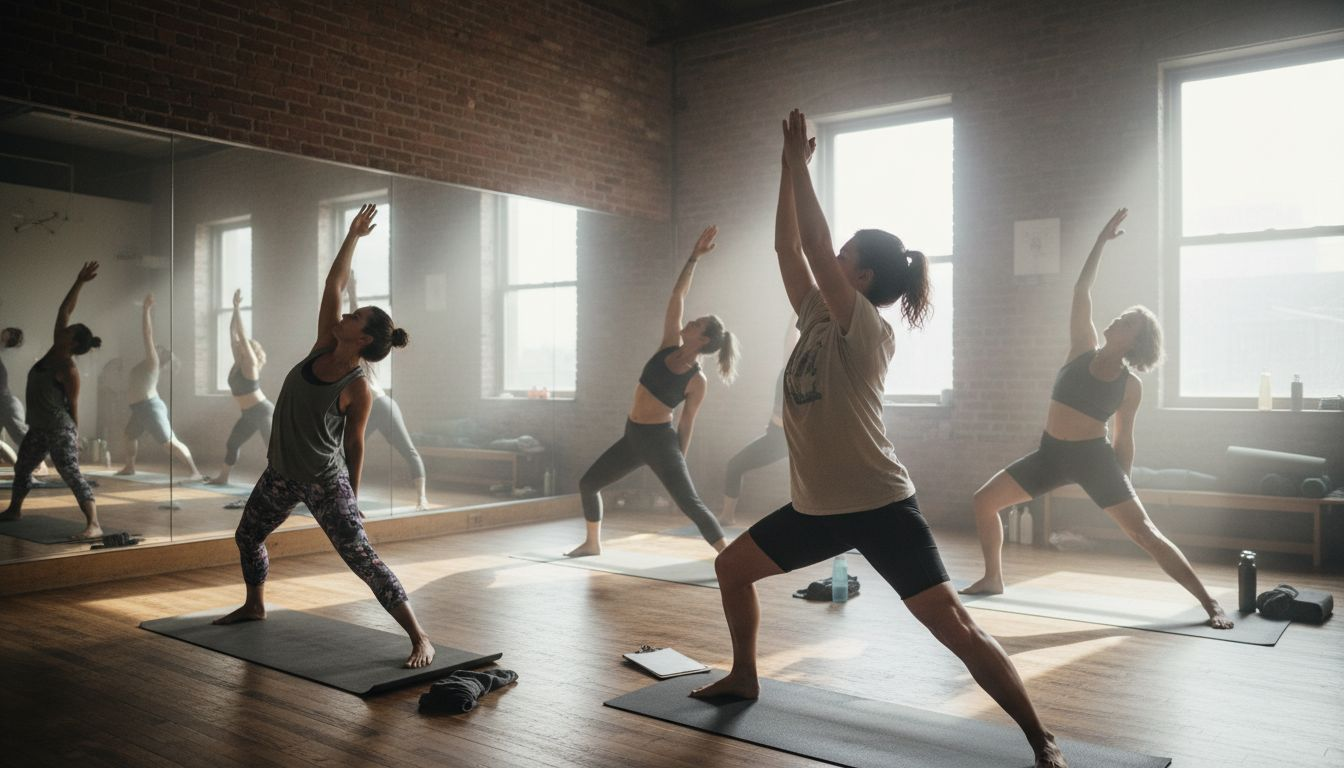
Finding a wellness routine in Philadelphia that balances both social connection and structured physical practice can feel challenging for anyone seeking true well-being. Bikram hot yoga stands out because every session follows a fixed sequence of 26 postures in a precisely heated room replicating the warmth of India. This format blends predictability and community support, giving practitioners a reliable way to build strength and clarity while connecting with others who share their health goals.
Table of Contents
Key Takeaways
| Point | Details |
|---|---|
| Bikram Yoga Structure | Consists of a fixed sequence of 26 postures and two breathing exercises performed in a heated room set to 105°F with 40% humidity. |
| Health Benefits | Regular practice improves flexibility, cardiovascular health, and mental clarity through heat-assisted stretching and focused breathing. |
| Community Experience | Practicing Bikram fosters strong social connections, as participants often attend the same classes regularly, creating a supportive environment. |
| Safety Precautions | To avoid dehydration and heat-related risks, arrive well-hydrated and listen to your body during classes. |
Defining Bikram Hot Yoga and Its Origins
Bikram hot yoga is a specific, structured style of yoga that operates nothing like a casual stretching class. It's a fixed sequence of 26 postures performed in a heated room set to precisely 105°F with 40% humidity, designed to replicate the warm climate of India where yoga originated.
Developed by Bikram Choudhury in the early 1970s, this practice builds on teachings from B.C. Ghosh, a respected yoga instructor. Choudhury refined these traditional practices into a standardized, repeatable system that became globally recognized and widely taught across studios.
What makes Bikram distinct from other hot yoga styles:
Fixed 90-minute sessions with the same sequence every time
24 asanas (yoga poses) plus two breathing exercises
Consistent temperature at 105°F and 40% humidity
Identical progression regardless of studio location or instructor
The heated environment serves a specific purpose. The warmth helps your muscles become more flexible and allows deeper stretching without injury risk. You'll sweat heavily—sometimes uncomfortably—but that's intentional. The heat accelerates your heart rate and mimics the challenging conditions of traditional yoga practice.
Bikram Yoga experienced explosive growth worldwide. By 2006, the practice had expanded to approximately 1,650 studios across at least 40 countries, making it one of the most standardized and accessible hot yoga formats available.
The structured nature of Bikram Yoga means you'll perform the same 26 postures in the same order every session—no surprises, no variations based on instructor preference.
The Philadelphia yoga community values this consistency. Whether you're visiting Amrita Yoga & Wellness in Center City or traveling to another Bikram studio, you'll recognize the sequence and know what to expect. This predictability appeals to people who prefer structure and measurable progress.
Understanding this origin story matters because it explains why Bikram classes feel different from vinyasa flow or other hot yoga styles. You're not following an instructor's creative interpretation—you're practicing a scientifically designed system that's remained largely unchanged for decades.
If you're exploring whether Bikram aligns with your goals, knowing that different types of hot yoga exist can help you make an informed choice about which practice suits you best.
Pro tip: Before your first Bikram class, arrive 10-15 minutes early to acclimate to the heat and speak with your instructor about modifications for any previous injuries or physical limitations.
How the 26 Postures and Heat Work Together
The 26 postures in Bikram Yoga aren't random. They're strategically ordered to build on each other, creating a progression that maximizes both physical and mental benefits. The heat amplifies everything—your flexibility, your focus, and your body's natural detoxification processes.
Heat is the secret ingredient that transforms standard yoga into something more intense. When your muscles warm to higher temperatures, they become significantly more pliable and responsive to stretching. This means you can safely deepen stretches without the injury risk you'd face in a room-temperature class.
The progression follows a logical sequence:
Standing postures first to build strength and stability in your foundation
Forward bends and backbends to work your spine through full range of motion
Twists and hip openers to release tension in your core and lower body
Final resting postures to integrate the work and calm your nervous system
Your cardiovascular system responds dramatically to this combination. The heat elevates your heart rate naturally, creating a cardio effect without high-impact movements. You're building endurance while improving flexibility—a rare combination in fitness.
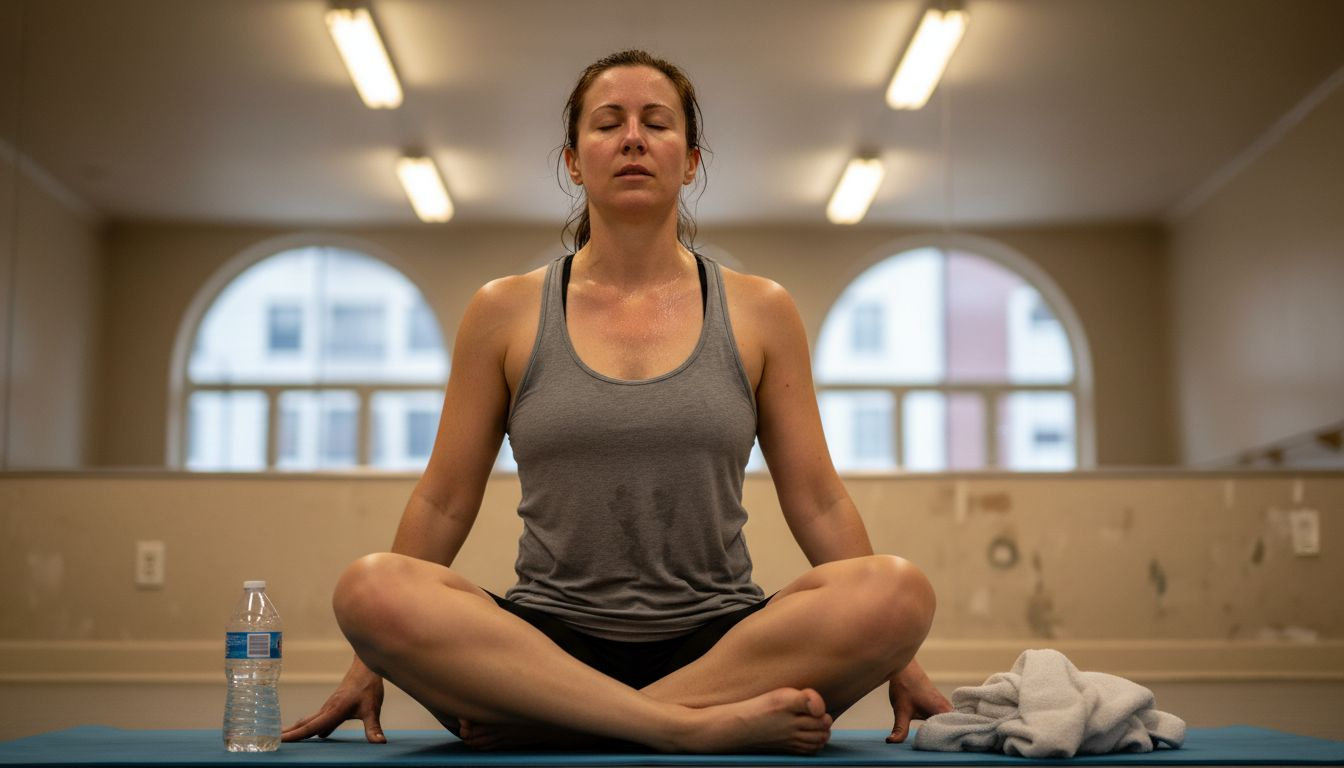
The humidity matters too. At 40% humidity paired with 105°F heat, your body can't rely solely on sweat evaporation to cool down. This forces your cardiovascular system to work harder, delivering oxygen-rich blood throughout your body more efficiently. Over time, this trains your heart and improves circulation.
When you hold a posture in this heated environment, your muscles work against greater resistance. A simple forward bend becomes profoundly different at 105°F than at room temperature. The heat allows deeper stretching, faster recovery between postures, and sustained engagement throughout the 90-minute session.
The sequence works because each posture prepares your body for the next one, while the heat transforms stress into physical growth, making you stronger with every breath.
Mentally, the heat creates an undeniable challenge. Learning to breathe through discomfort and stay focused despite physical intensity builds real mental resilience. You're not just stretching muscles—you're training your mind to stay calm under pressure.
This synergy between postures and heat is why consistency matters. Your body adapts gradually, improving flexibility and strength with each class. After several weeks, postures that felt impossible become accessible.
Pro tip: Stay hydrated for at least 24 hours before class, drink water immediately after, and avoid eating for two hours beforehand so your body can focus entirely on the practice without digestive demands.
Distinctions Between Bikram and Other Hot Yoga
Not all hot yoga is Bikram Yoga. This is the critical distinction that confuses many beginners in Philadelphia and beyond. While Bikram is one specific type of hot yoga, the category itself includes several different styles and approaches.
Bikram Yoga operates under strict standardization. Every class follows the identical 26-posture sequence in the same order, with the same timing, in a room heated to exactly 105°F with 40% humidity. Instructors don't improvise or modify the sequence based on class level or personal preference.
Other hot yoga styles offer more flexibility:
Hot Vinyasa flows through poses in sequence but allows instructor creativity and variation
Power Yoga in heat emphasizes strength-building with dynamic movements
Hot Hatha holds poses longer with gentler transitions between them
Yin Yoga in heat focuses on deep stretches held for extended periods
The temperature consistency matters significantly. Most hot yoga studios maintain heat between 95°F and 105°F, but Bikram's precise 105°F with 40% humidity creates a distinct experience. This exact combination isn't coincidental—it's calculated to maximize physiological benefits.
Sequencing is where the real difference emerges. In Hot Vinyasa, your instructor might arrange poses based on the day's theme or class focus. You'll never know exactly what's coming next. Bikram removes this unpredictability entirely. You know the exact sequence, allowing you to set goals and track progress with precision across weeks and months.
Bikram's fixed sequence means every class builds on your previous practice, while other hot yoga styles emphasize creative exploration and instructor interpretation.
This standardization appeals specifically to people seeking measurable progress and consistency. If you attended a Bikram class in New York, Los Angeles, or Philadelphia, you'd recognize every posture and know what to expect. That reliability is uniquely Bikram.
The philosophical approach differs too. Bikram emphasizes a scientifically designed system with specific healing benefits. Other hot yoga styles often blend philosophy, breathwork, and spiritual elements more prominently throughout the practice.
For Philadelphia practitioners, understanding these distinctions helps you choose your practice intentionally. Are you seeking consistency and measurable progress? Bikram delivers. Do you prefer creative variety and instructor interpretation? Hot Vinyasa might align better.
Here's a concise comparison of Bikram Yoga versus other hot yoga styles:
| Aspect | Bikram Yoga | Other Hot Yoga Styles |
|---|---|---|
| Sequence | Fixed 26 postures, same order | Variable, instructor-designed |
| Room Conditions | 105°F, 40% humidity | 95–105°F, humidity varies |
| Session Duration | 90 minutes, always identical | Ranges from 60–90 minutes |
| Instructor Approach | No deviation, strict system | Creative flows, flexible design |
| Progress Tracking | Easy, measurable over time | Less predictable for tracking |
Pro tip: Try one class of each style at Amrita Yoga & Wellness to experience the differences firsthand before committing to a regular practice, as your preference might surprise you.
Health Benefits and Community Impact
Bikram Yoga delivers measurable physical results that keep practitioners returning week after week. The combination of heat, postures, and breathwork creates a unique healing environment that addresses multiple aspects of your wellness simultaneously.
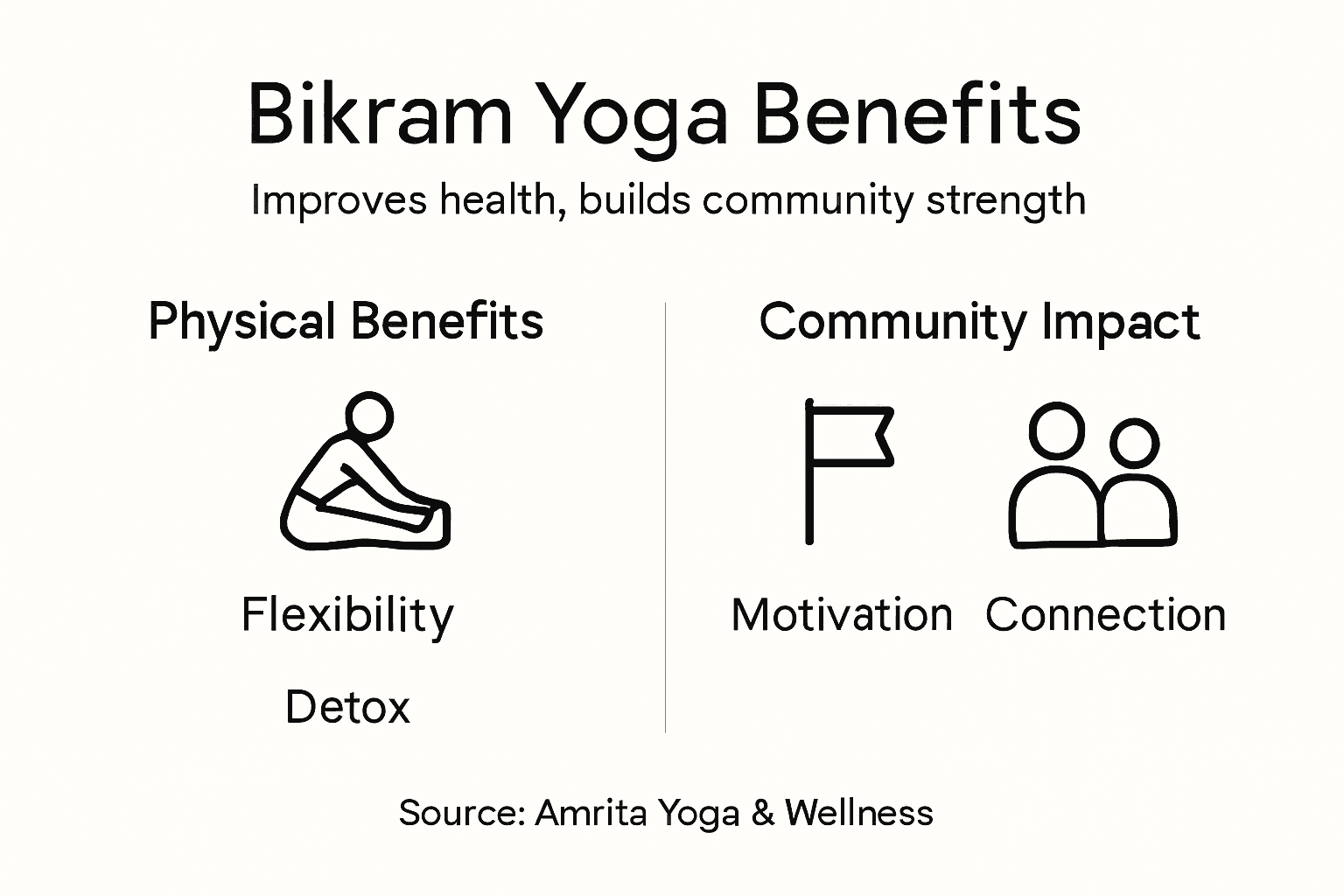
The physical benefits are substantial and well-documented. Heat allows your muscles to stretch more deeply and safely, increasing flexibility without the injury risk of cold-muscle stretching. Your cardiovascular system strengthens as it adapts to the demands of exercising in sustained heat, improving circulation and heart health over time.
Key health benefits include:
Increased flexibility through heat-assisted muscle relaxation
Enhanced cardiovascular health from elevated heart rate during practice
Natural detoxification via intense sweating that flushes your system
Improved mental clarity through focused breathing and meditation
Stress relief from the calming effect of the practice
Mentally, the benefits run deep. The 90-minute session demands complete focus, removing you from daily stressors and your phone. Practitioners report improved mental resilience and emotional well-being that extends far beyond the studio into their daily lives.
The community aspect transforms Bikram from solo exercise into a social healing practice. Philadelphia studios create spaces where people from different backgrounds unite around shared wellness goals. You'll encounter the same faces week after week, building genuine friendships and accountability.
Regular practitioners in supportive Bikram communities experience deeper personal transformation than those practicing alone.
This community matters enormously. When you struggle with a difficult posture or motivation dips, your classmates and instructors encourage you forward. The therapeutic design of Bikram makes it accessible to people of all ages and abilities, which diversifies your studio community.
Globally, Bikram Yoga has fostered strong communities supporting personal health and social connection. Studios function as wellness hubs where people heal together. You're not just improving your body—you're joining a movement of practitioners committed to holistic well-being.
For Philadelphia residents, joining Amrita Yoga & Wellness connects you to this larger community while building local relationships. You become part of something bigger than individual fitness goals.
For quick reference, here are Bikram Yoga's main physical and mental benefits:
| Benefit Type | Impact on Practitioner | Typical Outcome |
|---|---|---|
| Physical | Deep stretching and improved circulation | Greater flexibility, heart health |
| Mental | Enhanced focus and stress reduction | Better mental resilience |
| Community | Regular group interaction and support | Strong social connections |
Pro tip: Attend the same class time consistently so you develop relationships with the same practitioners, amplifying both the accountability and the community support that accelerates your progress.
Safety Risks and Tips for Practicing Safely
Bikram Yoga's intense heat creates real physiological demands. Understanding the risks and knowing how to practice safely ensures you benefit from the practice without overextending yourself into injury or heat-related illness.
The primary risks stem from the high heat environment. Your body works harder to cool itself while simultaneously performing challenging postures. This combination can lead to dehydration, heat exhaustion, and muscle strain if you ignore warning signs or push beyond your limits.
Common safety concerns include:
Dehydration from heavy sweating without adequate fluid intake
Heat exhaustion causing dizziness, nausea, or extreme fatigue
Muscle or ligament injury from overstretching in heated conditions
Cardiovascular stress if you have underlying health conditions
Overexertion from ignoring your body's signals to rest
The good news? Most risks are entirely preventable through smart preparation and awareness. Staying properly hydrated before, during, and after class is your first line of defense against heat-related problems.
Start by preparing your body for the heat. Arrive well-hydrated hours before class, not minutes before. Drink water consistently throughout the day, and bring a bottle to sip between postures if your studio allows it. Skip heavy meals two hours before class so your digestive system doesn't compete with your muscles for blood.
During class, listen ruthlessly to your body. If you feel dizzy, nauseated, or uncomfortable, take a break on your mat. This isn't failure—it's smart practice. Certified instructors at Amrita Yoga & Wellness teach modifications for every posture, allowing you to stay engaged without overextending.
Taking breaks and modifying postures when needed prevents injury far more effectively than pushing through discomfort.
Consult your physician before starting if you have cardiovascular conditions, diabetes, or heat sensitivity. Your doctor's clearance protects you and gives you confidence during practice. Avoid strenuous activity outside of class on practice days so your body focuses entirely on recovery and adaptation.
Gradually build your heat tolerance. Your first few classes will feel intense. That's normal. By week three or four, your body adapts and the experience becomes manageable and enjoyable.
Pro tip: Eat a light snack with carbohydrates and protein within 30 minutes after class to replenish energy and support muscle recovery before dehydration sets in.
Discover the Transformative Power of Bikram Hot Yoga at Amrita Yoga & Wellness
If you are intrigued by the proven benefits of the fixed 26 posture sequence practiced in a heated 105°F room that the article describes, but worry about safely navigating the intense heat and physical demands, you are not alone. Many beginners struggle with hydration, muscle strain, or knowing how to pace themselves. Our Philadelphia-based studio offers expert guidance designed to help you build strength, flexibility, and mental resilience in a supportive community where consistency and measurable progress are priorities.
Ready to experience the structured healing and challenge of Bikram Yoga firsthand with certified instructors who understand the importance of safe practice and personal modifications Our Amrita Yoga & Wellness homepage connects you to detailed class descriptions and scheduling options. Discover how our offerings in hot yoga and other mindful practices can meet your wellness goals by visiting Amrita Yoga & Wellness. Embrace the power of community, deepen your practice, and let us support your journey every step of the way.
Frequently Asked Questions
What is Bikram hot yoga?
Bikram hot yoga is a specific style of yoga that consists of a fixed sequence of 26 postures and two breathing exercises, performed in a heated room at 105°F with 40% humidity. It was developed by Bikram Choudhury in the early 1970s to provide a standardized and repeatable yoga practice.
How does heat affect Bikram yoga practice?
The heat in Bikram yoga helps to warm up the muscles, making them more pliable and allowing for deeper stretching without the risk of injury. It also elevates the heart rate, contributing to cardiovascular benefits while aiding in natural detoxification through sweating.
What are the key health benefits of Bikram yoga?
Bikram yoga offers multiple health benefits, including increased flexibility, enhanced cardiovascular health, natural detoxification, improved mental clarity, and stress relief. The practice also promotes muscle recovery and mental resilience.
How does Bikram yoga compare to other hot yoga styles?
Bikram yoga is distinct due to its fixed sequence of postures and strict room conditions, with classes always at 105°F and 40% humidity. Other hot yoga styles may allow for instructor creativity and variations in sequences, temperatures, and durations, providing a less predictable practice experience.
Recommended
6 Tips for Choosing Good Yoga Mats for Every Practice
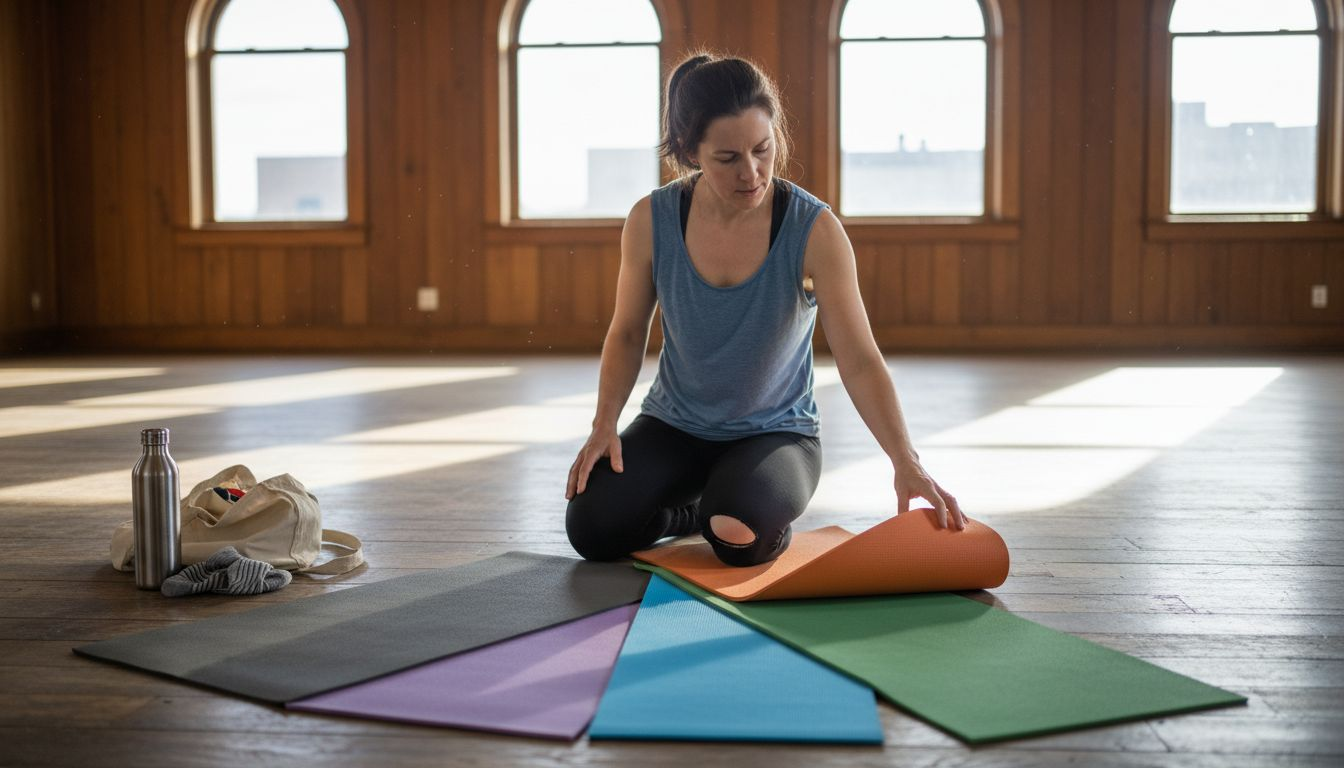
Choosing the perfect yoga mat can feel confusing when you face endless options for thickness, size, and materials. If your mat leaves your knees aching or slips during sweat-heavy classes, your practice and comfort suffer. Whether you’re practicing in Philadelphia or ready to join Amrita Yoga & Wellness, finding the right mat makes every session safer and more enjoyable.
This guide will help you unlock the key factors that impact comfort, stability, and long-term durability. You’ll discover actionable insights backed by material science and expert recommendations. Get ready to learn how to select a mat that protects your joints, supports your poses, and fits both your body and budget. The next steps will show you what to look for and how to avoid mistakes so you can practice with confidence.
Table of Contents
Quick Summary
| Key Message | Explanation |
|---|---|
| 1. Choose mat thickness wisely | The thickness of your yoga mat impacts comfort and stability. Consider your practice style and body needs when selecting the right thickness. |
| 2. Select appropriate material | Different materials affect grip and durability. Evaluate your practice intensity, sweat levels, and environmental values when choosing a mat material. |
| 3. Ensure proper mat size | A suitable mat size allows for full-body movement. Align your mat length and width with your height and practice space requirements for comfort. |
| 4. Maintain hygiene regularly | Keeping your mat clean is crucial for hygiene and grip performance. Develop a cleaning routine based on how often you practice to prolong mat life. |
| 5. Assess budget against needs | Consider initial costs, lifespan, and quality when selecting a mat. Invest in a mat that meets your practice frequency and aligns with your values. |
1. Understand Thickness and Cushioning Needs
Yoga mat thickness directly affects your comfort, stability, and how well your body is protected during practice. The right thickness depends on your individual needs, body type, and the yoga style you practice.
Thickness typically ranges from 1.5 mm to 6 mm, and each measurement serves a different purpose. Think of it as finding the sweet spot between cushioning and stability.
How Thickness Affects Your Practice
Thicker mats (5-6 mm) provide excellent cushioning and joint protection. They work best for restorative yoga, Yin yoga, and Hatha yoga where you spend extended time in floor poses. If you have sensitive knees, ankles, or a heavier body frame, extra cushioning reduces impact and strain.
Thinner mats (1.5-3 mm) offer better stability and ground contact. These excel during standing sequences, balancing poses, and dynamic flows like Ashtanga or hot yoga. You'll feel more grounded and connected to the floor, which improves alignment in poses like Warrior or Tree pose.
The key is balancing comfort without sacrificing stability. Too much cushioning can actually destabilize your standing poses, while too little leaves your joints without protection during floor work.
Finding Your Ideal Thickness
Consider these factors when choosing:
Your practice style: What yoga classes do you typically attend at Amrita Yoga & Wellness? Hot yoga and flow classes benefit from thinner mats, while restorative and gentle classes prefer thicker ones.
Body weight and joint sensitivity: Heavier practitioners and those with knee or back issues generally prefer thicker cushioning.
Floor conditions: Hard studio floors benefit from thicker mats, while cushioned flooring allows thinner options.
Portability needs: Thinner mats are lighter and easier to carry to class.
The relationship between thickness and stabilityis crucial to understand when making your selection.
Most Philadelphia-based yoga practitioners benefit from a 4-5 mm mat as a versatile middle ground. This thickness provides solid cushioning for floor poses while maintaining enough stability for standing sequences.
Pro tip: If you practice multiple yoga styles, start with a 4 mm mat—it gives you balanced cushioning and stability across different classes, making it the most practical choice for varied practice routines.
2. Pick the Right Material for Grip and Durability
Your yoga mat material determines how well you stay grounded during practice and how long your investment lasts. Different materials offer distinct advantages, and the best choice depends on your practice style, values, and how intensely you use your mat.
Material science has transformed yoga mats over the past decade. Modern options balance performance with environmental responsibility, giving you choices that align with your wellness philosophy.
Material Comparison
Natural rubber delivers superior grip, especially in sweaty conditions. It's ideal for hot yoga and vinyasa flow classes where perspiration is inevitable. Natural rubber mats are eco-friendly and durable, though they can be heavier and carry a stronger smell when new.
Cork surfaces offer excellent traction and are naturally antimicrobial. Many practitioners pair cork with rubber for a hybrid mat that combines grip with comfort. Cork is sustainable and adds a premium feel to your practice.
Thermoplastic elastomers (TPE) are engineered materials that provide outstanding grip and flexibility. TPE mats are lightweight, environmentally conscious, and maintain performance even during sweaty sessions. They're an excellent middle-ground option for most practitioners.
PVC mats are highly durable and affordable, but they can become slippery when wet and raise environmental concerns. These work best for dry practices like gentle or restorative yoga.
Advanced material innovations now deliver superior grip and cushioning simultaneously, making premium performance accessible to all practitioners.
What to Consider
Practice intensity: Hot yoga and flow classes demand excellent grip; gentle classes allow more flexibility in material choice
Environmental values: Natural rubber and cork are sustainable; TPE offers eco-friendly durability
Durability needs: How often do you practice? Daily practitioners benefit from premium materials
Sweat and moisture: Natural materials excel in humid conditions
Portability: TPE and PVC mats are lighter than natural rubber
When choosing your mat at Amrita Yoga & Wellness, consider what style of yoga you practice most frequently. Your grip needs vary dramatically between Yin yoga and hot yoga classes.
Pro tip: Test your mat on a studio floor before buying—bring your mat to a class and feel how it performs during your typical practice to ensure the grip matches your needs.
3. Check Mat Size for Comfort and Space
Mat size directly impacts your comfort, stability, and freedom of movement during practice. Getting the right dimensions means you'll have adequate space for full-body stretches without limbs hanging off the edge.
Standard mats measure 68 inches long by 24 inches wide, designed for average-sized practitioners. However, not everyone fits the standard mold, and that's perfectly fine.
Finding Your Ideal Dimensions
Standard-sized mats work well for most people and fit easily in yoga studios and homes. They're lightweight, affordable, and practical for daily transportation to class at Amrita Yoga & Wellness.
Longer mats ranging from 80 to 85 inches accommodate taller practitioners. If you're over six feet tall, a standard mat may leave your head or feet unsupported during stretches. Extra length gives you confidence in poses like Extended Child's Pose or Forward Fold.
Wider mats offer 26 to 30+ inches of width, providing additional stability and space. These benefit broader-framed individuals and create a larger personal boundary in crowded classes. Wider mats also improve balance during standing sequences.
Proper mat sizing aligned with your body dimensions enhances comfort, stability, and your overall practice quality.
Measuring Your Needs
Consider these factors when selecting size:
Your height: Taller yogis should measure from head to toe and add a few inches
Practice space at home: Ensure your mat fits in your dedicated practice area
Studio classes: Check if wider mats fit comfortably alongside other practitioners
Portability: Remember that longer and wider mats are heavier
Pose preferences: If you practice lots of stretching, extra length is beneficial
A simple test helps determine your ideal size. Stand on your mat in Mountain Pose and extend your arms overhead, then lie down in Savasana. Your entire body should fit comfortably with a few inches of margin.
Pro tip: Before purchasing, measure yourself lying down and add six inches to account for head and foot positioning—this ensures you'll have enough mat for any stretch without feeling cramped.
4. Prioritize Easy Cleaning and Maintenance
A clean yoga mat is a healthy yoga mat. Regular maintenance preserves grip, prevents odor, extends your mat's lifespan, and protects your skin from bacteria buildup during practice.
The good news is that proper mat care doesn't require complicated routines or expensive products. Simple, consistent cleaning keeps your mat in top condition for years.
Why Cleaning Matters
Hygiene is critical when you're in direct contact with your mat daily. Sweat, dust, and bacteria accumulate quickly, especially during hot yoga at Amrita Yoga & Wellness. A clean mat prevents skin irritations and infections.
Grip performance deteriorates without proper maintenance. Buildup on the mat's surface reduces traction, making standing poses less stable. Regular cleaning restores the surface texture your feet need for secure footing.
Material longevity depends on care. Different materials respond to different cleaning methods, so understanding your mat's composition helps you clean safely and effectively.
Cleaning Frequency and Methods
Your cleaning schedule depends on how intensely you practice:
Light users (1-2 times weekly): Wipe down with a damp cloth after each session, deep clean monthly
Regular practitioners (3-5 times weekly): Quick wipe after each class, thorough cleaning every two weeks
Hot yoga enthusiasts: Clean after every session due to increased sweat and moisture
Deep cleaning: Use mild soap and water every few weeks, then air dry completely
Proper cleaning techniques protect both hygiene and material quality. Avoid harsh chemicals, bleach, and abrasive scrubbers that damage your mat's surface and grip.
Essential Maintenance Tips
Simple practices keep your mat in excellent condition:
Use non-abrasive microfiber cloths for wiping
Air dry completely before rolling it up to prevent mold
Store in a cool, dry location away from direct sunlight
Never put your mat in the washing machine or dryer
Check manufacturer guidelines for your specific material
Pro tip: Keep a small spray bottle of water and mild soap in your yoga bag so you can quickly wipe your mat immediately after class when sweat is fresh—this takes 30 seconds and prevents odor buildup.
5. Choose Mats for Studio or Home Use
Studio mats and home mats serve different purposes and face different demands. Understanding the differences helps you select the right mat for your specific practice environment, whether you're attending classes at Amrita Yoga & Wellness or creating a personal sanctuary at home.
Studio and home mats prioritize different qualities. Studios need durability and hygiene for diverse practitioners and frequent use. Home practitioners value comfort, aesthetic appeal, and personal preferences.
Studio Mat Requirements
Commercial environments demand toughness. Studio mats endure multiple users daily, frequent cleaning with harsh protocols, and constant exposure to sweat and moisture. They must resist odor absorption and microbial growth over time.
Closed-cell construction is standard for studio mats. This design prevents sweat from absorbing into the mat's layers, making cleaning easier and preventing bacterial accumulation. Studios prioritize this feature because it extends mat life and maintains hygiene standards.
Standardized sizing and bulk purchasing simplify studio operations. Consistent dimensions ensure mats fit studio spaces perfectly and create uniformity for students. Studios develop supplier relationships to manage replacement schedules and costs efficiently.
Home Mat Priorities
Personal comfort drives home mat selection. You choose thickness, material, color, and aesthetic based on your preferences rather than universal functionality. Your mat becomes part of your practice space's ambiance.
Portability matters more at home. You're less likely to carry a heavy commercial mat to classes. A lighter mat that still meets your cushioning and grip needs works perfectly for home practitioners who occasionally attend studio classes.
Individual preferences shape choices. Home yogis can select eco-friendly materials, premium cushioning, or specialized designs without compromising for group use. Your mat reflects your wellness values and practice style.
Key Differences
Understanding structural differences between studio and home matshelps you select appropriately:
Studio mats: Closed-cell, sweat-resistant, highly durable, standardized, budget-conscious
Home mats: Open or closed-cell options, prioritizes personal comfort, aesthetic choices, material preferences
Durability: Studio mats handle high-frequency use; home mats focus on longevity for one user
Cleaning: Studios use aggressive protocols; home cleaning is gentler
Cost: Studios balance bulk purchasing power; home buyers invest in personal preference
Pro tip: If you practice both at home and studio, choose a mat with closed-cell construction and solid grip—it performs well in both environments and handles frequent cleaning without degrading.
6. Consider Budget and Value for Money
Price doesn't always determine quality when selecting a yoga mat. A smart investment balances your budget with the features and durability you actually need for your practice style and commitment level.
Yoga mats range from budget options under $30 to premium mats exceeding $150. Understanding what you get at each price point helps you make an informed decision that aligns with your practice.
Understanding Price Tiers
Budget mats (under $50) work well for beginners or occasional practitioners. These use basic materials like NBR foam or EVA foam and provide decent cushioning and grip. They may wear out faster or feel less premium, but they're practical for testing your commitment to yoga.
Mid-priced mats ($50-$100) balance performance and cost effectively. You get better durability, improved grip, thicker cushioning, and often superior materials. This range offers solid longevity for regular practitioners without premium pricing.
Premium mats ($100+) feature eco-friendly materials, enhanced durability, superior grip, and often longer warranties. They excel for serious practitioners who practice frequently and value environmental responsibility. Premium mats typically last years longer than budget options.
Evaluating True Value
Don't confuse price with longevity. A $35 mat used three times yearly might outlast a $80 mat used daily without proper care. Your practice frequency and maintenance habits dramatically affect how long any mat lasts.
Material quality matters for value. Natural rubber, cork, and TPE offer better long-term value than low-grade synthetic materials. Check inexpensive mat options that balance quality to identify budget mats worth purchasing.
Read reviews from users like you. Someone practicing hot yoga at Amrita Yoga & Wellness has different needs than someone practicing gentle yoga at home. Look for reviews from practitioners with your style and frequency.
Cost-Value Considerations
Think about value across these dimensions:
Initial cost: What fits your budget right now?
Lifespan: How long will this mat last with your usage?
Replacement frequency: Will you replace it yearly or every five years?
Material quality: Does the construction match your practice needs?
Environmental impact: Do eco-friendly materials matter to your values?
Warranty: Does the manufacturer stand behind the product?
Pro tip: Buy the best mat you can afford that meets your actual practice needs, not the most expensive option—a $70 mat you use daily provides better value than a $150 mat gathering dust in your closet.
Below is a comprehensive table summarizing the main concept, recommendations, and considerations discussed throughout the article focusing on choosing the optimal yoga mat for practice.
Find the Perfect Yoga Mat to Enhance Your Practice at Amrita Yoga & Wellness
Choosing the right yoga mat can feel overwhelming with so many options for thickness, material, size, and maintenance. This article breaks down common challenges you may face such as balancing cushioning with stability or selecting a material that offers excellent grip without compromising durability. You want a mat that supports your unique practice style whether you attend hot yoga, restorative sessions, or dynamic flows at our studio in Philadelphia.
Explore our supportive community and expert guidance at Amrita Yoga & Wellness where you can discover classes tailored to your needs and receive personalized advice on the best mat characteristics for your body and goals. Don’t let discomfort or slippery mats hold you back. Visit our website today to join classes, workshops, and find practical tips that ensure your yoga equipment elevates your entire wellness journey. Feel confident and grounded every time you step onto your mat.
Frequently Asked Questions
How do I choose the right thickness for my yoga mat?
Choosing the right thickness depends on your practice style and body needs. For extra cushioning during floor poses, opt for a thicker mat (5-6 mm). For better stability during standing poses and dynamic flows, a thinner mat (1.5-3 mm) is preferable. Consider what feels comfortable during your yoga sessions and test different options.
What material should I look for in a yoga mat for sweaty conditions?
Natural rubber and TPE are excellent materials for sweaty conditions since they provide superior grip. If you practice hot yoga or vinyasa flow, choose these materials to enhance safety and performance. Assess your practice environment and select a material that can withstand moisture without becoming slippery.
How do I determine the right size for my yoga mat?
To find the right size, measure your height and choose a mat that adds extra length—usually around 6 inches more than your height. For broader frames, consider wider mats (26-30 inches) for added stability. Ensure you have enough space to move freely during your poses without hanging off the edge.
How often should I clean my yoga mat and what method should I use?
You should clean your yoga mat frequently based on usage: light users can clean it weekly, while hot yoga practitioners should clean it after each class. Use a damp cloth with mild soap and water for general cleaning. Spot clean immediately after use to prevent odor and buildup, maintaining grip and hygiene.
What factors should I consider when choosing a yoga mat for studio use versus home use?
For studio use, prioritize durability and hygiene, opting for closed-cell mats that resist moisture absorption. For home use, focus on comfort and personal preferences regarding thickness and material. Think about how often you'll clean the mat and whether you'll be sharing it with others as you make your decision.
How can I ensure my yoga mat lasts a long time?
To extend your mat’s lifespan, clean it regularly and avoid exposing it to direct sunlight, which can degrade the material. Store it rolled up in a cool, dry place and never put it in the washing machine. With proper maintenance, you can ensure your mat stays in good condition for many sessions.
Recommended
7 Expert Tips for Choosing the Best Yoga Mat Online — Amrita Yoga & Wellness
Essential Tips for Yoga Beginners to Build Confidence — Amrita Yoga & Wellness
How to Do Yoga From Home for Busy Professionals — Amrita Yoga & Wellness
How to Start Yoga Naturally for Stress Relief and Wellness — Amrita Yoga & Wellness
Yoga Programs for Beginners: Building Skills Safely
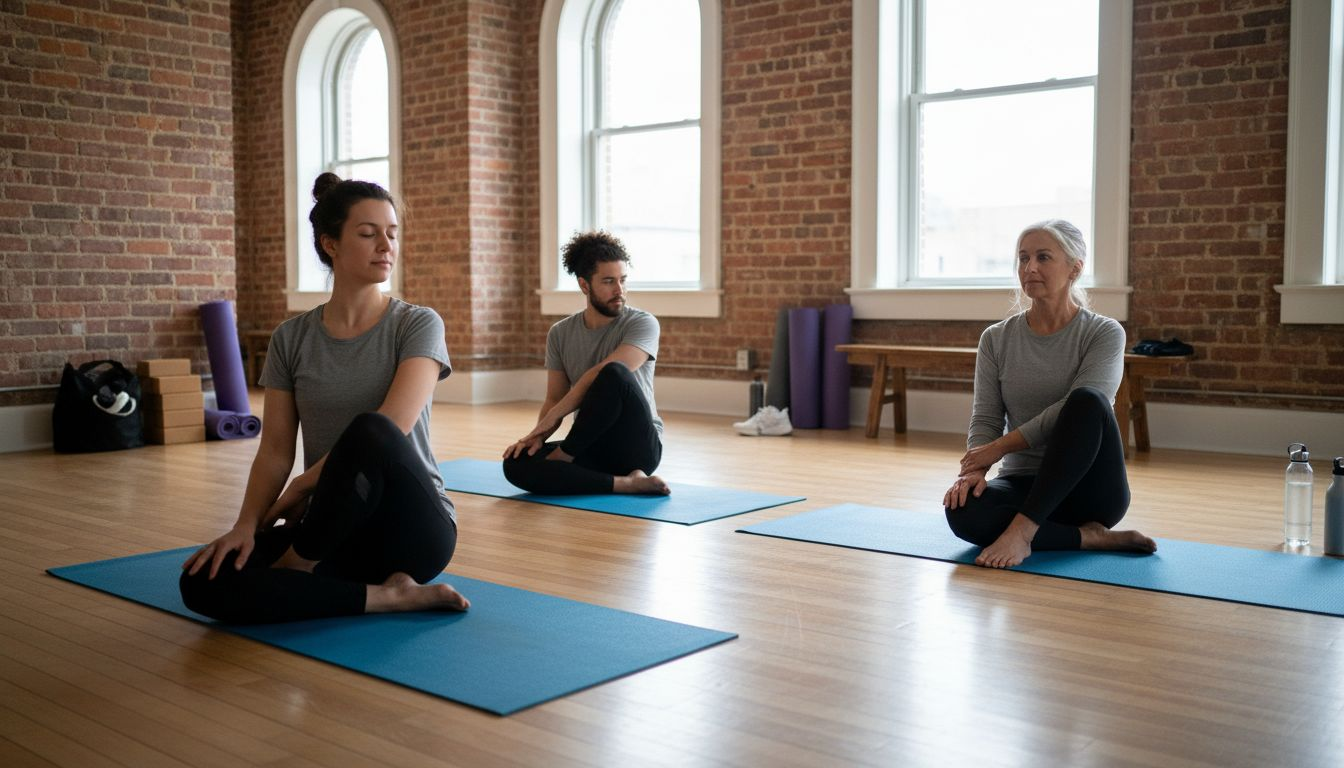
Trying something new can feel intimidating, especially when it comes to yoga. For many beginner adults in Philadelphia, the search for an accessible practice is really about finding a space that values both physical and mental well-being. Yoga goes beyond simple exercise by offering a practice that blends movement, breath, and mindfulness. Whether you want relief from stress or hope to connect with a supportive community, learning about yoga’s core principles will help you start with confidence and curiosity.
Table of Contents
Key Takeaways
| Point | Details |
|---|---|
| Understanding Yoga | Yoga combines movement, breathing, and mindfulness, focusing on self-awareness rather than competition. |
| Core Components | The practice is built on three pillars: postures (asanas), breathing techniques (pranayama), and meditation/mindfulness. |
| Benefits of Practice | Regular yoga practice leads to improved sleep, reduced anxiety, and enhanced physical capabilities. |
| Beginner's Approach | Choose beginner-specific classes and focus on foundational poses to safely adapt to the practice. |
Understanding Yoga for Beginners: Core Concepts
Yoga isn't just another workout you fit into your busy Philadelphia schedule. It's a practice that blends movement, breathing, and mindfulness into something meaningful for your body and mind. If you're stepping onto a yoga mat for the first time, understanding what yoga actually is helps you approach it with realistic expectations and confidence.
Yoga originated over 5,000 years ago in Northern India as both a spiritual and physical discipline. It's evolved significantly since then, but the core remains unchanged: creating harmony between your body, mind, and spirit. Modern yoga has adapted to fit contemporary life without losing its foundational wisdom.
What Makes Yoga Different From Other Exercise
Yoga differs from typical gym workouts in one crucial way: it's about awareness, not just movement. While running builds cardio endurance and weightlifting builds muscle, yoga focuses on connecting your breath with physical postures, creating a practice that feels meditative rather than purely athletic.
You're not competing against others or chasing performance metrics. Instead, you're developing a conversation with your own body. This shift in mindset is what makes yoga feel different for many beginners.
The Three Pillars of Yoga Practice
Beginners often think yoga is just stretching, but it actually rests on three interconnected components:
Postures (asanas): The physical positions you hold, from simple standing poses to more challenging flows
Breathing techniques (pranayama): Controlled breathing patterns that calm your nervous system and increase oxygen flow
Meditation and mindfulness: Mental training that cultivates focus, calm, and self-awareness
During your first class, you'll experience all three, though beginners typically spend more time on postures while learning the fundamentals.
Why Beginners Choose Yoga in Philadelphia
People start yoga for different reasons, and that's perfectly valid. Common motivations include:
Reducing stress and managing anxiety
Improving flexibility and balance
Building strength without high-impact intensity
Enhancing sleep quality
Creating a supportive community
Exploring spiritual growth
At Amrita Yoga & Wellness, beginner-focused classes meet you where you are, regardless of your starting point or reason for beginning.
Yoga isn't about being flexible or strong—it's about showing up and honoring whatever your body can do today.
Key Benefits You'll Actually Notice
Research shows consistent yoga practice delivers measurable results. Within weeks of regular practice, most beginners report improved sleep, less anxiety, and better posture. Over months, you'll develop greater strength, flexibility, and mental clarity.
These benefits aren't promises—they're natural outcomes of a consistent practice. Your body responds to regular movement and mindfulness work.
The Philosophy Behind the Practice
Yoga teaches that you're not separate from the world around you. Instead, there's an interconnectedness between yourself, others, and nature. This philosophy influences how yoga classes feel: they're designed as inclusive, judgment-free spaces where all bodies and abilities are welcomed.
For beginners in Philadelphia, this means you can step into any beginner class and feel like you belong, regardless of your background, body type, or experience level.
Pro tip: Start with classes specifically labeled for beginners rather than "all levels"—this ensures instructors pace the class appropriately and spend time on foundational alignment.
Popular Beginner Yoga Styles and Their Differences
Not all yoga styles feel the same. Some classes move at a leisurely pace, while others flow from pose to pose like a dance. Some heat the room, others focus on deep stretches. Understanding the differences helps you find a style that matches your goals, fitness level, and personality.
Yoga comes in many flavors. The practice branches into different paths based on what resonates with you: your desire for physical challenge, mental focus, emotional connection, or spiritual energy. At Amrita Yoga & Wellness in Philadelphia, you'll find several beginner-friendly options to explore.
Hatha Yoga: The Beginner's Foundation
Hatha yoga is widely recommended for beginners because of its deliberate, accessible pace. Classes typically hold postures longer, giving you time to understand proper alignment without rushing. You'll focus on breathing awareness between poses.
This style builds strength and flexibility gradually. Most beginner classes at studios feature Hatha yoga sequences because the slower tempo allows instructors to correct form and answer questions.
Hatha is perfect if you prefer a calmer, more meditative experience over high-intensity movement.
Vinyasa Yoga: Flow and Breath Connection
Vinyasa yoga moves differently. Each movement syncs with your breath, creating a flowing sequence that feels more dynamic. Beginners sometimes find this style challenging, but it can absolutely be adapted for your level.
Instructors can slow down a Vinyasa flow significantly for beginners, making it accessible while building cardiovascular endurance. The main difference from Hatha is the continuous, breath-linked movement rather than holding individual poses.
Choose Vinyasa if you enjoy rhythm, music, and a more physically energizing practice.
Other Beginner-Friendly Styles
Beyond Hatha and Vinyasa, several other approaches work well for beginners:
Yin yoga: Long-held stretches targeting deep connective tissue; extremely relaxing
Restorative yoga: Supported poses using props; focuses on relaxation and healing
Hot yoga: Performed in a heated room; increases flexibility and intensity
Kundalini yoga: Emphasizes breath work, mantras, and energy activation
Iyengar yoga: Detailed alignment focus using props; excellent for learning proper form
Each style has unique benefits. Popular yoga styles for beginners vary by goals, so your "best" style depends on what you're seeking.
Here's a comparison of beginner-friendly yoga styles and their unique focus:
| Yoga Style | Primary Focus | Pace | Ideal For |
|---|---|---|---|
| Hatha | Alignment and breath | Slow and steady | Stress relief, beginners |
| Vinyasa | Flow and movement | Moderate to fast | Fitness seekers, energizing |
| Yin | Deep tissue stretching | Very slow | Flexibility, relaxation |
| Restorative | Gentle supported rest | Very slow | Recovery, stress reduction |
| Kundalini | Breath and energy | Variable | Spiritual exploration |
| Iyengar | Detailed alignment, props | Slow and precise | Injury recovery, precision |
“The right yoga style is the one you’ll actually practice consistently, not the one that sounds most impressive.”
Choosing Your Starting Style
Consider what draws you to yoga. Are you stressed and seeking calm? Start with Hatha or Restorative. Want to build cardiovascular fitness? Try Vinyasa. Interested in spiritual exploration? Kundalini or Yin might resonate.
Most Philadelphia beginners benefit from trying 2-3 different classes before deciding. Your body will tell you which style feels right.
Pro tip: Attend beginner-specific classes regardless of style; the pace and instruction matter more than the yoga type when you're starting out.
Benefits of Yoga for Physical and Mental Well-Being
Yoga delivers real, measurable changes to your body and mind. Whether you're seeking pain relief, better sleep, or stress reduction, research confirms what millions of practitioners already know: yoga works. The benefits go far beyond flexibility and strength—they touch every part of your well-being.
The beauty of yoga is that it addresses the whole person, not just isolated symptoms. Your physical practice influences your mental state, and your mental clarity deepens your physical awareness. This integrated approach sets yoga apart from many other wellness practices.
Physical Benefits You'll Experience
Yoga builds strength and flexibility without the harsh impact of running or heavy lifting. Within weeks, you'll notice improved posture, better balance, and easier movement in daily tasks like reaching shelves or bending down. Your body becomes more capable.
Chronic pain improves significantly. Research shows yoga effectively reduces neck pain, back pain, and knee osteoarthritis. The combination of gentle strengthening and stretching addresses the root causes of discomfort rather than masking symptoms.
Additional physical gains include:
Enhanced cardiovascular health and stamina
Improved digestion and metabolic function
Better sleep quality and deeper rest
Increased mobility and range of motion
Support for weight management goals
Mental and Emotional Transformation
Yoga's mental benefits often surprise beginners the most. As you connect breath to movement, your nervous system shifts into a calmer state. Stress hormones decrease, anxiety loosens its grip, and your mind becomes quieter.
Sleep improves dramatically for most practitioners. Better sleep then cascades into better mood, clearer thinking, and improved immunity. Many Philadelphia-area beginners report sleeping through the night after struggling with insomnia for years.
Yoga also addresses depression and anxiety by regulating your body's stress response. The practice rewires how you react to life's challenges, building resilience over time.
The Science Behind the Benefits
Yoga isn't just relaxation—it's a physical intervention that changes your biology. The practice influences hormone regulation, strengthens immunity, and even positively affects genetic expression. This means yoga literally helps your body function better at a cellular level.
Consistent yoga practice creates compounding benefits—each session builds on the last, and after a few months, the changes feel profound.
Timeline: When You'll Notice Results
Most beginners notice initial changes within two weeks of consistent practice:
Week 1-2: Reduced tension, better sleep
Week 3-4: Increased strength, improved posture awareness
Month 2-3: Significant pain reduction, mental clarity
Month 3+: Lasting strength gains, emotional resilience
Consistency matters more than intensity. Three gentle classes weekly outperform sporadic intense sessions.
Pro tip: Track one specific benefit you want—whether it's sleep quality, back pain, or stress levels—and notice the difference after four consistent weeks of practice.
What to Expect in Your First Yoga Class
Walking into a yoga studio for the first time can feel intimidating. You might worry about being inflexible, not knowing the poses, or looking out of place. Here's the truth: every single person in that room started exactly where you are. Your first class will be nothing like the intimidating mental images you've created.
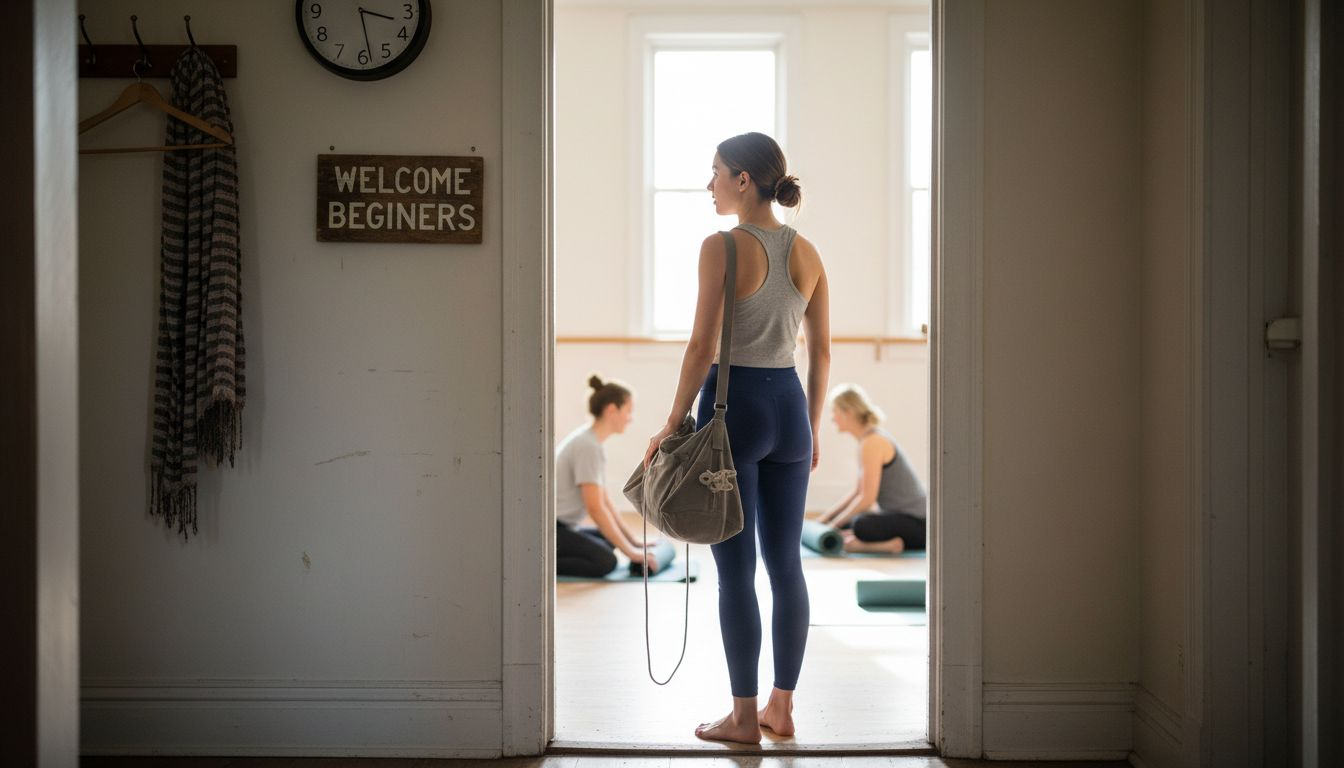
Most beginner classes at Amrita Yoga & Wellness are designed specifically for nervous newcomers. Instructors expect questions, mistakes, and modifications. Your only job is to show up and try.
The Basic Class Structure
Yoga classes typically last 45 to 90 minutes, though beginners usually start with shorter sessions. The class follows a predictable rhythm that repeats every time you attend. Understanding this structure removes the guesswork.
Yoga classes include breathing exercises, physical postures, and relaxation. Most classes follow this flow:
Arrival and settling (5-10 minutes): You'll arrive early, meet your instructor, and sit quietly as others arrive
Breathing exercises (5-10 minutes): Simple techniques to calm your mind and prepare your body
Physical postures (25-40 minutes): The main portion where you move through poses
Cool-down and stretching (10-15 minutes): Gentle poses that relax your muscles
Meditation or savasana (5-15 minutes): Final relaxation where you lie still and breathe
Each component serves a purpose. Together, they create the complete yoga experience.
Below is a summary of common yoga class segments and what beginners can expect in each:
| Class Segment | Approx. Duration | What's Involved |
|---|---|---|
| Arrival/Settling | 5–10 minutes | Meet instructor, get comfortable |
| Breathing Exercises | 5–10 minutes | Guided breath techniques |
| Physical Postures | 25–40 minutes | Pose practice and movement |
| Cool-down/Stretching | 10–15 minutes | Gentle stretches, winding down |
| Meditation/Relaxation | 5–15 minutes | Mindful rest, deep calm |
What Happens During Poses
Don't expect to nail perfect postures on day one. Your instructor will show each pose, demonstrate modifications for beginners, and walk around offering hands-on adjustments if you want them. You can always ask for a gentler version.
Your breath matters more than your form. Beginners often hold their breath while concentrating on poses. Your instructor will remind you repeatedly: breathe smoothly and steadily. This breath-to-movement connection is where yoga's magic happens.
You'll repeat similar sequences throughout the class. This repetition helps your body learn proper alignment without thinking too hard.
What You'll Actually Feel
Your first class might feel physically challenging, even if poses look easy. Your body will shake a little, especially in your legs. That's completely normal and means your muscles are waking up.
Mentally, you might feel scattered at first. Your mind might jump between thinking about your form, wondering if you're doing it right, and planning dinner. This is why meditation is included—your mind gradually settles.
Emotionally, many beginners feel surprisingly calm after class. That sense of peace comes from the combination of movement, breathing, and focused attention.
Before You Arrive
Prepare yourself for success:
Wear comfortable, stretchy clothes that allow full movement
Bring a yoga mat (or ask if the studio provides rentals)
Eat lightly 2-3 hours before class
Arrive 10-15 minutes early to meet your instructor and settle in
Silence your phone to minimize distractions
Tell your instructor about injuries so they can offer modifications
Your first class is about showing up and experiencing the practice, not about achieving perfect poses or competing with others.
After Your First Class
You might feel sore tomorrow, especially in muscles you forgot existed. This soreness (called delayed onset muscle soreness) is temporary and means your body is adapting. It passes within a few days.
More importantly, notice how you sleep that night. Most beginners sleep better after their first class. That's your nervous system responding positively to the practice.
Pro tip: Book your first class during a time when you can move slowly afterward—not right before work or a stressful appointment—so your body can absorb the benefits without rushing.
Common Pitfalls and How to Avoid Injuries
Yoga is generally safe, but beginners often hurt themselves through preventable mistakes. Most injuries come from rushing, ignoring your body's signals, or skipping fundamental safety practices. Understanding these pitfalls protects you from setbacks that could derail your practice for weeks.
The good news? Injury prevention is simple once you know what to watch for. These are learnable habits that become automatic after a few classes.
The Biggest Beginner Mistakes
Comparing yourself to others is the fastest path to injury. You see someone holding a deep backbend and think you should match it immediately. Your body doesn't work that way. Everyone's flexibility, strength, and injuries are different.
Stay focused on your own mat. Your classmate's advanced poses mean nothing about what's safe for your body. What matters is your personal progression.
Another common trap: wearing inappropriate clothing. Baggy shirts and pants can get tangled during poses, throwing off your balance. Loose clothes also make it harder for your instructor to see your alignment and offer corrections.
Wear fitted, stretchy clothes that move with you, not against you. Leave shoes and heavy accessories at home.
Rushing Into Advanced Poses
Beginners often skip foundational poses to reach more impressive-looking poses. This is how injuries happen. Advanced poses exist because your body needs preparation first.
Your tendons, ligaments, and muscles need time to adapt. Jumping into deep twists, intense backbends, or arm balances before your body is ready creates injury risk that lasts months.
Ask your instructor for beginner modifications. Using props and modifications isn't weakness—it's smart training.
Pain vs. Sensation: Know the Difference
Avoiding poses that cause pain or discomfort is essential for safe practice. Many beginners confuse muscle engagement with injury pain. Here's the distinction:
Good sensation: Mild burning, stretching feeling, muscle fatigue—feels productive
Bad pain: Sharp, stabbing, pinching, or localized joint pain—stop immediately
If something hurts, back off. Your instructor wants to know. Pain is your body's warning system, not something to push through.
Critical Safety Rules
These non-negotiables protect your body:
Tell your instructor about injuries, surgeries, or health conditions before class
Warm up properly before attempting intense poses
Progress gradually over weeks and months
Use props (blocks, straps, bolsters) when offered
Never hold your breath during poses
Skip poses that feel wrong in your body
Stay hydrated throughout class
Your job is to practice safely and consistently, not to prove yourself or match others—that's how real progress happens.
Overexertion and Recovery
Doing too much too soon causes injury and burnout. Beginners often take multiple classes daily thinking they'll progress faster. Instead, they end up injured and discouraged.
Start with 2-3 classes weekly. Your body makes progress during rest days, not just during movement. Honor that recovery time.
Listen to persistent pain or soreness that doesn't improve within a few days. That's your body asking for rest or professional medical guidance.
The Distraction Problem
Phones and distractions break your focus, making injuries more likely. When your mind is scattered between poses and your phone, you miss alignment cues and body signals.
Silence your phone and store it away. Give yourself permission to be unreachable for 60 minutes. This mental focus is part of what makes yoga transformative.
Pro tip: If any pose causes sharp pain or feels unstable, raise your hand immediately and ask your instructor for a modification—there's no shame in adapting, and your safety matters more than appearance.
Start Your Yoga Journey with Confidence and Safety at Amrita Yoga & Wellness
Finding the right path for your beginner yoga practice can be overwhelming. The challenge of building skills safely while avoiding common pitfalls like rushing into advanced poses or struggling with pain is real. This article highlighted how important it is to focus on core concepts like alignment, breath awareness, and gradual progression. Many beginners share goals such as reducing stress, improving flexibility, and fostering emotional balance but worry about injuries or feeling out of place in class.
At Amrita Yoga & Wellness, we understand these concerns deeply. Our beginner-friendly classes at Amrita Yoga & Wellness are specifically designed to help you nurture those foundational skills in a supportive environment that honors your individual pace. Whether you want to explore calming Hatha sequences or energizing Vinyasa flows, we offer expert guidance that keeps safety front and center. Connecting breath, mindful movement, and community support will empower your growth and ensure your practice is sustainable from day one.
Embrace the healing and transformative power of yoga safely with us. Visit amritayogawellness.com now to explore our class schedules, workshops, and beginner program details. Begin your journey today and experience how gently building skills can lead to profound physical and mental well-being.
Frequently Asked Questions
What should I expect in my first yoga class?
In your first yoga class, you can expect a welcoming environment where instructors guide you through breathing exercises, physical postures, and relaxation techniques. You'll also have opportunities to ask questions and receive modifications for poses.
How can I choose the right yoga style for beginners?
To choose the right yoga style, consider your goals: if you're looking for relaxation, Hatha or Restorative yoga may be best. If you want a more energetic practice, Vinyasa could suit you. Trying a few classes can help you find your fit.
What are the main components of a yoga practice for beginners?
The main components of a beginner yoga practice include postures (asanas), breathing techniques (pranayama), and mindfulness or meditation. These aspects work together to build a comprehensive approach to wellness.
How often should I practice yoga as a beginner?
As a beginner, aim for 2-3 yoga classes per week. This allows your body to adapt and progress while also providing sufficient rest and recovery time.
Recommended
Easy Aerial Yoga Poses for Beginners: Step-by-Step Guide
Trying something new for your well-being can be exciting but also a little daunting, especially when it comes to aerial yoga. Many adults in Philadelphia are searching for accessible ways to move, build strength, and manage daily stress, yet worry about safety and where to begin. By focusing on safe setup and easy poses, you can start your aerial yoga journey with confidence, knowing each step is designed to support both your body and peace of mind.
Table of Contents
Quick Summary
| Key Point | Explanation |
|---|---|
| 1. Ensure a Safe Setup for Aerial Yoga | Choose a location with ample clearance and robust support for the hammock to prevent injuries. |
| 2. Select Quality Hammock Carefully | Prioritize durable fabric and reliable brands to ensure safety and comfort during practice. |
| 3. Warm Up Properly Before Practicing | Engage in light movements to increase blood flow and prepare muscles for aerial yoga. |
| 4. Focus on Proper Form in Poses | Maintain alignment and relaxation in each pose to enhance strength and decrease injury risk. |
| 5. Practice Mindful Breathing Techniques | Deep breathing while holding poses promotes relaxation and stabilizes the nervous system. |
Step 1: Set Up Your Aerial Yoga Space Safely
Before you hang your first silk hammock, you need to choose the right location and prepare it properly. A safe aerial yoga setup combines the right room, proper equipment, and smart spacing to prevent injuries and build confidence as a beginner.
Start by selecting a space with adequate ceiling height and clearance. You'll want a room that's large enough to accommodate your hammock without walls or furniture creating obstacles around you.
Your location options include:
Indoor rooms with sturdy ceiling joists or beams
Doorway frames rated for the weight you'll be using
Outdoor areas with thick, healthy tree branches
Studio spaces like those at Amrita Yoga & Wellness where equipment is professionally installed
When hanging your hammock indoors, check that the ceiling can support the weight. Professional-grade rigging should handle up to 300 kilograms of force, far more than you'll ever need. If you're unsure about your ceiling's capacity, consult a contractor before installation.
Here's a quick comparison of common aerial yoga space options:
| Space Type | Installation Complexity | Safety Factors | Environment Benefits |
|---|---|---|---|
| Home room | Moderate to high | Requires ceiling evaluation | Privacy, convenience |
| Professional studio | Low (for the user) | Equipment professionally installed | Guidance from experts |
| Outdoor (tree branch) | High | Tree health and strength required | Natural atmosphere, fresh air |
| Doorway frame | Low to moderate | Weight rating critical | Compact, adaptable space |
The hammock itself needs proper support. Your rig should include support chains, webbing straps, silk material, and carabiners all securely anchored to your chosen point. These components work together to distribute your weight safely and prevent equipment failure.
Height matters for beginners. Keep the hammock suspended less than one meter above the ground. This low position builds your confidence and reduces injury risk if you slip or lose your grip while learning.
Arrange your space with movement in mind. You need clearance all around your hammock, especially when you're upside down or extending limbs. Remove furniture, yoga blocks, or anything else within arm's reach that could catch your body during practice.
A well-organized space prevents accidents before they happen. Clear the area completely and test your hammock's stability by gently pulling on it before practice.
Pro tip: Practice your first few sessions during daylight hours or with bright overhead lights so you can see your body's position clearly and build spatial awareness in the hammock.
Step 2: Select and Secure the Right Hammock
Choosing the right hammock is crucial because it directly impacts your safety, comfort, and ability to practice aerial yoga effectively. Your hammock needs to support your body weight while remaining comfortable enough for extended practice sessions.
When selecting a hammock, prioritize quality fabric and construction. Look for aerial yoga hammocks or swings specifically designed for supporting body weight safely. The fabric should be strong and comfortable, typically made from silk-like material rather than real silk, which offers better durability and easier maintenance.
Consider these factors when choosing:
Different lengths available for various heights and preferences
Color options that match your personal style and studio environment
Weight capacity ratings that exceed your body weight by a significant margin
Reputation of the manufacturer and brand reliability
Once you've selected your hammock, securing it properly is non-negotiable. Professional installation requires hardware such as support chains, carabiners, and ceiling anchors all rated to hold safe maximum weights. These components work together as a system, so don't compromise on any single piece.
When setting up, ensure every anchor point is rated for the weight it will support. Your entire rig should be able to handle far more force than your body weight alone. Always purchase from reputable sources that provide documentation of weight ratings and installation instructions.
This summary highlights key criteria when picking an aerial yoga hammock:
| Criteria | Why It Matters | Impact on Practice |
|---|---|---|
| Fabric durability | Reduces risk of tearing | Increases confidence |
| Weight capacity | Supports user safety | Allows for varied poses |
| Verified instructions | Prevents improper setup | Promotes proper installation |
| Manufacturer reputation | Indicates quality control | Ensures reliable performance |
Before your first practice, test the hammock thoroughly. Pull down on it with significant force while holding onto something stable, checking for any movement or instability in the rigging. The hammock should feel completely secure and immobile.
Quality equipment prevents injuries and builds confidence. Invest in professional-grade components and follow manufacturer guidelines precisely during installation.
Pro tip: Start with a standard length hammock in a neutral color like purple or blue, which works well in most studio spaces and won't limit your options if you move your practice location later.
Step 3: Warm Up Your Body Gently
Before you enter the hammock, your body needs preparation to move safely and comfortably. A proper warm-up increases blood flow, raises body temperature, and prepares your muscles for the unique demands of aerial yoga.
Start with 5 to 10 minutes of light movement. This timeframe gives your cardiovascular system a chance to activate without exhausting you before practice begins. Begin with simple activities like slow walking around your practice space or gentle marching in place.
Focus on these warm-up activities:
Slow walking or marching to increase heart rate gradually
Arm circles in both directions to mobilize shoulders
Gentle neck rolls to warm the cervical spine
Torso twists to engage your core and spine
Leg swings forward and backward to loosen hips
Ankle circles to activate lower legs and feet
As you move, concentrate on engaging your major muscle groups throughout your body. This ensures oxygen delivery reaches everywhere you'll be using during aerial yoga. Pay special attention to your shoulders, core, and hips since these areas bear significant load in the hammock.
Keep your movements controlled and deliberate. Avoid bouncing or sudden jerking motions, which can strain cold muscles. Instead, move through each motion smoothly, gradually increasing your range of motion as your body temperature rises.
You should feel slightly warmer and notice your breathing has quickened naturally. Your muscles should feel more supple and responsive than they did at the start. This is your signal that you're ready to approach the hammock.
A thorough warm-up reduces injury risk and helps you focus mentally on your practice. Never skip this step, even if you're short on time.
Pro tip: Play music during your warm-up to maintain a steady pace and create a ritual that signals to your body and mind that practice is beginning.
Step 4: Practice Basic Easy Aerial Yoga Poses
Now that your body is warm and your hammock is secure, you're ready to experience your first aerial yoga poses. These foundational poses use the hammock as active support, allowing you to safely explore movements that would be challenging or impossible on the ground.
Start by sitting in the hammock with both feet on the floor. Get a feel for how the fabric supports your weight and how it responds to your movements. This builds confidence before you lift your feet completely off the ground.
Begin with these beginner-friendly poses:
Cross position where you sit with legs crossed and hold the hammock sides for stability
Star inversion with tailbone support to safely experience gentle upside-down movement
Supported forward bend using the hammock to deepen stretching through your spine
One-legged king pigeon which uses the hammock for balance while stretching your hip flexors
The hammock acts as support around your hips to enable poses that would be difficult on the ground. This support allows you to focus on breathing and alignment without worrying about balance. Move slowly into each pose, pausing to notice how your body feels in the unfamiliar position.
For your first session, choose two poses maximum. Practice each one for just 20 to 30 seconds, focusing on steady breathing and proper alignment. Exit gently by returning to a seated position before moving to the next pose.
Listen to your body constantly. Some sensations will feel like healthy stretching, while others might signal you're pushing too far. Back off immediately if you feel sharp pain, dizziness, or loss of control.
The hammock teaches you to trust support and breathe through challenging positions. This foundation builds confidence for more advanced poses later.
Pro tip: Record a short video of yourself practicing so you can review your form and notice improvements in your alignment and comfort over time.
Step 5: Check Your Form and Relax in Each Pose
Once you're in a pose, the real work begins. Proper alignment and conscious relaxation transform aerial yoga from just hanging around into a practice that builds strength and reduces stress.
Start by scanning your body from head to toe. Notice where you feel tension and where you feel supported. Your shoulders should be relaxed away from your ears, and your neck should be neutral, not craned forward or backward.
Check these key alignment points:
Shoulders away from ears and engaged properly
Spine in neutral position without excessive arching or rounding
Hips level and balanced on both sides
Core gently engaged but not rigidly braced
Neck aligned with your spine, not twisted or extended
Hands gripping firmly but without white-knuckled tension
Once your alignment feels solid, focus on your breathing. Deep breathing and maintaining awareness during poses enhances relaxation and allows energy to flow through your body. Inhale slowly through your nose for a count of four, then exhale for four counts. This steady rhythm calms your nervous system and helps you relax into the pose.
The goal is balance between effort and ease. You should feel stable yet comfortable, not straining or rigidly holding. If a pose requires constant muscular tension, you're likely gripping too hard. Soften where you can while maintaining alignment.
Observe sensations without judgment. Mild stretching sensations are normal and beneficial. Sharp pain, numbness, or tingling signals that something is wrong. Back off immediately and return to a resting position.
Relaxation in poses is not laziness. It's the practice of finding steadiness and calm, which builds confidence and prevents injury.
Pro tip: Set a timer for 30 to 45 seconds per pose during your first month so you can focus entirely on form and breathing instead of worrying about how long you've been holding the position.
Discover Confidence and Safety in Your Aerial Yoga Journey
Starting aerial yoga can feel challenging when it comes to setting up a safe space, choosing the right hammock, and mastering basic poses. The key to overcoming these hurdles is having expert guidance and access to proper equipment that supports your body and builds your confidence step by step. If you want to move beyond theory and experience how aerial yoga transforms your strength and calm, you do not have to do it alone.
Join the community at Amrita Yoga & Wellness where you can learn aerial yoga safely with professional instructors in a fully equipped studio environment. Whether you are a beginner eager to try easy aerial poses or looking for personalized support in setup and form, our expert-led classes and workshops provide exactly what you need. Take the next step today by exploring our class schedules and discover how aerial yoga can bring balance, strength, and relaxation into your life.
Frequently Asked Questions
What are some easy aerial yoga poses for beginners?
Start with beginner-friendly poses like the Cross Position, Star Inversion, Supported Forward Bend, and One-Legged King Pigeon. Try practicing these poses for 20 to 30 seconds each during your first session to build confidence and familiarity.
How do I set up a safe aerial yoga space at home?
Choose a room with adequate ceiling height and sturdy support beams, and ensure there’s enough space around your hammock to prevent injuries. Clear any furniture or obstacles before installation and test the hammock’s stability before your practice.
What should I focus on during my warm-up for aerial yoga?
Engage in light movement for 5 to 10 minutes, such as slow walking, arm circles, and leg swings to prepare your muscles. Focus on controlled movements to increase blood flow and reduce the risk of injury during your session.
How do I ensure proper form in aerial yoga poses?
Check your alignment by ensuring your shoulders are relaxed, spine is neutral, and core is gently engaged. Regularly scan your body for tension and adjust your position as needed to maintain a balance between effort and ease in each pose.
How long should I hold each aerial yoga pose as a beginner?
In your first month, aim to hold each pose for 30 to 45 seconds to focus on your form and breathing. Gradually increase the time as you become more comfortable and confident in each position.
What should I do if I feel discomfort during a pose?
If you experience sharp pain, dizziness, or numbness, back off immediately and return to a resting position. Listen to your body and adjust your movements to ensure a safe and enjoyable practice.
Recommended
Aerial Yoga Strengthening Moves for Total Body Power — Amrita Yoga & Wellness
How to Advance in Aerial Yoga for Greater Mastery — Amrita Yoga & Wellness
Building Aerial Yoga Strength for Lasting Flexibility — Amrita Yoga & Wellness
Master Aerial Yoga Poses for Beginners Step by Step — Amrita Yoga & Wellness
Vinyasa Flow Yoga: Benefits, Techniques, and Classes
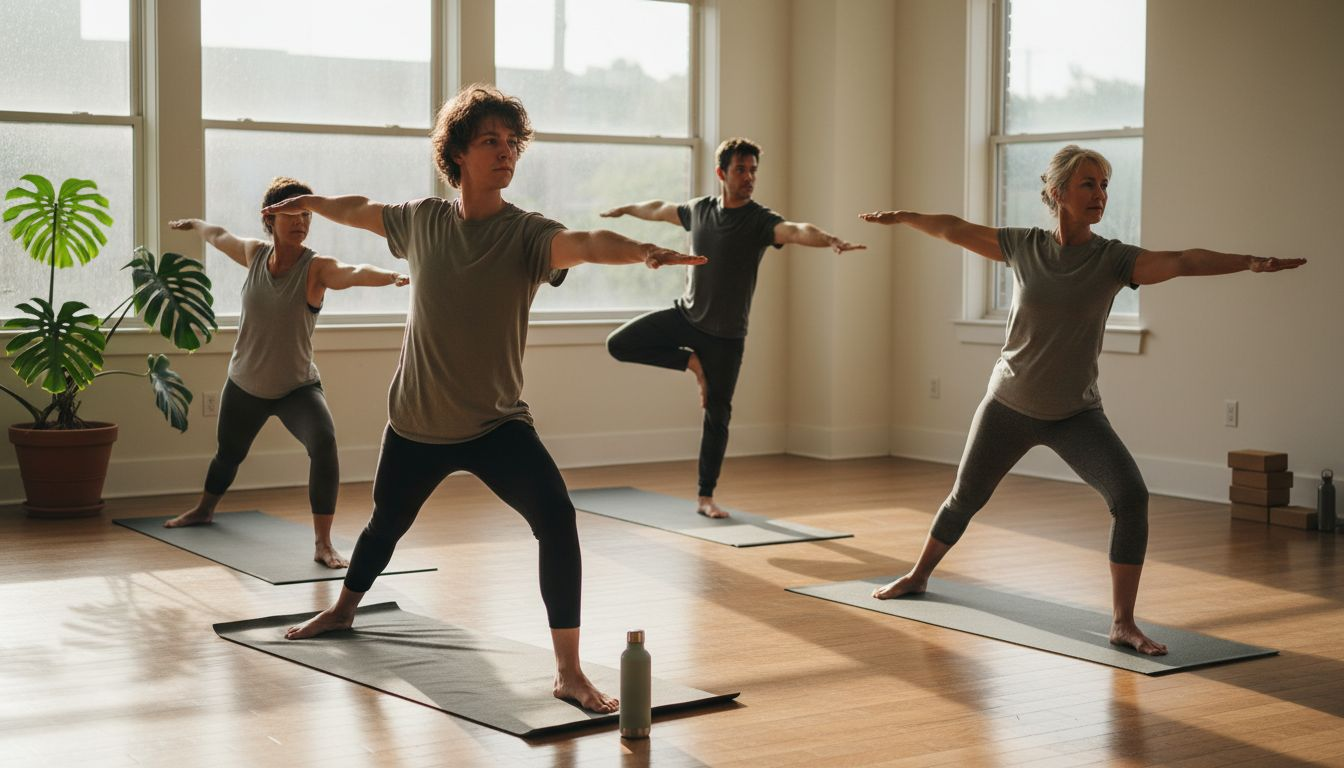
Smooth, breath-synchronized movement is what sets Vinyasa Flow yoga apart, attracting Philadelphia practitioners looking for both challenge and calm. When your breath becomes the anchor, every motion gains meaning and presence—yoga shifts from static poses to an intentional dance. This dynamic practice offers a unique combination of breath-to-movement coordination and seamless transitions, supporting physical strength, flexibility, and the kind of mental focus that nurtures well-being.
Table of Contents
Key Takeaways
| Point | Details |
|---|---|
| Breath-Synchronized Movement | Vinyasa Flow yoga emphasizes matching breath with movement, enhancing both physical and mental focus during practice. |
| Continuous Flow | Unlike static yoga styles, vinyasa involves seamless transitions between poses, promoting cardiovascular benefits and dynamic engagement. |
| Varied Class Structure | Classes typically progress through centering, warm-ups, main sequences, and cooldowns, ensuring a comprehensive approach to practice. |
| Mindful Practice | Practitioners are encouraged to listen to their bodies, prioritize alignment, and use props to foster safety and sustainability in their practice. |
Defining Vinyasa Flow Yoga and Key Concepts
Vinyasa Flow yoga is a dynamic, breath-synchronized practice where movement and respiration work as partners. Think of your breath as the conductor and your body as the orchestra—they move together seamlessly. This approach transforms yoga from isolated poses into a continuous, flowing sequence.
At its core, vinyasa coordinates each movement with the breath, using inhalations and exhalations to anchor transitions between poses. As you inhale, you might lift your chest in an upward motion; as you exhale, you fold forward. Breath control with movement demands intense focus and presence, making it far more than just stretching.
The word "vinyasa" itself comes from Sanskrit and means "to place in a special way." Each pose flows into the next with intention and awareness. This seamless transition between poses is what gives the practice its popular nickname: flow yoga.
Understanding Flow and Movement
Flow describes how vinyasa yoga creates a continuous stream of movement rather than holding static poses. Instead of pausing between stretches, you move with your breath.
Consider the cat stretch as a simple example. On your inhale, your spine curves gently as your chest lifts forward and upward. On your exhale, your spine rounds as you draw your chin toward your chest. This wave-like quality reflects vinyasa's fundamental principle.
Key characteristics of vinyasa flow include:
Breath-synchronized movement: Every motion links directly to an inhalation or exhalation
Continuous sequencing: Poses connect fluidly without long pauses
Increased focus: The breath anchor keeps your mind engaged throughout practice
Cardiovascular engagement: The flowing movement elevates your heart rate moderately
Physical and Mental Integration
Unlike slower yoga styles, vinyasa blends strength, flexibility, and cardiovascular work into one practice. Your body heats up naturally through movement, which is why some practitioners choose heated versions.
Mentally, the breath-to-movement connection creates a meditative quality during practice. You cannot drift into distraction—your mind must follow your breath and body simultaneously. This integration builds mental clarity alongside physical strength.
Research shows positive cardiovascular effects from vinyasa practice, including improved blood vessel function and arterial health. The continuous movement naturally supports your heart and circulatory system.
What Makes Vinyasa Different
Vinyasa stands apart from other yoga styles because it prioritizes flow and breath over holding poses long-term. A power yoga class might hold warrior poses for five breaths; vinyasa moves through them in two or three breaths, maintaining momentum.
This modern style appeals to people seeking:
Active, energizing practice rather than restorative sessions
Mental focus through synchronized breathing
Improved cardiovascular fitness alongside flexibility
A challenging physical practice that builds heat and strength
Vinyasa flow yoga transforms yoga into a continuous dance between breath and movement, making it both a physical and mental practice.
At Amrita Yoga & Wellness in Philadelphia, vinyasa classes range from beginner-friendly flows to advanced challenges. Whether you're new to yoga or a seasoned practitioner, understanding these foundational concepts helps you approach the practice with intention and awareness.
Pro tip: Focus on syncing one breath per movement when starting vinyasa—one inhale for one pose transition, one exhale for the next. This 1:1 ratio builds your foundation before exploring faster flows.
How Vinyasa Flow Differs From Other Yoga Styles
Vinyasa Flow stands out because it prioritizes continuous movement linked to breath rather than holding poses in fixed sequences. While other popular styles like Hatha or Iyengar focus on alignment and static holds, vinyasa creates a seamless dance of motion. This fundamental difference shapes your entire experience on the mat.
The key distinction lies in how vinyasa structures its sequences. Unlike Ashtanga yoga, which follows a rigid, repetitive order of poses every class, vinyasa allows variable sequences tailored to the instructor and students. Your Tuesday morning class might flow differently than Thursday evening—that flexibility is intentional.
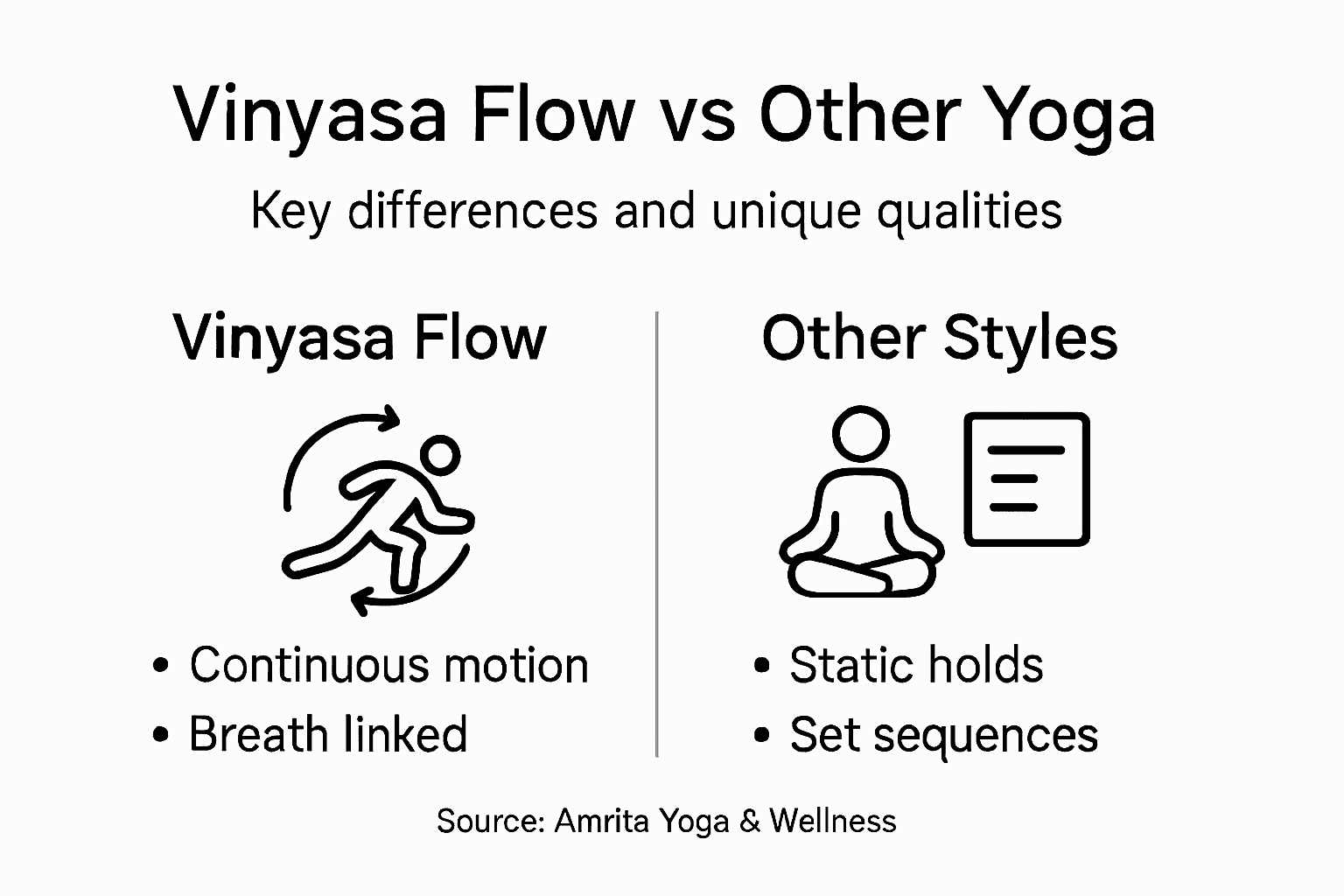
Vinyasa's continuous flowing movement generates a cardiovascular workout that other styles don't typically offer. When you move from pose to pose without long pauses, your heart rate stays elevated and your body naturally generates heat. This aerobic quality appeals to people seeking a more physically demanding practice.
Comparing Major Yoga Styles
Understanding how vinyasa compares to other approaches helps you choose what fits your goals.
Hatha yoga emphasizes holding poses longer while focusing on proper alignment. You might spend five or more breaths in warrior pose, building strength through stillness. Hatha moves slower and gives you time to adjust your positioning.
Iyengar yoga takes alignment even further, often using props like blocks and straps to achieve precise positioning. Classes focus on understanding anatomy and biomechanics. The pace is deliberate and detailed.
Ashtanga yoga does include flowing movement, but breath-linked flowing sequences follow a fixed, unchanging order every single time. You'll practice the same sequence in every class, which builds deep familiarity but less variety.
Power yoga borrows vinyasa's flowing style but adds challenging variations and creative sequences. It emphasizes building strength and heat more aggressively than traditional vinyasa.
Why Vinyasa Feels Different
The integration of breath and movement creates a meditative quality you might not experience in static-hold styles. Your mind must stay present because your body is constantly moving. You cannot zone out.
Vinyasa also offers customization that rigid systems do not. An instructor can modify sequences for different class levels, themes, or even student feedback. One class might focus on hip openers; another might emphasize arm balances—both are vinyasa.
Key differences at a glance:
Here is a quick comparison of major yoga styles you might encounter:
| Yoga Style | Structure Type | Focus Area | Variety in Practice |
|---|---|---|---|
| Vinyasa | Flowing, variable | Breath & movement | High, changes each class |
| Hatha | Static, sequenced | Alignment & stillness | Moderate, adjusts by class |
| Iyengar | Detailed, static | Precision & props | Moderate, pose-based |
| Ashtanga | Fixed, flowing | Repetition & structure | Low, same every class |
| Power Yoga | Dynamic, creative | Strength & stamina | High, instructor-driven |
Vinyasa: Flowing sequences, breath-linked movement, variable structure, cardiovascular engagement
Hatha: Longer static holds, alignment focus, slower pace, foundational approach
Iyengar: Props and precision, detailed alignment study, slower, therapeutic applications
Ashtanga: Fixed sequences, breath-linked, repeating order, structured progression
Power yoga: Dynamic flows, strength emphasis, heat generation, creative variations
Vinyasa creates movement as meditation, while other styles often use stillness as their meditation practice.
At Amrita Yoga & Wellness in Philadelphia, vinyasa classes attract people who love active, engaging practice. If you've tried slower styles and craved more movement, or practiced power yoga and want something more accessible, vinyasa offers the sweet spot between dynamic flow and intentional pacing.
Pro tip: Try a Hatha class to understand static alignment, then return to vinyasa with better body awareness. This cross-training deepens your vinyasa practice by showing you how proper alignment moves through your flowing sequences.
Typical Class Structure and Sequencing Elements
Most vinyasa classes follow a predictable arc, though instructors customize the journey. Understanding this structure helps you know what to expect and prepares your body mentally for the practice ahead. The typical 60-minute class moves through distinct phases, each serving a specific purpose.
Classes begin with centering and breathwork, often called pranayama. You might sit cross-legged while focusing on your natural breath or practicing specific breathing patterns. This 5-10 minute opening settles your mind and syncs you with your body before movement begins.
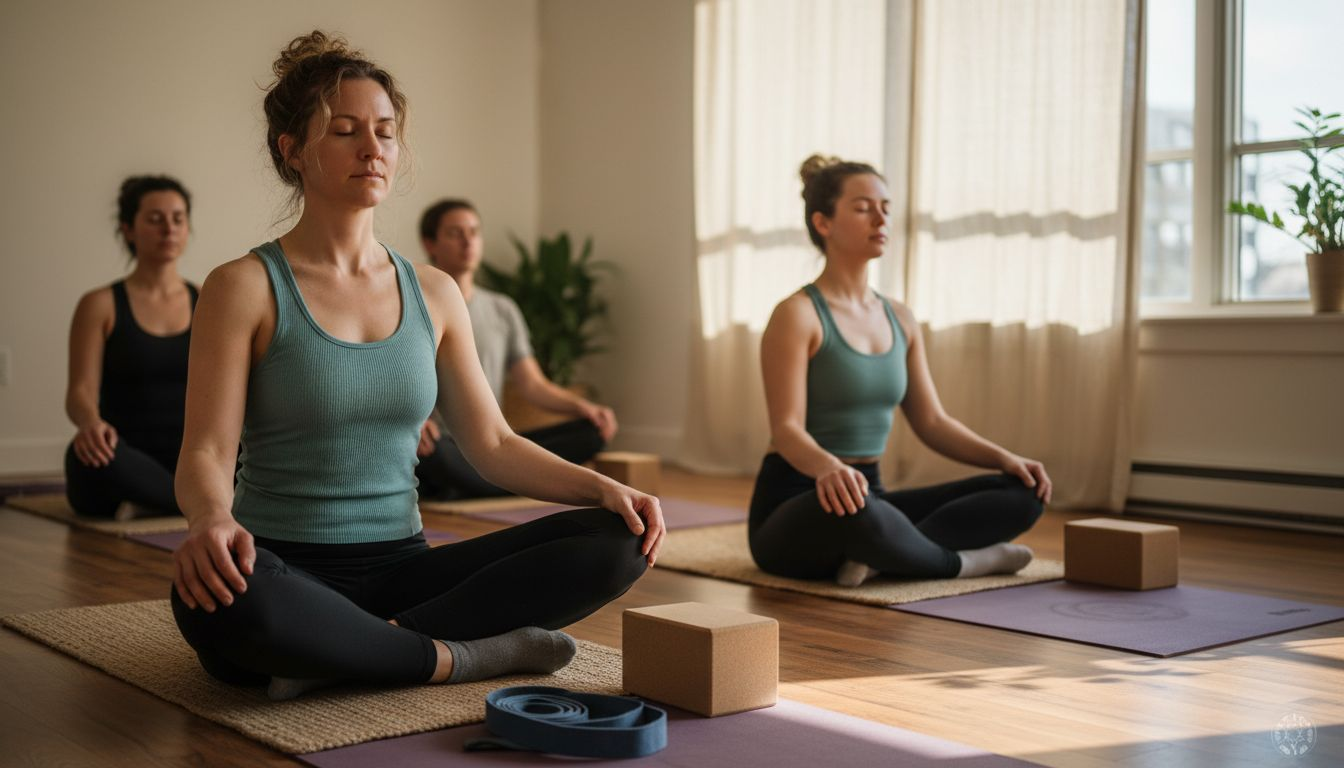
After centering, classes move into gentle warm-up sequences that prepare your joints and muscles. Cat-cow stretches, shoulder circles, and wrist rotations gradually increase blood flow. These movements are slower and more controlled than what follows, building your internal heat.
Building the Practice
The main body of class, typically 30-40 minutes, consists of flowing sequences that build in intensity. Instructors often begin with foundational poses and sun salutations that every student knows. Sun salutations are the backbone of vinyasa—they coordinate breath with a specific sequence of movements.
From there, classes progress into standing poses and balancing work. You might move through warriors, triangles, and standing leg lifts while maintaining breath-synchronized transitions. The pace gradually increases as your body warms.
Most classes include a peak pose or theme near the middle. This might be arm balances, deep backbends, or advanced hip openers. The instructor spends extra time preparing your body for this challenging moment.
Key phases in order:
Centering (5-10 minutes): Breathing and mental preparation
Warm-up (5-10 minutes): Joint mobility and gentle movement
Sun salutations (10-15 minutes): Breath-linked foundational sequences
Standing poses (10-15 minutes): Strength and balance building
Peak pose (5-10 minutes): The class highlight or challenge
Cool-down (5-10 minutes): Slower stretches and transitions
Final relaxation (5-10 minutes): Savasana or meditation
Closing and Integration
After the peak pose, instructors bring energy down with cool-down stretches and slower-paced poses. This transition prevents dizziness and gives your heart rate time to decrease naturally. You'll often hold poses longer here than in the main body.
Classes end with savasana, or final relaxation pose. You lie flat on your back, completely still, for 5-10 minutes while the instructor guides relaxation or silence fills the room. This integration period allows your nervous system to absorb the practice's benefits.
Every vinyasa class tells a story through its sequencing—beginning, building, peaking, and concluding with intention and purpose.
At Amrita Yoga & Wellness in Philadelphia, instructors vary their sequences while maintaining this classic structure. Beginning vinyasa classes move more slowly and focus on foundational poses, while advanced classes feature creative variations and longer holds in challenging positions. Knowing the typical flow helps you feel more confident stepping onto your mat.
Pro tip: Arrive 10 minutes early to your first vinyasa class. This gives you time to set up your mat, settle your nervous system, and ask the instructor about any physical limitations before class begins.
Physical and Mental Benefits of Vinyasa Flow Practice
Vinyasa Flow yoga delivers benefits that extend far beyond the mat. The combination of continuous movement, breath work, and mental focus creates measurable improvements in both body and mind. Whether you're seeking stress relief or physical strength, vinyasa addresses multiple wellness goals simultaneously.
The flowing nature of vinyasa creates a full-body cardiovascular workout that builds endurance naturally. Unlike static poses, continuous movement elevates your heart rate and demands oxygen throughout class. Over time, your heart becomes stronger and your circulation improves, supporting overall cardiovascular health.
Muscle engagement happens throughout every transition. You develop increased muscle strength and tone especially in your core, shoulders, and legs. The constant stabilization required during flowing sequences activates muscles you might not use in everyday life.
Physical Transformation
Vinyasa also enhances flexibility and range of motion as you move through varied poses regularly. The dynamic stretching embedded in flowing sequences gradually lengthens muscles safely. You gain mobility without forcing rigid holds that might create tension.
Your posture improves naturally through vinyasa practice. Strengthening your core and back muscles while building body awareness helps you stand taller and move more efficiently. Many Philadelphia practitioners notice better alignment in daily life after several weeks of consistent practice.
Physical benefits include:
Enhanced flexibility and joint mobility
Improved muscle strength throughout your body
Better balance and stability
Increased cardiovascular endurance
Improved digestion and immune function
Better sleep quality and energy levels
Mental and Emotional Gains
The breath-to-movement synchronization creates a powerful meditative state that reduces stress and anxiety. When your mind focuses on breath and body, daily worries fade temporarily. This consistent mental break builds your resilience over time.
Mental clarity and mindfulnessdevelop naturally through the practice's demand for presence. You cannot multitask during vinyasa—your brain must stay engaged with the moment. This training carries into daily life, helping you approach challenges with greater focus and awareness.
Emotional benefits accumulate steadily. Regular practitioners report improved mood, increased self-confidence, and better emotional regulation. The physical effort releases endorphins while the meditative aspect calms your nervous system—a powerful combination for mental wellness.
Mental and emotional benefits include:
Decreased stress and anxiety levels
Enhanced mood and emotional stability
Improved focus and concentration
Greater self-awareness and confidence
Better stress management tools
Deeper mind-body connection
Vinyasa yoga integrates strength training, cardiovascular exercise, and meditation into one unified practice.
At Amrita Yoga & Wellness in Philadelphia, students consistently report feeling calmer, stronger, and more connected after adopting a regular vinyasa practice. Whether you attend one class weekly or practice three times per week, benefits accumulate and deepen over time.
Pro tip: Practice vinyasa at least twice weekly to notice measurable physical and mental changes. Consistency matters more than intensity—regular, moderate practice beats sporadic intense sessions for building lasting benefits.
Common Mistakes and Essential Safety Tips
Vinyasa yoga's intensity demands attention to proper technique and body awareness. Injuries happen when practitioners push beyond their limits or ignore warning signals from their bodies. Understanding common mistakes helps you practice safely and sustainably for years to come.
The most frequent mistake beginners make is losing breath coordination during transitions. When poses get challenging, your instinct is to hold your breath and power through. This breaks vinyasa's fundamental principle and robs your muscles of oxygen, increasing injury risk.
Rushing through sequences ranks as another major error. Speed creates momentum that masks poor alignment and prevents your muscles from engaging properly. Slow, controlled movement always beats quick, sloppy transitions.
What Goes Wrong
Skipping warm-up or cool-down sections significantly increases injury risk. These phases prepare your body for intensity and help it recover afterward. Jumping directly into peak poses without preparation strains cold muscles and connective tissue.
Ignoring your body's pain signals causes preventable injuries. Discomfort and pain are messages—learn to distinguish between productive muscle sensation and harmful joint stress. Sharp, localized pain demands immediate attention and modification.
Common mistakes practitioners make:
Below is a summary of common vinyasa mistakes and their smart solutions:
| Common Mistake | Why It Happens | Safer Practice Solution |
|---|---|---|
| Losing breath coordination | Trying to keep up with pace | Slow down, match breath to move |
| Rushing transitions | Wanting a good workout fast | Prioritize control over speed |
| Skipping proper warm-up | Eager to advance poses | Always include full warm-up phase |
| Ignoring pain signals | Comparing to other students | Modify or rest at first discomfort |
| Avoiding props or help | Viewing props as weakness | Use props to maintain alignment |
Holding breath during challenging transitions
Rushing through sequences for speed
Neglecting proper warm-up and cool-down
Forcing depth in stretches beyond your current capacity
Comparing your progress to others in class
Skipping props or modifications when offered
Practicing on exhaustion or injury
Essential Safety Practices
Breathing consciously and moving mindfullywithin your limits prevents most vinyasa injuries. Sync each breath with one movement, and stop if coordination breaks down. This intentional pace protects your body while deepening your practice.
Maintain alignment over depth always. A shallow pose with perfect form beats a deep pose with compromised alignment. Props like blocks, straps, and blankets serve your body—using them shows wisdom, not weakness.
Build gradually under qualified instruction. Starting with basic poses and increasing intensity slowly prevents overwhelming your body. Philadelphia instructors at Amrita Yoga & Wellness modify classes for all levels—take advantage of these adjustments.
Essential safety tips include:
Breathe consciously: Sync breath with movement throughout class
Listen to your body: Distinguish between productive sensation and harmful pain
Use props freely: Blocks, straps, and blankets enhance safety
Warm up properly: Never skip opening sequences
Cool down intentionally: Allow your heart rate to decrease gradually
Ask for modifications: Instructors expect and encourage adaptation
Practice with rest days: Your body needs recovery time between intense classes
Your practice should feel sustainable for life, not just impressive for today.
Safety creates longevity. Practicing mindfully now prevents injuries that could sideline you for months. Building strength and flexibility gradually, with respect for your body's limits, creates a practice that grows stronger year after year.
Pro tip: If a pose feels wrong, stop immediately and ask your instructor for a modification rather than pushing through discomfort. Honoring your body's signals prevents injury and deepens your practice.
Elevate Your Well-Being with Vinyasa Flow at Amrita Yoga & Wellness
Struggling to find a yoga practice that combines strength, flexibility, and mindful breath coordination? Vinyasa Flow yoga offers a dynamic way to build physical endurance while calming your mind through synchronized movement and breath. If you want to experience the benefits described in "Vinyasa Flow Yoga Benefits, Techniques, and Classes," why not start your journey where expert guidance and inclusive community come together
Discover personalized vinyasa classes tailored to your level at Amrita Yoga & Wellness. From beginner flows focusing on breath awareness to advanced sessions that challenge your limits safely, our Philadelphia studio supports your growth every step of the way. Take the next step toward improved cardiovascular health, greater mental clarity, and deeper mind-body connection by exploring our detailed class descriptions online and securing your spot today. Visit our homepage and embrace a practice that respects your pace and empowers your practice.
Frequently Asked Questions
What are the primary benefits of Vinyasa Flow yoga?
Vinyasa Flow yoga offers numerous benefits including improved cardiovascular health, increased muscle strength and flexibility, enhanced mental clarity, reduced stress and anxiety, and better posture. The continuous movement and breath synchronization create a full-body workout that supports both physical and mental well-being.
How does Vinyasa Flow differ from other yoga styles?
Vinyasa Flow differs from other styles like Hatha or Iyengar as it focuses on continuous movement linked to breath rather than holding poses for an extended time. This dynamic flow creates an engaging and energizing practice, making it suitable for those looking for a more active yoga experience.
What should I expect in a typical Vinyasa Flow class?
In a typical Vinyasa Flow class, you can expect a structured sequence that includes centering and breathwork, gentle warm-ups, sun salutations, standing poses, a peak pose, cool-down stretches, and final relaxation. Classes are usually 60 minutes long and emphasize breath-synchronized movement.
Are there any common mistakes to avoid while practicing Vinyasa Flow yoga?
Common mistakes include losing breath coordination during transitions, rushing through sequences, skipping warming up or cooling down, and ignoring pain signals. It's crucial to practice mindfully, prioritize proper alignment, and use props when necessary to prevent injury.
Recommended
Pilates Fusion: Transforming Holistic Fitness Routines
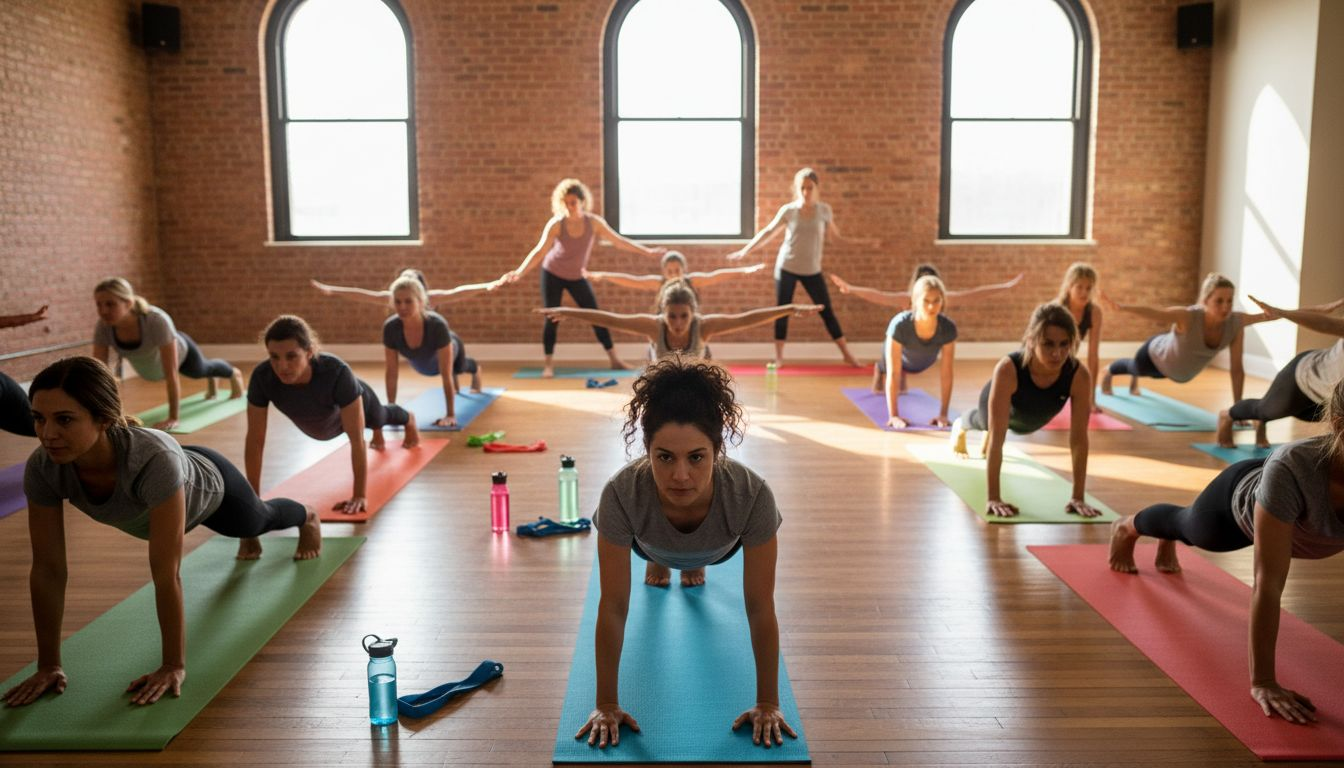
Stepping into a new fitness studio in Philadelphia can feel intimidating, especially when you want a routine that supports both strength and recovery without harsh impact. That is why so many locals are discovering the power of Pilates Fusion, a practice that blends mindful yoga stretching with core-focused Pilates techniques. This innovative approach not only helps you build strength and flexibility, it also nurtures the mind-body connection that is vital for holistic wellness and lasting results.
Table of Contents
Key Takeaways
| Point | Details |
|---|---|
| Holistic Fitness Approach | Pilates Fusion blends Pilates with other movement disciplines for comprehensive wellness. |
| Accessible to All | This workout accommodates various fitness levels and can be tailored for individual needs. |
| Mind-Body Connection | Emphasizes mindful movements and breathing, enhancing emotional and physical well-being. |
| Dynamic Class Variations | Offers diverse styles, such as Cardio and Rehabilitation Fusion, targeting specific fitness objectives. |
What Is Pilates Fusion and How It Works
Pilates Fusion represents an innovative approach to holistic fitness that blends traditional Pilates principles with complementary movement disciplines. Unlike standard workout routines, this integrative practice combines core strengthening techniques from classic Pilates with elements from yoga, dance, and functional training to create a comprehensive wellness experience.
At its core, Pilates Fusion focuses on several key objectives:
Enhancing overall body alignment and posture
Improving muscular strength and flexibility
Developing mindful movement patterns
Reducing risk of injury through balanced conditioning
Promoting mind-body connection
The methodology works by strategically incorporating fusion energy principles into physical training - much like scientific fusion combines different elements to create something more powerful. Just as fusion science aims to merge atomic components, Pilates Fusion merges different movement modalities to generate a more holistic fitness approach.
Physically, this practice involves dynamic movements that challenge multiple muscle groups simultaneously. Practitioners engage in sequences that might include traditional Pilates mat work, yoga-inspired stretching, resistance training elements, and targeted core stabilization exercises. The result is a workout that builds strength, increases flexibility, and promotes balanced muscle development.
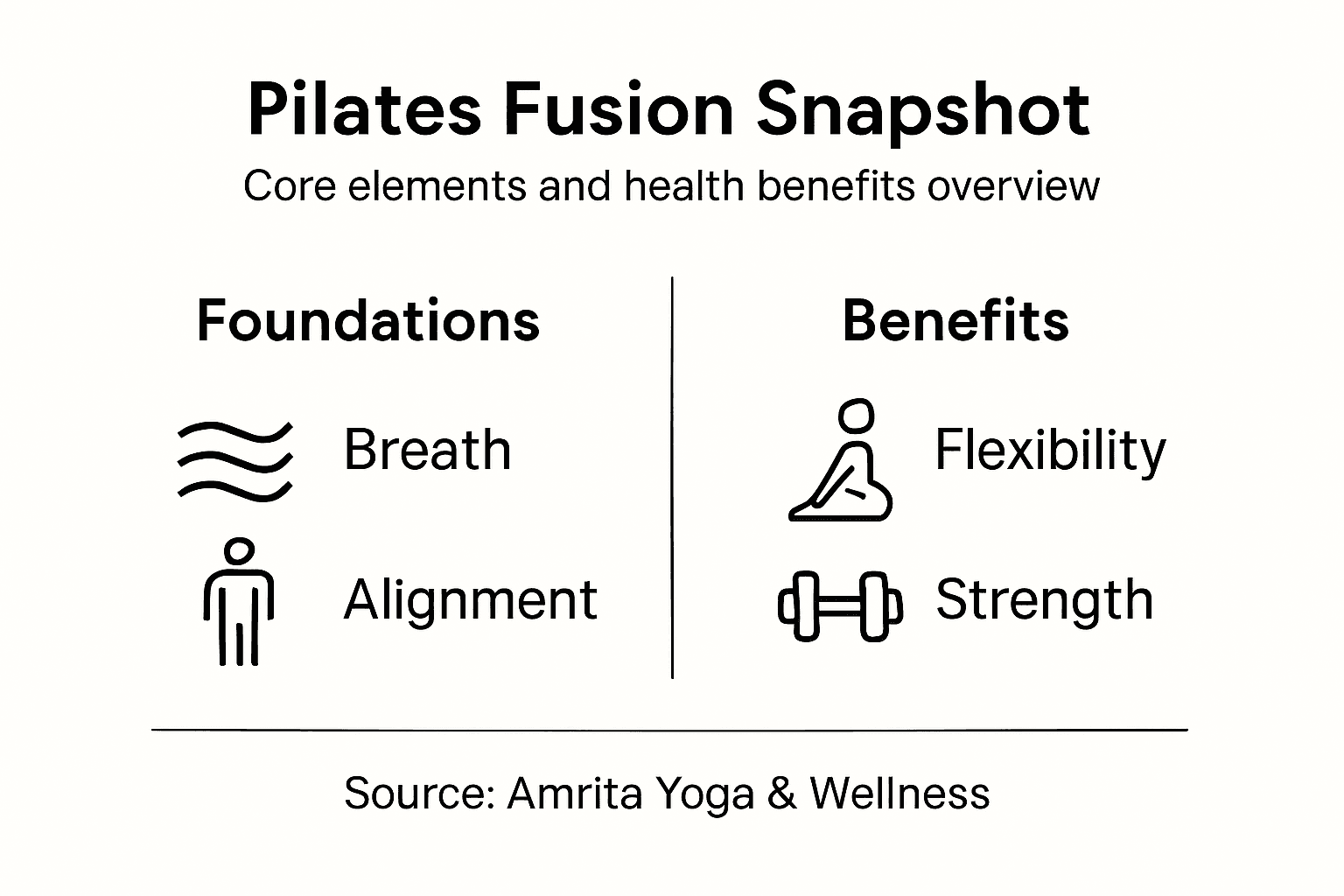
Pro tip: Start your Pilates Fusion journey by focusing on proper breathing techniques and maintaining precise, controlled movements rather than rushing through exercises.
Popular Types and Class Variations Explained
Pilates Fusion offers a rich landscape of class variations designed to accommodate diverse fitness levels and personal wellness goals. Integrative Pilates approaches have evolved to create multiple distinctive fusion styles that cater to different physical needs and preferences.
Some popular Pilates Fusion class variations include:
Cardio Pilates Fusion: Combines high-intensity cardiovascular movements with traditional Pilates core work
Yoga Pilates Fusion: Blends mindful yoga stretching with Pilates strengthening techniques
Barre Pilates Fusion: Incorporates ballet-inspired movements with Pilates principles
Strength Training Pilates Fusion: Integrates resistance training and weight work with Pilates core exercises
Rehabilitation Pilates Fusion: Focuses on gentle movements for injury recovery and physical therapy
Each fusion style offers unique benefits, targeting specific fitness outcomes while maintaining the foundational principles of controlled, precise movements and mindful body awareness. The adaptability of these classes allows participants to customize their workout experience based on individual fitness levels, physical limitations, and personal wellness objectives.
To help you select the right Pilates Fusion class, here's a summary table of distinct styles and their typical benefits:
| Fusion Style | Physical Benefit | Recommended For |
|---|---|---|
| Cardio Fusion | Boosts heart health and stamina | Those wanting aerobic fitness |
| Barre Fusion | Improves balance and coordination | Fans of dance and ballet |
| Strength Training Fusion | Builds resilience and power | Individuals seeking strength gains |
| Rehabilitation Fusion | Supports gentle recovery | Injury rehab or seniors |
| Yoga Fusion | Enhances flexibility and calm | Beginners or stress management |
The complexity of Pilates Fusion classes means practitioners can progressively challenge themselves. Beginners might start with gentler variations like Yoga Pilates Fusion, which emphasizes flexibility and mind-body connection, while more advanced participants could explore Cardio Pilates Fusion for higher-intensity workouts that combine cardiovascular endurance with core strengthening.
Pro tip: Always communicate with your instructor about your fitness level and any physical limitations to ensure you select the most appropriate Pilates Fusion class variation for your individual needs.
Core Benefits for Strength and Mind-Body Health
Pilates Fusion represents a transformative approach to holistic wellness that goes far beyond traditional exercise routines. Physical activity basics demonstrate how these integrated practices can dramatically improve both physical strength and mental well-being through targeted, mindful movements.
Key benefits of Pilates Fusion include:
Enhanced Muscular Strength: Develops core and peripheral muscle groups through precise, controlled movements
Improved Flexibility: Increases range of motion and reduces muscle tension
Better Posture Alignment: Promotes proper body mechanics and reduces strain
Stress Reduction: Combines meditative breathing with physical exercise
Increased Body Awareness: Develops deeper connection between mental and physical states
The physiological impacts of this practice extend beyond surface-level fitness. Practitioners experience comprehensive health improvements that address both muscular development and psychological resilience. Each movement is designed to challenge the body while simultaneously calming the mind, creating a unique synergy of physical and mental conditioning.
Beyond immediate physical benefits, Pilates Fusion supports long-term wellness by promoting balanced muscle development, reducing injury risks, and enhancing overall body mechanics. The mind-body connection fostered through these practices helps individuals develop greater self-awareness, emotional regulation, and holistic health strategies.
Pro tip: Begin your Pilates Fusion journey with an open mind, focusing on quality of movement rather than intensity, and allow your body to gradually adapt to this integrated fitness approach.
Who Should Try Pilates Fusion Workouts
Pilates Fusion is an exceptionally versatile fitness approach that accommodates diverse physical activity guidelines, making it accessible to a wide range of individuals seeking holistic wellness. Unlike traditional exercise regimens, this practice offers customizable intensity levels and modifications to suit different fitness backgrounds and physical capabilities.
Ideal candidates for Pilates Fusion include:
Fitness Beginners: Those new to structured exercise programs
Athletes: Seeking cross-training and injury prevention strategies
Seniors: Looking for low-impact strength and flexibility maintenance
Professionals: Managing stress and countering sedentary work lifestyles
Rehabilitation Patients: Recovering from injuries with controlled movements
Pregnant Women: Wanting safe, gentle conditioning during pregnancy
Chronic Pain Sufferers: Seeking gentle, supportive movement techniques
The beauty of Pilates Fusion lies in its inherent adaptability. For individuals with limited mobility or specific health concerns, instructors can modify movements to ensure safe, effective workouts. This approach allows people of all ages and fitness levels to participate, from young adults to seniors, creating an inclusive fitness experience that prioritizes individual needs and capabilities.
Each Pilates Fusion class offers scalable challenges, meaning participants can progressively increase difficulty as their strength, flexibility, and body awareness improve. Whether you're a complete novice or an experienced fitness enthusiast, these workouts provide a personalized approach to physical conditioning that respects individual limitations while simultaneously pushing personal boundaries.
Pro tip: Always consult with a qualified instructor about your personal health history and fitness goals before starting any new exercise program, ensuring a safe and tailored Pilates Fusion experience.
Risks, Common Pitfalls, and Comparison With Alternatives
Pilates Fusion offers numerous benefits, but practitioners must be aware of potential challenges and potential risks associated with improper technique. Understanding these nuances helps individuals make informed decisions about their fitness journey and implement strategies to minimize potential complications.
Common risks and pitfalls in Pilates Fusion include:
Technique Errors: Incorrect form leading to muscle strain or joint stress
Overexertion: Pushing beyond personal physical limitations
Inadequate Instruction: Lack of professional guidance
Unrealistic Expectations: Believing in instant transformation
Incomplete Fitness Approach: Relying solely on Pilates Fusion without complementary exercises
Compared to alternative fitness approaches, Pilates Fusion presents unique advantages and limitations. Traditional weight training focuses on muscle hypertrophy and strength, while high-intensity interval training (HIIT) prioritizes cardiovascular endurance. In contrast, Pilates Fusion emphasizes controlled movements, core engagement, and mind-body connection, offering a more holistic approach to physical conditioning.
Here's a comparison of Pilates Fusion with traditional fitness methods for quick reference:
| Training Approach | Core Focus | Mind-Body Integration | Ideal For |
|---|---|---|---|
| Pilates Fusion | Strength and flexibility balance | High, encourages mindfulness | All ages and abilities |
| Weight Training | Muscular hypertrophy and strength | Low, movement is isolated | Muscle gain enthusiasts |
| Yoga | Flexibility and relaxation | High, emphasizes inner calm | Stress relief seekers |
| HIIT | Cardiovascular endurance | Moderate, emphasis on intensity | Athletes and advanced users |
The key differentiator lies in Pilates Fusion's comprehensive approach. Unlike single-dimensional workout methods, this practice integrates strength, flexibility, balance, and mental awareness. However, practitioners should recognize that while Pilates Fusion provides exceptional benefits, it may require supplementation with cardiovascular and strength training for truly comprehensive fitness.
Pro tip: Always prioritize quality of movement over quantity, and consult a certified Pilates Fusion instructor to ensure proper technique and personalized modifications.
Elevate Your Holistic Fitness Journey with Pilates Fusion at Amrita Yoga & Wellness
Feeling overwhelmed by traditional workouts that ignore the mind-body connection It can be a challenge to strengthen your core, improve flexibility, and reduce stress all at once. This article highlights how Pilates Fusion blends precise Pilates movements with complementary practices like yoga and barre to create a balanced approach that enhances posture, body awareness, and overall wellness. If you are looking to overcome common pitfalls like technique errors or want a customizable routine that grows with you Pilates Fusion offers a mindful, adaptable solution.
Discover how Amrita Yoga & Wellness in Philadelphia supports your Pilates Fusion journey with expert-led classes tailored for all fitness levels. Whether you want to build strength, boost flexibility, or reduce tension in a welcoming community setting explore our diverse offerings including Pilates, barre, and yoga on the class schedule page. Ready to experience transformative holistic fitness The time to start is now Visit Amrita Yoga & Wellness to sign up for classes, workshops, and retreats designed to nurture both body and mind. Your path to a stronger, calmer you begins here.
Frequently Asked Questions
What is Pilates Fusion?
Pilates Fusion is a holistic fitness approach that combines traditional Pilates principles with other movement disciplines like yoga, dance, and functional training, focusing on core strengthening and balanced conditioning.
Who can benefit from Pilates Fusion workouts?
Pilates Fusion is suitable for a wide range of individuals including fitness beginners, athletes, seniors, pregnant women, and those recovering from injuries, as it can be tailored to various fitness levels and physical capabilities.
What are the main benefits of practicing Pilates Fusion?
The key benefits of Pilates Fusion include enhanced muscular strength, improved flexibility, better posture alignment, stress reduction, and increased body awareness through mindful movements.
How does Pilates Fusion differ from traditional workouts?
Pilates Fusion emphasizes a comprehensive approach by integrating strength, flexibility, balance, and mind-body connection, unlike traditional workouts that may focus solely on cardio, strength, or flexibility.
Recommended
7 Types of Meditation Practices for Holistic Wellness
Stress, anxiety, and restless nights can make it feel like your mind is always on overdrive. Finding relief often seems out of reach, especially when you want practical solutions you can use in your everyday life. The good news is that meditation practices are proven to help ease mental strain and bring more calm into your daily routine.
Backed by scientific research, these meditation techniques have been shown to significantly reduce stress, lift your mood, and even improve your sleep quality. You will discover a variety of approaches you can try right away, each offering unique benefits for both mind and body. Get ready to explore simple methods that can transform how you handle stress and boost your emotional well-being.
Table of Contents
Quick Summary
| Key Message | Explanation |
|---|---|
| 1. Mindfulness Meditation Reduces Stress | Practicing mindfulness can decrease perceived stress, anxiety, and depression, enhancing emotional resilience. |
| 2. Loving-Kindness Creates Compassion | Engaging in loving-kindness meditation can enhance empathy and social connections while reducing negative emotional states. |
| 3. Body Scan Enhances Relaxation | Body scan meditation promotes deep relaxation and sleep quality by focusing on physical sensations and releasing tension. |
| 4. Mantra Meditation Improves Concentration | Repeating a mantra can significantly improve focus and cognitive performance by reducing mental distractions. |
| 5. Chakra Meditation Balances Energy | Chakra meditation harmonizes the body's energy centers, promoting emotional regulation and spiritual connection. |
1. Mindfulness Meditation for Stress Reduction
Mindfulness meditation offers a powerful approach to managing stress by training your brain to stay present and cultivate emotional resilience. This ancient practice has gained significant scientific recognition for its ability to transform how we respond to life's challenges.
Researchers have consistently demonstrated the profound impact of mindfulness on mental health. A recent systematic review of stress reduction techniques revealed that mindfulness-based interventions can significantly decrease perceived stress, anxiety, and depression among adults.
Key benefits of mindfulness meditation include:
Reduced physiological stress responses
Enhanced emotional regulation
Improved cognitive flexibility
Greater self-awareness
Decreased symptoms of anxiety and depression
Practicing mindfulness involves developing a non-judgmental awareness of your present moment experience. This means observing your thoughts and feelings without getting caught up in them or trying to change them immediately. By creating mental distance from stressors, you can respond more thoughtfully and less reactively.
To begin a mindfulness practice, start with short daily sessions:
Find a quiet space
Sit comfortably with your back straight
Focus on your breath
When your mind wanders, gently return attention to breathing
Practice for 5-10 minutes initially
Mindfulness is not about perfection but about consistent, gentle practice.
Pro tip: Use smartphone apps or guided meditation recordings to support your initial mindfulness journey and maintain consistency.
2. Loving-Kindness Meditation to Cultivate Compassion
Loving-kindness meditation represents a transformative practice designed to expand your capacity for empathy and emotional connection. By systematically directing positive intentions toward yourself and others, you can fundamentally reshape your emotional landscape.
Scientific research highlights the profound impact of this practice. A comprehensive study on compassion meditation revealed that even a single session can significantly increase positive emotions and reduce negative psychological states.
Key benefits of loving-kindness meditation include:
Enhanced emotional resilience
Increased empathy and compassion
Reduced symptoms of depression
Improved social connections
Greater capacity for self-acceptance
The practice involves a structured approach of mentally sending goodwill and kindness to various individuals. You begin by cultivating compassion for yourself, then gradually extend those feelings to others - from loved ones to neutral acquaintances, and eventually even to challenging relationships.
To practice loving-kindness meditation:
Find a comfortable seated position
Take several deep, centering breaths
Silently repeat phrases of goodwill
Start with yourself ("May I be happy. May I be healthy.")
Progressively extend phrases to others
Compassion is a skill that can be deliberately cultivated through intentional practice.
Pro tip: Practice this meditation for just 10 minutes daily to experience significant emotional transformation and increased empathy.
3. Body Scan Meditation for Deep Relaxation
Body scan meditation is a powerful technique that guides you through a systematic exploration of physical sensations, promoting deep relaxation and heightened body awareness. By deliberately focusing attention on different body parts, you can release tension and cultivate a profound sense of inner calm.
Research demonstrates remarkable benefits of this practice. A recent study revealed significant improvements in sleep quality through body scan meditation techniques.
Key benefits of body scan meditation include:
Reduced muscle tension
Enhanced mind-body connection
Improved stress management
Better sleep quality
Increased self-awareness
The practice involves a deliberate and gentle process of mental attention. You systematically move your awareness through different body regions, observing sensations without judgment or attempts to change them.
To practice body scan meditation:
Find a comfortable lying or sitting position
Close your eyes and take several deep breaths
Start at your toes and slowly move upward
Notice sensations in each body part without analyzing
Breathe into areas of tension or discomfort
Meditation is not about perfection but about gentle, consistent awareness.
Pro tip: Practice body scan meditation in a quiet space where you won't be interrupted, using soft background music to enhance relaxation.
4. Mantra Meditation to Improve Focus
Mantra meditation is a powerful cognitive technique that uses rhythmic sound repetition to anchor your attention and dramatically enhance mental concentration. By focusing on a specific word or phrase, you create a powerful mental tool for redirecting wandering thoughts and cultivating deeper awareness.
Research provides compelling evidence for the cognitive benefits. A systematic review showed significant improvements in brain wave activity and enhanced working memory through mantra practices.
Key benefits of mantra meditation include:
Increased sustained attention
Reduced mental clutter
Enhanced executive functioning
Lower stress levels
Improved cognitive performance
The practice involves selecting a meaningful word or phrase and repeating it silently or aloud. This repetition serves as a mental anchor, preventing distracting thoughts from disrupting your focus. Your chosen mantra can be traditional Sanskrit phrases, positive affirmations, or simple words like "peace" or "calm".
To practice mantra meditation:
Choose a comfortable seated position
Select a meaningful mantra
Close your eyes and take deep breaths
Begin repeating the mantra rhythmically
Gently redirect attention when mind wanders
Consistency transforms mantra meditation from a technique into a transformative practice.
Pro tip: Start with short 5-minute sessions and gradually increase duration as your concentration improves.
5. Guided Visualization for Emotional Healing
Guided visualization meditation is a powerful therapeutic technique that uses intentional mental imagery to process emotions, reduce stress, and promote psychological healing. By creating vivid mental landscapes, you can transform negative thought patterns and cultivate inner resilience.
Research demonstrates profound benefits of this practice. Studies reveal significant improvements in emotional regulation through targeted mental imagery techniques.
Key benefits of guided visualization include:
Reduced anxiety and depression symptoms
Enhanced emotional coping skills
Improved stress management
Increased mental clarity
Greater emotional self-awareness
The practice involves systematically imagining peaceful, healing scenarios guided by a narrator or your own internal voice. You might visualize walking through a serene forest, healing past emotional wounds, or experiencing personal transformation.
To practice guided visualization:
Find a quiet, comfortable space
Close your eyes and take deep breaths
Listen to a guided meditation recording
Allow mental images to emerge naturally
Stay present with emerging emotions
Visualization is a bridge between imagination and emotional healing.
Pro tip: Create a personal library of visualization scenarios tailored to different emotional needs, such as stress relief or confidence building.
6. Movement-Based Meditation to Boost Energy
Movement-based meditation integrates mindful physical activity to transform how you experience energy and awareness. Unlike traditional sitting meditation, these practices harness motion as a pathway to mental clarity and inner calm.
Research demonstrates the powerful impact of meditative movement practices on mental and physical well-being, showing how intentional movement can regulate internal states and boost overall energy.
Key benefits of movement-based meditation include:
Enhanced body awareness
Improved emotional regulation
Increased mental focus
Stress reduction
Natural energy boost
Popular forms of movement-based meditation include:
Tai Chi
Yoga flow sequences
Walking meditation
Qigong
Mindful dance
To practice movement-based meditation:
Choose a movement style that resonates with you
Focus on breath synchronization
Move with deliberate, slow movements
Maintain present-moment awareness
Notice bodily sensations without judgment
Movement is meditation in motion.
Pro tip: Start with short 10-minute sessions and gradually increase duration as you become more comfortable with mindful movement.
7. Chakra Meditation for Spiritual Balance
Chakra meditation is an ancient practice designed to harmonize your body's subtle energy centers, promoting holistic well-being across physical, emotional, and spiritual dimensions. By systematically focusing on seven key energy points along the spine, you can unlock profound inner balance and healing potential.
Scientific research supports the physiological basis of chakra energy centers, revealing their connection to neurological and hormonal systems.
Key benefits of chakra meditation include:
Enhanced emotional regulation
Improved autonomic nervous system balance
Increased self-awareness
Deeper spiritual connection
Reduced stress and anxiety
The seven primary chakras are:
Root (Muladhara): Grounding and stability
Sacral (Svadhisthana): Creativity and emotion
Solar Plexus (Manipura): Personal power
Heart (Anahata): Compassion and love
Throat (Vishuddha): Communication
Third Eye (Ajna): Intuition
Crown (Sahasrara): Spiritual connection
To practice chakra meditation:
Find a quiet, comfortable space
Sit in a relaxed position
Take deep, rhythmic breaths
Visualize each chakra's color and location
Focus on balancing energy flow
Spiritual balance begins with inner awareness.
Pro tip: Begin with 10-minute sessions, focusing on one chakra at a time to build deeper understanding and connection.
Below is a summary table of meditative practices featured in the article, underscoring techniques, benefits, and implementation guidance.
| Meditative Practice | Technique Overview | Benefits |
|---|---|---|
| Mindfulness Meditation | Focus on present-moment awareness through breath observation and thought detachment. | Reduced stress, enhanced emotional resilience, and improved self-awareness. |
| Loving-Kindness Meditation | Systematic cultivation of compassion by directing positive intentions to oneself and others. | Increased empathy, reduced depression symptoms, and stronger social connections. |
| Body Scan Meditation | Guided focus on physical sensations by systematically attending to body regions. | Alleviating tension, better sleep quality, and heightened body awareness. |
| Mantra Meditation | Use of rhythmic sound repetition of selected words or phrases to anchor concentration. | Improved cognitive focus, reduced distractions, and emotional calm. |
| Guided Visualization | Creation of vivid mental imagery to address emotions and promote healing. | Enhanced emotional self-regulation and clarity, alongside reduced anxiety. |
| Movement-Based Meditation | Integration of mindful body motions such as yoga or walking meditation for energy balance. | Boosted energy levels, improved emotional regulation, and stress reduction. |
| Chakra Meditation | Focus on visualizing and harmonizing seven subtle energy centers along the spine. | Spiritual alignment, emotional equanimity, and reduced anxiety. |
Discover Your Path to Holistic Wellness with Amrita Yoga & Wellness
The article highlights how different meditation practices like mindfulness, loving-kindness, and movement-based meditation can help you manage stress, enhance emotional resilience, and boost energy. If you find yourself seeking deeper relaxation, improved focus, or spiritual balance these goals often require ongoing guidance and a supportive community. At Amrita Yoga & Wellness we understand these challenges and offer classes and workshops specifically designed to complement these meditation styles and nurture holistic well-being.
Start your journey today by exploring our diverse offerings in yoga, tai chi, and mindful movement. Whether you want to experience the calming flow of tai chi or deepen compassion through loving-kindness meditation our Philadelphia studio invites you to connect with expert instructors and a welcoming community. Visit Amrita Yoga & Wellness now to view class schedules, sign up for workshops, and find tools that support your emotional and spiritual growth. Take the first step toward lasting balance and wellness.
Explore our class descriptions and sign up to transform your practice and life.
Frequently Asked Questions
What are the key benefits of mindfulness meditation for stress reduction?
Mindfulness meditation helps reduce perceived stress, anxiety, and depression by promoting emotional regulation and self-awareness. Start practicing daily for just 5-10 minutes to see improvements in your overall mental health within a few weeks.
How do I experience the benefits of loving-kindness meditation?
Loving-kindness meditation cultivates empathy and compassion. By practicing for 10 minutes a day, you can enhance your emotional resilience and improve your social connections, leading to a more positive outlook on life.
What steps do I follow for body scan meditation?
To practice body scan meditation, lie down comfortably and close your eyes. Begin focusing on each part of your body, starting from your toes and moving upward, to release tension and relax. Aim to practice this for about 10-20 minutes to enjoy greater self-awareness and relaxation.
How can mantra meditation improve my focus?
Mantra meditation enhances focus by using rhythmic repetition of a chosen word or phrase. Start with short 5-minute sessions, and gradually increase the duration to build concentration and reduce mental clutter over time.
How do I perform guided visualization for emotional healing?
Guided visualization involves listening to a narrative that helps you create peaceful mental imagery. By dedicating 10-15 minutes to this practice, you can foster emotional healing and improve your emotional coping skills.
What types of movement-based meditation can I try?
Popular forms of movement-based meditation include Yoga, Tai Chi, and walking meditation. Choose a style that resonates with you and practice for about 10-15 minutes daily to boost your energy and enhance body awareness.
Recommended
How to Start Hot Yoga Naturally for Stress Relief Success
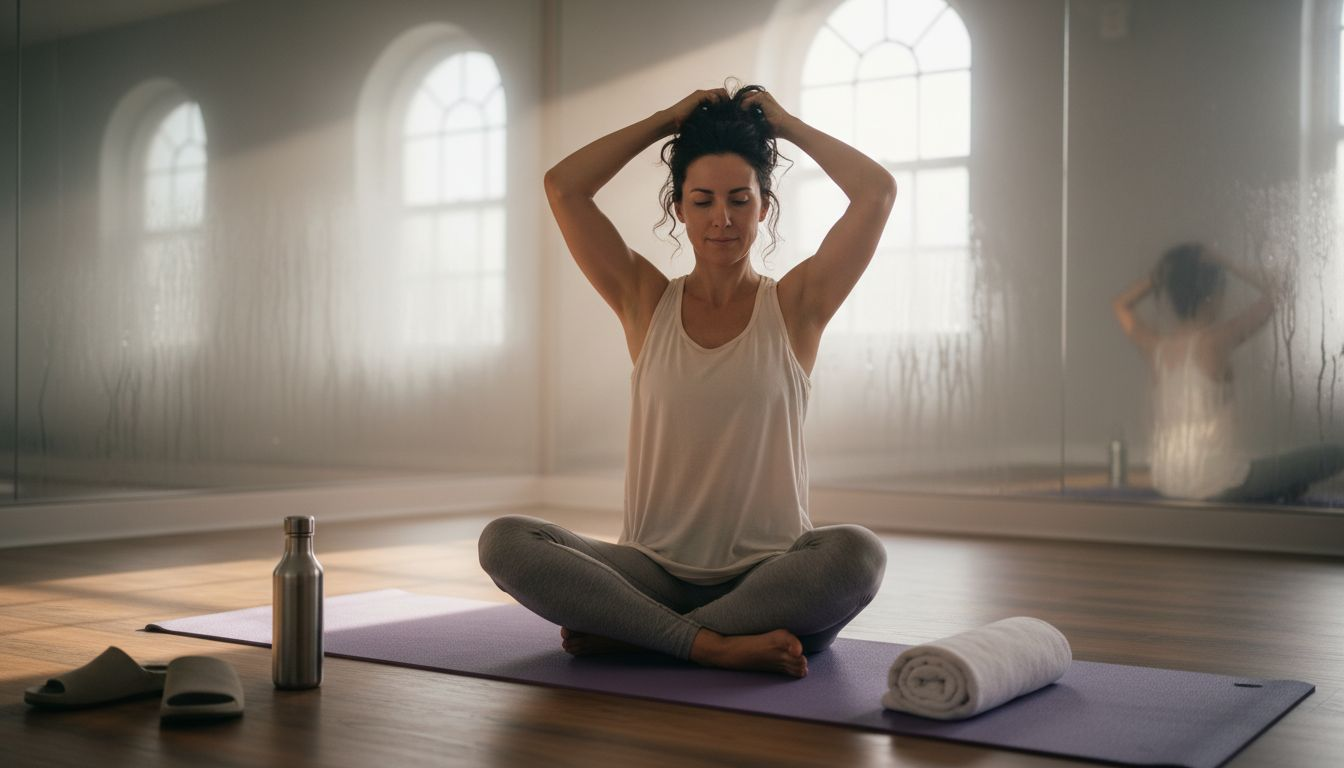
Many Philadelphia adults feel the strain of city living and search for fresh ways to manage stress while building healthier habits. Hot yoga has become a popular option for those seeking a holistic approach to wellness and flexibility. Before getting started, assessing your readiness ensures you experience the transformative benefits of heated yoga practice while keeping safety and self-care as top priorities.
Table of Contents
Quick Summary
| Important Insight | Explanation |
|---|---|
| 1. Assess Your Readiness for Hot Yoga | Evaluate your medical history and fitness level to ensure a safe practice. Consult a healthcare professional if unsure. |
| 2. Gather Essential Hot Yoga Gear | Choose functional, moisture-wicking clothing and a high-grip mat to enhance comfort and safety during sessions. |
| 3. Hydrate Strategically Before Class | Drink adequate water and electrolytes prior to class to ensure proper hydration and avoid fatigue. |
| 4. Choose the Right Class for You | Opt for beginner-friendly classes with experienced instructors to build confidence and skills safely. |
| 5. Track Your Progress Consistently | Monitor physical and mental development to understand your body's needs and make informed adjustments in practice. |