Contact Us

Want to send us a quick message? Use the form on the right to contact us and we'll be in touch within 2 business days!

Please contact Audrey at info@amritayogawellness.com for general inquiries, software issues, in-studio and out-of-studio events and workshops, marketing, and community outreach and donations.

Please contact Heather at heather@amritayogawellness.com for private events, private yoga/pilates requests, and trainings.

1204 Frankford Avenue
North Philadelphia, PA, 19125
United States

(267) 928 3176

Amrita Yoga & Wellness offers a variety of Yoga traditions, Pilates Mat, Pilates Group Reformer, Tai Chi, and Massage services in a beautiful space. Our studio is located in Philadelphia, Pennsylvania.

Blog

Filtering by Category: Yoga

Aerial Yoga Contraindications Explained: What You Need to Know

Heather Rice
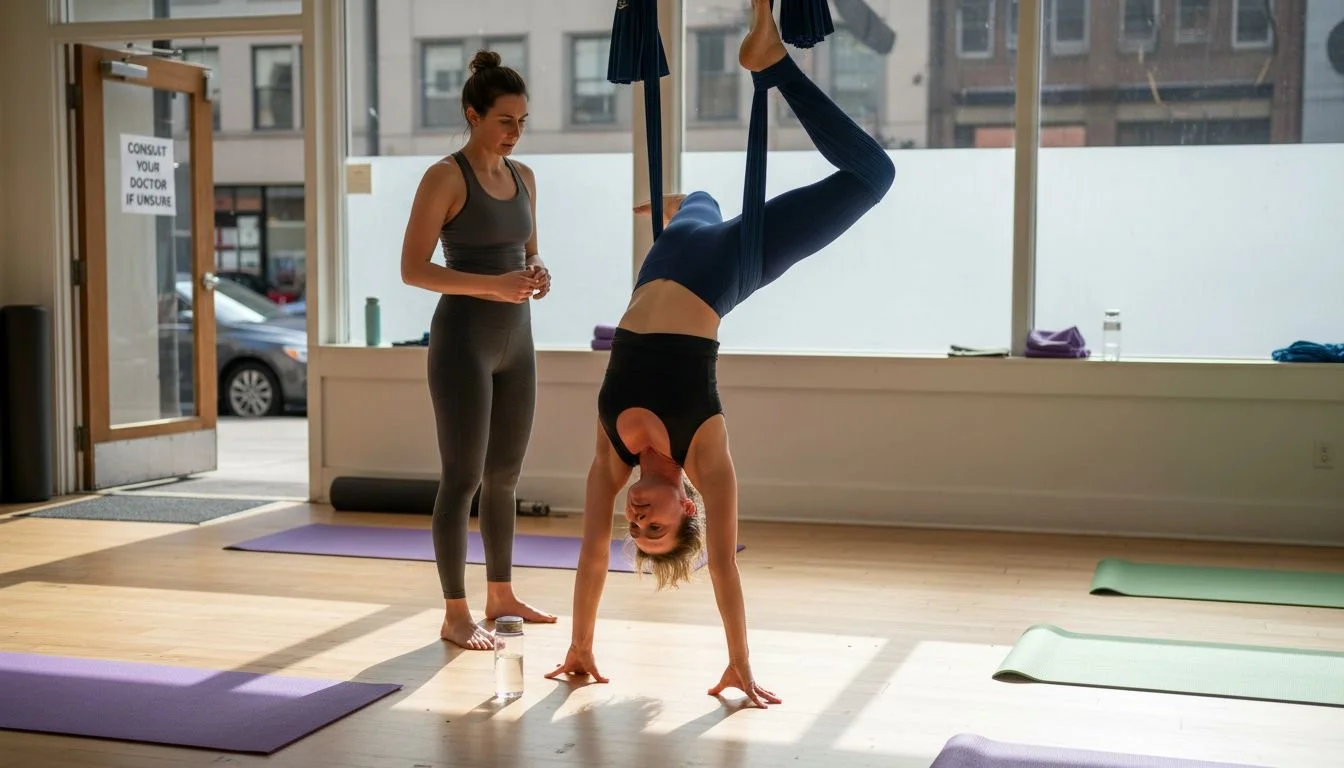
Over 60 percent of American adults face at least one chronic health condition that could impact their participation in certain fitness activities. For those exploring aerial yoga, understanding these risks is more important than ever. With its unique demands on the body and mind, aerial yoga is not always suitable for everyone. This guide unpacks the most important contraindications, giving you the clarity you need to make safe, informed decisions about your wellness journey.

Table of Contents

Key Takeaways

Point Details
Contraindications to Aerial Yoga Individuals with severe medical conditions, such as uncontrolled hypertension or severe spinal disorders, should avoid aerial yoga to prevent health complications.
Consult Healthcare Providers Always seek professional medical advice before engaging in aerial yoga, especially if you have pre-existing health issues.
Safety Guidelines for Beginners Beginners should train under professional supervision and progress gradually to ensure safety during aerial yoga practice.
Consider Alternatives Those with contraindications should explore low-impact yoga and fitness alternatives that align with their health needs and limitations.

What Are Aerial Yoga Contraindications?

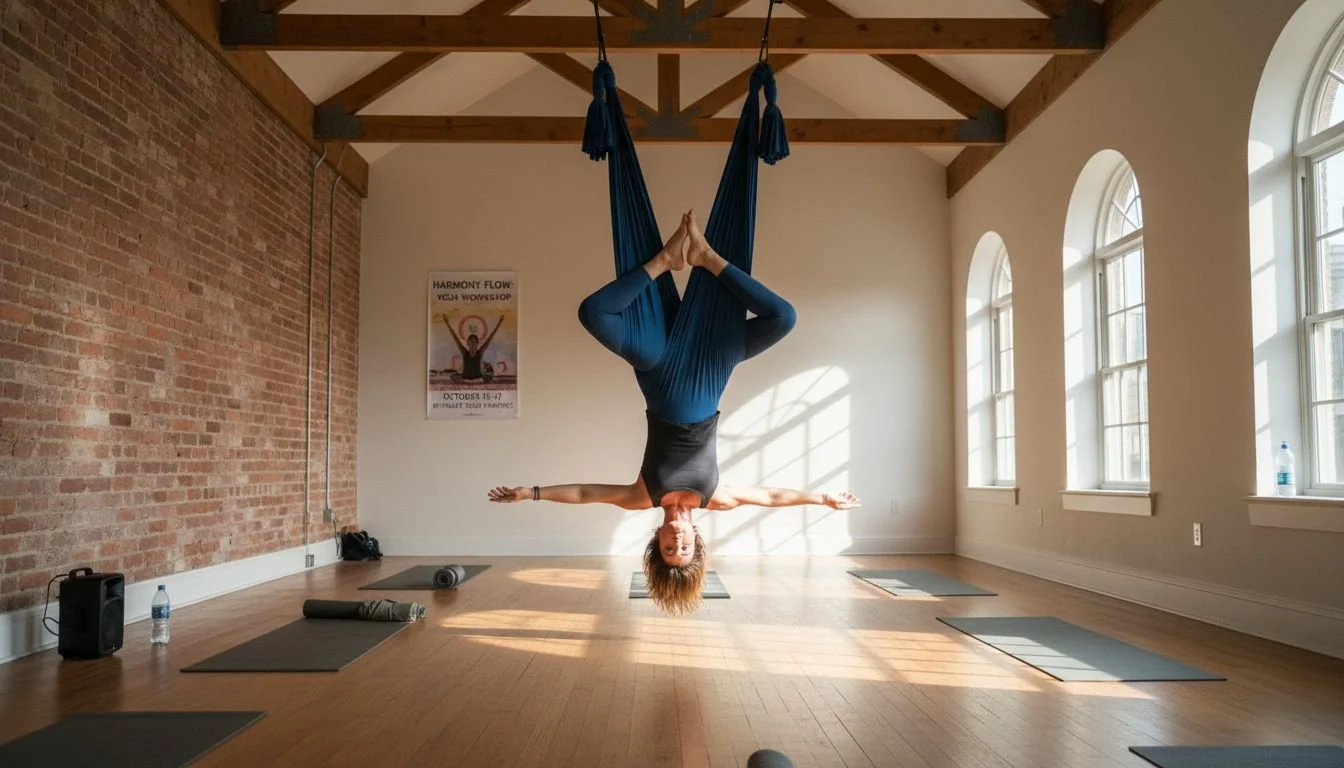
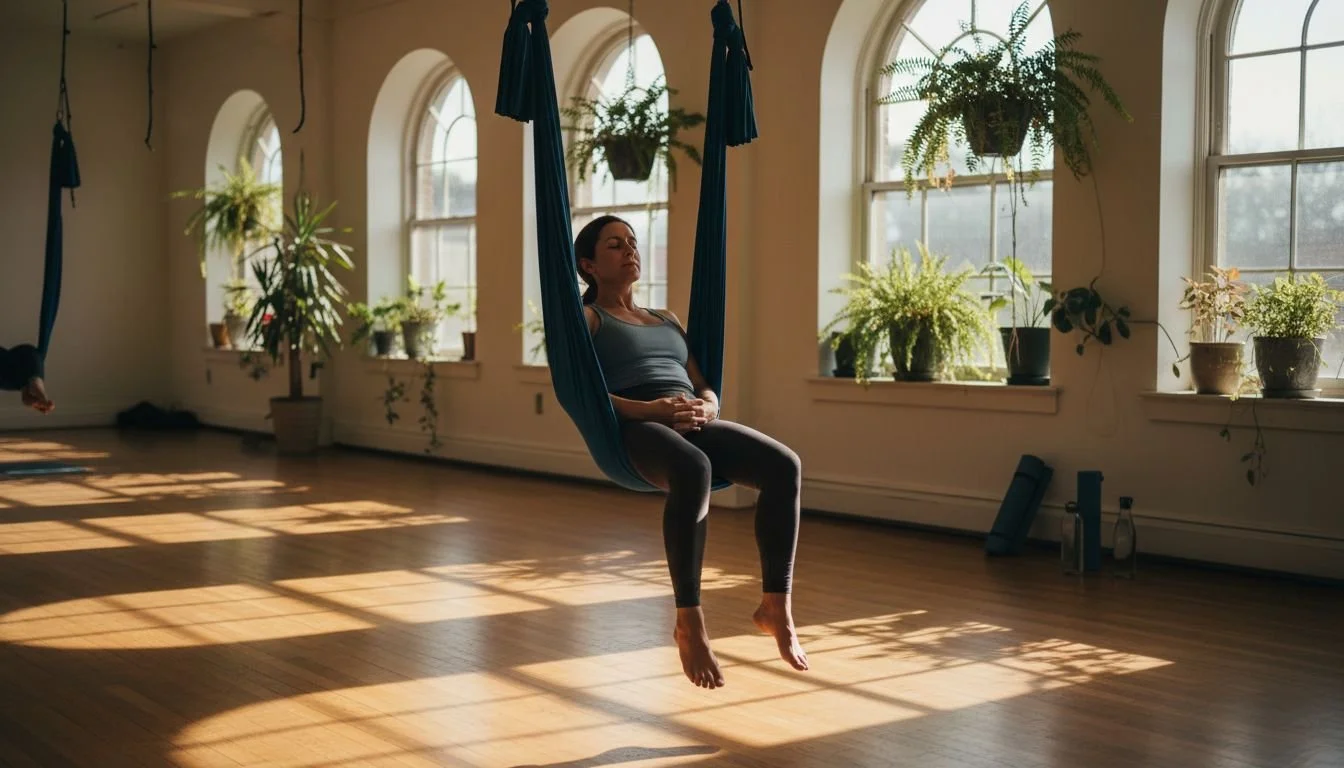
Aerial yoga involves practicing traditional yoga poses while suspended in a hammock or silk fabric, creating unique challenges and potential risks for certain individuals. Understanding the specific health conditions that might make aerial yoga inappropriate is crucial for ensuring personal safety and preventing potential medical complications. Medical research indicates that several key health factors can serve as contraindications for this dynamic practice.

Potential contraindications for aerial yoga include significant medical conditions that could be exacerbated by the practice’s unique physical demands. High-risk groups should carefully evaluate their participation, considering conditions such as:

  • Severe back or neck injuries

  • Uncontrolled high blood pressure

  • Active heart conditions

  • Glaucoma

  • Recent surgical procedures

  • Bone or joint disorders

  • Vertigo or balance disorders

  • Pregnancy

Fitness experts recommend that individuals with these conditions consult their healthcare provider before attempting aerial yoga. The inverted positions and physical suspension can place unique stress on the body, potentially aggravating existing health challenges. Pregnant women, in particular, should seek professional medical guidance to understand the specific risks associated with aerial yoga during different stages of pregnancy.

Ultimately, personal health assessment and professional medical advice are paramount. While aerial yoga offers exciting physical and mental benefits, understanding your individual health limitations ensures a safe and enjoyable practice. Practitioners should always prioritize their well-being by openly discussing any pre-existing conditions with qualified yoga instructors and healthcare professionals before beginning an aerial yoga journey.

Common Medical Conditions and Risk Factors

Aerial yoga demands unique physical capabilities that can pose significant challenges for individuals with specific medical conditions. Medical research reveals that certain health issues can transform this seemingly gentle practice into a potential risk zone, requiring careful evaluation and professional medical guidance before participation.

The most critical medical conditions that warrant caution include:

  • Spinal Disorders

    • Herniated discs

    • Severe scoliosis

    • Chronic back injuries

    • Spinal instability

  • Cardiovascular Challenges

    • Uncontrolled hypertension

    • Active heart disease

    • Irregular heart rhythms

    • Recent cardiac procedures

  • Neurological and Sensory Conditions

    • Vertigo

    • Balance disorders

    • Glaucoma

    • Recent inner ear infections

Fitness experts emphasize that these conditions can be significantly aggravated by the unique physical demands of aerial yoga, particularly the inverted positions and sustained body suspensions. The gravitational shifts and increased pressure experienced during aerial yoga can potentially exacerbate underlying health vulnerabilities.

Practitioners with complex medical histories should approach aerial yoga with extensive professional consultation. This means not just discussing participation with a primary care physician, but also obtaining comprehensive medical clearance that specifically addresses the physical requirements of aerial yoga. The goal is not to discourage participation, but to ensure that individual health needs are thoroughly understood and appropriately managed during this dynamic physical practice.

When to Avoid Aerial Yoga Practice

Aerial yoga requires careful consideration of individual health circumstances, with certain medical conditions presenting significant risks that demand immediate caution. Medical professionals warn that some practitioners should completely avoid this dynamic practice to prevent potential health complications or exacerbation of existing medical conditions.
Specific scenarios where aerial yoga should be completely avoided include:

Absolute Contraindications:

  • Pregnancy (especially third trimester)

  • Uncontrolled hypertension

  • Active heart disease

  • Severe spinal disorders

  • Recent surgical procedures

  • Glaucoma or other serious eye conditions

  • Extreme balance disorders

  • Acute inner ear infections

  • Recent head or neck injuries

Situational Risks:

  • Recent Botox treatments

  • Ongoing vertigo episodes

  • Bone density issues

  • Chronic joint inflammation

  • Extreme weight limitations

Fitness experts emphasize that individuals with these conditions face heightened risks during aerial yoga’s unique physical demands. The inverted positions, continuous suspension, and gravitational pressures can potentially trigger serious medical complications, making professional medical consultation absolutely essential before attempting any aerial yoga practice.

Ultimately, personal health and safety should always supersede fitness ambitions. While aerial yoga offers incredible physical and mental benefits, understanding and respecting your body’s current limitations is paramount. Practitioners should view medical clearance not as a roadblock, but as a responsible pathway to ensuring a safe, enjoyable, and transformative yoga experience that honors their individual health journey.

Precautions for Beginners and Instructors

Aerial yoga demands a carefully structured approach to ensure participant safety, requiring both beginners and instructors to maintain heightened awareness of potential risks and proper practice protocols. Safety protocols are critical in creating a secure environment that minimizes potential injuries and maximizes the practice’s therapeutic benefits.

Essential Safety Guidelines for Beginners:

  • Always train under professional supervision

  • Start with fundamental ground-based techniques

  • Use properly inspected and maintained equipment

  • Communicate any pre-existing health conditions

  • Progress slowly and incrementally

  • Listen to your body and avoid overexertion

  • Wear appropriate, fitted clothing

  • Remove jewelry and accessories

  • Stay hydrated before and after practice

Instructor Responsibilities:

  • Conduct thorough initial health screenings

  • Provide clear, step-by-step instructions

  • Demonstrate proper suspension and movement techniques

  • Monitor individual student capabilities

  • Maintain equipment safety standards

  • Create modification options for different fitness levels

  • Understand each student’s physical limitations

The journey into aerial yoga requires patience, respect for personal boundaries, and a commitment to gradual skill development. Beginners should approach the practice with curiosity and caution, understanding that mastery comes through consistent, mindful practice under professional guidance. Instructors play a crucial role in creating a supportive learning environment that prioritizes student safety while encouraging personal growth and exploration.

Ultimately, successful aerial yoga practice is a collaborative effort between informed practitioners and knowledgeable instructors. By maintaining open communication, respecting individual physical capabilities, and adhering to established safety protocols, both beginners and instructors can create a transformative and injury-free aerial yoga experience.

Alternatives for Those With Contraindications

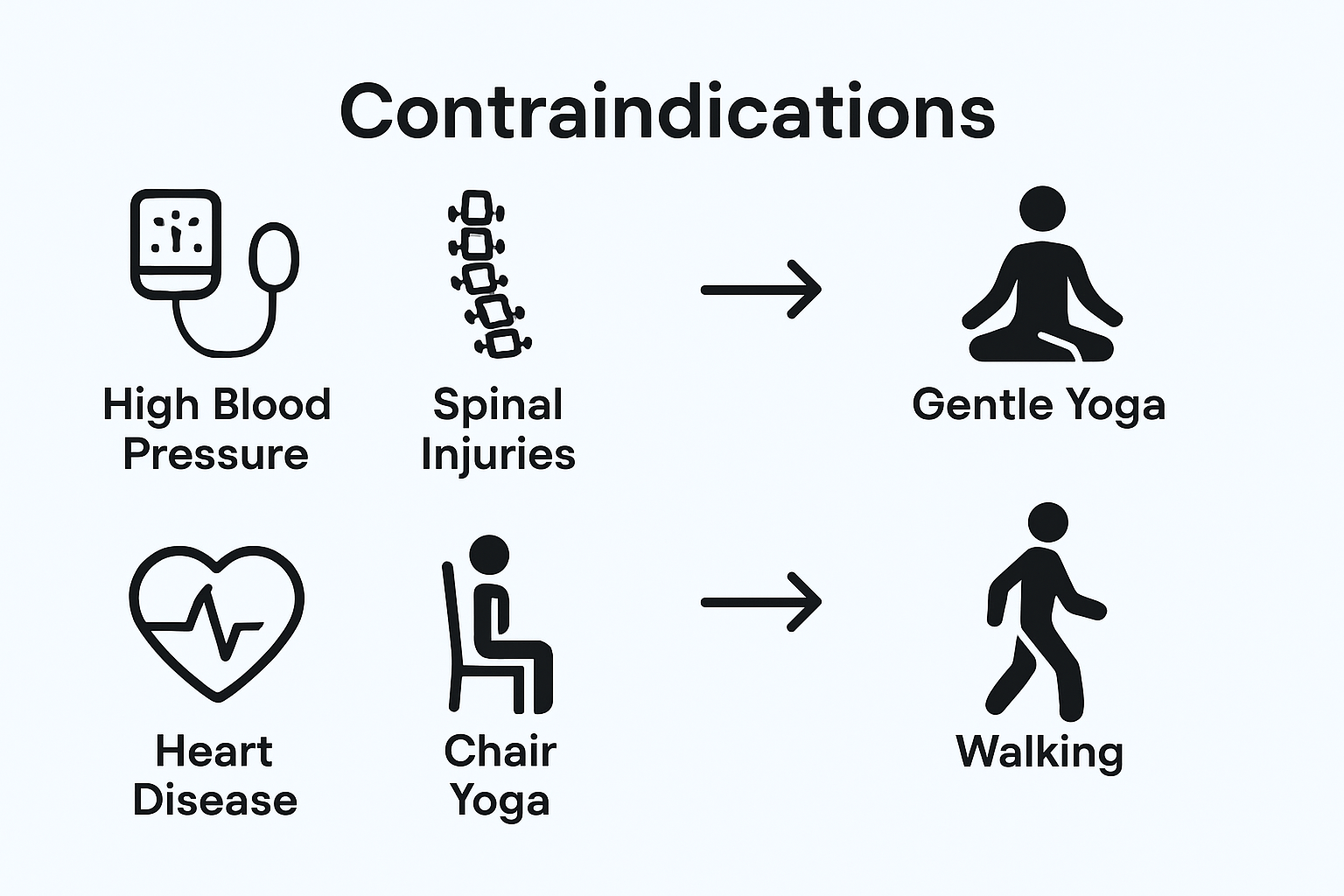
When aerial yoga presents too many health risks, alternative wellness practices can provide similar physical and mental benefits without compromising individual safety. Fitness experts recommend exploring low-impact exercises that support overall fitness while respecting personal health limitations.

Low-Impact Yoga Alternatives:

  • Mat Yoga

    • Gentle Hatha yoga

    • Restorative yoga

    • Yin yoga

    • Chair yoga

    • Adaptive yoga practices

Cardiovascular Alternatives:

  • Brisk walking

  • Swimming

  • Stationary cycling

  • Elliptical training

  • Water aerobics

  • Gentle Pilates

Strength and Flexibility Options:

  • Traditional yoga practices without inversions

  • Resistance band training

  • Body weight exercises

  • Gentle stretching routines

  • Physical therapy recommended movements

Individuals with medical contraindications should prioritize personalized fitness approaches that align with their specific health requirements. Consulting healthcare professionals can help design a tailored exercise plan that provides safe, effective alternatives to aerial yoga, ensuring continued physical and mental wellness without unnecessary risks.
The key is understanding that fitness is not a one-size-fits-all journey. Each person’s body has unique needs and limitations, and finding the right practice involves patience, professional guidance, and a commitment to holistic health that respects individual physical capabilities.

Discover Safe and Accessible Wellness Alternatives at Amrita Yoga & Wellness

If you found yourself concerned about the risks and contraindications of aerial yoga discussed in this article you are not alone. Many people face specific health challenges such as back injuries high blood pressure or balance disorders that make aerial yoga unsuitable. At Amrita Yoga & Wellness we understand the importance of finding the right practice that respects your body’s needs while still promoting physical strength mental clarity and spiritual growth.
Explore our wide range of inclusive classes and workshops designed for all levels including gentle Hatha yoga restorative yoga and chair yoga that provide welcoming options for those with contraindications. With expert instructors who prioritize safety and personalization you can confidently embark on a wellness journey tailored to your individual health considerations. Take the next step toward holistic well-being by visiting our website today. Discover detailed class descriptions, sign up for workshops, and find the perfect fit for your fitness goals at Amrita Yoga & Wellness. Your safe path to physical and mental balance starts here.

Frequently Asked Questions

What are the main contraindications for aerial yoga?

Significant contraindications for aerial yoga include severe back or neck injuries, uncontrolled high blood pressure, active heart conditions, glaucoma, recent surgical procedures, bone or joint disorders, vertigo, and pregnancy.

Why is it important to consult a healthcare provider before trying aerial yoga?

Consulting a healthcare provider is crucial as they can assess your individual health conditions and ensure that aerial yoga is safe for you, particularly since the practice involves unique physical demands that may aggravate certain medical issues.

What types of yoga can I do if I have contraindications for aerial yoga?

If you have contraindications for aerial yoga, consider low-impact alternatives such as gentle Hatha yoga, restorative yoga, chair yoga, and adaptive yoga practices, which can provide similar benefits without the risks of aerial poses.

How can beginners ensure safety while practicing aerial yoga?

Beginners can ensure safety by training under professional supervision, starting with fundamental techniques, communicating any pre-existing conditions, progressing slowly, and adhering to proper safety protocols during practice.
Recommended

7 Essential Fitness and Yoga Tips for Mind-Body Wellness

Heather Rice

Over 60 percent of American adults report searching for ways to boost their mental and physical wellness, yet many feel confused by the sheer number of fitness trends available. Amid busy routines and constant digital distractions, finding clear guidance for real results becomes essential. Discover a practical approach to integrating breathwork, yoga, Pilates, and unique modern methods that help Americans achieve stability, core strength, flexibility, and true recovery.

Table of Contents

Quick Summary

Takeaway Explanation
1. Practice Breathwork Daily Use techniques like the 4-7-8 method to enhance focus and reduce stress through controlled breathing.
2. Incorporate Foundational Yoga Poses Begin with Mountain Pose, Warrior II, and Plank for improved stability and body awareness.
3. Implement Pilates for Core Strength Focus on deep muscle engagement to enhance stability and prevent injury while exercising consistently.
4. Explore Hot Yoga for Detoxification Utilize heated sessions to improve cardiovascular endurance and promote sweat-induced detoxification.
5. Prioritize Restorative Practices Schedule weekly restorative sessions to lower stress and promote physical recovery with deep relaxation techniques.

1. Start with Breathwork to Enhance Focus

Breathwork is a powerful mental fitness technique that transforms how your brain processes information and manages attention. By intentionally controlling your breathing patterns, you can unlock significant cognitive improvements and mental clarity.

Scientific research demonstrates that deliberate breathing exercises can dramatically enhance your focus and brain performance. Breath-focused meditation practices can improve cognitive functions by influencing noradrenaline levels in the brain. This neurotransmitter plays a critical role in regulating attention and arousal.

How Breathwork Enhances Mental Performance

When you practice controlled breathing, you activate specific brain regions associated with emotional regulation, attention control, and body awareness. Paced breathing exercises positively affect mood and attentional control by creating a direct neurological connection between your respiratory system and cognitive processes.

Simple Breathwork Technique to Try

Start with a basic 4-7-8 breathing method:

  • Inhale deeply through your nose for 4 seconds

  • Hold your breath for 7 seconds

  • Exhale slowly through your mouth for 8 seconds

Practice this technique for 5-10 minutes daily to experience improved concentration, reduced stress, and enhanced mental clarity. By making breathwork a consistent part of your routine, you can train your brain to maintain focus more effectively and respond to mental challenges with greater resilience.

2. Master Foundational Yoga Poses for Stability

Building physical stability through foundational yoga poses is more than just a fitness goal it is a pathway to holistic body awareness and strength. Yoga provides a systematic approach to developing core strength, balance, and muscular endurance that supports your entire physical framework.

Stability in yoga is not just about holding a pose but understanding how your body creates balance and alignment. 7 essential yoga poses can help beginners establish a solid foundation for their practice, targeting key muscle groups and improving overall body control.

Key Foundational Poses for Stability

Mountain Pose (Tadasana)

  • Builds awareness of body alignment

  • Improves posture and balance

  • Creates a strong foundation for all standing poses

    Warrior II (Virabhadrasana II)

  • Strengthens legs and core muscles

  • Enhances hip flexibility

  • Develops mental focus and concentration

    Plank Pose

  • Develops full body strength

  • Engages core muscles intensely

  • Builds endurance and muscular stability

Practical Tips for Mastering Stability

Start each pose slowly and focus on proper alignment. Use wall support if needed and listen to your body. Regular practice transforms these poses from challenging movements to natural expressions of strength and balance. Remember that stability is a journey not a destination your body will gradually build strength and coordination with consistent practice.

3. Incorporate Pilates for Core Strength

Pilates represents a revolutionary approach to building core strength that goes far beyond traditional abdominal workouts. This comprehensive fitness method focuses on developing deep muscle groups that stabilize and support your entire body.

Scientific research demonstrates that Pilates exercises effectively enhance core muscle strength with significant benefits for overall physical performance. By targeting muscles deep within the abdomen and lower back, Pilates creates a powerful foundation for functional movement and injury prevention.

Core Benefits of Pilates Practice

Muscular Stability

  • Strengthens deep core muscles

  • Improves overall body alignment

  • Enhances postural control

    Full Body Integration

  • Connects breath with movement

  • Develops balanced muscle development

  • Promotes mindful body awareness

    Low Impact Conditioning

  • Minimal joint stress

  • Suitable for all fitness levels

  • Adaptable to individual physical needs

Practical Implementation Tips

Begin with foundational mat exercises that require minimal equipment. Focus on precise movements and controlled breathing. Start with 2 to 3 sessions per week, gradually increasing complexity and duration. Remember that consistency matters more than intensity when building core strength.

Whether you are an athlete looking to improve performance or someone seeking better overall fitness, Pilates offers a comprehensive approach to developing a strong and resilient core.

4. Try Hot Yoga for Detox and Endurance

Hot yoga represents a transformative practice that pushes physical boundaries while delivering remarkable health benefits. By practicing yoga in a heated environment, you engage your body in an intense workout that simultaneously challenges and nurtures your overall wellness.

Hot yoga practices can significantly enhance cardiovascular endurance and promote natural detoxification through increased metabolic activity and intense sweating. The heated room creates a unique physiological response that amplifies traditional yoga’s mind body connection.

Key Benefits of Hot Yoga

Enhanced Cardiovascular Performance

  • Increases heart rate effectively

  • Improves overall stamina

  • Boosts metabolic efficiency

    Detoxification Process

  • Promotes intense sweating

  • Supports natural toxin elimination

  • Cleanses skin and internal systems

    Flexibility and Mental Resilience

  • Warms muscles for deeper stretching

  • Develops mental toughness

  • Reduces stress through intense focus

Practical Implementation Tips

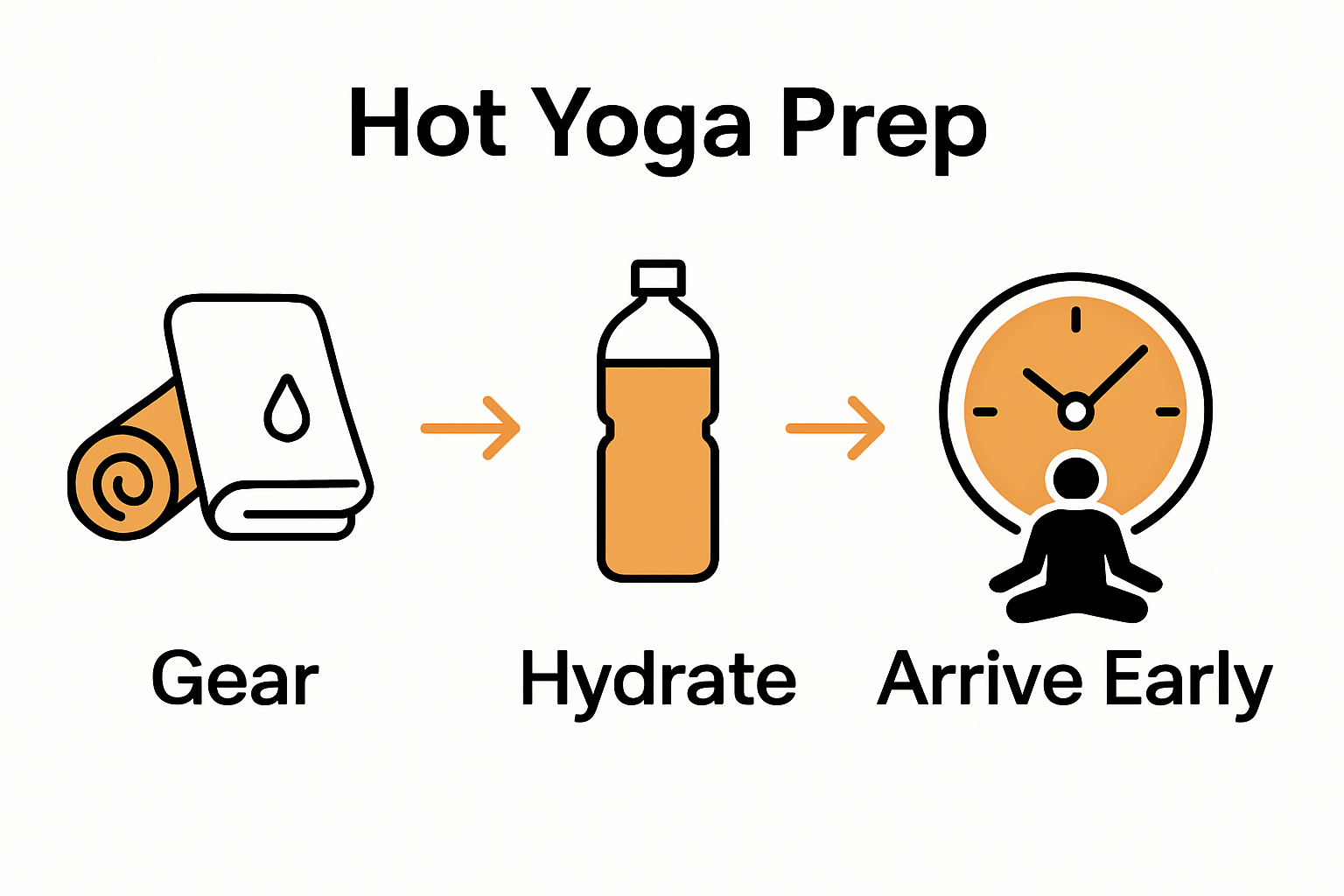
Start with shorter sessions and gradually increase duration. Stay hydrated before, during, and after practice. Listen to your body and take breaks when needed. Wear lightweight, breathable clothing and bring a towel. Remember that consistency matters more than intensity when exploring hot yoga practices.

Whether you are seeking physical conditioning or mental clarity, hot yoga offers a comprehensive approach to wellness that transforms both body and mind.

5. Use Barre Techniques for Full-Body Toning

Barre workouts represent a revolutionary approach to fitness that combines the precision of ballet with the core strengthening principles of Pilates and yoga. This unique exercise method transforms how you understand and engage with full body conditioning.

Barre techniques provide a comprehensive full-body toning regimen through small, controlled movements that sculpt muscles and improve overall body alignment. The method focuses on high repetition, low impact exercises that challenge muscle endurance without creating excessive strain.

Key Benefits of Barre Workout

Muscle Sculpting

  • Targets hard to reach muscle groups

  • Creates long and lean muscle definition

  • Improves overall muscle tone

    Posture and Alignment

  • Strengthens core muscles

  • Enhances body awareness

  • Promotes balanced muscle development

    Low Impact Conditioning

  • Minimal joint stress

  • Suitable for all fitness levels

  • Adaptable to individual physical needs

Practical Implementation Tips

Begin with basic positions and focus on proper form. Use a chair or wall for support during initial sessions. Integrate 2 to 3 barre workouts weekly, gradually increasing complexity and duration. Pay attention to your body alignment and breathing throughout each movement.

Whether you are a fitness enthusiast or someone seeking a gentle yet effective workout, barre techniques offer a transformative approach to building strength, flexibility, and body confidence.

6. Explore Aerial Yoga for Flexibility

Aerial yoga transforms traditional yoga practice by introducing a suspended hammock that reimagines how we approach movement, flexibility, and body awareness. This innovative practice combines elements of traditional yoga, dance, and acrobatics to create a unique full body experience.

Aerial yoga offers remarkable improvements in flexibility and range of motion through its unique suspended support system. The hammock allows practitioners to explore deeper stretches while reducing joint compression and minimizing physical strain.

Key Benefits of Aerial Yoga

Enhanced Flexibility

  • Supports deeper stretching

  • Reduces muscle tension

  • Increases overall range of motion

    Spinal Decompression

  • Alleviates back pressure

  • Improves posture alignment

  • Creates space between vertebrae

    Strength and Balance

  • Develops core muscle engagement

  • Improves body awareness

  • Builds muscular endurance

Practical Implementation Tips

Begin with beginner classes that focus on proper hammock technique. Start with basic inversions and gentle stretches. Wear fitted clothing that allows free movement and brings a supportive mindset. Always listen to your body and progress gradually.

Whether you are seeking increased flexibility, stress relief, or a new way to challenge your physical practice, aerial yoga offers a transformative approach to movement and wellness.

7. Balance Your Routine with Restorative Practices

Restorative practices represent a crucial counterpoint to high intensity fitness routines, offering your body and mind essential recovery and rejuvenation. These gentle techniques help prevent burnout and support long term wellness by allowing complete physical and mental restoration.

Restorative yoga practices activate the parasympathetic nervous system to facilitate deep healing and stress reduction. By intentionally creating space for slower, more mindful movement, you can dramatically improve overall health and prevent exercise related fatigue.

Key Benefits of Restorative Practices

Stress Reduction

  • Lowers cortisol levels

  • Promotes deep relaxation

  • Supports emotional balance

    Physical Recovery

  • Reduces muscle tension

  • Supports joint mobility

  • Accelerates healing processes

    Mental Clarity

  • Improves focus

  • Enhances mindfulness

  • Reduces anxiety symptoms

Practical Implementation Tips

Integrate 1 to 2 restorative sessions weekly. Use props like bolsters, blankets, and blocks to support passive stretching. Hold gentle poses for 5 to 10 minutes, focusing on deep breathing and complete muscular release.

Whether you are an athlete recovering from intense training or a professional managing high stress levels, restorative practices offer a powerful approach to holistic wellness and self care.

Below is a comprehensive table summarizing the main strategies and practices discussed throughout the article for enhancing physical and mental wellness.

Practice Description Benefits
Breathwork Controlled breathing to regulate attention and emotional response.
Technique: 4-7-8 breathing method.
Cognitive improvements, mental clarity, reduced stress.
Foundational Yoga Focuses on core strength, balance, and alignment through poses like Mountain and Warrior II. Improved stability, posture, and muscular endurance.
Pilates Core strength method targeting deep muscles for functional movement. Muscular stability, enhanced alignment, low impact.
Hot Yoga Practiced in heated rooms to boost endurance and detoxification. Cardiovascular improvements, toxin elimination, flexibility.
Barre Techniques Combines ballet and Pilates for full-body toning. Muscle sculpting, improved posture, low impact.
Aerial Yoga Uses a suspended hammock to promote flexibility and strength. Enhanced range of motion, spinal decompression, balance.
Restorative Practices Gentle techniques for recovery and stress reduction. Stress reduction, physical recovery, mental clarity.

Elevate Your Mind-Body Wellness Journey Today

Are you ready to overcome challenges like maintaining mental focus, building physical stability, and improving core strength? The “7 Essential Fitness and Yoga Tips for Mind-Body Wellness” article highlights the importance of breathwork, foundational yoga poses, Pilates, and restorative practices for holistic well-being. If you want expert guidance and a supportive community to enhance your practice and achieve these goals, Amrita Yoga & Wellness offers tailored classes and wellness services to meet your needs.

Explore our diverse offerings including hot yoga, Pilates, barre, and restorative yoga designed to help you build strength, flexibility, and mental clarity. By joining the Amrita Yoga & Wellness community, you gain access to expert instructors, workshops, and retreats that empower your holistic health journey. Do not wait to invest in your well-being. Visit our class schedule and registration page to find your perfect class and start transforming your mind and body today.

Frequently Asked Questions

How can breathwork improve my focus and mental clarity?

Breathwork enhances focus by controlling your breathing patterns to influence brain functions. Start practicing a simple 4-7-8 breathing technique daily for 5-10 minutes to notice improvements in concentration within weeks.

What foundational yoga poses should I master for better stability?

Key foundational yoga poses like Mountain Pose, Warrior II, and Plank help build stability and strength. Dedicate 10-15 minutes each day to practice these poses, and you’ll start feeling more balanced and strong over time.

How do Pilates exercises contribute to core strength?

Pilates targets deep core muscles that stabilize the body, enhancing overall strength and posture. Commit to 2-3 sessions per week featuring foundational mat exercises to build a more resilient core within a month.

What are the benefits of practicing hot yoga?

Hot yoga improves cardiovascular endurance, promotes detoxification, and enhances flexibility. Begin with shorter sessions and focus on staying hydrated; you will likely feel more energized and flexible within a few classes.

How can I integrate restorative practices into my routine?

Restorative practices support recovery and stress reduction by allowing for deep relaxation and mindful movement. Set aside 1-2 sessions each week for gentle yoga or meditation to experience significant improvement in your stress levels and overall wellness.

What makes barre workouts effective for toning?

Barre workouts combine elements of ballet, Pilates, and yoga to sculpt muscles and improve posture with low-impact exercises. Try integrating 2-3 barre sessions into your week to gradually tone your body and enhance your muscle definition.

Recommended

Aerial Yoga Stress Relief Tips That Really Work

Heather Rice

More than 80 percent of American adults say stress affects their daily lives in noticeable ways. In a world where constant pressure can take a toll on your physical and mental wellbeing, finding new ways to unwind is more important than ever. Aerial yoga stands out as a creative method for relieving stress, offering both immediate tension release and a sense of lightness that traditional exercise often cannot match.

Table of Contents

Key Takeaways

Point Details
Aerial Yoga Benefits Aerial yoga combines traditional yoga with hammock support, enhancing stress relief through spinal decompression and improved body alignment.
Mindfulness Enhancement The practice promotes mindfulness by requiring present-moment awareness during unique postural challenges, fostering mental clarity and emotional balance.
Safety First Prioritize safety by inspecting equipment, practicing under professional guidance, and wearing appropriate clothing to minimize risks of injury.
Common Mistakes Avoid rushing into advanced poses and ensure proper technique and body awareness to prevent strain and enhance skill development.

Aerial Yoga For Stress Relief Explained

Aerial yoga offers a transformative approach to stress reduction, combining traditional yoga techniques with the unique support of a suspended hammock. Aerial yoga combines traditional poses with hammock support, enabling practitioners to experience deeper stretches and novel ways of releasing physical and mental tension.

The practice provides multiple stress relief mechanisms by engaging both body and mind simultaneously. Unlike traditional mat yoga, aerial yoga allows for increased spinal decompression and improved body alignment. Suspended movements create a sense of weightlessness that naturally reduces muscle tension, while the gentle swinging motion triggers the parasympathetic nervous system - our body’s built-in relaxation response. Gravity-assisted poses help release muscular knots and psychological stress more effectively than standard yoga practices.

Physical benefits of aerial yoga for stress management include enhanced blood circulation, reduced muscle tension, and improved flexibility. Mentally, the practice promotes mindfulness through unique postural challenges that require complete present-moment awareness. Practitioners often report feeling lighter, more centered, and significantly more relaxed after sessions. The combination of controlled breathing, suspended movement, and focused attention creates a powerful stress-reduction environment that goes beyond traditional exercise methods.

By integrating aerial yoga into your wellness routine, you can develop a holistic approach to managing stress. The practice not only provides physical relief but also creates a meditative space where mental burdens can be gently released. Whether you’re a seasoned yogi or a complete beginner, aerial yoga offers an innovative path to achieving deeper relaxation and emotional equilibrium.

Top Poses To Release Tension Fast

Aerial yoga offers several powerful poses designed to quickly release physical and mental tension. Inversions and hanging poses help decompress the spine and release tension rapidly, creating immediate relief for stressed muscles and compressed joints. The unique suspension system allows practitioners to access deeper stretches that traditional yoga cannot achieve.

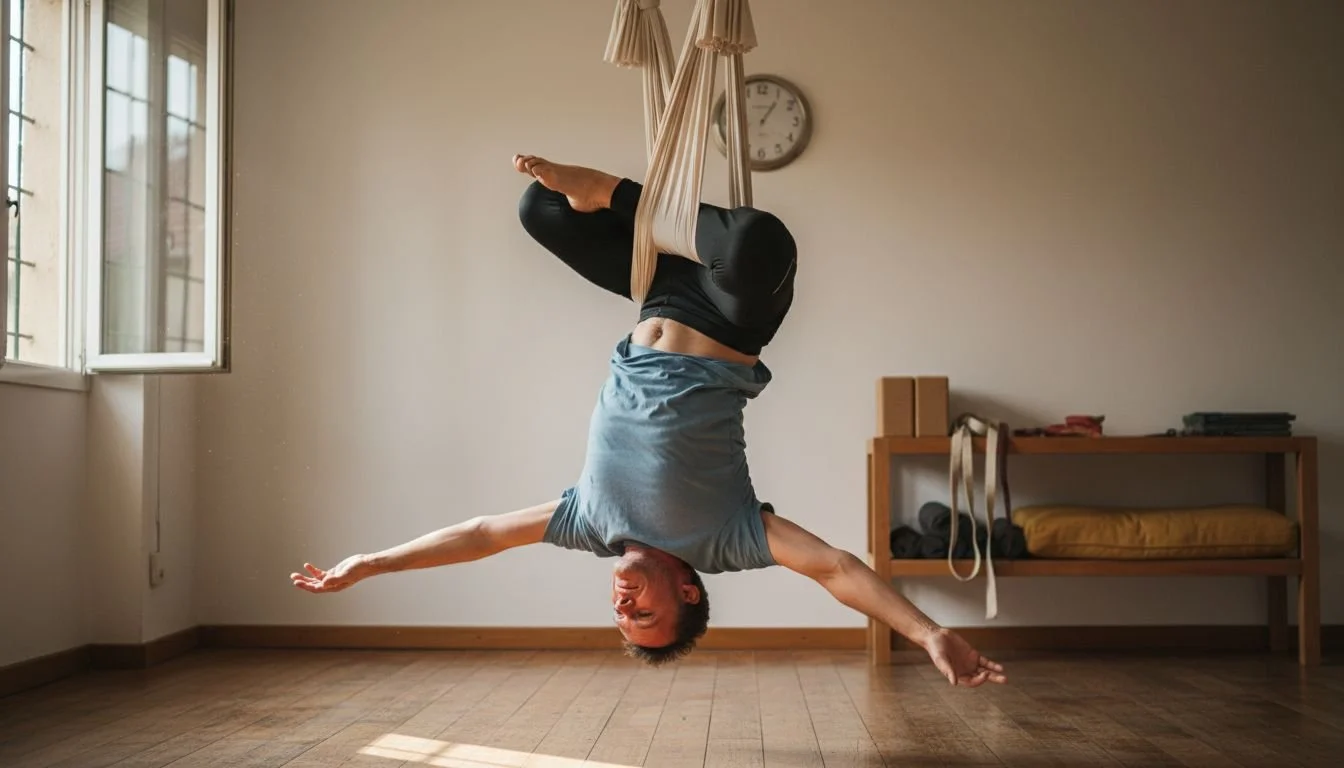
The Inverted Butterfly pose stands out as a premier tension-release technique. By hanging upside down with legs in a butterfly position, practitioners experience profound spinal decompression and muscle relaxation. This pose specifically targets the lower back, shoulders, and neck - areas where stress typically accumulates. The gravitational pull gently stretches muscle groups, creating space between vertebrae and immediately reducing physical strain.

Other tension-releasing aerial yoga poses include the Cocoon, Zero Gravity Inversion, and Floating Savasana. Each pose utilizes the hammock’s supportive structure to facilitate deep relaxation. The Cocoon pose, for instance, wraps practitioners in a soft fabric cocoon, creating a sense of security and immediate stress reduction. Zero Gravity Inversion allows complete spinal decompression, while Floating Savasana provides a weightless meditation experience that calms both body and mind.

To maximize tension relief, practitioners should focus on slow, intentional breathing while performing these poses. The combination of suspended movement, controlled breathing, and gravity-assisted stretching creates a powerful stress-management approach. Beginners should start with guidance from a certified aerial yoga instructor to ensure proper form and safety, gradually building confidence and experiencing the transformative benefits of these tension-releasing techniques.

How Aerial Yoga Supports Mental Wellness

Aerial yoga combines physical movement with mindfulness practices to support comprehensive mental wellness, offering a unique approach to reducing stress and improving psychological well-being. The practice goes beyond traditional exercise by creating a holistic environment that nurtures both mental and physical health through intentional movement and suspension techniques.

The psychological benefits of aerial yoga are profound and multifaceted. By engaging in suspended poses, practitioners experience a sense of weightlessness that immediately disrupts typical stress patterns. The hammock creates a safe, contained space that allows individuals to release emotional tension, promoting a meditative state of mind. Controlled breathing combined with gentle swinging motions activates the parasympathetic nervous system, which helps regulate stress responses and reduce symptoms of anxiety and depression.

Unique mental wellness aspects of aerial yoga include sensory integration and neurological reset. The practice challenges practitioners to develop heightened body awareness and present-moment consciousness. Inverting the body and experiencing movement from a different perspective literally and metaphorically shifts mental frameworks, helping individuals break free from rigid thought patterns. The physical challenge of maintaining balance in the hammock requires intense focus, which acts as a form of moving meditation that calms racing thoughts and promotes mental clarity.

Practitioners can maximize mental health benefits by approaching aerial yoga with intentionality and openness. Regular practice helps build emotional resilience, improves mood regulation, and creates a powerful mind-body connection. By combining physical movement, breathwork, and mindful suspension, aerial yoga provides a comprehensive approach to mental wellness that extends far beyond traditional exercise methods.

Essential Safety Tips For Practicing

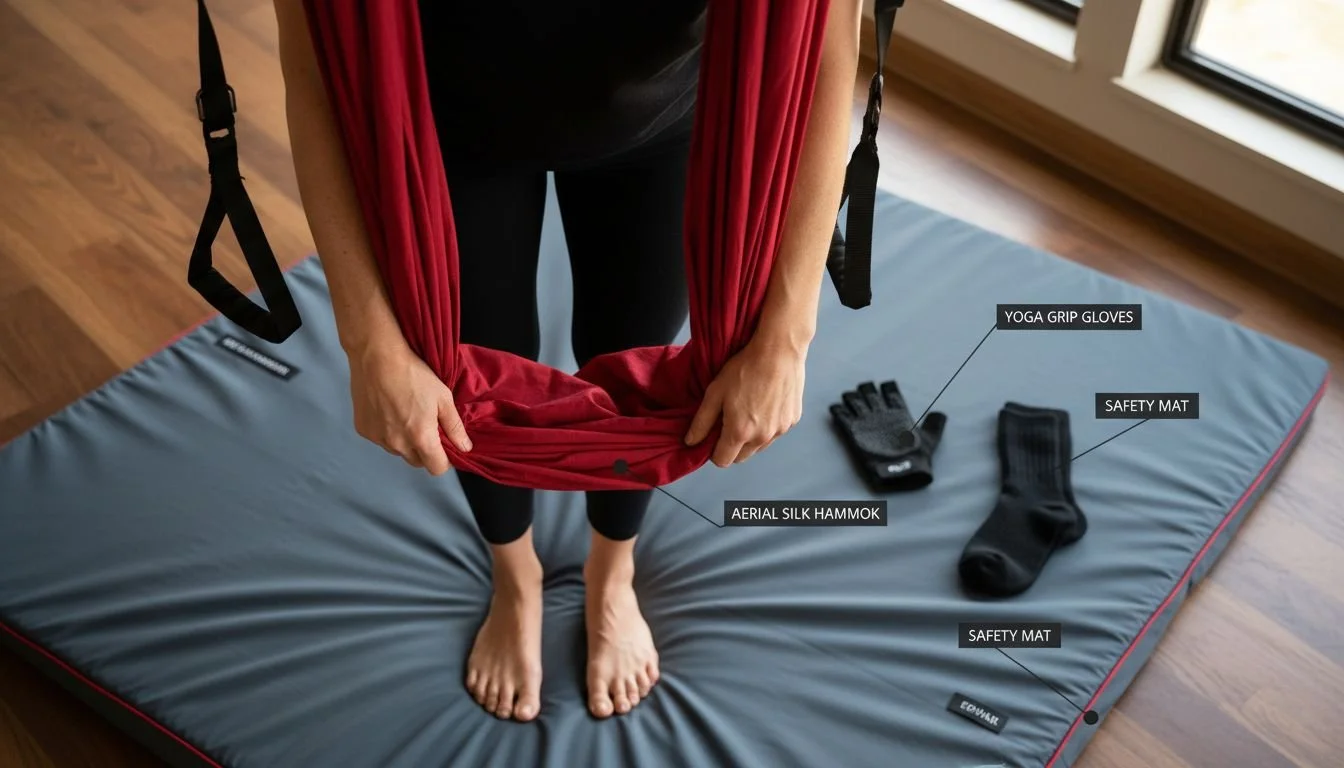
Practicing aerial yoga requires careful attention to safety protocols and equipment management. When practicing aerial arts at home, using a proper crash mat and avoiding solo practice are critical safety measures, ensuring practitioners can explore this dynamic form of exercise with minimal risk of injury.

Before beginning any aerial yoga session, practitioners must conduct a comprehensive equipment inspection. This involves carefully examining the hammock, carabiners, support hooks, and suspension points for any signs of wear, fraying, or structural compromise. Aerial yoga hammocks typically have a weight limit, and users should always verify their equipment can safely support their body weight. Professionals recommend replacing suspension gear every 12-18 months, even if no visible damage is apparent, to maintain optimal safety standards.

Body awareness and proper technique are equally important safety considerations. Beginners should always practice under professional supervision, learning correct entry and exit techniques for different poses. Maintaining core strength and understanding proper alignment helps prevent potential strain or accidental falls. Key safety recommendations include warming up thoroughly, starting with basic poses, and progressively building complexity as strength and confidence increase. Practitioners should also communicate any physical limitations or medical conditions with their instructor before attempting aerial yoga.

Additional safety protocols include wearing appropriate clothing that allows free movement without risk of entanglement, removing jewelry that could snag on the hammock, and ensuring the practice space is clear of obstacles. Hydration, listening to one’s body, and knowing personal physical limits are crucial for a safe and enjoyable aerial yoga experience. By prioritizing safety and approaching the practice with mindfulness, practitioners can enjoy the transformative benefits of aerial yoga while minimizing potential risks.

Mistakes To Avoid For Best Results

Successful aerial yoga practice requires avoiding common pitfalls that can compromise both performance and safety. Instructors emphasize establishing clear dress codes and safety protocols to prevent potential accidents, making it crucial for practitioners to understand and eliminate typical beginner mistakes.

One of the most significant technical errors involves improper body positioning and technique. Practitioners frequently make the mistake of rushing into advanced poses without building foundational strength and understanding. This can lead to muscle strain, incorrect alignment, and potential injury. Beginners should focus on mastering basic suspended movements, developing core strength, and learning precise muscle engagement before attempting complex inversions or challenging aerial sequences. Learning from a certified instructor who can provide personalized guidance and correct form is essential for progressive skill development.

Equipment and clothing choices represent another critical area where practitioners often make mistakes. Wearing loose, baggy clothing increases the risk of entanglement, while jewelry can snag on hammock fabric, creating dangerous situations. Practitioners should opt for fitted, stretchy clothing that allows free movement without excess fabric. Compression shorts or leggings paired with a fitted tank top provide the ideal balance of comfort and safety. Additionally, removing all jewelry, including rings, watches, and necklaces, helps prevent potential equipment damage or personal injury.

Mental approach is equally important in avoiding performance mistakes. Many practitioners push themselves too hard, ignoring body signals and attempting poses beyond their current skill level. Aerial yoga requires patience, gradual progression, and a deep understanding of personal physical limitations. Overconfidence can lead to unnecessary risks, while a mindful, patient approach ensures steady improvement and reduces the likelihood of injury. By maintaining a balanced perspective, listening to one’s body, and prioritizing technique over complexity, practitioners can develop a sustainable and rewarding aerial yoga practice.

Discover Deeper Stress Relief With Aerial Yoga at Amrita Yoga & Wellness

Aerial yoga provides a unique solution to the stress and tension that so many people struggle with daily. If you are looking to experience profound spinal decompression, release muscle tension, and calm the mind through mindful suspended movements, our studio in Philadelphia offers the perfect environment to help you achieve those goals. You can benefit from expert guidance in poses like Inverted Butterfly and Floating Savasana, designed specifically to unlock physical and emotional stress.

Take the next step towards a balanced mind and body by exploring our diverse offerings at Amrita Yoga & Wellness. Whether you are a beginner or advanced practitioner, our class schedules and workshops provide supportive spaces to deepen your aerial yoga practice safely while connecting with a caring community. Don’t wait to transform stress into relaxation visit us today to sign up and experience stress relief that really works.

Frequently Asked Questions

What are the benefits of aerial yoga for stress relief?

Aerial yoga combines physical movement with mindfulness, providing enhanced spinal decompression, improved body alignment, and a sense of weightlessness that reduces muscle tension and promotes relaxation.

How does aerial yoga help with mental wellness?

The practice activates the parasympathetic nervous system through controlled breathing and gentle swinging motions, which can help regulate stress responses, reduce anxiety and depression symptoms, and promote emotional resilience.

What poses in aerial yoga are particularly effective for releasing tension?

Key poses include the Inverted Butterfly, Cocoon, Zero Gravity Inversion, and Floating Savasana. These poses leverage the hammock’s support to facilitate deep relaxation and spinal decompression.

What safety precautions should I take while practicing aerial yoga?

Always inspect equipment before use, practice under professional guidance as a beginner, wear fitted clothing to avoid entanglement, and communicate any physical limitations to your instructor to ensure a safe experience.

Recommended

Role of Hammocks in Aerial Yoga: Benefits and Safety

Heather Rice

Over 30 million American adults now practice yoga and many are looking for ways to take their routines to the next level. As interest grows, aerial yoga hammocks have emerged as a unique tool for those wanting both support and challenge in their fitness journey. Whether you are a beginner or a seasoned yogi, understanding these hammocks reveals new ways to increase flexibility, improve strength, and experience movement in an entirely different dimension.

Table of Contents

Key Takeaways

Point Details
Aerial Yoga Hammocks Enhance Practice Aerial yoga hammocks provide unique support, allowing for deeper stretches and greater flexibility during yoga practice.
Material and Design Matter The performance and safety of hammocks depend on the materials used, with options varying from silk to durable polyester.
Safety is Paramount Proper installation, equipment inspections, and training with certified instructors are essential for preventing injuries in aerial yoga.
Mindful Progression is Key Practitioners should start slowly, focus on core strength, and respect their physical limits to safely enjoy aerial yoga.

What Are Aerial Yoga Hammocks?

Aerial yoga hammocks are specialized, suspended fabric props designed to transform traditional yoga practice by introducing a dynamic and supportive element. Suspended from the ceiling, these unique hammocks provide practitioners with opportunities to explore yoga postures, inversions, and movements in an entirely new dimension.

These hammocks are typically crafted from high-strength, soft silk or similar durable fabric materials engineered to safely support a practitioner's body weight. Aerial yoga hammocks function as both a support system and a versatile training tool, enabling yoga enthusiasts to perform traditional poses with enhanced stability and reduced gravitational strain. The hammock acts like a flexible sling, allowing practitioners to achieve deeper stretches, improve flexibility, and engage muscles from unique angles that ground-based yoga cannot provide.

Key characteristics of aerial yoga hammocks include:

  • Adjustable height settings

  • Weight capacity ranging from 300-1000 pounds

  • Soft, breathable fabric construction

  • Secure attachment mechanisms for ceiling mounting

  • Varying widths to accommodate different body types

While these remarkable yoga training tools facilitate unique movement possibilities, they require proper instruction and careful technique to ensure practitioner safety and maximize their transformative potential.

Types of Hammocks Used in Aerial Yoga

Aerial yoga practitioners utilize a diverse range of hammocks designed to support different skill levels, body types, and specific practice styles. Hammock materials and specifications vary significantly to accommodate the unique needs of aerial yoga enthusiasts, with options ranging from lightweight silk fabrics to more robust polyamide constructions.

Fabric Composition plays a crucial role in determining a hammock's performance and durability. Common materials include:

  • Parachute-grade silk

  • High-tensile polyester blends

  • Nylon ripstop fabrics

  • Tricot knit materials

  • Specialized elastic-blend textiles

The width and length of aerial yoga hammocks are equally important considerations. Practice levels and body types dramatically influence hammock selection, with standard dimensions typically ranging from 3 to 5.5 meters in length and approximately 2.8 to 3.2 meters in width. Professional-grade hammocks often feature reinforced edges, multiple attachment points, and weight capacities exceeding 450 kilograms, ensuring maximum safety and versatility for practitioners.

What Are Aerial Yoga Hammocks?

Aerial yoga hammocks are specialized, suspended fabric props designed to transform traditional yoga practice by introducing a dynamic and supportive element. Suspended from the ceiling, these unique hammocks provide practitioners with opportunities to explore yoga postures, inversions, and movements in an entirely new dimension.

These hammocks are typically crafted from high-strength, soft silk or similar durable fabric materials engineered to safely support a practitioner's body weight. Aerial yoga hammocks function as both a support system and a versatile training tool, enabling yoga enthusiasts to perform traditional poses with enhanced stability and reduced gravitational strain. The hammock acts like a flexible sling, allowing practitioners to achieve deeper stretches, improve flexibility, and engage muscles from unique angles that ground-based yoga cannot provide.

Key characteristics of aerial yoga hammocks include:

  • Adjustable height settings

  • Weight capacity ranging from 300-1000 pounds

  • Soft, breathable fabric construction

  • Secure attachment mechanisms for ceiling mounting

  • Varying widths to accommodate different body types

While these remarkable yoga training tools facilitate unique movement possibilities, they require proper instruction and careful technique to ensure practitioner safety and maximize their transformative potential.

Types of Hammocks Used in Aerial Yoga

Aerial yoga practitioners utilize a diverse range of hammocks designed to support different skill levels, body types, and specific practice styles. Hammock materials and specifications vary significantly to accommodate the unique needs of aerial yoga enthusiasts, with options ranging from lightweight silk fabrics to more robust polyamide constructions.

Fabric Composition plays a crucial role in determining a hammock's performance and durability. Common materials include:

  • Parachute-grade silk

  • High-tensile polyester blends

  • Nylon ripstop fabrics

  • Tricot knit materials

  • Specialized elastic-blend textiles

The width and length of aerial yoga hammocks are equally important considerations. Practice levels and body types dramatically influence hammock selection, with standard dimensions typically ranging from 3 to 5.5 meters in length and approximately 2.8 to 3.2 meters in width. Professional-grade hammocks often feature reinforced edges, multiple attachment points, and weight capacities exceeding 450 kilograms, ensuring maximum safety and versatility for practitioners.

Advanced aerial yoga enthusiasts might opt for specialized hammocks with additional features like integrated grip handles, color-coded strength zones, or modular attachment systems. These innovative designs enable more complex aerial movements and provide enhanced support during challenging inversions and suspension techniques.

How Hammocks Enhance Yoga Practice

Aerial yoga hammocks revolutionize traditional yoga by providing unprecedented physical support and expanding movement possibilities. Practitioners can achieve deeper stretches and unique body alignments that are simply impossible on a standard yoga mat, transforming the entire yoga experience into a more dynamic and engaging practice.

Core Benefits of incorporating hammocks into yoga practice include:

  • Spinal decompression

  • Enhanced muscle engagement

  • Improved balance and coordination

  • Reduced joint stress

  • Increased overall flexibility

Aerial yoga hammocks challenge muscles in innovative ways, creating a full-body workout that goes beyond traditional ground-based yoga. The suspended environment forces practitioners to engage stabilizer muscles, build core strength, and develop greater body awareness. By reducing gravitational pressure, hammocks allow practitioners to explore inverted postures and deep stretches with reduced risk of strain or injury.

The psychological benefits are equally remarkable. Suspended in a gentle, supportive fabric, practitioners can experience a unique sense of weightlessness and freedom. This meditative state not only reduces physical tension but also promotes mental relaxation, helping individuals release stress and cultivate a deeper mind-body connection through their aerial yoga practice.

Correct Setup and Maintenance Essentials

Proper installation of aerial yoga hammocks requires meticulous attention to safety and structural integrity. Critical considerations include selecting robust mounting points capable of supporting significant dynamic weight, ensuring precise height and tension measurements, and conducting regular comprehensive inspections to prevent potential equipment failure.

Key Installation Parameters include:

  • Mounting height between 80-100 cm from floor

  • Distance between hammock attachment points: 50-80 cm

  • Minimum weight capacity exceeding practitioner's body weight by 300%

  • Attachment to permanent structural elements (not suspended ceilings)

  • Use of professional-grade mounting hardware

High-quality hammock materials play a crucial role in long-term safety and performance, with polyamide and specialized fabric blends offering superior durability and load-bearing capabilities. Practitioners should perform thorough pre-use inspections, checking for potential fabric weaknesses such as small tears, fraying edges, or compromised stitching. Implementing a consistent maintenance routine involves cleaning the hammock after each use, storing it in a cool dry environment, and replacing the equipment at recommended intervals or immediately upon detecting any structural compromise.

Professional aerial yoga practitioners recommend maintaining a detailed maintenance log that tracks usage frequency, inspection dates, and any observed wear patterns. This proactive approach not only extends the hammock's functional lifespan but also provides critical documentation for safety compliance and potential equipment warranty claims.

Key Safety and Injury Prevention Tips

Aerial yoga safety requires a comprehensive approach to preventing potential injuries, demanding strategic preparation, mindful practice, and continuous awareness of one's physical limitations. Practitioners must develop a holistic understanding of their body's capabilities and potential risks associated with suspended yoga techniques.

Essential Safety Precautions include:

  • Always train with a certified aerial yoga instructor

  • Perform thorough equipment inspections before each session

  • Start with beginner-level inversions and progressions

  • Maintain consistent core engagement

  • Use spotters or assistants during complex movements

  • Listen to your body and avoid overexertion

  • Wear form-fitting, snag-resistant clothing

Before attempting advanced aerial techniques, practitioners should invest significant time in developing fundamental strength, flexibility, and body awareness. Beginners should prioritize learning proper entry and exit techniques, understanding how to distribute body weight safely, and recognizing early warning signs of potential strain or discomfort. Gradual progression is key to preventing unnecessary injuries and building confidence in aerial yoga practice.

Mental preparation is equally crucial in injury prevention. Practitioners must cultivate a mindset of patience, self-awareness, and respect for their physical boundaries. Breathing techniques, focused concentration, and maintaining a calm emotional state can significantly reduce the risk of panic-induced mistakes during challenging aerial yoga movements.

Elevate Your Aerial Yoga Experience with Expert Guidance and Safety

Mastering aerial yoga demands more than just a hammock it requires understanding safety, proper setup, and progressive training to unlock its full benefits such as spinal decompression, enhanced muscle engagement, and mental relaxation. If you are passionate about deepening your aerial yoga practice while prioritizing injury prevention and body awareness exploring professional instruction and supportive community sessions is essential.

Discover how Amrita Yoga & Wellness in Philadelphia can support your aerial yoga journey with a variety of classes and workshops designed to teach safe aerial techniques and build foundational strength. Access expert insights, class schedules, and join others seeking holistic wellness. Do not wait to transform your practice and reap the physical and mental rewards of aerial yoga by connecting with us today at Amrita Yoga & Wellness. Your path to elevating mind and body begins here.

Frequently Asked Questions

What are aerial yoga hammocks?

Aerial yoga hammocks are specialized fabric props used to enhance traditional yoga practice by providing support and enabling unique movements and postures.

What are the benefits of using hammocks in aerial yoga?

Hammocks offer benefits such as spinal decompression, improved flexibility, enhanced muscle engagement, and a reduced risk of injury through support in challenging poses.

How should I properly set up an aerial yoga hammock?

Ensure that the hammock is mounted securely at a height of 80-100 cm from the floor, with attachment points spaced 50-80 cm apart, and use professional-grade mounting hardware for safety.

What safety precautions should I take while practicing with aerial yoga hammocks?

Always train with a certified instructor, conduct pre-use equipment inspections, start with beginner-level movements, maintain core engagement, and listen to your body's limits to prevent injuries.

Recommended

Why Join Aerial Yoga Workshops for Wellness

Heather Rice

Most American fitness enthusiasts search for an effective way to improve both strength and flexibility without putting too much strain on their joints. With over 95 percent of participants reporting greater body awareness and stress relief after trying aerial yoga, the practice is quickly gaining attention across the United States. Aerial yoga’s blend of playfulness and support through fabric hammocks promises more than just a workout, offering a path to both physical improvement and renewed mental clarity.

Table of Contents

Key Takeaways

Point Details
Unique Appeal of Aerial Yoga Aerial yoga uses silk hammocks to enhance physical and mental wellness, allowing deeper stretches and reducing strain on joints.
Physical and Mental Benefits Participants gain improved core strength, flexibility, and mental clarity, making this practice suitable for various fitness levels.
Diverse Class Offerings Aerial yoga includes various styles tailored to all skill levels, from restorative sessions to intense workouts.
Community and Connection Workshops foster personal growth through social connections, enhancing emotional well-being and resilience among practitioners.

Defining Aerial Yoga and Its Unique Appeal

Aerial yoga represents a revolutionary fitness practice that transforms traditional yoga by introducing silk hammocks as a dynamic support system. Unlike conventional floor-based yoga, this innovative approach enables deeper stretches and enhanced body alignment through suspended movement. Practitioners suspend themselves partially or fully in soft fabric slings, creating a weightless environment that challenges balance and core strength.

The unique appeal of aerial yoga lies in its ability to provide both physical and mental wellness benefits. Gravity-defying movements create opportunities for spinal decompression, improved flexibility, and increased muscular engagement that standard yoga practices cannot replicate. By supporting the body's weight through specialized hammocks, practitioners can achieve more extensive stretches and explore postures with reduced joint strain. This makes aerial yoga particularly attractive for individuals seeking low-impact exercise that simultaneously builds strength and promotes healing.

Critical physical benefits of aerial yoga include enhanced core strength, improved proprioception, and expanded range of motion. Participants experience a playful yet challenging workout that combines elements of yoga, Pilates, and aerial arts. The suspended environment encourages practitioners to develop greater body awareness, balance, and muscular control. Whether you are a fitness enthusiast or someone recovering from physical limitations, aerial yoga offers a uniquely adaptable approach to wellness that can be modified to suit individual fitness levels and physical capabilities.

Key elements that distinguish aerial yoga include:

  • Reduced gravitational pressure on joints

  • Enhanced spinal alignment and decompression

  • Increased muscular engagement through unstable surface training

  • Improved mental focus and mindfulness through novel movement patterns

  • Accessibility for practitioners with varying physical abilities

Physical and Mental Benefits Explained

Aerial yoga offers profound physical and mental wellness benefits that extend far beyond traditional exercise modalities. Individuals with mobility challenges can particularly benefit from these specialized techniques, experiencing improved joint mobility and reduced physical strain through carefully designed movements. The suspended hammock provides a unique environment that allows practitioners to explore movement patterns with reduced gravitational pressure, creating opportunities for healing and rehabilitation.

Spinal decompression emerges as a critical physical advantage of aerial yoga, enabling practitioners to release tension and realign their body with minimal stress. Research indicates that the weightless environment can help reduce chronic pain, improve posture, and enhance overall muscular flexibility. By supporting the body's weight through specialized fabric slings, participants can achieve deeper stretches and more extensive range of motion than traditional floor-based practices would permit.

Mental wellness represents another significant dimension of aerial yoga's transformative potential. The practice encourages practitioners to develop heightened body awareness, mindfulness, and emotional resilience. Wellness approaches that integrate physical movement with psychological well-being can substantially improve mood, reduce stress, and promote a sense of empowerment. Participants often report feeling more connected to their bodies, experiencing reduced anxiety, and developing greater mental clarity through the meditative aspects of suspended movement.

Key psychological and physiological benefits of aerial yoga include:

  • Enhanced neurological body awareness

  • Improved stress management techniques

  • Increased proprioceptive capabilities

  • Reduced muscular tension

  • Elevated mood and emotional regulation

  • Greater sense of physical and mental freedom

Types of Aerial Yoga Classes Available

Aerial yoga encompasses a diverse range of class styles designed to meet various fitness levels and wellness goals. Specialized classes offer unique approaches to practicing suspended yoga techniques, allowing practitioners to explore different dimensions of movement and physical challenge. From gentle introductory sessions to more intense athletic practices, aerial yoga provides remarkable versatility for individuals seeking innovative fitness experiences.

The spectrum of aerial yoga classes typically includes beginner, intermediate, and advanced levels, each with distinct characteristics and focus areas. Restorative aerial yoga concentrates on gentle movements and relaxation, utilizing the hammock for supported stretching and meditation. In contrast, power aerial yoga offers a more intense workout, incorporating strength training and dynamic movements that challenge muscular endurance and core stability. Practitioners can explore different yoga styles through suspended training methods, adapting their practice to personal fitness objectives and physical capabilities.

Some popular aerial yoga class variations include:

  • Aerial Basics: Introductory classes focusing on fundamental techniques and safe hammock usage

  • Aerial Flow: Dynamic sequences combining traditional yoga flows with suspended movements

  • Aerial Fitness: High-intensity classes emphasizing strength training and cardiovascular conditioning

  • Therapeutic Aerial: Gentle sessions designed for rehabilitation and mobility improvement

  • Aerial Meditation: Mindfulness-centered classes utilizing hammocks for deep relaxation and stress reduction

  • Advanced Aerial Inversions: Challenging classes exploring complex aerial inversions and acrobatic techniques

These diverse class offerings ensure that practitioners of all skill levels can find an aerial yoga experience that matches their physical abilities and wellness goals. Whether seeking gentle restoration, intense physical conditioning, or meditative practice, aerial yoga provides a versatile and engaging approach to holistic fitness.

Safety Measures and Common Misconceptions

Aerial yoga safety requires a comprehensive understanding of potential risks and appropriate precautions. Practitioners should be aware of specific health considerations before beginning their aerial practice, as not everyone is immediately suited for suspended yoga techniques. Individuals with certain medical conditions such as high blood pressure, heart problems, glaucoma, or recent surgical histories must consult healthcare professionals before participating in aerial yoga classes.

Misconceptions about aerial yoga often stem from a lack of understanding about its accessibility and adaptability. Many people assume aerial yoga is exclusively for advanced athletes or extremely flexible individuals, which is fundamentally incorrect. The practice can be modified to accommodate various fitness levels and physical capabilities, making it an inclusive form of exercise. Proper attire and preparation are critical for safety, including wearing fitted clothing that covers the arms and legs to prevent skin irritation from silk hammock friction.

Key safety recommendations for aerial yoga practitioners include:

  • Attend classes with certified and experienced instructors

  • Inform instructors about any pre-existing medical conditions

  • Start with beginner-level classes and progress gradually

  • Use proper clothing that prevents skin abrasion

  • Remove jewelry and accessories that might snag the hammock

  • Stay hydrated and listen to your body's limitations

  • Practice with equipment from reputable studios

  • Maintain core engagement and follow instructor guidance

Common misconceptions about aerial yoga often prevent potential practitioners from experiencing its transformative benefits. The practice is not about performing acrobatic stunts but about creating a supportive environment for physical and mental wellness, with modifications available for every skill level and body type.

Building Community and Personal Growth

Aerial yoga workshops create powerful opportunities for personal transformation and social connection. Connecting with like-minded practitioners offers profound opportunities for individual growth, allowing participants to develop both physical skills and emotional resilience. The supportive environment of group classes encourages individuals to challenge personal limitations while building meaningful relationships with fellow practitioners.

The psychological benefits of community-based aerial yoga extend far beyond physical movement. Practicing yoga in a group setting can significantly enhance emotional well-being by reducing stress, improving mood, and developing greater self-awareness. Participants often experience reduced symptoms of anxiety and depression, with group dynamics providing motivation, accountability, and a sense of belonging that individual practices cannot replicate.

Key aspects of community and personal growth in aerial yoga workshops include:

  • Developing emotional intelligence and self-reflection

  • Building supportive social connections

  • Enhancing physical and mental resilience

  • Learning from diverse practitioners' experiences

  • Creating a non-competitive, inclusive environment

  • Experiencing collective energy and mutual encouragement

  • Practicing vulnerability and personal acceptance

Through consistent participation, aerial yoga practitioners discover that personal growth is not a solitary journey but a collaborative experience. The shared vulnerability of suspended movement creates a unique space where individuals can simultaneously challenge themselves and feel deeply supported by their community.

Transform Your Wellness Journey with Aerial Yoga Workshops at Amrita Yoga & Wellness

If you are searching for a way to enhance your physical and mental well-being while feeling part of a supportive community then aerial yoga workshops may be your answer. This unique practice offers more than just fitness; it addresses your need for spinal decompression, emotional resilience, and greater body awareness as described in the article. You will experience the benefits of reduced joint strain and heightened mindfulness with guidance from certified instructors who make this accessible for all skill levels.

Unlock your potential today by joining an aerial yoga workshop that fosters personal growth and connection. Explore the variety of classes tailored for every practitioner at Amrita Yoga & Wellness. Learn more about the benefits, sign up for classes, and become part of a wellness community dedicated to inclusivity and holistic health. Visit https://amritayogawellness.com now to take the first step toward a stronger body and calmer mind.

Frequently Asked Questions

What are the benefits of joining aerial yoga workshops?

Aerial yoga workshops provide both physical and mental wellness benefits, including improved flexibility, enhanced core strength, spinal decompression, and increased emotional resilience through community support and mindfulness practices.

Is aerial yoga suitable for beginners?

Yes, aerial yoga can be adapted for beginners. Many workshops offer classes specifically designed for newcomers, focusing on foundational techniques and safety to ensure a comfortable introduction to the practice.

What should I wear to an aerial yoga workshop?

It's recommended to wear fitted clothing that covers the arms and legs to prevent skin irritation from the silk hammocks. Avoid loose clothing and jewelry that could snag during practice.
How do aerial yoga workshops foster a sense of community?

Aerial yoga workshops encourage social connections and collaboration by bringing together individuals with shared interests, allowing participants to challenge personal limits while providing mutual support and motivation.

Recommended

7 Essential Fitness & Yoga Tips for Total Well-Being

Heather Rice

Over 36 million American adults now practice yoga or Pilates, seeking more than just fitness. As daily life gets busier and stress levels rise, flexibility, core strength, and emotional wellbeing matter more than ever. This guide unlocks practical, science-backed strategies for American readers who want to build strength, relieve stress, and discover rewarding movement routines—no matter your starting point.

Table of Contents

Key Takeaways

Point Details
Practice Basic Yoga Poses Start with poses like Happy Baby and Warrior 1 for improved flexibility and balance.
Strengthen Your Core with Pilates Consistent Pilates practice enhances core stability and reduces injury risk through muscle engagement.
Experience the Benefits of Hot Yoga Engage in hot yoga for enhanced detoxification, flexibility, and cardiovascular endurance in a heated environment.
Incorporate Breathwork for Stress Relief Use controlled breathing techniques to lower stress and activate relaxation responses effectively.
Join Community Classes for Motivation Engage in group fitness classes for social support and increased accountability in your wellness journey.

1. Start with Basic Yoga Poses for Flexibility

Flexibility is the cornerstone of a transformative yoga practice that goes beyond simple stretching. By integrating foundational poses that gently open your body, you can unlock remarkable physical and mental benefits.

Two fundamental yoga poses stand out for their incredible flexibility enhancement: the Happy Baby pose and the Warrior 1 pose. The Happy Baby pose specifically targets hip mobility and lower back tension by allowing you to gently draw your knees toward your armpits while lying on your back. This restorative position helps release muscle tightness and promotes overall joint fluidity.

Warrior 1 pose offers a complementary approach to flexibility. As a standing pose, it strengthens stabilizing muscles while simultaneously stretching critical muscle groups like hip flexors. By practicing this pose regularly, you improve balance, proprioception, and overall body awareness.

To get started, approach these poses mindfully:

Practical Implementation Steps:

  • Begin with gentle, controlled movements

  • Focus on breath synchronization with each pose

  • Listen to your body and avoid pushing beyond comfort

  • Hold each pose for 30 seconds to 1 minute

  • Practice consistently for optimal flexibility gains

Remember that flexibility is a journey, not a destination. Your body will gradually open and adapt with patient, regular practice.

2. Combine Pilates for Core Stability and Strength

Core strength is more than just achieving six-pack abs; it is the foundation of overall body resilience and functional fitness. Pilates exercises offer a transformative approach to building deep muscle stability and comprehensive strength.

Scientific research powerfully supports the effectiveness of Pilates in enhancing core muscle performance. A groundbreaking PubMed study utilizing rehabilitative ultrasound imaging revealed significant improvements in muscle thickness and contraction timing of deep stabilizing muscles like the transverse abdominis and internal oblique muscles.

Moreover, another compelling research study demonstrated that a consistent Pilates practice can yield remarkable benefits across different age groups. Specifically, a 20-week online Pilates program showed substantial improvements in balance, functional fitness, trunk strength, and stability, particularly among older adults.

Key Benefits of Pilates Core Training:

  • Enhances muscle coordination and control

  • Improves overall body alignment

  • Reduces risk of injury

  • Increases functional movement capacity

  • Supports better posture and balance

To integrate Pilates effectively, start with foundational movements that target your deep core muscles. Focus on controlled, precise movements rather than repetitive, high-intensity exercises. Breath work is crucial connecting your physical movements with mental awareness, creating a holistic approach to strength and stability.

Remember that core strength is a journey of consistent practice and mindful engagement.

3. Experience Hot Yoga to Detox and Energize

Hot yoga represents a powerful approach to wellness that combines intense physical movement with environmental heat to transform your body and mind. Hot yoga practices offer an immersive experience that goes far beyond traditional fitness routines.

The elevated room temperature creates a unique physiological response that amplifies the traditional benefits of yoga practice. As you move through poses in a heated environment, your body begins to work more intensely, promoting deep muscle engagement, enhanced flexibility, and accelerated detoxification processes.

Key Benefits of Hot Yoga:

  • Increases cardiovascular endurance

  • Promotes profound sweating and toxin elimination

  • Boosts metabolism and calorie burning

  • Enhances mental focus and stress resilience

  • Improves overall body flexibility

To maximize your hot yoga experience, approach the practice with mindful preparation. Hydrate extensively before class, wear lightweight breathable clothing, and bring a towel and water bottle. Start with shorter sessions and gradually build your heat tolerance. Listen to your body, take breaks when needed, and focus on steady breathing.

Remember that hot yoga is not just a physical practice but a holistic journey of self discovery and inner strength. Every drop of sweat represents a step toward greater wellness and personal transformation.

4. Incorporate Breathwork for Stress Relief

Breathwork represents a powerful yet simple strategy for transforming your mental and physiological stress response. Breathing techniques can serve as a direct pathway to calming your nervous system and reclaiming inner balance.

Scientific research provides compelling evidence for breathwork's stress reduction capabilities. Studies published in the National Center for Biotechnology Information reveal that controlled breathing techniques can significantly lower cortisol levels and enhance parasympathetic nervous system activity. Another groundbreaking research in Frontiers in Psychology demonstrates how slow, intentional breathing can activate relaxation responses and mitigate anxiety.

Key Breathwork Strategies for Stress Relief:

  • Practice diaphragmatic breathing

  • Explore rhythmic breathing patterns

  • Create consistent daily breathing rituals

  • Use breath counting techniques

  • Focus on extended exhale patterns

To implement breathwork effectively, start with simple techniques. Begin by sitting comfortably and observing your natural breath. Gradually introduce structured patterns like 4-4-4 breathing (inhale for 4 seconds, hold for 4 seconds, exhale for 4 seconds). Consistency matters more than complexity.

Remember that breathwork is a skill. Like any practice, it requires patience, gentle self compassion, and regular commitment. Your breath is always available as a powerful tool for immediate stress management.

5. Try Barre Workouts for Full-Body Toning

Barre workouts represent a dynamic fusion of ballet inspired movements, strength training, and mindful body conditioning that deliver exceptional full-body toning results. Barre exercise techniques combine precision, controlled movements, and muscle engagement to transform your physical fitness.

Scientific research powerfully validates the effectiveness of barre workouts. A study published in the Journal of Sports Science & Medicine demonstrated significant improvements in muscular endurance and flexibility. The American Council on Exercise further confirms that barre exercises integrate elements from ballet, Pilates, and yoga to enhance strength, flexibility, and overall body alignment.

Key Benefits of Barre Workouts:

  • Increases muscle definition and tone

  • Improves overall body posture

  • Enhances core strength

  • Boosts muscular endurance

  • Promotes low impact joint friendly fitness

To begin your barre journey, focus on proper form and controlled movements. Start with small range motions, maintain consistent muscle engagement, and prioritize precision over repetitions. Most barre workouts use body weight, light hand weights, and ballet bar support to challenge your muscles through sustained isometric contractions.

Remember that barre fitness is about quality of movement, not quantity. Listen to your body, maintain proper alignment, and enjoy the progressive strength and grace these workouts offer.

6. Explore Aerial Yoga for Fun and Mobility

Aerial yoga transforms traditional yoga practice by introducing a playful and gravity defying dimension to movement and flexibility. Aerial yoga techniques combine suspension, core engagement, and dynamic stretching to create a unique full body workout.

Scientific research validates the remarkable benefits of this innovative practice. A study in the Journal of Sports Science & Medicine revealed significant improvements in flexibility, balance, and core strength through aerial yoga. The American Council on Exercise further confirms that using a suspended hammock provides an engaging way to enhance physical fitness while challenging traditional movement patterns.

Key Benefits of Aerial Yoga:

  • Increases overall body flexibility

  • Reduces joint compression

  • Builds core and upper body strength

  • Improves balance and spatial awareness

  • Provides low impact cardiovascular exercise

To begin your aerial yoga journey, start with beginner classes that focus on foundational techniques. Focus on proper hammock positioning, maintain steady breathing, and embrace the playful nature of suspended movement. Always listen to your body and progress gradually.

Remember that aerial yoga is as much about enjoying the experience as it is about physical fitness. Approach each session with curiosity, openness, and a sense of adventure.

7. Join Community Classes for Motivation and Support

Community fitness classes represent a powerful catalyst for personal wellness, transforming individual exercise into a shared, energizing experience. Joining yoga communities offers more than just physical training they provide a supportive ecosystem that nurtures personal growth and consistent motivation.

Scientific research validates the profound impact of group exercise environments. A study in the Journal of Sports Science & Medicine revealed that participants in community classes reported significantly higher levels of enjoyment and commitment. The American Council on Exercise further emphasizes that group fitness settings create a supportive atmosphere that enhances accountability and exercise adherence.

Benefits of Community Fitness Classes:

  • Creates consistent accountability

  • Provides social support network

  • Increases exercise motivation

  • Offers professional guided instruction

  • Reduces feelings of isolation

To maximize your community class experience, approach each session with an open mind and genuine curiosity. Start by selecting classes that align with your fitness level and personal interests. Engage with fellow participants, be receptive to instructor feedback, and celebrate small victories along your wellness journey.

Remember that true wellness is not just about individual achievement but about connecting with a supportive community that grows and transforms together.

This table summarizes key strategies and benefits of various fitness practices including yoga, Pilates, and group classes, aiming to enhance flexibility, strength, and wellness.

Key Takeaways

Practice Key Focus Benefits
Basic Yoga Poses Integrate foundational poses mindfully.
Focus on breath synchronization and comfort.
Enhances flexibility, hip mobility, and joint fluidity.
Pilates Focus on core strength and stability through controlled movements. Improves muscle coordination, posture, and injury prevention.
Hot Yoga Perform in a heated environment.
Ensure hydration and breath focus.
Boosts detoxification, calorie burning, and mental focus.
Breathwork Practice diaphragmatic and rhythmic breathing.
Create daily rituals.
Reduces stress, lowers cortisol levels, and enhances relaxation.
Barre Workouts Engage in ballet-inspired exercises.
Prioritize form and precision.
Increases muscle tone, endurance, and low impact fitness.
Aerial Yoga Use suspension and core engagement methods.
Embrace playful movements.
Improves flexibility, core strength, and spatial awareness.
Community Classes Engage in group settings for exercise.
Select classes matching interests.
Provides motivation, accountability, and social support.

Unlock Your Total Well-Being with Amrita Yoga & Wellness

The journey to improved flexibility, core strength, stress relief, and full-body toning requires a supportive environment that fosters consistent growth and mindful practice. If the article resonated with your goals to enhance flexibility through yoga poses like Happy Baby and Warrior 1, build resilience with Pilates core training, or embrace the calming power of breathwork, Amrita Yoga & Wellness offers tailored solutions that meet you where you are. Experience the benefits of hot yoga, barre, aerial yoga, and community classes designed to transform your physical and mental well-being.

Ready to embrace a holistic wellness path today? Discover class schedules, workshops, and wellness services created for every fitness level by visiting Amrita Yoga & Wellness. Start your transformation by exploring our diverse offerings and join a community committed to personal growth and lasting health. Begin now to unlock your full potential and cultivate balance in body, mind, and spirit with our accessible and inclusive classes. Your total well-being journey starts here.

Frequently Asked Questions

How do I start with basic yoga poses for flexibility?

Begin with foundational poses like Happy Baby and Warrior 1 to enhance your flexibility. Focus on holding each pose for 30 seconds to 1 minute and practice consistently to see improvements over time.

What are the benefits of combining Pilates with my fitness routine?

Combining Pilates with other exercises enhances core strength, stability, and overall flexibility. Aim to practice Pilates regularly to improve your muscle coordination and reduce the risk of injury.

How can hot yoga help with detoxification?

Hot yoga promotes intense sweating, which aids in toxin elimination and enhances flexibility. To maximize benefits, hydrate well before class and start with shorter sessions, gradually increasing your heat tolerance.

What breathing techniques can I use for stress relief?

To manage stress effectively, practice diaphragmatic breathing and rhythmic patterns. Establish a daily breathing ritual, focusing on techniques like 4-4-4 breathing to enhance relaxation and calmness.

What should I focus on when trying barre workouts?

When performing barre workouts, concentrate on proper form and controlled movements. Start with small motions and maintain muscle engagement to achieve better muscle definition and posture over time.

How can joining community classes support my fitness goals?

Joining community fitness classes provides accountability and motivation from peers. Engage actively with fellow participants and instructors to make the most of your workouts and foster a sense of belonging.

Recommended

Gentle Yoga Explained: Benefits, Styles, and Practice

Heather Rice

More than twenty million American adults practice yoga each year, but many struggle to find a style that feels approachable and supportive. Gentle yoga offers a solution by focusing on slow movement, deep breathing, and mindful relaxation for all abilities. Whether you are new to yoga or coping with physical limitations, discovering gentle yoga’s core concepts can open up a nurturing way to improve strength, balance, and inner calm without intensity or pressure.

Table of Contents

Key Takeaways

Point Details
Gentle Yoga Accessibility Gentle yoga is suitable for all fitness levels, offering a low-impact practice that prioritizes individual comfort and needs.
Holistic Health Focus Incorporating breathwork, meditation, and slow movement, gentle yoga promotes overall well-being and stress reduction.
Adaptability The practice can be adjusted to meet the physical limitations of practitioners, making it ideal for those recovering from injuries or managing chronic conditions.
Mindfulness and Relaxation Gentle yoga encourages mindfulness and relaxation, fostering a compassionate and nurturing environment for practitioners.

What Is Gentle Yoga? Core Concepts Explained

Gentle Yoga represents a compassionate and adaptive approach to yoga practice designed to accommodate practitioners of all fitness levels and physical capabilities. Unlike more intense yoga styles, gentle yoga focuses on creating a nurturing, low-impact experience that prioritizes individual comfort and holistic wellness.

At its core, gentle yoga introduces foundational Vinyasa techniques performed at a deliberately slow and mindful pace. This style incorporates fundamental yoga philosophy, basic asanas (poses), pranayama (breathing exercises), meditation, and relaxation techniques. The primary goal is providing a comprehensive approach to health that respects each practitioner’s unique physical limitations and personal wellness journey.

The distinguishing characteristics of gentle yoga include its emphasis on core muscle engagement, postural alignment, and tension release. Practitioners can expect simple, graceful movements combined with intentional breathing, which work synergistically to improve flexibility, balance, and overall body awareness. Unlike more aggressive yoga practices, gentle yoga welcomes individuals recovering from injury, managing chronic conditions, or simply seeking a mindful movement practice that nurtures both body and mind.

  • Suitable for all fitness levels

  • Low-impact movements

  • Focus on breathwork and mindfulness

  • Adaptable to individual physical needs

  • Promotes relaxation and stress reduction

Whether you are a complete beginner, an experienced yogi seeking a restorative practice, or someone managing physical limitations, gentle yoga offers a compassionate pathway to improved physical and mental well-being.

Key Characteristics and Foundational Practices

Gentle yoga’s foundational practices are meticulously designed to create a holistic approach to wellness that balances physical movement, breath control, and mental awareness. Effective yoga classes follow a structured progression that mirrors natural rhythms of effort and rest, ensuring practitioners experience a comprehensive and mindful practice.

Asanas (physical postures) form the cornerstone of gentle yoga, focusing on precise, deliberate movements that prioritize alignment and individual adaptation. These practices integrate physical postures, breath control, and meditation to promote holistic well-being. Unlike more intense yoga styles, gentle yoga emphasizes quality of movement over quantity, allowing practitioners to explore each pose with intentionality and self-awareness.

The typical gentle yoga session encompasses several key components that work synergistically to support overall wellness:

  • Opening and Intention Setting: Establishing mental focus and personal goals

  • Gentle Warm-up: Preparing the body with slow, mindful movements

  • Foundational Postures: Practicing accessible asanas with modifications

  • Breathwork (Pranayama): Connecting movement with conscious breathing

  • Meditation and Relaxation: Integrating mental calm and physical release

Through this thoughtful approach, gentle yoga creates a nurturing environment where individuals can explore their physical capabilities, cultivate inner peace, and develop a compassionate relationship with their bodies.

Major Styles and Approaches to Gentle Yoga

Gentle Yoga encompasses several distinct styles, each offering a unique approach to mindful movement and holistic wellness. Hatha Yoga stands out as a foundational practice, characterized by a slower pace and emphasis on precise physical postures and breath alignment, making it particularly accessible for beginners and those seeking a more measured practice.

Core Strength Vinyasa represents another innovative approach to gentle yoga, integrating postures with sophisticated movement principles that prioritize anatomical awareness and fluid transitions. This style introduces a unique ‘wave’ movement concept that softens traditional pose progressions, allowing practitioners to explore strength and flexibility with greater mindfulness.

The primary gentle yoga approaches include:

  • Restorative Yoga: Focuses on complete relaxation and healing

  • Yin Yoga: Targets deep connective tissues through extended pose holds

  • Chair Yoga: Adapts traditional poses for limited mobility

  • Gentle Hatha: Emphasizes slow, deliberate movements

  • Therapeutic Yoga: Designed for rehabilitation and specific health conditions

Choosing a yoga style that matches individual wellness goals helps practitioners develop a sustainable and enriching practice. Each approach offers unique benefits, ensuring that gentle yoga remains an adaptable and inclusive practice for diverse physical needs and personal wellness journeys.

Health Benefits and Ideal Audiences

Gentle yoga interventions have demonstrated remarkable effectiveness in addressing chronic pain and improving physical function, making this practice particularly beneficial for individuals managing long-term health challenges. Practitioners with conditions like osteoarthritis can experience significant improvements through consistent, mindful practice that combines supervised group sessions with home-based techniques.

A comprehensive national survey reveals yoga’s broad appeal as a holistic approach to wellness, addressing mental, physical, and emotional health needs. This versatility makes gentle yoga an ideal practice for diverse populations seeking comprehensive well-being strategies that extend beyond traditional exercise routines.

Ideal audiences for gentle yoga include:

  • Chronic Pain Sufferers: Seeking low-impact movement and pain management

  • Seniors: Maintaining mobility and balance with safe, adaptive practices

  • Individuals Recovering from Injury: Rebuilding strength with minimal strain

  • Stress Management Seekers: Reducing anxiety through mindful movement

  • Beginners: Exploring yoga without intimidating physical demands

  • Professionals with Sedentary Lifestyles: Counteracting desk-related physical tension

By offering a compassionate and adaptable approach, gentle yoga provides a transformative wellness experience that meets practitioners exactly where they are, supporting individual health journeys with patience and understanding.

Common Mistakes and Practice Tips

Adhering to a structured class framework is crucial for preventing injuries and maximizing the effectiveness of gentle yoga practice. Practitioners often make the mistake of rushing through poses or pushing beyond their current physical capabilities, which can lead to unnecessary strain and potential injury.

Modifications are a key strategy for creating an inclusive and accessible yoga experience. Understanding how to adapt poses to individual needs allows practitioners to maintain a safe and supportive practice, regardless of fitness level or physical limitation.

Common mistakes to avoid in gentle yoga include:

  • Ignoring Body Signals: Pushing through pain or discomfort

  • Poor Alignment: Misunderstanding proper pose positioning

  • Inconsistent Breathing: Disconnecting movement from breath

  • Comparing to Others: Focusing on competitive performance

  • Skipping Warm-up/Cool-down: Neglecting proper preparation and recovery

Practice tips for success:

  • Start with a qualified instructor

  • Use props for support and modification

  • Listen to your body’s unique needs

  • Practice consistently, but gently

  • Maintain a non-judgmental attitude toward your practice

Gentle yoga is a journey of self-discovery and healing, where personal progress matters more than perfection. Embrace each practice as an opportunity to connect with your body and cultivate inner peace.

Comparing Gentle Yoga to Other Yoga Styles

Hatha Yoga serves as a foundational practice that shares many characteristics with gentle yoga, emphasizing a slower pace and intentional breath alignment. While traditional yoga styles often focus on intense physical challenges, gentle yoga distinguishes itself by prioritizing mindful movement and individual adaptation over athletic performance.

Core Strength Vinyasa represents a more dynamic approach, integrating sophisticated movement principles that differ from gentle yoga’s contemplative nature. This style introduces more complex transitions and strength-building elements, contrasting with gentle yoga’s primary focus on accessibility and healing.

Key distinctions between gentle yoga and other yoga styles include:

  • Pace: Gentle yoga moves significantly slower

  • Intensity: Lower physical demand compared to power or vinyasa styles

  • Modifications: More extensive adaptive options

  • Goal: Healing and mindfulness over physical achievement

  • Accessibility: Welcoming to all fitness levels

Understanding the nuanced differences between yoga styles can help practitioners select the most appropriate practice for their wellness goals. While each yoga style offers unique benefits, gentle yoga stands out as a compassionate, inclusive approach that meets practitioners exactly where they are in their physical and mental wellness journey.

Experience the Healing Power of Gentle Yoga at Amrita Yoga & Wellness

If you are seeking a compassionate and adaptable yoga practice that respects your individual needs while promoting core strength, breath awareness, and mindful movement gentle yoga could be your perfect fit. Many readers exploring gentle yoga are looking to reduce chronic pain improve flexibility and cultivate relaxation in a supportive environment. At Amrita Yoga & Wellness we understand the importance of finding accessible and nurturing classes that help you build confidence while honoring your body’s unique limits.

Join our welcoming community in Philadelphia and discover how gentle yoga styles like Gentle Hatha or therapeutic sessions can support your journey toward holistic wellness. With expert instructors and thoughtfully designed classes you will find the guidance and modifications needed to avoid common pitfalls and deepen your practice safely. Visit Amrita Yoga & Wellness today to explore our full schedule of classes and workshops tailored to all levels. Take a positive step now to prioritize your health through mindful movement and breathe new life into your well-being.

Frequently Asked Questions

What are the main benefits of gentle yoga?

Gentle yoga offers numerous benefits, including improved flexibility, balance, and body awareness. It is particularly effective for managing chronic pain, reducing stress, and promoting relaxation, making it suitable for individuals of all fitness levels.

What styles are considered part of gentle yoga?

Gentle yoga encompasses various styles such as Restorative Yoga, Yin Yoga, Chair Yoga, Gentle Hatha, and Therapeutic Yoga. Each style emphasizes mindful movement and adaptability, catering to diverse physical needs and wellness goals.

How is gentle yoga different from other yoga styles?

Gentle yoga is characterized by its slower pace, lower intensity, and extensive use of modifications compared to more challenging styles like Power Yoga or Vinyasa. Its primary focus is on healing and mindfulness rather than athletic performance.

Who should practice gentle yoga?

Gentle yoga is ideal for chronic pain sufferers, seniors, individuals recovering from injuries, beginners, and anyone seeking to manage stress through mindful movement. It accommodates various fitness levels and physical capabilities.

Recommended

What Is Aerial Yoga Nidra? Complete Overview

Heather Rice

Most american wellness seekers are surprised to learn that combining meditation with gentle suspension can deliver deeper relaxation than traditional methods. With stress affecting more than 75 percent of american adults, unique practices like aerial yoga nidra offer a refreshing approach that supports both mind and body. Discover how this innovative fusion of movement and meditation uses the power of gravity-free relaxation to create a transformative experience tailored for modern lifestyles.

Table of Contents

Key Takeaways

Point Details
Innovative Fusion Aerial Yoga Nidra merges aerial yoga techniques with traditional yoga nidra to create a unique wellness experience in a suspended environment.
Core Principles It focuses on suspended support, guided meditation, and conscious awareness for deep relaxation and mental clarity.
Therapeutic Benefits The practice promotes physical release, reduces stress, and enhances overall well-being by stimulating the parasympathetic nervous system.
Accessibility and Safety Ideal for individuals seeking stress relief and flexibility, but those with certain health concerns should consult professionals before participation.

Defining Aerial Yoga Nidra and Core Principles

Aerial Yoga Nidra represents an innovative fusion of two powerful practices: aerial yoga techniques and traditional yoga nidra meditation. At its core, this practice combines suspended movement with deep meditative relaxation, creating a unique holistic wellness experience that transforms both body and mind.

Originally developed by integrating elements from traditional aerial yoga, this practice emerged as a specialized approach to achieving profound relaxation. Aerial Yoga Nidra utilizes a supportive hammock or silk fabric suspended from the ceiling, allowing practitioners to explore meditation and relaxation in a weightless environment. Unlike traditional floor-based yoga nidra, this method provides additional physical support and sensory engagement.

The fundamental principles of Aerial Yoga Nidra center on three key elements:

  • Suspended Support: Using a specialized hammock to create a cocoon-like environment that minimizes physical strain

  • Guided Meditation: Employing structured meditation techniques to induce deep relaxation states

  • Conscious Awareness: Maintaining heightened mental clarity while experiencing complete physical release

Practitioners enter a unique state of consciousness where the body experiences complete relaxation while the mind remains alert and receptive. This practice draws inspiration from traditional yoga nidra meditation, which aims to create a transformative experience between wakefulness and sleep, allowing individuals to access deeper levels of mental and physical restoration.

Differences Between Aerial and Traditional Yoga Nidra

Aerial and traditional yoga nidra represent two distinct approaches to meditative practice, each offering unique pathways to relaxation and consciousness. While traditional yoga nidra is practiced on a flat surface with minimal physical support, aerial yoga nidra introduces a revolutionary suspended environment that transforms the meditative experience.

Traditional Yoga Nidra follows a classic methodology of lying in a supine position, guiding practitioners through progressive stages of mental and physical relaxation. In contrast, Aerial Yoga Nidra utilizes an innovative suspended hammock that provides multidimensional support and sensory engagement. The hammock creates a cocoon-like environment that allows for deeper physical release and reduces gravitational pressure on the body.

Key differences between these practices include:

  • Physical Positioning:

    • Traditional Nidra: Flat on the ground

    • Aerial Nidra: Suspended in a fabric hammock

  • Body Support:

    • Traditional Nidra: Minimal external support

    • Aerial Nidra: Complete body suspension and support

  • Sensory Experience:

    • Traditional Nidra: Grounded, static sensation

    • Aerial Nidra: Weightless, three-dimensional movement potential

The suspended nature of aerial yoga nidra offers additional therapeutic benefits, including spinal decompression and enhanced proprioceptive awareness. By eliminating ground contact, practitioners can achieve a more profound state of relaxation and mental clarity, distinguishing this approach from traditional meditative practices. The gentle swaying and complete support of the hammock create a uniquely immersive experience that transcends conventional meditation techniques.

How Aerial Yoga Nidra Sessions Work

Aerial yoga nidra sessions unfold through a carefully structured process that combines innovative aerial yoga techniques with profound meditative practices. Unlike traditional meditation approaches, these sessions leverage a specialized fabric hammock to create a unique sensory environment that supports complete physical and mental relaxation.

Typically, a Aerial Yoga Nidra session progresses through several intentional stages. Practitioners begin by adjusting the hammock to their specific body requirements, creating a personalized cocoon that provides total support. Breathing techniques play a critical role, helping participants transition from external stimuli to an internal meditative state. The suspended environment allows for gentle, passive movements that help release muscular tension and promote deeper states of consciousness.

The session typically follows this structured progression:

  1. Hammock Preparation:

    • Adjusting hammock height and tension

    • Ensuring comfortable, secure positioning

  2. Initial Relaxation:

    • Gentle swaying to calm the nervous system

    • Guided breathwork to center awareness

  3. Meditative Descent:

    • Progressive body scanning

    • Systematic mental relaxation

  4. Conscious Exploration:

    • Guided visualization

    • Deep meditative states

The unique physical suspension during aerial yoga nidra provides therapeutic benefits beyond traditional meditation. By eliminating gravitational pressure and creating a sense of weightlessness, practitioners can access deeper levels of relaxation and mental clarity. The gentle, rhythmic movements of the hammock enhance the meditative experience, making it an innovative approach to achieving profound inner peace and bodily restoration.

Benefits for Mind and Body Wellness

Aerial yoga nidra offers a comprehensive approach to holistic wellness, combining physical suspension with mindfulness practices that promote deep relaxation. This innovative practice provides a multifaceted approach to healing, addressing both mental and physical dimensions of well-being through its unique suspended meditation technique.

Mental Wellness Benefits emerge from the practice’s ability to induce profound states of consciousness. By creating a weightless environment, aerial yoga nidra helps practitioners access deeper levels of meditation, reducing stress and promoting emotional equilibrium. The gentle, supported movements allow individuals to release psychological tension, fostering a sense of inner calm and mental clarity that extends beyond the practice itself.

The physical benefits of aerial yoga nidra are equally transformative:

  • Muscular Release:

    • Reduces physical tension

    • Promotes deep muscle relaxation

    • Alleviates chronic pain patterns

  • Neurological Benefits:

    • Stimulates parasympathetic nervous system

    • Reduces cortisol levels

    • Enhances overall stress response

  • Physiological Restoration:

    • Improves circulation

    • Supports lymphatic drainage

    • Enhances body awareness

Ultimately, aerial yoga nidra represents a powerful holistic wellness practice that transcends traditional meditation and exercise approaches. By integrating physical suspension with deep meditative techniques, practitioners can experience a profound sense of healing that simultaneously nurtures the body, calms the mind, and rejuvenates the spirit.

Who Should Practice and Safety Guidelines

Aerial yoga nidra is a versatile practice with broad accessibility, but understanding individual fitness levels and potential limitations is crucial for safe participation. While many individuals can benefit from this practice, certain populations should approach with additional caution or seek professional medical guidance.

Ideal Practitioners include individuals seeking stress reduction, improved flexibility, and enhanced mental wellness. However, specific health considerations require careful evaluation. Practitioners with the following characteristics are typically well-suited for aerial yoga nidra:

  • Recommended Practitioners:

    • Adults with moderate fitness levels

    • Individuals managing stress

    • People seeking alternative meditation techniques

    • Those with basic core strength

  • Contraindications to Consider:

    • Recent surgical procedures

    • Severe balance disorders

    • Extreme fear of heights

    • Pregnancy (without specialized instructor guidance)

    • Uncontrolled heart conditions

Safety guidelines are paramount in aerial yoga nidra practice. Participants should always:

  1. Consult with healthcare providers before beginning

  2. Start with beginner-level classes

  3. Inform instructors of any pre-existing medical conditions

  4. Use properly maintained equipment

  5. Listen to their body and avoid overexertion

By prioritizing individual health assessment and following professional guidance, practitioners can safely explore the transformative potential of aerial yoga nidra, minimizing risks while maximizing potential wellness benefits.

Experience the Transformative Power of Aerial Yoga Nidra Today

If you are seeking a unique way to relieve stress, deepen relaxation, and enhance both mental clarity and physical well-being Aerial Yoga Nidra presents an innovative solution that combines suspended support with guided meditation. This practice helps you achieve profound relaxation by reducing physical strain and inviting heightened conscious awareness. Many practitioners find that the gentle swaying hammock creates a peaceful cocoon that eases muscle tension and quiets the mind leaving you rejuvenated and balanced.

Take the next step toward holistic wellness by exploring specialized classes and workshops designed to introduce you safely and supportively to Aerial Yoga Nidra. At Amrita Yoga & Wellness you can discover aerial yoga techniques along with mindful guidance to help you reset your nervous system and enhance your body awareness. Don’t wait to transform your approach to stress relief and inner harmony Visit Amrita Yoga & Wellness now and begin your journey with expert instructors who prioritize your safety, comfort, and lasting well-being.

Frequently Asked Questions

What is Aerial Yoga Nidra?

Aerial Yoga Nidra is a fusion of traditional aerial yoga techniques and yoga nidra meditation. It involves practicing meditation while suspended in a supportive hammock, allowing for deeper relaxation and transformation of both body and mind.

How does Aerial Yoga Nidra differ from traditional Yoga Nidra?

While traditional Yoga Nidra is practiced on the ground, Aerial Yoga Nidra utilizes a suspended hammock for support. This unique positioning allows for enhanced relaxation, reduced bodily strain, and a weightless sensory experience.

What are the main benefits of practicing Aerial Yoga Nidra?

Aerial Yoga Nidra offers both mental and physical wellness benefits, including stress reduction, improved circulation, enhanced body awareness, and deep muscle relaxation, helping to alleviate chronic pain and promote emotional equilibrium.

Who should consider practicing Aerial Yoga Nidra?

Aerial Yoga Nidra is suitable for individuals with moderate fitness levels seeking stress reduction and enhanced mental wellness. However, those with recent surgeries, severe balance disorders, or extreme fear of heights should consult with a healthcare provider before participating.

Recommended

How to Prepare for Hot Yoga: Essential Steps for Success

Heather Rice

Over 40 million american adults have tried yoga, yet hot yoga brings unique challenges that demand careful preparation before stepping into a heated studio. The intense heat pushes your limits and can overwhelm even experienced yogis without the right plan. This guide breaks down simple, proven steps for choosing supportive gear, staying hydrated, and building routines that help you thrive during every sweaty session.

Table of Contents

Key Takeaways

Key Point Explanation
1. Choose moisture-wicking gear Select lightweight, breathable fabrics that manage sweat and enhance movement. Performance-focused apparel prevents discomfort in hot conditions.
2. Prioritize hydration before class Drink 16 to 20 ounces of water within two hours before your session to ensure you are adequately hydrated for intense sweating.
3. Establish a pre-class routine Arrive early to mentally prepare and perform gentle stretches. Set intentions to enhance focus and calm your mind before practice.
4. Understand your physical limits Assess your heat tolerance and be mindful of your body signals to avoid potential health risks while practicing hot yoga.
5. Replenish nutrients post-practice Consume water with electrolytes and a light meal with protein and carbohydrates within 45 minutes after class to support recovery.

Step 1: Gather the Right Hot Yoga Gear

Preparing for hot yoga starts with selecting the right gear that supports your practice and helps you stay comfortable during intense sessions. The key is choosing moisture-wicking clothing that allows maximum breathability and movement while keeping you cool.

Your hot yoga wardrobe should prioritize performance-focused apparel with temperature regulation to manage the challenging environment. Look for lightweight, stretchy materials like spandex blends or specialized performance fabrics that quickly draw sweat away from your body. Women might prefer high-waisted yoga leggings or fitted shorts, while men can opt for compression shorts or breathable athletic pants. A supportive sports bra or fitted tank top completes the outfit for women, and a moisture-wicking athletic shirt works best for men.

Beyond clothing, pack essential accessories that will enhance your hot yoga experience. A large towel to place over your mat, a separate small towel for wiping sweat, and a high-quality water bottle with at least 32 ounces of capacity are crucial. Your yoga mat should be specifically designed for hot yoga environments, featuring extra grip and sweat resistance to prevent slipping during challenging poses. Pro tip: Bring an extra set of dry clothes to change into after class, as you will be completely drenched in sweat.

With the right gear prepared, you are now ready to step confidently into your hot yoga session.

Step 2: Hydrate and Nourish Your Body

Successful hot yoga preparation extends far beyond selecting the right gear it requires strategic hydration and nutrition to support your intense practice. Preparing your body through proper fluid intake becomes crucial for maintaining performance and preventing potential health risks.

The hydration process starts well before you step into the heated studio. Experts recommend drinking approximately 16 to 20 ounces of water in the two hours leading up to your class. During the session, maintaining electrolyte balance becomes paramount for sustained performance as you will lose significant amounts of fluid through intense sweating. Aim to consume small sips of water throughout the practice without overwhelming your system. Avoid heavy meals within two hours of class choose instead light snacks like a banana, a small smoothie, or a handful of almonds that provide steady energy without causing digestive discomfort.

Post-practice nutrition is equally critical. Immediately after your hot yoga session, focus on replenishing both fluids and nutrients. Drink water enhanced with electrolytes to restore what you have lost through sweating. Consider a protein-rich snack or light meal within 45 minutes of completing your practice to support muscle recovery and help regulate your body temperature. A blend of complex carbohydrates and lean proteins works best think Greek yogurt with berries, a protein shake, or whole grain toast with avocado.

With your body properly hydrated and nourished, you are now ready to maximize your hot yoga experience.

Step 3: Dress Appropriately for Heat

Choosing the right clothing for hot yoga is more than a fashion statement it is a critical component of your practice that directly impacts your comfort and performance. Selecting lightweight performance wear becomes your first line of defense against the intense heat and potential discomfort.

Your hot yoga outfit should prioritize minimal design elements that prevent chafing and maximize movement. Women might opt for high-waisted compression leggings or fitted shorts paired with a supportive sports bra or tank top. Men can choose compression shorts or breathable athletic pants with a moisture-wicking athletic shirt. The key is finding garments that fit snugly without restricting your range of motion. Look for technical fabrics engineered to draw sweat away from your body quickly and dry rapidly these materials will help regulate your body temperature and prevent that uncomfortable clingy feeling during challenging poses.

Beyond clothing selection, consider additional comfort strategies. A small sweat towel can be your best accessory helping you manage moisture during intense sequences. If you are prone to sweating heavily, consider wearing darker colors that hide moisture and bring an extra top to change into post-class. Remember that your clothing should make you feel confident and comfortable as you move through your hot yoga practice.

With the right outfit prepared, you are ready to face the heat and fully immerse yourself in your yoga session.

Step 4: Plan Your Pre-Class Routine

Successfully preparing for hot yoga goes beyond physical readiness it requires strategic planning and mindful preparation. Establishing a consistent pre-class hydration routine becomes your foundation for a successful practice.

Begin by timing your arrival strategically. Aim to reach the studio 15 to 20 minutes before class starts this gives you ample time to check in, change, set up your mat, and mentally transition into your practice space. Avoid eating heavy meals within two hours of class opt instead for a light snack like a banana or handful of almonds about 60 to 90 minutes before your session. Your pre-class routine should include gentle stretching or mobility work to warm up your muscles and increase flexibility. Consider planning your class schedule to ensure consistent practice and mental preparation.

Mental preparation is just as crucial as physical readiness. Take a few moments before class to sit quietly center your breath and set an intention for your practice. This brief meditation can help calm your nervous system and prepare you for the intense physical experience ahead. Pro tip bring a small journal to jot down any reflections or intentions before class this can help you stay focused and mindful throughout your hot yoga journey.

With your pre-class routine established, you are now ready to step confidently into your hot yoga experience.

Step 5: Check Your Physical Readiness

Preparing for hot yoga requires more than enthusiasm it demands a thoughtful assessment of your physical condition and potential limitations. Evaluating your personal tolerance to heat and understanding your body’s signals becomes crucial to preventing potential health risks during your practice.

Start by conducting an honest self assessment of your current physical state. If you have any recent injuries persistent medical conditions or chronic health challenges consult with your healthcare provider before beginning hot yoga. Pay close attention to your bodys response to heat sensitivity some individuals are more prone to heat exhaustion than others. Professional yoga instructors recommend monitoring your physical responses closely during the initial sessions. This means listening to your body and being willing to modify or stop if you experience dizziness excessive fatigue or unusual discomfort.

Beyond basic health screening develop a personal awareness of your physical limits. Notice how your body responds to heat and intense physical activity during practice. Keep track of your hydration levels energy reserves and overall comfort. A pro tip is to position yourself near the studio door or a cooler area during your first few classes this allows you an easy exit if you need to take a break or cool down. Remember that hot yoga is a practice of listening and respecting your bodys signals not a competition or endurance test.
With a clear understanding of your physical readiness you are now prepared to approach your hot yoga practice with confidence and self awareness.

Master Your Hot Yoga Practice with Expert Support and Community

Preparing for hot yoga involves overcoming key challenges such as managing intense heat, staying well hydrated, dressing appropriately, and respecting your physical limits. If you are ready to take your hot yoga journey beyond just preparation and experience guided support from experienced instructors who understand these unique demands, explore the resources and classes at Amrita Yoga & Wellness. Their welcoming community and expert-led sessions create the perfect environment to safely build endurance, confidence, and a deeper connection to your practice.

Join a supportive space where every step is designed to empower your body and mind. Visit Amrita Yoga & Wellness now to browse class schedules tailored for all levels, including hot yoga. Take advantage of workshops that help refine your pre- and post-class routines, and discover quality yoga accessories to enhance your experience. Start your journey with confidence today and turn the challenges of hot yoga into your personal triumph.

Frequently Asked Questions

What clothing should I wear for hot yoga?

Wear moisture-wicking and lightweight clothing that allows for breathability and movement. Look for high-waisted leggings or fitted shorts for women, and compression shorts or breathable athletic pants for men.

How much water should I drink before hot yoga?

Aim to drink approximately 16 to 20 ounces of water in the two hours leading up to your class. This ensures your body is adequately hydrated to handle the intense heat during your practice.

What should I eat before a hot yoga class?

Opt for light snacks like a banana or a handful of almonds about 60 to 90 minutes before your session. Avoid heavy meals to prevent digestive discomfort during yoga.

How can I prepare mentally for hot yoga?

Take a few moments before class to sit quietly, center your breath, and set an intention for your practice. This brief meditation will help you transition into the right mindset for an intense physical experience.

How can I assess my physical readiness for hot yoga?

Conduct an honest self-assessment of your current physical state, paying attention to any recent injuries or health conditions. Notice how your body responds to heat and high-intensity exercises during your initial sessions to ensure you stay safe.

What accessories are essential for hot yoga?

Bring a large towel for your mat, a smaller towel for wiping sweat, and a high-quality water bottle with at least 32 ounces of capacity. Consider also packing an extra set of dry clothes for after your class to help you feel more comfortable.

Recommended

Top Aerial Yoga Accessories 2025 – Expert Comparison

Heather Rice

Aerial Yoga

Finding the right studio or service can shape your journey toward wellness and connection. Some places offer a cozy spot to unwind or a space to challenge your body while others bring the energy of a supportive community or a unique blend of creative experiences. Whether you are curious about trying new classes or looking for a welcoming environment with a focus on personal growth every option holds a different path to feeling strong and inspired. Each one has its own character and story that makes it worth a closer look.

Table of Contents

Amrita Yoga & Wellness

Aerial Yoga

At a Glance

Amrita Yoga & Wellness is a longtime cornerstone of Philadelphia’s Fishtown wellness scene, offering a broad suite of yoga traditions, Pilates, tai chi, and massage services in a calm, welcoming studio. With more than 15 years of community service, the studio balances restorative and dynamic practices—hot yoga to reformer Pilates—under a single roof. Bottom line: if you want a neighborhood studio that supports beginners through advanced practitioners with community-focused programming, Amrita delivers.

Core Features

Amrita’s core capabilities center on variety and accessibility. The studio runs multiple yoga traditions including hot and power yoga, plus Pilates on both mat and reformer equipment, tai chi sessions for mobility and balance, and professional massage services for recovery. Complementary classes such as rebounding and barre round out the offering, all delivered in a tranquil studio environment designed to support focus and relaxation. The site functions as a community hub too: class sign-ups, workshop descriptions, retreats, and member login options are all available to help you plan your practice and stay connected.

Pros

  • Wide class variety: The studio offers everything from hot yoga to reformer Pilates, allowing you to mix strength, flexibility, and breathwork in a single membership experience.

  • Experienced teaching team: Instructors are described as highly trained, which means better progress, safer alignment cues, and thoughtful class progressions for all levels.

  • Community-oriented atmosphere: A welcoming, inclusive vibe makes it easy to meet fellow practitioners and feel supported in your wellness goals.

  • Established local presence: Over 15 years in Fishtown has allowed Amrita to refine offerings and build trust with locals seeking consistent, quality care.

  • Convenient neighborhood location: Being based in vibrant Fishtown makes classes accessible for Philadelphia residents looking for an in-person studio with character.

Who It’s For

Amrita is designed for adults in and around Philadelphia who want a holistic, community-centered approach to fitness and self-care. It’s ideal for beginners exploring yoga, Pilates, or tai chi, busy professionals seeking restorative massage and stress relief, and dedicated practitioners aiming to deepen their skills through workshops and retreats. If you value a studio that blends therapeutic services with dynamic classes, this is for you.

Unique Value Proposition

What sets Amrita apart is the combination of breadth and depth delivered with a local, community-first focus. Few studios in Philadelphia combine hot yoga, reformer Pilates, tai chi, barre, rebounding, and massage under one roof while keeping a long-term neighborhood relationship. This integrated model supports cross-training and injury-conscious progressions: you can take a power yoga class, recover with a massage, and stabilize with reformer Pilates all within the same ecosystem. That continuity—plus established instructors and a welcoming culture—gives Amrita an edge over single-discipline studios.

Real World Use Case

A new practitioner signs up for beginner Pilates and introductory yoga, attends weekend workshops to refine alignment, and books monthly massage sessions to manage muscle soreness. Over six months they gain core strength, reduce neck and shoulder tension, and join the community for social classes.

Pricing

Pricing is not specified in the provided content; the site lists classes, workshops, and member login options but does not include explicit rates or package details.

Website: https://amritayogawellness.com

Yoga Habit

Aerial Yoga

At a Glance

Yoga Habit is a neighborhood studio in Fairmount that prioritizes connection, inclusivity, and a broad slate of class styles for every level. Expect hot power sessions, beginner series, community classes, and virtual practice options, plus a full 200-hour teacher training scheduled for Jan–May 2026. If you want a welcoming local hub with varied programming and flexible membership choices, Yoga Habit delivers — though you should confirm current pricing and schedule before committing.

Core Features

Yoga Habit’s core offerings center on accessible variety: hot power yoga, beginner-focused classes and series, Power Breath and Power Beats formats, Yoga Sculpt, Basics Flow, and Slow Flow + Restore. The studio runs community classes and seasonal retreats, supports virtual practice, and is launching a structured 200-hour yoga teacher training in 2026. Memberships, class packs, and drop-in options provide multiple ways to practice, while public-facing programs emphasize community and continuity.

Pros

  • Welcoming for all levels: The studio explicitly designs classes for beginners through advanced practitioners, making it easy to join at your current ability level.

  • Broad class variety: From intense hot power sessions to restorative slow-flow, the schedule spans high-energy and recovery-focused practices to match different goals.

  • Flexible access options: Two-week intro offers and multiple membership, class pack, and single-class pricing give you choices for commitment and budget.

  • Community and education focus: Regular retreats and an upcoming 200-hour teacher training highlight a commitment to deeper study and group connection.

  • Positive member sentiment: Available information notes friendly staff and an inspiring community atmosphere that supports consistent practice.

Cons

  • Limited amenity detail: The provided information doesn’t describe locker rooms, showers, parking, or other studio amenities, which may matter for in-person convenience.

  • Variable pricing and availability: Class times, membership tiers, and pricing can change, so you must check the website for the latest options before planning long-term.

  • No explicit drawbacks listed: The source material does not report concrete negatives, so potential issues like crowding, class size, or instructor style are unknown and may vary by individual preference.

Who It’s For

Yoga Habit fits Philadelphia residents seeking a neighborhood studio that balances approachable beginner programming with options for advanced practice and teacher training. It’s ideal if you value a community-centered environment, want flexible ways to pay and practice, and may be interested in deeper study like retreats or a certified training program.

Unique Value Proposition

Yoga Habit blends accessible entry points (two-week intro offers and beginner series) with growth paths (retreats and a 200-hour teacher training), creating a single local space where someone can start practicing, deepen skills, and potentially transition into teaching — all within a community-focused Fairmount setting.

Real World Use Case

A new Philadelphia resident signs up for the two-week intro, attends beginner and community classes to build confidence, joins a monthly membership for regular practice, and later enrolls in the 200-hour teacher training to deepen study and connect with the studio community.

Pricing

Current introductory pricing includes two weeks for $59, monthly memberships starting at $90, class packs, and single classes from $30. Confirm up-to-date rates and membership details on the studio site.

Website: https://yogahabit.com

Wake Up Yoga

At a Glance

Wake Up Yoga is currently a parked domain with no active yoga product or service on the site; the visible content references boxing live streams and GoDaddy parking pages rather than yoga offerings. Bottom line: there’s clear potential in the domain name for a yoga brand or studio, but at present it provides no deliverable value to practitioners, teachers, or buyers looking for aerial yoga accessories or instruction. Treat this entry as a domain opportunity, not a functioning product.

Core Features

There are effectively no operational product features to evaluate because the site does not host yoga content. The current state is a parked domain courtesy of GoDaddy, with unrelated content pointing to boxing live streaming services. The only tangible “feature” is that the domain is registered and available for development. From a technical perspective, there is no storefront, class schedule, product catalog, or resource library visible for yoga or aerial yoga accessories.

Pros

  • The domain name is concise and clearly aligned with yoga, which makes it easy to brand for studios, instructors, or retail ventures in the yoga space.

  • Because the domain is already registered, an interested party could potentially negotiate acquisition or repurpose it without starting from scratch on naming.

  • The parked status simplifies initial setup logistics since DNS and basic registration are already handled by GoDaddy.

  • There is inherent flexibility: the domain could host class schedules, online tutorials, community forums, or a retail storefront for aerial yoga accessories once developed.

  • The blank-slate state allows a studio or teacher to design the site and content exactly to their requirements without legacy baggage.

Cons

  • The site currently offers no yoga-related content, which means there is nothing for practitioners to engage with or evaluate.

  • Because the domain is parked, visitors will encounter GoDaddy’s placeholder content, which erodes trust for anyone seeking yoga services or products.

  • There is limited information available, so buyers cannot assess past traffic, community, or existing brand equity from the live site.

  • The domain is not an active yoga platform, so there are no reviews, class listings, or product pages to inform purchase or partnership decisions.

Who It’s For

This domain is best suited for yoga instructors, boutique studios, wellness entrepreneurs, or Pilates and aerial-yoga teachers in Philadelphia who want a memorable, on-brand web address to launch class bookings, online tutorials, or accessory sales. It also works for community organizers aiming to build a local or regional yoga hub online.

Unique Value Proposition

Wake Up Yoga’s primary value is its name: short, brandable, and immediately relevant to yoga audiences. That naming advantage saves time and marketing effort during launch and gives a clear foundation for SEO and local discovery when paired with quality content and services.

Real World Use Case

A Philadelphia yoga studio could acquire the domain, add a booking system, list aerial yoga class times, publish teacher bios and safety guidance, and sell studio-branded hammocks and grips. The domain would act as a central hub for scheduling, community events, and online tutorials.

Pricing

The domain is parked for free with GoDaddy and no product pricing is available at this time; acquisition cost would depend on the registrar or seller.

Website: https://wakeupyoga.com

Studio 34 Yoga

Studio 34 Yoga

At a Glance

Studio 34 Yoga is a neighborhood hub that blends yoga, creativity, and community with a clear emphasis on LGBTQ+ inclusion. Classes, workshops, and special events—ranging from free community offerings to formal teacher training—make it a versatile option for practitioners and aspiring teachers alike. The studio’s strength is its people-first approach; its weakness is the limited publicly available detail on schedules and pricing. Overall, it’s an inviting space for connection-driven wellness.

Core Features

Studio 34 Yoga delivers a mix of regular yoga classes, themed workshops, and creative arts programming that includes music, dance, and performances. The studio hosts yoga teacher training programs and frequent community events, with occasional free classes designed to lower barriers to participation. Programming centers on wellness and self-discovery, and the calendar highlights specialty sessions—examples in the provided content include grounding practices, embodied grief work, and offerings that center Black, queer, and trans experience.

Bring yourself.

Pros

  • Inclusive community focused on LGBTQ+ and diverse populations: The studio explicitly centers accessibility and belonging for marginalized groups, which fosters a safer, more welcoming practice environment.

  • Variety of classes and workshops: From restorative sessions to thematic workshops, Studio 34 offers a wide range of formats that support different goals, from relaxation to skill development.

  • Opportunities for creative expression and wellness: The blend of art, music, and movement expands the typical yoga experience into a multidisciplinary wellness practice.

  • Free classes and engaging events for community building: Offering complimentary sessions lowers the barrier to entry and encourages new visitors to participate and connect.

  • Yoga teacher training and educational programs: For those seeking professional development, the studio provides structured pathways toward teaching and deeper study.

Cons

  • Limited detailed information on specific class schedules or pricing available from the provided content: Without clear, public scheduling and price details, planning attendance can be difficult.

  • Additional details about membership or class packages are not specified in the content provided: It’s unclear whether pass options, memberships, or discounts exist for regular attendees.

  • Potentially limited information about other locations or online options from the website content provided: If you travel or need virtual access, the availability of remote classes or multiple sites is not evident from the supplied data.

Who It’s For

Studio 34 Yoga suits people who want more than just a workout: you’re looking for community, creative outlets, and a practice that acknowledges identity and intersectional experience. It’s ideal for local adults seeking inclusive classes, beginners attracted to free drop-in options, and aspiring teachers who want an accessible training environment.

Unique Value Proposition

Studio 34 combines yoga instruction with arts-based programming and explicit community care, creating a practice environment that doubles as a cultural and creative gathering place. That combination makes it especially valuable for practitioners who prioritize belonging and expression alongside physical practice.

Real World Use Case

A newcomer to yoga attends a free community class, connects with instructors and peers during a post-class gathering, and later enrolls in a teacher training program to deepen both their practice and community ties.

Pricing

Not specified in the provided content.

Website: https://studio34yoga.com

Yoga Studios Comparison

This table provides a comprehensive comparison of various yoga studios in Philadelphia, highlighting key features, benefits, pricing, and target audience.

Studio Name Key Features Pros Cons Pricing
Amrita Yoga Variety of yoga styles; Pilates; Tai chi; Massage services Wide class variety; experienced instructors; community atmosphere; established local presence Pricing unspecified No specific pricing details
Yoga Habit Hot power yoga; beginner series; virtual practice; teacher training in 2026 Welcoming for all levels; broad class variety; flexible access options; community focus Limited amenity details; variable pricing 2 weeks at $59; memberships from $90
Wake Up Yoga Domain only; potential for development Brandable domain; flexible use; initial setup handled No yoga-related content; trust erosion Domain parked with GoDaddy
Studio 34 Yoga Regular classes; workshops; focuses on LGBTQ+ and diverse populations Inclusive community; diverse class/workshop options; arts-based programming; free community events Limited schedule and pricing info Not specified

Elevate Your Practice with Expert-Recommended Aerial Yoga Accessories and Community Support

Choosing the right aerial yoga accessories can be overwhelming and costly without proper guidance. The challenge lies in finding gear that enhances your balance, safety, and flexibility while complementing your holistic wellness journey. Whether you are a beginner or an advanced practitioner, the article “Top Aerial Yoga Accessories 2025 – Expert Comparison” highlights essential equipment designed to support your aerial practice and prevent injuries.

At Amrita Yoga & Wellness, we understand how vital it is to integrate quality accessories with expert instruction and a supportive community. Our studio offers more than just classes; we provide access to a diverse range of yoga styles including hot yoga, pilates, and tai chi alongside massage therapy that promotes full recovery. You can explore our class descriptions and schedules to find sessions that complement your aerial yoga routine and build strength and flexibility safely. Plus, our community-centered approach helps you stay motivated and connected through workshops and retreats focused on personal growth.

Discover how the right accessories combined with professional guidance can transform your aerial yoga experience. Ready to take the next step toward a balanced and injury-conscious practice join us today at Amrita Yoga & Wellness.

Aerial Yoga Accessories

Explore our diverse offerings and find your perfect fit for aerial yoga accessories and classes. Visit Amrita Yoga & Wellness now and embrace a practice that nurtures your body and mind with expert support and a vibrant community.

Frequently Asked Questions

What should I look for when choosing aerial yoga accessories in 2025?

Choosing aerial yoga accessories involves considering durability, safety features, and ease of use. Prioritize materials that can support your weight and withstand regular practice, such as high-quality fabric for hammocks and sturdy carabiners. Research and compare various options to find accessories that align with your personal yoga goals.

How can I determine the right size hammock for my aerial yoga practice?

To determine the right size hammock, consider your height and the space you have available for practice. A general rule is to choose a hammock that is at least 2 feet longer than your height. Measure your practice area to ensure it can accommodate the hammock when fully extended.

Are there specific accessories that enhance safety during aerial yoga?

Yes, accessories that enhance safety include high-quality carabiners, durable straps, and reliable mounting hardware. Ensure these accessories are rated for the appropriate weight limit and regularly check them for wear and tear. Inspect all components before practicing to maintain a safe environment.

How do I care for and maintain my aerial yoga accessories?

Caring for your aerial yoga accessories involves regular cleaning and proper storage. Wash fabric hammocks following the manufacturer’s instructions, and avoid exposing them to direct sunlight for extended periods. Store the equipment in a cool, dry place to prevent damage and prolong its lifespan.

What types of accessories can improve my aerial yoga experience?

Accessories such as yoga blocks, straps, and support cushions can significantly enhance your aerial yoga practice. These items provide additional stability and comfort, making it easier to perform advanced poses. Consider incorporating accessories that target your specific needs to maximize your practice benefits.

Recommended

Master Hot Yoga Step by Step for Optimal Wellness Results

Heather Rice

More than 36 million american adults engage in yoga, but hot yoga takes the experience to a whole new level of challenge and reward. From finding the right space to selecting the proper gear, each step matters for safety and results. With smart preparation and practical guidance, you can transform any home or studio session into a powerful hot yoga practice that truly supports your wellness journey.

Table of Contents

Quick Summary

Key Insight Explanation
1. Prepare Your Yoga Space A dedicated, well-ventilated area enhances your practice, ensuring a temperature-controlled environment for optimal performance.
2. Warm Up Properly Engage in gentle dynamic stretches to improve flexibility and reduce injury risk before starting your yoga session.
3. Master Foundational Poses Focus on core postures like Standing Deep Breathing and Eagle Pose to build strength and balance effectively.
4. Prioritize Your Breathing Maintain a steady breathing rhythm to connect your movements with mindfulness and enhance your overall yoga experience.
5. Hydrate After Practice Rehydrate gradually and restore electrolytes post-session to support recovery and counteract fluid loss from sweating.

Step 1: Prepare Your Space and Gear for Hot Yoga

Gearing up for hot yoga requires strategic preparation to ensure a safe and transformative practice. According to research from MDPI, a well-prepared environment significantly enhances your flexibility, strength, and overall performance.

Your hot yoga space needs precise attention to detail. As insights from Wikipedia reveal, traditional hot yoga environments like Bikram are heated to 105°F with specific humidity levels. Start by selecting a dedicated area with excellent ventilation and temperature control. Clear at least a 6 x 4 foot space for your yoga mat, ensuring no obstructions that could interrupt your practice.

Gear selection is equally critical. Invest in moisture-wicking clothing that allows maximum breathability - think lightweight, stretchy fabrics that move with you. Pack a large microfiber towel to place over your mat, preventing slipping during intense sweating. Bring at least two water bottles to stay hydrated, and consider a waterproof yoga mat specifically designed for hot yoga practices. Pro tip: Place a small hand towel nearby for quick sweat management during your session.

Ready to transform your wellness journey? Your perfectly prepared space sets the foundation for an incredible hot yoga experience.

Step 2: Warm Up Your Body to Prevent Injury

Successful hot yoga practice starts with a strategic warm up that prepares your body and minimizes injury risk. IJYSHS research confirms that targeted yoga warm up routines can dramatically improve joint mobility and muscle activation.

Begin your warm up with gentle dynamic stretches that progressively increase your body temperature and flexibility. Start with slow neck rolls to release tension, followed by shoulder circles and arm swings to awaken your upper body. Incorporate gentle twists to activate your core and spine. Move into standing side bends and slow lunges to open your hip flexors and quadriceps. Your goal is creating a smooth transition from a resting state to an active practice.

Research from Zenodo highlights that comprehensive yoga warm ups enhance not just flexibility, but also balance, strength, endurance, and reaction time. Focus on controlled breathing during these preparatory movements to center your mind and increase oxygen flow. Key areas to target include your spine, shoulders, hips, and hamstrings. Pro tip: Move slowly and mindfully, listening to your body and never pushing into pain.

With these targeted warm up techniques, you are now primed and ready to dive into your transformative hot yoga session.

Step 3: Practice Foundational Hot Yoga Poses

Mastering hot yoga begins with understanding its core foundational poses. According to Wikipedia, Bikram Yoga follows a precise sequence of 26 specific postures designed to systematically work every muscle group and internal organ in the body.

Start with standing poses that build strength and balance. The first key posture is the Standing Deep Breathing pose, which helps regulate your breath and prepare your body for the heated environment. Next, move into the Half Moon pose with gentle side stretches, focusing on alignment and controlled movement. Follow this with the Eagle pose to challenge your balance and build core strength. Each pose should be performed slowly and mindfully, paying close attention to your body's signals and maintaining steady breathing.

Research from ArXiv highlights the importance of understanding pose mechanics through comprehensive datasets like 3DYoga90. For beginners, concentrate on proper form over complexity. Keep your movements deliberate and controlled, especially in the heated studio environment. Pro tip: Always listen to your body and modify poses as needed. If a full expression of a pose feels uncomfortable, use props or gentler variations to support your practice.

With these foundational poses, you are building a strong yoga practice that will transform your physical and mental wellness.

Step 4: Focus on Breath and Mindfulness Throughout

Breath is the cornerstone of a transformative hot yoga practice, connecting your physical movements with your mental landscape. ArXiv research highlights how personalized yoga practices integrate breath control and mindfulness techniques to enhance overall well-being and inner balance.

Begin by establishing a consistent breathing rhythm that matches your movements. Inhale deeply through your nose for four counts, feeling your lungs expand fully. Exhale slowly through your mouth for four counts, releasing tension and creating space in your body. Throughout your practice, maintain this deliberate breathing pattern even when poses become challenging. Your breath becomes an anchor, helping you stay present and calm in the heated studio environment.

Drawing inspiration from Wikipedia's exploration of advanced meditative practices, visualize your breath as a source of inner energy and warmth. During challenging poses, return your attention to your breath when your mind starts to wander. Pro tip: If you feel overwhelmed, pause in a resting pose and focus solely on your breathing until you regain your center. Remember that mindfulness is not about perfection but about consistent compassionate awareness.

By cultivating this mindful breathing practice, you transform your hot yoga session from a physical workout into a deeply transformative experience.

Step 5: Finish Safely and Hydrate for Recovery

Successfully completing your hot yoga practice requires strategic post-practice recovery. PubMed research confirms that hot yoga induces significant cardiovascular and cellular adaptations, making proper recovery critical for long-term wellness.

Begin your recovery immediately after your final pose. Slowly roll up your mat and take several deep breaths to center yourself. Grab your water bottle and start rehydrating gradually. Aim to drink at least 20 to 24 ounces of water within the first hour after your practice. Your body will have lost substantial fluids through intense sweating, so replenishing electrolytes becomes crucial. Consider adding a pinch of sea salt or drinking coconut water to restore mineral balance more effectively.

Research from MDPI underscores the importance of recovery practices in heated yoga environments. Pay attention to your body temperature and gradually cool down. Pro tip: Keep a lightweight, moisture-wicking towel nearby to pat yourself dry and prevent potential chills. If you feel lightheaded or extremely fatigued, sit or lie down in a comfortable position and continue slow, controlled breathing.

By mindfully concluding your hot yoga session, you set the stage for optimal physical recovery and continued wellness.

Elevate Your Hot Yoga Journey with Expert Guidance and Support

Mastering hot yoga involves more than just learning poses and breathing techniques. As this article highlights, preparing your space, warming up properly, focusing on breath, and safe recovery are essential steps you cannot overlook. Many practitioners struggle with maintaining the right environment, balancing mindfulness with physical challenge, and ensuring safe hydration after intense sessions. These challenges can leave you feeling overwhelmed or unsure about progressing confidently.

At Amrita Yoga & Wellness, we understand these pain points and are here to help you build strength, flexibility, and calm through carefully guided hot yoga classes tailored for all levels. From expert instruction on foundational poses to personalized breathwork and mindfulness coaching, our Philadelphia studio offers the tools and community support you need to transform your practice safely and effectively.

Discover the power of a holistic approach to your wellness journey by joining our welcoming classes and workshops. Visit Amrita Yoga & Wellness today for detailed class descriptions and seamless scheduling options. Start mastering hot yoga the right way and embrace lasting physical and mental well-being.

Take the next step toward your best hot yoga experience now. Explore our offerings and sign up for a class or workshop at Amrita Yoga & Wellness. Transform your practice, refresh your mind, and feel renewed with support tailored to your goals.

Frequently Asked Questions

What should I prepare for my hot yoga session?

To prepare for your hot yoga session, set up a dedicated space with good ventilation and a clear area for your mat. Equip yourself with moisture-wicking clothing, a large microfiber towel, and at least two water bottles to stay hydrated during your practice.

How can I warm up effectively before hot yoga?

Start your warm-up with gentle dynamic stretches such as neck rolls, shoulder circles, and standing side bends to increase your body temperature and flexibility. Aim to spend at least 10 minutes on your warm-up to ensure your muscles and joints are ready for the yoga session.

Which foundational poses should I focus on as a beginner?

As a beginner, concentrate on foundational poses like Standing Deep Breathing and Half Moon. Spend adequate time familiarizing yourself with each pose, ensuring that you maintain proper form and alignment throughout the practice.

How can I maintain mindfulness and breathing during hot yoga?

Establish a consistent breathing pattern by inhaling deeply through your nose and exhaling slowly through your mouth. Focus on coordinating your breath with your movements throughout the session, and don't hesitate to pause in a resting pose if needed.

What should I do after completing my hot yoga practice?

After your session, gradually roll up your mat and take deep breaths to center yourself. Begin rehydrating with at least 20 to 24 ounces of water within the first hour and consider consuming electrolytes to replenish minerals lost during practice.
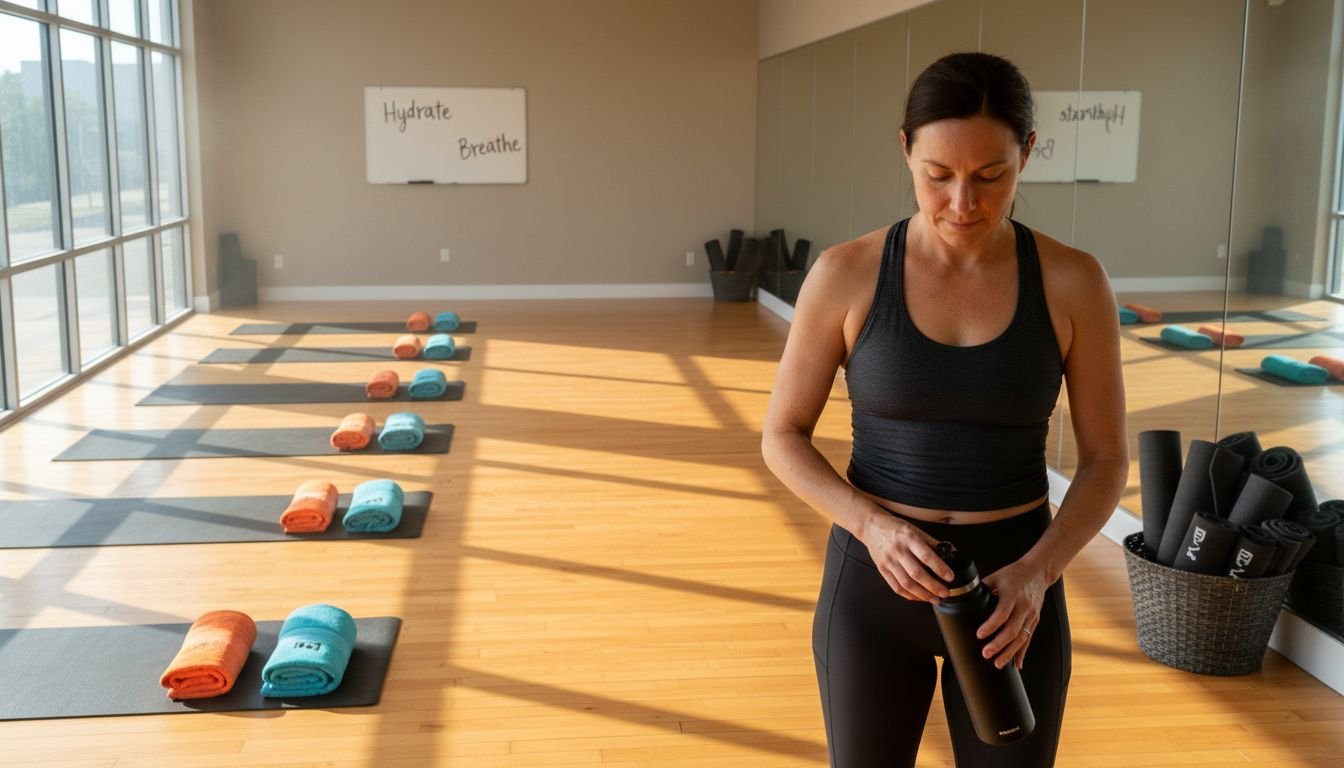
How can I manage discomfort or lightheadedness during a hot yoga class?

If you start feeling lightheaded or uncomfortable, pause in a resting pose and focus on your breathing. If symptoms persist, sit or lie down comfortably until you feel steadier before resuming your practice.

Recommended

7 Types of Pilates Reformer Explained for Better Wellness

Heather Rice

Nearly every american Pilates studio owes its success to the right equipment, yet choosing between the many reformer options can leave you puzzled. With over 10 million americans practicing Pilates each year, knowing the features and benefits of each reformer type matters whether you train at home or in a studio. This guide breaks down key reformer models, revealing what sets each one apart so you can find the perfect fit for your fitness goals.

Table of Contents

Quick Summary

Takeaway Explanation
1. Classic Reformer teaches core strength This equipment is essential for mastering Pilates fundamentals focused on core stability and alignment through resistance exercises.
2. Tower Reformer enhances workout versatility The Tower attachment expands exercise options and targets upper body strength, providing a more comprehensive workout experience.
3. Clinical Reformer supports rehabilitation Designed for recovery, it allows adjustable resistance and controlled movements, accommodating various rehabilitation needs safely.
4. Allegro Reformer offers portability This lightweight, easy-to-assemble Reformer makes Pilates accessible in both studio and home environments, ideal for those with limited space.
5. Jumpboard Reformer adds low-impact cardio It transforms the Reformer into a cardiovascular workout tool, enabling low-impact jumping exercises that protect joints while enhancing fitness.

1. Classic Reformer: Foundation of Modern Pilates

The Classic Reformer represents the cornerstone of Pilates equipment, providing practitioners with a versatile and transformative workout platform. Developed by Joseph Pilates, this ingenious machine allows for full body conditioning through resistance training that challenges and supports muscle development.

As Eve Gentry, a direct disciple of Joseph Pilates, emphasized, the Classic Reformer is critical in teaching fundamental Pilates principles focused on core strength and proper body alignment. Its design features a sliding carriage, adjustable springs, and straps that enable a wide range of exercises targeting different muscle groups with precision.

Key Features of the Classic Reformer:

  • Adjustable resistance through interchangeable springs

  • Sliding carriage that creates instability and challenge

  • Versatile straps for upper and lower body movements

  • Supports exercises for all fitness levels

Practitioners can perform hundreds of exercises on the Classic Reformer, from gentle rehabilitation movements to intense strength training sequences. By engaging multiple muscle groups simultaneously, this equipment promotes balanced muscle development, improved flexibility, and enhanced body awareness. Whether you are a beginner or an advanced fitness enthusiast, the Classic Reformer offers a comprehensive workout that adapts to your individual wellness goals.

2. Tower Reformer: Added Versatility and Resistance

The Tower Reformer elevates traditional Pilates training by combining the sliding carriage of a standard Reformer with a vertical tower attachment that dramatically expands exercise possibilities. This innovative design transforms your workout by introducing multiple planes of movement and enhanced resistance training.

According to Pilates Consultant, integrating a Tower with a Reformer significantly increases workout versatility by incorporating elements similar to the Cadillac apparatus. Senya Pilates notes that the Tower attachment introduces vertical resistance, enabling exercises that specifically target upper body strength and spinal articulation.

Tower Reformer Benefits:

  • Expanded range of exercise options

  • Improved upper body and core strength

  • Enhanced spinal mobility

  • Adaptable for different fitness levels

The Tower Reformer allows you to perform exercises that challenge your body in unique ways. By using springs attached to the vertical tower, you can create resistance in standing, seated, and supine positions that are impossible on a standard Reformer. This means more comprehensive workouts that engage multiple muscle groups simultaneously while improving overall body alignment and functional strength.

3. Clinical Reformer: Support for Rehabilitation Needs

The Clinical Reformer represents a specialized Pilates equipment design focused on supporting individuals through targeted rehabilitation and recovery processes. Unlike traditional fitness equipment, this reformer provides a precise and controlled environment for healing and strengthening muscles with minimal strain.

According to Wakamoto, the Clinical Reformer is specifically designed to aid rehabilitation by offering adjustable resistance and support that facilitates controlled movements essential for recovery. Oinue further emphasizes that these reformers provide customizable settings catering to individual rehabilitation needs, allowing gradual progression in strength and mobility exercises.

Key Rehabilitation Features:

  • Adjustable spring tension for progressive resistance

  • Supports gentle, controlled movement patterns

  • Accommodates various physical limitations

  • Enables precise muscle engagement and recovery

Whether you are recovering from an injury, managing a chronic condition, or seeking gentle strength restoration, the Clinical Reformer offers a structured approach to rebuilding physical functionality. Its design allows physical therapists and practitioners to create personalized workout sequences that respect individual healing timelines while promoting safe, effective muscle conditioning.

4. Allegro Reformer: Portability for Studio and Home

The Allegro Reformer represents a game changing solution for fitness enthusiasts seeking a versatile Pilates equipment that seamlessly transitions between studio and home environments. Its innovative design addresses the growing need for compact yet powerful exercise tools that adapt to modern lifestyle demands.

According to Pilates Balanced Body, the Allegro Reformer is specifically engineered for portability, featuring a lightweight frame and easy assembly mechanism. Cuore Pilates highlights that these reformers are renowned for their remarkable durability and adaptability, offering comprehensive exercise options within a remarkably compact design.

Allegro Reformer Advantages:

  • Lightweight and easily transportable

  • Quick and simple assembly process

  • Suitable for small living spaces

  • Provides full range of Pilates movements

  • Durable construction for long term use

Whether you are a busy professional working out at home, a traveling instructor, or someone with limited space, the Allegro Reformer offers a professional grade Pilates experience without compromising on functionality. Its intelligent design ensures you can maintain your fitness routine anywhere, anytime, making consistent wellness more accessible than ever before.

5. Cadillac Reformer: Comprehensive Full-Body Training

The Cadillac Reformer represents the pinnacle of Pilates equipment design, offering an unparalleled full body training experience that combines multiple exercise modalities into one comprehensive apparatus. This innovative machine transcends traditional workout limitations by integrating vertical and horizontal movement planes that challenge and transform your physical conditioning.

Senya Pilates highlights that the Cadillac Reformer uniquely combines features of a standard Reformer with a Cadillac, providing a versatile platform for strength, flexibility, and coordination exercises. According to Pilates Consultant, incorporating a Tower into a Reformer setup significantly enhances functionality by targeting multiple muscle groups simultaneously.

Cadillac Reformer Capabilities:

  • Supports advanced full body conditioning

  • Enables complex movement patterns

  • Provides adjustable resistance levels

  • Accommodates various fitness skill levels

  • Integrates strength and flexibility training

Whether you are an athlete seeking comprehensive training, a rehabilitation patient requiring precise movement control, or a fitness enthusiast wanting to elevate your workout, the Cadillac Reformer offers an exceptional platform for achieving your wellness goals. Its design allows for endless exercise variations that challenge your body in ways traditional equipment cannot match.

6. Combo Chair Reformer: Space-Saving Dual Function

The Combo Chair Reformer emerges as a brilliant solution for fitness enthusiasts and professionals seeking maximum functionality within minimal space. This innovative piece of equipment represents a smart evolution in Pilates training, combining two distinct workout platforms into one streamlined design.

Cuore Pilates highlights that the Combo Chair Reformer offers exceptional dual functionality, merging features of a traditional Reformer and a Pilates chair. Pilates Balanced Body emphasizes its ability to provide comprehensive workouts through a variety of exercises targeting different muscle groups within a compact design.

Combo Chair Reformer Advantages:

  • Maximizes limited studio or home workout spaces

  • Provides multiple exercise configurations

  • Supports diverse fitness levels and goals

  • Eliminates need for multiple equipment pieces

  • Offers versatile resistance training options

Whether you are a fitness professional managing a small studio, a home workout enthusiast, or someone seeking efficient exercise solutions, the Combo Chair Reformer delivers a full body training experience without compromising on quality or variety. Its intelligent design proves that exceptional fitness equipment can be both compact and comprehensive.

7. Jumpboard Reformer: Cardio Boost with Low Impact

The Jumpboard Reformer represents a revolutionary approach to cardiovascular training, offering fitness enthusiasts a unique way to elevate heart health without the traditional joint stress associated with high impact exercises. This innovative Pilates equipment transforms standard resistance training into a dynamic cardio experience.

Oinue explains that the Jumpboard attachment converts a standard Reformer into a cardiovascular machine, enabling low impact jumping exercises that enhance fitness while protecting joints. Wakamoto further highlights how this equipment provides a dynamic cardio component through plyometric exercises that improve heart health and endurance.

Jumpboard Reformer Benefits:

  • Minimal joint stress during cardiovascular training

  • Improves heart health and endurance

  • Offers full body resistance during jumping

  • Suitable for various fitness levels

  • Combines strength and cardio training

Whether you are recovering from an injury, managing joint concerns, or simply seeking a smarter approach to cardiovascular fitness, the Jumpboard Reformer offers a compelling alternative to traditional high impact workout methods. Its intelligent design allows you to challenge your cardiovascular system while maintaining muscular control and minimizing physical strain.

Below is a comprehensive table summarizing the various types of Pilates Reformers discussed throughout the article, highlighting their features, benefits, and ideal users.

Reformer Type Key Features & Benefits Best For
Classic Reformer Adjustable resistance, sliding carriage, versatile straps; supports core strength and alignment. All fitness levels seeking balanced workouts
Tower Reformer Vertical tower attachment for added resistance, improved spinal mobility. Those seeking enhanced versatility
Clinical Reformer Adjustable tension, controlled movements for rehabilitation and recovery. Individuals in rehabilitation
Allegro Reformer Lightweight, easily transportable, quick assembly; suitable for small spaces. Home users and traveling instructors
Cadillac Reformer Combines Reformer and Cadillac features; supports advanced conditioning and flexible movement. Advanced users and athletes
Combo Chair Reformer Space-saving design, combines Reformer and chair functions; supports diverse workouts. Small studio or home settings
Jumpboard Reformer Converts Reformer for low impact cardio; improves heart health and endurance. Those needing low impact cardio options

Discover the Right Pilates Reformer for Your Wellness Journey

Choosing the perfect Pilates Reformer can feel overwhelming with so many types available each offering unique benefits for strength, rehabilitation, or cardio enhancement. This article highlights key challenges such as finding equipment that supports your fitness level, targets specific muscle groups, and fits your lifestyle whether at home or in a studio. If you have ever struggled to identify which reformer suits your wellness goals or faced frustration adapting exercises because of limited options then you are not alone.

At Amrita Yoga & Wellness, we understand that your Pilates practice should empower you through accessible, expert-led classes and personalized guidance. We provide a supportive community and a range of Pilates sessions designed to help you confidently explore equipment like the Classic, Tower, or Clinical Reformers with professional instruction. Our offerings emphasize safe movement, injury recovery, and building foundational strength so you experience real progress and joy in your practice.

Elevate your Pilates experience and embrace a path to balanced health today.

Explore our class schedules and workshops at Amrita Yoga & Wellness. Start your transformation by signing up now and gain access to expert-led sessions tailored to your unique wellness needs. Your journey to better physical and mental wellbeing begins here.

Frequently Asked Questions

What is a Classic Reformer used for in Pilates?

The Classic Reformer is used for full body conditioning through resistance training. It features adjustable springs and a sliding carriage, allowing you to perform a wide range of exercises to improve muscle strength and body alignment.

How does the Tower Reformer enhance my Pilates workout?

The Tower Reformer adds vertical resistance and expands exercise options, targeting upper body strength and spinal mobility. To utilize this equipment effectively, incorporate exercises that use both the Tower and the sliding carriage for a comprehensive workout.

What benefits does a Clinical Reformer offer for rehabilitation?

The Clinical Reformer is designed specifically to assist with rehabilitation, offering adjustable resistance that allows for gentle, controlled movements. To aid recovery, work with a physical therapist to create a personalized plan using this equipment.

How can I benefit from using an Allegro Reformer at home?

The Allegro Reformer is lightweight and portable, making it perfect for home workouts. Set it up easily in a small space and aim for regular sessions, perhaps 3–4 times a week, to enhance your fitness routine without sacrificing quality.

What makes the Cadillac Reformer stand out in Pilates training?

The Cadillac Reformer combines features of traditional Reformers with additional capabilities, allowing for complex movement patterns and full body conditioning. Use this equipment to explore different exercises, adapting the resistance to match your skill level for an effective workout.

Why should I consider the Combo Chair Reformer for a small space?

The Combo Chair Reformer combines the functions of a traditional Reformer and a Pilates chair into one compact design, maximizing space efficiency. Consider incorporating a variety of exercises into a single session so you can target different muscle groups effectively within your limited area.

Recommended

Why Choose Hot Yoga: Complete Benefits Breakdown

Heather Rice

Sweating through a yoga class at over 100 degrees sounds intense, but more americans are turning to hot yoga for its unique mental and physical rewards. With studies showing that heat exposure during yoga can boost flexibility and aid detoxification, the appeal goes beyond simple stretching. Understanding how hot yoga transforms traditional practice will help you decide if this demanding wellness trend matches your fitness journey and goals.

Table of Contents

Quick Summary

Point Details
Hot Yoga Definition Hot yoga involves practicing various yoga styles in heated and humid environments to enhance flexibility and strengthen focus.
Types of Hot Yoga Key styles include Bikram, Moksha, Ashtanga, Baptiste, and Power Hot Yoga, each offering distinct methods and benefits.
Physical and Mental Benefits Hot yoga improves strength, cardiovascular health, flexibility, and reduces stress, contributing to overall wellness.
Safety Guidelines Practitioners should stay hydrated, know their limits, and start gradually to reduce health risks associated with heat exposure.

Defining Hot Yoga and Its Core Principles

Hot yoga represents a dynamic and transformative approach to traditional yoga practice, characterized by conducting yoga sessions in a deliberately heated environment. According to hsrd, hot yoga can be defined as “any yoga practice performed under hot and humid conditions,” which goes beyond a single specific style to encompass multiple yoga approaches utilizing heat as a core component.

The fundamental principle behind hot yoga centers on leveraging environmental temperature to enhance physical performance and flexibility. Heat exposure during yoga practice creates a unique physiological response, causing muscles to become more pliable and increasing overall range of motion. iayt emphasizes that the heated environment promotes “flexibility and detoxification” while simultaneously challenging practitioners to maintain focus and control during increasingly intense physical sequences.

Key characteristics of hot yoga include:

  • Temperatures typically ranging between 95-105 degrees Fahrenheit

  • Humidity levels around 40-60 percent

  • Extended pose holding times to maximize muscular engagement

  • Emphasis on controlled breathing techniques

  • Significant cardiovascular and strength-building components

While originating from traditional yoga practices, hot yoga introduces a deliberate environmental challenge that transforms the standard yoga experience. The heated setting demands heightened mental discipline, encourages deeper physical engagement, and provides practitioners with an opportunity to explore their personal physical and psychological boundaries in a structured, intentional environment.

For those interested in learning more about specific hot yoga techniques, our comprehensive guide on hot yoga offers additional insights and detailed practice recommendations.

Types of Hot Yoga Practices Explained

Hot yoga encompasses a diverse range of practices, each offering unique approaches to integrating heat and movement into traditional yoga principles. nhpcanada highlights two prominent styles that exemplify the hot yoga landscape: Bikram Yoga and Moksha Yoga. Bikram yoga follows a precise structure, involving 26 specific postures performed twice in a heated room maintained at 40°C with 40% humidity, creating an intense and controlled practice environment.

Additional hot yoga styles bring their own distinctive characteristics to the practice. eomega describes Ashtanga Yoga as a muscle-toning aerobic workout rooted in flowing variations of Surya Namaskar, often practiced in heated conditions. Similarly, Baptiste Yoga emerges as a vigorous vinyasa-style practice designed to build strength and personal empowerment through dynamic movement and heat-enhanced flexibility.

Key hot yoga styles include:

  • Bikram Yoga: 26 postures, strict 40°C environment

  • Moksha/Modo Yoga: Heated room with flexible sequencing

  • Ashtanga-Inspired Hot Yoga: Muscle-toning flow sequences

  • Baptiste Power Yoga: Strength-building vinyasa practice

  • Power Hot Yoga: High-intensity cardiovascular variations

For practitioners seeking to explore the nuanced world of hot yoga styles, our comprehensive guide to hot yoga types offers an in-depth exploration of each unique approach, helping individuals discover the practice that best aligns with their fitness goals and personal preferences.

Physical and Mental Benefits of Hot Yoga

Hot yoga offers a comprehensive approach to wellness that simultaneously addresses physical and mental health needs. yogahelp reveals that this practice promotes increased flexibility, enables deeper stretching, and supports detoxification through intense perspiration. The heated environment creates a unique physiological response that challenges practitioners while delivering remarkable health benefits.

yogagroup highlights that hot yoga significantly improves cardiovascular fitness, strength development, and metabolic performance. The elevated temperatures contribute to enhanced calorie burning, making it an exceptional workout for individuals seeking weight management and comprehensive physical conditioning. Moreover, the practice’s mental components engage practitioners in a profound mind-body connection, reducing stress and promoting psychological resilience.

Key benefits of hot yoga include:

  • Improved muscular strength and endurance

  • Enhanced cardiovascular performance

  • Accelerated metabolic rate

  • Increased flexibility and range of motion

  • Stress reduction and mental clarity

  • Improved respiratory function

  • Potential weight loss support

For individuals interested in understanding how hot yoga can transform their wellness journey, our comprehensive guide to hot yoga benefits provides deeper insights into the holistic advantages of this transformative practice.

Safety Guidelines and Common Misconceptions

iayt emphasizes that proper hydration is the cornerstone of safe hot yoga practice. The intense heated environment demands careful physiological management, with practitioners needing to understand critical safety protocols before engaging in this challenging workout. Gradual acclimatization over 10-14 days can significantly improve an individual’s heat tolerance and reduce potential health risks associated with high-temperature exercise.

yogahelp recommends that individuals consult their healthcare provider before beginning hot yoga, particularly those with pre-existing health conditions. Common misconceptions about hot yoga often revolve around its perceived extreme nature, leading many to believe it’s only suitable for advanced fitness enthusiasts. In reality, hot yoga can be adapted for various fitness levels when approached mindfully and with proper guidance.

Key safety guidelines for hot yoga include:

  • Hydrate extensively before, during, and after practice

  • Listen to your body and know your personal limits

  • Start with shorter sessions and gradually increase intensity

  • Wear lightweight, moisture-wicking clothing

  • Bring a towel and water bottle to every class

  • Stop immediately if experiencing dizziness or extreme discomfort

  • Eat light meals at least 2 hours before practice

our comprehensive guide to hot yoga safety offers additional insights for practitioners seeking to understand the nuanced approach to this transformative practice, helping individuals make informed decisions about their wellness journey.

Comparing Hot Yoga to Other Wellness Classes

nhpcanada reveals the nuanced differences between wellness practices, highlighting that hot yoga stands out as a unique approach to holistic fitness. While traditional yoga styles focus primarily on spiritual connection, hot yoga integrates intense physical conditioning with mindful practice. Bikram yoga, for instance, represents a physically demanding style that emphasizes exercise and bodily transformation, distinguishing itself from more meditative wellness approaches.

eomega demonstrates that different wellness practices offer distinct benefits. Ashtanga Yoga shares similarities with hot yoga through its strength-focused approach, often performed in heated environments, while Baptiste Yoga introduces a more personalized empowerment methodology. These variations underscore the importance of choosing a practice that aligns with individual fitness goals and personal wellness philosophies.

Key distinctions between hot yoga and other wellness classes include:

  • Higher calorie burn compared to traditional yoga

  • More intense cardiovascular engagement

  • Greater emphasis on physical strength and endurance

  • Enhanced flexibility through heated environment

  • More dynamic and challenging physical sequences

  • Faster metabolic response

  • Deeper muscular engagement

our comprehensive wellness class comparison guide offers deeper insights into navigating the diverse landscape of fitness practices, helping practitioners make informed decisions about their personal wellness journey.

Unlock Your Full Potential with Hot Yoga at Amrita Yoga & Wellness

If you are searching for a powerful way to increase your flexibility, detoxify your body, and build strength in a supportive and welcoming environment hot yoga might be the perfect solution. Our studio focuses on helping you safely embrace the challenge of heated yoga practice with expert guidance on hydration safety and gradual adaptation. Whether you want to reduce stress increase cardiovascular fitness or deepen your mind-body connection Amrita Yoga & Wellness provides the tools and community support to help you reach those goals.

Experience the transformative benefits of hot yoga for yourself and discover personalized classes designed to match every fitness level. Visit Amrita Yoga & Wellness and explore our detailed class descriptions for hot yoga and other wellness practices. Take the next step in your wellness journey by signing up today and enjoy the encouragement and expertise that makes our studio Philadelphia’s trusted destination for holistic health.

Frequently Asked Questions

What is hot yoga?

Hot yoga is a form of yoga practiced in a heated environment, typically between 95-105 degrees Fahrenheit, which enhances physical performance, flexibility, and provides a unique physiological response.

What are the benefits of hot yoga?

Hot yoga promotes increased flexibility, improved cardiovascular performance, enhanced strength, detoxification through sweating, stress reduction, and deeper mental clarity.

How does hot yoga differ from traditional yoga?

Hot yoga emphasizes intense physical conditioning and calorie burning in a heated environment, while traditional yoga focuses more on spiritual connection and mindful practice without intense physical exertion.

Are there safety guidelines I should follow when practicing hot yoga?

Yes, it is essential to stay hydrated, listen to your body, gradually increase session intensity, wear lightweight clothing, and consult a healthcare provider if you have pre-existing conditions.

Recommended

7 Essential Yoga and Meditation Tips for Holistic Wellness

Heather Rice

More than 70 percent of american adults report feeling stressed on a regular basis, yet most overlook the simple power of conscious breathing and mindful rituals to reset their well being. For anyone seeking a calmer mind and healthier body, discovering easy ways to start with yoga and meditation can make a real difference. This guide shares practical, research-backed steps to help you build sustainable habits and transform your daily routine.

Table of Contents

Quick Summary

Key Message Explanation
1. Practice Simple Breathing Techniques Basic breathing exercises can significantly reduce stress and enhance relaxation anytime, anywhere.
2. Establish a Consistent Practice Schedule Regularly scheduled sessions create habits that improve wellness through persistent practice.
3. Design a Calm Practice Space A tranquil environment signals your brain to relax, aiding meditation and yoga effectiveness.
4. Integrate Yoga with Meditation Combining breath with movement transforms yoga into a holistic mindfulness exercise.
5. Use Props for Accessibility Props enhance safety and alignment, allowing deeper engagement with poses for all levels.

1. Start With Simple Breathing Techniques

Breathing is more than just an automatic bodily function – it’s a powerful tool for holistic wellness and stress management. Learning basic breathing techniques can transform your physical and mental state, providing an accessible entry point into yoga and meditation practices.

Research has demonstrated the profound impact of breathwork, particularly during challenging times. A PubMed study exploring virtual yoga breathing techniques among healthcare workers revealed that 77% of participants found breathwork interventions useful for stress management.

Why Breathing Matters

Your breath acts as a bridge between your body and mind. When you breathe consciously, you activate the parasympathetic nervous system, which helps reduce stress, lower blood pressure, and promote relaxation. Simple techniques like diaphragmatic breathing can be practiced anywhere – at your desk, during commutes, or before important meetings.

How to Practice Basic Breathing

Start with these fundamental techniques:

  • Belly Breathing: Place one hand on your chest and another on your stomach. Inhale deeply through your nose, feeling your belly expand. Exhale slowly through your mouth.

  • Box Breathing: Inhale for 4 counts, hold for 4 counts, exhale for 4 counts, and pause for 4 counts. Repeat this cycle 5-10 times.

  • Counted Breath: Simply count your breaths from 1 to 10, then start over. This helps focus your mind and regulate your breathing rhythm.

Remember, consistency is key. Even 5 minutes of daily breathing practice can yield significant wellness benefits.

2. Set a Consistent Practice Schedule

Consistency is the secret ingredient that transforms yoga and meditation from occasional activities into powerful wellness practices. A regular schedule helps train your mind and body, creating lasting positive changes in your overall health and mental well being.

According to research from the Yoga Guidelines, practicing meditative techniques with breath awareness for twenty minutes every 3-4 hours can significantly enhance your wellness journey. A personalized approach that adapts to your changing needs is key.

Why Consistency Matters

Regular practice builds muscle memory, improves mental discipline, and creates a reliable framework for personal growth. When you show up for yourself consistently, even for short periods, you establish a powerful habit that compounds over time.

Creating Your Practice Schedule

Design a realistic and sustainable routine:

  • Start Small: Begin with 10-15 minute sessions 3-4 times per week

  • Choose Consistent Times: Select times when you are least likely to be interrupted

  • Use Calendar Reminders: Schedule practice sessions like important meetings

  • Be Flexible: Allow yourself grace if you miss a session

A research paper on personalized yoga emphasizes tailoring your practice to your unique needs, encouraging you to adjust your routine as your abilities and objectives evolve.

Remember, a consistent practice is not about perfection but commitment. Your wellness journey is uniquely yours.

3. Create a Calm and Inviting Space

Your physical environment plays a crucial role in supporting meditation and yoga practices. The right space can transform your experience, helping you transition from daily stress to a state of mindful relaxation.

Research on interactive music systems suggests that environmental elements like sound can significantly influence physiological states and enhance relaxation. By intentionally designing your practice space, you create a sanctuary that supports your wellness journey.

Why Space Matters

A thoughtfully curated environment signals to your brain that it is time to shift gears. When you enter a space that feels peaceful and intentional, you prime yourself for deeper meditation and more focused yoga practice.

Creating Your Wellness Sanctuary

Consider these elements when designing your space:

  • Lighting: Use soft, natural light or warm dimmable lamps

  • Sound: Select gentle background sounds like soft instrumental music or nature recordings

  • Temperature: Keep the room comfortably warm but not hot

  • Minimal Distractions: Remove electronic devices and clutter

  • Personal Touches: Add meaningful items like plants, candles, or meaningful artwork

Remember that your practice space does not need to be large or perfect. Even a small corner with thoughtful design can become a powerful wellness retreat.

4. Blend Yoga Poses With Gentle Meditation

Blending yoga poses with meditation creates a powerful holistic practice that connects body, breath, and mind. By integrating physical movement with mindful awareness, you transform your yoga session from a simple exercise routine into a deeply transformative experience.

According to Ashtanga yoga principles, flowing sequences of movements can purify the blood and balance energy by coordinating breath with movement. This approach turns each pose into a moving meditation.

Understanding Mind Body Connection

When you synchronize breath with movement, you activate a profound internal dialogue. Each pose becomes an opportunity for introspection, allowing you to observe your thoughts without judgment while maintaining physical alignment and balance.

Practical Meditation Integration Techniques

Try these approaches to blend poses and meditation:

  • Breath Awareness: Focus on your breath during each pose transition

  • Body Scanning: Mentally scan your body for sensations during holding poses

  • Intention Setting: Begin practice with a specific mental focus or gratitude

  • Mindful Movement: Move slowly and deliberately between postures

The ancient practice of Pranayama teaches us that breath control can regulate our life energy, transforming physical practice into a meditative experience.

Remember that meditation within yoga is not about perfection but presence. Your practice is a personal journey of connection and self discovery.

5. Use Props for Better Alignment and Comfort

Props are not a sign of weakness in yoga but powerful tools that enhance your practice by providing support, improving alignment, and making poses more accessible. Whether you are a beginner or an experienced practitioner, yoga props can help you experience poses more deeply and safely.

In Hatha Yoga: The Report of a Personal Experience, the importance of using supportive tools to achieve proper alignment is thoroughly explored. Props allow practitioners to modify poses to suit their individual body mechanics and flexibility levels.

Why Props Matter

Props help bridge the gap between where your body is and where you want it to be. They reduce strain, prevent injury, and allow you to experience the full benefits of each pose without compromising your physical safety.

Selecting and Using Yoga Props

Consider these essential props for your practice:

  • Yoga Blocks: Support balance and reduce reach distance in standing and seated poses

  • Straps: Help extend reach and improve flexibility in stretching poses

  • Bolsters: Provide support during restorative and relaxation poses

  • Blankets: Add cushioning and help maintain proper body temperature

According to research on Physiology of Breathing, relaxed muscles stretch more easily. Props can help create this relaxation, allowing deeper and more comfortable poses.

Remember that using props is a sign of wisdom not limitation. They are tools of empowerment that help you explore your practice more fully.

6. Explore Guided Meditation for Focus

Guided meditation offers a structured pathway to mindfulness, especially for those struggling to quiet their racing thoughts. By following a narrator’s voice, you can learn to anchor your attention and develop deeper concentration skills.

The ancient Ānāpānasati Sutta provides profound insights into breath awareness, outlining sixteen steps that guide practitioners through progressive stages of mindfulness and mental control.

Understanding Guided Meditation

Guided meditation works by providing external support that helps redirect your wandering mind. A skilled narrator can help you develop focus, reduce stress, and create mental clarity through carefully structured verbal instructions and visualization techniques.

Meditation Focus Techniques

Try these approaches to enhance your guided meditation practice:

  • Breath Counting: Use the traditional Gaṇanā technique of systematically counting breaths

  • Body Scan Meditations: Progressively relax each body part while maintaining awareness

  • Visualization Practices: Imagine peaceful scenes to anchor your attention

  • Mantra Repetition: Use repeated words or phrases to maintain mental focus

Start with short 5-10 minute sessions and gradually increase duration as your concentration improves. Remember that meditation is a skill developed through consistent practice.

7. Track Your Progress and Adjust Mindfully

Your wellness journey is dynamic, not static. Tracking your progress allows you to understand your body and mind better, making informed adjustments that support your holistic health goals.

Research on technology assisted personalized yoga emphasizes the critical need for individuals to discover and continuously adapt their practices based on changing environments and health conditions. Your practice should evolve as you do.

Understanding Progress Tracking

Progress tracking goes beyond measuring physical flexibility or meditation duration. It involves observing subtle changes in your mental clarity, stress levels, energy, and overall well being. By paying attention to these nuanced shifts, you create a more responsive and personalized wellness approach.

Practical Tracking Strategies

Consider these methods for mindful progress monitoring:

  • Journal Entries: Record daily experiences, emotional states, and physical sensations

  • Breath Pattern Analysis: Monitor your breathing rhythms, as research on stress recognition suggests breathing can indicate overall wellness

  • Weekly Self Reflection: Assess what practices feel supportive and which need modification

  • Physical Markers: Track flexibility, strength, balance, and recovery times

Remember that progress is not linear. Some days will feel more challenging than others, and that is perfectly normal. Your practice is a personal journey of continuous learning and growth.

Below is a comprehensive table summarizing the key concepts, benefits, and strategies discussed throughout the article focusing on holistic wellness practices.

Concept Description Key Considerations
Breathing Techniques Basic practices like Belly Breathing, Box Breathing, and Counted Breath to enhance mental and physical wellness. Activates parasympathetic nervous system, reduces stress, promotes relaxation.
Consistent Practice Establish a regular yoga and meditation schedule to transform habits. Builds discipline, adapts based on needs, not about perfection but commitment.
Environment Design Create a calming space with appropriate lighting, sound, and temperature. Supports relaxation and mindfulness, minimal distractions enhance focus.
Integrated Yoga and Meditation Blend poses with meditation techniques for a holistic practice. Enhances mind-body connection, transforms physical routine into a meditative experience.
Use of Props Employ tools like blocks, straps, and bolsters for improved alignment and comfort. Enhances access to poses, bridges body gaps, empowers practice.
Guided Meditation Follow structured sessions to improve focus and mindfulness. Develops concentration, utilizes visualization and mantra repetition.
Progress Tracking Observe changes in wellness aspects to adjust practices mindfully. Involves journaling, breath pattern analysis, and self-reflection for continuous growth.

Take Your Holistic Wellness to the Next Level with Amrita Yoga & Wellness

Struggling to maintain a consistent yoga and meditation routine or looking to deepen your breathwork and mindful movement? The challenges of creating a calm practice space and blending poses with meditation are common, but you do not have to face them alone. Unlock personalized support for your yoga journey with offerings designed to nourish your body, mind, and spirit.

Experience the benefits of expert-led classes, workshops, and retreats in Philadelphia that focus on gentle meditation, breath control techniques, and using props to improve comfort and alignment. Visit Amrita Yoga & Wellness to explore schedules and discover community-driven wellness services. Take the step today to cultivate consistent practice, track your progress mindfully, and transform stress into balance with resources that honor your unique path.

Frequently Asked Questions

What are some simple breathing techniques I can use for stress management?

To alleviate stress, try techniques like belly breathing, box breathing, and counted breath. Start with 5 minutes of practice daily to notice improvements in your mental state.

How can I create a consistent yoga and meditation practice schedule?

Establish a schedule by starting with 10-15 minute sessions, 3-4 times a week at times when you’re least interrupted. Use calendar reminders to keep your commitment and try to stick to it for at least a month to see real benefits.

What should I consider when designing a calming space for yoga and meditation?

Focus on lighting, sound, temperature, and personal touches to create a peaceful environment. Make it clutter-free to signal to your mind that it’s time to relax and engage in your practice.

How can I blend yoga poses with meditation effectively?

Synchronize your breath with each movement in your yoga practice to enhance mindfulness. Try incorporating breath awareness and body scanning to deepen your meditation experience during yoga each session.

What types of props can support my yoga practice?

Yoga blocks, straps, bolsters, and blankets are great tools for providing support, improving alignment, and making poses more accessible. Start using at least one prop in each practice to enhance your comfort and alignment while exploring deeper poses.

How can I track my progress in yoga and meditation?

Keep a journal to log your daily experiences, emotional shifts, and physical sensations. Aim to assess your progress weekly to adjust your practice as needed and recognize meaningful changes over time.

Recommended

Aerial Yoga Terminology: Complete Guide and Definitions

Heather Rice

Aerial yoga has quickly transformed the world of fitness, with participation rising over 30 percent in recent years. This unique practice uses a silk hammock to support moves that build strength and flexibility in ways traditional yoga often cannot. Whether you are new or looking to deepen your knowledge, learning the right terms and concepts will help you feel confident and prepared for any aerial yoga class.

Table of Contents

Key Takeaways

Point Details
Dynamic Practice Aerial yoga combines traditional yoga, Pilates, and dance, utilizing a hammock for support to enhance flexibility, strength, and balance.
Specialized Equipment Practitioners require a secure fabric hammock and may use additional gear like grip gloves and cushioned mats to enhance safety and effectiveness.
Unique Terminology Understanding key aerial yoga terms such as inversions, suspension, and flow sequences is essential for practicing safely and effectively.
Safety Precautions It is crucial to practice under certified instructors and be aware of contraindications to avoid risks during sessions.

Defining Aerial Yoga Terminology and Concepts

Aerial yoga represents a dynamic and innovative approach to traditional yoga practice that literally elevates your workout. According to Healthline, this hybrid discipline integrates traditional yoga poses with aerial arts, utilizing a specialized fabric hammock to support and transform physical movements.

Developed in 2006 by Michelle Dortignac, aerial yoga combines elements from multiple disciplines including traditional yoga, Pilates, and dance. As Wikipedia explains, the practice involves performing various poses while suspended, with the primary goal of enhancing flexibility, strength, and balance. The unique suspension method allows practitioners to experience yoga poses from completely new perspectives.

Key characteristics of aerial yoga include:

  • Use of a fabric silk hammock as primary support equipment

  • Poses performed partially or fully suspended above the ground

  • Increased range of motion compared to traditional mat yoga

  • Potential for deeper stretches and reduced joint compression

The fundamental terminology in aerial yoga revolves around understanding how the hammock functions as both a support system and a tool for challenging traditional yoga practices. Practitioners learn specialized techniques like inversion, suspension, and swing movements that distinguish aerial yoga from ground-based yoga styles. What is Aerial Yoga? Understanding Its Benefits and Techniques provides additional insights into mastering these unique movement patterns.

Essential Equipment and Pose Definitions

Aerial yoga requires specialized equipment that transforms traditional yoga practice into a suspended, gravity-defying experience. Healthline highlights that the primary piece of equipment is a fabric hammock, which must be securely anchored to support practitioners during various poses and movements.

The hammock itself is typically constructed from a strong, elastic fabric designed to safely support body weight while allowing flexibility and movement. According to Wikipedia, key poses that practitioners commonly explore include:

  • Cross Position: A foundational pose involving full body suspension

  • Star Inversion: An advanced pose emphasizing balance and core strength

  • One-Legged King Pigeon Pose: A challenging stretch that utilizes hammock support

Beyond the basic hammock, additional equipment can enhance the aerial yoga experience. Practitioners might use:

Grip-enhancing gloves

  • Specialized yoga socks

  • Cushioned floor mats for safety during dismounts

  • Resistance bands for supplemental strength training

Understanding pose terminology is crucial for aerial yoga practitioners. Each pose has specific technical definitions related to body positioning, hammock interaction, and movement flow. Understanding Aerial Yoga vs Traditional Yoga: Explained can provide deeper insights into how these unique poses differentiate aerial yoga from ground-based practices.

Key Terms Related to Techniques and Sequencing

Aerial yoga introduces a unique set of technical terms that distinguish it from traditional ground-based yoga practices. Healthline explains that one of the most fundamental techniques is the inversion, where practitioners hang upside down to achieve spinal decompression and explore gravity-defying movements.

Sequencing in aerial yoga involves carefully structured movement patterns that blend traditional yoga poses with aerial-specific techniques. According to Wikipedia, these sequences are designed to enhance overall body strength and flexibility through innovative movement combinations. Key sequencing techniques include:

  • Flow Sequences: Smooth transitions between suspended poses

  • Anchor Points: Specific hammock attachment locations for stability

  • Release Movements: Controlled techniques for transitioning between suspended and grounded positions

Advanced practitioners develop a nuanced understanding of technical terminology that goes beyond basic pose names. These terms often describe the intricate interactions between the body, hammock, and gravitational forces. Some essential technical terms include:

  • Silk Grip: The method of holding and manipulating the hammock fabric

  • Zero Compression Inversion: A technique that allows complete spinal decompression

  • Suspension Angle: The precise body positioning relative to the ground

What is Aerial Yoga? Understanding Its Benefits and Techniques offers additional insights into mastering these complex movement techniques and understanding the subtle language of aerial yoga practice.

Safety Terms and Common Precautions

Safety is paramount in aerial yoga, with specific terminology and protocols designed to protect practitioners during their suspended practice. Healthline emphasizes the critical importance of using certified instructors and ensuring professional equipment setup as foundational safety measures.

Contraindication Terms are essential for understanding individual risk factors. Practitioners should be aware of specific conditions that might limit or prevent participation in aerial yoga, including:

  • Medical Clearance: Professional health approval for participation

  • Absolute Contraindications: Conditions that completely prohibit aerial yoga

  • Relative Contraindications: Conditions requiring modified practice

Specific safety precautions involve understanding risk management terminology. Key safety concepts include:

  • Spotter Technique: Having an instructor nearby to assist during challenging poses

  • Safe Landing Protocol: Controlled methods for exiting hammock positions

  • Equipment Integrity Check: Pre-class inspection of hammocks and suspension points

Potential practitioners should be aware of specific health limitations. Individuals with the following conditions should consult healthcare providers before participating:

  • Pregnancy

  • Glaucoma

  • High blood pressure

  • Recent surgical procedures

  • Severe inner ear disorders

Understanding Aerial Yoga vs Traditional Yoga: Explained provides additional context for understanding the unique safety considerations of aerial yoga practice.

Frequently Misunderstood Aerial Yoga Terms

Aerial yoga is often shrouded in misconceptions that can intimidate potential practitioners. Healthline clarifies that one of the most prevalent myths is that aerial yoga is exclusively for advanced fitness enthusiasts, when in reality, many classes are specifically designed to welcome beginners.

Accessibility Terminology plays a crucial role in dispelling common misunderstandings. Key terms that are frequently confused include:

  • Inversion: Often mistaken as a complex move, but can be modified for all skill levels

  • Suspension: Incorrectly perceived as requiring extraordinary strength

  • Silk Grip: Thought to demand extensive upper body strength, but actually adaptable for various fitness levels

Practitioners often misinterpret technical terms, leading to unnecessary anxiety about participation. Common misconceptions involve:

  • Believing zero compression inversions require extreme flexibility

  • Assuming aerial yoga is only for young, athletic individuals

  • Thinking specialized equipment means complicated practice

Aerial Yoga Guide for Beginners: Step-by-Step Practice Success offers comprehensive insights for those looking to understand the true accessibility and adaptability of aerial yoga practice.

Unlock the Power of Aerial Yoga with Expert Guidance

Struggling to understand aerial yoga terms like inversion, suspension, or silk grip can make starting your practice feel overwhelming. This guide demystifies the terminology and safety concepts, but taking the next step means experiencing these moves firsthand in a supportive environment. At Amrita Yoga & Wellness, we specialize in making aerial yoga accessible to everyone regardless of your fitness level or experience. Our certified instructors focus on clear instruction and personal attention so you can confidently explore poses like the star inversion or cross position safely and effectively.

Ready to elevate your yoga journey and master these unique aerial techniques? Visit our website to find beginner-friendly aerial yoga classes and workshops designed to build strength and flexibility while deepening your understanding of pose sequencing and safety precautions. Discover how our welcoming community and expert-led sessions at Amrita Yoga & Wellness can transform your practice today. Don’t wait to feel the liberating benefits of aerial yoga—sign up now and start your ascent toward greater balance and well-being.

Frequently Asked Questions

What is aerial yoga?

Aerial yoga is a hybrid practice that combines traditional yoga poses with aerial arts, using a specialized fabric hammock for support. This unique approach enhances flexibility, strength, and balance while allowing practitioners to experience poses from new perspectives.

What equipment is needed for aerial yoga?

The primary equipment required for aerial yoga is a fabric hammock, which must be securely anchored. Additional items such as grip-enhancing gloves, specialized yoga socks, cushioned floor mats, and resistance bands can also enhance the practice.

What are some key poses in aerial yoga?

Key poses commonly explored in aerial yoga include the Cross Position, which involves full body suspension, the Star Inversion that emphasizes balance and core strength, and the One-Legged King Pigeon Pose, a challenging stretch utilizing hammock support.

What safety precautions should I take when practicing aerial yoga?

To ensure safety during aerial yoga, it's essential to work with certified instructors and use professional equipment. Practitioners should also be aware of medical contraindications, implement safe landing protocols, and conduct pre-class equipment integrity checks.

Recommended

Pilates vs Yoga Explained: Full Comparison Guide

Heather Rice

Millions of people turn to Pilates and yoga each year, but fewer realize how fundamentally different these two practices are. With yoga's roots stretching back thousands of years and Pilates offering a modern, core-focused approach, the choice goes far beyond simple stretching or strength. Whether you hope to boost flexibility, build strength, or find mental clarity, understanding their unique principles and benefits will help you make the best choice for your wellness journey.

Table of Contents

Key Takeaways

Point Details
Distinct Philosophies Yoga is rooted in spirituality focusing on mind-body wellness, whereas Pilates is a structured physical conditioning system emphasizing core strength and alignment.
Movement Styles Yoga involves slower, fluid movements prioritizing flexibility, while Pilates features quicker, controlled exercises aimed at muscle toning and stabilization.
Health Benefits Both practices enhance physical and mental well-being; Pilates strengthens muscles and improves posture, while yoga promotes flexibility and mindfulness.
Cautions for Practice Individuals with certain medical conditions should consult healthcare providers before engaging in Pilates or yoga to avoid risks and injuries.

Definitions And Core Principles Explained

Understanding the foundational principles of Pilates and Yoga begins with recognizing their unique origins and philosophical approaches to wellness. According to Cleveland Clinic Health, yoga is a centuries-old spiritual practice designed to enhance the mind-body connection and achieve profound personal enlightenment, while Pilates emerged in the 20th century as a structured exercise system focused on precise, controlled movements.

Historical and Philosophical Roots

At their core, these practices share a holistic vision of human wellness but approach it through distinctly different methodologies. Yoga traces its roots back thousands of years in ancient Indian spiritual traditions, emphasizing a comprehensive approach that integrates physical postures (asanas), breathing techniques (pranayama), and mindfulness practices. Pilates, developed by Joseph Pilates, concentrates more explicitly on physical conditioning - particularly core strength and muscular balance.

Key Practice Characteristics

The fundamental differences between these disciplines become clear when examining their primary objectives:

  • Yoga focuses on:

    • Spiritual and mental wellness

    • Flexibility and mental clarity

    • Holistic mind-body-spirit integration

    • Meditation and breath control

  • Pilates emphasizes:

    • Physical strength and alignment

    • Core muscle development

    • Precise, controlled movements

    • Posture improvement and body mechanics

As Very Well Fit explains, both practices harmonize mind and body but through distinctly different approaches. Yoga seeks broader spiritual and emotional well-being, while Pilates targets physical efficiency and muscular balance with laser-focused precision.

While they might seem different on the surface, both Pilates and yoga offer transformative potential for practitioners willing to explore their unique methodologies of physical and mental conditioning.

Key Differences Between Pilates And Yoga

Understanding the fundamental distinctions between Pilates and yoga requires a deep dive into their movement philosophies, origins, and core objectives. According to Woman and Home, the primary contrast lies in their approach: yoga is a spiritual practice focused on flexibility and breath control, while Pilates concentrates on rehabilitation, muscle toning, and core strength.

Movement and Pace Dynamics

Movement style becomes a critical differentiator between these practices. As Vogue explains, yoga typically involves slower-paced workouts with poses held for extended periods, emphasizing mental well-being and flexibility. In contrast, Pilates features quicker, more repetitive low-impact exercises designed to target and strengthen core muscle groups.

Comparative Analysis

A comprehensive breakdown of their key differences reveals nuanced yet significant distinctions:

  • Yoga Characteristics:

    • Rooted in spiritual traditions

    • Emphasizes mind-body connection

    • Focuses on flexibility and mental wellness

    • Incorporates meditation and breathing techniques

    • Slower, more deliberate movements

  • Pilates Characteristics:

    • Developed as a rehabilitation method

    • Concentrates on physical conditioning

    • Prioritizes core strength and muscle alignment

    • Utilizes precise, controlled movements

    • Faster-paced, repetitive exercise sequences

While both practices offer transformative physical and mental benefits, their approaches differ fundamentally.

For practitioners seeking a more comprehensive understanding, our guide on understanding the difference between Pilates and Yoga provides deeper insights into these remarkable wellness disciplines.

Ultimately, choosing between Pilates and yoga depends on individual fitness goals, personal preferences, and the specific physical and mental outcomes one hopes to achieve.

Major Types And Practice Styles Compared

Exploring the diverse landscape of yoga and Pilates reveals a rich tapestry of practice styles that cater to different fitness goals and personal preferences. According to Tamana Coffee, yoga encompasses multiple styles like Hatha, Vinyasa, and Bikram, each with unique focuses ranging from flexibility and strength to deep relaxation.

Yoga Practice Styles

Yoga's diverse approaches offer practitioners a wide range of experiences and benefits:

  • Hatha Yoga: Gentle, foundational style focusing on basic postures and breath control

  • Vinyasa Yoga: Dynamic, flow-based practice linking movement with breath

  • Bikram Yoga: Structured hot yoga practice performed in heated rooms

  • Yin Yoga: Slow-paced style targeting deep connective tissues

  • Restorative Yoga: Relaxation-focused practice using props for supported poses

Pilates Practice Styles

Pilates similarly offers multiple practice styles, as Poses Studio explains, with distinct equipment and resistance techniques:

  • Mat Pilates: Bodyweight exercises using gravity for resistance

  • Reformer Pilates: Machine-based practice utilizing spring resistance

  • Classical Pilates: Traditional method developed by Joseph Pilates

  • Contemporary Pilates: Modern adaptations incorporating additional fitness principles

When comparing these practices, the key difference lies in their approach to movement.

Yoga tends to feature fluid, extended pose sequences connected through breath, while Pilates emphasizes precise, controlled movements targeting core strength and overall stability.

For practitioners looking to dive deeper, our comprehensive guide on Pilates and Yoga practices offers additional insights into selecting the perfect style for your wellness journey.

Physical And Mental Health Benefits Analyzed

Understanding the profound impact of Pilates and yoga requires a comprehensive exploration of their holistic health benefits. According to Cleveland Clinic, both practices offer remarkable advantages for physical and mental well-being, with distinct approaches to improving overall health and wellness.

Physical Health Benefits

Body Conditioning emerges as a key strength for both disciplines. Pilates excels at improving posture, strengthening core and stabilizing muscles, and enhancing coordination. The practice builds strength from the inside out, focusing on precise muscle engagement and controlled movements. In contrast, yoga promotes extraordinary flexibility, joint mobility, and balanced muscle development through sustained postures and dynamic sequences.

Mental Wellness Dimensions

The mental health benefits of these practices are equally compelling. As Very Well Fit explains, both modalities cultivate significant mental resilience:

  • Pilates Benefits:

    • Increases body awareness

    • Improves mental focus

    • Prevents physical injuries

    • Enhances overall functional movement

  • Yoga Benefits:

    • Promotes deep relaxation

    • Reduces stress and anxiety

    • Cultivates mindfulness

    • Improves breath awareness

    • Encourages mental clarity

For those seeking a comprehensive approach to wellness that integrates physical and mental health, our guide on combining yoga and Pilates offers innovative strategies for holistic personal development.

Ultimately, both Pilates and yoga offer transformative pathways to improved health, each providing unique benefits that can be tailored to individual wellness goals and physical capabilities.

Risks, Limitations, And Who Should Avoid Each

Navigating the potential risks and limitations of Pilates and yoga requires careful consideration of individual health conditions and physical capabilities. According to Vogue, while both practices are generally safe, certain individuals may need to modify or avoid specific approaches to prevent potential injury or complications.

Individual Health Considerations

Medical precautions play a crucial role in determining the suitability of these practices. As Cleveland Clinic emphasizes, proper professional guidance is essential before beginning any new exercise regimen. Individuals with the following conditions should exercise extra caution:

  • Yoga Considerations:

    • Recent joint surgeries

    • Severe back or neck injuries

    • Pregnancy (requires specialized prenatal classes)

    • Chronic balance disorders

    • Severe osteoporosis

    • Acute inflammatory conditions

  • Pilates Considerations:

    • Recent abdominal surgeries

    • Severe spinal disc issues

    • Uncontrolled high blood pressure

    • Active hernias

    • Acute muscle or ligament injuries

    • Recent joint replacements

Potential Limitations

Both practices come with nuanced limitations that practitioners should understand. Results can vary significantly based on individual fitness levels, consistency, and personal physical conditions. Proper technique is paramount - improper form can lead to potential strain or injury, making professional instruction critical.

For those with complex health histories or concerns, our mindfulness practices guide offers alternative approaches to wellness that might provide safer, more adaptable options.

Ultimately, consultation with healthcare providers remains the most reliable approach to determining individual suitability for Pilates or yoga practices.

Discover Your Perfect Path to Wellness with Amrita Yoga & Wellness

Choosing between Pilates and yoga can feel overwhelming when you want to achieve real physical strength, mental balance, and overall well-being. This guide breaks down critical differences like core muscle focus versus spiritual mind-body connection, so you know exactly what fits your unique goals and lifestyle. Whether you seek to build precise control and posture improvement or deepen mindfulness and flexibility, it is essential to explore a welcoming space where these disciplines come alive with expert guidance.

Take the next step toward transforming your health by joining the supportive community at Amrita Yoga & Wellness. Experience tailored classes and workshops that blend Pilates, yoga, and holistic wellness in Philadelphia. Act now to unlock your potential with personalized instruction and a variety of styles designed for every level. Begin your journey today by exploring our complete guide to Pilates and yoga practices and see how these powerful disciplines can work together uniquely for you.

Frequently Asked Questions

What are the key differences between Pilates and Yoga?

Pilates focuses on core strength, physical conditioning, and controlled movements, while Yoga emphasizes flexibility, spiritual well-being, and the connection between mind, body, and breath.

What are the main physical benefits of Pilates and Yoga?

Pilates enhances posture, strength, and coordination, whereas Yoga promotes flexibility, joint mobility, and overall balance through various postures and sequences.

Can beginners practice Pilates and Yoga?

Yes, both Pilates and Yoga offer beginner classes. It's essential for newcomers to start with foundational principles and techniques, ideally under professional guidance to ensure proper form and safety.

Are there any risks associated with practicing Pilates or Yoga?

Yes, individuals with certain health conditions, such as recent surgeries or chronic injuries, should consult a healthcare provider before starting these practices to avoid potential complications.

Recommended

What Is Prenatal Yoga? Complete Guide for 2024

Heather Rice

Nearly 60 percent of pregnant women experience new aches and heightened stress as their bodies change, making gentle support more vital than ever. Prenatal yoga steps in with a unique blend of mindful movement, deep breathing, and emotional connection built for this special phase of life. By understanding its key principles and safety priorities, expecting mothers can find greater comfort, balance, and confidence throughout every stage of pregnancy.

Table of Contents

Key Takeaways

Point Details
Prenatal Yoga Definition A specialized practice focusing on physical, mental, and emotional well-being for expectant mothers through modified postures, breathing, and meditation.
Benefits Offers comprehensive benefits, including improved strength, flexibility, emotional stability, and a supportive community for mothers-to-be.
Safety Precautions Essential to consult healthcare providers and incorporate modifications to ensure safety and comfort during practice.
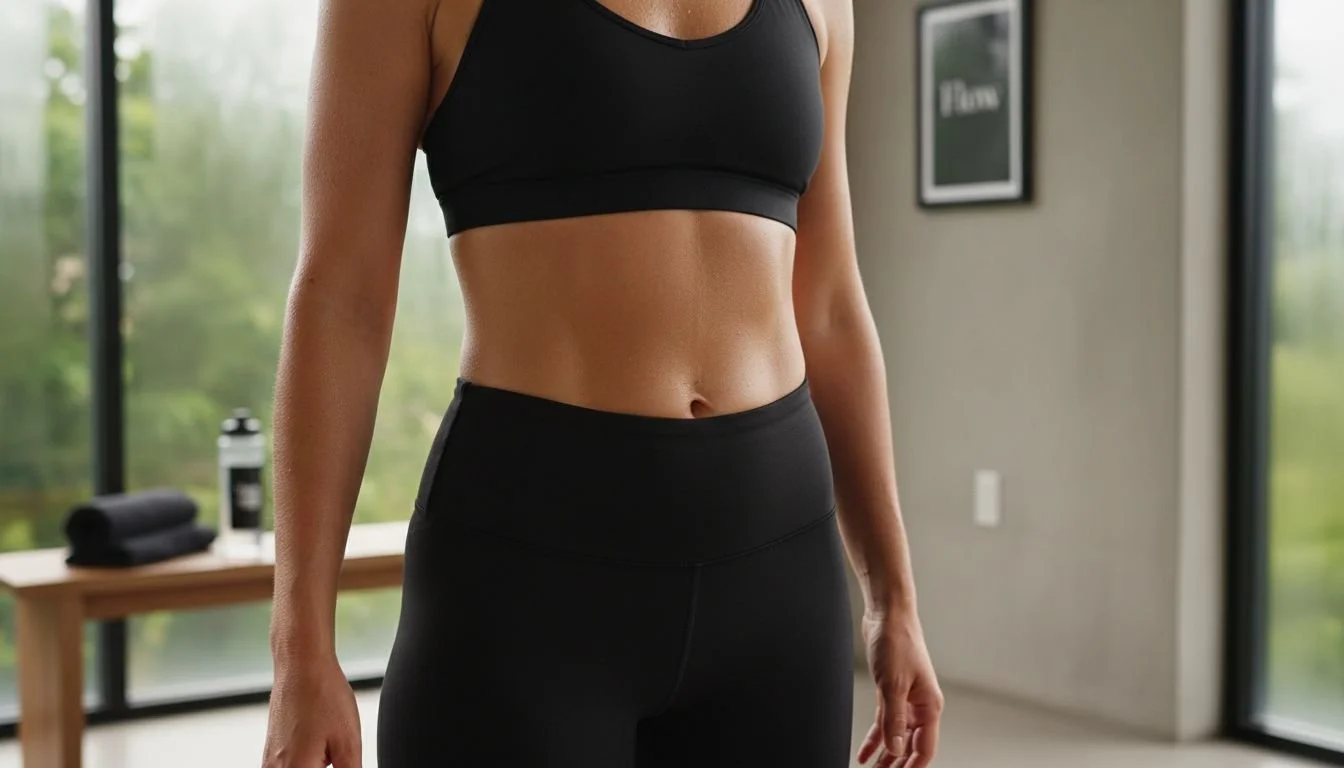
Differences from Regular Yoga Prenatal yoga uniquely addresses the specific needs of pregnancy, prioritizing safety with gentler movements and focused preparation for childbirth.

Prenatal Yoga Defined and Core Principles

Prenatal yoga is a specialized practice designed specifically for expectant mothers, offering a holistic approach to supporting physical, mental, and emotional well-being during pregnancy. According to jaims, this transformative practice integrates physical postures (asanas), breathing techniques (pranayama), and meditation to create harmony between body and mind.

At its core, prenatal yoga focuses on several key principles that distinguish it from traditional yoga practices. As research from ijaprs highlights, these principles include:

  • Safety: Adapting poses to accommodate bodily changes during pregnancy

  • Strength and Flexibility: Developing muscular endurance and joint mobility

  • Breath Awareness: Teaching controlled breathing techniques for relaxation and pain management

  • Emotional Connection: Fostering a deeper bond between mother and developing baby

The primary goal of prenatal yoga extends beyond physical exercise. It aims to prepare women holistically for childbirth by reducing stress, improving physical resilience, and creating a supportive mind-body connection. By combining gentle movements, mindful breathing, and meditative practices, expectant mothers can develop greater emotional stability and physical comfort throughout their pregnancy journey.

Through carefully designed sequences that respect the unique needs of pregnant women, prenatal yoga provides a nurturing environment for self-discovery and preparation. Whether you're in your first trimester or approaching delivery, this practice offers a compassionate approach to maintaining wellness during one of life's most transformative experiences.

Common Styles and Class Structures

Prenatal yoga encompasses a diverse range of styles and class formats designed to support expectant mothers through their unique pregnancy journeys. According to pubmed, Hatha yoga is particularly prevalent, emphasizing gentle postures and breathing techniques specifically adapted for pregnant women.

Typical prenatal yoga classes often feature a structured approach that includes several key components:

  • Warm-up Sequences: Gentle movements to prepare the body and improve circulation

  • Strength-Building Poses: Modified yoga postures that support muscular endurance

  • Balance and Stability Exercises: Techniques to enhance core strength and body awareness

  • Breathing Techniques (Pranayama): Controlled breathing methods for stress reduction and labor preparation

  • Relaxation and Meditation: Mindfulness practices to promote emotional well-being

Beyond traditional Hatha yoga, prenatal classes may incorporate various yoga styles to provide comprehensive support. These can include:

  • Restorative Yoga: Focusing on deep relaxation and gentle stretching

  • Prenatal Flow Yoga: Dynamic sequences modified for pregnancy

  • Yin Yoga: Slow-paced styles targeting deep connective tissues

Class structures are typically designed to be adaptable, recognizing that each pregnancy is unique. Instructors often provide multiple modification options, allowing participants to customize their practice based on individual comfort levels, trimester, and physical capabilities. This approach ensures that yoga remains a safe and supportive practice throughout the entire pregnancy journey.

Essential Benefits for Expecting Mothers

Prenatal yoga emerges as a powerful holistic practice offering comprehensive benefits for expecting mothers. Research from omicsonline highlights the multifaceted advantages that extend beyond traditional exercise, encompassing physical, mental, and emotional wellness.

Physical benefits of prenatal yoga are particularly notable and include:

  • Improved Flexibility: Gentle stretching to maintain joint mobility

  • Enhanced Strength: Targeted muscle conditioning for pregnancy and childbirth

  • Better Circulation: Promoting healthy blood flow for mother and baby

  • Improved Posture: Alleviating pregnancy-related body strain

  • Strengthened Pelvic Floor: Supporting core muscles crucial for delivery

Mental and emotional dimensions are equally significant. According to pubmed, participation in prenatal yoga programs during the second and third trimesters demonstrates remarkable psychological benefits. These include increased optimism, personal empowerment, and overall emotional well-being.

Beyond individual benefits, prenatal yoga creates a nurturing environment for building connection. It offers expectant mothers a supportive community, opportunities for mindful reflection, and a holistic approach to preparing for the transformative journey of motherhood. By integrating physical movement, breathwork, and meditation, this practice becomes more than exercise—it's a comprehensive preparation for one of life's most profound experiences.

Safety Precautions and Contraindications

Safety is paramount in prenatal yoga, with practitioners needing to approach their practice with careful consideration and professional guidance. According to yogaeducation, it is essential to consult healthcare providers before beginning any new exercise regimen during pregnancy to ensure individual suitability and potential modifications.

Key safety considerations for prenatal yoga include:

  • Avoid Risky Poses: Eliminate deep twists, intense backbends, and positions that place direct pressure on the abdomen

  • Listen to Your Body: Stop immediately if experiencing discomfort, pain, or unusual sensations

  • Maintain Proper Alignment: Use props and modifications to support changing body dynamics

  • Stay Hydrated: Drink water before, during, and after practice

  • Monitor Intensity: Prevent overexertion and maintain a conversational breathing pace

Certain medical conditions may present contraindications for prenatal yoga. These typically include:

  • Preterm labor history

  • Placenta previa

  • Severe hypertension

  • Severe heart or lung disease

  • Multiple pregnancy complications

As recommended by yogajournal, the practice should focus on controlled breathing techniques and gentle movements that strengthen muscles needed for childbirth while maintaining flexibility. Each trimester requires unique adaptations, with instructors trained in prenatal yoga providing personalized guidance to ensure a safe, supportive experience for expecting mothers.

Prenatal Yoga Versus Regular Yoga

The fundamental distinction between prenatal and regular yoga lies in its specialized approach to supporting expecting mothers. According to pubmed, prenatal yoga programs are uniquely tailored to address the specific physiological and psychological changes occurring during pregnancy, making them fundamentally different from standard yoga practices.

Key differences between prenatal and regular yoga include:

  • Pose Modifications: Prenatal yoga adapts poses to accommodate growing bellies and changing body mechanics

  • Focus Areas: Emphasizes pelvic floor strength, breathing techniques, and emotional preparation for childbirth

  • Safety Considerations: Eliminates poses that could potentially strain or harm the expectant mother

  • Intensity Level: Significantly gentler and more controlled compared to regular yoga practices

  • Holistic Approach: Centers on nurturing both mother and developing baby

Whereas traditional yoga classes are designed for general fitness and flexibility, prenatal yoga takes a more nuanced approach. For those interested in understanding more about yoga variations, you might want to explore our guide on yoga styles.

The primary goal shifts from physical performance to supportive preparation. Regular yoga might challenge practitioners to achieve complex poses, but prenatal yoga prioritizes safety, comfort, and the unique needs of expecting mothers. Each movement, breath, and meditation is carefully crafted to support the incredible journey of pregnancy, making it a profoundly different experience from standard yoga practice.
Embrace the Journey of Pregnancy with Expert Prenatal Yoga Support

Pregnancy brings many changes that can feel overwhelming — from physical discomfort to emotional challenges. This article highlights how prenatal yoga offers safe, gentle movements, breath awareness, and emotional connection to prepare you holistically for childbirth. If you seek a supportive environment where every practice adapts to your unique needs, Amrita Yoga & Wellness can help you experience these benefits personally.

Start your prenatal wellness journey today by joining our carefully designed classes that emphasize comfort, safety, and empowerment. Discover how tailored prenatal yoga can ease your body, calm your mind, and build strength for this profound life transition. Visit Amrita Yoga & Wellness to find the perfect class for your trimester and needs. Take the first step now to nurture both yourself and your baby with professional guidance crafted for expecting mothers.

Frequently Asked Questions

What is prenatal yoga?

Prenatal yoga is a specialized practice designed for expectant mothers that combines physical postures, breathing techniques, and meditation to support physical, mental, and emotional well-being during pregnancy.

What are the benefits of prenatal yoga?

Prenatal yoga offers numerous benefits, including improved flexibility, enhanced strength, better circulation, improved posture, and emotional well-being. It also helps in preparing for childbirth and fostering a connection between mother and baby.

How is prenatal yoga different from regular yoga?

Prenatal yoga is tailored specifically for pregnant women, featuring modified poses that accommodate physical changes, a focus on pelvic floor strength, and gentler intensity levels, prioritizing safety and comfort compared to regular yoga practices.

Are there any safety precautions to take when practicing prenatal yoga?

Yes, it's essential to consult a healthcare provider before starting prenatal yoga. Practitioners should avoid risky poses, listen to their bodies for discomfort, maintain proper alignment, stay hydrated, and monitor exercise intensity throughout their practice.
Recommended

7 Pilates Reformer Types Explained for Every Wellness Goal

Heather Rice

Over 70 percent of Pilates studios rely on reformer machines for their core training programs. With so many reformer options on the market, it can be tough to spot the key differences that matter for your workout quality. Learning how each reformer type supports specific fitness or rehabilitation needs will help you make an informed choice for your goals, whether you are seeking expert-level conditioning or a practical home solution.

Table of Contents

Quick Summary

Takeaway Explanation
1. Classic Reformer enhances core strength The classic reformer builds core muscle development, improving overall body balance and flexibility through controlled movements.
2. Allegro Reformer adapts to various fitness levels Suitable for both home and studio use, the Allegro reformer provides adjustable resistance, making it versatile for beginners and experienced practitioners.
3. Clinical Reformer is ideal for rehabilitation Designed for therapeutic use, the clinical reformer allows targeted exercises to support recovery and minimize injury risk during rehabilitation.
4. Tower Reformer offers unique vertical resistance The Tower Reformer expands exercise possibilities with enhanced vertical resistance, challenging multiple muscle groups for comprehensive workouts.
5. Foldable Reformer saves space at home A convenient option for small living spaces, the foldable reformer ensures professional-level training while being easy to store when not in use.

1. Classic Reformer: Traditional Foundation and Benefits

The classic Pilates reformer represents the gold standard of Pilates equipment design, embodying the pure essence of Joseph Pilates original method. This traditional apparatus provides a comprehensive full body workout that emphasizes controlled movements and precise muscle engagement.

Designed with a sliding carriage, adjustable springs, and strategic resistance mechanisms, the classic reformer enables practitioners to perform exercises that challenge strength, flexibility, and body awareness simultaneously. According to Pilates Journal, the classical Pilates method utilizes a series of integrated exercises performed in sequential order, focusing on developing strength, endurance, and overall body coordination.

The key benefits of the classic reformer include:

  • Enhanced core muscle development

  • Improved muscular balance and alignment

  • Increased overall body flexibility

  • Low impact resistance training

What sets the classic reformer apart is its commitment to the fundamental principles of Pilates. By maintaining the original design Gratz Pilates emphasizes that the springs central resistance mechanism helps practitioners develop precise control and fluid movement patterns. This approach transforms exercise from mere physical activity into a mindful, integrated movement experience.

For those seeking a workout that combines physical conditioning with mental focus, the classic reformer offers an unparalleled approach to holistic fitness.

2. Allegro Reformer: Versatility for Group and Home Use

The Allegro Reformer stands out as a modern solution for fitness enthusiasts seeking flexibility in their Pilates practice. This innovative machine bridges the gap between professional studio workouts and home exercise routines, offering unprecedented adaptability for practitioners of all levels.
According to Healthline, Pilates Reformers apply principles of controlled movement to a spring loaded carriage machine, creating adjustable resistance for every motion. The Allegro Reformer takes this concept further by designing a compact yet robust machine suitable for multiple environments.

Key advantages of the Allegro Reformer include:

  • Compact design perfect for home and studio spaces

  • Lightweight and easily transportable

  • Adjustable spring tensions for varying fitness levels

  • Versatile enough for individual and group training

Active Lifestyle Wellnessnotes that specialized Pilates machines create unique workout experiences that sculpt, tone, and enhance overall well-being. The Allegro Reformer exemplifies this principle by providing a full body workout that builds strength, improves balance, and increases flexibility without placing excessive stress on joints.

Whether you are a beginner looking to start your Pilates journey or an experienced practitioner seeking a flexible training option, the Allegro Reformer offers a comprehensive solution that adapts to your fitness goals and lifestyle.

3. Clinical Reformer: Rehabilitation and Physical Therapy

The clinical reformer represents a specialized approach to Pilates equipment designed specifically for therapeutic and rehabilitation purposes. This precision engineered machine transforms traditional exercise into a targeted healing experience for individuals recovering from injuries or managing chronic physical conditions.

Senya Pilatesexplains that the clinical reformer utilizes adjustable springs, pulleys, and a moving carriage to createcustomized exercise pathways tailored to individual rehabilitation goals. Its low impact design allows practitioners to rebuild strength and mobility without placing undue stress on vulnerable body parts.

Key benefits of the clinical reformer include:

  • Precise muscle group targeting

  • Gradual resistance progression

  • Safe movement pattern development

  • Minimized injury risk during recovery

According to Perth Physiotherapy and Pilates, clinical Pilates integrates mental and physical wellness by supporting safe progression through varied movement patterns. This holistic approach enhances body awareness while providing a comprehensive workout experience specifically designed for rehabilitation contexts.

Whether you are recovering from surgery, managing a chronic condition, or seeking a gentle yet effective rehabilitation method, the clinical reformer offers a scientifically structured pathway to restored physical function and overall wellness.

4. Tower Reformer: Added Vertical Resistance Training

The Tower Reformer represents a revolutionary advancement in Pilates equipment, offering practitioners an innovative approach to strength training and body conditioning. This unique machine combines the traditional sliding carriage with a vertical tower, creating a multidimensional workout experience that challenges your body in entirely new ways.

Gratz Pilates explains that the Tower Reformer adds a comprehensive vertical resistance dimension to traditional Pilates training. By integrating a vertical tower with the standard reformer, practitioners can access a wider range of motion and exercise possibilities that target multiple muscle groups simultaneously.

Key advantages of the Tower Reformer include:

  • Enhanced vertical resistance training

  • Increased exercise variety

  • Improved overall body strength

  • Greater flexibility in movement patterns

Senya Pilateshighlights that this reformer type provides a comprehensive workout targeting strength, flexibility, and coordination. The vertical tower allows for unique exercises that challenge your body in ways traditional equipment cannot, making it an excellent choice for individuals seeking a more dynamic and challenging Pilates experience.

Whether you are an advanced practitioner looking to elevate your workout or a fitness enthusiast seeking a versatile training tool, the Tower Reformer offers an exciting pathway to enhanced physical conditioning and whole body wellness.

5. Cadillac Reformer: Advanced Whole-Body Conditioning

The Cadillac Reformer stands as the ultimate Pilates apparatus for practitioners seeking a comprehensive and transformative full body workout. This sophisticated piece of equipment represents the pinnacle of Pilates engineering, offering an unparalleled range of movement and resistance training possibilities.

Gratz Pilates explains that the Cadillac Reformer combines traditional reformer features with a trapeze table, creating a multidimensional training platform that challenges practitioners across all fitness levels. Its unique design allows for an extraordinary variety of exercises targeting every major muscle group with precision and effectiveness.

Key advantages of the Cadillac Reformer include:

  • Exceptional versatility in exercise options

  • Comprehensive full body conditioning

  • Advanced resistance training capabilities

  • Improved core strength and flexibility

Senya Pilates highlights that this equipment is specifically designed to enhance strength, flexibility, and overall physical conditioning through a diverse range of sophisticated movements. The integrated trapeze table and multiple attachment points enable practitioners to perform complex exercises that would be impossible with traditional fitness equipment.

Whether you are an advanced Pilates practitioner looking to elevate your workout or a fitness enthusiast seeking a comprehensive training experience, the Cadillac Reformer offers an innovative pathway to achieving exceptional physical performance and body awareness.

6. Foldable Reformer: Space-Saving Home Pilates Solution

The foldable reformer represents a game changing solution for fitness enthusiasts seeking professional Pilates workouts without sacrificing precious home space. This innovative equipment brings the power of studio training directly into your living room while maintaining a compact and convenient design.

Healthline explains that these machines provide adjustable resistance and comprehensive support for full body workouts that build strength, balance, and flexibility. Unlike traditional bulky equipment, foldable reformers can be easily stored in closets, under beds, or against walls when not in use.

Key advantages of the foldable reformer include:

  • Minimal storage requirements

  • Professional level resistance training

  • Convenient home workout option

  • Versatile exercise possibilities

Active Lifestyle Wellness highlights that these compact machines allow individuals to perform a variety of exercises that enhance core strength and overall well being in a convenient home setting. The ability to transform your living space into a personal fitness studio provides unprecedented flexibility for busy professionals and home fitness enthusiasts.

Whether you live in a small apartment or simply want a professional workout option that doesnt dominate your living space, the foldable reformer offers an intelligent solution for maintaining your fitness routine without compromise.

7. Choosing the Right Reformer: Tailored Tips for All Levels

Selecting the ideal Pilates reformer is a personal journey that requires careful consideration of your fitness goals, physical capabilities, and available space. Understanding how to match the right equipment to your individual needs can transform your Pilates practice from a simple workout to a transformative wellness experience.

Medical News Todayemphasizes the importance of choosing equipment that providesadaptable resistance and aligns with individual health conditions. The perfect reformer is not a one size fits all solution but a personalized tool that supports your unique fitness trajectory.

Key considerations when selecting a reformer include:

  • Your current fitness level

  • Available workout space

  • Budget and long term fitness goals

  • Specific physical limitations or rehabilitation needs

University of Warwickhighlights that Pilates reformers can be adapted for practitioners ranging from complete beginners to advanced athletes. This versatility means you can invest in equipment that grows with your skills and continues to challenge you as your strength and technique improve.

Whether you are a home practitioner seeking a compact solution or a fitness enthusiast looking for professional grade equipment, taking time to assess your individual needs will ensure you select a reformer that becomes a valuable partner in your wellness journey.

Below is a comprehensive table summarizing the various types of Pilates reformers and their unique features, benefits, and target users discussed in the article.

Pilates Reformer Comparison

Reformer Type Features & Design Benefits Best For
Classic Reformer Traditional design with sliding carriage and adjustable springs Enhanced core development, improved flexibility, low impact Practitioners seeking traditional, mindful Pilates
Allegro Reformer Compact, lightweight, adjustable spring tension Home and studio use, versatile for group and solo use Enthusiasts seeking flexible, adaptable Pilates routines
Clinical Reformer Precision engineered for rehabilitation Safe progression, targeted muscle recovery Individuals recovering from injuries or managing chronic conditions
Tower Reformer Combines sliding carriage with a vertical tower Vertical resistance training, increased exercise variety Advanced users seeking dynamic, multidimensional workouts
Cadillac Reformer Incorporates trapeze table for multidimensional exercises Comprehensive conditioning, advanced strength and flexibility Practitioners desiring a versatile, full-body workout
Foldable Reformer Space-saving, professional-level resistance Minimal storage, convenient home workout Home users with limited space wanting professional workouts

Find Your Perfect Pilates Reformer Match and Elevate Your Wellness Journey

Choosing the right Pilates reformer can feel overwhelming with so many types designed to meet specific wellness goals. Whether you are seeking gentle rehabilitation with a clinical reformer, dynamic strength training on a Tower reformer, or compact solutions like foldable reformers for home use, understanding your unique needs is key. The article highlights how tailored equipment helps overcome challenges such as injury recovery, space limitations, and evolving fitness levels while empowering you to strengthen, stretch, and connect mind and body.

At Amrita Yoga & Wellness, we deeply understand the importance of personalized practice and community support on your path to holistic well-being. You deserve access to the right guidance and options that align with your physical capabilities and lifestyle. Explore our diverse classes and workshops that complement Pilates training and nurture balance, strength, and mindfulness all in one welcoming space.

Ready to embrace a Pilates approach designed just for you? Discover how our expert instructors and inclusive environment at Amrita Yoga & Wellness can help you unlock your full potential. Learn more and secure your spot today by visiting our class schedule and offerings. Take the first step toward lasting wellness and improved vitality now.

Frequently Asked Questions

What are the benefits of using a classic reformer for Pilates?

Using a classic reformer enhances core strength, muscular balance, and flexibility while providing a low-impact workout. To experience these benefits, incorporate regular sessions—ideally 2-3 times a week—using a range of resistance settings.

How can an Allegro reformer adapt to different fitness levels?

The Allegro reformer features adjustable spring tensions that cater to individual needs, allowing both beginners and advanced practitioners to modify exercises effectively. Start by experimenting with lighter springs and progressively increase resistance as your strength develops.

What makes the clinical reformer suitable for rehabilitation?

The clinical reformer is designed specifically for rehabilitation, offering tailored movement pathways and gradual resistance progression. If you're recovering from an injury, focus on 1-2 sessions per week to build strength safely while minimizing injury risk.

How is the Tower reformer different from a traditional reformer?

The Tower reformer combines a sliding carriage with a vertical tower, providing enhanced resistance and a wider variety of exercises. To maximize results, incorporate complex movements into your workouts at least once a week for improved strength and flexibility.

When should I consider using a foldable reformer instead of a traditional one?

Opt for a foldable reformer if you have limited space or want the convenience of storing your equipment easily. Use the foldable reformer for comprehensive workouts, aiming for 2-3 sessions weekly to maintain consistency in your fitness routine.

How can I choose the right pilates reformer for my goals?

Assess your fitness level, available space, and budget to find the right reformer for your needs. Consider reviewing your goals every 6 months and adjusting your choice of reformer as your skills and needs evolve.

Recommended

What Is Community Yoga? Complete Guide to Benefits

Heather Rice

More than 35 million people in the United States now practice yoga, but many crave something deeper than solo routines. Community yoga responds to this need by shifting the focus from individual effort to genuine group connection. This approach helps foster shared purpose, support, and inclusivity, making yoga accessible for all. If you want to understand how yoga builds community while supporting every participant, discovering its core principles will open a new world of wellness possibilities.

Table of Contents

Key Takeaways

Point Details
Holistic Approach Community yoga emphasizes collective practice, fostering social connections and shared experiences beyond individual movement.
Core Principles Key principles include non-violence, truthfulness, collective growth, and inclusivity, creating a supportive environment for diverse practitioners.
Accessibility Community yoga prioritizes inclusivity through affordable options, modified poses, and trauma-informed approaches, enabling broader participation.
Comparative Benefits While private classes focus on individual progress, community yoga enhances emotional support and motivation through collaborative practice.
Defining Community Yoga and Its Core Principles

Community yoga represents a transformative approach to wellness that goes far beyond individual practice. Unlike traditional yoga classes focused solely on personal physical movement, community yoga centers on creating meaningful connections and shared experiences among participants.

According to yogacalm, community yoga emphasizes collective practice, specifically designed to foster a sense of safety, cohesion, and connection. This approach integrates mindfulness principles that promote calmness and mutual support, making yoga more than just a physical exercise.

The core principles of community yoga extend beyond individual movement to embrace broader social and ethical dimensions. As yogabasics highlights, these principles include:

  • Non-violence (Ahimsa): Creating a respectful, supportive environment

  • Truthfulness (Satya): Encouraging authentic interactions and transparent communication

  • Collective Growth: Prioritizing shared learning and mutual development

  • Inclusive Practice: Welcoming practitioners of all skill levels and backgrounds

By focusing on these interconnected principles, community yoga transforms traditional practice into a powerful tool for social connection, personal growth, and collective healing.

It recognizes that yoga is not just about individual flexibility or strength, but about building compassionate, supportive communities where every participant feels valued and empowered.

Types of Community Yoga and Practice Settings

Community yoga encompasses diverse practice settings and styles, each designed to create meaningful connections and support collective wellness. These varied approaches ensure that practitioners can find a community yoga experience that resonates with their personal needs, comfort level, and wellness goals.

In studio environments, group classes represent the most traditional community yoga setting. These structured sessions bring together practitioners of varying skill levels, creating opportunities for shared learning and mutual support. Understanding Why Group Yoga Classes Enhance Wellness highlights how these collective experiences can amplify individual practice through community engagement.

Beyond studio spaces, community yoga manifests in several dynamic settings:

  • Public Park Sessions: Free, open-air classes that welcome community members

  • Community Center Programs: Accessible classes targeting diverse demographic groups

  • Online Group Classes: Virtual platforms connecting practitioners across geographical boundaries

  • Workplace Wellness Programs: Corporate settings offering collective yoga experiences

  • Specialized Workshops: Focused sessions addressing specific community needs

These varied practice settings share a common goal: transforming yoga from an individual activity into a collaborative, supportive experience that nurtures physical, mental, and social well-being.

Whether practicing in a local studio, community center, or virtual platform, participants discover the profound power of collective movement and shared intention.

Benefits of Community Yoga for Well-Being

Community yoga offers a holistic approach to wellness that extends far beyond individual physical practice, providing profound mental, emotional, and physical benefits. By creating spaces of shared experience and mutual support, this collaborative approach transforms yoga from a solitary activity into a powerful tool for personal and collective healing.

Research has demonstrated remarkable therapeutic potential in community yoga settings. PubMed highlights compelling evidence of its impact, particularly for individuals managing chronic conditions like rheumatoid arthritis, where community practice has been associated with improved physical function and reduced disease symptoms.

The multifaceted benefits of community yoga encompass several key dimensions of well-being:

  • Physical Health: Enhanced flexibility, strength, and body awareness

  • Mental Wellness: Reduced stress, improved emotional regulation

  • Social Connection: Building supportive interpersonal networks

  • Emotional Resilience: Developing coping strategies through collective support

  • Psychological Balance: Increased mindfulness and self-awareness

How to Choose Yoga Classes for Your Wellness Goals suggests that intentional community yoga practice can be a transformative approach to holistic health. By prioritizing collective experiences, practitioners not only improve individual well-being but also contribute to creating more compassionate, connected communities that support mutual growth and healing.

Accessibility, Inclusivity, and Community Impact

Community yoga represents a powerful movement towards creating more equitable, welcoming wellness spaces that transcend traditional barriers to physical and mental health practices. By deliberately designing inclusive environments, these programs challenge long-standing limitations that have historically prevented diverse populations from accessing transformative movement experiences.

Yogacalm emphasizes that community yoga fundamentally prioritizes creating safe and supportive environments that allow individuals from diverse backgrounds to participate and benefit from collective practice. This approach goes beyond mere physical accommodation, focusing on creating genuine spaces of belonging and mutual respect.
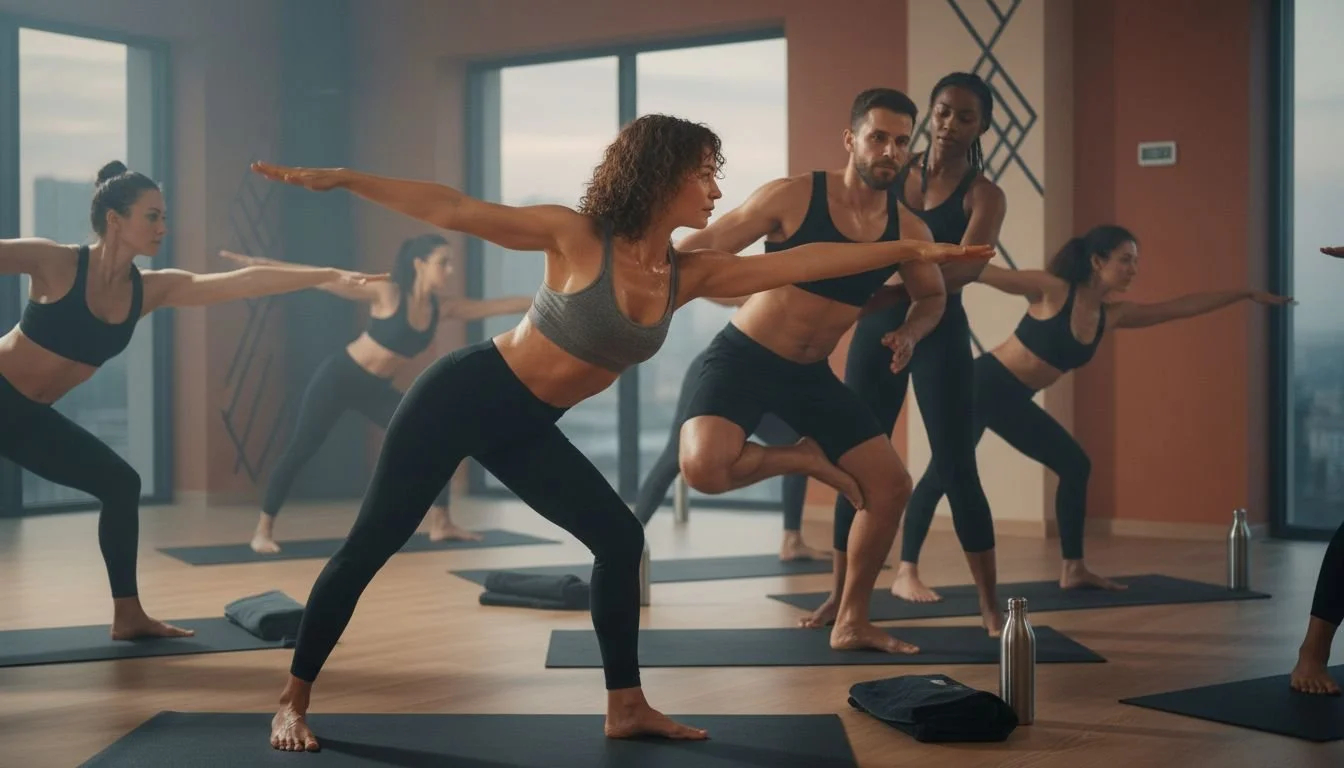
Key strategies for enhancing accessibility and inclusivity in community yoga include:

  • Sliding Scale Pricing: Making classes affordable for different income levels

  • Modified Pose Options: Offering variations to accommodate different physical abilities

  • Multilingual Instructions: Providing guidance in multiple languages

  • Adaptive Equipment: Using props and supports for varied body types and mobility

  • Trauma-Informed Approaches: Creating emotionally safe learning environments

Understanding Your Local Practice Yoga Studio Experiencereinforces that truly inclusive community yoga isn't just about physical space, but about cultivating environments where every participant feels valued, seen, and empowered to explore their personal wellness journey. By breaking down social, economic, and physical barriers, community yoga becomes a transformative tool for collective healing and personal growth.

Comparing Community Yoga With Private Classes

Yoga practice offers diverse approaches to personal wellness, with community and private classes representing two distinct yet complementary pathways to physical and mental development. While both formats aim to support individual growth, they differ significantly in their philosophical foundations, structure, and interpersonal dynamics.

Yogacalm highlights a critical distinction: community yoga fundamentally emphasizes collective practice and mutual support, contrasting sharply with private classes that traditionally focus on individual progress and personalized instruction. This fundamental difference shapes the entire experience of practitioners, influencing everything from learning style to emotional engagement.

Key differences between community and private yoga classes include:

Learning Environment

  • Community Yoga: Collaborative, supportive group setting

  • Private Classes: One-on-one, individually tailored instruction

  • Cost Structure

    • Community Yoga: Often more affordable, sliding scale options

    • Private Classes: Higher per-session investment

  • Social Interaction

    • Community Yoga: Emphasis on collective energy and shared experience

    • Private Classes: Focused on individual technique and personal goals

Yoga Class Types Explained: Complete Guide for 2024suggests that the most effective yoga journey often involves a balanced approach. While private classes offer precision and personalized attention, community yoga provides emotional support, motivation, and a sense of belonging that can significantly enhance overall wellness and practice sustainability.

Discover the True Power of Community Yoga at Amrita Yoga & Wellness

The challenge many face when exploring yoga is finding a practice that offers not just physical benefits but also meaningful connection and emotional support. This article highlights how community yoga builds a safe, inclusive space where shared growth and authentic interactions help you overcome barriers like stress, isolation, and uneven wellness access. If you are seeking a welcoming environment that embraces principles like non-violence and collective healing, then community yoga is the path for you.

Experience the benefits firsthand by joining our diverse group classes designed to foster exactly this sense of belonging and mutual support. At Amrita Yoga & Wellness you can explore our range of community-centered offerings from yoga to tai chi and more. Don’t wait to transform your practice into a source of connection and emotional resilience. Start your wellness journey now by checking our detailed class descriptions and sign-up options at Amrita Yoga & Wellness and learn more about why group classes enhance wellness. Your path to physical, mental, and spiritual balance begins with a simple step toward joining a supportive community.

Frequently Asked Questions

What is community yoga?

Community yoga is a collaborative approach to yoga practice that focuses on building connections and shared experiences among participants, emphasizing mutual support and collective growth rather than just individual achievement.

What are the core principles of community yoga?

The core principles include non-violence (Ahimsa), truthfulness (Satya), collective growth, and inclusive practice, which prioritize respectful interactions and create a supportive environment for all practitioners.

What are the benefits of community yoga?

Community yoga offers various benefits such as improved physical health, enhanced mental wellness, stronger social connections, emotional resilience, and greater psychological balance through shared experiences and support.

How does community yoga differ from private classes?

Community yoga emphasizes collective practice in a group setting, promoting social interaction and shared experiences, while private classes focus on individualized instruction and personalized guidance for specific goals.

Recommended

Hot Yoga: Everything You Need to Know

Heather Rice

Rooms heated to a scorching 105°F push both body and mind in ways ordinary yoga never does. Hot yoga has seen a surge in popularity as more people search for a sweat-drenched challenge that supports increased flexibility, strength, and focus. With its blend of intense heat and mindful movement, this unique practice stands out from traditional yoga and offers surprising benefits that attract beginners and seasoned yogis alike.

Table of Contents

Key Takeaways

Point Details
Hot Yoga Characteristics Conducted in rooms heated to 95–105°F with high humidity, hot yoga enhances flexibility and promotes detoxification.
Diverse Styles Styles include Bikram, Vinyasa, Power, and Heated Hatha, allowing practitioners to choose formats aligned with their fitness goals.
Physical and Mental Benefits Hot yoga supports improvements in flexibility, cardiovascular endurance, stress reduction, and mind–body connection.
Safety Considerations Practitioners must hydrate adequately and be mindful of individual health conditions to avoid dehydration and heat-related risks.

Defining Hot Yoga and Its Unique Practice

Hot yoga represents a dynamic and transformative approach to traditional yoga practice, characterized by conducting yoga sessions in deliberately heated environments. According to Wikipedia, hot yoga is performed under specific hot and humid conditions, typically with rooms heated to 105°F (40.5°C) and maintaining approximately 40% humidity. This intentional temperature design aims to replicate the original climatic conditions of yoga's birthplace in India.

The core essence of hot yoga involves practicing yoga postures and sequences in an intentionally warm setting to enhance physical and mental engagement. WebMD explains that these elevated temperatures often exceed 100°F, strategically designed to promote increased flexibility and support detoxification through intense sweating. The heated environment challenges practitioners physically and mentally, creating a unique workout experience that differs significantly from traditional yoga practices.

Key characteristics of hot yoga include:

  • Temperatures ranging from 95°F to 105°F

  • High humidity levels (typically 40%)

  • Increased cardiovascular engagement

  • Enhanced muscle flexibility and range of motion

  • Intense perspiration and potential detoxification

While hot yoga offers numerous potential benefits, practitioners should approach this practice mindfully. The elevated temperatures create a more demanding physical experience, requiring proper hydration, physical preparedness, and an understanding of individual health limitations. For those interested in exploring more specialized hot yoga variations, our 7 Types of Hot Yoga: Find Your Perfect Fit guide provides comprehensive insights into different hot yoga styles and approaches.

Different Styles and Class Formats Explained


Hot yoga represents a diverse practice with multiple distinctive styles, each offering unique approaches to heated yoga practice. According to The Independent, Bikram yoga stands out as one of the most structured formats, featuring a precise sequence of 26 specific postures conducted in a 90-minute class at a consistent 105°F temperature. This style represents a highly systematic approach to hot yoga practice.
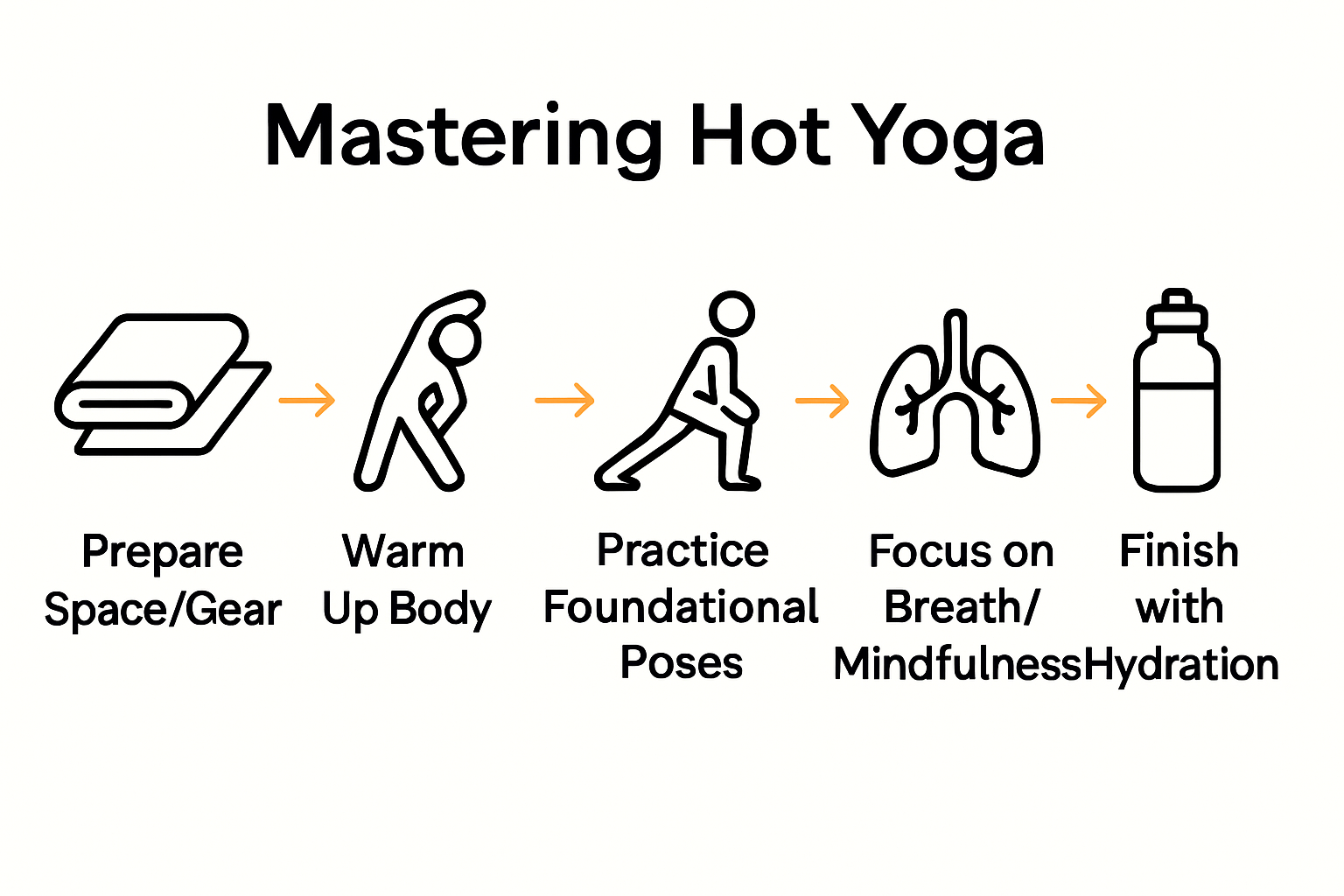
The Washington Posthighlights that hot yoga encompasses numerous variations beyond the traditional Bikram method. These styles include:

  • Vinyasa Hot Yoga: A flow-based practice with dynamic movements

  • Power Hot Yoga: Intense, strength-focused sequences

  • Heated Hatha: More traditional postures performed in warmer environments

  • Flow Hot Yoga: Continuous movement between poses

  • Sculptural Hot Yoga: Incorporating light weights and resistance training

Each hot yoga style offers unique benefits and challenges, allowing practitioners to select a format that best matches their fitness goals and personal preferences. The key differentiator remains the intentional use of heat to enhance flexibility, cardiovascular engagement, and overall physical intensity.

VIDEO:video_content] For those seeking to explore these varied approaches in depth, our [7 Types of Hot Yoga: Find Your Perfect Fit guide provides comprehensive insights into each unique hot yoga style.
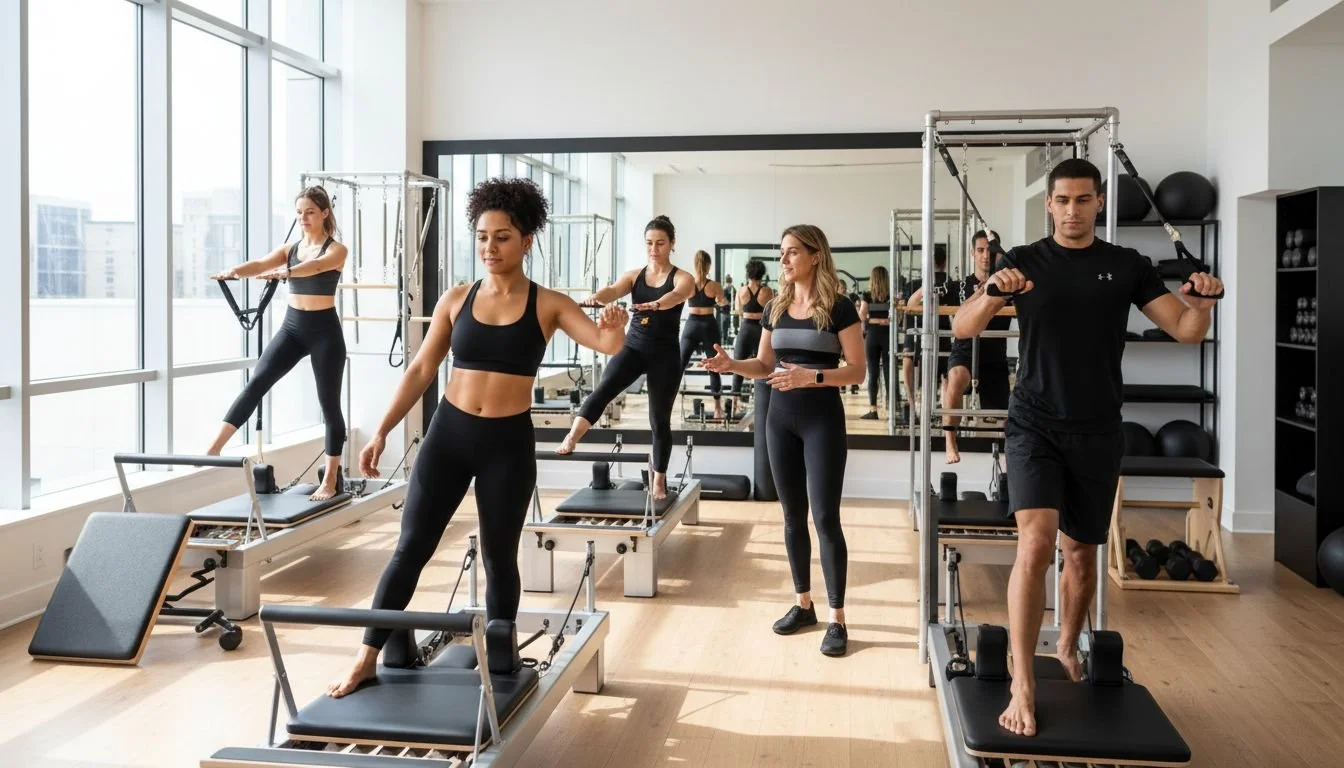
Physical and Mental Benefits of Hot Yoga

Hot yoga offers a comprehensive approach to wellness, simultaneously targeting physical and mental health through its unique practice methodology. PubMed reports a systematic review highlighting significant potential benefits, including improvements in flexibility, balance, and stress reduction, though researchers emphasize the need for continued investigation into these promising outcomes.
WebMD provides deeper insights into the multifaceted advantages of hot yoga practice. The heated environment creates a transformative experience that supports multiple dimensions of personal wellness:

Physical Benefits:

  • Enhanced muscle flexibility and range of motion

  • Increased cardiovascular endurance

  • Potential support for weight management

  • Improved muscular strength and core stability

  • Enhanced metabolic function

Mental and Emotional Benefits:

  • Significant stress reduction

  • Improved mental focus and concentration

  • Enhanced mind-body connection

  • Potential mood elevation

  • Development of mindfulness and present-moment awareness

The combination of intentional movement, controlled breathing, and challenging environmental conditions makes hot yoga a powerful holistic practice. By integrating physical challenge with mental discipline, practitioners can experience comprehensive wellness benefits.

For those interested in exploring how hot yoga can transform their health approach, our Understanding the Advantage of Hot Yoga for Wellness guide offers additional insights into maximizing these potential advantages.

Potential Risks and Safety Considerations

Hot yoga, while beneficial, requires careful consideration of individual health conditions and personal limitations. The Washington Post emphasizes that individuals with specific health conditions should exercise extreme caution. Practitioners with cardiovascular disease, back pain, asthma, diabetes, low blood pressure, or those who are pregnant must consult a healthcare professional before beginning a hot yoga practice.

WebMD highlights critical safety concerns related to the intense heated environment of hot yoga. The primary risks include:

Potential Health Risks:

  • Dehydration: Rapid fluid loss through excessive sweating

  • Heat exhaustion or heat stroke

  • Electrolyte imbalance

  • Potential cardiovascular stress

  • Overexertion and muscle strain

Safety Precautions:

  • Stay thoroughly hydrated before, during, and after class

  • Listen to your body and know your personal limits

  • Start with shorter sessions and gradually build tolerance

  • Wear appropriate lightweight, breathable clothing

  • Have water and electrolyte replacement beverages readily available

  • Take breaks or leave the room if feeling overwhelmed

Before engaging in hot yoga, it's crucial to understand your body's unique responses to intense heat and physical exertion. Beginners should start slowly, communicate with instructors about any health concerns, and prioritize personal safety over pushing physical boundaries. For a comprehensive understanding of how to safely approach hot yoga, our Understanding the Hot Yoga Studio Experience guide provides additional insights and preparation strategies.

Hot Yoga Versus Traditional Yoga Classes

Hot yoga and traditional yoga represent distinctly different approaches to physical and mental wellness. The Independent highlights that while traditional yoga classes vary widely in style and intensity, hot yoga distinguishes itself through its intentional heated environment, designed to enhance flexibility and promote detoxification through intense sweating.

The Washington Post emphasizes that the heated conditions of hot yoga create a fundamentally different practice experience compared to traditional yoga classes. Key differences include:

Environmental Conditions:

  • Hot Yoga: Heated rooms (95-105°F)

  • Traditional Yoga: Standard room temperature

Physical Intensity:

  • Hot Yoga: Higher cardiovascular demand

  • Traditional Yoga: Varies by style, generally lower intensity

Flexibility and Muscle Engagement:

  • Hot Yoga: Increased muscle elasticity

  • Traditional Yoga: Standard muscle flexibility work

Mental and Physical Challenge:

  • Hot Yoga: More extreme mind-body discipline

  • Traditional Yoga: Focused on mindfulness and gradual progression

Practitioners should carefully consider their personal health, fitness level, and wellness goals when choosing between hot yoga and traditional yoga practices.

For those seeking a deeper understanding of these yoga variations, our Understanding Hot Yoga: What Is It and Why It Matters guide offers comprehensive insights into making an informed decision.

Unlock the Power of Hot Yoga at Amrita Yoga & Wellness

If you are intrigued by the unique challenge and benefits of hot yoga described in this article, you are not alone. Many practitioners seek increased flexibility, stress relief, and a deeper mind-body connection but hesitate because of concerns about safety and proper guidance in such intense heat. Hot yoga requires mindful preparation, hydration, and progressive practice to safely harness its benefits like muscle elasticity and cardiovascular endurance.

At Amrita Yoga & Wellness, we understand these challenges and provide a supportive environment tailored to your wellness journey. Explore our diverse hot yoga classes designed to meet various experience levels while emphasizing safety and personal limits. Whether you want to dive deeper into hot yoga or complement your practice with other mindful movement styles like pilates or tai chi, our Philadelphia studio offers expert instruction and a welcoming community. Take the step to transform your wellness routine and experience the unique advantages of hot yoga today. Visit us at Amrita Yoga & Wellness to learn more, view class schedules, and sign up for your first session with confidence. Your path to flexibility, strength, and balance starts here.

Frequently Asked Questions

What is hot yoga?

Hot yoga is a dynamic yoga practice conducted in deliberately heated environments, typically at temperatures between 95°F and 105°F, aimed at enhancing flexibility, cardiovascular endurance, and promoting detoxification through intense sweating.

What are the benefits of practicing hot yoga?

The benefits of hot yoga include improved muscle flexibility, increased cardiovascular endurance, weight management support, stress reduction, enhanced mental focus, and the development of mindfulness and present-moment awareness.

Are there any risks associated with hot yoga?

Yes, potential risks include dehydration, heat exhaustion, electrolyte imbalance, and overexertion. Individuals with specific health conditions should consult a healthcare professional before participating in hot yoga.

How does hot yoga differ from traditional yoga?

Hot yoga differs from traditional yoga primarily in its heated environment, leading to higher cardiovascular demand and increased muscle elasticity, whereas traditional yoga varies widely in style and intensity, often practiced in standard room temperatures.

Recommended