The Amrita Journal
Explore thoughtful stories, practical wellness guidance and inspiring ideas to support your movement, mindfulness and everyday wellbeing at Amrita.
Restorative Aerial Yoga: Relaxation and Stress Relief
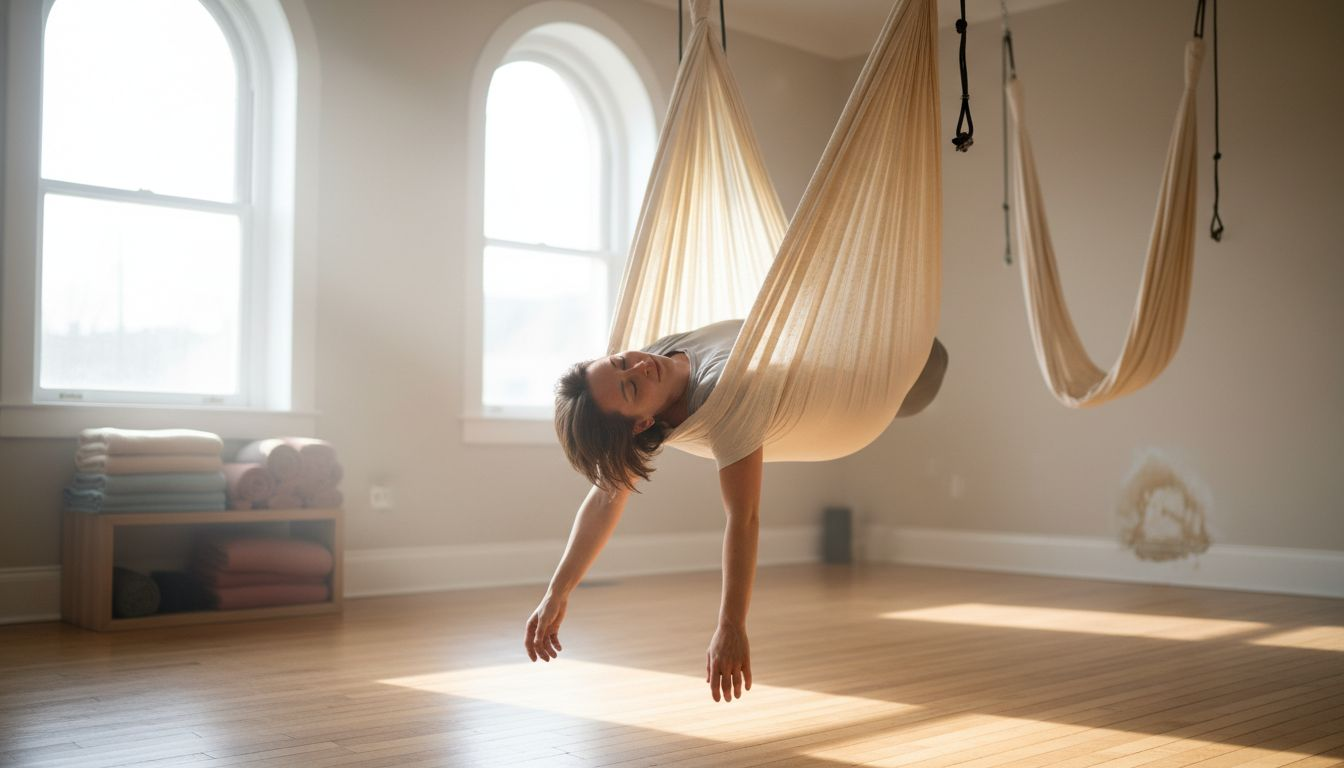
Stress affects more than 80 percent of American adults every year, making relaxation techniques a priority in busy cities like Philadelphia. For wellness-minded individuals seeking gentle movement and meaningful connection, beginner-friendly Restorative Aerial Yoga offers a unique way to calm the mind and improve flexibility. This guide explains how supported poses and a strong sense of community create a nurturing path to both physical and mental well-being without pressure or intimidation.
Table of Contents
Key Takeaways
| Point | Details |
|---|---|
| Restorative Aerial Yoga Focuses on Healing | This practice emphasizes gentle, low-intensity postures that promote relaxation and support physical recovery. |
| Diverse Styles Cater to Individual Needs | Different approaches within Restorative Aerial Yoga accommodate various wellness goals, making it accessible to all practitioners. |
| Physical and Mental Benefits Are Significant | Participants can experience improved flexibility, reduced stress, and enhanced emotional resilience. |
| Safety Is Paramount in Practice | Proper instructor guidance and adherence to safety protocols are crucial to prevent injuries and ensure an effective experience. |
What Is Restorative Aerial Yoga?
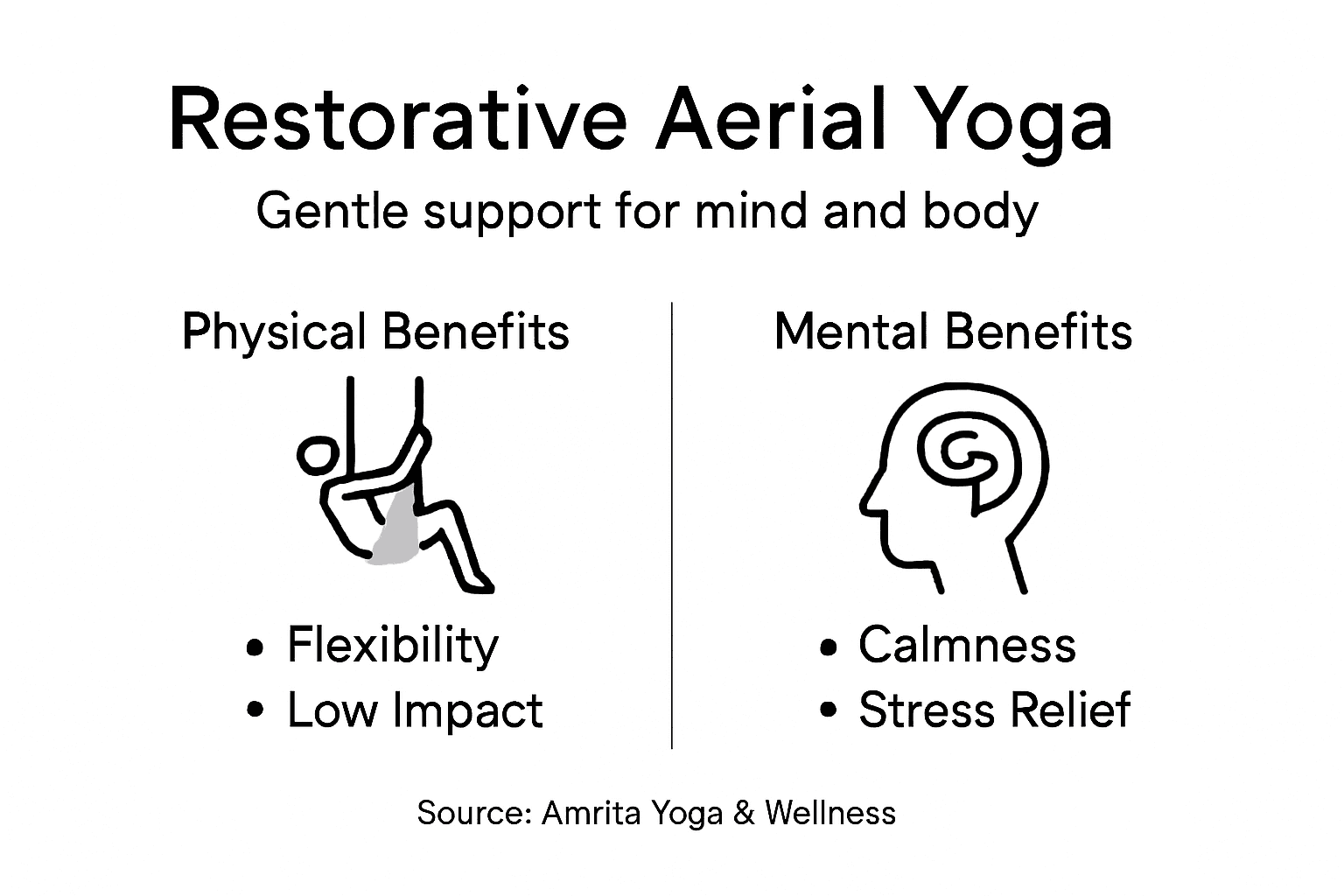
Restorative Aerial Yoga represents a gentle and therapeutic approach to traditional yoga practice, utilizing specialized hammocks or silk fabric suspensions to support practitioners through relaxation and healing movements. Unlike standard aerial yoga styles that emphasize acrobatic techniques, restorative aerial yoga focuses on creating physical and mental calm through supportive, low-intensity postures.
This unique practice combines elements of traditional yoga, aerial suspension techniques, and meditation to provide a holistic wellness experience. Understanding aerial yoga techniques reveals how the suspended hammock allows practitioners to experience deeper stretches and releases while minimizing joint pressure. The hammock acts as a supportive tool, enabling individuals to explore poses with reduced gravitational strain and enhanced muscular relaxation.
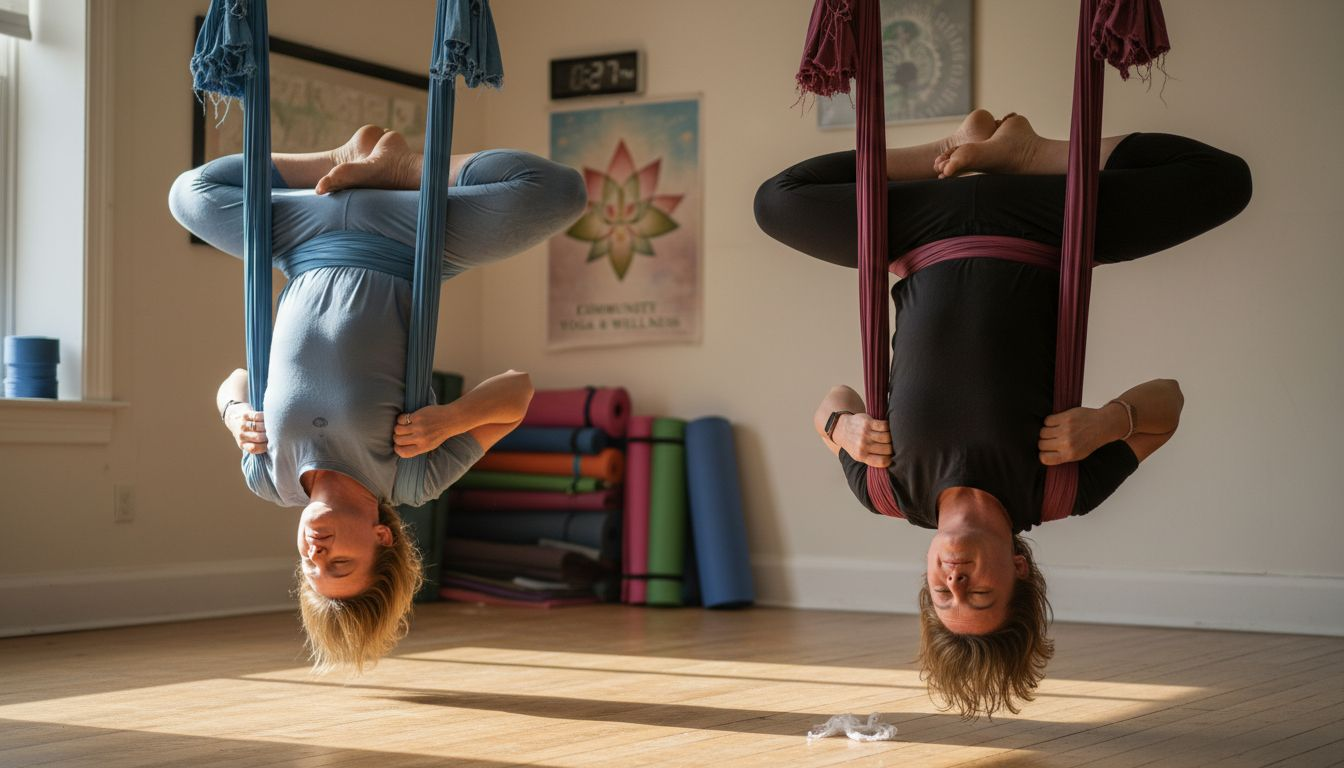
Restorative Aerial Yoga typically involves gentle, supported postures where practitioners are partially or fully suspended, allowing for complete body weight distribution and targeted muscle release. These positions help reduce physical tension, promote spinal decompression, and create space for deep breathing and mental relaxation. Participants often experience improved flexibility, reduced stress, and a sense of weightlessness that traditional floor-based yoga cannot replicate.
Pro tip: Start your restorative aerial yoga journey with a beginner class that focuses on safety techniques and proper hammock adjustment to build confidence and understand fundamental suspension principles.
Types and Unique Features Explained
Restorative Aerial Yoga offers multiple distinctive styles and approaches, each designed to address specific wellness needs and physical conditions. Restorative aerial yoga techniques emphasize gentle suspension methods that accommodate diverse practitioner requirements, making it accessible for individuals with varying physical capabilities.
The primary types of Restorative Aerial Yoga include:
Therapeutic Suspension Yoga: Focuses on healing and rehabilitation, utilizing hammocks positioned close to the ground for maximum support and minimal risk
Mindful Relaxation Style: Emphasizes meditation and deep breathing techniques while using the hammock as a supportive prop
Gentle Stretch Series: Designed for increased flexibility and muscle release with minimal physical strain
Injury Recovery Approach: Specifically tailored for practitioners recovering from physical limitations or seeking low-impact movement
Each type of Restorative Aerial Yoga shares core characteristics: low-intensity movements, precise hammock positioning, and a holistic approach to physical and mental wellness. The hammock serves as more than just a support mechanism - it becomes an interactive tool that allows practitioners to explore movement with reduced gravitational pressure, enabling deeper stretches and more profound relaxation experiences.
Here's how the main styles of Restorative Aerial Yoga differ:
| Style Name | Primary Focus | Typical Users | Key Benefit |
|---|---|---|---|
| Therapeutic Suspension Yoga | Healing and rehabilitation | Individuals with injuries | Enhanced muscle support |
| Mindful Relaxation Style | Meditation and deep breathing | Stress-prone participants | Mental calm and clarity |
| Gentle Stretch Series | Flexibility improvement | Beginners, those with tension | Minimal strain stretching |
| Injury Recovery Approach | Recovery from physical limits | Post-injury, seniors | Safe movement restoration |
Pro tip: Consult with a certified Restorative Aerial Yoga instructor to determine which specific style best matches your individual physical needs and wellness goals.
Benefits for Body and Mind
Scientific benefits of aerial yogademonstrate remarkable improvements in both physical and mental wellness. The unique suspension method of Restorative Aerial Yoga creates a holistic approach to health that addresses multiple body systems simultaneously, offering practitioners a comprehensive method of stress reduction and physical rehabilitation.
Physical benefits of this practice include:
Enhanced cardiovascular circulation
Improved core strength and muscle flexibility
Reduced joint pressure through suspended movements
Increased range of motion with minimal strain
Better spinal alignment and decompression
Mental wellness advantages are equally significant. The practice promotes deep relaxation by activating the parasympathetic nervous system, which helps regulate stress responses and emotional balance. By combining gentle movement with mindful breathing, Restorative Aerial Yoga creates a meditative experience that reduces anxiety, improves mental clarity, and supports overall emotional resilience.
Pro tip: Begin your Restorative Aerial Yoga journey with a certified instructor who can help customize the practice to your specific physical and emotional wellness goals.
Class Experience and Key Requirements
Restorative Aerial Yoga classes require specific preparation and understanding to ensure a safe and transformative experience. Participants should anticipate a carefully structured environment that prioritizes individual comfort, physical safety, and mindful movement through suspended fabric supports.
Key requirements for participating in a Restorative Aerial Yoga class include:
Comfortable, form-fitting clothing that allows free movement
Minimal jewelry or accessories that could snag on hammock fabric
Moderate level of physical mobility and flexibility
Willingness to follow instructor guidance carefully
No recent surgical procedures or serious physical injuries
Typical class experiences involve small group settings with individualized attention, where instructors help participants adjust hammock heights, understand proper suspension techniques, and modify poses according to personal physical capabilities. Understanding aerial yoga techniques can help practitioners feel more confident and prepared for their first session. The environment is designed to be supportive, non-competitive, and focused on personal wellness and exploration.
The following table summarizes key preparation tips and class expectations:
| Requirement | Why It Matters | Participant Action |
|---|---|---|
| Form-fitting attire | Prevents hammock snagging | Wear appropriate clothing |
| Instructor guidance | Ensures correct techniques | Follow all instructions |
| Physical readiness | Allows safe participation | Disclose health conditions |
| Early arrival | Equipment and safety check | Arrive 15 minutes before class |
Pro tip: Arrive at least 15 minutes early for your first class to discuss any physical limitations with the instructor and become familiar with the aerial yoga equipment.
Risks, Safety Precautions, and Best Practices
Aerial yoga safety considerationsare crucial for preventing potential injuries and ensuring a positive practice experience. While Restorative Aerial Yoga is generally considered safe, practitioners must understand and respect their individual physical limitations and follow expert guidance to minimize potential risks.
Potential risks and safety precautions include:
Risk of falls or improper suspension
Potential muscle strain or overextension
Equipment integrity and proper installation
Individual physical condition and medical history
Need for professional instructor supervision
Specific safety best practices involve comprehensive preparation and mindful engagement. Practitioners should undergo thorough initial assessments, communicate any pre-existing medical conditions, and progress gradually through poses. Instructors must ensure proper hammock height, secure attachments, and provide personalized modifications to accommodate individual physical capabilities and comfort levels. The goal is creating a supportive environment that prioritizes participant safety while enabling therapeutic movement and stress reduction.
Pro tip: Always perform a visual equipment check and communicate any physical concerns with your instructor before beginning your aerial yoga session.
Discover Deep Relaxation Through Restorative Aerial Yoga at Amrita Yoga & Wellness
If you are seeking effective ways to relieve stress and gently restore your body and mind, Restorative Aerial Yoga offers a transformative solution. This practice addresses common challenges like muscle tension, mental fatigue, and the need for mindful relaxation by using supportive hammocks to reduce joint pressure and promote emotional calm. From therapeutic suspension to mindful breathing techniques, the unique styles of this yoga help you experience profound physical relief and mental clarity without strain.
Take the step today to experience these healing benefits firsthand. At Amrita Yoga & Wellness, you can find thoughtfully designed classes that focus on safety, personalization, and holistic wellness. Whether you are a beginner or recovering from physical limitations, our expert instructors guide you through each session ensuring a nurturing and empowering environment. Visit our site to explore class schedules and begin your journey toward relaxation and stress relief now. Your body and mind deserve this moment of care.
Frequently Asked Questions
What is Restorative Aerial Yoga?
Restorative Aerial Yoga is a gentle and therapeutic approach to yoga that uses specialized hammocks to support relaxation and healing movements, focusing on low-intensity postures and mental calm rather than acrobatics.
What are the benefits of practicing Restorative Aerial Yoga?
Practicing Restorative Aerial Yoga offers numerous benefits, including enhanced flexibility, improved core strength, reduced joint pressure, stress relief, better spinal alignment, and a sense of weightlessness that aids relaxation and mental clarity.
What should I wear to a Restorative Aerial Yoga class?
Participants should wear comfortable, form-fitting clothing that allows for free movement and prevents any snagging on the hammock fabric. It is also advised to avoid wearing excessive jewelry or accessories.
Are there any risks associated with Restorative Aerial Yoga?
While generally considered safe, potential risks include falls or improper suspension, muscle strain, or overextension. It's essential to follow instructor guidance, communicate any pre-existing conditions, and ensure proper hammock installation to minimize these risks.
Recommended
What Is Aerial Yoga Nidra? Complete Overview
Most american wellness seekers are surprised to learn that combining meditation with gentle suspension can deliver deeper relaxation than traditional methods. With stress affecting more than 75 percent of american adults, unique practices like aerial yoga nidra offer a refreshing approach that supports both mind and body. Discover how this innovative fusion of movement and meditation uses the power of gravity-free relaxation to create a transformative experience tailored for modern lifestyles.
Table of Contents
Key Takeaways
| Point | Details |
|---|---|
| Innovative Fusion | Aerial Yoga Nidra merges aerial yoga techniques with traditional yoga nidra to create a unique wellness experience in a suspended environment. |
| Core Principles | It focuses on suspended support, guided meditation, and conscious awareness for deep relaxation and mental clarity. |
| Therapeutic Benefits | The practice promotes physical release, reduces stress, and enhances overall well-being by stimulating the parasympathetic nervous system. |
| Accessibility and Safety | Ideal for individuals seeking stress relief and flexibility, but those with certain health concerns should consult professionals before participation. |
Defining Aerial Yoga Nidra and Core Principles
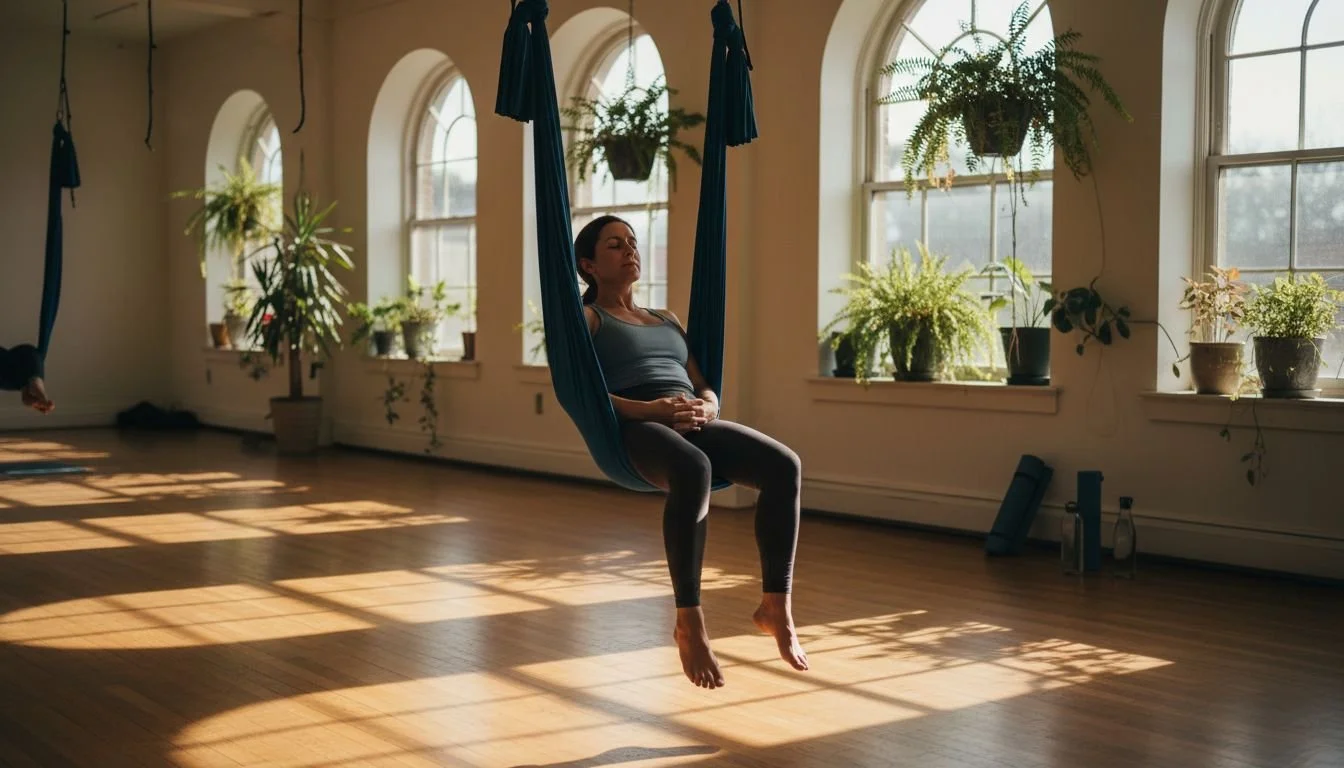
Aerial Yoga Nidra represents an innovative fusion of two powerful practices: aerial yoga techniques and traditional yoga nidra meditation. At its core, this practice combines suspended movement with deep meditative relaxation, creating a unique holistic wellness experience that transforms both body and mind.
Originally developed by integrating elements from traditional aerial yoga, this practice emerged as a specialized approach to achieving profound relaxation. Aerial Yoga Nidra utilizes a supportive hammock or silk fabric suspended from the ceiling, allowing practitioners to explore meditation and relaxation in a weightless environment. Unlike traditional floor-based yoga nidra, this method provides additional physical support and sensory engagement.
The fundamental principles of Aerial Yoga Nidra center on three key elements:
Suspended Support: Using a specialized hammock to create a cocoon-like environment that minimizes physical strain
Guided Meditation: Employing structured meditation techniques to induce deep relaxation states
Conscious Awareness: Maintaining heightened mental clarity while experiencing complete physical release
Practitioners enter a unique state of consciousness where the body experiences complete relaxation while the mind remains alert and receptive. This practice draws inspiration from traditional yoga nidra meditation, which aims to create a transformative experience between wakefulness and sleep, allowing individuals to access deeper levels of mental and physical restoration.
Differences Between Aerial and Traditional Yoga Nidra
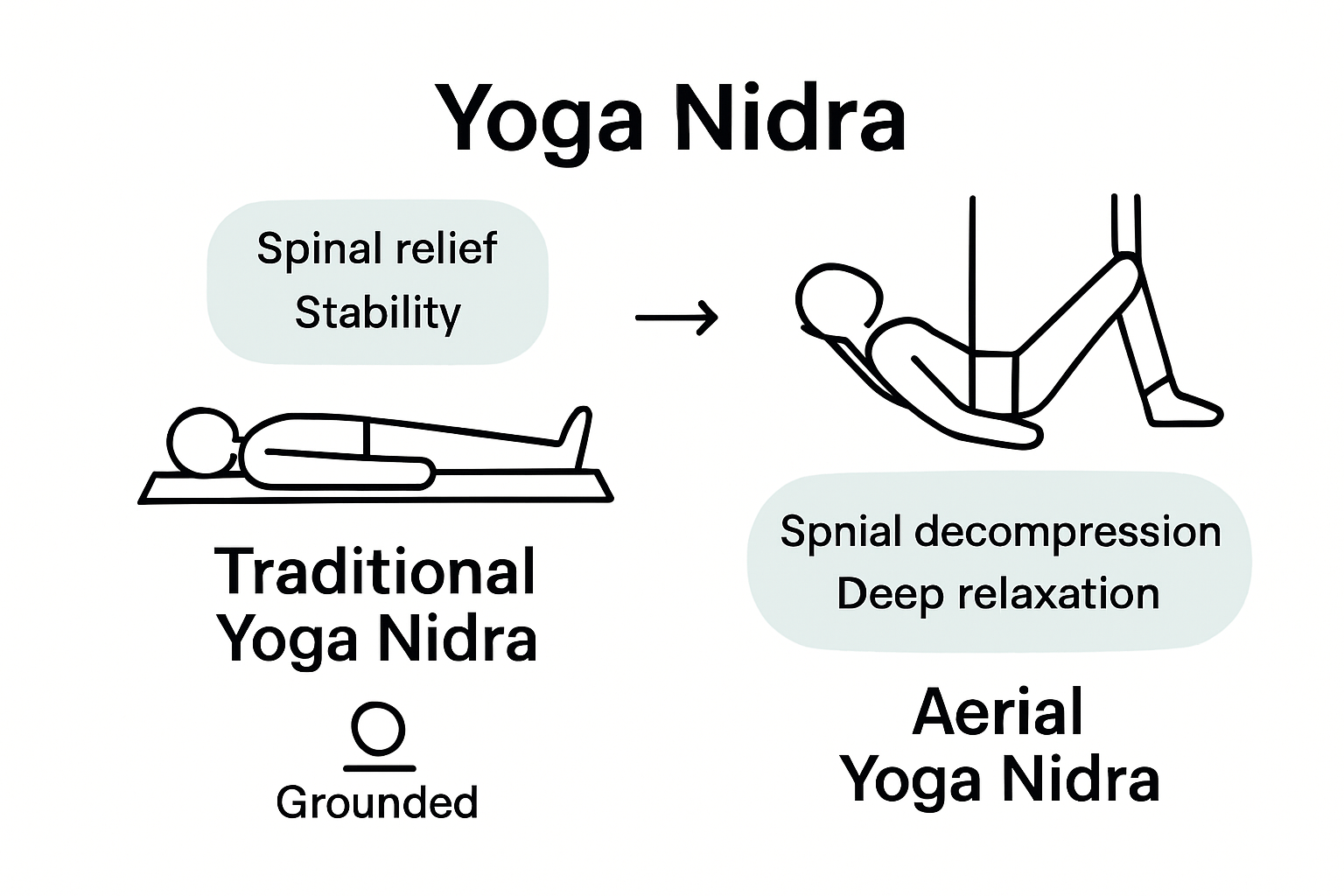
Aerial and traditional yoga nidra represent two distinct approaches to meditative practice, each offering unique pathways to relaxation and consciousness. While traditional yoga nidra is practiced on a flat surface with minimal physical support, aerial yoga nidra introduces a revolutionary suspended environment that transforms the meditative experience.
Traditional Yoga Nidra follows a classic methodology of lying in a supine position, guiding practitioners through progressive stages of mental and physical relaxation. In contrast, Aerial Yoga Nidra utilizes an innovative suspended hammock that provides multidimensional support and sensory engagement. The hammock creates a cocoon-like environment that allows for deeper physical release and reduces gravitational pressure on the body.
Key differences between these practices include:
Physical Positioning:
Traditional Nidra: Flat on the ground
Aerial Nidra: Suspended in a fabric hammock
Body Support:
Traditional Nidra: Minimal external support
Aerial Nidra: Complete body suspension and support
Sensory Experience:
Traditional Nidra: Grounded, static sensation
Aerial Nidra: Weightless, three-dimensional movement potential
The suspended nature of aerial yoga nidra offers additional therapeutic benefits, including spinal decompression and enhanced proprioceptive awareness. By eliminating ground contact, practitioners can achieve a more profound state of relaxation and mental clarity, distinguishing this approach from traditional meditative practices. The gentle swaying and complete support of the hammock create a uniquely immersive experience that transcends conventional meditation techniques.
How Aerial Yoga Nidra Sessions Work
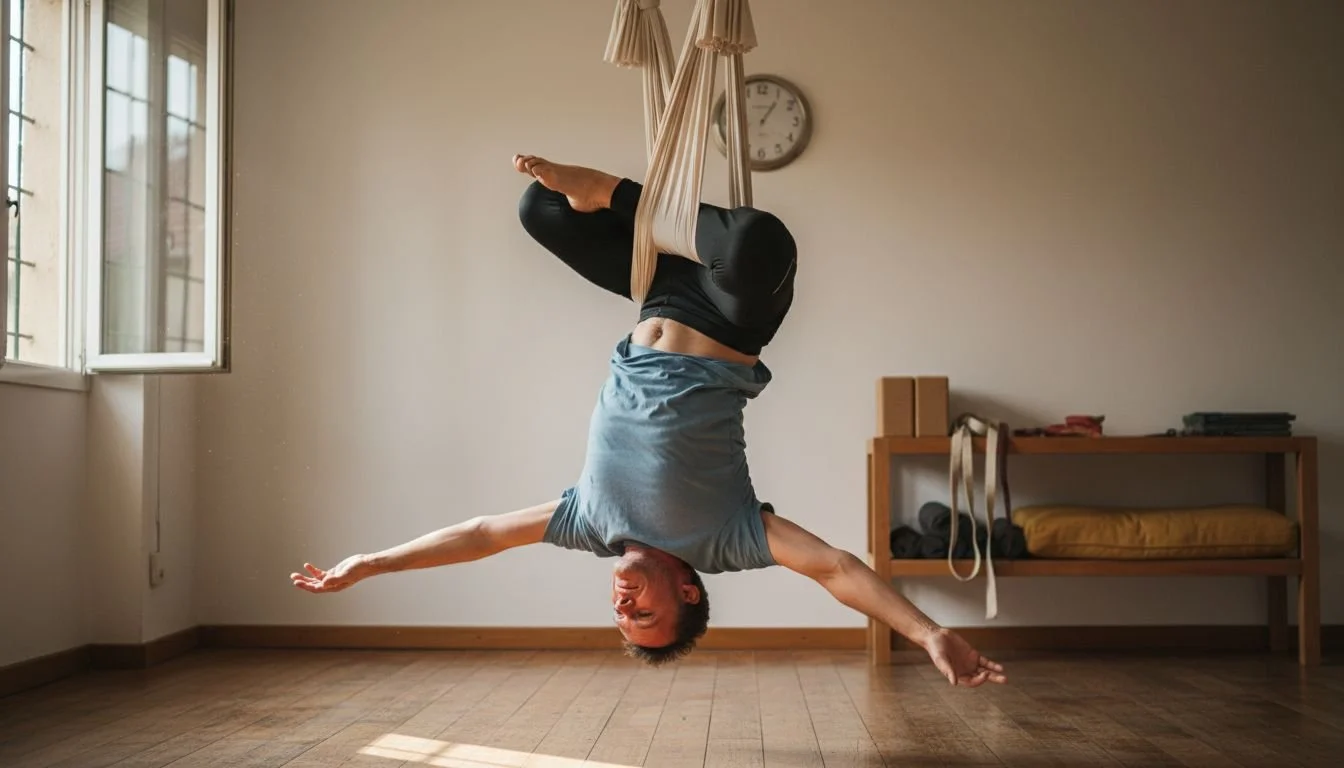
Aerial yoga nidra sessions unfold through a carefully structured process that combines innovative aerial yoga techniques with profound meditative practices. Unlike traditional meditation approaches, these sessions leverage a specialized fabric hammock to create a unique sensory environment that supports complete physical and mental relaxation.
Typically, a Aerial Yoga Nidra session progresses through several intentional stages. Practitioners begin by adjusting the hammock to their specific body requirements, creating a personalized cocoon that provides total support. Breathing techniques play a critical role, helping participants transition from external stimuli to an internal meditative state. The suspended environment allows for gentle, passive movements that help release muscular tension and promote deeper states of consciousness.
The session typically follows this structured progression:
Hammock Preparation:
Adjusting hammock height and tension
Ensuring comfortable, secure positioning
Initial Relaxation:
Gentle swaying to calm the nervous system
Guided breathwork to center awareness
Meditative Descent:
Progressive body scanning
Systematic mental relaxation
Conscious Exploration:
Guided visualization
Deep meditative states
The unique physical suspension during aerial yoga nidra provides therapeutic benefits beyond traditional meditation. By eliminating gravitational pressure and creating a sense of weightlessness, practitioners can access deeper levels of relaxation and mental clarity. The gentle, rhythmic movements of the hammock enhance the meditative experience, making it an innovative approach to achieving profound inner peace and bodily restoration.
Benefits for Mind and Body Wellness
Aerial yoga nidra offers a comprehensive approach to holistic wellness, combining physical suspension with mindfulness practices that promote deep relaxation. This innovative practice provides a multifaceted approach to healing, addressing both mental and physical dimensions of well-being through its unique suspended meditation technique.
Mental Wellness Benefits emerge from the practice’s ability to induce profound states of consciousness. By creating a weightless environment, aerial yoga nidra helps practitioners access deeper levels of meditation, reducing stress and promoting emotional equilibrium. The gentle, supported movements allow individuals to release psychological tension, fostering a sense of inner calm and mental clarity that extends beyond the practice itself.
The physical benefits of aerial yoga nidra are equally transformative:
Muscular Release:
Reduces physical tension
Promotes deep muscle relaxation
Alleviates chronic pain patterns
Neurological Benefits:
Stimulates parasympathetic nervous system
Reduces cortisol levels
Enhances overall stress response
Physiological Restoration:
Improves circulation
Supports lymphatic drainage
Enhances body awareness
Ultimately, aerial yoga nidra represents a powerful holistic wellness practice that transcends traditional meditation and exercise approaches. By integrating physical suspension with deep meditative techniques, practitioners can experience a profound sense of healing that simultaneously nurtures the body, calms the mind, and rejuvenates the spirit.
Who Should Practice and Safety Guidelines
Aerial yoga nidra is a versatile practice with broad accessibility, but understanding individual fitness levels and potential limitations is crucial for safe participation. While many individuals can benefit from this practice, certain populations should approach with additional caution or seek professional medical guidance.
Ideal Practitioners include individuals seeking stress reduction, improved flexibility, and enhanced mental wellness. However, specific health considerations require careful evaluation. Practitioners with the following characteristics are typically well-suited for aerial yoga nidra:
Recommended Practitioners:
Adults with moderate fitness levels
Individuals managing stress
People seeking alternative meditation techniques
Those with basic core strength
Contraindications to Consider:
Recent surgical procedures
Severe balance disorders
Extreme fear of heights
Pregnancy (without specialized instructor guidance)
Uncontrolled heart conditions
Safety guidelines are paramount in aerial yoga nidra practice. Participants should always:
Consult with healthcare providers before beginning
Start with beginner-level classes
Inform instructors of any pre-existing medical conditions
Use properly maintained equipment
Listen to their body and avoid overexertion
By prioritizing individual health assessment and following professional guidance, practitioners can safely explore the transformative potential of aerial yoga nidra, minimizing risks while maximizing potential wellness benefits.
Experience the Transformative Power of Aerial Yoga Nidra Today
If you are seeking a unique way to relieve stress, deepen relaxation, and enhance both mental clarity and physical well-being Aerial Yoga Nidra presents an innovative solution that combines suspended support with guided meditation. This practice helps you achieve profound relaxation by reducing physical strain and inviting heightened conscious awareness. Many practitioners find that the gentle swaying hammock creates a peaceful cocoon that eases muscle tension and quiets the mind leaving you rejuvenated and balanced.
Take the next step toward holistic wellness by exploring specialized classes and workshops designed to introduce you safely and supportively to Aerial Yoga Nidra. At Amrita Yoga & Wellness you can discover aerial yoga techniques along with mindful guidance to help you reset your nervous system and enhance your body awareness. Don’t wait to transform your approach to stress relief and inner harmony Visit Amrita Yoga & Wellness now and begin your journey with expert instructors who prioritize your safety, comfort, and lasting well-being.
Frequently Asked Questions
What is Aerial Yoga Nidra?
Aerial Yoga Nidra is a fusion of traditional aerial yoga techniques and yoga nidra meditation. It involves practicing meditation while suspended in a supportive hammock, allowing for deeper relaxation and transformation of both body and mind.
How does Aerial Yoga Nidra differ from traditional Yoga Nidra?
While traditional Yoga Nidra is practiced on the ground, Aerial Yoga Nidra utilizes a suspended hammock for support. This unique positioning allows for enhanced relaxation, reduced bodily strain, and a weightless sensory experience.
What are the main benefits of practicing Aerial Yoga Nidra?
Aerial Yoga Nidra offers both mental and physical wellness benefits, including stress reduction, improved circulation, enhanced body awareness, and deep muscle relaxation, helping to alleviate chronic pain and promote emotional equilibrium.
Who should consider practicing Aerial Yoga Nidra?
Aerial Yoga Nidra is suitable for individuals with moderate fitness levels seeking stress reduction and enhanced mental wellness. However, those with recent surgeries, severe balance disorders, or extreme fear of heights should consult with a healthcare provider before participating.