Easy Yoga Poses for 2 Beginners: Boost Connection
TL;DR:
Beginner partner yoga emphasizes simple, supportive poses that foster trust, connection, and mindfulness.Communication, breath synchronization, and proper modifications are essential for safe, enjoyable practice.These practices can enhance stress relief, improve mood, and strengthen relationships regardless of flexibility or experience.
Choosing the right yoga poses as a pair can feel overwhelming when you're both new to the mat. Where do you even start? The good news is that partner yoga for beginners emphasizes simple seated, standing, and supine poses that use mutual support for balance and deeper stretches. Practicing together does more than improve flexibility. It builds trust, sharpens focus, and creates a shared experience that solo practice simply can't replicate. This guide walks you through everything you need to know, from what makes a pose beginner-friendly, to the top five poses to try today, plus tips on personalizing your sessions for maximum comfort and connection.
Table of Contents
Key Takeaways
| Point | Details |
|---|---|
| Choose beginner-friendly poses | Look for poses that are easy to enter and exit, and emphasize mutual support. |
| Prioritize communication | Clear verbal and non-verbal cues between partners boost safety and connection. |
| Modify for accessibility | Props and flexible posture options make partner yoga welcoming for all abilities. |
| Enjoy the process | Focusing on shared mindfulness and enjoyment matters far more than perfect form. |
| Health and connection benefits | Partner yoga reduces stress, increases endorphins, and helps deepen relationships. |
What makes a yoga pose beginner-friendly for two?
Before jumping into specific poses, it helps to know what makes a partner yoga pose truly accessible for beginners. Not every pose works well for two people who are new to yoga. Some require strength, flexibility, or body awareness that takes months to build. The right beginner pose removes those barriers entirely.
Here are the core qualities to look for:
Easy to enter and exit without strain or awkward transitions
Mutually supportive, meaning both partners actively help each other rather than one person doing all the work
Clear setup instructions that don't require guessing
Minimal injury risk, even if alignment isn't perfect from the start
Adjustable using props like blocks, pillows, or blankets
Communication is everything in partner yoga. You and your partner should check in verbally throughout each pose. Ask "Does this feel okay?" or "Do you want more or less pressure?" Non-verbal cues matter too. Watching your partner's face or feeling tension in their body can tell you when to ease up. Partner yoga mechanics rely on synchronized breath, verbal and non-verbal communication, spinal alignment, and avoiding forced stretches, with modifications like bent knees or props as needed.
Breath synchronization is one of the most underrated tools in partner yoga. When both of you inhale and exhale together, the practice becomes almost meditative. It naturally slows you down and keeps you present with each other. This is also why partner yoga works so well as yoga for stress relief, since the shared focus quiets mental chatter fast.
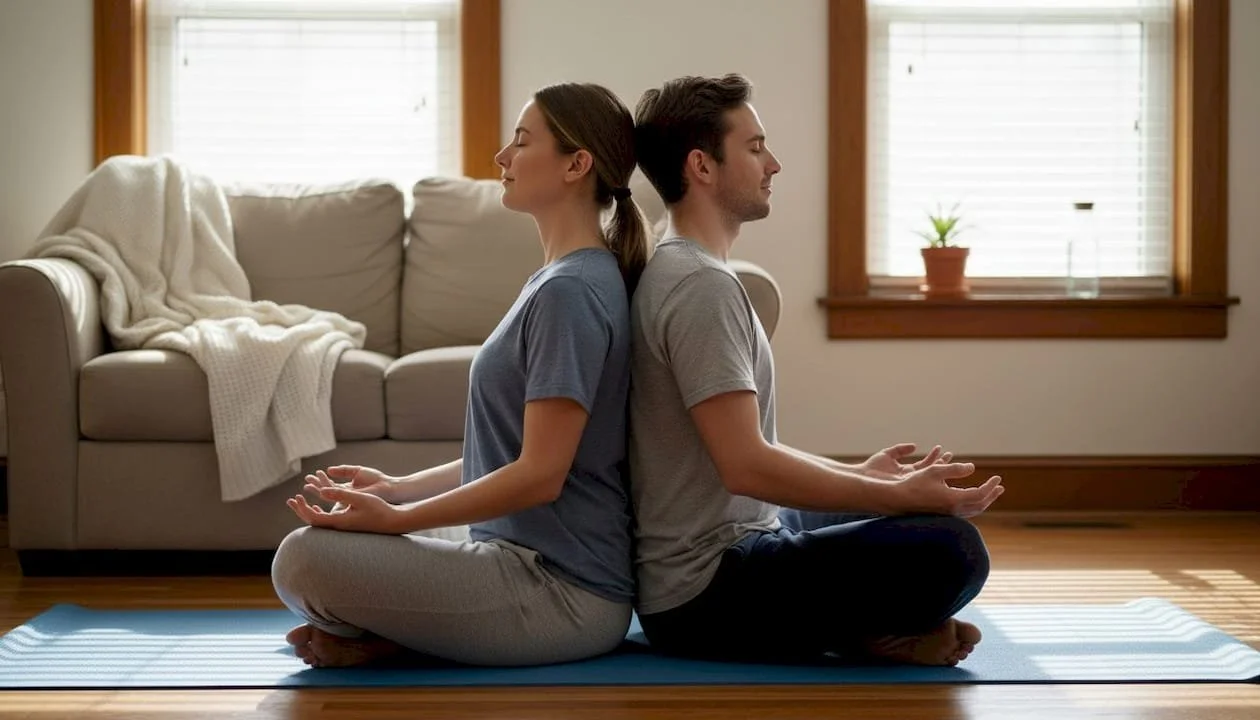
Pro Tip: Before your first session, spend two minutes simply sitting back to back and breathing together. This single habit builds trust and sets the tone for a calm, connected practice.
Understanding what makes a pose safe and accessible helps you make smart choices instead of defaulting to the most impressive-looking poses online. Simple always wins when you're starting out.
Top 5 easy yoga poses for 2 beginners
With the main criteria in mind, here are five foundational partner yoga poses anyone can try safely, even as a total beginner. These common beginner poses include seated back-to-back breathing, partner seated twist, partner forward fold, partner boat pose, and back-to-back chair, and each one builds a different skill.
Seated back-to-back breathing. Sit cross-legged facing away from each other with your backs touching. Close your eyes and breathe together for two to five minutes. This pose builds awareness and sets a mindful tone without any physical challenge.
Partner seated twist. Sit cross-legged back to back. Both partners twist in opposite directions and reach for each other's knees or hands. Hold for five breaths, then switch sides. This gently improves spinal mobility and feels great after long periods of sitting.
Partner forward fold. Sit facing each other with legs extended and feet touching. Hold each other's wrists and take turns gently leaning back to offer a hamstring stretch to the other. Go slowly. Let your partner control the depth of the stretch.
Partner boat pose. Sit facing each other, bend your knees, and press the soles of your feet together. Hold each other's wrists and slowly straighten your legs to form a "V" shape. This builds core strength and requires real teamwork to stay balanced.
Back-to-back chair pose. Stand back to back with your feet hip-width apart. Lean into each other and slowly walk your feet forward as you both lower into a seated position, like sitting in an invisible chair. This works your legs and requires synchronized effort.
"The beauty of partner yoga is that neither person needs to be an expert. The poses work because of what you do together, not despite what you can't do alone."
For extra guidance on foundational postures, check out these essential yoga poses to build your base before pairing up.
Pro Tip: Start with just two or three poses per session. Rushing through all five can make the practice feel like a workout rather than a shared experience.
Comparison: Features of the best beginner partner yoga poses
After reviewing instructions for each pose, it helps to compare them side by side to select what best suits your needs. The table below summarizes key features so you can match each pose to your current goals.
| Pose | Primary benefit | Difficulty | Muscles targeted |
|---|---|---|---|
| Seated back-to-back breathing | Mindfulness and calm | Very easy | Core, posture muscles |
| Partner seated twist | Spinal mobility | Easy | Spine, obliques |
| Partner forward fold | Hamstring flexibility | Easy to moderate | Hamstrings, lower back |
| Partner boat pose | Core strength | Moderate | Core, hip flexors |
| Back-to-back chair pose | Lower body strength | Moderate | Quads, glutes, calves |
Partner yoga for beginners uses mutual support, which is what separates these poses from solo practice. That support changes how the stretch or challenge feels, often making it more accessible than the solo version.
Here's a quick guide to matching poses with your goals:
Want to reduce anxiety or stress? Start with seated back-to-back breathing every session.
Focused on flexibility? Prioritize partner forward fold and partner seated twist.
Building strength together? Partner boat pose and back-to-back chair pose are your go-to options.
New to yoga entirely? Stick with the first two poses for the first few sessions before adding more.
You can also mix and match from a broader list of yoga poses to expand your shared practice once you feel comfortable with the basics. Progression comes naturally when you focus on what feels good now.
Situational tips: Personalizing your partner yoga practice
Not every pair is the same. Here's how to personalize your practice whether you want to adapt for mobility, age, or emotional support.
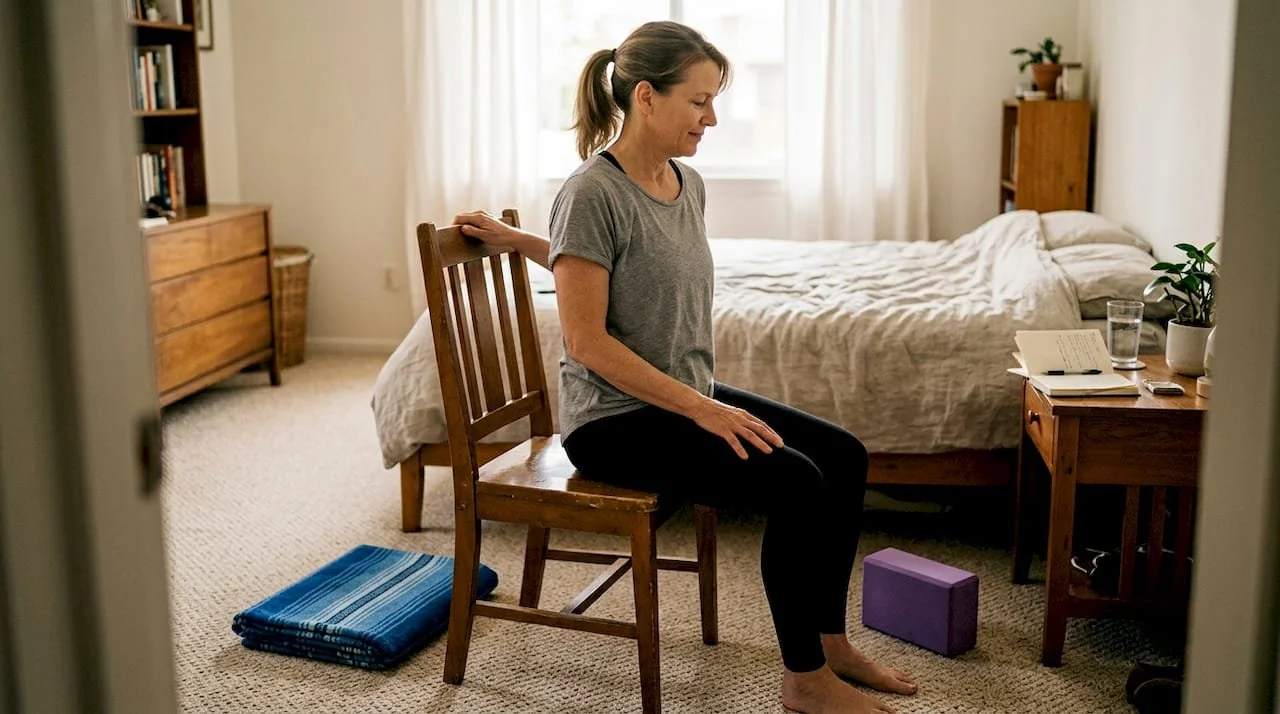
Flexibility differences are common between partners, and they don't have to be a problem. Use props generously. A folded blanket under the hips in seated poses reduces strain for anyone with tight hips or lower back tension. Yoga blocks can bring the ground closer, so neither person has to strain to reach. Check out these yoga for mobility tips for more ways to adapt your setup.
Age and mobility gaps between partners also deserve attention:
Avoid deep forward folds for anyone with osteoporosis or herniated discs
Use chair-supported versions of standing poses for older adults or those with balance concerns
Explore yoga for seniors to find modifications that keep older practitioners safe and engaged
Keep sessions shorter (15 to 20 minutes) when starting with anyone who fatigues easily
The emotional side of partner yoga is just as important as the physical side. Research shows that shared positive emotions in couples are linked to lower cortisol levels, and partner yoga reduces stress while boosting endorphins. That means the time you spend on the mat together has measurable effects on your mood and your relationship.
| Health benefit | What the research shows |
|---|---|
| Stress reduction | Lower cortisol through shared positive experiences |
| Mood boost | Increased endorphins from movement and connection |
| Relationship quality | Stronger bond through nonverbal communication and trust |
Pro Tip: If one partner is recovering from an injury or dealing with high stress, let that person lead the pace. The stronger or more mobile partner should always adapt to the other, not the other way around.
Personalizing your practice isn't about lowering your standards. It's about making the practice sustainable for both of you long term.
Why most beginners overthink partner yoga (and what really matters)
Even with all the right techniques, many new yoga pairs miss the deeper lessons. The most common thing we see is couples or friends showing up to their first partner yoga session convinced they need to be flexible, coordinated, or somehow "yoga people" before they can enjoy it. That belief is both common and completely wrong.
What actually matters is your willingness to communicate and show up without an agenda. Every pose is a real-time experiment in trust. You're learning how your partner moves, where they hold tension, and how they respond to gentle pressure. That's not a yoga skill. It's a life skill.
Partner yogaenhances physical, mental, and relational well-being through flexibility, mindfulness, and communication. But the flexibility grows over time. The connection and enjoyment? Those are available from day one, even if your forward fold barely reaches your shins.
Let go of performance. The goal is not a perfect pose. It's a shared experience that leaves both of you feeling better than when you started. If you laughed, breathed together, or simply felt more relaxed, the session was a success. These stress relief tips apply to partner practice just as much as solo yoga. Start with what feels good, and trust that the rest will follow.
Get personalized support for your yoga journey
Ready to experience more support and guidance in your partner yoga practice? Practicing with a skilled instructor makes a real difference, especially when you're figuring out pose adjustments for two people at once.
At Amrita Yoga & Wellness, we offer beginner-friendly classes, live sessions, and wellness resources designed to support every body and every level. Whether you're looking for in-studio guidance in Philadelphia or want to explore on-demand options from home, our experienced instructors make it easy and welcoming for pairs and solo practitioners alike. Your first session together could be the one that changes everything.
Frequently asked questions
What equipment do two beginners need for partner yoga?
All you need is a yoga mat and comfortable clothing. Props like blocks or pillows can help with modifications for accessibility if either partner needs extra support.
How do beginners avoid injury when trying these poses?
Listen to your body, communicate clearly with your partner, and never force a stretch. Partners should avoid forcing stretches and check in often to stay safe and comfortable.
Are these partner yoga poses suitable for all ages?
Yes, all five poses highlighted here can be modified for different ages and mobility levels. Resources like yoga poses for seniors show how to adapt even standard poses for gentle, safe practice.
Can practicing yoga with a partner help reduce stress?
Absolutely. Partner yoga reduces stress by boosting endorphins and lowering cortisol, especially when shared positive emotions are part of the experience.