Bikram Yoga Burns 330 Calories: Top Benefits & Guide
Bikram Yoga burns as many calories as moderate aerobic exercise, yet many people still believe it's unsafe or ineffective for fitness goals. This misconception keeps health-conscious adults from discovering one of the most structured and scientifically backed forms of hot yoga available today. This guide explains Bikram Yoga's structure, its proven benefits for physical fitness and stress relief, safety considerations, and how to start your practice in Philadelphia.
Table of Contents
Key Takeaways
| Point | Details |
|---|---|
| Calorie Burn | Bikram Yoga burns approximately 330 calories per session, comparable to moderate aerobic exercise. |
| Flexibility Gains | Practice improves flexibility by 30% after 8 weeks due to warm muscles allowing deeper stretching. |
| Stress Reduction | Regular practice reduces cortisol levels by 18% over 12 weeks and enhances mindfulness by 25%. |
| Safety Profile | Heat-related incidents occur in less than 2% of supervised sessions when proper protocols are followed. |
| Fixed Structure | 26 postures plus 2 breathing exercises in a 90-minute session at 105°F with 40% humidity. |
Introduction to Bikram Yoga: Origins and Definition
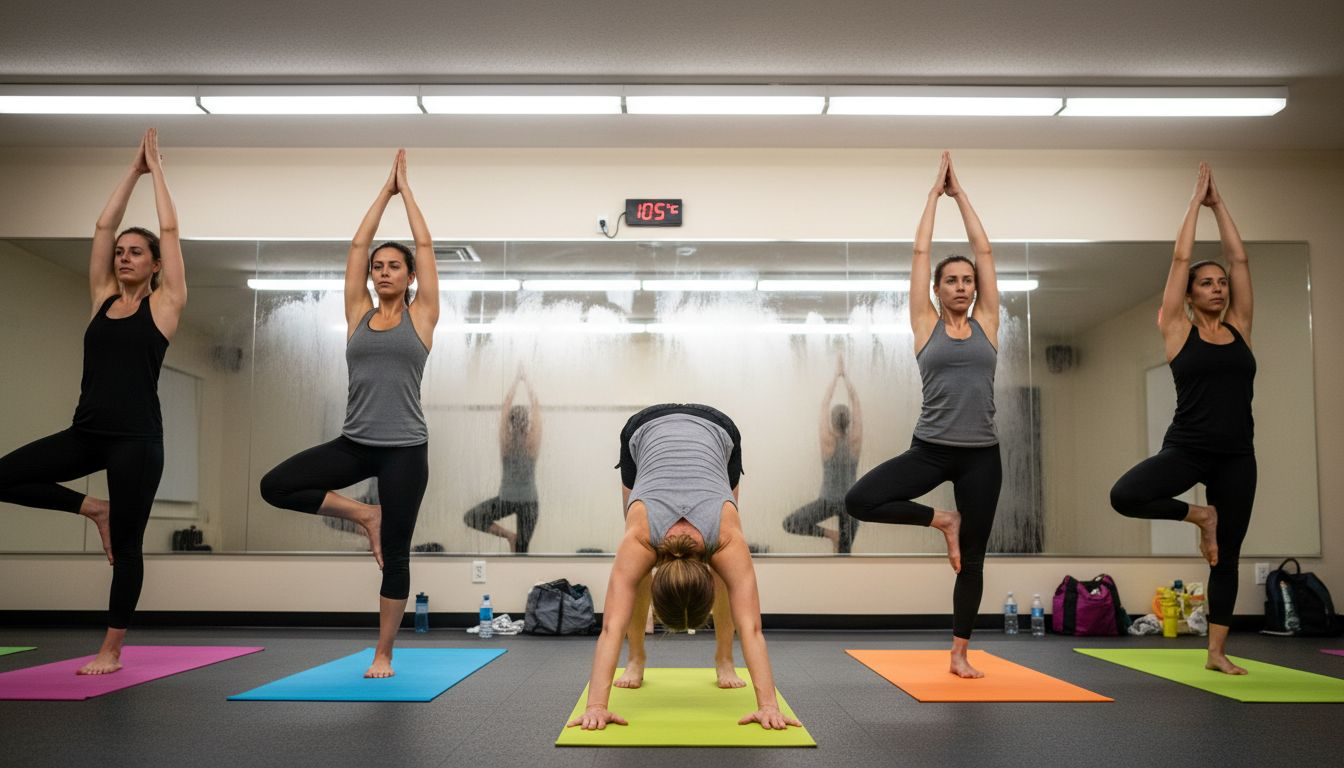
Bikram Yoga is a standardized form of hot yoga developed by Bikram Choudhury in the 1970s. The practice consists of 26 specific postures and 2 breathing exercises performed in a set sequence. Each session follows the exact same order, creating a predictable framework that allows you to track your progress over time.
The defining characteristic is the heated environment. Studios maintain temperatures around 105°F with 40% humidity throughout the 90-minute class. This heat serves multiple purposes: it warms your muscles for deeper stretching, elevates your heart rate for cardiovascular benefits, and promotes sweating for detoxification. You can learn more about Bikram Yoga and its unique characteristics compared to other yoga styles.
The fixed sequence includes postures targeting every major muscle group and organ system:
Standing series: 12 postures focusing on strength, balance, and cardiovascular endurance
Floor series: 14 postures emphasizing flexibility, spinal health, and core strength
Breathing exercises: Pranayama techniques to open airways and calm the nervous system
This standardization differentiates Bikram Yoga from other hot yoga variations. While many studios offer heated classes with varied sequences, Bikram Yoga's consistency allows you to measure improvements in strength, flexibility, and endurance session after session. The predictability also reduces decision fatigue, letting you focus entirely on execution and breath control rather than wondering what comes next.
How Bikram Yoga Works: The Role of Heat and Sequence
Practicing Bikram Yoga increases core body temperature resulting in increased heart rate and metabolism, supporting calorie burn and cardiovascular fitness improvements. When your core temperature rises to approximately 105°F, your body responds as it would during moderate aerobic exercise. Your heart works harder to pump blood to your skin for cooling, creating cardiovascular conditioning without high-impact movements.
The Bikram Yoga heat effects extend beyond calorie burn. Warm muscles stretch more easily and with less risk of injury than cold tissue. This allows you to move deeper into postures safely, accelerating flexibility gains. The heat also triggers profuse sweating, which helps eliminate toxins through your skin and teaches your body to regulate temperature more efficiently.
The fixed sequence of 26 postures and 2 breathing exercises creates a moving meditation. You know exactly what's coming, so your mind can focus on breath, alignment, and subtle improvements rather than anticipating the next pose. This predictability builds mindfulness naturally.
Breathing exercises bookend the practice:
Pranayama breathing at the start: Opens airways and oxygenates blood
Kapalabhati breathing at the end: Cleanses respiratory system and energizes
Pro Tip: New practitioners should acclimate gradually. Start with 2-3 classes per week rather than daily sessions. Drink at least 16 ounces of water two hours before class and bring a water bottle to sip during breaks. Listen to your body and take child's pose whenever you need rest. Your heat tolerance will build within 2-3 weeks of consistent practice.
The combination of heat and sequence creates a unique training environment. You can view a scientific study on Bikram Yoga benefits for detailed physiological mechanisms.
Physical Fitness Benefits Backed by Research
Bikram Yoga burns approximately 330 calories per session, improves flexibility by 30% over 8 weeks, and increases heart rate to an average of 120 bpm. These metrics demonstrate that Bikram Yoga delivers genuine fitness benefits comparable to traditional cardiovascular exercise. The elevated heart rate throughout the 90-minute session provides sustained cardiovascular conditioning without the joint stress of running or jumping.
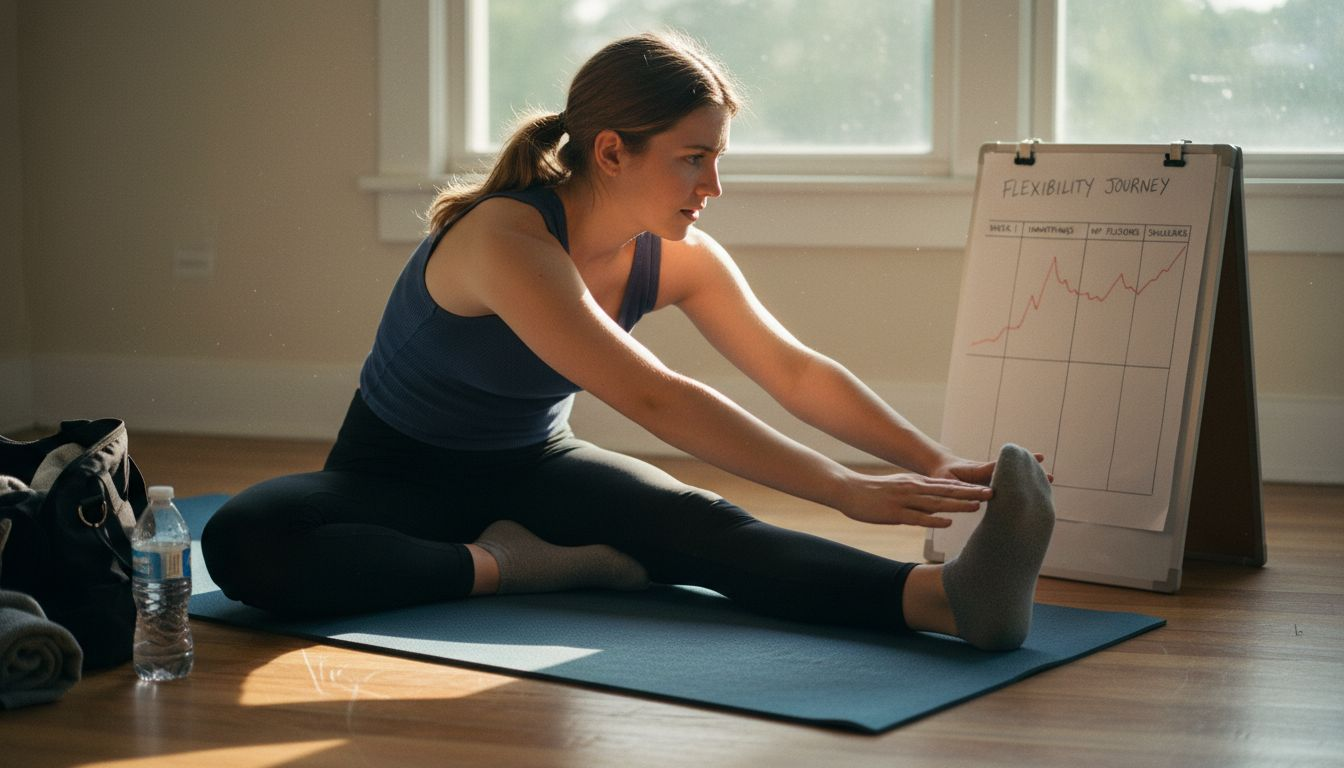
Flexibility improves by 30% after 8 weeks due to warm muscles allowing deeper stretching with less injury risk. This improvement isn't limited to one area. The 26 postures target every major muscle group, creating balanced flexibility throughout your entire body. Tight hamstrings, hip flexors, and shoulders all respond to the consistent heat and stretching protocol.
| Fitness Metric | Bikram Yoga | Moderate Aerobic Exercise |
|---|---|---|
| Calories per session | 330 | 300-400 |
| Average heart rate | 120 bpm | 115-130 bpm |
| Flexibility gain (8 weeks) | 30% increase | 10-15% increase |
| Injury risk | Low (with proper form) | Moderate (impact-related) |
The physical benefits of Bikram Yoga extend beyond these core metrics:
Improved balance and proprioception from single-leg standing postures
Enhanced core strength from holding challenging positions
Better posture from spinal alignment focus throughout the sequence
Increased muscular endurance from sustained isometric holds
Lower blood pressure and improved circulation from cardiovascular conditioning
Pro Tip: Consistency matters more than intensity. Three classes per week produce better results than sporadic intense sessions. Your body adapts to the heat and sequence, allowing you to work deeper into postures as weeks progress. Track your flexibility by noting how far you can reach in forward bends or how long you can hold balancing postures. These concrete markers keep you motivated.
Research from a study on flexibility improvements confirms that the heated environment accelerates flexibility gains compared to room-temperature yoga.
Mental Health and Stress Relief Mechanisms
Regular Bikram Yoga practice reduces cortisol levels by 18% over 12 weeks. Cortisol is your body's primary stress hormone, and chronically elevated levels contribute to anxiety, weight gain, and sleep disruption. The combination of physical exertion, controlled breathing, and focused attention creates a powerful stress management tool.
Mindfulness increases by 25% through the practice. The fixed sequence eliminates decision-making, allowing your mind to focus entirely on breath and body sensations. This present-moment awareness naturally quiets mental chatter and rumination. You're too focused on balancing in Standing Bow pose to worry about tomorrow's deadlines.
The community aspect provides crucial social support. Practicing alongside others creates accountability and motivation. You're more likely to maintain consistent attendance when you recognize familiar faces and feel part of a group working toward similar wellness goals. This social connection combats isolation and loneliness, which significantly impact mental health.
Stress relief mechanisms in Bikram Yoga include:
Breath control: Slows heart rate and activates parasympathetic nervous system
Physical exertion: Releases endorphins and reduces muscle tension
Heat exposure: Mimics benefits of sauna therapy for relaxation
Meditative focus: Breaks rumination patterns and promotes mental clarity
Accomplishment: Completing challenging postures builds confidence and resilience
The mindfulness benefits in Bikram Yoga extend into daily life. Practitioners report better emotional regulation, improved sleep quality, and greater resilience to workplace stress. The 90-minute practice becomes a sanctuary where external pressures fade and internal awareness grows.
You'll notice mental benefits within 4-6 weeks of regular practice. Initial sessions may feel overwhelming as you acclimate to heat and challenge. Once you adapt, the mental clarity and stress relief become the primary reasons many practitioners return consistently.
Common Misconceptions and Safety Considerations
The incidence of heat-related adverse events is less than 2%in supervised Bikram Yoga settings when hydration and screening protocols are followed. Despite this strong safety record, misconceptions persist about hot yoga dangers. Understanding facts versus myths helps you practice confidently.
| Misconception | Reality |
|---|---|
| Hot yoga causes dangerous dehydration | Proper hydration before, during, and after class prevents dehydration; studios provide water breaks |
| You must be fit to start Bikram Yoga | Beginners of all fitness levels can participate; postures have modifications for different abilities |
| Heat makes you lose water weight only | Calorie burn from elevated heart rate creates fat loss; hydration restores water weight |
| Hot yoga is unsafe for heart health | Supervised practice improves cardiovascular fitness; those with conditions should consult doctors first |
Certain conditions require medical clearance before starting:
Cardiovascular disease or uncontrolled high blood pressure
Pregnancy, especially first trimester
Heat sensitivity conditions
Recent surgery or acute injuries
Respiratory conditions like severe asthma
You can find hot yoga safety facts from exercise science experts. The key is proper screening and gradual progression. Most healthy adults tolerate the heat well after an adaptation period.
Pro Tip: Listen to your body's signals. Dizziness, nausea, or unusual fatigue means you should rest in child's pose or leave the room to cool down. There's no prize for pushing through genuine distress. Experienced practitioners still take breaks when needed. Modify postures by bending knees, reducing depth, or skipping a set if you feel overwhelmed.
Exploring common Bikram Yoga myths helps you approach the practice with realistic expectations. The heat is challenging but manageable. The postures are difficult but scalable. The benefits are real and supported by research.
How to Start and Deepen Your Bikram Yoga Practice in Philadelphia
Starting Bikram Yoga requires simple preparation to ensure a positive first experience:
Hydrate strategically: Drink 64 ounces of water throughout the day before class, not all at once right before.
Arrive 15 minutes early: Acclimate to the heat gradually and claim a spot away from heaters initially.
Wear minimal, breathable clothing: Light shorts and a tank top allow freedom of movement and cooling.
Bring a large towel and water bottle: You'll sweat profusely; a towel over your mat prevents slipping.
Inform the instructor you're new: They'll watch your form and offer modifications as needed.
Commit to three classes: Your first session may feel overwhelming; benefits become apparent by the third class.
Philadelphia offers several quality studios for Bikram Yoga practice. Amrita Yoga & Wellness studio in Philadelphia provides experienced instructors and a welcoming community for all levels. You can find yoga classes in Philadelphia using detailed guides that help you match your goals with the right studio environment.
Class expectations help you prepare mentally:
90-minute duration with two breathing exercises and 26 postures
Minimal talking from instructors who guide through verbal cues
Encouragement to stay in the room even if resting
Community atmosphere with practitioners of varying experience levels
Tips for staying motivated and managing heat:
Set a consistent schedule rather than sporadic attendance
Focus on your own practice without comparing to others
Celebrate small improvements in balance, flexibility, or endurance
Join workshops or events to deepen your understanding
Connect with fellow practitioners for accountability
Explore beginner Bikram Yoga preparation tips for additional guidance on what to expect and how to prepare. The learning curve is steep initially, but the fixed sequence becomes familiar quickly. By your tenth class, you'll know what's coming and can focus on refinement rather than just survival.
Building a sustainable practice means starting conservatively and increasing frequency as your body adapts. Two to three classes weekly for the first month allows adequate recovery while building heat tolerance and familiarity with postures.
Summary: Integrating Bikram Yoga for Fitness and Stress Relief
Bikram Yoga's unique combination of heat and fixed sequence creates measurable benefits for both physical fitness and mental well-being. The evidence is clear: 330 calories burned per session, 30% flexibility improvement in 8 weeks, and 18% cortisol reduction over 12 weeks. These aren't subjective claims but documented outcomes from controlled research.
For Philadelphia residents seeking a structured approach to wellness, Bikram Yoga offers:
Cardiovascular conditioning without joint impact
Whole-body flexibility development
Stress reduction through mindfulness and physical exertion
Supportive community for motivation and accountability
Predictable format that eliminates decision fatigue
Accessible modifications for all fitness levels
The practice fits naturally into a holistic wellness lifestyle. You don't need special equipment, extreme fitness, or prior yoga experience. You simply need commitment to show up consistently and willingness to work through the initial adaptation period. The heat challenges you, the sequence guides you, and the community supports you.
Integrating Bikram Yoga means viewing it as a long-term wellness investment rather than a quick fix. Benefits compound over months and years of regular practice. Your flexibility, strength, stress resilience, and overall health improve progressively.
Explore Bikram Yoga Classes at Amrita Yoga & Wellness in Philadelphia
Ready to experience Bikram Yoga's transformative benefits firsthand? Amrita Yoga & Wellness in Philadelphia offers classes designed for both beginners discovering hot yoga and experienced practitioners deepening their practice. Our instructors provide expert guidance in a supportive environment where you can safely explore your physical and mental boundaries.
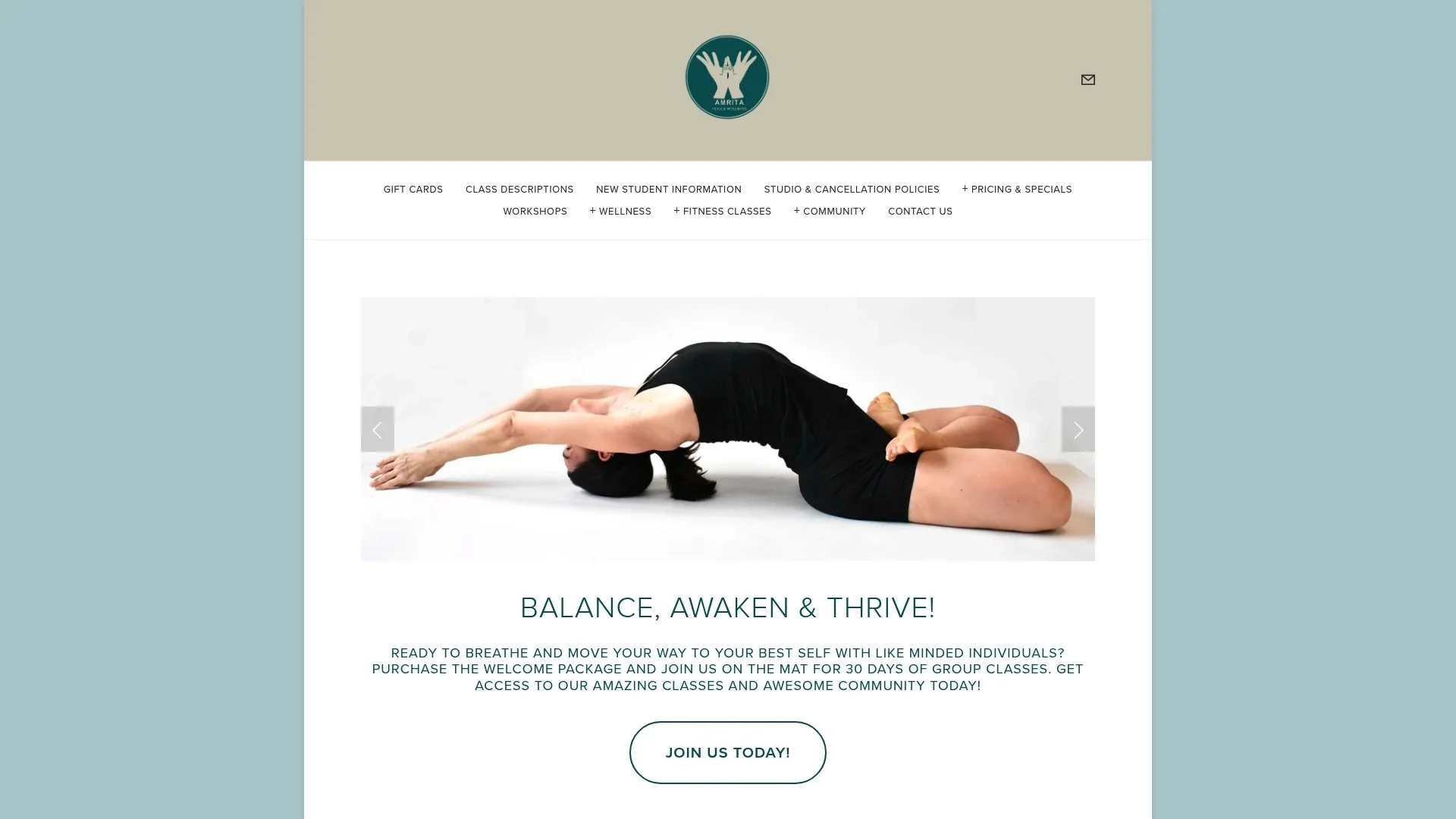
We offer beginner workshops to teach proper form and heat management strategies before your first full class. Advanced sessions challenge experienced yogis to refine their practice and explore subtle alignment cues. The studio hosts community events and wellness workshops that complement your yoga journey with broader holistic health education. Whether you're exploring yoga gym classes at Amrita for fitness goals or ready to join Bikram Yoga classes in Philadelphia, our team ensures you have the support needed to succeed. Visit Amrita Yoga & Wellness Philadelphia studio to view our schedule and book your first class today.
Frequently Asked Questions About Bikram Yoga
What should I wear for Bikram Yoga?
Wear minimal, form-fitting clothing that allows freedom of movement and doesn't trap heat. Women typically choose sports bras with shorts or leggings, while men wear athletic shorts with or without a shirt. Avoid cotton, which becomes heavy when wet; choose moisture-wicking fabrics instead.
How often should beginners practice Bikram Yoga?
Beginners should start with 2-3 classes per week for the first month to allow proper adaptation to heat and postures. After building heat tolerance and familiarity with the sequence, you can increase to 4-5 classes weekly if desired. Consistency matters more than frequency.
Is Bikram Yoga safe if I have heart conditions?
Consult your physician before starting Bikram Yoga if you have cardiovascular disease, uncontrolled high blood pressure, or any heart condition. Many people with controlled conditions practice safely under medical supervision, but individual clearance is essential.
What should I bring to a Bikram Yoga class?
Bring a large towel to cover your mat, a water bottle, and wear minimal clothing. Some practitioners bring a second small towel for wiping sweat during class. The studio provides mats for rent if you don't own one.
How long does it take to see benefits from Bikram Yoga?
You'll notice improved flexibility and stress relief within 2-3 weeks of consistent practice. Cardiovascular fitness improvements and significant flexibility gains become apparent after 6-8 weeks. Mental health benefits like reduced anxiety often emerge within the first month.