
The Amrita Journal
Explore thoughtful stories, practical wellness guidance and inspiring ideas to support your movement, mindfulness and everyday wellbeing at Amrita.
Hot Room Yoga: Benefits and Practice Essentials

Stepping into a heated yoga studio in Philadelphia, you immediately notice the vibrant energy and collective focus that sets hot room yoga apart. For adults who value flexibility, stress relief, and meaningful connection, this powerful practice does more than just work up a sweat. By performing yoga postures in temperatures that reach between 90 to 105°F, participants experience intensified stretching and a deep sense of renewed well-being. Discover how this dynamic environment helps create both physical transformation and a sense of shared community.
Table of Contents
Key Takeaways
| Point | Details |
|---|---|
| Hot Room Yoga Defined | It involves practicing yoga in a heated environment (90-105°F) to enhance physical and mental benefits. |
| Styles of Hot Room Yoga | Prominent styles include Bikram, Vinyasa Hot, and Power Hot Yoga, each offering varied sequences and focuses. |
| Health Benefits and Risks | Benefits include increased flexibility and stress reduction, while risks like dehydration should be carefully managed. |
| Comparing Yoga Practices | Hot room yoga demands higher intensity and focus compared to traditional yoga, making it a more performance-oriented approach. |
What Is Hot Room Yoga? Core Concepts Explained
Hot room yoga represents a dynamic and intense variation of traditional yoga practice, characterized by performing physical postures in a deliberately heated environment. Yoga practices originating in ancient India have long emphasized physical and mental integration, and hot room yoga takes these principles to an elevated, temperature-enhanced experience.
In a typical hot room yoga session, practitioners engage in familiar yoga poses within a carefully controlled environment typically heated between 90 to 105°F. This intentional temperature elevation serves multiple physiological purposes:
Increases overall body flexibility
Promotes deeper muscle stretching
Encourages substantial perspiration and potential detoxification
Challenges cardiovascular endurance
Enhances mental focus and breath control
The practice fundamentally differs from traditional yoga by leveraging heat as a transformative element. Thermal intensity creates a more demanding physical experience, pushing practitioners beyond conventional workout boundaries. Hot yoga techniques challenge participants to maintain precise postures while managing increased physical stress and body temperature.
Understanding hot room yoga requires recognizing it as more than just a workout - it's a holistic practice integrating physical challenge, mental resilience, and intentional bodily awareness. The heated environment acts as a catalyst, amplifying yoga's traditional goals of strength, flexibility, and inner calm.
Pro tip: Start your hot room yoga journey gradually, prioritizing hydration and listening closely to your body's signals during initial sessions.
Popular Hot Room Yoga Styles and Differences
Hot room yoga encompasses multiple distinctive styles, each offering unique approaches to practice and physical engagement. Hot yoga techniques vary significantly in their structure, temperature, and philosophical foundations, providing practitioners with diverse options to match their fitness goals and personal preferences.
The most prominent hot room yoga styles include:
Bikram Yoga: A highly structured practice featuring
Exactly 26 specific postures
Consistent room temperature of 105°F
40% humidity level
Identical sequence in every class
Vinyasa Hot Yoga: A more fluid and dynamic approach
Varying pose sequences
Breath-synchronized movements
Temperatures ranging from 90-100°F
Power Hot Yoga: An intense, strength-focused variation
More athletic and challenging poses
Faster transitions between postures
Emphasis on building muscular endurance
Hot yoga variations demonstrate remarkable diversity in their approach to heated practice. While Bikram remains the most rigidly defined style, other approaches like Baptiste and Power Hot Yoga offer more flexibility in sequence and intensity, allowing practitioners to find a method that best suits their individual fitness levels and objectives.

Here’s a side-by-side look at major hot room yoga styles to aid your selection:
| Yoga Style | Session Structure | Typical Room Temp | Unique Focus |
|---|---|---|---|
| Bikram Yoga | Fixed 26-posture sequence | 105°F | Consistency and discipline |
| Vinyasa Hot Yoga | Flowing, varying sequences | 90–100°F | Creative movement, coordination |
| Power Hot Yoga | Rapid, athletic transitions | 95–100°F | Strength and endurance |
Understanding these differences helps practitioners select a hot room yoga style that aligns with their physical capabilities, fitness goals, and personal wellness journey. Each style offers unique benefits, from detoxification and increased flexibility to cardiovascular conditioning and mental resilience.
Pro tip: Experiment with multiple hot yoga styles to discover the approach that most effectively challenges and supports your personal fitness goals.
Health Benefits and Potential Risks to Know
Physical activity benefitsextend significantly through hot room yoga, offering a comprehensive approach to wellness that challenges both body and mind. This practice provides an intense, multifaceted approach to fitness that goes beyond traditional exercise methods.
Key health benefits of hot room yoga include:
Physical Advantages
Enhanced muscle flexibility
Improved cardiovascular endurance
Increased calorie burning
Better muscle strength and tone
Mental Health Benefits
Stress reduction
Improved mental focus
Enhanced mindfulness
Potential anxiety management
Metabolic Improvements
Boosted metabolism
Potential weight management support
Increased overall energy levels
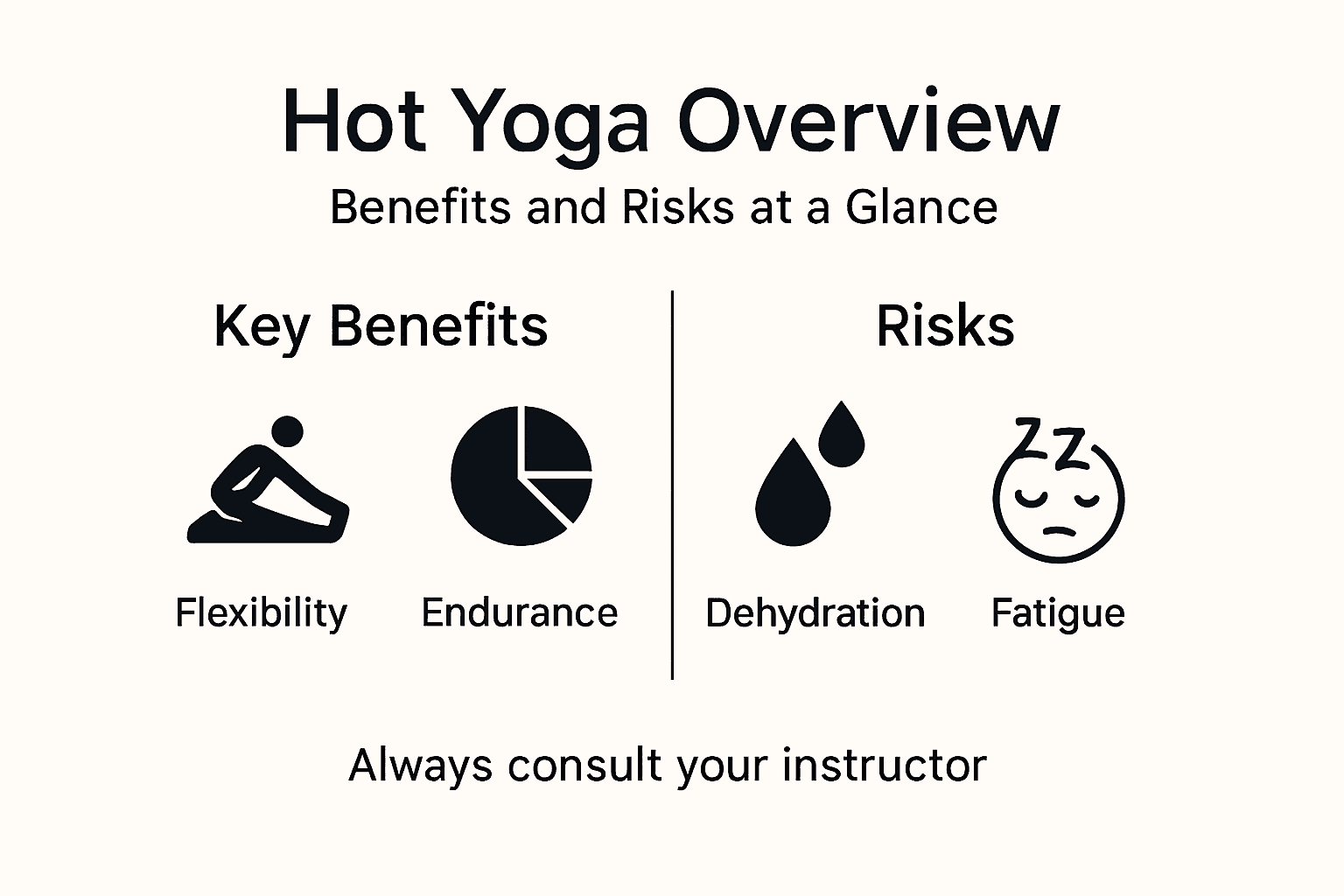
Hot yoga techniques also present potential risks that practitioners must carefully consider. Individuals with pre-existing cardiovascular conditions, respiratory issues, or heat sensitivity should consult healthcare professionals before beginning a hot yoga practice.
Potential risks to be aware of include:
Dehydration risks
Heat exhaustion possibilities
Potential overexertion
Increased stress on cardiovascular system
Risk of heat-related illnesses
Pro tip: Always listen to your body, stay hydrated, and stop immediately if you experience dizziness, excessive fatigue, or unusual discomfort during hot room yoga sessions.
Essential Tips for a Safe and Effective Practice
Yoga safety practices demand careful attention, especially in the intense environment of hot room yoga. Understanding and implementing key safety strategies can transform your practice from potentially risky to profoundly beneficial.
Pre-Class Preparation Essentials:
Hydration Strategies
Drink water 2-3 hours before class
Consume electrolyte-rich fluids
Avoid heavy meals 2 hours prior
Physical Readiness
Wear lightweight, moisture-wicking clothing
Bring extra towel and water bottle
Use non-slip yoga mat
Health Considerations
Consult healthcare provider if needed
Inform instructor of any medical conditions
Know your personal physical limits
Hot yoga techniques require mindful execution. During class, practitioners should focus on maintaining proper breathing, listening to their body's signals, and modifying poses as necessary. The heated environment amplifies physical stress, making self-awareness crucial.
During class, implement these critical safety practices:
Move slowly and deliberately
Take breaks when feeling overwhelmed
Maintain steady, controlled breathing
Stop if experiencing dizziness or extreme discomfort
Stay near room's cooler areas if feeling challenged
Pro tip: Arrive at least 15 minutes early to acclimate to the room's temperature and prepare mentally for your hot yoga session.
Hot Room Yoga Versus Traditional Yoga Classes
Yoga practice comparisons reveal significant differences between hot room and traditional yoga approaches, each offering unique benefits and challenges to practitioners. While both styles share core principles of mindfulness and physical engagement, their methodological distinctions create dramatically different experiences.
Key Comparative Elements:
Environmental Factors
Hot Yoga: Heated room (90-105°F)
Traditional Yoga: Room temperature setting
Hot Yoga: Increased perspiration
Traditional Yoga: Standard body temperature
Physical Intensity
Hot Yoga: Higher cardiovascular demand
Traditional Yoga: Moderate physical challenge
Hot Yoga: Enhanced muscle flexibility
Traditional Yoga: Gradual flexibility development
Mental Engagement
Hot Yoga: Intense focus required
Traditional Yoga: Meditative, steady approach
Hot Yoga: Stress resilience training
Traditional Yoga: Mindful introspection
Comparative yoga studiesindicate that while both practices offer substantial health benefits, hot room yoga demands greater physiological adaptation. The elevated temperature creates an additional layer of challenge, requiring practitioners to develop enhanced body awareness and mental discipline.
The primary distinctions extend beyond physical parameters, touching psychological and physiological domains. Hot room yoga represents a more intense, performance-oriented approach, whereas traditional yoga emphasizes holistic, gradual development of mind-body connection.
For quick reference, here’s how hot room and traditional yoga compare on key dimensions:
| Aspect | Hot Room Yoga | Traditional Yoga |
|---|---|---|
| Temperature | 90–105°F, heated | Room temperature |
| Sweat & Hydration | Heavy sweating, extra fluid | Moderate sweating, standard intake |
| Fitness Challenge | High intensity, fast gains | Moderate pace, gradual gains |
| Mental Training | Stress resilience | Relaxation, introspection |
Pro tip: Begin with traditional yoga classes to establish foundational skills before transitioning to hot room yoga’s more demanding environment.
Experience the Power and Benefits of Hot Room Yoga at Amrita Yoga & Wellness
If you are ready to embrace the challenges and rewards of hot room yoga, including increased flexibility, mental focus, and cardiovascular endurance, Amrita Yoga & Wellness in Philadelphia offers expert-guided classes designed to support your journey safely and effectively. Whether you want to try structured Bikram Yoga or explore dynamic styles like Power Hot Yoga, our welcoming community helps you build strength and resilience while staying hydrated and mindful.

Take the next step toward transforming your wellness routine with personalized attention and a variety of hot yoga sessions at Amrita Yoga & Wellness. Visit us today to explore class schedules, join workshops, and become part of a supportive environment committed to your physical and mental growth. There is no better time than now to start your hot yoga practice with guidance that prioritizes your well-being and goals.
Frequently Asked Questions
What is hot room yoga?
Hot room yoga is a variation of traditional yoga where practitioners perform poses in a heated environment, typically between 90 to 105°F. This elevated temperature helps improve flexibility, promote muscle stretching, and enhance cardiovascular endurance.
What are the benefits of hot room yoga?
The main benefits of hot room yoga include increased muscle flexibility, improved cardiovascular endurance, enhanced muscle strength, stress reduction, mental focus, and potential weight management support through calorie burning and boosted metabolism.
How does hot room yoga differ from traditional yoga?
Hot room yoga is conducted in a heated environment, which increases physical intensity and demands greater cardiovascular challenge, while traditional yoga is practiced at standard room temperature with a more gradual pace and intensity. Hot room yoga emphasizes sweat and resilience, while traditional yoga focuses on holistic engagement and relaxation.
What should I do to prepare for a hot room yoga session?
To prepare for a hot room yoga session, it is essential to stay hydrated by drinking water before class, wear lightweight moisture-wicking clothing, bring a towel and a water bottle, and listen to your body during practice to avoid overexertion.