Gentle Exercise Options for Adults: A Practical List
The best gentle exercises for adults are walking, swimming and water aerobics, cycling, chair yoga, tai chi, mat Pilates, barre and light strength work. They go easy on your joints and still build heart health, strength and balance. Below you'll find each option, who it suits, how to begin, and how to put them together into a week you can keep up.
Amritayogawellness
Explore Gentle Movement in Philadelphia
Amrita Yoga & Wellness offers yoga, tai chi, Pilates and barre classes for adults exploring low-impact ways to move.
TL;DR
Gentle does not mean pointless. Low-impact does not mean low-intensity: cycling and swimming can still raise your cardiovascular fitness.
Aim for the national target of 150 minutes a week of moderate aerobic activity, plus muscle strengthening on at least two days. Build up to it slowly.
Mix three kinds of movement: aerobic, strength and balance. Tai chi, yoga and Pilates cover a lot of that ground in one session.
Start with 10 minutes if that is what you have. A habit you keep beats a hard workout you quit.
If you have neuropathy, osteoporosis, dizziness or a recent injury, talk to your doctor or physical therapist before you pick a routine.
Table of Contents
What "gentle" exercise really means
Gentle exercise is movement that keeps stress off your joints, lets you control the pace, and leaves you feeling better rather than wrecked afterward. Think of it as the opposite of running, jumping and heavy, jerky lifting. It is not a lesser category of exercise.
Two points are worth holding onto. First, intensity and impact are different things. Kaiser Permanente's trainer Andy Gallardo makes the case that low-impact options can still boost heart fitness without the pounding of high-impact work. Second, you can usually adjust gentle exercise as you go, which makes it easier to stay consistent.
A systematic review of low-intensity exercise in older adults found that 11 of 15 selected studies reported improvement in flexibility, balance, lower-limb strength or depressive symptoms. The same review's authors concluded that the literature supports low-intensity exercise for physical and cognitive health.
The list: 10 gentle exercise options for adults
1. Walking
Walking needs no equipment and no membership. Start with a flat route and a pace at which you could still talk. Ten minutes after a meal counts. If your balance is shaky, choose a mall, a track or a quiet path with handrails nearby.
The NIA describes brisk walking as an example of moderate aerobic exercise, the kind that adds up toward the weekly 150-minute goal.
2. Swimming and water aerobics
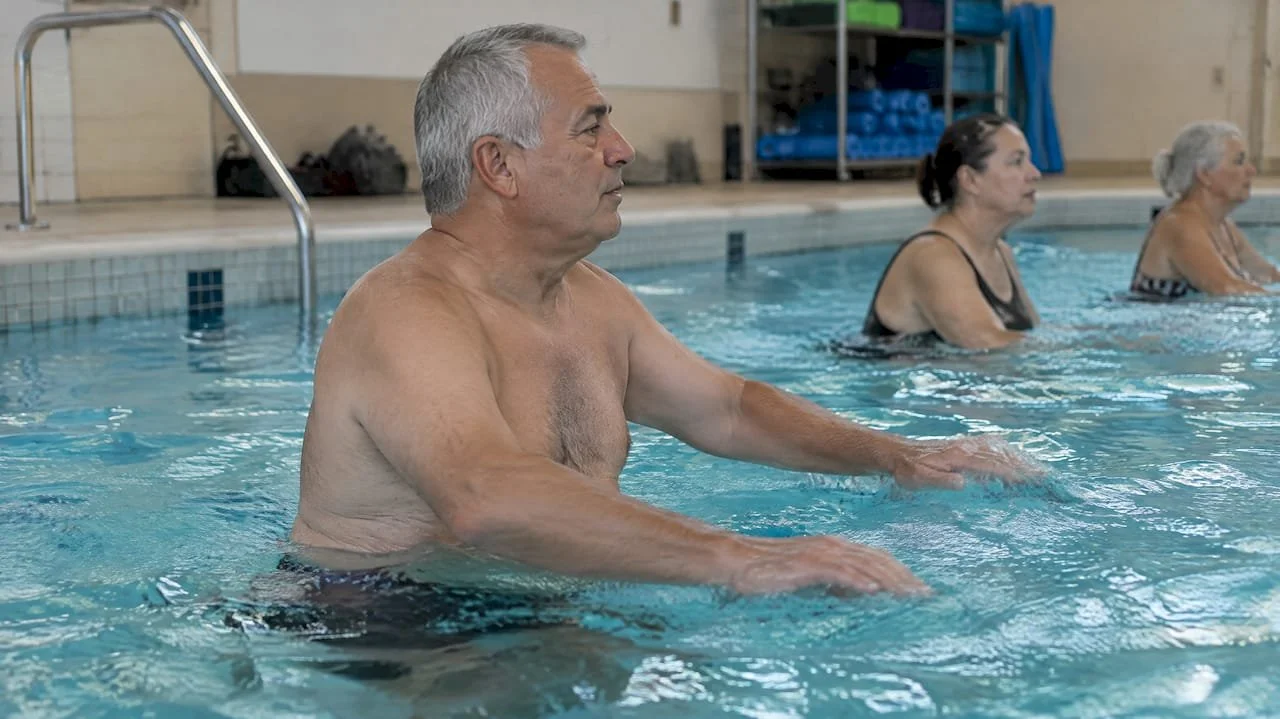
Water holds up your body weight, so it is a good fit when land-based exercise aggravates a hip, knee or back. The CDC's arthritis guidance lists swimming and water aerobics among low-impact aerobic activities that do not stress the joints. Many community pools run water classes designed for beginners.
3. Cycling, stationary or outdoor
A stationary bike with a supportive seat lets you control resistance and stay close to a handrail or wall. Outdoors, pick a flat, protected path. Cycling appears on the Kaiser Permanente list of low-impact workouts, alongside walking, swimming, yoga, tai chi, Pilates and rowing.
4. Chair exercises and chair yoga
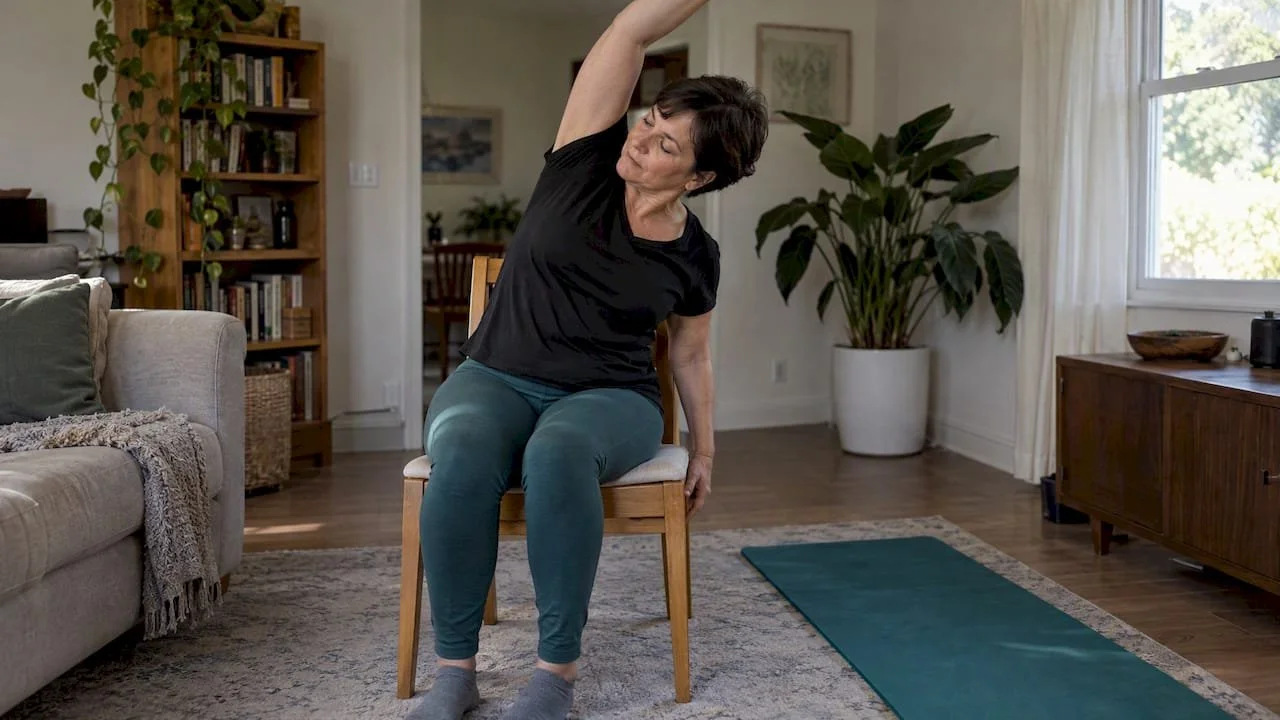
If standing is hard, or you are easing back after time off, a chair is a smart starting point. Seated marches, arm circles, gentle twists and ankle circles all count. Our guide to chair yoga poses for beginners walks through safe ways to build flexibility without getting down on the floor.
5. Gentle yoga
Slow, supported yoga improves flexibility and body awareness, and the breathing helps many people unwind. Look for classes labeled gentle, restorative or beginner, and tell the teacher about any injuries before class starts. If you would like to see what a slow flow feels like, read our overview of gentle flow yoga. For a home routine, try the 10 to 15 minute beginner practice.
6. Tai chi
Tai chi links slow, flowing movement with attention and breath. The research summary behind this article notes that the cognitive element, as in tai chi, may bring added mental benefits such as better memory and attention. It is also a common recommendation for balance. Weight shifts and single-leg moments are practiced slowly, with plenty of time to correct yourself.
7. Mat Pilates
Pilates builds the deep core and hip muscles that support your posture and spine, and its controlled pace suits many bodies. Props and modifications let you scale a move up or down. If you are new, our guide to starting Pilates safely explains what to expect in a 45 to 60 minute session and how studios modify moves. You can also practice Pilates at home with a step-by-step plan.
8. Barre
Barre borrows from ballet, Pilates and strength training: small, controlled movements, often with a ballet barre or chair for support. That support is what makes it friendly to people who worry about balance. We explain why barre is such a low-impact workout in more detail.
9. Light strength training
Resistance bands, light dumbbells, a wall push-up or a sit-to-stand from a chair all build muscle. Muscle matters for everyday tasks such as climbing stairs and carrying groceries. The guideline of two or more days of strengthening for all major muscle groups applies to adults generally.
10. Light gardening and dancing
Not every session needs a name. The CDC's list of low-impact activities for people with arthritis also includes light gardening and dancing. If you enjoy it, you will do more of it, and that is the whole point.
Which option fits which situation
| If you want... | Consider | Why |
|---|---|---|
| The easiest start, no cost | Walking, chair exercises | No gear, easy to scale |
| Relief for sore joints | Water aerobics, swimming | Water supports your weight |
| Better balance | Tai chi, gentle yoga, barre | Slow weight shifts, with support nearby |
| A stronger core and posture | Mat Pilates | Controlled, adjustable movement |
| Less stress | Gentle yoga, tai chi | Breath and attention built in |
| Heart fitness without impact | Cycling, swimming, brisk walking | Easy on joints, still raises your pulse |
How much do you need?
The NIA, citing the Physical Activity Guidelines for Americans, says you should do at least 150 minutes a week of moderate-intensity aerobic exercise, plus strengthening for all major muscle groups on two or more days. The NIA also notes that older adults can benefit from all three types of exercise: aerobic, muscle-strengthening and balance.
That sounds like a lot until you break it down. Here is one way a week might look:
Monday: 20-minute walk.
Tuesday: 30-minute gentle yoga or Pilates class.
Wednesday: 20-minute walk or a swim.
Thursday: 15 minutes of strength work with a chair and bands, plus 10 minutes of balance practice.
Friday: tai chi or barre.
Saturday: a longer, easy walk, or gardening.
Sunday: rest, or stretch.
That adds up to a workable week, and every day is optional. If you are starting from zero, do the first two weeks at half this pace.
Start slowly, and keep going
The NIA advises that older adults ease in, because overdoing it early leads to injury, and injury makes people quit. Consistency is worth more than intensity. This matches the research: adherence in low-intensity programs is high, and the systematic review above links such programs to measurable gains.
A few rules that work in practice:
Begin with 5 to 10 minutes and add a few minutes each week.
Use the talk test. You should be able to speak in short sentences.
Stop if you feel sharp pain, chest pain, dizziness or unusual shortness of breath, and call your doctor.
Pick a regular time. Habits stick when they sit in a fixed spot in your day.
If you want a structure for building a routine, our piece on building a lasting daily yoga routine and the 10 to 20 minute routines for beginners are a good place to begin.
Balance and fall safety
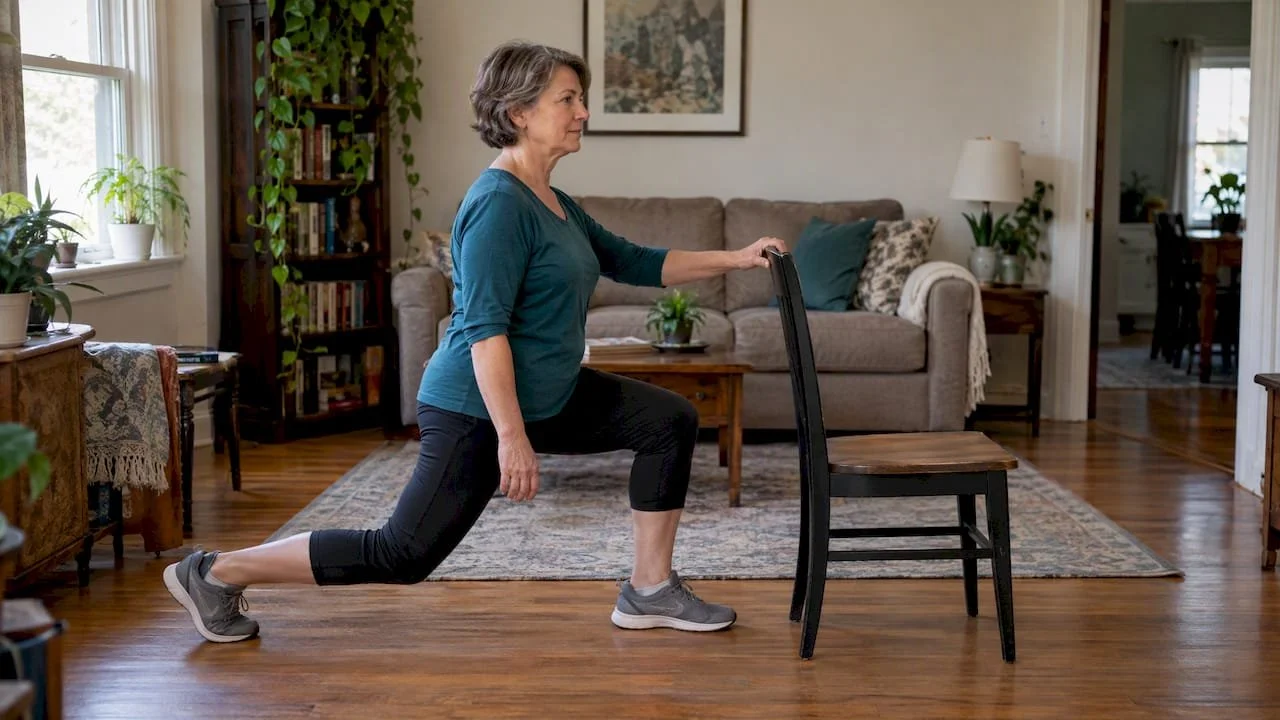
Balance practice deserves its own slot in your week. Standing on one foot while holding a counter, heel-to-toe walking and side leg raises with a chair for support are all common starting points. For a deeper look, this guide to balance training for seniors covers safe exercises to help prevent falls.
One overlooked detail: standing up too quickly can cause a drop in blood pressure and dizziness. The NIA's falls guidance describes checking blood pressure lying down and standing and getting up gradually. If you often feel lightheaded when you stand, mention it to your doctor before you begin a new routine, and rise slowly between exercises.
If you have neuropathy
People often ask whether exercise helps neuropathy. An expert consensus and systematic review of exercise for neuropathic pain, which drew on eight systematic reviews and 21 randomized trials, produced 10 evidence-based recommendations. Yoga, tai chi and walking are among the low-impact options recognized in that line of research. Ask your own clinician which type and how much is right for you.
Footwear matters as much as the exercise. Mayo Clinic's self-care advice for peripheral neuropathy says to check your feet daily for blisters, cuts or calluses and wear soft, loose cotton socks and padded shoes. That is especially important if you have diabetes, because reduced sensation lets small injuries go unnoticed. Choose water exercise or seated work on days your feet feel particularly sensitive, and look at your feet after every session.
Our perspective: gentle is a skill, not a downgrade
At Amrita Yoga & Wellness in Philadelphia, we meet a lot of adults who walk in worried that they are too stiff, too out of shape or too late. We hear it from first-timers, from people returning after an injury, and from busy professionals who want something sustainable. Our answer is the same each time: start where you are, and let the practice grow.
We design classes for safety, personal growth and connection across experience levels, and we think the third part gets underrated. People keep exercising when they feel welcome. A teacher who offers a modification without fuss, a room where nobody is comparing, a regular spot in the schedule: these do more for long-term health than a perfect workout plan you abandon in week three.
Our advice is to try two or three of the options above, give each a fair few sessions, and keep the ones that leave you feeling steadier and calmer. Choose a gentle class over a hard one if you are unsure. You can always add intensity later.
— Juiced
Try a gentle class in Philadelphia
If you would like guidance rather than going it alone, we teach in-person yoga in several styles, mat Pilates, group reformer, barre and tai chi, for beginners through advanced students. You can see what each class involves on our class descriptions page.
Prices published on our classes and memberships page include a Community Class drop-in at $11, a Group Class drop-in at $28 and a Nurtured Beginnings pass at $35. If you prefer to start from home, a Livestream Class drop-in is $19 and an On Demand Membership is $25 per month. For individual attention, a one-to-one session starts from $85 per hour. New students can also check our new student specials.
FAQ
What are some good, easy exercises?
Walking, chair exercises, gentle yoga, water aerobics and stationary cycling are the most accessible. They need little or no equipment and are simple to scale. Start with 5 to 10 minutes and add time gradually.
What is the best exercise for older adults?
No single exercise is best. Experts recommend a mix of aerobic, strength and balance work. Walking plus tai chi or yoga and some light strength work covers all three for most people.
What are examples of gentle exercise?
Walking, swimming, water aerobics, cycling, yoga, tai chi, Pilates, barre, rowing and light gardening all qualify. The Kaiser Permanente list includes several of them. Choose by what your joints tolerate and what you enjoy.
Will exercise help with neuropathy?
It can. A consensus review found exercise to be a beneficial intervention for neuropathic pain across many conditions. Your doctor should guide the type and amount, and you should protect your feet with proper socks and shoes.
Is gentle exercise enough to stay healthy?
It can be, if you do enough of it. Meeting the 150-minute weekly target with moderate effort, adding strength on two days and practicing balance gives you the core of the guidelines. Low-intensity programs also tend to be easier to keep up.
Sources
How Older Adults Can Get Started With Exercise, National Institute on Aging
Health Benefits of Exercise and Physical Activity, National Institute on Aging
Falls and Fractures in Older Adults: Causes and Prevention, National Institute on Aging
Effect of Low-intensity Exercise on Physical and Cognitive Health in Older Adults, PMC
Exercise for Neuropathic Pain: A Systematic Review and Expert Consensus, PMC