9 Mind Body Connection Exercises: How To, Modifications, 3 Routines
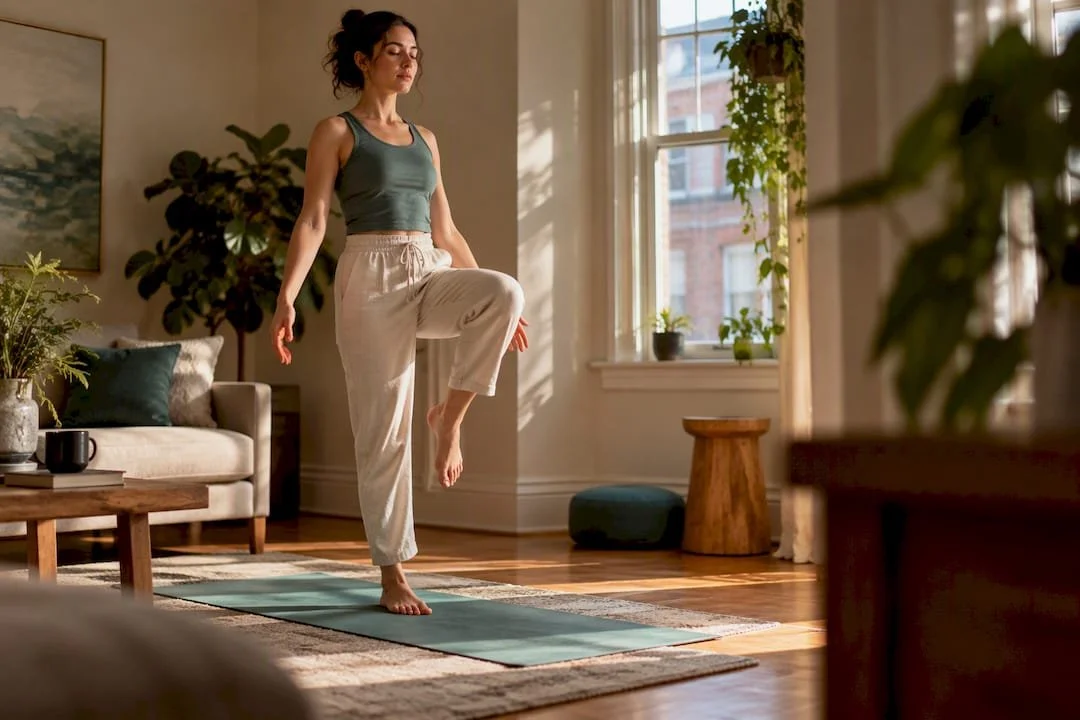
The most effective mind-body exercises are breathwork, body scan meditation, progressive muscle relaxation, guided imagery, yoga, Tai Chi or Qigong, and mindful walking, each of which builds body awareness and helps regulate stress within minutes of practice. Start with five minutes of slow breathing today, and work with a qualified teacher if you have a chronic illness, are pregnant, or have a history of trauma.
TL;DR:
Practicing simple breathwork patterns like box breathing or coherent breathing can reduce stress in just a few minutes, especially when done daily or before sleep.
Starting with two to three varied mind-body practices such as yoga, Tai Chi, or guided imagery, and maintaining consistency weekly, produces better stress regulation than infrequent intense sessions.
Modifications like chair-supported yoga and avoiding deep twists are vital for safety if you have injuries or health concerns, and supervision by qualified instructors is recommended for beginners or trauma recovery.
Short daily micro-practices, such as five minutes of breath or body scan, paired with a gradual increase in session length, help create sustainable routines for body awareness and stress management.
Incorporating regular movement, breath, and mindfulness practices into your routine can shape brain networks responsible for attention and self-awareness, extending emotional benefits beyond physical exercise.
Amritayogawellness
Find Your Mind Body Practice
Explore yoga, Tai Chi, breathwork, Pilates, and other wellness practices at Amrita Yoga & Wellness in Philadelphia.
Explore Amrita Yoga & Wellness
Table of Contents
3. Safety, modifications, and when to get professional instruction
5. Why Amrita Yoga & Wellness teaches these practices this way
1. Practical exercise list for building body awareness
Each of these practices trains a slightly different skill, so pick two or three to start rather than trying everything at once.
Breathwork. Box breathing (inhale four counts, hold four, exhale four, hold four) calms an overactive nervous system in under two minutes. The 4-7-8 pattern (inhale four, hold seven, exhale eight) works well before sleep, while coherent breathing, roughly five to six breaths per minute, is a steady baseline practice for daily stress regulation. All three suit beginners and can be done seated, standing, or lying down.
Body scan meditation. Lie down or sit comfortably, close your eyes, and move your attention slowly from your feet to your head, noticing sensation without trying to change it. A useful cue is naming one sensation on each exhale, such as "heavy legs" or "soft belly," which anchors attention and speeds up learning the skill. A full scan takes 10 to 20 minutes, though a two-minute version covering just the hands, shoulders, and jaw works when time is short.
Progressive muscle relaxation (PMR). Tense each muscle group for five seconds, then release and notice the contrast for ten seconds, working from your feet up to your face. The tense-then-release sequence teaches your body to recognize what relaxation actually feels like, which is often the missing skill for chronically tense people.
Guided imagery. Picture a specific safe place in detail: the temperature, the sounds, the light. A "resource state" image, recalling a moment you felt calm and capable, works well before a stressful event like a presentation or medical procedure. Five minutes is enough for most people to notice a shift.
Yoga. A beginner sequence of cat-cow, child's pose, seated forward fold, and legs-up-the-wall, paired with slow breathing, combines movement with attention training. A systematic review and meta-analysis of yoga interventions found that programs combining postures, breathing, and meditation reduced stress markers and improved anxiety and depression scores, with trial frequency ranging from once weekly to several sessions a week over programs that typically ran for several weeks. Keep knees soft and avoid deep twists if you have a back injury.
Tai Chi and Qigong. Both use slow, continuous movement linked to breath, and both can be practiced standing or seated for people with balance concerns. A systematic review and meta-analysis on Tai Chi found benefits for chronic pain and function with a low rate of adverse events, making it one of the gentler entry points into meditative movement.
Mindful walking. Slow your pace by about half, and cycle your attention through what you see, hear, and feel underfoot for one full minute each. This sensory anchoring turns an ordinary walk into a short attention-training session.
Pilates-based mindful movement. Sync breath to core work: exhale on the effort phase of an exercise like the hundred or a pelvic curl, inhale on the release. This breath-synced approach builds interoceptive awareness alongside strength and mobility.
Dance and movement micro-practices. A few minutes of unstructured, music-led movement, letting your body respond without choreography, gives emotional tension a physical outlet that stillness-based practices don't offer.
Meditative movement practices like Tai Chi, Qigong, and yoga appear to work partly by shaping how the brain's attention and self-awareness networks respond, which may explain why the emotional benefits often outlast the physical workout itself. For more on linking breath cues to specific postures, see this collection of mindfulness for yoga resources.
2. How to build a balanced weekly mind-body routine
A single great session helps, but consistency across the week is what actually changes your baseline stress level. Structure matters more than intensity here.
Two sessions of strength or mobility work, each opened with two minutes of breath preparation to set attention before you move.
Two low-intensity meditative movement sessions, such as yoga or Tai Chi, lasting 20 to 45 minutes.
A daily five to ten minute micro-practice, alternating breathwork and body scan, on the days without a longer session.
One full recovery day with no structured practice at all, just rest.
Dose matters in both directions. Research on the relationship between physical activity and stress biomarkers points to an inverted U-shaped pattern, where moderate practice lowers cortisol but excessive high-intensity activity can push stress markers back up. That is one reason a weekly plan mixes gentle and active sessions rather than stacking hard workouts every day.
Pro Tip: Attach your micro-practice to something you already do, like your morning coffee or the walk to your car, so it becomes automatic instead of another task on your list.
Progression should be slow — and building a sustainable routine is easier with support from professionals like those at DCFB Wellness | Corporate Wellness in Dallas & DFW, who specialize in creating workplace-friendly wellness programs. Add five minutes to a session every two weeks rather than doubling your practice time overnight, and if a habit trigger stops working, swap it rather than abandoning the practice entirely. For a broader set of short techniques to slot into these slots, this list of mindfulness techniques is a useful reference.
3. Safety, modifications, and when to get professional instruction
Most mind-body practices are low risk, but a few signals mean you should stop and reassess.
Stop a breathing exercise if you feel lightheaded, tingly, or unusually short of breath, and return to normal breathing.
Skip deep twists, backbends, or long holds in yoga if you have a spinal injury, and use a chair-supported version of standing poses instead.
Sit rather than lie down for a body scan if lying flat triggers anxiety or reflux.
Watch for increased anxiety during meditation. The NCCIH notes that a minority of practitioners have negative experiences, and beginner supervision helps reduce that risk.
Seek a qualified teacher if you are pregnant, managing a chronic illness, recovering from trauma, or new to a practice with complex movement, since learning form from video alone raises the risk of injury.
Check that any instructor holds a recognized teaching certification for the specific practice, such as a registered yoga teacher credential, before booking ongoing sessions.
4. Quick-start sample routines you can use today
These three templates scale from a spare ten minutes to a full beginner month.
10-minute daily micro-practice. Spend four minutes on coherent breathing, then four minutes on a shortened body scan covering the hands, shoulders, and jaw, and close with two minutes of stillness.
30-minute session. Warm up with five minutes of gentle movement, follow with 15 minutes of mindful yoga or Tai Chi, add five minutes of box breathing, and finish with five minutes of guided imagery or quiet rest.
4-week beginner progression. Week one: daily 10-minute micro-practice only. Week two: add one 30-minute session twice weekly. Week three: add a second weekly 30-minute session and introduce PMR before bed. Week four: hold that structure and add five minutes to one session to test your capacity.
Pro Tip: If a full session feels like too much on a hard day, the NCCIH's overview of mind-and-body practices supports shorter, more frequent sessions as a legitimate way to build the same skill, so a two-minute breath check-in still counts.
Simple cues help the habit stick: a sticky note on your water bottle, a phone reminder tied to lunch, or laying out a mat the night before. For more ready-made short practices to plug into these routines, see 7 mindfulness techniques examples for yoga and Pilates.
5. Why Amrita Yoga & Wellness teaches these practices this way
Amrita Yoga & Wellness structures its classes, from hot yoga to Tai Chi to Pilates, around the same body-awareness skills covered above, with modifications built into every level from beginner to advanced. Solo practice works well for daily micro-sessions, but classes give you real-time correction on form and breath pacing, which matters most when you are learning a new movement pattern. The studio's community classes are designed so beginners and experienced practitioners can work at their own pace in the same room.
— Juiced
6. Ways to learn these exercises with guided support
Reading a list is a start, but a body scan feels different when a teacher is cueing your attention in real time, and a yoga posture lands differently when someone can adjust your alignment.
Amrita Yoga & Wellness offers a few direct paths in. If community energy helps you stay consistent, a Group Class Drop In covers yoga, Tai Chi, and Pilates sessions built around the practices in this guide. If you have an injury or want modifications tailored to your body, a private session starts at $85 an hour. For a deeper dive into breathwork specifically, check the studio's workshop schedule on the class descriptions page.
FAQ
What are some examples of brain-body connection exercises?
Breathwork, body scan meditation, progressive muscle relaxation, guided imagery, yoga, Tai Chi, Qigong, and mindful walking are common examples, each pairing a physical action with focused attention. These practices are grouped by NCCIH as mind-and-body practices because they train awareness alongside movement or stillness.
What are the 7 essential exercises?
There is no single agreed list of exactly seven exercises, since different teachers and traditions group these practices differently. A practical starting set covers breathwork, body scan, progressive muscle relaxation, guided imagery, yoga, Tai Chi or Qigong, and mindful walking, which together cover breath, stillness, and movement.
What are the 7 trauma release exercises?
Trauma release exercise programs vary by practitioner, and no single standardized list of seven exercises is universally recognized. Gentle movement practices like yoga and Tai Chi are often used alongside professional trauma-informed guidance, and anyone working through trauma should practice with a trained instructor or clinician rather than relying on a general list.
How can I strengthen my mind-body connection?
Start with a short daily practice, such as five minutes of slow breathing or a brief body scan, and build up frequency before adding duration. Consistency across the week, mixing gentle meditative movement with a couple of active sessions, tends to matter more than any single long practice.