How to practice Pilates at home: step-by-step guide
TL;DR:
Pilates is a low-impact, accessible exercise that improves spinal mobility at home.Consistent practice, even for short sessions, leads to meaningful mobility and pain reduction.Focusing on proper setup, form, and tracking progress enhances effectiveness and long-term results.
Finding time for fitness when you're juggling work, family, and everything Philadelphia life throws at you is genuinely hard. Pilates changes that equation. It's low-impact, requires almost no equipment, and improves spinal mobility and quality of life even when practiced entirely at home. Whether you've never rolled out a mat or you're returning after a long break, this guide walks you through setup, foundational moves, common pitfalls, and how to actually measure your progress so you can feel confident the effort is paying off.
Table of Contents
Key Takeaways
| Point | Details |
|---|---|
| Minimal setup needed | You only need a mat, comfortable clothes, and a small space to start Pilates at home. |
| Short sessions work | 15–45 minute Pilates routines deliver real benefits for mobility and pain relief. |
| Avoid common mistakes | Proper form and consistent practice prevent injury and maximize results. |
| Track your progress | Measuring mobility, pain, and strength helps you see improvements and stay motivated. |
| Adapt for busy schedules | Quick desk moves or micro-sessions make Pilates achievable for even the busiest adults. |
Get ready: Home Pilates essentials and setup
The good news is you don't need a reformer machine or a room full of mirrors to get started. Pilates is one of the most accessible workouts you can build at home, and the barrier to entry is refreshingly low.
Your non-negotiable starting point is a quality mat. Look for one that's at least 3/8 inch thick to protect your spine and hips during floor work. Beyond that, comfortable, form-fitting clothing helps you and any instructor video see your alignment clearly. Optional props, like a small resistance band, a yoga block, or a firm pillow, can support modifications as you build strength.
Choosing the right space matters more than most beginners expect. You need enough room to lie down fully in every direction, roughly a 6 by 6 foot square. A living room corner, a cleared bedroom, or even a back porch works. The key is removing trip hazards and ensuring the floor isn't slippery under your mat.
Short sessions of 15 to 45 minutesfit busy schedules and beginners perfectly, which means you don't need to carve out a full hour to see results. Pair that with a fewbeginner Pilates tipsand you're ready to build a sustainable habit.
| Essential | What to look for | Notes |
|---|---|---|
| Mat | 3/8" or thicker, non-slip | Non-negotiable for floor work |
| Clothing | Form-fitting, breathable | Allows you to check alignment |
| Props | Resistance band, block, firm pillow | Optional but helpful for beginners |
| Space | 6 x 6 feet minimum | Clear of clutter and furniture |
| Session length | 15 to 45 minutes | Scale up gradually |
Common setup mistakes to avoid:
Practicing on carpet without a mat (limits range of motion and stability)
Wearing loose, baggy clothing (makes it hard to spot form errors)
Setting up in a high-traffic area with distractions
Skipping a warm-up because the session feels short
Using a mat that's too thin and causing hip or spine discomfort
Understanding the Pilates health benefits before you begin also helps you stay motivated once the novelty wears off.
Pro Tip: Start in a quiet, clutter-free spot even if it means rearranging furniture temporarily. Your focus directly affects the quality of every rep.
Follow the basics: Key Pilates moves and step-by-step routine
Once your space is set up, the right moves make Pilates both effective and accessible. The goal here isn't to memorize a dozen exercises on day one. It's to move intentionally, breathe consistently, and build a foundation you can add to over time.
Here is a simple beginner session you can follow immediately:
Warm-up (5 minutes): Start lying on your back with knees bent. Do 10 slow pelvic tilts, gently pressing your lower back into the mat and releasing. Follow with 5 knee-to-chest pulls per side to release the hips.
The Hundred (core activation, 5 minutes): Lift legs to tabletop position, raise your head and shoulders, and pulse your arms up and down while breathing in for 5 counts and out for 5 counts. Complete 10 full breath cycles.
Single leg stretch (5 minutes): From a similar position, pull one knee to your chest while extending the other leg. Alternate sides for 10 reps each, keeping your lower back pressed down.
Spine stretch forward (5 minutes): Sit tall with legs extended. Inhale to grow tall, exhale to reach forward over your legs without collapsing. Repeat 6 times.
End stretch and cool-down (5 minutes): Child's pose for 60 seconds, then a gentle supine twist holding each side for 30 seconds.
Check out sample Pilates exercises to expand your routine as you grow stronger. You can also explore mat Pilates routines for structured progressions.
| Feature | Pilates routine | Generic home exercises |
|---|---|---|
| Focus | Precision, breath, core control | Repetition, volume |
| Low back pain relief | Pilates superior per RCT | Moderate, inconsistent |
| Time required | 15 to 45 minutes | 30 to 60 minutes |
| Equipment | Mat only | Often weights or machines |
| Beginner-friendly | High | Varies widely |
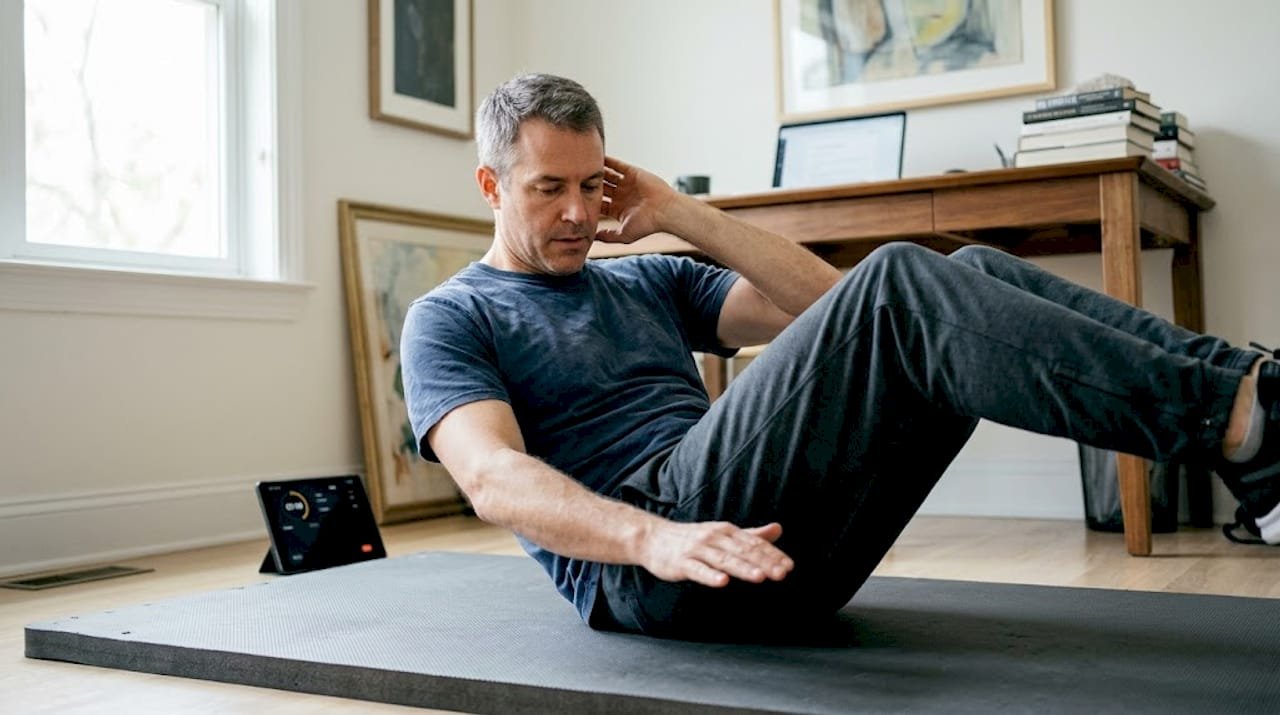
Maintaining form is more important than completing every rep. If your neck strains during the Hundred, place one hand behind your head. If your lower back lifts off the mat, lower your legs higher toward the ceiling.
Pro Tip: Use a timer to keep sessions under 45 minutes. Shorter, focused sessions build more consistency than longer ones you dread starting.
Troubleshooting: Common mistakes and practical solutions
Now, let's ensure your Pilates routine produces solid results by avoiding common pitfalls. Even motivated beginners fall into predictable traps, and catching them early saves a lot of frustration.
Top mistakes to watch for:
Holding your breath during difficult moves instead of maintaining a steady inhale and exhale rhythm
Skipping the warm-up when time feels short, which increases your injury risk significantly
Rushing through reps to get more done instead of moving slowly with control
Ignoring discomfort signals and pushing through sharp pain, especially in the lower back
Comparing your flexibility to online instructors who have trained for years
Safety note for low back pain: If you experience sharp or shooting pain during any movement, stop immediately and consult a healthcare provider before continuing. Modify exercises by keeping legs higher, reducing range of motion, or staying in constructive rest position (knees bent, feet flat) until you've built sufficient core strength.
Consistent practice matters more than perfect form on day one. Research confirms that Pilates improves spinal motion and reduces disability when practiced regularly, even at home with basic modifications. Progress is quiet but real.
If you're unsure which style fits your needs, reviewing the types of Pilates classes can help you choose the right approach. For focused core work, building core strength through targeted progressions is a smart next step.
Pro Tip: Record yourself doing one exercise per week using your phone. Watching the playback helps you spot alignment issues that are nearly impossible to notice in the moment.
Tracking success: How to measure your progress and results
With troubleshooting addressed, understanding progress will keep your practice motivated and effective. One of the most common reasons people quit a home fitness routine is that they can't see or feel the results quickly enough. Pilates works gradually, so tracking the right metrics changes everything.
Key metrics to monitor at home:
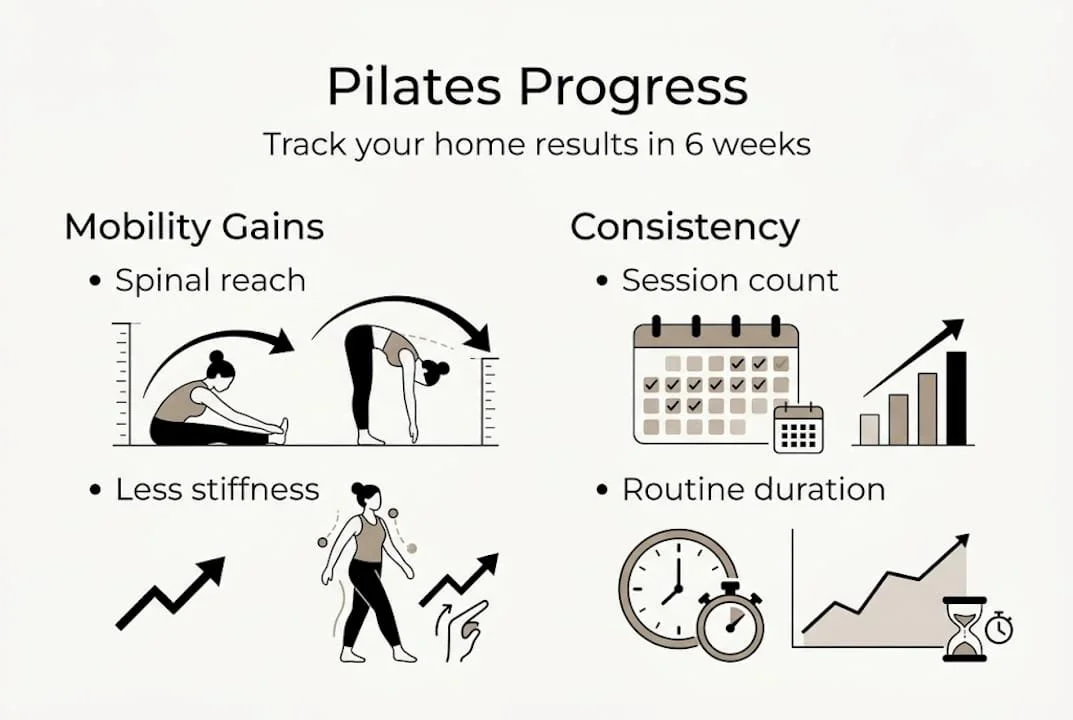
Spinal mobility: Can you reach further in the spine stretch forward than you could two weeks ago?
Pain levels: Rate your low back discomfort from 1 to 10 before and after each session
Energy: Note whether your afternoon energy improves on days you practice
Consistency: Track how many sessions you complete per week versus your goal
Ease of daily movement: Are tasks like bending, lifting, or sitting for long periods getting easier?
Research shows that Pilates improves quality of life and mobility among a wide range of adults, including improvements in nutritional status and overall wellbeing. That kind of broad benefit is rare in a single workout method. You can also track how it supports Pilates for weight loss goals over time alongside mobility gains.
| Metric | How to measure | Check-in frequency |
|---|---|---|
| Spinal reach | Distance from fingertips to floor | Every 2 weeks |
| Pain score | 1 to 10 self-rating before/after | Every session |
| Session consistency | Sessions completed vs. goal | Weekly |
| Energy levels | Morning and afternoon self-rating | Daily |
| Ease of movement | Journal note on daily tasks | Weekly |
Set a realistic 6-week milestone. Most beginners notice meaningful mobility changes within that window when they practice 2 to 3 times per week. Celebrate small wins like being able to hold a position longer or feel less stiffness when you wake up. Those moments are Pilates benefits showing up in real life, and they matter.
What most Pilates guides miss: Realistic home strategies for busy adults
Here's something most Pilates content won't tell you: expecting a tidy 40-minute session five days a week is the fastest way to quit. Real life in Philadelphia doesn't run on a wellness blogger's schedule. And yet, that's the standard most guides set.
The truth is that 10 minutes of intentional Pilates beats zero minutes of perfect Pilates every time. Micro-sessions, even a few pelvic tilts and a spine stretch during your lunch break, genuinely add up. Desk modifications like seated twists make Pilates accessible for professionals without ever unrolling a mat.
The other thing most guides miss is the mental side of a home practice. Without a class, an instructor, or other students around you, motivation has to come from within. Pairing your Pilates routine with an existing habit, like right after your morning coffee or before dinner, dramatically improves follow-through. Habit stacking is a simple but powerful tool.
Focus on building Pilates core strength incrementally rather than chasing flexibility milestones. Incremental progress sustained over months produces more lasting change than intense bursts followed by burnout.
Pro Tip: Commit to two scheduled sessions and one "whenever I have 10 minutes" session per week. That structure keeps your practice alive even in hectic weeks.
Ready to take your Pilates practice further?
Building a home Pilates routine is a powerful first step, and you don't have to take the next steps alone. At Amrita Yoga & Wellness, we offer a full spectrum of wellness experiences designed to complement the foundation you're building at home.
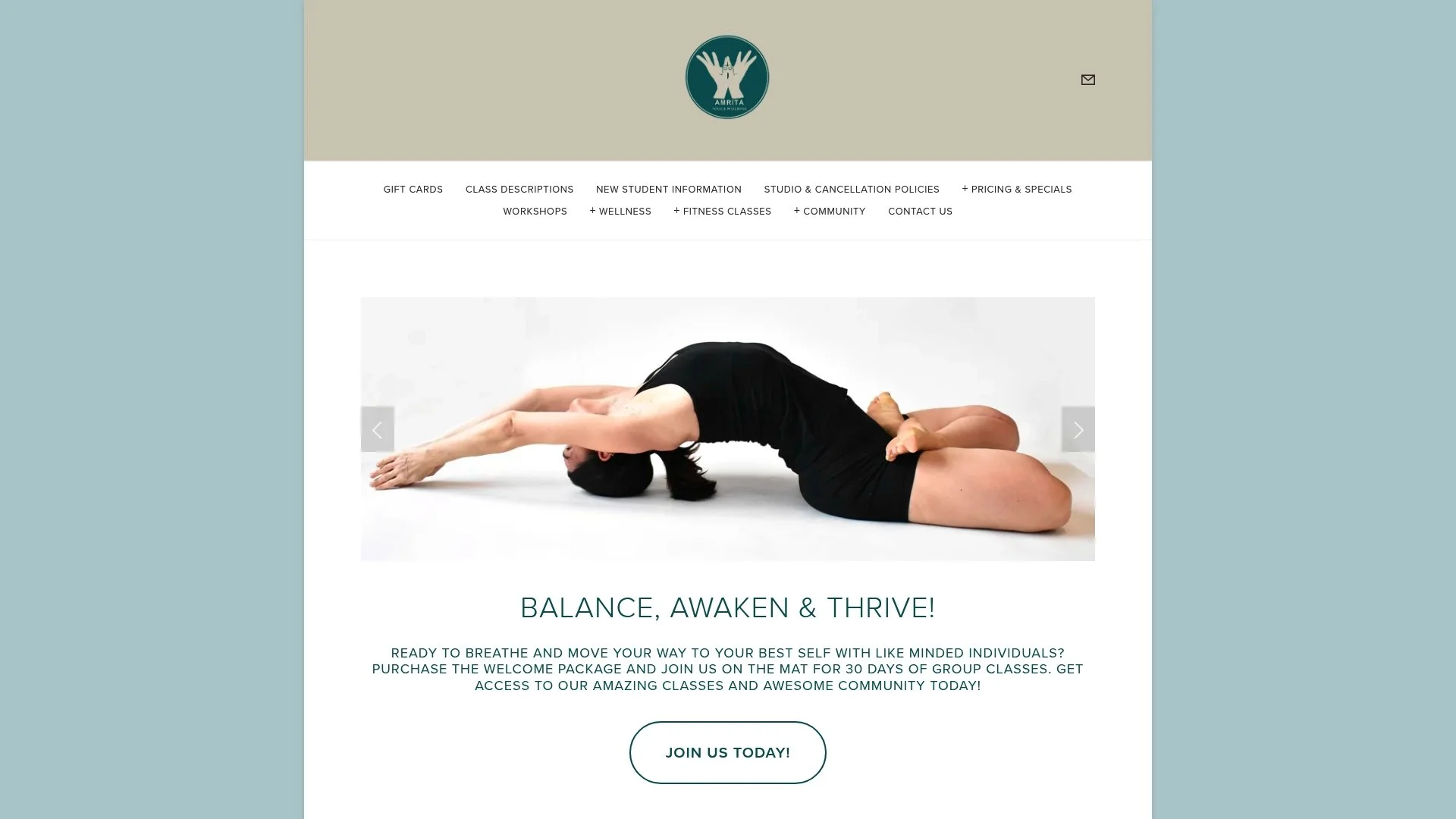
From Pilates and barre to hot yoga, tai chi, and massage therapy, our Philadelphia studio welcomes practitioners at every level. If you're looking to expand your self-care beyond movement, our Tarot readings offer a thoughtful, grounding experience that pairs beautifully with a mindful fitness practice. Explore our class schedule and community offerings, and find the next layer of your wellness journey waiting for you.
Frequently asked questions
Can I practice Pilates safely at home as a complete beginner?
Yes, Pilates is specifically designed for safe, low-impact movement, making it ideal for beginners and those with joint sensitivities. Sessions as short as 15 minutes are effective and appropriate for new practitioners.
What are the signs my Pilates routine is improving my mobility?
You'll notice easier everyday movements, reduced morning stiffness, and greater spinal flexibility within a few weeks of consistent practice. Research shows Pilates improves spinal ROM and quality of life in measurable ways.
How often should I practice Pilates at home for noticeable results?
Aim for 2 to 3 sessions per week for steady progress. Low-impact routines in the 15 to 45 minute range are effective for both building strength and maintaining what you've gained.
Is Pilates better than regular home workouts for back pain?
Studies show Pilates is superior to generic home exercises for managing low back pain and improving spinal mobility, making it the smarter choice for back pain relief.