Boutique Studio Community: Features That Make Members Stay
A boutique studio community is made of small, repeatable things: instructors who know your name, classes small enough to talk before and after, events that welcome beginners, and ways to stay connected between visits. If you are choosing a studio, look for those features. If you run one, build them on purpose. Below we cover what the research says, which features matter most, and how we approach it at Amrita Yoga & Wellness in Philadelphia.
Amritayogawellness
Find Your Place in a Wellness Community
Explore Amrita Yoga & Wellness in Philadelphia, with classes, workshops and wellness offerings for beginners through advanced practitioners.
TL;DR
Community is a main reason people keep showing up. 73% of consumers say a fitness community helps them stay motivated, according to ABC Fitness's Q4 2025 report.
Consistent attendance predicts who renews better than good intentions do, so features should make showing up easy and rewarding.
The best community is often incidental: friendly instructors, small rooms and shared routines, not forced socials.
Clear information about accessibility and levels helps first-timers walk through the door.
Ask any studio about class size, beginner paths, price flexibility, events and what happens when you miss a week.
Table of Contents
What "boutique" and "community" actually mean
Search for this topic and you will mostly find software for boutique retailers and agencies. That is not what we mean here. A boutique studio is a small, specialized fitness or wellness space: yoga, Pilates, barre, tai chi, sometimes bodywork. Research on boutique studios describes them as intimate spaces, often roughly 800 to 3,500 square feet, that compete on personal coaching rather than equipment floors and huge member pools.
Community is the result of that scale. When a room holds a dozen or two people and the teacher is the same person each week, you stop being a stranger. That feeling is not decoration. It is a product feature, and it is the one a big-box gym finds hardest to copy. If you are weighing the two formats, our guide on choosing between a boutique studio and a gym by coaching, schedule and cost walks through the trade-offs.
Why community is worth looking for
Three findings are worth knowing before you compare studios.
Belonging keeps people practicing. In ABC Fitness's Q4 2025 Wellness Watch, 47% of Gen Z say community is the reason they stick with fitness, and the report frames community as a retention strategy, not an extra. Studies of yoga practitioners point the same way: in a mixed-methods study of community yoga studio practitioners, a sense of shared experience and working together was central to why people kept attending group programs.
Showing up beats intending to. A study of 661 fitness centre members found that observed attendance and consistency, not just stated intent to renew, explained the most variance in who stayed. For you as a member, the lesson is practical: pick a studio whose schedule and culture make a weekly rhythm easy. For a studio, the lesson is to notice when someone's rhythm breaks and reach out kindly.
Size of the member list is not the point. The same research suggests that a large pool of members matters less than active, personalized engagement. A studio with 150 regulars who are greeted by name can be stronger than one with 1,500 passers-by.
The community features that matter most
Small classes and consistent teachers
This is the foundation. You cannot feel part of a group if the room is a crowd or the teacher changes every week. Ask how many people a typical class holds and whether teachers have regular slots. Consistency also helps safety: a teacher who sees your body week after week can offer adjustments that suit you.
Time before and after class
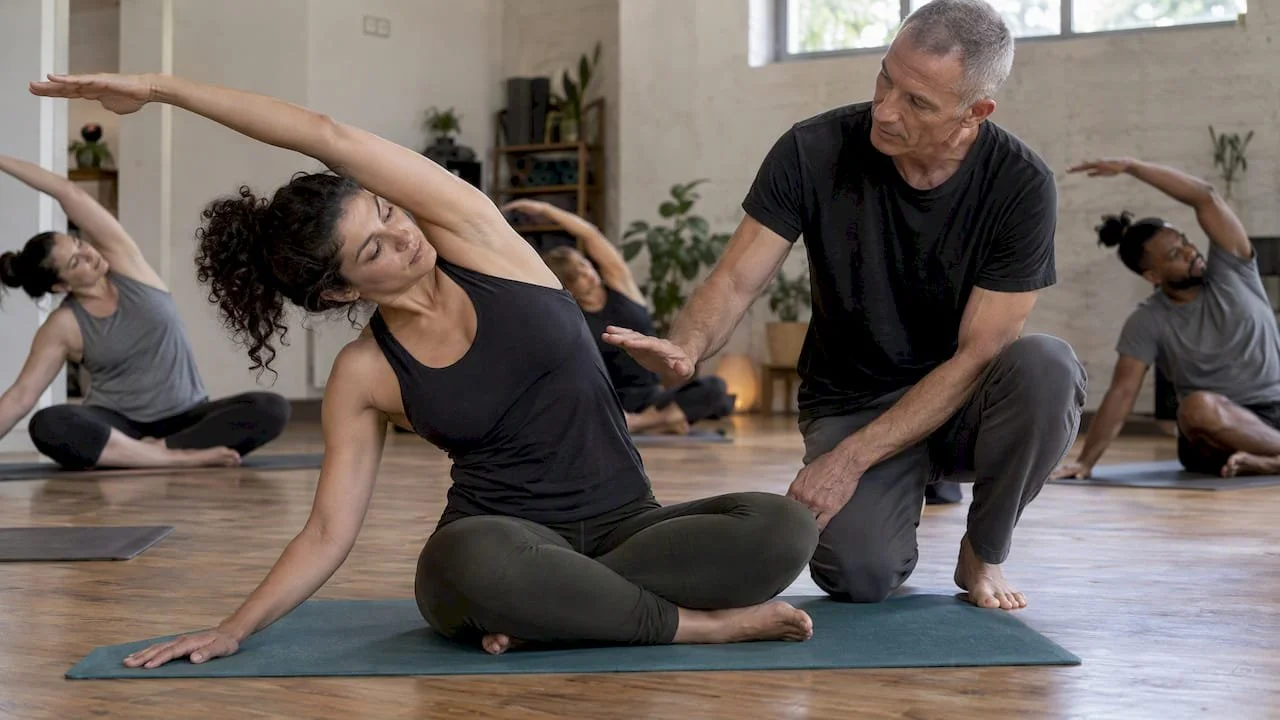
The most useful community feature costs nothing: ten unhurried minutes. Research on older adults in yoga programs found that instructors play a pivotal role in encouraging peer interaction in the room, and that a group chat on its own did not replace the social fabric of in-person classes. Look for a lobby with seats, tea, a teacher who arrives early and stays late.
Clear paths for beginners
Many people never try a studio because they fear being the only newcomer. A good studio makes the first visit easy to picture: what to wear, what to bring, which class to take, who will greet you. We publish class descriptions and a class and monthly experience schedule so you can choose before you arrive, and we offer a Nurtured Beginnings pass at 35 $ for newcomers.
Plain information about who the studio is for
A review of yoga studio websites found that a site is often the first interaction with a studio's mission and values, and that studios often need to spell out accessibility, such as classes for older adults or people with health conditions, so newcomers feel comfortable stepping in. If a studio says "all levels" but never explains what that means, ask. Our posts on inclusive yoga for every body and community yoga show how we think about it.
Pricing that lets people try before they commit
Community starts with a low barrier. Drop-in options, a lower-cost community class, and monthly memberships at several levels mean a person can test the room, then settle in. The shape of the price list tells you how welcoming a studio wants to be.
Events, workshops and shared challenges
Industry data from a 2024 US report on boutique and fitness studios found that 48% of studios organize group challenges and 46% host member events or socials to support retention. Events work best when they are an invitation, not an obligation. Workshops such as breathwork or tarot readings give people a reason to meet who might never share a 6 a.m. class.
Wellness services beyond the class
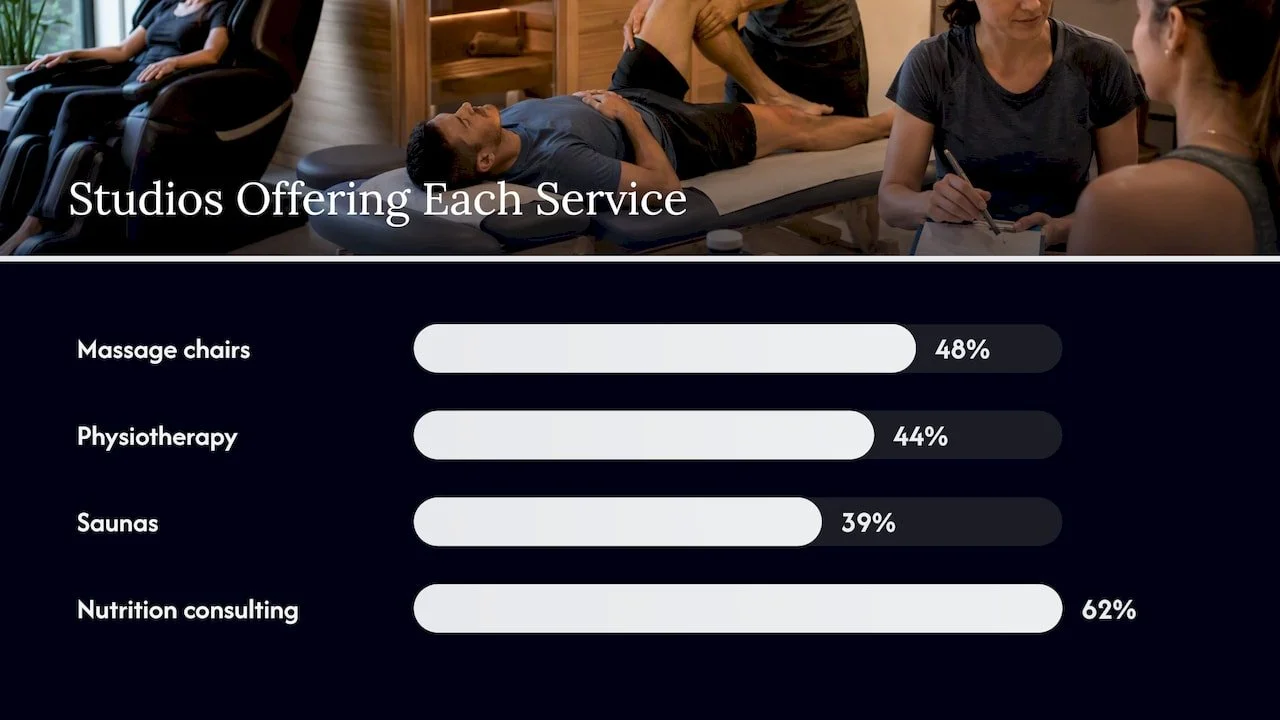
The same report found studios adding recovery and education: 48% offer massage chairs, 44% physiotherapy, 39% saunas and 62% nutrition consulting. The research notes these services work as a bridge to holistic wellness, especially when paired with education, such as a massage that comes with injury-prevention guidance. If you are exploring this side of wellness, a specialist center such as an in-person bone-health and recovery center shows how far allied services can go. We keep our own scope to yoga, movement and Ayurvedic bodywork.
Digital tools that support the room, not replace it
ABC Fitness notes that strong in-person culture works best paired with digital tools such as apps and challenges that keep people connected between visits. A livestream or on-demand option is useful here: it keeps your rhythm alive when travel, a sick child or a long week keeps you away.
A quick checklist for choosing a studio
| Feature | What to look for | Why it matters |
|---|---|---|
| Class size | Small enough that the teacher can see everyone | Personal attention and safer adjustments |
| Teachers | Regular slots, named on the schedule | You build a relationship, not just a habit |
| Beginner path | A specific intro class or pass | Lowers the fear of being the new one |
| Accessibility | Written descriptions of levels and adaptations | You know before you go whether it fits your body |
| Pricing | Drop-ins, packs and memberships | You can try, then commit |
| Events | Workshops and gatherings that are optional | Connection without pressure |
| Missed weeks | A livestream, on-demand library or friendly check-in | Keeps consistency going |
| Extras | Bodywork, private sessions, retail | One place for your wider wellbeing |
Our perspective
We are a Philadelphia studio, and community is not a department for us, it is the reason the studio exists. Our own description is simple: inclusivity, beginner approachability and community-focused experiences, across yoga (including hot yoga and aerial yoga), Pilates mat and group reformer, barre, tai chi, massage and workshops.
Here is what we have learned shapes belonging more than any single event:
Make the first class feel easy. Our Nurtured Beginnings pass and our lower-cost community class exist so cost and nerves do not decide for you.
Offer more than one way in. Some people want a studio class, others a livestream at 49 $ per month or an on-demand library at 25 $ per month. Both keep you inside the same community.
Treat bodies as different. We write about accessible yoga and inclusive yoga because "all are welcome" means little without detail.
Let connection happen, then help it along. We would rather have a teacher introduce two people who keep ending up on neighboring mats than schedule a forced mixer.
Care for the whole person. Ayurvedic therapies and private sessions sit beside group classes because some days you need a quiet hour, not a crowd.
You can read more on how we see this in our posts on the role of group classes and the fitness yoga studio experience.
— Juiced
How to build belonging as a new member
Community is two-way. A studio can set the stage, but a few habits on your side make it work faster.
Pick a regular slot. Attendance consistency is the strongest predictor of staying, so choose the class you can realistically make most weeks, not the one that sounds most impressive.
Arrive ten minutes early. Say hello to the teacher and to the person on the next mat. Tiny repeated contacts do the work.
Tell the teacher about injuries and goals. It helps them adapt the class. For pain, an injury or a medical condition, check with your doctor or physical therapist before starting a new practice.
Try one event in your first two months. A workshop is a lower-pressure way to meet people than small talk.
Use the backup options. On weeks you cannot come, take a livestream or on-demand class so the habit survives.
If you are a studio owner reading this, the same list inverts into a plan: a regular teacher, an unhurried lobby, a beginner path, optional events, a fallback for missed weeks and a quiet check-in for people whose attendance drops. Researchers studying retention suggest monitoring attendance and intervening before churn works better than counting on goodwill alone, and they put average churn in subscription fitness at roughly 3% per month. A short, human message after two missed weeks costs less than finding a replacement member.
What our membership options look like
If you want to experience a studio community without a long commitment, start with a drop-in and see how the room feels. Our published prices:
| Option | Price |
|---|---|
| Community Class Drop In | 11 $ per session |
| Livestream Class Drop In | 19 $ per session |
| Group Class Drop In | 28 $ per session |
| Experience Drop In | 33 $ per session |
| Nurtured Beginnings pass | 35 $ per pass |
| Earth Monthly Membership | 119 $ per month |
| Water Monthly Membership | 139 $ per month |
| Air Monthly Membership | 149 $ per month |
| 1 Month Unlimited Group Classes | 169 $ per month |
| On Demand Membership | 25 $ per month |
| Livestream Class Membership | 49 $ per month |
| LUV Yearly Membership | 1560 $ per year |
You can book any of these on our drop-in and membership page. For one-to-one work, private sessions start from 85 $ per hour on our private yoga and mat Pilates page. If you would like a restorative hour, our Ayurvedic therapies include Shirodhara at 90 $ per session and Abhyanga at 120 $ per session.
Features that sound like community but are not
Not everything labeled "community" builds it. Be cautious about three things:
A busy group chat with a silent studio. The research above suggests a digital forum does not replace in-person ties. A chat is a supplement.
Leaderboards without warmth. Challenges can motivate, but only when they are optional and measure effort kindly, not body size or speed.
Constant sales pressure at the front desk. A community studio explains its options once and lets you decide.
Also watch what a studio says about itself. If its site never mentions accessibility, levels or who teaches, you will have to ask. That is a fair question for any studio, including ours.
FAQ
What does a boutique studio community look like day to day?
It looks like familiar faces, a teacher who greets you by name, and a few minutes of conversation around class. Events and workshops add to it, but most belonging comes from small, repeated moments in the room.
Is a boutique studio better than a gym for community?
Often, because smaller classes and consistent teachers make it easier to know people. A gym can suit you better if you want open equipment hours and little structure. We compare both in our boutique studio versus gym guide.
I am a beginner. Will I feel out of place?
It is a common worry, and a good studio plans for it. Look for a beginner pass or intro class, written level descriptions and teachers who ask about injuries or limits. At our studio, the Nurtured Beginnings pass is 35 $ and the community class drop-in is 11 $, so you can try the room at low cost.
How do I stay connected if I cannot attend in person every week?
Use a livestream or on-demand option and keep one regular in-person slot when you can. Attendance consistency is a strong predictor of staying with a program, so a lighter rhythm you can keep beats a heavy one you drop.
Sources
Attitudinal and behavioural determinants of fitness centre member retention
Yoga studio websites: an accurate first glance at mission and values?