Start a Yoga Practice at Home in 10 to 15 Minutes for Beginners
Start today with a few minutes of breathing, then five to seven basic poses, three times each week. Consistency beats intensity for beginners, so short sessions done regularly build more progress than one long class you dread. Use props, stop at any sharp pain, and lean on a guided beginner video until basic alignment feels familiar.
TL;DR:
Practicing yoga three times weekly for 10 to 15 minutes builds consistency, improves posture, balance, and breath awareness faster than infrequent, longer sessions.
Beginners do not need to achieve flexibility first, as flexibility is a result of practice; starting at any level is both acceptable and effective.
A simple home space can be set up with minimal gear by choosing a consistent time, a visible spot for the mat, and avoiding expensive or specialized equipment.
Learning seven basic poses, like Mountain, Downward-Facing Dog, and Child's Pose, covers most beginner classes and helps maintain a balanced practice.
Guided videos and initial in-person classes with clear cues help beginners learn safe alignment and build confidence, especially when combined with feedback from experienced instructors.
Amritayogawellness
Find Your Starting Point
Explore accessible yoga and wellness classes in Philadelphia, with options for beginners and experienced practitioners alike.
Table of Contents
How Do You Start a Yoga Practice the Right Way?
Learning how to start a yoga practice comes down to one habit: showing up for less time, more often. A 15 minute session on Monday, Wednesday, and Friday teaches your body and your schedule more than a single 90 minute class squeezed in once a week. Yoga Journal recommends beginners start with short sessions multiple times per week and gradually increase the duration over the first several weeks.
The physical payoff shows up faster than most people expect. Regular short sessions improve posture, sharpen balance, and train breath awareness in ways that a rare marathon session simply cannot, since the body adapts to repetition, not to occasional intensity. Stress relief follows a similar pattern: the calming effect of slow, controlled breathing compounds when you practice it daily instead of chasing it once in a while.
Here's the part that trips up almost every new student: flexibility is not a prerequisite. It's an outcome. You do not need to touch your toes to start, and Cleveland Clinic frames yoga as something you meet your body where it is, not something you have to earn access to. Waiting until you feel "flexible enough" to start yoga is like refusing to jog until you're already in shape. Skip that trap. Roll out the mat at whatever level you're at right now.
How Do I Set Up a Simple Home Practice Space?
You do not need a dedicated yoga room or $200 in gear to figure out how to begin yoga at home. You need a consistent time, a visible spot for your mat, and about six feet of clear floor.
Pick a time slot tied to something you already do daily. Right after you wake up, right before dinner, or right after you brush your teeth all work because they piggyback on an existing habit instead of asking you to remember a brand-new one. Keep your mat somewhere you'll actually see it. A mat leaning against the bedroom wall is a visual nudge; a mat buried in a closet is a mat you'll forget exists.
Here's what actually matters for gear:
A yoga mat helps with grip, but a folded blanket or a bath towel on carpet works fine for your first few weeks.
Comfortable clothing that lets you move your hips and shoulders freely beats anything technical.
A silenced phone, unless you're using it to play a guided video.
A hardcover book or two can substitute for yoga blocks under your hands or hips.
A bathrobe tie, a scarf, or a leather belt can stand in for a yoga strap when reaching your feet is still out of range.
Check your flooring. Hardwood without a mat can be slick, and thick carpet can throw off your balance in standing poses.
None of this needs to be perfect before you start. It needs to be repeatable.
Which Basic Poses Should Beginners Learn First?
Seven poses will carry you through the vast majority of beginner classes and videos. Learn these and you can follow along with almost any beginner sequence with confidence, because a balanced beginner practice moves the spine in every direction and these poses cover that ground.
Mountain Pose (Tadasana): Feet grounded, shoulders stacked over hips, weight even across both feet. This teaches the standing alignment every other pose builds from.
Cat-Cow: On hands and knees, alternate arching and rounding your spine with your breath. This warms up the spine and syncs movement to breath early.
Downward-Facing Dog: Hips lift up and back, hands and feet grounded, forming an inverted V. Builds shoulder and hamstring strength while stretching the back body.
Low Lunge: One knee forward, the other knee lowered behind you, hips sinking forward. Opens the hip flexors and builds leg stability.
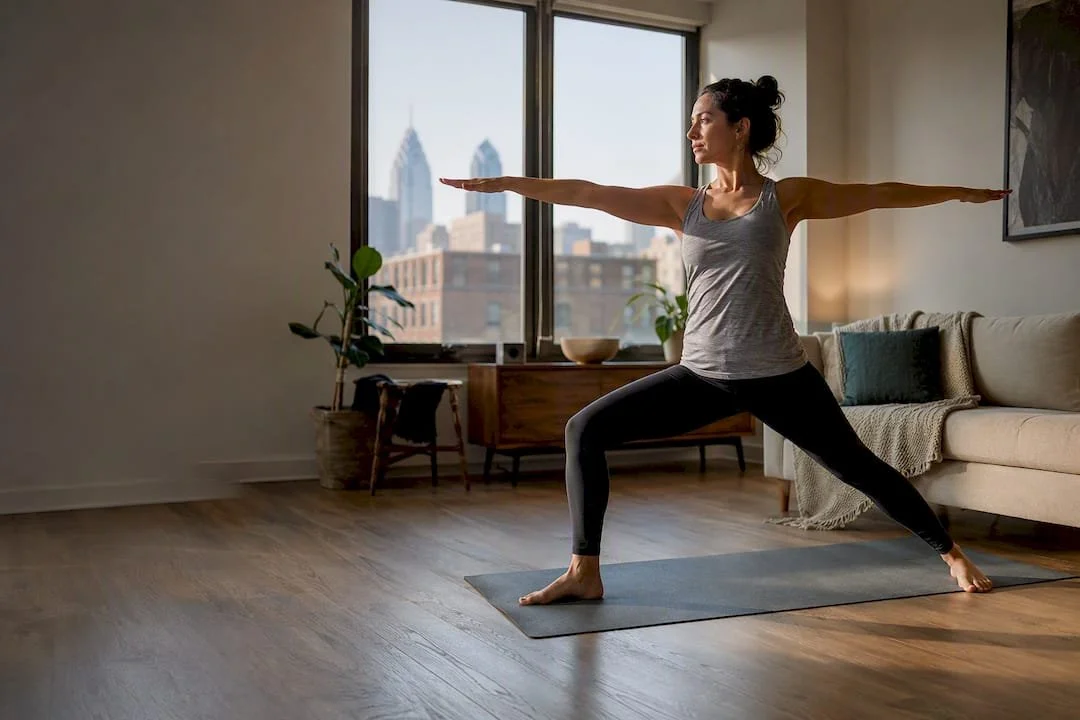
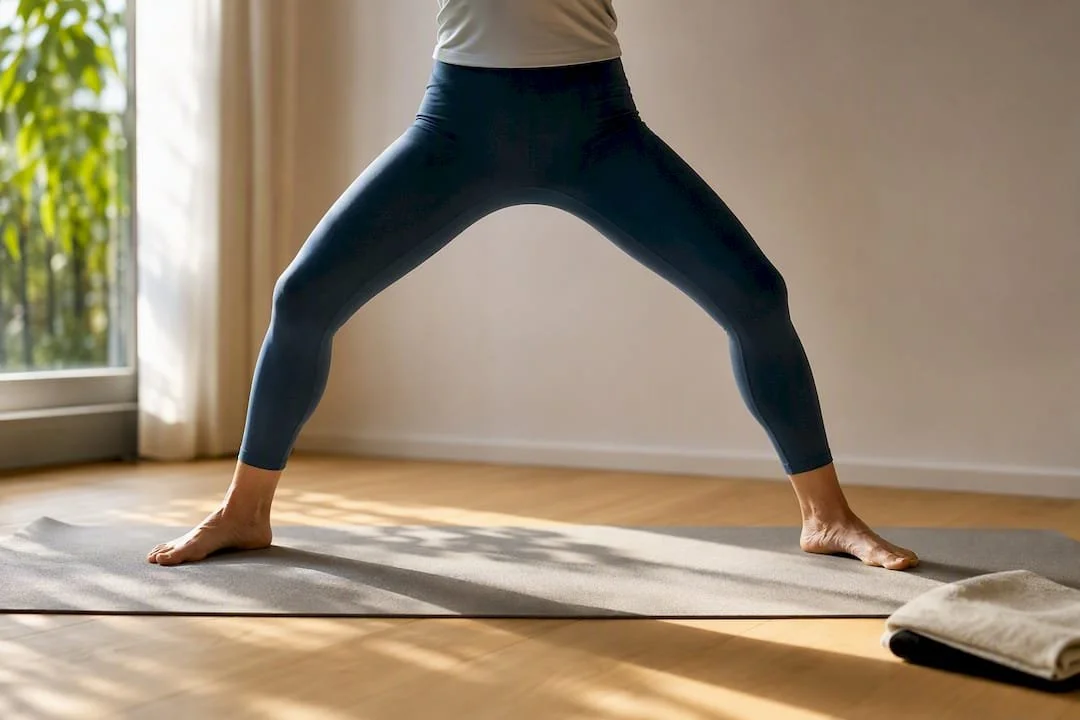
Warrior II: Legs wide, front knee bent, arms extended in opposite directions. Trains balance and leg strength simultaneously.
Cobra: Lying face down, press through the hands to lift the chest while keeping the lower back relaxed. Builds gentle backbend strength without straining the spine.
Child's Pose: Kneeling with the torso folded forward and arms extended or relaxed by your sides. A rest position you can return to anytime.
Savasana: Lying flat on your back, fully relaxed. Trains the nervous system to actually settle down.
Modifications matter more than looking "correct." A block under your front hand in Low Lunge shortens the distance to the floor. A strap looped around your foot in seated stretches closes the gap when your hamstrings are tight. Neither is a shortcut. It's the actual practice.
Pro Tip: If a pose feels unstable, widen your stance before you assume you're "doing it wrong." Most balance issues in beginner poses come from feet placed too close together, not from lack of skill.
What Does a 10 to 15 Minute Starter Sequence Look Like?
A short, well-ordered sequence beats a long, disorganized one every time. The logic behind sequencing is simple: warm the big muscle groups first, move into standing strength work, then finish on the floor before you rest, which is exactly the structure Yoga Journal recommends for a well-rounded home practice.
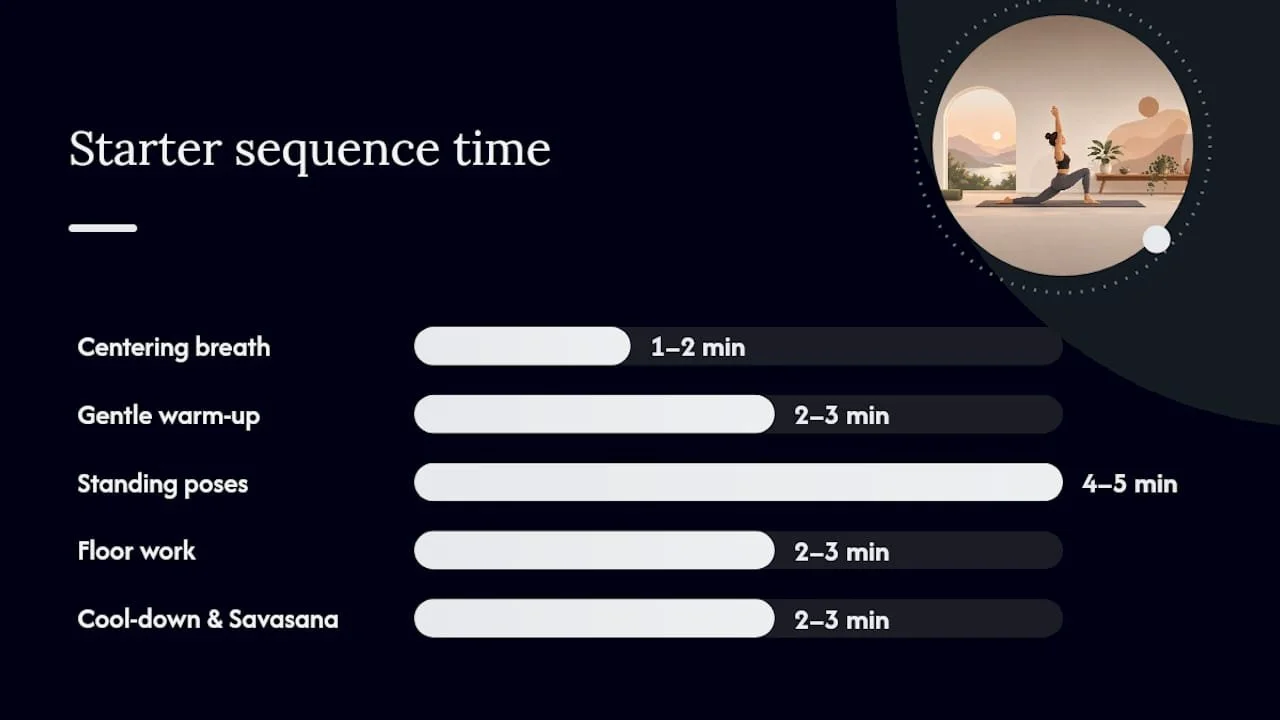
Centering breath (1 to 2 minutes). Sit or lie down, close your eyes, and breathe slowly through the nose. This settles your nervous system before you move.
Gentle warm-up (2 to 3 minutes). A few rounds of Cat-Cow, then move into Downward-Facing Dog for three to five breaths.
Standing poses (4 to 5 minutes). Move through Mountain Pose, then Warrior II on each side, then Low Lunge on each side.
Floor work (2 to 3 minutes). Cobra for a few breaths, followed by a modified plank if you have the energy.
Cool-down and Savasana (2 to 3 minutes). Child's Pose, then lie flat in Savasana for at least one full minute.
For your first month, the goal is frequency, not duration. In week one, aim for three sessions of 10 to 15 minutes using this exact sequence. In week two, keep the same frequency but add two minutes to each session, mostly in the standing poses section. In week three, add a fourth session if your schedule allows, and start layering in a guided beginner video once a week to catch alignment details you might be missing on your own. By week four, you should be comfortably practicing four to five times weekly at 20 to 25 minutes, which lines up with the gradual build Yoga Journal outlines for new students.
If you're short on time, cut the sequence to just the breath, one round of Cat-Cow, one standing pose, and Savasana. Five minutes of that beats zero minutes of the full version.
How Do You Know the Difference Between Discomfort and Pain?
Discomfort in yoga feels like effort. A gentle stretch, a slight burn in a muscle you're working, a wobble while you find your balance. Pain feels sharp, shooting, or tingling, and it shows up in a joint rather than a muscle. That distinction is the single most useful safety filter a beginner can learn.
If you feel sharp pain, tingling, or numbness anywhere, come out of the pose immediately and rest in Child's Pose. Don't push through it hoping it'll "work itself out." Cleveland Clinic is direct on this point: beginners should avoid painful positions entirely and lean on modifications instead of forcing a shape that doesn't fit their body yet.
A few alignment cues will keep you safer without needing to memorize anatomy:
Keep your spine long rather than collapsed, even in forward folds.
In lunges and Warrior poses, make sure your front knee tracks over your ankle, not past your toes.
Check yourself in a mirror or a phone video occasionally. What a pose feels like and what it actually looks like are often two different things when you're new.
Bend your knees generously in any forward fold. Straight legs are not the goal; a long spine is.
If you have an existing injury, a joint issue, or a medical condition, talk to your instructor or a clinician before attempting more intensive poses or inversions. Most beginner sequences are low-impact enough for the general population, but "most" is not "all," and your specific history matters more than a generic guide.
How Do You Make a Yoga Habit Actually Stick?
Motivation fades. Systems don't. The most reliable way to keep practicing past week two is to attach your session to something you already do without thinking, a technique sometimes called habit stacking.
Practicing right after brushing your teeth or right before breakfast works because the first habit becomes the trigger for the second one. Anchoring a new routine to an existing daily marker is one of the more reliable tricks for building any habit under real-life time pressure, not just yoga.
A few tactics that hold up in practice:
Lay your mat out the night before, or leave it visible, so the visual cue does the reminding for you.
Start with 5 to 10 minute micro-sessions on your busiest days rather than skipping entirely.
Track your sessions with a simple checkmark on a calendar. The small reward of seeing a streak matters more than it sounds like it should.
Pair practice with a habit you already love, like your morning coffee or an evening podcast.
Build gradually: three sessions weekly for two to three weeks, then push to four or five once it feels automatic rather than effortful.
Loop in a friend for light accountability, or sign up for a short series of guided classes where a set schedule does some of the discipline for you.
Where Can You Find Reliable Beginner Instruction?
Guided beginner videos are genuinely useful early on, not just a fallback. They handle the sequencing decisions for you and repeat alignment cues out loud, which is exactly what a beginner needs while building the habit of paying attention to form.
That said, a handful of in-person classes early in your practice catches things video never will. A teacher can see when your knee is drifting past your ankle in real time. Look for classes labeled "foundational," "gentle," or "beginner," and don't hesitate to tell the instructor beforehand if you'd prefer hands-off adjustments or need specific modifications for an old injury.
Prioritize videos or classes with clear, spoken cues rather than ones that assume you already know pose names.
Ask any instructor directly what modifications they offer for tight hips, hamstrings, or shoulders.
Treat your first few classes as information gathering, not performance.
Amrita Yoga & Wellness's Take on Starting Small
Most beginners overestimate what they need before starting and underestimate what 15 consistent minutes can do. That gap is where most people quit before they ever get a real feel for the practice. Amrita Yoga & Wellness, a yoga and wellness studio based in Philadelphia, sees this constantly across its beginner-focused classes and community programs. Home practice builds the habit; a few in-person sessions add hands-on correction and motivation that video instruction can't replicate. Neither replaces the other. Together, they're how most people actually stick with it.
— Juiced
Ready for Hands-On Guidance? Consider the Karma Yoga Club
Home practice gets you moving. A few sessions with an instructor watching your alignment in real time is what turns a decent home routine into a genuinely safe, effective one. That's the gap Amritayogawellness's Karma Yoga Club is built to close for Philadelphia beginners who've started at home and want the next step.
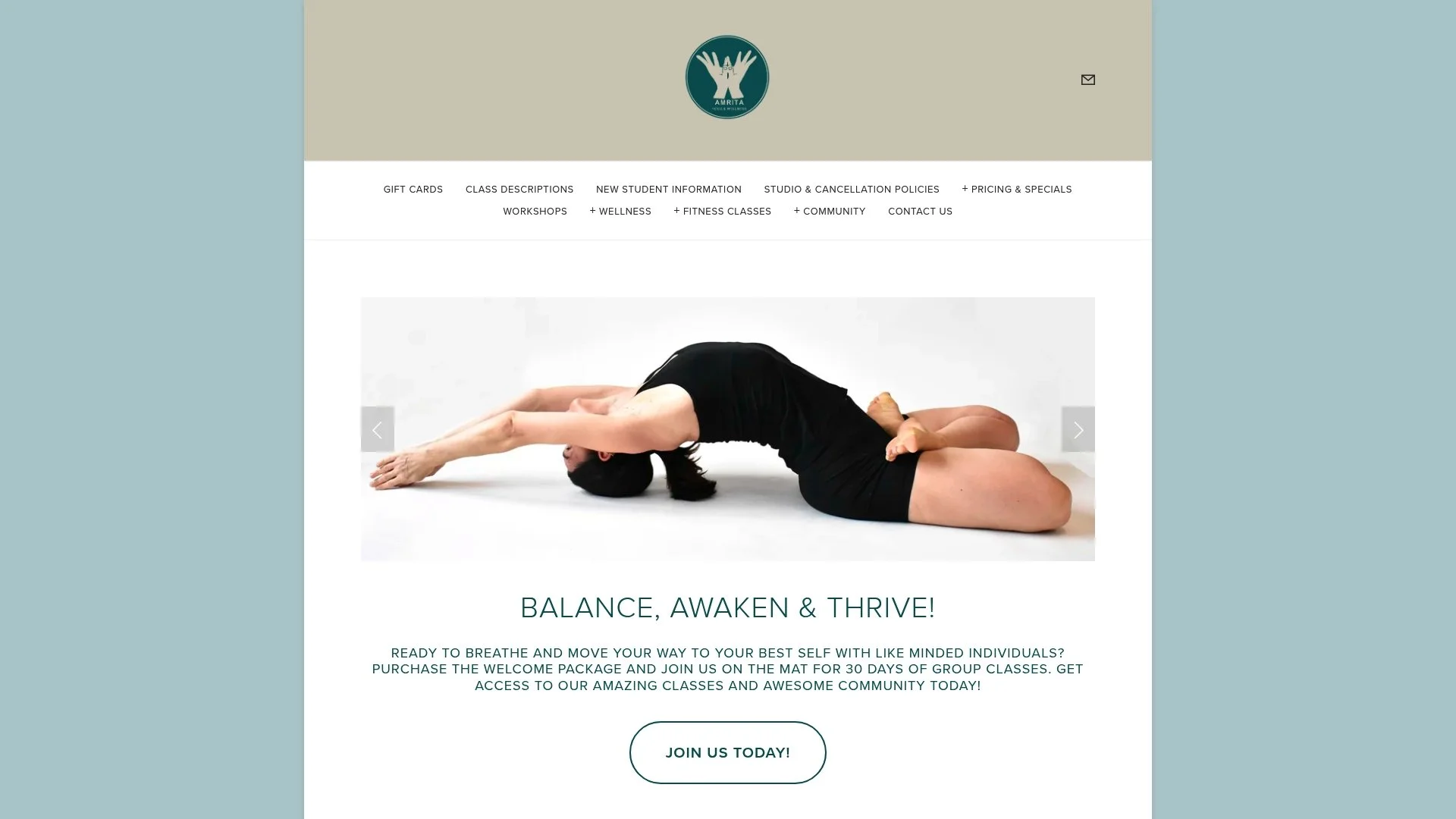
The membership gives access to beginner-friendly classes alongside a community of people at every stage of practice, not just advanced students who make a newcomer feel behind. A handful of guided sessions can catch the small alignment issues that no video ever will, whether that's a knee tracking wrong in Warrior II or a spine collapsing in a forward fold you thought you'd nailed. If you've been practicing at home and want feedback that actually accelerates your progress, check out Karma Yoga Club membership options and see which class schedule fits your week.
Sources
Yoga Journal's beginner guide covers pacing and progression in detail. Cleveland Clinic addresses safety and modifications for home practice. The Guardian explains why short, frequent sessions outperform occasional long ones. Yoga Journal's sequencing guide breaks down how to structure a balanced home routine.
Yoga for Beginners: The Ultimate Guide to Start Your Practice — Yoga Journal
FAQ
How Many Days a Week Should a Beginner Practice Yoga?
Start with three sessions a week at 10 to 15 minutes each, then build toward four or five sessions of 20 to 30 minutes over your first month or two, based on Yoga Journal's recommended beginner pacing.
Do I Need a Yoga Mat to Start Practicing at Home?
No. A folded blanket or towel on carpet works for your first few weeks; a mat mainly adds grip once you're doing more standing and balance poses regularly.
What Should I Do if a Pose Hurts?
Come out of the pose right away if you feel sharp pain, tingling, or numbness, since beginners should avoid painful positions entirely and rely on modifications instead.
How Long Until Yoga Gets Easier for a Beginner?
Most people notice more ease in balance and breath within two to four weeks of consistent short sessions, though flexibility is an outcome of practice rather than something you need before starting.
Should I Take a Class or Practice Alone When Starting Yoga?
Both work well together: guided videos are effective for learning sequencing at home, while a few in-person classes, like those offered through Amritayogawellness's Karma Yoga Club, add real-time alignment feedback that video can't provide.