Chair Yoga for Seniors: 10 Poses and a 15-Minute Routine
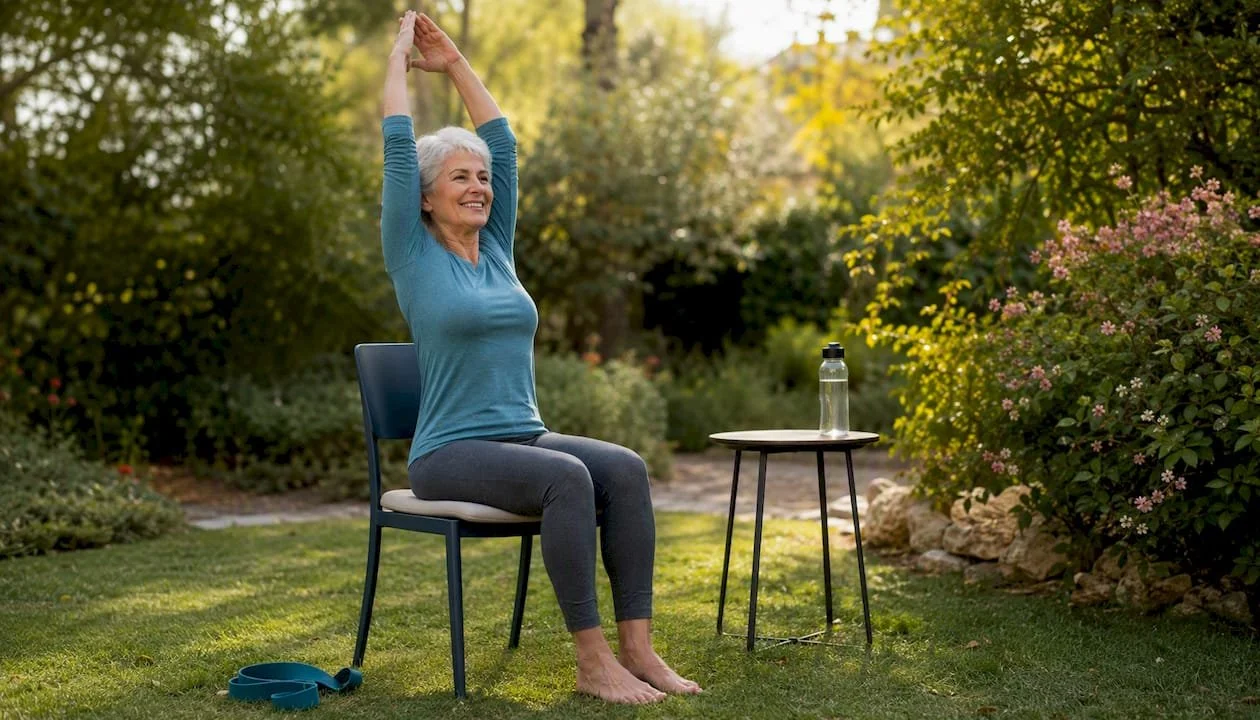
Chair yoga for seniors is a seated or chair-supported yoga practice that adapts classic poses, breathing, and mindfulness for older adults who want safe, effective movement without getting on the floor. Harvard Health describes it as a mind-body practice that incorporates gentle stretches, strength-building poses, breathing techniques, and mindfulness. Start with short sessions several times a week. Small clinical programs have reported measurable improvements in pain, fatigue, and daily function, so even modest, regular sessions add up. Amrita Yoga & Wellness offers guided chair yoga classes in Philadelphia for exactly this kind of beginning.
Table of Contents
Who should try chair yoga and when to check with a clinician first
What the research says and why Amrita Yoga & Wellness is a trusted resource
What chair yoga for seniors actually is
Chair yoga is not simply stretching in a seat. It is a full yoga practice, adapted so that every element of a traditional class, including breath work, movement, balance training, and relaxation, can be done safely with a chair as support.
The four core elements are:
Breath work (pranayama): Controlled breathing that calms the nervous system and trains the diaphragm to work more efficiently than shallow chest breathing.
Gentle movement: Seated and standing poses adapted from traditional yoga, modified so joints move through a safe, comfortable range.
Balance support: The chair acts as a stable base, replacing the floor mat and reducing fall risk during standing work.
Mindfulness and relaxation: Guided attention to body sensation, breath, and stillness, the same mental-health component found in any yoga class.
The practice covers two distinct modes: fully seated poses where the chair is the platform, and standing poses where one hand rests on the chair back for balance. Many classic mat poses, from cat-cow to forward folds to twists, translate directly to a chair with minor adjustments. That scope is wider than most beginners expect, and it is what separates chair yoga from a simple stretching routine.
Benefits of chair yoga that go beyond flexibility
The physical gains are real and well-documented. Regular practice builds functional strength, the kind that makes it easier to stand from a sofa, carry groceries, or climb stairs. It improves joint mobility, posture, and circulation. Research shows that small clinical programs report reduced pain and fatigue, better ability to perform daily activities, and greater stress reduction compared with some other activity programs.
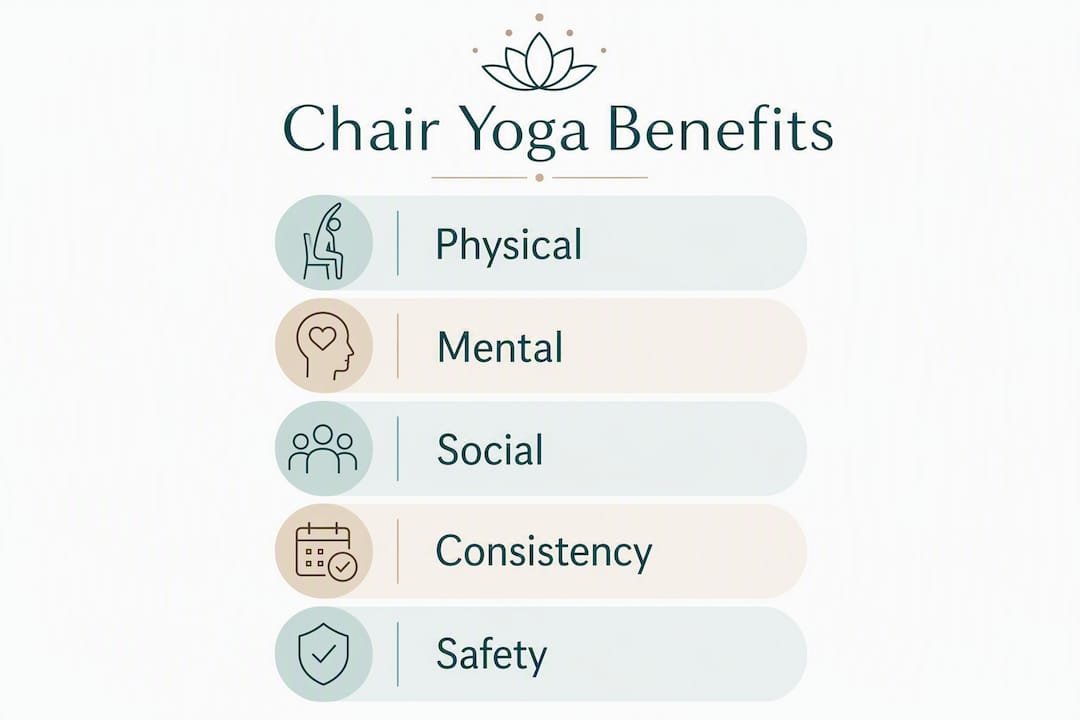
The mental benefits are just as significant. Harvard Health notes that chair yoga supports improved sleep, lower stress, and better mood, outcomes that matter enormously for older adults managing chronic conditions or caregiver fatigue. Breathing practices slow the heart rate and activate the parasympathetic nervous system, which is the body's rest-and-digest mode. That shift is cumulative: the more consistently you practice, the more resilient your baseline stress response becomes.
Group classes add a third layer. Community participation is frequently cited as a key factor in adherence and in reducing the social isolation that often accompanies aging. Showing up to a class, even a short one, creates accountability and connection that solo practice rarely matches.
Pro Tip: Consistency beats intensity every time. Three 15-minute sessions a week will produce more lasting benefit than one long session on the weekend.
Who should try chair yoga and when to check with a clinician first
Chair yoga suits a wide range of people: seniors with balance concerns, anyone recovering from a fall or minor injury, beginners who have never done yoga, people with arthritis or joint stiffness, and those who simply find floor-based practice uncomfortable or intimidating. Caregivers can practice alongside the people they support, which makes sessions easier to sustain.
That said, certain conditions call for a quick conversation with a doctor or physical therapist before starting:
Recent surgery (hip replacement, shoulder repair, abdominal procedures): some movements may be restricted during recovery.
Uncontrolled high blood pressure: inverted positions and breath retention can spike pressure temporarily.
Advanced osteoporosis: deep spinal flexion and forceful twists place torque on vertebrae; hip-hinge movements with a straight back are safer.
Severe vertigo: head movements and transitions between positions may trigger symptoms.
Acute joint inflammation: active flare-ups need rest, not loaded movement.
Cooperative Extension resources recommend treating chair yoga as part of a broader fitness program that includes flexibility and balance work, not a replacement for medical guidance.
Pro Tip: Before your first class, write a two-sentence note listing your main health conditions and any movements your doctor has told you to avoid. Hand it to the instructor before the session starts.
How to set up safely before your first session
Getting the setup right removes most of the risk before you move a single muscle.
Chair: Choose a sturdy, armless chair that does not roll or wobble. Medical News Today specifically warns against chairs with arms or wheels. If your feet do not reach the floor flat, place a folded blanket or stable block under them to establish a firm base.
Space: Clear a two-foot radius around the chair. Good lighting matters more than most people realize, especially for transitions between seated and standing. Keep a phone within reach.
Footwear: Bare feet or non-slip socks give better ground contact than shoes with thick soles. If balance is a concern, supportive shoes with flat soles are fine.
Optional props: A yoga strap or resistance band for seated stretches, a small cushion for lumbar support, and a folded blanket for under the feet if needed.
Frequency and duration: Start with 10–20 minutes, three to five days per week. The key rule on pain: a mild stretch sensation is fine; sharp, stabbing, or joint pain means stop and reassess.
10 chair yoga poses with step-by-step instructions
Work through these in order for a complete session, or pick individual poses to address specific areas. Each one includes a simpler modification and a small progression when you are ready.
1. Seated mountain (Tadasana) Sit tall at the front half of the chair, feet flat, hands on thighs. Press down through both sitting bones equally. Lengthen the spine on an inhale, relax the shoulders on an exhale. Hold for five breaths. Easier: rest your back against the chair. Progression: lift both hands overhead and hold for three breaths.
2. Seated cat-cow Hands on knees. Inhale, arch the back and lift the chest (cow). Exhale, round the spine and drop the chin (cat). Move slowly, five to eight rounds. Easier: reduce the range of motion to a gentle nod. Progression: add a slow side-to-side sway between rounds.
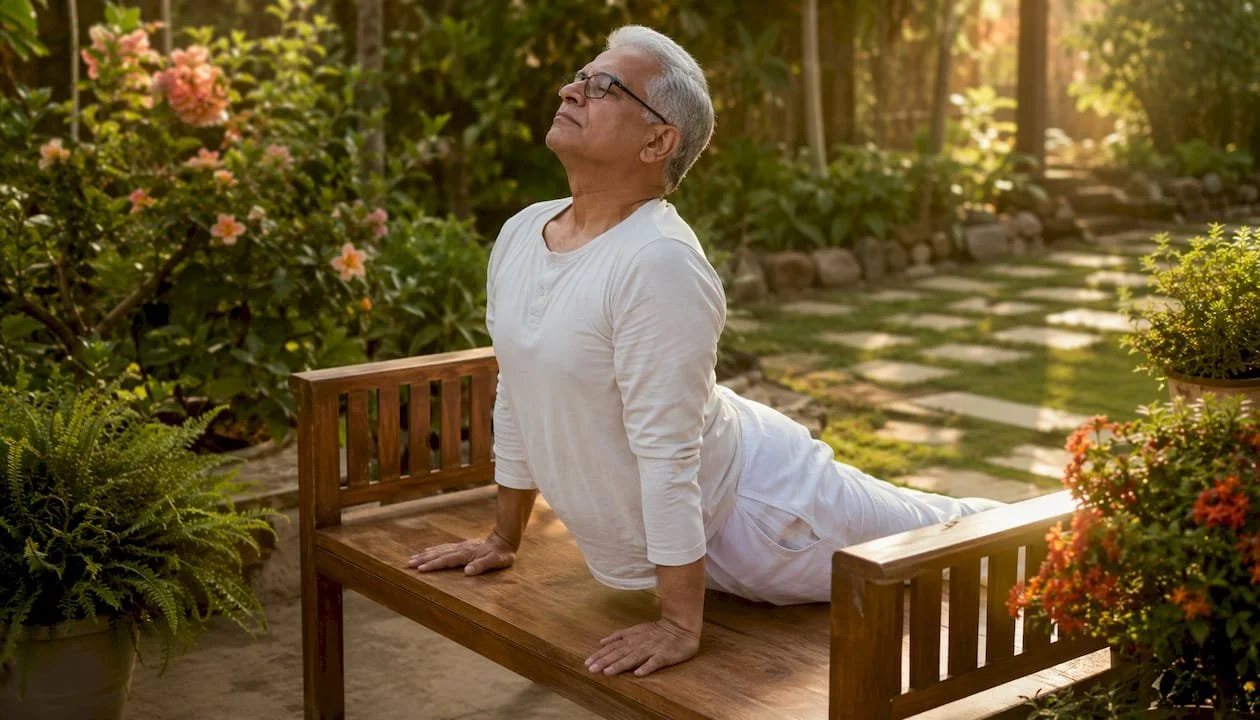
3. Seated twist Sit tall, place the right hand on the outside of the left knee and the left hand on the chair back. Inhale to lengthen, exhale to rotate left. Hold three breaths, then switch sides. Easier: keep both hands on the knees and rotate only the head. Progression: extend the top arm behind you to deepen the shoulder opening.
4. Seated forward fold (hip hinge) Feet hip-width apart. Inhale tall, then hinge forward from the hips with a straight back, letting hands slide down the shins. Hold three breaths. Easier: place hands on thighs and hinge only slightly. Progression: reach hands toward the floor, keeping the spine long.
5. Seated side bend Right hand on the seat edge, left arm sweeps overhead and arcs to the right. Hold two breaths, return, repeat on the other side. Easier: rest the raised arm on the head instead of extending it. Progression: add a slow breath-led pulse at the end range.
6. Seated figure-4 hip opener Cross the right ankle over the left knee. Sit tall and gently press the right knee toward the floor. Hold five breaths, then switch. Easier: keep the ankle lower on the shin rather than at the knee. Progression: hinge forward from the hips while maintaining the cross to deepen the stretch.
7. Seated leg lifts Hands on the seat edge for support. Inhale and lift the right leg until it is parallel to the floor. Exhale and lower slowly. Eight to ten reps per side. Easier: lift only a few inches. Progression: hold the lifted position for three counts before lowering.
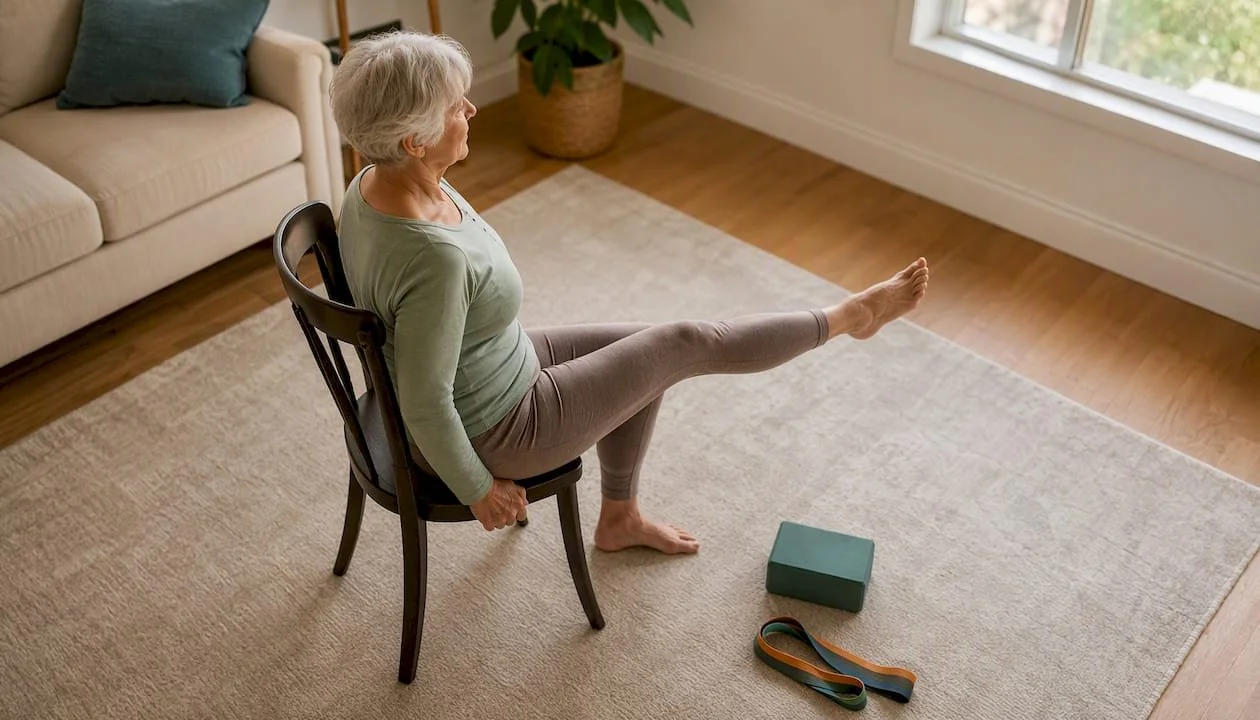
8. Heel-toe rocks (ankle mobility) Both feet flat. Lift both heels, hold two counts, lower. Then lift both toes, hold two counts, lower. Ten rounds. Easier: alternate one foot at a time. Progression: add a slow calf raise, rising onto the balls of both feet.
9. Seated chest opener and shoulder rolls Interlace fingers behind the back or grip the seat edge. Inhale and draw the shoulders back and down, opening the chest. Hold three breaths. Follow with five slow shoulder rolls forward, then five backward. Easier: simply squeeze the shoulder blades together without the hand grip. Progression: hold the chest-open position while turning the head slowly side to side.
10. Seated breath and relaxation Close the eyes or soften the gaze. Place one hand on the belly. Inhale for four counts, exhale for six counts. Repeat eight to ten cycles. For a slightly more structured option, try alternate nostril breathing: close the right nostril with the thumb, inhale left, close the left with the ring finger, exhale right, then reverse. Easier: skip the nostril work and simply focus on lengthening the exhale. Progression: extend the exhale to eight counts.
Pro Tip: Move at the pace of your breath, not the pace of the clock. If a pose requires you to hold your breath to maintain it, you have gone too far.
For more chair yoga poses for beginners, Amritayogawellness has a growing library of step-by-step posts.
How to adapt poses and progress safely over weeks
The most common mistake in any new practice is adding too much too soon. A slow, range-of-motion-focused approach teaches the nervous system that movement is safe before asking for more range or strength. That neurological trust-building is what makes progress stick.
To make a pose easier: reduce the range of motion, shorten the hold time, keep both feet firmly on the floor, or use a strap to bridge the gap between your hands and your feet.
To progress safely: add one or two more repetitions per week, introduce a light resistance band for seated leg or arm work, shift from fully seated to supported standing for balance poses, or slow the tempo down deliberately, since slower movement under control is harder than fast, momentum-driven movement.
The 24-hour rule: notice how your body feels the morning after a session. Mild muscle tiredness is normal. Sharp joint pain, new swelling, or lingering soreness that lasts more than two days means the session was too intense. Dial back and rebuild.
Pro Tip: Keep a simple one-week log: date, session length, a 1–5 effort rating, and any pain or unusual symptoms. After a week you will have a clear picture of what your body tolerates and where to push.
A ready-to-use 15-minute seated routine
This sequence follows the poses above. Read through it once before you start.
Warm-up (3 minutes)
Seated mountain, 5 breaths
Heel-toe rocks, 10 rounds
Shoulder rolls, 5 forward and 5 backward
Mobility and stretching (8 minutes)
Seated cat-cow, 8 rounds (about 90 seconds)
Seated side bend, 2 breaths each side, 2 rounds
Seated figure-4 hip opener, 5 breaths each side
Seated forward fold, 3 breaths, twice
Strength and balance (2 minutes)
Seated leg lifts, 8 reps each side
Seated chest opener, hold 3 breaths, twice
Relaxation and breath (2 minutes)
Seated breath work, 8–10 slow cycles with a lengthened exhale
To shorten the routine to 10 minutes, drop the second round of the forward fold and reduce leg lifts to five reps. To extend to 20 minutes, add the seated twist and a second round of cat-cow, and hold the relaxation breath for four minutes.
Safety tips and red flags to know before you start
Most chair yoga sessions are uneventful, but knowing the warning signs in advance means you can act quickly if something feels wrong.
Stop and seek medical advice if you experience:
Sudden chest pain or pressure during or after practice
Severe shortness of breath that does not resolve within a minute of rest
New, sharp joint pain (distinct from a stretch sensation)
Lightheadedness or dizziness that does not pass after sitting quietly for two minutes
Numbness or tingling in the arms or legs
Common mistakes that cause problems:
Using a wheeled office chair or a soft armchair that shifts under load
Forcing a pose past the point of discomfort to "get deeper"
Holding the breath during effort, which raises blood pressure and reduces stability
Skipping the warm-up and going straight into deeper stretches
Healthlinestresses that an armless, non-rolling chair and a conversation with a healthcare professional when appropriate are the two most practical safety steps for seniors starting out.
Pro Tip: Test your chair before every session: press down firmly on the seat and push sideways on the back. If it shifts or wobbles, find a different chair before you start.
What the research says and why Amrita Yoga & Wellness is a trusted resource
The evidence base for chair yoga is growing. The table below summarizes the types of study protocols that have been evaluated.
| Study type | Duration | Primary outcome |
|---|---|---|
| Small clinical trial | — | Reduced pain and fatigue; better daily function |
| Community program evaluation | Small clinical program | Improved ability to perform daily activities |
| Stress-reduction program | 6-week program | Measurable reduction in reported stress |
These are small studies, and the field needs larger randomized trials. But the direction of findings is consistent: regular chair-yoga programs produce measurable improvements in pain, fatigue, stress, and daily function for older adults.
Yoga Journal's benefits overview adds an important framing point: research shows we may lose as much as eight percent of our muscle mass each decade, a condition called sarcopenia, and strength training through yoga, including chair yoga, can help prevent and potentially reverse that loss.
Amritayogawellness brings this evidence to life through guided classes in Philadelphia. The studio's chair yoga resources cover both the practical and the mindfulness dimensions of the practice, with content designed for beginners and for caregivers supporting older adults.
Key Takeaways
Chair yoga for seniors delivers real physical and mental benefits through short, consistent seated sessions that require nothing more than a stable armless chair.
| Point | Details |
|---|---|
| What it is | Seated or chair-supported yoga adapting classic poses, breath, and mindfulness for older adults. |
| Top benefits | Reduces pain and fatigue, improves daily function, supports sleep, mood, and stress resilience. |
| Safety first | Use a sturdy armless chair; consult a clinician for recent surgery or uncontrolled conditions. |
| How to start | Begin with 10–20 minutes, three to five days per week; use the 15-minute routine above. |
| Guided practice | Amritayogawellness offers beginner-friendly chair yoga classes and resources in Philadelphia. |
Why chair yoga deserves more credit than it gets
The yoga world has a quiet bias toward the floor. Advanced poses, deep backbends, inversions — these are what fill the magazine covers. Chair yoga sits in the background, often treated as a consolation prize for people who "can't do real yoga." That framing is wrong, and it costs people real health gains.
Seated practice allows for precise, therapeutic joint work that is genuinely difficult to replicate on a mat. With a stable base under you, the nervous system relaxes its protective guarding, and a skilled teacher can guide hip and spinal mobility work that translates directly to safer, easier everyday movement. That is not a lesser version of yoga. It is a different tool, and for many older adults, it is the more effective one.
The social dimension is underrated too. Showing up to a group class, even a gentle one, creates a rhythm. That rhythm is what separates people who practice for a week from people who practice for years. If you are a caregiver helping someone start, prioritize finding a class over finding the perfect home routine. The community does work the mat cannot.
Amritayogawellness's yoga for seniors programming reflects exactly this philosophy: accessible, consistent, and built around what actually helps people move better and feel steadier in their daily lives.
Try a guided chair yoga class at Amrita Yoga & Wellness
Reading about chair yoga and doing it are two different things. The 10 poses and 15-minute routine above give you a solid starting point, but a live instructor catches the alignment details a written guide cannot: the shoulder that creeps up, the breath that stops during effort, the chair that is slightly too high.
Amritayogawellness offers accessible classes in Philadelphia designed for beginners and older adults, with instructors who understand how to adapt poses for individual needs. Whether you are starting for yourself or supporting someone you care for, the studio's beginner-friendly schedule makes it easy to find a session that fits. Visit amritayogawellness.com to browse class times, ask about accessible options, or book an introductory session.
Useful sources and further reading
Harvard Health: Chair Yoga — The most cited clinical overview; covers study protocols, mental health benefits, and safety guidance.
Medical News Today: Chair Yoga for Seniors — Practical benefits and pose guidance with clear equipment safety notes.
Yoga Journal: Chair Yoga Poses — Pose-by-pose adaptation guide covering both seated and standing chair-supported options.
Yoga Journal: Benefits of Chair Yoga — Teacher-written overview of physical, mental, and social benefits with notes on sarcopenia and balance.
YogaUOnline: Slow Chair Yoga — Explains the neurological rationale for slow, range-of-motion-focused practice and how it builds lasting mobility.
Healthline: Chair Yoga for Seniors — Accessible safety checklist and pose descriptions for beginners.
UAEX Cooperative Extension: Chair Yoga — Positions chair yoga within a broader senior fitness program including balance and flexibility work.
Amrita Yoga & Wellness: Chair Yoga Blog — Studio-specific posts, class notes, and guided resources for seniors beginning chair yoga in Philadelphia.
This article is general information, not medical advice. Confirm whether specific movements are appropriate for your health conditions with your physician or a qualified physical therapist before starting a new exercise program.