Yoga in Philadelphia City Center: Classes and Community
TL;DR:
Many people believe Philadelphia's city-center yoga studios are expensive, crowded, or only for advanced practitioners, which discourages new students. In reality, these studios are accessible, diverse, and welcoming for all experience levels, offering flexible schedules and community connections that promote long-term practice. Building relationships and exploring different styles in these urban spaces can transform your wellness routine and enhance your overall resilience and presence.
Many people assume that yoga studios in Philadelphia's city center are crowded, expensive, or strictly for advanced practitioners who can already touch their toes. That assumption keeps a lot of people on the sidelines. The truth is, city-center yoga in Philadelphia is more accessible, welcoming, and varied than most people expect. Whether you're brand new to the mat or you've been practicing for years, the neighborhood studios tucked into Center City and Rittenhouse Square offer something genuinely worth showing up for.
Table of Contents
Key Takeaways
| Point | Details |
|---|---|
| City-center yoga is accessible | Philadelphia's city center offers welcoming studios for all experience levels. |
| Choose the right style | Explore different yoga styles to find classes that suit your goals and personality. |
| Community matters | Joining a yoga community boosts motivation, well-being, and lasting transformation. |
| Try before you commit | Most city studios offer introductory sessions or weeks for new students to experience different classes. |
Why choose yoga in Philadelphia city center?
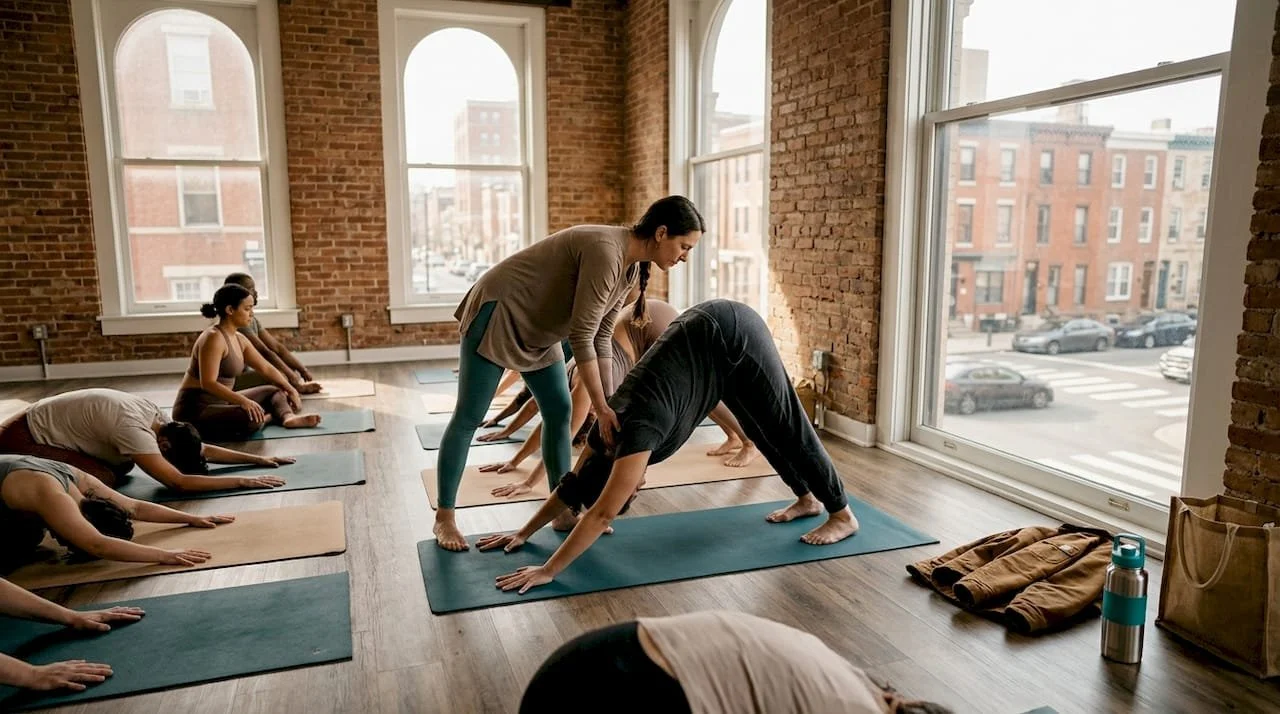
Philadelphia's city center is not just a place to commute through. It's a full wellness ecosystem. The density of studios within walking distance of public transit means you can fit a yoga class into a Tuesday lunch break, an early Saturday morning, or a weekday evening without rearranging your entire schedule. That accessibility alone changes the game for a lot of people who've always meant to start but never found the right moment.
What makes this stretch of the city especially appealing is the variety of teaching approaches available in a compact area. You'll find studios focused on alignment, others built around high-energy flow, and community spaces that feel more like gathering places than gyms. This means you're not locked into one style just because it's the only option nearby.
Here's a quick look at what city-center yoga consistently delivers:
Multiple class times daily, often from early morning through evening
Transit-accessible locations near SEPTA bus and subway stops
Beginner-friendly programs alongside advanced offerings
Workshops, events, and community gatherings beyond regular classes
Instructors with diverse training backgrounds and teaching styles
Smaller class sizes that allow for more personal attention
The community you build in a city-center studio tends to feel more sustained than what you'd find at a one-off gym class. You see the same faces week after week. Instructors learn your name and your practice. That familiarity builds real accountability.
One great example of this is what practitioners say about Maha Yoga in Rittenhouse Square, which is praised for its welcoming studio community and alignment-based approach that works especially well for people recovering from injuries or just starting out. The vibe is described as low-key, the instructors as chill and knowledgeable, and the class variety as genuinely suited to all levels.
"The classes are really approachable. I walked in nervous and walked out feeling like I'd found my people." — a common sentiment from city-center yoga newcomers.
If you're still weighing your options, reading up on choosing a Philadelphia yoga program can help you narrow things down before you even step inside a studio door. And if you'd rather browse by neighborhood first, exploring local yoga classes gives you a useful starting point.
Popular yoga studios and what they offer
Now that you know why city-center yoga is worth exploring, here's a clearer picture of what you'll actually find when you walk through the door.
The studios concentrated in Center City and Rittenhouse range from boutique alignment-focused spaces to larger community studios with packed schedules. The distinction matters because it shapes your experience entirely. A studio focused on precise alignment will slow things down and correct your form carefully. A flow-based studio will move you through sequences at a brisker pace. Neither is better. They serve different needs.
Here's a general overview of what you can expect from the most common studio types in this area:
| Studio type | Class style | Price range | Best for |
|---|---|---|---|
| Alignment-based studio | Slow, methodical, detailed cueing | $20–$30 per class | Beginners, injury recovery |
| Vinyasa flow studio | Dynamic, breath-linked movement | $18–$28 per class | All levels, stress relief |
| Community yoga studio | Mixed levels, affordable drop-in | $10–$20 per class | Budget-conscious students |
| Hot yoga studio | Heated room, detox-focused | $22–$35 per class | Those seeking intensity |
| Specialty/fusion studio | Yoga plus barre, pilates, or tai chi | $20–$32 per class | Practitioners wanting variety |
The welcoming community at Maha Yoga is a recurring theme in local recommendations, especially for people who feel anxious about walking into a new studio. That matters more than most people realize before they try it. A good teacher in a supportive room can shift your relationship with your own body in a single class.
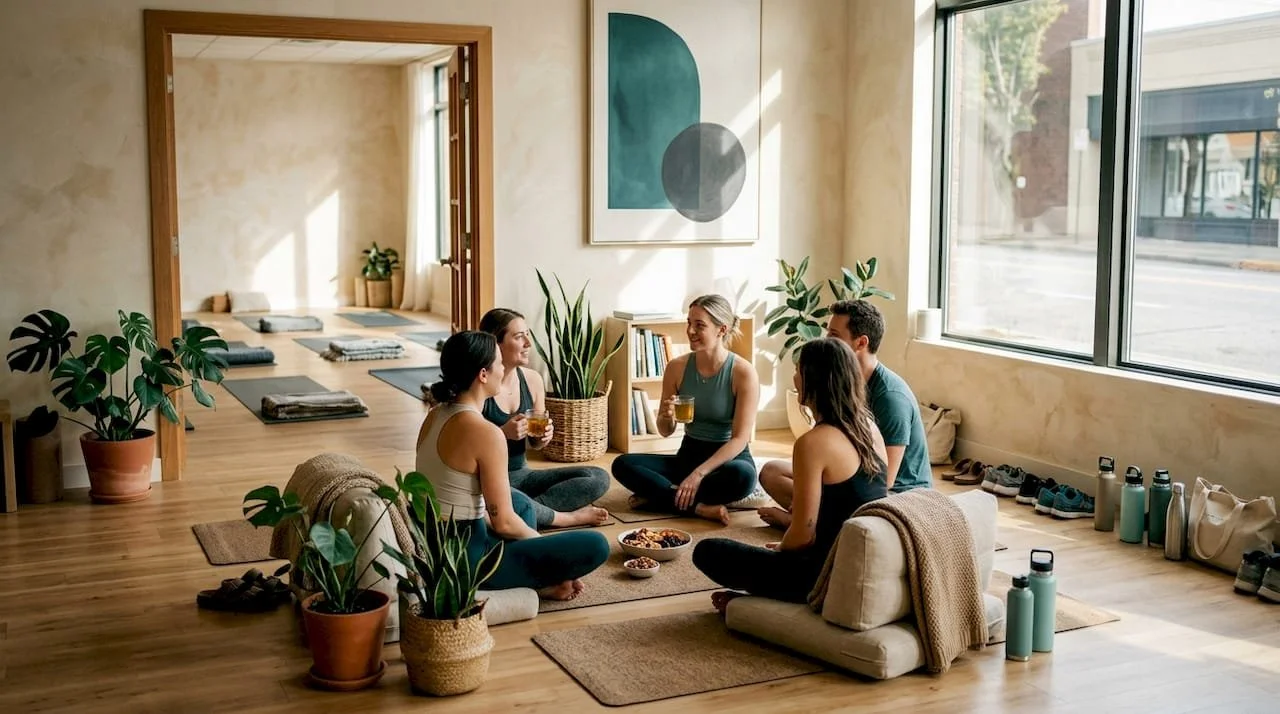
When you're looking at studios, pay close attention to whether they offer community-focused programming beyond regular classes. Studios that host workshops, seasonal events, or wellness talks tend to attract students who stay engaged over time. You can learn more about why that consistency matters by reading about community yoga benefits and browsing community yoga options available in Philadelphia.
Pro Tip: Many city-center studios offer a beginner week or free intro session. Take advantage of these before committing to a membership or class pack. It's the fastest way to know if the studio's energy matches yours.
Traditional vs. modern yoga styles: finding your fit
With your studio options in view, the next step is understanding the actual yoga styles you'll encounter downtown.
This is where a lot of people get stuck. They hear words like Ashtanga or Vinyasa and assume these are just different names for the same stretching routine. They're not. Each style carries a distinct philosophy, pace, and physical demand.
Ashtanga is structured and repetitive by design. You practice the same sequence of postures in the same order, class after class. That repetition is intentional. It builds discipline and body awareness over time, and many practitioners say it's the style that genuinely transformed their confidence. It rewards consistency. If you show up regularly, you will progress, and you'll feel it clearly.
Vinyasa is more fluid and adaptable. The teacher creates a sequence that changes each class, linking breath to movement throughout. It's more creative, more varied, and often more accessible for people who are newer to yoga or whose bodies need modification on a given day. Community discussion around Ashtanga versus Vinyasa for city yogis reflects exactly this split: some practitioners love the discipline of traditional Ashtanga, while others find modern Vinyasa is the style they can actually sustain.
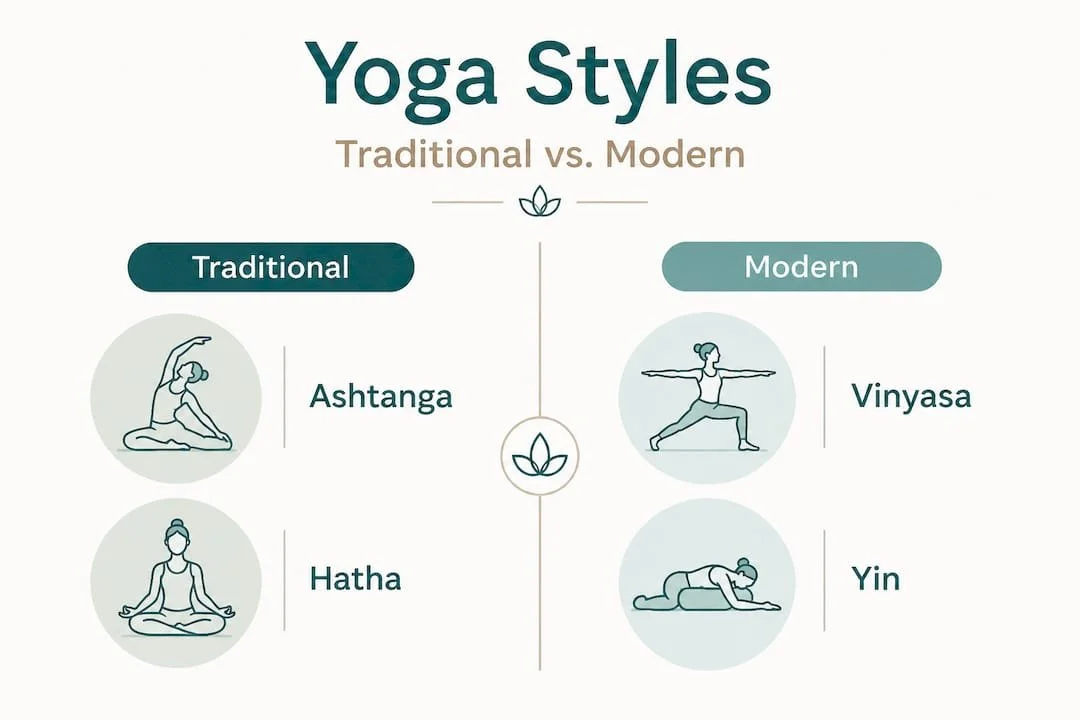
| Style | Class structure | Key benefits | Best for |
|---|---|---|---|
| Ashtanga | Fixed sequence, progressive | Discipline, strength, focus | Dedicated beginners, serious practitioners |
| Vinyasa | Variable, teacher-led | Flexibility, stress relief, variety | All levels, those new to yoga |
| Yin | Long holds, floor-based | Deep fascia release, calm | Recovery, anxiety management |
| Restorative | Supported, minimal effort | Nervous system reset | Burnout, chronic stress |
Here's a simple step-by-step approach to trying a new yoga style without overwhelming yourself:
Choose a style based on your primary goal, whether that's stress reduction, strength building, or flexibility.
Commit to at least three classes in that style before deciding whether it's right for you. One class is never enough data.
Tell the teacher before class that you're new to the style. Good instructors will offer guidance throughout.
Notice how you feel in the 24 hours after class, not just during it. That delayed response often tells you the most.
Compare two or three styles over a month if you're unsure. Many studios let you drop in for varied classes.
Practicing with others in group yoga settings adds an extra layer of motivation that's hard to replicate at home. It's also one of the reasons that group yoga for wellness has become one of the most effective pathways for people to actually maintain a regular practice rather than abandoning it after a few weeks.
Joining and thriving in a city-center yoga community
Exploring different yoga styles is one thing. Building a real sense of belonging in a studio is another. Here's how to actually do it.
Practitioners who stick with yoga long-term almost universally point to one thing: the people around them. Not the perfect pose or the right gear. The confidence gains and strength improvements that members describe most often come from showing up consistently in a community that expects to see them. Accountability is underrated in wellness conversations, and it's something a good studio provides naturally.
Here's a practical framework for going from newcomer to genuinely connected member:
Introduce yourself to the teacher before your first few classes. A brief exchange makes a big difference in how seen you feel.
Attend regularly at the same time each week. Patterns help you meet the same people and build recognition quickly.
Show up a few minutes early and stay a few minutes late. The conversations before and after class are where community actually forms.
Sign up for a workshop or event. A single workshop can introduce you to a dozen regulars who share your interests.
Use the studio's digital community tools, whether that's an app, a newsletter, or a social group. Staying connected between classes keeps momentum alive.
"The biggest shift in my practice wasn't physical. It was realizing I had people rooting for me every week." — shared experience from a longtime yoga community member.
The mental rewards of this kind of consistency are significant. Students who engage with a studio community report greater emotional resilience, less anxiety, and stronger follow-through on other health goals. You can explore more about building yoga connections and strategies for joining a yoga community to deepen your approach.
Pro Tip: Engage in post-class discussions or community events to deepen your connections. Even a five-minute conversation about what challenged you in class can create a real bond with another student. Don't rush out every time.
If you're not sure you're ready to invest in a full membership, starting with free yoga training resources can help you build confidence before you commit.
Perspective: The hidden value of city-center yoga
Here's something worth saying plainly: city-center yoga has an image problem that doesn't reflect reality.
People assume it's expensive, exclusive, or intimidating. They picture a room full of hyper-flexible people in expensive gear who started practicing at age five. That picture is almost entirely wrong. In our experience watching students walk through the door at studios across Philadelphia, the most consistent thing we see is ordinary people figuring it out alongside each other.
The real transformation in yoga isn't flexibility or strength. Those things come, but they're byproducts. The actual shift is learning to stay present in a room when something feels hard. That skill transfers everywhere. It transfers to difficult conversations, stressful workdays, and moments when your body doesn't cooperate with your plans.
City-center studios are uniquely positioned to deliver that because they exist inside the noise of urban life. You walk in from a chaotic commute or a tense meeting, and within ten minutes, you're breathing intentionally and paying attention to your body. The contrast is powerful. That's not something a home video can replicate.
What we also know is that modern studios are actively reimagining what yoga looks like for city people. They're combining practices, shortening class lengths to fit lunch hours, offering sliding-scale pricing, and creating genuine community events. If you haven't checked what's available recently, the landscape has changed more than you might expect. Reading about wellness and connection in group yoga is a good way to recalibrate your expectations and see what's actually on offer.
The bottom line is this: the barrier to entry for city-center yoga is lower than it's ever been. The only thing keeping most people out is the assumption that they don't belong there yet. They do.
Discover your next step on the mat
You've got the framework now. You understand the styles, the studios, and the community dynamics that make city-center yoga worth pursuing. The next step is actually showing up.
At Amrita Yoga & Wellness, we offer a full range of yoga, pilates, barre, tai chi, and massage therapy services designed for exactly the kind of person reading this guide. Whether you're stepping onto a mat for the first time or looking to deepen a practice you've had for years, our Philadelphia studio has the classes, teachers, and community to support you. We also offer wellness sessions beyond movement, including tarot and wellness sessions for those interested in a more holistic approach to self-care. Come find your next step with us.
Frequently asked questions
Are there yoga classes for beginners in Philadelphia city center?
Yes, several studios in the city center offer beginner-friendly classes with alignment-based instruction and supportive environments. Studios like Maha Yoga in Rittenhouse are specifically praised for welcoming newcomers at all experience levels.
How do I find the right yoga style for me?
Try at least two or three class types before deciding. Traditional Ashtanga suits those who want structure and discipline, while Vinyasa is often easier to access and sustain for newer students.
Will I fit in if I'm not experienced or flexible?
Absolutely. Most city-center studios actively prioritize inclusivity, and the welcoming community at studios like Maha Yoga means you're likely to feel at home faster than you expect.
What should I bring to my first city-center yoga class?
Wear comfortable, stretchy clothing, bring a water bottle, and check with the studio ahead of time about mat availability. Many studios loan mats to first-time visitors.
How important is the sense of community in yoga studios?
Community is one of the strongest predictors of long-term practice. Member stories consistently highlight confidence gains and resilience as the most meaningful outcomes of sustained studio participation.