How to choose the right Pilates classes in Philadelphia
TL;DR:
Choosing the right Pilates class depends on your specific goals, fitness level, and physical readiness.Mat Pilates is affordable and suitable for beginners, while Reformer Pilates offers higher resistance and full-body training.Consistent attendance of 2-3 sessions weekly over 6-8 weeks produces significant improvements in strength and flexibility.
Too many Philadelphia fitness seekers spend weeks bouncing between studios, unsure whether they picked the right class or the right instructor. The result? Frustration, wasted money, and a nagging feeling that Pilates just isn't working. But the problem is rarely the method. It's the mismatch between what a class offers and what your body actually needs. This guide breaks down exactly how to choose a Pilates class in Philadelphia that fits your fitness level, goals, and schedule, so you stop guessing and start seeing real progress in your core strength and flexibility.
Table of Contents
Key Takeaways
| Point | Details |
|---|---|
| Define personal goals | Clarify whether you want core strength, flexibility, injury rehab or all three before choosing a Pilates class. |
| Know your options | Mat and Reformer Pilates cater to different needs, budgets, and experience levels—try both if unsure. |
| Assess studio and instructor quality | Look for certified teachers, small classes, and available modifications to ensure safety and better results. |
| Set realistic results timeline | Expect noticeable gains in core strength and flexibility after 6–8 weeks with consistent attendance. |
Clarify your fitness goals and readiness
Before you search for studios or scroll through class schedules, get clear on what you actually want from Pilates. This single step saves you more time than any other part of the process.
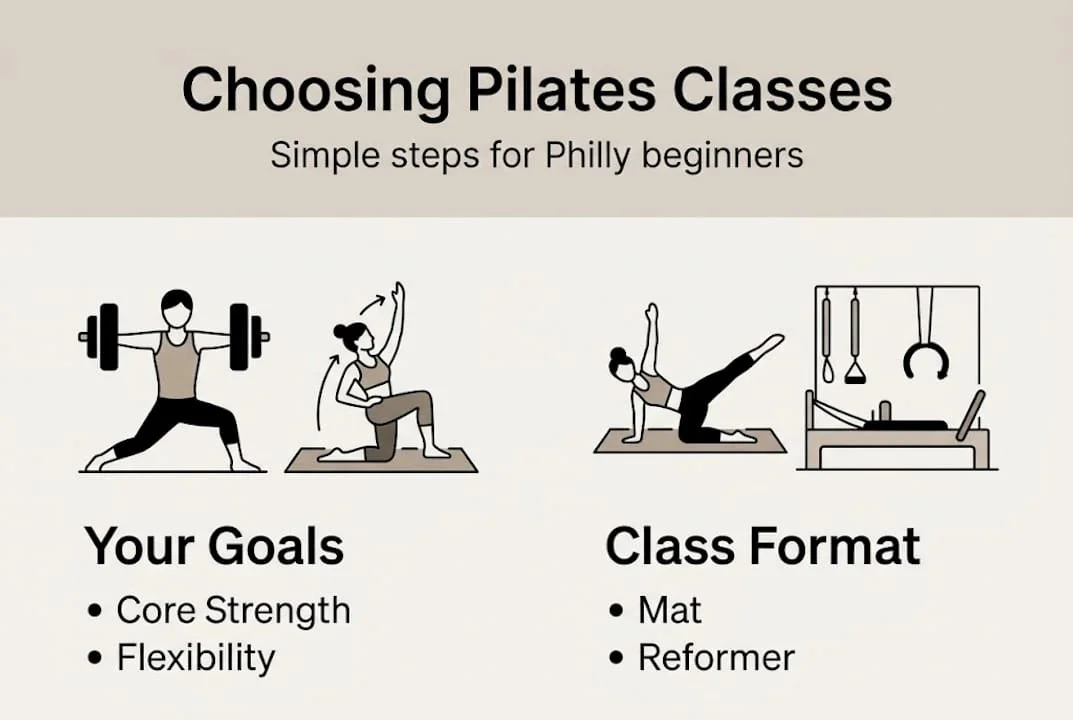
Pilates serves a wide range of goals, and different class formats are built for different outcomes. Here are the most common reasons people in Philadelphia start Pilates:
Core strength and stability: Building a stronger center to support daily movement and athletic performance
Flexibility and mobility: Lengthening tight muscles, especially in the hips, hamstrings, and spine
Injury recovery or rehab: Rebuilding strength after back pain, joint issues, or post-surgical recovery
Posture correction: Addressing the effects of long hours sitting at a desk or standing on your feet
Mind-body wellness: Reducing stress, improving breath awareness, and building body confidence
Once you know your primary goal, you can filter classes much more easily. Someone recovering from a herniated disc needs a very different class than a runner looking to improve hip flexibility.
Next, assess your physical readiness honestly. If you've never done Pilates before, or if you've had any recent injuries, starting with a beginner or foundational class is the smartest move. These classes move slower, explain the basics of alignment and breath, and give instructors time to offer corrections. You can always level up. Jumping into an intermediate class unprepared, however, increases your risk of poor form and discouragement.
Pro Tip: Before committing to a membership or class pack, try an intro class to assess the instructor's cueing style, the studio's vibe, and whether modifications are offered. One class tells you more than ten reviews.
If you're brand new to the practice, a solid beginner Pilates guide can help you understand the foundational movements before you even walk into a studio. Knowing what a "neutral spine" or "imprinted pelvis" means ahead of time makes your first class far less overwhelming. For a deeper look at how to ease in safely, the Pilates for beginners resource covers exactly what to expect in your first few sessions.
Compare Pilates class types: Mat vs. Reformer
Once you've clarified your goals, the next decision is format. In Philadelphia, most studios offer two primary class types: Mat Pilates and Reformer Pilates. Each has distinct advantages depending on your goals, budget, and experience level.
| Feature | Mat Pilates | Reformer Pilates |
|---|---|---|
| Equipment needed | None (just a mat) | Spring-based reformer machine |
| Cost per class | $15–22 | $30–45 |
| Challenge level | Moderate | Moderate to high |
| Best for | Beginners, flexibility, core basics | All levels, full-body strength |
| Accessibility | High | Moderate (requires instruction) |
| Class availability | Very common | Common in specialty studios |
Mat Pilates is accessible, lower in cost, and delivers strong core and flexibility benefits, making it an excellent starting point. You use your own bodyweight as resistance, which means the focus stays on precision and control rather than load. This is great for building the foundational awareness that makes all other Pilates work more effective.
Reformer Pilatesuses a sliding carriage with adjustable springs to create variable resistance. Because the springs can be lightened or intensified, it'ssuitable for all levelsand enhances full-body strength in ways that mat work alone can't replicate. The machine also provides feedback through resistance, which helps many people find correct alignment faster.
Here's how to decide between the two:
Start with Mat if you're brand new, on a tighter budget, or focused primarily on core and flexibility fundamentals.
Choose Reformer if you want to intensify your workouts, need support for injury recovery, or are ready to challenge your full body.
Try both before committing to one format. Many Philadelphia group Pilates class options offer introductory packages that include both mat and reformer sessions.
Pro Tip: If you're curious about the machine but nervous about it, check out this reformer Pilates beginner guide before your first session. Understanding how the springs and straps work removes a lot of the intimidation factor. For a detailed breakdown of the Reformer Pilates benefits, you'll find the investment in equipment-based classes pays off quickly.
Know what to look for in a studio and instructor
With an understanding of class types, now focus on choosing the right Philadelphia studio and instructor. This is where most people skip important steps, and it's often the reason progress stalls.
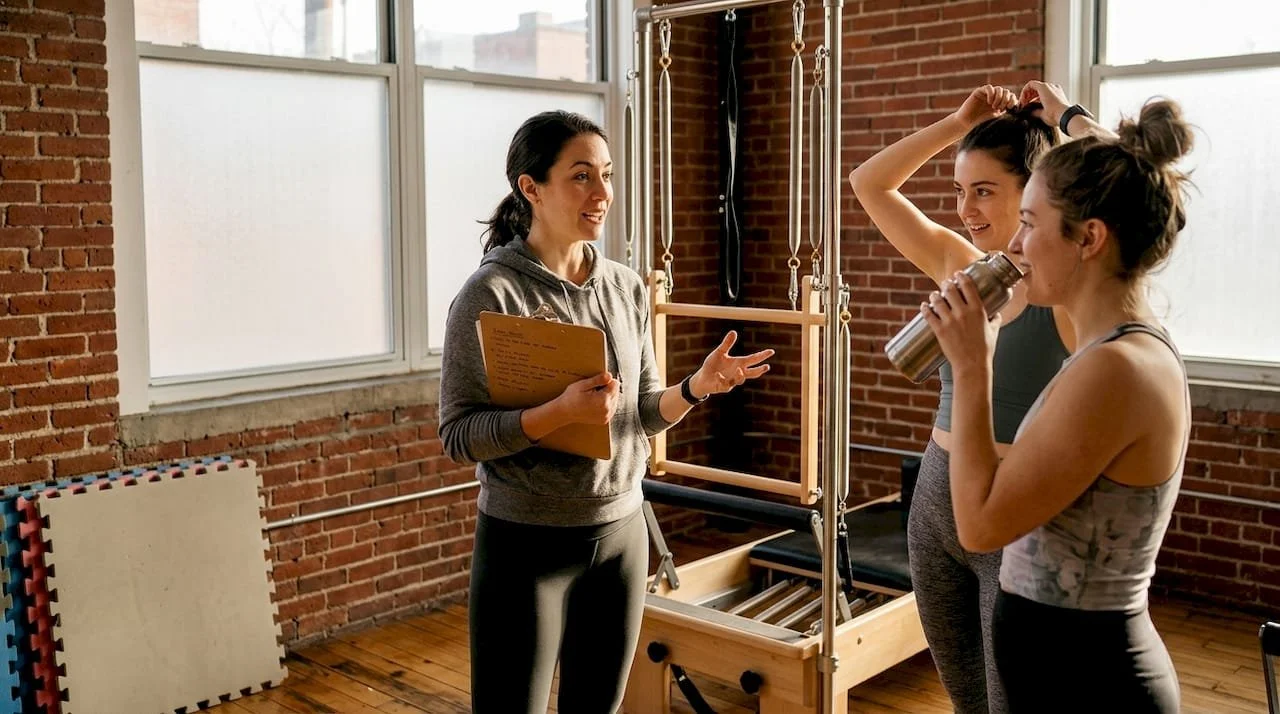
Instructor quality matters more than studio aesthetics. Look for instructors certified through reputable programs such as STOTT Pilates, BASI, Balanced Body, or Peak Pilates. These programs require 200 or more training hours and include anatomy, biomechanics, and hands-on teaching practice. The Pilates instructor certification guide from the Pilates Method Alliance outlines what rigorous training looks like, including NPCP-aligned programs that cover anatomy and biomechanics in depth.
Here's a quick checklist for evaluating any Philadelphia Pilates studio:
Instructor certification: Confirm the program name and training hours (200+ minimum)
Class size: Smaller classes of 6 to 10 participants allow for more individualized attention and corrections
Modification availability: Instructors should actively offer options for different fitness levels and injuries
Trial class policy: Reputable studios offer intro or drop-in options so you can test before committing
Recent reviews: Look for patterns in Google or Yelp reviews, specifically around instructor attentiveness and safety
"A good Pilates instructor doesn't just lead the class. They watch, adjust, and meet each student where they are."
Small class sizes are a bigger deal than most people realize. In a class of 20 or more, an instructor physically cannot watch your form closely. Poor form in Pilates doesn't just reduce results. It can cause strain, especially in the lower back and neck. Studios that cap classes at 10 or fewer participants are investing in your safety.
For those considering Pilates as part of injury recovery, look specifically for studios with experience in Pilates for rehab and fitness. Not every instructor is trained to work with chronic pain or post-surgical clients, so ask directly before booking.
Pro Tip: Call or email the studio before your first visit. Ask about class sizes, instructor certifications, and how they handle modifications. A studio that answers these questions confidently is one worth trusting.
Set expectations: Results, frequency, and tracking progress
Let's conclude the core guide by understanding how your Pilates commitment leads to visible results in Philadelphia.
One of the most common mistakes new Pilates students make is expecting dramatic results after two or three classes. Pilates rewards consistency, not intensity. Here's what the research and real-world experience actually show:
Weeks 1 to 3: You'll notice improved body awareness, better breathing patterns, and mild muscle activation in the core and hips
Weeks 4 to 6: Posture improvements become visible. Many students report less lower back tension and greater ease in daily movement
Weeks 6 to 8: Measurable gains in core strength and flexibility. This is when most people feel genuinely transformed by the practice
Key stat: 2-3 Pilates sessions per week for 6 to 8 weeks produces meaningful gains in core strength and flexibility. Attending three times per week rather than once doubles your flexibility improvements over the same period.
The science backs this up. An 8-week Pilates program leads to significant improvements in function among people with chronic lower back pain, making it one of the most evidence-supported low-impact options available.
Here's how to track your own progress without relying on a scale or a mirror:
Pain and discomfort: Note any reduction in lower back, hip, or neck tension week over week
Flexibility markers: Can you reach further in a forward fold? Does a seated twist feel less restricted?
Core endurance: How long can you hold a plank or a Pilates hundred without losing form?
Energy and posture: Do you sit taller at your desk? Do you feel less fatigued after long days?
For a deeper look at what to expect over time, the Pilates results in core and flexibility breakdown shows how both mat and reformer work contribute to long-term gains.
Why real results from Pilates depend on personalization, not just the class
Here's something most Pilates guides won't tell you: the class that transformed your coworker's back pain might do absolutely nothing for yours. Pilates is one of the most individualized fitness methods available, and treating it like a one-size-fits-all solution is the fastest way to plateau.
We've seen students at every level make the same mistake. They find a class they like, stick with it for months, and then wonder why progress has stalled. The answer is almost always that their needs evolved but their class didn't. What worked for you as a beginner won't challenge you at month six.
The most successful Pilates students in Philadelphia share one habit: they reassess regularly. They ask their instructor for feedback, try new class formats, and aren't afraid to switch studios if the fit stops working. Use beginner Pilates adjustment tips as a starting point, but stay curious and adaptable as your body changes.
Always take advantage of intro offers. Ask instructors directly about accommodations for your specific limitations. And revisit your goals every two months. Pilates should grow with you.
Ready to get started? Find your Pilates fit in Philadelphia
Now that you've got the insights for smart Pilates selection, here's where to take your first step. The best way to know if a studio is right for you is to show up and try it. Reading reviews helps, but nothing replaces the experience of actually moving in the space and working with the instructor.
At Amrita Yoga & Wellness, we offer a variety of Pilates classes at Amrita Yoga & Wellness led by certified instructors in North Philadelphia, welcoming students at every level from complete beginners to seasoned practitioners. Whether you're drawn to mat work for flexibility or want to explore reformer-style training, our schedule is built to meet you where you are. Check our current class offerings, instructor backgrounds, and availability before booking to make sure the timing and format align with your goals.
Frequently asked questions
How much do Pilates classes usually cost in Philadelphia?
Mat Pilates typically costs $15 to $22 per class, while Reformer classes range from $30 to $45 per session at most Philadelphia studios. Intro packages often reduce the per-class cost significantly.
What is the difference between Mat and Reformer Pilates for beginners?
Mat Pilates focuses on bodyweight exercises and core fundamentals, while Reformer Pilates uses a spring-based machine to add resistance and intensity. Both formats offer modifications that make them accessible to beginners.
How often should I attend Pilates classes to see results?
Attending 2-3 sessions per week for 6 to 8 weeks leads to noticeable gains in core strength and flexibility. Consistency over intensity is what drives lasting results.
Do Philadelphia Pilates studios offer classes for injury recovery or physical therapy?
Yes, many Philadelphia studios offer group and private Pilates classes designed for recovery and rehabilitation. Always ask about instructor experience with your specific condition and confirm that modifications for injuries are part of every class.