Top ways to improve your Pilates routine for real results
TL;DR:
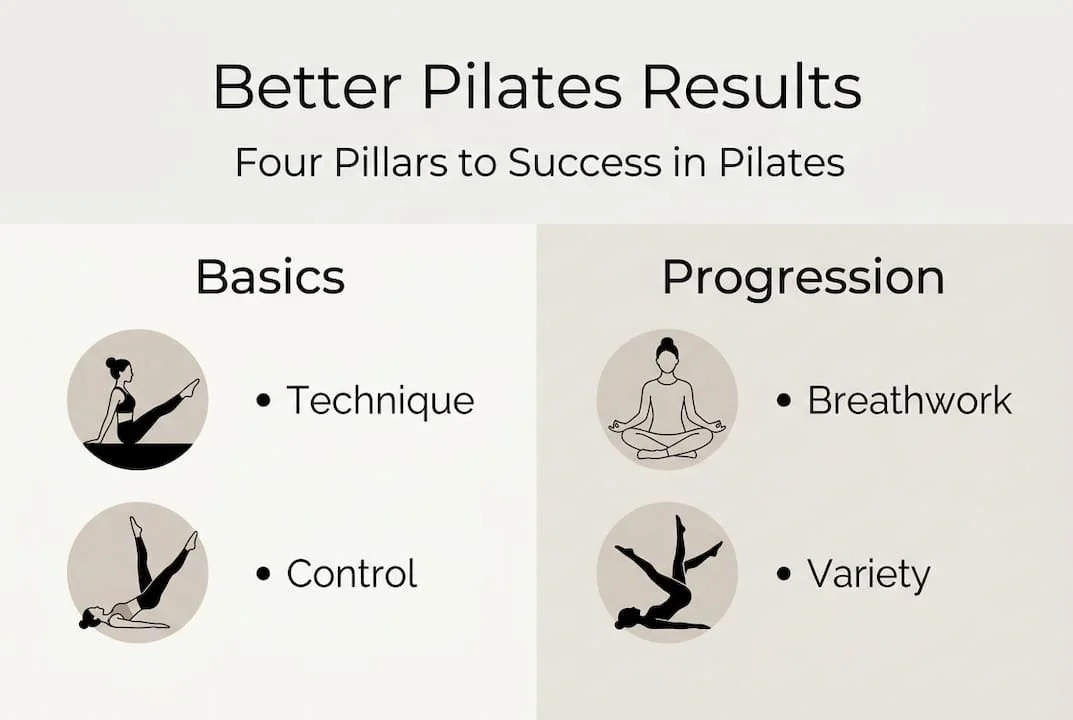
Proper form, control, and breath are more effective than high repetitions in Pilates.Mastering foundational exercises is essential before progressing to more advanced movements.Focusing on breathwork and mechanics enhances core engagement and overall results.
Most people assume that doing more reps or speeding through Pilates sessions is the fastest path to results. It isn't. Proper form, control, and breath build more strength and flexibility than any high-rep routine ever will. Whether you're stepping onto the mat for the first time in Philadelphia or you've been practicing for years, the strategies in this guide will help you get measurably better results without adding more time to your schedule. This is about working smarter, not harder, and the evidence backs it up completely.
Table of Contents
Key Takeaways
| Point | Details |
|---|---|
| Form trumps speed | Focusing on proper form and control improves strength and flexibility better than rushing through reps. |
| Master the basics | Building from foundational movements in Pilates creates safer, more effective progress for all levels. |
| Breathe with intention | Integrating breath and subtle core activation is essential for maximizing every Pilates move. |
| Mix and recover | Combining Pilates with other exercise and structured rest accelerates results and prevents burnout. |
Master the basics before advancing
There's a temptation in every fitness practice to skip ahead. You see someone performing a Swan Dive or a Teaser and you want to get there fast. But in Pilates, that shortcut almost always backfires. The foundational exercises aren't just beginner content. They're the building blocks your body needs to move safely and effectively at every level.
Three exercises form the core of any solid Pilates foundation:
The Hundred: Builds breath coordination and deep abdominal endurance. It teaches your body to stabilize while moving.
Roll Up: Trains spinal articulation and lengthens the hamstrings. It's far more demanding than it looks.
Pelvic Curl: Activates the glutes, hamstrings, and lower back while teaching neutral spine awareness.
Mastering these before moving on isn't just smart. It's essential. Gradual progression through basics like the Hundred, Roll Up, and Pelvic Curl, followed by increasing range of motion and then adding resistance, is the proven path for practitioners at every level. You can also explore essential Pilates exercises to understand how these movements connect across skill levels.
Here's a simple 4-week progression framework to guide your early practice:
| Week | Focus | Example exercises |
|---|---|---|
| 1 | Basics and alignment | Hundred, Pelvic Curl, Spine Stretch |
| 2 | Core and hip stability | Roll Up, Single Leg Stretch, Bridge |
| 3 | Full-body integration | Swimming, Leg Circles, Side-Lying Series |
| 4 | Advanced introduction | Teaser prep, Swan, Rolling Like a Ball |
This table isn't a rigid prescription. It's a map. Your body will tell you when it's ready to move forward, and that signal is consistency and ease, not boredom.
Pro Tip: Skipping foundational work doesn't save time. It creates compensation patterns that limit your progress and raise your injury risk. Spend at least two to three weeks truly owning the basics before advancing.
Focus on form and control over speed
Once you have your foundation, the next upgrade isn't a harder exercise. It's better execution of the ones you already know. This is where most practitioners leave serious gains on the table.
Movement quality in Pilates produces results that quantity simply cannot match. A slow, controlled Roll Up with full spinal articulation does more for your core than twenty rushed crunches. In fact, the Roll Up is 30% more effective than crunches for abdominal strength. That's not a minor difference. That's a complete rethinking of how you approach core work.
"Prioritize proper form, control, and breath over speed or reps to build strength and flexibility effectively." — NACAMS Pilates Progression Guide
Here's a direct comparison that shows why form-focused Pilates wins:
| Exercise | Muscles targeted | Spinal involvement | Injury risk | Effectiveness |
|---|---|---|---|---|
| Roll Up | Full abdominals, hip flexors | Full articulation | Low (with control) | High |
| Standard crunch | Upper abs only | Minimal | Moderate (neck strain) | Lower |
The difference is stark. The Roll Up demands that your entire spine move sequentially, which activates far more muscle fibers and builds real functional strength.
To keep your form sharp in every session, run through this quick checklist before and during each exercise:
Alignment: Is your spine in the correct position for this movement? Neutral or imprinted as required?
Control: Are you moving with intention, or just getting through the reps?
Breath synchronization: Are you exhaling on the effort and inhaling on the release?
Understanding Pilates breathing techniques is central to this checklist. Breath isn't decoration in Pilates. It's the mechanism that drives deep core engagement and keeps your movements fluid. The Pilates breathing benefits extend beyond the mat too, improving posture and reducing tension throughout your day.
Incorporate breathwork and proper mechanics
Breath is the engine of Pilates. Not a background detail, not something to think about after you've learned the moves. The breath coordinates oxygen delivery to working muscles and activates the deep core stabilizers that make every movement safer and more effective.
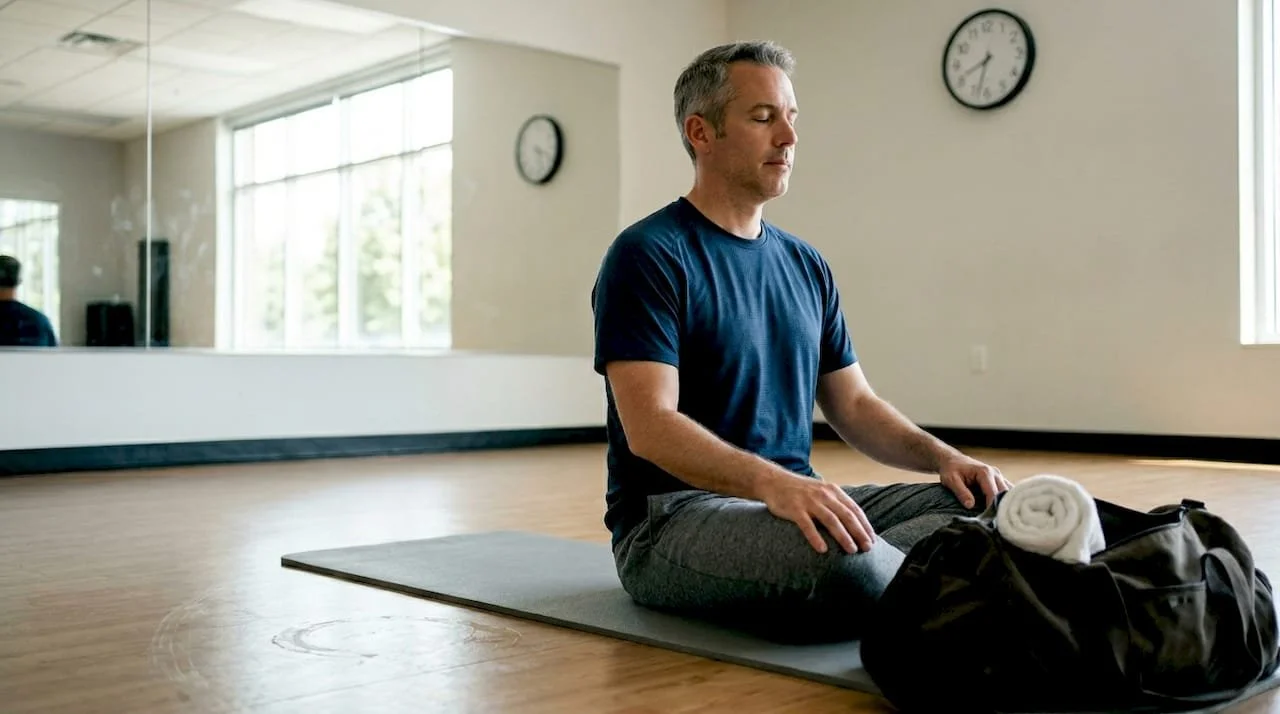
Two mechanical concepts separate good Pilates from great Pilates. The first is the two-way stretch: the idea that your body lengthens in opposite directions simultaneously during each movement. Think of reaching the crown of your head away from your tailbone during a Spine Stretch. This creates length and decompression rather than compression.
The second is understanding neutral spine versus imprinted spine. Neutral spine preserves the natural curves of your back and is used in most exercises. Imprinted spine gently presses the lower back toward the mat and is used when your legs are extended and your core needs extra support. Confusing these two positions is one of the most common form errors in Pilates.
For key mechanics like two-way stretch and subtle core engagement, the goal is never to grip or brace your abs. It's a gentle, internal lift.
Here's how to sync breath, alignment, and engagement in any exercise:
Set your position: Find neutral or imprinted spine before you begin.
Inhale to prepare: Use the breath to lengthen your spine and settle your alignment.
Exhale to engage: On the exhale, feel your deep core gently activate without gripping.
Move with the breath: Let the exhale initiate the effort phase of the movement.
Inhale to return: Use the inhale to lengthen and reset before the next rep.
For deeper core engagement, the target muscles are the transverse abdominis (TVA) and multifidus, not the superficial abs you feel during a crunch. Understanding the benefits of Pilates breathwork helps you connect with these deeper layers more effectively. Research also shows that breath-led core work can boost core strength significantly when practiced consistently.
Pro Tip: Instead of thinking "pull your belly to your spine," try thinking "gently lift your pelvic floor and let your lower belly follow." This cue activates the TVA and multifidus without creating the tension that blocks fluid movement.
Combine Pilates with other exercises and recovery
Pilates is powerful. But treating it as your only form of exercise is one of the most common mistakes practitioners make. Pilates excels at building control, flexibility, and deep core strength. It doesn't fully replace the cardiovascular conditioning or heavy load-bearing stimulus that your body also needs for total fitness.
Common pitfalls to avoid:
Skipping warm-ups before class
Rushing through sessions to fit in more exercises
Doing only Pilates without any strength or cardio work
Overtraining without adequate rest days
Ignoring recovery practices like stretching or sleep
The research on Pilates outcomes is genuinely impressive. An 8-week program shows improved flexibility outcomes and spinal range of motion in gait, with large effect sizes. For people dealing with lower back pain, Pilates pain reduction research shows it outperforms basic home exercise programs. A meta-analysis found an SMD 1.41 pain reduction in lower back pain patients, which is a clinically large and meaningful effect.
A balanced weekly routine might look like this:
Monday: Pilates (60 min, form-focused)
Tuesday: Light cardio (walking, cycling) or rest
Wednesday: Resistance training (bodyweight or weights)
Thursday: Pilates (45 min, breathwork emphasis)
Friday: Active recovery (yoga, stretching)
Saturday: Cardio or group fitness class
Sunday: Full rest
Building healthy lifestyle habits around your Pilates practice, including sleep, nutrition, and stress management, amplifies everything you do on the mat. Avoiding common pitfalls like skipping warm-ups and overtraining is just as important as the work itself.
Pro Tip: Schedule your rest days with the same commitment as your workout days. Recovery is when your body actually adapts and gets stronger. Treating rest as optional is the fastest way to plateau.
Our perspective: The underrated fix that transforms your Pilates journey
Here's something we've noticed working with Philadelphia clients over the years: the people who progress fastest are almost never the ones chasing harder exercises. They're the ones who become genuinely curious about the small things. The quality of a single exhale. The subtle lift of the pelvic floor before a movement begins. The difference between gripping and engaging.
Most practitioners rush to advanced Pilates within weeks of starting, convinced that difficulty equals progress. But the greatest returns come from nuanced breath and mechanics integration, not from tougher moves. A client who can perform a basic Roll Up with perfect spinal articulation, full breath coordination, and zero tension in the neck will see more transformation than someone grinding through a Teaser with poor alignment.
Real breakthroughs come from building body awareness, not chasing complexity. Understanding breathwork for wellness is often the turning point. When you learn to feel your breath activate your deep core, the whole practice shifts. Movements become easier, more fluid, and far more effective. That's the transformation most people are looking for, and it was available to them from the very first session.
How Amrita Yoga & Wellness can support your Pilates journey
You now have a clear, evidence-backed roadmap for improving your Pilates practice. The next step is putting it into action with the right support around you.
At Amrita Yoga & Wellness in Philadelphia, our instructors work with practitioners at every level, from those just learning the Hundred to those refining advanced sequences. We offer personalized guidance on form, breath mechanics, and progressive programming so you're never guessing about your next step. Whether you're looking to deepen your practice, address a specific concern like back pain, or simply find a consistent community, our Pilates and wellness offerings are designed to meet you where you are. We also offer unique wellness experiences like Tarot readings for those interested in holistic self-exploration beyond the mat.
Frequently asked questions
How often should I practice Pilates for the best results?
Most studies show practicing Pilates 2-4 times a week yields measurable improvements in strength, flexibility, and quality of life. Flexibility and quality of life improvements typically appear within 4 to 8 weeks of consistent practice.
Is Pilates or weight training better for core strength?
Pilates is 30% more effective than crunches for abdominal strength, but combining Pilates with resistance training gives you the best total-core results overall.
Can Pilates help with chronic lower back pain?
Yes. High-quality evidence shows Pilates reduces lower back pain and disability better than basic home exercise programs, with a meta-analysis reporting an SMD of 1.41 for pain reduction.
What's the biggest mistake Pilates learners make?
Skipping foundational exercises and prioritizing speed over control are the most limiting mistakes. Mastering basics like the Hundred, Roll Up, and Pelvic Curl before advancing is the most reliable path to lasting results.