Bikram Yoga Health Benefits: What the Science Says

TL;DR:
Bikram yoga provides significant physical and mental health benefits, including improved flexibility, cardiovascular health, and reduced stress. Its heated environment enhances muscle elasticity and stress resilience, but it does not significantly outperform room-temperature yoga in aerobic capacity. Proper hydration, gradual adaptation, and individual caution are essential for safe practice, especially for those with health risks.
Bikram yoga is defined as a standardized 26-posture sequence practiced in a room heated to 90–105°F with 40% humidity, and its health benefits span cardiovascular conditioning, flexibility gains, body composition changes, and measurable stress reduction. Unlike general yoga styles, Bikram's fixed structure and controlled heat environment create specific physiological responses that researchers have studied in controlled trials. The evidence shows real, quantifiable bikram yoga health benefits, though some are more dramatic than the marketing suggests. Understanding exactly what the heat does, and what it does not do, helps you practice smarter and set realistic expectations.
How does Bikram yoga improve physical fitness?
Bikram yoga improves physical fitness by raising muscle temperature, increasing joint range of motion, and driving cardiovascular adaptations that room-temperature yoga cannot fully replicate. The heat is not just a backdrop. It is a physiological tool.
When you practice in a room at 90–105°F, your muscles become more pliable, which allows deeper stretching with lower injury risk. Sessions last 90 minutes and follow the same 26 poses every time, which means your body adapts progressively to both the thermal load and the movement demands. That consistency is what drives measurable gains over weeks and months.
The cardiovascular response is significant. Bikram yoga elevates heart rate to 60–75% of your maximum, combining isometric strength holds with an aerobic stimulus. This means your heart and lungs are working at a moderate training intensity for the full session, not just during warm-up. Over time, chronic heat exposure causes cellular and cardiovascular adaptations that improve heart function, similar to the adaptations seen in endurance athletes.
The physical benefits of regular Bikram practice include:
Flexibility: Heat increases muscle elasticity, allowing greater range of motion in poses like Standing Bow and Camel.
Muscular endurance: Isometric holds in postures like Awkward Pose and Eagle build sustained muscle activation.
Balance and coordination: Single-leg postures such as Standing Head to Knee train proprioception and neuromuscular control.
Bone density: Research reviews show yoga strengthens bone mineral density and improves lung capacity through enhanced circulation.
Cardiovascular conditioning: Vasodilation and increased cardiac output during sessions translate to improved resting heart function over time.
Pro Tip: Track your range of motion in two or three key poses at the start of each month. Standardized measures like this give you objective feedback on progress that perceived effort alone cannot provide.
A meta-analysis of 30 randomized controlled trials covering 2,313 participants found that yoga practice reduces systolic blood pressure by 4.35 mmHg and diastolic pressure by 2.06 mmHg in overweight adults. For anyone managing cardiovascular risk, that is a clinically meaningful number, not just a wellness talking point.
What mental health benefits does Bikram yoga offer?
Bikram yoga produces measurable mental health improvements by combining breath control, physical exertion, and heat exposure in a way that directly affects stress hormones and mood-regulating neurochemicals. The psychological benefits of hot yoga are not incidental. They are built into the structure of the practice.

Enduring 90 minutes of heat and physical challenge trains psychological resilience. Each time you stay in the room through discomfort, you build a tolerance for stress that transfers to everyday life. Regular hot yoga reduces cortisol levels and improves stress resilience, with documented reductions in anxiety and depression symptoms across multiple studies. That hormonal shift is why practitioners consistently report feeling calmer after class, not just physically tired.
The mental health benefits of consistent Bikram practice include:
Reduced anxiety: Breath-focused movement lowers the sympathetic nervous system's stress response during and after sessions.
Improved mood: Endorphin release during moderate-intensity exercise creates a post-class mood lift that accumulates with regular practice.
Better sleep quality: The body temperature drop after a hot yoga session signals the nervous system to shift toward rest and recovery.
Emotional resilience: Completing difficult sessions under heat stress builds confidence and a stronger stress tolerance baseline.
Reduced depression symptoms: Studies cited by Verywell Health show consistent mood improvements with regular hot yoga participation.
Emerging research adds another layer. A systematic review found that yoga and meditation are linked to beneficial gut microbiota changes, including increased populations of beneficial bacteria and metabolites associated with reduced anxiety and improved cardiovascular health. The gut-brain connection means Bikram yoga's mental health effects may run deeper than hormone regulation alone.
How does Bikram yoga influence weight management and metabolic health?
Bikram yoga produces meaningful body composition changes with consistent, long-term practice, though the mechanism is more nuanced than simply "sweating off calories." The weight you lose immediately after class is water. The fat you lose over months is the real result.
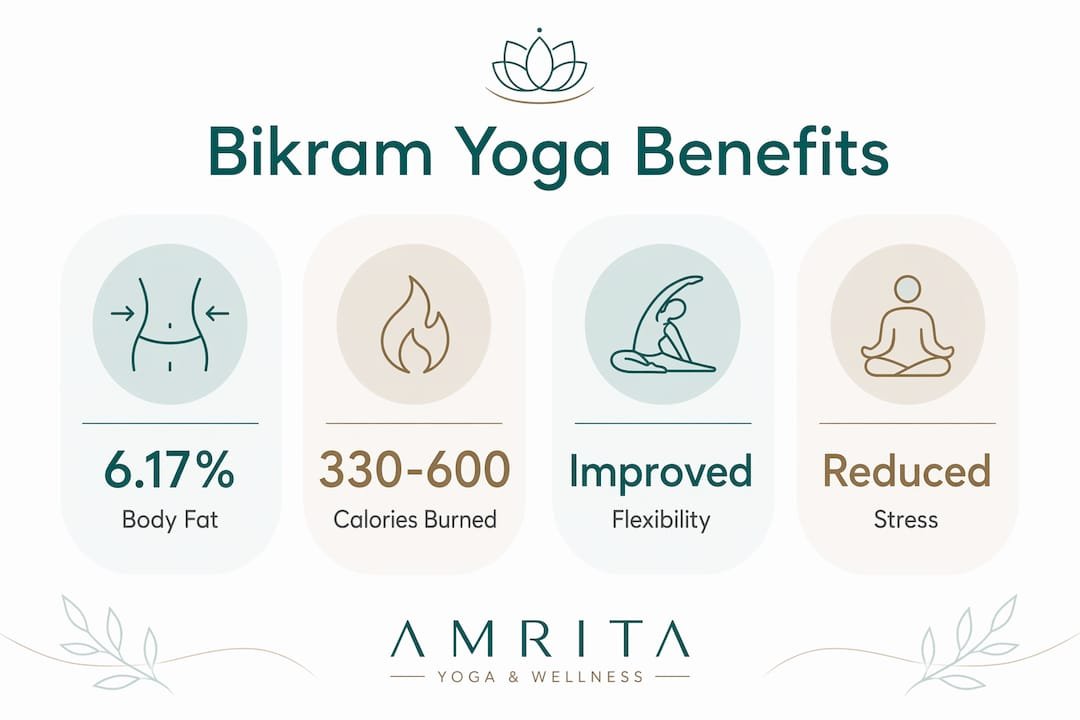
A six-month study with 22 women aged 20 to 65 practicing Bikram yoga three times per week at 40°C found a progressive body fat decrease of up to 6.17%. That is a substantial reduction achieved without dietary intervention, driven purely by consistent practice. Skipping sessions or reducing the heat and humidity changes the effective dose and blunts these results.
| Metric | What the research shows |
|---|---|
| Body fat reduction | Up to 6.17% decrease over 6 months with 3x/week practice |
| Caloric burn per session | 330 to 600 calories per 90-minute class, depending on body weight |
| Blood pressure impact | Systolic reduced by 4.35 mmHg across yoga meta-analysis populations |
| Cardiovascular adaptation | Improved cardiac output and heart function with chronic heat exposure |
Calorie expenditure during a single session ranges from 330 to 600 calories depending on body mass and session intensity. That range matters because heavier individuals burn more, and intensity varies with how deeply you engage each posture. The metabolic benefit extends beyond the session itself. Improved insulin sensitivity and glucose regulation are associated with regular yoga practice, making Bikram a useful tool for metabolic health management.
Pro Tip: Do not judge a Bikram session by how much you sweat. Sweat volume reflects heat response, not caloric output. Use session completion rate and body composition measurements over 8 to 12 weeks as your real progress markers.
How does Bikram yoga compare to other forms of yoga and exercise?
Bikram yoga delivers unique benefits compared to room-temperature yoga, but the differences are more specific than most practitioners realize. The heat amplifies certain outcomes while leaving others unchanged.
One controlled study found that Bikram yoga did not significantly increase oxygen consumption or caloric burn compared to room-temperature yoga. Feeling like you worked harder in a hot room does not mean your aerobic intensity crossed the threshold required for cardiovascular fitness improvements. This is one of the most important distinctions in the heated versus non-heated yoga debate.
| Factor | Bikram yoga | Room-temperature yoga |
|---|---|---|
| Flexibility gains | Greater, due to heat-increased muscle pliability | Moderate, depends on pose selection |
| Cardiovascular stimulus | Moderate aerobic load at 60–75% max heart rate | Lower heart rate response overall |
| Caloric burn | 330–600 calories per 90-minute session | Comparable when intensity is matched |
| Mental health benefits | Strong, amplified by heat-stress resilience training | Strong, especially with breath-focused styles |
| Injury risk | Slightly higher if hydration and heat tolerance are ignored | Lower baseline risk |
Where Bikram clearly outperforms room-temperature yoga is in flexibility development and heat-specific cardiovascular adaptations. Where it does not outperform is in raw aerobic output. For anyone whose primary goal is cardiovascular fitness, Bikram yoga complements rather than replaces dedicated cardio and strength training. The most effective approach combines Bikram's flexibility and stress-reduction benefits with higher-intensity aerobic work two to three times per week.
For women over 30 evaluating yoga against other modalities, a comparison of yoga and Pilates shows that each targets different physical outcomes, and combining both often produces better results than either alone.
Who should practice Bikram yoga and what safety precautions matter?
Bikram yoga suits most healthy adults, but specific populations should approach it with caution or avoid it entirely. The heat is the primary variable that changes the risk profile compared to standard yoga.
People who benefit most from Bikram yoga include those managing chronic stress, individuals seeking flexibility improvements, adults with mild cardiovascular risk factors, and anyone who finds room-temperature yoga insufficiently challenging. The hot yoga studio environment also suits people who respond well to structured, predictable formats since the 26-pose sequence never changes.
Populations who should consult a physician before starting include:
Pregnant women, particularly in the first trimester, due to core temperature elevation risks.
Individuals with heart conditions, uncontrolled hypertension, or a history of heat stroke.
People with multiple sclerosis, as heat sensitivity can temporarily worsen symptoms.
Anyone with a history of fainting or severe dehydration episodes.
Safe practice requires consistent hydration before, during, and after class. Electrolyte replacement matters more than plain water for sessions exceeding 60 minutes. New practitioners should plan for a two to four week acclimation period where the primary goal is staying in the room, not completing every pose. If you feel dizzy, nauseous, or experience heart palpitations, leave the room immediately. Those are not signs of a good workout. They are signs your body has exceeded its heat tolerance threshold.
Key takeaways
Bikram yoga delivers measurable physical and mental health benefits through a combination of heat-driven physiological adaptations and consistent structured practice, with body fat reductions, cardiovascular improvements, and stress reduction all supported by research.
| Point | Details |
|---|---|
| Body composition changes | A 6-month study showed up to 6.17% body fat reduction with three sessions per week. |
| Cardiovascular conditioning | Heart rate reaches 60–75% of maximum, driving aerobic and cardiac adaptations over time. |
| Mental health improvements | Regular practice reduces cortisol, lowers anxiety, and improves sleep quality. |
| Heat amplifies flexibility | Muscle pliability increases in heated rooms, enabling deeper range of motion gains. |
| Complement, do not replace | Bikram yoga works best alongside cardio and strength training for full fitness outcomes. |
Why Bikram yoga rewards patience more than intensity
Most people walk into their first Bikram class expecting to feel transformed. What they actually feel is overwhelmed, overheated, and slightly humbled. That gap between expectation and experience is where most people quit, and it is exactly where the real benefits begin.
The research is clear that Bikram yoga does not dramatically outperform room-temperature yoga on raw aerobic metrics. Feeling like you worked harder does not always mean you did. What Bikram does deliver, and what the studies consistently confirm, is a specific combination of heat adaptation, flexibility development, and stress resilience that builds progressively with consistent attendance. The six-month body fat study did not show dramatic results at week two. The changes accumulated with repetition.
The practitioners who get the most from Bikram yoga are not the ones who push hardest in every class. They are the ones who show up three times a week for months, stay in the room when it gets uncomfortable, and treat the practice as a long-term investment rather than a quick fix. New practitioners at studios like Amrita Yoga & Wellness in Philadelphia often report that the mental shift, learning to stay calm under physical stress, is the benefit they did not expect and value most.
My honest advice: give it eight weeks before you judge it. Track two or three objective measures. And stop leaving early.
— Juiced
Start your Bikram yoga practice at Amrita Yoga & Wellness

Amrita Yoga & Wellness in Philadelphia offers guided hot yoga classes designed for practitioners at every level, from first-timers navigating the heat for the first time to experienced students deepening their practice. The studio's structured programs give you the consistency that research identifies as the key driver of real results. Whether your goal is flexibility, stress reduction, or body composition change, professional instruction makes the difference between guessing and progressing. Amrita Yoga & Wellness also offers holistic wellness services that complement your physical practice and support whole-person well-being. Explore the full range of classes and find the right starting point for your goals.
FAQ
What are the main Bikram yoga health benefits?
Bikram yoga's primary benefits include improved flexibility, cardiovascular conditioning, reduced stress and anxiety, and body composition changes. A six-month study documented up to 6.17% body fat reduction with three sessions per week.
How many calories does a Bikram yoga session burn?
A 90-minute Bikram session burns between 330 and 600 calories depending on body weight and engagement level. Sweat volume does not reliably indicate caloric output, so body composition measurements over time are more accurate progress markers.
Is Bikram yoga good for mental health?
Regular hot yoga practice reduces cortisol levels, lowers anxiety and depression symptoms, and improves sleep quality. The heat-stress resilience built during sessions also transfers to everyday stress management.
How does Bikram yoga compare to regular yoga for fitness?
Bikram yoga produces greater flexibility gains and heat-specific cardiovascular adaptations, but controlled studies show it does not significantly increase oxygen consumption or caloric burn compared to room-temperature yoga at matched intensity.
Who should avoid Bikram yoga?
Pregnant women, individuals with uncontrolled heart conditions or hypertension, people with multiple sclerosis, and anyone with a history of heat stroke should consult a physician before practicing. Proper hydration and a gradual acclimation period are critical for all new practitioners.