Benefits of Yoga and Pilates for Your Fitness and Mind
TL;DR:
Yoga and Pilates are complementary practices that enhance physical fitness, mental well-being, and long-term health. Pilates excels in alleviating chronic back pain and improving core strength, while yoga significantly reduces stress, anxiety, and supports cardiometabolic health. Consistent practice over eight to twelve weeks, combining two to three sessions weekly, maximizes both physical and psychological benefits.
Yoga and Pilates are complementary mind-body exercise systems that deliver distinct and overlapping benefits for physical fitness, mental well-being, and long-term health. Yoga is a practice rooted in postures, breathwork, and focused attention, while Pilates is a controlled movement system built around core strength, posture correction, and muscular endurance. Together, the benefits of yoga and Pilates cover a wide spectrum: from reducing chronic pain and improving flexibility to lowering anxiety and supporting emotional regulation. Recent 2026 meta-analyses confirm both practices produce measurable improvements in stress, back pain, and cardiometabolic health, making them two of the most evidence-supported options for adults pursuing holistic fitness.
What are the main physical benefits of yoga and Pilates?
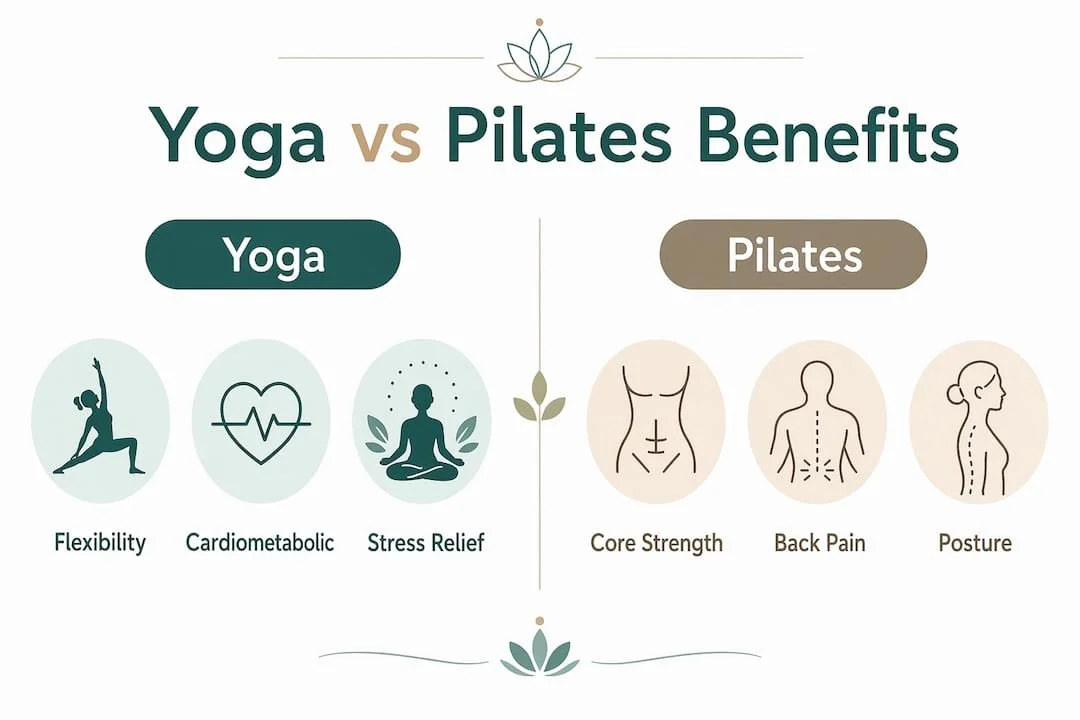
Yoga and Pilates each target physical fitness from a different angle, and understanding that difference helps you get more from both. Yoga builds flexibility, joint mobility, and muscular strength through sustained postures and flowing sequences. Pilates develops core stability, postural alignment, and muscular endurance through precise, controlled movements that demand full-body coordination.
The pain relief evidence for Pilates is particularly strong. A meta-analysis of 35 RCTs involving 2,132 participants found that Pilates produced a mean difference of MD=−1.14 on chronic low back pain, outperforming yoga and most other exercise modalities. That result means Pilates is not just a gentle stretch routine. It is one of the most clinically validated tools for back pain management available to adults without surgery or medication.
Yoga's physical benefits extend into cardiometabolic health. A meta-analysis of 30 RCTs found that yoga reduced systolic blood pressure by 4.35 mmHg and diastolic blood pressure by 2.06 mmHg in adults with overweight or obesity, with additional improvements in LDL and HDL cholesterol. For adults managing cardiovascular risk factors, a consistent yoga practice is a meaningful intervention, not a supplement to real exercise.
| Physical benefit | Yoga | Pilates |
|---|---|---|
| Flexibility | Strong improvement via sustained postures | Moderate, through full-range-of-motion movement |
| Core strength | Moderate, through stabilizing poses | Primary focus of every session |
| Posture correction | Moderate | Strong, especially with reformer work |
| Chronic back pain relief | Moderate evidence | Superior analgesic effect vs. most exercise types |
| Cardiometabolic health | Significant in overweight adults | Limited direct evidence |
| Balance and body awareness | Strong | Strong |
Pro Tip: Aim for at least two to three sessions per week for a minimum of eight weeks before evaluating physical results. Single sessions produce temporary relief. Sustained practice produces structural change.
How do yoga and Pilates benefit mental health?
Both practices produce measurable psychological benefits, and the mechanisms behind them are well understood. Yoga's mental health effects come primarily from breath control, mindfulness cues embedded in class instruction, and the parasympathetic activation that sustained movement and stillness produce. Pilates contributes through mind-body coordination, the concentration required for precise movement, and the sense of physical competence that builds over time.
A systematic review and meta-analysis of 30 controlled studies with 2,288 participants found that yoga interventions produced effect sizes of ES=−0.54 for stress, ES=−0.52 for anxiety, and ES=−0.50 for depression. Those are moderate effect sizes, comparable to many pharmaceutical interventions for mild-to-moderate conditions. The review also found that benefits increased with participant age, meaning adults over 40 tend to see stronger results than younger participants.
Program length is a critical factor that most people underestimate. A meta-analysis of over 24,000 participants found that mindfulness-based programs, including yoga, produced a pooled effect size of Hedges' g=−0.45 for anxiety, stress, and depression combined, with stronger effects for anxiety (g=−0.56) and for programs lasting 8 to 12 weeks. Short programs or irregular attendance produce underwhelming results. The dose matters as much as the practice itself.
The mental health benefits of both practices include:
Stress reduction: Yoga's breathwork directly activates the parasympathetic nervous system, lowering cortisol and heart rate. Pilates achieves similar effects through focused concentration and physical exertion.
Anxiety relief: Structured mindfulness-based programs show the strongest anxiety reductions among all mental health outcomes studied.
Depression support: Both practices improve mood through movement, social connection in group classes, and the neurochemical effects of regular physical activity.
Sleep quality: A four-week Pilates program showed significant sleep improvements (p=0.004) in adults with chronic low back pain, a population where poor sleep is nearly universal.
Emotional regulation: Yoga's emphasis on present-moment awareness builds the same attentional skills that cognitive behavioral therapy targets.
Pro Tip: If mental health is your primary goal, choose a yoga class that explicitly incorporates breathwork and mindfulness cues, such as a restorative, yin, or trauma-informed format. A flow class focused on physical intensity will produce fewer psychological benefits than a slower, breath-centered practice.
What is the difference between yoga and Pilates?
The difference between Pilates and yoga is best understood as a difference in primary emphasis, not a difference in quality or difficulty. Both are mind-body movement systems that develop balance, flexibility, and body awareness. But yoga prioritizes mindfulness, stress reduction, and a spiritual or philosophical framework, while Pilates prioritizes core stability, postural alignment, and controlled muscular engagement.
Yoga sessions typically require only a mat and can range from deeply restorative to physically demanding, depending on the style. Hatha, yin, and restorative yoga are gentle and meditative. Vinyasa, Ashtanga, and hot yoga are vigorous and cardiovascular. Pilates mat classes are accessible and equipment-free, while reformer Pilates uses a spring-resistance machine that adds load and precision to every movement. Reformer sessions tend to be more individualized and are often used in physical therapy settings for rehabilitation.
A common misconception is that both practices are "too gentle" to produce real fitness results. The clinical evidence on Pilates for back pain and the cardiometabolic data on yoga directly contradict that view. Both practices produce measurable physiological changes when practiced consistently at the right intensity.
Here is a practical breakdown of where the two practices differ and overlap:
Breath use: Yoga uses breath as a mindfulness anchor and a guide for movement transitions. Pilates uses breath to stabilize the core and coordinate muscular engagement.
Spiritual dimension: Yoga carries philosophical roots in Indian traditions and often includes meditation, intention-setting, or chanting. Pilates has no spiritual component.
Equipment: Yoga requires a mat. Pilates can use a mat, reformer, Cadillac, or Wunda chair.
Instructor training: Both require specialized certification, but Pilates teacher training, especially for reformer instruction, tends to be more anatomy-focused and longer in duration.
Shared benefits: Both improve balance and body awareness, reduce stress, and build functional movement quality that transfers to daily life.
For a deeper comparison of how to choose between the two based on your specific fitness goals, the yoga vs Pilates guide at Amritayogawellness covers the decision framework in detail.
How to integrate yoga or Pilates into your wellness routine
Choosing between yoga and Pilates, or combining both, depends on your primary health goal. If chronic back pain or postural issues are your main concern, start with Pilates. If stress, anxiety, or emotional regulation is the priority, start with yoga. If you want both physical and mental benefits simultaneously, a combined weekly schedule produces the broadest results.
Here is a practical framework for building a sustainable practice:
Define your primary goal. Back pain relief, core strength, flexibility, stress reduction, and sleep improvement each point toward different starting points and class formats.
Commit to a minimum of eight weeks. Both the Pilates back pain research and the mindfulness meta-analyses confirm that shorter programs produce weaker results. Eight to twelve weeks is the threshold for meaningful change.
Schedule two to three sessions per week. Once-weekly practice produces some benefit but falls below the dose needed for significant physical or psychological outcomes.
Choose qualified instructors. For Pilates, look for instructors certified through the Pilates Method Alliance or a recognized studio training program. For yoga, Yoga Alliance registration (RYT-200 or higher) indicates a baseline standard of training.
Track functional outcomes, not just how you feel after class. Note changes in pain levels, sleep quality, emotional reactivity, and physical performance over four-week intervals. These markers tell you whether the practice is working before you feel the full effect.
Consider combining both. Two Pilates sessions and one yoga session per week covers core strength, postural work, and mindfulness in a manageable schedule. The benefits of Pilates and yoga compound when practiced together rather than treated as competing options.
Pro Tip: If you are new to both practices, start with a beginner Pilates mat class before moving to reformer work. The mat builds the body awareness and core engagement patterns that make reformer sessions far more effective and safe.
For adults managing stress alongside physical fitness goals, pairing your practice with stress reduction techniques from evidence-based frameworks can accelerate the mental health benefits of both yoga and Pilates.
Key takeaways
Both yoga and Pilates produce clinically significant physical and mental health benefits, with Pilates showing superior results for chronic back pain and yoga showing stronger effects for stress, anxiety, and cardiometabolic health.
| Point | Details |
|---|---|
| Pilates leads on back pain | Meta-analysis of 35 RCTs confirms Pilates outperforms yoga and most exercise types for chronic low back pain relief. |
| Yoga targets stress and anxiety | Effect sizes of ES = -0.52 for anxiety and ES = -0.54 for stress make yoga a clinically meaningful mental health tool. |
| Eight to twelve weeks is the minimum | Programs shorter than eight weeks consistently show weaker outcomes across both physical and psychological measures. |
| Combining both practices maximizes results | Pilates covers core strength and posture; yoga covers mindfulness and stress reduction. Together they address the full spectrum. |
| Functional outcomes matter most | Pain levels, sleep quality, and emotional reactivity are better progress markers than how you feel immediately after a session. |
Why I think most people underestimate what these practices actually do
Most adults approach yoga or Pilates expecting a gentle supplement to their "real" workout. That framing is the single biggest reason people quit before they see results. The clinical data tells a different story. A mean difference of MD=−1.14 on chronic back pain from Pilates is not a wellness trend. It is a result that competes with physical therapy protocols. Yoga's effect on blood pressure and anxiety is not anecdotal. It is replicated across thousands of participants in controlled trials.
What I have observed, both personally and through the Amritayogawellness community in Philadelphia, is that the people who get the most from these practices are the ones who stop treating them as interchangeable. Yoga and Pilates are not the same thing done in different clothes. Yoga asks you to regulate your nervous system through attention and breath. Pilates asks you to stabilize your spine through precise muscular control. Both skills are worth developing, and they reinforce each other in ways that neither practice achieves alone.
The other pattern I see consistently: people expect results in two or three weeks and walk away when they do not feel transformed. The research is clear that eight to twelve weeks is the threshold. Patience is not a personality trait here. It is a clinical requirement. If you are exploring these practices for the first time, give yourself a full program cycle before you evaluate whether it is working.
— Juiced
Explore holistic wellness at Amrita Yoga & Wellness
Amritayogawellness offers yoga, Pilates, barre, tai chi, and massage therapy at its Philadelphia studio, with classes designed for every level from complete beginners to advanced practitioners. Whether you are starting with a mat Pilates class to address back pain or exploring restorative yoga for stress relief, the studio provides qualified instruction across all the practices covered in this article.
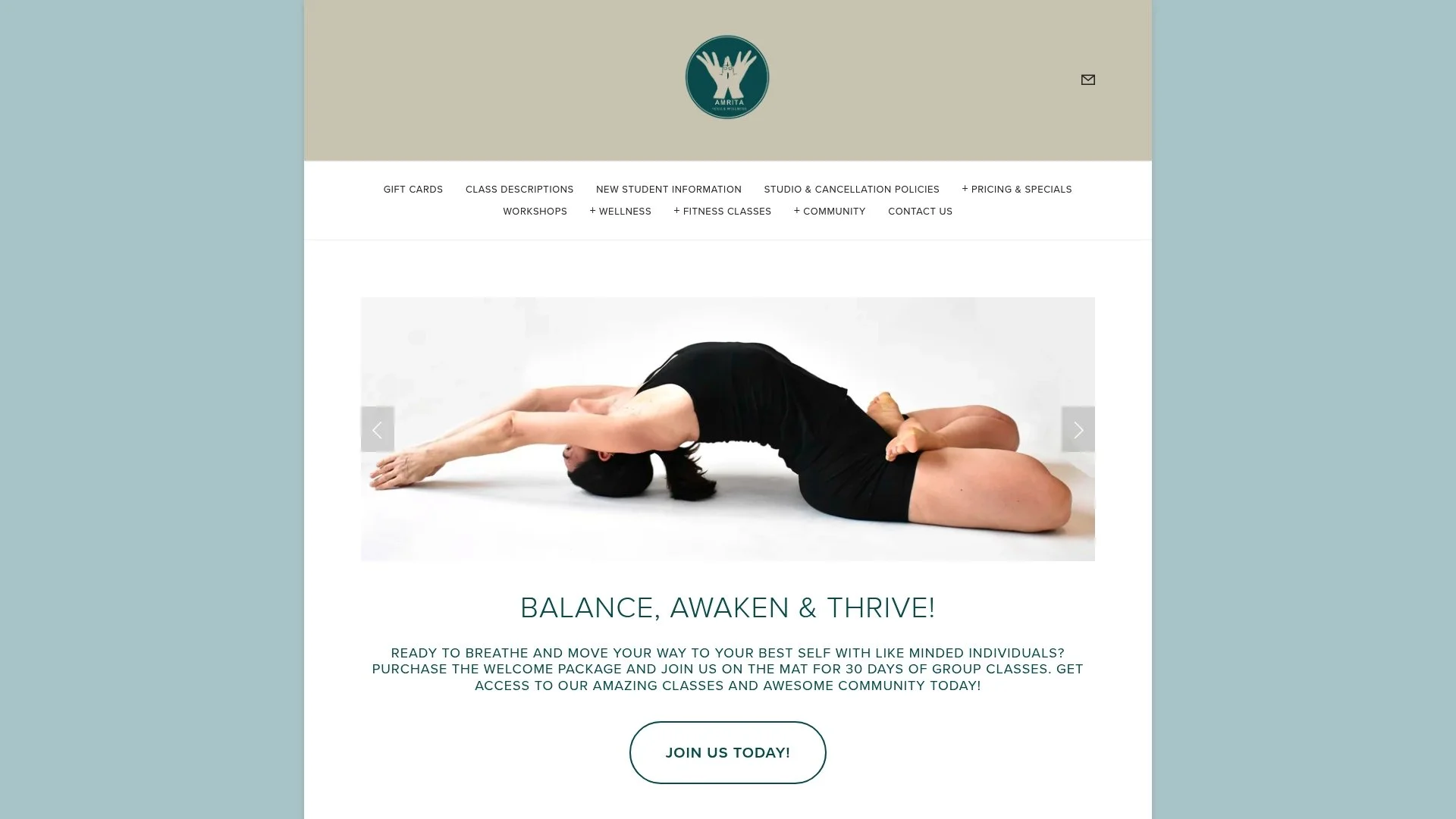
Beyond movement classes, Amritayogawellness also offers tarot readings as part of its holistic wellness programming. Tarot sessions provide a structured space for personal reflection and self-inquiry, complementing the mindfulness work you develop through yoga and Pilates. For adults who want to integrate physical, mental, and reflective practices into a single wellness routine, Amritayogawellness brings all of those offerings together under one roof in Philadelphia.
FAQ
What are the main benefits of yoga and Pilates together?
Combining yoga and Pilates addresses both core strength and mental well-being simultaneously. Yoga reduces stress and anxiety with effect sizes comparable to mild clinical interventions, while Pilates delivers superior results for chronic back pain and postural alignment.
Is Pilates or yoga better for back pain?
Pilates produces stronger results for chronic low back pain. A meta-analysis of 35 RCTs found Pilates outperformed yoga and most other exercise types on both pain intensity and functional disability measures.
How long does it take to see results from yoga or Pilates?
Meaningful physical and mental health improvements typically require eight to twelve weeks of consistent practice at two to three sessions per week. Programs shorter than eight weeks show significantly weaker outcomes across both practices.
What is the difference between yoga and Pilates for mental health?
Yoga produces moderate effect sizes for stress (ES=−0.54), anxiety (ES=−0.52), and depression (ES=−0.50) through breathwork and mindfulness. Pilates supports mental well-being through physical competence and mind-body coordination, but with less direct evidence for psychological outcomes than yoga.
Can beginners do both yoga and Pilates at the same time?
Yes, and combining both from the start is practical. A beginner schedule of two Pilates mat sessions and one yoga session per week covers core stability, posture, and stress reduction without overloading recovery. Start with mat-based formats in both practices before progressing to reformer Pilates or advanced yoga styles.