Six Pilates Principles: Origins and Cues for Your Next Move
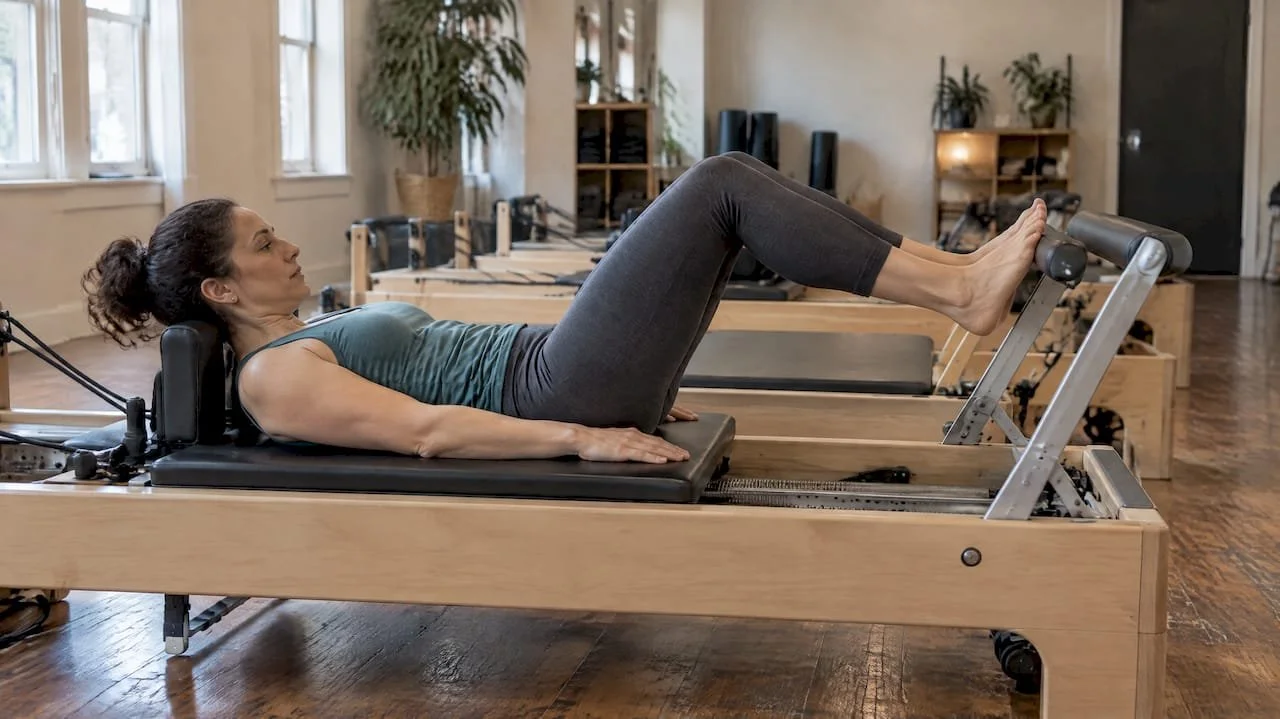
Pilates rests on six core principles: centering, concentration, control, precision, breath and flow. These act as teaching cues that guide every movement back to the "powerhouse," the deep core muscles that stabilize the spine, so that practice stays controlled, intentional and connected rather than rushed or careless.
TL;DR:
Start with one or two cues, such as centering and breath, then add control and precision as your coordination improves.
A 10 to 15 minute micro practice can reset your routine, while a full class usually lasts 45 to 60 minutes.
Stop movements that cause pain, especially in your lower back or neck; for back concerns, use a gentler pelvic tilt and shorter range.
A review of 119 papers found the six traditional principles in only about 23% of studies, while breathing appeared most consistently across fitness and clinical research.
Consistent practice typically builds measurable strength and flexibility changes over 8 to 12 weeks of practice, rather than delivering quick results.
Amritayogawellness
Bring Pilates Principles Into Practice
Explore Amrita Yoga & Wellness, a Philadelphia studio offering Pilates alongside yoga and other wellness practices.
Table of Contents
1. What do the six core principles actually mean?
Each principle answers a different question about how you move, and together they turn a simple exercise into a mind-body practice.
Centering: Every movement starts from the powerhouse, the band of muscles across your abdomen, lower back, hips and glutes. Before you lift a leg or roll up off the mat, draw your navel gently toward your spine so the movement originates from your center rather than your limbs.
Concentration: Pilates asks for full attention on each repetition rather than mindless counting. Pick one cue, such as the position of your pelvis, and hold it in your mind for the entire set instead of letting your thoughts drift.
Control: Nothing in Pilates is thrown or flung into place. Slow a movement down until you can stop it at any point, which is the clearest sign you're moving with control instead of momentum.
Precision: A few correctly aligned repetitions beat a dozen sloppy ones. Check one alignment detail, like keeping your shoulders away from your ears, on every single rep rather than only at the start.
Breath: Breath is paired with movement, often inhaling to prepare and exhaling through exertion. Try lateral or "ribcage" breathing: inhale to widen your ribs sideways, then exhale fully while drawing your abdominals in during the hardest part of a move.
Flow: Movements link together smoothly instead of stopping and starting. Once you know a sequence, practice moving from one exercise into the next without pausing to reset, letting your breath carry you across the transition.
Instructor resources, including a digital textbook on Pilates principles, present these six as the standard framework, though some teachers add related ideas like posture or balance depending on the class style.
2. Build a short routine around the six principles
A simple checklist helps you apply all six principles without overthinking them mid-class.
Set your space and breathe for three to five slow cycles before moving.
Engage your powerhouse by drawing your navel toward your spine (centering).
Choose one focus cue for the session and repeat it silently (concentration).
Perform your first movement slowly enough to pause at any point (control).
Check one alignment detail on every repetition (precision).
Match inhale and exhale to the effort phase of each exercise (breath).
Link two or three movements together without stopping (flow).
Finish with a slower cool-down breath cycle to settle your core before standing.
A short micro-practice of 10 to 15 minutes works for a quick reset, while a full class typically runs 45 to 60 minutes. Beginners should stop any movement that causes pain, especially in the lower back or neck.
Pro Tip: Breathe out as you move into the hardest part of an exercise, drawing your powerhouse in tighter, so breath and control reinforce each other during transitions instead of working against them.
3. Where do these principles come from?
Joseph Pilates called his method "Contrology" in his own writings, including his book Return to Life Through Contrology, which laid out the exercises and philosophy that later practitioners built on. The method began as training for dancers before expanding into general fitness and rehabilitation, and the Pilates Method Alliance along with academic sources, including a Springer Nature textbook chapter, later organized his ideas into the principle framework taught today.
A systematic review of 119 peer-reviewed papers found consensus that Pilates is a mind-body exercise built around core strength, control, flexibility and breathing, though the traditional six principles were mentioned in only about 23% of the papers reviewed. Breathing was the most consistently cited principle across both fitness and clinical research.
Pilates is best understood as a mind-body exercise method, with core stability, muscle control, flexibility, posture and breathing as its most consistently supported elements across the research.
This gap suggests the principles function mainly as teaching language rather than fixed clinical criteria, and their emphasis shifts depending on whether a class targets general fitness or a specific condition like low back pain.
4. How we bring these principles into the studio
We teach both mat and reformer Pilates classes and translate these six principles into cues that work for bodies at any level. For clients managing low-back concerns, we often shift the centering cue toward a gentler pelvic tilt and shorten the range of motion until control is solid, a modification we outline in our guidance on starting Pilates safely. Joining a guided class can help you feel these principles in your own body rather than just reading about them.
5. How Pilates principles compare to yoga's philosophy
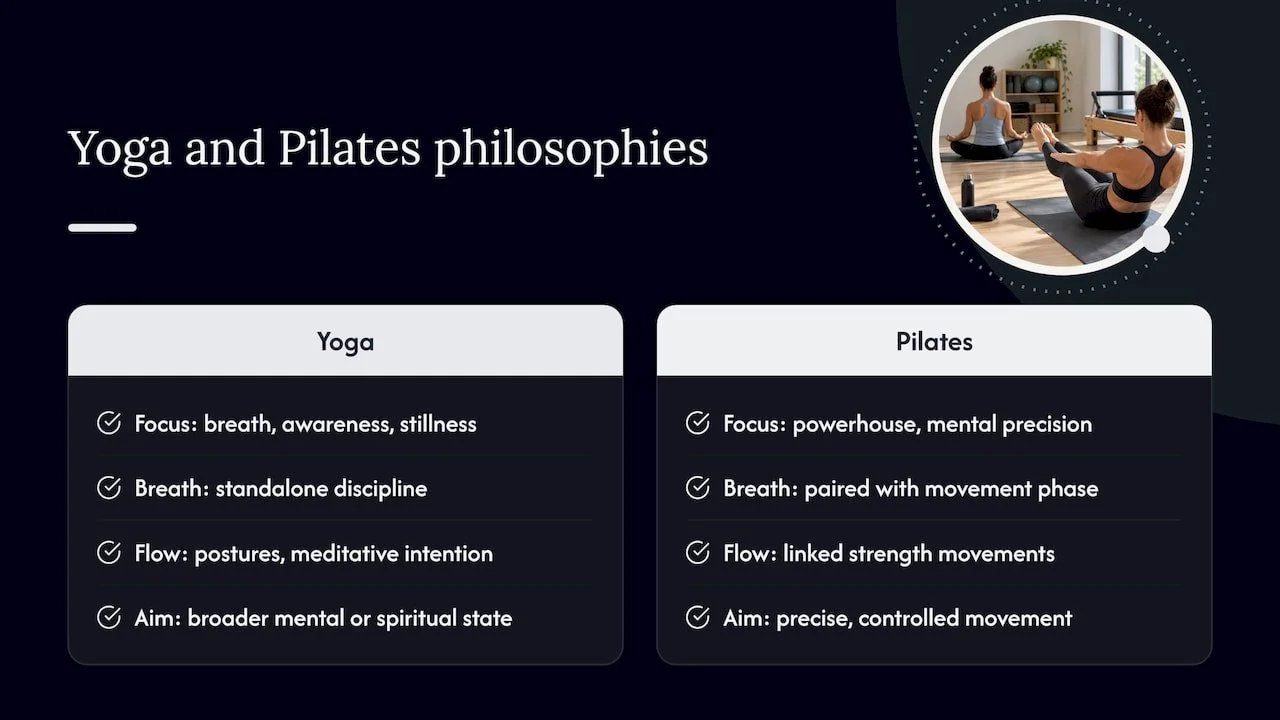
Yoga and Pilates both treat the body and mind as connected, but they organize that connection differently. Yoga philosophy traditionally centers on breath, awareness and stillness as paths toward a broader mental or spiritual state, often drawing on practices like meditation alongside physical postures. Pilates, by contrast, builds its philosophy around a specific physical anchor, the powerhouse, and treats mental focus as a tool for achieving precise, controlled movement rather than an end goal on its own.
Where yoga principles tend to describe an internal state or ethical approach to practice, Pilates principles like precision and control are closer to technical instructions you can check against your form in real time. Breath plays a role in both, but yoga breathing practices often stand alone as their own discipline, while Pilates breath is almost always paired directly with a specific movement phase. The flow principle in Pilates also differs from a yoga flow sequence: Pilates flow is about linking strength-based movements smoothly, while yoga flow often links postures with a meditative or energetic intention. Both methods reward consistency and attention, but Pilates philosophy stays closer to the mechanics of the moving body.
6. Why mental focus matters as much as the exercise itself
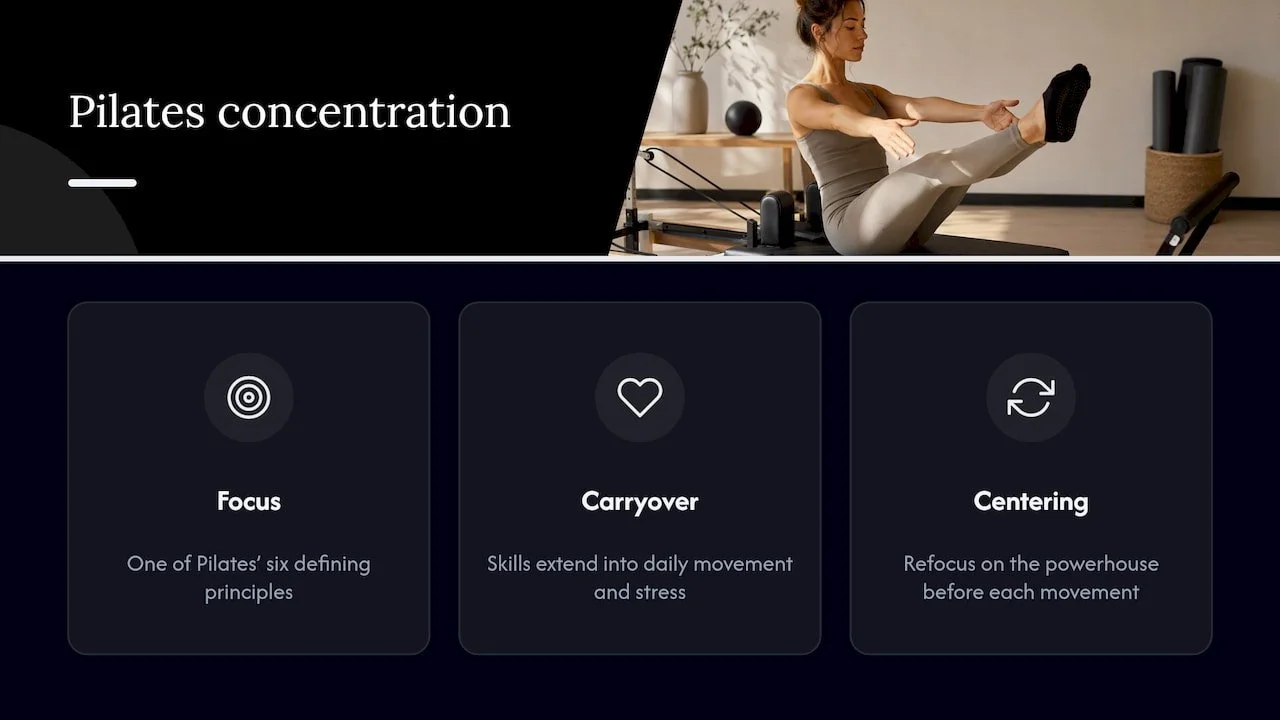
Concentration in Pilates is not a side note to the physical work, it's one of the six defining principles, which signals that Joseph Pilates considered mental engagement essential to getting results from the method. Moving through a sequence without attention tends to produce sloppy form and shallow breathing, while giving each repetition your full focus changes how your body executes the same movement.
This mental component extends beyond the single class. Sustained concentration during a session trains a habit of noticing tension, checking alignment and staying present with physical sensation, skills that carry over into how you move and hold stress throughout your day. Our explainer on the Pilates advantage touches on how this body-mind connection shows up beyond the studio. The principle of centering reinforces this mental anchoring too, since returning attention to your powerhouse before each movement works as a kind of recurring checkpoint that pulls focus back whenever it drifts.
7. What long-term, consistent practice can offer you
Practicing the six principles regularly builds more than muscle. Centering and control gradually improve posture and core stability, which tends to support everyday movement and reduce strain from poor mechanics over time. Consistent attention to breath can also support a calmer nervous system response during and after a session, since slower, controlled breathing is a known component of relaxation practices more broadly.
Beyond the physical, the repeated discipline of concentration and precision builds a kind of patience with your own progress, since Pilates rewards slow, careful refinement over quick results. Many practitioners describe this as a grounding effect that carries into daily life, a sense of being more present and less reactive. Measurable changes in strength and flexibility typically build over 8 to 12 weeks of consistent practice, and the mental steadiness that comes from practicing concentration and control tends to deepen on a similar timeline.
8. Why understanding these principles changes how you practice
Learning the six principles by name gives you a framework for noticing what's actually happening in your body during a session instead of just following along with a routine. I've found that once you can identify whether a movement is lacking control, precision or breath coordination, you start correcting your own form in real time rather than waiting for outside feedback. That shift, from passively doing Pilates to actively practicing its principles, is what separates steady, safe progress from plateauing.
— Juiced
Learn the principles in our classes and private sessions
The fastest way to feel these six principles click is to practice them with guidance, which is exactly what our group mat and reformer classes and private one-to-one sessions are built for. A private session lets an instructor adjust cues like centering or breath pacing to your body in real time, while group classes provide a consistent space to build control and flow alongside others.
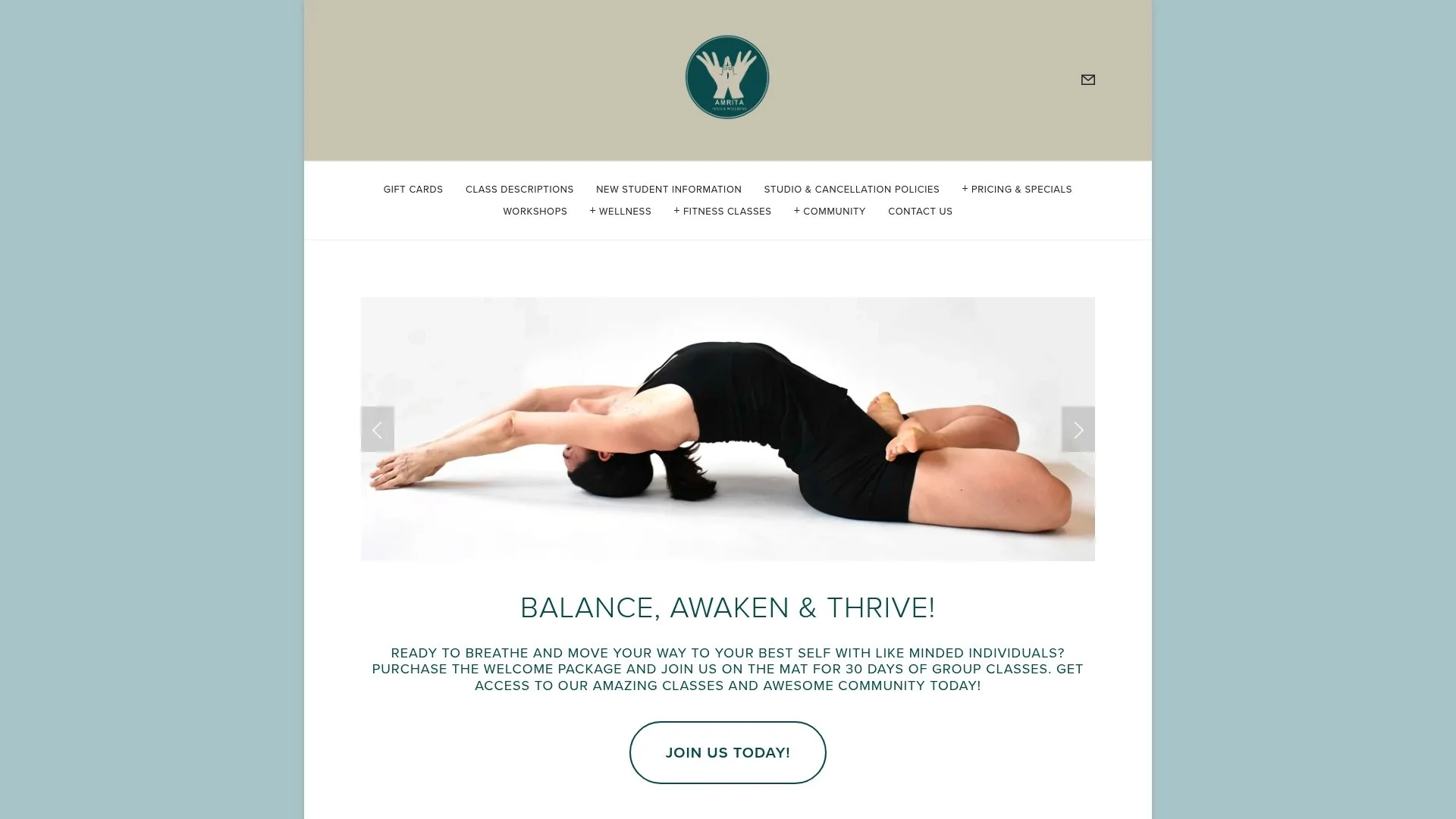
Browse our class and membership schedule to find a mat or reformer session that fits your week, or book a one-to-one session if you'd rather start with individual attention before joining a group.
FAQ
What are the 8 principles of Pilates?
Most sources describe six core principles: centering, concentration, control, precision, breath and flow. Some schools or instructors add related ideas such as posture or balance, which is why you may see longer lists in different teaching materials, according to a Pilates digital textbook.
What are some Pilates poses?
Common Pilates exercises include the Hundred, the Roll-Up, the Single Leg Circle and the Plank, each designed to build strength from the powerhouse while applying principles like control and precision. Reformer classes add machine-based variations of these same movement patterns using spring resistance.
What is the main aim of Pilates?
The main aim of Pilates is to build core strength, control and flexibility through mindful, precise movement rather than fast or forceful exercise. A systematic review of the method describes it as a mind-body exercise approach centered on strength, posture and breathing.
What are the seven principles of Pilates?
There is no single, universally agreed seven-principle list. Most academic and practitioner sources use the six core principles, centering, concentration, control, precision, breath and flow, and any seventh addition, such as posture, varies by school or instructor.
How many principles should a beginner focus on?
A beginner can start by focusing on just one or two principles at a time, such as centering and breath, before layering in the rest. Building a solid feel for the powerhouse and breath coordination first tends to make control and precision easier to apply later.