Try Mind, Body, and Spirit Practices in 1 Minute
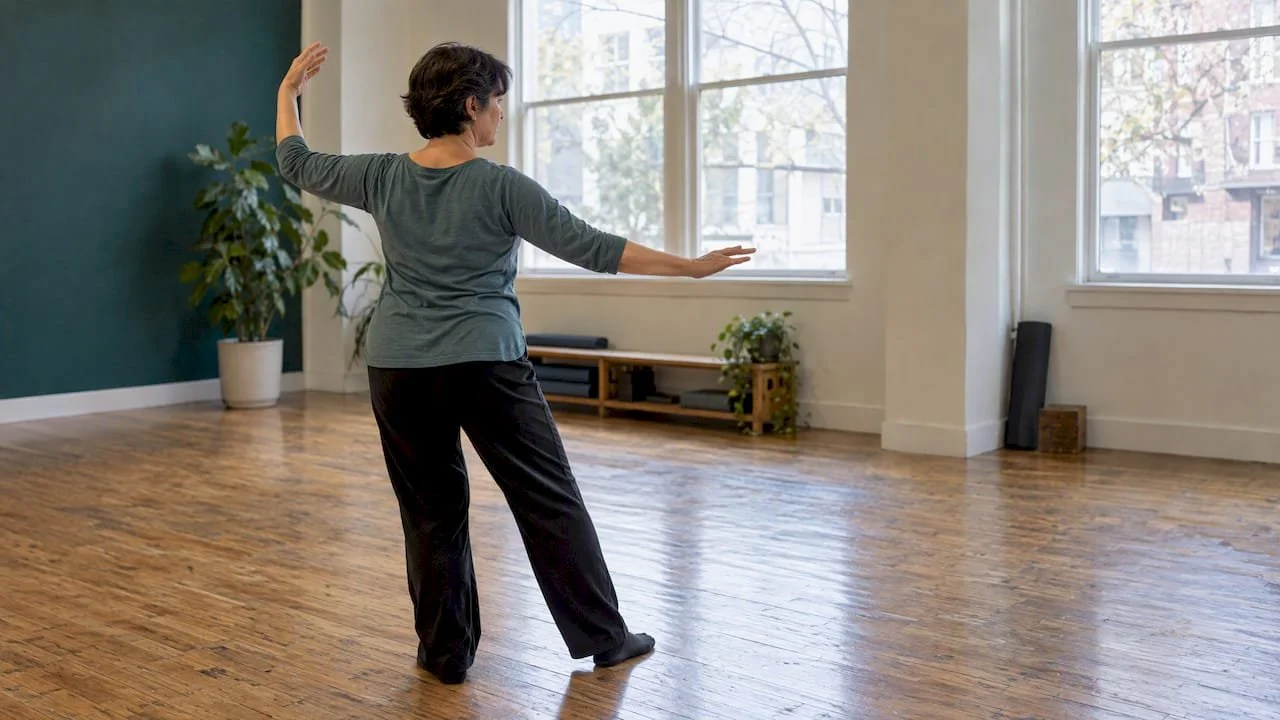
Mind body spirit practices are activities that train attention, move the body, and connect you to meaning beyond daily tasks, all at once. Common examples include meditation, yoga, tai chi and qigong, breathwork, journaling, mindful eating and movement, massage, and acupuncture. Each targets a different piece of well-being, and most beginners find it easiest to start with one small practice before adding more. Short starter routines follow below so you can try one today.
TL;DR:
A review of 41 trials with 2,993 participants found moderate evidence that mindfulness eases anxiety and depression at 8 weeks and 3 to 6 months.
Pair a practice of one or five minutes with two weekly sessions of 15 to 60 minutes; extend duration only after shorter sessions feel automatic.
Choose meditation or breathwork for racing thoughts, gentle yoga or qigong for stiffness, and seated versions when mobility is limited.
Chair yoga, slow qigong, and seated breathing can accommodate limited mobility or chronic pain; shorten sessions and change any movement that causes strain or dizziness.
Link a brief practice to an existing daily cue, such as brushing your teeth or waiting for coffee, so starting does not depend on memory.
Amritayogawellness
Find a Practice That Fits You
Explore yoga, tai chi, breathwork workshops, and other wellness offerings at Amrita Yoga & Wellness in Philadelphia.
Table of Contents
1. Examples grouped by what they train
Not every practice does the same job, so it helps to sort them by what they primarily target: the mind, the body, the spirit, or all three together.
Mind-focused practices train attention and emotional regulation. Meditation with a breath anchor asks you to notice each inhale and exhale and gently return focus when your thoughts wander. Breathwork uses patterned breathing, such as slow exhales or box breathing, to calm the nervous system. Journaling, especially a few lines of reflection before bed, helps process emotions and spot patterns in mood or stress.

Body-focused practices build physical awareness and function. Gentle yoga styles, like restorative or chair yoga, improve flexibility and balance without high impact. Tai chi and qigong combine slow, flowing movement with breath control, which supports joint mobility and coordination. Mindful walking or dance invites you to feel each step or motion instead of moving on autopilot.
Spirit-focused practices connect you to meaning, values, or something larger than the daily to-do list. This might look like a short ritual at the start of your day, a devotional practice tied to your own beliefs, contemplative journaling about purpose, or a nature-based ritual like sitting outside and naming what you notice.
Combined practices work on all three levels at once. Yoga and tai chi or qigong blend movement, breath, and often a contemplative quality. Expressive movement, such as free-form dance, lets emotion move through the body. Mindful eating, where you slow down and notice taste, texture, and fullness, turns a routine meal into a grounding practice.
Meditation and breathwork suit people who feel mentally scattered or anxious and want a quiet, low-equipment entry point.
Yoga, tai chi, and qigong fit those who prefer to work through the body, including older adults or anyone managing joint stiffness, since poses and flows can be modified for mobility limits.
Journaling and ritual work well for people who process emotions better in writing or symbolic action than through movement.
Mindful eating is a natural starting point for anyone who already eats three times a day and wants to build a practice without adding a new time block.
2. Try these 1, 5, and 15-minute starter routines
You do not need an hour to start. Short, repeated practices build skill and consistency faster than occasional long sessions, since frequent short reps train attention and body awareness more reliably than sporadic marathon sessions, according to research on practice frequency.
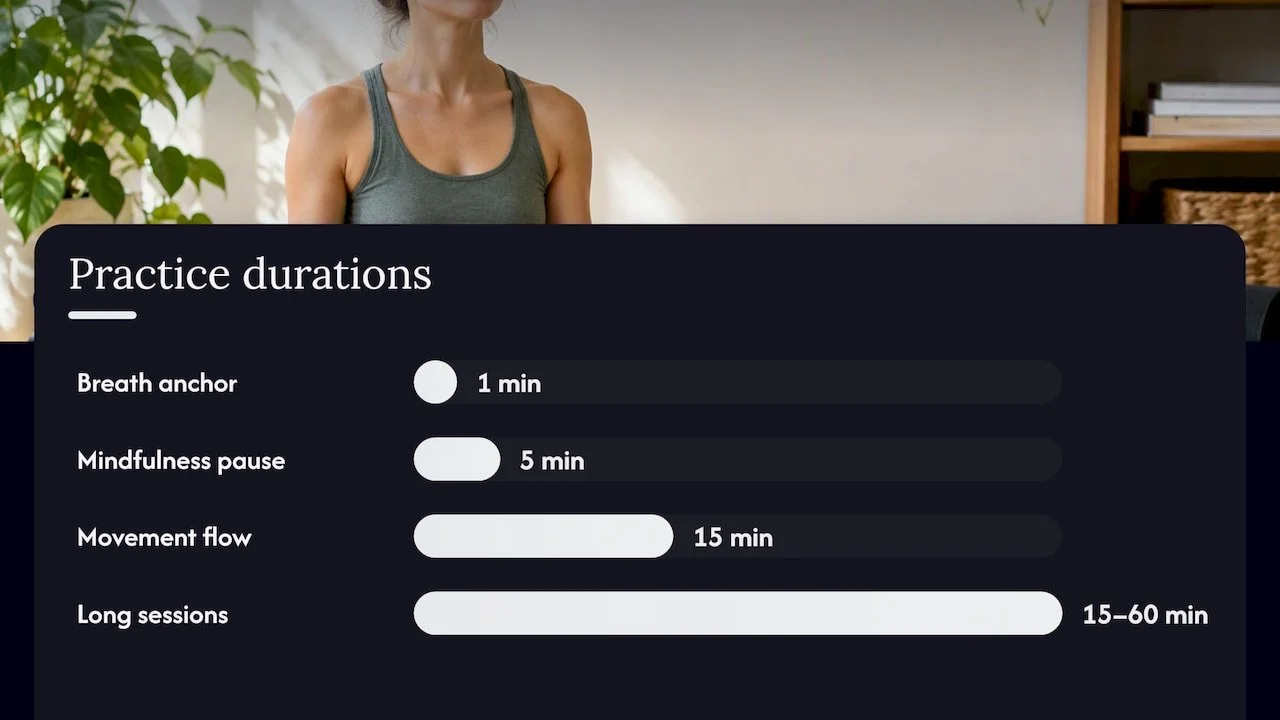
One minute, breath anchor: sit or stand, inhale for four counts, exhale for six, and repeat for one minute, letting the longer exhale signal your body to settle.
Five minutes, mindfulness pause: pick an anchor such as your breath or the feeling of your feet on the floor, notice when your mind wanders, silently label it "thinking," and return to the anchor.
Fifteen minutes, gentle movement flow: move through a few basic yoga poses or a short qigong sequence, linking one breath to each movement, slowing down whenever balance feels shaky.
For a simple weekly structure, pair a daily one or five-minute micro-practice with two longer 15 to 60-minute sessions, like a yoga or tai chi class, each week. Increase duration only once the shorter version feels automatic, and modify any pose or breath pattern that causes strain or dizziness. Our in-house guide to meditation styles and beginner yoga guidance offer more detail if you want to go deeper on either track.
Pro Tip: Attach your micro-practice to something you already do daily, like brushing your teeth or waiting for coffee to brew, so you never have to remember to start it.
3. What the evidence and major frameworks say
Mindfulness-based meditation programs show moderate strength of evidence for reducing anxiety and depression symptoms at 8 weeks and again at 3 to 6 months, based on a review of 41 trials with 2,993 participants. Most of these trials were short and varied in design, so results point to a real but modest effect rather than a cure.
A review of 41 trials involving 2,993 participants found moderate evidence that mindfulness meditation programs ease anxiety and depression symptoms within 8 weeks, according to the NCBI meditation review. That timeline matches what most beginners experience: noticeable but gradual change, not an overnight shift.
Meditative movement practices add a physical layer to that mental training. The World Health Organization highlights yoga's adaptability across ages and abilities, recommending it as a valuable entry point for healthy aging and overall well-being, since it uniquely combines physical and mental conditioning in one practice.
To make sense of how these pieces fit together, the BERN framework groups mind-body medicine into four pillars: Behavior, Exercise, Relaxation, and Nutrition. It offers a practical way to mix practices instead of chasing a single "perfect" technique, and it ties these interventions to the body's own stress-regulation pathways.
4. How to combine practices using the BERN approach
The BERN framework breaks mind-body practice into four manageable pillars, which makes it easier to build a routine without feeling like you need to do everything at once.
Behavior: set a fixed cue, like meditating right after you wake up, so the habit does not depend on willpower.
Exercise: add one meditative movement session, such as a gentle yoga or tai chi class, each week.
Relaxation: use a daily breathwork or breath-anchor pause during a predictable moment, like a lunch break.
Nutrition: practice mindful eating at one meal a day, slowing down enough to notice flavor and fullness.
| Day | Micro-practice | Longer session |
|---|---|---|
| Monday | 5-minute breath anchor | Rest |
| Wednesday | Mindful eating at lunch | Yoga or tai chi class |
| Friday | 1-minute breathwork | Rest |
| Saturday | Journaling | Gentle movement flow |
Pair each practice with an existing habit, keep early goals small, such as one minute rather than twenty, and prioritize showing up consistently over doing a long session occasionally.
5. Where these practices come from
Most mind-body-spirit practices trace back centuries, and understanding their roots can deepen how you approach them today. Yoga developed in ancient India as a spiritual and physical discipline long before it became a fitness trend, originally combining postures, breath control, and meditation as a path toward inner stillness.
Tai chi and qigong emerged in China, rooted in martial arts and traditional medicine, built on the idea that slow, deliberate movement paired with breath supports the flow of internal energy. Meditation itself appears across many traditions, from Buddhist and Hindu contemplative practices in Asia to contemplative prayer in Christian and Jewish traditions, each developing its own technique but sharing a common goal of quieting the mind.
Breathwork has roots in yogic pranayama but also appears in indigenous healing traditions worldwide, where controlled breathing was used in ceremony and healing rituals. Acupuncture originates in traditional Chinese medicine, based on the idea that stimulating specific points on the body supports balance and healing. Massage therapy has parallel histories across cultures, from Ayurvedic bodywork in India to therapeutic touch practices in ancient Greece and Egypt.
Journaling as a wellness tool is more recent, but its contemplative function echoes older traditions of written reflection and prayer. Recognizing these origins is not just historical trivia. It is a reminder that these are tested, long-practiced traditions adapted for modern life, not passing trends.
6. Benefits across physical, mental, and spiritual health
Mind-body-spirit practices tend to offer benefits in three overlapping categories, and most practices touch more than one.
Physically, meditative movement like yoga, tai chi, and qigong supports balance, flexibility, and chronic pain management, with evidence pointing to consistent practice as the key variable, according to the NCCIH overview of yoga safety and effectiveness. Massage and mindful movement can also ease muscle tension and support recovery from physical stress.
Mentally, meditation and breathwork are linked to reduced anxiety and depression symptoms over weeks of practice, as shown in the trial data summarized earlier. Journaling supports emotional processing by giving diffuse feelings a concrete shape on the page, which can make them easier to manage.
Spiritually, practices like ritual, contemplative journaling, and nature-based reflection help connect daily life to a larger sense of meaning or purpose, something that formal exercise alone rarely addresses. Many people find that this spiritual layer is what keeps them returning to a practice long after the physical or mental benefits become familiar.
Because these categories overlap, a single practice like yoga can deliver a physical stretch, a mental reset, and a spiritual pause all in the same session, which is part of why meditative movement works well as a starting point for beginners.
7. What people typically hope to get out of practice
Most people come to mind-body-spirit practices with a handful of common goals, even if they describe them differently. Stress reduction tops the list for many, whether that means calming an anxious mind before a big day or simply sleeping better at night.
Others are looking for physical outcomes: better balance, less joint pain, more flexibility, or simply the ability to move through daily tasks with less strain. This is especially common among older adults exploring gentle yoga or tai chi as a way to stay mobile.
Some practitioners are chasing a mental shift, like sharper focus, better emotional regulation, or relief from racing thoughts. Meditation and breathwork tend to be the entry points here, since both directly train attention.
A smaller but meaningful group is seeking something less measurable: a sense of connection, purpose, or peace that daily routines do not provide. This is where ritual, contemplative journaling, and spiritual practices tend to matter most.
Finally, many people are simply looking for consistency itself: a sustainable habit they can keep up, rather than another short-lived resolution. That goal shapes which practice makes sense, since the easiest practice to sustain usually outperforms the "ideal" one you abandon after two weeks.
8. How to pick the practice that fits you
Choosing the right practice starts with being honest about your goal, your schedule, and your body. If your main issue is racing thoughts or anxiety, meditation or breathwork is a reasonable first step, since both train the mind directly. If stiffness or low mobility is your bigger concern, gentle yoga, tai chi, or qigong addresses the body while still calming the mind.
Time matters too. If you only have a few minutes a day, a short breath anchor or journaling practice fits better than committing to an hour-long class you will likely skip. If you have more time and enjoy structure, a weekly class adds accountability and guided instruction that solo practice does not offer.
Physical considerations matter as well. Someone managing joint pain or limited mobility may do better starting with chair yoga or slow qigong rather than a vigorous flow class, while someone recovering from a high-stress period might benefit more from breathwork or restorative yoga than high-energy movement.
It also helps to notice what you are naturally drawn to. If sitting still feels unbearable, movement-based practices like yoga or mindful walking will likely stick better than seated meditation. There is no single best practice, only the one you will actually repeat.
9. Making practices accessible at any age or ability
Accessibility is less about finding a special version of a practice and more about adapting the one you already like. Most mind-body-spirit practices can flex to fit different ages, bodies, and energy levels.
For older adults or those with limited mobility, chair yoga, slow qigong, and seated breathwork offer the same core benefits as more vigorous versions, and modified pose sequences can support balance without strain. The WHO specifically points to yoga's adaptability as a reason it works well for healthy aging across different physical capacities, as noted in its commentary on yoga and healthy aging.
For people managing chronic pain or injury, shorter sessions, supported poses, or breath-only practices remove the barrier of needing full mobility to participate. Balance-focused movement also matters for fall prevention in older adults, an area where structured balance training complements the stability work built through tai chi and gentle yoga.
For beginners of any age who feel intimidated by class settings, private or small-group sessions offer a lower-pressure entry point, while journaling or short breathwork can be practiced entirely at home with no equipment. The common thread is that modification, not intensity, is what makes a practice sustainable.
10. Why small, consistent practice beats the perfect routine
The biggest misconception about mind-body-spirit practice is that it requires an hour-long ritual to count. In our experience, the people who stick with it are the ones who start absurdly small: one minute of breath work, one page of journaling, one gentle stretch before bed. Consistency compounds in ways a single ambitious session never does. We built our class formats and resources around that same idea: approachable entry points for people who are intimidated or short on time, not just advanced practitioners.
— Juiced
11. Try a guided practice with us in Philadelphia
Reading about these practices only goes so far. If you want to feel the difference a guided session makes, we offer a direct way to try it without committing to a full studio membership first.
Our group classes, including gentle and restorative yoga styles plus tai chi, give you a structured way to practice meditative movement with instruction tailored to your experience level. If you prefer one-on-one pacing or have specific mobility needs, a private session lets us adjust the practice entirely around you. For the spirit-focused side of this work, our Ayurvedic therapies, including Shirodhara and Abhyanga, offer a deeper, body-based path to the calm these practices aim for. Browse our class schedule and find a session that fits your week.
FAQ
What are some examples of mind-body practices?
Common examples include meditation, yoga, tai chi, qigong, breathwork, and mindful movement like walking or dance. Each combines physical awareness with mental focus, and most can be practiced in short daily sessions.
How do I start practicing mind body spirit together?
Start with one small practice from each category, such as a short meditation for the mind, gentle yoga for the body, and a brief ritual or journaling for the spirit. The BERN framework offers a simple structure for mixing behavior, exercise, relaxation, and nutrition without overwhelm.
What are some examples of mind-body control techniques?
Breathwork, progressive muscle relaxation, and guided meditation are common mind-body control techniques that use breath or attention to influence physical tension and emotional state. Tai chi and qigong also train this kind of control through slow, deliberate movement paired with breath.
What are some examples of mind-body exercises?
Yoga, tai chi, qigong, and mindful walking are widely used mind-body exercises that combine physical movement with focused attention. These practices have evidence for benefits in balance, chronic pain, and mental health when practiced consistently, according to NCCIH.
How long should a beginner practice each day?
Beginners can start with as little as one to five minutes a day and still see benefits, since short, frequent practice tends to build attention and body awareness more reliably than occasional long sessions. Gradually extending session length once the habit feels automatic works better than starting with an ambitious routine you cannot sustain.