8–12 Weeks to Measurable Effects of Pilates on Body and Mind
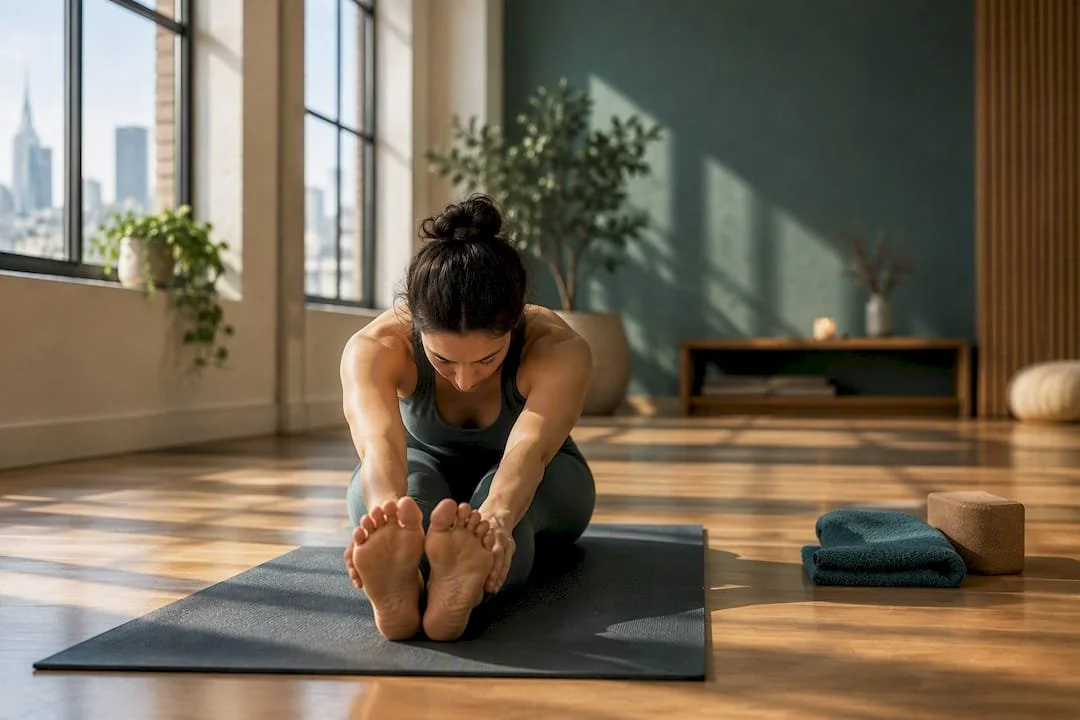
Pilates reliably improves core strength, posture, balance, and flexibility, and it can ease low-back pain and lift mood, with measurable changes showing up in studies after about 8 to 12 weeks of practice, typically twice a week. The strongest evidence points to moderate physical gains and moderate-to-large psychological ones, backed by meta-analytic research and controlled trials rather than anecdote alone.
TL;DR:
Most physical benefits from Pilates, including core strength and flexibility, are typically measurable after 8 to 12 weeks of practicing twice weekly.
Psychological improvements, such as mood and sleep quality, tend to show even larger effects within the same timeframe, especially in older adults or those with higher baseline stress.
Consistent practice at the recommended dose can lead to a 31.5% increase in core strength and a 1.5 to 3% reduction in body fat over 12 weeks.
Safe participation depends on individual health conditions; medical clearance is recommended for recent surgeries, osteoporosis, or unexplained pain.
Mat-based Pilates offers substantial benefits and can be supplemented with equipment-based classes as progress demands.
Amritayogawellness
Build Your Pilates Practice
Amrita Yoga & Wellness offers Pilates classes in Philadelphia for beginners, enthusiasts, and those seeking stronger movement and flexibility.
Table of Contents
The Physical Effects of Pilates: Core, Posture, Flexibility, and Balance
Amrita Yoga & Wellness Perspective: Bringing the Research Into the Studio
The Physical Effects of Pilates: Core, Posture, Flexibility, and Balance
Pilates trains the deep stabilizing muscles around your spine and pelvis, the transverse abdominis, multifidus, and pelvic floor, in a way most gym routines skip entirely. That trunk stabilization matters because a stronger, more coordinated core reduces the shear forces that grind on your lumbar spine during ordinary movement: bending to load a dishwasher, twisting to grab something off a shelf, or standing up from a low chair.
Posture improvements follow from that same mechanism. Better alignment isn't cosmetic. It changes how load travels through your joints, which is why people who stick with Pilates often report less shoulder and neck tension within weeks, not months.
Flexibility gains show up through controlled, full-range movements like the Spine Stretch and Saw, which mobilize the hips, hamstrings, and thoracic spine simultaneously rather than isolating one joint at a time. A 2011 review of Pilates research found cautious but consistent support for improved flexibility, lumbo-pelvic stability, and muscular activity, though the authors flagged that many underlying studies were small and inconsistently designed.
Balance is where older adults see some of the clearest payoff. A 2021 meta-analytic review of 51 studies covering more than 2,400 participants aged 55 and older found moderate effects on strength, balance, and flexibility compared to inactive control groups. That matters directly for fall risk, since balance training is one of the few interventions shown to reduce falls in aging populations.
On strength and body composition, be realistic about what Pilates does and doesn't do. It builds functional, endurance-based strength rather than the kind of maximal strength you'd get from heavy barbell training.
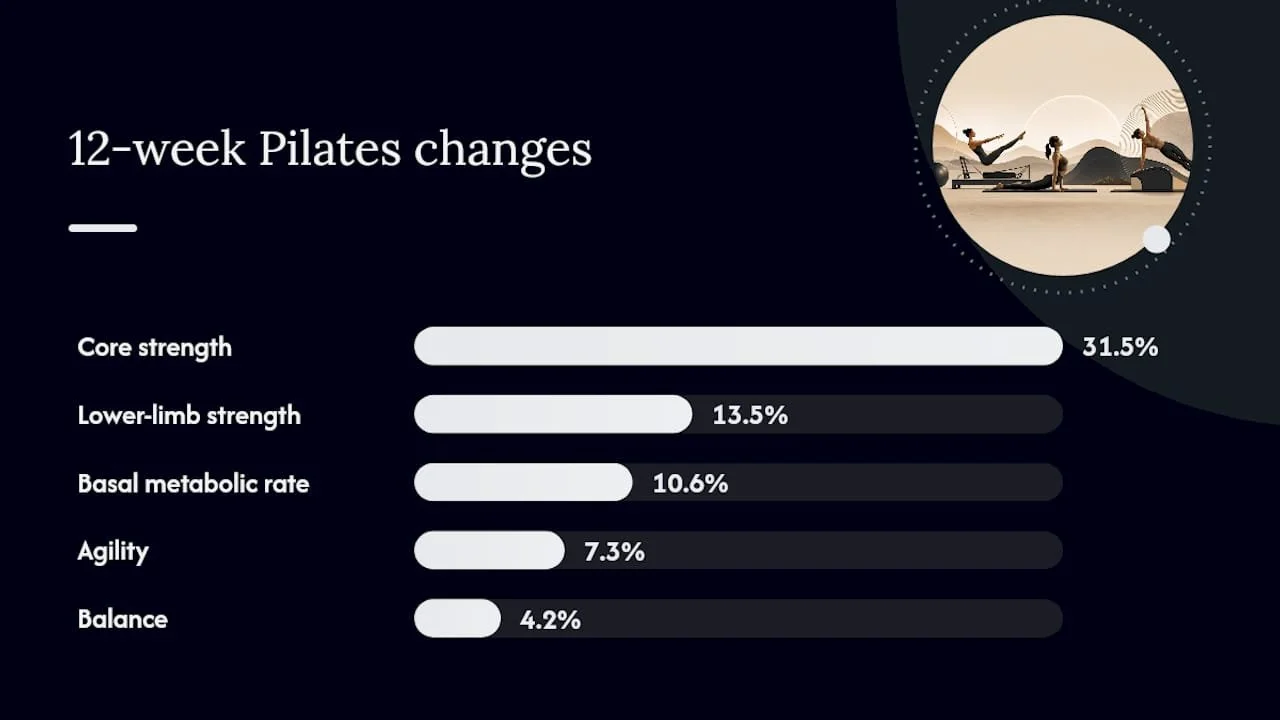
Quick data snapshot: A 12-week mat-based Pilates program run twice weekly in one-hour sessions produced these changes in middle-aged women:
Core strength improved 31.5%
Lower-limb strength improved 13.5%
Agility improved 7.3%
Balance improved 4.2%
Body fat dropped 1.5 to 3%, with basal metabolic rate up roughly 10.6%
Those numbers come from one trial, not a universal guarantee, but they show what consistent, dosed practice can produce in a fairly short window.
Can Pilates Improve Mood, Sleep, and Mental Clarity?
Yes, and the effect size is often larger for psychological outcomes than for physical ones. The same 51-study meta-analysis found moderate-to-large effects on quality of life, depression symptoms, and sleep quality in older adults compared to doing nothing at all, which puts Pilates in unusually strong territory among low-impact exercise interventions.
Three mechanisms likely explain this:
Breath control activates the parasympathetic nervous system, which is the same pathway targeted by clinical breathing therapies for anxiety.
Mindful, slow movement demands enough attention to interrupt rumination, similar to how mindfulness-based practices work.
Group class dynamics add a social support layer that solo home workouts don't replicate.
Expect the psychological lift to show up gradually rather than instantly. People managing higher baseline stress or older adults dealing with isolation tend to report the biggest shifts, while already-active, low-stress individuals may notice smaller but still real improvements in sleep quality and day-to-day mood stability.
What Does the Strongest Research Actually Show?
The most-cited evidence comes from a mix of large meta-analyses and smaller, tightly controlled trials, and the two types of study answer different questions.
The 51-study meta-analysis is the closest thing this field has to a definitive verdict on psychosocial outcomes: moderate-to-large effects for quality of life, depression, and sleep across a combined pool of 2,485 older adults. That scale gives the finding real weight, since it isn't riding on one small sample.
At the trial level, the 12-week mat-based study cited above is the field's go-to example of what a realistic dose produces, and a separate 2022 quasi-experimental community program for middle-aged women replicated that pattern, showing significant gains in BMI, body fat percentage, basal metabolic rate, and functional fitness tests like sit-and-reach and timed up-and-go versus non-exercising controls.
Study typePopulationDuration/doseKey outcomesMeta-analysis (51 studies)Adults 55+, n=2,485Varied across pooled studiesModerate effects on strength/balance/flexibility; moderate-to-large on depression, sleep, quality of lifeMat-based RCTMiddle-aged women12 weeks, 2x/week, 1 hour+31.5% core strength, +13.5% lower-limb strength, +4.2% balanceCommunity quasi-experimental studyCommunity-dwelling middle-aged women12 weeksImproved BMI, body fat, BMR, functional fitness
The honest limitation across this evidence base is heterogeneity. Studies measure "core strength" or "balance" differently, sample sizes are often modest, and few trials run longer than 12 weeks, so long-term durability data is thinner than anyone would like. The practical takeaway: the direction of the evidence is consistent and the effect sizes are real, but researchers still need standardized outcome measures before anyone can cite a single definitive number for any of these benefits.
How Often Should You Practice Pilates to See Results?
Most of the trials producing measurable results used the same basic formula: one-hour mat classes, twice a week, for 8 to 12 weeks. That's a realistic target for anyone starting from scratch, and it's short enough to see whether the practice is working for you before committing further.
Start with two 60-minute mat classes weekly for your first 8 to 12 weeks, matching the dosing used in the trials cited above.
Track a few concrete markers every 4 weeks: how long you can hold a plank, how far you can reach in a seated stretch, and whether you can rise from a chair without using your hands.
Add a third session or move toward reformer work once mat sessions feel manageable, since equipment-based classes add resistance progression that plateaued practitioners often need.
Older adults, people with non-specific low-back pain, and deconditioned beginners tend to show the largest gains relative to their starting point, largely because they have the most room to improve. Mat Pilates is the more accessible entry point since it needs no special equipment, while reformer classes offer adjustable spring resistance for people who've outgrown mat-only progressions. Check class descriptions before booking to match the intensity level to where you're starting from.
Pro Tip: Keep a simple log of one strength marker and one flexibility marker each week. Trials show measurable change by week 8, so give yourself that long before judging whether a class format is working for you.
Who Should Be Cautious About Starting Pilates?
Pilates is widely described as a safe, low-impact activity, and Better Health Channel's guidance supports that framing for most healthy adults. That doesn't mean everyone should walk into a class unscreened.
Get medical clearance first if you have any of the following:
Recent spinal, hip, or joint surgery
Diagnosed osteoporosis or significant bone density loss
Acute, unexplained back or joint pain
A pregnancy with any complicating factors
Statistic to know: the 2011 review of Pilates mechanisms found the practice shows cautious support for clinical populations, but noted that inconsistent methodology across small studies limits how confidently anyone can generalize those results to your specific condition.
The most common real-world risks are overstretching and poor technique, both of which are mitigated almost entirely by working with a certified instructor and progressing slowly rather than chasing intensity in week one. Stop and seek guidance if you feel sharp pain, numbness, or dizziness during any movement.
Does Pilates Change How You Breathe?
Pilates builds breathing pattern changes directly into its movement vocabulary rather than treating breath as an afterthought. The method's lateral, ribcage-focused breathing, expanding the sides and back of the ribcage rather than just the belly, trains the diaphragm and intercostal muscles to work more efficiently under load.
That matters beyond the studio. Coordinating exhale with exertion, a core principle in nearly every Pilates exercise, teaches practitioners to stabilize the trunk through breath rather than holding tension in the shoulders or neck. Over repeated sessions, this can translate into better breath control during other physical activity, from climbing stairs to running.
The 12-week mat-based trial referenced earlier didn't isolate respiratory measures specifically, but its core strength and agility gains are consistent with the kind of trunk and diaphragm coordination that breath-focused training produces. Clinical populations with mild respiratory limitations sometimes use Pilates-style breathing drills as a low-intensity supplement to standard breathing therapy, though it's not a substitute for pulmonary rehabilitation for anyone with a diagnosed respiratory condition.
For most healthy adults, the practical effect is simpler: better awareness of your own breathing mechanics, and less tendency to hold your breath during effort, a habit that quietly undermines performance in weightlifting, running, and everyday exertion alike.
Does Pilates Help Prevent Injuries in Athletes?
Athletes across running, cycling, and field sports use Pilates as supplemental conditioning because it targets exactly the stabilizing muscles that sport-specific training tends to neglect. Strong hip and trunk stabilizers reduce compensatory movement patterns, the kind of small mechanical inefficiencies that eventually show up as overuse injuries in knees, hips, and lower backs.
The core strength gains documented in the mat-based trial, a 31.5% improvement over 12 weeks, translate on the field into better force transfer between the lower body and upper body during rotational movements like throwing, swinging, or sprinting.
Pilates won't replace sport-specific strength training or plyometric work for competitive athletes. What it adds is a layer of movement quality and body awareness that makes those higher-intensity sessions safer and more efficient. Many strength coaches now build one Pilates or Pilates-adjacent mobility session into weekly programming specifically for that reason, treating it as maintenance work rather than a primary training stimulus.
Is Pilates Effective for Lower Back Pain?
Pilates is one of several exercise therapies shown to help with non-specific low-back pain, particularly when it's part of an active rehabilitation program rather than a standalone fix. Clinical reviews note it performs better than minimal intervention (advice alone, rest) for some back-pain outcomes, but no single exercise therapy has proven universally superior to every other structured exercise approach.
The mechanism is straightforward: strengthening the deep core stabilizers reduces the compensatory strain that weak trunk muscles put on the lumbar spine during daily movement. For people with chronic, non-specific pain, that stabilization often translates into fewer flare-ups and better tolerance for everyday bending and lifting.
The important caveat: "non-specific" is the operative word. If your back pain stems from a diagnosed structural issue, a disc herniation, spinal stenosis, or nerve impingement, Pilates needs to be adapted under professional guidance rather than attempted from a general class format. Anyone with acute or worsening pain should get a clinical evaluation before starting any new exercise program, Pilates included.
Amrita Yoga & Wellness Perspective: Bringing the Research Into the Studio
The research keeps pointing to the same formula: consistent dosing, qualified instruction, and gradual progression. That's precisely how Amrita Yoga & Wellness structures its Pilates offerings, from beginner mat sequences to more advanced formats, so students build the same trunk stability and balance improvements the studies describe, without guessing at technique on their own.
— Juiced
Start Feeling These Effects for Yourself
Reading about core strength gains and mood improvements is one thing. Feeling your own balance sharpen or your back pain ease over a few weeks of consistent classes is another. This studio offers structured mat and group sessions taught by instructors who focus on safe progression rather than advanced work too soon.
If you're starting from zero, Nurtured Beginnings is built specifically for that entry point, priced at $35 per pass so you can test the format before committing to a membership. Prefer more individual attention while you learn the fundamentals? A One to One Session starting at $85 per hour lets an instructor tailor pacing to any injury history or mobility limits you're working around. For readers ready to commit to the twice-weekly dose the research supports, the Earth Monthly Membership at $119 per month covers unlimited group classes, which comfortably covers the 8 to 12 week window most trials used to measure results. Book your first class through the in-studio group class page and start tracking your own progress from week one.
Sources
PubMed - 12-week mat-based Pilates study (middle-aged women)
PMC - 2011 review: Pilates mechanisms and research limitations
FAQ
How Long Does It Take to See Results From Pilates?
Most studies measure meaningful physical changes, core strength, balance, and lower-limb strength, after 8 to 12 weeks of practice at two sessions per week. Psychological benefits like improved mood and sleep quality often follow a similar timeline, based on the 2021 meta-analysis of 51 studies.
Does Pilates Really Help With Back Pain?
Pilates helps with non-specific low-back pain when used as part of an active rehabilitation program, largely by strengthening the deep core muscles that stabilize the spine. It works better than minimal intervention for some outcomes, though no single exercise approach is universally superior for every case.
Is Mat Pilates as Effective as Reformer Pilates?
Mat-based Pilates is evidence-supported and produces measurable strength and balance gains on its own, as shown in a 12-week mat-only trial. Reformer work adds adjustable resistance for progression but isn't required to achieve the core benefits research has documented.
How Much Does Pilates Cost at Amrita Yoga & Wellness?
A single group class drop-in is available on the in-studio group class page, with monthly membership options like the Earth Monthly Membership at $119 per month for unlimited classes. Private one-on-one sessions start at $85 per hour for readers who want individualized instruction.
Can Older Adults Safely Start Pilates?
Yes, older adults are one of the groups shown to benefit most, with moderate-to-large improvements in balance, strength, and quality of life documented in a meta-analysis of 51 studies on adults 55 and older. Anyone with osteoporosis, recent surgery, or acute pain should get medical clearance and choose a class adapted to their needs before starting.