Best Meditation Guide for Beginners: Start Today
TL;DR:
Meditation for beginners should be simple, research-backed, and require only a comfortable seat and a few minutes. Consistent short daily practice, especially around 10 minutes, produces lasting stress reduction and focus improvement within eight weeks. Techniques like breath awareness, body scans, and guided visualization suit different needs and are accessible without cost or equipment.
The best meditation guide for beginners is one that is simple, research-backed, and requires nothing more than a comfortable seat and a few minutes of your time. Mindfulness meditation, the recognized clinical term for most beginner practices, has been studied extensively and shown to reduce stress and improve focus with short daily sessions of just 5–10 minutes. Techniques like breath awareness, body scans, and guided visualization are free, proven, and accessible to anyone. Amritayogawellness, a Philadelphia-based yoga and wellness studio, builds its beginner programs around exactly these principles: no pressure, no perfection, just consistent practice.
1. What are the best simple meditation techniques for beginners?
Three techniques stand out as the most beginner-friendly: breath awareness, body scan, and guided visualization. Each one works differently, and knowing what sets them apart helps you pick the right starting point.
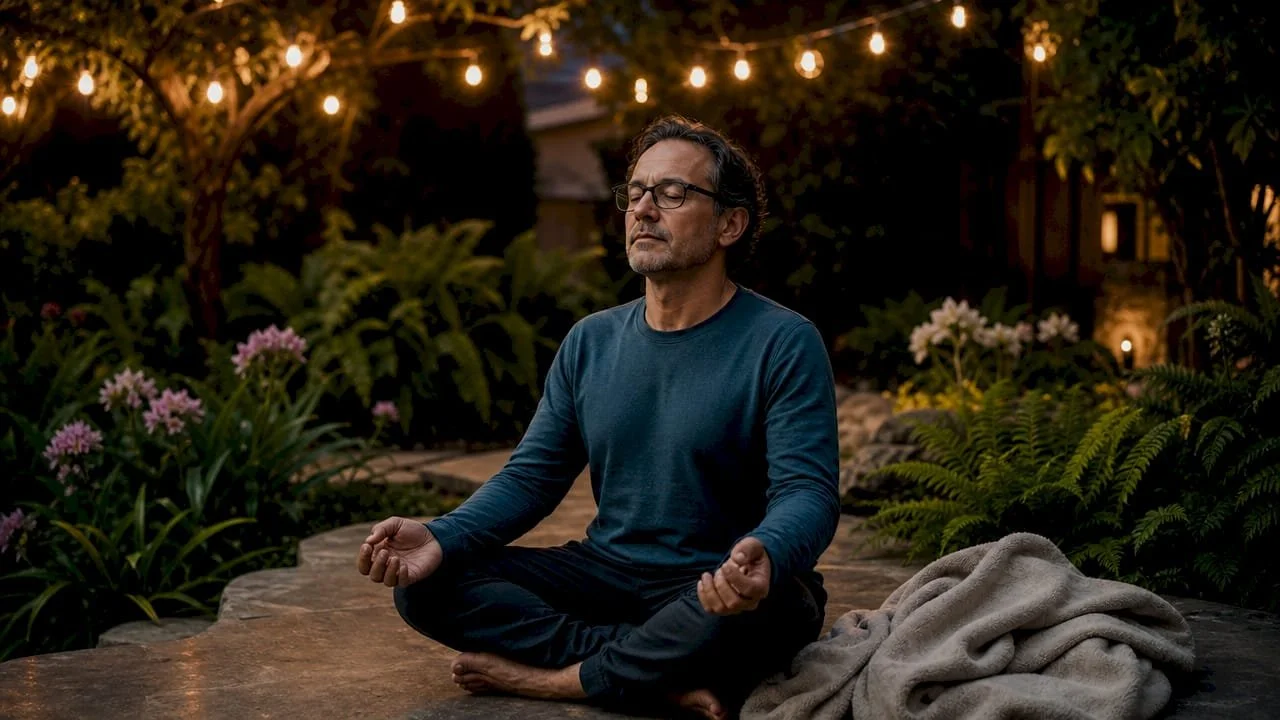
Breath awareness meditation is the most direct entry point. Sit comfortably, close your eyes, and focus on the natural rhythm of your breath. Notice the inhale, the exhale, and the pause between them. When your mind wanders, gently return your attention to your breath. That act of returning is the practice itself.
Body scan meditation shifts attention from the breath to physical sensations. Starting at the top of your head or the soles of your feet, you slowly move awareness through each part of your body. This technique is especially useful for people who carry physical tension or struggle to sit still with only the breath as an anchor.
Guided visualization uses spoken imagery to direct your focus. A teacher or audio recording leads you through a calming scene or a structured mental exercise. Guided meditation is recommended for beginners because it reduces the anxiety of "doing it wrong" and keeps your attention oriented to a clear focal point.
Moving meditation is a fourth option worth knowing. Walking slowly and deliberately, paying attention to each step and breath, counts as meditation. Moving meditation is a valid and often easier entry point for beginners who feel restless or physically uncomfortable sitting still.
Breath awareness: best for simplicity and portability
Body scan: best for physical tension and body awareness
Guided visualization: best for beginners who feel self-conscious
Moving meditation: best for restlessness or physical discomfort
Pro Tip: Try each technique for three days before deciding which one fits. Most beginners abandon meditation too early because they chose a style that did not match their temperament, not because meditation itself failed them.
You can read a deeper breakdown of meditation types to match techniques to your specific goals.
2. How long and how often should beginners meditate?
Consistency beats duration every time. A 5-minute daily session produces more benefit than a 45-minute session once a week. That single fact removes the biggest excuse most beginners carry: not having enough time.
Start with 5–10 minutes per session. Once that feels natural, work toward 10–20 minutes daily. Research consistently links 10–20 minutes daily to clinically significant reductions in stress and anxiety. That is roughly the length of a coffee break.
The timeline for lasting change is also well established. Eight weeks of daily practice produces neurological and psychological improvements that persist beyond the practice itself. Eight weeks is not a long commitment. It is two months of five-minute mornings.
Here is a simple progression plan for your first eight weeks:
Weeks 1–2: 5 minutes daily, breath awareness only
Weeks 3–4: 7 minutes daily, add a body scan on alternate days
Weeks 5–6: 10 minutes daily, experiment with guided visualization
Weeks 7–8: 12–15 minutes daily, choose the technique that resonates most
Timing matters less than regularity, but morning sessions before the day fills up tend to stick better. Habit stacking, meditating immediately after an existing daily ritual like brushing your teeth or making coffee, strengthens habit formation by anchoring the new behavior to something already automatic.
3. What common beginner challenges come up and how do you handle them?
The most common beginner mistake is expecting a quiet mind. Meditation does not require silence inside your head. Success in a session is defined by the moment you notice your mind has wandered and gently bring it back. That noticing is the skill you are building.
Think of it like going to the gym. You do not expect to lift heavy weight on day one. Meditation is training for the mind, and you start exactly where you are, busy thoughts and all.
Here are the most common obstacles and direct solutions:
"My mind won't stop." This is normal. Every time you notice a thought and return to your breath, you are meditating correctly.
Physical discomfort. Sit on a folded blanket or lie down for a body scan. Switch to walking meditation if sitting feels impossible.
"I don't have time." Five minutes counts. Set a timer and commit to that alone.
All-or-nothing thinking. Missing one day does not erase progress. Return the next day without judgment.
Feeling self-conscious. Guided sessions remove this entirely. A voice leading you through the practice eliminates the uncertainty of whether you are "doing it right."
Pro Tip: Anchor your meditation to one existing habit this week. After you pour your morning coffee, sit down and set a 5-minute timer before you drink it. The coffee becomes the trigger, and the habit builds itself.
Exploring mindfulness for stress relief can also help you understand why these challenges are temporary and how the practice shifts over time.
4. How to choose the right meditation guide or resource
No single guide is right for everyone. The best way to learn how to meditate is to find a resource that matches your goals, your schedule, and your tolerance for structure. A guide that claims only one correct method is a guide worth skipping. Effective meditation is built around personal goals, whether that is grounding, stress relief, or cultivating compassion.
Evaluate any guide against these criteria:
Simplicity: Does it explain techniques in plain language without excessive jargon?
Flexibility: Does it offer more than one technique so you can find your fit?
Accessibility: Is it free or low-cost to start? No equipment should be required.
Clear instructions: Can you follow the steps without a background in meditation?
Realistic expectations: Does it acknowledge that wandering thoughts are normal?
Free options include reputable health websites, YouTube meditation for beginners channels from certified teachers, and studio-based beginner programs. Paid apps and courses add accountability features and structured progressions, which suit beginners who prefer external motivation. Neither is superior. The right choice is the one you will actually use.
Amritayogawellness offers beginner-friendly classes in Philadelphia that combine movement and mindfulness, giving you a live instructor and a community rather than a screen. That human element matters more than most beginners expect.
5. Situational suggestions for different beginner scenarios
Your life context shapes which meditation approach will actually stick. A technique that works for someone with a flexible morning schedule may be useless for a parent with a packed day.
Busy schedule: Use micro meditation. Two to three focused breaths before a meeting or after a commute counts. Build from there.
Physical discomfort or injury: Practice body scan meditation lying down. There is no rule that says you must sit upright.
High anxiety or stress: Loving-kindness meditation, which involves silently directing warm wishes toward yourself and others, is clinically associated with reduced anxiety and improved mood. It gives the mind a positive anchor instead of a neutral one.
Already practicing yoga: Meditation fits naturally at the end of a yoga session when the body is already calm. Amritayogawellness integrates mindfulness into its yoga classes, making this transition easy for students already on the mat.
Prefer group settings: Guided group sessions reduce isolation and add accountability. Many beginners find that practicing alongside others removes the self-consciousness of solo practice.
Motivation dips: Return to your original reason for starting. Write it on a sticky note near your meditation spot. When motivation drops, the environment cues the habit.
The 7 types of meditation practices covered by Amritayogawellness give you a clear map for matching your situation to the right technique.
Key takeaways
The most effective meditation guide for beginners combines simple techniques, short daily sessions, and realistic expectations grounded in clinical research.
| Point | Details |
|---|---|
| Start with 5–10 minutes | Short daily sessions build the habit faster than occasional long ones. |
| Consistency over duration | Eight weeks of daily practice produces lasting neurological improvements. |
| Wandering mind is normal | Success means noticing distraction and returning focus, not staying still. |
| Match technique to your life | Breath awareness, body scan, and moving meditation each suit different needs. |
| Use habit stacking | Attach meditation to an existing daily ritual to make it automatic. |
What I have learned from watching beginners start their practice
Most people overthink the beginning. They research techniques for weeks, buy a meditation cushion, and then sit down expecting silence. What they get instead is a busy mind, an itchy nose, and the creeping suspicion that they are doing it wrong. They are not.
The single most useful reframe I have seen work for beginners is this: meditation is not about achieving a state. It is about practicing a skill. The skill is noticing where your attention went and choosing to bring it back. You will do that dozens of times in a five-minute session. Each return is a repetition. Each repetition builds the muscle.
Guided meditations are underrated for this reason. They give your attention somewhere to go. When a voice is walking you through a body scan or a breathing sequence, you spend less energy wondering whether you are doing it correctly and more energy actually practicing. That shift in cognitive load makes a real difference in the early weeks.
The other thing I have seen derail beginners is rigidity. If breath awareness bores you after two weeks, switch to walking meditation. If a 7-minute session feels too long on a hard day, do two minutes. Flexibility is not failure. Quitting is the only failure. The practice does not care how you show up. It only asks that you do.
— Juiced
Meditation and wellness support at Amritayogawellness
Amritayogawellness, located in Philadelphia, offers beginner-friendly classes that weave mindfulness into yoga, tai chi, and movement-based sessions. The studio's approach removes the pressure of solo practice by placing you in a supportive community with experienced instructors.
For beginners looking to deepen their self-awareness beyond movement, Amritayogawellness also offers tarot readings as a complementary wellness service. Tarot sessions provide a reflective, guided experience that pairs naturally with a developing meditation practice. Whether you are looking for a structured class or a personal wellness session, Amritayogawellness has a starting point that fits where you are right now.
FAQ
How long should a beginner meditate each day?
Start with 5–10 minutes daily and work toward 10–20 minutes as the habit solidifies. Daily consistency matters far more than session length.
What is the easiest meditation technique for beginners?
Breath awareness meditation is the simplest starting point. It requires no equipment, no guidance, and no prior experience. Just focus on your natural breath and return your attention when it wanders.
How long does it take to see results from meditation?
Eight weeks of daily practice is the threshold most consistently linked to lasting neurological and psychological improvements. Many beginners notice reduced stress and better focus within the first two weeks.
Do I need an app or paid course to learn meditation?
No. Free resources including reputable health websites, YouTube meditation for beginners content from certified teachers, and studio beginner programs provide everything you need to start. Paid tools add structure and accountability but are not required.
What should I do when my mind keeps wandering during meditation?
Notice the thought, label it mentally as "thinking," and gently return your focus to your breath or chosen anchor. Mind wandering is not a failure. The act of returning is the practice itself.