
How Do You Practice Mindfulness: A Beginner's Guide
TL;DR:
Mindfulness involves deliberately focusing on the present moment with openness and acceptance. It can be practiced easily without special equipment by starting small and maintaining consistency. Regular short sessions help build awareness and reduce stress, enhancing mental well-being over time.
Mindfulness is the practice of focusing your attention deliberately on the present moment with openness and acceptance. If you've been wondering how do you practice mindfulness without special training or equipment, the answer is simpler than most people expect. Mindfulness exercises require no special equipment and can fit into even the busiest schedule. Institutions like Mayo Clinic and Ohio State University recognize mindfulness as a practical tool for reducing stress and improving mental well-being. The key is starting small, staying consistent, and treating every session as progress, not performance.
How do you practice mindfulness as a complete beginner?
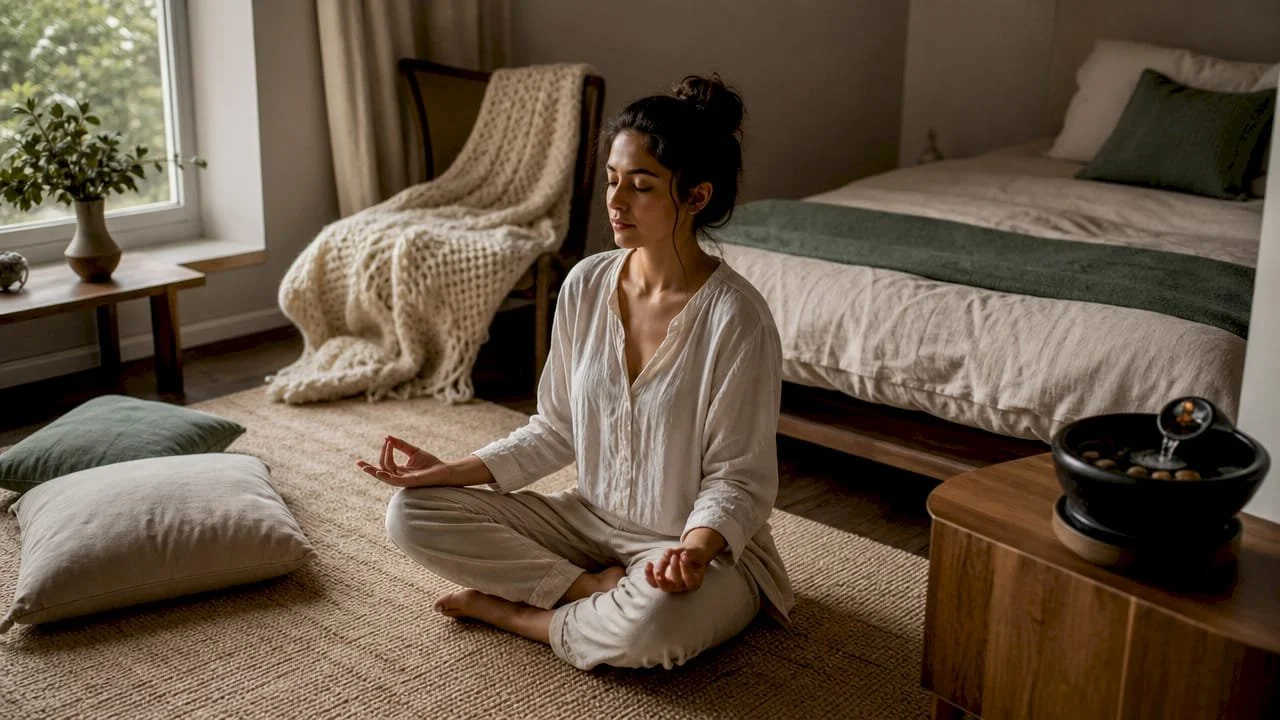
Mindfulness practice starts with one decision: to pay attention on purpose. You do not need a meditation cushion, a quiet retreat, or years of experience. Consistency matters more than duration for beginners, which means a two-minute daily habit beats a 30-minute session you do once a week.
The right mindset matters as much as the technique. Mindfulness trains the brain in acceptance, and expecting quick results actually works against that process. Go in without a performance goal. Your only job is to notice what is happening right now.
Here is what you need to get started:
A comfortable posture. Sit in a chair, on the floor, or lie down. Keep your spine reasonably upright so you stay alert.
A low-distraction space. You do not need silence, but fewer interruptions help at first.
A set intention. Decide before you sit down what you are practicing: breathing, body awareness, or simply noticing sounds.
Self-compassion. Your mind will wander. That is not a problem. It is the practice.
A realistic time goal. Start with 1–5 minutes. Add time only when short sessions feel natural.
Pro Tip: Set a gentle timer before you begin. Checking the clock pulls you out of the present moment and defeats the purpose of the session.
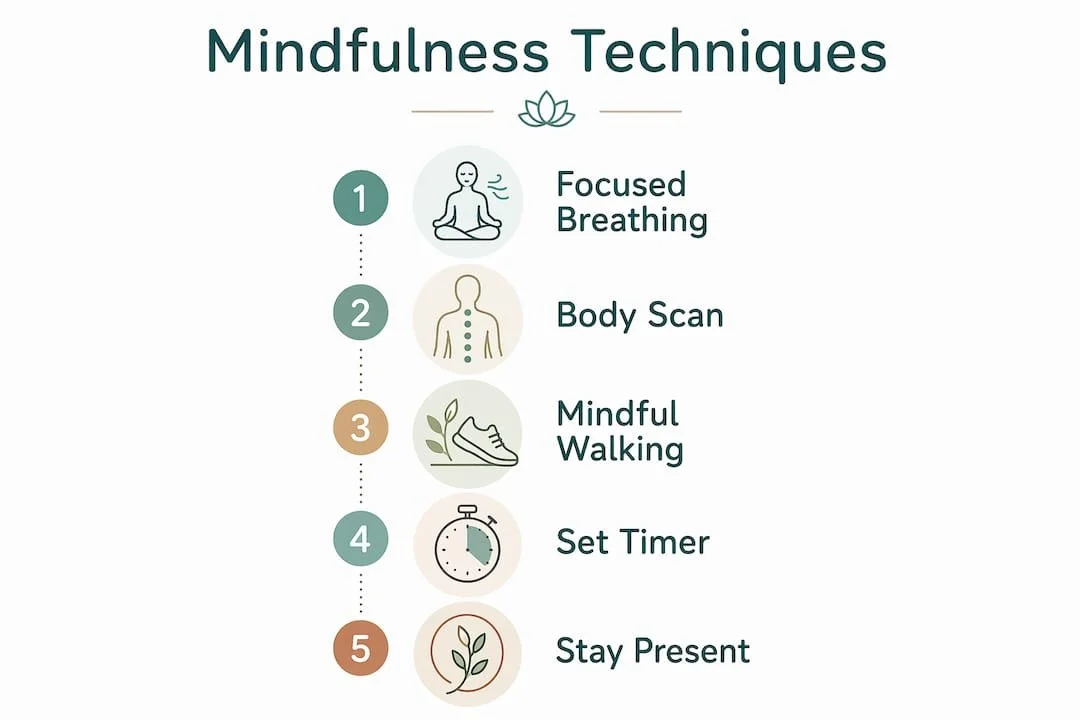
Step-by-step mindfulness techniques for beginners
Three methods work well for people new to mindfulness: focused breathing, the body scan, and mindful walking. Each one builds present-moment awareness in a slightly different way.

1. Focused breathing
Focused breathing is the most direct entry point into mindfulness practice. It uses the breath as an anchor because it is always available and always happening right now.
Sit comfortably and close your eyes or soften your gaze downward.
Take one slow breath in through your nose, noticing the sensation of air entering.
Exhale slowly and notice the feeling of release.
Continue breathing naturally. Do not force a rhythm.
When your mind drifts to a thought, gently return your attention to the breath.
Repeat for 1–5 minutes.
Returning focus after mind wanderingis the core exercise, not a failure. Every time you notice distraction and come back, you are doing exactly what mindfulness asks of you.
2. Body scan meditation
The body scan moves your attention slowly from one part of the body to another. It builds the skill of noticing physical sensations without judging them.
Lie down or sit comfortably.
Close your eyes and take three slow breaths.
Bring your attention to the top of your head. Notice any sensation: warmth, tension, or nothing at all.
Slowly move your focus down through your face, neck, shoulders, arms, chest, belly, hips, legs, and feet.
Spend 15–30 seconds on each area.
If you notice tension, breathe toward that spot and let it soften.
3. Mindful walking
Mindful walking turns movement into meditation. It works well for people who find sitting still frustrating.
Walk at a slower pace than usual.
Focus on the sensation of each foot lifting, moving forward, and landing.
Notice the ground beneath you, the air on your skin, and the sounds around you.
When your mind wanders to a to-do list or a worry, return your attention to your feet.
Pro Tip: Try mindful walking during a short trip you already take, like walking from your car to the office. You do not need extra time.
The table below shows how these three techniques compare for beginners:
| Technique | Time needed | Best for | Difficulty |
|---|---|---|---|
| Focused breathing | 1–5 minutes | Stress relief, focus | Low |
| Body scan | 5–15 minutes | Tension release, sleep | Low to medium |
| Mindful walking | 5–10 minutes | Restless minds, movement lovers | Low |
Common challenges beginners face and how to get past them
The biggest obstacle in mindfulness practice is not distraction. It is the belief that distraction means failure. Mind wandering is a normal part of practice, and noticing it is itself an act of awareness. The moment you realize your mind has drifted, you have already returned to the present.
Here are the most common challenges and what actually helps:
"My mind won't stop." This is universal. The goal is not a blank mind. The goal is to notice thoughts without chasing them. Treating thoughts as guests to acknowledge kindly, rather than fighting them, makes practice more effective.
"I don't have time." A one-minute pause counts. Mindfulness can be practiced in one-minute increments during daily activities. Waiting for coffee to brew is enough time.
"I keep getting interrupted." Silencing devices and informing family members before a session reduces interruptions significantly. Treat those minutes as protected time.
"I'm not feeling any different." Progress in mindfulness is subtle and cumulative. You may notice it first as a slightly longer pause before reacting to stress, not as a dramatic shift.
"The brain's evolutionary negativity bias is a primary target for mindfulness practice. Mindfulness teaches you to notice and hold onto positive experiences rather than letting them slip past unnoticed." — Harvard University
Patience is not passive. It is an active choice to keep showing up even when results feel invisible. That choice, repeated daily, is what builds the mental muscle mindfulness develops.
How to bring mindfulness into your everyday life
Formal meditation sessions are valuable, but mindfulness grows fastest when you weave it into activities you already do. The goal is to turn ordinary moments into brief windows of present-moment awareness.
You can find mindfulness activities for adults in nearly every part of your day. Here are the most practical entry points:
Mindful eating. Put your phone down during one meal. Notice the taste, texture, and temperature of each bite before swallowing.
Mindful showering. Focus on the sensation of water temperature, the smell of soap, and the sound of water. When your mind plans the day, return to the shower.
Mindful handwashing. Use the 20 seconds of handwashing as a reset. Feel the water, notice the lather, breathe once.
Mindful pauses. Before opening your email, take three conscious breaths. Before answering the phone, pause for one second and notice where you are.
Stacking mindfulness onto existing habits is the most reliable way to build consistency. The table below shows how informal practice compares to formal sessions:
| Practice type | Format | Time required | Best benefit |
|---|---|---|---|
| Formal session | Dedicated meditation time | 5–20 minutes | Deep focus, habit formation |
| Informal practice | Woven into daily activities | 1–3 minutes | Sustained awareness, low effort |
Building a daily mindfulness workflow does not require restructuring your schedule. It requires redirecting your attention during moments you already have.
Key takeaways
Consistent, short mindfulness sessions practiced daily produce more lasting mental health benefits than occasional long sessions.
| Point | Details |
|---|---|
| Start with 1–5 minutes | Short daily sessions build the habit faster than infrequent long ones. |
| Mind wandering is normal | Noticing distraction and returning focus is the actual practice, not a setback. |
| No equipment needed | Mindfulness works anywhere, from a chair to a sidewalk, with zero tools required. |
| Stack it onto habits | Attach brief mindful moments to existing routines like eating, walking, or washing hands. |
| Acceptance is the core skill | Treating thoughts without resistance makes practice more effective over time. |
What I've learned from building a real mindfulness practice
Most articles tell you mindfulness is simple. That is true. What they skip is that simple does not mean easy, especially in the first two weeks.
When I started, I expected to feel calm after every session. Instead, I noticed how loud my thoughts actually were. That was uncomfortable. What shifted my experience was understanding that noticing the noise is the point. You are not trying to silence the mind. You are learning to watch it without getting pulled in.
The second thing nobody tells you: the benefits show up sideways. You do not finish a session and feel transformed. You notice, three weeks in, that you paused before snapping at someone. You notice you slept better on the nights you practiced. The changes are quiet and cumulative, which is exactly why so many people quit too soon.
My honest recommendation is to pick one technique from the breathing, body scan, or walking methods and do it every day for two weeks before adding anything else. Variety is tempting but it delays the habit from forming. Once one method feels natural, exploring different mindfulness tips becomes genuinely useful rather than distracting.
Mindfulness is not a personality trait some people have and others don't. It is a skill. Skills get better with repetition. That's the whole story.
— Juiced
Mindfulness support at Amrita Yoga & Wellness in Philadelphia
Amritayogawellness offers a welcoming space for people who want to take their mindfulness practice further with real community support.
The studio's tarot readings pair naturally with mindfulness work, offering a reflective, intuitive layer to self-awareness practice. For people who find solo meditation difficult to sustain, guided classes in yoga, tai chi, and other mind-body disciplines provide the structure and accountability that make consistency easier. Amritayogawellness serves practitioners at every level, from first-timers to those deepening an existing practice. Visit the studio's website to see current class schedules, workshops, and wellness services available in Philadelphia.
FAQ
How long should a beginner practice mindfulness each day?
Beginners should start with 1–5 minutes daily, prioritizing consistency over session length. Short daily practice builds the habit more effectively than longer sessions done occasionally.
What is the easiest mindfulness technique for beginners?
Focused breathing is the most accessible starting point. It requires no equipment, takes as little as one minute, and can be done anywhere.
Is it normal for my mind to wander during mindfulness practice?
Mind wandering is completely normal and expected. Noticing that your mind has drifted and gently returning your focus is the core exercise of mindfulness, not a sign that you are doing it wrong.
Can I practice mindfulness without meditating formally?
Yes. Mindfulness can be woven into everyday activities like eating, walking, or washing hands. These informal practices build present-moment awareness without requiring dedicated meditation time.
How soon will I notice the benefits of practicing mindfulness?
Benefits are typically subtle and cumulative rather than immediate. Most people notice small changes, like a longer pause before reacting to stress, within two to three weeks of consistent daily practice.