What Is Reformer Pilates Good For: Real Benefits
TL;DR:
Reformer Pilates is a resistance exercise system that enhances core strength, flexibility, and posture through controlled movements on a sliding carriage. It produces reliable physical improvements, supporting injury recovery and mental health by targeting stabilizer muscles and reducing anxiety. Beginners should focus on mastering equipment mechanics and commit to consistent sessions to experience its full benefits.
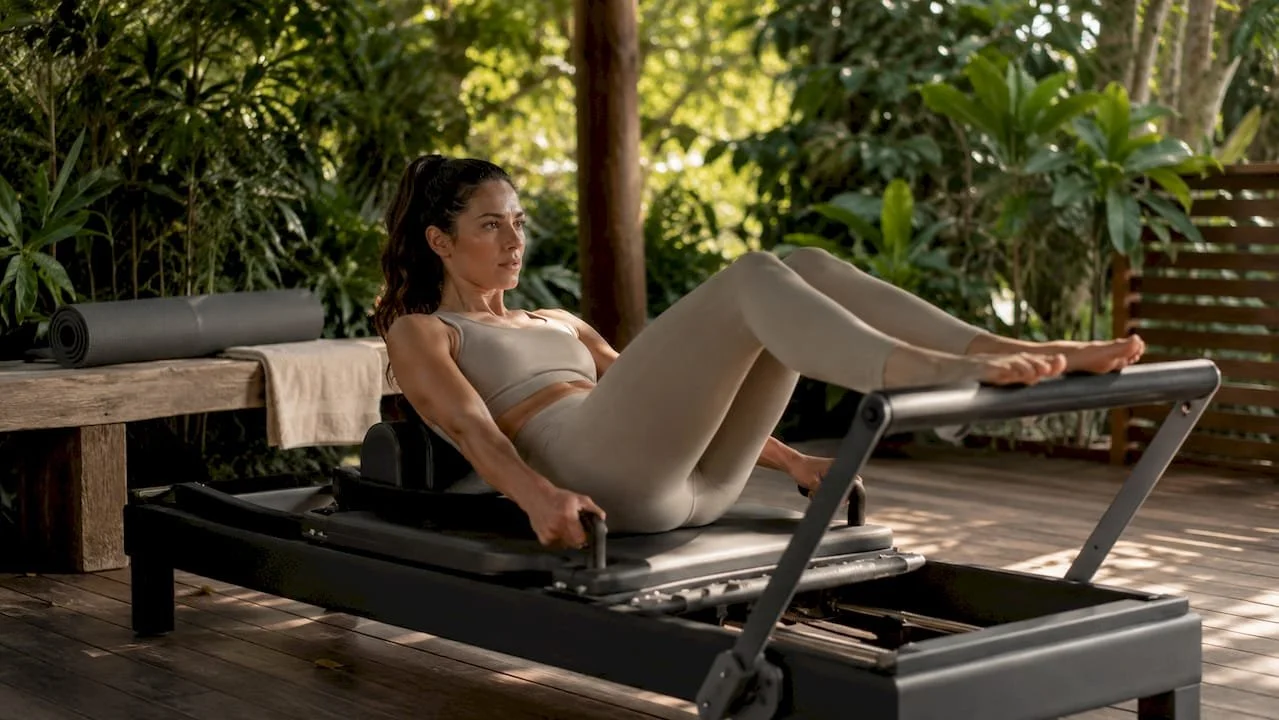
Reformer Pilates is a spring-loaded resistance exercise system, developed from Joseph Pilates' original method, that builds core strength, improves flexibility, and corrects posture through controlled movement on a sliding carriage. The apparatus uses adjustable springs, a footbar, and straps to create resistance in both the pushing and pulling phases of each exercise. This makes it distinctly different from mat Pilates or conventional gym training. Whether you are recovering from an injury, managing chronic pain, or simply looking for a low-impact workout that delivers real results, reformer Pilates addresses all of those goals within a single practice.
What is reformer Pilates good for physically?
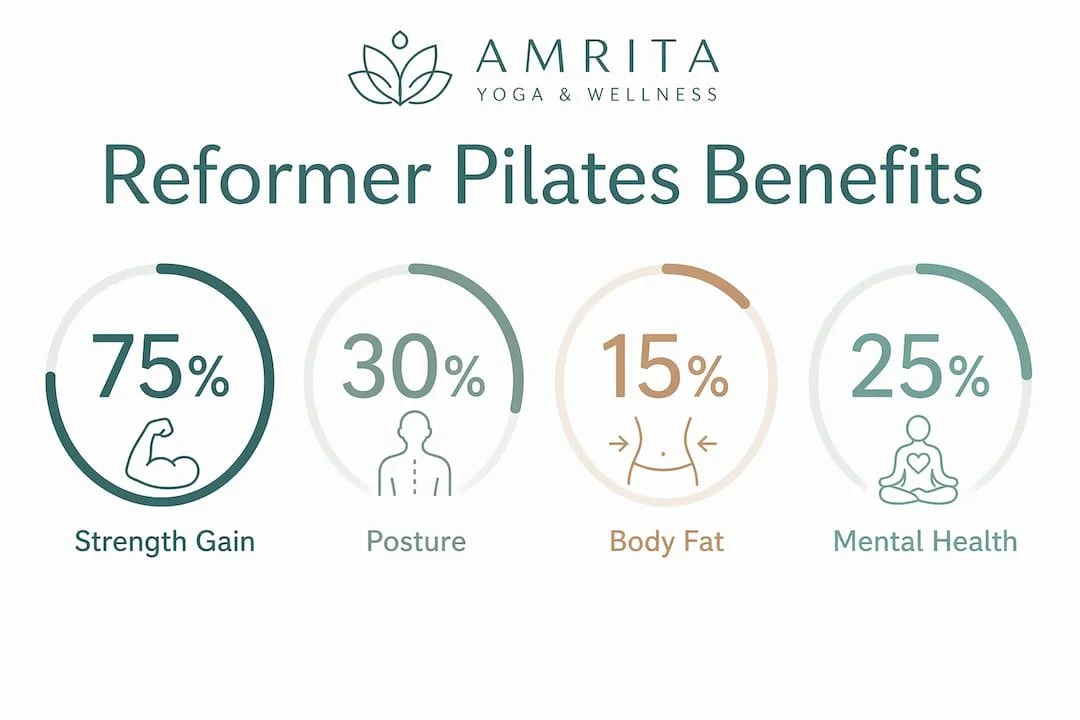
Reformer Pilates produces measurable physical improvements across strength, posture, and body composition. A consistent 8-week protocol of two to three sessions per week shows statistically significant gains in muscular strength, endurance, BMI reduction, and fat mass loss, with results reaching p < 0.001. That level of statistical confidence means the improvements are not random. They are reliable and repeatable.
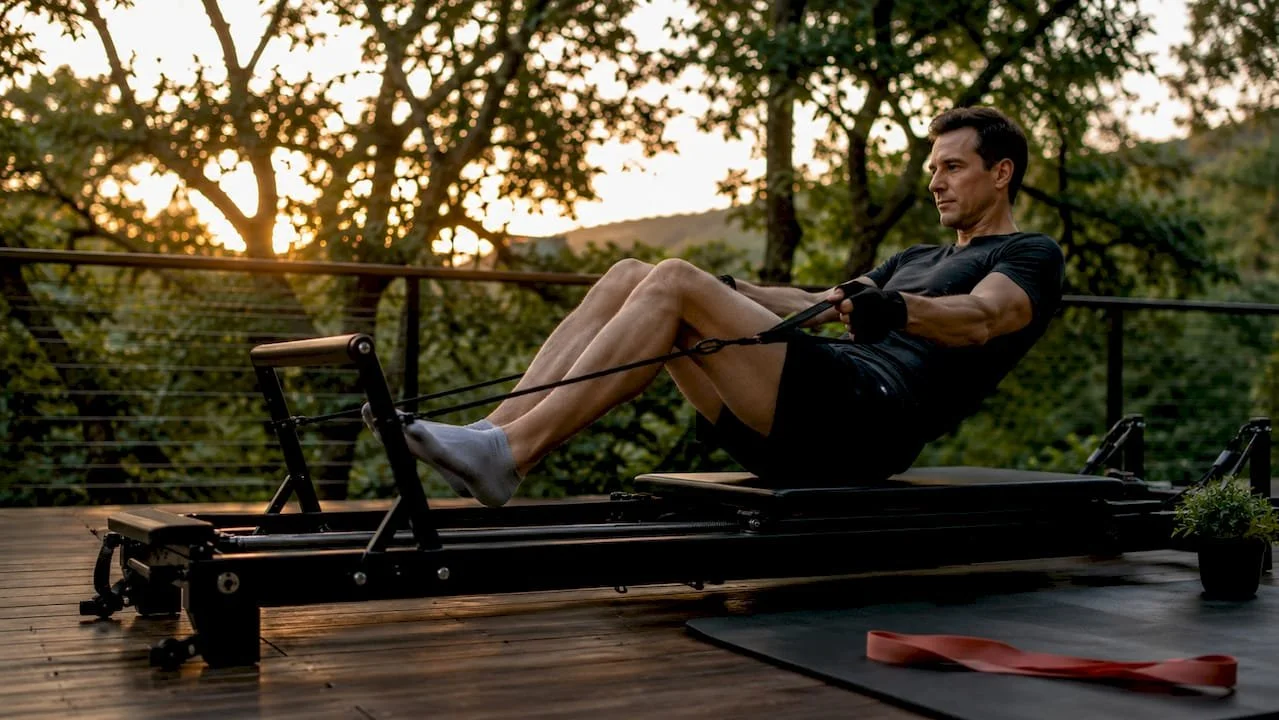
The mechanism behind these results is dual-phase muscle engagement. Reformer Pilates challenges muscles eccentrically and concentrically during every controlled resistance movement. Eccentric loading, the lengthening phase, is where most gym-based training falls short. The reformer forces your muscles to work hard in both directions, which builds functional strength and corrects imbalances that standard weight training misses entirely.
Core activation is another standout benefit. The sliding carriage creates an unstable surface that demands constant engagement from deep stabilizer muscles, including the transverse abdominis and multifidus. These are the muscles that protect your spine and support your posture. Traditional exercises like squats or bench press rarely target them directly.
Key physical benefits include:
Muscular strength and endurance across major and stabilizer muscle groups
Postural alignment with large effect sizes documented in recent research
Body composition improvements including fat mass reduction and BMI changes
Spinal stability through deep core muscle activation
Functional movement patterns that transfer to daily activities
Pro Tip: Start with lighter spring resistance and focus on form before adding load. The reformer rewards precision over power, especially in the first few weeks.
How does reformer Pilates support injury recovery?
Reformer Pilates is one of the most adaptable rehabilitation tools available for low-impact exercise. The spring resistance system allows a practitioner to reduce load significantly, making it safe for people with joint pain, post-surgical recovery needs, or chronic conditions. Research validates its benefits for older adults at risk of falls, fibromyalgia patients, and people managing chronic pain, across studies spanning 2018 to 2025.
Fall risk reduction is a particularly well-documented outcome. Reformer Pilates improves balance and lower body strength simultaneously, two factors that directly reduce fall incidents in older adults. The controlled, slow movements also retrain neuromuscular coordination, which declines with age and inactivity.
One underappreciated rehabilitation benefit is imbalance detection. Reformer Pilates exposes hidden mobility gaps and muscle weaknesses that conventional training overlooks. Even trained athletes report difficulty controlling the reformer's movements at first. That difficulty is diagnostic. It tells you exactly where your body compensates and where it needs work.
Rehabilitation-specific advantages include:
Graded progression by adjusting spring tension as strength returns
Joint-friendly loading that avoids the compressive forces of free weights
Balance and proprioception training built into every exercise
Chronic pain management for conditions like fibromyalgia and lower back pain
Imbalance correction that prevents re-injury after returning to sport
Pro Tip: Always inform your instructor about any injuries or medical conditions before your first session. A qualified teacher will modify exercises to match your current capacity and keep you safe.
What psychological benefits does reformer Pilates offer?
Reformer Pilates produces measurable mental health improvements alongside its physical effects. A 2025 study on office workers found significant reductions in anxiety, depression, and social appearance anxiety after an 8-week reformer Pilates program. Quality of life scores and body appreciation also improved with moderate to large effect sizes. These are not anecdotal outcomes. They are statistically supported findings.
The mind-body connection built through reformer Pilates is central to these results. Each session requires focused breathing coordinated with precise movement. That level of attention pulls your mind away from external stressors and into the present moment. Over time, this practice builds body awareness that extends beyond the studio.
Sedentary workers benefit especially. Office-based adults who spend most of their day seated accumulate postural stress, muscle tension, and psychological fatigue. Reformer Pilates addresses all three simultaneously. The physical release of tight hip flexors and rounded shoulders has a direct effect on mood and energy levels.
"Reformer Pilates improves psychological wellbeing by reducing anxiety, depression, and social appearance anxiety, and enhancing quality of life and body appreciation among sedentary and older adults." — BMC Sports Science, Medicine and Rehabilitation, 2025
Consistency amplifies these psychological gains. Practitioners who attend two to three sessions per week report faster improvements in mood and body image than those who practice sporadically. The learning curve itself, mastering new movements and building control, contributes to a sense of accomplishment that supports mental resilience.
What should beginners expect from reformer Pilates?
Reformer Pilates for beginners starts with an orientation phase focused entirely on machine mechanics. New users need to master the carriage, spring settings, footbar positions, and strap adjustments before performing full exercises. This is not a weakness. It is a necessary foundation that protects you and makes every subsequent session more effective.
Coordination challenges are normal and temporary. Most beginners resolve them within 3–5 sessions as their neuromuscular system adapts to the machine's demands. The first session often feels more mentally taxing than physically exhausting, because you are learning movement patterns, not just exercising.
Expect delayed onset muscle soreness after your first few sessions. Deep core and stabilizer muscles that rarely get targeted in conventional workouts will feel the work. This soreness decreases quickly as your body adapts.
Here is a practical starting sequence for new practitioners:
Book a beginner or fundamentals class. These sessions teach machine setup and basic movement vocabulary at a safe pace.
Arrive early. Give yourself time to meet the instructor and ask about spring resistance before class starts.
Communicate your health history. Mention any injuries, surgeries, or chronic conditions so the instructor can modify exercises.
Focus on breath and control. Speed and load come later. Precision is the goal in early sessions.
Attend consistently. Two sessions per week for the first month builds the neuromuscular foundation faster than sporadic attendance.
Reformer Pilates vs. mat Pilates: key differences
| Feature | Reformer Pilates | Mat Pilates |
|---|---|---|
| Resistance | Adjustable spring resistance | Bodyweight only |
| Muscle engagement | Eccentric and concentric phases | Primarily concentric |
| Injury adaptability | High, springs reduce joint load | Moderate |
| Equipment required | Reformer machine | Mat only |
| Learning curve | Steeper, machine orientation needed | Gentler for beginners |
| Core activation depth | Deep stabilizers targeted | Surface muscles emphasized |
Pro Tip: If you have done mat Pilates before, do not assume the reformer will feel familiar. The spring resistance changes the movement dynamics completely. Approach it as a new skill.
How does reformer Pilates compare to other exercise types?
Reformer Pilates occupies a unique position in the fitness spectrum. It serves as a comprehensive wellness tool for foundational strength and imbalance correction, but it is not a direct replacement for high-volume sport-specific training. A marathon runner still needs long runs. A powerlifter still needs heavy compound lifts. Reformer Pilates fills the gaps those modalities leave behind.
The dual-phase muscle engagement that defines reformer Pilates is its clearest differentiator. Traditional weight training loads muscles primarily in the concentric phase. Aerobic exercise builds cardiovascular capacity but does little for stabilizer strength. Reformer Pilates targets both the push and pull of every movement, which builds the kind of balanced strength that supports all other physical activities.
| Exercise type | Impact level | Stabilizer engagement | Injury risk | Mental health effect |
|---|---|---|---|---|
| Reformer Pilates | Low | High | Low | Strong positive |
| Mat Pilates | Low | Moderate | Low | Moderate positive |
| Weight training | Low to high | Low to moderate | Moderate | Moderate positive |
| Aerobic exercise | Moderate to high | Low | Moderate to high | Strong positive |
The table above shows why reformer Pilates is particularly well-suited for people returning from injury, managing chronic conditions, or building a fitness base. Its low impact and high stabilizer engagement combination is rare among mainstream exercise options.
Key Takeaways
Reformer Pilates delivers evidence-backed improvements in core strength, posture, body composition, and mental health through low-impact spring resistance training that targets deep stabilizer muscles conventional exercise misses.
| Point | Details |
|---|---|
| Physical strength gains | An 8-week protocol at 2–3 sessions per week produces significant strength, endurance, and posture improvements. |
| Rehabilitation adaptability | Adjustable spring resistance makes it safe and effective for injury recovery, chronic pain, and fall prevention. |
| Mental health benefits | Research shows reduced anxiety, depression, and social appearance anxiety after consistent reformer Pilates practice. |
| Beginner learning curve | Coordination challenges typically resolve within 3–5 sessions once machine mechanics are understood. |
| Not a standalone solution | Reformer Pilates builds foundational fitness best when integrated with other activities suited to your specific goals. |
Why reformer Pilates surprised me
I expected reformer Pilates to feel like a gentler version of gym training. It does not. The first time I worked through a basic footwork sequence on the carriage, my inner thighs and deep abdominals were working harder than they had in months of conventional strength sessions. That is the thing about this practice: the resistance is subtle, but the demand on stabilizer muscles is not.
What I find most compelling is the diagnostic quality of the reformer. The machine does not let you cheat. If one hip is tighter than the other, the carriage will show you. If your core disengages mid-movement, you lose control of the slide. This honest feedback loop accelerates progress in a way that free weights simply cannot replicate.
The mental health angle is also real, not just a wellness marketing claim. The focused breathing and deliberate movement patterns create a meditative quality that reduces mental noise. Practitioners who come in stressed often leave noticeably calmer. That outcome is consistent enough to be considered a feature of the practice, not a side effect.
My advice for anyone considering reformer Pilates: commit to at least six sessions before forming an opinion. The first two are orientation. The next two are adaptation. Sessions five and six are where you start to feel what the practice actually does. Pair it with your existing fitness routine rather than replacing it, and you will notice improvements in how your body moves across everything else you do.
— Juiced
Reformer Pilates classes at Amrita Yoga & Wellness
Amritayogawellness offers reformer Pilates classes designed for practitioners at every level, from complete beginners learning machine fundamentals to experienced movers building on an established practice. The studio's Philadelphia location provides a structured, instructor-led environment where you get personalized attention on spring settings, footbar alignment, and movement technique.
Beginner sessions at Amrita Yoga & Wellness focus on the orientation phase that research identifies as critical for safe, effective progress. Instructors guide you through machine mechanics before any exercise load is added. If you are managing an injury or chronic condition, the team can adapt exercises to your current capacity. Browse the full reformer Pilates class schedule or explore the studio's broader wellness offerings to find the right combination of practices for your goals.
FAQ
What does reformer Pilates do for your body?
Reformer Pilates builds muscular strength, improves posture, reduces body fat, and activates deep stabilizer muscles through spring-loaded resistance. Research shows significant improvements in all these areas after just 8 weeks of consistent practice.
Is reformer Pilates good for beginners with no experience?
Yes. Beginner and fundamentals classes teach machine mechanics and movement basics at a safe pace. Most new practitioners resolve coordination challenges within 3–5 sessions.
Can reformer Pilates help with injury recovery?
Reformer Pilates is validated as a low-impact rehabilitation method for older adults, fibromyalgia patients, and people with chronic pain. Adjustable spring resistance allows graded loading that protects joints while rebuilding strength.
How often should you do reformer Pilates to see results?
Two to three sessions per week for 8 weeks produces statistically significant improvements in strength, endurance, posture, and psychological wellbeing, based on current research findings.
Is reformer Pilates better than mat Pilates?
Reformer Pilates offers greater resistance variety, deeper stabilizer muscle engagement, and higher injury adaptability than mat Pilates. Mat Pilates requires no equipment and has a gentler learning curve, making it a solid complement rather than a direct competitor.