Aerial Barre: Philadelphia's Fusion Workout for Strength & Grace
TL;DR:
Aerial barre combines ballet, aerial yoga, and Pilates using a barre and hammock for a full-body workout.It offers moderate to high strength building, improved flexibility, and mental mindfulness benefits.The practice is accessible, safe, and gaining popularity in Philadelphia as a holistic fitness and wellness option.
You've probably walked past a studio window, spotted aerial hammocks hanging next to a ballet barre, and thought: what exactly is going on in there? Aerial barre is one of Philadelphia's most talked-about emerging workouts, yet it remains genuinely misunderstood. It's not quite aerial yoga. It's not traditional barre class. It's not Pilates. It pulls from all three, and that's exactly what makes it so compelling. This guide will clear up the confusion, explain what aerial barre actually involves, and give you everything you need to decide whether it belongs in your weekly routine.
Table of Contents
Key Takeaways
| Point | Details |
|---|---|
| Fusion fitness defined | Aerial barre uniquely blends barre, yoga, and Pilates for a creative workout experience. |
| Distinct health benefits | It supports physical strength, flexibility, and mind-body wellness in one class. |
| Safety essentials | Instructor oversight and equipment checks are crucial for a safe aerial barre experience. |
| Local access | Philadelphia offers aerial barre through select studios and innovative pop-up class formats. |
What is aerial barre? How this fusion workout works
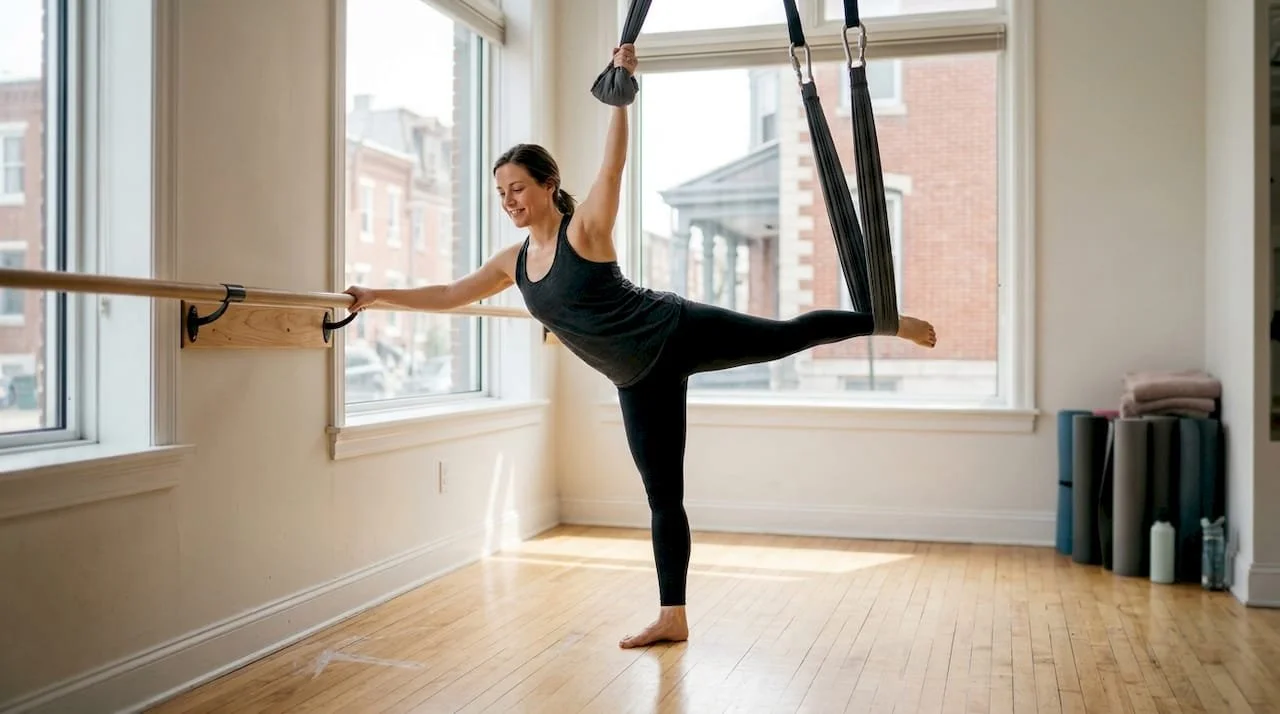
Aerial barre is a fitness discipline that pairs classic ballet barre training with suspended aerial work using a fabric hammock or silk rigging. Think of it as the lovechild of a ballet studio and an aerial arts class. You spend part of each session at a grounded barre, working through controlled movements that sculpt the legs, hips, and core. Then you transition to the hammock, using the fabric for support, resistance, and suspension as you flow through poses, stretches, and strength work.
The equipment setup is simple but purposeful. A sturdy ballet barre sits at hip height for grounded exercises. Overhead rigging holds a wide aerial hammock, typically positioned at about waist height when hanging slack. Both pieces of equipment are used together in one class session, sometimes alternating every few minutes.
The movement patterns borrow heavily from multiple disciplines:
Ballet barre: Plié sequences, tendus, leg lifts, and port de bras arm movements
Aerial yoga: Inversions, suspended stretches, and hammock-supported balance poses
Pilates: Core stabilization, controlled breathing, and postural alignment cues
Yoga: Mindful transitions, breath awareness, and flexibility-focused holds
What separates aerial barre from a typical barre fitness class is the hammock's role as both a support tool and a challenge. It assists you in poses your body might not yet reach on its own, while simultaneously demanding more core engagement to stay stable in suspension. Aerial-related studios offer aerial fitness classes with barre elements in Philadelphia, making it easier than ever to find a class that fits your schedule.
If you're curious about the broader world of aerial fitness and health, the benefits extend well beyond flexibility. And if you've heard about aerial yoga benefits but never tried anything suspended, aerial barre is one of the most approachable entry points.
Pro Tip: Before your first class, ask the studio how often their rigging hardware is inspected and whether instructors hold aerial-specific certifications. Responsible studios will have clear answers, and that transparency matters for your safety.
Aerial barre vs. other workouts: Key differences
With a foundation set, it's important to see what makes aerial barre distinct from the other fusion classes you might've seen advertised.
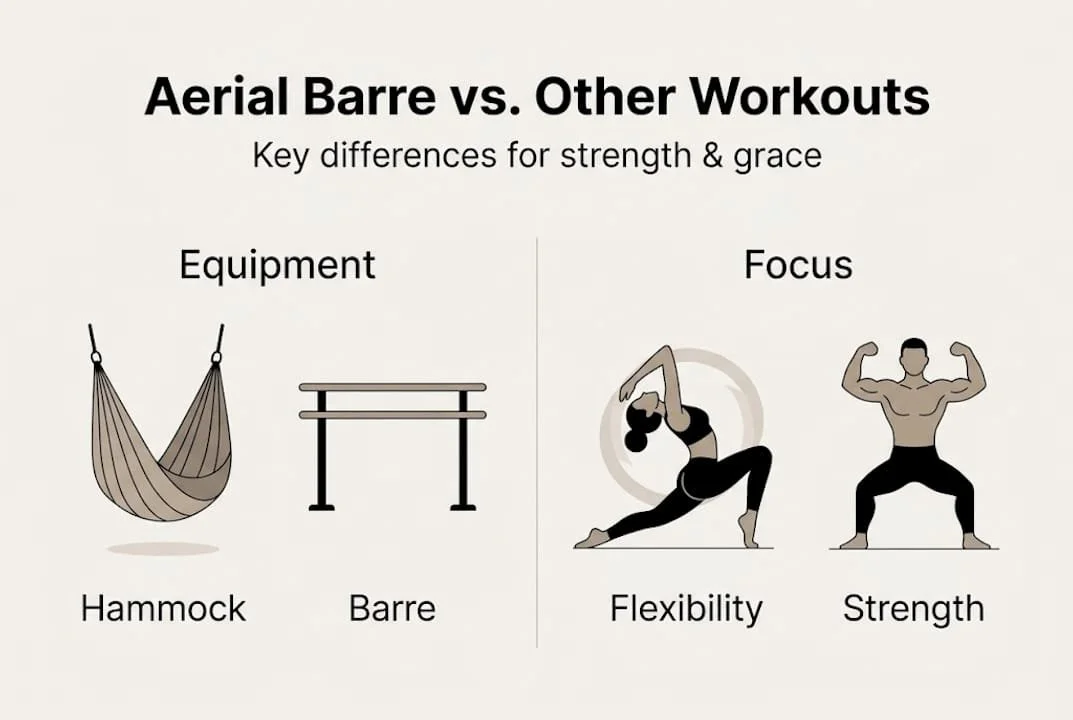
Here's how aerial barre stacks up against the workouts it's most often confused with:
| Class type | Equipment | Movement style | Flexibility focus | Strength building |
|---|---|---|---|---|
| Aerial barre | Barre + hammock | Flowing, structured | High | Moderate to high |
| Traditional barre | Barre only | Controlled, repetitive | Moderate | High |
| Aerial yoga | Hammock only | Slow, meditative | Very high | Low to moderate |
| Pilates | Mat or reformer | Precise, clinical | Moderate | Moderate to high |
| Yoga | Mat | Variable | High | Low to moderate |
The table makes it clear: aerial barre sits in a category of its own. It offers more strength work than aerial yoga, more creative range than traditional barre, and more playfulness than Pilates. That combination is what draws people in.
Here's what makes aerial barre uniquely challenging and accessible at the same time:
The hammock as a teacher. It gives real-time feedback. If your core isn't engaged, you'll feel it immediately as the fabric shifts beneath you.
Low-impact joint support. Suspension takes pressure off knees and hips, making deeper ranges of motion achievable without strain.
Progressive challenge. Beginners use the hammock for support. As you advance, you use it for resistance and full inversions.
Creative freedom. Unlike scripted barre formats, aerial barre instructors often choreograph unique sequences that feel more like movement art than exercise.
Community feel. Classes tend to be small, which means more personalized attention and faster skill development.
The yoga and wellness integration that aerial barre offers is genuinely rare in a single class format. And if you're still on the fence, reading about the real impact of aerial yoga can help you understand what suspended movement does to the body over time. As noted in Philadelphia fitness circles, aerial barre's blending of yoga, barre, and Pilates is emerging in innovative pop-up formats across the city.
The benefits of aerial barre for mind and body
Understanding the differences is helpful, but what truly sets aerial barre apart is how it can make you feel and function, both inside and out.
The physical benefits are measurable and wide-ranging:
Core engagement: Every suspended movement demands deep stabilizer muscles that standard floor exercises rarely reach
Improved flexibility: The hammock's support allows you to safely hold lengthened positions longer
Low-impact joint support: Ideal for those managing knee or hip sensitivities who still want a genuine workout
Upper body strength: Gripping and navigating the fabric builds real arm and shoulder endurance
Spinal decompression: Brief inversions in the hammock relieve compression built up from sitting
The mental benefits are equally significant. The focus required to balance in a hammock naturally quiets mental chatter. You can't check your phone or run your to-do list when you're suspended mid-air. That enforced presence is a form of mindfulness training that happens almost by accident.
"I walked in thinking it would be a fun workout, and I walked out feeling like I'd processed something emotional. The hammock forces you to let go, literally and figuratively. I haven't felt that kind of release in any other class."
That reaction is common, and it points to something important. Aerial barre may support emotional healing and broader wellness goals in ways that standard fitness classes simply don't. It connects naturally to trauma-informed wellness frameworks, where gentle, supported movement becomes a tool for nervous system regulation.
Studios that embrace aerial yoga for healing often incorporate aerial barre elements because the hammock creates a sense of safety and containment that encourages emotional openness. This also overlaps meaningfully with practices that use movement as yoga for emotional healing, treating the body as a pathway to mental and emotional well-being.
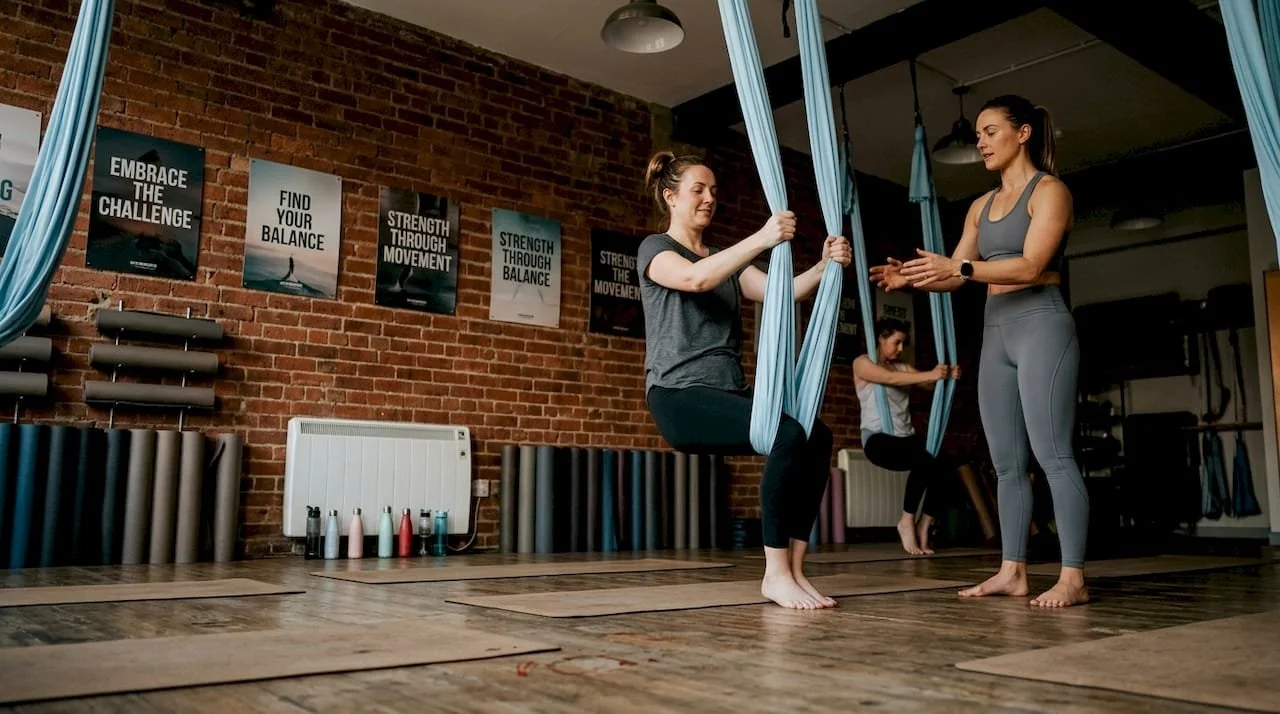
Statistic to know: Research across aerial fitness disciplines consistently shows participants report significant reductions in perceived stress after just four to six weeks of regular practice, with improvements in both mood and body confidence.
Getting started with aerial barre in Philadelphia
Ready to incorporate aerial barre into your routine? Here's how to start, step by step, right here in Philadelphia.
Finding a class requires a little research. Aerial barre isn't yet as common as standard yoga or Pilates, so look for studios that list aerial hammock or aerial silk work alongside barre offerings. Pop-up events through Philadelphia fitness communities and wellness collectives are another route, especially if you want to try before committing to a membership.
| Studio type | What to look for | Beginner-friendly? |
|---|---|---|
| Dedicated aerial studio | Full rigging setup, certified instructors | Often yes, with intro classes |
| Hybrid yoga and wellness studio | Aerial hammocks plus barre and yoga options | Yes, especially for fusion seekers |
| Pop-up fitness events | Rotating venues, varied formats | Good for sampling, less consistent |
Before you book, here's a safety checklist to run through:
Confirm the rigging is rated for aerial use and inspected regularly
Verify instructors hold both barre and aerial-specific training credentials
Check that class sizes are small enough for individualized attention
Ask whether beginners receive a hammock orientation before the full class
Look for clean, properly maintained fabric hammocks
Proper equipment inspection and instructor guidanceare crucial for safety in aerial elements, and any reputable Philadelphia studio will welcome those questions rather than dodge them.
Pro Tip: Arrive at least 10 to 15 minutes early for your first class. Introduce yourself to the instructor, mention your fitness background, and ask for a quick demo of the hammock setup. That five-minute conversation can make the entire class feel less intimidating.
For your first class, keep these basics in mind:
Wear fitted athletic wear that covers armpits and knees to prevent fabric friction
Skip the lotion on your arms and legs so you grip the hammock properly
Eat lightly at least 90 minutes beforehand, especially if inversions are planned
Leave jewelry at home, particularly rings and bracelets that can catch the fabric
If you're exploring yoga practices alongside aerial barre, many studios offer complementary class options that build the flexibility and body awareness that makes aerial barre even more rewarding over time.
Why aerial barre is more than a trend: A Philadelphia perspective
After these practical steps, it's worth considering why aerial barre's popularity is more than just a passing phase.
A lot of people dismiss aerial-based fitness as a gimmick. That's the wrong read. Philadelphia's fitness community has consistently shown an appetite for movement practices that do more than one thing at once, and aerial barre sits precisely at that intersection. It builds strength and releases tension. It requires focus and invites playfulness. That dual nature isn't a marketing angle. It's the actual experience.
We've watched plenty of "trend" workouts fade once the novelty wore off. What distinguishes aerial barre is that the hammock isn't a prop. It's a genuine training tool that reveals where your body holds tension and where it needs support. Beginners often find it more accessible than they expected, because the fabric meets you where you are.
The emergence of aerial barre in Philadelphia reflects something real: people are done choosing between a workout that challenges their body and one that restores their mind. They want both. Aerial barre delivers both. And the impact of aerial yoga research supports this: suspended movement consistently outperforms expectations in terms of long-term adherence and emotional satisfaction.
Philadelphia's wellness community is pragmatic. It doesn't adopt new practices just because they look cool. It sticks with what works.
Ready to try aerial barre or wellness fusion?
Inspired to experience aerial barre's blend of movement and wellness for yourself? Here's how you can take the next step.
At Amrita Yoga & Wellness, we bring together movement practices that go beyond the conventional gym experience. Our Philadelphia studio offers a range of fusion-forward classes designed for all experience levels, from first-timers to longtime practitioners looking to shake up their routine.
Beyond movement classes, we offer workshops that feed the whole self, including Tarot readings and other holistic wellness experiences. If you're ready to explore what a truly integrated wellness practice looks like, visit our studio page, check our current class schedule, and find the experience that fits your goals. Your first class might surprise you in the best possible way.
Frequently asked questions
Is aerial barre safe for beginners?
Yes, with proper instructor guidance and equipment inspection standards, aerial barre is accessible and safe for most healthy beginners. Reputable studios provide hammock orientations and use certified instructors who adjust each exercise to your level.
What should I wear to an aerial barre class?
Wear comfortable, fitted athletic clothing that covers the armpits and knees to prevent hammock burns and allow free movement. Avoid lotions on exposed skin, as they reduce your grip on the fabric.
Are aerial barre classes available year-round in Philadelphia?
Aerial barre is offered in select studios and pop-up formats in Philadelphia, so scheduling may vary by season. Checking studio calendars directly and signing up for newsletters is the most reliable way to stay updated.
How does aerial barre compare with barre fitness or aerial yoga?
Aerial barre blends yoga, barre, and Pilates by using both a ballet barre and an aerial hammock in one session, giving you the strength benefits of barre and the flexibility and mindfulness gains of aerial yoga in a single class format.