Why Attend Pilates Workshops: Boost Strength & Flexibility
TL;DR:
Pilates workshops offer personalized guidance, deepening understanding and accelerating results for all fitness levels.They improve core strength, flexibility, pain reduction, and support injury recovery through evidence-based practices.Attending consistently and choosing certified instructors enhances safety, effectiveness, and long-term benefits.
Pilates has a reputation problem. Many people assume workshops are reserved for the already-fit, the hyper-flexible, or the injury-free. That assumption keeps a lot of people in Philadelphia from experiencing something genuinely useful. The truth is that Pilates workshops accelerate rehabilitation, reduce pain, and improve quality of life for a wide range of people, including absolute beginners and those recovering from injuries. Whether you want to build core strength, move without discomfort, or simply feel better in your body, a Pilates workshop offers a focused, evidence-backed path to get there.
Table of Contents
Key Takeaways
| Point | Details |
|---|---|
| Personalized instruction | Pilates workshops offer focused, individualized feedback for all levels. |
| Evidence-based results | Research shows consistent Pilates practice improves flexibility, strength, and reduces chronic pain. |
| Rehabilitation support | Workshops provide safe, effective movement strategies for injury recovery and ongoing pain management. |
| Community and motivation | Workshops foster a supportive environment, helping you stay motivated and accountable. |
What makes Pilates workshops unique?
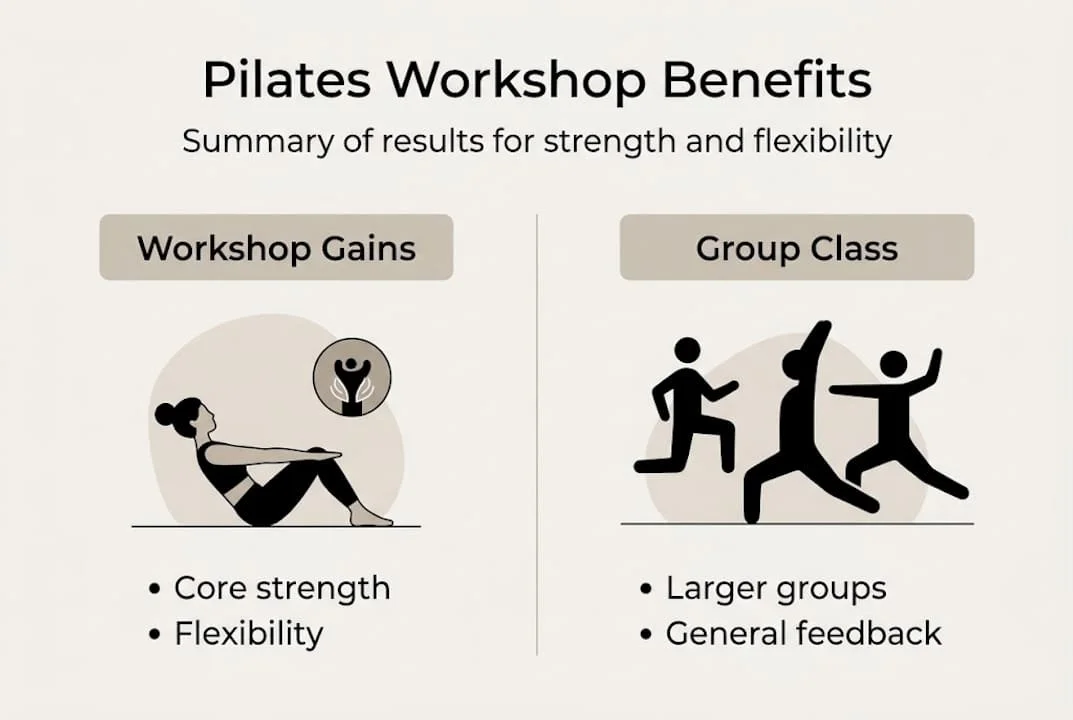
To understand why attending specific workshops matters, it's helpful to see how they differ from standard group Pilates classes. The short answer: workshops go deeper, and that depth changes everything.
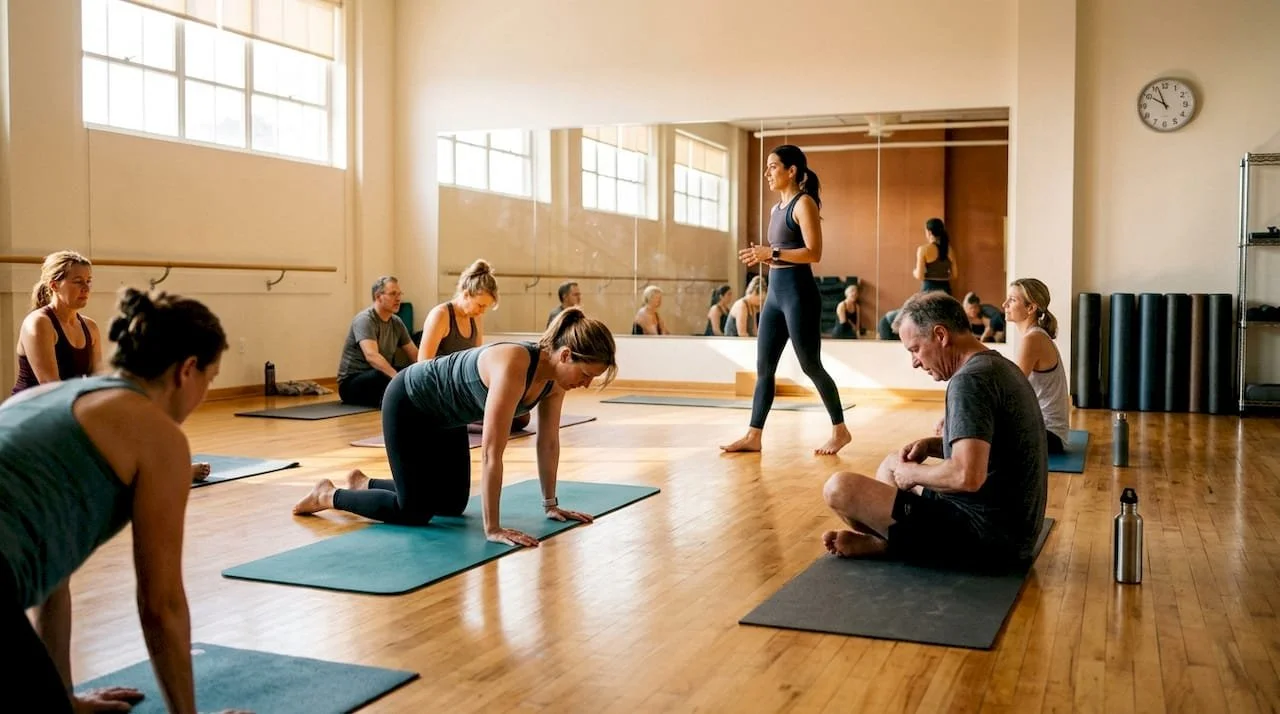
In a typical group class, an instructor guides 15 to 20 people through a sequence. There's value in that, but the format limits how much personalized feedback you can receive. Workshops flip that equation. They run in small groups or semi-private settings, often with just 4 to 8 participants, which means your instructor can actually watch how you move, cue you specifically, and catch habits that could lead to strain over time.
The focus shifts from simply completing a workout to truly understanding the movement. Workshops zero in on the foundational Pilates principles: breath, control, centering, precision, and flow. Workshops allow nuanced exploration of these principles in ways that a packed group class simply cannot support.
| Feature | Pilates workshop | Group class |
|---|---|---|
| Group size | 4 to 8 participants | 10 to 25 participants |
| Instructor attention | High, individualized | Limited, general |
| Technique depth | In-depth, corrective | Overview level |
| Suitable for beginners | Yes, especially | Varies |
| Suitable for rehab | Yes, ideal | Sometimes |
Workshops also tend to work well across a range of goals. Someone recovering from a back injury and someone training for their first 5K can both attend a Pilates workshop and walk away with something meaningful. The examples of Pilates exercises you practice in a workshop are carefully selected and adapted to the needs of the group.
Philadelphia's fitness scene has seen a noticeable surge in Pilates interest, with Pilates workshop trends pointing toward more specialized, smaller-format sessions that offer real results rather than just a good sweat.
"The best Pilates experiences are the ones where you leave knowing your body just a little bit better than when you walked in."
That kind of self-awareness is what workshops are designed to build.
Evidence-based benefits for fitness and flexibility
Having identified how workshops offer unique structure, let's explore the tangible benefits you can achieve, based on science.
The research on Pilates is clear and growing. Mat Pilates builds core strength, improves flexibility, and reduces chronic pain in areas like the low back and knees. These aren't minor improvements. People who practice consistently report meaningful changes in how they move and how they feel day to day.
Here are the key benefits backed by research:
Improved core strength from stabilization exercises that target deep abdominal and spinal muscles
Greater flexibility in the hips, hamstrings, and thoracic spine
Reduced chronic pain, particularly in the low back and knees
Better balance and coordination, which matters especially for adults over 40
Improved sleep quality, which shows up even in short intervention studies
The data supports a specific practice window. Measurable flexibility and fitness gains appear after 4 to 8 weeks of consistent practice, 2 to 3 times per week. That's a realistic commitment most Philadelphians can make.
| Outcome | Evidence strength | Time to notice |
|---|---|---|
| Core strength | Strong | 4 to 6 weeks |
| Flexibility | Strong | 4 to 8 weeks |
| Chronic low back pain | Strong | 4 weeks |
| Knee pain relief | Moderate to strong | 6 to 8 weeks |
| Sleep quality | Moderate | 4 weeks |
Pilates reduces pain in knee osteoarthritis and improves function in chronic low back pain, according to recent clinical evidence. These findings apply directly to the kind of movement work done in focused workshops.
You can explore more through Pilates research articles and review a broader list of benefits of Pilates from practitioners who work with all fitness levels.
Pro Tip: Before your first workshop, do a simple self-assessment. Note your flexibility in a forward fold or rate your pain on a 1 to 10 scale. Revisit that benchmark after 4 weeks of consistent workshops. The progress you'll see is a powerful motivator.
Pilates for rehabilitation and injury recovery
While fitness and flexibility are crucial, many workshop attendees are also seeking support for injury or chronic pain. This is where Pilates workshops show some of their most impressive results.
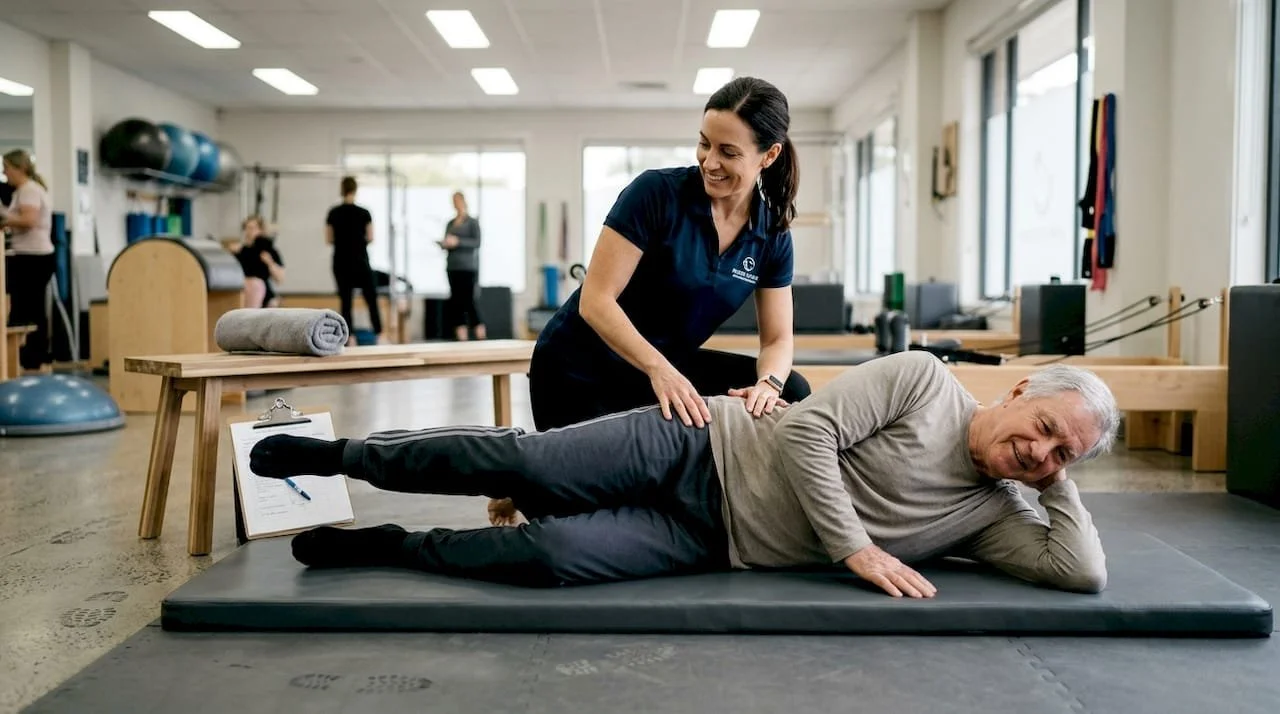
Timing matters. Pilates is not meant to be your first intervention after an acute injury. Once the initial inflammation and swelling subside, usually within a few days to a couple of weeks depending on the injury, a structured Pilates program can become a powerful tool. Pilates accelerates rehabilitation post-injury with a structured program introduced after the acute phase, supporting better mobility and less pain.
Who benefits most from rehab-focused workshops?
People with chronic low back pain lasting longer than 12 weeks
Adults recovering from knee or hip procedures
Those managing osteoarthritis or similar joint conditions
Anyone dealing with postural pain from desk work or repetitive movement
People in pre- or post-surgical recovery looking for safe, supervised movement
"4 weeks of Pilates improved pain, sleep quality, quality of life, and disability scores in people with chronic low back pain."
That's a meaningful result in a short timeframe. And it's not just about pain numbers on a chart. People describe moving through their day with less fear, less guarding, and more confidence in their own body.
For those focused on Pilates for wellness after a difficult health period, workshops offer a supportive, structured re-entry into movement. You can also browse sample Pilates workouts to get a sense of what supervised movement looks like in practice.
Pro Tip: When choosing a workshop for rehabilitation purposes, ask specifically whether the instructor holds a certification from a recognized body like BASI Pilates or Polestar Pilates. Certified instructors understand contraindications and know how to modify safely.
Getting started: What to expect in your first Pilates workshop
Knowing the benefits and recovery potential, here's what you need to know to start your Pilates workshop journey.
Choosing the right workshop starts with a few key criteria. Look for small class sizes (ideally under 10), certified instructors, and a stated focus that matches your goals, whether that's flexibility, core conditioning, or recovery. Don't be afraid to call ahead and ask questions. A good studio will welcome them.
What to bring and wear is simple. Wear fitted, comfortable clothing that allows movement without riding up. Socks with grip are helpful on a mat. Bring water, and if the studio doesn't provide mats, bring your own. Most beginner workshops are mat-based, so no special equipment is required.
A typical workshop session flows like this: a brief check-in where the instructor learns about any injuries or limitations, a guided breathwork and warm-up sequence, focused technique work with hands-on corrections, and a cooldown or reflection period.
Here are 5 steps to a successful first workshop:
Register in advance so the instructor can prepare modifications if needed
Prepare your body by avoiding heavy meals 90 minutes before and staying hydrated
Arrive 10 minutes early to settle in, introduce yourself, and mention any injuries
Participate fully, including asking questions when something doesn't feel right
Reflect afterward by jotting down what felt challenging or surprising
For lasting results, attend 2 to 3 times per week. Empirical benchmarks show that this frequency over 4 to 8 weeks yields measurable improvements in flexibility and fitness.
Common beginner mistakes to avoid:
Holding your breath during difficult movements
Pushing through pain instead of modifying
Skipping the first few "basics" workshops because they seem too easy
Comparing your range of motion to others in the room
If you're just getting started, check out advice for Pilates beginners and explore a Pilates styles overview to find which format fits your goals best.
Our take: The real reason Pilates workshops are worth your time
Here's something that often gets lost in the conversation about Pilates: the format matters as much as the method. You can follow along with a video online or show up to a packed studio class, and you'll get some benefit. But workshops operate on a different level entirely.
In Philadelphia's growing Pilates community, we see it consistently. People who attend focused workshops progress faster, stick with the practice longer, and report greater satisfaction with their results. That's not a coincidence. Workshops provide deeper education compared to diluted group classes, and combining both formats achieves the best outcomes.
What most people miss is the community piece. Workshops create a shared experience. You're learning alongside others at a similar stage, which builds accountability and makes the process feel less isolating, especially if you're coming back from injury or starting something new.
The combination of science, hands-on supervision, and real personal attention is what moves people further, faster. If core strength from Pilates workshops is your goal, this format gets you there with far less guesswork.
Ready to experience the difference a Pilates workshop can make?
If you've been thinking about trying Pilates or leveling up your current practice, the next step is simpler than you think. Amrita Yoga & Wellness offers Pilates workshops designed for all levels, from curious beginners to those navigating injury recovery.
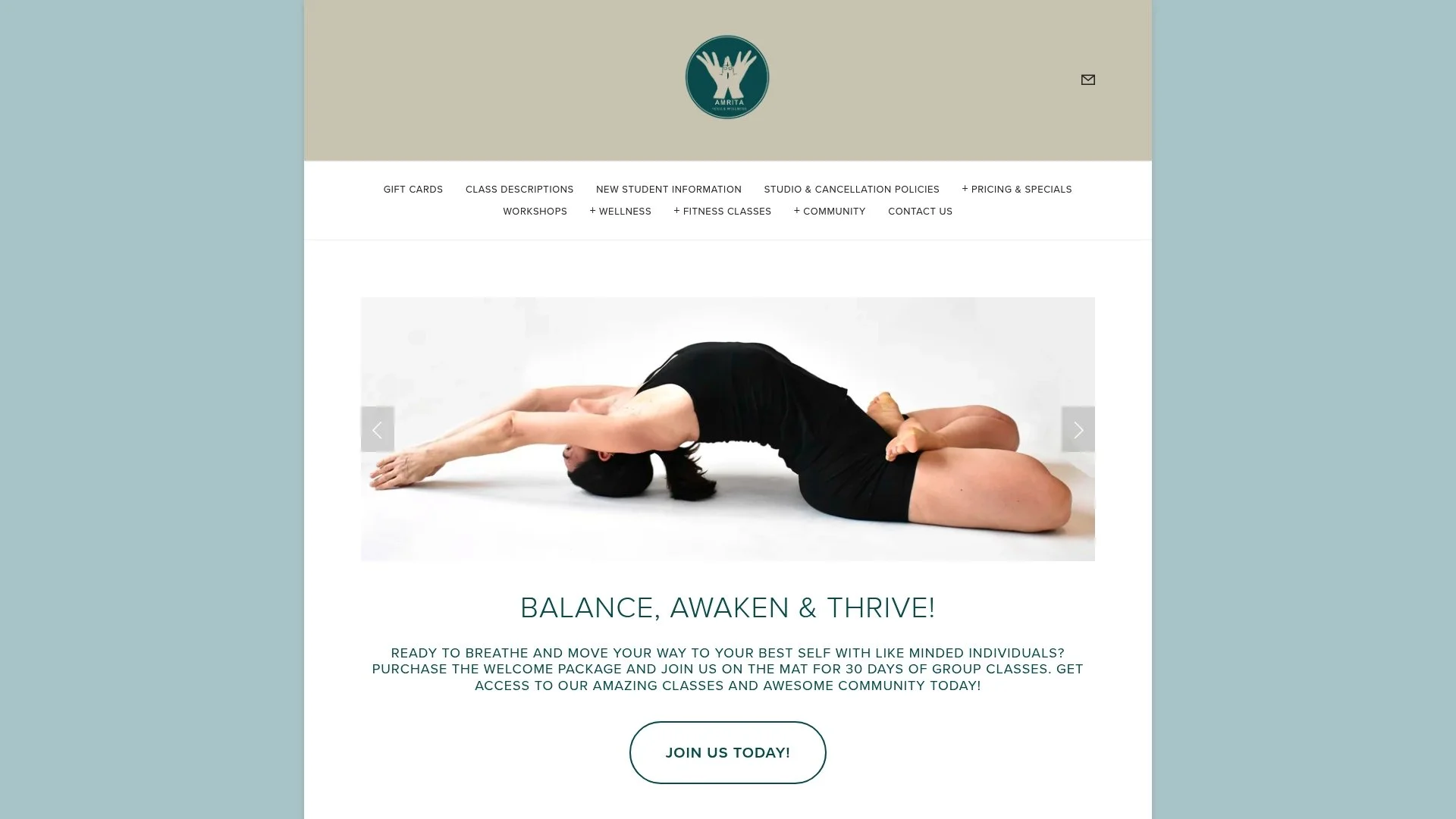
At classes at Amrita Yoga & Wellness, you'll find a welcoming Philadelphia studio community with certified instructors who meet you exactly where you are. Browse current schedules, read about program options, and find beginner-friendly entry points that fit your life. Your first workshop could be the most useful hour you invest in your body this year.
Frequently asked questions
What is the difference between a Pilates workshop and a regular class?
Pilates workshops are usually smaller, with more focused instruction on technique and individualized feedback compared to general group classes. Workshops emphasize depth and core principles far more than standard group formats allow.
How soon will I see results from attending Pilates workshops?
You may notice improvements in flexibility and pain relief within 4 to 8 weeks of attending 2 to 3 times per week. 4 weeks of Pilates improved pain and quality of life in people with chronic low back pain.
Are Pilates workshops safe for people recovering from injury?
Yes, when supervised by a certified instructor and started after the acute phase, workshops are especially effective for safe rehabilitation. Pilates workshops are most effective when introduced post-acute with professional guidance.
Do I need special equipment to join a Pilates workshop?
Most beginner workshops use mat Pilates and require just a mat; additional equipment is rarely needed for entry-level sessions. Mat Pilates is accessible for beginners without any specialized gear.