The most common chakra balancing practices are meditation, color visualization, mantra, affirmations, yoga postures, breathwork, crystals and aromatherapy. You don't need all of them. Pick one or two that suit your temperament, practice them regularly, and notice how you feel. Below you'll find what each practice involves, how to try it at home, where to start, and where these practices stop and medical care begins.
Amritayogawellness
Explore Wellness Practices in Philadelphia
Amrita Yoga & Wellness offers yoga, breathwork workshops, and other wellness practices at its Philadelphia studio.
TL;DR
Chakras are described as seven energy centers along the spine in yogic systems. Western science does not recognize them, but many people use them as a metaphor for balance and wellness.
The core practices are meditation, visualization, mantra, affirmations, yoga, breathwork, and optional aids such as crystals and scent.
There is no fixed order. Start where you feel most out of balance, or try a short root-to-crown meditation of about three minutes per chakra.
Chakra work is a wellness ritual, not a treatment. Don't use it to delay seeing a health care provider about pain or another health problem.
What chakra balancing means
The word chakra comes from Sanskrit and means wheel or circle. In traditional South Asian medicine and yogic systems, chakras are seven energy centers along the spine, each associated with physical, emotional and spiritual functions. Balancing them, in this tradition, means fostering the positive emotions linked to each center rather than letting one dominate or go quiet.
It helps to be clear about what this is. Cleveland Clinic notes that Western science does not recognize chakras, though they may be a useful metaphor for balance and wellness. That is a fair way to approach the list below: as contemplative practices that help you slow down, pay attention to your body, and check in with your emotions. Many people find that valuable whatever their view of energy anatomy.
The seven chakras at a glance
These are the seven centers named in the Cleveland Clinic overview, with the pairings that source and our own teaching mention for each.
The seven chakras at a glance
These are the seven centers named in the Cleveland Clinic overview, with the pairings that source and our own teaching mention for each.
| Chakra | Sanskrit name | Pairings often used |
|---|---|---|
| Root | Muladhara | Standing poses, mountain pose, red visualization, red jasper or garnet |
| Sacral | Svadhishthana | Any practice below, chosen by feel |
| Solar plexus | Manipura | Any practice below, chosen by feel |
| Heart | Anahata | Gentle backbends, rose quartz or green aventurine |
| Throat | Vishuddha | Any practice below, chosen by feel |
| Third eye | Ajna | Child's pose, amethyst |
| Crown | Sahasrara | Meditation, amethyst |
The pairings are traditions and conventions, not rules. If a practice feels right for a different center, follow that.
The chakra balancing practices list
1. Chakra meditation
Meditation is the backbone of most chakra work. In a chakra meditation you focus on the area of the body associated with a chakra and link it with that chakra's color, such as bright red for the root.
How to try it:
Sit comfortably with your spine long and your hands resting on your thighs.
Take a few slow breaths to settle.
Bring your attention to one area of the body, for example the base of the spine.
Picture its color, and stay with the sensations that arise, whether warmth, tingling, tension or nothing at all.
Move to the next center when you're ready.
If you are new to sitting practice, our guide to types of meditation for holistic wellness can help you find a style that fits, and our chakra meditation articles go deeper on this one.
2. Color visualization
Color is the easiest doorway for beginners. Many modern guides use the rainbow sequence, red at the root up to violet at the crown. That mapping was popularised in the West by Christopher Hills in 1977, and traditional tantric texts do not assign colors consistently. So treat the rainbow as a handy convention. If a different color comes to mind at a given center, work with that one.
3. Mantra and bija sounds
In the yogic tradition, each energy center is linked with a seed syllable, or bija mantra. Practitioners chant or silently repeat the syllable while focusing on the matching area of the body. The sound and vibration give a restless mind something to hold onto, which is why mantra suits people who find silent meditation difficult. Our mantra meditation posts walk through how to begin.
4. Chakra-specific affirmations
Affirmations are short, present-tense statements you repeat that match the theme of a center, for example a statement about feeling safe and supported for the root, or open and connected for the heart. Affirmations are listed alongside yoga, breathwork and meditation as ways to work with the chakras. Write your own in plain words you believe. A sentence that feels false to you will not settle anything.
5. Yoga postures
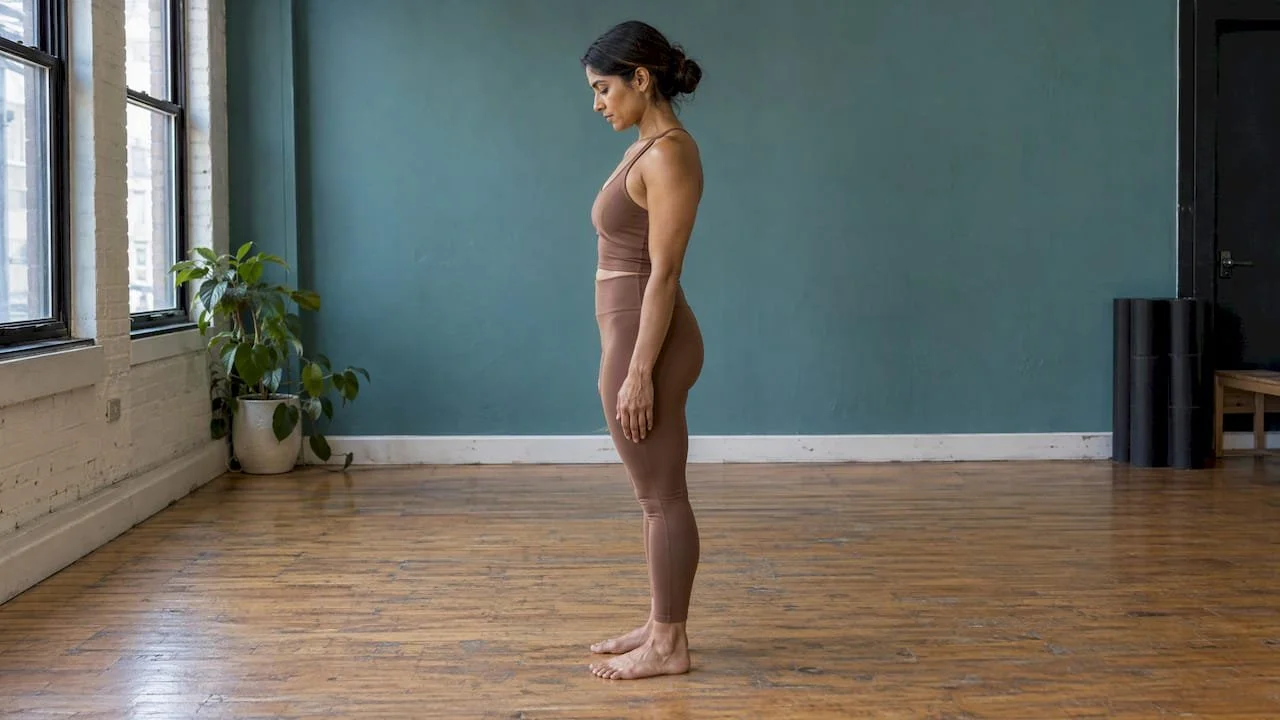
Yoga is the practice most closely tied to chakra work, because asana and energy centers developed in the same tradition. Common associations include standing poses with the root and gentle backbends with the heart. Mountain pose is often linked to the root, and child's pose to the third eye.
A simple way to use this:
Root: mountain pose or a wide-legged standing pose. Feel your feet and the floor.
Heart: a gentle backbend such as sphinx or a supported bridge. Breathe into the chest.
Third eye: child's pose, forehead resting down, attention at the space between the brows.
Go gently into backbends, and skip any pose that causes pain. A qualified teacher can adjust a pose to your body, which matters more than perfecting the chakra link.
6. Breathwork
Breath practice is the quickest way to change how you feel in a few minutes. Alternate nostril breathing is said to balance energy flow through the chakras. Even if you set the energy language aside, slow, even breathing is a reliable way to settle your attention before any other practice. Our notes on breathwork in yoga cover the basics.
Keep breathing comfortable. If you feel dizzy or anxious, return to normal breathing and stop.
7. Crystals
Crystals are an optional aid. Practitioners match stones to chakras by color and place them on or near the body: red jasper or garnet for the root, rose quartz or green aventurine for the heart, amethyst for the third eye and crown. Lie down for 10 to 15 minutes with a stone resting at the relevant point, or hold one in your hand during meditation. The stone works as a focal point for attention. It is not a medical tool.
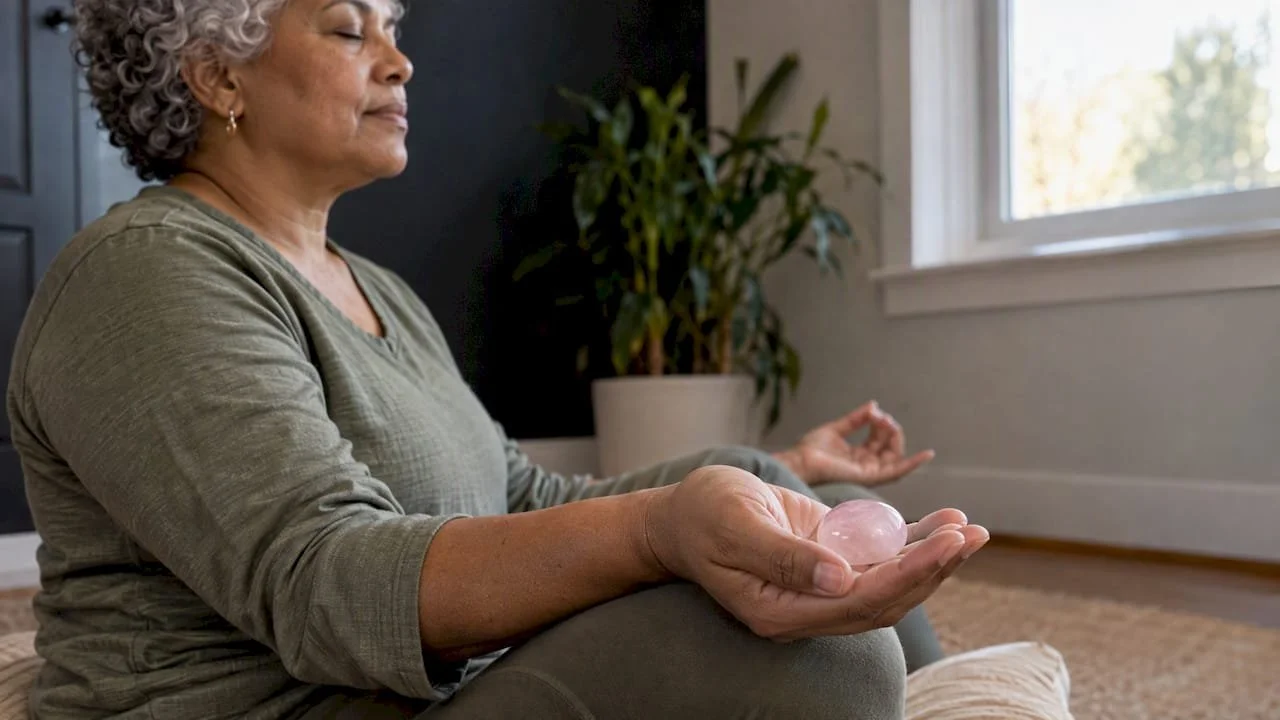
Practical care: keep small stones and crystal chips away from young children, and check a stone's care instructions before it comes near water or oils.
8. Aromatherapy and candles
Scent anchors a ritual. Many people light a candle or use a diffuser at the start of a chakra session so that the smell becomes a cue for slowing down. If you use essential oils on skin, follow the label directions, dilute as the product instructs, and patch test first. Skip scent entirely if you are pregnant, have asthma or have skin conditions until you have asked your provider.
Sound and vibration-based approaches belong to the same family of calming rituals. If you're curious, you can read about vibroacoustic therapy benefits and the clinical research behind them, which also shows how clearly such sessions are separated from medical care.
9. Mindful movement and journaling
Slow walking, tai chi, or a few lines of journaling after a meditation can complete the loop. Ask simple questions: where did I feel tension, which center felt quiet, what emotion came up? This turns an abstract system into something personal and observable. Our posts on mindfulness exercises offer prompts you can borrow.
Is there a right order?
No. Although many guides move from root to crown, there is no fixed ascending order. Practitioners sense which centers feel off and let that guide the sequence.
Here is how a beginner can decide:
Feeling unsettled, anxious about money or home? Begin with the root and standing practices.
Feeling closed off or lonely? Spend extra time at the heart, with gentle backbends and a heart-centered affirmation.
Mind racing? Begin with the third eye and breathwork.
No idea? Run the full sequence once and notice which center held your attention or felt blank.
A 25-minute beginner routine
A beginner-friendly format is a 20 to 25 minute root-to-crown meditation, about three minutes at each chakra. Here is one way to structure it.
Arrive (2 minutes). Sit or lie down. Breathe slowly.
Seven centers (about 21 minutes). At each one, bring your attention to the area, picture its color, silently repeat its bija sound or an affirmation, and breathe.
Close (2 minutes). Rest with your eyes closed, then write one line about what you noticed.
Do it three or four times a week for a few weeks. After that, shorten it by choosing the one or two centers that need attention most.
What chakra work can and cannot do
This is the part many lists skip. Chakra balancing is a contemplative practice. It is not a diagnosis and not a treatment.
If you have chronic pain or another health problem, the National Center for Complementary and Integrative Health advises against using an unproven practice to postpone seeing a health care provider. Tell your providers about the complementary approaches you use.
Mind and body practices such as meditation and yoga are generally considered safe for healthy people when done properly under qualified instruction, but they are not risk-free for everyone.
Relaxation techniques can, rarely, worsen symptoms in people with epilepsy, certain psychiatric conditions, or a history of abuse or trauma. If that applies to you or your child, speak with your doctor or mental health professional before starting, and choose a teacher who works in a trauma-aware way.
Some of the better evidence relates to the broader practice rather than the chakra framework. In people with hypertension, yoga three times a week with breathing and meditation or relaxation lowered blood pressure by 11/6 mm Hg compared with interventions without those components. That is a result about yoga practice, not proof that any chakra is being balanced. If you take blood pressure medication, keep taking it and talk with your doctor.
If stress, low mood or anxiety are heavy, a licensed therapist or physician is the right first call. Chakra practices can sit alongside that care.
Our perspective on chakra balancing
We teach chakra work as a way into the body, not as a promise. At our Philadelphia studio, we have seen that people rarely arrive asking about energy centers. They arrive tired, tense or curious. A color to picture, a sound to repeat or a pose to hold gives the mind a task, and that is often what makes stillness reachable for the first time.
We also believe these practices land better in a room with a teacher and other people. A teacher can adapt a pose, pace a breathing exercise, and tell you when to ease off. Our approach is built around inclusivity, beginner approachability and community, so you don't need to know any Sanskrit to take part. If you can sit, breathe and notice, you are ready.
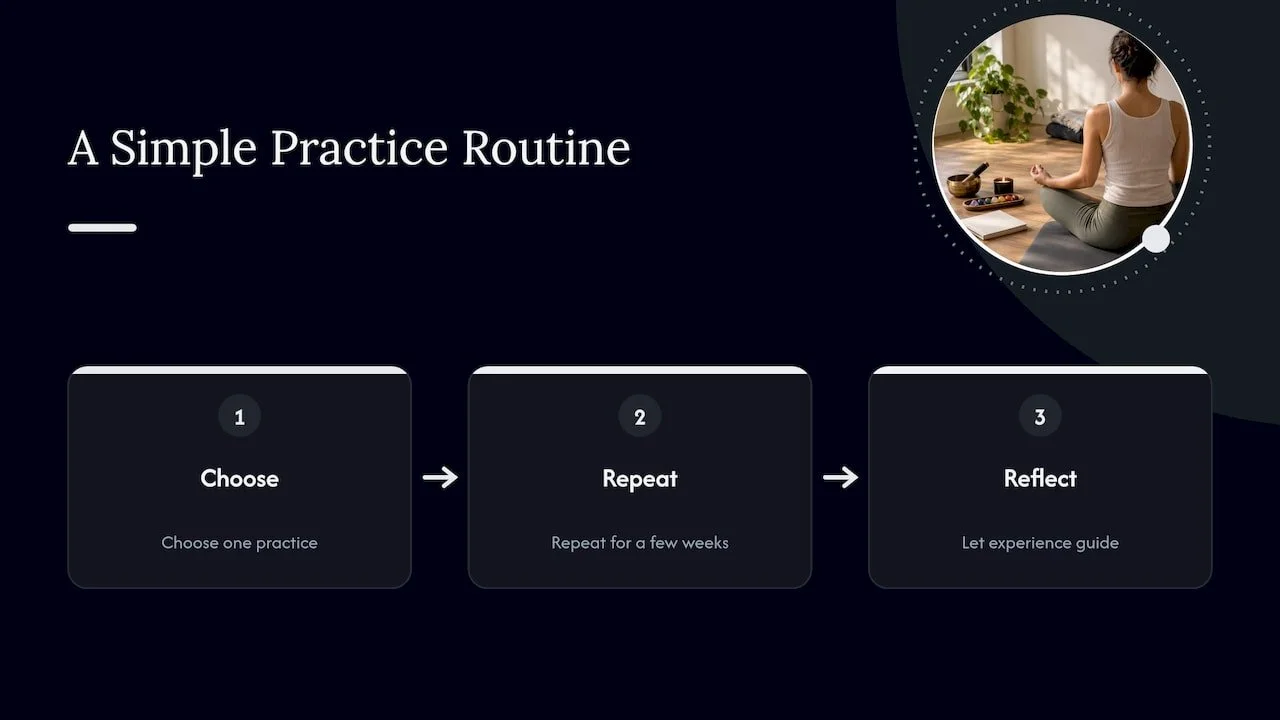
Our advice is simple: choose one practice, repeat it for a few weeks, and let your own experience, not a list, tell you what helps.
— Juiced
Practice chakra work with us in Philadelphia
If you'd rather learn these practices with guidance, we offer in-person yoga classes for beginners through advanced students, breathwork and meditation workshops, and private sessions. Our class descriptions explain each style, and the class schedule shows what is on.
Published prices on our class and membership page include a $28 group class drop-in, a $19 livestream class drop-in, an $11 community class drop-in and a $35 Nurtured Beginnings pass. Monthly options include unlimited group classes at $169 per month and a $25 per month on-demand membership. For personal attention, one-to-one sessions start from $85 per hour.
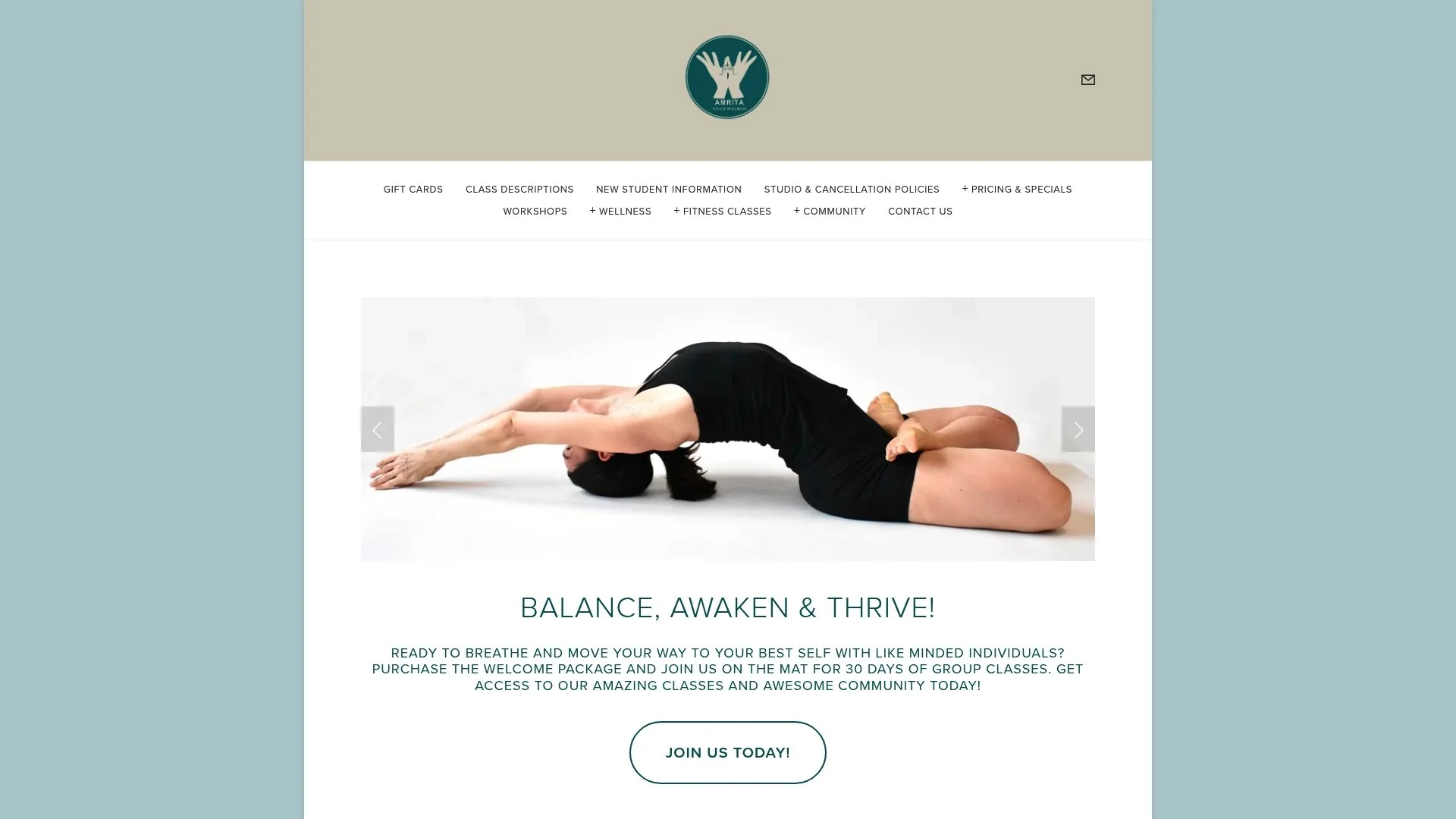
Bring a mat, an open mind and your questions.
FAQ
What is the best chakra balancing practice for beginners?
Meditation with color visualization is the simplest start. Sit quietly, bring attention to one area of the body at a time, and picture its color. A root-to-crown meditation of 20 to 25 minutes with about three minutes per chakra is a common beginner format.
Do I have to balance the chakras in order?
No. There is no fixed ascending order. Many people start with the root because it feels like a foundation, but you can begin with whichever center feels most off.
Can yoga balance the chakras?
In yogic tradition, particular poses are associated with particular chakras, such as standing poses with the root and gentle backbends with the heart. Whatever you believe about energy centers, yoga combined with breathing and meditation is a well-studied way to relax and build body awareness.
Are chakras scientifically proven?
No. Cleveland Clinic states that Western science does not recognize chakras, though they can serve as a useful metaphor for balance and wellness. Treat the practices as wellness rituals and see a health care provider for medical concerns.
Do I need crystals or oils?
No. Crystals, candles and oils are optional aids. Meditation, breath and movement cost nothing and are enough to begin. If you do use oils, follow the label and patch test first.