Holistic stress relief means caring for your mind and your body together: breathing and mindfulness practices, regular movement, enough sleep, good food and real connection with other people. No single technique does everything. The approach that works is a small combination you can repeat, chosen for the kind of stress you carry. This guide walks through the techniques with the strongest backing, shows how to practice them, and explains how to turn them into a routine.
Amritayogawellness
Make Space for a Calmer Week
Amrita Yoga & Wellness offers yoga and other wellness practices in Philadelphia, with classes for beginners and experienced practitioners.
TL;DR
Pair mind practices (meditation, breathing, gratitude) with body habits (7 or more hours of sleep, movement, healthy eating), as CDC guidance describes.
Mindfulness, yoga, progressive muscle relaxation and diaphragmatic breathing are the techniques with the most research behind them for stress and anxiety.
Start small: five minutes of breathing or one class a week beats an ambitious plan you drop in ten days.
Relaxation practices are generally safe for healthy people, but talk to a provider first if you have epilepsy, a psychiatric condition or a history of trauma, and seek help if stress will not ease.
What "holistic" stress relief actually means
The word gets used loosely, so here is a working definition. A holistic approach treats stress as something that shows up in your thoughts, your muscles, your sleep and your relationships at once, so the response reaches all of those places.
The CDC frames it the same way. Its guidance on managing stress pairs mind-care practices, such as meditation, gratitude and connecting with others, with healthy habits for the body, including sleep, physical activity and healthy eating (CDC, Managing Stress).
Stanford Lifestyle Medicine adds a useful reframe: the goal is not to eliminate stress but to learn to move through it skillfully. It encourages choosing supportive behaviors that fit the moment and your own needs, including sensory connections that ground you in the present, rather than following one fixed prescription (Stanford Lifestyle Medicine).
That is good news if you have tried to "fix" stress before and felt like you failed. You are not looking for the perfect method. You are building a short menu you can pull from on a hard Tuesday.
The techniques with the most evidence
The National Center for Complementary and Integrative Health (NCCIH) discusses mindfulness meditation, yoga, progressive muscle relaxation and diaphragmatic breathing among the approaches studied for stress. Studies report effects on stress, anxiety, blood pressure, cortisol or sleep for some of them (NCCIH, Stress).
Here is how the main options compare at a glance.
| Technique | What it is | Time to try it | Best for |
|---|---|---|---|
| Mindfulness meditation | Paying attention to the present moment without judging it | 5 to 20 minutes | Racing thoughts, worry, general daily stress |
| Diaphragmatic breathing | Slow belly breaths that engage the diaphragm | 2 to 5 minutes | In-the-moment tension, winding down before sleep |
| Progressive muscle relaxation | Tensing and releasing muscle groups in sequence | 10 to 15 minutes | Physical tension, trouble falling asleep |
| Yoga | Postures, breath and attention together | 30 to 75 minutes | Tight bodies, restless minds, building a habit |
| Guided imagery | Picturing a calming scene in detail | 5 to 15 minutes | Reset breaks, preparing for a stressful event |
| Journaling and gratitude | Writing down worries and what went well | 5 minutes | Clearing the mind, shifting perspective |
Mindfulness meditation
A systematic review and meta-analysis of 1,641 participants found that mindfulness-based interventions were associated with significantly lower perceived stress in non-clinical adults after the program ended. The authors conclude these programs are both effective and scalable for stress management in people without a clinical diagnosis (2026 systematic review in PMC).
If you are new to it, you do not need a cushion or a silent room. Sit comfortably, follow your breath, and each time your mind wanders, notice it and come back. That return is the practice. Our own guides on mindfulness activities for stress relief and clarity and everyday examples of mindfulness practices give you concrete exercises to start with. If you are not sure which style suits you, seven types of meditation compares them.
Breathing exercises
Relaxation techniques such as deep breathing, guided imagery, progressive relaxation, autogenic training, biofeedback and self-hypnosis can bring on the relaxation response, which slows the heart rate, lowers blood pressure and decreases oxygen consumption (NCCIH). Breathing is the easiest door into that response because you can use it anywhere.
A simple way to practice diaphragmatic breathing:
Sit or lie down with one hand on your chest and one on your belly.
Breathe in slowly through your nose so the belly hand rises more than the chest hand.
Breathe out slowly through your mouth or nose, a little longer than the inhale.
Continue for two to five minutes, letting your shoulders drop on each exhale.
Pair the breath with something pleasant to focus on, such as a calm image or a quiet word. NCCIH describes relaxation techniques as combining breathing with focused attention on pleasing thoughts and images.
Progressive muscle relaxation
This one suits people who feel stress as a clenched jaw or a tight back. You work from your feet to your face: tense a muscle group for a few seconds, then release it fully and notice the difference. NCCIH reports on a 2015 review of two studies with 275 adults over 60 that found progressive muscle relaxation promising for anxiety and depression, with the depression benefits maintained at 14 weeks (NCCIH digest). That is a small body of research, so treat it as encouraging rather than conclusive. It costs nothing and is easy to try tonight.
Yoga
Yoga puts breath, movement and attention in one session, which is why many people find it easier to stick with than seated meditation alone. A review of mind-body interventions for anxiety disorders found the highest-quality data for yoga, mindfulness-based interventions and applied relaxation (review in PMC).
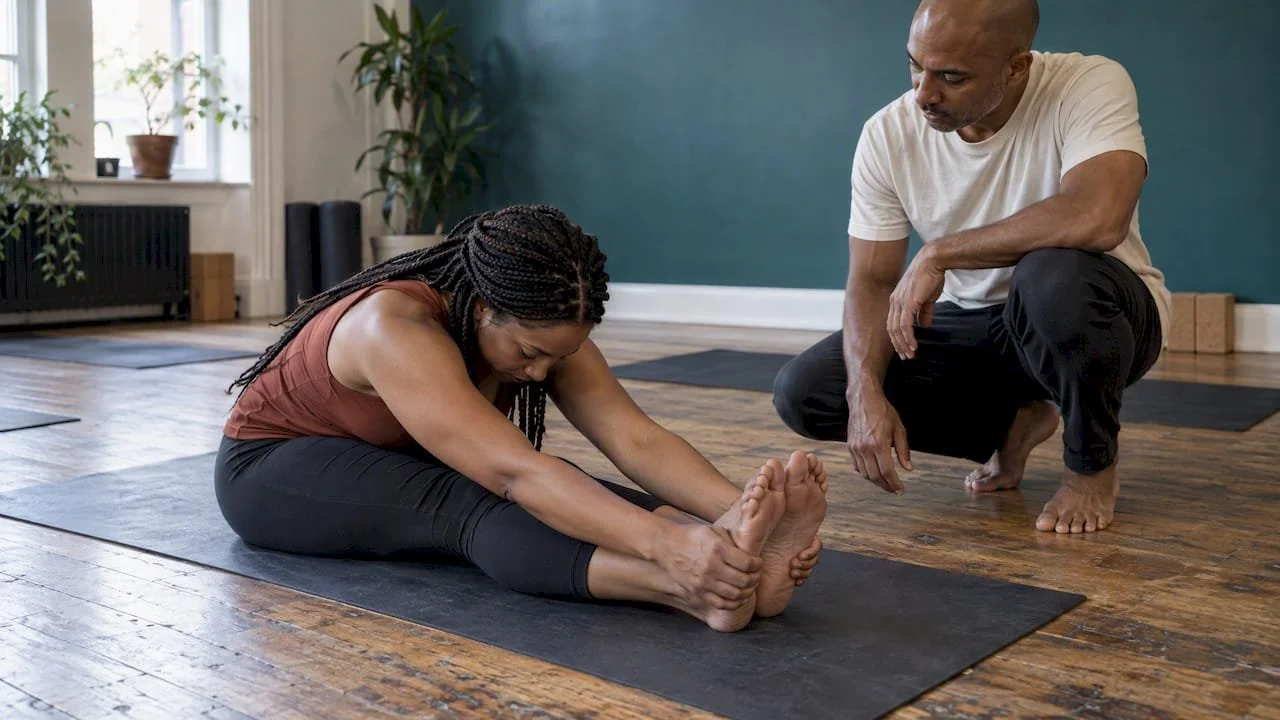
NCCIH advises practicing yoga properly under a qualified instructor, which matters most if you are new, stiff or returning from an injury. Look for a teacher who offers options for different bodies and explains the cues clearly. Gentler formats exist too: our chair yoga sequence is one way to start if getting down to the floor is a barrier.
Everyday habits that carry the load
Breathing and meditation work better when the basics underneath them are in place. The CDC lists getting 7 or more hours of sleep, regular physical activity, healthy eating, and limiting alcohol and tobacco as everyday supports (CDC). It also suggests:
Taking breaks from news and social media
Keeping a journal
Practicing gratitude daily
Connecting with trusted people, or with community or faith-based organizations
None of that is glamorous, and all of it counts. Stress also tends to show up physically, from poor sleep to tension headaches to changes in your skin. If you are curious about the skin side, this piece on stress and skin breakouts in men looks at how daily habits and stress connect to it.
Movement that calms rather than depletes
When you are already running on empty, a punishing workout can feel like one more demand. Pick movement that leaves you feeling steadier afterward: a walk, yoga, a mat Pilates class, tai chi or an easy swim. The CDC recommends regular physical activity as part of managing stress, and the style matters less than whether you will show up again next week.
Connection counts as a technique
It is easy to file community under "nice extras," but the CDC explicitly names connecting with trusted people as a stress-management step. A class where the same faces appear every week is a low-pressure way to get it. You get movement, a shared pace and a few friendly hellos without having to organize anything.
Build a routine you can keep
The CDC's advice for putting it together is modest: find the right combination of healthy techniques for you, and take small steps in daily life, such as practicing gratitude or connecting with others. Stanford's point about fitting behaviors to the moment helps here. Different days call for different tools.
Here is one way to structure a week without overwhelming it.
A sample week
| When | Practice | Time |
|---|---|---|
| Every morning | Three slow breaths before checking your phone | 1 minute |
| Weekdays | Short mindfulness or breathing break at lunch | 5 minutes |
| Two or three evenings | Progressive muscle relaxation or journaling before bed | 10 minutes |
| Once or twice a week | A yoga, Pilates or tai chi class | 45 to 75 minutes |
| Weekend | A walk, time with a friend, a break from news | Open |
| Every night | Protect a window for 7 or more hours of sleep | All night |
Matching the tool to the moment
Overwhelmed in the middle of a workday: two minutes of diaphragmatic breathing at your desk.
Wired but tired at night: progressive muscle relaxation or a guided imagery recording.
Looping worries: write them down, then do a short mindfulness practice.
Flat and isolated: go to a class, call someone you trust, or take a walk with a neighbor.
Stiff after a long week: a slow yoga class or a chair-based sequence.
Start with one change for two weeks. Add a second only when the first feels automatic. A routine of three small habits you keep beats ten you abandon.
Perspective
We teach and see this every day in Philadelphia: people rarely arrive because they want a new hobby. They arrive because their shoulders are up around their ears and they want a place where it is okay to slow down.
That is why we build our classes around approachability. Beginners are welcome, options are offered at every level, and the detailed guidance is there so you feel safe in your body while you learn. We think the most effective stress practice is the one that feels welcoming enough that you come back.
We also believe the studio itself is part of the technique. Breath, movement, and a room full of people moving at a shared pace do something that a phone app alone rarely does. Our range, from yoga and mat Pilates to tai chi, massage therapy and breathwork workshops, exists so you can find the form of care that fits this season of your life, and change it when the season changes.
Juiced
Try it in the studio
If you would rather learn these practices with a teacher than from a page, we offer in-person classes in Philadelphia across yoga (including hot yoga and aerial yoga), mat and group reformer Pilates, barre and tai chi, along with breathwork workshops. Our current schedule is on the class and monthly experience page.
A few ways to begin, at the prices published on our drop-in and membership page:
Community Class Drop In: $11 per session, a low-stakes way to try a class.
Group Class Drop In: $28 per session.
Nurtured Beginnings: $35 per pass, designed for people new to the studio.
Monthly memberships: from $119 per month (Earth) up to $149 (Air), or $169 for one month of unlimited group classes.
Livestream Class Membership: $49 per month, and an On Demand Membership at $25 per month, if you want to practice from home.
For one-on-one attention, a private session starts from $85 per hour. If you prefer bodywork, our Ayurvedic therapies include Shirodhara at $90 per session and Abhyanga at $120. First time with us? Check the new student specials before you book.
Safety and when to get more support
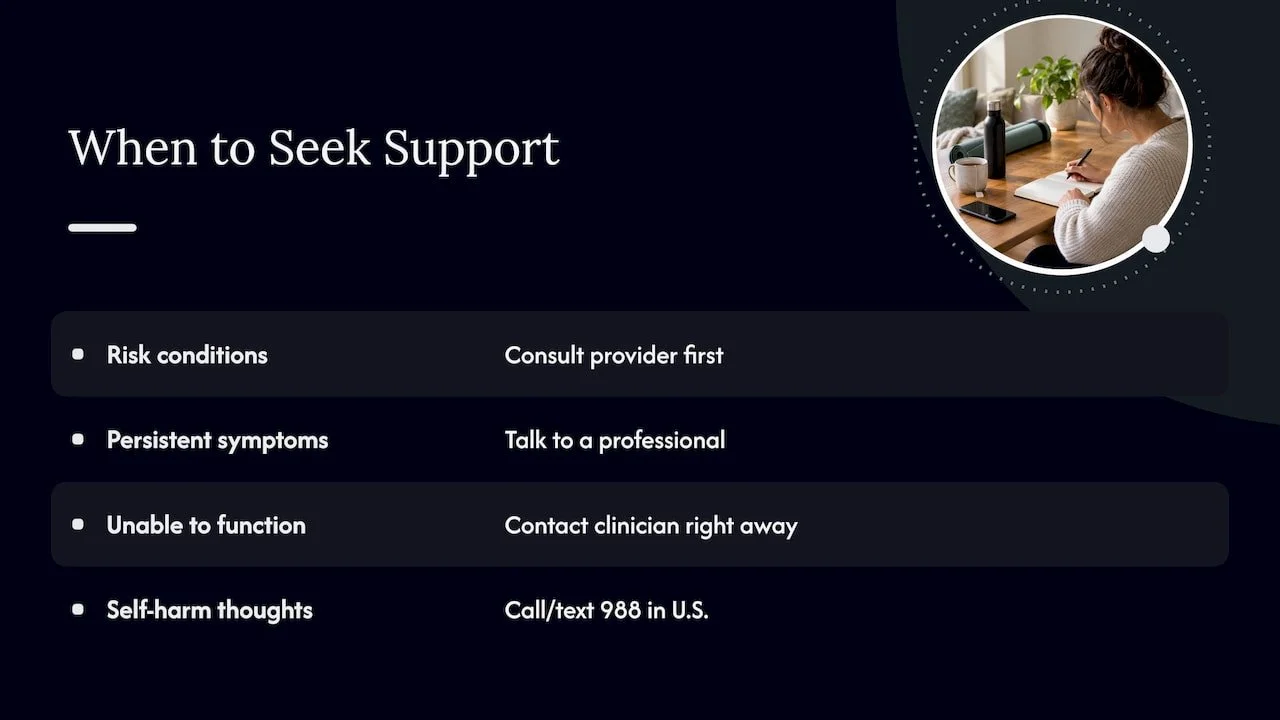
Relaxation techniques are generally considered safe for healthy people. NCCIH advises that people with epilepsy, certain psychiatric conditions or a history of abuse or trauma should consult a health care provider first, because these practices can occasionally trigger negative effects (NCCIH, Relaxation Techniques). In a class, tell the teacher about injuries or health conditions beforehand, and remember that you can always skip a breath practice, open your eyes or rest.
There is also a line between everyday stress and something that needs clinical care. NCCIH advises talking to a professional if symptoms persist or you struggle to cope (NCCIH, Stress). If you feel unable to function, or you are thinking about harming yourself, contact a doctor or a mental health professional right away, or call or text 988, the Suicide & Crisis Lifeline, in the United States.
The World Health Organization conditionally recommends relaxation and mindfulness training for adults with generalized anxiety disorder or panic disorder, while noting the certainty of the evidence is low (WHO). The anxiety-disorders review describes mind-body practices as relatively low-risk options that can sit within a larger treatment plan alongside care from a clinician (PMC review). NCCIH encourages you to make shared decisions with your health care providers when you add any complementary approach to a treatment plan. That means a conversation with your doctor or therapist, not a replacement for one.
Making it stick
Most people do not fail at stress relief because the techniques are weak. They fail because the plan is too big, too rigid or too lonely. A few practical ways around that:
Anchor it to something you already do. Breathe while the coffee brews. Stretch after brushing your teeth.
Lower the bar on bad days. One minute still counts.
Put it on the calendar. A class you have booked is a class you are far more likely to attend.
Go with someone. A friend or coworker doubles the odds you show up.
Track how you feel, not how well you did. A line in a journal about your mood and sleep is enough to show whether the routine is helping.
If your workplace wants to support its people, we also run corporate wellness programs in Philadelphia.
FAQ
What is the fastest holistic way to calm down when stressed?
Slow diaphragmatic breathing is the quickest option because you can do it anywhere in two to five minutes. Breathe in through the nose so your belly rises, then exhale slowly. Techniques like this are described by NCCIH as ways to bring on the relaxation response, which slows the heart rate and lowers blood pressure.
Does yoga really help with stress?
Yoga is one of the practices with the best-quality data in a review of mind-body interventions for anxiety disorders, and NCCIH discusses it among the approaches studied for stress. Results vary from person to person. NCCIH advises practicing under a qualified instructor, especially if you are new or have an injury.
How long does it take to feel less stressed with these techniques?
Some practices, like deep breathing, can feel calming within minutes. Lasting change comes from repetition: the mindfulness research measured effects after multi-session programs, not a single try. Give any new routine a few weeks, and keep the plan small enough to continue.
Are holistic techniques a substitute for therapy or medication?
No. Mind-body practices are low-risk options that can be part of a larger plan, and they are not primary treatments for anxiety disorders. If stress symptoms persist or you struggle to cope, talk to a doctor or mental health professional, and tell them about any practices you are using.
I have never done yoga or meditation. Where do I start?
Begin with two minutes of breathing a day and one beginner-friendly class a week. In our studio, a Community Class Drop In at $11 or the Nurtured Beginnings pass at $35 gives you a gentle way in, and teachers can offer options for your level.
Sources
Mind-Body Interventions for Anxiety Disorders: A Review, PMC
Effects of mindfulness-based interventions on perceived stress, PMC