Different Types of Meditation Practices: 2026 Guide
TL;DR:
Meditation improves focus, reduces stress, and builds emotional resilience through various practices that suit specific goals. Different styles like mindfulness, loving-kindness, and yoga nidra target distinct benefits and are best chosen based on desired outcomes. Consistent practice, starting with brief sessions, and using tools like guided apps help maintain a sustainable meditation routine.
Meditation is a deliberate mental training practice that sharpens focus, reduces stress, and builds emotional resilience. The different types of meditation practices available today range from silent breath awareness to movement-based styles like mindful walking and yoga nidra, each serving a distinct purpose. A 2026 research framework organizes these techniques into five clusters: physical, emotional, psychological, spiritual, and mixed. That taxonomy matters because it confirms what experienced practitioners already know. Your goal determines your method. Whether you want better sleep, less anxiety, or sharper concentration, there is a meditation style built for that outcome.
Different types of meditation practices explained
The eight styles below cover the most widely practiced and research-supported meditation techniques available. Each one has a distinct focus, format, and primary benefit.
1. Mindfulness meditation
Mindfulness meditation is the practice of observing thoughts, feelings, and sensations without judging them. You sit quietly, notice what arises in your mind, and let it pass without reacting. This style forms the foundation of Mindfulness-Based Stress Reduction (MBSR), a clinical program developed by Jon Kabat-Zinn at the University of Massachusetts Medical School. It is the most studied meditation technique in Western clinical research. Beginners find it accessible because it requires no special equipment or belief system.
Key features:
Practiced seated, eyes closed or softly open
Focus shifts between breath, body, and thoughts
Sessions range from 5 to 45 minutes
2. Breath awareness meditation
Breath awareness is the simplest entry point into meditation. You place all attention on the physical sensation of breathing: the rise of the chest, the pause between inhale and exhale, the cool air entering the nostrils. Five minutes of daily breath awareness builds the foundational concentration skill that all other meditation styles require. This technique has the strongest clinical support for reducing anxiety alongside body scan meditation.
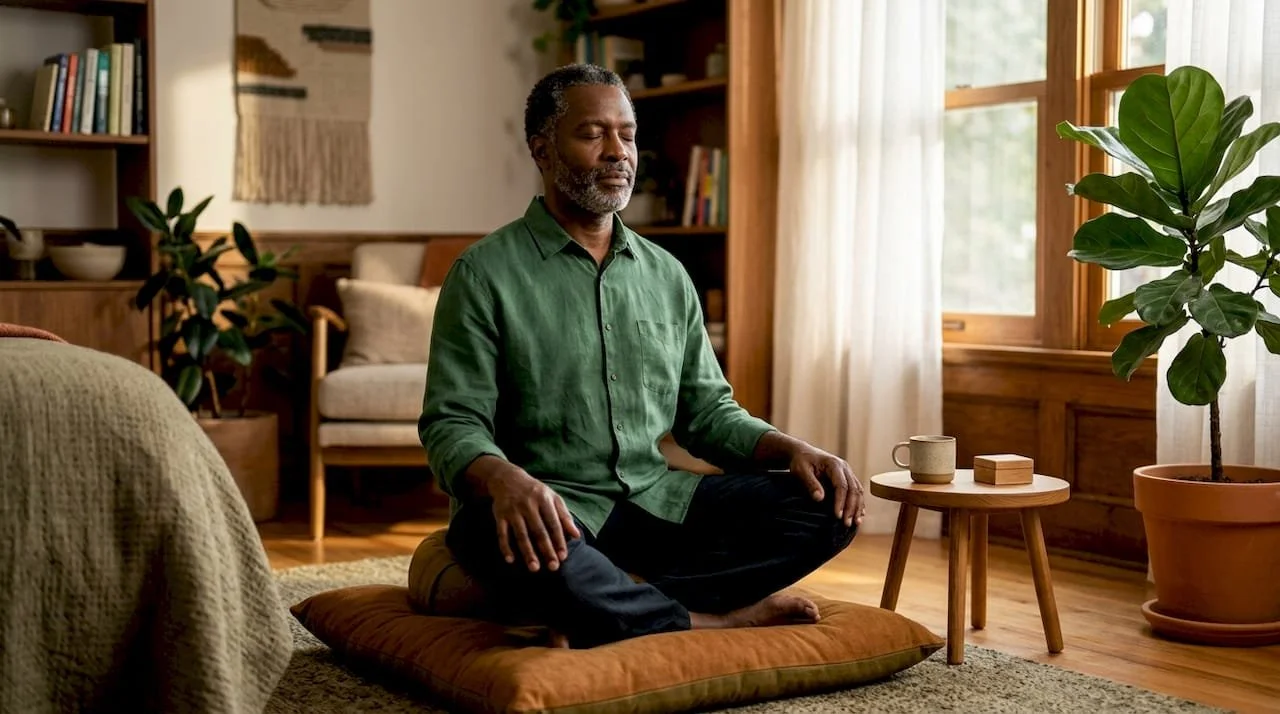
Pro Tip: Set a phone timer for five minutes each morning before checking any screen. Breath awareness practiced first thing anchors your attention before the day's demands take over.
3. Loving-kindness meditation (Metta)
Loving-kindness meditation, known in Pali as Metta, trains the mind to generate warmth and goodwill toward yourself and others. You silently repeat phrases like "May I be happy. May I be safe. May I be healthy." Then you extend those wishes outward to friends, strangers, and even people you find difficult. Loving-kindness meditation is the most effective style for emotional regulation and reducing self-criticism. Therapists frequently recommend it for people working through shame or social anxiety.
4. Body scan meditation
Body scan meditation directs attention systematically through each part of the body, from the toes to the crown of the head. The goal is to notice physical sensations without trying to change them. This practice is a core component of MBSR and is widely used in clinical settings for chronic pain and insomnia. It works well as a wind-down practice before sleep. Many people find it easier than breath-focused styles because the moving attention point keeps the mind occupied.
5. Mantra meditation
Mantra meditation uses a repeated word or phrase as the anchor for attention. Transcendental Meditation (TM), developed by Maharishi Mahesh Yogi, is the most recognized form. In TM, a teacher assigns a personal Sanskrit mantra, and the practitioner repeats it silently for 20 minutes twice daily. You can also practice mantra meditation with simple words like "peace" or "calm" without formal instruction. The repetition crowds out distracting thoughts and creates a steady mental rhythm. Explore mantra meditation methods for deeper guidance on choosing and using a personal mantra.
6. Walking meditation
Walking meditation turns movement into a mindfulness practice. You walk slowly and deliberately, placing full attention on each step: the lift of the foot, the shift of weight, the contact with the ground. This style suits people who find sitting still frustrating or physically uncomfortable. Zen Buddhist traditions formalized walking meditation, called kinhin, as a complement to seated zazen practice. Zazen meditation benefits include improved posture awareness and a calm, alert mental state that transfers well into daily activity.
7. Yoga nidra
Yoga nidra, sometimes called "yogic sleep," is a guided practice that leads you through progressive relaxation into a state between waking and sleep. You lie down for the entire session, typically 20 to 45 minutes, while a teacher or recording guides your awareness through the body, breath, and visualization. Research links yoga nidra to reduced cortisol levels and improved sleep quality. It is one of the most accessible styles for complete beginners because the only requirement is lying still and listening.
8. Sound meditation
Sound meditation uses auditory input, such as singing bowls, gongs, or binaural beats, as the focal point for awareness. Sound baths, where practitioners lie in a room filled with resonant tones from Tibetan or crystal singing bowls, have grown significantly in popularity across wellness studios in cities like Philadelphia, New York, and Los Angeles. The vibrations give the mind a concrete object to track, which makes it easier to stay present than in silent styles. Sound meditation sits within the physical and mixed clusters of the 2026 meditation typology framework.
Which meditation style fits your goal?
No single meditation styleis universally best. The right practice is the one you will actually do consistently. That said, specific styles do align more directly with specific outcomes. The table below maps common wellness goals to the meditation techniques with the strongest evidence base.
| Goal | Best-fit meditation style | Why it works |
|---|---|---|
| Anxiety relief | Breath awareness, body scan | Strongest clinical support for calming the nervous system |
| Emotional regulation | Loving-kindness (Metta) | Directly trains compassion and reduces self-criticism |
| Better sleep | Yoga nidra, body scan | Activates the parasympathetic nervous system |
| Sharper focus | Mindfulness, mantra | Trains sustained attention through repetition |
| Trauma recovery | Walking meditation, trauma-sensitive yoga | Grounding and structured movement prevent overwhelm |
| Spiritual connection | Mantra, sound meditation | Engages deeper states of awareness and presence |
Trauma-sensitive individuals should choose guided, grounding practices like walking meditation or trauma-sensitive yoga over unstructured silent meditation. Open-awareness styles can surface difficult emotions without enough structure to process them safely. If you are managing a mental health condition, consult a licensed therapist before starting intensive meditation practices. Meditation supports mental well-being but does not replace professional care.
Pro Tip: Treat your meditation practice like a toolkit, not a commitment to one style. On high-stress days, reach for breath awareness. On emotionally heavy days, try loving-kindness. Flexibility keeps the habit alive.
How to start and maintain a meditation practice
Starting small is the most reliable strategy. Beginners should practice 5 to 10 minutes daily rather than attempting long sessions sporadically. Consistency beats duration every time. Ten minutes of daily meditation builds more long-term mental resilience than a 60-minute session once a week.
Follow these steps to build a sustainable habit:
Pick one style and stick with it for two weeks. Jumping between techniques too quickly prevents you from experiencing the cumulative benefits of any single approach.
Choose a fixed time. Morning practice before checking your phone works well for most people. Evening body scans work better for those focused on sleep.
Accept mind-wandering as part of the process. Noticing that your mind has wandered and gently returning your focus is the core exercise. Each return strengthens concentration exactly like a bicep curl builds muscle.
Sample other styles after the first two weeks. Once you have a baseline, experiment with a second style to compare how each one affects your mood and energy.
Build a personal toolkit. Experienced practitioners keep two or three styles available and choose based on daily needs. Calm and Headspace both offer guided sessions across multiple styles, which makes switching easy.
Seek professional guidance when needed. If you have PTSD, severe depression, or another mental health condition, work with a therapist who understands meditation and mental health recovery before starting a solo practice.
Emerging and modern meditation techniques
Movement-based and technology-supported meditation styles are expanding the range of people who can access consistent practice. Mindful walking, tai chi, and yoga all qualify as types of mindfulness meditation when practiced with deliberate attention. They suit people who find seated stillness physically or psychologically difficult.
Digital tools have made guided meditation methods more accessible than ever:
Calm offers sleep stories, breath guides, and body scans for all experience levels.
Headspace structures meditation into courses, making it easier to progress systematically.
Insight Timer provides a free library of thousands of guided sessions across traditions.
Meditation apps and digital tools combine traditional techniques with technological convenience, which supports the consistency that makes meditation effective. The risk is passive consumption. Listening to a guided session every day without ever practicing independently limits skill development. Use apps as a starting point, then gradually add unguided sessions as your confidence grows.
Sound baths and binaural beat recordings represent newer additions to the meditation toolkit. Both use auditory stimulation to guide the brain toward calmer states. Scientific research on binaural beats is still developing, but early studies suggest they can reduce anxiety and improve focus in short sessions.
Key takeaways
The most effective meditation practice is the one you practice consistently, matched to your specific goal and adjusted as your needs change.
| Point | Details |
|---|---|
| Match style to goal | Breath awareness and body scan lead for anxiety; loving-kindness leads for emotional regulation. |
| Start small | Five to ten minutes daily outperforms long, infrequent sessions for building lasting habits. |
| Mind-wandering is normal | Returning focus after distraction is the core skill-building exercise in every meditation style. |
| Trauma requires care | Grounded, guided styles like walking meditation are safer for trauma-sensitive practitioners. |
| Build a toolkit | Keeping two or three styles available lets you match your practice to your daily energy and needs. |
What I have learned from years inside the practice
Most people approach meditation looking for the "right" technique. That search is the first obstacle. The question is not which style is objectively best. The question is which style you will actually return to tomorrow.
I have watched people spend months researching zazen meditation benefits, Transcendental Meditation costs, and the science behind yoga nidra, then never sit down once. The research is useful. But it becomes a way to delay starting. Pick the simplest option available, breath awareness for five minutes, and begin today.
The other thing I have noticed is that progress in meditation does not look like progress in most skills. You do not get faster or stronger in any visible way. What changes is your relationship to discomfort. Difficult thoughts become less urgent. Stressful moments feel shorter. That shift is subtle and takes weeks to notice. Most people quit before they reach it.
Mindfulness is not an activity you do for 10 minutes and then set aside. It is a way of paying attention that gradually reshapes how you move through the day. The formal practice, the sitting or walking or breathing, trains a skill that shows up everywhere else. Treat it with the same patience you would give any skill worth having.
Explore meditation types and practices to keep building on what you start here.
— Juiced
Explore meditation with Amritayogawellness
Amritayogawellness, Philadelphia's yoga and wellness studio, offers guided classes and workshops across a wide range of practices including mindfulness meditation, yoga nidra, tai chi, and movement-based styles. Whether you are picking up meditation for the first time or deepening an existing practice, the studio provides structured support for every level.
The Amritayogawellness community is built around inclusivity and personal growth. Beginners receive the same quality of guidance as advanced practitioners. Visit Amrita Yoga & Wellness to browse current class schedules, workshops, and wellness programs designed to help you build a consistent, meaningful practice.
FAQ
What are the most beginner-friendly meditation techniques?
Breath awareness and body scan meditation are the easiest starting points. Both require no prior experience, no equipment, and as little as five minutes per session.
How long should I meditate each day as a beginner?
Start with 5 to 10 minutes of daily practice. Consistent short sessions build stronger habits and better results than occasional long ones.
What is the difference between mindfulness and other meditation styles?
Mindfulness meditation trains open, nonjudgmental awareness of whatever arises. Other styles, like mantra or loving-kindness, use a specific focal point or intention to direct attention.
Is meditation safe for people with anxiety or trauma?
Most meditation styles are safe, but trauma-sensitive individuals should choose structured, grounded practices like walking meditation or guided yoga nidra. Unstructured silent meditation can surface difficult emotions without enough support to process them.
Can meditation apps replace in-person instruction?
Apps like Calm and Headspace provide strong guided meditation methods for beginners, but in-person instruction offers real-time feedback and community support that apps cannot replicate.