The Amrita Journal
Explore thoughtful stories, practical wellness guidance and inspiring ideas to support your movement, mindfulness and everyday wellbeing at Amrita.
Chair Yoga Poses for Beginners: Build Flexibility Safely
TL;DR:
Chair yoga is an accessible, low-impact practice performed entirely from a seated position or with support, suitable for adults of any age or fitness level. It emphasizes safety by using sturdy, armless, non-wheeled chairs on non-slip surfaces and incorporates breath-paced poses that improve flexibility, balance, and confidence, especially for seniors or individuals with mobility limitations.Practicing short, consistent sessions focusing on foundational poses helps build strength, mobility, and body awareness while reducing fall risk and supporting mental well-being, making chair yoga a complete and inclusive approach to wellness.
Chair yoga is defined as a modified form of traditional yoga practiced entirely from a seated position or with a chair for support, making it one of the most accessible entry points into yoga for adults of any age or fitness level. If you have limited mobility, joint pain, or simply no prior yoga experience, chair yoga poses for beginners give you a structured, low-impact way to improve flexibility, circulation, and stress levels without getting down on the floor. You need nothing more than a sturdy chair and a few feet of open space. The practice draws from foundational yoga traditions while removing the physical barriers that keep many people from starting.
What do you need to safely start chair yoga at home?
The single most important factor in chair yoga is your chair. Yoga therapist Michelle A. Thielen recommends using a sturdy, armless chair placed on a non-slip surface as the baseline safety requirement for any beginner. That means no office chairs with wheels, no recliners, and no chairs with wobbly legs. Instability in the chair translates directly into instability in your body, and that is where injuries happen.
Once you have the right chair, your seated position matters just as much as the poses themselves. The New York Times 2026 beginner guide recommends sitting centered with knees bent at approximately 90 degrees and feet hip-width apart on the floor. This alignment keeps your spine neutral and your weight evenly distributed, which is the foundation every pose builds on.
Here is what to check before your first session:
Chair: Armless, four-legged, non-wheeled, placed on a non-slip mat or rug
Seating position: Hips at or slightly above knee height, feet flat on the floor
Props: A yoga block or folded blanket under your feet if they do not reach the floor; a cushion under your hips if the seat is too low
Clothing: Comfortable, non-restrictive clothing and non-slip shoes or bare feet
Space: Enough room on all four sides to extend your arms fully without hitting furniture
Session length: Start with 10 to 20 minutes per session, three times per week, and build from there
Pro Tip: If your feet dangle above the floor, place a yoga block or a thick book under them. Unsupported feet cause your pelvis to tilt backward, which collapses your lower spine and makes every twist and fold harder and less safe.
Which chair yoga poses are best for beginners?
Yoga therapist Michelle Thielen's five foundational poses for beginners cover the major movement patterns your body needs: neutral sitting, spinal flexion and extension, forward folding, rotation, and relaxation. Work through them in this order, which sequences the practice like a ladder from simple to more complex and back to rest.
Easy pose (Sukhasana in the chair). Sit toward the front half of the seat with your spine tall, hands resting on your thighs, and feet flat on the floor. Close your eyes and take five slow breath cycles. This pose establishes your baseline posture and trains your body to recognize what neutral alignment feels like before any movement begins.
Seated cat-cow stretch. Place both hands on your knees. On an inhale, arch your lower back and lift your chest (cow). On an exhale, round your spine and drop your chin toward your chest (cat). Move through five full breath cycles at a pace that matches your breathing. This is the most effective warm-up for the entire spine and is particularly useful for anyone with morning stiffness.
Seated forward fold. From your tall seated base, hinge forward at the hips and let your torso drape toward your thighs. Let your hands rest on your shins or the floor. Hold for five breath cycles, then slowly roll back up one vertebra at a time. This pose stretches the hamstrings, lower back, and neck without any floor contact.
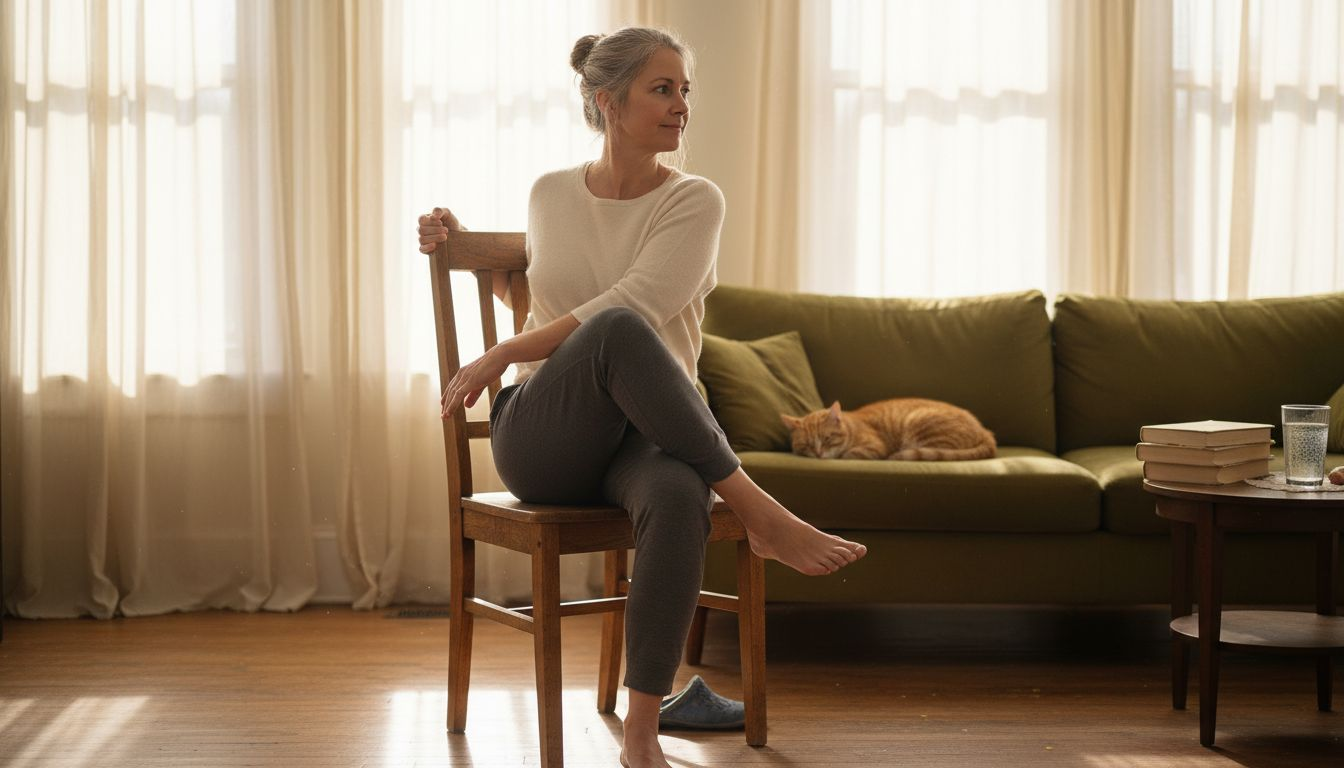
Seated spinal twist. Sit tall and place your right hand on your left knee and your left hand on the back of the chair seat. On an inhale, lengthen your spine. On an exhale, rotate gently to the left. Hold for three to five breaths, then repeat on the other side. Twists improve spinal mobility and support digestion. If your feet do not reach the floor, use a block under them to keep your pelvis level before rotating.
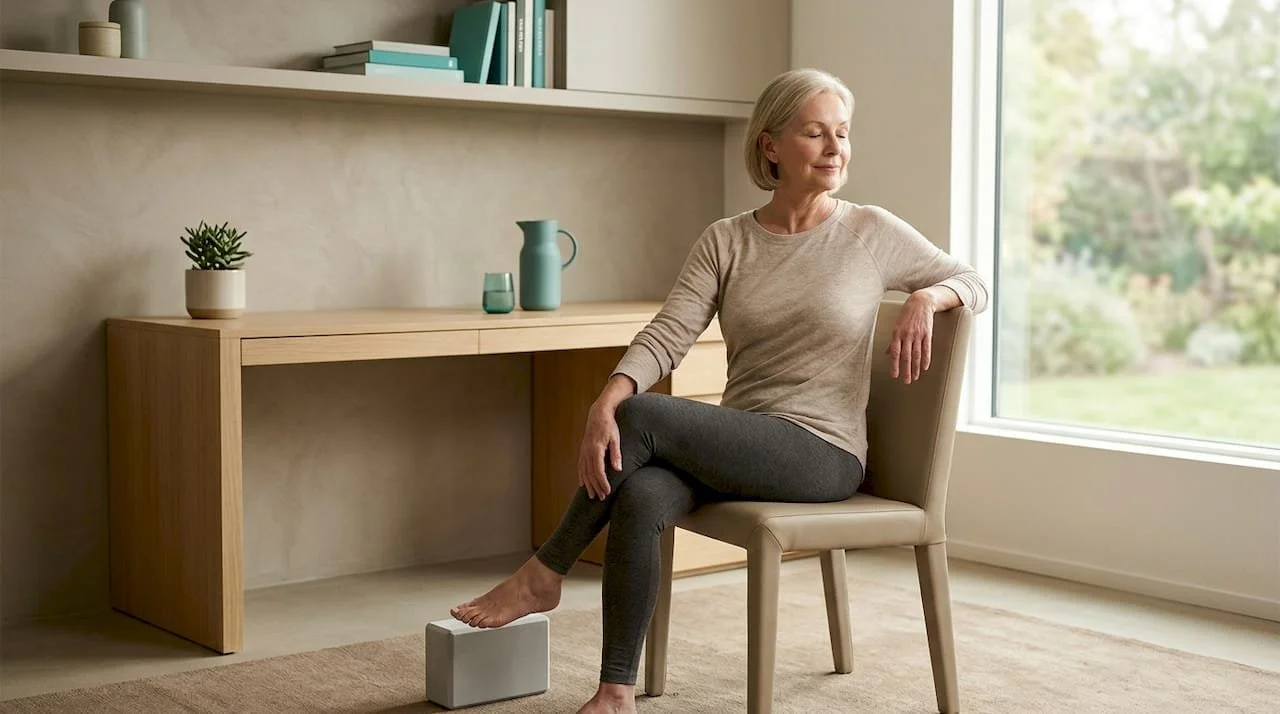
Chair pigeon pose. Cross your right ankle over your left knee, keeping your right foot flexed to protect the knee joint. Sit tall and, if comfortable, gently hinge forward at the hips. Hold for five breaths, then switch sides. This pose targets the outer hip and glutes, which are chronically tight in people who sit for long periods.
Seated eagle arms. Extend both arms forward at shoulder height, then cross your right arm under your left and either press the backs of your hands together or wrap your forearms so your palms meet. Lift your elbows slightly and hold for five breaths. This stretch opens the upper back and shoulders, areas that carry significant tension for most adults.
Seated savasana. Finish every session by sitting back fully in the chair, closing your eyes, and resting your hands in your lap. Breathe naturally for one to two minutes. This is not optional. Savasana allows your nervous system to absorb the benefits of the practice and signals a clear end to the session.
Pro Tip: Use breath counting as your pacing tool throughout every pose. Yoga therapist Michelle Thielen calls it a "form cheat code." Counting five breath cycles tells you exactly how long to hold without watching a clock, and it keeps your attention on breathing rather than discomfort.
How to build a beginner chair yoga routine and avoid common mistakes
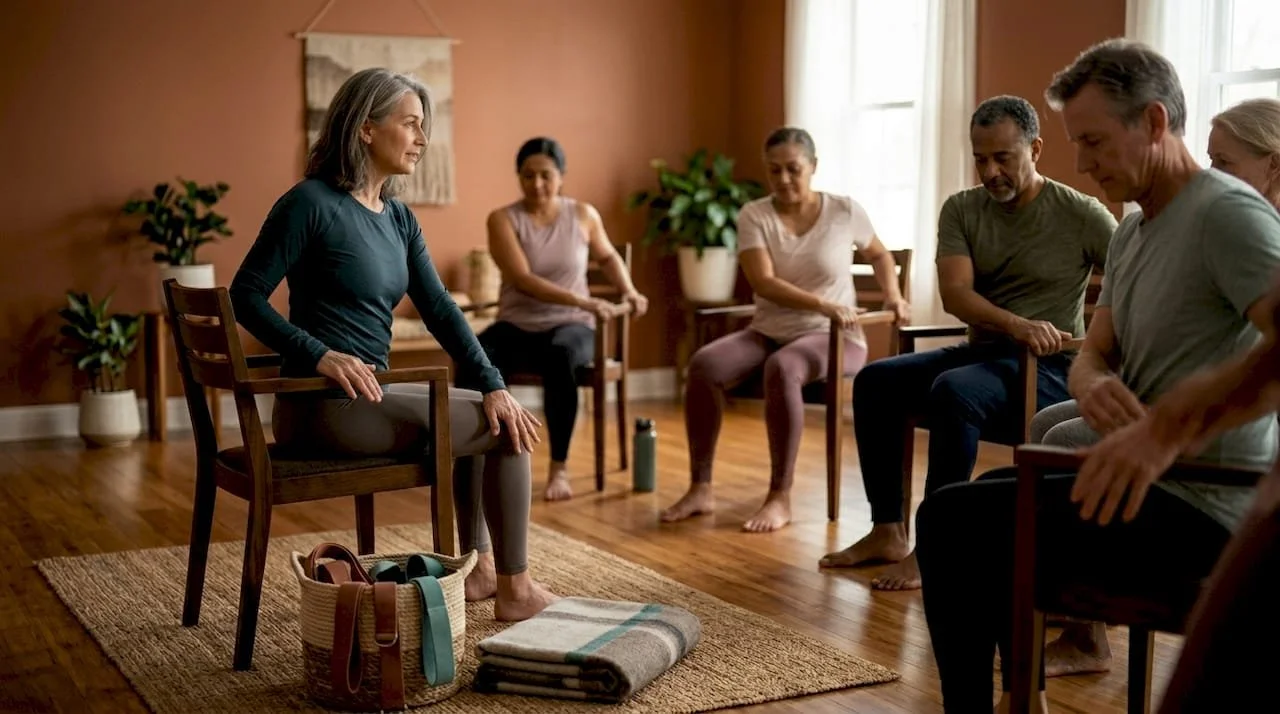
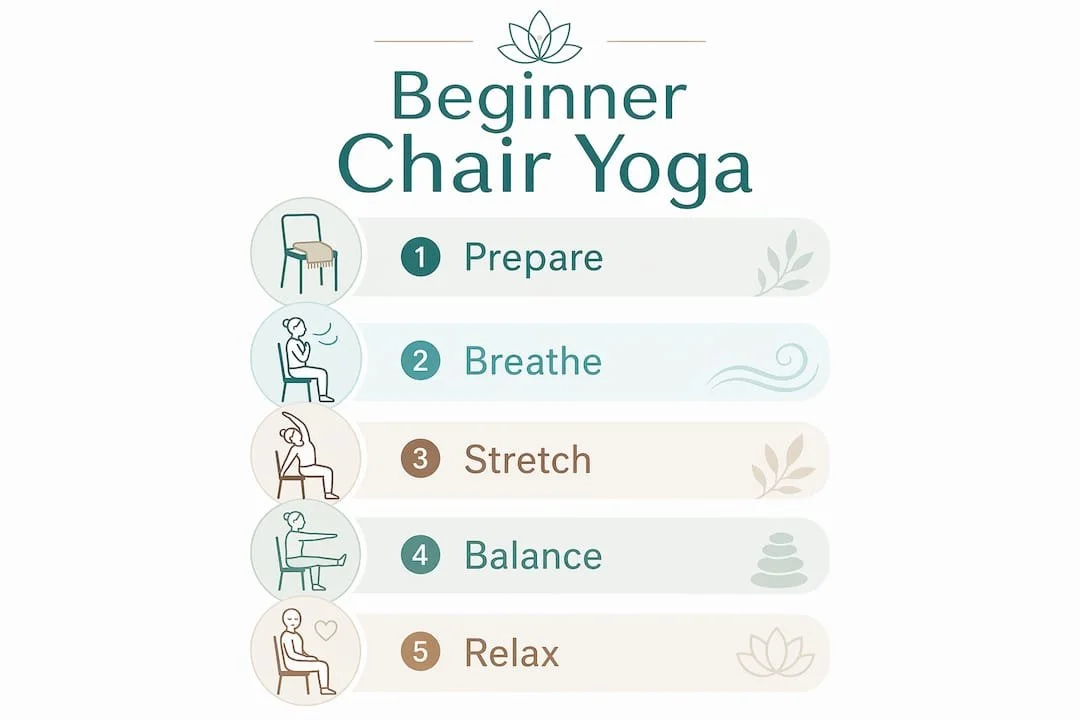
A beginner chair yoga routine works best at 10 to 20 minutes per session, practiced three times per week. That frequency is enough to build noticeable flexibility gains within four to six weeks without overtaxing joints or muscles that are new to movement. Short, consistent sessions outperform long, infrequent ones every time.
Structure each session in three phases: a two-minute warm-up using easy pose and cat-cow, a ten to fifteen minute movement block using the poses above, and a one to two minute seated savasana at the end. This mirrors the warm-up, work, and recovery structure used in physical therapy and is the same ladder-style sequencing that yoga therapist Michelle Thielen recommends for beginner pose progressions.
The most common mistakes beginners make are predictable and easy to fix:
Forcing a stretch: Pain is a stop signal, not a progress signal. Work to the edge of mild tension and stop there.
Holding your breath: Breath-holding spikes blood pressure and creates muscle tension. If you cannot breathe smoothly in a pose, back off the intensity.
Rushing transitions: Moving too fast between poses removes the alignment check that keeps each posture safe. Pause for one full breath between every pose.
Using the wrong chair: Chairs with wheels or unstable armrests are the leading chair yoga safety risk for beginners. This point cannot be overstated.
Skipping props: If your feet do not reach the floor or your hips sit below your knees, your spine cannot stay neutral. Use a block, cushion, or folded blanket without hesitation.
Pro Tip: Place a folded yoga blanket or firm cushion under your hips at the start of every session. Elevating the hips even one inch makes it significantly easier to maintain an upright spine during twists and forward folds, which is the single biggest alignment fix for most beginners.
As you build confidence over several weeks, you can incorporate supported standing poses using the chair back for balance. Standing chair work adds a leg-strengthening and balance component that seated poses alone cannot provide.
What are the benefits of chair yoga for seniors and people with health limitations?
Chair yoga is a clinically recognized adaptive yoga practice, not simply a gentler version of mat yoga. A BMC Geriatrics meta-analysis of FallProof exercise programs, which use chair-supported movement as a core component, found large effect sizes for improvements in static balance and significant reductions in fear of falling among older adults. Fear of falling is itself a major risk factor for falls, so reducing it has direct, measurable impact on safety and independence.
Structured chair yoga movements improve physical function and psychosocial outcomes, including reducing fear of falling, which is key to sustaining independence in older adults.
For people managing osteoarthritis, chair yoga therapy offers a way to improve joint range of motion and muscle strength without the loading stress of standing or floor-based exercise. The stable chair removes the fear of losing balance, which allows people with joint pain to focus on movement quality rather than stability. That shift in attention produces better outcomes and higher adherence.
The yoga for seniors community consistently reports that the psychological benefits of chair yoga, including reduced anxiety, improved mood, and greater sense of body confidence, appear within the first two to three weeks of regular practice. These outcomes matter as much as the physical ones, particularly for adults who have been sedentary for a long time and need early wins to stay motivated.
If you manage a chronic condition such as heart disease, diabetes, or severe osteoporosis, consult your healthcare provider before starting any new movement program, including chair yoga. Most providers will support the practice, but individual modifications may apply.
Key takeaways
Chair yoga poses for beginners work because they combine safe, supported movement with breath-paced progressions that build flexibility, balance, and confidence without requiring floor access or prior fitness.
| Point | Details |
|---|---|
| Chair selection is non-negotiable | Use a sturdy, armless, non-wheeled chair on a non-slip surface before attempting any pose. |
| Breath counting paces every pose | Hold each pose for five breath cycles to prevent over-stretching and keep attention on form. |
| Short sessions build lasting habits | Practice 10 to 20 minutes three times per week for measurable flexibility gains within four to six weeks. |
| Props prevent the most common alignment errors | Elevate hips or feet with a block or cushion if your seated base is not neutral. |
| Chair yoga has clinical support for seniors | FallProof research shows large effect sizes for balance improvement and reduced fear of falling in older adults. |
Why chair yoga changed how I think about starting a yoga practice
Most people assume that starting yoga means getting on the floor, holding difficult poses, and feeling inadequate next to more flexible students. Chair yoga dismantles that assumption completely. In my experience working with beginners at Amrita Yoga & Wellness, the adults who start with chair yoga build better body awareness than those who jump straight into mat classes. They learn to feel their spine, track their breath, and recognize the difference between productive tension and pain. Those skills transfer directly to every other form of movement.
The hesitation I see most often is the belief that chair yoga is "too easy" to be worth doing. That belief disappears after the first seated spinal twist held for five full breath cycles. Breath-paced holds are genuinely challenging. They require focus, patience, and the willingness to stay present in your body, which is exactly what yoga is supposed to teach.
My honest recommendation: start with the seven poses in this article, practice them three times a week for four weeks, and pay attention to how your hips, spine, and shoulders feel on day 28 compared to day one. The changes will be specific and noticeable. That is the point. Chair yoga is not a consolation prize for people who cannot do "real" yoga. It is a complete practice that meets you exactly where you are.
— Juiced
Explore chair yoga classes and wellness programs at Amrita Yoga & Wellness
Amrita Yoga & Wellness in Philadelphia offers classes and resources designed for practitioners at every level, including beginners who are just discovering the benefits of seated and adaptive yoga.
Whether you are looking to deepen your chair yoga practice or explore how holistic wellness tools support your overall well-being, Amrita Yoga & Wellness has options worth exploring. The studio also offers tarot readings as part of its broader wellness programming, a thoughtful complement to a mindful movement practice. Visit the site to browse class schedules, beginner resources, and community offerings built around inclusivity and personal growth.
FAQ
What is chair yoga for seniors?
Chair yoga for seniors is a modified yoga practice performed from a seated position or with a chair for support, designed to improve flexibility, balance, and strength safely. It removes the need to get down on the floor, making it accessible for adults with limited mobility or chronic conditions.
How long should a beginner chair yoga session be?
Beginner chair yoga sessions work best at 10 to 20 minutes, practiced three times per week. Short, consistent sessions build flexibility and habit without overtaxing joints new to movement.
Which chair is safe for chair yoga?
The safest chair for yoga practice is a sturdy, armless, four-legged chair placed on a non-slip surface. Chairs with wheels or unstable armrests significantly increase the risk of slipping or tipping during poses.
Can chair yoga help with balance and fall prevention?
Yes. Research on FallProof chair-supported exercise programs shows large effect sizes for static balance improvement and measurable reductions in fear of falling among older adults. Both outcomes directly support independence and reduce fall risk.
Do I need any equipment to start chair yoga?
You need only a stable chair and enough space to extend your arms in all directions. Optional props like a yoga block, folded blanket, or firm cushion help maintain proper spinal alignment if your feet do not reach the floor or your hips sit below knee height.
Recommended
What Is Chair Yoga? Gentle Mobility and Less Stress
Many older adults in Philadelphia want to stay active but find it challenging to join traditional exercise classes. Chair yoga offers a gentle path to better mobility, flexibility, and reduced stress without demanding floor movements or extreme stretching. By modifying classic yoga poses with the support of a chair, this practice makes yoga accessible to people with limited mobility or balance concerns while promoting overall wellness and peace of mind.
Table of Contents
Key Takeaways
| Point | Details |
|---|---|
| Inclusive Practice | Chair yoga makes yoga accessible to individuals with limited mobility or chronic health conditions by modifying poses for seated practice. |
| Diverse Styles | Different styles, such as Gentle, Active, and Specialized Chair Yoga, cater to various fitness levels and health needs. |
| Health Benefits | Chair yoga enhances physical strength, flexibility, and mental well-being through gentle movement and mindfulness. |
| Safety Guidelines | Practitioners should use a stable chair, consult healthcare providers, and listen to their bodies to ensure safe practice. |